CN111753610A - Weather identification method and device - Google Patents
Weather identification method and device Download PDFInfo
- Publication number
- CN111753610A CN111753610A CN201910745480.7A CN201910745480A CN111753610A CN 111753610 A CN111753610 A CN 111753610A CN 201910745480 A CN201910745480 A CN 201910745480A CN 111753610 A CN111753610 A CN 111753610A
- Authority
- CN
- China
- Prior art keywords
- weather
- video frame
- category
- classification model
- target
- Prior art date
- Legal status (The legal status is an assumption and is not a legal conclusion. Google has not performed a legal analysis and makes no representation as to the accuracy of the status listed.)
- Granted
Links
Images


Classifications
-
- G—PHYSICS
- G06—COMPUTING OR CALCULATING; COUNTING
- G06V—IMAGE OR VIDEO RECOGNITION OR UNDERSTANDING
- G06V20/00—Scenes; Scene-specific elements
- G06V20/10—Terrestrial scenes
- G06V20/13—Satellite images
-
- G—PHYSICS
- G06—COMPUTING OR CALCULATING; COUNTING
- G06F—ELECTRIC DIGITAL DATA PROCESSING
- G06F18/00—Pattern recognition
- G06F18/20—Analysing
- G06F18/24—Classification techniques
-
- Y—GENERAL TAGGING OF NEW TECHNOLOGICAL DEVELOPMENTS; GENERAL TAGGING OF CROSS-SECTIONAL TECHNOLOGIES SPANNING OVER SEVERAL SECTIONS OF THE IPC; TECHNICAL SUBJECTS COVERED BY FORMER USPC CROSS-REFERENCE ART COLLECTIONS [XRACs] AND DIGESTS
- Y02—TECHNOLOGIES OR APPLICATIONS FOR MITIGATION OR ADAPTATION AGAINST CLIMATE CHANGE
- Y02A—TECHNOLOGIES FOR ADAPTATION TO CLIMATE CHANGE
- Y02A90/00—Technologies having an indirect contribution to adaptation to climate change
- Y02A90/10—Information and communication technologies [ICT] supporting adaptation to climate change, e.g. for weather forecasting or climate simulation
Landscapes
- Engineering & Computer Science (AREA)
- Physics & Mathematics (AREA)
- Theoretical Computer Science (AREA)
- General Physics & Mathematics (AREA)
- Data Mining & Analysis (AREA)
- Bioinformatics & Cheminformatics (AREA)
- Computer Vision & Pattern Recognition (AREA)
- Evolutionary Biology (AREA)
- Evolutionary Computation (AREA)
- Bioinformatics & Computational Biology (AREA)
- General Engineering & Computer Science (AREA)
- Artificial Intelligence (AREA)
- Life Sciences & Earth Sciences (AREA)
- Astronomy & Astrophysics (AREA)
- Remote Sensing (AREA)
- Multimedia (AREA)
- Image Analysis (AREA)
Abstract
The application provides a weather identification method and a weather identification device, wherein a target video frame for weather identification is acquired; the target video frame is input into a trained first classification model, a weather category is recognized and output by the first classification model according to the road surface condition in the input target video frame, and when the weather category is a specified category, the target video frame is input into a trained second classification model, so that the weather category is further accurately determined and output by the second classification model according to the input target video frame, and therefore the accuracy of weather category recognition can be improved.
Description
Technical Field
The application relates to the technical field of video monitoring, in particular to a weather identification method and device.
Background
With the widespread use of video surveillance devices, the number of video surveillance devices installed on a highway is rapidly increasing, and a video surveillance device is generally installed on a highway every kilometer. The video images shot by the video monitoring devices can be used for carrying out traffic violation detection and other inspections, can also be used for detecting weather conditions in the video images through AI (Artificial Intelligence), can be combined with satellites, automatic observation stations and meteorological radars, and can improve accuracy, fineness and timeliness of meteorological forecast through multi-dimensional data fusion and big data, so that monitoring deployment requirements in expressways can be met, and monitoring video images can be utilized to assist weather prediction, and therefore the mode of identifying weather categories based on the video images has practical value.
However, the current technology for identifying weather categories based on video images is still incomplete, and the existing technology can only identify the positions of rain and snow pixels at most, but cannot specifically identify the weather categories to meet the requirements of weather detection.
Disclosure of Invention
In view of the above, the present application provides a weather identification method and apparatus for distinguishing weather types.
Specifically, the method is realized through the following technical scheme:
according to a first aspect of embodiments of the present application, there is provided a weather identification method, including:
acquiring a target video frame for weather identification;
inputting the target video frame into a trained first classification model, and identifying and outputting a weather type according to the road surface condition in the input target video frame by the first classification model;
and when the weather category is a designated category, inputting the target video frame into a trained second classification model, and further accurately determining the weather category according to the input target video frame by using the second classification model and outputting the weather category.
As an embodiment, inputting the target video frame into a second classification model trained to further accurately determine a weather category according to the input target video frame by using the second classification model, and outputting the weather category, the method includes:
and intercepting a local picture containing a target object from the target video frame, inputting the local picture into the second classification model, and further accurately determining the weather category according to the input local picture by using the second classification model and outputting the weather category.
As an embodiment, the capturing a local picture from the target video frame includes:
inputting the target video frame into a trained target detection model so as to identify the category and position information of a target object from the target video frame by the target detection model;
and intercepting a local picture from the target video frame according to the category and the position information of the target object.
As an embodiment, the further accurately determining the weather category according to the input local picture by using the second classification model includes:
identifying the action behavior of the target object by utilizing the second classification model;
and determining the weather category according to the action behavior of the target object.
As an embodiment, determining a weather category according to the action behavior of the target object includes:
when the target object is a person, if the target object is opened, determining that the weather type is rainy, and if the target object is not opened, determining that the weather type is sunny;
and when the target object is a vehicle, if the target object presses up the splash on the road surface, determining that the weather category is rainy days, and if the target object does not press up the splash on the road surface, determining that the weather category is sunny days.
As an embodiment, inputting the target video frame into a trained first classification model, so as to identify and output a weather category according to a road condition in the input target video frame by the first classification model, including:
identifying the road condition of the target video frame by using the first classification model, and determining that the weather category is snow when the road has snow; when only water is accumulated on the road surface, determining that the weather category is rainy days; and when the road surface has no accumulated snow and no accumulated water, determining that the weather category is sunny.
According to a second aspect of embodiments of the present application, there is provided a weather identification apparatus, the apparatus including:
the device comprises an acquisition unit, a processing unit and a processing unit, wherein the acquisition unit is used for acquiring a target video frame for weather identification;
the first identification unit is used for inputting the target video frame into a trained first classification model, and identifying and outputting a weather type according to the road condition in the input target video frame by the first classification model;
and the second identification unit is used for inputting the target video frame into a trained second classification model when the weather category is a designated category, so as to further accurately determine the weather category according to the input target video frame by using the second classification model and output the weather category.
As an embodiment, the second identification unit includes:
the first subunit is used for intercepting a local picture containing a target object from the target video frame;
and the second subunit is used for inputting the local picture into the second classification model so as to further accurately determine the weather category according to the input local picture by using the second classification model and output the weather category.
As an embodiment, the first subunit is specifically configured to input the target video frame to a trained target detection model, so as to identify, by the target detection model, category and position information of a target object from the target video frame; and intercepting a local picture from the target video frame according to the category and the position information of the target object.
As an embodiment, the second subunit is specifically configured to identify an action behavior of the target object by using the second classification model; and determining the weather category according to the action behavior of the target object.
As an embodiment, the second subunit is specifically configured to, when the target object is a person, determine that the weather category is rainy if the target object is opened, and determine that the weather category is sunny if the target object is not opened; and when the target object is a vehicle, if the target object presses up the splash on the road surface, determining that the weather category is rainy days, and if the target object does not press up the splash on the road surface, determining that the weather category is sunny days.
As an embodiment, the first identifying unit is specifically configured to identify a road surface condition of the target video frame by using the first classification model, and when the road surface has snow, determine that the weather category is snow; when only water is accumulated on the road surface, determining that the weather category is rainy days; and when the road surface has no accumulated snow and no accumulated water, determining that the weather category is sunny.
According to a third aspect of embodiments herein, there is provided a computer device comprising a processor, a communication interface, a memory, and a communication bus;
the processor, the communication interface and the memory are communicated with each other through the communication bus;
the memory is used for storing a computer program;
the processor is used for executing the computer program stored on the memory, and the processor realizes the steps of any weather identification method when executing the computer program.
According to a fourth aspect of embodiments of the present application, there is provided a computer-readable storage medium having stored therein a computer program which, when executed by a processor, performs the steps of any of the weather identification methods.
As can be seen from the above embodiments, the present application may obtain a target video frame for weather identification; and inputting the target video frame into a trained first classification model, identifying weather types according to the road surface condition in the input target video frame by the first classification model and outputting the weather types, and inputting the target video frame into a trained second classification model when the weather types are specified types, further and accurately determining the weather types according to the input target video frame by utilizing the second classification model and outputting the weather types. Because prior art can only discern the sleet pixel position in the picture, nevertheless can not specifically distinguish the category of weather, consequently this application can be through the target video frame input first classification model back that will be used for weather discernment, further carry out accurate discernment to the weather category through second classification model, and then promoted the rate of accuracy of weather category discernment, satisfy the demand that weather detected.
Drawings
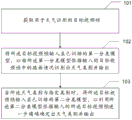
FIG. 1 is a flowchart illustrating an exemplary method for weather identification according to an embodiment of the present disclosure;
FIGS. 2-1, 2-2, and 2-3 are schematic views of exemplary video images of the present application in sunny, rainy, and snowy days, respectively;
FIG. 3 is a flowchart of an exemplary embodiment of capturing a partial picture according to the present application;
4-1, 4-2 are schematic views of exemplary water-flooded and non-flooded vehicles, respectively, of the present application;
FIG. 5-1 is a schematic diagram of an exemplary target video frame of the present application;
FIG. 5-2 is a schematic illustration of an exemplary partial picture of the present application;
FIG. 6 is a schematic diagram of an exemplary classification network model of the present application;
FIG. 7 is a block diagram of one embodiment of a weather identification apparatus of the present application;
FIG. 8 is a block diagram of one embodiment of a computer device of the present application.
Detailed Description
Reference will now be made in detail to the exemplary embodiments, examples of which are illustrated in the accompanying drawings. When the following description refers to the accompanying drawings, like numbers in different drawings represent the same or similar elements unless otherwise indicated. The embodiments described in the following exemplary embodiments do not represent all embodiments consistent with the present application. Rather, they are merely examples of apparatus and methods consistent with certain aspects of the present application, as detailed in the appended claims.
The terminology used herein is for the purpose of describing particular embodiments only and is not intended to be limiting of the application. As used in this application and the appended claims, the singular forms "a", "an", and "the" are intended to include the plural forms as well, unless the context clearly indicates otherwise. It should also be understood that the term "and/or" as used herein refers to and encompasses any and all possible combinations of one or more of the associated listed items.
It is to be understood that although the terms first, second, third, etc. may be used herein to describe various information, such information should not be limited to these terms. These terms are only used to distinguish one type of information from another. For example, first information may also be referred to as second information, and similarly, second information may also be referred to as first information, without departing from the scope of the present application. The word "if" as used herein may be interpreted as "at … …" or "when … …" or "in response to a determination", depending on the context.
The following describes a weather identification method provided by the present application in an embodiment.
Referring to fig. 1, a flowchart of an exemplary weather identification method according to an embodiment of the present application is shown, where the method includes the following steps:
In this embodiment, a target video frame for weather recognition may be acquired from a video surveillance device deployed on an expressway, where the target video frame includes at least a road surface condition, such as a cover of the road surface, and may further include objects such as vehicles and pedestrians on the road surface.
And 102, inputting the target video frame into a trained first classification model, and identifying and outputting a weather type according to the road condition in the input target video frame by the first classification model.
In this embodiment, the target video frame for weather identification acquired in step 101 may be input to a trained first classification model, so as to determine a weather category corresponding to the target video frame according to a road surface condition in the target video frame by using the first classification model, where the weather category may include rainy days, snowy days, sunny days, and the like. And after the first classification model outputs the weather category of the target video frame, the weather category can be used as the recognition result of the target video frame for outputting.
It should be noted that the weather category result output by the first classification model of the present application may be specifically represented in the form of confidence, and the type with the highest confidence is used as the output result. For example, when the first classification model can identify A, B, C three weather categories, if the identification result of the output target video frame is: the confidence of A is 0.88, the confidence of B is 0.11, and the confidence of C is 0.01, which indicates that the A class is closer to the actual weather class, so the A with the highest confidence can be selected as the final output result.
The weather types which can be detected by the method are determined according to the training result of the first classification model, if the training classification is more, the detected weather types are more, if the training classification is less, the detected weather types are less, and under the general condition, the method can detect three weather types of sunny days, rainy days and snowy days.
The following example illustrates a method of training the first classification model.
When a first classification model is trained, a first training sample set can be obtained firstly, wherein the first training sample set comprises sample video frames of road surface conditions under different weather types and weather types corresponding to the sample video frames; a first classification model for identifying a weather category is then trained from the first training sample set. For example, as shown in FIGS. 2-1, 2-2 and 2-3, wherein FIG. 2-1 is a video frame during a sunny day, it can be seen that the road surface is clear of accumulated water and snow; FIG. 2-2 is a video frame during rainy weather, where it can be seen that there is water accumulated on the road surface during rainy weather; FIGS. 2-3 are video frames during a snow day, showing snow on the road surface; in order to make the material of the road surface situation richer and more diverse and to be able to show a variety of road surface situations, the present application may refer to a large number of sample video frames of different road surface situations as shown in fig. 2-1, 2-2, and 2-3, and record the corresponding relationship between the sample video frames and the weather categories of the sample video frames, take the sample video frames and the weather categories corresponding to the sample video frames as a first training sample set, and finally input the first training sample set into a first classification model to be trained for training, thereby obtaining a first classification model for identifying the weather categories corresponding to the different road surface situations. The structure of the first classification model may adopt a general classification model structure, such as a VGG16 model in a deep learning network, or an alexnet model, and the specific model is not limited.
Taking the VGG16 model as an example, please refer to the first classification model structure shown in fig. 6, which includes a convolutional layer, a pooling layer, and a full link layer. After a first training sample is input, the input data is firstly subjected to feature extraction in a convolutional layer, and a pooling layer is arranged behind the convolutional layer and can be used for performing feature selection and information filtering on output features; and then, sequentially stacking and cutting the output features, inputting the result into a full-connection layer to integrate the extracted features, and finally outputting the result, namely the identification result of the weather category.
As an embodiment, after obtaining the target video frame, the target video frame may be input to a pre-trained first classification model, and since the first classification model may identify different road surface characteristics, the road surface characteristics of the target video frame may be determined by using the first classification model, where the road surface condition refers to external environmental characteristics on the road surface, such as features of road surface water, snow, and the like, and features of vehicles on the road surface. Identifying the road surface condition of the target video frame by using the first classification model, wherein specifically, when the road surface is identified to have snow, the weather category is determined to be snow; when only accumulated water is identified on the road surface, determining that the weather category is rainy; and when the road surface is identified to have no accumulated snow and no accumulated water, determining that the weather category is sunny.
Because the prior art can only identify the positions of the rain and snow pixels in the picture, but cannot specifically distinguish the weather category, the weather category can be distinguished by inputting the target video frame for weather identification into the first classification model, and the preliminary classification requirement of weather detection can be met.
And 103, when the weather category is the designated category, inputting the target video frame to a trained second classification model based on the target video frame, so as to further accurately determine the weather category according to the input target video frame by using the second classification model and output the weather category.
Considering that the road surface condition in rainy days is not very obvious from the road surface condition in sunny days, in order to more accurately determine the condition that the recognition result is rainy days, when the weather category of the target video frame is determined to be a specified category (for example, rainy days), the method and the device for recognizing the weather category can further realize accurate recognition of the weather category without directly outputting the weather category, and specifically can input the target video frame to a trained second classification model so as to further accurately determine the weather category according to the input target video frame by using the second classification model and output the weather category.
As an embodiment, after the target video frame is input into the trained second classification model, the action behavior of the target object may be identified by using the second classification model, and the weather category may be determined according to the action behavior of the target object.
Specifically, when the target object is a person, if the target object is opened, the weather type is determined to be rainy, and if the target object is not opened, the weather type is determined to be sunny; and when the target object is a vehicle, if the target object presses up the splash on the road surface, determining that the weather category is rainy days, and if the target object does not press up the splash on the road surface, determining that the weather category is sunny days. For example, when the input partial picture is the picture shown in fig. 4-1, since fig. 4-1 is the screenshot of the vehicle pressing up the splash, it can be determined that the action behavior of the target object (vehicle) is pressing up the splash on the road surface, and it can be determined that the weather category is rainy; when the input local picture is the picture shown in fig. 4-2, since fig. 4-2 is the screenshot of the vehicle not having the splash pressed, it can be determined that the action behavior of the target object (vehicle) is not having the splash pressed on the road surface, and it can be determined that the weather category is a clear day. The method for identifying the target object in the human being is similar to the above method, and is not described herein again.
As an example, the present application may further analyze the target object in the target video frame to perform secondary identification of the weather category, where the target object may include a vehicle or a pedestrian on the road surface. Since the target video frame usually contains most of the content except the target object, in order to improve the efficiency and accuracy of the secondary identification, a local picture containing the target object may be further cut from the target video frame, and the local picture is input to the second classification model, so as to further accurately determine the weather category according to the input local picture by using the second classification model and output the weather category. The specific process is shown in fig. 3.
Referring to fig. 3, a flowchart of an exemplary embodiment of capturing a partial picture according to the present application is shown, where the method includes the following steps:
In this embodiment, the target video frame may be input into a trained target detection model, for example, a target detection model for detecting whether the target object is a vehicle or a pedestrian, so as to identify the category and the position information of the target object from the target video frame by the target detection model, where the category of the target object refers to whether the target object is a vehicle or a pedestrian; the position information of the target object may be position coordinates of the target object in the target video frame, for example, a vertex coordinate of an upper left corner and a vertex coordinate of a lower right corner, and a position and a location area of the target object in the target video frame may be determined according to the two coordinates.
After the category and the position information of the target object are determined, when the category of the target object is a first category, a first specified size is expanded outwards from the position information of the target object in the target video frame to obtain a first target area, and the first target area is intercepted from the target video frame to be used as the local picture; and when the type of the target object is a second type, expanding a second specified size outwards from the position information of the target object in the target video frame to obtain a second target area, wherein the second target area is larger than the first target area, and intercepting the second target area from the target video frame as the local picture. For example, when the first category of the target object is a person, a first target region is obtained by outwardly expanding the position information of the target object by a first specified size in the target video frame, for example, the center of the target object is used as an origin, the target object is outwardly expanded to obtain the first target region with the expanded area being 100-110% of the original area, and the first target region is cut out from the target video frame to be used as the local picture; and when the second type of the target object is a vehicle, expanding the position information of the target object outwards by a second specified size in the target video frame to obtain a second target area, wherein the second target area is larger than the first target area, for example, expanding the target object outwards by taking the center of the target object as an origin to obtain a second target area with the expanded area being 111-120% of the original area, and capturing the second target area from the target video frame as the local picture.
In one example, when the weather category of the target video frame is rainy, in order to further check the accuracy of the weather category, a local picture in the target video frame may be intercepted. Since the vehicle may press the splash during driving in rainy days, the vehicle on the road surface may be used as a target object, for example, as shown in fig. 4-1, a video screenshot of the vehicle with the splash pressed is shown, and fig. 4-2, a video screenshot of the vehicle without the splash pressed is shown, so that whether the vehicle is in rainy days or not can be distinguished through the local picture with the vehicle. In addition to vehicles, pedestrians on the road surface may also be the target object of the rainy day recognition, and whether it is rainy may be determined, for example, by recognizing whether a person in a partial image is getting an umbrella. And when the target object is determined to be a vehicle, expanding the original 120% outwards by taking the area where the target object is located as an origin point by taking the center of the area where the target object is located to obtain a second target area, and intercepting the second target area from the target video frame as the local picture. As shown in fig. 5-1, the largest frame represents the target video frame, the middle vehicle is the target object, and the thin solid frame outside the vehicle is the marking frame (i.e. the coordinate information) of the vehicle, in order to display the characteristic of the vehicle water squeezing, the marking frame of the vehicle is enlarged by a preset multiple, for example, by 120% of the size of the marking frame, so as to obtain an enlarged second target area (shown by the thick solid frame). Then, the target video frame is cropped, a second target area of the thick solid frame is cut out as a local picture, and finally, the local picture cut out based on the target video frame is shown in fig. 5-2. The region where the target object in the target video frame is located is cut to obtain a local picture, the local picture is input to the second classification model, calculation of the second classification model on the original video frame independent of the target object can be reduced, accordingly, the calculation amount can be reduced, the recognition efficiency is improved, and interference of other non-target objects in the image can be avoided only by inputting the local picture of the target object, and therefore the recognition accuracy can be improved.
The following example illustrates the method of training the second classification model.
A second training sample set can be obtained firstly, wherein the second training sample set comprises sample pictures of action behaviors of target objects under different weather types and weather types corresponding to the sample pictures; and training a second classification model for accurately identifying the weather category according to the second training sample set. The sample pictures in the second training sample set are shown in fig. 4-1 and 4-2, wherein fig. 4-1 is a local picture of a target object in rainy days, and water bloom of a vehicle can be seen; FIG. 4-2 is a partial picture of a target object on a sunny day, showing that the vehicle has not been embossed with water bloom; in order to make the material of the target object richer and more diverse, different weather picture samples of different scenes, time periods and erection angles can be collected and arranged, a large number of sample pictures can be obtained, the corresponding relation between each sample picture and the weather category of the sample picture is recorded, the sample picture and the corresponding relation are used as a second training sample set, and the second training sample set is input into a second classification model to be trained for training, so that the second classification model for accurately identifying the weather category is obtained. The structure of the second classification model may be similar to that of the first classification model, and is not described here in detail.
In an example, the weather categories corresponding to the multiple local pictures can be detected through the second classification model, and the weather category with the largest number of repetitions is counted from the obtained detection result and is used as the final weather category, so that the judgment on the weather at a certain time can be more accurate.
Compared with the prior art, the method and the device have the advantages that the local picture containing the target object in the video frame is secondarily identified based on the deep learning image classification technology, so that the weather detection in the condition that the rainy day is not obvious is solved, the detection success rate is further improved, and the detection precision is improved.
Corresponding to the embodiment of the weather identification method, the application also provides an embodiment of a weather identification device.
Referring to fig. 7, which is a block diagram of an embodiment of a weather identification apparatus of the present application, the apparatus 70 may include:
an obtaining unit 701, configured to obtain a target video frame for weather identification;
a first identification unit 702, configured to input the target video frame into a trained first classification model, so that the first classification model identifies a weather category according to a road condition in the input target video frame and outputs the weather category;
the second identifying unit 703 is configured to, when the weather category is a designated category, input the target video frame into a trained second classification model, so as to further accurately determine the weather category according to the input target video frame by using the second classification model, and output the weather category.
In this embodiment, the acquiring unit 701 may acquire a target video frame for weather recognition from a video monitoring apparatus deployed on an expressway, where the target video frame includes at least a road surface condition, such as a cover of the road surface, and may further include objects such as vehicles and pedestrians on the road surface. The first identification unit 702 may input the target video frame for weather identification acquired in the acquisition unit 701 to the trained first classification model, so as to determine a weather category corresponding to the target video frame according to a road surface condition in the target video frame by using the first classification model, where the weather category may include rainy days, snowy days, sunny days, and the like. And after the first classification model outputs the weather category of the target video frame, the weather category can be used as the recognition result of the target video frame for outputting.
It should be noted that the weather category result output by the first classification model of the present application may be specifically represented in the form of confidence, and the type with the highest confidence is used as the output result. For example, when the first classification model can identify A, B, C three weather categories, if the identification result of the output target video frame is: the confidence of A is 0.88, the confidence of B is 0.11, and the confidence of C is 0.01, which indicates that the A class is closer to the actual weather class, so the A with the highest confidence can be selected as the final output result.
The weather types which can be detected by the method are determined according to the training result of the first classification model, if the training classification is more, the detected weather types are more, if the training classification is less, the detected weather types are less, and under the general condition, the method can detect three weather types of sunny days, rainy days and snowy days.
The arrangement further comprises a first training unit (not shown in fig. 7) for training said first classification model. The first training unit can firstly acquire a first training sample set when training a first classification model, wherein the first training sample set comprises sample video frames of road surface conditions under different weather types and weather types corresponding to the sample video frames; a first classification model for identifying a weather category is then trained from the first training sample set. For example, as shown in FIGS. 2-1, 2-2 and 2-3, wherein FIG. 2-1 is a video frame during a sunny day, it can be seen that the road surface is clear of accumulated water and snow; FIG. 2-2 is a video frame during rainy weather, where it can be seen that there is water accumulated on the road surface during rainy weather; FIGS. 2-3 are video frames during a snow day, showing snow on the road surface; in order to make the material of the road surface situation richer and more diverse and to be able to show a variety of road surface situations, the present application may refer to a large number of sample video frames of different road surface situations as shown in fig. 2-1, 2-2, and 2-3, and record the corresponding relationship between the sample video frames and the weather categories of the sample video frames, take the sample video frames and the weather categories corresponding to the sample video frames as a first training sample set, and finally input the first training sample set into a first classification model to be trained for training, thereby obtaining a first classification model for identifying the weather categories corresponding to the different road surface situations. The structure of the first classification model may adopt a general classification model structure, such as a VGG16 model in a deep learning network, or an alexnet model, and the specific model is not limited. Taking the VGG16 model as an example, please refer to the first classification model structure shown in fig. 6, which includes a convolutional layer, a pooling layer, and a full link layer. After a first training sample is input, the input data is firstly subjected to feature extraction in a convolutional layer, and a pooling layer is arranged behind the convolutional layer and can be used for performing feature selection and information filtering on output features; and then, sequentially stacking and cutting the output features, inputting the result into a full-connection layer to integrate the extracted features, and finally outputting the result, namely the identification result of the weather category.
As an embodiment, after acquiring the target video frame, the first identifying unit 702 may input the target video frame to a pre-trained first classification model, and since the first classification model may identify different road surface characteristics, the road surface characteristics of the target video frame may be determined by using the first classification model, where the road surface condition refers to external environmental characteristics on the road surface, such as features of road surface water, snow, and the like, and features of vehicles on the road surface. Identifying the road surface condition of the target video frame by using the first classification model, wherein specifically, when the road surface is identified to have snow, the weather category is determined to be snow; when only accumulated water is identified on the road surface, determining that the weather category is rainy; and when the road surface is identified to have no accumulated snow and no accumulated water, determining that the weather category is sunny.
Because the prior art can only identify the positions of the rain and snow pixels in the picture, but cannot specifically distinguish the weather category, the weather category can be distinguished by inputting the target video frame for weather identification into the first classification model, and the preliminary classification requirement of weather detection can be met.
Considering that the road surface condition in rainy days is not obviously different from the road surface condition in sunny days, in order to more accurately determine the condition that the identification result is rainy days, the present application may not directly output the weather category when determining the weather category of the target video frame as a specified category (for example, rainy days), but further realize accurate identification of the weather category through the second identification unit 703.
As an embodiment, the second identifying unit 703 includes:
a first subunit (not shown in fig. 7) for intercepting a partial picture containing a target object from the target video frame.
As an embodiment, the first subunit is specifically configured to input the target video frame to a trained target detection model, so as to identify, by the target detection model, category and position information of a target object from the target video frame; and intercepting a local picture from the target video frame according to the category and the position information of the target object.
In this embodiment, the first subunit may input the target video frame into a trained target detection model, for example, a target detection model for detecting whether the target object is a vehicle or a pedestrian, so as to identify the category and the position information of the target object from the target video frame by the target detection model, where the category of the target object refers to whether the target object is a vehicle or a pedestrian; the position information of the target object may be position coordinates of the target object in the target video frame, for example, a vertex coordinate of an upper left corner and a vertex coordinate of a lower right corner, and a position and a location area of the target object in the target video frame may be determined according to the two coordinates.
After determining the category and the position information of the target object, the first subunit may, when the category of the target object is a first category, expand a first specified size from the position information of the target object in the target video frame to obtain a first target region, and intercept the first target region from the target video frame as the local picture; and when the type of the target object is a second type, expanding a second specified size outwards from the position information of the target object in the target video frame to obtain a second target area, wherein the second target area is larger than the first target area, and intercepting the second target area from the target video frame as the local picture. For example, when the first category of the target object is a person, a first target region is obtained by outwardly expanding the position information of the target object by a first specified size in the target video frame, for example, the center of the target object is used as an origin, the target object is outwardly expanded to obtain the first target region with the expanded area being 100-110% of the original area, and the first target region is cut out from the target video frame to be used as the local picture; and when the second type of the target object is a vehicle, expanding the position information of the target object outwards by a second specified size in the target video frame to obtain a second target area, wherein the second target area is larger than the first target area, for example, expanding the target object outwards by taking the center of the target object as an origin to obtain a second target area with the expanded area being 111-120% of the original area, and capturing the second target area from the target video frame as the local picture.
In one example, when the weather category of the target video frame is rainy, in order to further check the accuracy of the weather category, a local picture in the target video frame may be intercepted. Since the vehicle may press the splash during driving in rainy days, the vehicle on the road surface may be used as a target object, for example, as shown in fig. 4-1, a video screenshot of the vehicle with the splash pressed is shown, and fig. 4-2, a video screenshot of the vehicle without the splash pressed is shown, so that whether the vehicle is in rainy days or not can be distinguished through the local picture with the vehicle. In addition to vehicles, pedestrians on the road surface may also be the target object of the rainy day recognition, and whether it is rainy may be determined, for example, by recognizing whether a person in a partial image is getting an umbrella. And when the target object is determined to be a vehicle, expanding the original 120% outwards by taking the area where the target object is located as an origin point by taking the center of the area where the target object is located to obtain a second target area, and intercepting the second target area from the target video frame as the local picture. As shown in fig. 5-1, the largest frame represents the target video frame, the middle vehicle is the target object, and the thin solid frame outside the vehicle is the marking frame (i.e. the coordinate information) of the vehicle, in order to display the characteristic of the vehicle water squeezing, the marking frame of the vehicle is enlarged by a preset multiple, for example, by 120% of the size of the marking frame, so as to obtain an enlarged second target area (shown by the thick solid frame). Then, the target video frame is cropped, a second target area of the thick solid frame is cut out as a local picture, and finally, the local picture cut out based on the target video frame is shown in fig. 5-2. The region where the target object in the target video frame is located is cut to obtain a local picture, the local picture is input to the second classification model, calculation of the second classification model on the original video frame independent of the target object can be reduced, accordingly, the calculation amount can be reduced, the recognition efficiency is improved, and interference of other non-target objects in the image can be avoided only by inputting the local picture of the target object, and therefore the recognition accuracy can be improved.
As an embodiment, the second identifying unit further includes a second sub-unit (not shown in fig. 7) configured to input the local picture into the second classification model, so as to further precisely determine a weather category according to the input local picture by using the second classification model and output the weather category.
The second sub-unit may input the target video frame into a trained second classification model, and may identify an action behavior of the target object by using the second classification model, and determine a weather category according to the action behavior of the target object.
Specifically, the second subunit is specifically configured to, when the target object is a person, determine that the weather category is rainy if the target object is opened, and determine that the weather category is fine if the target object is not opened; and when the target object is a vehicle, if the target object presses up the splash on the road surface, determining that the weather category is rainy days, and if the target object does not press up the splash on the road surface, determining that the weather category is sunny days. For example, when the input partial picture is the picture shown in fig. 4-1, since fig. 4-1 is the screenshot of the vehicle pressing up the splash, it can be determined that the action behavior of the target object (vehicle) is pressing up the splash on the road surface, and it can be determined that the weather category is rainy; when the input local picture is the picture shown in fig. 4-2, since fig. 4-2 is the screenshot of the vehicle not having the splash pressed, it can be determined that the action behavior of the target object (vehicle) is not having the splash pressed on the road surface, and it can be determined that the weather category is a clear day. The method for identifying the target object in the human being is similar to the above method, and is not described herein again.
The apparatus further includes a second training unit (not shown in fig. 7) for training the second classification model, where the second training unit may first obtain a second training sample set, where the second training sample set includes sample pictures of the action behaviors of the target object under different weather categories and weather categories corresponding to the sample pictures; and training a second classification model for accurately identifying the weather category according to the second training sample set. The sample pictures in the second training sample set are shown in fig. 4-1 and 4-2, wherein fig. 4-1 is a local picture of a target object in rainy days, and water bloom of a vehicle can be seen; FIG. 4-2 is a partial picture of a target object on a sunny day, showing that the vehicle has not been embossed with water bloom; in order to make the material of the target object richer and more diverse, different weather picture samples of different scenes, time periods and erection angles can be collected and arranged, a large number of sample pictures can be obtained, the corresponding relation between each sample picture and the weather category of the sample picture is recorded, the sample picture and the corresponding relation are used as a second training sample set, and the second training sample set is input into a second classification model to be trained for training, so that the second classification model for accurately identifying the weather category is obtained. The structure of the second classification model may be similar to that of the first classification model, and is not described here in detail.
For the device embodiments, since they substantially correspond to the method embodiments, reference may be made to the partial description of the method embodiments for relevant points. The above-described embodiments of the apparatus are merely illustrative, and the units described as separate parts may or may not be physically separate, and parts displayed as units may or may not be physical units, may be located in one place, or may be distributed on a plurality of network units. Some or all of the modules can be selected according to actual needs to achieve the purpose of the scheme of the application. One of ordinary skill in the art can understand and implement it without inventive effort.
Corresponding to the embodiment of the weather identification method, the application also provides an embodiment of a computer device for executing the weather identification method.
Referring to fig. 8, a computer device includes a processor 81, a communication interface 82, a memory 83, and a communication bus 84, as one embodiment;
the processor 81, the communication interface 82 and the memory 83 communicate with each other through the communication bus 84;
the memory 83 is used for storing computer programs;
the processor 81 is configured to execute the computer program stored in the memory, and when the processor 81 executes the computer program, the steps of any weather identification method are implemented.
All the embodiments in the present specification are described in a related manner, and the same and similar parts among the embodiments may be referred to each other, and each embodiment focuses on the differences from the other embodiments. In particular, for the embodiment of the computer device, since it is substantially similar to the method embodiment, the description is simple, and for the relevant points, reference may be made to part of the description of the method embodiment.
Corresponding to the foregoing embodiments of the weather identification method, the present application also provides embodiments of a computer-readable storage medium for executing the foregoing weather identification method.
As an embodiment, the present application further includes a computer-readable storage medium having a computer program stored therein, which when executed by a processor, performs the steps of any of the weather identification methods.
All the embodiments in the present specification are described in a related manner, and the same and similar parts among the embodiments may be referred to each other, and each embodiment focuses on the differences from the other embodiments. In particular, for the computer device embodiment and the computer-readable storage medium embodiment, since they are substantially similar to the method embodiment, the description is relatively simple, and for the relevant points, reference may be made to part of the description of the method embodiment.
In summary, the present application may obtain a target video frame for weather identification; and inputting the target video frame into a trained first classification model, identifying weather types according to the road surface condition in the input target video frame by the first classification model and outputting the weather types, and inputting the target video frame into a trained second classification model when the weather types are specified types, further and accurately determining the weather types according to the input target video frame by utilizing the second classification model and outputting the weather types. Because prior art can only discern the sleet pixel position in the picture, nevertheless can not specifically distinguish the category of weather, consequently this application can be through the target video frame input first classification model back that will be used for weather discernment, further carry out accurate discernment to the weather category through second classification model, and then promoted the rate of accuracy of weather category discernment, satisfy the demand that weather detected.
The above description is only exemplary of the present application and should not be taken as limiting the present application, as any modification, equivalent replacement, or improvement made within the spirit and principle of the present application should be included in the scope of protection of the present application.
Claims (14)
1. A weather identification method, the method comprising:
acquiring a target video frame for weather identification;
inputting the target video frame into a trained first classification model, and identifying and outputting a weather type according to the road surface condition in the input target video frame by the first classification model;
and when the weather category is a designated category, inputting the target video frame into a trained second classification model, and further accurately determining the weather category according to the input target video frame by using the second classification model and outputting the weather category.
2. The method of claim 1, wherein inputting the target video frame into a second classification model trained to further accurately determine a weather category according to the input target video frame by using the second classification model and outputting the weather category, comprises:
and intercepting a local picture containing a target object from the target video frame, inputting the local picture into the second classification model, and further accurately determining the weather category according to the input local picture by using the second classification model and outputting the weather category.
3. The method of claim 2, wherein the capturing the local picture from the target video frame comprises:
inputting the target video frame into a trained target detection model so as to identify the category and position information of a target object from the target video frame by the target detection model;
and intercepting a local picture from the target video frame according to the category and the position information of the target object.
4. The method of claim 2, wherein the further accurate determination of the weather category from the input local picture by using the second classification model comprises:
identifying the action behavior of the target object by utilizing the second classification model;
and determining the weather category according to the action behavior of the target object.
5. The method of claim 4, wherein determining a weather category based on the action behavior of the target object comprises:
when the target object is a person, if the target object is opened, determining that the weather type is rainy, and if the target object is not opened, determining that the weather type is sunny;
and when the target object is a vehicle, if the target object presses up the splash on the road surface, determining that the weather category is rainy days, and if the target object does not press up the splash on the road surface, determining that the weather category is sunny days.
6. The method of claim 1, wherein inputting the target video frame into a trained first classification model to identify and output a weather category according to a road condition in the input target video frame by the first classification model comprises:
identifying the road condition of the target video frame by using the first classification model, and determining that the weather category is snow when the road has snow; when only water is accumulated on the road surface, determining that the weather category is rainy days; and when the road surface has no accumulated snow and no accumulated water, determining that the weather category is sunny.
7. A weather identification device, the device comprising:
the device comprises an acquisition unit, a processing unit and a processing unit, wherein the acquisition unit is used for acquiring a target video frame for weather identification;
the first identification unit is used for inputting the target video frame into a trained first classification model, and identifying and outputting a weather type according to the road condition in the input target video frame by the first classification model;
and the second identification unit is used for inputting the target video frame into a trained second classification model when the weather category is a designated category, so as to further accurately determine the weather category according to the input target video frame by using the second classification model and output the weather category.
8. The apparatus of claim 7, wherein the second identification unit comprises:
the first subunit is used for intercepting a local picture containing a target object from the target video frame;
and the second subunit is used for inputting the local picture into the second classification model so as to further accurately determine the weather category according to the input local picture by using the second classification model and output the weather category.
9. The apparatus of claim 8,
the first subunit is specifically configured to input the target video frame to a trained target detection model, so that the target detection model identifies the category and the position information of the target object from the target video frame; and intercepting a local picture from the target video frame according to the category and the position information of the target object.
10. The apparatus of claim 8,
the second subunit is specifically configured to identify an action behavior of the target object by using the second classification model; and determining the weather category according to the action behavior of the target object.
11. The apparatus of claim 10,
the second subunit is specifically configured to, when the target object is a person, determine that the weather category is rainy if the target object is opened, and determine that the weather category is sunny if the target object is not opened; and when the target object is a vehicle, if the target object presses up the splash on the road surface, determining that the weather category is rainy days, and if the target object does not press up the splash on the road surface, determining that the weather category is sunny days.
12. The apparatus of claim 7,
the first identification unit is specifically configured to identify a road surface condition of the target video frame by using the first classification model, and when snow is accumulated on the road surface, determine that the weather category is snow; when only water is accumulated on the road surface, determining that the weather category is rainy days; and when the road surface has no accumulated snow and no accumulated water, determining that the weather category is sunny.
13. A computer-readable storage medium, in which a computer program is stored which, when being executed by a processor, carries out the steps of the method according to any one of claims 1 to 6.
14. A computer device, comprising a memory, a processor, a communication interface, and a communication bus; the memory, the processor and the communication interface are communicated with each other through the communication bus;
the memory is used for storing a computer program;
the processor is configured to execute the computer program stored in the memory, and when the processor executes the computer program, the processor implements the steps of the method according to any one of claims 1 to 6.
Priority Applications (1)
| Application Number | Priority Date | Filing Date | Title |
|---|---|---|---|
| CN201910745480.7A CN111753610B (en) | 2019-08-13 | 2019-08-13 | Weather identification method and device |
Applications Claiming Priority (1)
| Application Number | Priority Date | Filing Date | Title |
|---|---|---|---|
| CN201910745480.7A CN111753610B (en) | 2019-08-13 | 2019-08-13 | Weather identification method and device |
Publications (2)
| Publication Number | Publication Date |
|---|---|
| CN111753610A true CN111753610A (en) | 2020-10-09 |
| CN111753610B CN111753610B (en) | 2024-09-24 |
Family
ID=72672798
Family Applications (1)
| Application Number | Title | Priority Date | Filing Date |
|---|---|---|---|
| CN201910745480.7A Active CN111753610B (en) | 2019-08-13 | 2019-08-13 | Weather identification method and device |
Country Status (1)
| Country | Link |
|---|---|
| CN (1) | CN111753610B (en) |
Cited By (6)
| Publication number | Priority date | Publication date | Assignee | Title |
|---|---|---|---|---|
| CN112672209A (en) * | 2020-12-14 | 2021-04-16 | 北京达佳互联信息技术有限公司 | Video editing method and video editing device |
| CN114186726A (en) * | 2021-11-29 | 2022-03-15 | 北京百度网讯科技有限公司 | Meteorological data processing method, and prompting method and device based on meteorological data |
| CN114299726A (en) * | 2021-12-31 | 2022-04-08 | 象谱信息产业有限公司 | Highway severe weather identification method based on artificial intelligence |
| CN114333308A (en) * | 2021-12-24 | 2022-04-12 | 中国联合网络通信集团有限公司 | Traffic abnormality recognition method and device, electronic device and storage medium |
| CN116168317A (en) * | 2022-12-16 | 2023-05-26 | 北京百度网讯科技有限公司 | Weather identification method, weather identification device, electronic equipment and storage medium |
| WO2024137206A1 (en) * | 2022-12-19 | 2024-06-27 | Lytx, Inc. | Inclement weather detection |
Citations (4)
| Publication number | Priority date | Publication date | Assignee | Title |
|---|---|---|---|---|
| US20110074955A1 (en) * | 2007-08-30 | 2011-03-31 | Valeo Schalter Und Sensoren Gmbh | Method and system for weather condition detection with image-based road characterization |
| CN104050620A (en) * | 2013-03-13 | 2014-09-17 | 株式会社电装 | Object detection apparatus |
| CN105678221A (en) * | 2015-12-29 | 2016-06-15 | 大连楼兰科技股份有限公司 | Pedestrian detection method and system in rainy and snowy weather |
| US20180060676A1 (en) * | 2015-05-06 | 2018-03-01 | Continental Teves Ag & Co. Ohg | Method and device for detecting and evaluating environmental influences and road condition information in the vehicle surroundings |
-
2019
- 2019-08-13 CN CN201910745480.7A patent/CN111753610B/en active Active
Patent Citations (4)
| Publication number | Priority date | Publication date | Assignee | Title |
|---|---|---|---|---|
| US20110074955A1 (en) * | 2007-08-30 | 2011-03-31 | Valeo Schalter Und Sensoren Gmbh | Method and system for weather condition detection with image-based road characterization |
| CN104050620A (en) * | 2013-03-13 | 2014-09-17 | 株式会社电装 | Object detection apparatus |
| US20180060676A1 (en) * | 2015-05-06 | 2018-03-01 | Continental Teves Ag & Co. Ohg | Method and device for detecting and evaluating environmental influences and road condition information in the vehicle surroundings |
| CN105678221A (en) * | 2015-12-29 | 2016-06-15 | 大连楼兰科技股份有限公司 | Pedestrian detection method and system in rainy and snowy weather |
Non-Patent Citations (1)
| Title |
|---|
| 朱振杰: "基于深度学习的高速公路交通检测算法研究", 中国优秀硕士学位论文全文数据库工程科技Ⅱ辑, pages 36 - 51 * |
Cited By (8)
| Publication number | Priority date | Publication date | Assignee | Title |
|---|---|---|---|---|
| CN112672209A (en) * | 2020-12-14 | 2021-04-16 | 北京达佳互联信息技术有限公司 | Video editing method and video editing device |
| CN114186726A (en) * | 2021-11-29 | 2022-03-15 | 北京百度网讯科技有限公司 | Meteorological data processing method, and prompting method and device based on meteorological data |
| CN114186726B (en) * | 2021-11-29 | 2025-11-14 | 北京百度网讯科技有限公司 | Meteorological data processing methods, meteorological data-based alerting methods and devices |
| CN114333308A (en) * | 2021-12-24 | 2022-04-12 | 中国联合网络通信集团有限公司 | Traffic abnormality recognition method and device, electronic device and storage medium |
| CN114299726A (en) * | 2021-12-31 | 2022-04-08 | 象谱信息产业有限公司 | Highway severe weather identification method based on artificial intelligence |
| CN116168317A (en) * | 2022-12-16 | 2023-05-26 | 北京百度网讯科技有限公司 | Weather identification method, weather identification device, electronic equipment and storage medium |
| WO2024137206A1 (en) * | 2022-12-19 | 2024-06-27 | Lytx, Inc. | Inclement weather detection |
| US12576868B2 (en) | 2022-12-19 | 2026-03-17 | Lytx, Inc. | Inclement weather detection |
Also Published As
| Publication number | Publication date |
|---|---|
| CN111753610B (en) | 2024-09-24 |
Similar Documents
| Publication | Publication Date | Title |
|---|---|---|
| CN111274926B (en) | Image data screening method, device, computer equipment and storage medium | |
| CN111753610B (en) | Weather identification method and device | |
| CN111160205B (en) | An end-to-end unified detection method for embedded multi-type targets in traffic scenes | |
| CN112200172B (en) | Driving region detection method and device | |
| CN110781836A (en) | Human body recognition method and device, computer equipment and storage medium | |
| CN111814593B (en) | Traffic scene analysis method and equipment and storage medium | |
| KR20200092842A (en) | Learning method and learning device for improving segmentation performance to be used for detecting road user events using double embedding configuration in multi-camera system and testing method and testing device using the same | |
| CN112666553B (en) | Road ponding identification method and equipment based on millimeter wave radar | |
| CN113454649B (en) | Target detection method, device, electronic device and computer-readable storage medium | |
| CN105426903A (en) | Cloud determination method and system for remote sensing satellite images | |
| CN112215188B (en) | Traffic police gesture recognition method, device, equipment and storage medium | |
| CN114241373B (en) | End-to-end vehicle behavior detection method, system, device and storage medium | |
| CN114926724B (en) | Data processing method, device, equipment and storage medium | |
| CN110852236A (en) | Target event determination method and device, storage medium and electronic device | |
| CN113887472B (en) | Cloud detection method for remote sensing images based on cascaded color and texture feature attention | |
| EP3376438B1 (en) | A system and method for detecting change using ontology based saliency | |
| CN114519819A (en) | Remote sensing image target detection method based on global context awareness | |
| CN106339657A (en) | Straw incineration monitoring method and device based on monitoring video | |
| CN108052929A (en) | Parking space state detection method, system, readable storage medium storing program for executing and computer equipment | |
| CN118115952B (en) | All-weather detection method and system for unmanned aerial vehicle image under urban low-altitude complex background | |
| CN117203678A (en) | Target detection method and device | |
| CN109684986B (en) | Vehicle analysis method and system based on vehicle detection and tracking | |
| CN112926426A (en) | Ship identification method, system, equipment and storage medium based on monitoring video | |
| CN110991414A (en) | High-precision traffic element segmentation method, electronic equipment and storage medium | |
| CN117315225A (en) | Illegal parking vehicle identification and positioning methods, systems, computer equipment and storage media |
Legal Events
| Date | Code | Title | Description |
|---|---|---|---|
| PB01 | Publication | ||
| PB01 | Publication | ||
| SE01 | Entry into force of request for substantive examination | ||
| SE01 | Entry into force of request for substantive examination | ||
| GR01 | Patent grant | ||
| GR01 | Patent grant |