CN111925659A - Self-healing modified asphalt and preparation method and application thereof - Google Patents
Self-healing modified asphalt and preparation method and application thereof Download PDFInfo
- Publication number
- CN111925659A CN111925659A CN202010749385.7A CN202010749385A CN111925659A CN 111925659 A CN111925659 A CN 111925659A CN 202010749385 A CN202010749385 A CN 202010749385A CN 111925659 A CN111925659 A CN 111925659A
- Authority
- CN
- China
- Prior art keywords
- asphalt
- self
- healing
- modified asphalt
- rubber
- Prior art date
- Legal status (The legal status is an assumption and is not a legal conclusion. Google has not performed a legal analysis and makes no representation as to the accuracy of the status listed.)
- Pending
Links
Images

Classifications
-
- C—CHEMISTRY; METALLURGY
- C08—ORGANIC MACROMOLECULAR COMPOUNDS; THEIR PREPARATION OR CHEMICAL WORKING-UP; COMPOSITIONS BASED THEREON
- C08L—COMPOSITIONS OF MACROMOLECULAR COMPOUNDS
- C08L95/00—Compositions of bituminous materials, e.g. asphalt, tar, pitch
-
- E—FIXED CONSTRUCTIONS
- E01—CONSTRUCTION OF ROADS, RAILWAYS, OR BRIDGES
- E01C—CONSTRUCTION OF, OR SURFACES FOR, ROADS, SPORTS GROUNDS, OR THE LIKE; MACHINES OR AUXILIARY TOOLS FOR CONSTRUCTION OR REPAIR
- E01C7/00—Coherent pavings made in situ
- E01C7/08—Coherent pavings made in situ made of road-metal and binders
- E01C7/18—Coherent pavings made in situ made of road-metal and binders of road-metal and bituminous binders
-
- E—FIXED CONSTRUCTIONS
- E02—HYDRAULIC ENGINEERING; FOUNDATIONS; SOIL SHIFTING
- E02D—FOUNDATIONS; EXCAVATIONS; EMBANKMENTS; UNDERGROUND OR UNDERWATER STRUCTURES
- E02D31/00—Protective arrangements for foundations or foundation structures; Ground foundation measures for protecting the soil or the subsoil water, e.g. preventing or counteracting oil pollution
- E02D31/02—Protective arrangements for foundations or foundation structures; Ground foundation measures for protecting the soil or the subsoil water, e.g. preventing or counteracting oil pollution against ground humidity or ground water
-
- E—FIXED CONSTRUCTIONS
- E04—BUILDING
- E04B—GENERAL BUILDING CONSTRUCTIONS; WALLS, e.g. PARTITIONS; ROOFS; FLOORS; CEILINGS; INSULATION OR OTHER PROTECTION OF BUILDINGS
- E04B1/00—Constructions in general; Structures which are not restricted either to walls, e.g. partitions, or floors or ceilings or roofs
- E04B1/62—Insulation or other protection; Elements or use of specified material therefor
- E04B1/66—Sealings
-
- E—FIXED CONSTRUCTIONS
- E04—BUILDING
- E04D—ROOF COVERINGS; SKY-LIGHTS; GUTTERS; ROOF-WORKING TOOLS
- E04D13/00—Special arrangements or devices in connection with roof coverings; Protection against birds; Roof drainage ; Sky-lights
- E04D13/16—Insulating devices or arrangements in so far as the roof covering is concerned, e.g. characterised by the material or composition of the roof insulating material or its integration in the roof structure
-
- E—FIXED CONSTRUCTIONS
- E04—BUILDING
- E04D—ROOF COVERINGS; SKY-LIGHTS; GUTTERS; ROOF-WORKING TOOLS
- E04D5/00—Roof covering by making use of flexible material, e.g. supplied in roll form
Landscapes
- Engineering & Computer Science (AREA)
- Civil Engineering (AREA)
- Structural Engineering (AREA)
- Architecture (AREA)
- Chemical & Material Sciences (AREA)
- Life Sciences & Earth Sciences (AREA)
- Health & Medical Sciences (AREA)
- Materials Engineering (AREA)
- Polymers & Plastics (AREA)
- Organic Chemistry (AREA)
- Chemical Kinetics & Catalysis (AREA)
- Physics & Mathematics (AREA)
- Electromagnetism (AREA)
- Medicinal Chemistry (AREA)
- Environmental & Geological Engineering (AREA)
- Hydrology & Water Resources (AREA)
- General Life Sciences & Earth Sciences (AREA)
- Mining & Mineral Resources (AREA)
- Paleontology (AREA)
- General Engineering & Computer Science (AREA)
- Compositions Of Macromolecular Compounds (AREA)
Abstract
The invention discloses self-healing modified asphalt and a preparation method and application thereof, wherein the self-healing modified asphalt comprises the following components in percentage by weight: more than or equal to 30 percent of liquid rubber, and the balance of matrix asphalt; the liquid rubber is obtained by adding tire rubber powder and a certain amount of metal ion catalyst into a reaction type screw extruder, pumping air into the reaction type screw extruder and then extruding; the self-healing modified asphalt is a mixture prepared by adding liquid rubber into matrix asphalt and then uniformly blending. The product of the invention not only has the advantages of outstanding aging-resistant self-healing capability, environment-friendly processing process and the like, but also has the advantages of high and low temperature performance, wide temperature application range, novel, efficient and convenient preparation method, strong practicability and obvious economic benefit, and is suitable for being applied to asphalt road construction and asphalt-based waterproof coiled material products in a large scale.
Description
Technical Field
The invention belongs to the technical field of functional modified asphalt, and particularly relates to self-healing modified asphalt and a preparation method and application thereof.
Background
As the asphalt material is used as a main waterproof material for roads and buildings in China, due to the defects of the material such as easy aging and easy embrittlement at low temperature and the like and the influence of external environmental factors, the asphalt material usually has the crack damage sign after being used for 3-4 years. Finally, under the combined action of external load, cold and hot alternation and rainwater, common diseases such as cracks are formed, and the waterproof effect is greatly reduced. The crack initiation and propagation is irreversible and can only be re-laid once it has occurred. The anti-cracking performance is usually improved by SBS modification or rubber powder modification, but the modification can prolong the service life, but can not prevent the generation and the expansion of cracks. At present, no asphalt material capable of automatically repairing from a crack source is available, so that the waterproof continuous utilization effect of asphalt is achieved. Therefore, the research on the self-healing modified asphalt is significant.
Taking asphalt pavement as an example, cracks become the first problem to be solved in asphalt pavement maintenance work in China, passive maintenance repair effect generally adopted at present is not ideal, repeated crack repair causes huge resource consumption and economic loss, road traffic capacity and traffic safety are seriously affected, and more advanced crack repair technology is urgently needed to be researched and developed. The self-healing capability of the micro-cracks of the asphalt concrete is improved, the micro-cracks in the asphalt pavement are repaired in the germinating state, the development of macroscopic diseases such as cracks, loosening, pits and the like is avoided, and the advanced maintenance concept advocated by domestic and foreign scholars is achieved.
Asphalt is a self-healing material, and at higher temperature, the asphalt generates plastic flow, so that cracks are self-healed. During the load intermission period, the self-healing of the asphalt can (partially) recover the modulus and the strength of the asphalt pavement, and the fatigue life is prolonged. However, the asphalt mixture can be subjected to thermal oxidation aging and ultraviolet aging in the mixing, paving, compacting and service processes, so that the asphalt is hardened, the flow capacity is gradually reduced, the crack self-healing performance is lost, the service performance of the asphalt pavement is greatly influenced, and the service life of the asphalt pavement is shortened.
The asphalt is modified by the anti-aging and softening agent, so that the hardening and the embrittlement of the asphalt can be delayed, the asphalt keeps good flowing capability, and the asphalt self-healing performance can be improved. Therefore, patent No. cn201710853508.x "a self-healing asphalt and its preparation method", proposes a method of blending ordinary hydrotalcite, carbon black and vegetable oil, which can improve the aging resistance and self-healing performance of asphalt to some extent, but can harden the asphalt and reduce the road performance, and the compatibility of inorganic particles such as hydrotalcite and carbon black with asphalt is poor, resulting in poor storage stability of modified asphalt. In addition, the method has the defects of high cost, difficult popularization and the like.
However, the process of self-healing of asphalt concrete is very slow and only a portion of the tiny cracks can heal. Therefore, domestic and foreign scholars develop self-healing methods such as induction heating, core-shell structure microcapsules, multi-cavity capsules and the like so as to improve the self-healing performance of the asphalt concrete. Patent cn201510468834.x "an asphalt concrete capable of self-healing rapidly under microwave action, a preparation method and a repair method thereof", proposes to add soft magnetic ferrite into a mixture mortar, convert microwave electromagnetic energy into heat energy through microwave dielectric loss and magnetic loss, heat the asphalt concrete rapidly and uniformly to 45-85 ℃ for a certain time, and realize rapid self-healing of the asphalt concrete by utilizing the thermal repair effect of asphalt. However, the method has high cost and risks of secondary cracking. Patent CN201510358458.9 "crack pressure-sensitive curing self-healing asphalt concrete, preparation method and use method", proposes to adopt a capsule method to improve the crack resistance, the wall material is made by the chemical reaction of epoxy resin, chloroepoxypropane and bisphenol a (phenol methane); the inner core pressure-sensitive cementing material adopts: 10-25 parts of phenolic resin, 20-30 parts of acrylate rubber, 10-20 parts of styrene butadiene rubber, 10-20 parts of polyisobutylene, mineral oil and the like, but the method is high in cost and complicated in preparation and addition of capsules. Patent CN201210317807.9 proposes a method of using both rigid fibers and flexible fibers to improve the self-healing performance, but the method cannot fundamentally solve the problem that the self-healing capability of asphalt is reduced due to easy aging.
The waste tire rubber resources in China are rich, and the liquid reclaimed rubber prepared from the tire rubber powder is reported to be used for modifying asphalt so as to improve the rheological property of the asphalt. The rubber powder modified asphalt has accumulated abundant experience and has a large number of patent applications. However, the problems of pollution caused by high temperature in the processing process of modified asphalt exist in the preparation of liquid reclaimed rubber and rubber powder modified asphalt at present, and the self-healing performance of the modified asphalt is not clear. When the rubber powder directly modifies the asphalt, the self-healing effect is difficult to obtain due to the existence of rubber powder particles and the absorption of light components of the asphalt, the rubber powder has obvious self-healing performances such as creep deformation, pressure sensitivity and the like after being degraded into liquid rubber, and the aging resistance can be obviously improved by improving the mixing amount, so that the long-term self-healing capability of the asphalt is maintained.
In order to realize high dispersion of tire rubber powder in asphalt, a certain amount of external energy is needed to activate the breaking of rubber cross-linking bonds, and several methods such as heating, pressurizing, microwave, shearing and the like are widely applied, wherein the application of heat to a waste rubber cross-linking network is one of the most effective ways. In order to realize the recycling of the waste rubber, the regeneration temperature of the liquid rubber prepared at the present stage needs to reach a high temperature of 300 ℃. High temperature regeneration is a regeneration process that utilizes high temperature high energy to break cross-links in vulcanized rubber and promote main chain separation to achieve devulcanization of waste rubber. The high temperature is a low-cost and easy-to-realize process method, and typical high-temperature regeneration processes mainly comprise a high-temperature high-pressure dynamic desulfurization method, a spiral high-temperature normal-pressure regeneration method and a screw extrusion continuous regeneration method. However, in the aspects of regeneration equipment and process, the high-temperature high-pressure dynamic desulfurization method has the defects of disordered pollutant discharge, serious water pollution and gas pollution, and is not suitable for the development of times. Therefore, a screw high-temperature normal-pressure regeneration method and a screw extrusion continuous regeneration method are developed, but the screw method is difficult to produce liquid rubber because the screw is easy to stick, and the screw extrusion continuous method can prepare the liquid rubber, but has the defects of high production cost, easy abrasion of equipment, difficult removal of waste gas generated at high temperature and the like. Development of a method for preparing liquid rubber at low temperature, which is more energy-saving and environment-friendly and is suitable for asphalt modification, regeneration equipment and a process are needed.
Patents 200710132935.5 and 200910080211.X all propose the method of using reaction type twin-screw extruder to desulfurize rubber, realize the desulfurization environment of high temperature and high pressure under the effect of extruder screw rod, realize the desulfurization regeneration of rubber, this technique is mainly used for liquid rubber manufacturing, this method not only the shearing force is big when desulfurization causes the equipment to wear easily, and the desulfurization produces a large amount of waste gas and needs to be handled, and the sizing material stink is great.
The invention provides a low-energy-consumption preparation method and application of liquid rubber, which aims to solve the process problems of easy addition, fast dispersion, high mixing amount and the like of rubber powder in asphalt at low temperature (less than 160 ℃) and improve the self-healing capability of modified asphalt, and is particularly used for improving the self-healing performance of the asphalt.
The asphalt is sensitive to the influence of temperature, is easy to flow at high temperature and is easy to crack at low temperature, and the rubber component is added to change the high-temperature and low-temperature performances of the asphalt and improve the stability of the asphalt performance. The rubber is degraded into liquid rubber modified asphalt, so that the viscosity and the creep property of the modified asphalt, namely the self-healing performance, are obviously improved. When the modified asphalt is used for asphalt pavements and waterproof coiled materials through the creep property and the viscosity, the asphalt mucilage or the waterproof layer releases local stress concentration through creep deformation, and the risk of tension cracking is avoided.
Disclosure of Invention
Aiming at the defect that the conventional rubber powder is difficult to prepare the self-healing modified asphalt efficiently and continuously at low cost, the invention provides the self-healing modified asphalt, which is prepared by performing low-energy-consumption and efficient deep regeneration on the rubber powder, and then directly adding the rubber powder into a modified asphalt device for use to produce the homogeneous high-performance self-healing modified asphalt. Further provides a novel, efficient and convenient method for modifying asphalt, which is used in the fields of waterproof coiled materials, road construction and the like.
The purpose of the invention can be realized by the following technical scheme:
the self-healing modified asphalt comprises the following components in percentage by weight:
more than or equal to 30 percent of liquid rubber, and the balance of matrix asphalt;
the liquid rubber is obtained by adding tire rubber powder and a certain amount of metal ion catalyst into a reaction type screw extruder, pumping air into the reaction type screw extruder and then extruding;
the self-healing modified asphalt is a mixture prepared by adding liquid rubber into matrix asphalt and then uniformly blending.
Preferably, the tire rubber powder is fine powder processed and ground by waste tire rubber, and the particle size is 10-80 meshes.
Preferably, the metal ion catalyst comprises manganese acetate, cobalt naphthenate and copper naphthenate.
Preferably, the metal ion catalyst is used in an amount of 0.01 to 0.5% by mass of the tire rubber powder.
The preparation method of the self-healing modified asphalt comprises the following steps:
(1) adding tire rubber powder and a certain amount of metal ion catalyst into a reaction type screw extruder, simultaneously pumping air into the reaction type screw extruder, and then extruding to obtain liquid rubber after the tire rubber powder is degraded, wherein the extrusion temperature in the reaction type screw extruder is controlled to be 150-200 ℃ in the extrusion process;
(2) and (2) adding the liquid rubber obtained in the step (1) into the matrix asphalt, wherein the addition amount of the liquid rubber is at least 30% of the total weight of the final modified asphalt, and then uniformly stirring and mixing the liquid rubber and the matrix asphalt at the temperature of 120-160 ℃ to obtain the self-healing modified asphalt.
Preferably, the device for pumping air into the reactive screw extruder in the step (1) is an air pumping device.
Preferably, the reactive screw extruder is provided with an air pumping device.
Preferably, in the step (2), the liquid rubber obtained in the step (1) is added to the base asphalt by directly discharging the liquid rubber obtained in the step (1) into a base asphalt stirring tank.
The invention also discloses application of the self-healing modified asphalt to waterproof coiled materials or road construction.
A waterproof coiled material is added with the self-healing modified asphalt during preparation.
An asphalt pavement is prepared by adding the self-healing modified asphalt.
It is well known in the rubber industry that aging is often reduced by the addition of antioxidants or chelating metal ions because of the large number of unsaturated double bonds in tire rubber, which are susceptible to thermo-oxidative aging degradation, and the catalytic acceleration of this thermo-oxidative aging process by metal ions. The invention provides an active oxidation idea, efficiently utilizes rubber thermal oxidation, accelerates oxidative degradation by pumping air in the screw extrusion process, screens better catalyst types and dosage, optimizes the extrusion process, and realizes the high-efficiency low-temperature preparation of liquid rubber by rubber powder.
The principle of the metal ion catalyst and air cooperating with low temperature degradation rubber is as follows: the thermal oxidation degradation reaction of the rubber is required to be carried outThe metal ions are initiated by radicals, and the metal ions with valence-variable characteristics can also play a role in initiating free radicals through oxidation-reduction reactions. For example, the phenylhydrazine-ferrous chloride system can effectively oxidize and degrade natural rubber molecules at low temperature, wherein FeCl2The catalyst greatly improves the degradation efficiency. The transition metal ions are also concerned by researchers due to the characteristic that the transition metal ions are easy to gain and lose electrons, and the metal ions such as Co, Mn, Cr, Fe, Cu and the like are found to be capable of obviously accelerating the oxidation rate and reducing the degradation temperature, so that a small amount of metal ion catalyst can powerfully promote the decomposition of hydroperoxide and play a role in catalyzing the degradation of macromolecules.
Then, directly adding the liquid rubber after the tire rubber powder is degraded into the matrix asphalt, wherein the adding amount of the liquid rubber is more than or equal to 30 percent of the total weight of the modified asphalt, and uniformly stirring and mixing at 120-160 ℃ to prepare the self-healing modified asphalt material. The self-healing modified asphalt material is used for waterproof coiled materials or road construction. The self-healing principle of the modified asphalt is as follows: the rubber is degraded into liquid rubber modified asphalt, so that the viscosity and the creep property of the modified asphalt, namely the self-healing performance, are obviously improved. When the modified asphalt is used for asphalt pavements and waterproof coiled materials through the creep property and the viscosity, the asphalt mucilage or the waterproof layer releases local stress concentration through creep deformation, and the risk of tension cracking is avoided.
The invention has the beneficial effects that:
the preparation method of the self-healing modified asphalt is novel, efficient and convenient, the process is that the tire rubber powder is extruded to prepare the liquid rubber through screw reaction under the action of the metal ion catalyst, the liquid rubber is directly discharged into a low-temperature asphalt tank, and the self-healing modified asphalt is obtained by stirring, mixing and dispersing in the matrix asphalt, wherein the content of the liquid rubber is more than or equal to 30 percent, the self-healing modified asphalt has the advantages of outstanding aging-resistant self-healing capability, environment-friendly processing process and the like, has high and low temperature performance, wide temperature application range, is suitable for being applied to asphalt road construction and asphalt-based waterproof coiled material products in large quantity, and has strong practicability and huge economic benefit, and:
(1) the rubber powder is rapidly liquefied at a lower extrusion temperature, so that the energy is saved and the environment is protected; meanwhile, the liquid rubber is directly added into the asphalt tank, and under the stirring action, the liquid rubber easily enters the asphalt, so that the time for mixing with the asphalt is greatly saved.
(2) The energy consumption in the regeneration process is low, and the regeneration degree is high. Through simple high-temperature rapid reaction extrusion and low-temperature cooling kneading, the processing problem of the liquid rubber is solved, the preparation of the liquid rubber is rapidly realized, the regeneration energy consumption is low, and the regeneration degree is high.
(3) The modified asphalt has low processing temperature, low energy consumption and environmental protection. After strong shearing force and reaction catalytic degradation of the reaction type screw extruder, the liquid rubber is more easily dispersed and integrated with the asphalt.
(4) The self-healing modified asphalt with high performance and low cost is easily realized by utilizing the dispersion and high mixing amount of the liquid rubber. The liquid rubber not only replaces partial asphalt resources, does not obviously reduce the high-temperature performance of the asphalt, but also greatly improves the low-temperature performance, and can also improve the processing fluidity and the self-healing performance of the asphalt.
Drawings
For ease of illustration, the invention is described in detail by the following specific examples and figures.
FIG. 1 is a graph comparing the visual results after outdoor exposure of modified asphalt of examples of the present invention and comparative examples;
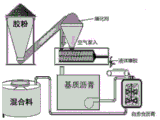
fig. 2 is a schematic view of a preparation process of the self-healing modified asphalt.
Detailed Description
As shown in fig. 1-2, a self-healing modified asphalt comprises the following components in percentage by weight:
more than or equal to 30 percent of liquid rubber, and the balance of matrix asphalt;
the liquid rubber is obtained by adding tire rubber powder and a certain amount of metal ion catalyst into a reaction type screw extruder, pumping air into the reaction type screw extruder and then extruding;
the self-healing modified asphalt is a mixture prepared by adding liquid rubber into matrix asphalt and then uniformly blending.
The tire rubber powder is fine powder processed and ground by waste tire rubber, and the particle size is 10-80 meshes.
The metal ion catalyst comprises manganese acetate, cobalt naphthenate and copper naphthenate.
The dosage of the metal ion catalyst is 0.01-0.5% of the mass of the tire rubber powder.
The preparation method of the self-healing modified asphalt comprises the following steps:
(1) adding tire rubber powder and a certain amount of metal ion catalyst into a reaction type screw extruder, simultaneously pumping air into the reaction type screw extruder, and then extruding to obtain liquid rubber after the tire rubber powder is degraded, wherein the extrusion temperature in the reaction type screw extruder is controlled to be 150-200 ℃ in the extrusion process;
(2) and (2) adding the liquid rubber obtained in the step (1) into the matrix asphalt, wherein the addition amount of the liquid rubber is at least 30% of the total weight of the final modified asphalt, and then uniformly stirring and mixing the liquid rubber and the matrix asphalt at the temperature of 120-160 ℃ to obtain the self-healing modified asphalt.
And (2) in the step (1), the device for pumping air into the reactive screw extruder is an air pumping device.
The reaction type screw extruder is provided with an air pumping device.
In the step (2), the liquid rubber obtained in the step (1) is added to the base asphalt in such a manner that the liquid rubber obtained in the step (1) is directly discharged into a base asphalt stirring tank.
The self-healing modified asphalt is applied to waterproof coiled materials or road construction.
A waterproof coiled material is added with the self-healing modified asphalt during preparation.
An asphalt pavement is prepared by adding the self-healing modified asphalt.
Example 1
Stirring and mixing 20-mesh rubber powder and 0.05% of cobalt naphthenate at a high speed, and processing the mixture by a reaction extrusion screw at 180 ℃ to obtain the low-Mooney liquid rubber with the sol content of 50%. Mixing with asphalt Zhehai No. 70 in 20% concentration, and stirring at 140 deg.c for 20 min to prepare the self-healing modified asphalt.
Example 2
Stirring and mixing 20-mesh rubber powder and 0.05% of cobalt naphthenate at a high speed, and processing the mixture by a reaction extrusion screw at 180 ℃ to obtain the low-Mooney liquid rubber with the sol content of 50%. Mixing with 30% of glue, adding Zhehai No. 70 asphalt, and stirring at 140 deg.C for 20 min to obtain self-healing modified asphalt.
Example 3
Stirring and mixing 20-mesh rubber powder and 0.05% of cobalt naphthenate at a high speed, and processing the mixture by a reaction extrusion screw at 180 ℃ to obtain the low-Mooney liquid rubber with the sol content of 50%. Mixing with 40% of glue, adding Zhehai No. 70 asphalt, and stirring at 140 deg.C for 20 min to obtain self-healing modified asphalt.
Comparative example 1
4% of SBS modified asphalt.
As can be seen from tables 1 and 2, the modified asphalt asphalts of examples 1 to 3 are excellent in high and low temperature properties relative to comparative example 1 and have good self-healing properties relative to comparative example 1, and the self-healing ability is improved as the liquid rubber content increases.
TABLE 1 test of self-healing modified asphalt outdoor pre-exposure asphalt
| Example 1 | Example 2 | Example 3 | Comparative example 1 | |
| Softening point of | 60.6 | 62.2 | 62.0 | 69.1 |
| Penetration of 0.1mm at 25 DEG C | 71.8 | 84.8 | 99.6 | 50.1 |
| Elongation at 5 ℃ cm | 10.5 | 15.0 | 14.3 | 25.3 |
| Storage for 48h at poor segregation | 0.2 | 1.0 | 1.0 | 1.2 |
TABLE 2 test of aged asphalt after outdoor exposure of self-healing modified asphalt
| Example 1 | Example 2 | Example 3 | Comparative example 1 | |
| Softening point of | 58.6 | 66.4 | 66.6 | 61.1 |
| Penetration of 0.1mm at 25 DEG C | 67.5 | 63.9 | 68.5 | 37.4 |
| Elongation at 5 ℃ cm | 4.5 | 15.4 | 10.7 | 0 |
The thickness of the asphalt film after one month of insolation and aging is 2 mm.
The visual results of the examples 1, 2 and 3 and the comparative example 1 after outdoor exposure are shown in fig. 1, and it can be seen that the self-healing effect of the self-healing modified asphalt is obviously better when the addition amount of the liquid rubber is more than or equal to 30% of the total weight of the modified asphalt.
The above description is only an embodiment of the present invention, but the scope of the present invention is not limited thereto, and any changes or substitutions that are not thought of through the inventive work should be included in the scope of the present invention. Therefore, the protection scope of the present invention shall be subject to the protection scope defined by the claims.
Claims (9)
1. The self-healing modified asphalt is characterized by comprising the following components in percentage by weight:
more than or equal to 30 percent of liquid rubber, and the balance of matrix asphalt;
the liquid rubber is obtained by adding tire rubber powder and a certain amount of metal ion catalyst into a reaction type screw extruder, pumping air into the reaction type screw extruder and then extruding;
the self-healing modified asphalt is a mixture prepared by adding liquid rubber into matrix asphalt and then uniformly blending.
2. A self-healing modified asphalt according to claim 1, wherein the tire rubber powder is fine powder of waste tire rubber processed and ground, and the particle size is 10-80 mesh.
3. A self-healing modified asphalt according to claim 1, wherein the metal ion catalyst comprises manganese acetate, cobalt naphthenate, copper naphthenate.
4. A self-healing modified asphalt according to claim 1, wherein the amount of the metal ion catalyst is 0.01 to 0.5% by mass of the tire crumb rubber.
5. A method for preparing self-healing modified asphalt according to any one of claims 1 to 4, comprising the steps of:
(1) adding tire rubber powder and a certain amount of metal ion catalyst into a reaction type screw extruder, simultaneously pumping air into the reaction type screw extruder, and then extruding to obtain liquid rubber after the tire rubber powder is degraded, wherein the extrusion temperature in the reaction type screw extruder is controlled to be 150-200 ℃ in the extrusion process;
(2) and (2) adding the liquid rubber obtained in the step (1) into the matrix asphalt, wherein the addition amount of the liquid rubber is at least 30% of the total weight of the final modified asphalt, and then uniformly stirring and mixing the liquid rubber and the matrix asphalt at the temperature of 120-160 ℃ to obtain the self-healing modified asphalt.
6. The production method according to claim 5, wherein the means for pumping air into the reactive screw extruder in the step (1) is an air pumping means.
7. The method according to claim 5, wherein the reactive screw extruder is provided with an air pumping device.
8. A waterproof roll characterized in that the self-healing modified asphalt of any one of claims 1 to 4 is added during preparation.
9. An asphalt pavement characterized by being prepared by adding the self-healing modified asphalt according to any one of claims 1 to 4.
Priority Applications (1)
| Application Number | Priority Date | Filing Date | Title |
|---|---|---|---|
| CN202010749385.7A CN111925659A (en) | 2020-07-30 | 2020-07-30 | Self-healing modified asphalt and preparation method and application thereof |
Applications Claiming Priority (1)
| Application Number | Priority Date | Filing Date | Title |
|---|---|---|---|
| CN202010749385.7A CN111925659A (en) | 2020-07-30 | 2020-07-30 | Self-healing modified asphalt and preparation method and application thereof |
Publications (1)
| Publication Number | Publication Date |
|---|---|
| CN111925659A true CN111925659A (en) | 2020-11-13 |
Family
ID=73315864
Family Applications (1)
| Application Number | Title | Priority Date | Filing Date |
|---|---|---|---|
| CN202010749385.7A Pending CN111925659A (en) | 2020-07-30 | 2020-07-30 | Self-healing modified asphalt and preparation method and application thereof |
Country Status (1)
| Country | Link |
|---|---|
| CN (1) | CN111925659A (en) |
Cited By (1)
| Publication number | Priority date | Publication date | Assignee | Title |
|---|---|---|---|---|
| CN114381131A (en) * | 2021-11-22 | 2022-04-22 | 中远海运国际贸易有限公司 | Liquid rubber master batch and preparation method thereof, anti-aging high-toughness waterproof asphalt material and preparation method thereof |
Citations (6)
| Publication number | Priority date | Publication date | Assignee | Title |
|---|---|---|---|---|
| CN102601975A (en) * | 2012-03-15 | 2012-07-25 | 北京化工大学 | Method for continuously preparing liquid reclaimed rubber by aid of screw extruder |
| US20130217809A1 (en) * | 2012-02-20 | 2013-08-22 | Krzysztof Formela | Method for Producing Rubber Powder Modified Asphalt and Product of Continuous Asphalt Modification |
| CN104130482A (en) * | 2014-08-12 | 2014-11-05 | 天津海泰环保科技发展有限公司 | Pasty liquid rubber and preparation method thereof |
| CN104448866A (en) * | 2014-12-12 | 2015-03-25 | 天津海泰环保科技发展有限公司 | Liquid rubber and crude rubber powder compound-modified asphalt and preparation method thereof |
| CN104693821A (en) * | 2015-02-16 | 2015-06-10 | 北京路德永泰环保科技有限公司 | Bituminous mixture using DVS (direct vat set) high-adhesion modifier and preparation method thereof |
| CN104830076A (en) * | 2015-04-15 | 2015-08-12 | 江阴市宝利沥青新材料有限公司 | Method for preparing rubber waste cracking converted modified asphalt |
-
2020
- 2020-07-30 CN CN202010749385.7A patent/CN111925659A/en active Pending
Patent Citations (6)
| Publication number | Priority date | Publication date | Assignee | Title |
|---|---|---|---|---|
| US20130217809A1 (en) * | 2012-02-20 | 2013-08-22 | Krzysztof Formela | Method for Producing Rubber Powder Modified Asphalt and Product of Continuous Asphalt Modification |
| CN102601975A (en) * | 2012-03-15 | 2012-07-25 | 北京化工大学 | Method for continuously preparing liquid reclaimed rubber by aid of screw extruder |
| CN104130482A (en) * | 2014-08-12 | 2014-11-05 | 天津海泰环保科技发展有限公司 | Pasty liquid rubber and preparation method thereof |
| CN104448866A (en) * | 2014-12-12 | 2015-03-25 | 天津海泰环保科技发展有限公司 | Liquid rubber and crude rubber powder compound-modified asphalt and preparation method thereof |
| CN104693821A (en) * | 2015-02-16 | 2015-06-10 | 北京路德永泰环保科技有限公司 | Bituminous mixture using DVS (direct vat set) high-adhesion modifier and preparation method thereof |
| CN104830076A (en) * | 2015-04-15 | 2015-08-12 | 江阴市宝利沥青新材料有限公司 | Method for preparing rubber waste cracking converted modified asphalt |
Non-Patent Citations (1)
| Title |
|---|
| 王仕峰等: ""螺杆反应挤出脱硫橡胶技术的研究与应用进展"", 《中国轮胎资源综合利用》 * |
Cited By (1)
| Publication number | Priority date | Publication date | Assignee | Title |
|---|---|---|---|---|
| CN114381131A (en) * | 2021-11-22 | 2022-04-22 | 中远海运国际贸易有限公司 | Liquid rubber master batch and preparation method thereof, anti-aging high-toughness waterproof asphalt material and preparation method thereof |
Similar Documents
| Publication | Publication Date | Title |
|---|---|---|
| CN102174267B (en) | Asphalt cold recycling agent and preparation method thereof | |
| CN104830076B (en) | A kind of preparation method of scrap rubber cracking conversion modified pitch | |
| CN109705365B (en) | Preparation method of environment-friendly composite modified asphalt | |
| CN114395267B (en) | Epoxy asphalt and preparation method and application thereof | |
| CN116813993A (en) | A kind of anti-water damage asphalt modifier and its preparation method and application | |
| CN113861707B (en) | Self-leveling asphalt cement for repairing pavement pit and slot and preparation method thereof | |
| CN111925659A (en) | Self-healing modified asphalt and preparation method and application thereof | |
| CN118562308A (en) | High-mixing-amount activated rubber powder modified asphalt and preparation method thereof | |
| CN104845391B (en) | A kind of preparation method and its usage of high durable bituminous cements | |
| CN114316357A (en) | Preparation method of reactive rubber for modified asphalt | |
| CN118221386B (en) | A solvent-based cold patch asphalt mixture based on asphalt milling material and a preparation method thereof | |
| CN105541181A (en) | Rubber powder pavement material and construction method thereof | |
| CN117534370B (en) | Resin asphalt concrete and preparation method thereof | |
| CN111995808A (en) | Instant high-adhesion golden asphalt modified material, preparation method and application | |
| CN118495857A (en) | Epoxy asphalt-based pavement old material and steel slag recycling mixture and preparation method thereof | |
| CN116731415A (en) | Waste plastic composite modifier and preparation method thereof | |
| CN102174266B (en) | Asphalt cold recycling agent and preparation method thereof | |
| CN115124279A (en) | Preparation method of 100% RAP warm-mixed recycled asphalt mixture | |
| CN114605844A (en) | Ultraviolet light aging resistant desulfurized rubber powder modified asphalt and preparation method thereof | |
| CN116333507B (en) | Steel slag doped asphalt concrete super-tough high-strength wearing layer and preparation thereof | |
| CN118495861B (en) | Concrete material containing modified rubber material and preparation method | |
| CN117624753B (en) | Direct-casting type quick-melting adhesive powder modifier, regenerated asphalt mixture and preparation method thereof | |
| CN112029301A (en) | A kind of waste printed circuit board non-metallic powder modified asphalt and preparation method thereof | |
| CN117736588A (en) | UV-cured regenerated emulsified cold-patch asphalt and preparation method and application thereof | |
| CN119930241B (en) | Low-carbon high-performance composite pavement material and preparation method thereof |
Legal Events
| Date | Code | Title | Description |
|---|---|---|---|
| PB01 | Publication | ||
| PB01 | Publication | ||
| SE01 | Entry into force of request for substantive examination | ||
| SE01 | Entry into force of request for substantive examination | ||
| RJ01 | Rejection of invention patent application after publication |
Application publication date: 20201113 |
|
| RJ01 | Rejection of invention patent application after publication |