CN111982967A - Permanent magnet-based magnetic saturation pulse eddy current infrared nondestructive evaluation method - Google Patents
Permanent magnet-based magnetic saturation pulse eddy current infrared nondestructive evaluation method Download PDFInfo
- Publication number
- CN111982967A CN111982967A CN202010852766.8A CN202010852766A CN111982967A CN 111982967 A CN111982967 A CN 111982967A CN 202010852766 A CN202010852766 A CN 202010852766A CN 111982967 A CN111982967 A CN 111982967A
- Authority
- CN
- China
- Prior art keywords
- ferromagnetic material
- thermal imager
- infrared thermal
- eddy current
- heating coil
- Prior art date
- Legal status (The legal status is an assumption and is not a legal conclusion. Google has not performed a legal analysis and makes no representation as to the accuracy of the status listed.)
- Pending
Links
Images


Classifications
-
- G—PHYSICS
- G01—MEASURING; TESTING
- G01N—INVESTIGATING OR ANALYSING MATERIALS BY DETERMINING THEIR CHEMICAL OR PHYSICAL PROPERTIES
- G01N25/00—Investigating or analyzing materials by the use of thermal means
- G01N25/72—Investigating presence of flaws
-
- H—ELECTRICITY
- H05—ELECTRIC TECHNIQUES NOT OTHERWISE PROVIDED FOR
- H05B—ELECTRIC HEATING; ELECTRIC LIGHT SOURCES NOT OTHERWISE PROVIDED FOR; CIRCUIT ARRANGEMENTS FOR ELECTRIC LIGHT SOURCES, IN GENERAL
- H05B6/00—Heating by electric, magnetic or electromagnetic fields
- H05B6/02—Induction heating
- H05B6/06—Control, e.g. of temperature, of power
-
- H—ELECTRICITY
- H05—ELECTRIC TECHNIQUES NOT OTHERWISE PROVIDED FOR
- H05B—ELECTRIC HEATING; ELECTRIC LIGHT SOURCES NOT OTHERWISE PROVIDED FOR; CIRCUIT ARRANGEMENTS FOR ELECTRIC LIGHT SOURCES, IN GENERAL
- H05B6/00—Heating by electric, magnetic or electromagnetic fields
- H05B6/02—Induction heating
- H05B6/10—Induction heating apparatus, other than furnaces, for specific applications
-
- H—ELECTRICITY
- H05—ELECTRIC TECHNIQUES NOT OTHERWISE PROVIDED FOR
- H05B—ELECTRIC HEATING; ELECTRIC LIGHT SOURCES NOT OTHERWISE PROVIDED FOR; CIRCUIT ARRANGEMENTS FOR ELECTRIC LIGHT SOURCES, IN GENERAL
- H05B6/00—Heating by electric, magnetic or electromagnetic fields
- H05B6/02—Induction heating
- H05B6/36—Coil arrangements
Landscapes
- Physics & Mathematics (AREA)
- Electromagnetism (AREA)
- Health & Medical Sciences (AREA)
- Life Sciences & Earth Sciences (AREA)
- Chemical & Material Sciences (AREA)
- Analytical Chemistry (AREA)
- Biochemistry (AREA)
- General Health & Medical Sciences (AREA)
- General Physics & Mathematics (AREA)
- Immunology (AREA)
- Pathology (AREA)
- Investigating Or Analyzing Materials Using Thermal Means (AREA)
- Investigating Or Analyzing Materials By The Use Of Magnetic Means (AREA)
Abstract
一种基于永磁铁的磁饱和脉冲涡流红外无损评价方法,首先通过计算机控制程序控制器同步触发感应加热器和红外热像仪,感应加热器接收到触发信号的同时给与加热头相连的加热线圈施加一个脉冲电流激励,冷却装置同时对感应加热器、加热头和加热线圈进行冷却;永磁铁周围产生较强的静态磁场,铁磁性材料在永磁铁的作用下达到磁饱和,然后在加热线圈的作用下产生焦耳热,通过热传导引起材料表面温度的变化;最后通过红外热像仪采集温度的变化并通过分析采集到的图像序列对铁磁性材料进行缺陷无损评价。相较于传统的脉冲涡流红外无损检测方法,本发明方法对铁磁性材料的检测深度更大,具有广泛的应用前景。
A magnetic saturation pulse eddy current infrared nondestructive evaluation method based on permanent magnets. Firstly, the induction heater and the infrared thermal imager are triggered synchronously through the computer control program controller. The induction heater receives the trigger signal and simultaneously sends the heating coil connected to the heating head. Applying a pulse current excitation, the cooling device cools the induction heater, the heating head and the heating coil at the same time; a strong static magnetic field is generated around the permanent magnet, the ferromagnetic material reaches magnetic saturation under the action of the permanent magnet, and then the heating coil is heated. Under the action, Joule heat is generated, and the surface temperature of the material changes through heat conduction; finally, the temperature change is collected by an infrared thermal imager, and the ferromagnetic material is evaluated nondestructively by analyzing the collected image sequence. Compared with the traditional pulsed eddy current infrared nondestructive testing method, the method of the present invention has a greater detection depth for ferromagnetic materials and has a wide application prospect.
Description
技术领域technical field
本发明涉及铁磁性材料缺陷脉冲涡流红外无损检测领域,具体涉及一种基于永磁铁的磁饱和脉冲涡流红外无损评价方法。The invention relates to the field of pulsed eddy current infrared nondestructive testing of ferromagnetic material defects, in particular to a magnetic saturation pulsed eddy current infrared nondestructive evaluation method based on a permanent magnet.
背景技术Background technique
铁磁性材料是现代工农业生产的主要支柱材料之一,铁磁性材料的产品是表示一个国家经济发展程度的指标,其需求则能粗略体现一个国家的国民生活水平。作为一种基础功能材料,铁磁性材料应用于生活的方方面面,目前铁磁性材料主要应用于电信、电机、电视机和计算机的存储设备等方面。铁磁性材料与工件内的各种缺陷是现代工业设备、产品和武器的严重隐患,所以,在工业生产中,必须对铁磁性材料进行严格的检测。Ferromagnetic material is one of the main pillar materials of modern industrial and agricultural production. The product of ferromagnetic material is an indicator of the economic development level of a country, and its demand can roughly reflect the living standard of a country. As a basic functional material, ferromagnetic materials are used in all aspects of life. At present, ferromagnetic materials are mainly used in telecommunications, motors, televisions and computer storage devices. Various defects in ferromagnetic materials and workpieces are serious hidden dangers of modern industrial equipment, products and weapons. Therefore, in industrial production, ferromagnetic materials must be strictly tested.
脉冲涡流红外是一种新兴的无损检测技术,具有非接触、观测范围大和分辨率高等优点。脉冲涡流红外无损检测技术通过激励线圈中的高频激励电流对物体施加交变磁场,再通过红外热像仪采集物体表面温度变化的图像序列,最后通过分析温度图像序列即可对物体进行无损检测和无损评估。Pulsed eddy current infrared is an emerging non-destructive testing technology, which has the advantages of non-contact, large observation range and high resolution. The pulsed eddy current infrared non-destructive testing technology applies an alternating magnetic field to the object through the high-frequency excitation current in the excitation coil, and then collects the image sequence of the surface temperature change of the object through an infrared thermal imager. Finally, the object can be non-destructively tested by analyzing the temperature image sequence. and nondestructive evaluation.
由于脉冲涡流红外采用的激励频率非常高,而铁磁性材料的相对磁导率又很大,所以利用脉冲涡流红外无损检测方法对铁磁性材料进行检测的过程中,涡流场的渗透深度较小,即焦耳热源的深度很小,因此铁磁性材料中相对较深位置处的缺陷很难被检出。幸运的是,铁磁性材料在一定强度的外加磁场中能够达到磁饱和状态,即相对磁导率会减小,涡流场的渗透深度会增大,即焦耳热源的深度变大。因此,从机理分析,利用脉冲涡流红外无损检测方法检测处于磁饱和状态下的铁磁性材料将能够检测到更深位置处的缺陷。Since the excitation frequency used by pulsed eddy current infrared is very high, and the relative permeability of ferromagnetic materials is very large, the penetration depth of the eddy current field is small in the process of using the pulsed eddy current infrared nondestructive testing method to detect ferromagnetic materials. That is, the depth of the Joule heat source is small, so defects at relatively deep locations in ferromagnetic materials are difficult to detect. Fortunately, ferromagnetic materials can reach a state of magnetic saturation in a certain strength of an external magnetic field, that is, the relative permeability will decrease, and the penetration depth of the eddy current field will increase, that is, the depth of the Joule heat source will increase. Therefore, from the mechanism analysis, the use of pulsed eddy current infrared nondestructive testing method to detect ferromagnetic materials in the state of magnetic saturation will be able to detect defects at deeper positions.
发明内容SUMMARY OF THE INVENTION
为了达到上述利用脉冲涡流红外无损检测方法检测铁磁性材料缺陷的目的,本发明的目的在于提供一种基于永磁铁的磁饱和脉冲涡流红外无损评价方法,该方法实验装置由计算机、程序控制器、感应加热器、加热头、加热线圈、冷却装置、永磁铁和红外热像仪组成;实现该方法时,首先通过计算机控制程序控制器同步触发感应加热器和红外热像仪,感应加热器接收到触发信号的同时给与加热头相连的加热线圈施加一个脉冲电流激励,冷却装置同时对感应加热器、加热头和加热线圈进行冷却;铁磁性材料在永磁铁的作用下会达到磁饱和,然后在加热线圈的作用下产生焦耳热,通过热传导引起材料表面温度的变化;最后通过红外热像仪采集温度的变化并通过分析采集到的图像序列对铁磁性材料进行缺陷无损评价。相较于传统的脉冲涡流红外无损检测方法,本发明方法对铁磁性材料的检测深度更大,具有广泛的应用前景。In order to achieve the above-mentioned purpose of using the pulsed eddy current infrared nondestructive testing method to detect the defects of ferromagnetic materials, the purpose of the present invention is to provide a magnetic saturation pulsed eddy current infrared nondestructive evaluation method based on a permanent magnet. The induction heater, the heating head, the heating coil, the cooling device, the permanent magnet and the infrared thermal imager are composed; when the method is realized, the induction heater and the infrared thermal imager are firstly triggered synchronously by the computer control program controller, and the induction heater receives the At the same time of triggering the signal, a pulse current excitation is applied to the heating coil connected to the heating head, and the cooling device cools the induction heater, the heating head and the heating coil at the same time; the ferromagnetic material will reach magnetic saturation under the action of the permanent magnet, and then Joule heat is generated under the action of the heating coil, which causes the change of the surface temperature of the material through heat conduction; finally, the temperature change is collected by an infrared thermal imager, and the ferromagnetic material is evaluated nondestructively by analyzing the collected image sequence. Compared with the traditional pulsed eddy current infrared nondestructive testing method, the method of the present invention has a greater detection depth for ferromagnetic materials and has a wide application prospect.
为达到以上目的,本发明采用如下技术方案:To achieve the above object, the present invention adopts the following technical solutions:
一种基于永磁铁的磁饱和脉冲涡流红外无损评价方法,用于对铁磁性材料中的缺陷进行定位和定量评价,包括如下步骤:A magnetic saturation pulsed eddy current infrared nondestructive evaluation method based on permanent magnets is used to locate and quantitatively evaluate defects in ferromagnetic materials, including the following steps:
步骤1:搭建实验装置,该实验装置由计算机、程序控制器、感应加热器、冷却装置、加热头、加热线圈、永磁铁和红外热像仪组成;其中计算机控制程序控制器并接收红外热像仪采集的图像序列,程序控制器同步触发感应加热器和红外热像仪;感应加热器接收到触发信号后施加脉冲激励电流给与加热头相连的加热线圈,加热线圈和永磁铁放置于铁磁性材料上方,同时冷却装置对感应加热器、加热头和加热线圈进行冷却;红外热像仪接收到来自程序控制器的触发信号后开始采集铁磁性材料的图像序列并将图像序列传输给计算机;Step 1: Build an experimental device, which consists of a computer, a program controller, an induction heater, a cooling device, a heating head, a heating coil, a permanent magnet and an infrared thermal imager; the computer controls the program controller and receives the infrared thermal image. After receiving the trigger signal, the induction heater applies a pulse excitation current to the heating coil connected to the heating head, and the heating coil and the permanent magnet are placed on the ferromagnetic Above the material, the cooling device cools the induction heater, the heating head and the heating coil at the same time; the infrared thermal imager starts to collect the image sequence of the ferromagnetic material after receiving the trigger signal from the program controller and transmits the image sequence to the computer;
步骤2:首先打开冷却装置并将永磁铁和加热线圈放置于铁磁性材料上方,然后对红外热像仪进行温度校准,校准完毕后进行调焦操作,保证铁磁性材料在红外热像仪中的图像清晰,同时红外热像仪与加热线圈之间的距离和红外热像仪与永磁铁之间的距离均必须大于500mm,防止加热线圈产生的磁场和永磁铁产生的磁场影响红外热像仪的性能;Step 2: First turn on the cooling device and place the permanent magnet and heating coil above the ferromagnetic material, then calibrate the temperature of the infrared thermal imager. After calibration, perform the focusing operation to ensure the ferromagnetic material in the infrared thermal imager. The image is clear, and the distance between the infrared thermal imager and the heating coil and the distance between the infrared thermal imager and the permanent magnet must be greater than 500mm to prevent the magnetic field generated by the heating coil and the permanent magnet from affecting the thermal imager. performance;
步骤3:在程序控制器中设置感应加热器给加热线圈施加的激励电流的参数,包括:电流幅值、激励频率和激励时间;然后在程序控制器中设置红外热像仪采集图像序列的参数,包括:采样频率和总的采集时间;总的采集时间必须大于激励时间;Step 3: Set the parameters of the excitation current applied by the induction heater to the heating coil in the program controller, including: current amplitude, excitation frequency and excitation time; then set the parameters of the infrared thermal imager to capture the image sequence in the program controller , including: sampling frequency and total acquisition time; total acquisition time must be greater than excitation time;
步骤4:用计算机控制程序控制器同时给感应加热器和红外热像仪一个触发信号,感应加热器接收到触发信号的同时给加热线圈施加一个脉冲激励电流,激励波形表达式如式(1)所示;与此同时,当红外热像仪接收到来自程序控制器发出的触发信号时,开始采集铁磁性材料表面温度的变化;Step 4: Use the computer to control the program controller to give a trigger signal to the induction heater and the infrared thermal imager at the same time. When the induction heater receives the trigger signal, a pulse excitation current is applied to the heating coil. The excitation waveform expression is as formula (1) shown; at the same time, when the infrared thermal imager receives the trigger signal from the program controller, it starts to collect the change of the surface temperature of the ferromagnetic material;
I(t)=I0×(1-e-10000t)×sin(ωt) (1)I(t)=I 0 ×(1-e -10000t )×sin(ωt) (1)
式中:I(t)表示t时刻的激励电流值,I0表示脉冲激励电流的幅值,ω为脉冲激励电流的角频率,t为时间;In the formula: I(t) represents the excitation current value at time t, I 0 represents the amplitude of the pulse excitation current, ω is the angular frequency of the pulse excitation current, and t is the time;
加热线圈中的脉冲电流会在空间激发交变磁场,铁磁性材料在交变磁场中会产生涡流;在永磁铁产生的恒定磁场的作用下,铁磁性材料达到磁饱和状态,铁磁性材料的磁导率降低,从而导致涡流在铁磁性材料中的渗透深度增大;根据焦耳定律可知,部分涡流会在材料内部由电能转化为热能,且产生的焦耳热Q正比于涡流密度Js和电场密度E:The pulse current in the heating coil will excite the alternating magnetic field in space, and the ferromagnetic material will generate eddy current in the alternating magnetic field; under the action of the constant magnetic field generated by the permanent magnet, the ferromagnetic material will reach the magnetic saturation state, and the magnetic field of the ferromagnetic material will The conductivity decreases, which leads to an increase in the penetration depth of the eddy current in the ferromagnetic material; according to Joule's law, part of the eddy current will be converted from electrical energy to heat energy inside the material, and the generated Joule heat Q is proportional to the eddy current density J s and the electric field density E:

式中:σ表示铁磁性材料的电导率;Js表示涡流密度;E表示电场强度,其表达式由式(3)表示;In the formula: σ represents the electrical conductivity of the ferromagnetic material; J s represents the eddy current density; E represents the electric field strength, and its expression is expressed by equation (3);

式中:A表示磁矢位,可由式(4)得到;t表示时间;In the formula: A represents the magnetic vector potential, which can be obtained from formula (4); t represents the time;

式中:μ表示铁磁性材料的磁导率;In the formula: μ represents the permeability of the ferromagnetic material;
由涡流产生的焦耳热Q将会在铁磁性材料内部传播,其传播规律遵循式(5);The Joule heat Q generated by the eddy current will propagate inside the ferromagnetic material, and its propagation law follows the formula (5);

式中:ρ表示铁磁性材料的密度;Cp表示铁磁性材料的比热容;k表示铁磁性材料的热导率;T表示温度;Q表示焦耳热;In the formula: ρ represents the density of the ferromagnetic material; C p represents the specific heat capacity of the ferromagnetic material; k represents the thermal conductivity of the ferromagnetic material; T represents the temperature; Q represents the Joule heat;
当铁磁性材料表面或内部存在缺陷时,这些缺陷一方面影响涡流场的分布(即影响焦耳热源的分布),另一方面也会影响热传导的过程,导致铁磁性材料表面温度分布不均匀,最终会在红外热像仪采集的图像序列中体现出来;由于在永磁铁产生的恒定磁场的作用下,铁磁性材料的相对磁导率减小,涡流的渗透增大,所以热传导的深度更大,从而相比于传统的脉冲涡流红外无损检测方法,本发明方法对更深处缺陷的检测能力增强;When there are defects on the surface or inside of ferromagnetic materials, on the one hand, these defects affect the distribution of the eddy current field (that is, the distribution of Joule heat sources), and on the other hand, they also affect the process of heat conduction, resulting in uneven temperature distribution on the surface of ferromagnetic materials. It will be reflected in the image sequence collected by the infrared thermal imager; under the action of the constant magnetic field generated by the permanent magnet, the relative permeability of the ferromagnetic material decreases and the penetration of the eddy current increases, so the depth of heat conduction is greater, Therefore, compared with the traditional pulsed eddy current infrared nondestructive testing method, the detection ability of the method of the present invention for deeper defects is enhanced;
步骤5:通过红外热像仪采集到的图像序列对铁磁性材料中的缺陷进行定位和定量;由于铁磁性材料表面或内部的缺陷会影响热传导的过程,所以缺陷附近的温度分布与无缺陷部分的温度分布具有较大的差异,通过分析红外热像仪采集到的图像序列上的温度分布云图即可对铁磁性材料中的缺陷进行定位和定量。Step 5: Locate and quantify the defects in the ferromagnetic material through the image sequence collected by the infrared thermal imager; since the defects on the surface or inside of the ferromagnetic material will affect the process of heat conduction, the temperature distribution near the defect is related to the defect-free part. The temperature distribution of the ferromagnetic material has a large difference, and the defects in the ferromagnetic material can be located and quantified by analyzing the temperature distribution cloud map on the image sequence collected by the infrared thermal imager.
和现有技术相比,本发明的优点如下:Compared with the prior art, the advantages of the present invention are as follows:
1)本发明提出了一种基于永磁铁的磁饱和脉冲涡流红外无损评价方法,与传统铁磁性材料测量方法相比,本发明方法具有非接触、观测范围大、分辨率高、检测速度快等优点;1) The present invention proposes a magnetic saturation pulsed eddy current infrared nondestructive evaluation method based on permanent magnets. Compared with the traditional ferromagnetic material measurement method, the method of the present invention has the advantages of non-contact, large observation range, high resolution, fast detection speed, etc. advantage;
2)与传统脉冲涡流红外无损检测方法相比,本发明方法对铁磁性材料缺陷的检测深度更大,实验系统搭建简便,操作简单,具有广泛的应用前景。2) Compared with the traditional pulsed eddy current infrared non-destructive testing method, the method of the present invention has a greater detection depth for the defects of ferromagnetic materials, the experimental system is simple to build, the operation is simple, and has a wide application prospect.
附图说明Description of drawings
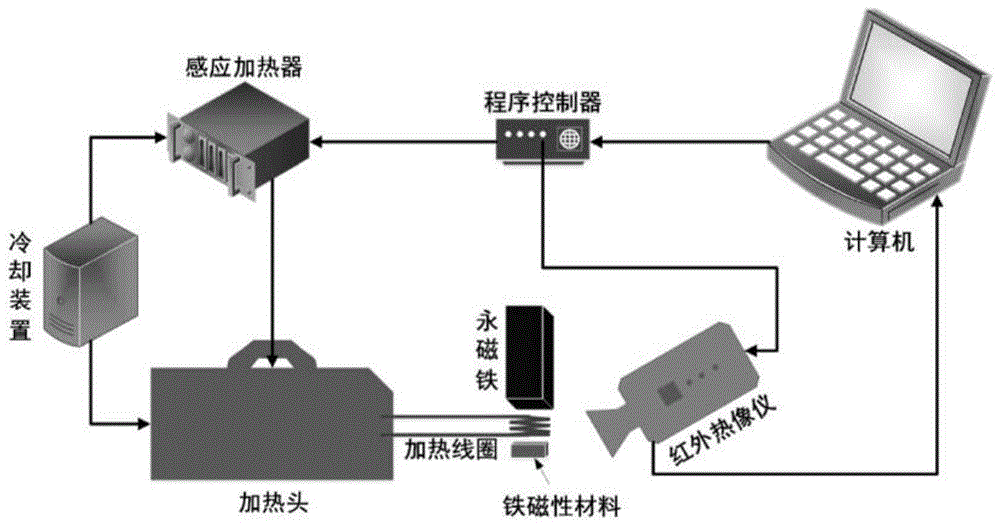
图1为本发明中应用的基于永磁铁的磁饱和脉冲涡流红外无损评价系统各组件连接示意图。FIG. 1 is a schematic diagram of the connection of each component of the permanent magnet-based magnetic saturation pulsed eddy current infrared nondestructive evaluation system applied in the present invention.
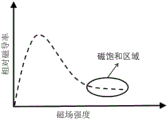
图2为铁磁性材料相对磁导率随磁场强度变化示意图。FIG. 2 is a schematic diagram showing the relative permeability of ferromagnetic materials changing with the strength of the magnetic field.
图3(a)为本发明中被测铁磁性材料试件中缺陷对涡流场分布的扰动示意图俯视图。Fig. 3(a) is a schematic top view of the disturbance of the eddy current field distribution by the defects in the ferromagnetic material specimen to be tested in the present invention.
图3(b)为本发明中被测铁磁性材料试件中缺陷对涡流场分布的扰动示意图主视图。Fig. 3(b) is a schematic front view of the disturbance of the eddy current field distribution by the defects in the ferromagnetic material specimen to be tested in the present invention.
具体实施方式Detailed ways
下面结合附图和具体实施方式对本发明做进一步详细说明:The present invention will be described in further detail below in conjunction with the accompanying drawings and specific embodiments:
对于图1中所示的铁磁性材料被测试件,本发明方法的检测步骤为:如图1所示该方法采用的实验装置由计算机、程序控制器、感应加热器、冷却装置、加热头、加热线圈、永磁铁和红外热像仪组成。按图1所示的连接方式将计算机与程序控制器相连,计算机通过程序控制器同步触发与程序控制器相连的感应加热器和红外热像仪。感应加热器接收到触发信号的同时给与加热头相连的加热线圈施加一个脉冲电流激励。感应加热器、加热头和加热线圈都与冷却装置相连,冷却装置利用装置中循环流动的冷却水对感应加热器、加热头和加热线圈进行冷却。由图2可知,铁磁性材料的相对磁导率随着磁场强度的增加而减小,最终达到饱和。所以铁磁性材料会在图1中所示的永磁铁产生的磁场中达到磁饱和,然后在加热线圈的作用下产生涡流,涡流继而产生焦耳热,从而引起材料表面温度的变化。当铁磁性材料中存在缺陷时,如图3(a)和图3(b)所示,缺陷会影响涡流的分布,继而影响材料表面温度场的分布。最后通过红外热像仪采集温度的变化并通过分析采集到的图像序列对铁磁性材料进行无损评价。下面结合具体实施例对本发明作进一步的详细描述。For the test piece of ferromagnetic material shown in Figure 1, the detection steps of the method of the present invention are as follows: as shown in Figure 1, the experimental device used in the method consists of a computer, a program controller, an induction heater, a cooling device, a heating head, It consists of heating coil, permanent magnet and infrared thermal imager. The computer is connected to the program controller according to the connection mode shown in Figure 1, and the computer triggers the induction heater and the infrared thermal imager connected to the program controller synchronously through the program controller. When the induction heater receives the trigger signal, it applies a pulse current excitation to the heating coil connected to the heating head. The induction heater, the heating head and the heating coil are all connected with the cooling device, and the cooling device cools the induction heater, the heating head and the heating coil by using cooling water circulating in the device. It can be seen from Figure 2 that the relative permeability of the ferromagnetic material decreases with the increase of the magnetic field strength, and finally reaches saturation. Therefore, the ferromagnetic material will reach magnetic saturation in the magnetic field generated by the permanent magnet shown in Figure 1, and then eddy currents will be generated under the action of the heating coil, and the eddy currents will then generate Joule heat, which will cause changes in the surface temperature of the material. When there are defects in ferromagnetic materials, as shown in Fig. 3(a) and Fig. 3(b), the defects will affect the distribution of eddy currents, which in turn affects the distribution of the temperature field on the surface of the material. Finally, the temperature change is collected by an infrared thermal imager and the non-destructive evaluation of the ferromagnetic material is carried out by analyzing the collected image sequence. The present invention will be further described in detail below with reference to specific embodiments.
一种基于永磁铁的磁饱和脉冲涡流红外实验系统及无损评价方法,包括如下步骤:A magnetic saturation pulsed eddy current infrared experiment system and a nondestructive evaluation method based on a permanent magnet, comprising the following steps:
步骤1:搭建实验装置,该实验装置由计算机、程序控制器、感应加热器、冷却装置、加热头、加热线圈、永磁铁和红外热像仪组成;其中计算机控制程序控制器并接收红外热像仪采集的图像序列,程序控制器同步触发感应加热器和红外热像仪;感应加热器接收到触发信号后施加脉冲激励电流给与加热头相连的加热线圈,加热线圈和永磁铁放置于铁磁性材料上方,同时冷却装置对感应加热器、加热头和加热线圈进行冷却;红外热像仪接收到来自程序控制器的触发信号后开始采集铁磁性材料的图像序列并将图像序列传输给计算机;Step 1: Build an experimental device, which consists of a computer, a program controller, an induction heater, a cooling device, a heating head, a heating coil, a permanent magnet and an infrared thermal imager; the computer controls the program controller and receives the infrared thermal image. After receiving the trigger signal, the induction heater applies a pulse excitation current to the heating coil connected to the heating head, and the heating coil and the permanent magnet are placed on the ferromagnetic Above the material, the cooling device cools the induction heater, the heating head and the heating coil at the same time; the infrared thermal imager starts to collect the image sequence of the ferromagnetic material after receiving the trigger signal from the program controller and transmits the image sequence to the computer;
步骤2:首先打开冷却装置并将永磁铁和加热线圈放置于铁磁性材料上方,然后对红外热像仪进行温度校准,校准完毕后进行调焦操作,保证铁磁性材料在红外热像仪中的图像清晰,同时红外热像仪与加热线圈之间的距离和红外热像仪与永磁铁之间的距离均必须大于500mm,防止加热线圈产生的磁场和永磁铁产生的磁场影响红外热像仪的性能;Step 2: First turn on the cooling device and place the permanent magnet and heating coil above the ferromagnetic material, then calibrate the temperature of the infrared thermal imager. After calibration, perform the focusing operation to ensure the ferromagnetic material in the infrared thermal imager. The image is clear, and the distance between the infrared thermal imager and the heating coil and the distance between the infrared thermal imager and the permanent magnet must be greater than 500mm to prevent the magnetic field generated by the heating coil and the permanent magnet from affecting the thermal imager. performance;
步骤3:在程序控制器中设置感应加热器给加热线圈施加的激励电流的参数,包括:电流幅值、激励频率和激励时间;然后在程序控制器中设置红外热像仪采集图像序列的参数,包括:采样频率和总的采集时间;总的采集时间必须大于激励时间;Step 3: Set the parameters of the excitation current applied by the induction heater to the heating coil in the program controller, including: current amplitude, excitation frequency and excitation time; then set the parameters of the infrared thermal imager to capture the image sequence in the program controller , including: sampling frequency and total acquisition time; total acquisition time must be greater than excitation time;
步骤4:用计算机控制程序控制器同时给感应加热器和红外热像仪一个触发信号,感应加热器接收到触发信号的同时给加热线圈施加一个脉冲激励电流,激励波形表达式如式(1)所示;与此同时,当红外热像仪接收到来自程序控制器发出的触发信号时,开始采集铁磁性材料表面温度的变化。Step 4: Use the computer to control the program controller to give a trigger signal to the induction heater and the infrared thermal imager at the same time. When the induction heater receives the trigger signal, a pulse excitation current is applied to the heating coil. The excitation waveform expression is as formula (1) At the same time, when the infrared thermal imager receives the trigger signal from the program controller, it starts to collect the change of the surface temperature of the ferromagnetic material.
I(t)=I0×(1-e-10000t)×sin(ωt) (1)I(t)=I 0 ×(1-e -10000t )×sin(ωt) (1)
式中:I(t)表示t时刻的激励电流值,I0表示脉冲激励电流的幅值,ω为脉冲激励电流的角频率,t为时间;In the formula: I(t) represents the excitation current value at time t, I 0 represents the amplitude of the pulse excitation current, ω is the angular frequency of the pulse excitation current, and t is the time;
加热线圈中的脉冲电流会在空间激发交变磁场,铁磁性材料在交变磁场中会产生涡流。在永磁铁产生的恒定磁场的作用下,铁磁性材料达到磁饱和状态,铁磁性材料的磁导率降低,从而导致涡流在铁磁性材料中的渗透深度增大。根据焦耳定律可知,部分涡流会在材料内部由电能转化为热能,且产生的焦耳热Q正比于涡流密度Js和电场密度E:The pulsed current in the heating coil excites an alternating magnetic field in space, and ferromagnetic materials generate eddy currents in the alternating magnetic field. Under the action of the constant magnetic field generated by the permanent magnet, the ferromagnetic material reaches a state of magnetic saturation, and the permeability of the ferromagnetic material decreases, which leads to an increase in the penetration depth of eddy currents in the ferromagnetic material. According to Joule's law, part of the eddy current will be converted from electrical energy to heat energy inside the material, and the generated Joule heat Q is proportional to the eddy current density J s and the electric field density E:

式中:σ表示铁磁性材料的电导率;Js表示涡流密度;E表示电场强度,其表达式由式(3)表示。In the formula: σ represents the electrical conductivity of the ferromagnetic material; J s represents the eddy current density; E represents the electric field strength, and its expression is expressed by equation (3).

式中:A表示磁矢位,可由式(4)得到;t表示时间。In the formula: A represents the magnetic vector potential, which can be obtained by formula (4); t represents the time.

式中:μ表示铁磁性材料的磁导率;In the formula: μ represents the permeability of the ferromagnetic material;
由涡流产生的焦耳热Q将会在铁磁性材料内部传播,其传播规律遵循式(5)。The Joule heat Q generated by the eddy current will propagate inside the ferromagnetic material, and its propagation law follows the formula (5).

式中:ρ表示铁磁性材料的密度;Cp表示铁磁性材料的比热容;k表示铁磁性材料的热导率;T表示温度;Q表示焦耳热。In the formula: ρ represents the density of the ferromagnetic material; C p represents the specific heat capacity of the ferromagnetic material; k represents the thermal conductivity of the ferromagnetic material; T represents the temperature; Q represents the Joule heat.
当铁磁性材料表面或内部存在缺陷时,这些缺陷一方面影响涡流场的分布即影响焦耳热源的分布,另一方面也会影响热传导的过程,导致铁磁性材料表面温度分布不均匀,最终会在红外热像仪采集的图像序列中体现出来。由于在永磁铁产生的恒定磁场的作用下,铁磁性材料的相对磁导率减小,涡流的渗透增大,所以热传导的深度更大,从而相比于传统的脉冲涡流红外无损检测方法,本发明方法对更深处缺陷的检测能力增强。When there are defects on the surface or inside of the ferromagnetic material, on the one hand, these defects affect the distribution of the eddy current field, that is, the distribution of the Joule heat source, and on the other hand, they also affect the process of heat conduction, resulting in uneven temperature distribution on the surface of the ferromagnetic material, which will eventually This is reflected in the sequence of images captured by the thermal imaging camera. Under the action of the constant magnetic field generated by the permanent magnet, the relative permeability of the ferromagnetic material decreases and the penetration of the eddy current increases, so the depth of heat conduction is larger, so compared with the traditional pulsed eddy current infrared nondestructive testing method, this The inventive method has enhanced detection capability for deeper defects.
步骤5:通过红外热像仪采集到的图像序列对铁磁性材料中的缺陷进行定位和定量;由于铁磁性材料表面或内部的缺陷会影响热传导的过程,所以缺陷附近的温度分布与无缺陷部分的温度分布具有较大的差异,通过分析红外热像仪采集到的图像序列上的温度分布云图即可对铁磁性材料中的缺陷进行定位和定量。Step 5: Locate and quantify the defects in the ferromagnetic material through the image sequence collected by the infrared thermal imager; since the defects on the surface or inside of the ferromagnetic material will affect the process of heat conduction, the temperature distribution near the defect is related to the defect-free part. The temperature distribution of the ferromagnetic material has a large difference, and the defects in the ferromagnetic material can be located and quantified by analyzing the temperature distribution cloud map on the image sequence collected by the infrared thermal imager.
Claims (1)


Priority Applications (1)
| Application Number | Priority Date | Filing Date | Title |
|---|---|---|---|
| CN202010852766.8A CN111982967A (en) | 2020-08-22 | 2020-08-22 | Permanent magnet-based magnetic saturation pulse eddy current infrared nondestructive evaluation method |
Applications Claiming Priority (1)
| Application Number | Priority Date | Filing Date | Title |
|---|---|---|---|
| CN202010852766.8A CN111982967A (en) | 2020-08-22 | 2020-08-22 | Permanent magnet-based magnetic saturation pulse eddy current infrared nondestructive evaluation method |
Publications (1)
| Publication Number | Publication Date |
|---|---|
| CN111982967A true CN111982967A (en) | 2020-11-24 |
Family
ID=73443000
Family Applications (1)
| Application Number | Title | Priority Date | Filing Date |
|---|---|---|---|
| CN202010852766.8A Pending CN111982967A (en) | 2020-08-22 | 2020-08-22 | Permanent magnet-based magnetic saturation pulse eddy current infrared nondestructive evaluation method |
Country Status (1)
| Country | Link |
|---|---|
| CN (1) | CN111982967A (en) |
Cited By (4)
| Publication number | Priority date | Publication date | Assignee | Title |
|---|---|---|---|---|
| CN113740380A (en) * | 2021-08-17 | 2021-12-03 | 华中科技大学 | Crack magnetic powder detection method based on temperature difference |
| CN114354354A (en) * | 2021-12-09 | 2022-04-15 | 万向一二三股份公司 | Method for evaluating influence of subcritical abuse on performance of lithium ion battery |
| CN115389510A (en) * | 2022-08-19 | 2022-11-25 | 江西荧光磁业有限公司 | Laser shock peening detection device and method for sintered neodymium-iron-boron magnet |
| CN120102637A (en) * | 2025-05-07 | 2025-06-06 | 福建省特种设备检验研究院 | Infrared pulse phase nondestructive detection device and method based on current rheological resistance change |
Citations (10)
| Publication number | Priority date | Publication date | Assignee | Title |
|---|---|---|---|---|
| JPH08160008A (en) * | 1994-12-05 | 1996-06-21 | Mitsubishi Heavy Ind Ltd | Nondestructive inspection method for defects |
| JP4756409B1 (en) * | 2011-02-18 | 2011-08-24 | 大日機械工業株式会社 | Nondestructive inspection apparatus and nondestructive inspection method using alternating magnetic field |
| CN103499636A (en) * | 2013-10-11 | 2014-01-08 | 中国科学院大学 | Method for nondestructively testing micro-defects in sheet ferromagnetic materials based on measurement of magnetostatic force |
| CN104764770A (en) * | 2015-03-30 | 2015-07-08 | 南京航空航天大学 | A pulsed eddy current infrared thermal imaging detection system and method for rail cracks |
| CN104950039A (en) * | 2015-06-23 | 2015-09-30 | 西安交通大学 | Ferromagnetic pipeline quantitative lossless evaluating method based on nonlinear magnetic saturation pulsed eddy current |
| CN105784763A (en) * | 2016-05-05 | 2016-07-20 | 电子科技大学 | Inductive thermal image nondestructive detector based on magnetic core encircled coil structure |
| CN106950278A (en) * | 2017-03-07 | 2017-07-14 | 重庆大学 | Nondestructive detection system and method based on impulse eddy current thermo-acoustic technology |
| CN107505388A (en) * | 2017-07-25 | 2017-12-22 | 西安交通大学 | A kind of flexible magnetic saturation Pulsed eddy current testing probe and detection method |
| CN108195884A (en) * | 2018-01-12 | 2018-06-22 | 西南科技大学 | A kind of lossless detection method and system based on current vortex pulse thermal imaging |
| CN110261469A (en) * | 2019-04-25 | 2019-09-20 | 北京工业大学 | An electromagnetic mixing detection method for fatigue damage detection of ferromagnetic materials |
-
2020
- 2020-08-22 CN CN202010852766.8A patent/CN111982967A/en active Pending
Patent Citations (10)
| Publication number | Priority date | Publication date | Assignee | Title |
|---|---|---|---|---|
| JPH08160008A (en) * | 1994-12-05 | 1996-06-21 | Mitsubishi Heavy Ind Ltd | Nondestructive inspection method for defects |
| JP4756409B1 (en) * | 2011-02-18 | 2011-08-24 | 大日機械工業株式会社 | Nondestructive inspection apparatus and nondestructive inspection method using alternating magnetic field |
| CN103499636A (en) * | 2013-10-11 | 2014-01-08 | 中国科学院大学 | Method for nondestructively testing micro-defects in sheet ferromagnetic materials based on measurement of magnetostatic force |
| CN104764770A (en) * | 2015-03-30 | 2015-07-08 | 南京航空航天大学 | A pulsed eddy current infrared thermal imaging detection system and method for rail cracks |
| CN104950039A (en) * | 2015-06-23 | 2015-09-30 | 西安交通大学 | Ferromagnetic pipeline quantitative lossless evaluating method based on nonlinear magnetic saturation pulsed eddy current |
| CN105784763A (en) * | 2016-05-05 | 2016-07-20 | 电子科技大学 | Inductive thermal image nondestructive detector based on magnetic core encircled coil structure |
| CN106950278A (en) * | 2017-03-07 | 2017-07-14 | 重庆大学 | Nondestructive detection system and method based on impulse eddy current thermo-acoustic technology |
| CN107505388A (en) * | 2017-07-25 | 2017-12-22 | 西安交通大学 | A kind of flexible magnetic saturation Pulsed eddy current testing probe and detection method |
| CN108195884A (en) * | 2018-01-12 | 2018-06-22 | 西南科技大学 | A kind of lossless detection method and system based on current vortex pulse thermal imaging |
| CN110261469A (en) * | 2019-04-25 | 2019-09-20 | 北京工业大学 | An electromagnetic mixing detection method for fatigue damage detection of ferromagnetic materials |
Non-Patent Citations (6)
| Title |
|---|
| CHANGHANG XU等: "An improved method of eddy current pulsed thermography to detect subsurface defects in glass fiber reinforced polymer composites", 《COMPOSITE STRUCTURES》 * |
| ZONGFEI TONG 等: "An efficient electromagnetic and thermal modelling of eddy current pulsed thermography for quantitative evaluation of blade fatigue cracks in heavy-duty gas turbines", 《MECHANICAL SYSTEMS AND SIGNAL PROCESSING》 * |
| 左宪章等: "脉冲涡流热成像裂纹检测机理仿真分析", 《激光与红外》 * |
| 敬好青等: "非铁磁性管件电磁超声检测的混合仿真方法", 《应用力学学报》 * |
| 白利兵: "电涡流脉冲热成像无损检测技术研究", 《中国博士学位论文全文数据库工程科技Ⅰ辑》 * |
| 蔡瑞等: "金属小径管损伤电磁超声导波检测的高效混合仿真方法及导波换能器可行性研究", 《机械工程学报》 * |
Cited By (5)
| Publication number | Priority date | Publication date | Assignee | Title |
|---|---|---|---|---|
| CN113740380A (en) * | 2021-08-17 | 2021-12-03 | 华中科技大学 | Crack magnetic powder detection method based on temperature difference |
| CN113740380B (en) * | 2021-08-17 | 2022-07-12 | 华中科技大学 | Crack magnetic powder detection method based on temperature difference |
| CN114354354A (en) * | 2021-12-09 | 2022-04-15 | 万向一二三股份公司 | Method for evaluating influence of subcritical abuse on performance of lithium ion battery |
| CN115389510A (en) * | 2022-08-19 | 2022-11-25 | 江西荧光磁业有限公司 | Laser shock peening detection device and method for sintered neodymium-iron-boron magnet |
| CN120102637A (en) * | 2025-05-07 | 2025-06-06 | 福建省特种设备检验研究院 | Infrared pulse phase nondestructive detection device and method based on current rheological resistance change |
Similar Documents
| Publication | Publication Date | Title |
|---|---|---|
| Wang et al. | Image processing based quantitative damage evaluation in composites with long pulse thermography | |
| Liu et al. | Natural crack diagnosis system based on novel L-shaped electromagnetic sensing thermography | |
| Li et al. | Multiphysics structured eddy current and thermography defects diagnostics system in moving mode | |
| Yin et al. | Physical interpretation and separation of eddy current pulsed thermography | |
| He et al. | Eddy current volume heating thermography and phase analysis for imaging characterization of interface delamination in CFRP | |
| He et al. | Dynamic scanning electromagnetic infrared thermographic analysis based on blind source separation for industrial metallic damage evaluation | |
| CN103163216B (en) | A kind of metallic conductor defect recognition based on giant magnetoresistance sensor and method of estimation | |
| Cheng et al. | Enhanced laser-based magneto-optic imaging system for nondestructive evaluation applications | |
| He et al. | Defect characterisation based on heat diffusion using induction thermography testing | |
| Huang et al. | A novel eddy current method for defect detection immune to lift-off | |
| CN103257181B (en) | Sheet metal defect detecting device and method under a kind of high-speed motion state | |
| CN104764770A (en) | A pulsed eddy current infrared thermal imaging detection system and method for rail cracks | |
| CN115015323B (en) | Vortex infrared curved surface adaptive non-shielding sensor with complex structure and defect evaluation method | |
| Barakat et al. | A one-dimensional approach towards edge crack detection and mapping using eddy current thermography | |
| CN106950278A (en) | Nondestructive detection system and method based on impulse eddy current thermo-acoustic technology | |
| He et al. | Research on temperature distribution law around crack using the moving mode of eddy current thermography | |
| Yang et al. | Logarithmic analysis of eddy current thermography based on longitudinal heat conduction for subsurface defect evaluation | |
| CN111982968A (en) | Adaptive magnetic saturation eddy current infrared evaluation method for magnetic management based on controllable excitation | |
| Li et al. | Microcracks detection based on shuttle-shaped electromagnetic thermography | |
| CN207798707U (en) | A kind of microwave thermal imaging non-destructive detecting system based on matrix decomposition | |
| Singh et al. | Thickness evaluation of aluminium plate using pulsed eddy current technique | |
| Xu et al. | Eddy current magneto-optical imaging based on phase change for cfrp defects | |
| Guo et al. | Analysis of influence factors for CFST arch bridge void based on eddy current thermal imaging | |
| CN106770625A (en) | A kind of alternating magnetic field magneto-optic imaging detection device and system | |
| CN110376249A (en) | A kind of current vortex thermal imaging testing method and device |
Legal Events
| Date | Code | Title | Description |
|---|---|---|---|
| PB01 | Publication | ||
| PB01 | Publication | ||
| SE01 | Entry into force of request for substantive examination | ||
| SE01 | Entry into force of request for substantive examination | ||
| RJ01 | Rejection of invention patent application after publication |
Application publication date: 20201124 |
|
| RJ01 | Rejection of invention patent application after publication |