CN112242012A - Event recording device and method based on vehicle camera - Google Patents
Event recording device and method based on vehicle camera Download PDFInfo
- Publication number
- CN112242012A CN112242012A CN201910649589.0A CN201910649589A CN112242012A CN 112242012 A CN112242012 A CN 112242012A CN 201910649589 A CN201910649589 A CN 201910649589A CN 112242012 A CN112242012 A CN 112242012A
- Authority
- CN
- China
- Prior art keywords
- vehicle
- information
- vehicle camera
- storage
- abnormal event
- Prior art date
- Legal status (The legal status is an assumption and is not a legal conclusion. Google has not performed a legal analysis and makes no representation as to the accuracy of the status listed.)
- Pending
Links
- 238000000034 method Methods 0.000 title claims abstract description 29
- 230000002159 abnormal effect Effects 0.000 claims abstract description 55
- 238000005516 engineering process Methods 0.000 description 11
- 238000010586 diagram Methods 0.000 description 8
- 238000004590 computer program Methods 0.000 description 3
- 230000006870 function Effects 0.000 description 3
- 238000004519 manufacturing process Methods 0.000 description 3
- 206010039203 Road traffic accident Diseases 0.000 description 2
- 238000004458 analytical method Methods 0.000 description 2
- 230000005540 biological transmission Effects 0.000 description 2
- 230000003287 optical effect Effects 0.000 description 2
- 230000006835 compression Effects 0.000 description 1
- 238000007906 compression Methods 0.000 description 1
- 238000011084 recovery Methods 0.000 description 1
Images
Classifications
-
- G—PHYSICS
- G07—CHECKING-DEVICES
- G07C—TIME OR ATTENDANCE REGISTERS; REGISTERING OR INDICATING THE WORKING OF MACHINES; GENERATING RANDOM NUMBERS; VOTING OR LOTTERY APPARATUS; ARRANGEMENTS, SYSTEMS OR APPARATUS FOR CHECKING NOT PROVIDED FOR ELSEWHERE
- G07C5/00—Registering or indicating the working of vehicles
- G07C5/08—Registering or indicating performance data other than driving, working, idle, or waiting time, with or without registering driving, working, idle or waiting time
- G07C5/0841—Registering performance data
-
- G—PHYSICS
- G07—CHECKING-DEVICES
- G07C—TIME OR ATTENDANCE REGISTERS; REGISTERING OR INDICATING THE WORKING OF MACHINES; GENERATING RANDOM NUMBERS; VOTING OR LOTTERY APPARATUS; ARRANGEMENTS, SYSTEMS OR APPARATUS FOR CHECKING NOT PROVIDED FOR ELSEWHERE
- G07C5/00—Registering or indicating the working of vehicles
- G07C5/08—Registering or indicating performance data other than driving, working, idle, or waiting time, with or without registering driving, working, idle or waiting time
- G07C5/0808—Diagnosing performance data
-
- H—ELECTRICITY
- H04—ELECTRIC COMMUNICATION TECHNIQUE
- H04N—PICTORIAL COMMUNICATION, e.g. TELEVISION
- H04N5/00—Details of television systems
- H04N5/76—Television signal recording
Landscapes
- Physics & Mathematics (AREA)
- General Physics & Mathematics (AREA)
- Engineering & Computer Science (AREA)
- Multimedia (AREA)
- Signal Processing (AREA)
- Time Recorders, Dirve Recorders, Access Control (AREA)
- Traffic Control Systems (AREA)
Abstract
The invention relates to an event recording device and method based on a vehicle camera. An event recording device based on a vehicle camera comprises: an information collection device configured to acquire outside information using a vehicle camera system; a processor coupled to the information collecting device and configured to determine whether an abnormal event occurs using external information from the information collecting device, thereby generating a corresponding storage control instruction; a controller coupled to the information gathering device and the processor and configured to control storage of the external information according to storage control instructions from the processor. An event recording method based on a vehicle camera comprises the following steps: acquiring external information by using a vehicle camera system; determining whether an abnormal event occurs by using external information so as to generate a corresponding storage control instruction; and controlling the storage of the external information according to the storage control instruction.
Description
Technical Field
The invention relates to the field of driving event recording. In particular, the invention relates to an event recording device and method based on a vehicle camera.
Background
With the increasing number of road vehicles, traffic accidents occur more and more frequently. When an abnormal event such as a traffic accident occurs in an automobile, it is difficult to determine the receiver of the accident liability if there is no definite evidence and the statements of both parties contradict each other. For this reason, a drive recorder system capable of recording video information ahead of the vehicle during driving has been developed.
However, the existing driving recording system usually uses a camera in the front direction of the vehicle, and only passively records the video information in front of the vehicle head along with the driving direction of the vehicle, and sometimes cannot capture the complete accident information. Meanwhile, under the condition of ensuring the video quality, a large amount of storage space is consumed for continuously recording the video information, and the design and manufacturing cost of the conventional driving recording system is increased.
Disclosure of Invention
Therefore, there is a need for a vehicle camera based event recording device and method for reducing costs and better providing for recovery of incident scene conditions.
To achieve one or more of the above objects, the present invention provides the following technical solutions.
According to a first aspect of the present invention, there is provided a vehicle camera-based event recording device, comprising: an information collection device configured to acquire outside information using a vehicle camera system; a processor coupled to the information collecting device and configured to determine whether an abnormal event occurs using external information from the information collecting device, thereby generating a corresponding storage control instruction; a controller coupled to the information gathering device and the processor and configured to control storage of the external information according to storage control instructions from the processor.
According to an embodiment of the event recording device based on the vehicle camera, the processor is further configured to determine whether an abnormal event occurs by using the vehicle driving data.
The vehicle camera-based event recording device according to an embodiment of the invention or any of the above embodiments, wherein the controller is further configured to control the storage of the vehicle travel data according to a storage control instruction from the processor.
According to an embodiment of the invention or any of the above embodiments, the vehicle camera-based event recording device, wherein the vehicle driving data comprises one or more of the following items: travel speed, travel direction, vehicle position, engine speed, brake pedal state, gear state, vehicle light state, steering wheel orientation, wiper state, door and window state.
According to an embodiment of the invention or any of the above embodiments, the vehicle camera-based event recording device, wherein the external information comprises information about one or more of the following items: lane lines, following vehicles, vehicles meeting, pedestrians, traffic signs and opposite vehicle lights.
According to an embodiment of the invention or any of the above embodiments, the controller is further configured to control the external information and/or the vehicle driving data during a period from a first time threshold before the occurrence of the abnormal event to a second time threshold after the occurrence of the abnormal event to be stored in the memory when the storage control instruction indicates that the abnormal event occurs.
According to an embodiment of the invention or any of the above embodiments, the controller is further configured to control the external information and/or the vehicle driving data during a period from a first time threshold before the occurrence of the abnormal event to a second time threshold after the occurrence of the abnormal event to be stored in a memory when a storage instruction based on a user input is received.
According to an embodiment of the invention or any of the above embodiments, the vehicle camera-based event recording device, wherein the controller is further configured to: when the memory is full, the previously stored outside information and/or vehicle travel data is selectively overwritten.
According to a second aspect of the present invention, there is provided a vehicle camera-based event recording method, comprising the steps of: acquiring external information by using a vehicle camera system; determining whether an abnormal event occurs by using external information so as to generate a corresponding storage control instruction; and controlling the storage of the external information according to the storage control instruction.
According to the event recording method based on the vehicle camera, whether an abnormal event occurs or not is determined by utilizing the vehicle driving data.
The vehicle camera-based event recording method according to an embodiment or any of the above embodiments of the present invention further includes controlling storage of the vehicle travel data according to a storage control instruction from the processor.
The event recording method based on the vehicle camera according to an embodiment of the invention or any of the above embodiments, wherein the vehicle driving data includes one or more of the following items: travel speed, travel direction, vehicle position, engine speed, brake pedal state, gear state, vehicle light state, steering wheel orientation, wiper state, door and window state.
According to an embodiment of the invention or any of the above embodiments, the event recording method based on the vehicle camera, wherein the external information includes information about one or more of the following items: lane lines, following vehicles, vehicles meeting, pedestrians, traffic signs and opposite vehicle lights.
According to an embodiment of the invention or any embodiment of the invention, the vehicle camera-based event recording method further comprises the step of storing external information and/or vehicle running data in a period from a first time threshold before an abnormal event occurs to a second time threshold after the abnormal event occurs to a memory when the storage control instruction indicates that the abnormal event occurs.
According to an embodiment of the invention or any embodiment of the invention, the vehicle camera-based event recording method further comprises the step of storing the external information and/or the vehicle running data in a period from a first time threshold before the occurrence of the abnormal event to a second time threshold after the occurrence of the abnormal event into a memory when a storage instruction based on user input is received.
The event recording method based on the vehicle camera according to an embodiment of the invention or any of the above embodiments further includes: when the memory is full, the previously stored outside information and/or vehicle travel data is selectively overwritten.
Drawings
The above and/or other aspects and advantages of the present invention will become more apparent and more readily appreciated from the following description of the various aspects taken in conjunction with the accompanying drawings, in which like or similar elements are designated with like reference numerals. The drawings comprise:
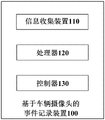
FIG. 1 is a schematic block diagram of a vehicle camera-based event recording device according to an embodiment of the present invention; and
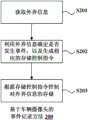
fig. 2 is a flowchart of an event recording method based on a vehicle camera according to an embodiment of the present invention.
Detailed Description
In this specification, the invention is described more fully with reference to the accompanying drawings, in which exemplary embodiments of the invention are shown. This invention may, however, be embodied in different forms and should not be construed as limited to the embodiments set forth herein. The embodiments are provided so that this disclosure will be thorough and complete, and will fully convey the scope of the invention to those skilled in the art.
Words such as "comprising" and "comprises" mean that, in addition to having elements or steps which are directly and unequivocally stated in the description and the claims, the solution of the invention does not exclude other elements or steps which are not directly or unequivocally stated. Terms such as "first" and "second" do not denote an order of the elements in time, space, size, etc., but rather are used to distinguish one element from another.
The present invention is described below with reference to flowchart illustrations, block diagrams, and/or flow diagrams of methods and systems according to embodiments of the invention. It will be understood that each block of the flowchart illustrations and/or block diagrams, and combinations of blocks in the flowchart illustrations and/or block diagrams, can be implemented by computer program instructions. These computer program instructions may be provided to a processor of a general purpose computer, special purpose computer, or other programmable data processing apparatus to produce a machine, such that the instructions, which execute via the processor of the computer or other programmable data processing apparatus, create means for implementing the functions/acts specified in the flowchart and/or block and/or flow diagram block or blocks.
These computer program instructions may be loaded onto a computer or other programmable data processor to cause a series of operational steps to be performed on the computer or other programmable processor to produce a computer implemented process such that the instructions which execute on the computer or other programmable processor provide steps for implementing the functions or acts specified in the flowchart and/or block diagram block or blocks. It should also be noted that, in some alternative implementations, the functions/acts noted in the blocks may occur out of the order noted in the flowcharts. For example, two blocks shown in succession may, in fact, be executed substantially concurrently, or the blocks may sometimes be executed in the reverse order, depending upon the functionality/acts involved.
Fig. 1 is a schematic block diagram of an event recording device 100 (hereinafter referred to as an event recording device 100) based on a vehicle camera according to an embodiment of the present invention. The event logging device 100 includes an information collection device 110, a processor 120, and a controller 130.
The information collection device 110 is configured to acquire outside information using a vehicle camera system. In one embodiment, the vehicle cameras may be located at the front, rear, left, and right of the vehicle. In another embodiment, the vehicle may also have a camera mounted on the chassis or roof. According to the present invention, a camera at any position of a vehicle body that can achieve the object of the present invention can be adopted, as appropriate. Also, the acquired external information may take various forms of sound, image, video, and the like, as the case may be. In one embodiment of the invention, the vehicle camera may be an active safety camera, in which case the active safety camera may comprise image processing means. For example, some active security cameras can acquire various external information such as lane lines, following vehicles, vehicles meeting, pedestrians, traffic signs, and lights of oncoming vehicles only through monocular image processing. In one embodiment, the event recording using the active safety camera may use the external information obtained through image processing for an event recording operation, which will be described later, in addition to an active lane Line Deviation Warning (LDW), a Forward Collision Warning (FCW), a Pedestrian Collision Warning (PCW), an Intelligent Headlight Control (IHC), a speed limit sign recognition (TSR/SAS), an Automatic Emergency Brake (AEB), a Lane Keeping Assist (LKA), a lane line center driving (LC), a traffic congestion assist (TJA), and a high-speed cruise assist (HWA). The aim of saving design and manufacturing cost is achieved to a certain extent by multiplexing circuits of image acquisition, image processing, data transmission and the like of the camera.
The processor 120 is coupled to the information collecting apparatus 110 and configured to determine whether an abnormal event occurs using external information from the information collecting apparatus 110, thereby generating a corresponding storage control instruction. Wherein the abnormal events include, but are not limited to, various collision, emergency braking, emergency steering, body roll, etc. events occurring during parking or driving. It should be understood that the processor 120 generally determines whether an abnormal event occurs by determining some preset condition, but the manner of determining that an abnormal event occurs is not limited thereto. For example, when the processor 120 determines that the vehicle and the pedestrian come into contact (i.e., the preset condition is that the vehicle-pedestrian distance is equal to 0 m) or that the vehicle and the pedestrian are in danger of collision (i.e., the preset condition is that the vehicle-pedestrian distance is less than, for example, 1 m) from the pedestrian information, the processor 120 generates an instruction to store the external information. If it is determined that no abnormal event occurs, the processor 120 may not generate an instruction to store the external information, or may generate an instruction to not store the external information.
The controller 130 is coupled to the information collecting apparatus 110 and the processor 120, and is configured to control storage of the external information according to a storage control instruction from the processor 120. In one embodiment, the storing is performed by the information collecting device 110, and the information collecting device 110 stores the external information in its own memory. In this case, when the controller 130 receives an instruction to store the external information, the controller 130 controls the information collecting apparatus 110 to store the external information. In another embodiment, the storing is performed by other external memory. In this case, the controller 130 directly controls the storage of the external information on any computer-readable storage medium. The memory described herein may be any electronically readable medium including various disks, memory sticks, memory cards, memory modules, and the like. The electronically readable medium may be based on flash memory technology, optical memory technology, magnetic memory technology, holographic memory technology, or any other memory technology. In yet another embodiment, when in-vehicle memory is employed, data may be transmitted to other input-output nodes (e.g., an entertainment navigation module). The entertainment navigation module can store or play data according to the input of a user.
In one embodiment, the event recording device may further include a video compression device that compresses the external information in the form of video collected by the camera for storage.
Specifically, if it is set to store data during 10 seconds before and after the occurrence of an abnormal event, the vehicle camera temporarily stores only data (including external information and/or vehicle travel data) for a total of 20 seconds for one abnormal event. For example, for an arbitrary time, the camera temporarily saves data from 10 seconds before the current time (i.e., the first time threshold) to the current time, and after receiving the storage instruction, resumes temporarily saving data for 10 seconds (i.e., the second time threshold). The first time threshold and the second time threshold may be different, and may be preset or may be set by the user. The module controlled by the controller 130 to perform the storage task then stores the 20 second data in non-volatile memory for subsequent analysis.
In one embodiment, the processor 120 is further configured to utilize the vehicle travel data to determine whether an abnormal event has occurred. Accordingly, the controller 130 is further configured to control the storage of the vehicle travel data according to the storage control instruction from the processor 120. The vehicle travel data includes a travel speed, a travel direction, a vehicle position, an engine speed, a brake pedal state, a gear state, a lamp state, a steering wheel orientation, a wiper state, a door and window state, and the like. Here, it is determined whether an abnormal event occurs and vehicle travel data is stored using the vehicle travel data, similarly to the operation on the external information described above. In one embodiment, the vehicle driving data CAN be acquired through a vehicle CAN bus, the vehicle driving data CAN reflect the state of the vehicle at each time point more truly, and the external information recorded by the camera CAN be supplemented to better restore the process of the event.
In yet another embodiment, the controller 130 may be further configured to control the external information and/or the vehicle travel data during a first time threshold before the occurrence of the abnormal event to a second time threshold after the occurrence of the abnormal event to be stored to the memory when the storage control instruction indicates the occurrence of the abnormal event. Additionally, the controller 130 may be further configured to control the external information and/or the vehicle travel data during the aforementioned period to be stored to the memory upon receiving a storage instruction based on the user input. In this way, the record of the external information and/or the vehicle driving data is associated with certain storage conditions, the record of useless data is greatly reduced, the use of memory space is saved, and the robustness of the system is improved. And meanwhile, video data acquired by the vehicle camera is multiplexed (used for judging whether the storage condition is met) so as to realize efficient utilization of resources.
In one embodiment, the controller 130 is further configured to selectively overwrite previously stored ambient information and/or vehicle travel data when the memory for storing the ambient information and/or vehicle travel data is full. As described above, the information collecting apparatus 110, the vehicle itself, or an external memory, etc. may be used. For example, when the storage space of the memory is exhausted, the controller 130 may transmit a query (e.g., "whether to overwrite previous data") to the user through the in-vehicle display to confirm whether to overwrite the previous data to store new data. In still another embodiment, while the external information and/or the Vehicle driving data are stored, a watermark about the Vehicle Identification Number (VIN) may be loaded in the data to ensure that the stored data is the data corresponding to the Vehicle, thereby increasing the reliability and uniqueness of the data.
Fig. 2 is a flowchart of an event recording method 200 (hereinafter referred to as an event recording method 200) based on a vehicle camera according to an embodiment of the invention.
In step S201, outside information is acquired by the vehicle camera system. In one embodiment, the vehicle cameras may be located at the front, rear, left, and right of the vehicle. In another embodiment, the vehicle may also have a camera mounted on the chassis or roof. According to the present invention, a camera at any position of a vehicle body that can achieve the object of the present invention can be adopted, as appropriate. Also, the acquired external information may take various forms of sound, image, video, and the like, as the case may be. In one embodiment of the invention, the vehicle camera may be an active safety camera, in which case the active safety camera may comprise image processing means. For example, some active security cameras can acquire various external information such as lane lines, following vehicles, vehicles meeting, pedestrians, traffic signs, and lights of oncoming vehicles only through monocular image processing. In one embodiment, the event recording using the active safety camera may use the external information obtained through image processing for an event recording operation, which will be described later, in addition to an active lane Line Deviation Warning (LDW), a Forward Collision Warning (FCW), a Pedestrian Collision Warning (PCW), an Intelligent Headlight Control (IHC), a speed limit sign recognition (TSR/SAS), an Automatic Emergency Brake (AEB), a Lane Keeping Assist (LKA), a lane line center driving (LC), a traffic congestion assist (TJA), and a high-speed cruise assist (HWA). The aim of saving design and manufacturing cost is achieved to a certain extent by multiplexing circuits of image acquisition, image processing, data transmission and the like of the camera.
In step S202, it is determined whether an abnormal event occurs using the external information, thereby generating a corresponding storage control instruction. Wherein the abnormal events include, but are not limited to, various collision, emergency braking, emergency steering, body roll, etc. events occurring during parking or driving. It should be understood that whether an abnormal event occurs is generally determined by judging some preset condition, but the manner of judging the occurrence of an abnormal event is not limited thereto. For example, when it is determined from the pedestrian information that the vehicle and the pedestrian come into contact (i.e., the preset condition is that the vehicle-pedestrian distance is equal to 0 m) or that the vehicle and the pedestrian are in danger of collision (i.e., the preset condition is that the vehicle-pedestrian distance is less than, for example, 1 m), the instruction to store the outside information is generated. If it is determined that no abnormal event occurs, the instruction to store the external information may not be generated, or the instruction to not store the external information may be generated.
In step S203, the storage of the external information is controlled according to the storage control instruction. In one embodiment, the external information is stored in a memory of the camera itself. In another embodiment, the external information is stored on any other computer readable storage medium. The memory described herein may be any electronically readable medium including various disks, memory sticks, memory cards, memory modules, and the like. The electronically readable medium may be based on flash memory technology, optical memory technology, magnetic memory technology, holographic memory technology, or any other memory technology. In yet another embodiment, when in-vehicle memory is employed, data may be transmitted to other input-output nodes (e.g., an entertainment navigation module). The entertainment navigation module can store or play data according to the input of a user.
In one embodiment, the external information in the form of video captured by the camera is also compressed for storage.
Specifically, if it is set to store data during 10 seconds before and after the occurrence of an abnormal event, the vehicle camera temporarily stores only data (including external information and/or vehicle travel data) for a total of 20 seconds for one abnormal event. For example, for an arbitrary time, data from 10 seconds before the current time (i.e., the first time threshold) to the current time is temporarily saved, and after receiving the storing instruction, the data is temporarily saved for 10 seconds (i.e., the second time threshold) again. The first time threshold and the second time threshold may be different, and may be preset or may be set by the user. The module performing the storage task then stores the 20 second data in non-volatile memory for subsequent analysis.
In one embodiment, the vehicle travel data is also utilized to determine whether an abnormal event has occurred. Accordingly, the storage of the vehicle travel data is also controlled in accordance with the storage control instruction. The vehicle travel data includes a travel speed, a travel direction, a vehicle position, an engine speed, a brake pedal state, a gear state, a lamp state, a steering wheel orientation, a wiper state, a door and window state, and the like. Here, it is determined whether an abnormal event occurs and vehicle travel data is stored using the vehicle travel data, similarly to the operation on the external information described above. In one embodiment, the vehicle driving data CAN be acquired through a vehicle CAN bus, the vehicle driving data CAN reflect the state of the vehicle at each time point more truly, and the external information recorded by the camera CAN be supplemented to better restore the process of the event.
In still another embodiment, the external information and/or the vehicle travel data during a period from a first time threshold before the occurrence of the abnormal event to a second time threshold after the occurrence of the abnormal event may be stored in the memory when the storage control instruction indicates the occurrence of the abnormal event. Additionally, it is also possible to store the outside information and/or the vehicle travel data during the aforementioned period to the memory upon receiving a storage instruction based on a user input. In this way, the record of the external information and/or the vehicle driving data is associated with certain storage conditions, the record of useless data is greatly reduced, the use of memory space is saved, and the robustness of the system is improved. And meanwhile, video data acquired by the vehicle camera is multiplexed (used for judging whether the storage condition is met) so as to realize efficient utilization of resources.
In one embodiment, the previously stored ambient information and/or vehicle driving data are also selectively overwritten when the memory for storing the ambient information and/or vehicle driving data is full. For example, when the storage space of the memory is exhausted, a query (e.g., "whether to overwrite previous data") may be sent to the user through the in-vehicle display to confirm whether to overwrite the previous data to store new data. In still another embodiment, while the external information and/or the Vehicle driving data are stored, a watermark about the Vehicle Identification Number (VIN) may be loaded in the data to ensure that the stored data is the data corresponding to the Vehicle, thereby increasing the reliability and uniqueness of the data.
The embodiments and examples set forth herein are presented to best explain the embodiments in accordance with the present technology and its particular application and to thereby enable those skilled in the art to make and utilize the invention. However, those skilled in the art will recognize that the foregoing description and examples have been presented for the purpose of illustration and example only. The description as set forth is not intended to cover all aspects of the invention or to limit the invention to the precise form disclosed.
Claims (16)
1. An event recording device based on a vehicle camera, comprising:
an information collection device configured to acquire outside information using a vehicle camera system;
a processor coupled to the information collecting device and configured to determine whether an abnormal event occurs using the external information from the information collecting device, thereby generating a corresponding storage control instruction;
a controller coupled to the information gathering device and the processor and configured to control storage of the ambient information according to the storage control instructions from the processor.
2. The vehicle camera-based event logging device of claim 1, wherein the processor is further configured to utilize vehicle travel data to determine whether an abnormal event has occurred.
3. The vehicle camera-based event logging device of claim 1, wherein the controller is further configured to control storage of vehicle travel data in accordance with the storage control instructions from the processor.
4. The vehicle camera-based event recording device of claim 2 or 3, wherein the vehicle travel data comprises one or more of the following items: travel speed, travel direction, vehicle position, engine speed, brake pedal state, gear state, vehicle light state, steering wheel orientation, wiper state, door and window state.
5. The vehicle camera-based event recording device of claim 1, wherein the ambient information includes information about one or more of the following items: lane lines, following vehicles, vehicles meeting, pedestrians, traffic signs and opposite vehicle lights.
6. The vehicle camera-based event recording device of claim 4, wherein the controller is further configured to control the storage of the ambient information and/or the vehicle travel data to a memory during a first time threshold before occurrence of an abnormal event to a second time threshold after occurrence of the abnormal event when the storage control instructions indicate occurrence of the abnormal event.
7. The vehicle camera-based event recording device of claim 4, wherein the controller is further configured to control the storage of the ambient information and/or the vehicle travel data to a memory during a first time threshold before the occurrence of the abnormal event to a second time threshold after the occurrence of the abnormal event upon receiving a storage instruction based on a user input.
8. The vehicle camera-based event recording device of claim 6 or 7, wherein the controller is further configured to: selectively overwriting the previously stored outside information and/or the vehicle travel data when the memory is full.
9. An event recording method based on a vehicle camera is characterized by comprising the following steps:
acquiring external information by using a vehicle camera system;
determining whether an abnormal event occurs by using the external information so as to generate a corresponding storage control instruction;
and controlling the storage of the external information according to the storage control instruction.
10. The vehicle camera-based event recording method of claim 9, further comprising using vehicle travel data to determine whether an abnormal event has occurred.
11. The vehicle camera-based event recording method of claim 9, further comprising controlling storage of vehicle travel data according to the storage control instructions from the processor.
12. The vehicle camera-based event recording method according to claim 10 or 11, wherein the vehicle driving data comprises one or more of the following items: travel speed, travel direction, vehicle position, engine speed, brake pedal state, gear state, vehicle light state, steering wheel orientation, wiper state, door and window state.
13. The vehicle camera-based event recording method of claim 9, wherein the extrinsic information includes information about one or more of the following items: lane lines, following vehicles, vehicles meeting, pedestrians, traffic signs and opposite vehicle lights.
14. The vehicle camera-based event recording method according to claim 12, further comprising storing the outside world information and/or the vehicle travel data during a first time threshold before occurrence of an abnormal event to a second time threshold after occurrence of the abnormal event to a memory when the storage control instruction indicates occurrence of the abnormal event.
15. The vehicle camera-based event recording method according to claim 12, further comprising storing the external information and/or the vehicle driving data during a first time threshold before the occurrence of the abnormal event to a second time threshold after the occurrence of the abnormal event to a memory upon receiving a storage instruction based on a user input.
16. The vehicle camera-based event recording method according to claim 14 or 15, further comprising: selectively overwriting the previously stored outside information and/or the vehicle travel data when the memory is full.
Priority Applications (1)
| Application Number | Priority Date | Filing Date | Title |
|---|---|---|---|
| CN201910649589.0A CN112242012A (en) | 2019-07-18 | 2019-07-18 | Event recording device and method based on vehicle camera |
Applications Claiming Priority (1)
| Application Number | Priority Date | Filing Date | Title |
|---|---|---|---|
| CN201910649589.0A CN112242012A (en) | 2019-07-18 | 2019-07-18 | Event recording device and method based on vehicle camera |
Publications (1)
| Publication Number | Publication Date |
|---|---|
| CN112242012A true CN112242012A (en) | 2021-01-19 |
Family
ID=74167684
Family Applications (1)
| Application Number | Title | Priority Date | Filing Date |
|---|---|---|---|
| CN201910649589.0A Pending CN112242012A (en) | 2019-07-18 | 2019-07-18 | Event recording device and method based on vehicle camera |
Country Status (1)
| Country | Link |
|---|---|
| CN (1) | CN112242012A (en) |
Citations (14)
| Publication number | Priority date | Publication date | Assignee | Title |
|---|---|---|---|---|
| CN2847389Y (en) * | 2005-11-23 | 2006-12-13 | 李强 | Vehicle carried road condition recorder |
| CN101208238A (en) * | 2005-06-25 | 2008-06-25 | 株式会社堀场制作所 | driving recorder |
| CN101772786A (en) * | 2007-07-30 | 2010-07-07 | 精工爱普生株式会社 | Travel recorder, travel recorder system, method for controlling travel recorder, and program |
| CN102682499A (en) * | 2012-05-09 | 2012-09-19 | 浙江吉利汽车研究院有限公司杭州分公司 | Vehicle driving panoramic recorder |
| CN102956045A (en) * | 2011-08-19 | 2013-03-06 | 徐菲 | Event trigger based vehicle monitoring, recording and prompting device and method thereof |
| CN105357237A (en) * | 2014-08-19 | 2016-02-24 | 北京奇虎科技有限公司 | Transmission method of driving record, automobile data recorder and system |
| CN106652089A (en) * | 2016-10-28 | 2017-05-10 | 努比亚技术有限公司 | Driving data record device and method |
| CN108688561A (en) * | 2018-07-18 | 2018-10-23 | 上海小蚁科技有限公司 | Determination method and device, storage medium, the terminal of following distance exception |
| CN108876965A (en) * | 2018-07-24 | 2018-11-23 | 重庆长安汽车股份有限公司 | The data record method of duty is sentenced for automatic Pilot people's vehicle accident |
| CN108932762A (en) * | 2017-05-26 | 2018-12-04 | 长城汽车股份有限公司 | Bicycle recording apparatus |
| CN108961462A (en) * | 2018-07-24 | 2018-12-07 | 重庆长安汽车股份有限公司 | Data recording equipment, system and the vehicle of duty are sentenced for automatic Pilot people's vehicle accident |
| TWM574367U (en) * | 2018-10-18 | 2019-02-11 | 大通電子股份有限公司 | Driving recorder for motorcycle |
| CN109416870A (en) * | 2016-07-07 | 2019-03-01 | 三菱电机株式会社 | Accident information collection system, vehicle-mounted device, and accident information collection method |
| CN109760695A (en) * | 2019-03-13 | 2019-05-17 | 重庆睿驰智能科技有限公司 | Traffic-accident image processing unit based on viewing system |
-
2019
- 2019-07-18 CN CN201910649589.0A patent/CN112242012A/en active Pending
Patent Citations (14)
| Publication number | Priority date | Publication date | Assignee | Title |
|---|---|---|---|---|
| CN101208238A (en) * | 2005-06-25 | 2008-06-25 | 株式会社堀场制作所 | driving recorder |
| CN2847389Y (en) * | 2005-11-23 | 2006-12-13 | 李强 | Vehicle carried road condition recorder |
| CN101772786A (en) * | 2007-07-30 | 2010-07-07 | 精工爱普生株式会社 | Travel recorder, travel recorder system, method for controlling travel recorder, and program |
| CN102956045A (en) * | 2011-08-19 | 2013-03-06 | 徐菲 | Event trigger based vehicle monitoring, recording and prompting device and method thereof |
| CN102682499A (en) * | 2012-05-09 | 2012-09-19 | 浙江吉利汽车研究院有限公司杭州分公司 | Vehicle driving panoramic recorder |
| CN105357237A (en) * | 2014-08-19 | 2016-02-24 | 北京奇虎科技有限公司 | Transmission method of driving record, automobile data recorder and system |
| CN109416870A (en) * | 2016-07-07 | 2019-03-01 | 三菱电机株式会社 | Accident information collection system, vehicle-mounted device, and accident information collection method |
| CN106652089A (en) * | 2016-10-28 | 2017-05-10 | 努比亚技术有限公司 | Driving data record device and method |
| CN108932762A (en) * | 2017-05-26 | 2018-12-04 | 长城汽车股份有限公司 | Bicycle recording apparatus |
| CN108688561A (en) * | 2018-07-18 | 2018-10-23 | 上海小蚁科技有限公司 | Determination method and device, storage medium, the terminal of following distance exception |
| CN108876965A (en) * | 2018-07-24 | 2018-11-23 | 重庆长安汽车股份有限公司 | The data record method of duty is sentenced for automatic Pilot people's vehicle accident |
| CN108961462A (en) * | 2018-07-24 | 2018-12-07 | 重庆长安汽车股份有限公司 | Data recording equipment, system and the vehicle of duty are sentenced for automatic Pilot people's vehicle accident |
| TWM574367U (en) * | 2018-10-18 | 2019-02-11 | 大通電子股份有限公司 | Driving recorder for motorcycle |
| CN109760695A (en) * | 2019-03-13 | 2019-05-17 | 重庆睿驰智能科技有限公司 | Traffic-accident image processing unit based on viewing system |
Similar Documents
| Publication | Publication Date | Title |
|---|---|---|
| US11425337B2 (en) | Camera system, event recording system and event recording method | |
| US20220217298A1 (en) | Recording control apparatus, recording control method, and recording control program | |
| CN111047870A (en) | Traffic violation vehicle identification system, server and non-volatile storage medium storing vehicle control program | |
| CN109493445B (en) | Image recording device for vehicle, image recording method for vehicle, and storage medium | |
| JP6741582B2 (en) | Method for storing camera image data in vehicle accident data memory | |
| US11631326B2 (en) | Information providing system, server, onboard device, vehicle, storage medium, and information providing method | |
| CN105355039A (en) | Road condition information processing method and equipment | |
| US11202030B2 (en) | System and method for providing complete event data from cross-referenced data memories | |
| JP2024036362A (en) | Information recording device, information recording method, and information recording program | |
| CN105374086A (en) | Event data recording method | |
| CN114619963A (en) | Method and device for assisting the vision of a vehicle driver | |
| CN112908035A (en) | Automobile auxiliary driving system based on visible light communication and implementation method | |
| TW202433212A (en) | Remote control driving control method and system | |
| CN109874099B (en) | Networking vehicle-mounted equipment flow control system | |
| JP6244129B2 (en) | OBE | |
| JP6367531B2 (en) | OBE | |
| JP2026063535A (en) | Image information storage device, image information storage method, and program | |
| JP7215333B2 (en) | VEHICLE RECORDING CONTROL DEVICE, RECORDING CONTROL METHOD AND PROGRAM | |
| KR101557280B1 (en) | Apparatus and Method of recording event based image data | |
| CN205632285U (en) | Warning system is listened to real -time recording's blind area | |
| CN115223145B (en) | Parallel scene data acquisition avoiding method and system | |
| CN118865518A (en) | A vehicle-mounted camera-based driving video monitoring method, device and vehicle | |
| CN117523705A (en) | Video data storage method, device, vehicle and computer-readable storage medium | |
| CN117950350A (en) | Cabin driving fusion control chip and vehicle based on HPC high-performance computing system | |
| KR20200002515A (en) | Method and apparatus for determining an accident using an image |
Legal Events
| Date | Code | Title | Description |
|---|---|---|---|
| PB01 | Publication | ||
| PB01 | Publication | ||
| SE01 | Entry into force of request for substantive examination | ||
| SE01 | Entry into force of request for substantive examination | ||
| RJ01 | Rejection of invention patent application after publication |
Application publication date: 20210119 |
|
| RJ01 | Rejection of invention patent application after publication |