CN112255672B - Seismic data acquisition coverage frequency optimization method - Google Patents
Seismic data acquisition coverage frequency optimization method Download PDFInfo
- Publication number
- CN112255672B CN112255672B CN202011017977.6A CN202011017977A CN112255672B CN 112255672 B CN112255672 B CN 112255672B CN 202011017977 A CN202011017977 A CN 202011017977A CN 112255672 B CN112255672 B CN 112255672B
- Authority
- CN
- China
- Prior art keywords
- coverage
- data
- migration
- different
- seismic
- Prior art date
- Legal status (The legal status is an assumption and is not a legal conclusion. Google has not performed a legal analysis and makes no representation as to the accuracy of the status listed.)
- Active
Links
Images



Classifications
-
- G—PHYSICS
- G01—MEASURING; TESTING
- G01V—GEOPHYSICS; GRAVITATIONAL MEASUREMENTS; DETECTING MASSES OR OBJECTS; TAGS
- G01V1/00—Seismology; Seismic or acoustic prospecting or detecting
- G01V1/28—Processing seismic data, e.g. for interpretation or for event detection
-
- G—PHYSICS
- G01—MEASURING; TESTING
- G01V—GEOPHYSICS; GRAVITATIONAL MEASUREMENTS; DETECTING MASSES OR OBJECTS; TAGS
- G01V1/00—Seismology; Seismic or acoustic prospecting or detecting
- G01V1/28—Processing seismic data, e.g. for interpretation or for event detection
- G01V1/30—Analysis
-
- G—PHYSICS
- G01—MEASURING; TESTING
- G01V—GEOPHYSICS; GRAVITATIONAL MEASUREMENTS; DETECTING MASSES OR OBJECTS; TAGS
- G01V1/00—Seismology; Seismic or acoustic prospecting or detecting
- G01V1/28—Processing seismic data, e.g. for interpretation or for event detection
- G01V1/36—Effecting static or dynamic corrections on records, e.g. correcting spread; Correlating seismic signals; Eliminating effects of unwanted energy
- G01V1/364—Seismic filtering
-
- G—PHYSICS
- G01—MEASURING; TESTING
- G01V—GEOPHYSICS; GRAVITATIONAL MEASUREMENTS; DETECTING MASSES OR OBJECTS; TAGS
- G01V2210/00—Details of seismic processing or analysis
- G01V2210/50—Corrections or adjustments related to wave propagation
- G01V2210/51—Migration
- G01V2210/512—Pre-stack
Landscapes
- Engineering & Computer Science (AREA)
- Remote Sensing (AREA)
- Physics & Mathematics (AREA)
- Life Sciences & Earth Sciences (AREA)
- Acoustics & Sound (AREA)
- Environmental & Geological Engineering (AREA)
- Geology (AREA)
- General Life Sciences & Earth Sciences (AREA)
- General Physics & Mathematics (AREA)
- Geophysics (AREA)
- Geophysics And Detection Of Objects (AREA)
Abstract
本发明涉及地震勘探技术领域,特别涉及一种地震数据采集覆盖次数优化方法。该方法包括以下步骤:收集符合要求的老地震数据,按过井位置抽取主测线方向和联络测线方向的叠前地震道集;对叠前地震道集数据进行不同覆盖次数的数据分选和预处理;将不同覆盖次数叠前数据进行偏移处理;对不用覆盖次数偏移结果进行子波提取及质控;分段计算不同频率数据的覆盖次数‑信噪比的增长率。按勘探地质需求指标优化得到采集观测系统经济性最大覆盖次数。本发明提供的地震数据采集覆盖次数优化方法,在追求高覆盖次数以及高信噪比的同时,最大程度节约加工成本,提高经济效益。

The invention relates to the technical field of seismic exploration, in particular to a method for optimizing coverage times of seismic data acquisition. The method includes the following steps: collecting old seismic data that meet the requirements, extracting pre-stack seismic gathers in the direction of the main survey line and the direction of the contact survey line according to the well-passing position; sorting the data of the pre-stack seismic gathers with different coverage times and preprocessing; migration processing of pre-stack data with different coverage times; wavelet extraction and quality control for migration results with different coverage times; segmental calculation of coverage times-signal-to-noise ratio growth rate of different frequency data. According to the optimization of the exploration geological demand index, the economical maximum coverage of the acquisition and observation system is obtained. The method for optimizing coverage times of seismic data acquisition provided by the present invention saves processing costs to the greatest extent and improves economic benefits while pursuing high coverage times and high signal-to-noise ratios.
Description
技术领域technical field
本发明涉及地震勘探技术领域,特别涉及一种地震数据采集覆盖次数优化方法。The invention relates to the technical field of seismic exploration, in particular to a method for optimizing coverage times of seismic data acquisition.
背景技术Background technique
我国地震勘探采集技术经过几十年发展,已进入“两宽一高”采集或高密度三维采集的阶段,小面元、单点接收方式、高覆盖次数、宽频激发接收已成为趋势。但在效益勘探优先的大背景下,如何在满足勘探需求指标的基础上降低施工成本成为重要的研究课题。After decades of development, my country's seismic exploration and acquisition technology has entered the stage of "two wide and one high" acquisition or high-density three-dimensional acquisition. Small bins, single-point reception, high coverage times, and broadband excitation reception have become trends. However, under the background of giving priority to profitable exploration, how to reduce the construction cost on the basis of meeting the exploration demand indicators has become an important research topic.
地震勘探分为采集设计、采集施工、室内处理解释等环节,成本最高的环节是地震采集施工,大约占到整个地震勘探成本的80%左右,而采集观测系统设计结果直接决定施工的资金成本和时间成本。采集观测系统设计时有几个重要参数,面元大小-决定横向分辨率,最大偏移距-由目的层深度决定,纵横比-决定宽方位/窄方位观测,最大覆盖次数-决定处理成果的信噪比。目前无论是构造勘探还是油藏目标勘探都已经入小面元接收时代,以东部盆地为例,10mx10m面元或20mx20m面元是主流采集参数,西部塔里木盆地以12.5mx12.5m面元为主,中南部四川山地通常采用20mx20m面元,面元大小决定施工队伍检波器使用(租用)数量,相同施工总面积面元越小成本越高,但对总成本的影响不大。最大偏移距这个参数通常经过表层调查及速度分析后计算得到,通常为目的层最大深度的1.6-1.7倍即可满足勘探要求,这个参数的改变在工区满覆盖区几乎不影响成本,只需要激发时扩大检波器接受范围即可,在工区边界最大偏移距的增大会略微增加采集成本,不过影响非常有限。纵横比这个参数决定了检波器使用的数量和排列片的大小,会适当增大采集成本,但影响有限。最大覆盖次数这个参数是对采集成本起决定性作用的,以炸药震源为例,如相同施工面积炮密度降低一半,可节省至少20%的成本,而采集观测系统设计时在满足勘探需求指标的前提下优化最大覆盖次数这个参数,可最大幅度降低采集的资金成本,覆盖次数降低意味着激发炮数降低,大大减少钻井布置炸药的时间,提高采集施工效率。Seismic exploration is divided into acquisition design, acquisition construction, indoor processing and interpretation, etc. The most costly link is seismic acquisition construction, which accounts for about 80% of the entire seismic exploration cost, and the design results of the acquisition and observation system directly determine the capital cost of construction and time cost. There are several important parameters in the design of the collection and observation system, bin size - determines the lateral resolution, maximum offset - determined by the depth of the target layer, aspect ratio - determines the wide azimuth/narrow azimuth observation, maximum coverage times - determines the processing results SNR. At present, whether it is structural exploration or reservoir target exploration, it has entered the era of small bin reception. Taking the eastern basin as an example, 10mx10m bins or 20mx20m bins are the mainstream acquisition parameters, and the western Tarim Basin is dominated by 12.5mx12.5m bins. 20mx20m bins are usually used in the mountainous areas of central and southern Sichuan. The bin size determines the number of geophones used (rented) by the construction team. The smaller the bin for the same total construction area, the higher the cost, but it has little impact on the total cost. The parameter of maximum offset is usually calculated after surface investigation and velocity analysis. Usually, it is 1.6-1.7 times the maximum depth of the target layer to meet the exploration requirements. The change of this parameter will hardly affect the cost in the full coverage area of the work area. It is enough to expand the acceptance range of the geophone during excitation. The increase of the maximum offset at the boundary of the work area will slightly increase the acquisition cost, but the impact is very limited. The parameter of aspect ratio determines the number of geophones used and the size of array slices, which will appropriately increase the acquisition cost, but the impact is limited. The parameter of the maximum number of coverage plays a decisive role in the acquisition cost. Taking the explosive source as an example, if the shot density of the same construction area is reduced by half, the cost can be saved by at least 20%. The acquisition and observation system is designed on the premise of meeting the exploration demand indicators Optimizing the parameter of the maximum number of coverage times can greatly reduce the capital cost of collection. The reduction of the number of coverage times means that the number of excitation shots is reduced, which greatly reduces the time for drilling and arranging explosives, and improves the efficiency of collection and construction.
众所周知覆盖次数越高,成果剖面的信噪比越高,但覆盖次数达到一定数字后,随覆盖次数增加信噪比的增长速度会逐渐降低,优化地震采集观测系统最大覆盖次数的核心是在成本控制和可接受的信噪比之间寻找最优解。It is well known that the higher the number of coverage, the higher the signal-to-noise ratio of the result profile, but after the number of coverage reaches a certain number, the growth rate of the signal-to-noise ratio will gradually decrease with the increase of the number of coverage. The core of optimizing the maximum number of coverage of the seismic acquisition and observation system is the cost. Find the optimal solution between control and acceptable signal-to-noise ratio.
发明内容Contents of the invention
(一)要解决的技术问题(1) Technical problems to be solved
本发明提供了一种地震数据采集覆盖次数优化方法,以克服现有技术中追求高覆盖次数以及高信噪比的同时导致生产成本较高等缺陷。The invention provides a method for optimizing coverage times of seismic data acquisition to overcome defects in the prior art such as high production costs caused by pursuit of high coverage times and high signal-to-noise ratio.
(二)技术方案(2) Technical solution
为解决上述问题,本发明提供一种地震数据采集覆盖次数优化方法,包括以下步骤:In order to solve the above problems, the present invention provides a method for optimizing the coverage times of seismic data acquisition, comprising the following steps:
步骤S1、收集符合要求的老地震数据,按过井位置抽取主测线方向和联络测线方向的叠前地震道集;Step S1, collect the old seismic data that meet the requirements, and extract the pre-stack seismic gathers in the direction of the main line and the direction of the contact line according to the well passing position;
步骤S2、对来自步骤S1的叠前地震道集数据进行不同覆盖次数的数据分选和预处理:Step S2, performing data sorting and preprocessing of different coverage times on the pre-stack seismic gather data from step S1:
步骤S3、将不同覆盖次数叠前数据进行偏移处理;Step S3, performing offset processing on the pre-stack data with different coverage times;
步骤S4、对不用覆盖次数偏移结果进行子波提取及质控;Step S4, performing wavelet extraction and quality control on the migration results of different coverage times;
步骤S5、分段计算不同频率数据的覆盖次数-信噪比的增长率。Step S5, calculating the number of times of coverage of different frequency data-the growth rate of the signal-to-noise ratio in sections.
步骤S6、按勘探地质需求指标优化得到采集观测系统经济性最大覆盖次数。Step S6: Obtain the economical maximum coverage times of the acquisition and observation system according to the optimization of the exploration geological demand index.
优选地,步骤S1具体包括:Preferably, step S1 specifically includes:
采集同观测系统类型相匹配的工区老地震数据或者与其相邻工区最高覆盖次数的老地震数据;收集区内最深的探井数据,按过井位置抽取主测线方向和联络测线方向的叠前地震道集。Collect the old seismic data of the work area that matches the type of observation system or the old seismic data with the highest coverage times in the adjacent work area; collect the data of the deepest exploratory well in the area, and extract the pre-stack data in the direction of the main survey line and the direction of the contact survey line according to the well passing position Seismic gathers.
优选地,步骤S2具体包括:Preferably, step S2 specifically includes:
对步骤1得到的过井位置的叠前地震数据抽道集时,通过抽稀炮密度降低覆盖次数,得到不同覆盖次数叠前CMP道集,按相同流程和偏移距分组参数完成偏移数据分组处理。When extracting gathers from the pre-stack seismic data at the cross-well position obtained in step 1, the coverage times are reduced by thinning the shot density to obtain pre-stack CMP gathers with different coverage times, and the migration data is completed according to the same process and offset grouping parameters Group processing.
优选地,步骤S3具体包括:将步骤2得到的不同覆盖次数的叠前数据,用相同的偏移方法、相同偏移距分组方案、相同偏移速度体、相同偏移孔径进行叠前时间偏移处理,偏移后抽道集得到共反射点CRP道集,利用相同的切除参数切除初至强能量后,叠加得到不同覆盖次数叠前数据偏移后的剖面。Preferably, step S3 specifically includes: using the same migration method, the same offset grouping scheme, the same migration velocity body, and the same migration aperture to perform pre-stack time migration on the pre-stack data obtained in
优选地,步骤S4具体包括:对步骤3偏移生成的不同覆盖次数偏移结果进行时频分析,确定偏移结果的主频,提取目的层井旁地震数据子波,用合成记录标定不同覆盖次数偏移结果,当合成记率相关度低于50%时,重新进行偏移前的不同覆盖次数分选,适当增加覆盖次数,并重复步骤S2和步骤S3的处理。Preferably, step S4 specifically includes: performing time-frequency analysis on the migration results of different coverage times generated by migration in step 3, determining the dominant frequency of the migration results, extracting the wavelet of seismic data near the wellbore of the target layer, and using synthetic records to calibrate different coverage As a result of frequency offset, when the correlation degree of the composite rate is lower than 50%, re-sort the different coverage times before the offset, increase the coverage times appropriately, and repeat the processing of steps S2 and S3.
优选地,步骤S5具体包括:Preferably, step S5 specifically includes:
将通过步骤S4质控的不同覆盖次数的偏移成果数据进行滤波,分选出20Hz以下、20-50Hz,50Hz以上三类频带成分;Filter the migration result data of different coverage times that have passed the quality control in step S4, and sort out three types of frequency band components below 20 Hz, 20-50 Hz, and above 50 Hz;
在任一频率成分数据上确定目的层作为分段计算信噪比时窗,对不同覆盖次数数据的偏移结果计算窗内信噪比;将覆盖次数作为X轴、信噪比作为Y轴利用数据分析软件做交会图;对于每个样点的信噪比增长率,由下式求得:Determine the target layer on any frequency component data as the time window for calculating the signal-to-noise ratio in segments, and calculate the signal-to-noise ratio in the window for the migration results of data with different coverage times; use the coverage times as the X-axis and the SNR as the Y-axis to use the data The analysis software makes a cross graph; for the growth rate of the signal-to-noise ratio of each sample point, it is obtained by the following formula:

式(1)中,Rgrowth为信噪比随覆盖次数增加的增长率,单位是:信噪比增量/百次覆盖次数增加,ΔNo.SNR和ΔNo.Fold分别是统计窗口内信噪比增加量和不同数据的覆盖次数增加量,SNRn和Foldn分别为第n个样点的信噪比和覆盖次数,SNRn-1和Foldn-1分别为第n-1个样点的信噪比和覆盖次数。In formula (1), R growth is the growth rate of SNR with the increase of coverage times, the unit is: SNR increment/100 coverage times increase, ΔNo. SNR and ΔNo. Fold are the SNR in the statistical window Increment and increase in coverage times of different data, SNR n and Fold n are the signal-to-noise ratio and coverage times of the nth sample point respectively, SNR n-1 and Fold n-1 are the coverage times of the n-1th sample point, respectively Signal-to-noise ratio and number of coverages.
优选地,步骤S6具体包括:按照勘探任务书中的指标确定目的层及目的层频带范围,通过步骤S5确定目的层频率对应的增长率,以Rgrowth≈1时对应的覆盖次数确定经济性最大覆盖次数。Preferably, step S6 specifically includes: determining the target layer and the frequency band range of the target layer according to the indicators in the exploration task book, determining the growth rate corresponding to the frequency of the target layer through step S5, and determining the economical maximum by the corresponding coverage times when R growth ≈ 1 Overrides.
(三)有益效果(3) Beneficial effects
本发明提供的地震数据采集覆盖次数优化方法,在追求高覆盖次数以及高信噪比的同时,最大程度节约加工成本,提高经济效益。The method for optimizing coverage times of seismic data acquisition provided by the present invention saves processing costs to the greatest extent and improves economic benefits while pursuing high coverage times and high signal-to-noise ratio.
附图说明Description of drawings
图1为本发明实施例地震数据采集覆盖次数优化方法流程图;Fig. 1 is a flowchart of a method for optimizing the number of coverage times of seismic data acquisition according to an embodiment of the present invention;
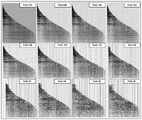
图2是应用本发明抽取不同覆盖次数叠前数据经过偏移后得到的过井点位置的CRP道集;Fig. 2 is the CRP gather of the crossing point position obtained after applying the present invention to extract the pre-stack data of different coverage times after migration;
图3是应用本发明抽取不同覆盖次数叠前数据经过偏移后得到的过井线的叠加剖面;Fig. 3 is the superposition section of crossing the well line obtained after applying the present invention to extract pre-stack data of different coverage times after migration;
图4是利用本发明分频计算不同覆盖次数偏移结果信噪比的增长率关系图,该图表以20-50Hz频率成分分析计算结果为例。Fig. 4 is a relationship diagram of the growth rate of the signal-to-noise ratio of the offset results of different coverage times calculated by frequency division of the present invention. The diagram takes the analysis and calculation results of 20-50 Hz frequency components as an example.
具体实施方式Detailed ways
下面结合附图及实施例对本发明进行详细说明如下。The present invention will be described in detail below in conjunction with the accompanying drawings and embodiments.
如图1所示,本发明实施例提供一种地震数据采集覆盖次数优化方法,具体包括:As shown in Figure 1, an embodiment of the present invention provides a method for optimizing the coverage times of seismic data acquisition, which specifically includes:
步骤S1、按照地质需求准备数据:在地震采集观测系统设计前,按照勘探任务指标和地质需求指标找到相同观测系统类型(面元大小、炮线距/检波线距等参数相同或相近),如果是一次采集区则找相邻工区的最高覆盖次数的老资料;选取区内典型井,要求是区内最深的井,或与地震匹配关系最好的井;按过井位置抽取主测线方向和联络测线方向的叠前道集。以某工区资料为例,为了找到针对该工区深层目标地震勘探经济最优化的采集参数,找到了该工区10mx20m面元,最大偏移距5880m,纵横比0.85,最大覆盖次数672次的一块数据,抽取了过工区最深井的主测线/联络测线叠前地震数据。Step S1. Prepare data according to geological requirements: before designing the seismic acquisition observation system, find the same type of observation system (bin size, shot line distance/receiver distance and other parameters are the same or similar) according to the exploration task index and geological demand index. If If it is a one-time acquisition area, find the old data with the highest coverage frequency in the adjacent work area; select a typical well in the area, which is required to be the deepest well in the area, or the well with the best matching relationship with the earthquake; extract the direction of the main line according to the well passing position and the prestack gathers of the contact line directions. Taking the data of a work area as an example, in order to find the most economically optimized acquisition parameters for deep target seismic exploration in this work area, a piece of data with a bin size of 10mx20m, a maximum offset of 5880m, an aspect ratio of 0.85, and a maximum coverage of 672 times was found. The pre-stack seismic data of the main line/tie line of the deepest well in the work area were extracted.
步骤S2、不同覆盖次数叠前数据分选和预处理:在叠前数据抽道集时,通过减少炮密度降低覆盖次数,将不同覆盖次数叠前地震数据按相同流程和预处理,做好偏移数据准备。以上述叠前数据为例,通过叠前数据降低炮数的方法,将数据分选成672次、448次、336次、224次、168次、134次、112次、96次、67次、45次、34次、27次及初始样本22次,其中最大覆盖次数为27次-672次的12组数据用于分析计算,最大覆盖次数22次的数据用于作为计算基点。Step S2, pre-stack data sorting and preprocessing with different coverage times: when the pre-stack data is extracted, the coverage times are reduced by reducing the shot density, and the pre-stack seismic data with different coverage times are processed according to the same process and pre-processed. Move data preparation. Taking the above pre-stack data as an example, the data is sorted into 672 times, 448 times, 336 times, 224 times, 168 times, 134 times, 112 times, 96 times, 67 times, 45 times, 34 times, 27 times and 22 initial samples, among which 12 sets of data with the maximum coverage times of 27 to 672 times were used for analysis and calculation, and the data with the maximum coverage times of 22 times were used as the calculation base point.
步骤S3、不同覆盖次数叠前数据偏移形成CRP道集和偏移成果剖面:将不同覆盖次数的叠前数据,用相同的偏移方法、相同偏移距分组方案、相同偏移速度体、相同偏移孔径进行偏移,偏移后结果抽共反射点CRP道集,利用相同的切除参数切除后,叠加得到不同覆盖次数叠前数据偏移后的剖面。实际数据共形成12组偏移后CRP道集和叠加剖面,12组不同覆盖次数的CRP道集和叠加剖面分别见图2和图3所示。Step S3: Migrate pre-stack data with different coverage times to form CRP gathers and migration results profiles: use the same migration method, the same offset grouping scheme, the same migration velocity body, The same migration aperture is used for migration, and the CRP gathers of common reflection points are extracted from the migration results. After cutting with the same cutting parameters, the cross-sections after migration of pre-stack data with different coverage times are superimposed. A total of 12 sets of migrated CRP gathers and stacked profiles were formed from the actual data, and the 12 sets of CRP gathers and stacked profiles with different coverage times are shown in Fig. 2 and Fig. 3, respectively.
步骤S4、基于时频分析的子波提取及合成记录质控:在覆盖次数最大数据CRP道集和偏移剖面上进行时频分析,提取目的层井旁地震数据优势频带的子波,用合成记录标定不同覆盖次数偏移结果,当合成记率相关度低于50%时,应重新进行偏移前的不同覆盖次数分选,并重复步骤S2和步骤S3的处理。Step S4, wavelet extraction and synthetic record quality control based on time-frequency analysis: Time-frequency analysis is performed on the CRP gather and migration profile of the data with the largest coverage times, and the wavelet in the dominant frequency band of the seismic data near the wellbore of the target layer is extracted, and synthesized Record and calibrate the offset results of different coverage times. When the correlation of the composite rate is lower than 50%, the different coverage times before the offset should be sorted again, and the processing of steps S2 and S3 should be repeated.
步骤S5、分段求不同频率数据的覆盖次数-信噪比的增长率。Step S5, calculate the number of times of coverage of data of different frequencies-the growth rate of the signal-to-noise ratio in sections.
基于时频分析的不同覆盖次数偏移成果频率分选:目的层不同覆盖次数地震数据偏移成果的频宽差异较大,而本发明公布的方法对信噪比增长率评价时需对不同覆盖次数资料在同一频率进行考察,例如某资料目的层-20dB的主频为30Hz,分别对数据进行10Hz低通滤波;10Hz-50Hz带通滤波;50Hz高通滤波处理,为下一步分频率成分计算信噪比做准备。Frequency sorting of migration results of different coverage times based on time-frequency analysis: the bandwidth of seismic data migration results of different coverage times of the target layer is quite different, and the method disclosed in the present invention needs to evaluate the growth rate of signal-to-noise ratio for different coverage The frequency data are inspected at the same frequency. For example, the main frequency of -20dB of a certain data target layer is 30Hz, and the data are respectively subjected to 10Hz low-pass filtering; 10Hz-50Hz band-pass filtering; Prepare for noise ratio.
以某一频率成分数据为基础,确定目的层作为分段计算信噪比时窗,对不同覆盖次数数据的偏移结果计算窗内信噪比;将覆盖次数做为X轴、信噪比作为Y轴利用数据分析软件做交会图;对于每个样点的信噪比增长率,由下式求得:Based on a certain frequency component data, determine the target layer as the time window for calculating the signal-to-noise ratio in segments, and calculate the signal-to-noise ratio in the window for the migration results of data with different coverage times; use the coverage times as the X axis and the signal-to-noise ratio as the Use data analysis software to make a cross graph on the Y axis; for the growth rate of the signal-to-noise ratio of each sample point, it can be obtained by the following formula:

式(2)中,Rgrowth为信噪比随覆盖次数增加的增长率,单位是:信噪比增量/百次覆盖次数增加,ΔNo.SNR和ΔNo.Fold分别是统计窗口内信噪比增加量和不同数据的覆盖次数增加量,SNRn和Foldn分别为第n个样点的信噪比和覆盖次数,SNRn-1和Foldn-1分别为第n-1个样点的信噪比和覆盖次数。In formula (2), R growth is the growth rate of SNR with the increase of coverage times, the unit is: SNR increment/100 coverage times increase, ΔNo. SNR and ΔNo. Fold are the SNR in the statistical window Increment and increase in coverage times of different data, SNR n and Fold n are the signal-to-noise ratio and coverage times of the nth sample point respectively, SNR n-1 and Fold n-1 are the coverage times of the n-1th sample point, respectively Signal-to-noise ratio and number of coverages.
实际数据应用效果结合图4说明,以30Hz主频数据分析计算结果为例,图4横坐标为最大覆盖次数,纵坐标为目的层1.8s-2.4s的信噪比,见表1:The actual data application effect is explained in conjunction with Figure 4. Taking the analysis and calculation results of 30Hz main frequency data as an example, the abscissa in Figure 4 is the maximum number of coverage times, and the ordinate is the signal-to-noise ratio of the target layer at 1.8s-2.4s, see Table 1:
表1不同最大覆盖次数偏移数据1.8s-2.4s信噪比Table 1 Different maximum coverage times offset data 1.8s-2.4s signal-to-noise ratio
利用式(2)计算得到12个不同覆盖次数样点的信噪比增长率,分别为:样点1,Rgrowth1=0.133;样点2,Rgrowth2=0.175;样点3,Rgrowth3=0.267;样点4,Rgrowth4=0.714;样点5,Rgrowth5=1.471;样点6,Rgrowth6=0.909;样点7,Rgrowth7=1.25;样点8,Rgrowth8=5.172;样点9,Rgrowth9=3.33;样点10,Rgrowth10=1.818;样点11,Rgrowth11=5.714;样点12,Rgrowth12=14,单位均为信噪比增量/百次覆盖次数增量。Using formula (2) to calculate the SNR growth rate of 12 sample points with different coverage times, they are: sample point 1, R growth1 = 0.133;
步骤S6、按勘探地质需求指标优化得到采集观测系统经济性最大覆盖次数:按照勘探任务书中的指标,在采集观测系统设计时确定目的层频带范围,分别用本发明步骤S5确定低频/主频/高频值并对不同覆盖次数偏移结果滤波,之后采用步骤S6确定三组频率对应的增长率,如果Rgrowth<1,则视为观测系统进入非经济增长率区间,此区间内的采集成本投资与信噪比回报率较低;当Rgrowth>1时,则视为观测系统进入经济性增长率区间,此区间内的采集成本投资与信噪比回报率较高。分析12个样点的信噪比增长率,结合合成记录标定结果,利用步骤S7给出的每增加100次覆盖次数信噪比增量是否大于1的判断标准,最终确定168次-224次区间为该工区的满足勘探需求指标的前提下的最经济观测系统最大覆盖次数,在实际应用中结合其他观测系统参数最终确定为200次。Step S6. Obtain the economical maximum coverage times of the acquisition and observation system according to the optimization of the exploration geological demand index: according to the indicators in the exploration task book, determine the frequency band range of the target layer when designing the acquisition and observation system, and determine the low frequency/main frequency by step S5 of the present invention respectively /high frequency value and filter the offset results of different coverage times, and then use step S6 to determine the growth rate corresponding to the three groups of frequencies. If R growth <1, it is considered that the observation system has entered the non-economic growth rate range, and the collection in this range The cost investment and SNR return rate are low; when R growth > 1, it is considered that the observation system has entered the economic growth rate range, and the acquisition cost investment and SNR return rate in this interval are relatively high. Analyze the signal-to-noise ratio growth rate of 12 sample points, combined with the calibration results of synthetic records, use the judgment standard of whether the signal-to-noise ratio increment is greater than 1 for every 100 times of coverage given in step S7, and finally determine the interval between 168 times and 224 times It is the maximum coverage number of the most economical observation system under the premise of meeting the exploration demand index in this work area, and it is finally determined to be 200 times in combination with other observation system parameters in practical applications.
上述方法中未述及的技术内容采取或借鉴已有技术实现即可,不做赘述。The technical content not mentioned in the above method can be implemented by adopting or referring to the existing technology, and will not be described in detail.
本发明优选出对结果最终采集处理成果分辨率、地质体识别能力影响最小,但对资金成本和时间成本影响较大的炮密度这一参数,从而在最大覆盖次数这项单一参数上做研究分析,本发明公布的方法兼有科学性和新颖性,同时在实际应用中取得良好效果,适合大规模推广应用。The present invention optimizes the parameter of shot density, which has the least impact on the resolution of the final acquisition and processing results and the ability to identify geological bodies, but has a greater impact on capital cost and time cost, so as to conduct research and analysis on the single parameter of maximum coverage times , the method disclosed in the present invention has both science and novelty, and at the same time achieves good results in practical applications, and is suitable for large-scale popularization and application.
以上实施方式仅用于说明本发明,而并非对本发明的限制,有关技术领域的普通技术人员,在不脱离本发明的精神和范围的情况下,还可以做出各种变化和变型,因此所有等同的技术方案也属于本发明的范畴,本发明的专利保护范围应由权利要求限定。The above embodiments are only used to illustrate the present invention, but not to limit the present invention. Those of ordinary skill in the relevant technical field can make various changes and modifications without departing from the spirit and scope of the present invention. Therefore, all Equivalent technical solutions also belong to the category of the present invention, and the scope of patent protection of the present invention should be defined by the claims.
Claims (6)

Priority Applications (1)
| Application Number | Priority Date | Filing Date | Title |
|---|---|---|---|
| CN202011017977.6A CN112255672B (en) | 2020-09-24 | 2020-09-24 | Seismic data acquisition coverage frequency optimization method |
Applications Claiming Priority (1)
| Application Number | Priority Date | Filing Date | Title |
|---|---|---|---|
| CN202011017977.6A CN112255672B (en) | 2020-09-24 | 2020-09-24 | Seismic data acquisition coverage frequency optimization method |
Publications (2)
| Publication Number | Publication Date |
|---|---|
| CN112255672A CN112255672A (en) | 2021-01-22 |
| CN112255672B true CN112255672B (en) | 2022-11-25 |
Family
ID=74232052
Family Applications (1)
| Application Number | Title | Priority Date | Filing Date |
|---|---|---|---|
| CN202011017977.6A Active CN112255672B (en) | 2020-09-24 | 2020-09-24 | Seismic data acquisition coverage frequency optimization method |
Country Status (1)
| Country | Link |
|---|---|
| CN (1) | CN112255672B (en) |
Families Citing this family (3)
| Publication number | Priority date | Publication date | Assignee | Title |
|---|---|---|---|---|
| CN113156508B (en) * | 2021-04-25 | 2024-03-26 | 中石化石油工程技术服务有限公司 | Method and system for determining effective coverage times of well cannon observation system |
| CN116027402B (en) * | 2021-10-27 | 2025-11-18 | 中国石油天然气集团有限公司 | Surface element coverage analysis method, apparatus, electronic equipment and readable storage medium |
| CN116068636A (en) * | 2021-11-04 | 2023-05-05 | 中国石油化工集团有限公司 | A method for monitoring the design rationality of the maximum offset distance of the seismic acquisition data observation system |
Citations (1)
| Publication number | Priority date | Publication date | Assignee | Title |
|---|---|---|---|---|
| US4543632A (en) * | 1983-01-10 | 1985-09-24 | Chevron Research Company | Robust estimation method for determining when subsequent data processing can include sign-bit representations of full-waveform seismic traces |
Family Cites Families (7)
| Publication number | Priority date | Publication date | Assignee | Title |
|---|---|---|---|---|
| US6906981B2 (en) * | 2002-07-17 | 2005-06-14 | Pgs Americas, Inc. | Method and system for acquiring marine seismic data using multiple seismic sources |
| US6882938B2 (en) * | 2003-07-30 | 2005-04-19 | Pgs Americas, Inc. | Method for separating seismic signals from two or more distinct sources |
| CN102707316B (en) * | 2012-06-06 | 2014-11-26 | 中国石油天然气股份有限公司 | 2.5 3D Seismic Exploration Method for Complicated Geological Targets |
| CN103901465A (en) * | 2014-03-21 | 2014-07-02 | 中国石油集团川庆钻探工程有限公司地球物理勘探公司 | Design method of holographic three-dimensional seismic prospecting and observing system |
| CN105137479B (en) * | 2015-08-07 | 2018-01-02 | 中国石油天然气集团公司 | A kind of computational methods and device of bin degree of covering |
| CN105467445B (en) * | 2015-12-15 | 2018-02-02 | 中国石油天然气集团公司 | The method for building up and device of a kind of 3 D seismic observation system |
| CN107144873A (en) * | 2017-04-12 | 2017-09-08 | 核工业北京地质研究院 | A kind of sandstone-type uranium mineralization with respect 3D seismic data observation procedure |
-
2020
- 2020-09-24 CN CN202011017977.6A patent/CN112255672B/en active Active
Patent Citations (1)
| Publication number | Priority date | Publication date | Assignee | Title |
|---|---|---|---|---|
| US4543632A (en) * | 1983-01-10 | 1985-09-24 | Chevron Research Company | Robust estimation method for determining when subsequent data processing can include sign-bit representations of full-waveform seismic traces |
Also Published As
| Publication number | Publication date |
|---|---|
| CN112255672A (en) | 2021-01-22 |
Similar Documents
| Publication | Publication Date | Title |
|---|---|---|
| CN111399056B (en) | Method for predicting crack strength based on divided azimuth filtering | |
| CN113640881B (en) | Multi-offset two-dimensional lateral high-resolution transient surface wave detection method | |
| CN106597539A (en) | Curvelet domain Radon transform noise suppression method for loess tableland region | |
| CN101487898A (en) | Method for identifying oil, gas and water by longitudinal wave seismic exploration post-stack data | |
| CN110687602A (en) | Shallow seismic multi-wave combined exploration method | |
| CN116027416B (en) | A method for identifying lithological traps in conglomerate bodies | |
| CN112255672A (en) | Seismic data acquisition coverage frequency optimization method | |
| CN106646601A (en) | Establishing method for three-dimensional Q body of shallow, medium and deep layers based on multi-information joint constraint | |
| CN105629300B (en) | The method for improving complicated structure offset data signal-to-noise ratio | |
| CN102636813B (en) | Normal moveout stretch cutting method for processing geophysical exploitation seismic data | |
| CN108226997A (en) | A Seismic Facies Division Method Based on Prestack Seismic Data | |
| CN104133244B (en) | A kind of near surface static corrections processing method of focus shear wave exploration | |
| CN104656140B (en) | Median filtering method and system based on vertical earthquake attenuation laws | |
| CN111025424B (en) | Pre-stack time migration response operator quantification judgment method | |
| CN106526664A (en) | Time-space domain geometric transform horizontal stacking seismic imaging method | |
| CN109884693A (en) | Adaptively move towards normal-moveout spectrum acquiring method and system | |
| CN110297264B (en) | Low-permeability gas reservoir thin reservoir dessert earthquake prediction method | |
| CN109343119A (en) | The main energy relative amplitude preserved processing method of low signal-to-noise ratio seismic data useful signal | |
| CN106338762A (en) | Data domain oriented model channel reconstruction multi-focusing imaging method | |
| CN105487111B (en) | A kind of automatic position angle gathers partial stack method | |
| CN114167496B (en) | A method for establishing variable average velocity field in complex structural areas | |
| CN120143267B (en) | Structure-guided well control velocity modeling method and its application | |
| CN112946742B (en) | A method for picking up accurate stacked velocity spectra | |
| CN116520428B (en) | Prestack energy consistency processing method for full-node seismic data | |
| CN119902273B (en) | Method and device for quantitatively evaluating imaging effect of seismic data |
Legal Events
| Date | Code | Title | Description |
|---|---|---|---|
| PB01 | Publication | ||
| PB01 | Publication | ||
| SE01 | Entry into force of request for substantive examination | ||
| SE01 | Entry into force of request for substantive examination | ||
| CB03 | Change of inventor or designer information |
Inventor after: Zhao Haibo Inventor after: Yu Zhanqing Inventor after: Deng Hongwei Inventor after: Wu Jiayi Inventor after: Bao Yi Inventor after: Chen Shumin Inventor after: Wang Cheng Inventor after: Pei Jiangyun Inventor after: Qiao Wei Inventor after: Ding Jifeng Inventor after: Chen Zhide Inventor before: Bao Yi Inventor before: Chen Shumin Inventor before: Wang Cheng Inventor before: Pei Jiangyun Inventor before: Ding Jifeng Inventor before: Chen Zhide Inventor before: Yu Zhanqing Inventor before: Deng Hongwei |
|
| CB03 | Change of inventor or designer information | ||
| GR01 | Patent grant | ||
| GR01 | Patent grant |