CN1123003C - Optical disc error-correcting code system by using error-correcting and sector address relation - Google Patents
Optical disc error-correcting code system by using error-correcting and sector address relation Download PDFInfo
- Publication number
- CN1123003C CN1123003C CN97101290A CN97101290A CN1123003C CN 1123003 C CN1123003 C CN 1123003C CN 97101290 A CN97101290 A CN 97101290A CN 97101290 A CN97101290 A CN 97101290A CN 1123003 C CN1123003 C CN 1123003C
- Authority
- CN
- China
- Prior art keywords
- data
- error correction
- decoded
- frame
- error
- Prior art date
- Legal status (The legal status is an assumption and is not a legal conclusion. Google has not performed a legal analysis and makes no representation as to the accuracy of the status listed.)
- Expired - Fee Related
Links
Images


Classifications
-
- G—PHYSICS
- G11—INFORMATION STORAGE
- G11B—INFORMATION STORAGE BASED ON RELATIVE MOVEMENT BETWEEN RECORD CARRIER AND TRANSDUCER
- G11B20/00—Signal processing not specific to the method of recording or reproducing; Circuits therefor
- G11B20/10—Digital recording or reproducing
- G11B20/18—Error detection or correction; Testing, e.g. of drop-outs
- G11B20/1866—Error detection or correction; Testing, e.g. of drop-outs by interleaving
Landscapes
- Engineering & Computer Science (AREA)
- Signal Processing (AREA)
- Signal Processing For Digital Recording And Reproducing (AREA)
- Error Detection And Correction (AREA)
Abstract
一种纠错解码设备,它通过对编码数据进行解码以产生以帧为单位的解码数据以及通过产生以帧内单位的解码信息而对从记录介质再现的纠错编码数据进行解码;该已解码的数据以及解码信息对应地按帧单元储存;当与代表在该记录介质上的编码数据的实际位置的地址数据进行帧同步时,该已解码数据及解码信息在存储器中读出。上述纠错编码数据通过利用在所说帧的一列方向中的纠错内代码对用户数据的帧进行编码以产生一个列编码的帧,然后通过在所说帧的一行方向中的纠错外代码对所说列编码的帧进行编码来产生。
An error correction decoding device that decodes error correction encoded data reproduced from a recording medium by decoding encoded data to generate decoded data in units of frames and by generating decoded information in units of intra frames; the decoded The data and decoding information are correspondingly stored in frame units; when the frame synchronization is performed with the address data representing the actual position of the encoded data on the recording medium, the decoded data and decoding information are read out in the memory. The above-mentioned error correction coded data is generated by encoding a frame of user data by using an error correction inner code in a column direction of said frame to produce a column coded frame, and then passing an error correction outer code in a row direction of said frame Encoding the column-encoded frame produces.
Description
技术领域technical field
本发明涉及一种纠错码(ECC)系统,用于纠正并分析在由光盘再现的数字数据中出现的差错。特别地,本发明涉及用于分析纠错码操作的设备和方法。The present invention relates to an error correcting code (ECC) system for correcting and analyzing errors occurring in digital data reproduced from an optical disc. In particular, the present invention relates to devices and methods for analyzing the operation of error correcting codes.
背景技术Background technique
视频信息,包括图像和声音信息,通常作为数字数据被数字化、压缩、以及按不同速率记录在记录介质上。按照MPEG(运动图像专家组)标准,视频信息被编码成三种图像(或帧)的类型:帧内编码图像(I-图像),预测编码图像(P-图像),以及双向预测编码图像(B-图像)。I-图像通过对视频数据的帧进行帧内编码来产生。P-图像通过相对于另一视频数据帧例如紧接在前的帧对视频数据帧作向前预测编码来产生。B-图像通过相对于多个其它的视频数据帧对视频数据帧作双向预测编码来产生。可以将I-图像,P-图像,以及B图像的集合编组,以使形成图像组(GOP)。Video information, including image and sound information, is usually digitized as digital data, compressed, and recorded on recording media at various rates. According to the MPEG (Moving Picture Experts Group) standard, video information is encoded into three types of pictures (or frames): intra-coded pictures (I-pictures), predictively coded pictures (P-pictures), and bidirectional predictively coded pictures ( B-image). I-pictures are generated by intra-coding frames of video data. P-pictures are generated by forward predictive encoding of a frame of video data relative to another frame of video data, such as the immediately preceding frame. B-pictures are generated by bidirectionally predictively encoding a frame of video data relative to a plurality of other frames of video data. A collection of I-pictures, P-pictures, and B-pictures may be grouped so as to form a group of pictures (GOP).
音频数据也可以数字化,压缩,以及按MPEG标准记录。因此该音频数据可以通过附加的变换音频编码例如ATRAC(商标)来进行编码。Audio data can also be digitized, compressed, and recorded according to the MPEG standard. The audio data can thus be coded by an additional transform audio coding such as ATRAC (trade mark).
图1说明数据再现装置100,它根据以不同速率记录在光盘104来再现数据,装置100包括跟踪伺服器102,拾取器106,环形缓冲存储器108,多路复用数据分离器110,视频代码缓冲器112,视频解码器114,解码系统116,道转移检测器126,音频代码缓冲器132,音频解码器134,环形缓冲器控制器136,以及系统控制器138。多路复用数据分离器110包括首标分离器120,开关22,以及分离器控制器130。解调系统116包括解调器118,扇区检测器124,以及纠错码(ECC)电路128。Fig. 1 illustrates
为了进行再现操作,拾取器106用一束激光辐射光盘104检测从该盘表面反射的光,并产生相应的再现信号S1。该再现信号S1被施加到解调器118以便进行解调。解调后的数据加到扇区检测器124和ECC电路128。扇区检测器124检测对应于再现数据储存在该盘上的地址的盘104的扇区号。该检测到的扇区号加到环形缓冲器控制器136。ECC电路128检测并纠正在已解调数据中的差错,解码系统116和环形缓冲器控制器136的操作由系统控制器138控制。For a reproduction operation, the
解调器118将再现信号S1通过RF处理转换为二进制数字并检测EFM+(8,16转换)同步模式。按照恒定线速度(CLV)系统,根据在再现信号中检测的同步模式施加粗略的伺服调整。因此,一旦扇区检测器124检测到同步首标就应用锁相环(PLL)伺服。如果连续数次成功地检测到该同步首标,EFM+解调的数据S2将被解除交错。在下一节将结合图2来描述解码系统116的进一步的操作细节。The
如果扇区检测器124不能检测到扇区号,则扇区号码非正常信号被加到道转移检测器126。如果该已解调的数据不能由ECC 128纠正,则差错产生信号加到道转移检测器126。ECC 128将纠错后的数据S10加到环形缓冲器存储器108作临时性储存。环形缓冲器控制器136对应于由扇区检测器124提供的被检测到的扇区号的地址而分派一写地址,写指针WP,于环形缓冲器存储器108中。If the
响应来自多路复用数据分离器110的一代码请求信号R10,环形缓冲控制器136分派一读地址,读指针RP,给储存在环形缓冲存储器108中的相应数据。读指针RP被加到将相应数据S12供给多路复用数据分离器110的环形缓冲存储器108。In response to a code request signal R10 from the
首标分离器由从由环形缓冲存储器108提供的数据分离出全包(pack)首标和包(paeket)首标。首标数据被加到分离器控制器130而剩余数据、时分复用转换数据则加到开关122的输入端G。按照包含在该包首标数据中的流识别符信息,分离器控制器130控制开关122的操作,以便分离该被时分复用的数据。具体地,开关122被控制以便将输入端G系统地同输出端H1和H2连接,由此将编码的视频数据送到视频代码缓冲器112以及将编码的音频数据送到音频代码缓冲器132。依据从视频代码缓冲器112和音频代码缓冲器132接收的数据请求信号,多路复用数据分离器110产生代码请求信号R10。The header separator separates a full packet (pack) header and a packet (paeket) header from data supplied from the
按照数据解码操作,视频解码器114产生加到视频代码缓冲器112的数据请求信号R1。根据其储存器状态,视频代码缓冲器112将数据请求信号R1送到多路复用数据分离器110以便请求附加数据。缓冲器112暂存从分离器110接收的被编码的视频数据。视频解码器114将被编码的视频数据解码并将该解码的视频数据提供在输出端OUT 1上。
按照另一个数据解码操作,音频解码器134产生加到音频代码缓冲器132的数据请求信号R2。根据其储存器状态,音频代码缓冲器132将数据请求信号R2送到多路复用数据分离器110以便请求附加数据。缓冲器132暂存从分离器110接收的被编码的音频数据。音频解码器134将该被编码的音频数据解码并将该解码的音频数据提供在输出端OUT 2上。According to another data decoding operation, the
跟踪伺服器102和道转移检测器126是普通装置。Tracking servo 102 and
如在图2中所说明的那样,ECC电路128包括RAM202,206,210,以及214;以及ECC解码器204,208和212。ECC电路128根据C1/C2卷积Reed Solomon解码方法(CIRC plus)处理EFM+解调的数据S2。数据S2从扇区检测器124接收,储存在RAM 202中,并按三级串联的处理由ECC解码器204,208和212解码。首先执行C1解码,然后执行C2解码,最后第2次执行C1解码(C12)。As illustrated in FIG. 2 ,
在图3中说明ECC电路128的ECC解码处理的操作。EFM+解调的数据S2按00,01,……,A8,A9顺序写入RAM202(EFM+写),以及储存2帧EFM+解调的数据。数据S2按一帧的00′,02′,……AB′,01,03,……A9的顺序加到ECC解码器204。ECC解码器204执行C1系列数据的ECC解码,该数据被去交错以便产生C1解码的数据。C1解码数据加到RAM206(C1写),如图4所示那样,用于储存。The operation of the ECC decoding process of the
纠错的实现方法可以是从ECC解码器204读出差错位置和纠正模式,同时从RAM 202(C1读)读出该相应的有差错的数据,并执行纠正模式和该差错数据的异或逻辑和。The implementation method of error correction can be to read the error position and the correction pattern from the ECC decoder 204, and read the corresponding error data from the RAM 202 (C1 read) simultaneously, and execute the XOR logic of the correction pattern and the error data and.
ECC解码器204在C2代码系列长度上执行C1系列解码,从而允许C2系列解码。ECC解码器208根据按00′,01′,03′,……A9′(C2读)顺序从RAM 206提供的C1解码数据执行C2系列解码,以便产生C2解码数据。ECC解码器208在C1代码系列长度上执行C2系列解码,从而允许C1系列解码。如图5中所示那样,C2解码数据加到RAM 210(C2写)以便储存起来。The ECC decoder 204 performs C1-series decoding over the C2 code-series length, thereby allowing C2-series decoding. The
擦除纠正可以通过与数据同步地对每帧传输一个不可纠正标记到下一级的ECC解码器来达到。为了C2系列的擦除纠正,将使用C1的不可纠正标记。在该情况下,纠错操作和C1的相同。Erasure correction can be achieved by transmitting an uncorrectable flag per frame to the next-level ECC decoder synchronously with the data. For erasure correction of the C2 series, the uncorrectable flag of C1 will be used. In this case, the error correction operation is the same as that of C1.
ECC解码器212根据按00′,01,02,03,……A9(C2读)顺序从RAM 210提供的C2解码数据来执行C12系列解码,以便产生C12解码数据。为擦除纠正该C12系列,将使用C2的不可纠正标记。The ECC decoder 212 performs C12 series decoding based on the C2 decoded data supplied from the RAM 210 in the order of 00', 01, 02, 03, ... A9 (C2 read) to generate C12 decoded data. To erase correct the C12 series, the uncorrectable flag of C2 will be used.
当完成C12的纠错时,C12系列的ECC解码结果将按00,01,02,03,……A9的顺序写入RAM 214。这样,RAM 214储存C1的ECC解码结果,C2和C12系列被储存并按00,01,02,03,……A9(读出)顺序读出。解码结果被解扰(descramble)处理并输出到环形缓冲器存储器108。之后将写入必要的扇区数据。When the error correction of C12 is completed, the ECC decoding results of the C12 series will be written into RAM 214 in the order of 00, 01, 02, 03, ... A9. Like this, RAM 214 stores the ECC decoding result of C1, C2 and C12 series are stored and read out in order of 00, 01, 02, 03, ... A9 (reading). The decoded result is descrambled and output to the
由于在ECC电路128中处理的差错量取决于光盘刻制的精度,在ECC电路128中的差错处理量的测量用来作为对光盘质量的估计。差错位置可通过使用扇区地址作为光盘上位置指示的方法来加以确定。Since the amount of errors processed in the
如果数据按C1和C2系列卷积编码,则在该ECC解码的每个系列中重复地按C1,C2,C1执行ECC解码纠错。例如,C2系列的ECC解码将在C1系列的ECC解码之后执行。同样地,在执行C2和C1系列之后执行第二个C1系列解码。因此,如果紧接执行ECC解码之后立即输出其结果,则相对相同的C1系列的ECC结果的检测时间将产生一个时间滞后。If the data is convolutionally coded by C1 and C2 series, ECC decoding error correction is repeatedly performed by C1, C2, and C1 in each series of ECC decoding. For example, ECC decoding of C2 series will be performed after ECC decoding of C1 series. Likewise, a second C1-series decode is performed after the C2 and C1-series are performed. Therefore, if the result of ECC decoding is output immediately after performing ECC decoding, a time lag will be generated with respect to the detection time of the ECC result of the same C1 series.
因此,由系统控制器138跟踪ECC结果到光盘的一位置处的场合下,由扇区检测器124检测的扇区地址被记录下来,并且该ECC结果被加以考虑。在扇区地址和ECC结果之间的时间滞后必须在分析ECC结果和记录的数据之前进行计算。由于其复杂性,这样的计算是有问题的。Therefore, where the ECC result is tracked to a position on the disc by the
此外,加到ECC电路128的单位时间的数据量正比于光盘的旋转速度。这样,对于ECC处理的控制时序可以受光盘速度的影响。作为一个附加问题,在高速情况下访问光盘时,如果在执行ECC处理之后立即输出纠错结果,使光盘上具体的扇区地址与C1,C2和C12系列的各自的纠错结果相关是困难的。In addition, the amount of data per unit time supplied to the
发明内容Contents of the invention
考虑到上述说明,本发明的一个目的在于提供纠错数据解码的方法和设备,用于当高速访问该光盘时检测光盘上的差错位置。SUMMARY OF THE INVENTION In view of the foregoing, it is an object of the present invention to provide an error correction data decoding method and apparatus for detecting error positions on an optical disc when the optical disc is accessed at high speed.
本发明的另一目的在于提供用于在高速旋转的光盘上检测差错位置的方法和设备,但却不使用有问题的复杂的计算。Another object of the present invention is to provide a method and a device for detecting error positions on an optical disc rotating at high speed, but without using problematic complex calculations.
本发明再一个目的在于通过使光盘上差错的实际地址与纠错处理结果相关来提供检则光盘上的差错的方法和设备。Still another object of the present invention is to provide a method and apparatus for detecting errors on an optical disc by correlating the actual address of the error on the optical disc with the result of the error correction process.
本发明的再另一个目的在于提供用于检测光盘记录介质上的差错以确定该光盘记录介质状况的方法和设备。Still another object of the present invention is to provide a method and apparatus for detecting errors on an optical disc recording medium to determine the condition of the optical disc recording medium.
按本发明的一个方面,提供一种数据解码设备,用于对由一记录介质再现的纠错编码数据进行纠错解码。该数据解码设备包括纠错解码电路,用于对纠错编码数据进行纠错解码,以便以帧为单位产生已解码数据,以及用于以帧为单位产生解码信息。一存储器装置储存纠错编码数据,已解码数据、以及解码信息。耦合到纠错解码电路以及该存储器装置的存储器控制电路控制该存储器装置去储存按帧单元相对应的已解码数据和解码信息,并且当与代表在该记录介质上的纠错编码数据的实际位置的一地址数据进行帧同步时,从该存储器装置读出该已解码数据和解码信息。其中所说纠错编码数据通过利用在所说帧的一列方向中的纠错内代码对用户数据的帧进行编码以产生列编码的帧,然后通过利用在所说帧的一行方向中的纠错外代码对所说列编码的帧进行编码来产生。According to an aspect of the present invention, there is provided a data decoding apparatus for error correction decoding of error correction coded data reproduced from a recording medium. The data decoding device includes an error correction decoding circuit for error correction decoding the error correction coded data to generate decoded data in units of frames, and for generating decoded information in units of frames. A memory device stores error correction encoded data, decoded data, and decoded information. A memory control circuit coupled to the error correction decoding circuit and the memory device controls the memory device to store decoded data and decoded information corresponding to frame units, and when compared with the actual location representing the error correction coded data on the recording medium The decoded data and the decoded information are read out from the memory device when the frame synchronization is performed for an address data. wherein said error correction coded data encodes a frame of user data by using an error correction inner code in a column direction of said frame to generate a column coded frame, and then by using an error correction code in a row direction of said frame An outer code is generated by encoding the column-encoded frame.
根据本发明的数据解码设备,最好是所说的纠错编码数据按照C1/C2卷积Reed-Solomon代码编码。According to the data decoding apparatus of the present invention, it is preferable that said error correction coded data is coded according to a C1/C2 convolutional Reed-Solomon code.
根据本发明的数据解码设备,最好是其中所说存储器控制装置与所说C1/C2卷积Reed-Solomon代码的每个纠错码系列相一致地储存所说已解码数据和所说解码信息于所说存储器装置中。According to the data decoding apparatus of the present invention, preferably wherein said memory control means stores said decoded data and said decoded information in correspondence with each error correction code series of said C1/C2 convolutional Reed-Solomon code in the memory device.
根据本发明的数据解码设备,最好是其中所说记录介质是一种盘式的储存介质,所说纠错编码数据存在其上面的扇区中。According to the data decoding apparatus of the present invention, it is preferable that said recording medium is a disk-type storage medium on which said error correction encoded data is stored in sectors.
根据本发明的数据解码设备,最好是其中所说存储器控制装置当与储存在所说盘式存储介质上的所说纠错编码数据的扇区地址同步时,它从所说存储器装置读出所说已解码数据和所说解码信息。According to the data decoding apparatus of the present invention, preferably wherein said memory control means reads out said decoded data and said decoded information.
根据本发明的数据解码设备,最好是其中所说纠错解码装置用一列单元中的一块对所说纠错编码数据进行解码;其中所说纠错解码装置用一行单元中的一块对所说纠错编码数据进行解码;以及其中所说纠错解码装置再次对在所说列单元中的所说纠错编码数据进行解码。According to the data decoding apparatus of the present invention, it is preferable that wherein said error correction decoding means decodes said error correction coded data with a block in a column unit; wherein said error correction decoding means uses a block in a row unit for said error correction decoding means decoding the error correction coded data; and wherein said error correction decoding means decodes said error correction coded data in said column unit again.
根据本发明的数据解码设备,最好是其中所说纠错解码装置包括纠错装置,用于根据差错位置和差错模式来对所说纠错编码数据进行纠错。According to the data decoding apparatus of the present invention, preferably, wherein said error correction decoding means includes error correction means for error correcting said error correction coded data based on an error position and an error pattern.
根据本发明的另一方面,提供一种数据解码方法,用于对纠错编码数据进行纠错解码,该数据由一记录介质再现。该方法包括对纠错编码数据进行纠错解码的步骤,以便以帧为单位地产生已解码的数据;以帧为单位地产生解码信息;储存该纠错编码的数据,已解码数据,以及解码信息;储存按帧单元相对应的已解码数据和解码信息到一存储器中;以及当与代表在该记录介质上的纠错编码数据的实际位置的一地址数据进行帧同步时,从该存储器装置读出该已解码数据和解码信息。其中所说纠错编码数据通过利用在所说帧的一列方向中的纠错内代码对用户数据的帧进行编码以产生一个列编码的帧,然后通过在所说帧的一行方向中的纠错外代码对所说列编码的帧进行编码来产生。According to another aspect of the present invention, there is provided a data decoding method for error correction decoding of error correction coded data reproduced from a recording medium. The method includes the steps of performing error correction decoding on error correction encoded data to generate decoded data in units of frames; generating decoded information in units of frames; storing the error correction encoded data, the decoded data, and decoding information; store decoded data and decoded information corresponding to the frame unit in a memory; and when performing frame synchronization with an address data representing an actual position of the error correction coded data on the recording medium, from the memory device The decoded data and decoded information are read out. wherein said error correction coded data is generated by encoding a frame of user data by using an error correction inner code in a column direction of said frame to generate a column coded frame, and then by error correction in a row direction of said frame An outer code is generated by encoding the column-encoded frame.
根据本发明的数据解码方法,最好是其中所说纠错编码数据按照C1/C2卷积Reed-Solomon代码编码。According to the data decoding method of the present invention, it is preferable that said error correction coded data is coded according to a C1/C2 convolutional Reed-Solomon code.
根据本发明的数据解码方法,最好是还包括与所说C1/C2卷积Reed-Solomon代码的每个纠错码系列对应地存贮所说已解码数据和所说解码信息的步骤。The data decoding method according to the present invention preferably further includes the step of storing said decoded data and said decoded information corresponding to each error correction code series of said C1/C2 convolutional Reed-Solomon code.
根据本发明的数据解码方法,最好是其中所说记录介质是盘式储存介质,所说纠错编码数据储存在其上扇区中。According to the data decoding method of the present invention, it is preferable that said recording medium is a disk storage medium on which said error correction encoded data is stored in sectors.
根据本发明的数据解码方法,最好是还包括当与储存在所说盘式存储介质上的所说纠错编码数据的扇区地址进行帧同步时,所说已解码数据和所说解码信息被读出的步骤。According to the data decoding method of the present invention, it is preferable to further include, when performing frame synchronization with the sector address of the error correction coded data stored on the disk storage medium, said decoded data and said decoded information The steps to be read.
根据本发明的数据解码方法,最好是其中所说纠错解码步骤包括下列步骤:按在一列单元中的块对所说纠错编码数据进行解码;按在一行单元中的块对所说纠错编码数据进行解码;以及在所说列单元中对所说纠错编码数据再进行解码。According to the data decoding method of the present invention, preferably wherein said error correction decoding step includes the following steps: decoding said error correction coded data by blocks in a column unit; decoding said error correction coded data by blocks in a row unit decoding the error coded data; and re-decoding said error correction coded data in said column unit.
根据本发明的数据解码方法,最好是其中所说纠错解码步骤包括根据差错位置和差错模式对所说纠错编码数据进行纠错的步骤。According to the data decoding method of the present invention, preferably, said error correction decoding step includes a step of error correcting said error correction coded data based on error positions and error patterns.
本发明还提供一种数据再现设备,用于自一记录介质再现纠错编码数据,包括:再现装置,用于自所说记录介质再现所说纠错编码数据;纠错解码装置,它耦合到所说再现装置,用于对所说纠错编码数据进行纠错解码,以便产生以帧为单位的已解码数据,并用于产生以帧为单位的解码信息;存储器装置,用于储存所说纠错编码数据、所说已解码数据、以及所说解码信息;以及存储器控制装置,它耦合到所说纠错解码装置和所说存储器装置,用于控制所说存储器装置以按帧单元对应地储存所说已解码数据和所说解码信息,以及用于当与表示在所说记录介质上的所说纠错编码数据的实际位置的地址数据进行帧同步时,从所说存储器装置读出所说已解码数据和所说解码信息,其中所说纠错编码数据通过利用在所说帧的一列方向中的纠错内代码对用户数据的帧进行编码以产生列编码的帧,然后通过利用在所说帧的一行方向中的纠错外代码对所说列编码的帧进行编码来产生。The present invention also provides a data reproducing device for reproducing error correction encoded data from a recording medium, comprising: reproducing means for reproducing said error correction encoded data from said recording medium; error correction decoding means coupled to Said reproducing means is used to perform error correction decoding on said error correction coded data so as to generate decoded data in units of frames, and is used to generate decoded information in units of frames; memory means is used to store said correction error coded data, said decoded data, and said decoded information; and memory control means, which is coupled to said error correction decoding means and said memory means, for controlling said memory means to store correspondingly by frame unit said decoded data and said decoded information, and for reading out said memory device from said memory device while performing frame synchronization with address data representing the actual position of said error correction coded data on said recording medium decoded data and said decoded information, wherein said error correction encoded data is generated by encoding a frame of user data by using an error correction inner code in a column direction of said frame to generate a column encoded frame, and then by using an error correction inner code in said frame direction The error correction outer codes in the row direction of said frame are generated by encoding said column-coded frame.
根据本发明的数据再现设备,最好是其中所说纠错编码数据按照C1/C2卷积Reed-Solomon代码编码。According to the data reproducing apparatus of the present invention, it is preferable that said error correction coded data is coded according to a C1/C2 convolutional Reed-Solomon code.
根据本发明的数据再现设备,最好是其中所说存储器控制装置相应地按所说C1/C2卷积Reed-Solomon代码的每个纠错码系列储存所说已解码数据和所说解码信息于所说存储器装置中。According to the data reproducing apparatus of the present invention, preferably wherein said memory control means stores said decoded data and said decoded information in each error correction code series of said C1/C2 convolutional Reed-Solomon code correspondingly in the memory device.
根据本发明的数据再现设备,最好是其中所说记录介质是盘式储存介质,所说纠错编码数据储存在其上的扇区中。According to the data reproducing apparatus of the present invention, it is preferable that said recording medium is a disc storage medium on which said error correction encoded data is stored in sectors.
根据本发明的数据再现设备,最好是其中当与储存在所说盘式存储介质上的所说纠错编码数据的扇区地址同步时,所说已解码数据和所说解码信息被所说存储器控制装置自所说存储器装置读出。According to the data reproducing apparatus of the present invention, preferably, wherein said decoded data and said decoded information are stored by said A memory control means reads from said memory means.
根据本发明的数据再现设备,最好是其中所说纠错解码装置按一列单元中的块对所说纠错编码数据进行解码;其中所说纠错解码装置按一行单元中的块对所说纠错编码数据进行解码;以及其中所说纠错解码装置对在所说列单元中的纠错编码数据再次进行解码。According to the data reproducing apparatus of the present invention, preferably, wherein said error correction decoding means decodes said error correction coded data by blocks in a column unit; wherein said error correction decoding means decodes said error correction coded data by blocks in a row unit the error correction encoded data is decoded; and wherein said error correction decoding means decodes the error correction encoded data in said column unit again.
根据本发明的数据再现设备,最好是其中所说纠错解码装置包括纠错装置,用于根据差错位置和差错模式对所说纠错编码数据进行纠错。According to the data reproducing apparatus of the present invention, preferably, wherein said error correction decoding means includes error correction means for error correcting said error correction coded data based on an error position and an error pattern.
附图说明Description of drawings
当结合附图阅读所出示的实施例的详细说明时,本发明的另外的目的、特征和优点将变得更为显而易见,在附图中相同的元部件用相同的标号来识别。Further objects, features and advantages of the present invention will become more apparent when the detailed description of the illustrated embodiments is read in conjunction with the accompanying drawings, in which like elements are identified by like numerals.
图1是在相关技术中一种数据再现和纠错设备的方块图;Fig. 1 is a block diagram of a data reproduction and error correction device in the related art;
图2是图1的ECC电路的方块图;Fig. 2 is a block diagram of the ECC circuit of Fig. 1;
图3、4、5和6是示意图,将参考它们说明在相关技术中ECC电路的数据解码处理;3, 4, 5 and 6 are schematic diagrams, with reference to which will be explained the data decoding processing of the ECC circuit in the related art;
图7是按照本发明实施例的数据再现和纠错设备的方块图;7 is a block diagram of a data reproduction and error correction device according to an embodiment of the present invention;
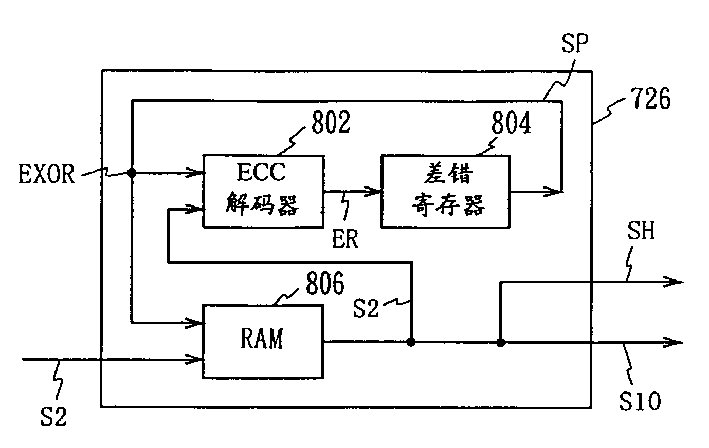
图8是图7的ECC电路的方块图;Fig. 8 is a block diagram of the ECC circuit of Fig. 7;
图9是一方块图,将参考它说明图7的解调器、扇区检测器、以及ECC电路的操作;FIG. 9 is a block diagram with reference to which the operations of the demodulator, sector detector, and ECC circuit of FIG. 7 will be explained;
图10是表示储存在图8RAM中的数据列表;Fig. 10 shows the data list stored in Fig. 8 RAM;
图11是详述由图8ECC电路产生的解码信息数据表格;FIG. 11 is a table detailing the decoded information data generated by the ECC circuit of FIG. 8;
图12A和12B是定时图,将参考它说明图8ECC电路的操作;12A and 12B are timing diagrams with reference to which the operation of the ECC circuit of FIG. 8 will be explained;
图13是表示由图8ECC电路输出的数据格式的数据格式图;Fig. 13 is a data format diagram representing the data format output by the ECC circuit of Fig. 8;
图14是表示扇区数据结构的数据格式图;Fig. 14 is a data format diagram representing a sector data structure;
图15是表示一ECC块的结构的数据格式图;Fig. 15 is a data format diagram showing the structure of an ECC block;
图16是表示交错PO奇偶性校验的示意图(外代码);Figure 16 is a schematic diagram showing interleaved PO parity (outer code);
图17是表示一数据块结构的数据格式图;Fig. 17 is a data format diagram representing a data block structure;
图18是按照本发明另一实施例的解调电路系统的方块图;Fig. 18 is a block diagram of demodulation circuitry according to another embodiment of the present invention;
图19是表示一实际扇区结构的示意图;Fig. 19 is a schematic diagram showing an actual sector structure;
图20是表示一数据扇区结构的示意图;Fig. 20 is a schematic diagram showing a data sector structure;
图21是示意图,将参考它说明在一存储器中数据的储存;Fig. 21 is a schematic diagram with reference to which storage of data in a memory will be described;
图22A-22F是定时图,将参考它描述数据存储器的操作;22A-22F are timing diagrams with reference to which the operation of the data memory will be described;
图23是表示锁定检测处理的流程图;FIG. 23 is a flowchart showing lock detection processing;
图24是表示SCSY信号产生过程的流程图;Fig. 24 is a flowchart showing the SCSY signal generation process;
图25是表示主FMSY信号产生过程的流程图;Fig. 25 is a flowchart showing the main FMSY signal generation process;
图26A-26H是定时图,将参考它们描述块顶(block-top)检测处理;26A-26H are timing diagrams with reference to which block-top detection processing will be described;
图27A-27H是定时图,将参考它们进行描述后-块-顶(post-block-top)检测处理;27A-27H are timing diagrams with reference to which the post-block-top detection process will be described;
图28A-28F是定时图,将参考它们描述SUB传输处理;28A-28F are timing diagrams with reference to which the SUB transfer processing will be described;
图29是表示扇区信息结构的示意图;Fig. 29 is a schematic diagram showing a sector information structure;
图30是表示IED连续性检测和确定的处理的流程图;Fig. 30 is a flow chart representing the processing of IED continuity detection and determination;
图31是表示ID(地址)连续性确定的处理的流程图;Fig. 31 is a flowchart showing the processing of ID (address) continuity determination;
图32是表示SALK产生的处理的流程图;Fig. 32 is a flowchart showing the processing of SALK generation;
图33A-33D是定时图,将参考它们描述按照本发明一个方面的纠错操作;33A-33D are timing diagrams with reference to which error correction operations according to one aspect of the present invention will be described;
图34A-34I是定时图,将参考它们描述按照本发明一个方面的纠错操作;34A-34I are timing diagrams with reference to which error correction operations according to one aspect of the present invention will be described;
图35A-35E、36A-36E以及37A-37E是定时图,将参考它们说明按照本发明一个方面的ECC处理控制操作;35A-35E, 36A-36E, and 37A-37E are timing diagrams with reference to which the ECC process control operation according to one aspect of the present invention will be described;
图38是表示ECC处理过程的流程图;Fig. 38 is a flowchart showing the ECC processing procedure;
图39是按照本发明另一实施例的纠错电路系统的方块图;Figure 39 is a block diagram of an error correction circuitry according to another embodiment of the present invention;
图40是详述由图39的ECC电路产生的解码信息的数据表格;Figure 40 is a data table detailing the decoding information produced by the ECC circuit of Figure 39;
图41A-41G是定时图,将参考它们描述总线仲裁;41A-41G are timing diagrams with reference to which bus arbitration will be described;
图42是一个表,将参考它说明按照本发明一个方面在纠正一个ECC块期间存储器的存取;FIG. 42 is a table with reference to which memory access during correction of an ECC block will be described according to an aspect of the present invention;
图43A-43F是定时图,将参考它们说明纠错结果;以及43A-43F are timing diagrams, and error correction results will be described with reference to them; and
图44是表示数据输出处理的流程图。Fig. 44 is a flowchart showing data output processing.
具体实施方式Detailed ways
图7说明按照本发明的数据再现和数据解码设备700。具有和设备100相同结构和功能的设备700的部件用在图1中所采用的相同标号来标志。数据再现和数据解码设备700从光盘104再现并解码以可变速率记录的图像数据和音频数据。Fig. 7 illustrates a data reproducing and
如图所示,设备700包括跟踪伺服器102,拾取器106,环形缓冲存贮器702,多路复用数据分离器704,视频代码缓冲器710,视频解码器712,解码电路714,道转移检测器724,环形缓冲器控制器730,以及系统控制器732。解码电路714包括解调器716,扇区检测器718,以及纠错码(ECC)电路726。多路复用数据分离器704包括首标分离器706,开关708,以及分离器控制器728。解码电路714和环形缓冲器控制器730由系统控制器732控制。As shown,
跟踪伺服器102和拾取器106是普通部件。由跟踪伺服器102控制的拾取器106用激光束辐射光盘104并检测从该光盘表面反射的光的模式。响应该反射光模式,拾取器106产生代表记录在光盘104上的数据的再现信号S1。再现信号S1被施加到解调器716。
解调器716是用于解调直接从记录介质再现的已调制信号的部件。解调器716的优选结构在图8中表示并在下节中加以讨论。再现信号S1由解调器716解调,已解调信号S2加到扇区检测器718。扇区检测器718是一个检测部件,用于确定由光盘再现已解调数据的扇区地址,扇区检测器718检测记录在由解调信号S2代表的数据的每个扇区中的地址,并将该地址,最好是扇区号码,加到环形缓冲器控制器730。扇区检测器718还将已解调信号S2的剩余数据内容加到ECC电路718。在扇区同步期间,可以进行该数据传输。The
如果扇区检测器718不检测地址或者如果被检测的地址不连续,则扇区检测器718产生通过环形缓冲器控制器730加到道转移检测器724的扇区号非正常信号。If the
环形缓冲器控制器730是一个控制电路,用于控制环形缓冲存储器702的读和写操作,并用于监视代表由多路复用数据分离器704数据请求的数据请求信号R10。相应于由扇区检测器718提供的被检测的扇区号的地址,环形缓冲器控制器730在环形缓冲器存储器702中指派一写地址,写指针WP。环形缓冲器存储器702是具有先进先出(FIFO)功能的环形缓冲存储器部件。The
ECC电路726是一个纠错码电路,用于处理已解调数据并执行纠错。ECC电路726的详细结构提供在图8和图9中,并将在下节讨论。ECC电路726检测在已解调数据S2中的差错,通过使用用该数据记录的一个冗余位来对该数据纠错,并将该纠错后的数据S10输出到环形缓冲存储器702。ECC电路726还检测在该已解调数据S2中的扇区首标数据并将这样的首标数据通过扇区检测器718加到系统控制器732。如果数据差错不能被ECC 726纠正,则由ECC 726产生一个差错产生信号并将其加到系统控制器732。The
道转移检测器724监视环形缓冲器控制器730的输出,以便当需要道转移时进行检测。当需要道转移时,道转移检测器724产生一个施加到跟踪伺服器102的道转移信号JP1。响应转移信号JP1,跟踪伺服器102控制拾取器106跳过光盘104上的一个轨道继续再现操作。
当系统控制器732检测到来自扇区检测器718的扇区号非正常信号或来自ECC 726的一个差错产生信号时,它就控制道转移检测器724以提供道转移信号JP1到跟踪伺服器102,以便对拾取器106的再现操作产生一个相应的调整量。When the
根据由环形缓冲器控制器730提供的控制信号,储存在环形缓冲存储器702中的已纠错数据S10被加到多路复用数据分离器704作为数据S12。响应来自多路复用数据分离器704的一代码请求信号R10,环形缓冲器控制器730分派一读地址,读指针RP,给储存在环形缓冲存储器702中的相应的数据。读指针RP加到将相应数据S12加到多路复用数据分离器704的环形缓冲存储器702。According to a control signal supplied from the
多路复用数据分离器704是一个多路复用信号的分离装置,用于分离例如按照如MPEG标准的多路复用的时分多路复用数字数据。多路复用数据分离器704由作为控制装置的分离器控制器728来控制。The multiplexed
首标分离器706是首标数据检测和提取装置。首标分离器706从数据S12分离全包首标数据和包首标数据并将这样的首标数据加到分离器控制器728。数据S12的剩余部分,时分多路复用数据,加到开关708的输入端G。The
开关708是具有输入端G和输出端H1和H2的开关装置。其开关状态由分离器控制器728控制。输出端H1和H2分别连接到视频代码缓冲器710的输入端以及音频代码缓冲器720的输入端。响应来自分离器控制器728的控制信号,开关708将视频数据送到视频代码缓冲器710以及将音频数据送到音频代码缓冲器720。
视频代码缓冲器710和音频代码缓冲器720是缓冲储存存储器。响应由视频解码器712提供的视频数据请求信号R1,储存在视频代码缓冲器710中的视频数据加到视频解码器712。响应由音频解码器722提供的音频数据请求信号R2,储存在音频代码缓冲器720中的音频数据加到音频解码器722。根据其操作状态,视频代码缓冲器710将视频数据请求信号R1送到多路复用数据分离器704,以便请求附加的数据。同样,根据其操作状态,音频代码缓冲器720将音频数据请求信号R2送到多路复用数据分离器704,以便请求附加的数据。
视频解码器712是一种用于对已分离但被编码的视频数据进行解码的视频信号解码器。解码器712将被解码的视频数据SV加到输出端OUT 1。音频解码器722是一种用于对已分离但被编码的音频数据进行解码的音频信号解码器。解码器722将已解码的音频数据SA加到输出端OUT 2。The
因为由于图像数据各段的数量压缩有变化而使每单位时间需用于解码的数据总量可以发生涨落,所以视频解码器712和音频解码器722通过多路复用分离器704从环形缓冲器702数据请求的速率将发生变化。例如,对简单图像的处理将从环形缓冲存储器02要求较少的数据。Since the total amount of data required for decoding per unit time may fluctuate due to the variation in the compression of the number of segments of image data, the
所以,当拾取器106连续从光盘104再现数据时,环形缓冲存储器702可能溢出。为避免溢出状况,道转移检测器724从写指针WP和读指针RP的位置计算储存在环形缓冲存储器702中的目前数据量。如果数据总量超过一预定的参考值,则环形缓冲存储器702将道转移命令输出到跟踪伺服器102。这样,通过在等待操作期间使光盘104转动来得到为保证从环形缓冲存储器702到多路复用数据分离器704适当数据流所必要的数据量。Therefore, when the
当道转移检测器724检测到由扇区检测器718提供的扇区号非正常信号或由ECC726提供的差错产生信号时,它根据写指针WP和读指针RP的位置来确定环形缓冲存储器702中的剩余数据量。如果在环形缓冲存储器702中的数据量大(即,即使数据以在最大传输速率从存储器702读出也将避免下溢)则道转移检测器724将提供一个道转移命令(回跳)到跟踪伺服器102。因此,跟踪伺服器102将使拾取器106转移到其再现位置。在光盘上相应于差错的数据将再次通过拾取器106再现。环形缓冲控制器730将减少或完全停止将新数据写到环形缓冲存储器702中,直到由扇区检测器718检测的扇区号等于用于道转移的扇区号为止。然而,如果储存在环形缓冲存储器702中的数据量超过一预定的参考值,将不重新起动写入数据到存储器702,并且将再次执行道转移操作。储存在环形缓冲存储器702中的数据将按需要被转移到多路复用数据分离器704。When the
图8表示纠错码(ECC)电路726的优选结构,它按照C1/C2卷积ReedSolomon代码(CIRC+)提供ECC解码。如所示那样,ECC 726包括ECC解码器802,差错寄存器804,以及RAM 806。ECC解码器802是一个解码电路,用于对EFM+解调的数据进行纠错以及对这样的数据进行ECC解码。差错寄存器804是一个存储器件,用于储存不可纠正差错标志、纠错模式、以及差错位置。RAM 806是一个环形缓冲器存储器件。FIG. 8 shows a preferred structure of error correction code (ECC)
图9表示解码电路714的优选结构。如所示那样,解码电路714包括解调器716,扇区检测器718,ECC 726,RAM接口(RMIF)908,恒定线速度(CLV)控制器912,以及数据总线918。随机存储器接口(RMIF)908是一个存储器接口器件装置,而恒定线速度(CLV)控制器912是一个伺服控制器器件装置。FIG. 9 shows a preferred structure of
再如图9所示,解调器716包括RF处理器902和EFM+解调器,而ECC解码器726包括RAM 806。ECC解码器802,以及输出控制电路(OCTL)916。RF处理器902是一个处理装置,而EFM+解调器是用于解调按EFM+方法调制的信号的装置。RAM 806是一个帧存储器装置,而ECC解码器802是一个解码装置。输出控制电路(OCTL)916是一个数据输出装置。As shown in FIG. 9 again,
所示的ECC解码器802包括ECC解码器904和ECC控制器910。ECC解码器904是一个解码装置,ECC控制器910是一个控制器装置。The illustrated ECC decoder 802 includes an ECC decoder 904 and an ECC controller 910 . The ECC decoder 904 is a decoding device, and the ECC controller 910 is a controller device.
以下参考图8和9所示的结构来描述ECC解码过程。再现信号S1在RF处理器902中进行RF处理和二进制编码,而EFM+同步模式由解调器716检测。如果检测到EFM同步模式,则由CLV控制器912提供粗略伺服控制。之后,如果EFM+的同步模式由解调器716检测,则将提供锁相环(PLL)伺服控制。根据该同步模式的若干次连续的检测,EFM+解调的数据S2被解除交错并以帧为单位通过RMIF 908写入RAM 806。数据S2将被纠错,然后通过OCTL 916输出到环形缓冲存储器702。The ECC decoding process is described below with reference to the structures shown in FIGS. 8 and 9 . The reproduced signal S1 undergoes RF processing and binary encoding in the RF processor 902 , while the EFM+ sync pattern is detected by the
ECC电路726通过由系统控制器732控制的RMIF 908向RAM 806提供已解码数据S2的写地址。从RAM 806读出的数据通过RMIF 908传送到ECC控制部分910和ECC解码器904。The
如果检测一个差错并且它是可纠正的,则该差错的位置和纠正模式从ECC解码部分904输出到ECC控制器802。该差错位置和纠错模式以帧为单位输出到RAM 806并储存在差错寄存器804中。If an error is detected and it is correctable, the position of the error and the correction mode are output from the ECC decoding section 904 to the ECC controller 802 . The error position and error correction mode are output to RAM 806 and stored in error register 804 in units of frames.
通过从差错寄存器804得到差错位置和纠正模式,从RAM 806得到相应于差错位置的差错数据,以及执行该差错数据和纠正模式SP的异-或逻辑和(EXOR)来纠正差错。已纠正的数据写到RAM 806。Errors are corrected by obtaining the error position and correction pattern from the error register 804, obtaining error data corresponding to the error position from the RAM 806, and performing exclusive-or logical sum (EXOR) of the error data and correction pattern SP. The corrected data is written to RAM 806.
如果检测到一个不可能纠正的差错,则将该帧的不可纠正的标记由差错寄存器804储存,以便用于在后续步骤的删除纠正操作。If an error that cannot be corrected is detected, the uncorrectable flag of the frame is stored by the error register 804, so as to be used for the erasure correction operation in the subsequent steps.
如此,如ECC处理所需要的那样,差错寄存器804储存用于每个系列C1,C2和C12的差错位置和纠正模式。一旦得到需要的数据,例如差错位置和纠正模式SP,储存在RAM 806中的数据S2就被纠错。Thus, error register 804 stores the error location and correction mode for each series C1, C2 and C12 as required for ECC processing. The data S2 stored in the RAM 806 is error-corrected once the required data such as error location and correction pattern SP are obtained.
在纠错和ECC解码之后,已解码数据910和扇区首标数据SH被分离并分别加到环形缓冲存储器702和扇区检测器718。通过扇区检测器718,扇区首标数据SH加到环形缓冲器控制器730。环形缓冲器控制器730根据该扇区首标数据SH使该已解码数据S10储存在环形缓冲存储器702中。After error correction and ECC decoding, decoded data 910 and sector header data SH are separated and supplied to ring
RMIF 908利用下列方程来计算数据(RA)的存储器地址,其中列出了C1方向上数据Dn的顺序和以C1代码为单位表示的帧输出号Fn,二者都基于图10所示的RAM 806中的数据地址。以下,数字表示为十六进制。The RMIF 908 calculates the memory address of the data (RA) using the following equation, which lists the order of the data Dn in the C1 direction and the frame output number Fn expressed in units of C1 codes, both based on the RAM 806 shown in FIG. 10 The data address in . Below, numbers are expressed in hexadecimal.
Dn:数据号(00-A9)Dn: data number (00-A9)
Fn:帧号(00-B9)Fn: frame number (00-B9)
RA:RAM地址(0000-7FFF)RA: RAM address (0000-7FFF)
Fna=Fn+46+01Fna=Fn+46+01
如果(ECC模式=C2)则Fna=Fna+DnIf (ECC mode=C2) then Fna=Fna+Dn
如果(Fna>FF)则Fna=Fna+46-100 …(1)If (Fna>FF) then Fna=Fna+46-100 ...(1)
(Dn=00)“与”(00<Dn<80)(Dn=00) "and" (00<Dn<80)
RA=[(Fna)×80]+Dn[6:0] …(2)RA=[(Fna)×80]+Dn[6:0] ... (2)
(Dn=80)“与”(80<Dn<A0)(Dn=80) "and" (80<Dn<A0)
RA=[(Fna+18)×20]+Dn[4:0] …(3)RA=[(Fna+18)×20]+Dn[4:0] ... (3)
(Dn=A0)“与”(A0<Dn<AF)(Dn=A0) "and" (A0<Dn<AF)
RA=[(Fna+BA-100)×10]+Dn[3:0] …(4)RA=[(Fna+BA-100)×10]+Dn[3:0] …(4)
RMIF 908向RAM 806写入三个系列C1,C2和C12的ECC解码结果到包括引导每个系列的数据的帧的地址第AA,第AB,第AC,第AD,第AE和第AF。当该ECC结果写入到例如AA,AB,AC时,在RAM 806中相应于三个系列C1,C2和C3的ECC解码结果的存贮器地址RA能容易地通过使用帧号数Fn和数据号数AA,AB和AC来产生。The RMIF 908 writes the ECC decoding results of the three series C1, C2, and C12 to the RAM 806 to addresses AA, AB, AC, AD, AE, and AF of the frame including the data leading each series. When the ECC result is written into, for example, AA, AB, AC, the memory address RA corresponding to the ECC decoding result of the three series C1, C2 and C3 in the RAM 806 can be easily obtained by using the frame number Fn and the data The numbers AA, AB and AC are generated.
ECC结果ER,相应记录在光盘104上的被编码的数据的差错信息,用图11说明的8位数据格式表示。按照ER的这种格式,ECC纠正数量被设置在0,1,2,和3位中;在位4中设置存在或不存在差错;C12系列的ECC结果设置在位5中;表示ECC结果来自C1系列或C2系列的指示设置在位6中;差错不可纠正的指示设置在位7。使用上述格式不但能监视差错的存在与否,而且能监视ECC纠正的数量和类型。The ECC result ER, corresponding to the error information of the encoded data recorded on the
图12A和12B表示ECC结果ER的输出时序的例子。图12B是图12A中一个帧周期的放大。在执行了ECC解码之后,三个系列C1,C2和C12的ECC解码结果ER以帧为单位同扇区地址数据一起被输出。用户数据DAT(例如视频数据和/或音频数据)、扇区地址数据ADD以及通过RMIF 908从RAM806读出的ECC结果ER通过总线经由OCTL 916输出。选通信号(ASTB,DSTB,ESTB)被附加到每个数据,以确定数据的内容。12A and 12B show examples of output timing of the ECC result ER. Fig. 12B is an enlargement of one frame period in Fig. 12A. After the ECC decoding is performed, the ECC decoding results ER of the three series C1, C2 and C12 are output together with the sector address data in units of frames. User data DAT (such as video data and/or audio data), sector address data ADD, and ECC result ER read from RAM 806 via RMIF 908 are output via OCTL 916 via the bus. Strobe signals (ASTB, DSTB, ESTB) are appended to each data to determine the content of the data.
在设备700中,为提供适当的数据量用于解码处理,在一个RFCK内,最好在盘记录(切割)时将再现的通道比特率设置到大于26.6MB/S的参考通道比特率。In the
当由ECC电路726完成ECC解码时,给出ECC结果ER的输出时序的差错选通信号ESTB在正常状态下从OCTL 916输出到ECC解码的帧。例如,如图12B所示,对由于交错长度不同而在本帧中只有C1系列能被解码的帧,当ESTB=1时输出C1系列的ER。When the ECC decoding is completed by the
接着输出给出在光盘104上的扇区地址ADD的输出定时的地址选通信号ASTB。通过在地址选通信号ASTB=1期间读出数据,在光盘104上相应于被读帧的位置能加以确认。如图12A所示,由于扇区地址ADD处于多帧扇区的起始帧位置,所以对于具有扇区地址ADD的帧,ASTB=1。因此,紧接其后的数据选通信号DSTB表示用户数据DAT(图12B)。Next, the address strobe signal ASTB giving the output timing of the sector address ADD on the
图13说明用于从总线918输出的S10数据的优选扇区格式。在输出3个字节的差错结果ER之后,也输出每个帧的同步数据,首标数据,以及用户数据。FIG. 13 illustrates a preferred sector format for S10 data output from bus 918. After the error result ER of 3 bytes is output, the synchronization data, header data, and user data of each frame are also output.
由RMIF 908解码的用户数据DAT以及用于每个系列的用户数据DAT的ECC结果ER从RAM 806读出,并且在用户数据DAT与ECC结果ER达到帧同步时被提供作为具有扇区地址数据ADD的输出数据S10。通过这种处理,容易检测相应于光盘104的扇区地址ADD的ECC结果ER。因此容易分析在光盘再现的数据中检测的差错和对它的ECC纠正。即使以高速度访问光盘,也几乎可以在光盘再现数据的同时分析ECC差错。The user data DAT decoded by the RMIF 908 and the ECC result ER for each series of the user data DAT are read out from the RAM 806, and are provided as data ADD having a sector address when the user data DAT and the ECC result ER reach frame synchronization. The output data S10. Through this processing, it is easy to detect the ECC result ER corresponding to the sector address ADD of the
图14-17说明按照本发明另一实施例的数据格式,其中数据是一个簇群(32千字节)的记录单元。如图14中所示,提取数据的两千字节(2,060字节)作为一个扇区,而4字节的辅助数据是附加的。辅助数据包括用于检测差错检错码(EDC)。14-17 illustrate a data format according to another embodiment of the present invention, wherein data is a recording unit of one cluster (32 kilobytes). As shown in FIG. 14, two kilobytes (2,060 bytes) of data are extracted as one sector, and 4 bytes of auxiliary data are added. Ancillary data includes an error detection code (EDC) for detecting errors.
如图15中所示,相应一个扇区的数据的2,064(=2,060+4)字节构成12×172(2,064)个数据字节。16个数据扇区被聚集起来并构成192(=12×16)×172个数据字节。16个字节的外代码(PO)加到192×172个数据字节,用于垂直(列)方向的每个字节作为奇偶校验码。10个字节的内代码(PI)加到数据的208(=192+16)×172个数据和PO校验码字节,用于水平(行)方向的每个字节作为奇偶校验码。As shown in FIG. 15, 2,064 (=2,060+4) bytes of data corresponding to one sector constitute 12*172 (2,064) data bytes. 16 data sectors are gathered and constitute 192(=12*16)*172 data bytes. 16 bytes of outer code (PO) are added to 192 x 172 data bytes for each byte in the vertical (column) direction as a parity code. 10-byte inner code (PI) is added to 208 (=192+16)×172 data and PO check code bytes of data, and each byte in the horizontal (row) direction is used as a parity check code .
如图16所示,分块成208(=192+16)×182(=172+10)字节的数据,16×182的外代码(PO)行分割成16行(每行1×182个字节),其中每一行插在16个扇区数据中的每个包括12×182字节的扇区数据之下,编号从0到15,并且是交错的。因此,一个扇区数据包括13(=12+1)×182个字节。As shown in Figure 16, the block is divided into 208 (=192+16)×182 (=172+10) bytes of data, and the 16×182 outer code (PO) line is divided into 16 lines (each line is 1×182 bytes), where each row is inserted under each of the 16 sector data comprising 12×182 bytes of sector data, numbered from 0 to 15, and interleaved. Therefore, one sector of data includes 13(=12+1)×182 bytes.
图16中所示的208×182个数据字节如图17所示被垂直地分成两帧。91字节的块被当作一帧来对待。再将2字节的帧同步信号(FS)加到每91个字节数据帧的开头。因此,在一帧中的数据整个总共达到93字节,并且如图17所示,整个数据结构由208×(93×2)个字节构成。这被定义为数据的一个簇群(一个ECC块)。实际数据部分的规模除辅助数据部分外为2千字节(=2,048×16/1,024千字节)。The 208*182 data bytes shown in FIG. 16 are vertically divided into two frames as shown in FIG. 17 . A block of 91 bytes is treated as a frame. A 2-byte frame sync signal (FS) is then added to the beginning of each 91-byte data frame. Therefore, the data in one frame amounts to 93 bytes in total, and as shown in FIG. 17, the entire data structure is composed of 208*(93*2) bytes. This is defined as one cluster (one ECC block) of data. The size of the actual data portion is 2 kilobytes (=2,048×16/1,024 kilobytes) excluding the auxiliary data portion.
一个簇群(一个ECC块)内16个扇区组成,而一个扇区由24帧组成,在可替换的实施例中,数据按簇群方式记录在光盘104上。One cluster (one ECC block) consists of 16 sectors, and one sector consists of 24 frames. In an alternative embodiment, data is recorded on the
图18说明以设备700为基础的一个解调设备1800,它与上述另一种数据格式相兼容。解调设备1800包括解调器716,恒定线速度(CLV)控制器1806,驱动器接口1808,扇区检测器718,RAM控制器1812,纠错码(ECC)电路726,以及主CPU 1814。Figure 18 illustrates a
解调器716是一个解调装置,包括RF处理器1802和EFM+解调器1804。RF处理器1802是一个处理器装置。EFM+解调器1804是一个解调电路用于解调EFM+编码数据。CLV控制器1806是一个控制器装置。驱动器接口1808是一个接口装置。扇区检测器718是一个扇区检测器装置,包括一个子代码(SBCD)电路1810。SBCD 1810通过EFM+解调器1804检测在已解调信号输出中的扇区。相应于RMIF 908(图9)的RAM控制器1812是一个控制器装置,用于控制从RAM 1818读出数据以及向RAM 1818写入数据。主CPU 1814,相应于系统控制器732(图7),控制了设备1800的每个部分。The
ECC 726是一个纠错码装置,包括ECC控制器1816,环形缓冲存储器1817,ECC核心1820,以及输出控制(DCTL)电路1822。ECC控制器1816是一个控制器装置,它使用由ECC核心电路1820提供的ECA,ECD和SFLG,以便实际地纠错。The
环形缓冲存储器1817是一个缓冲存储器装置,包括RAM 1818。RAM1818是一个存储器装置,当ECC控制器1816纠错时暂存数据。ECC核心电路1820与ECC解码器904(图9)相应,它使用Reed-Solomon代码(PI和PO),以产生ECA,ECD和SFLG,用于提供给ECC控制器1816。输出控制(OCTL)电路执行解扰,EDC,以及控制数据的输出。
在下面紧接的描述中使用大量缩略词,为了读者方便,它们被定义和描述如下。In the description immediately below, a number of acronyms are used, which are defined and described below for the convenience of the reader.
“H”:逻辑高信号。"H": logic high signal.
“L”:逻辑低信号。"L": logic low signal.
“block-top”:当SYLK信号为H时在一个扇区的开始处为H的信"block-top": the signal that is H at the beginning of a sector when the SYLK signal is H
号。 Number.
“C11M”:频率为11.2896MHz的系统操作时钟。"C11M": A system operating clock with a frequency of 11.2896 MHz.
“DSTB”:数据选通信号,当主数据正在作为流数据SD输出时该信号"DSTB": Data strobe signal, this signal when main data is being output as stream data SD
为H。for H.
“ECA”:指示差错位置(地址)的纠错地址。"ECA": An error correction address indicating an error location (address).
“ECCK”:用于ECC核心电路1820的操作时钟。“ECCK”: an operation clock for the
“ECD”:纠错数据,纠错数据与出错数据异或逻辑相加时就纠正了数"ECD": error correction data, the data is corrected when the error correction data and the error data are added together
据。Evidence.
“ECDE”:指示输入数据结束的控制信号。"ECDE": A control signal indicating the end of input data.
“ECOD”:当发现差错不可纠正时该信号为H。"ECOD": This signal is H when an error is found to be uncorrectable.
“ECOR”:指示具有可纠正数据(ECA,ECD)的数据输出的选通信号。"ECOR": Strobe signal indicating data output with correctable data (ECA, ECD).
“ECYE”:指示输入的已编码数据的一个周期结束的控制信号。"ECYE": A control signal indicating the end of one cycle of incoming encoded data.
“EDT”:从RAM 1818读出并传送到ECC控制器电路1816以便纠错"EDT": read from
的数据。 The data.
“ESTB”:纠错选通信号,当传送纠错结果ER时它为H。"ESTB": Error correction strobe signal, which is H when the error correction result ER is transmitted.
“ESTT”:控制信号,指示开始输入数据。"ESTT": Control signal indicating the start of data input.
“EFM+W帧”:(EFM+写入帧计数器),该信号代表待写入到RAM"EFM+W frame": (EFM+write frame counter), this signal represents to be written to RAM
1818的主帧。The main frame of 1818.
“HDEN”:用于扇区首标数据的选通信号。"HDEN": Strobe signal for sector header data.
“main-FMSY”:(主帧同步)在每个PI行的主同步(领先的同步)处该"main-FMSY": (Main Frame Sync) at the main sync (leading sync) of each PI line the
信号为H。The signal is H.
“MWEN”:(存储器写允许)该信号使EFM+解调的数据能写入RAM"MWEN": (memory write enable) This signal enables EFM+ demodulated data to be written into RAM
1818。1818.
“MWRQ”:(存储器写请求)该信号指示请求将EFM+解调的数据写"MWRQ": (Memory Write Request) This signal indicates a request to write EFM+ demodulated data
入RAM 1818。Into
“OUTE”:内插(输出)标志。"OUTE": interpolation (output) flag.
“OSTT”:(ECC输出启动)该信号在指定的代码序列中ESTT之后的"OSTT": (ECC output start) the signal after ESTT in the specified code sequence
477个ECCK之后输出。Output after 477 ECCKs.
“RDT”:在到RAM 1818的读数据总线上的数据。"RDT": data on the read data bus to
“SALK”:(扇区地址锁定)该信号指示扇区地址(ID)已正确地检测到。"SALK": (Sector Address Lock) This signal indicates that the sector address (ID) has been correctly detected.
“SAUL”:(扇区地址未锁定)与SALK信号极性相反的信号。"SAUL": (sector address unlocked) a signal opposite in polarity to the SALK signal.
“SCSY”:(扇区同步)在SY0帧处该信号变成H,以便指示一扇区的"SCSY": (Sector Synchronization) This signal becomes H at the SY0 frame to indicate the
开始。 start.
“SD”:流数据(已解码的输出数据)。"SD": Stream data (decoded output data).
“SDCK”:流数据时钟。"SDCK": stream data clock.
“SPLG”:指示不可纠错的扇区标志,用于PI1纠正。"SPLG": Indicates an uncorrectable sector flag for PI1 correction.
“SINF”:扇区信息选通信号,在一个扇区的开始处该信号成为H。"SINF": Sector information strobe signal, which becomes H at the beginning of a sector.
“SUB”:传送到SBCD电路1810的数据,它包括一个ID和一个IED。"SUB": Data transmitted to the
“SYLK”:(同步锁定)当连续检测到三个同步代码时,该信号变成H。"SYLK": (Synchronization Lock) This signal becomes H when three synchronization codes are detected consecutively.
“SYUL”:(同步未锁定)该信号与SYLK信号极性相反。"SYUL": (Sync Unlocked) This signal is opposite in polarity to the SYLK signal.
“WDT”在到RAM 1818的写数据总线上的数据。"WDT" data on the write data bus to
“XHWE”:(扇区首标写允许)该信号使扇区信息的输出能从SBCD电路1810加到RAM 1818。"XHWE": (Sector Header Write Enable) This signal enables the output of sector information from the
RF处理器1802接收来自(图7所示的)光盘104的由拾取器106再现的RF信号,并将该RF信号转换成二进制信号。该二进制信号被加到EFM+解调器1804。EFM+解调器1804对该二进制信号进行EFM+解调并检测在该信号中的同步模式。基于由EFM+解调器1804提供的该同步模式,CLV控制器1806控制驱动器接口(“驱动器IF”)1808以便允许光盘伺服机构(未示出)的粗调整以允许对同步代码(SY0-SY7,图22A-22F)的检测并允许锁相环(PLL)的相位伺服机构(未示出)进一步调整光盘104的旋转。The
图19表示光盘104实际扇区的结构的例子。如所示的那样,实际扇区包括26个同步帧:两个水平同步帧和13个垂直同步帧。每个同步帧由同步代码(SY0-SY7)的32个通道位(调制前在数据位中表示的16位(=2字节))和1,456个通道位的数据部分(调制前在数据位中表示的728位(=91字节))所组成。领先的同步帧的数据部分包含ID信息(扇区号),IED信息(用于ID的检错码),以及主数据,例如音频和视频数据。FIG. 19 shows an example of the structure of an actual sector of the
最好32个通道位的同步模式的低22位设置为“00 01 00 00 00 00 00 0001 00 01”,它被确定为唯一的但不在数据中出现的模式。It is best to set the lower 22 bits of the synchronization pattern of 32 channel bits to "00 01 00 00 00 00 00 0001 00 01", which is determined to be a unique pattern that does not appear in the data.
如在图19中所示,在图的左边的每个同步帧的数据部分具有记录在上面的主数据,以及在图的左边的最后的同步帧的数据部分具有记录在上面的PO(奇偶校验)信息。在图19的右边的同步帧具有记录在上面的主数据和PI信息,在图的右边的倒数第二个同步帧具有记录在上面的EDC和PI(奇偶校验)信息,以及在图的右边的最后同步帧具有记录在上面的PO和PI信息。As shown in FIG. 19, the data portion of each sync frame on the left side of the figure has main data recorded thereon, and the data portion of the last sync frame on the left side of the figure has PO (parity parity) recorded thereon. test) information. The sync frame on the right side of Fig. 19 has main data and PI information recorded thereon, the penultimate sync frame on the right side of the figure has EDC and PI (parity check) information recorded thereon, and the The last sync frame has the PO and PI information recorded on it.
图20更详细地表示每个扇区的数据,但不包括PI和PO信息。在一个扇区中的数据包括ID(扇区号)(4字节),IED(检错码(2字节),用于ID),RSV(保留区)(6字节),主数据,以及EDC(4字节)。主数据最好是加扰的。Figure 20 shows the data of each sector in more detail, but does not include PI and PO information. Data in one sector includes ID (sector number) (4 bytes), IED (error detection code (2 bytes) for ID), RSV (reserved area) (6 bytes), main data, and EDC (4 bytes). The master data is preferably scrambled.
聚集十六个这样的数据扇区,并且如图15所示,16字节的PO代码和10字节的PI代码附加到诸数据扇区。在16行中的PO代码被交错以便设置在每个数据扇区中。如图17所示那样,得到的数据已附加有由同步代码SYX(X=0,1,2……7)表示的帧同步(FS)代码,然后进行EFM+解调。如图19所示,这使得在该ECC块中的实际扇区能由13×2个同步帧组成。Sixteen such data sectors are gathered, and as shown in FIG. 15, PO codes of 16 bytes and PI codes of 10 bytes are appended to the data sectors. The PO codes in the 16 rows are interleaved so as to be set in each data sector. As shown in FIG. 17, the obtained data has been appended with a frame synchronization (FS) code represented by a synchronization code SYX (X=0, 1, 2...7), and then subjected to EFM+ demodulation. As shown in Fig. 19, this enables an actual sector in the ECC block to consist of 13 x 2 sync frames.
由于一个ECC块包括16个扇区,实际扇区地址的低4位为0000-1111中的任一个。结果ECC块的领先扇区的实际地址的低4位为0000。Since an ECC block includes 16 sectors, the lower 4 bits of the actual sector address is any one of 0000-1111. The lower 4 bits of the actual address of the leading sector of the resulting ECC block are 0000.
主数据最好通过将主数据和加扰数据一起进行异或逻辑相加来加扰,该加扰数据是使用由实际扇区地址的低4-7位指定的值作为初始值而产生的。The main data is preferably scrambled by exclusive OR logic adding together the main data and scrambled data generated using the value specified by the lower 4-7 bits of the actual sector address as an initial value.
由EFM+解调器1804(图18)解调的数据在RAM控制器1812的控制下被储存在RAM 1818中。图21表示一个数据的ECC块。如所示的那样,为读出储存在RAM 1818中的数据,RAM控制器1812最好能通过指定所要求数据的行和列地址来得到该要求的数据。例如,在第M行中第N字节中的数据“x”能通过指定两个值(M,N)从RAM 1818读出。Data demodulated by EFM+ demodulator 1804 (FIG. 18) is stored in
当SBCD电路1810根据同步代码的类型和连续性识别记录在光盘104上的数据的扇区的起点时,由EFM+解调器1804解调的数据从领先的数据起按顺序储存在RAM 1818中。图22A-22F表示相应信号的时间关系并将在下面详细描述。When the
图23是流程图,说明EFM+解调器1804检测同步锁定状态的处理情况。在步骤SP1,确定示于图19中的同步代码(SY0-SY7)是否已在每个同步帧中被检测到。如果是,则处理进行到SP2,将变量SClock递增一并设置变量SCunlock为零。变量SClock指示连续检测到同步代码的次数,而变量SCunlock指示检测同步代码连续失效的次数。Fig. 23 is a flowchart illustrating the processing of the
接着,在步骤SP3确定变量SClock是否等于3,这表示已连续检测到三个同步代码的情况。如果变量SClock小于3,程序返回步骤SP1,否则程序进行步骤SP4。在步骤SP4,确定同步锁定状态已经起动以及将SYLK信号设置到H。在步骤SP5,变量SClock设置到2,处理返回到步骤SP1以便再次确定是否已连续检测到了三个同步代码。Next, it is determined at step SP3 whether or not the variable SClock is equal to 3, which indicates the case that three synchronization codes have been continuously detected. If the variable SClock is smaller than 3, the program returns to step SP1, otherwise the program proceeds to step SP4. At step SP4, it is determined that the genlock state has started and the SYLK signal is set to H. At step SP5, the variable SClock is set to 2, and the process returns to step SP1 to determine again whether or not three synchronization codes have been continuously detected.
但是,如果在步骤SP1中确定未检测到同步代码,则处理进行到步骤SP6。在步骤SP6,变量SCunlock递增一并且将变量SClock设置在零。处理进行到步骤SP7,其中确定变量SCunlock是否等于3,这表示检测同步代码已连续失效三次。如果同步代码的检测连续失效二次,处理返回到步骤SP1。如果同步代码的检测已连续失效三次,处理进行到步骤SP8以设置SYLK信号到L。However, if it is determined in step SP1 that no sync code has been detected, the process proceeds to step SP6. At step SP6, the variable SCunlock is incremented by one and the variable SClock is set at zero. The process proceeds to step SP7, where it is determined whether or not the variable SCunlock is equal to 3, which indicates that the detection synchronization code has been disabled three times in a row. If the detection of the synchronization code fails twice in succession, the process returns to step SP1. If the detection of the synchronization code has failed three times in succession, the process proceeds to step SP8 to set the SYLK signal to L.
处理进一步从步骤SP8进行到步骤SP9,以便设置变量SCunlock在2。如果在下一个同步代码产生时刻无同步码被检测到,则变量SCunlock设置在2,以便保持SYLK信号到L。之后,处理返回到步骤SP1。The process further proceeds from step SP8 to step SP9 to set the variable SCunlock at 2. If no sync code is detected at the next sync code generation time, the variable SCunlock is set at 2 to keep the SYLK signal to L. After that, the process returns to step SP1.
按这种方式,EFM+解调器1804检测同步代码,以便监视同步是否被锁定。虽然上述实施例优选设置检测或失效情况的参考次数在3,但可以设置连续检测次数NLOCK的参考数量和连续失效次数NUNLOCK的参考数量在另一个值上。In this way, the
如上所述当SYLX信号成为H,即起动了锁定状态时,EFM+解调器1804执行图24中所示流程图的处理。在步骤SP21确定放置在每个扇区起始处的同步代码SY0是否已被检测。如果是,则处理进行到步骤SP22,以便设置指示该扇区起点的SCSY信号到H达一个指定的时段。之后,处理进行到步骤SP23,确定SYLK信号是否已改变到L;如果否(即,该信号保持在H),则处理返回到步骤SP21重复类似的处理。如果在步骤SP21确定同步代码SY0未被检测到,则处理进行到步骤SP23。As described above, when the SYLX signal becomes H, that is, the locked state is activated, the
如上所述,EFM+解调器1804在每个扇区的起点产生SCSY信号(如图22A所示那样)。As described above, the
此外,当SYLK信号变成H时,EFM+解调器1804执行图25中流程图所说明的处理。在步骤SP31,确定在主帧中的同步代码是否已被检测到,在这里两个在图19中所示的的水平同步帧被总称作“主帧”。在图19左边出现的同步代码被称作“主帧同步”,如果是这样,处理就进行到步骤SP32,以便使EFM+解调器1804产生图22B中所示的main-FMSY信号,同时处理进行到步骤SP33。如果在步骤SP31确定未检测到主帧同步,则在步骤SP32的处理被跳过,处理进行到步骤SP33。Furthermore, when the SYLK signal becomes H, the
在步骤SP33,确定SYLK信号是否已改变到L,如果否(即,信号保持在H),则处理返回到步骤SP31。否则,中止产生main-FMSY信号。按此方式,EFM+解调器1804在每个主帧同步期间(图19中的两个水平同步帧的时期)产生该main-FMSY信号。At step SP33, it is determined whether the SYLK signal has changed to L, and if not (ie, the signal remains at H), the process returns to step SP31. Otherwise, abort generating the main-FMSY signal. In this way, the
当SCSY信号由EFM+解调器1804输入时,RAM控制器1812如图22D所示那样地设置MWEN信号到H,并允许将目前检测到的扇区数据写到RAM 1818。RAM控制器1812使用EFM+W帧计数器(未示出)计算图19中所示的主帧帧数。其操作时序表示在图22E中。该计数值指示在图19中所示的始于主帧顶部的增长的主帧数。When the SCSY signal is input by the
RAM控制器1812还使用一个PI1帧计数器(未示出)来管理传输到RAM1818的主帧数。该操作的定时表示在图22F中。
当在图19中所示的第一主帧(编号0)中的数据写入到RAM 1818时,在RAM控制器1818的控制下将在该主帧中的这个数据供给ECC控制器1816。ECC控制器1816传送该数据到ECC核心电路1820用于纠错。ECC核心1820执行PI1处理和纠错。一旦被纠正,该数据写回到RAM 1818。When the data in the first main frame (number 0) shown in FIG. 19 is written to the
在PI1纠正(PI1纠正的第一次处理)之后,RAM控制器1812从储存在RAM 1818中的编号0的主帧中的数据读ID和IED数据(SUB),并且根据在图22C中编号0的SUB信号的定时通过数据总线传送该数据到SBCD电路1810。如图19中所示那样,该ID和IED数据仅放置在每个扇区的起点上,所以这种传送仅根据编号0的主帧来执行。之后,SBCD电路1810检测相应实际扇区的地址(ID)。After PI1 correction (the first processing of PI1 correction), the
被检测的实际扇区的地址的低4位使ECC块的领先扇区能被检测。The lower 4 bits of the address of the actual sector to be detected enable the leading sector of the ECC block to be detected.
图26A-26H是表示ID传送之后的block-top检测的定时图,而图27A-27H是表示在检测到block-top之后的处理的定时图。这些定时图将在下面进一步解说。26A-26H are timing charts showing block-top detection after ID transmission, and FIGS. 27A-27H are timing charts showing processing after block-top is detected. These timing diagrams are explained further below.
图28A-28F是表示对ID转移的定时的定时图。如在图28A中所示那样,RAM控制器1812将指示ID和EID数据从RAM 1818读出的时间的HDEN信号加到SBCD电路1810。ID数据(4字节)和IED数据(2字节)和频率为11.2896MHz的时钟C11M(图28F)同步地从RAM 1818传送到SBCD1810作为包括8位(位7-0)的读数据RDT(图28C)。28A-28F are timing charts showing timing for ID transfer. As shown in FIG. 28A,
由ECC核心1820加到ECC控制器1816的SFLG信号(=1)指示ID和IED数据已由PI1纠正处理所纠正(如果不可纠正,SFLG信号为H)。一旦接收ID(扇区地址),SBCD电路1810按照来自主CPU 1814的指令产生相应于该ID(扇区)的扇区信息SI,例如内插标志的产生模式,起始扇区,以及终止扇区。例如,对于具有由主CPU指定作为待输出数据的ID的扇区,扇区信息位5被设置到1,而位4被设置到0。The SFLG signal (=1) applied by the
图29表示扇区信息(SI)的结构。如在该图中所示那样,扇区信息SI的每一位表示下列信息:Fig. 29 shows the structure of sector information (SI). As shown in the figure, each bit of sector information SI represents the following information:
位7:设置内插标志(OWTF)产生模式Bit 7: Set interpolation flag (OWTF) generation mode
(1:内插标志产生模式)(1: interpolation flag generation mode)
位6:ECC块的领先扇区(1,当实际扇区地址的低4位为0时)(1:领先Bit 6: leading sector of the ECC block (1, when the lower 4 bits of the actual sector address are 0) (1: leading
的扇区)of sectors)
位5:起始扇区(1,当实际扇区地址同由主CPU40指定的起始扇区地址Bit 5: start sector (1, when the actual sector address is the same as the start sector address specified by the main CPU40
匹配时)(1:起始扇区)When matching) (1: start sector)
位4:终止扇区(1,当实际扇区地址同由主CPU40指定的终止扇区地址Bit 4: end sector (1, when the actual sector address is the same as the end sector address specified by the main CPU40
匹配时)(1:终止扇区)When matching) (1: end sector)
位3:解扰初始化地址的位3(实际扇区地址的第七位)Bit 3:
位2:解扰初始化地址的位2(实际扇区地址的第六位)Bit 2:
位1:解扰初始化地址的位1(实际扇区地址的第五位)Bit 1:
位0:解扰初始化地址的位0(实际扇区地址的第四位)Bit 0:
如以下参照图30-32所描述的那样,在4字节的ID和2字节的IED被用于检验之后,图28D中所示的XHWE信号由ECC控制器1816设置到L。扇区信息SI被传送并从SBCD电路1810写入到RAM 1818作为8位的写数据WDT。如图21所示,用于16个扇区的扇区信息被储存以便与以上放置的16个PI行相对应。这样,通过指定给定的PI行的行数据,就能得到相应的扇区信息。The XHWE signal shown in FIG. 28D is set to L by the
参照图30-32所示的流程图描述SBCD电路1810检验ID和IED的处理。SBCD电路1810执行图30中所示流程图的处理以确定是否存在N个(在本实施例中优选为3个)确定具有正常IED检验结果(例如在ID中不存在差错)的连续的扇区。The process of checking the ID and IED by the
在步骤SP41,确定得到的IED校验是否正常。如果是,处理进行到步骤SP42,使指示具有正常ID的扇区数的变量SAlock递增一。指示具有非正常ID(例如在ID中存在差错)的连续的扇区数的变量SAunlock被设置到0。In step SP41, it is determined whether the obtained IED check is normal. If so, the process proceeds to step SP42, and the variable SAlock indicating the number of sectors with normal IDs is incremented by one. A variable SAunlock indicating the number of consecutive sectors with an abnormal ID (for example, there is an error in the ID) is set to 0.
在步骤SP42之后,处理进行到步骤SP43,确定变量SAlock是否等于3。如果已在步骤SP42中递增一的变量SAlock被确定不等于3,则处理返回到步骤SP41。如果变量SAlock被确定等于3,即已经连续地再现了三个具有正常ID的扇区,则处理进行到步骤SP44以设置标志IECOK到H。在后接步骤SP44的步骤SP45中,变量SAlock设置到2,处理返回到步骤SP41,以便根据连续的IED检验来检测连续正常结果的次数。After step SP42, the process proceeds to step SP43 to determine whether the variable SAlock is equal to 3 or not. If the variable SAlock, which has been incremented by one in step SP42, is determined not to be equal to 3, the process returns to step SP41. If the variable SAlock is determined to be equal to 3, that is, three sectors with normal IDs have been continuously reproduced, the process proceeds to step SP44 to set the flag IECOK to H. In step SP45 following step SP44, the variable SAlock is set to 2, and the process returns to step SP41 to detect the number of consecutive normal results from consecutive IED checks.
如果在步骤SP41中确定IED不正常,处理进行到步骤SP46,以便使变量SAunlock递增一并设置变量SAlock于0。之后在步骤SP47中确定变量SAunlock是否等于3,如果否,处理返回步骤SP41。If it is determined in step SP41 that the IED is abnormal, the process proceeds to step SP46 to increment the variable SAunlock by one and set the variable SAlock to zero. It is then determined in step SP47 whether or not the variable SAunlock is equal to 3, and if not, the process returns to step SP41.
如果在步骤SP47中确定变量SAunlock等于3,即已连续检测到三个具有非正常IED检验结果的扇区,则处理进行到SP48,其中标志IECOK设置到L。在紧接的下一步骤SP49中,如果下一个IED检验产生非正常结果,则变量SAunlock设置在2,处理返回到步骤SP41,以检测三个连续的具有非正常IED检验结果的扇区。If it is determined in step SP47 that the variable SAunlock is equal to 3, that is, three sectors with abnormal IED check results have been continuously detected, the process proceeds to SP48 where the flag IECOK is set to L. In the next step SP49, if the next IED check produces an abnormal result, the variable SAunlock is set at 2, and the process returns to step SP41 to detect three consecutive sectors with abnormal IED check results.
如上所述,如果三个或更多个连续的IED检验产生正常结果,则SBCD电路1810设置标志IECOK到H,而如果三个或更多个连续的IED检验产生非正常结果,则SBCD电路设置标志IECOK到L。SBCD电路1810进而执行图31中所示的处理,以确定IDS的连续性。在一个ECC块中的各扇区的ID最好应该是按顺序递增的。As described above, the
首先,在步骤SP61中确定是否已检测到ID(扇区地址)。如果是,则处理进行到步骤SP62,以便储存该ID去同随后的ID比较。在接着的步骤SP63确定目前的ID是否比上次检测并储存的ID大一。如果是,则处理进行到步骤SP64,将指示已连续检测到正确的ID的变量NS递增一。指示无ID被检测或检测的诸ID不连续的变量NNS被设置到0。First, it is determined in step SP61 whether an ID (sector address) has been detected. If so, the process proceeds to step SP62 to store the ID for comparison with subsequent IDs. In the next step SP63 it is determined whether the current ID is one greater than the last detected and stored ID. If so, the process proceeds to step SP64, and the variable NS indicating that the correct ID has been successively detected is incremented by one. The variable NNS indicating that no ID is detected or that the detected IDs are discontinuous is set to 0.
在紧接步骤SP64之后的步骤SP65中,确定变量NS是否等于3,如果否(即,每次递增一的三次连续的ID的检测失效了),处理返回到步骤SP61。如果确定变量NS等于3,处理进行到步骤SP66,将指示连续的ID处于正常状态的标志As设置到H。如果在步骤SP67中检测到后来的ID,则变量NS被设置在2,处理返回步骤SP61,以便进一步检测三个连续的正确的ID已被检测。In step SP65 immediately following step SP64, it is determined whether the variable NS is equal to 3, and if not (ie, detection of three consecutive IDs incremented by one has failed), the process returns to step SP61. If it is determined that the variable NS is equal to 3, the process proceeds to step SP66, and the flag A s indicating that the consecutive IDs are in the normal state is set to H. If a subsequent ID is detected in step SP67, the variable NS is set at 2, and the process returns to step SP61 to further detect that three consecutive correct IDs have been detected.
如果在步骤SP61中未曾检测到ID或如果在步骤SP63目前检测到的ID不比先前的ID大一(这些ID被确定为不连续的),处理进行到步骤SP68以确定标志SALK是否为H。以下参照图32描述该标志SALK,当三个或更多个连续的IED检验产生一正常结果以及当保持三个或更多个ID的连续性时,将标志SALK设置到H。如果在步骤SP68确定标志SALK设置到H,处理进行到步骤SP69以便内插ID。由于未曾检测到ID或被检测到的ID不连续,1被附加到在先的ID以便产生用来替代被检测ID的一个新的ID。在步骤SP69之后,处理进行到步骤SP70。如果在步骤SP68标志SALK被检测为L,则处理进行到步骤SP70。If no ID has been detected in step SP61 or if the currently detected ID is not one greater than the previous ID in step SP63 (these IDs are determined to be discontinuous), the process proceeds to step SP68 to determine whether the flag SALK is H. The flag SALK is described below with reference to FIG. 32. The flag SALK is set to H when three or more consecutive IED checks produce a normal result and when the continuity of three or more IDs is maintained. If it is determined at step SP68 that the flag SALK is set to H, the process proceeds to step SP69 to interpolate the ID. Since the ID has not been detected or the detected IDs are discontinuous, 1 is appended to the previous ID to generate a new ID to replace the detected ID. After step SP69, the process proceeds to step SP70. If the flag SALK is detected as L at step SP68, the process proceeds to step SP70.
在步骤SP70,变量NNS递增一而变量NS设置在0。在步骤SP71确定变量NNS是否等于3,如果否,处理返回到步骤SP61。但是如果变量NNS被确定等于3,处理进行到步骤SP72,在此处标记AS被设置到L。在步骤SP73如果后来的ID未被检测,则处理将变量NNS设置在2并返回到步骤SP61以便进行一步检测连续三次检测不到ID。At step SP70, the variable NNS is incremented by one and the variable NS is set at zero. It is determined at step SP71 whether or not the variable NNS is equal to 3, and if not, the process returns to step SP61. But if the variable NNS is determined to be equal to 3, the process proceeds to step SP72, where the flag AS is set to L. If the subsequent ID is not detected at step SP73, the process sets the variable NNS at 2 and returns to step SP61 to perform one-step detection for three consecutive undetected IDs.
如上所述,当ID连续时,SBCD电路1810设置标志AS到H,而当ID不连续时,它设置该标记到L。SBCD电路134使用两个按上述方式产生的标志IECOK和AS以便产生标志SALK。As described above, the
如在图32中的流程图所示那样,在步骤SP81确定标志IECOK是否为H,如果是,处理进行到步骤SP82,以确定标志AS是否为H,如果在步骤SP82确定标志AS为H,处理进行到步骤SP83,在此处标志SALK设置到H。As shown in the flow chart in Fig. 32, determine whether flag IECOK is H at step SP81, if so, process proceeds to step SP82, to determine whether flag AS is H, if determine flag AS to be H at step SP82, process Proceed to step SP83, where the flag SALK is set to H.
如果在步骤SP81确定标志IECOK为L或在步骤SP82确定标志AS为L,则处理进行到步骤SP84,在此处将标志SALK设置到L。If the flag IECOK is determined to be L at step SP81 or the flag AS is determined to be L at step SP82, the process proceeds to step SP84 where the flag SALK is set to L.
如上所述,如果三个或更多个连续的IED是正常的以及如果三个或更多个连续的ID每个递增一,则SBCD电路1830设置标志SALK到H。如果三个或更多个连续的IED不正常或三个连续的ID的检测失效,则标志SALK设置到L。As described above, the SBCD circuit 1830 sets the flag SALK to H if three or more consecutive IEDs are normal and if the three or more consecutive IDs are each incremented by one. If three or more consecutive IEDs are abnormal or the detection of three consecutive IDs fails, the flag SALK is set to L.
通过参照上述SALK标志和ID数据的状态,主CPU 1814检测拾取器106在光盘104上的访问位置。The
PI1纠正的结果可以加到图33A-33D所示的SAlock或SAunlock的状态。此外,虽然SAlock或SAunlock的参考次数优选设置在3,但通过主CPU1814可设置在不同的值。The result of PI1 correction can be added to the state of SAlock or SAunlock shown in Figures 33A-33D. In addition, although the reference count of SAlock or SAunlock is preferably set at 3, it can be set at a different value by the
如果当SALK=L(SALK=H)时SYLK成为L(SYUL=H),则复位由EFM+解调器1804写入EFM+解调的数据到RAM 1818以及到ECC控制器1816。非锁定状态接着被消除(SAUL=L),SYLK变成H。之后,重新开始写入EFM+解调的数据到RAM 1818。If SYLK becomes L (SYUL=H) when SALK=L (SALK=H), reset writes EFM+ demodulated data by
非锁定状态能够由主CPU 1814强制执行。例如,主CPU 1814在道转移之后能起动非锁定状态以便复位ECC控制器1816。该非锁定状态能够或者由主CPU 1814消除,或者简单地自动地消除而无需主CPU 1814的指令。The unlocked state can be enforced by the
如果SYLK=H(锁定状态)并且扇区信息的位6为1,这指示扇区的起点,则如图26A-26H所示那样,SBCD电路1810保持block-top到H直到SYLK变成L,指示锁定释放。如果block-top=L,则一旦SCSY和main-FMSY两者已变成H,EFM+W帧的值就从12改变到零,这指示扇区的起点。对于每个主帧,EFM+W帧的值重复地由0最高变到12。If SYLK=H (lock status) and
但是,如果block-top=H,则如图27A-27H所示那样,EFM+W帧的值连续递增,甚至在它已经达到13之后。结果,如在图21中所示那样,在每个ECC块的主帧中的数据被按顺序储存。However, if block-top=H, the value of the EFM+W frame continues to increment, even after it has reached 13, as shown in Figures 27A-27H. As a result, as shown in FIG. 21, data in the main frame of each ECC block is sequentially stored.
当执行PI1纠正时,EFM+解调的数据连续地并类似地写入到RAM1818,一旦在一个ECC块(208行数据)中的数据的PI1纠正已被完成,就执行在PO列的方向的ECC处理(PO纠正)。When performing PI1 correction, EFM+ demodulated data is continuously and similarly written to
为了在PO列的方向读出数据,PO行必须解除交错(图16)。这样,如果读出相应于图21中所示的第N字节的列,则该列中的数据被向下读出而跳过交错的PO各行,而且只有在相应于该第N字节的相同列中的各PO行的代码被读出并加到ECC核心电路1820。In order to read data in the direction of the PO columns, the PO rows must be de-interleaved (FIG. 16). Thus, if the column corresponding to the Nth byte shown in FIG. 21 is read, the data in that column is read down while skipping the interleaved PO rows, and only the column corresponding to the Nth byte The codes of PO rows in the same column are read and applied to the
一旦ECC核心电路1820完成PO纠正(除在图21的右边的(10个)PI列之外的所有列,即,172个列,都已处理完毕),就执行PI2纠正(PI纠正的第二次处理)。再次执行在各PI行方向的ECC处理,以便改进纠错性能。Once the
在PO校正中,依靠在PI1纠正结果基础上产生的差错标志(一个PI1标志)来执行擦除纠正。在PI2纠正中,使用在PO纠正结果基础上产生的差错标志(一个PO标志)也执行擦除纠正。如上所述,执行这些擦除纠正以改进纠错性能。In PO correction, erasure correction is performed by means of an error flag (a PI1 flag) generated on the basis of the PI1 correction result. In PI2 correction, erasure correction is also performed using an error flag (a PO flag) generated based on the PO correction result. As mentioned above, these erasure corrections are performed to improve error correction performance.
已完成PI2纠正的数据的PI序列由RAM 1818传送到OCTL电路1822,在该电路中使用图29中所示的扇区信息的位3-0来为每一个扇区解扰主数据。此外,OCTL电路1822执行与EDC相关的计算。基于这些计算结果以及由于存在加到该主数据的差错标志,确定在所要求的扇区中是否存在任何差错。基于这个确定,主CPU 1814确定数据是否应该再次从光盘104读出。如果是,则主CPU 1814试图再次访问光盘104。否则,在包含差错的扇区中的数据输出到多路复用数据分离器704(图7)。The PI sequence of PI2 corrected data is transferred by
ECC核心电路1820最好包括一般的Reed-Solomon代码纠错LSI(大规模集成电路),使代码长度、奇偶校验数、以及纠正模式(正常纠正或既正常纠正又擦除纠正)能进行编程。ECC核心1820还最好使多编码和连续编码数据(不同代码长度的多个代码序列)能实时解码。The
Reed-Solomon代码纠错LSI包括例如市场上从SONY(商标)可购得的CXD307-111G,用这些LSI构成的专用集成电路(ASIC)可以用作ECC核心。可以任选地将这样的ECC核心包含在图21中所示的ECC核心电路1820中。Reed-Solomon code error correction LSIs include, for example, CXD307-111G commercially available from SONY (trademark), and application-specific integrated circuits (ASICs) constructed with these LSIs can be used as the ECC core. Such an ECC core may optionally be included in the
图33A-33D表示在纠错操作期间信号的时序。在该图中,ESTT(图33A)是指示(PI或PO行)代码起点的控制信号,ECDE(图33B)是指示(PI或PO行)代码结束的控制信号。ECYE(图33C)是指示代码(PI或PO行)周期的结束的控制信号。这些信号从RAM控制器1812通过ECC控制器1816加到ECC核心电路1820。ECC核心电路1820使用这些控制信号去识别由RAM1818提供的数据。33A-33D show the timing of signals during error correction operations. In this figure, ESTT (FIG. 33A) is the control signal indicating the start of the code (PI or PO line) and ECDE (FIG. 33B) is the control signal indicating the end of the code (PI or PO line). ECYE (FIG. 33C) is a control signal that indicates the end of a code (PI or PO line) cycle. These signals are applied from
如图33A-33D所示那样,PI代码在ESTT和EDCE之间的182个ECCK周期转移。PO代码也在ESTT和ECDE之间的208个ECC周期转移。As shown in Figures 33A-33D, the PI code is transferred in 182 ECCK cycles between ESTT and EDCE. PO codes are also transferred in 208 ECC cycles between ESTT and ECDE.
如果PI行中的代码和PO列中的代码具有不同的代码长度,则通过使代码周期长应适应到PI行和PO列代码长度中较长的那个长度(在本实施例是PO列代码的208),待纠正的数据(EDT)和用于擦除纠正的差错标志(PI1,PI2和PO标记)如图33A-33D所示那样能用同样的定时输入而与代码序列无关。能够为诸如代码长度和奇偶校验数之类的参数设置数值。设置可以通过提供一个新的设置数据到ECC核心电路1820来进行改变,以便当ESTT变成H时,允许该电路根据提供的数据自动地改变其内部设置。If the code in the PI line and the code in the PO column have different code lengths, then by making the code cycle length should be adapted to the longer length of the PI line and the PO column code length (in this embodiment, it is the length of the PO column code) 208), data to be corrected (EDT) and error flags (PI1, PI2 and PO flags) for erasure correction can be input with the same timing as shown in FIGS. 33A-33D regardless of the code sequence. Ability to set values for parameters such as code length and parity. The setting can be changed by supplying a new setting data to the
使用由下式表示的477个ECCK的周期来输出数据纠正的结果:The result of data correction is output using a cycle of 477 ECCKs represented by the following formula:
通过量=2×NCYC+3×PCYC+13Throughput = 2×NCYC+3×PCYC+13
=2×208+3×16+13=477(ECCK) …(5)=2×208+3×16+13=477(ECCK) …(5)
在上式中,NCYC代表PI行和PO列代码长度中较长的那个代码长度,而PCYC代码代表较多的校验次数。如图36A-36E所示。OSTT(图33D)从ECC核心电路1820输出到ECC控制器1816比ESTT(图33A)的时间滞后数据输出周期要求的时间(当输出纠正结果时)。在本实施例中OSTT相对于ESTT延迟477个ECCK。In the above formula, NCYC represents the longer code length among the PI row and PO column code lengths, and the PCYC code represents more verification times. As shown in Figures 36A-36E. The OSTT (FIG. 33D) is output from the
如果已执行检错,并发现检测的差错是可以纠正的,则当OSTT(图34E)变成H时,ECC核心电路1820输出O.CODEERR(图34G)=L到ECC控制器1816。之后,当ECOR(图34F)为H时,指示差错模式的8位数据(差错的数据与之异或逻辑相加以得到正确数据的数据)ECD[7:0](图34H)和差错位置(指示差错发生位置(一个地址)的8位数据)ECA[7:0](图34I)被输出。If error detection has been performed and the detected error is found to be correctable, the
在擦除纠正模式中,相应于差错标志EFLG(图34C)输入位置的差错位置ECA[7:0]数据被保证得到输出,但是如果在那个位置的数据是正确的,则差错模式ECD[7:0]=0。In the erasure correction mode, the error position ECA[7:0] data corresponding to the input position of the error flag EFLG (FIG. 34C) is guaranteed to be output, but if the data at that position is correct, the error mode ECD[7 :0]=0.
如果该差错是不可纠正的,OSTT(图34E)转换到H,O.CODEERR(图34G)同时转换到H,而ECOR(图34F)接着被防止变成H(在这个定时图中未示出)。此外,O.CODEERR的输出(图34G)被锁存直到OSTT(图34E)再次改变到H,而ECOR(图34F)、ECD[7:0](图34H)、以及ECA[7:0](图34I)继续输出直到OSTT(图34E)再次改变到H。If the error is uncorrectable, OSTT (Fig. 34E) transitions to H, O.CODEERR (Fig. 34G) transitions to H simultaneously, and ECOR (Fig. 34F) is then prevented from becoming H (not shown in this timing diagram ). In addition, the output of O.CODEERR (Fig. 34G) is latched until OSTT (Fig. 34E) changes to H again, while ECOR (Fig. 34F), ECD[7:0] (Fig. 34H), and ECA[7:0] (FIG. 34I) Continue outputting until OSTT (FIG. 34E) changes to H again.
图35A-E,36A-E,和37A-E是表示在ECCA处理期间提供的控制的定时图。在图35B、36B以及37B中所示的PI1-R、PO-R以及PI2-R分别指示数据EDT[7:0]的PI1(PI纠正的首次处理)、PO(PO纠正)、和数据PI2(PI纠正的再处理)序列的定时,以及将纠正差错的EFLG(图34C)从RAM 1818通过ECC控制器1816电路136传送到ECC核心电路1820。35A-E, 36A-E, and 37A-E are timing diagrams showing the controls provided during ECCA processing. PI1-R, PO-R, and PI2-R shown in FIGS. 35B, 36B, and 37B respectively indicate PI1 (first processing of PI correction), PO (PO correction), and data PI2 of data EDT[7:0] (PI corrected reprocessing) sequence timing, and transfer of error corrected EFLG (FIG. 34C) from
如图35A,36A,和37A中所示那样,提供182次MWRQ信号,以便将在一个PI行中的数据EFM+W(182字节数据)从EFM+解调器1804写入到RAM 1818,由此在一个PI行中的EFM+解调数据被写到RAM 1818。在一个PI行中的数据正写入的同时,在ECC块中已写到RAM 1818的数据被读出并通过ECC控制器1816转移到ECC核心电路1820。即,在一个PI行中的数据正以低速写入RAM 1818的同时,在另一PI行或PO列中的已写入的数据以高速读出三次。如果在扇区的起点在该PI行中的数据被转移,则子代码数据(ID和IED)也被读出。写和读操作是这样来执行的,即当执行一个操作时,另一个处于暂停状态。As shown in Figures 35A, 36A, and 37A, the MWRQ signal is provided 182 times, so that the data EFM+W (182 bytes of data) in one PI line is written from the
如果,例如执行ECC块的PI1纠正,则在一个PI行中执行写数据期间读出一个PI行中的数据。这个在一个PI行中的数据从RAM 1818读出并通过ECC控制器1816转移到ECC核心电路1820。虽然在图35B,36B,和37B中使用208个ECCK来读出用于PI1纠正的数据PI1-R,但是,该ECCK的数量适合于数据长度为最长的PO列的长度,而只有182个ECCK实际用于数据传送,以便传送PI行中的数据。If, for example, PI1 correction of the ECC block is performed, the data in one PI row is read out during the execution of writing data in one PI row. The data in one PI row is read from
图38是一个流程图,说明RAM控制器1812用来到/从RAM 1818写入/读出数据以便执行ECC纠正的程序。在步骤SP101,RAM控制器1812将一PI行中的数据从RAM 1818转移到ECC核心电路1820。在本实施例中,PI代码(一奇偶校验码)和PO代码(一奇偶校验码)加到每个ECC块。直到来自第一ECC块的数据的第一PI序列的纠正和回写(write-back)结束,来自同一ECC块的读出数据PI2-R的PI2序列或者数据PO-R的PO序列才能传送。对于这种情况,在后来的2×208 ECCK期间无数据传送。如果有子代码数据跟随在以上数据之后,则该子代码数据将在步骤SP102传送。这样,RAM控制器1812顺序地传送在第一ECC块的一个PI行中的数据和子代码数据(当需要时)。FIG. 38 is a flowchart illustrating the procedure used by the
在步骤103确定在该第一ECC块的208行的PI1-R数据是否已传送,以及因此在该第一ECC块的208PI行中的所有数据的传送是否完成。如果否,处理返回步骤SP101;否则,处理进行到步骤SP104。In step 103 it is determined whether the PI1-R data in
在步骤104,RAM控制器1812在随后的182MWRQ周期起动在第一ECC块之后的第二ECC块的PI1-R和第一ECC块的PO-R的传送。即,在随后的182MWRQ周期首先传送第一ECC块之后的第二ECC块的PI1-R,然后将第一ECC块的PO-R转移两次(转移在两列中的PO数据)。At
这些操作在182个MWRQ的每个周期执行。一旦在第一ECC块的172列中的PO数据被传送,在步骤105RAM控制器1812得到一个肯定结果并在接着的步骤106中转移来自第一ECC块的数据PI2-R的PI2序列。数据PI2-R的传输时序与在图36B中所示的第一ECC块的数据PO-R的传输时序相同。此时,数据PI1-R属于下一个ECC块(第二个ECC块)。在第一ECC块的208PI行中的PIER按此方式传送。而当第一ECC块的PI1-R,PO-R以及PI2-R的处理结束时,RAM控制器1812在步骤SP107得到一个肯定结果,处理返回步骤SP101,以便继续处理下一个ECC块。These operations are performed every cycle of 182 MWRQs. Once the PO data in
ECCK(图34A)仅当数据传送时才从RAM控制器1812输出到ECC核心电路1820。此外,如上所述,在转移的数据输入477个时钟(ECCK)之后输出该传送数据的纠正结果。这样当传送与此序列隔两个的序列的数据(图35B,36B,和37B)时,输出确定该数据序列是否包含差错的判定结果(图35C,36C,和37C)。该输出被储存在下面描述的ERR FIFO电路3904中(图39)。ECCK (FIG. 34A) is output from
当如上所述待纠错的数据从RAM 1818输入到ECC控制器1816时,控制器1816执行一个PI行中的数据的PI1纠正,并在477ECCK之后输出结果(图35C,36C,和37C)。这些结果被传送并暂存在下述的用作ECC控制器1816缓冲器的ERR FIFO 3904中。该数据再从ERR FIEO 3904读出,返回传送到RAM 1818作为已完成纠正的数据,并如图36D和37D中所示那样被写入作为数据PI1-W。已完成PO或PI2纠正的数据也写入到RAM 1818分别作为数据PO-W或PI2-W。When the data to be error-corrected as described above is input to the
如图35E,36E和37E所示那样,已完成纠错的数据使用182个SDCK周期再为每个PI行读出并从OCTL电路1822输出。As shown in FIGS. 35E, 36E and 37E, the error-corrected data is again read out for each PI row and output from the
图39,其中和图18中相同的元部件使用相同的标号,是说明在纠错处理期间最佳信号流的方块图。ECC控制器1816最好包括存储器装置(ERRCOUNT)3902,另一存储器装置(ERR FIFO)3904,标志存储器(FLAGRAM)3906,以及异或(EX-OR)逻辑相加电路3908。Figure 39, in which the same reference numerals are used for the same components as in Figure 18, is a block diagram illustrating the optimal signal flow during the error correction process. The
差错存储器装置3904是具有先进先出数据储存能力的存储器装置。标志存储器3906是另一存储器装置。异或逻辑相加电路3908是用于异或逻辑相加两个量的装置。
在RAM控制器1812的控制下,从EFM+解调器1804输出的已解调数据被写入到RAM 1818。储存在每个扇区起点的SUB数据(ID和IED)从RAM1818读出并转移到SBCD电路1810。如图29所示,SBCD电路1810产生扇区信息SI。该扇区信息SI从SBCD电路1810传送并写入到RAM 1818。RAM控制器1812通过ECC控制器1816将写到RAM 1818的在一个PI行中的数据提供到ECC核心电路1820(在图39中,为方便说明,EDT数据被表示直接加到ECC核心电路1820)作为由8位的组构成的纠错数据EDT。当一个PI行中的数据加到ECC核心电路1820时,电路1820使用PI代码产生8位纠错数据ECD(图34H)以及8位纠错地址ECA(图34I)。纠错数据ECD和纠错地址ECA被传送并从ECC核心电路1820写入到ERR FIFO 3904。The demodulated data output from
为实际地纠错,RAM控制器1812读出在该PI行中的数据EDT并将其提供到异或电路3908。异或电路3908被供有来自ERR FIFO 3904的纠错数据ECD和纠错地址ECA。异或电路3908通过将纠错数据ECD与从RAM控制器1812读出的数据EDT在纠错地址ECA指定的位上进行异或逻辑和操作来纠错。已纠错数据通过RAM控制器1812写回到RAM 1818。To actually correct errors,
此外,ECC核心电路1820根据ECD和ECA产生如图40所示的由8位数据组成的纠错结果ER,并将结果ER加到ERR COUNT 3902用于储存。该一个字节的纠错结果ER通过RAM控制器1812写入RAM 1818以便与图21中所示的PI行相对应。In addition, the
在图40中所示的纠错结果ER的8位数据表示下列信息:The 8-bit data of the error correction result ER shown in FIG. 40 represents the following information:
位7:不可纠正的差错(0:可纠正的,1:不可纠正的)(1如果发现在该系Bit 7: Uncorrectable error (0: correctable, 1: uncorrectable) (1 if found in the system
列中的差错是不可纠正的)Errors in columns are uncorrectable)
位6:PO(0:PI,1;PO)(表示来自PI行或PO列)Bit 6: PO (0: PI, 1; PO) (indicates from PI row or PO column)
位5:PI2(0:PI1,1:PI2)(表示系列是PI1或PI2系列)Bit 5: PI2 (0: PI1, 1: PI2) (indicates that the series is PI1 or PI2 series)
位4:纠正的数目(纠错数的第五位(最高有效位)的值)Bit 4: Number of corrections (the value of the fifth (most significant bit) of the correction number)
位3:纠正的数目(表示纠错数的四位的第四位的值)Bit 3: The number of corrections (the value of the fourth bit of the four bits representing the error correction number)
位2:纠正的数目(表示纠错数的四位的第三位的值)Bit 2: The number of corrections (the value of the third bit of the four bits representing the error correction number)
位1:纠正的数目(表示纠错数的四位的第二位的值)Bit 1: The number of corrections (the value of the second bit of the four bits representing the error correction number)
位0:纠正的数目(表示纠错数的四位的第一位的值)Bit 0: The number of corrections (the value of the first bit of the four bits representing the error correction number)
指示数据是否已由PI1纠正处理纠正的差错标志(纠错结果ER的PI1标志和位7)储存在ERR COUNT 3902中作为纠错结果ER的一部分以及还储存在FLAG RAM 3906C中。An error flag indicating whether the data has been corrected by the PI1 correction process (PI1 flag and
这样的PI1纠正处理执行208个PI行,如图21所示。Such PI1 correction processing is performed for 208 PI lines, as shown in FIG. 21 .
RAM控制器182从RAM 1881读出第一PO列中的208个字节的数据并通过ECC控制器1816将这样的数据加到ECC核心电路1820作为EDT。还读出已写入到FLAG RAM 3906的PI1标志并将其加到ECC核心电路1820。ECC核心电路1820使用模式PO和PI1标志产生ECD和ECA,用于正常纠正或擦除纠正。ECD和ECA从ECC核心电路1820加到ERR FIFO 3904并储存在那里。由ECC核心电路1820根据ECD和ECA产生的该PO列的纠错结果ER也转移并储存在ERR COUNT 3902中。相应于纠错结果的位7的PO标志也写入到FLAG RAM 3906。
在已从RAM 1818中读出的PO列中的数据EDT被加到异或电路3908。异或电路3908还供有来自ERR FIFO 3904的ECD和ECA。异或电路3908通过异或逻辑把ECD和EDT相加来纠正差错,以便对应于由ECA指定的地址的各位。已纠错的数据被写回到RAM 1818。The data EDT in the PO column that has been read from
此外,对该PO列的纠错结果ER从ERR COUNT 3902读出并写入到RAM 1818。该PO列的纠错结果ER被顺序地写入到对应于172个PI行的位置(从顶部开始)。In addition, the error correction result ER of the PO column is read from the
对172个PO列执行这样的PO纠正。Such PO correction is performed on 172 PO columns.
如果在PI1和PO纠正处理之后执行PI2纠正处理,则在第一个PI行的数据从RAM 1818读出作为EDT,并加到ECC核心电路1820。已写入到FLAG RAM 3906的PO标志也读出并加到ECC核心电路1820。ECC核心电路1820使用此PO标志和PI奇偶校验以便产生ECD和ECA并把二者都加到ERR FIFO 3904。If PI2 correction processing is performed after PI1 and PO correction processing, the data at the first PI line is read from
已写入到ERR FIFO 3904的ECD和ECA和在加到异或电路3908的PI列中的数据以及从RAM 1818读出的数据进行异或逻辑相加操作以便纠错。对于差错已纠错的数据通过RAM控制器1812由异或电路3908写入到RAM1818。The ECD and ECA written into the
ECC核心电路1820还根据ECD和ECA产生纠错结果ER并将它们加到ERR COUNT 3902以便储存。相应于位7的PI2标志也写到FLAG RAM3906。
已写到ERR COUNT 3902的PI2行的纠错结果ER处从ERR COUNT3902读出并写入RAM 1818。PI2行的纠错结果ER写到各相应于ECC块的208个PI行的每个PI行的位置。The error correction result ER of the PI2 row written to
图41A-41G是表示用于对存取RAM 1818的总线仲裁的时序图。在该图中,EFMREG(图41A)是由EFM+解调器1804输出到RAM控制器1812的信号,以便请求向RAM 1818写入EFM+已解调数据。OUTREQ(图41B)是由OCTL电路1822输出到RAM控制器1812的信号,以便请求由RAM 1818读出ECC处理后的数据。ECCREQ(图41C)是由ECC控制器1816输出到RAM控制器1812的访问RAM 1818的信号,以便将数据转移到ECC核心电路1820以允许它去纠错或者以便得到已纠错的数据,或由SBCD电路1810请求SUB传送(ID和IED)。41A-41G are timing diagrams showing bus arbitration for accessing
RAM控制器1812对这三个信号予设优先等级,并根据这些优先权等级按顺序输出一确认(ACK)信号到RAM 1818,如果这些请求是同时提交的话,EFMACK(图41D),OUTACK(图41E),以及ECCACK(图41F)是分别用于EFMREQ,OUTREQ,以及ECCREQ的确认信号。最好优先权等级按OUTREQ,EFMREQ,以及ECCREQ顺序设置。这样,如图44所示那样,按照这些优先权等级,RAM控制器1812为相应的REQ信号输出一ACK信号。这些信号与用作系统时钟的C11M(图41G)同步地被接收。
如上所述,按照本发明,对RAM 1818的存取是在每个指定周期期间响应于EFMREQ,ECCREQ或OUTREQ而得到许可的。然而这个周期可以根据RAM 1818的结构或类型或存取速度而改变。As described above, according to the present invention, access to
图42表示对RAM 1818进行存取的次数,这是为执行一个ECC块中的数据的PI1,PI2和PO纠正所需要的。如图所示,为执行PI1,PO和PI2纠正所要求的对RAM 1818的存取次数为每ECC块214716次,而每主帧的平均值为1033。例如,在写入EFM+解调数据期间对RAM 1818的存取次数是每主帧182次,而ECC的执行周期长度是208字节(208个主帧),所以每块要求37856(=182×208)次存取量。上述数值是通过对每个操作计算所要求的存取次数并将得到的值加在一起而得出的。Figure 42 shows the number of times RAM 1818 is accessed, which is required to perform PI1, PI2 and PO correction of data in an ECC block. As shown, the number of accesses to RAM 1818 required to perform PI1, PO and PI2 corrections is 214716 per ECC block, with an average of 1033 per main frame. For example, the number of accesses to
图43A-43F是定时图,表示通过OCTL电路1822由RAM 1818输出的纠错结果数据ER的时序。在该图中扩展了对在图35E,36E,和37E中所示的182个SDCK之前的部分的时基。SDCK(图43A)表示用于输出ER作为流数据的时钟信号。SINF(图43B)是扇区信息选通信号,在扇区的起点它变成H并指示传送的信号是扇区信息(SI)、ESTB(图43C)是纠错结果选通信号,一旦它变成H,指示纠错结果ER将被传送。在每个PI行中,一字节被指定给PI1、PO以及PI2系列的每个纠错结果ER,所以结果数据总共占据三个字节。由于该数据按照储存它的顺序输出(图21),与特定结果相关的系列能通过检验数据的位5和位6(图40)来识别。对于不输出其PO纠正结果的PI行,当这样的结果输出时ESTB变成L。43A-43F are timing charts showing the timing of the error correction result data ER output by the
DSTB(图43D)是数据选通信号,当信号SD[7:0](图43E)是主数据时DSTB为H。SINF、ESTB、以及DSTB这三个信号由OCTL电路1822产生。如图43E所示,紧接在PI行方向的数据使用182个SDCK输出之前输出扇区信息SI和纠错结果ER。DSTB (FIG. 43D) is a data strobe signal, and DSTB is H when the signal SD[7:0] (FIG. 43E) is main data. Three signals, SINF, ESTB, and DSTB, are generated by the
OUTF(内插标志)(图43F)是主数据的差错标志,该差错标志是在输出之前根据储存在FLAG RAM 3906中的PI和PD不可纠正的差错标志而加到该主数据上的。OUTF (interpolation flag) (FIG. 43F) is an error flag of the main data, which is added to the main data according to the uncorrectable error flags of PI and PD stored in the
根据由SBCD电路1810产生的扇区信息的位4和位5(图29),OCTL电路1822确定在该已完成解码的扇区中的数据是否应当输出。如图29中所示那样,该扇区信息的位4和位5分别指示终止和起始扇区。这样,0CTL电路1822输出具有位4=0而位5=1的扇区数据,作为指定扇区中的数据(扇区中应输出的数据)。Based on
OCTL电路1822还确定,例如,主数据或EDC结果的差错标记的存在是否符合由主CPU 1814预置的条件;如果是,就输出解码数据。否则,它中断输出解码数据并将差错通知主CPU 1814。The
例如,数据输出条件最好为如下:For example, the data output conditions are preferably as follows:
(1)数据应当被指定用于输出;(1) Data should be designated for export;
(2)不应当从ECC结果中检测到差错。(2) No error should be detected from the ECC result.
(3)不应有差错标志加到主数据;(3) There should be no error flags added to the master data;
如果设置了这些输出条件,就最终输出符合所有这些条件的数据。此外,虽然有这些条件,主CPU 1814仍能强制地禁止数据输出。If these output conditions are set, data meeting all of these conditions is finally output. Furthermore, despite these conditions, the
OCTL电路1822按图44所示的扇区数据的输出序列的顺序连续地输出主数据、扇区信息SI、以及纠错结果ER。
在步骤SP111,OCTL电路首先分析储存在扇区信息SI中的位4中的终止扇区检测的结果以及储存在位5中的起始扇区检测的结果。结果,确定要将在其位4是0和位5是1的数据输出。In step SP111, the OCTL circuit first analyzes the result of detection of the end sector stored in
处理进行到步骤SP112,其中确定解码数据是否应当输出。如果否,处理进行到步骤SP114,以中断数据输出操作。通过,例如由OCTL电路1822终止数据选通信号来达到中断。另一方面,如果确定被解码的数据符合输出条件并准备输出,则处理进行到步骤SP113。The process proceeds to step SP112, where it is determined whether the decoded data should be output. If not, the process proceeds to step SP114 to interrupt the data output operation. Interruption is achieved by, for example, terminating the data strobe signal by
在步骤SP113,OCTL电路1822产生输出数据的每个选通信号并按以下顺序输出:选通信号SINF,用于扇区信息SI(图43B);选通信号ESTB,用于纠错结果ER(图43C);以及选通信号DSTB,用于主数据(图43D)。处理进行到SP115。在步骤SP115,OCTL电路1822按扇区信息SI、纠错结果ER、以及主数据(D0,D1,D2......)的顺序输出数据,一旦所有扇区数据被输出,扇区数据的输出将被终止。In step SP113, the
在上述实施例中,在182个MWRQ(PI1-R,PO-R,以及PI2-R)(图35A-35E,36A-36E,以及37A-37E)数据传送周期期间,从RAM 1818传送到ECC核心电路1820的数据按照传送时钟(ECCK)从该RAM中读出。在该情况中,通过停止在数据传送周期(PI1-R,PO-R,和PI2-R)之间使转移时钟(ECCK)停止一段指定的时间来在该停止期间停止数据(PI1-R,PO-R,以及PI2-R)的传送。即能够在数据(PI1-R,PO-R,以及PI2-R)系列之间形成一段不传送数据的时间。In the above embodiment, during 182 MWRQ (PI1-R, PO-R, and PI2-R) (FIGS. 35A-35E, 36A-36E, and 37A-37E) data transfer cycles, the transfer from
在此停止期间,RAM控制器1812通过使用在ERR FIFO(差错寄存器)3904的差错位置信息和差错模式,通过将主数据经ECC核心电路1820转移到ECC控制器1816来从RAM 1818读出相应数据,并通过由异或电路执行异或逻辑加来纠正差错,然后将纠正后的数据写回入RAM 1818以执行ECC处理。During this stop, the
在执行PI1校正(PI1-W)之后,RAM控制器1812读出储存在相应于号数为0的主帧中的扇区地址信息ID的检错代码IED,并将它们传送到SBCD电路1810,其中号数为0的主帧是在SUB(图35B,36B,以及37B)定时处储存在RAM 1818中的。如果SBCD电路1810检测到实际的扇区地址ID,它根据由主CPU 140指定的内插标志产生模式、起始扇区、以及终止扇区来产生扇区信息SI,并将该信息写到RAM 1818以与预定的PI行相对应。After performing the PI1 correction (PI1-W), the
当把EFM+已解调数据写到RAM 1818时,基于OUTREQ(图41B)以及扇区信息SI和来自RAM 1818的纠错结果ER,RAM控制器1812读出已纠错的主数据,并将此信息转移到OCTL电路1822。When writing EFM+ demodulated data to RAM 1818, based on OUTREQ (FIG. 41B) and sector information SI and error correction result ER from
如果OCTL电路1822确定准备输出基于扇区信息SI的已解码扇区数据,则它产生该扇区信息SI的选通信号SINF、纠错结果ER的选通信号ESTB、以及主数据的选通信号DSTB,并按此顺序输出每个信号。这样,如在图43A-43F所示那样,该数据将按扇区信息SI,纠错结果ER,以及主数据(D0,D1,D2……)的顺序输出。If the
如上所述,一旦输出扇区数据,就在扇区信号SI之后输出包括PI,PO和PI2纠正的3个字节的纠错结果ER和输出主数据,此时,通过分析在该纠错结果ER中的位5和位6,能容易确定纠错结果是PI还是PO(位6)以及PI1还是PI2。As mentioned above, once the sector data is output, after the sector signal SI, the 3-byte error correction result ER including PI, PO and PI2 correction is output and the main data is output. At this time, by analyzing the error correction result in the
此外,领先于扇区数据的主数据D0包括扇区地址信息ID,使得能容易确定相应于纠错结果ER的实际地址(在光盘104上的地址)。Furthermore, the main data D0 preceding the sector data includes sector address information ID, so that the actual address (the address on the optical disc 104) corresponding to the error correction result ER can be easily determined.
按照以上结构,通过在输出被解码的ECC块数据之前立即输出扇区信息SI和纠错结果ER,能几乎在输出主数据的同时得到在主数据的扇区单元中的纠错结果ER和在光盘104上的该扇区的地址信息。这样就能容易进行相应于扇区地址信息的ECC差错分析。According to the above structure, by outputting the sector information SI and the error correction result ER immediately before outputting the decoded ECC block data, the error correction result ER and the error correction result ER in the sector unit of the main data can be obtained almost at the same time as the main data is output. Address information of the sector on the
如上所述,按照本发明,可以这样来实现数据解码装置和其方法,当读出记录在记录介质上的已编码数据并加以解码时,能读出相应于记录在记录介质上的已编码数据的地址数据的已解码数据的解码信息。这样,通过考虑相应于该地址数据的解码信息能容易地分析记录介质的情况。As described above, according to the present invention, the data decoding apparatus and its method can be realized in such a way that when the encoded data recorded on the recording medium is read out and decoded, the encoded data corresponding to the encoded data recorded on the recording medium can be read out. Decoding information for the decoded data of the address data. Thus, the condition of the recording medium can be easily analyzed by considering the decoding information corresponding to the address data.
此外,按照本发明,在用于再现视频信号和/或音频信号的数据再现设备中,可以这样来实现一种数据再现装置,当已编码数据从一记录介质读出并被解码时,能读出相应于记录在该记录介质上的已编码数据的地址数据的已解码数据的解码信息。这样,就能容易通过考虑相应于该地址数据的解码信息来分析记录介质的情况。Furthermore, according to the present invention, in a data reproducing apparatus for reproducing video signals and/or audio signals, a data reproducing apparatus can be realized in such a way that when encoded data is read out from a recording medium and decoded, it can read The decoding information of the decoded data corresponding to the address data of the encoded data recorded on the recording medium is output. Thus, the condition of the recording medium can be easily analyzed by considering the decoding information corresponding to the address data.
虽然已在此详细描述了本发明的说明性的实施例和其改型,但应当理解本发明并不局限于这些实施例和改型,本专业的技术人员还可以进行其它的修改和变化而不脱离由所附权利要求确定的本发明的精神和范围。Although the illustrative embodiments of the present invention and modifications thereof have been described in detail herein, it should be understood that the present invention is not limited to these embodiments and modifications, and those skilled in the art can also make other modifications and variations. without departing from the spirit and scope of the invention as defined by the appended claims.
Claims (21)
Applications Claiming Priority (3)
| Application Number | Priority Date | Filing Date | Title |
|---|---|---|---|
| JP028630/96 | 1996-01-22 | ||
| JP2863096 | 1996-01-22 | ||
| JP028630/1996 | 1996-01-22 |
Publications (2)
| Publication Number | Publication Date |
|---|---|
| CN1163459A CN1163459A (en) | 1997-10-29 |
| CN1123003C true CN1123003C (en) | 2003-10-01 |
Family
ID=12253879
Family Applications (1)
| Application Number | Title | Priority Date | Filing Date |
|---|---|---|---|
| CN97101290A Expired - Fee Related CN1123003C (en) | 1996-01-22 | 1997-01-22 | Optical disc error-correcting code system by using error-correcting and sector address relation |
Country Status (5)
| Country | Link |
|---|---|
| US (1) | US5793724A (en) |
| EP (1) | EP0785551A3 (en) |
| CN (1) | CN1123003C (en) |
| MY (1) | MY129975A (en) |
| TW (1) | TW318240B (en) |
Cited By (1)
| Publication number | Priority date | Publication date | Assignee | Title |
|---|---|---|---|---|
| WO2008083557A1 (en) * | 2006-12-29 | 2008-07-17 | Fortune Spring Technology (Shenzhen) Corporation | Method of coding error correction for multiple sector |
Families Citing this family (23)
| Publication number | Priority date | Publication date | Assignee | Title |
|---|---|---|---|---|
| JP3113200B2 (en) * | 1996-03-25 | 2000-11-27 | 株式会社東芝 | Replacement processing method |
| KR100217745B1 (en) * | 1996-05-31 | 1999-09-01 | 윤종용 | The system decoder of the digital video disk reproducing apparatus |
| JP3430193B2 (en) * | 1997-01-20 | 2003-07-28 | 株式会社日立製作所 | Digital signal reproducing apparatus and digital signal reproducing method |
| JP3462031B2 (en) * | 1997-02-15 | 2003-11-05 | 株式会社東芝 | Disc playback device |
| TW359811B (en) * | 1997-09-23 | 1999-06-01 | Mediatek Inc | CD playback system with synchronous and anti-vibration functions |
| JPH11110140A (en) * | 1997-10-03 | 1999-04-23 | Matsushita Electric Ind Co Ltd | Data recording device and method |
| JP3910736B2 (en) * | 1998-07-27 | 2007-04-25 | 株式会社東芝 | Disk storage device and servo sector address error detection method in the same device |
| WO2000077787A1 (en) * | 1999-06-10 | 2000-12-21 | Koninklijke Philips Electronics N.V. | Error correction encoding a data stream of information |
| JP4074029B2 (en) * | 1999-06-28 | 2008-04-09 | 株式会社東芝 | Flash memory |
| KR100685360B1 (en) * | 2000-01-31 | 2007-02-22 | 산요덴키가부시키가이샤 | Error correction device and decoder capable of suppressing circuit scale and enabling fast error correction |
| JP3459225B2 (en) * | 2000-06-08 | 2003-10-20 | 松下電器産業株式会社 | Buffer memory address translator, optical disc reproducing device, and medium |
| US7079458B2 (en) * | 2000-06-08 | 2006-07-18 | Matsushita Electric Industrial Co., Ltd. | Buffer memory address translation device |
| JP2002260336A (en) * | 2001-02-28 | 2002-09-13 | Pioneer Electronic Corp | Information recording / reproducing method and information recording / reproducing device |
| TWI227869B (en) * | 2002-11-04 | 2005-02-11 | Mediatek Inc | Data coding method and system |
| JP4115173B2 (en) * | 2002-06-11 | 2008-07-09 | ソニー株式会社 | Disc recording medium, disc manufacturing method, disc drive apparatus |
| US7277368B2 (en) * | 2002-11-11 | 2007-10-02 | Matsushita Electric Industrial Co., Ltd. | Playback method, playback control circuit and playback apparatus for a recording medium |
| KR100677106B1 (en) * | 2002-12-10 | 2007-02-01 | 삼성전자주식회사 | Information storage medium and its recording / reproducing method |
| KR100936033B1 (en) * | 2003-07-04 | 2010-01-11 | 삼성전자주식회사 | Efficient Detection / Correcting Method and Device for Address Information of Optical Recording / Reproducing Equipment |
| JP2005222626A (en) * | 2004-02-06 | 2005-08-18 | Hitachi Ltd | Recording / playback device |
| JP2006127635A (en) * | 2004-10-28 | 2006-05-18 | Fujitsu Ltd | Information storage device |
| TWI292866B (en) * | 2005-09-09 | 2008-01-21 | Via Tech Inc | Method for calculatng an error detection code |
| JP2007080368A (en) * | 2005-09-13 | 2007-03-29 | Sony Corp | Data recording method, data recording apparatus, and data recording program |
| US9098105B2 (en) * | 2012-08-24 | 2015-08-04 | Avago Technologies General Ip (Singapore) Pte. Ltd. | Dynamic Y-buffer size adjustment for retained sector reprocessing |
Citations (2)
| Publication number | Priority date | Publication date | Assignee | Title |
|---|---|---|---|---|
| EP0248478A1 (en) * | 1986-06-04 | 1987-12-09 | Koninklijke Philips Electronics N.V. | Sequential buffer device |
| US5255272A (en) * | 1991-02-25 | 1993-10-19 | Storage Technology Corporation | Predictive tape drive error correction apparatus |
Family Cites Families (6)
| Publication number | Priority date | Publication date | Assignee | Title |
|---|---|---|---|---|
| EP0136882B1 (en) * | 1983-10-05 | 1988-03-30 | Nippon Gakki Seizo Kabushiki Kaisha | Data processing circuit for digital audio system |
| JP3259323B2 (en) * | 1992-04-13 | 2002-02-25 | ソニー株式会社 | De-interleave circuit |
| JPH06111495A (en) * | 1992-09-30 | 1994-04-22 | Sony Corp | Data playback device |
| JPH06180948A (en) * | 1992-12-11 | 1994-06-28 | Sony Corp | Method and unit for processing digital signal and recording medium |
| JP3508168B2 (en) * | 1993-07-07 | 2004-03-22 | ソニー株式会社 | Playback device |
| JP2927648B2 (en) * | 1993-07-16 | 1999-07-28 | シャープ株式会社 | Information reproduction method and information recording / reproduction method |
-
1997
- 1997-01-21 TW TW086100637A patent/TW318240B/zh active
- 1997-01-21 US US08/785,395 patent/US5793724A/en not_active Expired - Fee Related
- 1997-01-22 CN CN97101290A patent/CN1123003C/en not_active Expired - Fee Related
- 1997-01-22 EP EP97300391A patent/EP0785551A3/en not_active Withdrawn
- 1997-01-22 MY MYPI97000225A patent/MY129975A/en unknown
Patent Citations (2)
| Publication number | Priority date | Publication date | Assignee | Title |
|---|---|---|---|---|
| EP0248478A1 (en) * | 1986-06-04 | 1987-12-09 | Koninklijke Philips Electronics N.V. | Sequential buffer device |
| US5255272A (en) * | 1991-02-25 | 1993-10-19 | Storage Technology Corporation | Predictive tape drive error correction apparatus |
Cited By (1)
| Publication number | Priority date | Publication date | Assignee | Title |
|---|---|---|---|---|
| WO2008083557A1 (en) * | 2006-12-29 | 2008-07-17 | Fortune Spring Technology (Shenzhen) Corporation | Method of coding error correction for multiple sector |
Also Published As
| Publication number | Publication date |
|---|---|
| MY129975A (en) | 2007-05-31 |
| CN1163459A (en) | 1997-10-29 |
| EP0785551A3 (en) | 1999-06-30 |
| TW318240B (en) | 1997-10-21 |
| US5793724A (en) | 1998-08-11 |
| EP0785551A2 (en) | 1997-07-23 |
Similar Documents
| Publication | Publication Date | Title |
|---|---|---|
| CN1123003C (en) | Optical disc error-correcting code system by using error-correcting and sector address relation | |
| CN1127085C (en) | Apparatus and method for decoding coded digital signal | |
| CN1293555C (en) | Data decoding apparatus and method and data reproduction apparatus | |
| CN1127086C (en) | Apparatus and method for decoding data using flags to indicate decoding errors in data rows and columns | |
| CN1252712C (en) | Data reproduction device and data recording medium | |
| CN1168258C (en) | Data recording, recording and reproduction, reproduction and synchronization detection device and method, recording medium | |
| CN1278548C (en) | Disc medium, and method and equipment for recording and reproducing information on the same | |
| CN1266700C (en) | Disk apparatus, medium and collection of information | |
| CN1283045A (en) | Coding device and method, multipath multiplex equipment and method | |
| CN1883000A (en) | Reproduction device and method, recording medium, and program | |
| CN1402872A (en) | Information recording medium and system controller | |
| CN1236163A (en) | Editing systems and methods and distribution media | |
| CN1147134A (en) | Decoder/encoder, reproducing apparatus equipped with encoder/decoder, recording apparatus equipped with encoder | |
| CN1503259A (en) | Method for error correction, error correction coding, data reproduction, and data recording, and circuit thereof | |
| CN1322072A (en) | Information transmission and terminal, digita broadcasting, output time calculating apparatus and method | |
| CN1578446A (en) | Signal recording apparatus and method and signal reproduction apparatus and method | |
| CN1178223C (en) | Information recording method and equipment | |
| CN1159908C (en) | Recording/reproducing apparatus and method | |
| CN1182529C (en) | Data reproducing device and data reproducing method | |
| CN1505008A (en) | Information signal recording and reproducing apparatus, related method and related computer program | |
| CN1197076C (en) | Buffer memory address conversion device and optical disc playback device | |
| CN1254968C (en) | Recording apparatus, special playback system, medium and information object | |
| CN1822188A (en) | Audio input/output control apparatus and audio input/output control method | |
| CN1499492A (en) | Recording medium playback method, playback control circuit, and playback device | |
| CN1754224A (en) | Recording and reproduction apparatus, recording apparatus, editing apparatus, information recording medium, recording and reproduction method, recording method, and editing method |
Legal Events
| Date | Code | Title | Description |
|---|---|---|---|
| C06 | Publication | ||
| PB01 | Publication | ||
| C10 | Entry into substantive examination | ||
| SE01 | Entry into force of request for substantive examination | ||
| C14 | Grant of patent or utility model | ||
| GR01 | Patent grant | ||
| C19 | Lapse of patent right due to non-payment of the annual fee | ||
| CF01 | Termination of patent right due to non-payment of annual fee |