CN112384792B - Magnesium ion selective PVC membrane - Google Patents
Magnesium ion selective PVC membrane Download PDFInfo
- Publication number
- CN112384792B CN112384792B CN201980045014.6A CN201980045014A CN112384792B CN 112384792 B CN112384792 B CN 112384792B CN 201980045014 A CN201980045014 A CN 201980045014A CN 112384792 B CN112384792 B CN 112384792B
- Authority
- CN
- China
- Prior art keywords
- group
- polymer
- film
- membrane
- vinyl chloride
- Prior art date
- Legal status (The legal status is an assumption and is not a legal conclusion. Google has not performed a legal analysis and makes no representation as to the accuracy of the status listed.)
- Active
Links
Images


Classifications
-
- G—PHYSICS
- G01—MEASURING; TESTING
- G01N—INVESTIGATING OR ANALYSING MATERIALS BY DETERMINING THEIR CHEMICAL OR PHYSICAL PROPERTIES
- G01N27/00—Investigating or analysing materials by the use of electric, electrochemical, or magnetic means
- G01N27/26—Investigating or analysing materials by the use of electric, electrochemical, or magnetic means by investigating electrochemical variables; by using electrolysis or electrophoresis
- G01N27/28—Electrolytic cell components
- G01N27/30—Electrodes, e.g. test electrodes; Half-cells
- G01N27/333—Ion-selective electrodes or membranes
- G01N27/3335—Ion-selective electrodes or membranes the membrane containing at least one organic component
-
- B—PERFORMING OPERATIONS; TRANSPORTING
- B01—PHYSICAL OR CHEMICAL PROCESSES OR APPARATUS IN GENERAL
- B01D—SEPARATION
- B01D71/00—Semi-permeable membranes for separation processes or apparatus characterised by the material; Manufacturing processes specially adapted therefor
- B01D71/06—Organic material
- B01D71/30—Polyalkenyl halides
- B01D71/301—Polyvinylchloride
-
- B—PERFORMING OPERATIONS; TRANSPORTING
- B01—PHYSICAL OR CHEMICAL PROCESSES OR APPARATUS IN GENERAL
- B01D—SEPARATION
- B01D71/00—Semi-permeable membranes for separation processes or apparatus characterised by the material; Manufacturing processes specially adapted therefor
- B01D71/06—Organic material
- B01D71/40—Polymers of unsaturated acids or derivatives thereof, e.g. salts, amides, imides, nitriles, anhydrides, esters
-
- B—PERFORMING OPERATIONS; TRANSPORTING
- B01—PHYSICAL OR CHEMICAL PROCESSES OR APPARATUS IN GENERAL
- B01D—SEPARATION
- B01D71/00—Semi-permeable membranes for separation processes or apparatus characterised by the material; Manufacturing processes specially adapted therefor
- B01D71/06—Organic material
- B01D71/40—Polymers of unsaturated acids or derivatives thereof, e.g. salts, amides, imides, nitriles, anhydrides, esters
- B01D71/401—Polymers based on the polymerisation of acrylic acid, e.g. polyacrylate
-
- B—PERFORMING OPERATIONS; TRANSPORTING
- B01—PHYSICAL OR CHEMICAL PROCESSES OR APPARATUS IN GENERAL
- B01D—SEPARATION
- B01D71/00—Semi-permeable membranes for separation processes or apparatus characterised by the material; Manufacturing processes specially adapted therefor
- B01D71/06—Organic material
- B01D71/76—Macromolecular material not specifically provided for in a single one of groups B01D71/08 - B01D71/74
- B01D71/82—Macromolecular material not specifically provided for in a single one of groups B01D71/08 - B01D71/74 characterised by the presence of specified groups, e.g. introduced by chemical after-treatment
-
- C—CHEMISTRY; METALLURGY
- C08—ORGANIC MACROMOLECULAR COMPOUNDS; THEIR PREPARATION OR CHEMICAL WORKING-UP; COMPOSITIONS BASED THEREON
- C08L—COMPOSITIONS OF MACROMOLECULAR COMPOUNDS
- C08L27/00—Compositions of homopolymers or copolymers of compounds having one or more unsaturated aliphatic radicals, each having only one carbon-to-carbon double bond, and at least one being terminated by a halogen; Compositions of derivatives of such polymers
- C08L27/02—Compositions of homopolymers or copolymers of compounds having one or more unsaturated aliphatic radicals, each having only one carbon-to-carbon double bond, and at least one being terminated by a halogen; Compositions of derivatives of such polymers not modified by chemical after-treatment
- C08L27/04—Compositions of homopolymers or copolymers of compounds having one or more unsaturated aliphatic radicals, each having only one carbon-to-carbon double bond, and at least one being terminated by a halogen; Compositions of derivatives of such polymers not modified by chemical after-treatment containing chlorine atoms
- C08L27/06—Homopolymers or copolymers of vinyl chloride
-
- C—CHEMISTRY; METALLURGY
- C08—ORGANIC MACROMOLECULAR COMPOUNDS; THEIR PREPARATION OR CHEMICAL WORKING-UP; COMPOSITIONS BASED THEREON
- C08L—COMPOSITIONS OF MACROMOLECULAR COMPOUNDS
- C08L27/00—Compositions of homopolymers or copolymers of compounds having one or more unsaturated aliphatic radicals, each having only one carbon-to-carbon double bond, and at least one being terminated by a halogen; Compositions of derivatives of such polymers
- C08L27/22—Compositions of homopolymers or copolymers of compounds having one or more unsaturated aliphatic radicals, each having only one carbon-to-carbon double bond, and at least one being terminated by a halogen; Compositions of derivatives of such polymers modified by chemical after-treatment
-
- B—PERFORMING OPERATIONS; TRANSPORTING
- B01—PHYSICAL OR CHEMICAL PROCESSES OR APPARATUS IN GENERAL
- B01D—SEPARATION
- B01D2323/00—Details relating to membrane preparation
- B01D2323/15—Use of additives
- B01D2323/20—Plasticizers
-
- B—PERFORMING OPERATIONS; TRANSPORTING
- B01—PHYSICAL OR CHEMICAL PROCESSES OR APPARATUS IN GENERAL
- B01D—SEPARATION
- B01D2323/00—Details relating to membrane preparation
- B01D2323/15—Use of additives
- B01D2323/218—Additive materials
- B01D2323/2182—Organic additives
- B01D2323/21827—Salts
-
- B—PERFORMING OPERATIONS; TRANSPORTING
- B01—PHYSICAL OR CHEMICAL PROCESSES OR APPARATUS IN GENERAL
- B01D—SEPARATION
- B01D2325/00—Details relating to properties of membranes
- B01D2325/34—Molecular weight or degree of polymerisation
-
- C—CHEMISTRY; METALLURGY
- C08—ORGANIC MACROMOLECULAR COMPOUNDS; THEIR PREPARATION OR CHEMICAL WORKING-UP; COMPOSITIONS BASED THEREON
- C08F—MACROMOLECULAR COMPOUNDS OBTAINED BY REACTIONS ONLY INVOLVING CARBON-TO-CARBON UNSATURATED BONDS
- C08F214/00—Copolymers of compounds having one or more unsaturated aliphatic radicals, each having only one carbon-to-carbon double bond, and at least one being terminated by a halogen
- C08F214/02—Monomers containing chlorine
- C08F214/04—Monomers containing two carbon atoms
- C08F214/06—Vinyl chloride
-
- C—CHEMISTRY; METALLURGY
- C08—ORGANIC MACROMOLECULAR COMPOUNDS; THEIR PREPARATION OR CHEMICAL WORKING-UP; COMPOSITIONS BASED THEREON
- C08L—COMPOSITIONS OF MACROMOLECULAR COMPOUNDS
- C08L2205/00—Polymer mixtures characterised by other features
- C08L2205/02—Polymer mixtures characterised by other features containing two or more polymers of the same C08L -group
- C08L2205/025—Polymer mixtures characterised by other features containing two or more polymers of the same C08L -group containing two or more polymers of the same hierarchy C08L, and differing only in parameters such as density, comonomer content, molecular weight, structure
Landscapes
- Chemical & Material Sciences (AREA)
- Chemical Kinetics & Catalysis (AREA)
- Health & Medical Sciences (AREA)
- Life Sciences & Earth Sciences (AREA)
- Immunology (AREA)
- General Health & Medical Sciences (AREA)
- Pathology (AREA)
- General Physics & Mathematics (AREA)
- Molecular Biology (AREA)
- Electrochemistry (AREA)
- Physics & Mathematics (AREA)
- Analytical Chemistry (AREA)
- Biochemistry (AREA)
- Polymers & Plastics (AREA)
- Medicinal Chemistry (AREA)
- Organic Chemistry (AREA)
- General Chemical & Material Sciences (AREA)
- Compositions Of Macromolecular Compounds (AREA)
- Investigating Or Analysing Biological Materials (AREA)
- Manufacture Of Macromolecular Shaped Articles (AREA)
- Separation Using Semi-Permeable Membranes (AREA)
- Investigating Or Analyzing Non-Biological Materials By The Use Of Chemical Means (AREA)
- Investigating Or Analysing Materials By The Use Of Chemical Reactions (AREA)
Abstract
离子选择性膜及其制备,例如镁离子选择性膜及其制备。特别地,本发明描述对于用在离子选择性膜中改进的PVC聚合物共混物。本发明进一步涉及包括这样的膜的电极和电位式感测器及其用于测定样品中的离子浓度的用途。
Ion selective membranes and their preparation, eg magnesium ion selective membranes and their preparation. In particular, the present invention describes improved PVC polymer blends for use in ion selective membranes. The invention further relates to electrodes and potentiometric sensors comprising such membranes and their use for determining the concentration of ions in a sample.
Description
Technical Field
The present invention relates to ion-selective membranes and their preparation, in particular magnesium ion-selective membranes and their preparation. The invention also relates to an electrode and a potentiometric sensor comprising such a membrane and to the use thereof for determining the concentration of ions in a sample.
Background
The ion selective electrode is such that: when used in a potentiometric sensor, allows the activity of analyte ions to be determined in the presence of other interfering ions. A wide range of electrodes and sensors are available that are selective for various anions and cations. However, finding a suitable composition for a membrane to be used in an ion selective electrode is challenging because of the need to meet many requirements, including adequate membrane integrity, stability, sensitivity, no bias and interference, etc.
Magnesium is a common metal in the human body and plays an important role in chemical and biochemical processes. Magnesium in vivo either binds to the protein (complexes to anions) or exists as a free ionized fraction (iMg). The iMg fraction plays several physiological roles, for example as ion channel modulators in nerve conduction or skeletal, cardiac or uterine muscle contractions. The prevalence of hypomagnesemia (11%) and hypermagnesemia (9.3%) has been found to be high in an inter-hospitalized study (Wong et al, (1983) Am J Clin Pathol 79:348).
The specific measurement of iMg is challenging and, historically, clinical laboratories often rely on total magnesium assays (assays). Magnesium ion selective sensors have been described in WO 92/16803 (Nova Biomedical corp.) which discloses magnesium selective membranes comprising 1, 10-phenanthroline as magnesium ion selective compound in a matrix comprising polyvinyl chloride (PVC). Additional sensor films comprising PVC have been described in WO2016/126593 (Siemens), WO2018/208742 (Siemens) and WO2019/055622 (Siemens). WO2015/160755 (Siemens Healthcare Diagnostics inc.) describes a membrane for detecting ionized magnesium comprising an ionophore having a tripod stereochemical structure, a lipophilic borate and a polymer matrix.
It remains a challenge to make the membrane highly selective to iMg, particularly to obtain selectivity for magnesium ions over other cations (e.g., calcium ions). Moreover, in addition to having limited selectivity, the ion-selective membranes described in the prior art, in particular magnesium ion-selective membranes, are often poor in terms of mechanical stability, for example, due to the expulsion ("exudation") of plasticizer from the membrane.
Thus, there is a need for such improved ion selective membranes: it does not bleed out and has little or no deviation from the reference, but remains highly selective to the analyte, remains tamper-resistant and drift, and has a fast start-up time. These needs are addressed by the present invention.
Disclosure of Invention
In a first aspect, the present invention relates to an ion selective membrane comprising an ionophore and a polymer blend, wherein the polymer blend comprises:
a. a first polymer which is carboxylated poly (vinyl chloride) or poly (vinyl chloride), wherein the first polymer has a molecular weight of 100,000 to 500,000, and
b. a second polymer that is a copolymer of vinyl chloride and at least one additional monomer group having a hydrophilic group, wherein the second polymer has a molecular weight of less than 100,000, wherein if the first polymer is carboxylated poly (vinyl chloride), the second polymer has more hydrophilic groups than the first polymer.
As used herein with respect to polymers, the term molecular weight refers to the weight average molecular weight calculated by:
M w =∑W i M i wherein W is i Is of molecular weight M i Weight fraction of polymer of (a).
In a further aspect, the present invention relates to a process for the preparation of an ion selective membrane according to the present invention by mixing the components in a solvent, dispensing the resulting solution onto a desired support, and allowing the solvent to evaporate.
In a further aspect, the invention provides an electrode for determining the ion concentration of a liquid sample comprising a membrane of the invention as defined herein.
In a still further aspect, the present invention provides a potentiometric sensor for determining the ion concentration of a liquid sample, comprising a membrane of the present invention or an electrode of the present invention.
Furthermore, the present invention relates to a method for determining the ion concentration of a liquid sample, comprising contacting said sample with an electrode according to the present invention or a potentiometric sensor according to the present invention, and determining the ion concentration based on a signal provided by said electrode or potentiometric sensor. The invention also relates to a method for diagnosing a disease or disorder (disorder) comprising performing a method for determining the concentration of ions according to the invention on a sample of a subject.
These and other aspects and embodiments of the invention are described in more detail below.
Drawings
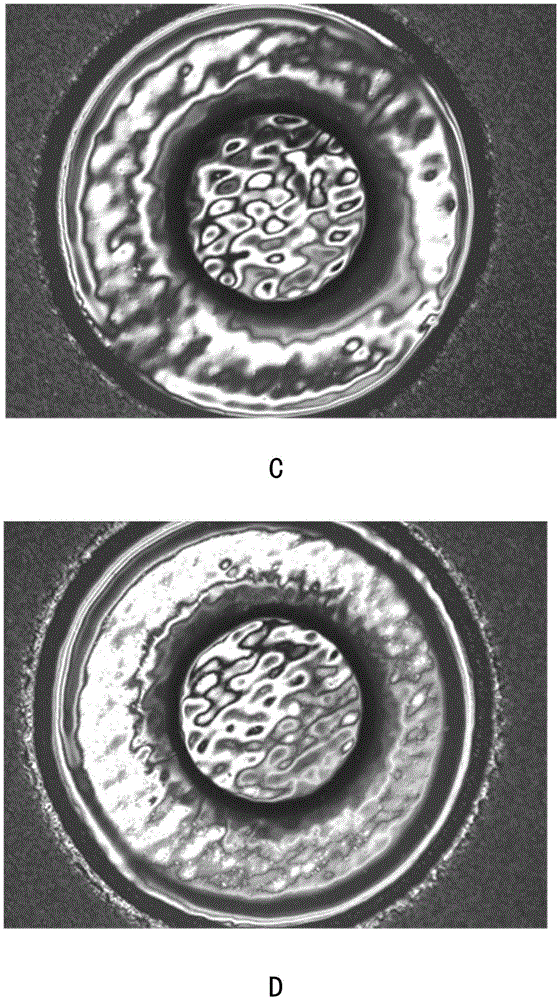
Fig. 1: the sensor film analyzed by optical microscopy oozes out. Pictures a and B: films (Mg 616 and Mg626, respectively) with a polymer content of 100% poly (vinyl chloride-co-vinyl acetate-co-vinyl alcohol). Picture C: films (Mg 652) comprising poly (vinyl chloride) and poly (vinyl chloride-co-vinyl acetate-co-vinyl alcohol) in a 4:1 ratio. Picture D: films (Mg 654) comprising carboxylated PVC and poly (vinyl chloride-co-vinyl acetate-co-vinyl alcohol) in a 1:2 ratio.
Detailed Description
Definition of the definition
The term "selectivity" when used herein in the context of a membrane refers to the preference for a particular ion. "selectivity" as used herein does not mean absolute or exclusive selectivity, that is, the membrane may be selective for a variety of ions such as magnesium ions and calcium ions.
As used herein, the term "ionophore" refers to a compound that reversibly binds ions, such as a compound that can transport ions across a membrane.
The term "lipophilic" when used herein, particularly in the context of "lipophilic compounds", refers to the ability of a chemical compound to dissolve in a fat, oil, lipid, or nonpolar solvent.
The term "acidic group" refers to a group capable of ionization to supply hydrogen ions to a base.
The term "salt" as used herein refers to the deprotonated form of an acid together with a cationic species that counteracts the negative charge of the acid.
As used herein, the term "substituted form" of 1, 10-phenanthroline is meant to include materials that contain one or more substituted 1, 10-phenanthroline backbones therefor. The term "substituted" means that the hydrogen on the 1, 10-phenanthroline is replaced by a group R or a residue R. Similarly, "substituted aryl" refers to an aryl group in which hydrogen has been replaced by a different residue or group.
The term "C XX-YY "in the context of chemical groups means that the groups contain any number from XX to YY carbon atoms, i.e., starting from XX up to YY and including YY, e.g., C 1-18 Alkyl group packageContaining 1, 2, 3, 4, 5, 6, 7, 8, 9, 10, 11, 12, 13, 14, 15, 16, 17 or 18 carbon atoms. Unless otherwise specified, such groups may be linear or branched.
When referring to a chemical group, the terms "alkyl", "aryl", "alkenyl" and "alkynyl" have their ordinary meanings in the art. In some embodiments, such groups include no more than 18 carbon atoms. The term "branched alkyl" refers to an alkyl group that is not completely linear, i.e., has at least one side chain.
The term "polymer blend" as used herein refers to a mixture of two or more different polymers.
The term "log P" refers to a measure of the concentration ratio of a compound at equilibrium in a mixture of two immiscible phases (e.g., water and 1-octanol).
The term "concentration" when used herein in the context of determining the concentration of an ion, such as magnesium ion, in a sample refers to the stoichiometric concentration of the ion in a standardized solution matrix (reference scale) having an ion activity equal to that of the sample being measured, see the IFCC guidelines (Ben Rayana et al (2008) Clin Chem Lab Med (1): 21)
Further aspects and embodiments of the invention
The present inventors have developed ion selective membranes with improved performance over membranes previously described in the art. In particular, the films of the present invention have smooth surfaces, have high in-use stability, exhibit low plasticizer exudation and zinc ion interference, and exhibit good tolerance to surfactants. Moreover, the film has a rapid viscosity increase during drying.
As described above, in a first broad aspect, the present invention is directed to an ion selective membrane comprising an ionophore and a polymer blend, wherein the polymer blend comprises:
a. A first polymer which is carboxylated poly (vinyl chloride) or poly (vinyl chloride), wherein the first polymer has a molecular weight of 100,000 to 500,000, and
b. a second polymer which is a copolymer of vinyl chloride and at least one additional monomer group having a hydrophilic group, wherein the second polymer has a molecular weight of less than 100,000,
wherein if the first polymer is carboxylated poly (vinyl chloride), the second polymer has more hydrophilic groups than the first polymer.
In one embodiment, the first polymer is carboxylated poly (vinyl chloride). In further embodiments, the first polymer is carboxylated poly (vinyl chloride) and the second polymer has at least 1.5 times the hydrophilic groups of the first polymer, such as at least 2 times, such as at least 4 times, such as at least 5 times, such as at least 10 times the hydrophilic groups of the first polymer. In still further embodiments, the first polymer is carboxylated poly (vinyl chloride) and the carboxylated poly (vinyl chloride) is 0.1% to 10% carboxylated, for example 0.5% to 5% carboxylated, for example 1% to 3% carboxylated, for example 1.8% carboxylated.
In another embodiment, the first polymer is poly (vinyl chloride).
In one embodiment, the first polymer has a molecular weight of at least 110,000, such as at least 120,000, such as 130,000-400,000, such as 130,000-300,000, such as 130,000-250,000.
In one embodiment, the first polymer is carboxylated poly (vinyl chloride) and the first polymer has a molecular weight of at least 110,000, such as at least 120,000, such as 130,000-400,000, such as 200,000-300,000, such as 200,000-250,000, such as 220,000.
In another embodiment, the first polymer is poly (vinyl chloride) and the first polymer has a molecular weight of at least 110,000, such as at least 120,000, such as 120,000-200,000, such as 130,000-160,000, such as 140,000.
In one embodiment of the film of the present invention, the additional monomer in the second polymer is vinyl alcohol, vinyl ester, or hydroxy functional acrylate. In a further embodiment, the second polymer is a copolymer of: vinyl chloride, vinyl acetate, vinyl alcohol, and optionally, additional monomers containing hydrophilic groups such as acrylic acid, methacrylic acid, or maleic acid.
In a still further embodiment, the second polymer is poly (vinyl chloride-co-vinyl acetate-co-vinyl alcohol). In one embodiment, the poly (vinyl chloride-co-vinyl acetate-co-vinyl alcohol) comprises 75% to 98% vinyl chloride, such as 85% to 95% vinyl chloride, such as 89% to 93% vinyl chloride, such as 91% vinyl chloride. In another embodiment, the poly (vinyl chloride-co-vinyl acetate-co-vinyl alcohol) comprises 1% to 20% vinyl acetate, such as 1% to 10% vinyl acetate, such as 1% to 5% vinyl acetate, such as 3% vinyl acetate. In further embodiments, the poly (vinyl chloride-co-vinyl acetate-co-vinyl alcohol) comprises 1% to 15% vinyl alcohol, such as 1% to 10% vinyl alcohol, such as 4% to 8% vinyl alcohol, such as 6% vinyl alcohol.
In one embodiment, the second polymer has a molecular weight of less than 100,000, such as 30,000 to 90,000, preferably 60,000 to 80,000, such as 70,000.
In one embodiment, the ratio of the mass of the first polymer to the mass of the second polymer in the film is 10:1 to 1:5, such as 4:1 to 1:4, such as 2:1 to 1:3, such as 2:3 to 3:7, such as 1:2.
In one embodiment, the first polymer is carboxylated poly (vinyl chloride) and the ratio of the mass of the first polymer to the mass of the second polymer in the film is 4:1 to 1:4, such as 2:1 to 1:3, such as 3:2 to 3:7, or 2:3 to 3:7, such as 1:2.
In another embodiment, the first polymer is poly (vinyl chloride) and the ratio of the mass of the first polymer to the mass of the second polymer in the film is 10:1 to 1:5, such as 7:1 to 1:2, such as 5:1 to 2:3, such as 5:1 to 2:1, such as 4:1.
In one embodiment, the polymer blend comprises about 10% to 50% of the dry film mass (i.e., the mass of the components prior to mixing in the solvent), such as 20% to 40% of the dry film mass, such as 25% to 35% of the dry film mass, such as 25% to 30% of the dry film mass.
Ionophore
As mentioned above, the membranes of the present invention comprise an ionophore or a mixture of ionophores. In one embodiment, the ionophore is selective for magnesium, calcium, sodium, potassium, lithium, zinc or phosphate ions. In a preferred embodiment, the ionophore is a magnesium ion selective ionophore.
The ionophores used in the membranes of the present invention may be charged or uncharged (neutral). In some embodiments, the ionophore is lipophilic.
In a preferred embodiment, the ionophore is a phenanthroline compound, which is 1, 10-phenanthroline or a substituted form thereof. Such compounds are described, for example, in WO 92/16803 (Nova Biomedical Corp.). The 1, 10-phenanthroline has the following structure:

in one embodiment, the carbon atoms at positions 2 and 9 of the phenanthroline compound are hydrogen bonded.
In one embodiment, the ionophore is a compound of formula II:

wherein R is 1 -R 6 Each is any of the following:
H;
F、Cl、Br、I、NO 2 CN or CF 3 Any of (3);
C 1-18 an alkyl group;
C 1-18 an aryl group;
C 1-18 alkenyl groups;
(CH 2 ) m y, wherein m is 0 OR an integer of 1 to 4, Y is-OR 7 、-NR 7 R 8 、-OCOR 7 、-NR 7 COR 8 、-COR 7 、-COOR 7 、-SO 3 R 7 、-OSiR 7 R 8 R 9 、-PO 4 R 7 R 8 、-PO 3 R 7 R 8 Any of (2), wherein R 7 、R 8 And R is 9 Each is any of H, alkyl, branched alkyl, aryl, or substituted aryl; or alternatively
C n -R 10 R 11 Wherein n is 0 or an integer of 1 to 17 inclusive, R 10 C, N, NCO or CH 2 -Z-CH 2 Wherein Z is O, NH, S, OCO or any of CO, R 11 Is a compound of formula III:

and R is 11 At R 11 And R at any of positions 3, 4, 5, 6, 7 or 8 of (C) 10 Connection, R 12 -R 17 Is any of the following: H. c (C) 1-18 Alkyl, C 1-18 Aryl or absent, provided that if R 11 At R 11 And R at position 3 of (2) 10 R is the connection point 12 Missing, if R 11 At R 11 And R at position 4 of (2) 10 R is the connection point 13 Missing, if R 11 At R 11 And R at position 5 of (2) 10 R is the connection point 14 Missing, if R 11 At R 11 And R at position 6 of (2) 10 R is the connection point 15 Missing, if R 11 At R 11 And R at position 7 of (2) 10 R is the connection point 16 Missing, if R 11 At R 11 And R at position 8 of (2) 10 R is the connection point 17 The absence of the presence of a defect,
provided that R 1 -R 6 One of which is not H and the C atoms in positions 2 and 9 of the 1, 10-phenanthroline are each throughBonds not participating in the fused ring structure are bonded to H.
In a further embodiment, R 1 To R 6 Containing a total of at least 6 carbon atoms, such as 6, 7, 8, 9, 10 or 11 carbon atoms, such as a total of at least 11 carbon atoms, such as 11-18 carbon atoms.
In another embodiment, R 1 、R 2 、R 3 、R 4 、R 5 And R is 6 Is an alkyl or aryl group having 1 to 18 carbon atoms. For example, is selected from R 1 、R 2 、R 3 、R 4 、R 5 And R is 6 May be an alkyl or aryl group having 1 to 18 carbon atoms and the remainder hydrogen, e.g. R 1 And R is 2 、R 1 And R is 3 、R 1 And R is 4 、R 1 And R is 5 、R 1 And R is 6 、R 2 And R is 3 、R 2 And R is 4 、R 2 And R is 5 、R 2 And R is 6 、R 3 And R is 4 、R 3 And R is 5 、R 3 And R is 6 、R 4 And R is 5 、R 4 And R is 6 Or R 5 And R is 6 Is an alkyl or aryl group having 1 to 18 carbon atoms and the remaining groups are hydrogen.
In another embodiment, R 1 、R 2 、R 3 、R 4 、R 5 And R is 6 Is an alkyl group having 1 to 18 carbon atoms. For example, is selected from R 1 、R 2 、R 3 、R 4 、R 5 And R is 6 May be an alkyl group having 1 to 18 carbon atoms and the remainder are hydrogen, e.g. R 1 And R is 2 、R 1 And R is 3 、R 1 And R is 4 、R 1 And R is 5 、R 1 And R is 6 、R 2 And R is 3 、R 2 And R is 4 、R 2 And R is 5 、R 2 And R is 6 、R 3 And R is 4 、R 3 And R is 5 、R 3 And R is 6 、R 4 And R is 5 、R 4 And R is 6 Or R 5 And R is 6 Is an alkyl group having 1 to 18 carbon atoms and the remaining R groups are hydrogen.
In another embodiment, R 1 、R 2 、R 3 、R 4 、R 5 And R is 6 Is an alkyl group having 6 to 18 carbon atoms. For example, is selected from R 1 、R 2 、R 3 、R 4 、R 5 And R is 6 May be an alkyl group having 6 to 18 carbon atoms and the remainder are hydrogen, e.g. R 1 And R is 2 、R 1 And R is 3 、R 1 And R is 4 、R 1 And R is 5 、R 1 And R is 6 、R 2 And R is 3 、R 2 And R is 4 、R 2 And R is 5 、R 2 And R is 6 、R 3 And R is 4 、R 3 And R is 5 、R 3 And R is 6 、R 4 And R is 5 、R 4 And R is 6 Or R 5 And R is 6 Is an alkyl group having 6 to 18 carbon atoms and the remainder are hydrogen.
In another embodiment, R 1 、R 2 、R 3 、R 4 、R 5 And R is 6 Only one of which is an alkyl group having 1 to 18 carbon atoms, for example 6 to 18 carbon atoms, for example 11 to 18 carbon atoms and the remaining R groups are hydrogen.
In another embodiment, R 2 And/or R 5 Is an alkyl group having 1 to 18 carbon atoms, for example 6 to 18 carbon atoms, for example 11 to 18 carbon atoms and the remaining R groups are hydrogen. In another embodiment, R 2 And/or R 5 Is an aryl group having 1 to 18 carbon atoms.
In a preferred embodiment, the ionophore is 4-undecyl-1, 10-phenanthroline or 4, 7-bisundecyl-1, 10-phenanthroline.
Substituted 1, 10-phenanthroline compounds can be synthesized by standard techniques known to those skilled in the art. For example, synthesis of 4-and 4, 7-substituted 1, 10-phenanthrolines is described in J.chem.Eng.Data,26:227-29 (1981), which is hereby incorporated by reference. Methyl groups can provide handles for attaching desired side chains in the synthesis of other 1, 10-phenanthroline derivatives, and methyl-substituted 1, 10-phenanthroline is commercially available. For example, 4-methyl, 5-methyl, 6-methyl, 7-methyl, 3, 6-dimethyl, 5, 7-dimethyl, 4, 7-dimethyl, and 5, 6-dimethyl-1, 10-phenanthroline are all available from Aldrich Chemical co. 4-undecyl-1, 10-phenanthroline and 4, 7-bisundecyl-1, 10-phenanthroline can be synthesized, for example, as described in WO 92/16803 (Nova biomedica Corp.).
In another embodiment, the magnesium ion selective membrane comprises an ionophore having a tripod stereochemical structure, for example a tripod structure such as the structure described in WO2015/160755 (Siemens Healthcare Diagnostics inc.).
Thus, in one embodiment, the ionophore is a compound according to formula IV below (also known in the art as ETH 5506):

in another embodiment, the ionophore is a compound according to formula V below (also known in the art as ETH 5504):

in another embodiment, the ionophore is a compound according to formula VI below (also known in the art as ETH 3832):

in another embodiment, the ionophore is a compound according to formula VII below, wherein n is an integer from 6 to 8 (referred to in the art as ETH5282 when n is 6; referred to in the art as ETH7025 when n is 8):

in another embodiment, the ionophore is IUPAC 2000 Part I Inorganic cations Pure Appl Chem 72:1851, one of the ionophores described in Table 8, e.g. Mg 2+ -1、Mg 2+ -2Mg 2+ -3、Mg 2+ -4、Mg 2+ -5、Mg 2+ -6、Mg 2+ -7、Mg 2+ -8、Mg 2+ -9、Mg 2+ -10、Mg 2+ -11、Mg 2+ -12、Mg 2+ -13、Mg 2+ -14、Mg 2+ -15、Mg 2+ -16、Mg 2+ -17、Mg 2+ -18、Mg 2+ -19、Mg 2+ -20、Mg 2+ -21、Mg 2+ -22、Mg 2+ -23、Mg 2+ -24、Mg 2+ -25、Mg 2+ -26、Mg 2+ -27、Mg 2+ -28、Mg 2+ -29、Mg 2+ -30、Mg 2+ -31、Mg 2+ -32、Mg 2+ -33、Mg 2+ -34、Mg 2+ -35、Mg 2+ -36、Mg 2 + -37、Mg 2+ -38、Mg 2+ -39、Mg 2+ -40、Mg 2+ -41、Mg 2+ -42、Mg 2+ -43、Mg 2+ -44、Mg 2+ -45、Mg 2+ -46、Mg 2+ -47、Mg 2+ -48、Mg 2+ -49、Mg 2+ -50、Mg 2+ -51、Mg 2+ -52、Mg 2+ -53、Mg 2+ -54、Mg 2+ -55 or Mg 2+ -56。
In another embodiment, the ionophore is Buhlmann et al (1998) chem. Rev.98:1593 one of the ionophores described, e.g. Mg 2+ -1、Mg 2+ -2Mg 2+ -3、Mg 2+ -4、Mg 2+ -5、Mg 2+ -6、Mg 2+ -7、Mg 2+ -8、Mg 2+ -9、Mg 2+ -10、Mg 2+ -11、Mg 2+ -12、Mg 2+ -13、Mg 2+ -14、Mg 2+ -15 or Mg 2+ -16。
In another embodiment, the ionophore is ETH 5220 (Zhang et al (2011) am. J. Biomed. Sci.3:301), or is ETH 2001, ETH 2002, ETH 2003 or ETH 2022 (Zhang et al (2000) Anal. Sci.16:11).
In another embodiment, the ionophore is ETH 1001, DBM, ETH 1117, ring (LPro-DLeu) 5 ETH 1224, ETH 2220, ETH 4030, ETH 5214, ETH 5282, or ETH 7025, all of which are described in spichuger (1993) Electroanalysis 5: 739.
In another embodiment, the ionophore is Suzuki et al (1995) Anal. Chem.67:324 One of the ionophores described in (hereby incorporated by reference), preferably K22B5, has two malonamide side chains with adamantyl groups, an 18-membered diazacrown (ether) or a variant thereof, for example K22B1B5 (Siswanta et al (1997) Anal. Sci.13:429).
In a preferred embodiment, the ionophore is 1, 2-bis (diaryl phosphine oxide) benzene (Saleh (1994) J.Electroanalytical chem.373:89) or methyl phenyl semicarbazone (Chandra et al (2013) J.chem., http:// dx.doi.org/10.1155/2013/189464).
Lipophilic compounds
In one embodiment, the membrane of the invention further comprises a lipophilic compound, such as a lipophilic salt, comprising an acidic group.
In a preferred embodiment, the lipophilic compound comprises a compound of formula I or a salt of the lipophilic compound as follows:

wherein A comprises an acidic group and wherein,
wherein R is 18 、R 19 And R is 20 One, two or all three of (C) 4-18 A group of C 4-18 Alkyl group, C 4-18 Alkenyl group, C 4-18 Alkynyl groups or amide-containingC 4-18 A group wherein said C 4-18 The groups are linear in the positions 1, 2 and 3 from the phenyl group or have only one side chain in total in said positions 1, 2 and 3,
and wherein R is 18 、R 19 And R is 20 The remainder of (a) are independently hydrogen or linear C 1-18 An alkyl group.
For the avoidance of doubt, the phrase "or having only one side chain in total at positions 1, 2 and 3" herein means each C 4-18 The groups have only one side chain in total at the positions 1, 2, 3. Thus, R is therein 18 、R 19 And R is 20 Is C 4-18 In the embodiment of the radicals, these C 4-18 Two or more of the groups may have one side chain at position 1, 2 or 3.
For illustration, the formula shows wherein R 18 And R is 20 Is hydrogen and R 19 Is linear C without side chains 8 Embodiments of alkyl groups. Positions 1, 2 and 3 are indicated:

in one embodiment, the acidic groups included in group a of formula I are carboxylic, sulfonic, sulfuric monoester, sulfonamide, phosphonic, phosphoric, arsenical, sulfinic or thiocarboxylic.
In one embodiment, the acidic groups included in group a of formula I are carboxylic acids. For example, group a may be a carboxylic acid group according to formula IX, a carbonic acid group according to formula X, an oxalic acid monoester group according to formula XI, or a dicarboxylic acid monoester group according to formula XII:
formula IX:

formula X:

formula XI:

formula XII:

R 23 can be C 1-5 Radicals, e.g. C 1-5 Alkyl group, C 1-5 Alkenyl group, C 1-5 Alkynyl group or amide-containing C 1-5 A group, or R 23 May not be present. Preferably R 23 Is linear. For example, in one embodiment of a compound according to formula IX, R 23 Is absent and thus the group a consists of carboxylic acid groups. R in formula IX 24 Can be C 1-5 Radicals, e.g. C 1-5 Alkyl group, C 1-5 Alkenyl group, C 1-5 Alkynyl group or amide-containing C 1-5 A group.
In another embodiment, the acidic groups included in group a are sulfonic acids. For example, group a may be a sulfonic acid group according to formula XIII:
formula XIII:

R 23 can be C 1-5 Radicals, e.g. C 1-5 Alkyl group, C 1-5 Alkenyl group, C 1-5 Alkynyl group or amide-containing C 1-5 A group, or R 23 May not be present. Preferably R 23 Is linear. For example, in one embodiment of a compound according to formula XIII, R 23 Is absent and thus the group a consists of sulfonic acid groups.
In another embodiment, the acidic groups included in group a are sulfuric acid monoesters. For example, group a may be a sulfate monoester group according to formula XIV:
formula XIV:

R 23 can be C 1-5 Radicals, e.g. C 1-5 Alkyl group, C 1-5 Alkenyl group, C 1-5 Alkynyl group or amide-containing C 1-5 A group, or R 23 May not be present. Preferably R 23 Is linear. For example, in one embodiment of a compound according to formula XIV, R 23 Is absent and thus the group a consists of a sulfate monoester group.
In another embodiment, the acidic group included in group a is a sulfonamide. For example, group a may be a sulfonamide group according to formula XV:
formula XV:

R 23 can be C 1-5 Radicals, e.g. C 1-5 Alkyl group, C 1-5 Alkenyl group, C 1-5 Alkynyl group or amide-containing C 1-5 A group, or R 23 May not be present. Preferably R 23 Is linear. For example, in one embodiment of a compound according to formula XV, R 23 Is absent and thus the group a consists of sulfonamide groups.
In another embodiment, the acidic group included in group a is a phosphonic acid. For example, the group a may be a phosphonic acid group according to formula XVI or a phosphonic acid monoester group according to formula XVII:
formula XVI:

formula XVII:

R 23 can be C 1-5 Radicals, e.g. C 1-5 Alkyl group, C 1-5 Alkenyl group, C 1-5 Alkynyl group or amide-containing C 1-5 A group, or R 23 May not be present. Preferably R 23 Is linear. For example, in one embodiment of a compound according to formula XVI, R 23 Is absent and thus the group a consists of phosphonic acid groups. R is R 24 Can be C 1-18 Radicals, e.g. C 1-18 Alkyl group, C 1-18 Alkenyl group, C 1-18 Alkynyl group, amide-containing C 1-18 A group or an aryl group. In particular, the aryl group may be a phenyl group, e.g. R 24 Can be a compound having a substituent R as defined in formula I 18 、R 19 And R is 20 Phenyl groups of (a).
In another embodiment, the acidic group included in group a is phosphoric acid. For example, group a may be a phosphoric monoester group according to formula XVIII or a phosphoric diester group according to formula XIX or a polyphosphoric acid group according to formula XX:
formula XVIII:

formula XIX:

formula XX:

R 23 can be C 1-5 Radicals, e.g. C 1-5 Alkyl group, C 1-5 Alkenyl group, C 1-5 Alkynyl group or amide-containing C 1-5 A group, or R 23 May not be present. Preferably R 23 Is linear. For example, in one embodiment of a compound according to formula XVIII, R 23 Is absent and thus the group a consists of a phosphate monoester group. In one embodiment of the compounds according to formula XIX, R 23 Is absent and thus the group a consists of a phosphodiester group. R is R 24 Can be C 1-18 Radicals, e.g. C 1-18 Alkyl group, C 1-18 Alkenyl group, C 1-18 Alkynyl group, amide-containing C 1-18 A group or an aryl group. In particular, the aryl group may be a phenyl group, e.g. R 24 Can be a compound having a substituent R as defined in formula I 18 、R 19 And R is 20 Phenyl groups of (a).
In another embodiment, the acidic group included in group a is arsenical acid. For example, group a may be a group according to formula XVI, XVII, XIII, XIX or XX in which the phosphorus atom has been replaced by an arsenic atom (As).
In another embodiment, the acidic group included in group a is sulfinic acid. For example, group a may be a sulfinic group according to formula XXI:
formula XXI:

R 23 can be C 1-5 Radicals, e.g. C 1-5 Alkyl group, C 1-5 Alkenyl group, C 1-5 Alkynyl group or amide-containing C 1-5 A group, or R 23 May not be present. Preferably R 23 Is linear. For example, in one embodiment of a compound according to formula XXI, R 23 Is absent and thus the group a consists of sulfinic acid groups.
In another embodiment, the acidic groups included in group a are thiocarboxylic acids. For example, the group a may be a thiocarboxylic acid group according to formula XXII or formula XXIII:
formula XXII:

formula XXIII:

R 23 can be C 1-5 Radicals, e.g. C 1-5 Alkyl group, C 1-5 Alkenyl group, C 1-5 Alkynyl group or amide-containing C 1-5 A group, or R 23 May not be present. Preferably R 23 Is linear. For example, in one embodiment of a compound according to formula XXII or formula XXIII, R 23 Is absent and thus the group a consists of thiocarboxylic acid groups.
In one embodiment, the group A of formula I is a phosphoric acid mono-or diester group, for example a group-R according to formula XIX 23 -(HPO 4 )-R 24 Wherein R is 23 Absent or alkyl (e.g. C 1-18 Alkyl), branched alkyl, aryl or substituted aryl, and R 24 Is hydrogen or alkyl (e.g. C 1-18 Alkyl), branched alkyl, aryl, or substituted aryl.
In a further embodiment, the lipophilic salt comprises a compound of formula VIII:

wherein R is 18 、R 19 And R is 20 Is defined for formula I. Preferably, the membrane comprises a salt of a lipophilic compound of formula VIII.
In one embodiment, R 18 、R 19 Or R is 20 One is C as defined above 4-18 Alkyl groups (i.e. C being linear in positions 1, 2 and 3 from the phenyl group, or having only one side chain in total in said positions 1, 2 and 3) 4-18 Alkyl group), andthe remainder being independently hydrogen or linear C 1-18 An alkyl group.
In a further embodiment, R 18 、R 19 Or R is 20 One is C as defined above 4-18 Alkyl groups and the remainder are hydrogen. In a further embodiment, R 19 Is C as defined above 4-18 Alkyl group and R 18 And R is 20 Is hydrogen.
In one embodiment, the C 4-18 The alkyl group is linear. In another embodiment, the C 4-18 The alkyl group comprises at least 6, such as at least 8 carbon atoms, such as 8, 9, 10, 11 or 12 carbon atoms.
In a further embodiment, R 18 、R 19 Or R is 20 Is C only one of 4-18 An alkyl group, and the C 4-18 The alkyl group comprises at least 6, such as at least 8 carbon atoms, such as 8, 9, 10, 11 or 12 carbon atoms.
In a preferred embodiment, the lipophilic salt comprises a compound of formula VIII wherein R 18 And R is 20 Is hydrogen and R 19 Is an octyl group.
Preferred salts are magnesium and calcium salts.
In a preferred embodiment, the lipophilic salt defined in b) is magnesium bis [ 4-octylphenyl ] phosphate and the lipophilic salt defined in c) is calcium bis [ 4-octylphenyl ] phosphate.
In another preferred embodiment, the lipophilic salt defined in b) is hemi-magnesium bis [4- (1, 3-tetramethylbutyl) phenyl ] phosphate and the lipophilic salt defined in c) is hemi-calcium bis [4- (1, 3-tetramethylbutyl) phenyl ] phosphate.
Lipophilic salts such as dicalcium bis [ 4-octylphenyl ] phosphate and hemi magnesium bis [ 4-octylphenyl ] phosphate can be prepared by standard methods known in the art.
In a preferred embodiment, the lipophilic salt is bis [ 4-octylphenyl ] magnesium phosphate (b)) and bis [ 4-octylphenyl ] calcium phosphate (c)), wherein the mixture comprises at least 50% bis [ 4-octylphenyl ] magnesium phosphate, for example at least 80% bis [ 4-octylphenyl ] magnesium phosphate, for example 80% -90% bis [ 4-octylphenyl ] magnesium phosphate.
In a further preferred embodiment of the ion-selective membrane according to the invention, the ionophore is 4, 7-bisundecyl-1, 10-phenanthroline and the lipophilic salts are magnesium and calcium bis [ 4-octylphenyl ] phosphate halves.
In a preferred embodiment, the molar ratio between the ionophore and the anion of the lipophilic compound or lipophilic salt is from 2:1 to 1:1, for example from 1.8:1 to 1.2:1.
In addition to the lipophilic compounds and lipophilic salts described above, additional salts may be present in the membranes of the present invention. Thus, in embodiments, the films of the present invention include additional salts, such as tetrakis (4-chlorophenyl) borate.
Ionophores comprising covalently linked acidic groups
In a further embodiment, the ionophore and the acidic group are covalently linked, rather than part of a separate compound.
Thus, in one embodiment, the invention relates to a magnesium ion selective membrane comprising an ionophore covalently linked to an acidic group via a spacer (spacer), or a salt thereof (i.e. a salt of said ionophore covalently linked to an acidic group via a spacer), wherein said spacer comprises at least one carbon atom. In a preferred embodiment, the ionophore is lipophilic.
In one embodiment, the spacer is an alkyl group, such as a linear or branched alkyl group having a total of 1 to 18 carbon atoms, wherein the alkyl group is optionally substituted. In another embodiment, the spacer is a linear alkyl group, e.g., - (CH) 2 ) n -a group wherein n is at least 1, such as 1, 2, 3, 4 or 5, or at least 2.
In one embodiment, the ionophore is a phenanthroline compound that is 1, 10-phenanthroline or a substituted form thereof. In one embodiment thereof, the spacer is covalently attached to the phenanthroline compound at a carbon atom at position 2, 3, 4, 5, 6, 7, 8 or 9 of the 1, 10-phenanthroline.
In a further embodiment, the ionophore covalently linked to the acidic group via a spacer, wherein the spacer comprises at least one carbon atom, is a phenanthroline compound of formula II:

wherein R is 1 -R 6 Each is any of the following:
H;
F、Cl、Br、I、NO 2 CN or CF 3 Any of (3);
C 1-18 an alkyl group;
C 1-18 an aryl group;
C 1-18 alkenyl groups;
(CH 2 ) m y, wherein m is 0 OR an integer of 1 to 4, Y is-OR 7 、-NR 7 R 8 、-OCOR 7 、-NR 7 COR 8 、-COR 7 、-COOR 7 、-SO 3 R 7 、-OSiR 7 R 8 R 9 、-PO 4 R 7 R 8 、-PO 3 R 7 R 8 Any of (2), wherein R 7 、R 8 And R is 9 Each is any of H, alkyl, branched alkyl, aryl, or substituted aryl;
C n -R 10 R 11 wherein n is 0 or an integer of 1 to 17 inclusive, R 10 C, N, NCO or CH 2 -Z-CH 2 Wherein Z is O, NH, S, OCO or any of CO, R 11 Is that

And R is 11 At R 11 And R at any of positions 3, 4, 5, 6, 7 or 8 of (C) 10 Connection, R 12 -R 17 Is any of the following: H. c (C) 1-18 Alkyl, C 1-18 Aryl or absent, provided that if R 11 At R 11 And R at position 3 of (2) 10 R is the connection point 12 Missing, if R 11 At R 11 And R at position 4 of (2) 10 R is the connection point 13 Missing, if R 11 At R 11 And R at position 5 of (2) 10 R is the connection point 14 Missing, if R 11 At R 11 And R at position 6 of (2) 10 R is the connection point 15 Missing, if R 11 At R 11 And R at position 7 of (2) 10 R is the connection point 16 Missing, if R 11 At R 11 And R at position 8 of (2) 10 R is the connection point 17 A deletion;
provided that R 1 -R 6 One is other than H, and the C atoms at positions 2 and 9 of the 1, 10-phenanthroline are each bonded to H through bonds not involving a fused ring structure, and
Wherein R is 1 -R 6 One of which contains a spacer and an acidic group, preferably wherein R 1 Or R is 6 Comprising a spacer and an acidic group.
In a further embodiment thereof, R 1 To R 6 Containing a total of at least 6 carbon atoms, such as 6, 7, 8, 9, 10 or 11 carbon atoms, such as a total of at least 11 carbon atoms, such as 11-18 carbon atoms.
In another embodiment, R 1 、R 2 、R 3 、R 4 、R 5 And R is 6 Is an alkyl or aryl group having 1 to 18 carbon atoms. For example, is selected from R 1 、R 2 、R 3 、R 4 、R 5 And R is 6 May be an alkyl or aryl group having 1 to 18 carbon atoms and the remainder hydrogen, e.g. R 1 And R is 2 、R 1 And R is 3 、R 1 And R is 4 、R 1 And R is 5 、R 1 And R is 6 、R 2 And R is 3 、R 2 And R is 4 、R 2 And R is 5 、R 2 And R is 6 、R 3 And R is 4 、R 3 And R is 5 、R 3 And R is 6 、R 4 And R is 5 、R 4 And R is 6 Or R 5 And R is 6 Is an alkyl or aryl group having 1 to 18 carbon atoms and the remainder are hydrogen.
In another embodiment, R 1 、R 2 、R 3 、R 4 、R 5 And R is 6 Is an alkyl group having 1 to 18 carbon atoms. For example, is selected from R 1 、R 2 、R 3 、R 4 、R 5 And R is 6 May be an alkyl group having 1 to 18 carbon atoms and the remainder are hydrogen, e.g. R 1 And R is 2 、R 1 And R is 3 、R 1 And R is 4 、R 1 And R is 5 、R 1 And R is 6 、R 2 And R is 3 、R 2 And R is 4 、R 2 And R is 5 、R 2 And R is 6 、R 3 And R is 4 、R 3 And R is 5 、R 3 And R is 6 、R 4 And R is 5 、R 4 And R is 6 Or R 5 And R is 6 Is an alkyl group having 1 to 18 carbon atoms and the remainder are hydrogen.
In another embodiment, R 1 、R 2 、R 3 、R 4 、R 5 And R is 6 Is an alkyl group having 6 to 18 carbon atoms. For example, is selected from R 1 、R 2 、R 3 、R 4 、R 5 And R is 6 May be an alkyl group having 6 to 18 carbon atoms and the remainder are hydrogen, e.g. R 1 And R is 2 、R 1 And R is 3 、R 1 And R is 4 、R 1 And R is 5 、R 1 And R is 6 、R 2 And R is 3 、R 2 And R is 4 、R 2 And R is 5 、R 2 And R is 6 、R 3 And R is 4 、R 3 And R is 5 、R 3 And R is 6 、R 4 And R is 5 、R 4 And R is 6 Or R 5 And R is 6 Is an alkyl group having 6 to 18 carbon atoms and the remainder are hydrogen.
In another embodiment, R 1 、R 2 、R 3 、R 4 、R 5 And R is 6 One of which is an alkyl group having 1 to 18 carbon atoms, for example 6 to 18 carbon atoms, for example 11 to 18 carbon atoms.
In another embodiment, R 2 And/or R 5 Is an alkyl group having 1 to 18 carbon atoms, for example 6 to 18 carbon atoms, for example 11 to 18 carbon atoms.
In another embodiment, R 2 And/or R 5 Is an aryl group having 1 to 18 carbon atoms.
In a preferred embodiment, the phenanthroline compound is 4-undecyl-1, 10-phenanthroline covalently linked to an acidic group via a spacer, wherein the spacer comprises at least one carbon atom, e.g. two or three carbon atoms.
In another preferred embodiment, the phenanthroline compound is 4, 7-bisundecyl-1, 10-phenanthroline covalently linked to an acidic group via a spacer, wherein the spacer comprises at least one carbon atom.
Preferably, the spacer comprises 1 to 18 carbon atoms. In one embodiment, the spacer comprises at least 2, e.g., at least 3, carbon atoms, and the spacer is covalently attached at position 2, 3, 4, 5, 6, 7, 8, or 9 of the 1, 10-phenanthroline compound.
In one embodiment, the acidic group is selected from: carboxylic acid, sulfonic acid, sulfuric monoester, sulfonamide, phosphonic acid, phosphoric acid, arsenic acid, sulfinic acid, or thiocarboxylic acid.
In a preferred embodiment, the acidic group is- (HPO) 4 )R 7 、-(HPO 3 )R 7 Wherein R is 7 Is H, alkyl, branched alkyl, aryl or substituted aryl such as 4-octylphenyl.
In another embodiment, the ionophore has three legsA scaffold stereochemical structure, such as one of the structures shown in formulas IV, V, VI and VII. In a further embodiment thereof, the acidic group is located distally of the malonamide group on one, two or three arms of the structure shown in formula IV, V, VI or VII.“Distal "in this context means distal with respect to the center of the tripod structure. Preferably, only one arm of the molecule has a covalently bound acidic group. In another embodiment, the malonyl group is partially or completely replaced by an acidic group in one of the three arms of the structure shown in formula IV, V, VI or VII.
Plasticizers-the films of the present invention typically further comprise a plasticizer. The plasticizer acts to keep other components, such as the ionophore, solvated. Many suitable plasticizers, such as esters, phosphonates and ethers, have been described in the art. In one embodiment, the plasticizer has a LogP value of at least 5. In one embodiment, the plasticizer is 4-hexylphenyl 2-nitrophenyl ether (NHPE), 2-nitrophenyl octyl ether (NPOE), 2-nitrophenyl decyl ether (NPDE), 2-nitrophenyl undecyl ether (NPUDE), 2-nitrophenyl dodecyl ether (ETH 217), 2-nitrophenyl tetradecyl ether (NPTDE), or [12- (4-ethylphenyl) dodecyl ] 2-nitrophenyl ether (ETH 8045), or a mixture of any of these. In a preferred embodiment, the plasticizer is 4-hexylphenyl 2-nitrophenyl ether (NHPE).
In one embodiment, the ratio of the mass of plasticizer to the total mass of polymer is 1:1.5 to 4:1, such as 1:1 to 3:1, such as 1.5:1 to 7:3, such as 2.1:1 to 2:1.
In another embodiment, the ratio of the mass of plasticizer to the total mass of other components in the film is from 2:1 to 1:1, such as from 1.8:1 to 1.2:1, such as from 1.6:1 to 1.2:1, such as from 1.5:1 to 1.3:1.
In one embodiment, the plasticizer, such as NHPE, comprises about 40% to 80% of the dry film mass, such as 50% to 70% of the dry film mass, such as 55% to 65% of the dry film mass.
In a preferred embodiment, the film has the composition detailed in table 1 below.
Table 1. Wet and dry mass composition of the mixed film solutions.
| Component (A) | Wet mass (%) | Dry mass (%) |
| Bis- [ 4-octylphenyl ]]Phosphoric acid semi-Mg | 1.49 | 4.58 |
| Bis- [ 4-octylphenyl ]]Phosphoric acid half Ca | 0.26 | 0.81 |
| 4, 7-Diundecyl-1, 10-phenanthroline (DUP) | 2.41 | 7.40 |
| 1.8% carboxylated PVC | 3.07 | 9.42 |
| PVC copolymer | 6.15 | 18.89 |
| 4-hexylphenyl 2-nitrophenyl ether (NHPE) | 19.17 | 58.90 |
| Cyclohexanone, sigma C102180 | 67.46 |
* Poly (vinyl chloride-co-vinyl acetate-co-vinyl alcohol) having a content of 91% vinyl chloride, 3% vinyl acetate and 6% vinyl alcohol
Preparation process of film of the invention
In a further aspect, the present invention relates to a process for the preparation of an ion selective membrane according to the present invention by mixing the components in a solvent, dispensing the resulting solution onto a desired support, and allowing the solvent to evaporate. Any suitable solvent may be used. In one embodiment, the solvent is cyclohexanone. The support may be flexible or rigid. The support is preferably made of a non-conductive material such as silicon, polymer, printed Circuit Board (PCB), flexible PCB, polyethylene terephthalate (PET), polyimide (PI), ceramic, alumina, glass, wood, glaze, etc.
Electrode and potential sensor
In a further broad aspect, the present invention relates to an ion selective electrode comprising an ion selective membrane of the invention as described herein. The electrodes may be fabricated on the support by using a thick film approach (e.g., screen printing, rotogravure printing, pad printing, stencil printing of conductive materials such as carbon, cu, pt, pd, au, and/or nanotubes, etc.) or by using a thin film approach (e.g., via sputtering, thermal spraying, and/or cold spraying of conductive materials). The support may be flexible or rigid. The support is preferably made of a non-conductive material such as silicon, polymer, printed Circuit Board (PCB), flexible PCB, polyethylene terephthalate (PET), polyimide (PI), ceramic, alumina, glass, wood, glaze, etc.
In a still further broad aspect, the invention relates to a sensor assembly in which two or more analyte electrodes are present on a single support with or without a reference electrode (see, e.g., US5916425 for a sensor assembly comprising a reference electrode). In some embodiments, the sensor assembly is made of two supports, each comprising two or more analyte electrodes with or without a reference electrode. The supports may be placed on top of each other in a layered structure such that the surfaces of the supports with the electrodes face each other (see e.g. WO 2008/131767). Alternative suitable sensor assemblies have been described in WO2018/112017, WO2018/112012, WO2018/112008, WO2017/120464, WO2017/019609, WO2016/106320, WO 2016/01308, WO 2016/007516 and WO 2013/163120.
In one embodiment, the system is treated with a composition comprising a physiological concentration of a potentially interfering compound (Ca 2+ 、K + And Na (Na) + ) Is calibrated by a calibrator.
In some embodiments, the system includes one or more electrodes for measuring other cations, such as calcium ions, such that interference can be minimized by chemometric correction of analyte signals based on activity measurements of the cations.
Uses and methods of use
As mentioned above, in a further broad aspect, the present invention relates to the use of a potentiometric sensor or electrode according to the present invention for determining the concentration of ions in a sample.
Similarly, the invention relates to a method for determining the ion concentration of a liquid sample comprising: the sample is contacted with an electrode according to the invention or a potentiometric sensor according to the invention, and the ion concentration is determined based on the signal provided by the electrode or potentiometric sensor.
Biological samples tested for the presence of an analyte may be biological fluids such as diluted or undiluted whole blood, serum, plasma, saliva, urine, stool, pleural fluid, cerebrospinal fluid, synovial fluid, milk, ascites fluid, peritoneal fluid, or amniotic fluid. Examples of other biological samples include fermentation broths, microbial cultures, wastewater, food products, and the like.
In a preferred embodiment, the sample is a blood sample or a serum sample. The sample (e.g., a blood sample, a serum sample, a plasma sample, or a pleural fluid sample) may be, for example, a sample from a human subject.
As mentioned, in a preferred embodiment, the membrane is a magnesium ion selective membrane. The intent to determine the level of magnesium ions may be, for example, to diagnose a disease or disorder in a patient, such as a human patient, or to monitor the level of magnesium in a patient undergoing or enrolled for treatment, such as medication or surgery. In one embodiment, the disease or disorder is a cardiovascular disease or disorder. In another embodiment, the sample is a sample from a neonate, i.e., an infant less than 28 days old.
Zhang (2011) Am J Biomed Sci 3:301 summarises a number of studies demonstrating a correlation between magnesium levels (in particular hypomagnesemia) and clinical outcomes. For example, studies have demonstrated the association of hypomagnesemia and mortality in ICU patients undergoing hemodialysis, type 2 diabetes, cardiovascular disease, or medical surgical intensive care. Furthermore, in heart disease patients, magnesium deficiency has been found to promote coronary artery spasticity, arrhythmia, fibrillation, infarction, and sudden death. Studies of magnesium intervention during cardiopulmonary bypass have shown that the intra-operative correction of iMg is associated with the decline of postoperative ventricular arrhythmias and the maintenance of uninterrupted sinus rhythms. Clinical trial results also suggest the benefit of magnesium therapy for acute stroke patients in ambulances or emergency rooms within the first two hours of onset of stroke symptoms. Magnesium monitoring is also advocated in preeclampsia, a condition reported to be associated with hypomagnesemia, and occurs in europe and the united states in 5-7% of gestation. Other findings have suggested that the ratio of iCa iMg is a critical diagnostic parameter for preventing vascular and neurological complications in pre-eclamptic-convulsive patients. Soliman et al (2003) crit. Care med.31:1082 reports a correlation between the onset of ionized hypomagnesemia and high morbidity and mortality during ICU stay.
Thus, in a further embodiment, the sample in which the magnesium ion level is determined in the method or use according to the invention may be, for example, a sample from a patient admitted to an acute hospital, or from a patient undergoing or enrolled for medication or surgery, for example cardiac surgery such as cardiopulmonary bypass. In further embodiments, the sample is from a patient suffering from food intake deficiency, malabsorption, hypokalemia, hypocalcemia, alcoholism, or from a patient taking diuretics or other drugs associated with hypomagnesemia. In further embodiments, the sample is from a patient suffering from kidney disease, hypertension, preeclampsia, diabetes, diabetic ketoacidosis, arrhythmia, sepsis, chest pain, acute stroke, asphyxia trauma, burn/smoke inhalation, acute lung disease, or heart disease, e.g., cardiac arrest. In another embodiment, the patient is a patient in an obstetrical ward or a patient undergoing hemodialysis. Moreover, the sample may be from an ICU patient undergoing hemodialysis, type 2 diabetes, cardiovascular disease, or medical surgical intensive care.
The invention is further illustrated by the following examples, which should not be construed as limiting the scope of the invention.
Examples
Example 1: preparation of ion-selective membranes
Stock solutions of magnesium bis [ 4-octylphenyl ] phosphate (MgOPP) were prepared as follows: mgOPP and cyclohexanone (> 99.8%) were mixed in a ratio of 48.28 grams of cyclohexanone per gram of MgOPP. The compounds were mixed at room temperature and then stirred in the dark at room temperature for a minimum of 8 hours or at 37 ℃ for a minimum of 4 hours.
The film dispensing solution was prepared by mixing the following components:

the compounds were mixed in argon or nitrogen filled vials at room temperature and then stirred in the dark at room temperature for a minimum of 40 hours or at 37 ℃ for a minimum of 16 hours. The resulting solution was used to dispense a membrane onto a poly (3, 4-ethylenedioxythiophene) -poly (styrenesulfonate) - (PEDOT-) coated gold electrode on a ceramic support. The solvent is then allowed to evaporate to obtain a plasticized ion-selective membrane.
Example 2: effect of Polymer composition on film integrity (exudation)
Four magnesium ion selective membranes, each having a different polymer composition, were prepared as shown in the following table. Films Mg616 and Mg626 comprise 100% poly (vinyl chloride-co-vinyl acetate-co-vinyl alcohol) (CAS No. 25086-48-0) containing 3% vinyl acetate and 6% vinyl alcohol. Film Mg616 contains product SPP064 from SP 2. The film Mg626 contains the product Fluka 27827 (Sigma-Aldrich, selectophore) TM Grade). Film Mg652 was prepared using a polymer blend of poly (vinyl chloride) (PVC) (MW 140,000) and poly (vinyl chloride-co-vinyl acetate-co-vinyl alcohol) (Fluka 27827) in a dry mass ratio of 4:1. Film Mg654 was prepared using carboxylated poly (vinyl chloride) (cPVC) (carboxylated PVC-1.8% carboxyl basis) and poly (vinyl chloride-co-vinyl acetate-co-vinyl alcohol) (Fluka 27827) in a dry mass ratio of 1:2.

After overnight incubation, the membrane integrity was examined by X5-objective with an optical microscope using differential interference contrast. The results are shown in fig. 1. Films comprising 100% poly (vinyl chloride-co-vinyl acetate-co-vinyl alcohol) showed signs of film exudation because the film mass (mass) was unevenly distributed over the sensor cavity and small droplets over the cavity were observed (fig. 1, panels a and B). On the other hand, films comprising high molecular weight PVC or carboxylated PVC in combination with poly (vinyl chloride-co-vinyl acetate-co-vinyl alcohol) did not bleed out because the film material was uniformly distributed and no droplets were observed on the film surface (fig. 1, panels C and D).
Example 3: determination of iMg concentration in blood samples
The magnesium ion selective membranes Mg652 and Mg654 described in example 2 were tested and were advanced for their ability to measure magnesium ion concentration in blood samples And (5) row comparison. Distributing each film onto three individual electrodes of an electrode array, said electrode array further comprising Ca 2+ Ion selective electrodes. The film was dispensed as described in example 1, except that vanadium brass was used as the transducer material, instead of PEDOT. Each electrode array is placed into a measurement chamber in a test analyzer. The measurement chamber has a fluid contact with a reference electrode. The test analyzer is programmed to automatically control the delivery of the calibration and rinse solutions, the aspiration of samples, the sampling of potential signals at each electrode location, and the acquisition of data.
The use of Mg in three different ratios 2+ And Ca 2+ Three calibration solution pairs of ions Mg 2+ The ion selective electrode is calibrated. The Nicolsky-Eisenman (NE) equation was used as a sensor response model in accordance with the IFCC guidelines (Ben Rayana et al (2008) Clin Chem Lab Med (1): 21). Based on the electrode signals obtained for the calibration solution, a status value (E0), a sensitivity (S) and Mg are determined 2+ Ion relative to Ca 2+ Selectivity coefficient (K) of ions. Also for Ca 2+ The ion selective electrode is calibrated. Three blood samples were prepared: one blood sample was not further added and two blood samples were each added with 1mM Mg 2+ And 2mM Mg 2+ . Each sample was assayed five times. For each Mg 2+ Ion selective electrode, mg in sample 2+ The ion concentration (cMg) is derived from the signal obtained for this particular sample by using the following calculation: values of calibration parameters (E0, S and K) determined for the electrodes prior to sample measurement and using Ca 2+ Ca measured by ion-selective electrode 2+ Ion concentration. No blood correction was subsequently applied to the cMg values obtained. The following results show the deviation of these uncorrected cMg values from the reference cMg measurement on the NOVA-CCX analyzer.
Results:
film Mg652 (PVC: copolymer 4:1):


film Mg654 (cPVC: copolymer 1:2):


the results show that, although both films had good reproducibility and linearity for blood samples, the average deviation (AVG) (deviation) of film Mg654 from the reference value was smaller than film Mg652 (17.6%/31.6%/39.05 vs. 49.9%/61.1%/66.2%).
Further, the difference between the three films of film Mg654 (standard deviation, STDEV) was smaller than film Mg652 (0.4%/0.9%/0.8% vs. 3.5%/3.6%/2.7%).
Example 4: properties of films comprising a single polymer or a polymer blend
To investigate the effect of polymer type and its blends on film properties, eight films were prepared. Four polymer types were included in this test as follows: PVC, cPVC, SPP911 and F27827.
The eight films were prepared as described in example 1, except for the composition as follows. The composition is such that it ensures that the ratio between the total mass of the polymer and the total dry mass of the common film component is unchanged.
| Membrane compounds common to all membrane IDs | Quantity (g) |
| Bis [ 4-octylphenyl ]]Phosphoric acid half calcium | 0.0288 |
| 4, 7-Diundecyl-1, 10-phenanthroline | 0.2640 |
| 4-hexylphenyl 2-nitrophenyl ether (NHPE) | 2.1000 |
| MgOPP stock solution in cyclohexanone | 7.3900 |


Dispensing each film onto four identical electrodes each located on an identical electrode array, the electrode array further comprising Ca 2+ Ion selective electrodes. The film was dispensed as described in example 1. Each electrode array was placed into a measurement chamber in a test analyzer as described in example 3.
Mg is added with 2+ The ion selective electrode is calibrated as described in example 3, but where appropriate to calibrate other sensors simultaneously, e.g. Na, K, ca, cl, pH, pO 2 、pCO 2 In more complex solution matrices of glucose and lactate sensors. For Ca 2+ Ion selective electrodes were also calibrated. The calibrated sensor is then subjected to measurements made as follows:
SSM (single solution method) -solution: two aqueous samples, one of which contains 100mM Mg 2+ Ions and another sample contains 100mM Ca 2+ Ions. Two pairs ofEach sample had the following constant background: titrated to ph=7.4 at 37C in 5mM hepes buffer and 160mM ionic strength (adjusted by adding NaCl).
FIM (fixed interference method) -solution: eight aqueous samples with different Mg 2+ Ion concentration {0.01;0.05;0.10;0.50;1.00;5.00;10.00;50.00 mM in the following constant background: 1.25mM Ca 2+ Ions, 5mM HEPES buffer titrated to pH=7.4 at 37C and 160mM ionic strength (adjusted by addition of NaCl).
Standard solution: five aqueous samples spanning from 0.2mM to 2.5mM Mg 2+ Ion physiological related concentration ranges in the following constant background: 1.25mM Ca 2+ Ions, 5mM HEPES buffer titrated to ph=7.4 at 37C and 160mM ionic strength (adjusted by adding NaCl).
pH solution: three aqueous samples having "low", "normal" and "high" pH values of 6.8, 7.4 and 7.8, respectively, at 37 ℃. All with the following constant background: 0.50mM Mg 2+ Ion, 1.25mM Ca 2+ Ions, 5mM HEPES buffer and 160mM ionic strength (adjusted by addition of NaCl).
Zn solution: possible interferents Zn in human plasma at "normal", "high" and "very high" concentrations 2+ Ions. The latter 2 samples were prepared from the same plasma pool as the "normal" samples by: 10mM ZnCl with insignificant volume was added 2 Stock solutions to obtain 27. Mu.M and 156. Mu.M Zn, respectively 2+ Ion addition concentration, and sample Mg 2+ The ions were not diluted any significant.
According to Umezawa et al (2000) Pure Appl Chem 72:1851, single Solution Method (SSM) and Fixed Interference Method (FIM), the selectivity constants determined from measurements of SSM-and/or FIM-solutions being calculated directly based on electrode signals And sensitivity.
TABLE 2 ion-selective electrodes prepared with the following membrane IDs were passed through different partiesSensitivity (S) and Selectivity constant of the assay "PVC", "cPVC", "F27827", "SPP911", "PVC+SPP911", "PVC+F27827", "cPVC+SPP911" and "cPVC+F27827".

TABLE 3 at Mg 2+ The ion concentration was the same (0.50 mM), but the pH-value at 37 ℃ was {6.8;7.4; 7.8. relative deviation of cMg measured in different aqueous samples ("pH solutions") [%]. cMg value [ mM]Measured by an ion selective electrode prepared with the following membrane ID: "PVC", "cPVC", "F27827", "SPP911", "PVC+SPP911", "PVC+F27827", "cPVC+SPP911" and "cPVC+F27827". The deviation value was calculated relative to the cMg value measured for the sample at ph=7.4.

TABLE 4 at Mg 2+ Same ion concentration but Zn 2+ The ions are suddenly increased to different concentrations { cZn ] Normal state ;cZn Normal state +27μM;cZn Normal state Relative deviation of cMg measured in plasma samples ("Zn solutions") of +156. Mu.M [%]. cMg value [ mM]Measured by an ion selective electrode prepared with the following membrane ID: "PVC", "cPVC", "F27827", "SPP911", "PVC+SPP911", "PVC+F27827", "cPVC+SPP911" and "cPVC+F27827". The offset value is relative to the pair cZn = cZn Normal state Is calculated from the cMg value measured for the non-spiked plasma sample.

TABLE 5 at different Mg' s 2+ Aqueous sample of ion concentration"standard solution") of cMg [ mM ] measured by ion-selective electrode prepared with the following membrane ID]: "PVC", "cPVC", "F27827", "SPP911", "PVC+SPP911", "PVC+F27827", "cPVC+SPP911" and "cPVC+F27827". The numbers shown are the average cMg values calculated from two repeated measurements on four identical films. The numbers in brackets are standard deviations for these eight measurements.

Conclusion(s)
All films tested achieved a linear response slope in the upper cMg-range spanned by the FIM solution and the response slope was close to the theoretically expected Nernst sensitivity (30 mV/decade) for divalent ions (table 2). Of the four membranes comprising only one polymer type, the two membranes based on low molecular weight copolymers ("SPP 911" and "F27827") respond more selectively to Mg2+ ions than Ca2+ ions, that is to say the membranes "SPP911" and "F27827" have a lower selectivity coefficient, when compared to the two membranes based on higher molecular weight polymers ("PVC" and "cPVC")  ). However, in addition to having membrane integrity problems (see example 2), the disadvantage of using low molecular weight copolymers is that the resulting membrane exhibits increased pH and Zn dependence 2+ Interference of ions, see Table 3&4。
If instead a blend of a low molecular weight copolymer (SPP 911 or F27827) and a higher molecular weight polymer (PVC or cPVC) is used, a film is obtained that balances the following requirements ("PVC+SPP 911", "PVC+F27827", "cPVC+SPP911" and "cPVC+F 27827"): film integrity, high Mg 2+ Relative to Ca 2+ Is derived from pH and Zn 2+ Interference.
When in a complex solution background (suitable for simultaneous calibration of other sensors such as Na, K, ca, cl,pH、pO 2 、pCO 2 Glucose and lactate sensors), all films obtained good correspondence between the calibrated sensitivity and selectivity constants and those based on FIM-and SSM-solutions, except for "PVC" and "pvc+spp911" which showed the greatest deviation in sensitivity and/or selectivity coefficient (table 2). This shows that these two membranes are more affected by substances in the complex solution background of the calibration solution (i.e. substances that are also present in the blood) than the remaining membranes. This is consistent with the results given in example 3, where the cPVC-based film has a lower blood bias than the PVC-based film. Thus, PVC-based films have less accurate measurements of standard solutions (table 5), e.g., their slope values deviate more consistently and their intercept values deviate more from zero when compared to crpvc-based films.
Claims (25)
1. An ion selective membrane comprising an ionophore and a polymer blend, wherein the polymer blend comprises:
a. a first polymer which is carboxylated poly (vinyl chloride), wherein the molecular weight of the first polymer is from 100,000 to 500,000,
b. a second polymer which is a copolymer of vinyl chloride and at least one additional monomer having a hydrophilic group, wherein the second polymer has a molecular weight of less than 100,000, and
wherein the second polymer has more hydrophilic groups than the first polymer.
2. The film of claim 1, wherein the second polymer has at least 1.5 times as hydrophilic groups as the first polymer.
3. The film of claim 2, wherein the carboxylated poly (vinyl chloride) is 0.1% -10% carboxylated.
4. A film according to any one of claims 1 to 3 wherein the first polymer has a molecular weight of at least 110,000.
5. A film according to any one of claims 1 to 3 wherein the additional monomer is vinyl alcohol, vinyl ester, or hydroxy functional acrylate.
6. A film according to any one of claims 1 to 3, wherein the second polymer is a copolymer of: vinyl chloride, vinyl acetate, vinyl alcohol, and optionally, additional monomers containing hydrophilic groups.
7. A film according to any one of claims 1 to 3 wherein the second polymer is poly (vinyl chloride-co-vinyl acetate-co-vinyl alcohol).
8. The film of claim 7, wherein the poly (vinyl chloride-co-vinyl acetate-co-vinyl alcohol) comprises 75% -98% vinyl chloride.
9. The film of claim 7, wherein the poly (vinyl chloride-co-vinyl acetate-co-vinyl alcohol) comprises 1% -20% vinyl acetate.
10. The film of claim 7, wherein the poly (vinyl chloride-co-vinyl acetate-co-vinyl alcohol) comprises 1% -15% vinyl alcohol.
11. A film according to any one of claims 1 to 3 wherein the second polymer has a molecular weight of 30,000 to 90,000.
12. The film of any of claims 1-3, wherein the ratio of the mass of the first polymer to the mass of the second polymer in the film is from 10:1 to 1:5.
13. A film according to any one of claims 1 to 3, wherein the film further comprises a plasticizer.
14. The film of claim 13, wherein the plasticizer is 4-hexylphenyl 2-nitrophenyl ether (NHPE), 2-nitrophenyloctyl ether (NPOE), 2-nitrophenyldecyl ether (NPDE), 2-nitrophenylundecyl ether (NPUDE), 2-nitrophenyldodecyl ether (ETH 217), 2-nitrophenyltetradecyl ether (NPTDE), or [12- (4-ethylphenyl) dodecyl ] 2-nitrophenyl ether (ETH 8045), or a mixture of any of these.
15. A membrane according to any one of claims 1 to 3, wherein the ionophore is selective for magnesium ions, calcium ions, sodium ions, potassium ions, lithium ions, zinc ions or phosphate ions.
16. A membrane according to any one of claims 1 to 3, wherein the ionophore is a phenanthroline compound of formula II:

wherein R is 1 -R 6 Each is any of the following:
H;
F、Cl、Br、I、NO 2 CN or CF 3 Any of (3);
C 1-18 an alkyl group;
C 1-18 an aryl group;
C 1-18 alkenyl groups;
(CH 2 ) m y, wherein m is 0 OR an integer of 1 to 4, Y is-OR 7 、-NR 7 R 8 、-OCOR 7 、-NR 7 COR 8 、-COR 7 、-COOR 7 、SO 3 R 7 、-OSiR 7 R 8 R 9 、-PO 4 R 7 R 8 、-PO 3 R 7 R 8 Any of (2), wherein R 7 、R 8 And R is 9 Each is any of H, alkyl, branched alkyl, aryl, or substituted aryl; or (b)
C n -R 10 R 11 Which is provided withWherein n is 0 or an integer of 1 to 17 inclusive, R 10 C, N, NCO or CH 2 -Z-CH 2 Wherein Z is O, NH, S, OCO or any of CO, R 11 Is that

And R is 11 At R 11 And R at any of positions 3, 4, 5, 6, 7 or 8 of (C) 10 Connection, R 12 -R 17 Is any of the following: H. c (C) 1-18 Alkyl, C 1-18 Aryl or absent, provided that if R 11 At R 11 And R at position 3 of (2) 10 R is the connection point 12 Missing, if R 11 At R 11 And R at position 4 of (2) 10 R is the connection point 13 Missing, if R 11 At R 11 And R at position 5 of (2) 10 R is the connection point 14 Missing, if R 11 At R 11 And R at position 6 of (2) 10 R is the connection point 15 Missing, if R 11 At R 11 And R at position 7 of (2) 10 R is the connection point 16 Missing, if R 11 At R 11 And R at position 8 of (2) 10 R is the connection point 17 The absence of the presence of a defect,
provided that R 1 -R 6 One is not H and the C atoms at positions 2 and 9 of the 1, 10-phenanthroline are each bonded to H through bonds that do not participate in the fused ring structure.
17. A membrane according to any one of claims 1-3, wherein the ionophore is 4-undecyl-1, 10-phenanthroline or 4, 7-di-undecyl-1, 10-phenanthroline.
18. A membrane according to any one of claims 1-3, wherein the membrane further comprises a lipophilic compound comprising an acidic group or wherein the membrane further comprises a salt of the lipophilic compound, wherein the lipophilic compound is a compound of formula I:

wherein A is an acidic group,
wherein R is 18 、R 19 And R is 20 One, two or all three of (C) 4-18 A group of C 4-18 Alkyl group, C 4-18 Alkenyl group, C 4-18 Alkynyl group or amide-containing C 4-18 A group wherein said C 4-18 The radicals are linear in the positions 1, 2 and 3 from the phenyl radical or have only one side chain in total in said positions 1, 2 and 3, and
wherein R is 18 、R 19 And R is 20 The remainder of (a) are independently hydrogen or linear C 1-18 An alkyl group.
19. The film of claim 18, wherein the compound is a lipophilic salt and the salt is a bis [ 4-octylphenyl ] hemi-calcium phosphate, a bis [ 4-octylphenyl ] hemi-magnesium phosphate, a bis [4- (1, 3-tetramethylbutyl) phenyl ] hemi-calcium phosphate, a bis [4- (1, 3-tetramethylbutyl) phenyl ] hemi-magnesium phosphate, or a mixture of a bis [ 4-octylphenyl ] hemi-calcium phosphate and a bis [ 4-octylphenyl ] hemi-magnesium phosphate.
20. A membrane according to any one of claims 1 to 3, wherein the membrane comprises an ionophore or salt thereof covalently linked to an acidic group via a spacer, wherein the spacer comprises at least one carbon atom.
21. The film of claim 6, wherein the additional monomer containing a hydrophilic group is acrylic acid, methacrylic acid, or maleic acid.
22. A process for preparing a magnesium ion selective membrane comprising mixing the components specified in any one of the preceding claims in a solvent, dispensing the resulting solution onto a desired support, and allowing the solvent to evaporate.
23. An electrode for determining the magnesium ion concentration of a liquid sample comprising the membrane of any one of claims 1-21.
24. A potentiometric sensor for determining the magnesium ion concentration of a liquid sample comprising a reference electrode and the electrode of claim 23.
25. A method for determining the magnesium ion concentration of a liquid sample comprising contacting the sample with an electrode according to claim 23 or a potentiometric sensor according to claim 24, and determining the magnesium ion concentration based on a signal provided by the electrode or potentiometric sensor.
Applications Claiming Priority (3)
| Application Number | Priority Date | Filing Date | Title |
|---|---|---|---|
| DKPA201800324 | 2018-07-04 | ||
| DKPA201800324 | 2018-07-04 | ||
| PCT/EP2019/066508 WO2020007626A1 (en) | 2018-07-04 | 2019-06-21 | Magnesium ion selective pvc membranes |
Publications (2)
| Publication Number | Publication Date |
|---|---|
| CN112384792A CN112384792A (en) | 2021-02-19 |
| CN112384792B true CN112384792B (en) | 2023-05-30 |
Family
ID=67001814
Family Applications (1)
| Application Number | Title | Priority Date | Filing Date |
|---|---|---|---|
| CN201980045014.6A Active CN112384792B (en) | 2018-07-04 | 2019-06-21 | Magnesium ion selective PVC membrane |
Country Status (6)
| Country | Link |
|---|---|
| US (1) | US12013366B2 (en) |
| EP (2) | EP3818365B1 (en) |
| JP (1) | JP7178477B2 (en) |
| CN (1) | CN112384792B (en) |
| DK (1) | DK3818365T3 (en) |
| WO (1) | WO2020007626A1 (en) |
Citations (6)
| Publication number | Priority date | Publication date | Assignee | Title |
|---|---|---|---|---|
| JPS5842964A (en) * | 1981-08-21 | 1983-03-12 | イ−ストマン・コダツク・カンパニ− | Ion selective film |
| WO1987000168A2 (en) * | 1985-06-27 | 1987-01-15 | Willis John P | Ionophores and ion-selective membranes containing the same |
| US5032363A (en) * | 1987-09-04 | 1991-07-16 | Willi Moller Ag | Ion selective part of an apparatus for the determination of the concentration of ions and process for the preparation of polymeric materials containing hydrophilic groups |
| WO1992016831A1 (en) * | 1991-03-18 | 1992-10-01 | Nova Biomedical Corporation | Magnesium electrode |
| CN1302223A (en) * | 1998-04-06 | 2001-07-04 | 马丁·J·帕特科 | organic ion selective membrane |
| CN107209142A (en) * | 2015-02-03 | 2017-09-26 | 西门子医疗保健诊断公司 | Improved Magnesium Ion Selective Membrane |
Family Cites Families (19)
| Publication number | Priority date | Publication date | Assignee | Title |
|---|---|---|---|---|
| US4272328A (en) | 1979-12-05 | 1981-06-09 | Eastman Kodak Company | Buffer overcoat for CO2 ion-selective electrodes |
| JPS5692422A (en) * | 1979-12-26 | 1981-07-27 | Toshiba Corp | Detecting device for oscillation of turbine-driven generator |
| US5336388A (en) * | 1991-12-26 | 1994-08-09 | Ppg Industries, Inc. | Analyte and pH measuring sensor assembly and method |
| US5651876A (en) * | 1995-03-02 | 1997-07-29 | Orion Research Inc. | Interference suppressing buffer |
| US5916425A (en) | 1996-05-16 | 1999-06-29 | Sendx Medical, Inc. | Electronic wiring substrate with subminiature thru-holes |
| EP1986007A1 (en) | 2007-04-27 | 2008-10-29 | Radiometer Medical ApS | A sensor assembly for body fluids |
| US20090020423A1 (en) * | 2007-07-17 | 2009-01-22 | Chung Yuan Christian University | Potentiometric Mg2+ Sensor and Method thereof |
| EP3206030A1 (en) | 2012-04-23 | 2017-08-16 | Siemens Healthcare Diagnostics Inc. | Rolled tube with sensor assembly |
| WO2015160755A1 (en) | 2014-04-18 | 2015-10-22 | Siemens Healthcare Diagnostics Inc. | Magnesium sensing membrane for potentiometric ion selective electrode for measuring ionized magnesium and methods of production and use thereof |
| IL285831B (en) | 2014-07-09 | 2022-07-01 | Siemens Healthcare Diagnostics Inc | Low sample volume sensing device |
| US9945804B2 (en) | 2014-07-17 | 2018-04-17 | Siemens Healthcare Diagnostics Inc. | Sensor array |
| WO2016106320A2 (en) | 2014-12-22 | 2016-06-30 | Siemens Healthcare Diagnostics Inc. | Foldable opposing sensor array |
| DK3329265T3 (en) | 2015-07-30 | 2023-06-26 | Siemens Healthcare Diagnostics Inc | Sensor device |
| DK3400754T3 (en) | 2016-01-08 | 2021-11-01 | Siemens Healthcare Diagnostics Inc | HEATING ELEMENT FOR SENSOR RAY |
| WO2018112012A1 (en) | 2016-12-16 | 2018-06-21 | Siemens Healthcare Diagnostics Inc. | Sensor assembly having microsensors |
| WO2018112008A1 (en) | 2016-12-16 | 2018-06-21 | Siemens Healthcare Diagnostics Inc. | Microcapillary sensor array |
| WO2018112017A1 (en) | 2016-12-16 | 2018-06-21 | Siemens Healthcare Diagnostics Inc. | System including a sensor array with selective partitioning |
| CN110621990A (en) | 2017-05-09 | 2019-12-27 | 美国西门子医学诊断股份有限公司 | Internal electrolyte layer comprising carbon paste for potentiometric ion-selective electrodes |
| CA3075743C (en) | 2017-09-14 | 2023-02-28 | Siemens Healthcare Diagnostics Inc. | Adhesive-polymer containing membranes for in vitro diagnostic devices |
-
2019
- 2019-06-21 WO PCT/EP2019/066508 patent/WO2020007626A1/en not_active Ceased
- 2019-06-21 CN CN201980045014.6A patent/CN112384792B/en active Active
- 2019-06-21 EP EP19732647.3A patent/EP3818365B1/en active Active
- 2019-06-21 JP JP2021500025A patent/JP7178477B2/en active Active
- 2019-06-21 DK DK19732647.3T patent/DK3818365T3/en active
- 2019-06-21 EP EP25218260.5A patent/EP4675270A3/en active Pending
- 2019-06-21 US US17/256,305 patent/US12013366B2/en active Active
Patent Citations (7)
| Publication number | Priority date | Publication date | Assignee | Title |
|---|---|---|---|---|
| JPS5842964A (en) * | 1981-08-21 | 1983-03-12 | イ−ストマン・コダツク・カンパニ− | Ion selective film |
| WO1987000168A2 (en) * | 1985-06-27 | 1987-01-15 | Willis John P | Ionophores and ion-selective membranes containing the same |
| US5032363A (en) * | 1987-09-04 | 1991-07-16 | Willi Moller Ag | Ion selective part of an apparatus for the determination of the concentration of ions and process for the preparation of polymeric materials containing hydrophilic groups |
| WO1992016831A1 (en) * | 1991-03-18 | 1992-10-01 | Nova Biomedical Corporation | Magnesium electrode |
| US5350518A (en) * | 1991-03-18 | 1994-09-27 | Nova Biomedical Corporation | Magnesium electrode |
| CN1302223A (en) * | 1998-04-06 | 2001-07-04 | 马丁·J·帕特科 | organic ion selective membrane |
| CN107209142A (en) * | 2015-02-03 | 2017-09-26 | 西门子医疗保健诊断公司 | Improved Magnesium Ion Selective Membrane |
Non-Patent Citations (3)
| Title |
|---|
| Electrochemical Performance, Biocompatibility, and Adhesion of New Polymer Matrices for Solid-state Ion Sensors;Geun Sig Cha等;《American Chsmical Soclety》;19911231;第63卷;第1666页-1672页 * |
| Modified Poly(viny1 chloride) Matrix Membranes for Ion-selective Field Effect Transistor Sensors;G. J. Moody等;《ANALYST, NOVEMBER》;19881231;第113卷;第1703-1707页 * |
| Sensitive membrane ISFETs for nitrate analysis in waters;L. Campanella等;《Sensors and Actuators B》;19951231;第27卷;第329-335页 * |
Also Published As
| Publication number | Publication date |
|---|---|
| JP7178477B2 (en) | 2022-11-25 |
| DK3818365T3 (en) | 2025-12-22 |
| JP2021528662A (en) | 2021-10-21 |
| EP3818365A1 (en) | 2021-05-12 |
| US12013366B2 (en) | 2024-06-18 |
| EP4675270A2 (en) | 2026-01-07 |
| EP3818365B1 (en) | 2025-11-26 |
| CN112384792A (en) | 2021-02-19 |
| US20210262972A1 (en) | 2021-08-26 |
| WO2020007626A1 (en) | 2020-01-09 |
| EP4675270A3 (en) | 2026-03-25 |
Similar Documents
| Publication | Publication Date | Title |
|---|---|---|
| Sokol et al. | Immobilized-enzyme rate-determination method for glucose analysis. | |
| PISON et al. | Altered pulmonary surfactant in uncomplicated and septicemia-complicated courses of acute respiratory failure | |
| JP3390439B2 (en) | Heparin-selective polymer membrane electrode | |
| CN106367471B (en) | Kit and method for determining total cholesterol | |
| CN112384793B (en) | Magnesium Ion Selective Membrane | |
| CN112384792B (en) | Magnesium ion selective PVC membrane | |
| CN112601956B (en) | Ion selective membranes and their preparation | |
| ARVIDSSON et al. | Interindividual variability in biliary excretion of ceftriaxone: effects on biliary lipid metabolism and on intestinal microflora | |
| JPH068797B2 (en) | Improved sodium ion selective electrode and method of using the same | |
| US20070166547A1 (en) | Use of a layer consisting of hydrophobic linear, or two-dimensional polycyclic aromatics as a barrier layer or an encapsulation and electric components constructed with a layer of this type and comprising organic polymers | |
| JP2024546289A (en) | Potassium sensor film composition | |
| US8592421B2 (en) | Cyclic bioisosters of purine system derivatives and a pharmaceutical composition based thereon | |
| JPH08502348A (en) | Sensor device | |
| JPH04283653A (en) | Material for coating bio sensor consisting of phosphor lipid macromolecular and bio sensor coating film using it | |
| RU2170937C1 (en) | METHOD FOR DIAGNOSING CHRONIC HEPATOPATHY IN HBsAg CARRIERS SUFFERING FROM ALCOHOLISM | |
| CN110780082B (en) | Total complement activity quality control product, reagent, preparation method and application | |
| SU1582129A1 (en) | Method of determining individual sensitivity to treatment in chronic nonspecific disease of the lungs | |
| Rezansoff et al. | An investigation of the assay of heparin based on its activity in vivo | |
| Drop | Interdependence between plasma ionized calcium and hemodynamic performance | |
| CN120314012A (en) | Preparation method, detection method, kit and application of test solution for detecting endotoxin in DPPG-Na | |
| JP2014048211A (en) | Measuring reagent for non-transferrin-bound iron and measuring method for non-transferrin-bound iron | |
| Kraft et al. | 82a Sunday, February 28, 2016 | |
| JPS63295966A (en) | Managing reference liquid for testpiece for measuring blood sugar in blood |
Legal Events
| Date | Code | Title | Description |
|---|---|---|---|
| PB01 | Publication | ||
| PB01 | Publication | ||
| SE01 | Entry into force of request for substantive examination | ||
| SE01 | Entry into force of request for substantive examination | ||
| GR01 | Patent grant | ||
| GR01 | Patent grant |