CN112411908A - Pre-pasted wall paint and method of manufacture - Google Patents
Pre-pasted wall paint and method of manufacture Download PDFInfo
- Publication number
- CN112411908A CN112411908A CN201910781594.7A CN201910781594A CN112411908A CN 112411908 A CN112411908 A CN 112411908A CN 201910781594 A CN201910781594 A CN 201910781594A CN 112411908 A CN112411908 A CN 112411908A
- Authority
- CN
- China
- Prior art keywords
- polyvinyl alcohol
- substrate
- layer
- polymer
- wall
- Prior art date
- Legal status (The legal status is an assumption and is not a legal conclusion. Google has not performed a legal analysis and makes no representation as to the accuracy of the status listed.)
- Pending
Links
- 238000000034 method Methods 0.000 title claims description 23
- 239000003973 paint Substances 0.000 title claims description 3
- 238000004519 manufacturing process Methods 0.000 title description 11
- 239000000758 substrate Substances 0.000 claims abstract description 98
- 229920002451 polyvinyl alcohol Polymers 0.000 claims abstract description 79
- 239000010410 layer Substances 0.000 claims abstract description 77
- 238000000576 coating method Methods 0.000 claims abstract description 42
- 239000011248 coating agent Substances 0.000 claims abstract description 41
- 239000012790 adhesive layer Substances 0.000 claims abstract description 35
- 229920000642 polymer Polymers 0.000 claims abstract description 22
- 230000001070 adhesive effect Effects 0.000 claims abstract description 15
- 239000004372 Polyvinyl alcohol Substances 0.000 claims description 53
- XLYOFNOQVPJJNP-UHFFFAOYSA-N water Substances O XLYOFNOQVPJJNP-UHFFFAOYSA-N 0.000 claims description 33
- 239000000123 paper Substances 0.000 claims description 21
- 239000000049 pigment Substances 0.000 claims description 14
- 230000004888 barrier function Effects 0.000 claims description 13
- 239000011230 binding agent Substances 0.000 claims description 10
- 230000007062 hydrolysis Effects 0.000 claims description 8
- 238000006460 hydrolysis reaction Methods 0.000 claims description 8
- 239000004034 viscosity adjusting agent Substances 0.000 claims description 8
- 239000012209 synthetic fiber Substances 0.000 claims description 7
- 229920002994 synthetic fiber Polymers 0.000 claims description 7
- 229920002678 cellulose Polymers 0.000 claims description 4
- 239000001913 cellulose Substances 0.000 claims description 4
- 239000003431 cross linking reagent Substances 0.000 claims description 4
- 239000000454 talc Substances 0.000 claims description 4
- 229910052623 talc Inorganic materials 0.000 claims description 4
- 229920002554 vinyl polymer Polymers 0.000 claims description 4
- LFQSCWFLJHTTHZ-UHFFFAOYSA-N Ethanol Chemical compound CCO LFQSCWFLJHTTHZ-UHFFFAOYSA-N 0.000 claims description 3
- 239000003795 chemical substances by application Substances 0.000 claims description 3
- 238000004513 sizing Methods 0.000 claims description 3
- 239000001993 wax Substances 0.000 claims description 3
- 239000011087 paperboard Substances 0.000 claims description 2
- 229910052500 inorganic mineral Inorganic materials 0.000 claims 2
- 239000004816 latex Substances 0.000 claims 2
- 229920000126 latex Polymers 0.000 claims 2
- 239000011707 mineral Substances 0.000 claims 2
- 239000000853 adhesive Substances 0.000 abstract description 12
- 230000000903 blocking effect Effects 0.000 abstract description 6
- 239000010408 film Substances 0.000 description 27
- 239000003292 glue Substances 0.000 description 14
- 239000000835 fiber Substances 0.000 description 12
- 239000000047 product Substances 0.000 description 9
- 239000000203 mixture Substances 0.000 description 8
- NIXOWILDQLNWCW-UHFFFAOYSA-N 2-Propenoic acid Natural products OC(=O)C=C NIXOWILDQLNWCW-UHFFFAOYSA-N 0.000 description 5
- 239000000178 monomer Substances 0.000 description 5
- 239000004831 Hot glue Substances 0.000 description 4
- 229920002472 Starch Polymers 0.000 description 4
- -1 alkali metal salts Chemical class 0.000 description 4
- 230000008901 benefit Effects 0.000 description 4
- 239000004927 clay Substances 0.000 description 4
- 238000003475 lamination Methods 0.000 description 4
- 239000008107 starch Substances 0.000 description 4
- 235000019698 starch Nutrition 0.000 description 4
- 238000007754 air knife coating Methods 0.000 description 3
- 230000032798 delamination Effects 0.000 description 3
- 239000000976 ink Substances 0.000 description 3
- 239000000463 material Substances 0.000 description 3
- 229920005594 polymer fiber Polymers 0.000 description 3
- 229920002689 polyvinyl acetate Polymers 0.000 description 3
- 238000007639 printing Methods 0.000 description 3
- 229920000247 superabsorbent polymer Polymers 0.000 description 3
- 239000004583 superabsorbent polymers (SAPs) Substances 0.000 description 3
- YAXXOCZAXKLLCV-UHFFFAOYSA-N 3-dodecyloxolane-2,5-dione Chemical class CCCCCCCCCCCCC1CC(=O)OC1=O YAXXOCZAXKLLCV-UHFFFAOYSA-N 0.000 description 2
- 239000004820 Pressure-sensitive adhesive Substances 0.000 description 2
- 229920000297 Rayon Polymers 0.000 description 2
- 229920002125 Sokalan® Polymers 0.000 description 2
- 241000276425 Xiphophorus maculatus Species 0.000 description 2
- 238000010521 absorption reaction Methods 0.000 description 2
- 229910052783 alkali metal Inorganic materials 0.000 description 2
- 239000008199 coating composition Substances 0.000 description 2
- 229920001577 copolymer Polymers 0.000 description 2
- 238000005516 engineering process Methods 0.000 description 2
- 239000012467 final product Substances 0.000 description 2
- LEQAOMBKQFMDFZ-UHFFFAOYSA-N glyoxal Chemical compound O=CC=O LEQAOMBKQFMDFZ-UHFFFAOYSA-N 0.000 description 2
- 230000036541 health Effects 0.000 description 2
- 239000012943 hotmelt Substances 0.000 description 2
- 238000002844 melting Methods 0.000 description 2
- 230000008018 melting Effects 0.000 description 2
- 230000000149 penetrating effect Effects 0.000 description 2
- 230000035515 penetration Effects 0.000 description 2
- 229920002635 polyurethane Polymers 0.000 description 2
- 239000004814 polyurethane Substances 0.000 description 2
- 239000011118 polyvinyl acetate Substances 0.000 description 2
- 230000009257 reactivity Effects 0.000 description 2
- 239000007921 spray Substances 0.000 description 2
- 238000005507 spraying Methods 0.000 description 2
- 229920001909 styrene-acrylic polymer Polymers 0.000 description 2
- 239000010409 thin film Substances 0.000 description 2
- 239000005995 Aluminium silicate Substances 0.000 description 1
- LSNNMFCWUKXFEE-UHFFFAOYSA-M Bisulfite Chemical class OS([O-])=O LSNNMFCWUKXFEE-UHFFFAOYSA-M 0.000 description 1
- 229920000049 Carbon (fiber) Polymers 0.000 description 1
- 240000000491 Corchorus aestuans Species 0.000 description 1
- 235000011777 Corchorus aestuans Nutrition 0.000 description 1
- 235000010862 Corchorus capsularis Nutrition 0.000 description 1
- 229920000742 Cotton Polymers 0.000 description 1
- 241000196324 Embryophyta Species 0.000 description 1
- IMROMDMJAWUWLK-UHFFFAOYSA-N Ethenol Chemical compound OC=C IMROMDMJAWUWLK-UHFFFAOYSA-N 0.000 description 1
- 241000219146 Gossypium Species 0.000 description 1
- 240000006240 Linum usitatissimum Species 0.000 description 1
- 235000004431 Linum usitatissimum Nutrition 0.000 description 1
- 229920000433 Lyocell Polymers 0.000 description 1
- 240000000907 Musa textilis Species 0.000 description 1
- 239000004952 Polyamide Substances 0.000 description 1
- 239000004743 Polypropylene Substances 0.000 description 1
- 125000003158 alcohol group Chemical group 0.000 description 1
- 235000012211 aluminium silicate Nutrition 0.000 description 1
- 239000004760 aramid Substances 0.000 description 1
- 229920003235 aromatic polyamide Polymers 0.000 description 1
- 239000002585 base Substances 0.000 description 1
- 230000015572 biosynthetic process Effects 0.000 description 1
- 239000004917 carbon fiber Substances 0.000 description 1
- 150000001732 carboxylic acid derivatives Chemical class 0.000 description 1
- 229920002301 cellulose acetate Polymers 0.000 description 1
- 229920003086 cellulose ether Polymers 0.000 description 1
- 230000008859 change Effects 0.000 description 1
- 238000006243 chemical reaction Methods 0.000 description 1
- 239000003086 colorant Substances 0.000 description 1
- 230000007547 defect Effects 0.000 description 1
- 230000008021 deposition Effects 0.000 description 1
- 238000007606 doctor blade method Methods 0.000 description 1
- 239000002706 dry binder Substances 0.000 description 1
- 238000001035 drying Methods 0.000 description 1
- 230000000694 effects Effects 0.000 description 1
- 239000000839 emulsion Substances 0.000 description 1
- 239000000945 filler Substances 0.000 description 1
- 239000012530 fluid Substances 0.000 description 1
- 238000009472 formulation Methods 0.000 description 1
- 239000003365 glass fiber Substances 0.000 description 1
- 229940015043 glyoxal Drugs 0.000 description 1
- 238000010438 heat treatment Methods 0.000 description 1
- 238000007654 immersion Methods 0.000 description 1
- 239000004615 ingredient Substances 0.000 description 1
- 238000007689 inspection Methods 0.000 description 1
- NLYAJNPCOHFWQQ-UHFFFAOYSA-N kaolin Chemical compound O.O.O=[Al]O[Si](=O)O[Si](=O)O[Al]=O NLYAJNPCOHFWQQ-UHFFFAOYSA-N 0.000 description 1
- 238000010030 laminating Methods 0.000 description 1
- 230000005012 migration Effects 0.000 description 1
- 238000013508 migration Methods 0.000 description 1
- 239000002557 mineral fiber Substances 0.000 description 1
- 230000007935 neutral effect Effects 0.000 description 1
- 239000004745 nonwoven fabric Substances 0.000 description 1
- 238000004806 packaging method and process Methods 0.000 description 1
- 239000002245 particle Substances 0.000 description 1
- 230000035699 permeability Effects 0.000 description 1
- 229920000058 polyacrylate Polymers 0.000 description 1
- 229920002647 polyamide Polymers 0.000 description 1
- 229920000728 polyester Polymers 0.000 description 1
- 229920001155 polypropylene Polymers 0.000 description 1
- 239000000843 powder Substances 0.000 description 1
- 238000003825 pressing Methods 0.000 description 1
- 239000002964 rayon Substances 0.000 description 1
- 239000005871 repellent Substances 0.000 description 1
- 238000000518 rheometry Methods 0.000 description 1
- NNMHYFLPFNGQFZ-UHFFFAOYSA-M sodium polyacrylate Chemical class [Na+].[O-]C(=O)C=C NNMHYFLPFNGQFZ-UHFFFAOYSA-M 0.000 description 1
- 239000007787 solid Substances 0.000 description 1
- 238000003756 stirring Methods 0.000 description 1
- 229920003048 styrene butadiene rubber Polymers 0.000 description 1
- 125000000391 vinyl group Chemical group [H]C([*])=C([H])[H] 0.000 description 1
- NLVXSWCKKBEXTG-UHFFFAOYSA-N vinylsulfonic acid Chemical compound OS(=O)(=O)C=C NLVXSWCKKBEXTG-UHFFFAOYSA-N 0.000 description 1
- 230000000007 visual effect Effects 0.000 description 1
- 238000011179 visual inspection Methods 0.000 description 1
- 210000002268 wool Anatomy 0.000 description 1
Images


Classifications
-
- C—CHEMISTRY; METALLURGY
- C09—DYES; PAINTS; POLISHES; NATURAL RESINS; ADHESIVES; COMPOSITIONS NOT OTHERWISE PROVIDED FOR; APPLICATIONS OF MATERIALS NOT OTHERWISE PROVIDED FOR
- C09J—ADHESIVES; NON-MECHANICAL ASPECTS OF ADHESIVE PROCESSES IN GENERAL; ADHESIVE PROCESSES NOT PROVIDED FOR ELSEWHERE; USE OF MATERIALS AS ADHESIVES
- C09J7/00—Adhesives in the form of films or foils
- C09J7/30—Adhesives in the form of films or foils characterised by the adhesive composition
-
- D—TEXTILES; PAPER
- D21—PAPER-MAKING; PRODUCTION OF CELLULOSE
- D21H—PULP COMPOSITIONS; PREPARATION THEREOF NOT COVERED BY SUBCLASSES D21C OR D21D; IMPREGNATING OR COATING OF PAPER; TREATMENT OF FINISHED PAPER NOT COVERED BY CLASS B31 OR SUBCLASS D21G; PAPER NOT OTHERWISE PROVIDED FOR
- D21H27/00—Special paper not otherwise provided for, e.g. made by multi-step processes
- D21H27/18—Paper- or board-based structures for surface covering
- D21H27/20—Flexible structures being applied by the user, e.g. wallpaper
-
- B—PERFORMING OPERATIONS; TRANSPORTING
- B32—LAYERED PRODUCTS
- B32B—LAYERED PRODUCTS, i.e. PRODUCTS BUILT-UP OF STRATA OF FLAT OR NON-FLAT, e.g. CELLULAR OR HONEYCOMB, FORM
- B32B27/00—Layered products comprising a layer of synthetic resin
- B32B27/06—Layered products comprising a layer of synthetic resin as the main or only constituent of a layer, which is next to another layer of the same or of a different material
- B32B27/10—Layered products comprising a layer of synthetic resin as the main or only constituent of a layer, which is next to another layer of the same or of a different material of paper or cardboard
-
- B—PERFORMING OPERATIONS; TRANSPORTING
- B32—LAYERED PRODUCTS
- B32B—LAYERED PRODUCTS, i.e. PRODUCTS BUILT-UP OF STRATA OF FLAT OR NON-FLAT, e.g. CELLULAR OR HONEYCOMB, FORM
- B32B27/00—Layered products comprising a layer of synthetic resin
- B32B27/30—Layered products comprising a layer of synthetic resin comprising vinyl (co)polymers; comprising acrylic (co)polymers
- B32B27/306—Layered products comprising a layer of synthetic resin comprising vinyl (co)polymers; comprising acrylic (co)polymers comprising vinyl acetate or vinyl alcohol (co)polymers
-
- B—PERFORMING OPERATIONS; TRANSPORTING
- B32—LAYERED PRODUCTS
- B32B—LAYERED PRODUCTS, i.e. PRODUCTS BUILT-UP OF STRATA OF FLAT OR NON-FLAT, e.g. CELLULAR OR HONEYCOMB, FORM
- B32B7/00—Layered products characterised by the relation between layers; Layered products characterised by the relative orientation of features between layers, or by the relative values of a measurable parameter between layers, i.e. products comprising layers having different physical, chemical or physicochemical properties; Layered products characterised by the interconnection of layers
- B32B7/04—Interconnection of layers
- B32B7/12—Interconnection of layers using interposed adhesives or interposed materials with bonding properties
-
- C—CHEMISTRY; METALLURGY
- C09—DYES; PAINTS; POLISHES; NATURAL RESINS; ADHESIVES; COMPOSITIONS NOT OTHERWISE PROVIDED FOR; APPLICATIONS OF MATERIALS NOT OTHERWISE PROVIDED FOR
- C09J—ADHESIVES; NON-MECHANICAL ASPECTS OF ADHESIVE PROCESSES IN GENERAL; ADHESIVE PROCESSES NOT PROVIDED FOR ELSEWHERE; USE OF MATERIALS AS ADHESIVES
- C09J11/00—Features of adhesives not provided for in group C09J9/00, e.g. additives
- C09J11/02—Non-macromolecular additives
- C09J11/04—Non-macromolecular additives inorganic
-
- C—CHEMISTRY; METALLURGY
- C09—DYES; PAINTS; POLISHES; NATURAL RESINS; ADHESIVES; COMPOSITIONS NOT OTHERWISE PROVIDED FOR; APPLICATIONS OF MATERIALS NOT OTHERWISE PROVIDED FOR
- C09J—ADHESIVES; NON-MECHANICAL ASPECTS OF ADHESIVE PROCESSES IN GENERAL; ADHESIVE PROCESSES NOT PROVIDED FOR ELSEWHERE; USE OF MATERIALS AS ADHESIVES
- C09J11/00—Features of adhesives not provided for in group C09J9/00, e.g. additives
- C09J11/08—Macromolecular additives
-
- C—CHEMISTRY; METALLURGY
- C09—DYES; PAINTS; POLISHES; NATURAL RESINS; ADHESIVES; COMPOSITIONS NOT OTHERWISE PROVIDED FOR; APPLICATIONS OF MATERIALS NOT OTHERWISE PROVIDED FOR
- C09J—ADHESIVES; NON-MECHANICAL ASPECTS OF ADHESIVE PROCESSES IN GENERAL; ADHESIVE PROCESSES NOT PROVIDED FOR ELSEWHERE; USE OF MATERIALS AS ADHESIVES
- C09J129/00—Adhesives based on homopolymers or copolymers of compounds having one or more unsaturated aliphatic radicals, each having only one carbon-to-carbon double bond, and at least one being terminated by an alcohol, ether, aldehydo, ketonic, acetal, or ketal radical; Adhesives based on hydrolysed polymers of esters of unsaturated alcohols with saturated carboxylic acids; Adhesives based on derivatives of such polymers
- C09J129/02—Homopolymers or copolymers of unsaturated alcohols
- C09J129/04—Polyvinyl alcohol; Partially hydrolysed homopolymers or copolymers of esters of unsaturated alcohols with saturated carboxylic acids
-
- C—CHEMISTRY; METALLURGY
- C09—DYES; PAINTS; POLISHES; NATURAL RESINS; ADHESIVES; COMPOSITIONS NOT OTHERWISE PROVIDED FOR; APPLICATIONS OF MATERIALS NOT OTHERWISE PROVIDED FOR
- C09J—ADHESIVES; NON-MECHANICAL ASPECTS OF ADHESIVE PROCESSES IN GENERAL; ADHESIVE PROCESSES NOT PROVIDED FOR ELSEWHERE; USE OF MATERIALS AS ADHESIVES
- C09J7/00—Adhesives in the form of films or foils
- C09J7/20—Adhesives in the form of films or foils characterised by their carriers
- C09J7/21—Paper; Textile fabrics
-
- C—CHEMISTRY; METALLURGY
- C09—DYES; PAINTS; POLISHES; NATURAL RESINS; ADHESIVES; COMPOSITIONS NOT OTHERWISE PROVIDED FOR; APPLICATIONS OF MATERIALS NOT OTHERWISE PROVIDED FOR
- C09J—ADHESIVES; NON-MECHANICAL ASPECTS OF ADHESIVE PROCESSES IN GENERAL; ADHESIVE PROCESSES NOT PROVIDED FOR ELSEWHERE; USE OF MATERIALS AS ADHESIVES
- C09J7/00—Adhesives in the form of films or foils
- C09J7/20—Adhesives in the form of films or foils characterised by their carriers
- C09J7/29—Laminated material
-
- C—CHEMISTRY; METALLURGY
- C09—DYES; PAINTS; POLISHES; NATURAL RESINS; ADHESIVES; COMPOSITIONS NOT OTHERWISE PROVIDED FOR; APPLICATIONS OF MATERIALS NOT OTHERWISE PROVIDED FOR
- C09J—ADHESIVES; NON-MECHANICAL ASPECTS OF ADHESIVE PROCESSES IN GENERAL; ADHESIVE PROCESSES NOT PROVIDED FOR ELSEWHERE; USE OF MATERIALS AS ADHESIVES
- C09J7/00—Adhesives in the form of films or foils
- C09J7/30—Adhesives in the form of films or foils characterised by the adhesive composition
- C09J7/32—Water-activated adhesive, e.g. for gummed paper
-
- D—TEXTILES; PAPER
- D21—PAPER-MAKING; PRODUCTION OF CELLULOSE
- D21H—PULP COMPOSITIONS; PREPARATION THEREOF NOT COVERED BY SUBCLASSES D21C OR D21D; IMPREGNATING OR COATING OF PAPER; TREATMENT OF FINISHED PAPER NOT COVERED BY CLASS B31 OR SUBCLASS D21G; PAPER NOT OTHERWISE PROVIDED FOR
- D21H19/00—Coated paper; Coating material
- D21H19/36—Coatings with pigments
- D21H19/44—Coatings with pigments characterised by the other ingredients, e.g. the binder or dispersing agent
- D21H19/56—Macromolecular organic compounds or oligomers thereof obtained by reactions only involving carbon-to-carbon unsaturated bonds
- D21H19/58—Polymers or oligomers of diolefins, aromatic vinyl monomers or unsaturated acids or derivatives thereof
-
- D—TEXTILES; PAPER
- D21—PAPER-MAKING; PRODUCTION OF CELLULOSE
- D21H—PULP COMPOSITIONS; PREPARATION THEREOF NOT COVERED BY SUBCLASSES D21C OR D21D; IMPREGNATING OR COATING OF PAPER; TREATMENT OF FINISHED PAPER NOT COVERED BY CLASS B31 OR SUBCLASS D21G; PAPER NOT OTHERWISE PROVIDED FOR
- D21H19/00—Coated paper; Coating material
- D21H19/36—Coatings with pigments
- D21H19/44—Coatings with pigments characterised by the other ingredients, e.g. the binder or dispersing agent
- D21H19/56—Macromolecular organic compounds or oligomers thereof obtained by reactions only involving carbon-to-carbon unsaturated bonds
- D21H19/60—Polyalkenylalcohols; Polyalkenylethers; Polyalkenylesters
-
- D—TEXTILES; PAPER
- D21—PAPER-MAKING; PRODUCTION OF CELLULOSE
- D21H—PULP COMPOSITIONS; PREPARATION THEREOF NOT COVERED BY SUBCLASSES D21C OR D21D; IMPREGNATING OR COATING OF PAPER; TREATMENT OF FINISHED PAPER NOT COVERED BY CLASS B31 OR SUBCLASS D21G; PAPER NOT OTHERWISE PROVIDED FOR
- D21H19/00—Coated paper; Coating material
- D21H19/80—Paper comprising more than one coating
- D21H19/82—Paper comprising more than one coating superposed
-
- E—FIXED CONSTRUCTIONS
- E04—BUILDING
- E04F—FINISHING WORK ON BUILDINGS, e.g. STAIRS, FLOORS
- E04F13/00—Coverings or linings, e.g. for walls or ceilings
- E04F13/002—Coverings or linings, e.g. for walls or ceilings made of webs, e.g. of fabrics, or wallpaper, used as coverings or linings
-
- B—PERFORMING OPERATIONS; TRANSPORTING
- B32—LAYERED PRODUCTS
- B32B—LAYERED PRODUCTS, i.e. PRODUCTS BUILT-UP OF STRATA OF FLAT OR NON-FLAT, e.g. CELLULAR OR HONEYCOMB, FORM
- B32B2255/00—Coating on the layer surface
- B32B2255/10—Coating on the layer surface on synthetic resin layer or on natural or synthetic rubber layer
-
- B—PERFORMING OPERATIONS; TRANSPORTING
- B32—LAYERED PRODUCTS
- B32B—LAYERED PRODUCTS, i.e. PRODUCTS BUILT-UP OF STRATA OF FLAT OR NON-FLAT, e.g. CELLULAR OR HONEYCOMB, FORM
- B32B2255/00—Coating on the layer surface
- B32B2255/26—Polymeric coating
-
- B—PERFORMING OPERATIONS; TRANSPORTING
- B32—LAYERED PRODUCTS
- B32B—LAYERED PRODUCTS, i.e. PRODUCTS BUILT-UP OF STRATA OF FLAT OR NON-FLAT, e.g. CELLULAR OR HONEYCOMB, FORM
- B32B2307/00—Properties of the layers or laminate
- B32B2307/40—Properties of the layers or laminate having particular optical properties
- B32B2307/412—Transparent
-
- B—PERFORMING OPERATIONS; TRANSPORTING
- B32—LAYERED PRODUCTS
- B32B—LAYERED PRODUCTS, i.e. PRODUCTS BUILT-UP OF STRATA OF FLAT OR NON-FLAT, e.g. CELLULAR OR HONEYCOMB, FORM
- B32B2307/00—Properties of the layers or laminate
- B32B2307/70—Other properties
- B32B2307/716—Degradable
- B32B2307/7166—Water-soluble, water-dispersible
-
- B—PERFORMING OPERATIONS; TRANSPORTING
- B32—LAYERED PRODUCTS
- B32B—LAYERED PRODUCTS, i.e. PRODUCTS BUILT-UP OF STRATA OF FLAT OR NON-FLAT, e.g. CELLULAR OR HONEYCOMB, FORM
- B32B2307/00—Properties of the layers or laminate
- B32B2307/70—Other properties
- B32B2307/718—Weight, e.g. weight per square meter
-
- B—PERFORMING OPERATIONS; TRANSPORTING
- B32—LAYERED PRODUCTS
- B32B—LAYERED PRODUCTS, i.e. PRODUCTS BUILT-UP OF STRATA OF FLAT OR NON-FLAT, e.g. CELLULAR OR HONEYCOMB, FORM
- B32B2607/00—Walls, panels
- B32B2607/02—Wall papers, wall coverings
-
- C—CHEMISTRY; METALLURGY
- C09—DYES; PAINTS; POLISHES; NATURAL RESINS; ADHESIVES; COMPOSITIONS NOT OTHERWISE PROVIDED FOR; APPLICATIONS OF MATERIALS NOT OTHERWISE PROVIDED FOR
- C09J—ADHESIVES; NON-MECHANICAL ASPECTS OF ADHESIVE PROCESSES IN GENERAL; ADHESIVE PROCESSES NOT PROVIDED FOR ELSEWHERE; USE OF MATERIALS AS ADHESIVES
- C09J2400/00—Presence of inorganic and organic materials
- C09J2400/20—Presence of organic materials
- C09J2400/26—Presence of textile or fabric
- C09J2400/263—Presence of textile or fabric in the substrate
-
- C—CHEMISTRY; METALLURGY
- C09—DYES; PAINTS; POLISHES; NATURAL RESINS; ADHESIVES; COMPOSITIONS NOT OTHERWISE PROVIDED FOR; APPLICATIONS OF MATERIALS NOT OTHERWISE PROVIDED FOR
- C09J—ADHESIVES; NON-MECHANICAL ASPECTS OF ADHESIVE PROCESSES IN GENERAL; ADHESIVE PROCESSES NOT PROVIDED FOR ELSEWHERE; USE OF MATERIALS AS ADHESIVES
- C09J2400/00—Presence of inorganic and organic materials
- C09J2400/20—Presence of organic materials
- C09J2400/28—Presence of paper
- C09J2400/283—Presence of paper in the substrate
-
- C—CHEMISTRY; METALLURGY
- C09—DYES; PAINTS; POLISHES; NATURAL RESINS; ADHESIVES; COMPOSITIONS NOT OTHERWISE PROVIDED FOR; APPLICATIONS OF MATERIALS NOT OTHERWISE PROVIDED FOR
- C09J—ADHESIVES; NON-MECHANICAL ASPECTS OF ADHESIVE PROCESSES IN GENERAL; ADHESIVE PROCESSES NOT PROVIDED FOR ELSEWHERE; USE OF MATERIALS AS ADHESIVES
- C09J2429/00—Presence of polyvinyl alcohol
Landscapes
- Chemical & Material Sciences (AREA)
- Organic Chemistry (AREA)
- Engineering & Computer Science (AREA)
- Architecture (AREA)
- Civil Engineering (AREA)
- Structural Engineering (AREA)
- Chemical Kinetics & Catalysis (AREA)
- Inorganic Chemistry (AREA)
- Laminated Bodies (AREA)
- Paper (AREA)
Abstract
一种墙面涂料,包括具有前部和与前部相对的背部的平面基底和覆盖基底的背部的粘合层。粘合层包括由聚乙烯醇聚合物形成的单独的聚合物层。例如以预粘贴纸形式的墙面涂料在潮湿时容易再活化,并且不具有阻塞性,同时具有滑动、粘合和可剥离的特性。
A wall coating includes a planar substrate having a front and a back opposite the front, and an adhesive layer covering the back of the substrate. The adhesive layer includes a separate polymer layer formed of polyvinyl alcohol polymer. Wall coatings, for example in the form of pre-adhesive paper, are easily reactivated when wet and are non-blocking, while having sliding, adhesive and peelable properties.
Description
Technical Field
The invention relates to a wall coating. In particular, the present invention relates to a wall covering comprising a planar substrate having a front and a back opposite the front, and a water-activated bonding layer at least partially covering the back of the substrate. The invention also relates to a method for producing a wall coating.
Background
The adhesive layer for wall coverings is usually based on pre-applied CMC and starch, CMC in combination with starch or with a pressure sensitive adhesive layer formulation. For example, US 4,355,074 discloses the use of a swellable polymer NaCMC as an adhesive layer.
Pre-applied wall paper is also known in the art. This paper contains an adhesive layer applied to the back of the wall paper, which is reactivated by water.
Examples of pre-glued wall paper can be found in EP 705896 a1, US 3,200,094A, US 3,574,153A, US 4,140,668A, US 5,296,535A, US 5,387,641A, US 7,235,608B2, US 8,263,689B2, WO2017/021720a1, WO2005/095712a1, GB 1,184,563.
The current products are difficult to use. For example, pre-glued starch paper must be soaked for tens of minutes to reactivate the glue. Some are expensive. Examples of such products include pre-pastes using superabsorbent polymers (SAP). If some pre-pastes use very high water retention polymers, production costs may be further increased due to manufacturing difficulties and conversion or packaging. Some existing pre-paste schemes use components without REACH credentials. These components are generally harmful to the environment or to health and can only be used in small amounts.
Current products are also hindered by incomplete release capabilities, resulting in delamination and tearing when the wallpaper is removed.
From the foregoing summary, it is apparent that the wall covering adhesive layers proposed so far have drawbacks in many respects. The proposed composition is complex, requires many components, and requires complex techniques to apply the adhesive layer on the back of the wall covering.
In addition, the compositions studied contain components that change irreversibly after the wall covering is applied to the desired surface, which makes it difficult to remove the wall covering once they adhere to the surface.
Disclosure of Invention
It is an object of the present invention to provide a novel pre-applied wall covering that provides good adhesion to the wall while still avoiding the adhesive layer applied to the wall covering from penetrating too deeply into the substrate (typically paper) during manufacture and avoiding the presence of glue on the front side of the substrate under more severe conditions.
It is another object of the present invention to provide a method for producing a wall lining.
The present invention is based on the concept of providing a wall lining in the form of a pre-attached wall covering comprising a planar substrate having a front portion and a back portion opposite the front portion, and an adhesive layer disposed on the back side of the substrate, the adhesive layer comprising a polyvinyl alcohol polymer. The polyvinyl alcohol polymer is preferably cold water soluble.
The adhesive layer, although part of the wall lining, is still separated from the substrate (e.g. paper or web) to avoid that water used to re-wet the bottom side is absorbed by the paper, or if the oil ink comes into contact with the bottom side glue and reactivates it when printing the wall paper with water based inks. The latter is also known as a blocking phenomenon-a known problem that may cause serious defects during production or during use (e.g., if glue is inadvertently activated during printing and the roll of wall covering is rolled up, it cannot be unrolled for use by the converter or the user).
The present invention also provides a laminate of a wall covering substrate having a separate polyvinyl alcohol film, and a precoated substrate coating having a separate polyvinyl alcohol layer.
More specifically, the invention is primarily characterized in what will be presented in the characterizing part of the independent claims.
The invention achieves the advantages of a long foot. In at least some embodiments, pre-bond paper made according to the present invention has easy reactivating properties when wet, no or only minimal blocking, good slip, good adhesion, and good release ability.
By "good peelability," at least in some embodiments, it is meant that delamination or tearing of the wall covering does not occur during peeling of the wall covering. By "good peelability," at least in some embodiments, it is meant that the wall covering can be easily removed by dry peeling, particularly without tearing or delamination.
Good sliding means that the wall covering is easy to reposition during application. The adhesive layer has good transparency.
The wall lining of the present invention is generally easy to manufacture and ready-to-use by consumers and is fully affordable. The wall coating of the present invention does not pose a hazard to the environment or human health because it is manufactured using only REACH certified ingredients.
There are two essentially different methods of making the material, namely by lamination and coating.
Laminating a water-soluble PVOH film onto a paper substrate is a particularly effective method of making the material of the present invention, resulting in a uniform and moderately thick film that provides good adhesion without disturbing the substrate.
Good adhesion is also achieved by coating, using an intermediate pre-coat layer. The precoat layer will prevent penetration of the adhesive layer into the substrate and, on the other hand, will form a barrier to water penetration through the substrate and migration into the adhesive layer components.
In embodiments where the adhesive is applied by lamination in the form of a pre-formed film, the adhesive does not penetrate into the substrate layer during application.
In both embodiments, an adhesive is provided that is pre-affixed to a substrate that does not suffer from the disadvantages of pressure sensitive adhesives, super absorbent polymers, polyacrylates or poly (acrylic acid) sodium salts or glues containing starch or cellulose derivatives.
The adhesive provided as a coating or laminate is rapidly reactivated with water to allow adhesion to a particular surface, i.e., the wall covering may be characterized as a "pre-adhered wall covering". More specifically, the product of the present invention may be described as a "water-activated pre-applied wall covering".
The adhesive component of the wall covering can be made in an embodiment wherein the PVOH is applied by coating, for example using a coating pan. In embodiments, wherein PVOH is applied by lamination, a preformed PVOH film may be provided separately, for example by a supplier.
Further details and advantages of the embodiments will appear from the following description.
Drawings
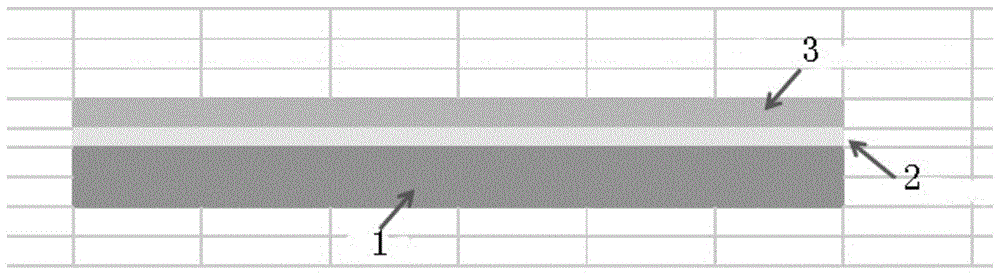
Fig. 1 shows a structure of a wall covering according to a first embodiment in a side view;
fig. 2 shows the structure of a wall covering according to a second embodiment in a side view; and
fig. 3 shows the structure of the wall covering according to the third embodiment in a side view.
Reference numerals
1 substrate
2 precoat layer
3 adhesive layer
11 substrate
12 glue layer
13 laminated film
21 substrate
22 water spray nozzle
23 laminated film
24 heater
Detailed Description
As described above, the wall covering according to the present technology includes a planar substrate, such as a nonwoven fabric or paper substrate having a front portion and a back portion opposite to the front portion, or a similar fibrous sheet. It also includes an adhesive layer on the backside of the substrate.
The adhesive layer comprises a separate polymer layer formed from a polyvinyl alcohol polymer. Preferably, the polyvinyl alcohol polymer is a cold water soluble polyvinyl alcohol polymer.
In the context of the present invention, the term "separated" means that the formation of the layer takes place "separately" from the surface of the substrate, i.e. the layer itself is not formed on the surface of the substrate.
Thus, the polymer layer is a thin film, i.e. a preformed thin film, which is applied on the substrate as a unitary (self-supporting) film, or which is formed on a surface separate from the backside of the substrate. In the latter case, the polyvinyl alcohol layer is formed on a precoat layer covering the back of the substrate.
In one embodiment, suitable polyvinyl alcohol polymers include partially hydrolyzed alcohol polyvinyl polymers having a degree of hydrolysis of 50-90%, such as about 70-90%, for example about 80-90%.
The polymer may also be considered a copolymer of polyvinyl alcohol (PVOH) and polyvinyl acetate (PVAc) due to partial hydrolysis of the polyvinyl alcohol; that is, the partially hydrolyzed polyvinyl alcohol may be referred to as a "PVOH-PVAc copolymer".
Molecular weight (M) of polyvinyl alcoholW) Typically from 5,000 to 350,000g/mol, for example from 10,000 to 300,000 g/mol.
In a preferred embodiment, the PVOH is cold water soluble. "Cold water soluble polyvinyl alcohol" is a polymer that is soluble in water at room temperature or temperatures up to about 40 ℃. Typically, the polymer in powder form is completely dissolved in water at a concentration of about 2% by weight at neutral pH during 60 minutes of stirring at a rate of 300 revolutions per minute. In a more preferred embodiment, the PVOH is fully soluble below 25 ℃ under the above conditions, and in a most preferred embodiment, the PVOH is fully soluble below 15 ℃ under the above conditions. Typically, the cold water soluble polyvinyl alcohol is a partially hydrolyzed polyvinyl alcohol polymer, which optionally includes a comonomer. For example, these comonomers can be ionic monomers such as vinyl sulfonic acid monomers, vinyl carboxylic acid monomers, alkali metal salts of sulfonic acid monomers, alkali metal salts of carboxylic acid monomers, and combinations thereof.
The polyvinyl alcohol forms an adhesive layer on the back of the wallpaper base to allow easy adhesion of the wallpaper to a wall surface.
In one embodiment, the adhesive layer is transparent or translucent, preferably at least substantially transparent. This will allow for back inspection of the substrate (wall covering) or barrier layer, in particular visual inspection of the back of the substrate (wall covering) or barrier layer, for example for detecting and analysing any markings. Thus, in one embodiment, the backside of the substrate or barrier layer has a visual mark or a mark that is detectable by UV light. These marks may be authenticity marks to allow copy protection.
Typically, the substrate is comprised of cellulosic and/or polymeric fibers that are bonded together thermally, mechanically, chemically (with an adhesive layer), or a combination thereof.
In one embodiment, the planar substrate forming the outer layer of the product is a standard wall covering that absorbs water. It may be in the form of a sheet or web. For example, wall coverings include nonwoven substrates or sheets or webs of paper, board or the like. The nonwoven or paper substrate may preferably be produced by wet-laid techniques. In the context of this document, "wet-laid technology" includes the manufacture of the following steps: the fibers are dispersed in water and randomly discharged, held and consolidated on the wire, and then dried and bonded together. The nonwoven may generally be wet laid, but any method of forming a nonwoven may be used. Various other planar substrates are also possible, including but not limited to woven materials.
The substrate may be formed of fibers selected from the group consisting of natural fibers, synthetic fibers, and mixtures thereof. The thickness of the substrate may vary between about 0.04 and 5mm, in particular between 0.2 and 2 mm. The specific surface weight (also referred to as "basis weight" or "grammage") may be about 30 to 500g/m2In the range of between, for example, 40 and 300g/m2In the meantime.
As used herein, "natural fiber" refers to naturally occurring fibers, such as fibers obtained from plant sources. Some examples of natural fibers are cotton, flax, abaca, jute, silk, and wool. "synthetic fibers" refers to modified or regenerated natural fibers, man-made polymer fibers, and man-made non-polymer fibers. Examples of modified natural fibers include rayon/viscose, lyocell and cellulose acetate. Examples of man-made polymer fibers include polyester, polyamide, acrylic, vinyl, aramid, and polypropylene fibers. Examples of man-made non-polymeric fibers include mineral fibers, glass fibers, and carbon fibers.
In one embodiment, the substrate comprises about 20% to 100% by weight of cellulosic pulp and 0% to 80% by weight of natural or synthetic fibers. Typically, the substrate has about 50g/m2To about 300g/m2Basis weight of (c).
In a first embodiment, the polyvinyl alcohol polymer is applied to the paper or paperboard or nonwoven substrate by coating. This embodiment is shown in fig. 1.
Generally, a method of preparing a wall lining includes the steps of:
-providing a planar substrate having a front and a back opposite the front; and
-providing an adhesive layer at least partially covering the backside of the substrate as a separate layer,
wherein the adhesive layer is formed of a polyvinyl alcohol polymer.
In one embodiment, the method comprises the steps of:
-providing a planar substrate,
-applying a first layer on the backside of the substrate, and
-applying a second polymer layer on top of the first layer, the second polymer layer comprising a polyvinyl alcohol polymer capable of imparting adhesive properties to the second layer.
In one embodiment, the method includes the step of applying a polyvinyl alcohol film on the back of the substrate. The polyvinyl alcohol film may be attached directly to the back of the planar substrate. The polyvinyl alcohol film may also be attached to the back of the planar substrate using a glue layer.
Fig. 1 shows a three-layer structure comprising a substrate 1 with a precoat layer 2, on top of the precoat layer 2a top coat layer 3, the top coat layer 3 comprising a binder layer component, i.e. partially hydrolyzed polyvinyl alcohol.
For example, the paper or nonwoven substrate 1 comprises cellulose pulp in a mass concentration of 20% to 100%, optionally also with other natural or synthetic fibers in a weight content of 0% to 80%. Typically, the basis weight of the substrate may be about 50g/m2To 300g/m2Within the range.
The back of the substrate is treated with a precoat, pick-up typically ranging from 3 to 50g/m2. The pre-coat may comprise a conventional coating color. In one embodiment, the precoat layer includes a binder, a pigment, and a viscosity modifier.
In one embodiment, the precoat layer comprises a binder, preferably a polymeric binder, such as a crosslinkable polymeric tacky binder. The binder may be of a conventional type for coating colors. Examples include styrene butadiene rubber and acrylic adhesives.
The precoat layer also contains pigments that impart barrier properties to the layer. Exemplary suitable pigments include platy pigments such as kaolin clay, coating clay, engineered clay, talc, and combinations thereof. The aspect ratio of the pigment is typically 60 to 200. Of course, the precoat forming the barrier layer may also contain other (non-platy) pigments and fillers, which alter, inter alia, the flow properties of the layer. The pigment concentration is suitably from 5 to 100 parts of clay, relative to 100 parts by weight of dry binder.
Further, the pre-coat layer may comprise a viscosity modifier. Viscosity modifiers modify the rheology of the fluid composition and can adjust flowability and prevent particle deposition. For example, typical viscosity modifiers include acrylic acid polymers, cellulose ethers and derivatives of gums. The particular viscosity modifier used is based on its compatibility with the other components of the precoat layer. Suitable amounts depend on the final viscosity required for the application, but may be, for example, between 0.5 and 5 parts solids relative to 100 parts by weight dry weight of the adhesive.
The precoat may be applied to the back of the substrate, for example by gravure, roll, meyer rod and immersion, screen, spray, doctor blade and air knife coating onto the substrate, the coating formulation comprising a binder and at least one platelet-shaped pigment capable of forming a water-repellent but vapor-permeable barrier.
The precoat layer may be provided by one or more applications of the precoat composition.
The precoat thus obtained is waterproof while still being permeable to steam, for example water vapor. In one embodiment, the water-resistant barrier has 3 to 50g/m as determined using ISO 5352COBB60 value of (1), preferably 8 to 30g/m2COBB60 values of.
On top of the precoat layer is arranged a top coat layer 3 (typically having 2 to 25 g/m)2Pick-up of (1). As mentioned above, the coating is carried out using an aqueous composition of partially hydrolyzed polyvinyl alcohol, which may be mixed with one or more of the following optional components:
a. crosslinking agents (also known as crosslinking agents), e.g. glyoxal
b. Talc
C. Waxes and/or Alkyl Ketene Dimers (AKD) and/or Alkenyl Succinic Anhydrides (ASA) and/or surface sizing agents (e.g. styrene acrylate copolymers).
Component "a" may be applied in an amount of 0.1-10% and component "c" may be applied in an amount of 0.1-20%; while component "b" may be used in an amount of up to 2 times (200%) by dry weight relative to the dry weight of the polymer component (i.e., the partially hydrolyzed polyvinyl alcohol).
For example, the composition may be applied by air knife coating, other types may be used including crown bar, gravure, screen roll, film press. In one embodiment, a trailing blade is used. In embodiments where the coating is applied by air knife coating, the viscosity of the aqueous coating composition should preferably be between 200 and 300 cps. For film pressing applications, a viscosity of about 100-200cps is preferred, and for bar coating, a wide range of viscosities of about 200 to 3000cps may be used.
The top coat typically contains about 0.5 to 15g/m after the coated product is dried2In particular 1 to 6g/m2The polyvinyl alcohol polymer of (1).
The use of a pre-coat gives important advantages.
Together with the adhesive component, polyvinyl alcohol, the pre-coat prevents the top coat (adhesive) from penetrating into the substrate (sheet) and helps to keep the front side of the substrate free of adhesive (glue).
Further, it prevents water used to rewet the underside from being rapidly absorbed by the substrate, which would otherwise result in a loss of the "slip" effect required for repositioning (easy adjustment of the paper tape).
As a third advantage, it can be noted that the pre-coating prevents the water contained in the aqueous printing ink from migrating through the substrate layer and coming into contact with the glue on the back and reactivating it (blocking phenomenon).
Fig. 2 shows a pre-attached wall covering formed of three layers.
Thus, the paper or nonwoven substrate 11, for example, comprises about 20% to 100% by weight of cellulose pulp and 0% to 80% by weight of other natural or synthetic fibers. The basis weight of the substrate is typically about 50g/m2To about 300g/m2。
A first layer comprising glue, in particular a hot melt glue 12, is applied on the substrate 11. For example, the hot melt adhesive may comprise polyurethane or similar hot melt adhesives having a melting point in the range of about 60 ℃ to about 160 ℃. In general, any hot melt adhesive having a melting point lower than that of polyvinyl alcohol (about 200 ℃) can be used.
Forming a second layer on top of the glue layer 12 and attaching the second layer by means of the glue layerOn the substrate 11, i.e. a PVOH film 13. PVOH films are generally water soluble at room temperature. It may have about 10g/m2To 100g/m2Gram weight of (c). Generally, a thickness of about 1 μm to 150 μm is desired. More preferably, a thickness between 5 μm and 150 μm is considered sufficient to obtain a water-activated PVOH film subbing layer on the substrate 11.
In another embodiment, as shown in fig. 3, the PVOH film is laminated to a substrate by spraying water 22 and then performing the drying step using IR heating 24 or other means, such as a wind tunnel or air dryer.
Thus, as in the above-described embodiments, the substrate 21 comprises a paper or nonwoven sheet or web comprising about 20% to 100% by weight of cellulosic pulp and 0% to 80% by weight of other natural or synthetic fibers. Typically, the basis weight may be about 50g/m2To 300g/m2。
A PVOH film 23 is applied to the substrate. Typically, PVOH films are water soluble at room temperature. For example, a grammage of about 10g/m2To 100g/m2. The thickness of the film is typically about 5 μm to 150 μm, for example 10 to 150 μm.
Suitable properties of the PVOH film are given in table 1 below.
TABLE 1
| Weight (D) | Thickness of | Tear-off | Tensile strength | Degree of elongation | Rigidity of the film |
| <40gsm | <30μm | >800gf | >500N/m | >100% | Is low in |
The following illustrative examples are non-limiting.
Examples of the invention
Example 1
In the tests, an application of about 2-3g/m was used in the top coat2PVOH (g) produces a product according to fig. 1. The PVOH used is partially hydrolyzed PVOH (Kuraray Poval)TM 48-80)。
The binder used in the precoat was a crosslinkable styrene acrylic polymer (Dow Primal)TMNW-1845K). For compatibility, the viscosity modifier used was an acrylic-based emulsion (Synthron TPC-38).
The components are shown in Table 2:
TABLE 2


All components are on a dry weight basis
The substrate has a weight of 140g/m2Grammage paper. The pre-coating had an absorption of 14g/m by a Champion Coater2(coated twice at 7 gsm) and the absorbency of the top coat was about 2g/m2. Thus, the total grammage of the final product is about 155g/m2. Has a thickness of 300 μm and a gas permeability of less than 5 (1/m) by ASTM D7372/s)。
The wall applications of the product were tested with 30% substrate weight water. Reactivities, peelability, blocking, and transparency were all good (4/4), while slip and adhesion were general (1/4).
Example 2
A wall covering such as that shown in fig. 2 was made using a hot melt adhesive to laminate a PVOH film to a substrate.
The hot melt was a polyurethane (Jowatherm-Reaktant630.80) applied using a gravure roll.
Commercially available cold water soluble PVOH copolymer films (-VH-H929 film, supplied by Monosol (department of Kuraray)) were used for lamination. The film is water soluble at low temperatures, e.g., 10-20 ℃.
The substrate has a grammage of 143g/m2The paper of (1). The absorption capacity of the glue is about 6g/m2The grammage of the film is 45g/m2. Thus, the total gram weight of the final product was 194g/m2. The thickness was 305 μm.
The wall applications of the product were tested with 30% substrate weight water. Reactivities, blocking and clarity were very good (4/4), while slip and peel were moderate (2/4) and adhesion was good (3/4).
Claims (35)
Priority Applications (4)
| Application Number | Priority Date | Filing Date | Title |
|---|---|---|---|
| CN201910781594.7A CN112411908A (en) | 2019-08-23 | 2019-08-23 | Pre-pasted wall paint and method of manufacture |
| US17/637,666 US20220267648A1 (en) | 2019-08-23 | 2020-08-24 | Pre-pasted wall cover and a method of producing the same |
| PCT/FI2020/050548 WO2021038130A1 (en) | 2019-08-23 | 2020-08-24 | Pre-pasted wall cover and a method of producing the same |
| EP20767587.7A EP4018037A1 (en) | 2019-08-23 | 2020-08-24 | Pre-pasted wall cover and a method of producing the same |
Applications Claiming Priority (1)
| Application Number | Priority Date | Filing Date | Title |
|---|---|---|---|
| CN201910781594.7A CN112411908A (en) | 2019-08-23 | 2019-08-23 | Pre-pasted wall paint and method of manufacture |
Publications (1)
| Publication Number | Publication Date |
|---|---|
| CN112411908A true CN112411908A (en) | 2021-02-26 |
Family
ID=72356006
Family Applications (1)
| Application Number | Title | Priority Date | Filing Date |
|---|---|---|---|
| CN201910781594.7A Pending CN112411908A (en) | 2019-08-23 | 2019-08-23 | Pre-pasted wall paint and method of manufacture |
Country Status (4)
| Country | Link |
|---|---|
| US (1) | US20220267648A1 (en) |
| EP (1) | EP4018037A1 (en) |
| CN (1) | CN112411908A (en) |
| WO (1) | WO2021038130A1 (en) |
Families Citing this family (1)
| Publication number | Priority date | Publication date | Assignee | Title |
|---|---|---|---|---|
| DE102020127373A1 (en) | 2020-10-16 | 2022-04-21 | Koehler Innovation & Technology Gmbh | Coated paper |
Citations (4)
| Publication number | Priority date | Publication date | Assignee | Title |
|---|---|---|---|---|
| US4997870A (en) * | 1988-11-25 | 1991-03-05 | Wacker-Chemie Gmbh | Process for the preparation of polyvinyl alcohols which are soluble in cold water and have been absorbed onto pigments |
| JP2001081692A (en) * | 1999-07-09 | 2001-03-27 | Japan Pmc Corp | Paper coating composition, and clear coated paper and pigment-coated paper both applied with the same |
| CN106460340A (en) * | 2014-05-15 | 2017-02-22 | 阿斯特罗姆公司 | Wall covering and method for producing same |
| CN107709665A (en) * | 2015-05-29 | 2018-02-16 | 国际纸业公司 | Hydrophobicity for polymer emulsion top coat is coated with paper base material and preparation method thereof |
Family Cites Families (22)
| Publication number | Priority date | Publication date | Assignee | Title |
|---|---|---|---|---|
| US3200094A (en) | 1962-03-14 | 1965-08-10 | Nat Starch Chem Corp | Remoistenable adhesive compositions and method for making the same |
| GB1184563A (en) | 1966-09-28 | 1970-03-18 | Wall Paper Manufacturers Ltd | Wall Coverings. |
| US3574153A (en) | 1967-07-06 | 1971-04-06 | Nat Starch Chem Corp | Water remoistenable hot melt adhesive compositions comprising mixtures of water soluble polymers with acid hydrolyzed polyvinyl acetate |
| US4140668A (en) | 1975-01-31 | 1979-02-20 | Unitika Ltd. | Water soluble or water dispersible hot-melt adhesive compositions based on polyvinyl alcohol with residual acetate groups and process for producing the same |
| DE2926481A1 (en) | 1979-06-30 | 1981-01-22 | Hoechst Ag | METHOD AND USE OF DIFFERENT ADHESIVES FOR BONDING LATERALLY DRY REMOVABLE FLAT MATERIALS AND FLAT MATERIALS PRE-COATED WITH THESE ADHESIVES |
| US5296535A (en) | 1989-11-21 | 1994-03-22 | National Starch And Chemical Investment Holding Corporation | Remoistenable adhesive composition |
| US5387641A (en) | 1993-05-25 | 1995-02-07 | Yeung; Dominic W. K. | Aqueous polymer emulsions useful as wallcovering prepaste adhesives |
| EP0705896A1 (en) | 1994-10-03 | 1996-04-10 | National Starch and Chemical Investment Holding Corporation | Synthetic remoistenable adhesive compositions |
| JP2000328026A (en) * | 1999-05-19 | 2000-11-28 | Eiwa Kagaku Kogyo Kk | Remoistening adhesive paper having surface heat-sealing property and preparation thereof |
| US20030134108A1 (en) * | 2001-12-28 | 2003-07-17 | Adhesives Research, Inc. | Method of production of veneer assembly |
| US7235608B2 (en) | 2002-07-25 | 2007-06-26 | National Starch And Chemical Investment Holding Corporation | Remoistenable pre-applied adhesive |
| US8182605B2 (en) * | 2002-12-27 | 2012-05-22 | Ecomeld Corp. | Cementitious veneer and laminate material incorporating reinforcing fibers |
| FI20030976L (en) * | 2003-06-30 | 2004-12-31 | M Real Oyj | Coated base paper and method for producing coated base paper |
| FI121969B (en) | 2004-03-30 | 2011-06-30 | M Real Oyj | wallpaper Paper |
| ES2285618T3 (en) | 2005-09-14 | 2007-11-16 | National Starch And Chemical Investment Holding Corporation | NEW WATER-BASED ADHESIVES FOR INDUSTRIAL APPLICATIONS. |
| US20160168424A1 (en) * | 2013-08-30 | 2016-06-16 | 3M Innovative Properties Company | Linerless sheeting article |
| DE102013223196A1 (en) * | 2013-11-14 | 2015-05-21 | Wacker Chemie Ag | Floor covering adhesive composition comprising a vinyl acetate-ethylene copolymer |
| JP6343460B2 (en) * | 2014-02-17 | 2018-06-13 | 富士フイルム株式会社 | Pressure-sensitive adhesive microcapsule, pressure-sensitive adhesive microcapsule-containing liquid, pressure-sensitive adhesive sheet and method for producing the same, and method for producing a laminate |
| US10428167B2 (en) * | 2015-04-05 | 2019-10-01 | Solutia Inc. | Esterified poly(vinyl acetal) resin compositions, layers, and interlayers having enhanced properties |
| GB201513570D0 (en) | 2015-07-31 | 2015-09-16 | Graham & Brown Ltd | Improvements in and relating to wall coverings |
| NL2016223B1 (en) * | 2016-02-04 | 2017-08-14 | Champion Link Int Corp | Panel suitable for constructing a waterproof floor or wall covering, process for producing a panel, panel obtainable by said process. |
| WO2019082201A2 (en) * | 2017-10-23 | 2019-05-02 | Arrow Greentech Ltd. | Self adhesive wall paper coated with reduced adhesive material and water soluble film |
-
2019
- 2019-08-23 CN CN201910781594.7A patent/CN112411908A/en active Pending
-
2020
- 2020-08-24 US US17/637,666 patent/US20220267648A1/en active Pending
- 2020-08-24 EP EP20767587.7A patent/EP4018037A1/en active Pending
- 2020-08-24 WO PCT/FI2020/050548 patent/WO2021038130A1/en not_active Ceased
Patent Citations (4)
| Publication number | Priority date | Publication date | Assignee | Title |
|---|---|---|---|---|
| US4997870A (en) * | 1988-11-25 | 1991-03-05 | Wacker-Chemie Gmbh | Process for the preparation of polyvinyl alcohols which are soluble in cold water and have been absorbed onto pigments |
| JP2001081692A (en) * | 1999-07-09 | 2001-03-27 | Japan Pmc Corp | Paper coating composition, and clear coated paper and pigment-coated paper both applied with the same |
| CN106460340A (en) * | 2014-05-15 | 2017-02-22 | 阿斯特罗姆公司 | Wall covering and method for producing same |
| CN107709665A (en) * | 2015-05-29 | 2018-02-16 | 国际纸业公司 | Hydrophobicity for polymer emulsion top coat is coated with paper base material and preparation method thereof |
Also Published As
| Publication number | Publication date |
|---|---|
| EP4018037A1 (en) | 2022-06-29 |
| WO2021038130A1 (en) | 2021-03-04 |
| US20220267648A1 (en) | 2022-08-25 |
Similar Documents
| Publication | Publication Date | Title |
|---|---|---|
| CN101122164B (en) | Synthetic nonwoven wallcovering with aqueous ground coating | |
| ES2449314T3 (en) | Support based on cellulosic fibers containing a layer of modified PVA and procedure for its manufacture and use | |
| JP2024519934A (en) | Coated paper for use as packaging material | |
| JPH0577800B2 (en) | ||
| EP1062268A1 (en) | Repulpable corrugated board | |
| EP1664219A2 (en) | Improved pvoh barrier performance on substrates | |
| US5885719A (en) | Impregnated sheet substantially free of formaldehyde used as a basis for a decorative coating | |
| KR101956737B1 (en) | Fibre-based support containing a layer of a functionalized water-soluble polymer, method of production and use thereof | |
| JP6761121B2 (en) | Water dispersible sheet | |
| CN112411908A (en) | Pre-pasted wall paint and method of manufacture | |
| US20080032014A1 (en) | Superabsorbent Printable Compositions | |
| JP2020143399A (en) | Water dispersion paper | |
| JP2004068180A (en) | Oil-resistant packaging material with moisture permeability | |
| JP7367027B2 (en) | Sheet material with sustainable adhesive coating | |
| US10683617B2 (en) | Wall covering and method of producing the same | |
| JPH07300575A (en) | Thermal adhesive paper | |
| JPH10180961A (en) | Backing base material for flooring and method of manufacturing the same | |
| JP4392735B2 (en) | Wallpaper and manufacturing method thereof | |
| JPH081892A (en) | Textile wallpaper | |
| JP7099390B2 (en) | Wallpaper with adhesive layer | |
| JP5593599B2 (en) | Coating liner and corrugated cardboard sheet using the same | |
| JP3364436B2 (en) | Paper wallpaper | |
| HK40129694A (en) | Sublimation printing transfer paper having tacky properties | |
| JPH0852999A (en) | Sizing paper for mounting | |
| JPH11293599A (en) | Wallpaper |
Legal Events
| Date | Code | Title | Description |
|---|---|---|---|
| PB01 | Publication | ||
| PB01 | Publication | ||
| SE01 | Entry into force of request for substantive examination | ||
| SE01 | Entry into force of request for substantive examination |