CN112592995A - Universal primer and detection method for detecting target gene expression in transgenic plant - Google Patents
Universal primer and detection method for detecting target gene expression in transgenic plant Download PDFInfo
- Publication number
- CN112592995A CN112592995A CN202011470910.8A CN202011470910A CN112592995A CN 112592995 A CN112592995 A CN 112592995A CN 202011470910 A CN202011470910 A CN 202011470910A CN 112592995 A CN112592995 A CN 112592995A
- Authority
- CN
- China
- Prior art keywords
- transgenic plant
- target gene
- plant
- transgenic
- sequence
- Prior art date
- Legal status (The legal status is an assumption and is not a legal conclusion. Google has not performed a legal analysis and makes no representation as to the accuracy of the status listed.)
- Granted
Links
Images




Classifications
-
- C—CHEMISTRY; METALLURGY
- C12—BIOCHEMISTRY; BEER; SPIRITS; WINE; VINEGAR; MICROBIOLOGY; ENZYMOLOGY; MUTATION OR GENETIC ENGINEERING
- C12Q—MEASURING OR TESTING PROCESSES INVOLVING ENZYMES, NUCLEIC ACIDS OR MICROORGANISMS; COMPOSITIONS OR TEST PAPERS THEREFOR; PROCESSES OF PREPARING SUCH COMPOSITIONS; CONDITION-RESPONSIVE CONTROL IN MICROBIOLOGICAL OR ENZYMOLOGICAL PROCESSES
- C12Q1/00—Measuring or testing processes involving enzymes, nucleic acids or microorganisms; Compositions therefor; Processes of preparing such compositions
- C12Q1/68—Measuring or testing processes involving enzymes, nucleic acids or microorganisms; Compositions therefor; Processes of preparing such compositions involving nucleic acids
- C12Q1/6876—Nucleic acid products used in the analysis of nucleic acids, e.g. primers or probes
- C12Q1/6888—Nucleic acid products used in the analysis of nucleic acids, e.g. primers or probes for detection or identification of organisms
- C12Q1/6895—Nucleic acid products used in the analysis of nucleic acids, e.g. primers or probes for detection or identification of organisms for plants, fungi or algae
-
- C—CHEMISTRY; METALLURGY
- C12—BIOCHEMISTRY; BEER; SPIRITS; WINE; VINEGAR; MICROBIOLOGY; ENZYMOLOGY; MUTATION OR GENETIC ENGINEERING
- C12Q—MEASURING OR TESTING PROCESSES INVOLVING ENZYMES, NUCLEIC ACIDS OR MICROORGANISMS; COMPOSITIONS OR TEST PAPERS THEREFOR; PROCESSES OF PREPARING SUCH COMPOSITIONS; CONDITION-RESPONSIVE CONTROL IN MICROBIOLOGICAL OR ENZYMOLOGICAL PROCESSES
- C12Q1/00—Measuring or testing processes involving enzymes, nucleic acids or microorganisms; Compositions therefor; Processes of preparing such compositions
- C12Q1/68—Measuring or testing processes involving enzymes, nucleic acids or microorganisms; Compositions therefor; Processes of preparing such compositions involving nucleic acids
- C12Q1/6844—Nucleic acid amplification reactions
- C12Q1/6851—Quantitative amplification
-
- C—CHEMISTRY; METALLURGY
- C12—BIOCHEMISTRY; BEER; SPIRITS; WINE; VINEGAR; MICROBIOLOGY; ENZYMOLOGY; MUTATION OR GENETIC ENGINEERING
- C12Q—MEASURING OR TESTING PROCESSES INVOLVING ENZYMES, NUCLEIC ACIDS OR MICROORGANISMS; COMPOSITIONS OR TEST PAPERS THEREFOR; PROCESSES OF PREPARING SUCH COMPOSITIONS; CONDITION-RESPONSIVE CONTROL IN MICROBIOLOGICAL OR ENZYMOLOGICAL PROCESSES
- C12Q2600/00—Oligonucleotides characterized by their use
- C12Q2600/13—Plant traits
-
- C—CHEMISTRY; METALLURGY
- C12—BIOCHEMISTRY; BEER; SPIRITS; WINE; VINEGAR; MICROBIOLOGY; ENZYMOLOGY; MUTATION OR GENETIC ENGINEERING
- C12Q—MEASURING OR TESTING PROCESSES INVOLVING ENZYMES, NUCLEIC ACIDS OR MICROORGANISMS; COMPOSITIONS OR TEST PAPERS THEREFOR; PROCESSES OF PREPARING SUCH COMPOSITIONS; CONDITION-RESPONSIVE CONTROL IN MICROBIOLOGICAL OR ENZYMOLOGICAL PROCESSES
- C12Q2600/00—Oligonucleotides characterized by their use
- C12Q2600/158—Expression markers
Landscapes
- Chemical & Material Sciences (AREA)
- Life Sciences & Earth Sciences (AREA)
- Organic Chemistry (AREA)
- Proteomics, Peptides & Aminoacids (AREA)
- Engineering & Computer Science (AREA)
- Zoology (AREA)
- Wood Science & Technology (AREA)
- Analytical Chemistry (AREA)
- Health & Medical Sciences (AREA)
- Biotechnology (AREA)
- Molecular Biology (AREA)
- Bioinformatics & Cheminformatics (AREA)
- Immunology (AREA)
- Biophysics (AREA)
- Physics & Mathematics (AREA)
- Genetics & Genomics (AREA)
- Biochemistry (AREA)
- Microbiology (AREA)
- General Engineering & Computer Science (AREA)
- General Health & Medical Sciences (AREA)
- Chemical Kinetics & Catalysis (AREA)
- Botany (AREA)
- Mycology (AREA)
- Measuring Or Testing Involving Enzymes Or Micro-Organisms (AREA)
Abstract
The invention discloses a universal primer for detecting target gene expression in transgenic plants and a detection method. The invention provides a substance for detecting the expression of an exogenous target gene introduced into a transgenic plant, which comprises the following components: 1) a DNA fragment shown in the 1 st-93 th site of the sequence 1 or the sequence 1; 2) a primer pair for amplifying the DNA fragment shown in 1); 3) a PCR reagent or a kit containing the primer pair shown in 2). The inventor firstly proves that the exogenous gene is closely connected with a small section of vector sequence (the sequence is shown in a sequence table 1), namely a partial sequence of an NOS terminator after being transcribed by carrying out 3' RACE on cDNA of a transgenic material. Because the NOS terminator is a terminator commonly used in transgenic research, based on the research result, the universal primer is designed for the vector sequence segment, the exogenous gene expression quantity is predicted according to the vector sequence expression quantity, and a transgenic individual or a variety which can express the exogenous gene efficiently can be screened from a large number of transgenic individuals.
Description
The application is filed on 2018, 6 and 20, and is named as 'a universal primer and a detection method for detecting target gene expression in transgenic plants', and is a divisional application of an invention patent application with the application number of 201810636371.7.
Technical Field
The invention relates to the field of molecular biology, in particular to a universal primer for detecting target gene expression in transgenic plants and a detection method.
Background
Since the first transgenic crop industrialization application in 1996, the global transgenic technology research and industrial application have entered a new stage of large-scale integration application. With the progress of the transgenic industrialization, the corresponding transgenic detection method is developed from the original detection of a single target gene to the extent of simultaneous detection of multiple genes of multiple species and is continuously developed towards the direction of high-throughput detection.
In most cases, the foreign gene is inserted into the host genome randomly, and the expression level of the foreign gene at different insertion sites varies. Therefore, in transgenic research, gene expression level detection must be performed on a large number of transgenic individuals to screen and obtain transgenic organisms with large expression of foreign genes. The conventional gene expression analysis method adopts specific primers designed for exogenous genes, and the method has the following problems that 1) gene specific primers are designed for each exogenous gene and reaction conditions are optimized, so that high-throughput detection is difficult to realize; 2) if the foreign gene has a homologous gene in the host genome, it is usually difficult to design a gene-specific primer for specific amplification; 3) if the exogenous gene is a gene contained in the host genome, the gene specific primer cannot distinguish the expression quantity of the transferred target gene from the expression quantity of the gene of the host background; 4) if the foreign gene is a gene contained in the host genome and the background expression level of the gene in the host genome is high, the detection result shows that the transgene is not over-expressed, so that the misjudgment on whether the transgene is expressed or not is caused.
Although there is a patent to detect whether a transgene is transferred into a host genome or not by the sequences of the CaMV35S promoter and NOS terminator on the DNA level, there is no patent to detect the expression level of a transgene by the sequences of the CaMV35S promoter and NOS terminator on the RNA level. Chun Jiang university Bombxiong et al found a method of using marker genes to predict foreign gene expression levels and screen transgenic organisms (application No. 201410678673.2, publication No. CN104404072A), but marker genes and foreign genes sometimes inserted into the host genome of non-linked loci, respectively, which can lead to misjudgment; most importantly, selectable marker-free transgenes have become the focus of transgenic technology research, as marker genes may pose some potential threats.
Disclosure of Invention
An object of the present invention is to provide a substance for detecting the expression of an exogenous gene of interest introduced into a transgenic plant.
The substances provided by the invention are as follows:
1) a DNA fragment shown in the 1 st-93 th site of the sequence 1 or the sequence 1;
2) a primer pair for amplifying the DNA fragment shown in 1);
3) a PCR reagent or a kit containing the primer pair shown in 2).
In the above-mentioned substance, the primer pair is composed of a single-stranded DNA molecule represented by SEQ ID No. 2 and a single-stranded DNA molecule represented by SEQ ID No. 3.
The application of the substances in detecting whether the exogenous target gene introduced into the transgenic plant is expressed or not is also the protection scope of the invention;
or the application of the substances in the preparation of products for detecting whether the exogenous target gene introduced into the transgenic plant is expressed or not is also within the protection scope of the invention.
The application of the substances in detecting the expression quantity of the exogenous target gene introduced into the transgenic plant is also within the protection scope of the invention;
or the application of the substances in the preparation of products for detecting the expression quantity of the exogenous target gene introduced into the transgenic plant is also within the protection scope of the invention.
The application of the substances in screening plants with high expression level of target genes introduced into transgenic plants is also within the protection scope of the invention;
or the application of the substances in the preparation of plant products with high expression of target genes introduced into the screened transgenic plants is also within the protection scope of the invention.
In another aspect, the present invention provides a method for detecting whether an exogenous target gene introduced into a transgenic plant is expressed, wherein the terminator of the exogenous target gene is NOS, and the detecting is to detect whether a cDNA of the transgenic plant contains a part or all of a DNA fragment of the NOS terminator, and if so, the transgenic plant expresses or alternatively expresses the target gene; if not, the transgenic plant does not express or is candidate not to express the gene of interest.
Preferably, in order to detect whether the cDNA of the transgenic plant contains the DNA segment shown in the 1 st-93 th site of the sequence 1 or the sequence 1, if the cDNA contains the DNA segment, the transgenic plant expresses or candidate expresses a target gene; if not, the transgenic plant does not express or is candidate not to express the gene of interest.
Preferably, the method for detecting whether the cDNA of the transgenic plant contains the DNA fragment shown in the 1 st-93 th site of the sequence 1 or the sequence 1 is to perform fluorescent quantitative PCR amplification by using the cDNA of the transgenic plant as a template and using a primer pair in the substance of claim 1 or 2 to obtain a PCR amplification product of the transgenic plant to be detected; detecting the PCR amplification product of the transgenic plant to be detected, if the PCR amplification product has S curve or S amplification curve or 2-ΔCtIf the value is more than 0, the cDNA of the transgenic corn contains a DNA fragment shown in the 1 st-93 th site of the sequence 1 or the sequence 1; if there is no S amplification curve or 2-ΔCtAnd if the value is less than or equal to 0, the transgenic corn does not contain the DNA fragment shown in the 1 st to 93 th positions of the sequence 1 or the sequence 1.
In another aspect, the present invention provides a universal method for high-throughput detection of multiple transgenic materials containing different exogenous target genes, wherein the terminators of the different exogenous target genes are NOS terminators, the detection is to detect whether cDNA of the transgenic plant contains some or all DNA fragments of the NOS terminators, and if so, the transgenic plant expresses or alternatively expresses the target gene; if not, the transgenic plant does not express or is candidate not to express the gene of interest.
Preferably, in order to detect whether the cDNA of the transgenic plant contains the DNA segment shown in the 1 st-93 th site of the sequence 1 or the sequence 1, if the cDNA contains the DNA segment, the transgenic plant expresses or candidate expresses a target gene; if not, the transgenic plant does not express or is candidate not to express the gene of interest.
Preferably, the method for detecting whether the cDNA of the transgenic plant contains the DNA fragment shown in the 1 st-93 th site of the sequence 1 or the sequence 1 is to perform fluorescent quantitative PCR amplification by using the cDNA of the transgenic plant as a template and using a primer pair in the substance of claim 1 or 2 to obtain a PCR amplification product of the transgenic plant to be detected; detecting the PCR amplification product of the transgenic plant to be detected, if the PCR amplification product has S curve or S amplification curve or 2-ΔCtIf the value is more than 0, the cDNA of the transgenic corn contains a DNA fragment shown in the 1 st-93 th site of the sequence 1 or the sequence 1; if there is no S amplification curve or 2-ΔCtAnd if the value is less than or equal to 0, the transgenic corn does not contain the DNA fragment shown in the 1 st to 93 th positions of the sequence 1 or the sequence 1.
In another aspect, the present invention provides a method for detecting whether an exogenous target gene introduced into a transgenic plant is expressed and excluding the expression of the same gene of the plant, wherein the terminator of the exogenous target gene is a NOS terminator, the detecting is to detect whether cDNA of the transgenic plant contains a part or all of DNA fragments of the NOS terminator, and if so, the transgenic plant expresses or alternatively expresses the target gene; if not, the transgenic plant does not express or is candidate not to express the gene of interest.
Preferably, in order to detect whether the cDNA of the transgenic plant contains the DNA segment shown in the 1 st-93 th site of the sequence 1 or the sequence 1, if the cDNA contains the DNA segment, the transgenic plant expresses or candidate expresses a target gene; if not, the transgenic plant does not express or is candidate not to express the gene of interest.
Preferably, the cDNA of the transgenic plant is detected whether the cDNA contains the sequence 1 or the 1 st-93 th sites of the sequence 1The DNA fragment method is that the cDNA of the transgenic plant is taken as a template, and the primer pair in the substance of claim 1 or 2 is used for carrying out fluorescence quantitative PCR amplification to obtain a PCR amplification product of the transgenic plant to be detected; detecting the PCR amplification product of the transgenic plant to be detected, if the PCR amplification product has S curve or S amplification curve or 2-ΔCtIf the value is more than 0, the cDNA of the transgenic corn contains a DNA fragment shown in the 1 st-93 th site of the sequence 1 or the sequence 1; if there is no S amplification curve or 2-ΔCtAnd if the value is less than or equal to 0, the transgenic corn does not contain the DNA fragment shown in the 1 st to 93 th positions of the sequence 1 or the sequence 1.
In another aspect, the present invention provides a method for detecting whether an exogenous gene of interest introduced into a transgenic plant is expressed, comprising the steps of:
1) extracting RNA of a transgenic plant to be detected, and performing reverse transcription to obtain cDNA;
2) performing fluorescent quantitative PCR amplification by using the cDNA as a template and using a primer pair in the substance of claim 1 or 2 to obtain a PCR amplification product of the transgenic plant to be detected;
detecting the PCR amplification product of the transgenic plant to be detected, if the amplification product has an S curve or an S amplification curve or 2-ΔCtIf the value is more than 0, the transgenic plant expresses or candidate expresses the exogenous target gene; if the amplification product does not have S-curve or 2-ΔCtIf the value is less than or equal to 0, the transgenic plant does not express or candidate does not express the exogenous target gene.
In another aspect, the present invention provides a method for detecting an expression level of an exogenous target gene introduced into a transgenic plant, wherein a terminator of the exogenous target gene is a NOS terminator, the method comprising the steps of:
1) extracting RNA of a transgenic plant to be detected, and performing reverse transcription to obtain cDNA;
2) performing fluorescent quantitative PCR amplification by using the cDNA as a template and a primer pair aiming at the NOS terminator to obtain a PCR amplification product of the transgenic plant to be detected;
detecting the PCR amplification product of the transgenic plant to be detected and the PCR amplification product of the wild plant by adopting 2-ΔCTMethod for calculating exogenous eyes in transgenic plant to be detectedThe relative expression level of the gene(s);
relative expression quantity of exogenous target gene in transgenic plant to be detected is 2-ΔCt(ΔCt=Ct(Gene of interest, sample)-Ct(reference gene, sample))。
Preferably, the NOS terminator contains the sequence of the DNA fragment shown in position 1-93 of SEQ ID No. 1 or SEQ ID No. 1.
Preferably, the primer pair for the NOS terminator is composed of a single-stranded DNA molecule shown in sequence 2 and a single-stranded DNA molecule shown in sequence 3.
In another aspect, the present invention provides a method for screening a transgenic plant into which an exogenous target gene is introduced, wherein a terminator of the exogenous target gene is an NOS terminator, the method comprising the steps of:
1) extracting RNA of a transgenic plant to be detected, and performing reverse transcription to obtain cDNA;
2) performing fluorescent quantitative PCR amplification by using the cDNA as a template and a primer pair aiming at the NOS terminator to obtain a PCR amplification product of the transgenic plant to be detected;
detecting the PCR amplification product of the transgenic plant to be detected and the PCR amplification product of the wild plant by adopting 2-ΔCTThe method calculates the relative expression quantity of the exogenous target gene in the transgenic plant to be detected;
relative expression quantity of exogenous target gene in transgenic plant to be detected is 2-ΔCt(ΔCt=Ct(Gene of interest, sample)-Ct(reference gene, sample));
Selecting the single plant with the highest expression quantity from the plants to cultivate, and obtaining the transgenic plant with high expression quantity of the introduced exogenous target gene.
Preferably, the NOS terminator contains the sequence of the DNA fragment shown in position 1-93 of SEQ ID No. 1 or SEQ ID No. 1.
Preferably, the primer pair for the NOS terminator is composed of a single-stranded DNA molecule shown in sequence 2 and a single-stranded DNA molecule shown in sequence 3.
In another aspect, the present invention provides a primer pair for amplifying a NOS terminator by PCR, wherein the primer pair consists of a single-stranded DNA molecule represented by a sequence 2 and a single-stranded DNA molecule represented by a sequence 3.
Another object of the present invention is to provide a method for detecting whether an introduced foreign gene of interest is expressed in a transgenic plant.
The method provided by the invention is to detect whether the cDNA of the transgenic plant contains a DNA fragment shown in the 1 st-93 th site of the sequence 1 or the sequence 1, if so, the transgenic plant expresses or expresses a target gene in a candidate way; if not, the transgenic plant does not express or is candidate not to express the gene of interest.
In the method, the method for detecting whether the cDNA of the transgenic plant contains the DNA fragment shown in the 1 st-93 th site of the sequence 1 or the sequence 1 is to perform fluorescent quantitative PCR amplification by using the cDNA of the transgenic plant as a template and using a primer pair in the substance of claim 1 or 2 to obtain a PCR amplification product of the transgenic plant to be detected; detecting the PCR amplification product of the transgenic plant to be detected, if the PCR amplification product has S curve or S amplification curve or 2-ΔCtIf the value is more than 0, the cDNA of the transgenic corn contains a DNA fragment shown in the 1 st-93 th site of the sequence 1 or the sequence 1; if there is no S amplification curve or 2-ΔCtAnd if the value is less than or equal to 0, the transgenic corn does not contain the DNA fragment shown in the 1 st to 93 th positions of the sequence 1 or the sequence 1.
It is still another object of the present invention to provide a method for detecting whether an introduced foreign target gene is expressed in a transgenic plant.
The method provided by the invention comprises the following steps:
1) extracting RNA of a transgenic plant to be detected, and performing reverse transcription to obtain cDNA;
2) performing fluorescent quantitative PCR amplification by using the cDNA as a template and using the primer pair in the substance to obtain a PCR amplification product of the transgenic plant to be detected;
detecting the PCR amplification product of the transgenic plant to be detected, if the amplification product has an S curve or an S amplification curve or 2-ΔCtIf the value is more than 0, the transgenic plant expresses or candidate expresses the exogenous target gene; if the amplification product does not have S-curve or 2-ΔCtA value of 0 or less, the transgenic plant does not express or is candidate to not express the exogenous geneA target gene.
In the above, the transgenic plant is a plant obtained by introducing the exogenous target gene into a wild-type plant, and the terminator of the exogenous target gene is a NOS terminator or a NOS terminator partial sequence containing at least a nucleotide represented by sequence 1.
In the above, the plant is a dicotyledonous plant or a monocotyledonous plant.
The invention also provides a method for detecting the expression level of the introduced exogenous target gene in the transgenic plant, which comprises the following steps:
1) extracting RNA of a transgenic plant to be detected, and performing reverse transcription to obtain cDNA;
2) performing fluorescent quantitative PCR amplification by using the cDNA as a template and the primers in the substances to obtain a PCR amplification product of the transgenic plant to be detected;
detecting the PCR amplification product of the transgenic plant to be detected and the PCR amplification product of the wild plant by adopting 2-ΔCTThe method calculates the relative expression quantity of the exogenous target gene in the transgenic plant to be detected;
relative expression quantity of exogenous target gene in transgenic plant to be detected is 2-ΔCt(ΔCt=Ct(Gene of interest, sample)-Ct(reference gene, sample))。
The invention also provides a method for screening transgenic plant plants with high expression quantity of introduced exogenous target genes, which comprises the following steps: firstly, calculating the exogenous target gene expression quantity of each transgenic plant individual plant according to the method; then selecting the single plant with the highest expression quantity from the plants to cultivate, and obtaining the transgenic plant with high expression quantity of the introduced exogenous target gene.
And expressing a gene with homology of more than or equal to 70 percent with the exogenous target gene in the wild plant.
The exogenous target gene is introduced into a wild plant by expressing an exogenous target gene vector;
and the terminator for terminating the expression of the exogenous target gene in the exogenous target gene expression vector is an NOS terminator.
In another aspect, the present invention provides a method for detecting whether an introduced foreign gene of interest is expressed in a transgenic plant, the method comprising the steps of: carrying out 3 'RACE method on the cDNA of the transgenic plant, and detecting a carrier sequence closely connected with the 3' end of the cDNA; designing a corresponding universal primer pair according to the vector sequence; detecting whether the cDNA of the transgenic plant to be detected contains a sequence closely connected with the exogenous gene or a partial sequence thereof; if so, expressing or candidate expressing the exogenous target gene by the transgenic plant; if not, the transgenic plant does not express or is candidate not to express the gene of interest.
Preferably, the method comprises the steps of:
1) carrying out 3 'RACE method on the cDNA of the transgenic plant, and detecting a carrier sequence closely connected with the 3' end of the cDNA;
2) designing a corresponding universal primer pair according to the vector sequence;
3) extracting RNA of a transgenic plant to be detected, and performing reverse transcription to obtain cDNA;
4) performing fluorescent quantitative PCR amplification by using the cDNA as a template and the universal primer pair to obtain a PCR amplification product of the transgenic plant to be detected;
detecting the PCR amplification product of the transgenic plant to be detected, if the PCR amplification product has S curve or S amplification curve or 2-ΔCtIf the value is more than 0, the transgenic plant expresses or candidate expresses the exogenous target gene; if the amplification product does not have the S amplification curve or 2-ΔCtIf the value is less than or equal to 0, the transgenic plant does not express or candidate does not express the exogenous target gene.
In another aspect, the present invention provides a method for detecting an expression level of an exogenous gene of interest introduced into a transgenic plant, the method comprising the steps of:
1) carrying out 3 'RACE method on the cDNA of the transgenic plant, and detecting a carrier sequence closely connected with the 3' end of the cDNA;
2) designing a corresponding universal primer pair according to the vector sequence;
3) extracting RNA of a transgenic plant to be detected, and performing reverse transcription to obtain cDNA;
4) performing fluorescent quantitative PCR amplification by using the cDNA as a template and the universal primer pair to obtain a PCR amplification product of the transgenic plant to be detected;
detecting the PCR amplification product of the transgenic plant to be detected and the PCR amplification product of the wild plant by adopting 2-ΔCTThe method calculates the relative expression quantity of the exogenous target gene in the transgenic plant to be detected;
relative expression quantity of exogenous target gene in transgenic plant to be detected is 2-ΔCt(ΔCt=Ct(Gene of interest, sample)-Ct(reference gene, sample))。
On the other hand, the invention also provides a method for screening transgenic plant plants with high expression level of introduced exogenous target genes, which comprises the following steps: firstly, calculating the expression quantity of exogenous target genes of each transgenic plant individual plant according to the method; then selecting the single plant with the highest expression quantity from the plants to cultivate, and obtaining the transgenic plant with high expression quantity of the introduced exogenous target gene.
The transgenic plant is obtained by introducing the exogenous target gene into a wild plant.
And expressing a gene with homology of more than or equal to 70 percent with the exogenous target gene in the wild plant.
The exogenous target gene is introduced into a wild plant by expressing an exogenous target gene vector.
The terminator of the exogenous target gene is NOS terminator (nopaline synthase terminator), CaMV35S terminator (CAMV 35S terminator), OCS terminator (octopine synthase terminator), E9 terminator (small supplement of rbcS E9 gene terminator), TR7 terminator (T-DNA transcript 7gene terminator) and the like.
In another aspect, the present invention provides a method for detecting whether an exogenous target gene introduced into a transgenic plant is expressed, in which the cDNA of the transgenic plant is detected to contain a terminator sequence or a terminator partial sequence of the exogenous gene, and if so, the transgenic plant expresses or alternatively expresses the exogenous target gene; if not, the transgenic plant does not express or is candidate not to express the gene of interest.
Preferably, the method is: extracting RNA of a transgenic plant to be detected, and performing reverse transcription to obtain cDNA;
performing fluorescent quantitative PCR amplification by using the cDNA of the transgenic plant as a template and using a primer pair aiming at the terminator sequence or the partial sequence to obtain a PCR amplification product of the transgenic plant to be detected;
detecting the PCR amplification product of the transgenic plant to be detected, if the PCR amplification product has S curve or S amplification curve or 2-ΔCtIf the value is more than 0, the transgenic plant expresses or candidate expresses the exogenous target gene; if the amplification product does not have the S amplification curve or 2-ΔCtIf the value is less than or equal to 0, the transgenic plant does not express or candidate does not express the exogenous target gene.
In another aspect, the present invention provides a method for detecting an expression level of an exogenous gene of interest introduced into a transgenic plant, the method comprising the steps of:
1) extracting RNA of a transgenic plant to be detected, and performing reverse transcription to obtain cDNA;
2) performing fluorescent quantitative PCR amplification by using the cDNA as a template and a primer pair aiming at a terminator sequence or a partial sequence of the exogenous target gene to obtain a PCR amplification product of the transgenic plant to be detected;
detecting the PCR amplification product of the transgenic plant to be detected and the PCR amplification product of the wild plant by adopting 2-ΔCTThe method calculates the relative expression quantity of the exogenous target gene in the transgenic plant to be detected;
relative expression quantity of exogenous target gene in transgenic plant to be detected is 2-ΔCt(ΔCt=Ct(Gene of interest, sample)-Ct(reference gene, sample))。
On the other hand, the invention also provides a method for screening transgenic plant plants with high expression level of introduced exogenous target genes, which comprises the following steps: firstly, calculating the expression quantity of exogenous target genes of each transgenic plant individual plant according to the method; then selecting the single plant with the highest expression quantity from the plants to cultivate, and obtaining the transgenic plant with high expression quantity of the introduced exogenous target gene.
The transgenic plant is obtained by introducing the exogenous target gene into a wild plant.
And expressing a gene with homology of more than or equal to 70 percent with the exogenous target gene in the wild plant.
The exogenous target gene is introduced into a wild plant by expressing an exogenous target gene vector.
The terminator of the exogenous target gene is NOS terminator (nopaline synthase terminator), CaMV35S terminator (CAMV 35S terminator), OCS terminator (octopine synthase terminator), E9 terminator (small supplement of rbcS E9 gene terminator), TR7 terminator (T-DNA transcript 7gene terminator) and the like.
The inventor firstly proves that the exogenous gene is closely connected with a small section of vector sequence (the sequence is shown in a sequence table 1), namely a partial sequence of an NOS terminator after being transcribed by carrying out 3' RACE on cDNA of a transgenic material. Because the NOS terminator is a terminator commonly used in transgenic research, based on the research result, the universal primer is designed for the vector sequence segment, the exogenous gene expression quantity is predicted according to the vector sequence expression quantity, and a transgenic individual or a variety which can express the exogenous gene efficiently can be screened from a large number of transgenic individuals. Therefore, the primer and the detection method for detecting the transgene expression quantity and screening the transgenic organisms at high throughput can effectively solve the problems of low detection efficiency and poor accuracy in the prior art: 1) the universal primer and the method adopted by the invention have very good specificity, and can effectively solve the problem of non-specificity in the design of gene specific primers; 2) the universal primer and the method adopted in the invention can determine whether the transferred gene segment is expressed or not, and are different from the same gene expression contained in the plant, thereby avoiding misjudgment on whether the transferred gene is expressed or not; 3) most importantly, the universal primer and the method can realize accurate, rapid and efficient high-throughput detection of various transgenic materials containing different target genes, and simultaneously save cost, time and labor.
Therefore, the invention establishes a high-throughput detection method for transgene expression quantity by adopting the universal primer for the first time, and the method can be used as a detection method with wide application and has important significance for the development of the transgenic industry.
Drawings
FIG. 1 shows the results of 3' RACE PCR.
FIG. 2 is a real-time fluorescent quantitative PCR gene specific primer amplification curve of CAUB0084 maize transgenic sample.
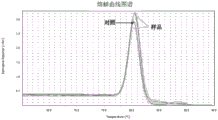
FIG. 3 is a CAUB0084 maize transgenic sample real-time fluorescence quantitative PCR gene specific primer melting curve.
FIG. 4 is a real-time fluorescent quantitative PCR universal primer amplification curve for CAUB0084 maize transgenic samples.
FIG. 5 is a real-time fluorescent quantitative PCR universal primer melting curve of CAUB0084 maize transgenic sample.
FIG. 6 shows an alignment of GRMZM2G041175 and GRMZM2G059397cDNA sequences.
FIG. 7 is the real-time fluorescence quantitative PCR melting curve of CAUD0439 gene specific primer.
FIG. 8 is the real-time fluorescence quantitative PCR melting curve of the universal primer of CAUD0439 gene.
FIG. 9 shows the real-time fluorescent quantitative PCR amplification curve of the CAUB0315 gene specific primers.
FIG. 10 shows the real-time fluorescent quantitative PCR amplification curve of the universal primer for CAUB0315 gene.
Detailed Description
The experimental procedures used in the following examples are all conventional procedures unless otherwise specified.
Materials, reagents and the like used in the following examples are commercially available unless otherwise specified.
The invention will be further described with reference to specific examples, but the scope of the invention is not limited thereto.
The transgenic plants in the following examples are exemplified by, but not limited to, transgenic maize in which the gene expression cassette of interest is introduced into maize to obtain transgenic maize; the target gene expression box comprises a promoter, a target gene and an NOS terminator.
Bar gene, NCBI GenBank: KF780168.1, commit date 2013.10.24;
vector pCXUN: NCBI GenBank: FJ 905215; plant Physiol.150(3), 1111-.
Example 1 discovery of transgenic sample cDNA 3' end connected with a short segment of vector sequence and establishment of amplification primer and detection method
Firstly, the 3' end of the cDNA of the transgenic sample is connected with a small segment of carrier sequence
1. Extraction of RNA from transgenic plants
All the corn transgenic plants adopted in the patent are created by the research center of functional genome and molecular breeding of crops of Chinese agriculture university.
1) Preparation of transgenic maize
Firstly, a target gene is connected to a pBCXUN vector through a TA cloning method to obtain an over-expression vector, a constructed plasmid is transferred into an agrobacterium EHA105 strain through a heat shock method, then the plasmid is transferred into a corn B73-329 strain through an agrobacterium-mediated method, and finally a transgenic T2 homozygous strain is obtained through identification.
The pBCXUN vector is a HYG gene among 2 Xho I sites of the vector pCXUN replaced by a Bar resistance gene, a promoter for starting the expression of a target gene in the pCXUN vector is maize Ubiquitin-1, and a terminator is an NOS terminator.
2) RNA extraction of transgenic maize plants
The corn transgenic plant RNA extraction adopts a magnetic bead method plant total RNA extraction kit (purchased from Beijing Baitaike biotechnology limited, product number AU3402), and the specific operation is as follows:
1) sampling corn leaf, placing in a 96-well plate, quickly freezing with liquid nitrogen (30 sec for each time), grinding twice, adding 750 μ l of lysis solution RL, and violently shaking and mixing uniformly;
2) incubating at 37 ℃ for 12min to completely decompose the nucleoprotein body, and shaking and mixing the mixture for two times;
3) adding 150 μ l chloroform, discharging, sucking, mixing, and incubating at room temperature for 3 min;
4) centrifuging at 4000rpm at 4 ℃ for 20min, carefully taking 400 μ l of supernatant, and transferring to a new RNase free 96 deep-well plate;
5) adding 20 mul of magnetic beads and 400 mul of absolute ethyl alcohol, shaking and mixing uniformly, incubating for 10min at room temperature, and shaking and mixing uniformly twice in the period;
6) magnetically attracting for 2min, and discarding the supernatant;
7) adding 600 μ l deproteinized solution RE, mixing, incubating for 5min, magnetically attracting for 1min, and removing supernatant;
8) adding 600 μ l of rinsing solution RW, mixing uniformly, incubating for 3min, magnetically attracting for 1min, and discarding the supernatant;
9) repeating the step 8 once;
10) air drying, adding RNase-free dH2Eluting with 50 μ l of water, mixing well, incubating for 5min, magnetically attracting for 1min, and extracting RNA in a new RNase free 96-well plate.
2. Amplification of 3 '-RACE (Rapid Amplification of cDNA Ends) to obtain cDNA fragment at 3' -end of target gene
The 3 ' -RACE experiment was performed using the SMARTer RACE 5 '/3 ' Kit (available from Beijing Liuhe Jingyun Neuguamao Co., Ltd., Cat. No. 634858) as follows:
1) buffer Mix was prepared for cDNA synthesis reaction at the following volumes, spun briefly on a microcentrifuge, and placed at room temperature for step 3 experiments.
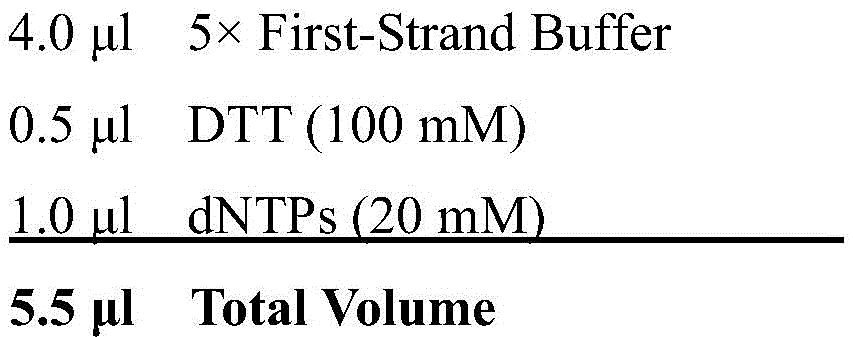
2) The following reagents were added to individual microcentrifuge tubes and spun briefly on a microcentrifuge. Incubating at 72 deg.C for 3min, and cooling at 42 deg.C for 2 min. After cooling, the tube was centrifuged at 14,000 Xg for 10sec to collect the reagents at the bottom of the tube.

3) The 3' -RACE cDNA synthesis reaction was prepared at room temperature in the following volumes:

4) mu.l of Master Mix from step 3 was added to the denatured RNA (3' -RACE cDNA) from step 2. The total volume of each cDNA synthesis reaction was 20. mu.l. Gently sucking, beating, mixing, and centrifuging for a short time to collect the components at the bottom of the tube.
5) Incubating at 42 deg.C for 90min, and heating at 70 deg.C for 10 min.
6) Adding 10 mul Tricine-EDTA Buffer into the first strand cDNA synthesis reaction product for dilution to obtain 3' -RACE-ready cDNA.
7) And (3) carrying out PCR amplification by using the first strand of the 3 '-RACE-ready cDNA obtained in the step (6) as a template, and amplifying a cDNA fragment at the 3' end of the target gene. Two PCR amplification reactions were performed using two sets of PCR primers (nested primers, see Table 1), and after the first PCR was completed, the PCR products were diluted 50-fold with Tricine-EDTA Buffer as template for the second PCR. Two PCR reaction solutions were prepared according to the following tables 2 and 3, and the reaction procedures of the two PCR reactions are shown in Table 4.
TABLE 13' -primers for RACE amplification

TABLE 23' -RACE first round PCR reaction System
| Reagent | Volume of |
| 3’-RACE-Ready cDNA | 1.0μl |
| 10×UPM(Universal Primer A Mix) | 2.0μl |
| 3’GSP1(10μM) | 0.4μl |
| Nuclease-free dH2O | 6.2 |
| 2×SeqAmp Buffer | 10.0μl |
| SeqAmp DNA Polymerase | 0.4μl |
| Total Volume | 20.0μl |
TABLE 33' -RACE second round PCR reaction System
| Reagent | Volume of |
| DNA(1: |
5.0 |
| 10×UPM(Universal Primer A Mix) | 1.0μl |
| 3’GSP2(10μM) | 1.0μl |
| Nuclease-free dH2O | 16.5 |
| 2×SeqAmp Buffer | 25.0μl |
| SeqAmp DNA Polymerase | 1.0μl |
| Total Volume | 50.0μl |
TABLE 43' -RACE two-round PCR reaction procedure


3. Identification and characterization of RACE products
After the two PCR reactions, the first and second PCR products were analyzed by gel electrophoresis. As shown in FIG. 1, the amplification results of the 1, 2, 3' GSP1/UPM primer pair; 3. amplification results of 4, 3' GSP2/UPM primer pair; m, 2kb DNA Marker; the second PCR product band is slightly smaller than the second PCR product band and corresponds to the distance (151bp) between the two GSP primers, and the band is a specific fragment. The fragment was recovered using an AxyPrep DNA gel recovery kit (purchased from Kangning Life sciences (Wujiang) Co., Ltd., Cat. No. AP-GX-50) and subjected to direct sequencing, comprising the following specific steps:
1) the agarose gel containing the desired DNA was cut under an ultraviolet lamp, and the gel surface liquid was aspirated off with a paper towel and minced. The gel weight was calculated (the weight of a 1.5ml centrifuge tube was recorded in advance) as a gel volume (e.g. 100mg to 100 μ l volume).
2) Adding Buffer DE-A with 3 gel volumes, mixing well, heating at 75 deg.C, and mixing intermittently (every 2-3min) until the gel mass is completely melted (about 6-8 min).
3) Adding 0.5 Buffer DE-B with the volume of the Buffer DE-A, and uniformly mixing; when the isolated DNA fragment was less than 400bp, 1 gel volume of isopropanol was added.
4) The mixture from step 3 was pipetted and transferred to a DNA preparation tube (placed in a 2ml (provided in the kit) centrifuge tube) and centrifuged at 12,000 Xg for 1 min. The filtrate was discarded.
5) The preparation tube was put back into a 2ml centrifuge tube, 500. mu.l of Buffer W1 was added, and the mixture was centrifuged at 12,000 Xg for 30sec, and the filtrate was discarded.
6) The preparation tube was put back into a 2ml centrifuge tube, and centrifuged for 30sec at 12,000 Xg with 700. mu.l of Buffer W2 added, and the filtrate was discarded. In the same manner, the mixture was washed once again with 700. mu.l Buffer W2 and centrifuged at 12,000 Xg for 1 min.
Confirm that absolute ethanol was added to the specified volume on the reagent bottle in Buffer W2 concentrate.
7) The prepared tube was placed back into a 2ml centrifuge tube and centrifuged at 12,000 Xg for 1 min.
8) The preparation tube was placed in a clean 1.5ml centrifuge tube (provided in the kit), 25-30. mu.l of deionized water was added to the center of the preparation membrane, and the membrane was allowed to stand at room temperature for 1 min. The DNA was eluted by centrifugation at 12,000 Xg for 1 min.
The sequencing result is compared with the constructed vector sequence, and the first time proves that the exogenous gene is tightly connected with a small segment of vector sequence after being transcribed, namely the partial sequence of the NOS terminator, and the nucleotide sequence of the sequence is the sequence 1.
Therefore, whether the transgenic plant expresses the target gene can be judged by detecting whether the cDNA of the transgenic plant contains the sequence of the NOS terminator part shown in the sequence 1 or not, and if the cDNA of the transgenic plant contains the sequence of the NOS terminator part shown in the sequence 1, the transgenic plant expresses the target gene; if the cDNA of the transgenic plant does not contain the partial sequence of the NOS terminator shown in the sequence 1, the transgenic plant does not express the target gene.
Second, design of Universal primer for detecting sequence of NOS terminator represented by SEQ ID No. 1
Because the NOS terminator is a terminator commonly used in transgenic research, based on the research result, universal primers GTY-rF and GTY-rR are designed aiming at partial sequences of the NOS terminator shown in a sequence 1, and the partial sequences are closely connected with a foreign gene after being transcribed, so 2 can be used-ΔCtThe method calculates the expression quantity of the partial sequence to predict the expression of the exogenous gene, and can quickly screen out transgenic individuals or varieties which efficiently express the exogenous gene from a large number of transgenic individuals.
The universal primers are shown in table 5:
TABLE 5 primers for real-time fluorescent quantitative PCR amplification
| Primer name | Primer sequence (5 '→ 3') | Remarks for note |
| GTY-rF | AGTATTGGGGATCCGAATTTC (sequence 2) | Universal forward primer |
| GTY-rR | GATAATCATCGCAAGACCG (sequence 3) | Universal reverse primer |
| ZmActin-rF | GAGCTCCGTGTTTCGCCTGA | Corn reference gene forward primer |
| ZmActin-rR | CAGTTGTTCGCCCACTAGCG | Corn internal reference gene reverse primer |
| B0030-rF | TGGAGTGTAAAATTGACCCAAAGC | GRMZM2G046021 gene forward primer |
| B0030-rR | TCTTCTGGCTTTATCAGTCTTCTTGG | GRMZM2G046021 gene reverse primer |
| B0084-rF | GGAGGAGAATGTGGCTACAGAGACC | GRMZM2G117633 gene forward primer |
| B0084-rR | TCTTATAGAGAAACTTCCCGCTCGGG | GRMZM2G117633 gene reverse primer |
| B0086-rF | CATGCCGCCTAAATCCGATAGCG | GRMZM2G177942 gene forward primer |
| B0086-rR | TGAAGGAAATCTGTCCACTGTCAGCC | GRMZM2G177942 gene reverse primer |
| B0109-rF | CCATTGAGTACCAAAGGCTCGTGAG | GRMZM2G409658 gene forward primer |
| B0109-rR | TGGTGCAGTGACTACTGCTGC | GRMZM2G409658 gene reverse primer |
| B0118-rF | GTTTAGCAGGATGAGCGAGCGAG | GRMZM2G151639 gene forward primer |
| B0118-rR | CTAGAGGGCGGATGAACGGCAG | GRMZM2G151639 gene reverse primer |
| B0133-rF | AAGAGCCGTACGTTTACGAGGGT | GRMZM2G072089 gene forward primer |
| B0133-rR | TTAGGTTGCTGGCCCTGGC | GRMZM2G072089 gene reverse primer |
| B0243-rF | GAGGTGGAACATGCTCTGGACG | GRMZM2G049538 gene forward primer |
| B0243-rR | CAACTTCTGTCGCGCAAATTGTAGC | GRMZM2G049538 gene reverse primer |
| B0315-rF | AGGACGCCGCTCCGTGATA | GRMZM2G165755 gene forward primer |
| B0315-rR | CCTGCTCTGCTTGTGCTGGA | GRMZM2G165755 gene reverse primer |
| B0406-rF | GGATGTCCGAAGGGAGGTT | GRMZM2G109843 gene forward primer |
| B0406-rR | CACCTTCGCACAGCTCCAT | GRMZM2G109843 gene reverse primer |
| B0476-rF | CGGTCGTGGTGGACTACTTCT | GRMZM2G063550 gene forward primer |
| B0476-rR | GGCAGATCGACCGTTCCTT | GRMZM2G063550 gene reverse primer |
| B0634-rF | GGTGGAGCCATTGGAAGCC | GRMZM2G008425 gene forward primer |
| B0634-rR | TGGACCCACCCACCTGCTT | GRMZM2G008425 gene reverse primer |
| B0706-rF | CTTCAAGCACGGGGAGACG | GRMZM2G025387 gene forward primer |
| B0706-rR | CAAATCCTTTGCACCATTGGAT | GRMZM2G025387 gene reverse primer |
| B0712-rF | TAGTCCGCCAAATGCTCAAAGT | GRMZM2G053868 gene forward primer |
| B0712-rR | CCCTGGCTTAATGAAATCTGACA | GRMZM2G053868 gene reverse primer |
| B0750-rF | GACCCGCACCCTCAACATC | GRMZM2G019119 gene forward primer |
| B0750-rR | CCTCAAGCCACCTAGCCACAT | GRMZM2G019119 gene reverse primer |
| D0439-rF | CTAAACTTCGTCACCTTCCTGC | GRMZM2G041175 gene forward primer |
| D0439-rR | TCGTTGCTCCAGGTCTTG | GRMZM2G041175 gene reverse primer |
Establishment of method for detecting target gene expression in transgenic plant
1. Extraction of RNA from transgenic plants
The transgenic corn to be detected is obtained by introducing a target gene into a corn B73-329 variety through a pBCXUN vector skeleton.
The specific operation of the transgenic corn to be detected for extracting RNA by using a magnetic bead method plant total RNA extraction kit (purchased from Beijing Baitach Biotechnology Co., Ltd., product number AU3402) is the same as that in example 1.
Using the RNA obtained in the above 1 as a template, total RNA was converted into cDNA using High-Capacity cDNA Reverse Transcription Kits (purchased from Thermo Scientific Co., Ltd., cat. No. 4368814). The Reverse Transcription (RT) procedure was performed according to the kit instructions, the reverse transcription system is shown in Table 6, and the reaction procedure for reverse transcription is shown in Table 7.
TABLE 6 Reverse Transcription (RT) reaction System

TABLE 7 Reverse Transcription (RT) reaction procedure
| Is provided with | Temperature of | |
| Step | ||
| 1 | 25 | 10min |
| Step | ||
| 2 | 37 | 120min |
| Step | ||
| 3 | 85 | 5min |
| Step | ||
| 4 | 4℃ | ∞ |
2. Real-time fluorescent quantitative PCR amplification
And (3) carrying out real-time fluorescence quantitative PCR by using the cDNA obtained in the step (1) as a template and the universal primers GTY-rF and GTY-rR designed in the step (two).
Wild corn without transferred target gene is used as a reference, and corn endogenous gene primers shown in table 5 are used as reference primers.
The real-time fluorescent quantitative PCR was amplified using SYBR Premix Ex TaqTM II (Tli RNaseH Plus) (available from Takara, Inc., cat # RR820A), and the reaction system and reaction program are shown in Table 8 and Table 9, respectively.
TABLE 8 fluorescent quantitative PCR reaction System

TABLE 9 fluorescent quantitative PCR reaction procedure (two-step PCR)

Detecting the result of the fluorescent quantitative PCR,
if the fluorescent quantitative PCR of the transgenic corn to be detected obtains an S amplification curve or 2-ΔCtIf the value is more than 0, expressing or candidate expressing the target gene by the transgenic corn to be detected;
if the fluorescent quantitative PCR of the transgenic corn to be detected does not obtain an S amplification curve or 2-ΔCtIf the value is less than or equal to 0, the transgenic corn to be detected does not express or candidate does not express the target gene.
Above 2-ΔCtThe values were obtained as follows:
the universal primers only amplified in the transgenic samples, while the wild type control WT did not, using 2-ΔCtMethod (Δ Ct ═ Ct)(Gene of interest, sample)-Ct(reference gene, sample)) And calculating the expression quantity of the vector fragment in the sample to be detected, and further predicting the expression quantity of the target gene.
Gene specific primers were amplified in both wild type control WT and transgenic samples, using 2-ΔΔCtMethod (Δ Δ Ct ═ Ct (Ct)(Gene of interest, sample)-Ct(reference gene, sample))-(Ct(target Gene, WT)-Ct(reference gene, WT)) Fold difference in expression of the gene of interest in the transgenic samples relative to the wild-type control was calculated.
Example 2 detection of expression of Gene of interest in transgenic plants
In the following examples, specific primer sets designed for the target genes were used as controls, and the universal primer set obtained in example 1 was used as an experimental group.
Detecting the expression of target gene in transgenic plant, and expressing the target gene in the transgenic plant
The transgenic corn to be detected is CAUB0084 transgenic corn, which is obtained by introducing a target gene (GRMZM2G 117633; http:// ensembl. gramene. org/Zea _ mays/Info/Index) into a corn B73-329 variety through a pBCXUN vector skeleton.
Experimental groups:
RNA of 4 CAUB0084 transgenic corn lines and non-transgenic wild corn B73-329 is extracted by the three methods of example 1 and is reversely transcribed to obtain cDNA. Using the above cDNA as a template, real-time fluorescent quantitative PCR was carried out using the universal primers GTY-rF and GTY-rR of the three methods of example 1.
Control group:
RNA of 4 CAUB0084 transgenic corn lines and non-transgenic wild corn B73-329 is extracted by the three methods of example 1 and is reversely transcribed to obtain cDNA. The cDNA was used as a template, and real-time fluorescent quantitative PCR was carried out using specific primers B0084-rF and B0084-rR shown in Table 5.
3 individuals were taken from each line, and 3 technical replicates per individual.
The result of analyzing the melting curve of the gene specific primer of the control group is shown in figure 3, the melting curve of the CAUB0084 transgenic sample and the specific primer in the wild type plant WT is monomodal, which shows that the specific primer has extremely high specificity; the map analysis of the amplification curve is shown in FIG. 2, and the specific primers obtain S amplification curves in wild type plants WT and 4 CAUB0084 transgenic lines; the expression of a target gene in the transgenic corn can not be directly identified by an amplification map, and the expression needs to pass through 2-ΔΔCTThe expression fold of the target gene relative to the wild type control is calculated and identified (Table 10), and the calculation result shows that the expression quantity of GRMZM2G117633 in 4 transgenic lines is greatly improved relative to the wild type control.
The analysis result of the melting curve of the universal primers in the experimental group is shown in fig. 5, the melting curve of the universal primers in the CAUB0084 transgenic sample is monomodal, which shows that the universal primers have extremely high specificity, and no peak appears in wild type plants WT; the analysis of the amplification curve map is shown in figure 4, the universal primer is not amplified in a wild type plant WT, the universal primer can obtain an S amplification curve in 4 CAUB0084 transgenic lines, and the target genes in the transgenic plants can be judged to be expressed directly by the amplification map; and the specific expression amount can be 2-ΔCTAnd (Table 10), the results show that the exogenous GRMZM2G117633 introduced into 4 transgenic lines realizes the expression.
TABLE 10 CAUB0084 transgenic plant target gene expression results


The results show that the universal primer and the method can be used for detecting whether the exogenous target gene transferred in the transgenic plant of the host expressing the target gene is expressed or not and calculating the relative expression quantity of the exogenous target gene. And the detection result is consistent with the specific primer, which shows that the method of the invention is correct.
Secondly, detecting the expression of the target gene in the transgenic plant, and expressing the target gene homologous gene by the host target plant of the transgenic plant
The transgenic maize to be detected is CAUD0439 transgenic maize, which is obtained by introducing a target gene (GRMZM2G 041175; the sequence of which can be obtained from the following website http:// ensemble. gramene. org/Zea _ mays/Info/Index) into a maize B73-329 variety through a pBCXUN vector skeleton.
Experimental groups:
the RNA of 6 CAUD0439 transgenic corn strains and non-transgenic wild corn B73-329 is extracted by the three-way method of example 1 and is reversely transcribed to obtain cDNA. Using the above cDNA as a template, real-time fluorescent quantitative PCR was carried out using the universal primers GTY-rF and GTY-rR of the three methods of example 1.
Control group:
the RNA of 6 CAUD0439 transgenic corn strains and non-transgenic wild corn B73-329 is extracted by the three-way method of example 1 and is reversely transcribed to obtain cDNA. Real-time fluorescent quantitative PCR was carried out using the above cDNA as a template and specific primers D0439-rF and D0439-rR shown in Table 5.
3 individuals were taken from each line, and 3 technical replicates per individual.
Using DNAMAN software analysis, the cDNA sequence of the gene of interest (GRMZM2G041175) had up to 75% homology to the GRMZM2G059397cDNA sequence in the maize genome (FIG. 6).
The melting curve analysis of the control group specific primer is shown in fig. 7, and the melting curves of the specific primers in the CAUD0439 transgenic sample and the wild type plant WT have bimodal or multimodal phenomena, which shows that the specificity of the specific primer is poor and the specific primer cannot be used for the analysis of the gene expression level.
The melting curve analysis of the universal primers in the experimental group is shown in fig. 8, no peak appears in wild-type plants WT, while the melting curves of the universal primers in 6 CAUD0439 transgenic samples are all monomodal, which shows that the universal primers have extremely high specificity and can be used for gene expression analysis.
The specific expression amount is 2-ΔCTThe results (Table 11) show that the exogenous GRMZM2G041175 introduced into 6 transgenic lines all achieved expression.
TABLE 11 CAUD0439 transgenic plant target gene expression results


The results show that the universal primer and the method have very good specificity, and can effectively solve the non-specificity problem encountered in the design of the gene specific primer.
The expression of 6 transgenic lines can be detected by using a conventional method such as RT-PCR, and the method is proved to be correct.
Thirdly, detecting the target gene expression in the transgenic plant, and distinguishing the target gene expression from the host target plant gene expression of the transgenic plant
The transgenic maize to be detected is CAUB0315 transgenic maize, which is obtained by introducing a target gene (GRMZM2G 165755; a sequence can be obtained from the following website http:// ensembl. gramene. org/Zea _ mays/Info/Index)) into a maize B73-329 variety through a pBCXUN vector skeleton.
Experimental groups:
the RNA of 6 CAUB0315 transgenic maize lines and non-transgenic wild maize B73-329 is extracted by the three methods of example 1 and reverse transcribed to obtain cDNA. Using the above cDNA as a template, real-time fluorescent quantitative PCR was carried out using the universal primers GTY-rF and GTY-rR of the three methods of example 1.
Control group:
the RNA of 5 CAUB0315 transgenic maize lines and non-transgenic wild maize B73-329 is extracted by the three methods of example 1 and reverse transcribed to obtain cDNA. Real-time fluorescent quantitative PCR was performed using the above cDNA as a template and specific primers B0315-rF and B0315-rR shown in Table 5.
3 individuals were taken from each line, and 3 technical replicates per individual.
Control group:
the method of example 2 was used to extract RNA from CAUB0315 transgenic maize and non-transgenic wild maize, reverse transcription was performed to obtain cDNA as template, and fluorescent quantitative PCR amplification was performed using gene-specific primers. 3 individuals were taken from each line, and 3 technical replicates per individual.
Analyzing a melting curve of the control group gene specific primer, wherein the melting curve of the CAUB0315 transgenic sample and the specific primer in the wild-type plant WT is monomodal, which shows that the specific primer has extremely high specificity; the amplification curve map analysis is shown in FIG. 9, the Ct values of wild type plants WT and 5 CAUB0315 transgenic samples are close, 2-ΔΔCTThe calculations show that the expression level of GRMZM2G165755 in the 5 transgenic lines was not increased or even somewhat decreased relative to the wild-type control (Table 12).
The melting curve analysis of the universal primers in the experimental group shows that the melting curve of the universal primers in the CAUB0315 transgenic sample is monomodal, which indicates that the universal primers have extremely high specificity, and no peak appears in wild-type plant WT. The analysis of the amplification curve map shows that (figure 10), the universal primer is not amplified in the wild type plant WT, S amplification curves can be obtained in 5 CAUB0315 transgenic lines, and the target genes introduced into the transgenic plants can be judged to be expressed directly by the amplification map; and the specific expression amount can be 2-ΔCTCalculation (table 12).
TABLE 12 CAUB0315 transgenic plant target gene expression results
| Sample numbering | Specific primer (2)-ΔΔCt) | General primer (2)-ΔCT) |
| Wild type control (WT) | 1 | - |
| CAUB0315-1 | 0.051 | 0.333 |
| CAUB0315-2 | 0.003 | 0.0483 |
| CAUB0315-3 | 0.017 | 0.162 |
| CAUB0315-4 | 0.519 | 3038.162 |
| CAUB0315-5 | 0.052 | 0.063 |
The results show that the universal primer and the method adopted by the invention can clearly determine whether the transferred gene segment is expressed, are different from the expression of the same gene contained in the plant, and avoid misjudgment on whether the transferred gene is expressed.
Fourth, the analysis and comparison of the universal primer of the invention and the existing specific primer
According to the method of the previous step, the following GRMZM2G046021 gene, GRMZM2G177942 gene, GRMZM2G409658 gene, GRMZM2G151639 gene, GRMZM2G072089 gene, GRMZM2G049538 gene, GRMZM2G109843 gene, GRMZM2G063550 gene, GRMZM2G008425 gene, GRMZM2G025387 gene, GRMZM2G053868 gene and GRMZM2G019119 gene are respectively introduced into the transgenic corn of the corn B73-329 variety through a pBCXUN vector framework to obtain the transgenic corn; a total of 56 transgenic lines were obtained.
The gene expression analysis is carried out by using corresponding gene specific primers and universal primers according to the previous method, and the detection result shows that the analysis result of the universal primers is basically consistent with the analysis result of the gene primers. These results show that the universal primers and the method adopted in the detection have good specificity, accuracy and repeatability.
From the consideration of detection cost, 3 strains are detected by each transgenic plant, each strain detects 3 individuals, each gene of each individual plant is subjected to 3 times of technical repeated calculation, if gene specific primer analysis is adopted, only 15 strains can be detected by 1 384-pore plate, and 42 strains can be detected by adopting the universal primer in the detection (Table 13). By adopting the universal primer and the method in the detection, the accurate, quick and efficient high-throughput detection of various transgenic materials containing different target genes can be realized, and meanwhile, the cost, the time and the labor are saved.
TABLE 13 Gene specific primers and Universal primer detection flux comparison

The above-described embodiments are merely illustrative of the preferred embodiments of the present invention and do not limit the scope of the invention, and any modifications and variations of the present invention within the spirit of the present invention and the scope of the appended claims should fall within the scope of the present invention.


Claims (43)
Priority Applications (1)
| Application Number | Priority Date | Filing Date | Title |
|---|---|---|---|
| CN202011470910.8A CN112592995B (en) | 2018-06-20 | 2018-06-20 | Universal primer for detecting target gene expression in transgenic plant and detection method |
Applications Claiming Priority (2)
| Application Number | Priority Date | Filing Date | Title |
|---|---|---|---|
| CN202011470910.8A CN112592995B (en) | 2018-06-20 | 2018-06-20 | Universal primer for detecting target gene expression in transgenic plant and detection method |
| CN201810636371.7A CN108624709B (en) | 2018-06-20 | 2018-06-20 | Universal primer and detection method for detecting target gene expression in transgenic plant |
Related Parent Applications (1)
| Application Number | Title | Priority Date | Filing Date |
|---|---|---|---|
| CN201810636371.7A Division CN108624709B (en) | 2018-06-20 | 2018-06-20 | Universal primer and detection method for detecting target gene expression in transgenic plant |
Publications (2)
| Publication Number | Publication Date |
|---|---|
| CN112592995A true CN112592995A (en) | 2021-04-02 |
| CN112592995B CN112592995B (en) | 2023-04-21 |
Family
ID=63691997
Family Applications (2)
| Application Number | Title | Priority Date | Filing Date |
|---|---|---|---|
| CN202011470910.8A Expired - Fee Related CN112592995B (en) | 2018-06-20 | 2018-06-20 | Universal primer for detecting target gene expression in transgenic plant and detection method |
| CN201810636371.7A Expired - Fee Related CN108624709B (en) | 2018-06-20 | 2018-06-20 | Universal primer and detection method for detecting target gene expression in transgenic plant |
Family Applications After (1)
| Application Number | Title | Priority Date | Filing Date |
|---|---|---|---|
| CN201810636371.7A Expired - Fee Related CN108624709B (en) | 2018-06-20 | 2018-06-20 | Universal primer and detection method for detecting target gene expression in transgenic plant |
Country Status (1)
| Country | Link |
|---|---|
| CN (2) | CN112592995B (en) |
Families Citing this family (2)
| Publication number | Priority date | Publication date | Assignee | Title |
|---|---|---|---|---|
| CN110004244A (en) * | 2019-03-18 | 2019-07-12 | 中国检验检疫科学研究院 | Marker panel, composition and application for comprehensive screening of genetically modified components |
| CN113005107B (en) * | 2019-12-20 | 2023-05-23 | 中国农业大学 | ZmCIPK10.2 protein and application of encoding gene thereof in regulation of low temperature stress tolerance of corn |
Citations (5)
| Publication number | Priority date | Publication date | Assignee | Title |
|---|---|---|---|---|
| US6222104B1 (en) * | 1994-11-09 | 2001-04-24 | Novartis Ag | Inbred maize line NP948 |
| CN1470642A (en) * | 2002-07-26 | 2004-01-28 | 深圳市匹基生物工程股份有限公司 | Primer sequence for NOS terminator-containing transgenic crop mucleic acid amplification |
| CN103060460A (en) * | 2013-01-17 | 2013-04-24 | 中国检验检疫科学研究院 | Primer, kit and method for detecting transgenic rice containing NOS (Nitric Oxide Synthase) terminator |
| CN104894280A (en) * | 2015-06-25 | 2015-09-09 | 蔡先全 | Primers, kit and method for detecting NOS terminator in transgenic maize |
| CN106521018A (en) * | 2016-12-30 | 2017-03-22 | 华智水稻生物技术有限公司 | Primer and method for high-flux detection of transgenic maize containing NOS terminator |
Family Cites Families (2)
| Publication number | Priority date | Publication date | Assignee | Title |
|---|---|---|---|---|
| CN104388578B (en) * | 2014-12-09 | 2016-08-24 | 中国计量学院 | Utilize cross primer and the method for double probe constant-temperature amplification detection NOS terminator |
| CN105861500A (en) * | 2016-06-22 | 2016-08-17 | 上海市计量测试技术研究院 | Polynucleotide, method and kit used for detecting transgenic crops |
-
2018
- 2018-06-20 CN CN202011470910.8A patent/CN112592995B/en not_active Expired - Fee Related
- 2018-06-20 CN CN201810636371.7A patent/CN108624709B/en not_active Expired - Fee Related
Patent Citations (5)
| Publication number | Priority date | Publication date | Assignee | Title |
|---|---|---|---|---|
| US6222104B1 (en) * | 1994-11-09 | 2001-04-24 | Novartis Ag | Inbred maize line NP948 |
| CN1470642A (en) * | 2002-07-26 | 2004-01-28 | 深圳市匹基生物工程股份有限公司 | Primer sequence for NOS terminator-containing transgenic crop mucleic acid amplification |
| CN103060460A (en) * | 2013-01-17 | 2013-04-24 | 中国检验检疫科学研究院 | Primer, kit and method for detecting transgenic rice containing NOS (Nitric Oxide Synthase) terminator |
| CN104894280A (en) * | 2015-06-25 | 2015-09-09 | 蔡先全 | Primers, kit and method for detecting NOS terminator in transgenic maize |
| CN106521018A (en) * | 2016-12-30 | 2017-03-22 | 华智水稻生物技术有限公司 | Primer and method for high-flux detection of transgenic maize containing NOS terminator |
Also Published As
| Publication number | Publication date |
|---|---|
| CN112592995B (en) | 2023-04-21 |
| CN108624709A (en) | 2018-10-09 |
| CN108624709B (en) | 2020-11-17 |
Similar Documents
| Publication | Publication Date | Title |
|---|---|---|
| US20250376692A1 (en) | Haploid induction compositions and methods for use therefor | |
| TWI670004B (en) | Fluorescence activated cell sorting (facs) enrichment to generate plants | |
| Lin et al. | Detection of plant genes using a rapid, nonorganic DNA purification method | |
| WO2010127587A1 (en) | Method for high-throughput isolating quantitative trait controlling genes | |
| US20250163451A1 (en) | Resistance gene tacat to fusarium crown rot of wheat and application thereof | |
| US9725731B2 (en) | SB-UBI terminator sequence for gene expression in plants | |
| CN109251996B (en) | dCAPS marker for detection of low temperature tolerance gene COLD1 genotype in rice and its application | |
| JP2006345855A (en) | Method for identification and/or quantification of nucleotide sequence element specific to genetically modified plant on array | |
| CN112592995A (en) | Universal primer and detection method for detecting target gene expression in transgenic plant | |
| Macas et al. | Nuclear expressed sequence tag (NEST) analysis: A novel means to study transcription through amplification of nuclear RNA | |
| Liu et al. | Analysis of DNA methylation patterns and levels in maize hybrids and their parents | |
| US11047014B2 (en) | Method for high-throughput screening of transgenic plants | |
| CN105274229A (en) | Method and kit for detecting homozygous or heterozygous state of exogenous gene of genetically-modified corn T4-1-1 | |
| CN102912005B (en) | CYP2C8 gene polymorphism detection specific primers and liquid chip | |
| CN105793427A (en) | Zea mays metallothionein-like regulatory elements and uses thereof | |
| CN112143830B (en) | Molecular marker of rice sword leaf width regulation gene NAL1 and application thereof | |
| CN105483252B (en) | The PCR detection primers and detection method of transgenic line containing gus reporter gene | |
| CN114717352A (en) | Molecular marker of rice high temperature resistance regulation gene Hsp70 and application thereof | |
| CN109735646B (en) | CAPS molecular marker and method for identifying rice variety and application thereof | |
| US10894964B2 (en) | Use of AT(n) insertions in promoter elements for controlling the expression levels of coding sequences in plants | |
| CN109161605B (en) | Development and application of SNP molecular marker of rice blast resistance gene Pi1 | |
| CN103849942B (en) | TOX3 detection in Gene Mutation specific primer and liquid-phase chip | |
| CN112251519A (en) | Specific primer, probe, kit and method for identifying homozygote and heterozygote of Hulenbel short-tailed sheep | |
| CN102191337A (en) | Specific primers and liquid phase chip for detecting polymorphism of cyckin-dependent kinase 5 regulatorysubunit-associated protein 1-like 1(CDKAL1) gene | |
| CN103849940B (en) | BARD1 detection in Gene Mutation specific primer and liquid-phase chip |
Legal Events
| Date | Code | Title | Description |
|---|---|---|---|
| PB01 | Publication | ||
| PB01 | Publication | ||
| SE01 | Entry into force of request for substantive examination | ||
| SE01 | Entry into force of request for substantive examination | ||
| GR01 | Patent grant | ||
| GR01 | Patent grant | ||
| CF01 | Termination of patent right due to non-payment of annual fee | ||
| CF01 | Termination of patent right due to non-payment of annual fee |
Granted publication date: 20230421 |