Universal plasmid and construction method thereof and novel method for synechocystis to express exogenous gene
Technical Field
The invention relates to a universal plasmid for promoting expression of a target gene in synechocystis PCC6803 by using a Kana resistance gene promoter and a construction method thereof, and discloses a novel method for expressing an exogenous gene in synechocystis by using the plasmid, belonging to the field of genetic engineering.
Background
The plasmid is a closed circular double-stranded DNA molecule, has the ability of autonomous replication, enables the plasmid to maintain constant copy number in progeny cells and expresses carried genetic information. Plasmids are found in all bacterial groups, and they are self-replicating DNA molecules independent of bacterial extrachromosomal origin. Bacterial plasmids are commonly used vectors in DNA recombination technology. The vector is a tool for introducing a useful foreign gene into a recipient cell by genetic engineering means for proliferation and expression. A certain target gene segment is recombined into a plasmid to form a recombinant gene or a recombinant. Then the recombinant is transferred into a receptor cell by a microbiological transformation technology, so that the target gene in the recombinant can be propagated or expressed in the receptor cell, thereby changing the original character of the host cell or generating a new substance. Plasmid construction is one of the commonly used techniques for genetic engineering. The plasmid can be replicated together with the host genome in some strains, but in some strains such as cyanobacteria, the plasmid is only a vector for introducing the target gene into algal cells, and then the target gene is integrated into the host genome through gene homologous recombination to realize the expression of the target gene in the host cells.
The cyanobacteria is a prokaryote capable of carrying out plant type oxygen production photosynthesis, Synechocystis sp.PCC6803 is a unicellular cyanobacteria with a natural transformation system, has the characteristics of high growth speed, simple culture condition, no toxin production, simple cell structure, clear genetic background, convenience for molecular operation and the like, can carry out autotrophic growth by utilizing light energy, and is one of important model organisms for molecular biology research of photosynthesis. Due to the characteristics that the exogenous gene of the blue algae is easy to operate, the product is convenient to analyze, and the organic carbon source can not be consumed in the expression process, the molecular biological modification of the blue algae is widely concerned.
The molecular biological modification of blue algae is carried out, the commonly used plasmid is pBluescript SK and modified plasmids thereof, such as pBluescript SK T1T2 plasmid, the plasmid takes psbA2 gene initiation codon ATG front 510bp fragment of synechocystis PCC6803 as homologous recombination vector promoter and also as upstream arm, and takes psbA2 gene ORF fragment as downstream arm, and the target gene and Kana resistance gene can be introduced into synechocystis PCC6803 and integrated into genome. The target gene is introduced into the plasmid behind the 510bp fragment (light sensitive promoter) before the start codon ATG of the psbA2 gene, and the expression of the target gene is promoted by using the 510bp fragment before the ATG of the psbA2 gene as the promoter of the target gene. However, the promoter depends on light and has reduced starting ability in the absence of light.
In order to overcome the defect of a light-sensitive promoter and realize that the expression of an exogenous target gene in synechocystis does not depend on light, and simultaneously the length of a plasmid is reduced as much as possible, the invention considers that a Kana resistance gene promoter is used as a common promoter for the expression of Kana resistance protein and a target gene, the target gene is inserted between the Kana resistance gene and a terminator, the Kana resistance gene promoter is used for starting the tandem expression of the Kana resistance gene and the target gene in the synechocystis, and the universal plasmid vector P5ST1T2Kana capable of being expressed in shuttle in escherichia coli and synechocystis PCC6803 is obtained.
The cellulase can be used for hydrolyzing solid cellulose which is not dissolved in water into soluble oligosaccharide or monosaccharide, and is an important step for biomass utilization. Compared with the chemical method for treating cellulose, the method for hydrolyzing cellulose by using cellulase has the characteristics of mild conditions, few toxic products, small environmental influence and the like. With the development of paper making, environment and biological energy industries, the application of cellulase is more and more extensive. Cellulases are a general term for a large group of enzymes, and are classified into various enzymes such as endonucleases and exonucleases. Most of the enzymes are obtained by fermenting organic carbon sources by using moulds or bacteria, and the production process consumes a large amount of organic carbon sources, so that compared with the production of a large amount of greenhouse gases, if the cellulase is produced by using photosynthetic organisms, the cellulase can be produced under the action of sunlight by using inorganic salts, water, carbon dioxide and the like without consuming the organic carbon sources, thereby not only reducing the consumption of the organic carbon sources, but also effectively utilizing the greenhouse gases.
The invention constructs a universal plasmid for starting the expression of a target gene in synechocystis PCC6803 by using a Kana resistance gene promoter through a genetic engineering method, the plasmid uses a 510bp fragment before the start codon ATG of a psbA2 gene of the synechocystis PCC6803 as a homologous recombination upstream arm, inserts the target gene between the Kana resistance gene and a terminator on the basis of using an ORF fragment of a psbA2 gene as a downstream arm, and starts the Kana resistance and the tandem expression of the target gene in the synechocystis by using the Kana resistance gene promoter.
Meanwhile, the invention constructs synechocystis PCC6803 engineering strain which can start the serial expression of the Kana resistance gene and the cellulase CBH II gene by the Kana gene promoter by taking the universal plasmid as a carrier, thereby realizing a new means of heterologous expression of exogenous genes in synechocystis.
Disclosure of Invention
In order to overcome the defects of the prior art, the invention aims to provide a universal plasmid for promoting the tandem expression of a target gene in synechocystis PCC6803 by using a Kana resistance gene promoter and a construction method thereof.
The invention also aims to provide a new method for producing the cellulase CBH II photosynthetic organisms by using the Kana resistance gene promoter to start the expression of the cellulase CBH II in synechocystis PCC 6803.
The purpose of the invention is realized by the following scheme:
a general plasmid construction method for promoting the tandem expression of a target gene in synechocystis PCC6803 by using a Kana resistance gene promoter comprises the following steps:
(1) the sequence shown by SEQ ID NO: 1 and SEQ ID NO: 2 is an upstream primer and a downstream primer, and takes a wild synechocystis PCC6803 genome as a template; the sequence shown by SEQ ID NO: 3 and SEQ ID NO: 4 is an upstream primer and a downstream primer, and takes escherichia coli with Genbank accession number of U02439.1 as a template; the sequence shown by SEQ ID NO: 5 and SEQ ID NO: 6 is an upstream primer and a downstream primer, and a light sensitive Promoter and upstream arm gene sequence Promoter-up, a terminator T1T2 gene fragment and a downstream arm sequence downstream are obtained by using wild synechocystis PCC6803 as a template through a PCR amplification technology. Obtaining the polypeptide with the sequence shown as SEQ ID NO: 11. SEQ ID NO: 12. SEQ ID NO: 13 is shown in the figure;
(2) carrying out ApaI enzyme digestion treatment on the light sensation Promoter and upstream arm gene sequence Promoter-up obtained in the step (1), carrying out PSt I and BamHI double enzyme digestion on the terminator T1T2 gene fragment obtained in the step (1), and carrying out Sac I and Sac II double enzyme digestion on the downstream arm sequence downstream obtained in the step (1);
(3) carrying out PSt I and BamHI double enzyme digestion on pBluescript SK plasmid, and connecting the pBluescript SK plasmid with the terminator T1T2 gene fragment prepared in the step (2) by using T4 ligase to obtain plasmid pBluescript SKT1T 2;
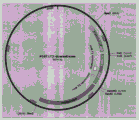
then carrying out double enzyme digestion on the downstream gene fragment prepared in the step (2) by using Sac I and Sac II, and then connecting the downstream gene fragment with a plasmid pBluescriptSKT1T2 subjected to the same enzyme digestion to obtain a plasmid P5ST1T2-downstream, wherein the structure diagram is shown in figure 1;
(5) treating puc4K plasmid with restriction enzyme BamHI to obtain Kana resistance sequence, the sequence is shown as SEQ ID NO: 14 is shown in the figure;
(6) the sequence shown by SEQ ID NO: 7 and SEQ ID NO: and 8, taking the sequence recovered in the step 2 as a template, and obtaining a sequence of the Kana promoter and the Kana resistance gene by a PCR amplification technology: and (2) adding enzyme cutting sites BamHI and NheI at the upper and lower ends of the Promote-Kana through primers to obtain a product with a sequence shown as SEQ ID NO: 15 is shown in the figure;
(7) and the sequence shown as SEQ ID NO: 9 and SEQ ID NO: 10 is an upstream primer and a downstream primer, the sequence recovered in the step 2 is used as a template, and a Kana terminator gene sequence is obtained by a PCR amplification technology: and (3) a terminator, wherein enzyme cutting sites Nhe I and BamHI are respectively added at the upstream and downstream ends of the terminator through primers to obtain a primer with the sequence shown as SEQ ID NO: 16 is shown in the figure;
(8) treating a plasmid vector PUC18 with a restriction enzyme BamHI, and connecting the sequences obtained in the step (6) and the step (7) to a PUC18 plasmid obtained by enzyme digestion, purification and recovery under the action of a recombinase to obtain a T plasmid pUc 18-Kana;
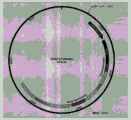
(9) the plasmid vector P5ST1T2-downstream and the T plasmid pUC18-Kana are treated by using restriction enzyme BamHI, Pro-Kana-Nhe I-terminator fragments obtained by digesting the T plasmid pUC18-Kana are connected to the recovered P5ST1T2-downstream vector under the action of ligase, and the obtained shuttle expression general plasmid vector is named as P5ST1T2Kana, and the structure diagram is shown in FIG. 2.
(10) And the sequence shown as SEQ ID NO: 17 and SEQ ID NO: 18 is an upstream primer and a downstream primer, a corresponding gene sequence of Trichoderma reesei QM9414 in a GenBank database is used as a template, a cellulose exonuclease CBH II gene fragment is obtained by a PCR technology, and homologous arm sequences are added at two ends of a target gene through the primers, wherein the sequences are shown as SEQ ID NO: 19, treating the general plasmid P5ST1T2Kana with a restriction endonuclease Nhe I, and carrying out homologous recombination on the obtained cellulose exonuclease CBH II gene fragment under the action of a recombinase to prepare a recombinant expression vector plasmid PSKC II, wherein the structural diagram is shown in figure 3. And transforming the recombinant expression vector plasmid PSNC II into synechocystis PCC6803 by a natural transformation method to obtain the engineering strain synechocystis PSKC II.
A general plasmid which uses a Kana resistance gene promoter to start the tandem expression of a target gene in synechocystis PCC6803 is constructed by the method, and a synechocystis engineering strain PSKC II capable of producing cellulase is obtained by the method.
Preferably, in the step, the nucleotide sequence of the amplification primer is as follows:
SEQ ID NO:1:Promotor-F:5’-GATGTCGACGCTTTAGCGTTCCAGTG-3’;
SEQ ID NO:2:Promotor-R:5’-CATTTGGTTATAATTCCTTATGTAT-3’;
SEQ ID NO:3:TIT2-F:5’-ATACTGCAGCCAAGCTTGGCTGTTTTGGC-3’;
SEQ ID NO:4:TIT2-R:5’-TTAGGATCCCCCATTATTGAAGCATTTAT-3’;
SEQ ID NO:5:downstream-F:5’-CTTCATATGCCGCGGATGACAACGACTCTCCAAC-3’;
SEQ ID NO:6:downstream-R:5’-AGTGAGCTCTTAACCGTTGACAGCAGG-3’;
SEQ ID NO:7:
Pro-Kana-F:5’-CAGGTCGACTCTAGAGGATCCCAGGAAACAGCTATGACCATGATTACG-3’;
SEQ ID NO:8:
Pro-Kana-R:5’-CCAATTCTGAGGCTAGCTTAGAAAAACTCATCGAGCATCAAATGAAACTG-3’;
SEQ ID NO:9:
Terminator-F:5’-GAGTTTTTCTAAGCTAGC TCAGAATTGGTTAATTGGT-3’
SEQ ID NO:10:
Terminator-R:5’-GAGCTCGGTACCCGGGGATCCAAAACGACGGCCAGTGAATT-3’
SEQ ID NO:17:
Kana-CBH II-F:5’-GATGAGTTTTTCTAAGCTAGCATGCAAGCTTGCTCAAGCGT-3’
SEQ ID NO:18:
Kana-CBH II-R:5’-ATTAACCAATTCTGAGCTAGCTTAGTGGTGGTGGTGGTGGTG-3’
drawings
FIG. 1 is a diagram of the structure of plasmid P5ST1T 2-downstream;
FIG. 2 is a structural diagram of a universal plasmid P5ST1T2 Kana;
FIG. 3 is a structural diagram of a recombinant expression vector PSKC II;
FIG. 4 is an amplification assay of recombinant expression vector PSKC II PCR;
FIG. 5 is a comparison of enzyme activities of engineering strains.
Compared with the prior art, the invention has the following advantages and effects:
the invention adds enzyme cutting site Nhe I between promoter-Kana gene and terminator gene, and recombines and integrates reconstructed Kana gene into plasmid P5ST1T2-downstream containing synechocystis sp. The invention also aims to provide a new method for producing the cellulase CBH II photosynthetic organisms by using the Kana resistance gene promoter to start the expression of the cellulase CBH II in synechocystis PCC 6803.
Detailed Description
The present invention will be described in further detail with reference to examples and drawings, but the present invention is not limited thereto. Synechocystis PCC6803 wild-type strain used in the examples of the present invention was a gift from the Shandong farm.
Example 1
Construction of plasmid P5ST1T 2-downstream:
(1) the sequence shown by SEQ ID NO: 1 and SEQ ID NO: 2 is an upstream primer and a downstream primer, and takes a wild synechocystis PCC6803 genome as a template; the sequence shown by SEQ ID NO: 3 and SEQ ID NO: 4 is an upstream primer and a downstream primer, and takes escherichia coli with Genbank accession number of U02439.1 as a template; the sequence shown by SEQ ID NO: 5 and SEQ ID NO: 6 is an upstream primer and a downstream primer, and a light sensitive Promoter and upstream arm gene sequence Promoter-up, a terminator T1T2 gene fragment and a downstream arm sequence downstream are obtained by using wild synechocystis PCC6803 as a template through a PCR amplification technology. Obtaining the polypeptide with the sequence shown as SEQ ID NO: 11. SEQ ID NO: 12. SEQ ID NO: 13 is shown in the figure; (2) carrying out ApaI enzyme digestion treatment on the light sensation Promoter and upstream arm gene sequence Promoter-up obtained in the step (1), carrying out PSt I and BamHI double enzyme digestion on the terminator T1T2 gene fragment obtained in the step (1), and carrying out Sac I and Sac II double enzyme digestion on the downstream arm sequence downstream obtained in the step (1); (3) carrying out PSt I and BamHI double enzyme digestion on pBluescript SK plasmid, and connecting the pBluescript SK plasmid with the terminator T1T2 gene fragment prepared in the step (2) by using T4 ligase to obtain plasmid pBluescript SKT1T 2; and (3) carrying out double digestion on the downstream gene fragment prepared in the step (2) by using Sac I and Sac II, and then connecting the downstream gene fragment with a plasmid pBluescriptSKT1T2 subjected to the same digestion to obtain a plasmid P5ST1T2-downstream, wherein the structural diagram is shown in figure 1.
The enzyme digestion system used in this example was as follows: 3 mu L of DNA, 1 mu L of endonuclease, 10 Xbuffer 1 mu L and ddH2O 5 mu L, wherein the enzyme cutting temperature is 30 ℃, and the enzyme cutting time is 2 h; the PCR system was as follows: 1 μ L of each of the upstream and downstream primers, 1 μ L of the template, 12.5 μ L of recombinase, 9.5 μ L of ddH2O 9.5, and 25 μ L of the total system, adding the reaction components into a PCR tube for PCR amplification, wherein the amplification procedure is as follows: pre-denaturation at 94 ℃ for 3 min; denaturation, at 98 ℃ for 10 s; annealing at 55 ℃ for 15 s; extension, at 72 ℃ for 1min for each amplification of 1kb of DNA; cycle, denaturation-annealing-extension cycle 30; 72 ℃ for 5 min; 4 ℃, 10 min; the linking system is as follows: the obtained gene fragment was recovered in an amount of 0.5. mu.L, the plasmid fragment after endonuclease treatment in an amount of 2.5. mu.L, T4 ligase in an amount of 1. mu.L, 10 XBuffer in an amount of 1. mu.L, ddH2O 5 in an amount of 10. mu.L as a whole, and ligated at a reaction temperature of 16 ℃ for 10 hours. The plasmid P5ST1T2-downstream was obtained by the above example.
Example 2
Construction of the Universal plasmid P5ST1T2Kana
(1) Treating puc4K plasmid with restriction enzyme BamHI to obtain Kana resistance sequence, the sequence is shown as SEQ ID NO: 14 is shown in the figure; (2) the sequence shown by SEQ ID NO: 7 and SEQ ID NO: and 8, taking the sequence recovered in the step (1) as a template, and obtaining a promoter and a Kana resistance gene sequence by a PCR amplification technology: and (2) adding enzyme cutting sites BamHI and Nhe I to both ends of the upstream and downstream of the Promote-Kana through primers to obtain a product with a sequence shown as SEQ ID NO: 15 is shown in the figure; the sequence shown by SEQ ID NO: 9 and SEQ ID NO: taking the sequence recovered in the step 2 as a template, and obtaining a terminator gene sequence by a PCR amplification technology, wherein the sequence is an upstream primer and a downstream primer 10: and (3) a terminator, wherein enzyme cutting sites Nhe I and BamHI are respectively added at the upstream and downstream ends of the terminator through primers to obtain a primer with the sequence shown as SEQ ID NO: 16 is shown in the figure;
the enzyme digestion system used in this example was as follows: 3 mu L of DNA, 1 mu L of endonuclease, 10 Xbuffer 1 mu L and ddH2O 5 mu L, wherein the enzyme cutting temperature is 30 ℃, and the enzyme cutting time is 2 h; the PCR system was as follows: 1 μ L of each of the upstream and downstream primers, 1 μ L of the template, 12.5 μ L of recombinase, 9.5 μ L of ddH2O 9.5, and 25 μ L of the total system, adding the reaction components into a PCR tube for PCR amplification, wherein the amplification procedure is as follows: pre-denaturation at 94 ℃ for 3 min; denaturation, at 98 ℃ for 10 s; annealing at 55 ℃ for 15 s; extension, at 72 ℃ for 1min for each amplification of 1kb of DNA; cycle, denaturation-annealing-extension cycle 30; 72 ℃ for 5 min; 4 ℃, 10 min; the recombinant ligation system was as follows: the obtained cellulose exonuclease CBH II gene is recovered by 1 mu L, the obtained Promoter-up is recovered by 0.5 mu L, the P5ST1T2npt plasmid after ApaI treatment is recovered by 2.5 mu L, the recombinase is recovered by 2 mu L, 10 xBuffer 4 mu L and ddH2O10 mu L, the total system is 20 mu L, the reaction temperature is 37 ℃, and the reaction time is 2 h. The general plasmid P5ST1T2Kana was obtained by the above examples.
Example 3
Construction of recombinant plasmid PSKC II for expressing cellulase in synechocystis
The sequence shown by SEQ ID NO: 17 and SEQ ID NO: 18 is an upstream primer and a downstream primer, a corresponding gene sequence of Trichoderma reesei QM9414 in a GenBank database is used as a template, a cellulose exonuclease CBH II gene fragment is obtained by a PCR technology, and homologous arm sequences are added at two ends of a target gene through the primers, wherein the sequences are shown as SEQ ID NO: 19 is shown in the figure; treating the shuttle-able recombinant expression vector P5ST1T2Kana with a restriction endonuclease Nhe I, and carrying out homologous recombination on the shuttle-able recombinant expression vector P5ST1T2Kana and the obtained cellulose exonuclease CBH II gene fragment under the action of a recombinase to prepare a recombinant expression vector plasmid PSKC II.
Example 4
Construction of synechocystis engineering strain PSKC II capable of producing cellulase and enzyme activity determination
The recombinant expression vector plasmid PSNC II is transformed into synechocystis PCC6803 by a natural transformation method, and the engineering strain PSKC II is obtained by continuous illumination and amplification culture at 29 ℃, 180rpm and 1400 Lux. Inoculating wild type synechocystis PCC6803 and engineering strain PSKC II in 50ml BG-11 liquid culture medium to regulate OD730Culturing under shaking (150rpm) at 29 deg.C under 1400Lux continuous light to logarithmic phase, centrifuging 30mL of algae solution at 6000rpm for 7min, removing supernatant, re-suspending algae mud with 20mL of 50mmol/L sodium acetate buffer solution (pH5.0), centrifuging at 6000rpm for 7min, removing supernatant, collecting algae cells, grinding with liquid nitrogen, and ultrasonically crushing to obtain crude enzyme solution.
The enzyme activity is determined by the nNPC method. The results of enzyme activity measurement are shown in FIG. 5
The enzyme activity determination result shows that the enzyme activity of the synechocystis engineering strain PSKC II is obviously higher than that of the wild synechocystis strain, and the result proves that the universal plasmid which uses a Kana resistance gene promoter to start the tandem expression of a target gene in synechocystis PCC6803 can express an exogenous gene in the synechocystis, and the synechocystis strain capable of generating cellulase is obtained by the plasmid.