CN1128043A - Methods and substances for the treatment of individuals infected with intracellular infectious agents - Google Patents
Methods and substances for the treatment of individuals infected with intracellular infectious agents Download PDFInfo
- Publication number
- CN1128043A CN1128043A CN94192512A CN94192512A CN1128043A CN 1128043 A CN1128043 A CN 1128043A CN 94192512 A CN94192512 A CN 94192512A CN 94192512 A CN94192512 A CN 94192512A CN 1128043 A CN1128043 A CN 1128043A
- Authority
- CN
- China
- Prior art keywords
- polynucleotide
- recombination
- target antigen
- cells
- virus
- Prior art date
- Legal status (The legal status is an assumption and is not a legal conclusion. Google has not performed a legal analysis and makes no representation as to the accuracy of the status listed.)
- Granted
Links
Images
Classifications
-
- C—CHEMISTRY; METALLURGY
- C12—BIOCHEMISTRY; BEER; SPIRITS; WINE; VINEGAR; MICROBIOLOGY; ENZYMOLOGY; MUTATION OR GENETIC ENGINEERING
- C12N—MICROORGANISMS OR ENZYMES; COMPOSITIONS THEREOF; PROPAGATING, PRESERVING, OR MAINTAINING MICROORGANISMS; MUTATION OR GENETIC ENGINEERING; CULTURE MEDIA
- C12N5/00—Undifferentiated human, animal or plant cells, e.g. cell lines; Tissues; Cultivation or maintenance thereof; Culture media therefor
- C12N5/10—Cells modified by introduction of foreign genetic material
-
- C—CHEMISTRY; METALLURGY
- C07—ORGANIC CHEMISTRY
- C07K—PEPTIDES
- C07K14/00—Peptides having more than 20 amino acids; Gastrins; Somatostatins; Melanotropins; Derivatives thereof
- C07K14/005—Peptides having more than 20 amino acids; Gastrins; Somatostatins; Melanotropins; Derivatives thereof from viruses
-
- A—HUMAN NECESSITIES
- A61—MEDICAL OR VETERINARY SCIENCE; HYGIENE
- A61K—PREPARATIONS FOR MEDICAL, DENTAL OR TOILETRY PURPOSES
- A61K39/00—Medicinal preparations containing antigens or antibodies
-
- A—HUMAN NECESSITIES
- A61—MEDICAL OR VETERINARY SCIENCE; HYGIENE
- A61K—PREPARATIONS FOR MEDICAL, DENTAL OR TOILETRY PURPOSES
- A61K39/00—Medicinal preparations containing antigens or antibodies
- A61K39/39—Medicinal preparations containing antigens or antibodies characterised by the immunostimulating additives, e.g. chemical adjuvants
-
- C—CHEMISTRY; METALLURGY
- C07—ORGANIC CHEMISTRY
- C07K—PEPTIDES
- C07K14/00—Peptides having more than 20 amino acids; Gastrins; Somatostatins; Melanotropins; Derivatives thereof
- C07K14/435—Peptides having more than 20 amino acids; Gastrins; Somatostatins; Melanotropins; Derivatives thereof from animals; from humans
- C07K14/705—Receptors; Cell surface antigens; Cell surface determinants
- C07K14/70503—Immunoglobulin superfamily
- C07K14/70532—B7 molecules, e.g. CD80, CD86
-
- C—CHEMISTRY; METALLURGY
- C12—BIOCHEMISTRY; BEER; SPIRITS; WINE; VINEGAR; MICROBIOLOGY; ENZYMOLOGY; MUTATION OR GENETIC ENGINEERING
- C12N—MICROORGANISMS OR ENZYMES; COMPOSITIONS THEREOF; PROPAGATING, PRESERVING, OR MAINTAINING MICROORGANISMS; MUTATION OR GENETIC ENGINEERING; CULTURE MEDIA
- C12N15/00—Mutation or genetic engineering; DNA or RNA concerning genetic engineering, vectors, e.g. plasmids, or their isolation, preparation or purification; Use of hosts therefor
- C12N15/09—Recombinant DNA-technology
- C12N15/11—DNA or RNA fragments; Modified forms thereof; Non-coding nucleic acids having a biological activity
- C12N15/117—Nucleic acids having immunomodulatory properties, e.g. containing CpG-motifs
-
- A—HUMAN NECESSITIES
- A61—MEDICAL OR VETERINARY SCIENCE; HYGIENE
- A61K—PREPARATIONS FOR MEDICAL, DENTAL OR TOILETRY PURPOSES
- A61K39/00—Medicinal preparations containing antigens or antibodies
- A61K2039/51—Medicinal preparations containing antigens or antibodies comprising whole cells, viruses or DNA/RNA
- A61K2039/515—Animal cells
- A61K2039/5154—Antigen presenting cells [APCs], e.g. dendritic cells or macrophages
-
- A—HUMAN NECESSITIES
- A61—MEDICAL OR VETERINARY SCIENCE; HYGIENE
- A61K—PREPARATIONS FOR MEDICAL, DENTAL OR TOILETRY PURPOSES
- A61K39/00—Medicinal preparations containing antigens or antibodies
- A61K2039/51—Medicinal preparations containing antigens or antibodies comprising whole cells, viruses or DNA/RNA
- A61K2039/515—Animal cells
- A61K2039/5156—Animal cells expressing foreign proteins
-
- A—HUMAN NECESSITIES
- A61—MEDICAL OR VETERINARY SCIENCE; HYGIENE
- A61K—PREPARATIONS FOR MEDICAL, DENTAL OR TOILETRY PURPOSES
- A61K39/00—Medicinal preparations containing antigens or antibodies
- A61K2039/555—Medicinal preparations containing antigens or antibodies characterised by a specific combination antigen/adjuvant
- A61K2039/55511—Organic adjuvants
- A61K2039/55522—Cytokines; Lymphokines; Interferons
-
- C—CHEMISTRY; METALLURGY
- C12—BIOCHEMISTRY; BEER; SPIRITS; WINE; VINEGAR; MICROBIOLOGY; ENZYMOLOGY; MUTATION OR GENETIC ENGINEERING
- C12N—MICROORGANISMS OR ENZYMES; COMPOSITIONS THEREOF; PROPAGATING, PRESERVING, OR MAINTAINING MICROORGANISMS; MUTATION OR GENETIC ENGINEERING; CULTURE MEDIA
- C12N2730/00—Reverse transcribing DNA viruses
- C12N2730/00011—Details
- C12N2730/10011—Hepadnaviridae
- C12N2730/10111—Orthohepadnavirus, e.g. hepatitis B virus
- C12N2730/10122—New viral proteins or individual genes, new structural or functional aspects of known viral proteins or genes
-
- C—CHEMISTRY; METALLURGY
- C12—BIOCHEMISTRY; BEER; SPIRITS; WINE; VINEGAR; MICROBIOLOGY; ENZYMOLOGY; MUTATION OR GENETIC ENGINEERING
- C12N—MICROORGANISMS OR ENZYMES; COMPOSITIONS THEREOF; PROPAGATING, PRESERVING, OR MAINTAINING MICROORGANISMS; MUTATION OR GENETIC ENGINEERING; CULTURE MEDIA
- C12N2740/00—Reverse transcribing RNA viruses
- C12N2740/00011—Details
- C12N2740/10011—Retroviridae
- C12N2740/12011—Betaretrovirus, e.g. mouse mammary tumour virus
- C12N2740/12041—Use of virus, viral particle or viral elements as a vector
- C12N2740/12043—Use of virus, viral particle or viral elements as a vector viral genome or elements thereof as genetic vector
Landscapes
- Health & Medical Sciences (AREA)
- Life Sciences & Earth Sciences (AREA)
- Chemical & Material Sciences (AREA)
- Immunology (AREA)
- Organic Chemistry (AREA)
- Genetics & Genomics (AREA)
- General Health & Medical Sciences (AREA)
- Medicinal Chemistry (AREA)
- Microbiology (AREA)
- Engineering & Computer Science (AREA)
- Molecular Biology (AREA)
- Zoology (AREA)
- Biochemistry (AREA)
- Biophysics (AREA)
- Epidemiology (AREA)
- Biomedical Technology (AREA)
- Veterinary Medicine (AREA)
- Public Health (AREA)
- Mycology (AREA)
- Animal Behavior & Ethology (AREA)
- Pharmacology & Pharmacy (AREA)
- Biotechnology (AREA)
- Gastroenterology & Hepatology (AREA)
- Proteomics, Peptides & Aminoacids (AREA)
- Wood Science & Technology (AREA)
- Bioinformatics & Cheminformatics (AREA)
- General Engineering & Computer Science (AREA)
- Cell Biology (AREA)
- Chemical Kinetics & Catalysis (AREA)
- Virology (AREA)
- General Chemical & Material Sciences (AREA)
- Toxicology (AREA)
- Physics & Mathematics (AREA)
- Plant Pathology (AREA)
- Micro-Organisms Or Cultivation Processes Thereof (AREA)
- Medicines Containing Antibodies Or Antigens For Use As Internal Diagnostic Agents (AREA)
- Medicines That Contain Protein Lipid Enzymes And Other Medicines (AREA)
- Medicines Containing Material From Animals Or Micro-Organisms (AREA)
- Pharmaceuticals Containing Other Organic And Inorganic Compounds (AREA)
- Saccharide Compounds (AREA)
Abstract
Description
发明领域field of invention
本发明涉及预防新的感染,治愈流行性感染和治疗慢性感染的方法,这些感染均是由胞内传染原引起的。该方法包括使用基因疗法以加强共同刺激T细胞活化的配体间的相互作用。更确切地说,本发明涉及基因疗法的方法和物质,其中编码源自传染原的抗原和共同刺激T细胞活化的配体的基因在宿主动物细胞中共表达,以预防或治疗慢性感染。该方法通过增强抗原特异性T细胞的反应,刺激或增强对传染原抗原的免疫应答,由此保护机体不受新的感染或终止慢性感染。 The present invention relates to methods of preventing new infections, curing epidemic infections and treating chronic infections caused by intracellular infectious agents. The approach involves the use of gene therapy to enhance the interaction of ligands that co-stimulate T cell activation. More specifically, the present invention relates to methods and materials for gene therapy in which genes encoding antigens derived from infectious agents and ligands that co-stimulate T cell activation are co-expressed in cells of the host animal for the prevention or treatment of chronic infections. This approach stimulates or enhances the immune response to infectious antigens by enhancing antigen-specific T cell responses, thereby protecting the body from new infections or terminating chronic infections.
发明背景Background of the invention
许多传染原能够在宿主机体内引起感染和疾病;此类传染原包括原生动物,真菌,细菌,病毒,甚至虫子。这些传染原中,那些有细胞内作用机制的,对预防和治疗提出了最大挑战。当胞内传染原的宿主为哺乳动物,如人时,尤为如此。Many infectious agents are capable of causing infection and disease in the host organism; such infectious agents include protozoa, fungi, bacteria, viruses, and even bugs. Of these infectious agents, those with intracellular mechanisms of action present the greatest challenges for prevention and treatment. This is especially true when the host of the intracellular infectious agent is a mammal, such as a human.
哺乳动物具有复杂的免疫系统,其具有多种不同的机制以防御传染原的侵入。在正常情况下,免疫系统的作用是从哺乳动物宿主体系中彻底排除传染原。因为哺乳动物的免疫系统通常能够排除传染原,所以大多数感染是自身限制的。然而,当免疫系统不能够或者不对传染原的存在作出反应时,就会产生问题。这种情况下,感染会变成慢性并持续存在多年甚至受感染的人或动物一生,通常导致严重的疾病。Mammals have a complex immune system with many different mechanisms to defend against the invasion of infectious agents. Under normal circumstances, the role of the immune system is to eliminate infectious agents from the system of the mammalian host. Most infections are self-limiting because the mammalian immune system is usually able to eliminate the infectious agent. However, problems arise when the immune system is unable or does not respond to the presence of an infectious agent. In this case, the infection becomes chronic and persists for many years or even the lifetime of the infected person or animal, often resulting in severe disease.
传统的、标准疫苗将免疫系统暴露给外来抗原,如那些传染原,以引发抗原特异性免疫应答。这种免疫应答大多常为体液免疫而非细胞免疫,也就是说,它导致抗体的产生,而不是下面所述的基于T—细胞的免疫。有效的接种预防感染或减轻感染引起的疾病,感染是由疫苗针对的传染原引起的。Traditional, standard vaccines expose the immune system to foreign antigens, such as those of infectious agents, to elicit an antigen-specific immune response. This immune response is mostly humoral rather than cellular, that is, it results in the production of antibodies rather than T-cell-based immunity as described below. Effective vaccination prevents or alleviates disease caused by infections caused by the infectious agent against which the vaccine is directed.
引发中和抗体的免疫应答足以预防某些病毒的感染。Murphy等(1990)。所以,这些病毒引起的感染可以通过接种产生中和抗体的抗原来预防。然而,对某些病毒和非病毒传染原,不能引发中和抗体,或即使能够引发,中和抗体也不足以预防感染和/或疾病的发展。An immune response that elicits neutralizing antibodies is sufficient to prevent infection with some viruses. Murphy et al. (1990). Therefore, infections caused by these viruses can be prevented by vaccination with antigens that produce neutralizing antibodies. However, against some viral and non-viral infectious agents, neutralizing antibodies cannot be elicited, or even if elicited, neutralizing antibodies are not sufficient to prevent infection and/or disease development.
两种传统的疫苗类型为死病毒和活的减毒病毒。死病毒由完整的病毒体组成或者其它传染原组成,其传染性已被灭活。这些病毒也可以由抗原的亚单位或病毒体的组成部分或其它传染原组成。这些疫苗以非肠道途径接种或直接用于粘膜上。活的减毒疫苗由活病毒或其它经遗传学手段已改变毒力的传染原组成。当用于接种时,这些疫苗会引起减轻形式的疾病或根本不发病。Two traditional vaccine types are killed virus and live attenuated virus. Dead virus consists of whole virions or other infectious agents whose infectivity has been inactivated. These viruses may also consist of subunits of antigens or components of virions or other infectious agents. These vaccines are administered parenterally or applied directly to the mucosa. Live attenuated vaccines consist of live viruses or other infectious agents that have been genetically altered in virulence. When used for vaccination, these vaccines cause a reduced form of the disease or no disease at all.
已经研究出并在实验中使用了第三种类型的疫苗,但还没有用于临床。该方法是使用活的物质(如病毒或细菌)做载体来表达异源传染原的疫苗抗原。编码抗原的基因或核苷酸序列由该载体表达,并且当用于接种时,直接将宿主暴露给抗原。期望对该抗原产生的免疫应答能保护宿主不受传染原(上述抗原源自该传感染)的感染。A third type of vaccine has been developed and used experimentally, but not yet in clinical use. The method is to use live substances (such as viruses or bacteria) as vectors to express vaccine antigens of heterologous infectious agents. The gene or nucleotide sequence encoding the antigen is expressed from the vector and, when used for vaccination, directly exposes the host to the antigen. An immune response to the antigen is expected to protect the host from the infectious agent from which the antigen originated.
死疫苗的例子包括破伤风类毒素,流感病毒亚单位,狂犬病,脊髓灰质炎和HBV。活的减毒疫苗的例子包括伤寒杆菌(Salmonellatyphi)Ty21—a和脊髓灰质炎,麻疹,风疹,腮腺炎,天花和黄热病病毒活疫苗。用于表达异源疫苗抗原的活载体的例子有牛痘病毒,腺病毒,腺病毒相关病毒和S.typhi Ty21—a株。Examples of killed vaccines include tetanus toxoid, influenza virus subunits, rabies, polio, and HBV. Examples of live attenuated vaccines include Salmonella typhi Ty21-a and polio, measles, rubella, mumps, smallpox and yellow fever virus live vaccines. Examples of live vectors for expression of heterologous vaccine antigens are vaccinia virus, adenovirus, adeno-associated virus and S. typhi Ty21-a strain.
与严重发病和早死有关的慢性感染的例子包括两种人肝炎病毒,乙型肝炎病毒(HBV)和丙型肝炎病毒(HCV),它们可导致慢性肝炎,肝硬化和肝癌。人HBV传染很类似于在某些动物中由密切相关的肝DNA病毒引起的传染,包括感染Beechey地松鼠的地松鼠肝炎病毒(GSHV),感染土拨鼠的土拨鼠肝炎病毒(WHV)和感染鸭子的鸭肝炎病毒(DHBV),Robihson,在,Virology,第2版,编辑B.Fields,Raven Rress,NewYork,PP.2137—2169(1990)。人类由病毒传染原引起的慢性感染的其它例子包括那些由人逆转录病毒引起的感染:人免疫缺陷病毒(HIV—1和HIV—2),它引起获得性免疫缺陷综合症(AIDS);和引起T细胞性白血病和骨髓病的人T亲淋巴性病毒(HTLV—1和HTLV—2)。许多其它的感染如包括单纯性疱疹病毒(HSV)型1和2的人疱疹病毒,Epstein Barr病毒(EBV),巨细胞病毒(CMV),水痘—带状疱疹病毒和人疱疹病毒6(HHV—6)不能被宿主机制根除,而是变为慢性并在此情况下会引起疾病。人乳头状瘤病毒引起的慢性感染与子宫颈癌有关。许多其它的病毒和传染原当宿主防御机制不能将它们排除时在胞内进行复制并且会变为慢性感染。这些包括病原性的原生动物(如卡氏肺囊虫Pneumocystis Carinii,锥虫属Trypanosoma,利什曼原虫属Leishmania,疟Malaria和兔弓形虫Toxoplasma gondii),细菌(如,分支杆菌mycobacteria,沙门菌Salmonella和李斯特菌属Lis-teria),和真菌(如假丝酵母属Candida和曲霉属aspergillus)。Examples of chronic infections associated with severe morbidity and early death include two human hepatitis viruses, hepatitis B virus (HBV) and hepatitis C virus (HCV), which can lead to chronic hepatitis, cirrhosis and liver cancer. Human HBV infection is very similar to that caused in some animals by closely related hepadnaviruses, including ground squirrel hepatitis virus (GSHV) infecting Beechey ground squirrels, woodchuck hepatitis virus (WHV) infecting woodchucks, and Duck Hepatitis Virus (DHBV) Infecting Ducks, Robihson, In, Virology, 2nd ed. B. Fields, Raven Rress, NewYork, pp. 2137-2169 (1990). Other examples of chronic infections in humans caused by viral infectious agents include those caused by human retroviruses: Human Immunodeficiency Viruses (HIV-1 and HIV-2), which cause Acquired Immunodeficiency Syndrome (AIDS); and Human T-lymphotropic viruses (HTLV-1 and HTLV-2) that cause T-cell leukemia and myelopathy. Many other infections such as human herpesviruses including herpes simplex virus (HSV) types 1 and 2, Epstein Barr virus (EBV), cytomegalovirus (CMV), varicella-zoster virus and human herpesvirus 6 (HHV- 6) Cannot be eradicated by host mechanisms, but become chronic and in this case cause disease. Chronic infection caused by HPV has been linked to cervical cancer. Many other viruses and infectious agents replicate intracellularly and become chronic infections when host defense mechanisms fail to exclude them. These include pathogenic protozoa (eg, Pneumocystis Carinii, Trypanosoma, Leishmania, Malaria, and Toxoplasma gondii), bacteria (eg, mycobacteria, Salmonella and Listeria), and fungi (such as Candida and Aspergillus).
可以产生显著的临床效果的,对慢性病毒感染的治疗还未取得重大成功,因为治疗不能终止感染或排除病毒。以前的治疗包括服用如核苷类似物的小分子化合物或如干扰素的有生物活性的蛋白质。这些治疗抑制病毒的复制但没有从细胞中排除病毒或排除病毒感染的细胞,并且仅在用药过程中使疾病得到有限的改观。遗憾的是,当给药中断时病毒感染经常会加重。Treatment of chronic viral infections, which can produce significant clinical results, has not had significant success because treatment does not terminate the infection or eliminate the virus. Previous treatments included administration of small molecule compounds such as nucleoside analogs or biologically active proteins such as interferon. These treatments inhibit the replication of the virus but do not deplete the virus from the cells or deplete the virus-infected cells and produce only limited improvement in the disease over the course of the administration. Unfortunately, viral infections often worsen when dosing is interrupted.
常用的抗病毒治疗包括核苷类似物,如治疗慢性HIV感染和有关AIDS的叠氮脱氧胸苷(AZT),双脱氧肌苷(DDI)和双脱氧胞苷(DDC)和治疗HBV感染和有关的肝病的阿糖腺苷(araA)。在治疗慢性感染的过程中干扰素相似地抑制HBV和HCV,但是当治疗中断时,病毒通常会返回治疗前的水平且疾病会进一步加重。Commonly used antiviral treatments include nucleoside analogs such as azide-deoxythymidine (AZT), dideoxyinosine (DDI) and dideoxycytidine (DDC) in the treatment of chronic HIV infection and related AIDS and in the treatment of HBV infection and related Vidarabine (araA) in liver disease. Interferons similarly inhibit HBV and HCV during the treatment of chronic infections, but when treatment is interrupted, the virus usually returns to pre-treatment levels and the disease progresses further.
哺乳动物的免疫系统对于控制和彻底排除胞内传染原导致的不断发展的感染所采取的一个重要机制是通过某些T细胞的活化来激活细胞免疫应答。T细胞的活化导致细胞毒性的T淋巴细胞(CTL)对被感染细胞表面的病毒(或其它胞内传染原)抗原的应答和感染细胞的排除。Guilhot等,J.Virolm,66:2670—2678(1992)。这样最终导致被感染细胞的排除和感染细胞中的传染原的排除。对病毒传染原的免疫应答的总体论述参见Whitton等,在Virology,第2版,编辑B.Fields,Raven Press,New York,PP.369—381(1990);和Roitt.Essential Immunology,第7版(1991)。An important mechanism adopted by the mammalian immune system to control and completely eliminate the ongoing infection caused by intracellular infectious agents is to activate cellular immune responses through the activation of certain T cells. Activation of T cells results in a cytotoxic T lymphocyte (CTL) response to viral (or other intracellular infectious agent) antigens on the surface of infected cells and elimination of infected cells. Guilhot et al., J. Virolm, 66:2670-2678 (1992). This ultimately leads to depletion of infected cells and depletion of infectious agents in infected cells. For a general review of the immune response to viral infectious agents see Whitton et al., in Virology, 2nd ed., B. Fields, Raven Press, New York, ed. pp. 369-381 (1990); and Roitt. Essential Immunology, 7th ed. (1991).
当T细胞受体(TCR)和抗原多肽形成一种三元复合物(这里的抗原多肽已在专门的抗原呈递细胞(APC)表面和自身—MHC(主要组织相容性复合物)形成复合物)时发生T细胞的活化,专门的APCs包括巨噬细胞和活化的B细胞。Townsend等,Cell,44:959—968(1986);Townsend等,Ann.Rev.Immunol.,7:601—624(1989);Bjorkman等,Nature,329:512—518(1987);和Jardetsky等,Nature,353:326—329(1991)。该三元复合物允许一种共同刺激信号在细胞间通过。T细胞的活化不仅要求TCR对抗原多肽—MHC复合物的识别,而且还要求位于APCs表面的“共同刺激因子”与T细胞表面的特异性分子“共同刺激配体”相互作用。Free-man等,J.Exp.Med.,174:625—691(1991)。正如此处所说的,APCs上的共同刺激因子包括在T细胞表面与CD28和CTL—4蛋白特异结合的B7—1蛋白,和T细胞活化时与CTLA—4结合的B7—2和B7—3蛋白,但并不限于这些。Boussiotis等,Proc.Natl.Acad.Sci.USA,90:11059—11063(1993)。B7配体专一地由专门的APCs表达。Freeman等,J.Exp.Med.,174:625—631(1991);Razi—Wolf等(1992);和Larsen等(1992)已表明,CD28和B7—1的相互作用对T细胞活化是非常必要的。Jenkihs等,J.Im-munol.,140:3324—3330(1988);Linsley等(1990);Linsley等,J.Exp.Med.,173:721—730(1991);Gimmi等,Proc.Natl.Acad.Sci.USA,88:6575—6579(1991);Jenkins等,J.Immunol.,147:2461—2466(1991);和Harding等(1992)。When the T cell receptor (TCR) and the antigenic polypeptide form a ternary complex (here the antigenic polypeptide has formed a complex with self-MHC (major histocompatibility complex) on the surface of specialized antigen-presenting cells (APC) ) T cell activation occurs, specialized APCs include macrophages and activated B cells. Townsend et al., Cell, 44:959-968 (1986); Townsend et al., Ann. Rev. Immunol., 7:601-624 (1989); Bjorkman et al., Nature, 329:512-518 (1987); and Jardetsky et al. , Nature, 353:326-329 (1991). The ternary complex allows a co-stimulatory signal to pass between cells. The activation of T cells not only requires TCR to recognize the antigen polypeptide-MHC complex, but also requires the interaction of "co-stimulatory factors" on the surface of APCs with specific molecules "co-stimulatory ligands" on the surface of T cells. Free-man et al., J. Exp. Med., 174:625-691 (1991). As mentioned here, co-stimulatory factors on APCs include B7-1 proteins that specifically bind to CD28 and CTL-4 proteins on the surface of T cells, and B7-2 and B7-3 proteins that bind to CTLA-4 during T cell activation. protein, but not limited to these. Boussiotis et al., Proc. Natl. Acad. Sci. USA, 90:11059-11063 (1993). The B7 ligand is exclusively expressed by specialized APCs. Freeman et al., J.Exp.Med., 174:625-631 (1991); Razi-Wolf et al. (1992); and Larsen et al. (1992) have shown that the interaction of CD28 and B7-1 is very important for T cell activation necessary. Jenkihs et al., J. Im-munol., 140:3324-3330 (1988); Linsley et al. (1990); Linsley et al., J. Exp. Med., 173:721-730 (1991); Gimmi et al., Proc.Natl USA, 88:6575-6579 (1991); Jenkins et al., J. Immunol., 147:2461-2466 (1991); and Harding et al. (1992).
发现于APC上的共同刺激因子分子之一是B7蛋白,它是T细胞表面分化抗原CD28的配体。已发现,通常受专门APCs影响的B7的表达对原始(naive)T细胞的活化是至关重要的。Larsen等,J.Exp.Med.,176:1215—1220(1992),其它研究已经表明,T细胞功能活性的提高与B7表达的增强之间存在直接的联系。Razi—Wolf等,Proc.Natl.Acad.Sci.USA,89:4210—4214(1992)。在缺乏以CD28为受体的共同刺激配体的细胞上,当T细胞与抗原多肽相遇时,T细胞不显示变应性。Harding等,Nature,356:607—609(1992)。One of the co-stimulatory molecules found on APCs is the B7 protein, which is a ligand for the T cell surface differentiation antigen CD28. The expression of B7, normally influenced by specialized APCs, was found to be critical for the activation of naive T cells. Larsen et al., J. Exp. Med., 176:1215-1220 (1992), and other studies have shown a direct link between increased T cell functional activity and enhanced B7 expression. Razi-Wolf et al., Proc. Natl. Acad. Sci. USA, 89:4210-4214 (1992). On cells lacking a co-stimulatory ligand with CD28 as a receptor, T cells do not display allergy when they encounter the antigenic polypeptide. Harding et al., Nature, 356:607-609 (1992).
当结合有MHC I类分子的特异性病毒抗原多肽片断作为MHC限制的CTL的靶呈现在细胞表面时,被感染细胞中的病毒抗原会降解。Whitton等(1990)。然而,被病毒感染的宿主中的大多数感染细胞不是表达共同刺激蛋白的专门APCs。并且,缺乏如B7—1,B7—2,B7—3这样的共同刺激分子的被感染的细胞不会引发有效的细胞免疫应答。当这些机制不足以且不能够排除传染原时,感染就会持续下去并转为慢性。Viral antigens in infected cells are degraded when peptide fragments of specific viral antigens bound to MHC class I molecules are presented on the cell surface as targets of MHC-restricted CTLs. Whitton et al. (1990). However, most infected cells in virus-infected hosts are not specialized APCs expressing co-stimulatory proteins. Also, infected cells lacking costimulatory molecules such as B7-1, B7-2, and B7-3 did not elicit effective cellular immune responses. When these mechanisms are insufficient and unable to exclude the infectious agent, the infection persists and becomes chronic.
有些参与消除胞内传染原引起的不断发展的感染的免疫机制,如CTL应答,在预防新的感染中也起一定的作用。而其它免疫机制,如中和抗体,在预防某些病毒感染方面比在消除不断发展的感染方面显得更为重要。在中和抗体这种情形中,直接作用于表面抗原的抗体能够通过促使病毒的聚集并从血流中彻底移去病毒来中和病毒的传染性。通常由病毒中和抗体阻断的病毒感染也能通过引发相同中和抗体的抗原产生的免疫来预防。然而,对其它胞内传染原来说,中和抗体不会被引发,或即使被引发,也不足以起到保护作用。不过,通过引入适当的免疫制剂仍能获得保护。在这种情况下,细胞免疫机制显示出能促进免疫制剂保护机体不受感染。为使免疫应答产生保护作用,免疫制剂必须引发一种强烈而持续的CTL应答。Mur-phy等,在Virology,第2版,编辑B.Field,Raven Press,NewYork,pp.469—502(1990)。Some of the immune mechanisms involved in the elimination of ongoing infections caused by intracellular infectious agents, such as CTL responses, also play a role in preventing new infections. And other immune mechanisms, such as neutralizing antibodies, appear to be more important in preventing certain viral infections than in eliminating ongoing infections. In the case of neutralizing antibodies, antibodies acting directly on surface antigens can neutralize viral infectivity by promoting viral aggregation and complete removal of virus from the bloodstream. Viral infection, which is normally blocked by virus-neutralizing antibodies, can also be prevented by eliciting immunization against antigens of the same neutralizing antibodies. However, against other intracellular infectious agents, neutralizing antibodies are not elicited, or if elicited, are not sufficient to confer protection. However, protection can still be obtained by introducing appropriate immunization agents. In this case, cellular immune mechanisms were shown to facilitate immune agents to protect the body from infection. In order for the immune response to be protective, the immunizing agent must elicit a strong and sustained CTL response. Murphy et al., In Virology, 2nd Ed., ed. B. Field, Raven Press, NewYork, pp. 469-502 (1990).
因此,需要一种通过引发强烈的CTL应答来增强对胞内传染原(如病毒)的免疫应答的方法。本发明即满足了这种需要。 Therefore, there is a need for a method to enhance the immune response to intracellular infectious agents such as viruses by eliciting strong CTL responses. The present invention fulfills this need.
发明概述Summary of the invention
本发明提供了增强个体对胞内传染原如病毒,原生动物,真菌或细菌的免疫应答的物质和方法。物质包括编码用于T细胞活化的共同刺激因子(以后均称“共同刺激因子”)和一来自传染原的“靶抗原”的载体。载体可以是一种核苷酸,也可以装配于病毒中,可以直接给药于受治疗的个体,或者可选择地,插入于一细胞中然后将该细胞给药于受治疗的个体。编码共同刺激因子和靶抗原的遗传信息的摄入通过引发针对于传染原感染的细胞的CTLs的产生增强了免疫应答,此处靶抗原来自传染原。The present invention provides substances and methods for enhancing an individual's immune response to an intracellular infectious agent, such as a virus, protozoa, fungus or bacteria. The substances include a carrier encoding a co-stimulatory factor for T cell activation (hereinafter referred to as "co-stimulatory factor") and a "target antigen" from an infectious agent. The vector, which can be a nucleotide or assembled in a virus, can be administered directly to the individual to be treated, or alternatively, inserted into a cell which is then administered to the individual to be treated. Ingestion of genetic information encoding co-stimulatory factors and target antigens from the infectious agent enhances the immune response by eliciting the production of CTLs against infectious agent-infected cells.
相应地,本发明的一个实例是重组多核苷酸,其包含一个编码共同刺激因子的区域(该区域可操纵地与转录控制区连接),进一步包含一个编码靶抗原多肽的区域(该区可操纵地与转录控制区相连)。共同刺激因子和靶抗原多肽在个体上的表达,使个体对自然编码靶抗原多肽的胞内传染原至少具有部分免疫力。重组多核苷酸可以包括一个病毒载体或其它如下所述的载体。Accordingly, an embodiment of the present invention is a recombinant polynucleotide comprising a region encoding a co-stimulatory factor (operably linked to a transcriptional control region), further comprising a region encoding a target antigen polypeptide (operably linked to connected to the transcriptional control region). Expression of the co-stimulatory factor and the target antigen polypeptide in the individual confers at least partial immunity to the intracellular infectious agent that naturally encodes the target antigen polypeptide. A recombinant polynucleotide may comprise a viral vector or other vectors as described below.
本发明的另一实例是由包含一个可操纵地与转录控制区相连接、编码共同刺激因子的区域的重组多核苷酸和包含一个可操纵地与转录控制区相连接、编码靶抗原多肽的区域的重组多核苷酸转化的宿主细胞。共同刺激因子和靶抗原多肽在个体中的表达使个体对自然编码靶抗原多肽的胞内传染原至少具有部分免疫力。Another example of the present invention is a recombinant polynucleotide comprising a region operably linked to a transcriptional control region encoding a co-stimulatory factor and a region operably linked to a transcriptional control region encoding a target antigen polypeptide host cells transformed with recombinant polynucleotides. Expression of the costimulatory factor and the target antigen polypeptide in the individual confers at least partial immunity to the intracellular infectious agent that naturally encodes the target antigen polypeptide.
本发明的另一实例是使用含有可操纵地与转录控制区相连接、编码共同刺激因子的区域的重组多核苷酸和含有可操纵地与转录控制区相连接、编码靶抗原多肽的区域的重组多核苷酸的方法,该方法包括给予个体治疗有效果的重组多核苷酸;并确定身体症状的减轻程度,其与对自然编码靶抗原的胞内病原体产生的感染的应答有关。Another embodiment of the invention is the use of a recombinant polynucleotide comprising a region operably linked to a transcriptional control region encoding a co-stimulatory factor and a recombinant polynucleotide comprising a region operably linked to a transcriptional control region encoding a target antigen polypeptide. A method of polynucleotide comprising administering to an individual a therapeutically effective recombinant polynucleotide; and determining the degree of reduction in physical symptoms associated with an infection by an intracellular pathogen that naturally encodes a target antigen.
本发明的另一实例是一种使用上述重组多核苷酸的方法,包含多核苷酸转化宿主细胞。用这种方法制备的宿主细胞和其子代也是要求保护的内容。 Another example of the present invention is a method of using the above-mentioned recombinant polynucleotide, comprising transforming a host cell with the polynucleotide. Host cells and progeny thereof prepared in this way are also claimed.
附图的简要说明Brief description of the drawings
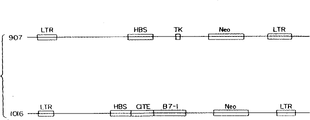
图1是两种病毒载体的直线图。 Figure 1 is a line diagram of two viral vectors.
发明详细描述Detailed description of the invention
共同刺激因子的关键作用是使表达所需的靶抗原,如病毒抗原的细胞成为有效的APCs,以促进T细胞的活化。通过产生一个同时表达共同刺激因子(或其功能部分)和靶抗原的系统,结果应答可导致被感染宿主细胞的排除和对未感染宿主细胞免受新感染的更强保护。The key role of co-stimulatory factors is to make cells expressing desired target antigens, such as viral antigens, effective APCs to promote T cell activation. By creating a system that expresses both the co-stimulatory factor (or a functional part thereof) and the target antigen, the resulting response can lead to depletion of infected host cells and greater protection of uninfected host cells from new infection.
本发明说明,免疫疗法能用来活化和/或增强被感染哺乳动物宿主的免疫应答,该免疫疗法是将编码共同刺激因子的功能部分和靶抗原的遗传信息导入个体。这种增强效果包括对胞内传染原(靶抗原来自该传染原)所引起的感染的细胞应答,和一种在未感染细胞内诱导的保护性免疫应答,以预防传染原的新感染。The present invention demonstrates that immunotherapy by introducing into the individual genetic information encoding functional portions of costimulatory factors and target antigens can be used to activate and/or enhance the immune response of an infected mammalian host. This potentiation includes the cellular response to infection by the intracellular infectious agent from which the target antigen is derived, and the induction of a protective immune response in uninfected cells to prevent new infection by the infectious agent.
此处所用的术语定义如下。The terms used herein are defined as follows.
术语“多肽”是指氨基酸的多聚物而不是指特定长度的产品;因此,肽、寡肽和蛋白质均包括在多肽的定义中。这一术语也不指或排除表达后多肽的修饰,如糖基化,乙酰化,磷酸化等。此定义包括如含一个或多个氨基酸(包括如非天然氨基酸等)类似物的多肽,有取代键的多肽,以及其它本领域所公知的修饰的多肽,自然产生的和非天然产生的。The term "polypeptide" refers to a polymer of amino acids and does not refer to a specific length product; thus, peptides, oligopeptides, and proteins are included in the definition of polypeptide. The term also does not refer to or exclude modifications of the polypeptide after expression, such as glycosylation, acetylation, phosphorylation, and the like. This definition includes, for example, polypeptides containing analogs of one or more amino acids (including, for example, unnatural amino acids), polypeptides having substituted linkages, and other modified polypeptides known in the art, both naturally occurring and unnaturally occurring.
这里用的“转化”是指将外源多核苷酸插入宿主细胞,而不用考虑所使用的插入方法,如直接摄取,转导,f—接合或电穿孔。外源多核苷酸可以保持为一个非整合的载体中,如质粒或可选择地,可以整合到宿主细胞的基因组中。"Transformation" as used herein refers to the insertion of a foreign polynucleotide into a host cell, regardless of the insertion method used, such as direct uptake, transduction, f-conjugation or electroporation. The exogenous polynucleotide can be maintained in a non-integrating vector, such as a plasmid or alternatively, can be integrated into the genome of the host cell.
这里用的“治疗”是指预防和/或治疗。治疗的有效性由通常与由胞内病原体引起的疾病有关的一个或多个症状的减轻程度而确定。"Treatment" as used herein refers to prophylaxis and/or treatment. The effectiveness of the treatment is determined by the reduction of one or more symptoms normally associated with the disease caused by the intracellular pathogen.
“胞内病原体”是指能在敏感个体上引起疾病状态的物质,病原体的部份或全部复制循环过程发生于被感染的个体细胞中。胞内病原体包括,例如,原生动物,真菌,细菌和病毒。By "intracellular pathogen" is meant a substance capable of causing a disease state in a susceptible individual, wherein part or all of the pathogen's replication cycle occurs in the cells of the infected individual. Intracellular pathogens include, for example, protozoa, fungi, bacteria and viruses.
“协助细胞”或“TH细胞”是能协助产生细胞毒性的T细胞和协助B细胞产生抗体应答的T细胞的功能性亚类。协助细胞通常识别与II类MHC分子有关的抗原。"Helper cells" or "TH cells" are a functional subset of T cells that assist T cells in the production of cytotoxicity and B cells in the production of antibody responses. Helper cells normally recognize antigens associated with class II MHC molecules.
“抗原特异的T细胞克隆”由单一细胞的子代组成;这种类型克隆的细胞具有相同的表型并且均靶向于同样的抗原。制备抗原特异T细胞克隆的方法在本领域是公知的。An "antigen-specific T-cell clone" consists of the progeny of a single cell; the cells of this type of clone have the same phenotype and all target the same antigen. Methods for making antigen-specific T cell clones are well known in the art.
术语“重组表达载体”是指能够通过转化,电穿孔,转导或病毒感染被转入靶细胞中的DNA或RAN的可复制单位,其编码异源结构编码序列的表达如细胞因子,在基因表达中起调节作用的单位的控制下被转录到mRNA并被翻译成蛋白质。这种载体也优选含有适当的转录和翻译控制序列,包括可操纵地与编码序列连接的起始序列。The term "recombinant expression vector" refers to a DNA or RNA replicable unit capable of being transferred into a target cell by transformation, electroporation, transduction or viral infection, which encodes the expression of a heterologous structural coding sequence such as a cytokine, in a gene Expression is transcribed into mRNA and translated into protein under the control of the regulatory unit. Such vectors also preferably contain appropriate transcriptional and translational control sequences, including an initiation sequence operably linked to the coding sequence.
这里的“重组体”意思是指,一种特定的DNA序列是克隆、限制作用和连接步骤的各种组合的产物,得到具有区别于自然系统中发现的同源序列的结构编码序列的构建物。通常,编码结构编码序列的DNA序列,如细胞因子,可通过cDNA片断和短的寡核苷酸接头,或一系列的寡核苷酸装配而得,以提供能在重组体转录单位中被表达的合成基因。优选以未被内部非翻译序列或内含子中断的开放阅读框的形式提供这些序列,其通常存在于真核生物基因中。也可使用含有相关序列的基因组DNA。非翻译DNA序列可位于开放阅读框的5′或3′端,这里此序列不干扰编码区的操作和表达。Here "recombinant" means that a specific DNA sequence is the product of various combinations of cloning, restriction and ligation steps resulting in constructs with structural coding sequences that differ from the homologous sequences found in natural systems . Typically, DNA sequences encoding structural coding sequences, such as cytokines, are assembled from cDNA fragments and short oligonucleotide linkers, or a series of oligonucleotides, to provide expression in recombinant transcription units. synthetic genes. These sequences are preferably provided in the form of open reading frames uninterrupted by internal non-translated sequences or introns, which are commonly found in eukaryotic genes. Genomic DNA containing related sequences may also be used. Non-translated DNA sequences may be located 5' or 3' to the open reading frame, where such sequences do not interfere with the manipulation and expression of the coding region.
“重组宿主细胞”,“宿主细胞”,“细胞”,“细胞系”,“细胞培养物”和其它这类术语表示作为单一细胞整体培养的微生物或更高级真核生物细胞系是指能或已用作重组载体或其它转移多核苷酸的接受者,并包括已被转染的原代细胞的子代。由于自然的,偶然的或人为造成的突变,单一细胞的子代可以不必在形态上或基因组的或整个的DNA补体上与原代亲本细胞完全相同,它一点已为人所知。"Recombinant host cell", "host cell", "cell", "cell line", "cell culture" and other such terms mean a microbial or higher eukaryotic cell line cultured as a monolithic cell capable of or have been used as recipients of recombinant vectors or other transferred polynucleotides, and include progeny of primary cells that have been transfected. It is well known that the progeny of a single cell may not necessarily be identical in morphology or in genomic or complete DNA complement to the primary parent cell due to natural, accidental or artificial mutations.
若CTL能选择性识别并溶解带有抗原的细胞,则CTL对表达抗原的细胞具有“细胞溶解特异性”。如果CTL能溶解带有抗原的细胞,而不考虑其选择识别这些细胞的能力,则CTL对表达抗原的细胞具有细胞溶解反应性。If the CTL can selectively recognize and lyse the antigen-bearing cells, the CTL has "cytolytic specificity" for the cells expressing the antigen. A CTL is cytolytically reactive to cells expressing an antigen if it is capable of lysing cells bearing the antigen, regardless of its ability to selectively recognize these cells.
“抗原特异的表达”指当T细胞识别其同源抗原时发生的表达。"Antigen-specific expression" refers to expression that occurs when a T cell recognizes its cognate antigen.
“同源抗原”是指一种抗原,即一种多肽,当与其MHC分子结合时,形成一种配体,该配体与识别它的淋巴细胞结合,并引发细胞的效应子功能信号和/或增殖信号。"Cognate antigen" means an antigen, i.e. a polypeptide that, when bound to its MHC molecule, forms a ligand that binds to a lymphocyte that recognizes it and triggers the cell's effector function signaling and/or or proliferative signals.
“靶抗原”是指一种抗原,当其在细胞中被表达时能引发直接针对于表达该抗原的细胞的CTL应答。"Target antigen"refers to an antigen which, when expressed in a cell, elicits a CTL response directed against the cell expressing the antigen.
“配位”是指抗原或抗原片断的一部分,其允许抗原与MHC分子结合。"Coordination" refers to the part of an antigen or antigen fragment that allows the binding of the antigen to the MHC molecule.
“活化的淋巴细胞”是指作为同源抗原多肽:MHC分子的结合结果,其可以比未结合配体的淋巴细胞更高水平产生多肽刺激因子(包括,例如细胞因子)。"Activated lymphocyte" refers to a polypeptide-stimulatory factor (including, for example, cytokine) that can be produced at a higher level than a lymphocyte that does not bind the ligand as a result of cognate antigen polypeptide:MHC molecule binding.
“转录调节区”包括所有转录所必需的单位并且可包括调节和细胞特异转录所必需的单位。因此,转录调节区至少包括启动子序列,并也可包括其它调节序列,如增强子,和转录因子结合位点。A "transcriptional regulatory region" includes all units necessary for transcription and may include units necessary for regulatory and cell-specific transcription. Thus, a transcriptional regulatory region includes at least a promoter sequence, and may also include other regulatory sequences, such as enhancers, and transcription factor binding sites.
“可操纵地连接”是指一种并置,其中所描述的组成部分处在一种允许其行使所欲想的功能的关系中。例如,如果启动子能影响编码序列的转录或表达,则称启动子与编码序列是可操纵地连接。"Operably linked"refers to a juxtaposition wherein the described components are in a relationship permitting them to perform their intended function. For example, a promoter is said to be operably linked to a coding sequence if the promoter affects the transcription or expression of the coding sequence.
“重组”多核苷酸或核酸是指非天然产生的,或是通过两个其它分离的序列片断的人工组合而制得。这种人工组合通常由化学合成法来完成,或由对分离的核酸片断的人工操纵如基因工程技术手段来完成。一般地,当导入或移去一个序列识别位点时,通常以编码同样氨基酸或共有氨基酸的丰余密码子来取代一个密码子。可选择地,将所需功能的核酸片断连接在一起,产生一个需要的功能组合。A "recombinant" polynucleotide or nucleic acid refers to a polynucleotide or nucleic acid that does not occur in nature, or has been prepared by the artificial combination of two otherwise isolated segments of sequence. This artificial combination is usually accomplished by chemical synthesis, or by artificial manipulation of isolated nucleic acid fragments such as genetic engineering techniques. Generally, when introducing or removing a sequence recognition site, a codon is usually replaced with a redundant codon encoding the same amino acid or a consensus amino acid. Alternatively, nucleic acid segments of desired function are joined together to produce a desired combination of functions.
“调节序列”是指那些通常与影响基因表达(包括基因的转录,和翻译,剪切,稳定性或信使RNA的诸方面)的基因座编码区有关的序列(例如,在50kb之内)。调节序列包括特别是,启动子,增强子,剪切位点和聚腺苷酸化位点。"Regulatory sequences"refers to those sequences (eg, within 50kb) generally associated with the coding region of a locus that affects gene expression, including aspects of gene transcription, and translation, splicing, stability, or messenger RNA. Regulatory sequences include, inter alia, promoters, enhancers, cleavage sites and polyadenylation sites.
核酸的“有意义链”含有与同源mRNA具有序列同源性的序列。“反意义链”含有“有意义链”的互补序列。The "sense strand" of a nucleic acid contains sequences that share sequence homology to cognate mRNAs. The "antisense strand" contains the complementary sequence of the "sense strand".
此处所用的“个体”是指脊椎动物,尤其是哺乳类动物,并包括家畜、竞技动物和灵长类动物(包括人),但并不限于此范围。"Individual" as used herein refers to vertebrates, especially mammals, and includes, but is not limited to, livestock, sport animals, and primates (including humans).
“免疫”是指通过给予治疗或预防制剂使个体产生的免疫状态。"Immunity" refers to the immune status of an individual by administration of a therapeutic or prophylactic agent.
通过“免疫”是指减轻和/或预防一种或多种身体症状,该症状与对病原体(靶抗原源自该病原体)的感染产生的应答相关。By "immunization" is meant the alleviation and/or prevention of one or more physical symptoms associated with a response to infection with the pathogen from which the target antigen is derived.
对组合物或疫苗的“免疫应答”是在宿主中对编码靶抗原的胞内传染原产生的细胞和/或抗体介导的免疫应答的发展。通常,这种应答包括个体产生的对表达靶抗原的APCs具有特异性的CTLS和/或B细胞和/或各种不同类型的T细胞。An "immune response" to a composition or vaccine is the development of a cellular and/or antibody-mediated immune response in a host to an intracellular infectious agent encoding a target antigen. Typically, this response includes CTLS and/or B cells and/or various types of T cells produced by the individual specific for the APCs expressing the target antigen.
组合物的“治疗有效量”是足以诱导免疫应答和/或对自然编码靶抗原的胞内传染原具有免疫力的剂量。A "therapeutically effective amount" of a composition is a dose sufficient to induce an immune response and/or immunity to an intracellular infectious agent that naturally encodes the target antigen.
除非另有说明,本发明的实施手段将采用分子生物学,微生物学,重组DNA和免疫学的常规技术,其均为本领域所熟知。这类技术在文献中有充分的说明,参见如,Sambrook,Fritsch,和Mani-atis,MOLECULAR CLONING:A LABORATORY MANU-AL,第2版(1989),OLIGONUCLEOTIDE SYNTHESIS(M.J.Gait编,1984),ANIMAL CELL CULTURE(R.J.Freshney编,1987),the Series METHODS IN ENZYMOLOGY(Academ-ic Press,Inc.);GENE TRANSFER VECTORS FORMAMMALIAN CELLS(J.M.Miller和M.P.Calos编,1987),HANDBOOK OF EXPERIMENTAL IMMUNOLOGY,(D.M.Weir和C.C.Blackwell,编);CURRENT PROTOCOLSIN MOLECULAR BIOLOGY,(F.M.Ausubel,R.Brent,R.E.Kingston,D.D. Moore,J.G.Siedman,J.A.Smith,和K.Struhl编,1987);和CURRENT PROTOCOLS IN IMMUNOLOGY(J.E.Coligan,A.M.kruisbeek,D.H.Margulies,E.M.Shevach和W.Strober编,1991)。所有这里所提及的专利,专利申请以及专利公开,无论是前述的或后提到的,在此均被引为参考文献。The practice of the present invention will employ, unless otherwise indicated, conventional techniques of molecular biology, microbiology, recombinant DNA and immunology, all of which are well known in the art. Such techniques are well described in the literature, see, e.g., Sambrook, Fritsch, and Mani-atis, MOLECULAR CLONING: A LABORATORY MANU-AL, 2nd Edition (1989), OLIGONUCLEOTIDE SYNTHESIS (M.J.Gait Ed., 1984), ANIMAL CELL CULTURE (R.J.Freshney edited, 1987), the Series METHODS IN ENZYMOLOGY (Academ-ic Press, Inc.); GENE TRANSFER VECTORS FORMAMMALIAN CELLS (J.M.Miller and M.P.Calos edited, 1987), HANDBOOK OF EXPERIMENTALIMMUNO (D. C.C. Blackwell, eds.); CURRENT PROTOCOLS IN MOLECULAR BIOLOGY, (F.M. Ausubel, R. Brent, R.E. Kingston, D.D. Moore, J.G. Siedman, J.A. Smith, and K. Struhl, eds., 1987); and CURRENT PROTOCOLS IN IMMUNOLOGY (J.E. Coligan, A. Kruisbeek, D.H. Margulies, E.M. Shevach and W. Strober, eds., 1991). All patents, patent applications and patent publications mentioned herein, whether supra or infra, are hereby incorporated by reference.
根据本发明,表达靶抗原和能刺激T细胞应答,尤其是CTL应答的APCs既可在体内产生,也可在体外产生,即通过插入一段或多段含有编码至少一种共同刺激因子和至少一种靶抗原多肽的序列来产生,这样共同刺激因子和靶抗原多肽便在受体宿主细胞内得到表达。According to the invention, APCs expressing target antigens and capable of stimulating T cell responses, especially CTL responses, can be generated both in vivo and in vitro by inserting one or more segments containing The sequence of the target antigen polypeptide is produced so that the co-stimulatory factor and the target antigen polypeptide are expressed in the recipient host cell.
由重组多核苷酸表达的共同刺激因子至少包括蛋白质的一部分,其足以使表达共同刺激因子的细胞与其共同刺激配体结合。确定这种结合的方法在本领域为公知技术。参见,例如,Linsley等描述的一种方法,其中要检测的细胞用51Cr标记,然后与CD28+和CD28-CHO细胞一起保温,通过测定51Cr的释放来确定标记细胞和CHO细胞粘着。Proc.Natl.Acad.Sci.USA,87:5031—5035(1990)。共同刺激因子的胞外区域和跨膜区域通常包含于多肽中,在优选实施例中,对整个共同刺激因子进行编码。编码共同刺激因子和功能区的多核苷酸序列是已知的,并描述于如Linsley等(1990)(人)和Freeman等J.Immunol.,143:2714—2722(1989)(鼠)。A costimulatory factor expressed from a recombinant polynucleotide includes at least a portion of a protein sufficient for the cell expressing the costimulatory factor to bind its costimulatory ligand. Methods for determining such binding are well known in the art. See, for example, a method described by Linsley et al., wherein the cells to be tested are labeled with51Cr and incubated with CD28+ and CD28-CHO cells, and adhesion of the labeled cells and CHO cells is determined by measuring the release of51Cr . USA, 87:5031-5035 (1990). The extracellular and transmembrane domains of the costimulatory factor are generally contained in the polypeptide, and in preferred embodiments, encode the entire costimulatory factor. Polynucleotide sequences encoding co-stimulatory factors and functional domains are known and described eg in Linsley et al. (1990) (human) and Freeman et al. J. Immunol., 143:2714-2722 (1989) (mouse).
由重组多核苷酸表达的靶抗原多肽是全部靶抗原或靶抗原的片断,靶抗原是在致病的胞内微生物中自然编码的,需要一个增强或增大的免疫应答来对抗它,并由一个或多个来自该微生物的配位组成。靶抗原优选来自病毒,尤其是导致慢性感染的病毒,例如肝DNA病毒(包括HBV),慢病毒属(包括HIV),疱疹病毒(包括HSV—1,HSV—2,EBV,CMV,VZV和HHV—6)和黄病毒/瘟病毒属(包括HCV)。还包括的作为引起慢性病毒感染的病毒有,人反转录病毒,例如T亲淋巴细胞病毒(HTLV—1和HTLV—2),其引起T细胞白血病和骨髓病。引起慢性感染的其它微生物包括,例如,病原性的原生动物(如卡氏肺囊虫,锥虫属,疟和兔弓形虫),细菌(如分支杆菌,沙门菌和李斯特菌属)和真菌(如假丝酵母属和曲霉属)。The target antigen polypeptide expressed by the recombinant polynucleotide is the whole target antigen or a fragment of the target antigen, the target antigen is naturally encoded in the pathogenic intracellular microorganism, and requires an enhanced or enlarged immune response to fight against it, and is expressed by One or more coordination components from the microorganism. The target antigen is preferably from a virus, especially a virus that causes chronic infection, such as hepadnaviruses (including HBV), lentiviruses (including HIV), herpesviruses (including HSV-1, HSV-2, EBV, CMV, VZV and HHV -6) and flaviviruses/pestiviruses (including HCV). Also included as viruses causing chronic viral infections are human retroviruses such as T-lymphotropic viruses (HTLV-1 and HTLV-2), which cause T-cell leukemia and myelopathy. Other microorganisms that cause chronic infections include, for example, pathogenic protozoa (such as Pneumocystis carinii, Trypanosoma, malaria, and Toxoplasma gondii), bacteria (such as mycobacteria, Salmonella, and Listeria), and fungi (such as Candida and Aspergillus).
这些病毒包括不同的种,株和分离物,其核苷酸序列均在本领域所公知。参见:Robinson(1990)(Hepadnaviridae);Levy,Micro-biological Reviews,57:183—289(1993)(HIV);和Choo等,Semi-nars in Liver Disease,12:279—288(1992)(HCV)。特别适合的靶抗原是那些在感染中能诱导T细胞应答,并特别是CTL应答的靶抗原。这些可以包括,例如得自HBV的核心抗原,E抗原和表面抗原(HBsAg)。包括得自各种表面抗原亚型的Pre—S1,Pre—S2和S区的HBsAg的多核苷酸序列在本领域已公知。见,例如,Okamoto等,J.Gen.Virol.,67:1383—1389(1986);Genbankaccession numbers DOO329和DOO330。编码HIV糖蛋白gp160和其它抗原性的HIV区的多核苷酸序列在本领域已公知。Lautenberger等,Nature,313:277—284(1985);Starcich等,Cell,45:637—648(1986);Wiley等,Proc.Natl.Acad.Sci.USA,83:5038—5042(1986);和Modrow等,J.Virol.,61:570—578(1987)。These viruses include different species, strains and isolates, the nucleotide sequences of which are well known in the art. See: Robinson (1990) (Hepadnaviridae); Levy, Micro-biological Reviews, 57:183-289 (1993) (HIV); and Choo et al., Semi-nars in Liver Disease, 12:279-288 (1992) (HCV ). Particularly suitable target antigens are those capable of inducing a T cell response, and especially a CTL response, upon infection. These may include, for example, the core antigen, E antigen and surface antigen (HBsAg) from HBV. The polynucleotide sequences of HBsAg including Pre-S1, Pre-S2 and S regions from various surface antigen subtypes are known in the art. See, eg, Okamoto et al., J. Gen. Virol., 67:1383-1389 (1986); Genbank access numbers DOO329 and DOO330. Polynucleotide sequences encoding the HIV glycoprotein gp160 and other antigenic HIV regions are known in the art. Lautenberger et al., Nature, 313: 277-284 (1985); Starcich et al., Cell, 45: 637-648 (1986); Wiley et al., Proc. Natl. Acad. Sci. USA, 83: 5038-5042 (1986); and Modrow et al., J. Virol., 61:570-578 (1987).
本发明范围内也包括编码两种或多种可被融合或不可被融合的靶抗原多肽的核苷酸。两种靶抗原多肽可以得自同一病原性胞内微生物,或者当欲增强对多于一种微生物的免疫应答时,两种靶抗原多肽来自不同的微生物。Also included within the scope of the invention are nucleotides encoding two or more target antigen polypeptides which may or may not be fused. The two target antigen polypeptides can be obtained from the same pathogenic intracellular microorganism, or when the immune response to more than one microorganism is to be enhanced, the two target antigen polypeptides can be obtained from different microorganisms.
编码共同刺激因子和靶抗原多肽的序列与转录控制区可操纵地连接。转录控制区在本领域已公知,并包括,例如自下述来源分离出的区域:人巨细胞病毒(HCMV)IE94启动子区(Boshart等,Cell,41:521—530(1985));人IL—2基因(Fujita等,Cell,46:401—407(1986));人IFN—γ基因(Ciccarone等,J.Immunol.144:725—730(1990));人IL—3基因(Shoemaker等,Proc.Natl.Acad.Sci.USA,87:9650—9654(1990));人IL—4基因(Arai等,J.Immunol.,142:274—282(1989);人淋巴毒素基因(Nedwin等,Nucl.Acids.Res.,13:6361—6373(1985));人粒细胞—巨噬细胞CSF(GM—CSF)基因(Miyatake等,EMBO J.,4:2561—2568(1985));人穿孔素基因(Lictenheld等,J.Immunol.,143:4267—4274(1989);人519基因(Manning等,J.Immunol.,148:4036—4042(1992));人粒酶B(CTLA—1)基因(Haddad等,Gene,87:265—271(1990));人CTLA—4基因(Harper等,J.Immunol.,147:1397—1044(1991));人CGL—2基因(Heuesl等,J.Biol.Chem 266:6152—6158(1991));人粒酶H基因(Haddad等,Int.Immunol.,3:57—66(1990));人IL—2受体,α链基因(Cross等,Cell,49:47—56(1987));鼠T细胞活化3(TCA—3)基因(Wilson等,J.Im-munol.,141:1563—1570(1988));和人CD69基因。Sequences encoding co-stimulatory factor and target antigen polypeptides are operably linked to the transcriptional control region. Transcriptional control regions are well known in the art and include, for example, regions isolated from the human cytomegalovirus (HCMV) IE94 promoter region (Boshart et al., Cell, 41:521-530 (1985)); IL-2 gene (Fujita et al., Cell, 46:401-407 (1986)); Human IFN-γ gene (Ciccarone et al., J.Immunol.144:725-730 (1990)); Human IL-3 gene (Shoemaker etc., Proc.Natl.Acad.Sci.USA, 87:9650-9654 (1990)); human IL-4 gene (Arai et al., J.Immunol., 142:274-282 (1989); human lymphotoxin gene ( Nedwin et al., Nucl.Acids.Res., 13:6361-6373 (1985)); Human granulocyte-macrophage CSF (GM-CSF) gene (Miyatake et al., EMBO J., 4:2561-2568 (1985) ); human perforin gene (Lictenheld et al., J.Immunol., 143:4267-4274 (1989); human 519 gene (Manning et al., J.Immunol., 148:4036-4042 (1992)); human granzyme B (CTLA-1) gene (Haddad et al., Gene, 87:265-271 (1990)); Human CTLA-4 gene (Harper et al., J. Immunol., 147:1397-1044 (1991)); Human CGL-2 Gene (Heuesl et al., J.Biol.Chem 266:6152-6158 (1991)); Human granzyme H gene (Haddad et al., Int. Immunol., 3:57-66 (1990)); Human IL-2 receptor , α-chain gene (Cross et al., Cell, 49:47-56 (1987)); mouse T cell activation 3 (TCA-3) gene (Wilson et al., J. Im-munol., 141:1563-1570 (1988) ); and the human CD69 gene.
在本发明的一些实施例中,转录控制区是杂交的。例如,增强子区(如得自HCMV IE转录控制区和/或得自SV40早期启动子区)可插入转录控制区的上游区域。可选择地,或另外,多亚基转录因子的结合位点可插入转录控制区内或转录控制区的上游,将一个控制区上游区与其它控制区的邻近区域相结合。适合的情况下也包括分泌信号,其或来自天然蛋白质或来自同种或相关物种的其它分泌性多肽,该信号允许蛋白质穿过和/或停留于细胞膜,并由此形成蛋白质的功能拓扑结构,或允许蛋白质从细胞中分泌出来。In some embodiments of the invention, the transcriptional control regions are hybrid. For example, an enhancer region (eg, from the HCMV IE transcriptional control region and/or from the SV40 early promoter region) can be inserted upstream of the transcriptional control region. Alternatively, or in addition, binding sites for multi-subunit transcription factors may be inserted within or upstream of transcriptional control regions, combining regions upstream of one control region with adjacent regions of other control regions. Where appropriate also secretory signals, either from the native protein or from other secreted polypeptides from the same or related species, which signal allow the protein to pass through and/or reside in the cell membrane and thereby form the functional topology of the protein, Or allow the protein to be secreted from the cell.
另外,在重组多核苷酸中含有一个正标记是很有用的,以便能够选择带有重组多核苷酸的细胞。正选择标记可以是一段基因,当被导入宿主细胞中其表达显性表型,以允许正选择携带该基因的细胞。这类基因在本领域已公知,包括,特别是对潮霉素B产生抗性的潮霉素—B磷酸转移酶基因(hph),来自编码对抗菌素G418产生抗性的Tn5的氨基糖苷磷酸转移酶基因(neo或aph),二氢叶酸还原酶(DHFR)基因,腺苷脱氨酶基因(ADA)和多药耐性(MDR)基因。Additionally, it is useful to include a positive marker in the recombinant polynucleotide to enable selection of cells harboring the recombinant polynucleotide. A positive selection marker can be a gene that, when introduced into a host cell, expresses a dominant phenotype to allow positive selection of cells carrying the gene. Such genes are well known in the art and include, inter alia, the hygromycin-B phosphotransferase gene (hph) that confers resistance to hygromycin B, the aminoglycoside phosphotransferase gene (hph) from Tn5 that confers resistance to the antibiotic G418 Enzyme gene (neo or aph), dihydrofolate reductase (DHFR) gene, adenosine deaminase gene (ADA) and multidrug resistance (MDR) gene.
编码共同刺激因子和靶抗原多肽的序列可在分离的多核苷酸上,但优选处于同一多核苷酸上。这些编码序列可受分离的转录控制序列的控制,也可受同一转录控制序列的控制。The sequences encoding the co-stimulatory factor and the target antigen polypeptide may be on separate polynucleotides, but are preferably on the same polynucleotide. These coding sequences can be under the control of separate transcriptional control sequences or under the control of the same transcriptional control sequence.
一些实施例中,除转录控制区之外,编码共同刺激因于或靶抗原的多核苷酸呈现重组表达载体形式。In some embodiments, polynucleotides encoding costimulatory factors or target antigens, in addition to transcriptional control regions, are in the form of recombinant expression vectors.
核酸操作技术概述于,例如,Sambrook等(1989),Ausubel等(1987);和Annual Reviews of Biochemistry,61:131—156(1992)。用于此项技术的试剂,如限制性内切酶等在本领域已众所周知,并可从多处购买到。Nucleic acid manipulation techniques are reviewed, eg, in Sambrook et al. (1989), Ausubel et al. (1987); and Annual Reviews of Biochemistry, 61:131-156 (1992). Reagents for this technique, such as restriction enzymes, are well known in the art and commercially available from various sources.
用来产生本发明细胞的大量多核苷酸可通过在适宜的宿主细胞中复制而得。编码所需片断的天然或合成的多核苷酸片断可被插入能够导入并在原核或真核细胞中复制的重组核酸构建物,一般是多核苷酸构建物中。通常,构建物适宜在单细胞宿主中复制,如酵母或细菌,但也可和与不和基因组一起,以及整合入基因组的形式导入培养的哺乳动物或植物或其它真核细胞系中。通过本发明方法生产的核酸的纯化描述于如Sambrook等(1989)。Large numbers of polynucleotides used to generate cells of the invention can be obtained by replication in suitable host cells. Natural or synthetic polynucleotide segments encoding desired segments can be inserted into recombinant nucleic acid constructs, typically polynucleotide constructs, capable of introduction and replication in prokaryotic or eukaryotic cells. Typically, the constructs are adapted for replication in unicellular hosts, such as yeast or bacteria, but may also be introduced into cultured mammalian or plant or other eukaryotic cell lines together with and integrated into the genome. Purification of nucleic acids produced by the methods of the invention is described eg in Sambrook et al. (1989).
用于本发明的多核苷酸也可部分地或全部用化学合成的方法来生产,如亚磷酰胺法,描述于Beaucage和Carruthers,Tetra.Letts,22:1859—1862(1981)或由Matteucci等J.Am.Chem.Soc.,103:3185(1981)描述的三酯化合物法,并可用商用自动寡核苷酸合成仪合成。双链片断可由化学合成的单链产物来制备。通过合成互补链并在适当的条件一起退火的方法或通过以DNA聚合酶用一适当的引物序列增加互补链的方法制得。The polynucleotides used in the present invention can also be produced in part or in whole by chemical synthesis, such as the phosphoramidite method, described in Beaucage and Carruthers, Tetra.Letts, 22: 1859-1862 (1981) or by Matteucci et al. The triester compound method described in J. Am. Chem. Soc., 103:3185 (1981), and can be synthesized by a commercial automatic oligonucleotide synthesizer. Double-stranded fragments can be prepared from chemically synthesized single-stranded products. It is prepared by synthesizing complementary strands and annealing together under appropriate conditions or by increasing complementary strands with a DNA polymerase using an appropriate primer sequence.
用于导入原核或真核宿主细胞进行复制的多核苷酸构建物一般包含一种可由宿主识别的复制系统,包括编码所需多肽的预想的重组多核苷酸片断。这类载体可由本领域熟知的标准重组技术来制备,并描述于如Sambrook等(1989)或Ausubel等(1987)。A polynucleotide construct for introduction into a prokaryotic or eukaryotic host cell for replication generally comprises a replication system recognized by the host and includes the desired recombinant polynucleotide segment encoding the desired polypeptide. Such vectors can be prepared by standard recombinant techniques well known in the art and described eg in Sambrook et al. (1989) or Ausubel et al. (1987).
在克隆阶段,优选多核苷酸构建物含有一选择性标记,编码由载体转化的宿主细胞的存活或生长所必须的蛋白质的基因。这段基因的存在仅确保表达插入片断的那些宿主细胞的生长。典型的选择性基因编码的蛋白质:(a)对抗菌素或其它毒性物质如氨苄青霉素,新霉素,氨甲蝶呤等产生抗性;(b)补充营养缺陷型的缺失,或(c)提供不能从复合培养基中获得的关键的营养物,如编码用于芽胞杆菌(Bacilli)的D—丙氨酸消旋酶的基因。适当的选择性标记的选择取决于宿主细胞,不同宿主的适当的标记在本领域已熟知。At the cloning stage, it is preferred that the polynucleotide construct contains a selectable marker, a gene encoding a protein necessary for the survival or growth of the host cell transformed with the vector. The presence of this gene ensures growth only of those host cells expressing the insert. Typical selectable genes encode proteins that: (a) confer resistance to antibiotics or other toxic substances such as ampicillin, neomycin, methotrexate, etc.; (b) complement auxotrophic deletions, or (c) provide Critical nutrients that cannot be obtained from complex media, such as the gene encoding D-alanine racemase for Bacilli. The choice of an appropriate selectable marker depends on the host cell, and appropriate markers for different hosts are well known in the art.
编码共同刺激因子和靶抗原多肽的重组多核苷酸可以以不同的方式导入个体体内。例如,多核苷酸可被导入来自体内的宿主细胞,如树状细胞或得自皮肤活组织检查的细胞。含有重组多核苷酸的细胞可用来赋予个体免疫力。这些细胞通常以注入形式给药,每次注入范围至少106至1010细胞/m2,优选范围至少107至109细胞/m2。克隆细胞可以通过一次注入或一段时间范围内多次注入给药。然而不同个体的反应性不同,所以注入的细胞的类型,数量以及注入的次数、多次注入的时间范围均由参加治疗的内科医生或兽医决定,并可根据日常检查的情况决定。Recombinant polynucleotides encoding co-stimulatory factors and target antigen polypeptides can be introduced into an individual in various ways. For example, polynucleotides can be introduced into ex vivo host cells, such as dendritic cells or cells obtained from a skin biopsy. Cells containing recombinant polynucleotides can be used to confer immunity in an individual. These cells are usually administered as infusions, each infusion in the range of at least 106 to 1010 cells/ m2 , preferably in the range of at least 107 to 109 cells/ m2 . Clonal cells can be administered as a single infusion or as multiple infusions over a period of time. However, different individuals have different reactivity, so the type and quantity of injected cells, the number of injections, and the time range of multiple injections are determined by the physician or veterinarian participating in the treatment, and can be determined according to the daily inspection.
编码共同刺激因子和靶抗原多肽的多核苷酸可通过本领域已知技术导入来自体内的所需细胞,这些已知技术包括如转化,电穿孔,脂质转染法和转导,包括腺病毒相关病毒(AAV)载体的使用和尤其是使用本领域已知的逆转录病毒基因转移法。Polynucleotides encoding co-stimulatory factors and target antigen polypeptides can be introduced into desired cells ex vivo by techniques known in the art, such as transformation, electroporation, lipofection and transduction, including adenoviral The use of associated viral (AAV) vectors and in particular the use of retroviral gene transfer methods known in the art.
已开发研制使用重组传染病毒颗粒进行基因送递的各种感染技术。本发明中这是一优选途径。已用于这种方法中的病毒载体包括来自猴病毒40(SV40;Karlsson等,Proc Natl.Acad.Sci.USA,82:158(1985)),腺病毒(Karlsson等,EMBO J.,5:2377(1986)),AAV(Carter,Current Opinion in Biotechnology1992,3:533—539)和逆转录病毒(Coffin,在Weiss等(编辑),RNA Tumor Viruses,第2版,Vol.2,Cold Spring HarborLaboratory,New York,1985,PP.17—71)的病毒载体。因此,基因转移和表达的方法多种多样,但对哺乳动物细胞中导入和表达遗传物质起着必不可少的作用。上述几项技术已用于转导造血或淋巴细胞,包括磷酸钙转染(Berman等(1984)),原生质体融合(Deans等(1984)),电穿孔(Cann等,Oncogene,3:123(1988)),和用重组腺病毒感染(Karlsson等,(1986));Reuther等,Mol.Cell.Biol.,6:123(1986));AAV(Carter(1985))和逆转录病毒载体(Overell等,Oncogene,4:1425(1989))。Various infection techniques have been developed using recombinant infectious virus particles for gene delivery. This is a preferred route in the present invention. Viral vectors that have been used in this method include those from simian virus 40 (SV40; Karlsson et al., Proc Natl. Acad. Sci. USA, 82:158 (1985)), adenovirus (Karlsson et al., EMBO J., 5: 2377 (1986)), AAV (Carter, Current Opinion in Biotechnology 1992, 3:533-539) and retroviruses (Coffin, in Weiss et al. (eds.), RNA Tumor Viruses, 2nd Edition, Vol.2, Cold Spring Harbor Laboratory , New York, 1985, PP.17-71) virus vector. Therefore, the methods of gene transfer and expression are varied, but all play an essential role in the introduction and expression of genetic material in mammalian cells. Several techniques mentioned above have been used to transduce hematopoietic or lymphocytes, including calcium phosphate transfection (Berman et al. (1984)), protoplast fusion (Deans et al. (1984)), electroporation (Cann et al., Oncogene, 3:123 ( 1988)), and infection with recombinant adenoviruses (Karlsson et al., (1986)); Reuther et al., Mol. Cell. Biol., 6:123 (1986)); AAV (Carter (1985)) and retroviral vectors ( Overell et al., Oncogene, 4:1425 (1989)).
逆转录病毒载体为将基因转移入真核细胞提供了一种高效方法,其是送递本发明多核苷酸的优选方法。进而,逆转录病毒的整合以一可控制的方式发生,并可导致形成每个细胞中新遗传信息的一个或几个拷贝的稳定的整合。Retroviral vectors provide an efficient method for gene transfer into eukaryotic cells and are the preferred method for delivering polynucleotides of the invention. Furthermore, retroviral integration occurs in a controlled manner and can lead to the stable integration of one or a few copies of the new genetic information in each cell.
逆转录病毒是一类利用病毒编码的、指导RNA的DNA聚合酶或逆转录酶进行复制的病毒,通过复制病毒RNA基因组提供一种掺入鸟类和哺乳类宿主细胞染色体DNA的双链DNA中间体。大多数逆转录载体来自于鼠逆转录病毒。然而,适和于本发明的逆转录病毒可以从任何鸟或哺乳动物细胞来源中得到。优选这些逆转录病毒具有兼嗜性,即其能感染包括人类在内的多种物种的广大宿主范围内的宿主细胞。Retroviruses are a class of viruses that replicate using a virally encoded DNA polymerase or reverse transcriptase that guides RNA by replicating the viral RNA genome to provide a double-stranded DNA intermediate that is incorporated into the chromosomal DNA of avian and mammalian host cells body. Most retroviral vectors are derived from murine retroviruses. However, retroviruses suitable for use in the present invention may be obtained from any avian or mammalian cell source. Preferably, these retroviruses are amphotropic, that is, they are capable of infecting host cells across a broad host range of various species, including humans.
逆转录病毒基因组(和这里讲述的逆转录病毒载体)的特点是逆转录病毒的长末端重复序列,或LTR,其是一种发现于逆转录病毒基因组5′和3′末端稍微有些变化形式的含大约600个碱基对的非翻译区。当被掺入DNA作为原病毒时,逆转录病毒的LTR在每一末端包括一短直重复序列,和通过RNA聚合酶II和3′的切割及RNA转录物的聚腺苷酸化进行转录的起始信号。LTR包含病毒复制必需的其它顺式作用序列。Retroviral genomes (and the retroviral vectors described here) are characterized by the retroviral long terminal repeat, or LTR, a slightly altered form of the 5' and 3' ends of the retroviral genome. Contains an untranslated region of approximately 600 base pairs. When incorporated into DNA as a provirus, the retroviral LTRs include a short straight repeat at each end, and an initiator of transcription by RNA polymerase II and 3' cleavage and polyadenylation of the RNA transcript. start signal. The LTRs contain other cis-acting sequences necessary for viral replication.
“原病毒”是指逆转录病毒的DNA逆转录物,其中逆转录病毒是稳定整合于适当的宿主细胞的染色体DNA中,或其克隆复制物上,或逆转录病毒DNA的未整拿中间体形式的克隆拷贝上。原病毒的正向转录和装配入感染病毒中发生于适当的辅助病毒存在条件下或发生于细胞系中,该细胞系包含能衣壳化而不会偶然产生污染性辅助病毒的适当序列。Mann等人描述了“包装”细胞系(如ψ2)的发展,其能用于产生重组逆转录病毒的无辅助病毒贮存物(Stocks)。Cell,33:153(1983)。"Provirus" means a retroviral retroviral DNA retroviral that is stably integrated into the chromosomal DNA of an appropriate host cell, or on a clonal copy thereof, or an unintegrated intermediate of retroviral DNA A cloned copy of the form. Forward transcription of the provirus and assembly into the infectious virus occurs in the presence of the appropriate helper virus or in a cell line containing the appropriate sequences to enable encapsidation without the inadvertent production of contaminating helper virus. Mann et al. describe the development of "packaging" cell lines (such as ψ2) that can be used to generate helper-free stocks of recombinant retroviruses (Stocks). Cell, 33:153 (1983).
包装细胞系含有整合的逆转录基因组,其缺乏顺式衣壳化所需的序列,但提供产生完整毒粒的所有必需的反式基因产品。从整合的突变原病毒转录的RNA不能自我包装,但这些细胞能使从导入同一细胞的重组逆转录病毒上转录的RNA衣壳化。产生的病毒颗粒具感染性,但又是复制缺陷性,使其成为有用的载体,即导入缺乏能衣壳化互补遗传信息的细胞后不能产生感染性病毒。The packaging cell line contains an integrated retrogenome that lacks the sequences required for encapsidation in cis, but provides all the gene products in trans necessary to generate the full virion. RNA transcribed from integrated mutant proviruses cannot self-package, but these cells can encapsidate RNA transcribed from recombinant retroviruses introduced into the same cells. The resulting viral particles are infectious but replication-deficient, making them useful vectors, ie, incapsids cannot produce infectious virus after introduction into cells lacking the complementary genetic information capable of encapsidation.
在含有编码亲嗜性病毒外壳(如ψ2)的反式作用单位的细胞系的衣壳化,可以提供亲嗜性(限制的宿主范围)子代病毒。可选择地,在含有亲嗜性包装基因(如PA317,ATCC CRL9078)的细胞系中装配,可以提供亲嗜性子代病毒。Miller和Buttimore,Mol.Cell.Biol.6:2895(1986)。这种包装细胞系提供必需的逆转录病毒的反式gag、pol和env蛋白质。这种方式导致逆转录病毒颗粒的产生,其对哺乳动物细胞具有高度的感染性,而这些颗粒整合入靶细胞基因组后就不能进一步复制。env基因的产物负责在靶细胞表面将逆转录病毒与病毒受体结合并由此确定逆转录病毒的宿主范围。PA317细胞产生具有兼嗜性包膜蛋白的逆转录病毒颗粒,其能够转导人的细胞和其它物种源细胞。其它的包装细胞系产生具有亲嗜性包膜蛋白的颗粒,其仅能转导小鼠细胞和大鼠细胞。Encapsidation in cell lines containing trans-acting units encoding an ecotropic viral coat (eg, ψ2) can provide ecotropic (restricted host range) progeny viruses. Alternatively, assembly in a cell line containing a tropic packaging gene (e.g. PA317, ATCC CRL9078) can provide tropic progeny viruses. Miller and Buttimore, Mol. Cell. Biol. 6:2895 (1986). This packaging cell line provides the essential retroviral gag, pol and env proteins in trans. This approach leads to the production of retroviral particles, which are highly infectious to mammalian cells, which cannot replicate further after integrating into the genome of the target cell. The product of the env gene is responsible for binding the retrovirus to viral receptors on the surface of target cells and thereby determining the host range of the retrovirus. PA317 cells produce retroviral particles with an amphotropic envelope protein capable of transducing human cells and cells of other species origin. Other packaging cell lines produce particles with an electrotropic envelope protein, which are only capable of transducing mouse and rat cells.
许多逆转录病毒载体构建物已成功地用于表达外源基因(见,如,Coffin(1985))。具有插入序列的逆转录病毒载体一般具有功能性,一贯抑制逆转录病毒感染的序列很少被鉴别出来。功能聚腺苷酸化基元通过阻断逆转录病毒RNA合成来抑制逆转录病毒的复制,有上限大小为约11kb的序列,其能被装入逆转录病毒颗粒;然而,发现起初以为有问题的多重内部启动子的存在在一些逆转录病毒构建物中被很好地接受。Coffin(1985);和Overell等,Mol.Cell.Biol8:1803(1983)。A number of retroviral vector constructs have been successfully used to express foreign genes (see, eg, Coffin (1985)). Retroviral vectors with inserted sequences are generally functional, and sequences that consistently inhibit retroviral infection have rarely been identified. The functional polyadenylation motif, which inhibits retroviral replication by blocking retroviral RNA synthesis, has an upper limit size of about 11 kb for sequences that can be loaded into retroviral particles; however, what was initially thought to be problematic was found The presence of multiple internal promoters is well accepted in some retroviral constructs. Coffin (1985); and Overell et al., Mol. Cell. Biol 8:1803 (1983).
许多基因产品已在逆转录病毒载体中表达。这既能通过将被表达的序列置于掺入逆转录病毒LTR的启动子的转录控制下来实现,也能通过将其置于插入LTRs间的异源启动子的控制之下来实现。后一方式提供了一种在载体中共同表达显性选择性标记基因的方法,因而能选择表达特定载体序列的细胞。Many gene products have been expressed in retroviral vectors. This can be achieved either by placing the expressed sequence under the transcriptional control of a promoter incorporated into the retroviral LTRs, or by placing it under the control of a heterologous promoter inserted between the LTRs. The latter approach provides a means of co-expressing a dominant selectable marker gene in a vector, thus enabling selection of cells expressing a particular vector sequence.
在本发明其它实施例中,编码共同刺激因子和靶抗原多肽的重组多核苷酸被直接导入受治疗的和/或免疫化的个体。在一实例中本发明的多核苷酸直接给药于受治疗的个体。此方法优选编码共同刺激因子和靶抗原多肽的多核苷酸。另外,优选呈现表达载体形式的多核苷酸。In other embodiments of the invention, recombinant polynucleotides encoding co-stimulatory factors and target antigen polypeptides are introduced directly into treated and/or immunized individuals. In one example the polynucleotides of the invention are administered directly to the individual being treated. This method preferably encodes polynucleotides encoding co-stimulatory factors and target antigen polypeptides. In addition, polynucleotides in the form of expression vectors are preferred.
多核苷酸与适合的赋形剂混合,并通过任一合适的本领域已知方法给药于个体,包括如非肠道(包括如静脉内、腹膜内、肌内和皮下)注射,脂质转染法和经表皮。合适的赋形剂为本领域已知,可取决于用多核苷酸给药的个体的种类以及给药方式。给予个体使用的多核苷酸的量是足以使免疫化个体获得免疫力的量。此量根据受治疗个体而各不相同,将由实施治疗的内科医生或兽医决定。给药量以及给药时间(感染前或感染后)和一次或多次剂量数均由本领域技术人员所知的常规方法决定。The polynucleotide is mixed with a suitable excipient and administered to the subject by any suitable method known in the art, including, for example, parenteral (including, for example, intravenous, intraperitoneal, intramuscular and subcutaneous) injection, lipid Transfection and transdermal. Suitable excipients are known in the art and may depend on the type of individual to whom the polynucleotide is administered and the mode of administration. The amount of polynucleotide used to administer to an individual is an amount sufficient to confer immunity in the immunized individual. This amount will vary with the individual being treated and will be at the discretion of the treating physician or veterinarian. The dosage as well as the timing of administration (before or after infection) and the number of one or more doses are determined by routine methods known to those skilled in the art.
本发明另一实施例中,本发明的多核苷酸在病毒颗粒中衣壳化,并以该衣壳化的多核苷酸治疗个体。所用病毒颗粒可以是任一本领域已知的适于基因疗法步骤的毒粒,其中有些在有关将多核苷酸导入来自体内的细胞的内容中已有描述。给药方式取决于所用的病毒颗粒,可包括如上面所列的未衣壳化的多核苷酸的给药。病毒颗粒在适合的赋形剂中制备,并给药于个体。给药量以及给药时间(感染前或感染后)和一次或多次剂量数均由实施治疗的内科医生或兽医决定,并由本领域技术人员所知的常规方法获得。In another embodiment of the invention, a polynucleotide of the invention is encapsidated in a viral particle, and an individual is treated with the encapsidated polynucleotide. The viral particles used may be any known in the art suitable for gene therapy procedures, some of which have been described in relation to the introduction of polynucleotides into ex vivo cells. The mode of administration depends on the viral particle used and may include the administration of unencapsidated polynucleotides as listed above. Virions are prepared in a suitable excipient and administered to an individual. The amount administered, as well as the timing of administration (pre-infection or post-infection) and the number of one or more doses are determined by the treating physician or veterinarian and obtained by conventional methods known to those skilled in the art.
下述实施例是为本领域技术人员提供进一步指导,并不在任何意义上限定本发明的范围。The following examples are to provide further guidance for those skilled in the art, and do not limit the scope of the present invention in any sense.
实施例1Example 1
一种表达载体的设计,它编码作为病毒靶抗原多肽的B7多肽和GSVH c—多肽A kind of design of expression vector, it encodes B7 polypeptide and GSVH c-polypeptide as virus target antigen polypeptide
Beechey地松鼠的慢性地松鼠肝炎病毒(GSVH)感染,可作为人类HBV感染的模型系统(参见Seeger等,I.Virol,51:367—375,(1984))。本实施例描述一种用于表达B7基因和一种编码GSVH的c—抗原(cAg)基因的逆转录病毒载体构建物。Chronic ground squirrel hepatitis virus (GSVH) infection of Beechey ground squirrels serves as a model system for HBV infection in humans (see Seeger et al., I. Virol, 51:367-375, (1984)). This example describes a retroviral vector construct for expressing the B7 gene and a gene encoding the c-antigen (cAg) of GSVH.
载体构建物利用基于无复制活性的载体pMV—7的Moloney鼠白血病病毒(MMLV)。(Ausubel等,(1989);和Kirschmeier等,DNA,7:219—225(1988))。PMV—7含有一种HSV胸苷激酶(TK)启动子控制下的新霉素抗生基因,由此可以在含有该载体的细胞组织培养物中加以选择。The vector construct utilized the Moloney murine leukemia virus (MMLV) based replication-inactive vector pMV-7. (Ausubel et al., (1989); and Kirschmeier et al., DNA, 7:219-225 (1988)). PMV-7 contains a neomycin-resistant gene under the control of an HSV thymidine kinase (TK) promoter, which can be selected in tissue culture of cells containing the vector.
包含前核心序列的GSHV c—基因,被用作编码靶抗原的多核苷酸序列。GSVH c—基因是通过聚合酶链反应(PCR),从病毒基因组(EMBC/Genbank Accession Number K02715)中分离出来的。Marion等,Proc.Natl.Acad Sci USA,77:2941—2945(1980)和Seeger(1984)。分离出来的GSHV c—基因随后在MMLV LTR的控制下导入pMV—7载体。The GSHV c-gene comprising the pre-core sequence was used as the polynucleotide sequence encoding the target antigen. The GSVH c-gene was isolated from the viral genome (EMBC/Genbank Accession Number K02715) by polymerase chain reaction (PCR). Marion et al., Proc. Natl. Acad Sci USA, 77:2941-2945 (1980) and Seeger (1984). The isolated GSHV c-gene was then introduced into pMV-7 vector under the control of MMLV LTR.
人类B7 cDNA(EMBL/Genbank Accession NumberM27533)是通过PCR利用引物,从Raji人类B细胞系的B7 mR-NA,克隆成扩增的cDNA,其中引物是根据公开的DNA序列设计出来的。Freeman(1989)。编码B7—1基因的cDNA,在CMV中间物早期启动子的控制下,被导入与GSVH c—基因相同的载体。Gaballe等J.Virol.,62:3334—3340(1988)。Human B7 cDNA (EMBL/Genbank Accession Number M27533) was cloned into amplified cDNA from the B7 mRNA of the Raji human B cell line by PCR using primers designed based on published DNA sequences. Freeman (1989). The cDNA encoding the B7-1 gene was introduced into the same vector as the GSVH c-gene under the control of the CMV intermediate early promoter. Gaballe et al. J. Virol., 62:3334-3340 (1988).
编码B7多肽和cAg多肽的基于pMV—7的载体构建物,被转染入逆转录病毒包装细胞系,psi—2。Miller等,Mol,Cell,Biol.,6:2895—2902(1986)。随后通过在含有新霉素的培养基中的生长选择出转染细胞。由生长于新霉素培养基中的细胞产生的带有兼嗜性包膜的无复制活性的逆转录病毒,可在培养基中发现。A pMV-7-based vector construct encoding the B7 polypeptide and the cAg polypeptide was transfected into the retroviral packaging cell line, psi-2. Miller et al., MoI, Cell, Biol., 6:2895-2902 (1986). Transfected cells were then selected by growth in neomycin-containing medium. A replication-inactive retrovirus with an amphotropic envelope produced by cells grown in neomycin medium and found in the medium.
实施例2Example 2
一种表达载体的设计,它编码作为病毒靶抗原多肽的B7多肽和GSVH GSHsAg—多肽A kind of design of expression vector, it codes as the B7 polypeptide of virus target antigen polypeptide and GSVH GSHsAg-polypeptide
该构建物按实施例1的方法制备,不同的是,编码地松鼠肝炎表面抗原(GSHsAg),包括pre—S1,pre—S2和S区域的GSVH多核苷酸代替了编码GSVH cAg的多核苷酸。编码前述的S区域的多核苷酸序列已被Seeger等(1984)描述。This construct is prepared according to the method of Example 1, the difference is that the GSVH polynucleotide encoding the ground squirrel hepatitis surface antigen (GSHsAg), including pre-S 1 , pre-S 2 and S regions, replaces the polynuclear polynucleotide encoding GSVH cAg glycosides. The polynucleotide sequence encoding the aforementioned S region has been described by Seeger et al. (1984).
实施例3Example 3
利用编码B7多肽和GSHsAg的载体给未受感染的个体赋予对GSHV的免疫力Conferring immunity to GSHV in uninfected individuals using vectors encoding B7 polypeptide and GSHsAg
治疗有效量的组合物用非肠道方式给药于一未感染且对GSHV敏感的Beechey地松鼠,该组合物由包装于兼嗜性包膜(107个组织培养物感染性单位)中的感染性逆转录病毒载体组成,这个载体含有编码B7多肽和GSHsAg多肽的多聚核苷酸序列。Seeger等(1984)。载体按实施例2所述的方法构建。一个“未感染”的GSHV易感地松鼠,没有可测出的抗地松鼠肝炎病毒核心抗原(anti—GSHcAg)的血清抗体或地松鼠肝炎病毒表面抗原(anti—GSHsAg)的抗体。含有B7基因和GSHV的逆转录病毒载体的非肠道给药,可导致直接针对于表达GSHsAg的细胞的血清应答(anti—GSHsAg)和CTL应答。A therapeutically effective amount of the composition was parenterally administered to an uninfected GSHV-sensitive Beechey ground squirrel, which was infected by an amphotropic envelope (107 tissue culture infectious units). Composed of a sex retrovirus vector, this vector contains polynucleotide sequences encoding B7 polypeptide and GSHsAg polypeptide. Seeger et al. (1984). The vector was constructed according to the method described in Example 2. An "uninfected" GSHV-susceptible ground squirrel had no detectable serum antibodies to either ground squirrel hepatitis virus core antigen (anti-GSHcAg) or ground squirrel hepatitis virus surface antigen (anti-GSHsAg). Parenteral administration of retroviral vectors containing the B7 gene and GSHV resulted in serum responses (anti-GSHsAg) and CTL responses directed against cells expressing GSHsAg.
两种应答,即血清和CTL,至少使未感染地松鼠对将来的GSHV感染具有部分免疫力。Both responses, serum and CTL, conferred at least partial immunity to future GSHV infection in uninfected ground squirrels.
实施例4Example 4
利用编码B7多肽和GSHsAg多肽的载体治疗慢性病毒感染Treatment of Chronic Viral Infections Using Vectors Encoding B7 Polypeptides and GSHsAg Polypeptides
两种不同的方法可被用来将编码B7多肽和病毒靶抗原的多核苷酸给药于GSHV慢性感染的动物,以治疗感染。Two different approaches can be used to administer polynucleotides encoding B7 polypeptides and viral target antigens to animals chronically infected with GSHV to treat the infection.
将编码B7多肽和GSHsAg多肽的载体直接送递到感染的哺乳动物Delivery of Vectors Encoding B7 Polypeptides and GSHsAg Polypeptides Directly to Infected Mammals
按实施例1的方法构建一种包装于兼嗜性包膜、编码B7多肽和GSHcAg多肽的感染性逆转录病毒载体。该载体采用非肠道方式,以治疗有效量给药于GSHV慢性感染的地松鼠。According to the method in Example 1, an infectious retroviral vector packaged in an amphotropic envelope encoding B7 polypeptide and GSHcAg polypeptide was constructed. The carrier is administered in a therapeutically effective dose to ground squirrels chronically infected with GSHV in a parenteral manner.
监测多肽从逆转录病毒载体的表达对地松鼠免疫应答的效果,包括直接针对于表达GSHcAg的细胞的CTL应答。另外,监测对疾病慢性作用的效果,包括病毒DNA的存在,GSHsAg的存在和与疾病相关的致病作用。在治疗个体中,身体症状和/或GSHsAg和/或GVSH DNA的减少,表明GSHV引起的慢性疾病的减轻和/或终止。The effect of polypeptide expression from retroviral vectors on ground squirrel immune responses, including CTL responses directed against GSHcAg-expressing cells, was monitored. In addition, the effects on chronic effects of the disease are monitored, including the presence of viral DNA, the presence of GSHsAg and pathogenic effects associated with the disease. In treated individuals, reductions in physical symptoms and/or GSHsAg and/or GVSH DNA indicate reduction and/or termination of GSHV-induced chronic disease.
用被编码B7多肽和GSHcAg的载体在体外转染的细胞治疗被感染哺乳动物Treatment of infected mammals with cells transfected in vitro with vectors encoding B7 polypeptide and GSHcAg
从被感染个体的皮肤活检分离出来的成纤维细胞生长于培养基中,并被编码B7多肽和GSHcAg多肽的逆转录病毒载体转染。载体构建如实施例1所述。随后,感染(转染)细胞从含有新霉素的培养基中的生长细胞中选择。表达GSHcAg的细胞可通过用使用抗—HBc的荧光染色法(IFA)来鉴定,B7蛋白的表达用使用抗—B7单克隆抗体(mAb)的ELISA法来鉴定。治疗有效量的表达GSHcAg和B7的自身细胞,通过静脉注入GSHV感染的地松鼠。Fibroblasts isolated from skin biopsies of infected individuals were grown in culture and transfected with retroviral vectors encoding the B7 polypeptide and the GSHcAg polypeptide. Vector construction was as described in Example 1. Subsequently, infected (transfected) cells are selected from growing cells in neomycin-containing medium. Cells expressing GSHcAg were identified by fluorescent staining (IFA) using anti-HBc, and expression of B7 protein was identified by ELISA using anti-B7 monoclonal antibody (mAb). A therapeutically effective amount of autologous cells expressing GSHcAg and B7 was injected intravenously into GSHV-infected ground squirrels.
在监测多肽从得自植入细胞中的逆转录病毒载体的表达对地松鼠免疫应答的效果,包括直接针对于表达GSHcAg的细胞的CTL应答。另外,监测对疾病慢性作用的效果,包括病毒DNA的存在,GSHsAg的存在和与疾病有关的致病作用。被治疗个体身体症状和/或GSHsAg和/或GVSH DNA的减少,表明由GSHV导致的慢性疾病得到减轻和/或终止。The effect on ground squirrel immune responses of expression of polypeptides from retroviral vectors derived from implanted cells was monitored, including CTL responses directed against cells expressing GSHcAg. In addition, the effects on chronic effects of the disease are monitored, including the presence of viral DNA, the presence of GSHsAg and pathogenic effects associated with the disease. Reduction of physical symptoms and/or GSHsAg and/or GVSH DNA in the treated individual indicates alleviation and/or termination of chronic disease caused by GSHV.
实施例5Example 5
表达B7和HBS的逆转录病毒载体的构建Construction of Retroviral Vectors Expressing B7 and HBS
图1描述重组逆转录病毒载体,以证明通过与体内细胞中的B7—1共表达,增强了对乙肝病毒表面抗原(HBS)的免疫应答。逆转录病毒载体pMV—7 DNA用来和插入在pMV—7多接头的HBS编码序列构建重组载体907;与HBS编码序列,一种脑心肌炎病毒(EMC)帽独立翻译单位和鼠B7—1编码序列构建重组载体1016,这些序列均处于插在PWV—7多接头处的同一阅读框架中。每个重组载体通过磷酸钙DNA法转染一个鼠Balbc包装的细胞系,并且由含有各种载体的细胞通过在含有新霉素的细胞培养基中生长而选择出来。由新霉素选择出的含有重组载体907和那些含有重组载体1016的包装细胞群落释放出病毒,通过赋予Balbc 3T3细胞的抗新霉素能力对病毒进行分析。通过ELISA表明,由重组病毒907感染的抗新霉素Balbc 3T3细胞释放HBS。由重组病毒1016感染的抗新霉素Balbc 3T3细胞,通过上述相同的实验表明其表达HBS,通过使用针对B7—1蛋白的单克隆抗体进行的FACS分析表明能够表达B7—1蛋白质。每种类型和未转染Balbc 3T3的细胞(2×10⁷),通过腹膜内途径,分别接种于10只Balbc鼠的各个组中,以研究其对HBS的免疫应答。通过ELISA测定的抗—HBS,和通过表达HBS的Balbc 3T3细胞释放的铬51测定的体外暴露于HBS的脾细胞的增殖和脾细胞细胞毒性,可在接种后两周时每组5只鼠中和接种后四周时每组5只鼠中进行分析。图1中,LTR代表逆转录病毒载体的长末端重复序列,TK代表单纯性疱疹病毒的胸苷激酶启动子,Neo代表赋予新霉素抗性的基因。Figure 1 depicts recombinant retroviral vectors to demonstrate enhanced immune response to hepatitis B virus surface antigen (HBS) by co-expression with B7-1 in cells in vivo. The retroviral vector pMV-7 DNA is used to construct the
尽管已经通过说明和实施例在一些细节上描述了前述发明,以达到清楚明了的目的。但是很明显,对本领域技术人员而言,某些变动和修改是可以实施的。因此,说明书和实施例不应构成对权利要求所述的本发明范围的限制。While the foregoing invention has been described in some detail by way of illustration and example, for purposes of clarity and clarity. But it is obvious that certain changes and modifications can be implemented by those skilled in the art. Accordingly, the description and examples should not be construed as limiting the scope of the invention as claimed.
Claims (29)
Applications Claiming Priority (2)
| Application Number | Priority Date | Filing Date | Title |
|---|---|---|---|
| US4925993A | 1993-04-20 | 1993-04-20 | |
| US08/049,259 | 1993-04-20 |
Publications (2)
| Publication Number | Publication Date |
|---|---|
| CN1128043A true CN1128043A (en) | 1996-07-31 |
| CN1079830C CN1079830C (en) | 2002-02-27 |
Family
ID=21958883
Family Applications (1)
| Application Number | Title | Priority Date | Filing Date |
|---|---|---|---|
| CN94192512A Expired - Fee Related CN1079830C (en) | 1993-04-20 | 1994-04-20 | Methods and materials for treatment of individuals infected with intracellular infectious agents |
Country Status (9)
| Country | Link |
|---|---|
| US (2) | US5738852A (en) |
| EP (1) | EP0695347B1 (en) |
| JP (1) | JPH08509606A (en) |
| KR (1) | KR960701988A (en) |
| CN (1) | CN1079830C (en) |
| AU (1) | AU6816194A (en) |
| CA (1) | CA2161095A1 (en) |
| DE (1) | DE69435010T2 (en) |
| WO (1) | WO1994024267A1 (en) |
Families Citing this family (95)
| Publication number | Priority date | Publication date | Assignee | Title |
|---|---|---|---|---|
| DE69435010T2 (en) * | 1993-04-20 | 2008-04-30 | Hipler Partners Llp | METHOD AND SUBSTANCES FOR THE TREATMENT OF INDIVIDUALS INFECTED WITH INTRA-CELLULAR INFECTIOUS AGENTS |
| US6429199B1 (en) * | 1994-07-15 | 2002-08-06 | University Of Iowa Research Foundation | Immunostimulatory nucleic acid molecules for activating dendritic cells |
| US6045802A (en) * | 1994-10-03 | 2000-04-04 | The United States Of America As Represented By The Secretary Of The Department Of Health And Human Services | Enhanced immune response to an antigen by a composition of a recombinant virus expressing the antigen with a recombinant virus expressing an immunostimulatory molecule |
| EP1016418B1 (en) * | 1994-10-03 | 2009-12-30 | THE GOVERNMENT OF THE UNITED STATES OF AMERICA, as represented by THE SECRETARY, DEPARTMENT OF HEALTH AND HUMAN SERVICES | Host cell comprising a recombinant virus expressing an antigen and a recombinant virus expressing an immunostimulatory molecule |
| WO1996011279A2 (en) * | 1994-10-03 | 1996-04-18 | The Government Of The United States Of America, Represented By The Secretary, Department Of Health And Human Services | Enhanced immune response by introduction of cytokine gene and/or costimulatory molecule b7 gene in a recombinant virus expressing system |
| DE69634563T2 (en) * | 1995-05-04 | 2006-02-16 | The United States Of America As Representend By The Secretary Of The Navy | IMPROVED METHODS FOR TRANSFECTION OF T CELLS |
| US7067318B2 (en) * | 1995-06-07 | 2006-06-27 | The Regents Of The University Of Michigan | Methods for transfecting T cells |
| US6692964B1 (en) * | 1995-05-04 | 2004-02-17 | The United States Of America As Represented By The Secretary Of The Navy | Methods for transfecting T cells |
| US7223739B1 (en) * | 1995-06-07 | 2007-05-29 | Powderject Vaccines, Inc. | Adjuvanted genetic vaccines |
| ES2324745T3 (en) | 1996-02-21 | 2009-08-13 | Genetic Immunity Kft. | PROCEDURES AND COMPOSITIONS FOR THE PROTECTIVE AND THERAPEUTIC GENETIC IMMUNIZATION. |
| DE19608751B4 (en) * | 1996-03-06 | 2006-05-18 | Medigene Ag | Use of an adeno-associated virus vector to increase the immunogenicity of cells |
| US7001765B2 (en) * | 1996-03-06 | 2006-02-21 | Medigene Ag | Adeno-associated virus vector for boosting immunogenicity of cells |
| US7118754B1 (en) | 1996-07-30 | 2006-10-10 | Transgene S.A. | Pharmaceutical composition for treating papillomavirus tumors and infection |
| EP1860192A1 (en) * | 1996-09-17 | 2007-11-28 | Novartis Vaccines and Diagnostics, Inc. | Compositions and methods for treating intracellular diseases |
| US6730512B2 (en) * | 1997-04-09 | 2004-05-04 | Amdl, Inc. | Combination immunogene therapy |
| AU9231998A (en) * | 1997-09-20 | 1999-04-12 | Osiris Therapeutics, Inc. | Antigen presenting mesenchymal stem cells |
| US6969609B1 (en) * | 1998-12-09 | 2005-11-29 | The United States Of America As Represented By The Department Of Health And Human Serivces | Recombinant vector expressing multiple costimulatory molecules and uses thereof |
| US7390619B1 (en) * | 1998-02-11 | 2008-06-24 | Maxygen, Inc. | Optimization of immunomodulatory properties of genetic vaccines |
| US20030105294A1 (en) * | 1998-02-25 | 2003-06-05 | Stephen Gillies | Enhancing the circulating half life of antibody-based fusion proteins |
| US6399372B1 (en) * | 1998-03-30 | 2002-06-04 | I.D.M. Immuno-Designed | Monocyte derived cells with immunostimulating properties, their preparation and uses |
| US7402307B2 (en) * | 1998-03-31 | 2008-07-22 | Geron Corporation | Method for identifying and killing cancer cells |
| WO1999050392A1 (en) * | 1998-03-31 | 1999-10-07 | Geron Corporation | Methods and compositions for eliciting an immune response to a telomerase antigen |
| US6797269B2 (en) * | 1998-04-03 | 2004-09-28 | Osiris Therapeutics, Inc. | Mesenchymal stem cells as immunosuppressants |
| US6280937B1 (en) * | 1998-08-14 | 2001-08-28 | Rigel Pharmaceuticals, Inc. | Shuttle vectors |
| US6391582B2 (en) | 1998-08-14 | 2002-05-21 | Rigel Pharmaceuticlas, Inc. | Shuttle vectors |
| CA2343355A1 (en) * | 1998-09-15 | 2000-03-23 | University Of Pittsburgh Of The Commonwealth System Of Higher Education | In situ injection of antigen-presenting cells with genetically enhanced cytokine expression |
| US6387888B1 (en) | 1998-09-30 | 2002-05-14 | American Foundation For Biological Research, Inc. | Immunotherapy of cancer through expression of truncated tumor or tumor-associated antigen |
| US6881723B1 (en) | 1998-11-05 | 2005-04-19 | Powderject Vaccines, Inc. | Nucleic acid constructs |
| PT1137792E (en) * | 1998-12-09 | 2007-08-10 | Therion Biolog Corp | RECOMBINANT VECTOR THAT EXPRESSES MULTIPLE COSMETIC MOLECULES AND THEIR USES |
| EP1865065A1 (en) * | 1998-12-09 | 2007-12-12 | The Government of the United States of America, as represented by the Secretary, Department of Health and Human Services | A recombinant vector expressing multiple costimulatory molecules and uses thereof |
| EP1141314A2 (en) * | 1998-12-31 | 2001-10-10 | Chiron Corporation | Polynucleotides encoding antigenic hiv type c polypeptides, polypeptides and uses thereof |
| US7935805B1 (en) * | 1998-12-31 | 2011-05-03 | Novartis Vaccines & Diagnostics, Inc | Polynucleotides encoding antigenic HIV Type C polypeptides, polypeptides and uses thereof |
| AU3593200A (en) | 1999-02-09 | 2000-08-29 | Powderject Vaccines, Inc. | (mycobacterium tuberculosis), immunization |
| EP1168918A4 (en) * | 1999-03-03 | 2002-08-21 | Univ Pennsylvania | VACCINE AND GENE THERAPY COMPOSITIONS, METHODS OF PRODUCING AND USES THEREOF |
| AU4685900A (en) | 1999-04-30 | 2000-11-17 | La Jolla Institute For Allergy And Immunology | Methods for preventing reactivation of latent virus and controlling virus replication |
| US7011833B1 (en) | 1999-05-06 | 2006-03-14 | Genetics Institute, Inc. | Enhancing immune responses with B7-1 or B7-2 in the absence of a crosslinking agent |
| US20030108857A1 (en) * | 2001-06-04 | 2003-06-12 | Parkin Neil T. | Means and methods for monitoring protease inhibitor antiretroviral therapy and guiding therapeutic decisions in the treatment of HIV/AIDS |
| SK782002A3 (en) | 1999-07-21 | 2003-08-05 | Lexigen Pharm Corp | FC fusion proteins for enhancing the immunogenicity of protein and peptide antigens |
| US7713739B1 (en) * | 2000-11-17 | 2010-05-11 | Novartis Vaccines And Diagnostics, Inc. | Microparticle-based transfection and activation of dendritic cells |
| US6586655B2 (en) * | 1999-08-02 | 2003-07-01 | The Regents Of The University Of California | Expression of human estrogen receptors in transgenic mice |
| EP1731531B1 (en) | 1999-08-09 | 2012-05-30 | Merck Patent GmbH | Multiple cytokine-antibody complexes |
| US6685936B2 (en) * | 1999-10-12 | 2004-02-03 | Osiris Therapeutics, Inc. | Suppressor cells induced by culture with mesenchymal stem cells for treatment of immune responses in transplantation |
| US20040234539A1 (en) * | 1999-11-03 | 2004-11-25 | Powderject Research Limited | Nucleic acid vaccine compositions having a mammalian cd80/cd86 gene promoter driving antigen expression |
| WO2001032204A2 (en) * | 1999-11-03 | 2001-05-10 | Powderject Vaccines, Inc. | Nucleic acid vaccine compositions having a mammalian cd80/cd86 gene promoter driving antigen expression |
| US20040109874A1 (en) * | 1999-11-10 | 2004-06-10 | Powderject Vaccines, Inc. | Induction of mucosal immunity by vaccination via the skin route |
| EP1228214A2 (en) | 1999-11-12 | 2002-08-07 | MERCK PATENT GmbH | Erythropoietin forms with improved properties |
| US7091321B2 (en) | 2000-02-11 | 2006-08-15 | Emd Lexigen Research Center Corp. | Enhancing the circulating half-life of antibody-based fusion proteins |
| JP2004527449A (en) * | 2000-02-15 | 2004-09-09 | リージェンツ オブ ザ ユニバーシティ オブ カリフォルニア | Universal vaccine and method for treating cancer using telomerase reverse transcriptase |
| US7572631B2 (en) | 2000-02-24 | 2009-08-11 | Invitrogen Corporation | Activation and expansion of T cells |
| US7541184B2 (en) * | 2000-02-24 | 2009-06-02 | Invitrogen Corporation | Activation and expansion of cells |
| AU2001246393A1 (en) * | 2000-03-31 | 2001-10-08 | Vaccine Chip Technology Aps | Immunostimulating properties of a fragment of tgf-beta |
| US20030190322A1 (en) * | 2000-03-31 | 2003-10-09 | Peter Kaastrup | Immunostimulating properties of a fragment of tgf-beta |
| US7183376B2 (en) * | 2000-06-23 | 2007-02-27 | Maxygen, Inc. | Variant B7 co-stimulatory molecules |
| WO2002000717A2 (en) | 2000-06-23 | 2002-01-03 | Maxygen, Inc. | Novel co-stimulatory molecules |
| US7638679B2 (en) * | 2000-06-27 | 2009-12-29 | Novartis Vaccines And Diagnostics, Inc. | Tolerance and chronic hepatitis C virus |
| US6476003B1 (en) | 2000-11-06 | 2002-11-05 | Immusonic, Inc. | Method for preparing small particle size glucan in a dry material |
| US6892140B1 (en) | 2000-11-27 | 2005-05-10 | Enteron, Inc. | Immunogenic cancer peptides and uses thereof |
| CN1330664C (en) * | 2001-03-07 | 2007-08-08 | 默克专利有限公司 | Expression technology for proteins containing hybrid isotype antibody moiety |
| WO2002074345A2 (en) * | 2001-03-16 | 2002-09-26 | Johns Hopkins University School Of Medicine | Immune modulation by transduced hematopoietic stem cells expressing antigens and antigen-presenting cell regulatory molecules |
| WO2002079415A2 (en) * | 2001-03-30 | 2002-10-10 | Lexigen Pharmaceuticals Corp. | Reducing the immunogenicity of fusion proteins |
| KR100900166B1 (en) * | 2001-05-03 | 2009-06-02 | 메르크 파텐트 게엠베하 | Recombinant Tumor Specific Antibodies and Uses thereof |
| WO2002100345A2 (en) * | 2001-06-11 | 2002-12-19 | The Trustees Of The University Of Pennsylvania | Vaccines, immunotherapeutics and methods of using the same |
| AU2002336522A1 (en) * | 2001-09-14 | 2003-04-01 | Baylor College Of Medicine | Compositions and methods for t cell priming and immunotherapy |
| AU2002365938A1 (en) * | 2001-11-20 | 2003-09-02 | Dana-Farber Cancer Institute | Modified antigen-presenting cells |
| US7955845B2 (en) * | 2001-11-20 | 2011-06-07 | Dana Farber Cancer Institute, Inc. | Modified antigen-presenting cells |
| US7638326B2 (en) * | 2002-01-03 | 2009-12-29 | The Trustees Of The University Of Pennsylvania | Activation and expansion of T-cells using an engineered multivalent signaling platform |
| US7745140B2 (en) | 2002-01-03 | 2010-06-29 | The Trustees Of The University Of Pennsylvania | Activation and expansion of T-cells using an engineered multivalent signaling platform as a research tool |
| US7638325B2 (en) | 2002-01-03 | 2009-12-29 | The Trustees Of The University Of Pennsylvania | Activation and expansion of T-cells using an engineered multivalent signaling platform |
| US7786278B2 (en) | 2002-04-09 | 2010-08-31 | Sanofi Pasteur Limited | Modified CEA nucleic acid and expression vectors |
| US20050084967A1 (en) | 2002-06-28 | 2005-04-21 | Xcyte Therapies, Inc. | Compositions and methods for eliminating undesired subpopulations of T cells in patients with immunological defects related to autoimmunity and organ or hematopoietic stem cell transplantation |
| WO2004003142A2 (en) * | 2002-06-28 | 2004-01-08 | Xcyte Therapies, Inc. | Compositions and methods for restoring immune repertoire in patients with immunological defects related to autoimmunity and organ or hematopoietic stem cell transplantation |
| US20040175373A1 (en) * | 2002-06-28 | 2004-09-09 | Xcyte Therapies, Inc. | Compositions and methods for eliminating undesired subpopulations of T cells in patients with immunological defects related to autoimmunity and organ or hematopoietic stem cell transplantation |
| AU2003274905A1 (en) * | 2002-08-20 | 2004-06-23 | Aeras Global Tuberculosis Vaccine Foundation | Recombinant double-stranded rna phage, and use of the same |
| WO2004034995A2 (en) * | 2002-10-15 | 2004-04-29 | University Of Pittsburgh Of The Commonwealth System Of Higher Education | Methods and reagents for inducing immunity |
| BRPI0317376B8 (en) * | 2002-12-17 | 2021-05-25 | Merck Patent Gmbh | antibody-il2 fusion protein designated as hu14.18-il2, uses thereof, vector and pharmaceutical composition |
| ES2565496T3 (en) * | 2003-01-14 | 2016-04-05 | Dana-Farber Cancer Institute | Cancer therapy sensitizer |
| BRPI0415199A (en) * | 2003-10-08 | 2006-12-05 | Sanofi Pasteur Inc | modified cea / b7 vector |
| AU2006249235B2 (en) | 2004-05-14 | 2010-11-11 | Abraxis Bioscience, Llc | Sparc and methods of use thereof |
| US8420603B2 (en) * | 2004-05-14 | 2013-04-16 | Abraxis Bioscience, Llc | SPARC and methods of use thereof |
| EP1765988B1 (en) | 2004-05-27 | 2017-09-20 | The Trustees of The University of Pennsylvania | Novel artificial antigen presenting cells and uses therefor |
| CA2504451A1 (en) * | 2004-08-10 | 2006-02-10 | Geron Corporation | Dendritic cell vaccines for treating cancer made from embryonic stem cells |
| JP2008535475A (en) * | 2005-02-18 | 2008-09-04 | アブラクシス バイオサイエンス、インコーポレイテッド | Q3SPARC deletion mutant and use thereof |
| EP1712634A1 (en) * | 2005-04-13 | 2006-10-18 | Wittycell SAS | Selection of highly efficient antigen presenting cells for regulating immunity and uses thereof |
| US20070104689A1 (en) * | 2005-09-27 | 2007-05-10 | Merck Patent Gmbh | Compositions and methods for treating tumors presenting survivin antigens |
| WO2007041364A2 (en) | 2005-09-30 | 2007-04-12 | Government Of The United States Of America, As Represented By The Secretary | Conjugates for modulating the immune tolerance |
| US8051855B2 (en) | 2005-11-15 | 2011-11-08 | Ric Investments, Llc | Respiratory mask |
| MX2009003764A (en) * | 2006-10-04 | 2009-04-22 | Janssen Pharmaceutica Nv | PREPARATIONS OF ARTIFICIAL ANTIGEN PRESENTING CELLS AND THEIR USE IN CELL THERAPIES. |
| GB0719509D0 (en) * | 2007-10-05 | 2007-11-14 | Isis Innovation | Molecular adjuvant |
| CN102131547A (en) * | 2008-04-14 | 2011-07-20 | 阿布拉西斯生物科学有限责任公司 | Sparc anti-inflammatory activity and uses thereof |
| US8257712B2 (en) * | 2008-07-03 | 2012-09-04 | Saint Louis University | Virus-expressing host costimulation molecules |
| HK1243441A1 (en) * | 2014-11-05 | 2018-07-13 | Board Of Regents, The University Of Texas System | Gene modified immune effector cells and engineered cells for expansion of immune effector cells |
| TWI788307B (en) | 2016-10-31 | 2023-01-01 | 美商艾歐凡斯生物治療公司 | Engineered artificial antigen presenting cells for tumor infiltrating lymphocyte expansion |
| WO2018083339A1 (en) * | 2016-11-07 | 2018-05-11 | Genovie Ab | An engineered two-part cellular device for discovery and characterisation of t-cell receptor interaction with cognate antigen |
| CN108251376B (en) * | 2017-12-21 | 2021-08-13 | 王文举 | Artificial antigen presenting cells and their construction methods and their application in the expansion of chimeric antigen receptor T cells |
| EP4138907A4 (en) * | 2020-04-20 | 2024-08-21 | The General Hospital Corporation | HIGHLY CROSS-LINKED CORONAVIRUS IMMUNOGEN COMPOSITION |
Family Cites Families (12)
| Publication number | Priority date | Publication date | Assignee | Title |
|---|---|---|---|---|
| KR970008217B1 (en) * | 1986-08-01 | 1997-05-22 | 알프레드 퍼넷트 | Recombinant vaccines |
| US5716826A (en) * | 1988-03-21 | 1998-02-10 | Chiron Viagene, Inc. | Recombinant retroviruses |
| ATE213779T1 (en) * | 1991-08-07 | 2002-03-15 | W French Anderson | INTERNAL RIBOSOME ENTRY SITES CONTAIN RETROVIRAL VECTORS |
| AU3483293A (en) * | 1992-01-22 | 1993-09-01 | New England Medical Center Hospitals, Inc., The | Pathogen-specific CTL therapy |
| GB9220808D0 (en) * | 1992-10-02 | 1992-11-18 | Medical Res Council | Antibody genes |
| EP0668771A4 (en) * | 1992-11-09 | 1998-04-01 | Diacrin Inc | Treatment of autoimmune diseases by inducing tolerance to cells, tissues and organs. |
| DE69435010T2 (en) * | 1993-04-20 | 2008-04-30 | Hipler Partners Llp | METHOD AND SUBSTANCES FOR THE TREATMENT OF INDIVIDUALS INFECTED WITH INTRA-CELLULAR INFECTIOUS AGENTS |
| FR2724945B1 (en) * | 1994-09-27 | 1996-12-27 | Centre Nat Rech Scient | VIRAL VECTORS AND USE IN GENE THERAPY |
| EP1016418B1 (en) * | 1994-10-03 | 2009-12-30 | THE GOVERNMENT OF THE UNITED STATES OF AMERICA, as represented by THE SECRETARY, DEPARTMENT OF HEALTH AND HUMAN SERVICES | Host cell comprising a recombinant virus expressing an antigen and a recombinant virus expressing an immunostimulatory molecule |
| WO1996011279A2 (en) * | 1994-10-03 | 1996-04-18 | The Government Of The United States Of America, Represented By The Secretary, Department Of Health And Human Services | Enhanced immune response by introduction of cytokine gene and/or costimulatory molecule b7 gene in a recombinant virus expressing system |
| FR2725213B1 (en) * | 1994-10-04 | 1996-11-08 | Rhone Poulenc Rorer Sa | VIRAL VECTORS AND USE IN GENE THERAPY |
| FR2725726B1 (en) * | 1994-10-17 | 1997-01-03 | Centre Nat Rech Scient | VIRAL VECTORS AND USE IN GENE THERAPY |
-
1994
- 1994-04-20 DE DE1994635010 patent/DE69435010T2/en not_active Expired - Fee Related
- 1994-04-20 JP JP52356894A patent/JPH08509606A/en not_active Ceased
- 1994-04-20 KR KR1019950704597A patent/KR960701988A/en not_active Withdrawn
- 1994-04-20 US US08/663,157 patent/US5738852A/en not_active Expired - Fee Related
- 1994-04-20 WO PCT/US1994/004367 patent/WO1994024267A1/en not_active Ceased
- 1994-04-20 CN CN94192512A patent/CN1079830C/en not_active Expired - Fee Related
- 1994-04-20 AU AU68161/94A patent/AU6816194A/en not_active Abandoned
- 1994-04-20 CA CA 2161095 patent/CA2161095A1/en not_active Abandoned
- 1994-04-20 EP EP94916546A patent/EP0695347B1/en not_active Expired - Lifetime
-
1997
- 1997-07-03 US US08/888,360 patent/US5962320A/en not_active Expired - Fee Related
Also Published As
| Publication number | Publication date |
|---|---|
| KR960701988A (en) | 1996-03-28 |
| EP0695347A1 (en) | 1996-02-07 |
| EP0695347A4 (en) | 1997-01-02 |
| WO1994024267A1 (en) | 1994-10-27 |
| US5962320A (en) | 1999-10-05 |
| JPH08509606A (en) | 1996-10-15 |
| DE69435010T2 (en) | 2008-04-30 |
| DE69435010D1 (en) | 2007-09-13 |
| CN1079830C (en) | 2002-02-27 |
| EP0695347B1 (en) | 2007-08-01 |
| US5738852A (en) | 1998-04-14 |
| AU6816194A (en) | 1994-11-08 |
| CA2161095A1 (en) | 1994-10-27 |
Similar Documents
| Publication | Publication Date | Title |
|---|---|---|
| CN1079830C (en) | Methods and materials for treatment of individuals infected with intracellular infectious agents | |
| Cohen et al. | Modulating the immune response to genetic immunization | |
| Hanke et al. | Enhancement of MHC class I-restricted peptide-specific T cell induction by a DNA prime/MVA boost vaccination regime | |
| EP0882134B1 (en) | Methods and compositions for protective and therapeutic genetic immunization | |
| Böhm et al. | DNA vector constructs that prime hepatitis B surface antigen-specific cytotoxic T lymphocyte and antibody responses in mice after intramuscular injection | |
| Wild et al. | Polyvalent vaccination against hepatitis B surface and core antigen using a dicistronic expression plasmid | |
| CA2425152A1 (en) | Highly expressible genes | |
| CN1379820A (en) | Lentiviral vectors for the preparation of immunotherapeutic compositions | |
| EP0625204B1 (en) | Hepatitis therapeutics | |
| CN1222619C (en) | Method of enhancing immune responses to herpes simplex virus vaccine | |
| WO2009007336A1 (en) | Methods for generating an immune response using dna and a viral vector | |
| TWI906499B (en) | A lentiviral vector for treating hepatitis B, lentiviral particles, their preparation method and application | |
| JP2025504364A (en) | Multi-antigen therapeutic vaccine for treating or preventing chronic hepatitis B infection - Patents.com | |
| US8603490B2 (en) | Modified human immunodeficiency virus clade C envelope polypeptides obtained from a zambian isolate | |
| CN109923212B (en) | Lentiviral Vectors for Expression of Hepatitis B Virus (HBV) Antigens | |
| WO2020255010A1 (en) | Combination of recombinant interleukin 12 construct and hepatitis b virus (hbv) vaccines | |
| US20010001098A1 (en) | Hepatitis B core antigen nucleic acid vaccine | |
| Murashev et al. | Immunogenicity of candidate DNA vaccine based on subtype A of human immunodeficiency virus type 1 predominant in Russia | |
| CN1324139C (en) | vaccine | |
| JP4914956B2 (en) | DNA vaccine | |
| US20160215023A1 (en) | Simple vaccines from dna launched suicidal flaviviruses | |
| an Isolated | Priming Biologically Active Antibody | |
| EP0805207A1 (en) | Polycistronic expression plasmid for tumor rejection | |
| AU1971201A (en) | Methods and compositions for protective and therapeutic genetic immunization | |
| HK1048590A1 (en) | Compositions and methods for identifying antigens which elicit an immune response |
Legal Events
| Date | Code | Title | Description |
|---|---|---|---|
| C06 | Publication | ||
| PB01 | Publication | ||
| C10 | Entry into substantive examination | ||
| SE01 | Entry into force of request for substantive examination | ||
| C53 | Correction of patent of invention or patent application | ||
| CB02 | Change of applicant information |
Applicant after: Solis Therapeutics Co. Applicant after: Leland Stanford Junior College Applicant before: William S. Robinson Applicant before: K .chu |
|
| COR | Change of bibliographic data |
Free format text: CORRECT: APPLICANT; FROM: W S ROBINSON K. CHU TO: SOLIS THERAPEUTICS CO., LTD.; FLEVOLAND STAMFORD PRIMARY UNIVERSITY |
|
| C14 | Grant of patent or utility model | ||
| GR01 | Patent grant | ||
| C19 | Lapse of patent right due to non-payment of the annual fee | ||
| CF01 | Termination of patent right due to non-payment of annual fee | ||
| REG | Reference to a national code |
Ref country code: HK Ref legal event code: GR Ref document number: 1035687 Country of ref document: HK |