CN113420102A - Method for accurately positioning pollution source by using accumulated dust and raised dust - Google Patents
Method for accurately positioning pollution source by using accumulated dust and raised dust Download PDFInfo
- Publication number
- CN113420102A CN113420102A CN202110708037.XA CN202110708037A CN113420102A CN 113420102 A CN113420102 A CN 113420102A CN 202110708037 A CN202110708037 A CN 202110708037A CN 113420102 A CN113420102 A CN 113420102A
- Authority
- CN
- China
- Prior art keywords
- dust
- road
- raise
- pollution
- particle size
- Prior art date
- Legal status (The legal status is an assumption and is not a legal conclusion. Google has not performed a legal analysis and makes no representation as to the accuracy of the status listed.)
- Granted
Links
Images

Classifications
-
- G—PHYSICS
- G06—COMPUTING OR CALCULATING; COUNTING
- G06F—ELECTRIC DIGITAL DATA PROCESSING
- G06F16/00—Information retrieval; Database structures therefor; File system structures therefor
- G06F16/20—Information retrieval; Database structures therefor; File system structures therefor of structured data, e.g. relational data
- G06F16/29—Geographical information databases
-
- G—PHYSICS
- G01—MEASURING; TESTING
- G01N—INVESTIGATING OR ANALYSING MATERIALS BY DETERMINING THEIR CHEMICAL OR PHYSICAL PROPERTIES
- G01N15/00—Investigating characteristics of particles; Investigating permeability, pore-volume or surface-area of porous materials
- G01N15/02—Investigating particle size or size distribution
- G01N15/0205—Investigating particle size or size distribution by optical means
-
- G—PHYSICS
- G01—MEASURING; TESTING
- G01N—INVESTIGATING OR ANALYSING MATERIALS BY DETERMINING THEIR CHEMICAL OR PHYSICAL PROPERTIES
- G01N15/00—Investigating characteristics of particles; Investigating permeability, pore-volume or surface-area of porous materials
- G01N15/06—Investigating concentration of particle suspensions
-
- G—PHYSICS
- G06—COMPUTING OR CALCULATING; COUNTING
- G06F—ELECTRIC DIGITAL DATA PROCESSING
- G06F16/00—Information retrieval; Database structures therefor; File system structures therefor
- G06F16/90—Details of database functions independent of the retrieved data types
- G06F16/95—Retrieval from the web
- G06F16/953—Querying, e.g. by the use of web search engines
- G06F16/9537—Spatial or temporal dependent retrieval, e.g. spatiotemporal queries
-
- G—PHYSICS
- G06—COMPUTING OR CALCULATING; COUNTING
- G06F—ELECTRIC DIGITAL DATA PROCESSING
- G06F18/00—Pattern recognition
- G06F18/20—Analysing
- G06F18/22—Matching criteria, e.g. proximity measures
-
- Y—GENERAL TAGGING OF NEW TECHNOLOGICAL DEVELOPMENTS; GENERAL TAGGING OF CROSS-SECTIONAL TECHNOLOGIES SPANNING OVER SEVERAL SECTIONS OF THE IPC; TECHNICAL SUBJECTS COVERED BY FORMER USPC CROSS-REFERENCE ART COLLECTIONS [XRACs] AND DIGESTS
- Y02—TECHNOLOGIES OR APPLICATIONS FOR MITIGATION OR ADAPTATION AGAINST CLIMATE CHANGE
- Y02A—TECHNOLOGIES FOR ADAPTATION TO CLIMATE CHANGE
- Y02A50/00—TECHNOLOGIES FOR ADAPTATION TO CLIMATE CHANGE in human health protection, e.g. against extreme weather
- Y02A50/20—Air quality improvement or preservation, e.g. vehicle emission control or emission reduction by using catalytic converters
Landscapes
- Engineering & Computer Science (AREA)
- Theoretical Computer Science (AREA)
- Physics & Mathematics (AREA)
- Databases & Information Systems (AREA)
- General Physics & Mathematics (AREA)
- Data Mining & Analysis (AREA)
- Chemical & Material Sciences (AREA)
- Life Sciences & Earth Sciences (AREA)
- General Engineering & Computer Science (AREA)
- General Health & Medical Sciences (AREA)
- Immunology (AREA)
- Pathology (AREA)
- Biochemistry (AREA)
- Analytical Chemistry (AREA)
- Dispersion Chemistry (AREA)
- Health & Medical Sciences (AREA)
- Bioinformatics & Computational Biology (AREA)
- Computer Vision & Pattern Recognition (AREA)
- Bioinformatics & Cheminformatics (AREA)
- Evolutionary Computation (AREA)
- Evolutionary Biology (AREA)
- Artificial Intelligence (AREA)
- Remote Sensing (AREA)
- Road Repair (AREA)
- Control Of Position, Course, Altitude, Or Attitude Of Moving Bodies (AREA)
Abstract
The invention discloses a method for accurately positioning a pollution source by using accumulated dust and raised dust, which comprises the steps of acquiring road dust load data SL and road raised dust data, uploading the data to a cloud platform through a central control module, and establishing a road raised dust-accumulated dust time-space database; acquiring a dust emission multi-channel particulate particle size spectrogram a and a dust accumulation multi-channel particulate particle size spectrogram b, uploading data of a and b to a cloud platform through a central control module, and establishing a dust emission-dust accumulation multi-channel particulate particle size spectrogram time-space database; judging the correlation between road dust deposit and the raise dust according to a raise dust-dust deposit multi-channel particulate particle size spectrogram time-space database, judging the correlation between the raise dust and a raise dust total type library, and deducing the pollution type of the raise dust; and determining a pollution source according to the positioning information in the road dust-laying space-time database. The invention realizes the quick, accurate and efficient judgment of the emission source of the dust pollution. The space-time resolution is high, and the method can be directly used for work guidance of atmospheric pollution prevention and fine management of air quality.
Description
Technical Field
The invention relates to the field of environmental sanitation, in particular to a method for accurately positioning a pollution source by utilizing accumulated dust and raised dust.
Background
In order to further improve the quality of ambient air and reduce the influence of road dust pollution on the quality of the environment, the dust pollution needs to be accurately traced scientifically and effectively. At present, the research on the raised dust tracing is mainly based on particulate matter concentration monitoring and pollution emission list making, but the particulate matter concentration monitoring cannot judge the specific raised dust pollution type, and the raised dust tracing guiding effect is small; the shortcomings of large workload, high cost, poor representativeness, low accuracy and the like exist in compiling the discharge list.
The invention provides a method for rapidly analyzing the type of dust and accurately locking a pollution source, which can rapidly judge the type and possible proportion of dust pollution in real time and is used for guiding air pollution prevention and control and air quality fine management.
Disclosure of Invention
In order to overcome the defects, the invention provides a method for accurately positioning a pollution source by utilizing accumulated dust and raised dust.
In order to achieve the purpose, the invention adopts the following technical scheme:
the invention provides a method for accurately positioning a pollution source by utilizing accumulated dust and raised dust, which is characterized by comprising the following steps of: acquiring road dust load data SL and road raise dust data, uploading the data to a cloud platform through a central control module, and establishing a road raise dust-dust accumulation time-space database; acquiring a dust emission multi-channel particulate particle size spectrogram a and a dust accumulation multi-channel particulate particle size spectrogram b, uploading data of a and b to a cloud platform through a central control module, and establishing a dust emission-dust accumulation multi-channel particulate particle size spectrogram time-space database; judging the correlation between road dust deposit and the raise dust according to a raise dust-dust deposit multi-channel particulate particle size spectrogram time-space database, judging the correlation between the raise dust and a raise dust total type library, and deducing the pollution type of the raise dust; determining a pollution source according to the positioning information in the road raise dust-dust accumulation space-time database; wherein, the dust total type library contains particle size spectrograms of various pollution types.
Preferably, before the step of determining the correlation between the dust deposition on the road and the dust emission, whether the road dust load SL is greater than a threshold Y1 is determined according to a road dust-dust deposition time-space database, and if the road dust load SL is greater than the threshold Y1, it is inferred that the pollution type of the dust emission at least contains the road dust emission; if less than the threshold Y1, it is concluded that the pollution type of fugitive dust does not contain bag road fugitive dust.
Preferably, after the pollution type is judged to at least include the road dust, calculating a suspension coefficient K of the total suspended particulate matters, and judging whether K is greater than a threshold value Y3, if K is greater than a threshold value Y3, continuing to judge whether the road dust is strongly related to the dust, wherein K = c/d, c is the concentration of the total suspended particulate matters in the dust, and d is the concentration of the total suspended particulate matters in the road dust.
Preferably, the step of judging whether the road dust deposition and the raise dust have strong correlation includes: and (3) calculating the similarity M (%) of the particle size spectrograms a and b of the raised dust-accumulated multi-channel particles, if M is greater than a threshold value Y4, deducing that the contribution of the road raised dust to the raised dust is large, and judging that the pollution type is the road raised dust.
Preferably, the correlation step of the dust and the total type library of the dust comprises the following steps: when the road dust load SL is less than or equal to a threshold Y1, or the suspension coefficient K of the total suspended particulate matters is less than or equal to a threshold Y3, or the similarity M is less than or equal to a threshold Y4, judging whether the similarity N (%) between the a and the particle size spectrogram of the dust total type library is greater than a threshold Y2 according to the dust multi-channel particulate matter particle size spectrogram a, if so, judging that the similarity is strong, and obtaining the corresponding pollution type according to comparison.
Preferably, the correlation step of the dust and the total type library of the dust comprises the following steps: and when the similarity N is less than or equal to the threshold value, Y2 judges that the correlation is weak, and updates the type used for comparison into the existing dust total type library.
Preferably, the road dusting data includes, but is not limited to, total airborne particulate matter concentration, PM2.5, PM 10.
Preferably, the road dust-laying space-time database information includes, but is not limited to, time, longitude and latitude, belonging area, road name, dust load, and vehicle speed; the flying dust-accumulated dust particle size spectrogram time-space database information comprises but is not limited to time, longitude and latitude, belonging area, road name, dust load and vehicle-mounted speed.
Preferably, the particle size spectrum types contained in the dust total type library include, but are not limited to, construction dust, yard dust and road dust.
Compared with the prior art, the invention has the following characteristics:
1. the method analyzes the possible pollution types and the proportion of the flying dust in real time, and realizes quick, accurate and efficient judgment of the emission source of the flying dust pollution. The pollution source is accurately locked by combining specific positioning information; 2. the invention has high space-time resolution and strong data representativeness;
3. the invention can be directly used for work guidance of atmospheric pollution prevention and control and air quality fine management.
Drawings
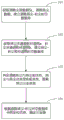
Fig. 1 is a schematic view of a method for accurately locating a pollution source by using deposited dust and fugitive dust according to the present invention;
fig. 2 is a detailed schematic view of a method for accurately positioning a pollution source by using deposited dust and raised dust according to the present invention.
Detailed Description
In order to make the technical means, the creation features, the achievement purposes and the effects of the invention easy to understand, the technical scheme of the invention is further explained by combining the embodiment and the attached drawings.
As used in the specification and in the claims, certain terms are used to refer to particular components. As one skilled in the art will appreciate, manufacturers may refer to a component by different names. This specification and claims do not intend to distinguish between components that differ in name but not function. In the following description and in the claims, the terms "include" and "comprise" are used in an open-ended fashion, and thus should be interpreted to mean "include, but not limited to. "substantially" means within an acceptable error range, and a person skilled in the art can solve the technical problem within a certain error range to substantially achieve the technical effect. The description which follows is a preferred embodiment of the present application, but is made for the purpose of illustrating the general principles of the application and not for the purpose of limiting the scope of the application. The protection scope of the present application shall be subject to the definitions of the appended claims.
Examples
The raise dust in the environment has multiple sources, for example road raise dust, yard raise dust, construction raise dust etc. different grade type, for accurate management, need carry out accurate judgement to various sources. The embodiment provides a method for accurately positioning a pollution source by utilizing accumulated dust and raised dust. Referring to fig. 1, a schematic diagram of a method for accurately positioning a pollution source by using deposited dust and flying dust according to the present invention is shown, including:
step 101: acquiring road dust load data SL and road dust data (including dust Total Suspended Particulate matter concentration, PM2.5, PM10 and the like), uploading the data to a cloud platform through a central control module, and establishing a road dust-dust accumulation time-space database, wherein the road dust data comprises PM2.5, PM10 and Total Suspended Particulate matter (TSP);
step 102: acquiring a dust emission multi-channel particulate particle size spectrogram a and a dust accumulation multi-channel particulate particle size spectrogram b, uploading data of a and b to a cloud platform through a central control module, and establishing a dust emission-dust accumulation multi-channel particulate particle size spectrogram time-space database;
step 103: judging the correlation between road dust deposit and the flying dust according to a flying dust-dust deposit particle size spectrogram time-space database, judging the correlation between the flying dust and a flying dust total type library, and deducing the type of the flying dust pollution;
step 104: and determining a pollution source according to the positioning information in the road dust-laying space-time database.
The total type library of the flying dust contains particle size spectrograms of various pollution types, such as a construction flying dust particle size spectrogram, a yard flying dust particle size spectrogram and the like.
1) the road dust load monitoring device is generally installed at the bottom of a social vehicle, a sampling port is attached to the ground, dust near the ground is monitored in a fan or air pump negative pressure adsorption mode, and monitoring data are uploaded to a cloud platform according to a certain frequency.
2) The road raise dust-dust accumulation space-time database information comprises: time, longitude and latitude, belonged area, road name, dust load, vehicle-mounted speed and the like.
Further, step 102 comprises:
1) in order to obtain a grain size spectrogram a of the multi-channel dust particulate matter, the concentration of the multi-channel dust particulate matter needs to be monitored, a multi-channel particulate matter sensor is generally installed at the top of a social vehicle, a sampling port is located at the top of the vehicle, the dust is collected in a negative pressure mode, the concentration of the particulate matter in a 31 channel in TSP can be monitored simultaneously, and monitoring data are uploaded to a cloud platform every second;
2) in order to obtain a multi-channel particle size spectrogram b of the accumulated dust, the concentration of road dust and multi-channel particles needs to be monitored, a multi-channel particle sensor is generally arranged in a vehicle, a sampling port is arranged at the sampling port of a road dust accumulation load device, road raised dust caused by road accumulated dust rolled up by the vehicle is collected in a negative pressure mode, the concentration of the particles in a 31 channel in TSP can be monitored simultaneously, and monitoring data are uploaded to a cloud platform according to certain frequency;
3) the flying dust-accumulated dust particle size spectrogram time-space database information comprises: time, longitude and latitude, belonged area, road name, concentration of multi-channel particulate matter, vehicle-mounted speed and the like.
For further illustration of the present invention, step 103 can be seen in detail in fig. 2, which specifically includes:
step 301: according to the road dust-laying time database, whether the road dust load SL is greater than a threshold Y1 (for example, 0.5-1.5 g/m) is judged2) If the value is larger than the threshold value Y1, the pollution type of the flying dust is inferred to at least comprise the road flying dust, and the step 303 is carried out; if the value is less than the threshold value Y1, it is inferred that the pollution type of the flying dust does not contain the bag road flying dust, and the step 302 is carried out.
Step 302: judging whether the raised dust is strongly related to a raised dust total type library, specifically, judging whether the similarity N (%) between the particle size spectrogram of the raised dust multi-channel particulate matter a and the particle size spectrogram of the raised dust total type library is greater than a threshold Y2 (for example, 50% -80%) or not according to the particle size spectrogram a of the raised dust multi-channel particulate matter, and if the similarity N (%) is greater than the threshold Y2, entering step 305; if less than the threshold Y2, go to step 306;
step 303: calculating the suspension coefficient K of the total suspended particles, and judging whether K is greater than a threshold value Y3, wherein the concentration of the total suspended particles in the raised dust is c, the concentration of the total suspended particles in the road accumulated dust is d, and the suspension coefficient K = c/d of the total suspended particles is unit of c/d . If K is greater than the threshold Y3 (e.g., 0.2-0.5), then go to
 step 304, otherwise go to step 302;
step 304: and judging whether the dust deposition-flying dust has strong correlation or not according to a time-space database of a grain size spectrogram of the flying dust-dust deposition multi-channel particulate matter. Specifically, similarity M (%) of a particle size spectrum a and b of the raise dust-dust deposited multi-channel particulate matter is calculated, if M is larger than a threshold value Y4 (for example, 50% -80%), it is inferred that contribution of road raise dust to raise dust is large, at the moment, the correlation is strong, step 307 is entered, if the correlation is general or poor, it is inferred that the road raise dust is not a main pollution type, and other types are transferred to step 302 for further judgment.
Step 305: and deducing one or more possible dust pollution types such as construction dust, yard dust and the like according to comparison with the total dust type library.
Step 306: and updating the type which is weaker in relation to the total type library of the dust emission into the existing total type library of the dust emission.
Step 307: road dusting is inferred to be the dominant type of pollution.
The sequence of the above embodiments is only for convenience of description and does not represent the advantages and disadvantages of the embodiments.
Finally, it should be noted that: the above examples are only intended to illustrate the technical solution of the present invention, but not to limit it; although the present invention has been described in detail with reference to the foregoing embodiments, it will be understood by those of ordinary skill in the art that: the technical solutions described in the foregoing embodiments may still be modified, or some technical features may be equivalently replaced; and such modifications or substitutions do not depart from the spirit and scope of the corresponding technical solutions of the embodiments of the present invention.
Claims (9)
1. A method for accurately positioning a pollution source by using accumulated dust and raised dust is characterized by comprising the following steps:
acquiring road dust load data SL and road raise dust data, uploading the data to a cloud platform through a central control module, and establishing a road raise dust-dust accumulation time-space database;
acquiring a dust emission multi-channel particulate particle size spectrogram a and a dust accumulation multi-channel particulate particle size spectrogram b, uploading data of a and b to a cloud platform through a central control module, and establishing a dust emission-dust accumulation multi-channel particulate particle size spectrogram time-space database;
judging the correlation between road dust deposit and the raise dust according to the time-space database of the grain size spectrogram of the raise dust-dust deposit multi-channel particulate matter, judging the correlation between the total type database of the raise dust and the raise dust, and deducing the pollution type of the raise dust; and
determining a pollution source according to the positioning information in the road raise dust-dust accumulation space-time database;
wherein, the dust total type library contains particle size spectrograms of various pollution types.
2. The method for accurately locating a pollution source by using dust deposition and raise dust according to claim 1, wherein before the step of determining the correlation between road dust deposition and raise dust, whether the road dust load SL is greater than a threshold Y1 is determined according to the road dust-dust deposition time-space database, and if the road dust load SL is greater than the threshold Y1, the pollution type of the raise dust is inferred to at least include the road raise dust; if less than the threshold Y1, it is concluded that the pollution type of fugitive dust does not contain bag road fugitive dust.
3. The method of claim 2, wherein after determining that the pollution type at least includes road raise dust, calculating a suspension coefficient K of the total suspended particles, and determining whether K is greater than a threshold Y3, if K is greater than a threshold Y3, continuing to determine whether the road raise dust is strongly correlated with the raise dust, wherein K = c/d, c is the total suspended particle concentration of the raise dust, and d is the total suspended particle concentration of the road raise dust.
4. The method for accurately locating a pollution source by utilizing dust accumulation and dust emission according to claim 3, wherein the step of judging whether the road dust accumulation and the dust emission have strong correlation comprises the following steps: and calculating the similarity M (%) of the particle size spectrograms a and b of the raised dust-accumulated multi-channel particulate matters, if M is greater than a threshold value Y4, deducing that the contribution of the road raised dust to the raised dust is large, the correlation is strong, and judging that the pollution type is the road raised dust.
5. The method for accurately locating a pollution source by utilizing dust deposition and raise dust according to claim 4, wherein the dust and raise dust total type library correlation step comprises: when the road dust load SL is less than or equal to a threshold Y1, or the suspension coefficient K of the total suspended particulate matters is less than or equal to a threshold Y3, or the similarity M is less than or equal to a threshold Y4, judging whether the similarity N (%) between the a and the particle size spectrogram of the dust total type library is greater than a threshold Y2 according to the dust multi-channel particulate matter particle size spectrogram a, if so, judging that the similarity is strong, and obtaining the corresponding pollution type according to comparison.
6. The method for accurately locating a pollution source by utilizing dust deposition and raise dust according to claim 5, wherein the dust and raise dust total type library correlation step comprises: and when the similarity N is less than or equal to the threshold value, Y2 judges that the correlation is weak, and updates the type used for comparison into the existing dust total type library.
7. The method for accurately locating a pollution source by using accumulated dust and fugitive dust according to claim 1, wherein the road fugitive dust data includes, but is not limited to fugitive dust total suspended particulate matter concentration, PM2.5, PM 10.
8. The method for accurately locating a pollution source by using dust deposition and raise dust according to claim 1, wherein the road raise dust-dust deposition time and space database information includes but is not limited to time, longitude and latitude, belonging area, road name, dust load, vehicle speed; the flying dust-accumulated dust particle size spectrogram time-space database information comprises but is not limited to time, longitude and latitude, belonging area, road name, dust load and vehicle-mounted speed.
9. The method for accurately locating a pollution source by utilizing accumulated dust and fugitive dust according to claim 1, wherein the particle size spectrum type contained in the total fugitive dust type library includes but is not limited to construction fugitive dust, yard fugitive dust, road fugitive dust.
Priority Applications (1)
| Application Number | Priority Date | Filing Date | Title |
|---|---|---|---|
| CN202110708037.XA CN113420102B (en) | 2021-06-25 | 2021-06-25 | Method for accurately positioning pollution source by using accumulated dust and raised dust |
Applications Claiming Priority (1)
| Application Number | Priority Date | Filing Date | Title |
|---|---|---|---|
| CN202110708037.XA CN113420102B (en) | 2021-06-25 | 2021-06-25 | Method for accurately positioning pollution source by using accumulated dust and raised dust |
Publications (2)
| Publication Number | Publication Date |
|---|---|
| CN113420102A true CN113420102A (en) | 2021-09-21 |
| CN113420102B CN113420102B (en) | 2022-08-23 |
Family
ID=77716584
Family Applications (1)
| Application Number | Title | Priority Date | Filing Date |
|---|---|---|---|
| CN202110708037.XA Active CN113420102B (en) | 2021-06-25 | 2021-06-25 | Method for accurately positioning pollution source by using accumulated dust and raised dust |
Country Status (1)
| Country | Link |
|---|---|
| CN (1) | CN113420102B (en) |
Citations (11)
| Publication number | Priority date | Publication date | Assignee | Title |
|---|---|---|---|---|
| CN103454203A (en) * | 2013-09-09 | 2013-12-18 | 中国科学院合肥物质科学研究院 | Real-time online measurement system and method of particle size and chemical components of atmospheric particulate |
| CN107944213A (en) * | 2017-11-24 | 2018-04-20 | 天津聚研环保科技有限公司 | The online Source Apportionments of PMF, system, terminal device and computer-readable recording medium |
| CN109596487A (en) * | 2018-11-23 | 2019-04-09 | 潘小乐 | A kind of high-lager building engineering fugitive dust source tracing method |
| US20190113445A1 (en) * | 2017-10-16 | 2019-04-18 | Weimin Zhang | Air pollution monitoring system and air pollution monitoring method |
| CN110991930A (en) * | 2019-12-18 | 2020-04-10 | 天津玺腾龙科技发展有限公司 | Method for calculating dust load grade of road section |
| CN111024565A (en) * | 2019-09-18 | 2020-04-17 | 山东诺方电子科技有限公司 | Pavement dust accumulation load monitoring system based on laser dust sensor |
| CN111241720A (en) * | 2020-04-27 | 2020-06-05 | 北京英视睿达科技有限公司 | Modeling method and device of road raise dust model |
| CN111522893A (en) * | 2020-03-21 | 2020-08-11 | 河南大学 | Method for preparing high-spatial-temporal-resolution road dust source emission list |
| CN111798932A (en) * | 2020-07-03 | 2020-10-20 | 中科三清科技有限公司 | Pollutant monitoring data processing method and device, storage medium and terminal |
| WO2021056160A1 (en) * | 2019-09-23 | 2021-04-01 | 广州禾信仪器股份有限公司 | Source tracing method for contamination of vocs |
| CN112967764A (en) * | 2021-03-30 | 2021-06-15 | 河北先河环保科技股份有限公司 | Multi-technology coupled pollutant source analysis method and device |
-
2021
- 2021-06-25 CN CN202110708037.XA patent/CN113420102B/en active Active
Patent Citations (11)
| Publication number | Priority date | Publication date | Assignee | Title |
|---|---|---|---|---|
| CN103454203A (en) * | 2013-09-09 | 2013-12-18 | 中国科学院合肥物质科学研究院 | Real-time online measurement system and method of particle size and chemical components of atmospheric particulate |
| US20190113445A1 (en) * | 2017-10-16 | 2019-04-18 | Weimin Zhang | Air pollution monitoring system and air pollution monitoring method |
| CN107944213A (en) * | 2017-11-24 | 2018-04-20 | 天津聚研环保科技有限公司 | The online Source Apportionments of PMF, system, terminal device and computer-readable recording medium |
| CN109596487A (en) * | 2018-11-23 | 2019-04-09 | 潘小乐 | A kind of high-lager building engineering fugitive dust source tracing method |
| CN111024565A (en) * | 2019-09-18 | 2020-04-17 | 山东诺方电子科技有限公司 | Pavement dust accumulation load monitoring system based on laser dust sensor |
| WO2021056160A1 (en) * | 2019-09-23 | 2021-04-01 | 广州禾信仪器股份有限公司 | Source tracing method for contamination of vocs |
| CN110991930A (en) * | 2019-12-18 | 2020-04-10 | 天津玺腾龙科技发展有限公司 | Method for calculating dust load grade of road section |
| CN111522893A (en) * | 2020-03-21 | 2020-08-11 | 河南大学 | Method for preparing high-spatial-temporal-resolution road dust source emission list |
| CN111241720A (en) * | 2020-04-27 | 2020-06-05 | 北京英视睿达科技有限公司 | Modeling method and device of road raise dust model |
| CN111798932A (en) * | 2020-07-03 | 2020-10-20 | 中科三清科技有限公司 | Pollutant monitoring data processing method and device, storage medium and terminal |
| CN112967764A (en) * | 2021-03-30 | 2021-06-15 | 河北先河环保科技股份有限公司 | Multi-technology coupled pollutant source analysis method and device |
Non-Patent Citations (2)
| Title |
|---|
| 王振等: "基于粒径谱分布的南京市区大气颗粒物来源解析", 《环境化学》 * |
| 陈卓文、黄海波: "道路扬尘扬散特性研究", 《机械制造》 * |
Also Published As
| Publication number | Publication date |
|---|---|
| CN113420102B (en) | 2022-08-23 |
Similar Documents
| Publication | Publication Date | Title |
|---|---|---|
| US10317226B2 (en) | System and method for pollution mapping from variations data | |
| US11781976B2 (en) | Methane peak detection | |
| US20130047704A1 (en) | Multi-functional vehicle for measuring air pollution | |
| CN113538072A (en) | Intelligent travel chain identification method and device for freight vehicle and electronic equipment | |
| CN110852542B (en) | Calculation method and system for road roughness | |
| CN113281231A (en) | Dynamic monitoring and analysis method of dust and particulate matter emissions from road network | |
| CN210221806U (en) | Pollution determination calibration vehicle and vehicle-mounted tail gas detection equipment thereof | |
| CN108827722B (en) | Unmanned aerial vehicle system and method for estimating PM overhead straight emission source intensity in industrial area | |
| CN103149060A (en) | Sampler for realizing automatic constant-speed constant-flow acquisition of particles having different particle sizes in flow gas | |
| CN111241720A (en) | Modeling method and device of road raise dust model | |
| Babaan et al. | Estimation of PM 2.5 vertical distribution using customized UAV and mobile sensors in Brgy. UP Campus, Diliman, Quezon City | |
| KR102360086B1 (en) | Fine dust measuring system, integrated management system and method for fine dust | |
| CN116577252A (en) | Atmospheric fine particle concentration measurement method, device, equipment and medium | |
| CN113420102B (en) | Method for accurately positioning pollution source by using accumulated dust and raised dust | |
| CN114264584B (en) | Vehicle-mounted mobile monitoring system and monitoring method | |
| CN114002381A (en) | Atmospheric pollution source-tracing diffusion analysis method and device | |
| CN109238987A (en) | A kind of multispectral vehicle exhaust monitoring device | |
| CN119251990B (en) | Unmanned aerial vehicle environment monitoring and disaster early warning system and method | |
| CN116994441B (en) | Traffic flow information data processing method and system | |
| CN119492664A (en) | A cruise monitoring device and source tracing method for emission potential of road dust particle size spectrum | |
| CN111855898B (en) | Method for calibrating parallelism of space distributed air quality navigation sensor | |
| Balanescu et al. | An algorithm to improve data accuracy of PMs concentration measured with IoT devices | |
| Dimas | Assessment on road anomalies using smartphone sensor: A review | |
| WO2021117072A1 (en) | Dynamic mapping and method of tracking atmoshperic pollutants | |
| Brantley et al. | Mobile air monitoring data processing strategies and effects on spatial air pollution trends. |
Legal Events
| Date | Code | Title | Description |
|---|---|---|---|
| PB01 | Publication | ||
| PB01 | Publication | ||
| SE01 | Entry into force of request for substantive examination | ||
| SE01 | Entry into force of request for substantive examination | ||
| GR01 | Patent grant | ||
| GR01 | Patent grant |