CN113473181B - Video processing method and device, computer readable storage medium and computer equipment - Google Patents
Video processing method and device, computer readable storage medium and computer equipment Download PDFInfo
- Publication number
- CN113473181B CN113473181B CN202111033199.4A CN202111033199A CN113473181B CN 113473181 B CN113473181 B CN 113473181B CN 202111033199 A CN202111033199 A CN 202111033199A CN 113473181 B CN113473181 B CN 113473181B
- Authority
- CN
- China
- Prior art keywords
- frame
- target object
- video frame
- video
- intermediate cache
- Prior art date
- Legal status (The legal status is an assumption and is not a legal conclusion. Google has not performed a legal analysis and makes no representation as to the accuracy of the status listed.)
- Active
Links
- 238000003860 storage Methods 0.000 title claims abstract description 15
- 238000003672 processing method Methods 0.000 title abstract description 9
- 238000000034 method Methods 0.000 claims abstract description 54
- 230000002194 synthesizing effect Effects 0.000 claims abstract description 14
- 238000009877 rendering Methods 0.000 claims description 107
- 238000012545 processing Methods 0.000 claims description 47
- 239000002131 composite material Substances 0.000 claims description 44
- 230000009471 action Effects 0.000 claims description 40
- 238000001514 detection method Methods 0.000 claims description 24
- 230000011218 segmentation Effects 0.000 claims description 22
- 230000000873 masking effect Effects 0.000 claims description 9
- 238000007781 pre-processing Methods 0.000 claims description 8
- 238000004590 computer program Methods 0.000 claims description 6
- 230000000694 effects Effects 0.000 description 49
- 238000010586 diagram Methods 0.000 description 12
- 238000004891 communication Methods 0.000 description 11
- 230000008569 process Effects 0.000 description 9
- 238000005516 engineering process Methods 0.000 description 7
- 230000006870 function Effects 0.000 description 7
- 230000000717 retained effect Effects 0.000 description 4
- 241001465754 Metazoa Species 0.000 description 3
- 239000000203 mixture Substances 0.000 description 3
- 230000000007 visual effect Effects 0.000 description 3
- 210000000746 body region Anatomy 0.000 description 2
- 238000013527 convolutional neural network Methods 0.000 description 2
- 238000005034 decoration Methods 0.000 description 2
- 238000006073 displacement reaction Methods 0.000 description 2
- 239000011521 glass Substances 0.000 description 2
- 230000002452 interceptive effect Effects 0.000 description 2
- 239000003550 marker Substances 0.000 description 2
- 238000012986 modification Methods 0.000 description 2
- 230000004048 modification Effects 0.000 description 2
- 230000003287 optical effect Effects 0.000 description 2
- 230000003068 static effect Effects 0.000 description 2
- RTAQQCXQSZGOHL-UHFFFAOYSA-N Titanium Chemical compound [Ti] RTAQQCXQSZGOHL-UHFFFAOYSA-N 0.000 description 1
- 230000003190 augmentative effect Effects 0.000 description 1
- 230000003796 beauty Effects 0.000 description 1
- 230000005540 biological transmission Effects 0.000 description 1
- 230000001413 cellular effect Effects 0.000 description 1
- 230000008859 change Effects 0.000 description 1
- 238000005520 cutting process Methods 0.000 description 1
- 238000013135 deep learning Methods 0.000 description 1
- 238000000605 extraction Methods 0.000 description 1
- 230000003993 interaction Effects 0.000 description 1
- 230000000670 limiting effect Effects 0.000 description 1
- 230000004807 localization Effects 0.000 description 1
- 238000004519 manufacturing process Methods 0.000 description 1
- 230000000750 progressive effect Effects 0.000 description 1
- 230000002829 reductive effect Effects 0.000 description 1
- 230000004044 response Effects 0.000 description 1
- 239000004576 sand Substances 0.000 description 1
- 238000000926 separation method Methods 0.000 description 1
- 238000012549 training Methods 0.000 description 1
- 238000012546 transfer Methods 0.000 description 1
Images







Classifications
-
- H—ELECTRICITY
- H04—ELECTRIC COMMUNICATION TECHNIQUE
- H04N—PICTORIAL COMMUNICATION, e.g. TELEVISION
- H04N21/00—Selective content distribution, e.g. interactive television or video on demand [VOD]
- H04N21/20—Servers specifically adapted for the distribution of content, e.g. VOD servers; Operations thereof
- H04N21/23—Processing of content or additional data; Elementary server operations; Server middleware
- H04N21/234—Processing of video elementary streams, e.g. splicing of video streams or manipulating encoded video stream scene graphs
- H04N21/23424—Processing of video elementary streams, e.g. splicing of video streams or manipulating encoded video stream scene graphs involving splicing one content stream with another content stream, e.g. for inserting or substituting an advertisement
-
- H—ELECTRICITY
- H04—ELECTRIC COMMUNICATION TECHNIQUE
- H04N—PICTORIAL COMMUNICATION, e.g. TELEVISION
- H04N21/00—Selective content distribution, e.g. interactive television or video on demand [VOD]
- H04N21/20—Servers specifically adapted for the distribution of content, e.g. VOD servers; Operations thereof
- H04N21/23—Processing of content or additional data; Elementary server operations; Server middleware
- H04N21/234—Processing of video elementary streams, e.g. splicing of video streams or manipulating encoded video stream scene graphs
- H04N21/23406—Processing of video elementary streams, e.g. splicing of video streams or manipulating encoded video stream scene graphs involving management of server-side video buffer
-
- H—ELECTRICITY
- H04—ELECTRIC COMMUNICATION TECHNIQUE
- H04N—PICTORIAL COMMUNICATION, e.g. TELEVISION
- H04N21/00—Selective content distribution, e.g. interactive television or video on demand [VOD]
- H04N21/40—Client devices specifically adapted for the reception of or interaction with content, e.g. set-top-box [STB]; Operations thereof
- H04N21/43—Processing of content or additional data, e.g. demultiplexing additional data from a digital video stream; Elementary client operations, e.g. monitoring of home network or synchronising decoder's clock; Client middleware
- H04N21/44—Processing of video elementary streams, e.g. splicing a video clip retrieved from local storage with an incoming video stream or rendering scenes according to encoded video stream scene graphs
- H04N21/44004—Processing of video elementary streams, e.g. splicing a video clip retrieved from local storage with an incoming video stream or rendering scenes according to encoded video stream scene graphs involving video buffer management, e.g. video decoder buffer or video display buffer
-
- H—ELECTRICITY
- H04—ELECTRIC COMMUNICATION TECHNIQUE
- H04N—PICTORIAL COMMUNICATION, e.g. TELEVISION
- H04N21/00—Selective content distribution, e.g. interactive television or video on demand [VOD]
- H04N21/40—Client devices specifically adapted for the reception of or interaction with content, e.g. set-top-box [STB]; Operations thereof
- H04N21/43—Processing of content or additional data, e.g. demultiplexing additional data from a digital video stream; Elementary client operations, e.g. monitoring of home network or synchronising decoder's clock; Client middleware
- H04N21/44—Processing of video elementary streams, e.g. splicing a video clip retrieved from local storage with an incoming video stream or rendering scenes according to encoded video stream scene graphs
- H04N21/44016—Processing of video elementary streams, e.g. splicing a video clip retrieved from local storage with an incoming video stream or rendering scenes according to encoded video stream scene graphs involving splicing one content stream with another content stream, e.g. for substituting a video clip
Landscapes
- Engineering & Computer Science (AREA)
- Multimedia (AREA)
- Signal Processing (AREA)
- Business, Economics & Management (AREA)
- Marketing (AREA)
- Two-Way Televisions, Distribution Of Moving Picture Or The Like (AREA)
- Processing Or Creating Images (AREA)
Abstract
The embodiment of the disclosure provides a video processing method and device, a computer readable storage medium and computer equipment, wherein the method comprises the following steps: acquiring a target object from a first video frame in a video, and generating an intermediate cache frame comprising the target object in the first video frame; acquiring at least one frame of second video frame in the video, wherein each frame of second video frame is positioned behind the first video frame and also comprises the target object; and respectively synthesizing the intermediate cache frame with each frame of the second video frame to obtain a synthesized frame corresponding to each frame of the second video frame, wherein the synthesized frame corresponding to one frame of the second video frame comprises a target object included in the second video frame and a target object included in the intermediate cache frame.
Description
Technical Field
The present disclosure relates to the field of video processing technologies, and in particular, to a video processing method and apparatus, a computer-readable storage medium, and a computer device.
Background
In the conventional special effect rendering, a background segmentation is generally adopted to separate a target object from a background area in a video frame and replace background information in the video frame, and the processing mode is monotonous, and the display effect of a processing result is relatively single. Therefore, there is a need for improving the way special effects are rendered in video.
Disclosure of Invention
In a first aspect, an embodiment of the present disclosure provides a video processing method, where the method includes: acquiring a target object from a first video frame in a video, and generating an intermediate cache frame comprising the target object in the first video frame; acquiring at least one frame of second video frame in the video, wherein each frame of second video frame is positioned behind the first video frame and also comprises the target object; and respectively synthesizing the intermediate cache frame with each frame of the second video frame to obtain a synthesized frame corresponding to each frame of the second video frame, wherein the synthesized frame corresponding to one frame of the second video frame comprises a target object included in the second video frame and a target object included in the intermediate cache frame.
According to the method and the device for displaying the body and the body, the target object in the first video frame is drawn on the middle cache frame, the middle cache frame is combined with the multiple frames of second video frames behind the first video frame in the target video frame, and the body can be displayed in each combined frame at the same time. The body refers to a target object included in the second video frame before the second video frame is synthesized, and the body is a target object included in the intermediate cache frame. Since the body in each composite frame is from the same first video frame, the motion of the body in each composite frame remains unchanged. Under the condition that the body action in each second video frame dynamically changes, the multi-frame body-splitting rendering special effect including the fixed and unchangeable body and the dynamically changed body can be generated according to the embodiment of the disclosure. Compared with a mode of simply replacing a background area in the related technology, the video processing mode can improve interestingness in the special effect rendering process and diversity of special effect rendering results.
In some embodiments, before the generating the intermediate buffer frame including the target object in the first video frame, further comprises: detecting that the rendering condition is satisfied includes at least one of: the total number of the target objects which are rendered to the intermediate cache frame meets a set number condition; the frame interval between the first video frame and the video frame to which the target object rendered to the intermediate cache frame at the last time belongs meets the set frame number interval condition; the similarity between the action of the target object in the first video frame and the action of the target object rendered to the intermediate cache frame last time meets a set similarity condition; the overlapping degree between the target object in the first video frame and the target object rendered to the intermediate cache frame last time meets a set overlapping degree condition; and rendering the target object to the intermediate cache frame for a number of times meeting a set number condition. The embodiment of the disclosure can automatically trigger the video processing flow for generating the body-divided rendering special effect based on the rendering condition.
In some embodiments, before generating the intermediate buffer frame including the target object in the first video frame, further comprising: and determining a frame interval between the first video frame and a video frame to which a target object rendered to the intermediate cache frame belongs at the last time when detecting that the total number of the target objects rendered to the intermediate cache frame is smaller than a set number threshold, wherein the frame interval is equal to a set frame number.
In some embodiments, the method further comprises: and under the condition that the similarity between the background area in the second video frame and the background area in the first video frame is detected to be not in accordance with the set similarity condition, acquiring a target object from the new first video frame, and returning to the step of generating an intermediate cache frame comprising the target object in the first video frame. According to the embodiment, the target object in the intermediate buffer frame for synthesizing with the plurality of second video frames meeting the similarity condition is from the same first video frame, so that the synthesized frames synthesized by the plurality of second video frames meeting the similarity condition comprise the same body, and the synthesized frames synthesized by the plurality of second video frames not meeting the similarity condition comprise different bodies.
In some embodiments, before the intermediate buffer frame is respectively combined with the second video frame of each frame, the method further comprises: and preprocessing the target object in the intermediate cache frame to obtain a preprocessed target object, wherein the attribute of the preprocessed target object is different from the attribute of the target object in the intermediate cache frame. By the embodiment, different attributes of the body can be obtained, so that the body can show different display effects in the composite frame, and the interestingness in the special effect rendering process and the diversity of special effect rendering results are further improved.
In some embodiments, the method further comprises: determining an action category of a first target object among target objects included in the composite frame; rendering an associated object for the first target object based on the action category of the first target object and displaying the associated object in the composite frame. By rendering the associated object, the synthesized video frame can display richer special effects, so that the diversity and the interestingness of the video processing result are further improved.
In some embodiments, the method further comprises: identifying subtitle information in the first video frame; rendering an associated object for a target object in the intermediate cache frame included in the composite frame based on the subtitle information, and displaying the associated object in the composite frame. By rendering the associated object, the synthesized video frame can display richer special effects, so that the diversity and the interestingness of the video processing result are further improved.
In some embodiments, the target object included in the first video frame is an object within a preset position range in the first video frame; or the target object included in the first video frame is an object occupying more than a preset number of pixels in the first video frame; or the target object included in the first video frame is an object of which the similarity with a preset object in the first video frame is greater than a preset similarity threshold.
In some embodiments, the obtaining the target object from a first video frame in the video includes: performing target detection on the first video frame to obtain a detection result; performing background segmentation on the first video frame based on the detection result to obtain a mask of a target object in the first video frame; and performing masking processing on the first video frame based on a mask of a target object in the first video frame, and segmenting the target object from the video frame based on a masking processing result. By carrying out target detection, special effect rendering is carried out without depending on a green curtain, the accuracy of background segmentation is improved, and meanwhile, a user can conveniently realize video processing through terminal equipment such as a mobile phone at any time and any place.
In some embodiments, the generating an intermediate buffer frame comprising a target object in the first video frame comprises: rendering the target object in the first video frame to an intermediate cache frame after clearing the designated object on the intermediate cache frame.
In some embodiments, the designated object includes all target objects rendered on the intermediate cache frame, or the designated object includes a target object rendered earliest to the intermediate cache frame, or the designated object includes a target object rendered to the intermediate cache frame for a duration greater than a preset duration.
In a second aspect, an embodiment of the present disclosure provides a video processing apparatus, including: the generating module is used for acquiring a target object from a first video frame in a video and generating an intermediate cache frame comprising the target object in the first video frame; the acquisition module is used for acquiring at least one frame of second video frame in the video, wherein each frame of second video frame is positioned behind the first video frame and also comprises the target object; and the synthesizing module is used for synthesizing the intermediate cache frame with each frame of the second video frame to obtain a synthesized frame corresponding to each frame of the second video frame, wherein the synthesized frame corresponding to one frame of the second video frame comprises a target object included in the second video frame and a target object included in the intermediate cache frame.
According to the method and the device for displaying the body and the body, the target object in the first video frame is drawn on the middle cache frame, the middle cache frame is combined with the multiple frames of second video frames behind the first video frame in the target video frame, and the body can be displayed in each combined frame at the same time. The body refers to a target object included in the second video frame before the second video frame is synthesized, and the body is a target object included in the intermediate cache frame. Since the body in each composite frame is from the same first video frame, the motion of the body in each composite frame remains unchanged. Under the condition that the body action in each second video frame dynamically changes, the multi-frame body-splitting rendering special effect including the fixed and unchangeable body and the dynamically changed body can be generated according to the embodiment of the disclosure. Compared with a mode of simply replacing a background area in the related technology, the video processing mode can improve interestingness in the special effect rendering process and diversity of special effect rendering results.
In some embodiments, the generation module is further to: prior to generating an intermediate buffer frame comprising a target object in the first video frame, detecting that a rendering condition is satisfied comprises at least one of: the total number of the target objects which are rendered to the intermediate cache frame meets a set number condition; the frame interval between the first video frame and the video frame to which the target object rendered to the intermediate cache frame at the last time belongs meets the set frame number interval condition; the similarity between the action of the target object in the first video frame and the action of the target object rendered to the intermediate cache frame last time meets a set similarity condition; the overlapping degree between the target object in the first video frame and the target object rendered to the intermediate cache frame last time meets a set overlapping degree condition; and rendering the target object to the intermediate cache frame for a number of times meeting a set number condition. The embodiment of the disclosure can automatically trigger the video processing flow for generating the body-divided rendering special effect based on the rendering condition.
In some embodiments, the generation module is further to: before generating an intermediate cache frame comprising target objects in the first video frame, detecting that the total number of the target objects rendered to the intermediate cache frame is smaller than a set number threshold, and determining a frame interval between the first video frame and a video frame to which the target objects rendered to the intermediate cache frame last belong, wherein the frame interval is equal to a set frame number.
In some embodiments, the apparatus further comprises: and the target object acquisition module is used for acquiring a target object from a new first video frame and returning to execute the function of the generation module under the condition that the similarity between the background area in the second video frame and the background area in the first video frame is detected to be not in accordance with the set similarity condition. According to the embodiment, the target object in the intermediate buffer frame for synthesizing with the plurality of second video frames meeting the similarity condition is from the same first video frame, so that the synthesized frames synthesized by the plurality of second video frames meeting the similarity condition comprise the same body, and the synthesized frames synthesized by the plurality of second video frames not meeting the similarity condition comprise different bodies.
In some embodiments, the apparatus further comprises: and the preprocessing module is used for preprocessing the target object in the intermediate cache frame to obtain a preprocessed target object, and the attribute of the preprocessed target object is different from that of the target object in the intermediate cache frame. By the embodiment, different attributes of the body can be obtained, so that the body can show different display effects in the composite frame, and the interestingness in the special effect rendering process and the diversity of special effect rendering results are further improved.
In some embodiments, the apparatus further comprises: an action category determination module for determining an action category of a first target object among the target objects included in the composite frame; and the first associated object rendering module is used for rendering the associated object for the first target object based on the action category of the first target object and displaying the associated object in the synthesized frame. By rendering the associated object, the synthesized video frame can display richer special effects, so that the diversity and the interestingness of the video processing result are further improved.
In some embodiments, the apparatus further comprises: the caption information identification module is used for identifying the caption information in the first video frame; and the second associated object rendering module is used for rendering an associated object for a target object in the intermediate cache frame included in the composite frame based on the subtitle information and displaying the associated object in the composite frame. By rendering the associated object, the synthesized video frame can display richer special effects, so that the diversity and the interestingness of the video processing result are further improved.
In some embodiments, the target object included in the first video frame is an object within a preset position range in the first video frame; or the target object included in the first video frame is an object occupying more than a preset number of pixels in the first video frame; or the target object included in the first video frame is an object of which the similarity with a preset object in the first video frame is greater than a preset similarity threshold.
In some embodiments, the generating module comprises: the video detection unit is used for carrying out target detection on the first video frame to obtain a detection result; a background segmentation unit, configured to perform background segmentation on the first video frame based on the detection result to obtain a mask of a target object in the first video frame; and the mask processing unit is used for performing mask processing on the first video frame based on a mask of a target object in the first video frame, and dividing the target object from the video frame based on a mask processing result. By carrying out target detection, special effect rendering is carried out without depending on a green curtain, the accuracy of background segmentation is improved, and meanwhile, a user can conveniently realize video processing through terminal equipment such as a mobile phone at any time and any place.
In some embodiments, the generation module is to: rendering the target object in the first video frame to an intermediate cache frame after clearing the designated object on the intermediate cache frame.
In some embodiments, the designated object includes all target objects rendered on the intermediate cache frame, or the designated object includes a target object rendered earliest to the intermediate cache frame, or the designated object includes a target object rendered to the intermediate cache frame for a duration greater than a preset duration.
In a third aspect, the embodiments of the present disclosure provide a computer-readable storage medium, on which a computer program is stored, which when executed by a processor implements the method according to any of the embodiments.
In a fourth aspect, embodiments of the present disclosure provide a computer device, including a memory, a processor, and a computer program stored on the memory and executable on the processor, the processor implementing the method of any embodiment when executing the program.
It is to be understood that both the foregoing general description and the following detailed description are exemplary and explanatory only and are not restrictive of the disclosure.
Drawings
The accompanying drawings, which are incorporated in and constitute a part of this specification, illustrate embodiments consistent with the present disclosure and, together with the description, serve to explain the principles of the disclosure.
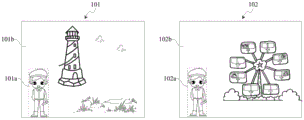
Fig. 1 is a schematic diagram of a video processing method in the related art.
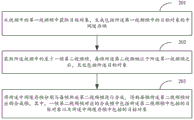
Fig. 2 is a flow chart of a video processing method of an embodiment of the present disclosure.
Fig. 3 is a schematic diagram of determining an avatar rendering condition according to an embodiment of the present disclosure.
Fig. 4A and 4B are schematic diagrams of an intermediate buffer frame according to an embodiment of the disclosure.
Fig. 5 is a schematic diagram of a correspondence relationship between an intermediate buffer frame and a video frame according to an embodiment of the present disclosure.
Fig. 6A and 6B are schematic diagrams of rendering an associated object based on an action according to an embodiment of the present disclosure, respectively.
Fig. 7 is a schematic diagram of rendering an associated object based on subtitle information according to an embodiment of the present disclosure.
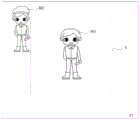
Fig. 8 is a schematic diagram of determining a target object according to an embodiment of the present disclosure.
Fig. 9A is a schematic illustration of background segmentation in an embodiment of the disclosure.
Fig. 9B is a schematic diagram of a masking process of an embodiment of the present disclosure.
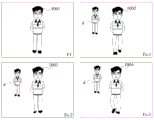
Fig. 10 is a schematic diagram of a synthesized multi-frame second video frame of an embodiment of the present disclosure.
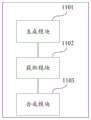
Fig. 11 is a block diagram of a video processing apparatus of an embodiment of the present disclosure.
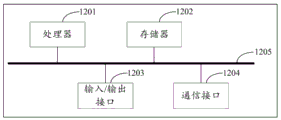
Fig. 12 is a schematic structural diagram of a computer device according to an embodiment of the present disclosure.
Detailed Description
Reference will now be made in detail to the exemplary embodiments, examples of which are illustrated in the accompanying drawings. When the following description refers to the accompanying drawings, like numbers in different drawings represent the same or similar elements unless otherwise indicated. The implementations described in the exemplary embodiments below are not intended to represent all implementations consistent with the present disclosure. Rather, they are merely examples of apparatus and methods consistent with certain aspects of the present disclosure, as detailed in the appended claims.
The terminology used in the present disclosure is for the purpose of describing particular embodiments only and is not intended to be limiting of the disclosure. As used in this disclosure and the appended claims, the singular forms "a," "an," and "the" are intended to include the plural forms as well, unless the context clearly indicates otherwise. It should also be understood that the term "and/or" as used herein refers to and encompasses any and all possible combinations of one or more of the associated listed items. In addition, the term "at least one" herein means any one of a plurality or any combination of at least two of a plurality.
It is to be understood that although the terms first, second, third, etc. may be used herein to describe various information, such information should not be limited to these terms. These terms are only used to distinguish one type of information from another. For example, first information may also be referred to as second information, and similarly, second information may also be referred to as first information, without departing from the scope of the present disclosure. The word "if" as used herein may be interpreted as "at … …" or "when … …" or "in response to a determination", depending on the context.
In order to make the technical solutions in the embodiments of the present disclosure better understood and make the above objects, features and advantages of the embodiments of the present disclosure more comprehensible, the technical solutions in the embodiments of the present disclosure are described in further detail below with reference to the accompanying drawings.
In the related art, a target object and a background region in a video frame are generally separated by using background segmentation, and the background region in the video frame is replaced. As shown in fig. 1, the video frame 101 includes a main body region 101a and a background region 101b, where the main body region 101a refers to a region including a target object, which may be a person, an animal or other specific object, or may be a part of a person or an animal, such as a human face. By replacing the background area in the video frame 101, the video frame 102 can be obtained, wherein the main area 102a of the video frame 102 is the same as the main area 101a of the video frame 101, and the background area 102b of the video frame 102 is different from the background area 101b of the video frame 101. However, the above processing method is tedious and often difficult to satisfy the authoring requirement of the user.
Based on this, the disclosed embodiment provides a video processing method, as shown in fig. 2, the method may include:
step 201: acquiring a target object from a first video frame in a video, and generating an intermediate cache frame comprising the target object in the first video frame;
step 202: acquiring at least one frame of second video frame in the video, wherein each frame of second video frame is positioned behind the first video frame and also comprises the target object;
step 203: and respectively synthesizing the intermediate cache frame with each frame of the second video frame to obtain a synthesized frame corresponding to each frame of the second video frame, wherein the synthesized frame corresponding to one frame of the second video frame comprises a target object included in the second video frame and a target object included in the intermediate cache frame.
The method disclosed by the embodiment of the disclosure can be used for processing the video collected in real time and can also be used for processing the video collected in advance and cached. The video frames in the video may include continuously captured video frames, or may include discontinuous video frames, where the discontinuity may be caused by video cropping, video splicing, or the like. The method can be applied to a terminal device or a server with video processing capability. The terminal device may include, but is not limited to, a mobile phone, a tablet Computer, a Personal Computer (PC), and the like. The server may be a single server device or a server cluster composed of a plurality of server devices. In some embodiments, software products such as an application program (APP), an applet, or a web client for performing video processing may be installed on a terminal device, and the methods of the embodiments of the present disclosure may be performed by these software products.
In one possible application scenario, the software product may be a live-broadcast software product. The anchor user can install a client (called an anchor client) on the mobile phone, execute the method of the embodiment of the disclosure through the anchor client to obtain a composite frame, upload the composite frame to a live broadcast server, and send the composite frame to a client (called a viewer client) of a user watching the live broadcast by the live broadcast server. In another possible application scenario, the software product may be a beauty software product. The user can install a client on the mobile phone, the client calls a camera of the mobile phone to collect the video frames, the method of the embodiment of the disclosure is executed on the video frames through the client to obtain the composite frames, and the composite frames are output. Those skilled in the art will appreciate that the above-described application scenarios are merely illustrative and are not intended to limit the present disclosure.
According to the method and the device for displaying the body and the body, the target object in the first video frame is drawn on the middle cache frame, the middle cache frame is combined with the multiple frames of second video frames behind the first video frame in the target video frame, and the body can be displayed in each combined frame at the same time. The body refers to a target object included in the second video frame before the second video frame is synthesized, and the body is a target object included in the intermediate cache frame. Since the body in each composite frame is from the same first video frame, the motion of the body in each composite frame remains unchanged. Under the condition that the body action in each second video frame dynamically changes, the multi-frame body-splitting rendering special effect including the fixed and unchangeable body and the dynamically changed body can be generated according to the embodiment of the disclosure. Compared with a mode of simply replacing a background area in the related technology, the video processing mode can improve interestingness in the special effect rendering process and diversity of special effect rendering results.
In step 201, a video frame including the target object detected for the first time may be used as the first video frame, a video frame including the target object detected for the first time after receiving the video processing instruction may be used as the first video frame, a video frame including the target object detected within a specified number range may be used as the first video frame, or the first video frame may be determined based on other conditions. The first video frame can be updated under the condition that a certain condition is met, and the same frame of video frame can be used as the first video frame at all times. The number of first video frames may be greater than or equal to 1.
After the first video frame is acquired, the target object may be acquired from the first video frame, and the acquired target object may be rendered onto an intermediate buffer frame, thereby generating an intermediate buffer frame including the target object in the first video frame. The rendering position of the target object in the intermediate buffer frame may be the same as or different from the position of the target object in the first video frame. The target object may be a living body such as a person or an animal, a non-living body such as a table or a chair, or a part of a living body such as a human face or four limbs. In one application scenario, the target object is a person, and the video is an action video obtained by shooting the person to perform a series of actions. The first video frame may include one or more target objects, and any two target objects may be identical or different from each other. In the case where the first video frame includes a plurality of target objects, different target objects may be drawn into the same frame intermediate buffer frame, or may be drawn into different intermediate buffer frames.
In some embodiments, a rendering condition may be detected prior to generating an intermediate buffer frame comprising a target object in the first video frame. Step 101 is performed only if the rendering condition is satisfied, otherwise step 101 is not performed. In particular, the rendering condition may be detected before the target object is acquired from a first video frame in the video. And if the rendering condition is not met, not executing the operation of acquiring the target object from the first video frame in the video. Alternatively, the rendering condition may be detected after the target object is acquired from the first video frame in the video and before the intermediate buffer frame including the target object in the first video frame is generated, and if the rendering condition is not satisfied, the step of generating the intermediate buffer frame including the target object in the first video frame is not performed.
In some embodiments, the rendering condition may be determined based on a total number of target objects that have been rendered to the intermediate cache frame. Determining that a rendering condition is satisfied under the condition that the total number of the target objects rendered to the intermediate cache frame satisfies a set number condition; otherwise, determining that the rendering condition is not met. The quantity condition may be that the total number is smaller than a preset quantity threshold, or that the total number is equal to one of the values in a preset quantity set, or that the total number is equal to a random number, or other quantity conditions. A counter may be used to count the total number of target objects that have been rendered into the intermediate buffer frame, and the count value of the counter may be incremented by 1 each time a target object is rendered into the intermediate buffer frame. Taking the case that the quantity condition is that the total number is smaller than a preset quantity threshold value as an example, under the condition that the count value is smaller than the preset quantity threshold value, judging that the rendering condition is met, otherwise, judging that the rendering condition is not met.
In some embodiments, the rendering condition may be determined based on a frame interval between the first video frame F1 and a video frame to which a target object rendered to the intermediate buffer frame last belongs. Determining that a rendering condition is satisfied under the condition that the frame interval satisfies a set frame interval; otherwise, determining that the rendering condition is not met. The set frame interval condition may be that the frame interval is greater than or equal to a preset frame number, or that the frame interval is equal to one of values in a preset frame number set, or that the frame interval is equal to a random number, or other conditions. Taking the set frame interval condition as an example that the frame interval is greater than or equal to a preset frame number, assuming that a video frame to which a target object rendered to the intermediate cache frame last belongs is an mth frame video frame, the preset frame number is k, and the first video frame F1 is an nth frame video frame, if n-m is greater than or equal to k, determining that the rendering condition is met, otherwise, determining that the rendering condition is not met.
In some embodiments, the rendering condition may be determined based on a similarity between an action of a target object in the first video frame F1 and an action of a target object last rendered to the intermediate cache frame. Determining that a rendering condition is met under the condition that the similarity meets a set similarity condition; otherwise, determining that the rendering condition is not met. The similarity condition may be that the similarity is within a preset first similarity range, or the similarity is equal to a certain preset similarity value. The first similarity range can be set according to actual needs. For example, the first similarity range is a range greater than a first similarity threshold where it is desirable that each target object rendered into the intermediate cache frame be as identical as possible. For another example, in a case where each target object rendered into the intermediate buffer frame is desired to have a certain degree of distinction, the first similarity range is a range smaller than the second similarity threshold. In the above example, the first similarity threshold is greater than or equal to the second similarity threshold. Keypoint detection may be performed on the target objects to determine keypoint locations of the target objects and determine similarity between actions of the two target objects based on a difference between the keypoint locations of the two target objects.
In some embodiments, the position of the target object in the intermediate buffer frame is the same as the position of the target object in the first video frame. The rendering condition may be determined based on the degree of overlap between the target object in the first video frame F1 and the target object last rendered to the intermediate cache frame. Determining that a rendering condition is met under the condition that the overlapping degree meets a set overlapping degree condition; otherwise, determining that the rendering condition is not met. The overlapping degree condition may be that the overlapping degree is within a preset overlapping degree range, or that the overlapping degree is equal to a specified overlapping degree value. The overlap range may be a range less than a preset overlap threshold. By setting the overlap condition to be less than the range of the preset overlap threshold, each body in the composite frame can be distinguished conveniently, and the visual effect is prevented from being influenced due to the excessive overlap of each body.
In some embodiments, the rendering condition may be determined based on a number of times a target object is rendered to the intermediate cache frame. Determining that a rendering condition is met under the condition that the number of times of rendering a target object to the intermediate cache frame meets a set number condition; otherwise, determining that the rendering condition is not met. The number condition may be that the number is smaller than a preset number threshold, that the number reaches a specified number value, or other conditions.
In practical applications, the rendering condition may include the one or more conditions, and in a case where the rendering condition includes a plurality of conditions, it may be determined that the rendering condition is satisfied only if each of the plurality of conditions is satisfied; when any one of the plurality of conditions is not satisfied, it is determined that the rendering condition is not satisfied. As shown in fig. 3, the total number of target objects that have been rendered to the intermediate buffer frame and the frame interval between the first video frame and the video frame to which the target object that was rendered to the intermediate buffer frame last belongs are collectively used as rendering conditions.
In step 301, a first video frame F1 may be input.
In step 302, it is determined whether the total number of target objects that have been rendered to the intermediate cache frame is less than a preset number threshold N. If so, step 303 is performed, otherwise step 305 is performed.
In step 303, it is determined whether a frame interval between the first video frame F1 and a video frame to which a target object rendered to the intermediate buffer frame last belongs is less than a preset number of framesN f . If so, go to step 304, otherwise go to step 305.
In step 304, the target object in the first video frame F1 is rendered into the intermediate buffer frame, and step 305 is performed.
In step 305, the intermediate buffered frame is output.
It should be noted that the execution order of the steps in the above embodiments is not limited to this, and for example, step 303 may be executed before step 302. In addition to the cases shown in the above embodiments, a combination of two or more other conditions may also be used as the rendering condition, and details are not described here.
In some embodiments, the target object already in the intermediate buffer frame may be retained and rendered directly to the intermediate buffer frame from the first video frame F1. As shown in fig. 4A, assuming that the target object P1 is included in the intermediate buffer frame at time t1, and the target object P2 needs to be rendered into the intermediate buffer frame at time t2, the P1 in the intermediate buffer frame may be retained, and the P2 may be rendered into the intermediate buffer frame, so as to obtain an intermediate buffer frame including P1 and P2. Similarly, at time t3, the target object P3 needs to be rendered into the intermediate buffer frame, and then P1 and P2 in the intermediate buffer frame may be retained, and P3 is rendered into the intermediate buffer frame, so as to obtain the intermediate buffer frame including P1, P2, and P3.
In other embodiments, some or all of the rendered target objects may be removed from the intermediate buffer frame, and the target objects in the first video frame F1 may be rendered to the intermediate buffer frame. The cleared objects may be designated objects in the intermediate buffer frame, and the designated objects may include all objects in the intermediate buffer frame, or include target objects rendered onto the intermediate buffer frame for a duration greater than a preset duration, or include target objects rendered earliest onto the intermediate buffer frame. The object to be removed may also be determined based on other ways, which are not further enumerated by the present disclosure. An identification information may be set for each target object rendered to the intermediate cache frame to uniquely identify the target object, and the identification information of the target object may be associated with a rendering time and/or a rendering duration for rendering the target object to the intermediate cache frame. Then, by inquiring the rendering time and/or rendering duration and determining the identification information of the target object to be removed based on the found information, the corresponding target object can be removed based on the identification information.
As shown in fig. 4B, assuming that the target objects P1 and P2 are included in the intermediate buffer frame at time t1, and the target object P3 needs to be rendered into the intermediate buffer frame at time t2, a part of the target objects (for example, P1) may be removed from the intermediate buffer frame, and P3 is rendered into the intermediate buffer frame, resulting in an intermediate buffer frame including P2 and P3. At time t3, the target object P4 needs to be rendered into the intermediate buffer frame, and all the rendered target objects (i.e., P2 and P3) can be removed from the intermediate buffer frame, and the P4 is rendered into the intermediate buffer frame, so that the intermediate buffer frame including P4 is obtained.
Some or all of the rendered target objects may be purged from the intermediate cache frame if the rendering conditions are not satisfied, such that the rendering conditions are satisfied. Alternatively, some or all of the rendered target objects may be purged from the intermediate cache frame upon instruction triggering, or if other conditions are met.
In some embodiments, the attributes of the target object in the intermediate cache frame are the same as the attributes of the target object in the first video frame F1. The attributes may include, but are not limited to, at least one of a position, a size, a color, a transparency, a shading, an angle, an orientation, an action, etc. of the target object. In other embodiments, the attributes of the target object in the intermediate buffer frame may be different from the attributes of the target object in the first video frame F1. Attributes of the target object in the intermediate cache frame may be altered by preprocessing. The pretreatment includes, but is not limited to, at least one of: displacement, rotation, flipping, scaling, color handling, transparency handling, shading handling, caching. Specifically, the target object in the first video frame F1 may be preprocessed, and then the preprocessed target object may be rendered to the intermediate buffer frame. Alternatively, the target object in the intermediate buffer frame may be preprocessed after the target object is rendered in the intermediate buffer frame. The attribute of the preprocessed target object is different from the attribute of the target object in the intermediate cache frame, so that the self-body can present various display effects through preprocessing.
In step 202, at least one second video frame F2 may be acquired. The position of the second video frame F2 in the video is located after the first video frame F1, for example, the first video frame F1 is the 1 st frame video frame in the video, and then the 2 nd, 3 rd, 4 th and so on video frames in the video can be regarded as the second video frame F2. Further, the second video frame F2 may be a video frame located after the first video frame F1 and spaced apart from the first video frame F1 by a certain number of frames. For example, a video frame which is separated from the first video frame F1 by 5 frames or more may be used as the second video frame F2, and assuming that the first video frame F1 is the 1 st frame video frame in the video, the 6 th, 7 th, 8 th, etc. video frames in the video may be used as the second video frame F2. In the case that the number of the second video frames is greater than 1, the plurality of frames of the second video frames may be continuous video frames, for example, the plurality of frames of the second video frames include the 2 nd frame, the 3 rd frame, and the 4 th frame described in the above embodiments, or discontinuous video frames, for example, the plurality of frames of the second video frames include the 2 nd frame, the 5 th frame, the 7 th frame, and the like in the video.
The second video frame F2 also includes a target object, which is present in the second video frame F2 itself, and the target object in the second video frame F2 is the same object as the target object in the first video frame F1, but may have different attributes, e.g., perform a different action, have a different size, be in a different location, etc. The target objects included in the respective second video frames F2 may have the same attribute or may have different attributes. In order to facilitate distinguishing the target object existing in the second video frame F2 itself from the target object synthesized into the second video frame F2 from the intermediate buffer frame, the target object existing in the second video frame F2 itself may be referred to as an ontology, and the target object in the intermediate buffer frame may be referred to as an avatar.
In some embodiments, an intermediate buffer frame generated based on a target object in a first video frame may be composited with a plurality of second video frames. The plurality of second video frames may be video frames satisfying a preset condition. The preset condition may be a similarity condition of a background area of the second video frame and a background area of the first video frame. Determining that a preset condition is satisfied in a case where the similarity between the background regions satisfies a set similarity condition (e.g., is greater than a preset third similarity threshold); otherwise, determining that the preset condition is not met. Alternatively, the preset condition may be a number condition of the second video frames that have been synthesized with the intermediate buffer frame generated based on the target object in the first video frame. Determining that a preset condition is satisfied in a case where a number of second video frames that have been synthesized with an intermediate cache frame generated based on a target object in the first video frames satisfies a number condition (e.g., is less than or equal to a preset number threshold); otherwise, determining that the preset condition is not met. It will be understood by those skilled in the art that the above-mentioned similarity condition and number condition are not limited to the above-mentioned enumerated conditions, nor are the preset conditions limited to the above-mentioned similarity condition and number condition.
When a second video frame is obtained, whether the second video frame and the obtained first video frame meet the preset condition or not can be judged, and if the second video frame and the obtained first video frame meet the preset condition, a target object is obtained from the first video frame; and if the preset condition is not met, acquiring a new first video frame and generating an intermediate cache frame comprising the target object in the new first video frame.
And when the preset condition includes a similarity condition, and the similarity condition is that the similarity is greater than a preset third similarity threshold, and when the similarity between the background region in the second video frame and the background region in the first video frame is within the preset third similarity threshold, synthesizing the intermediate buffer frame and the second video frame. The scheme of the present embodiment may be used in a video in which there is a scene cut, so as to make the target object in the first video frame F1 serve only as a body in the second video frame F2 that is in the same scene as the first video frame F1.
As shown in fig. 5, it is assumed that the first video frame F1 is acquired at time t1, and the target object P1 is cut out from the first video frame F1, thereby obtaining an intermediate buffer frame including P1. When the second video frame F2 is acquired at the time t2, and the similarity between the background region in the second video frame F2 and the background region in the first video frame F1 at the time t2 is greater than the third similarity threshold, P1 in the intermediate buffer frame is retained, and P1 is used as the body of the body P2 in the second video frame F2 at the time t 2. When the second video frame F2 is acquired at the time t3, and the similarity between the background region in the second video frame F2 and the background region in the first video frame F1 at the time t3 is smaller than the third similarity threshold, the P1 in the intermediate buffer frame is cleared, so that the P1 does not serve as the body P3 in the second video frame F2 at the time t 3. Of course, it is understood that although P1 is not taken as the body of P3, if the target object obtained from the video frame F1 ' exists in the intermediate buffer frame and the similarity between the second video frame F2 and the video frame F1 ' at the time t3 is greater than the third similarity threshold, the target object corresponding to the video frame F1 ' in the intermediate buffer frame may be taken as the body of P3 (not shown in the figure).
In step 203, the intermediate buffer frames may be respectively synthesized with the respective second video frames F2. In the case where the number of the second video frames is greater than 1, the multi-frame second video frame F2 may be a continuous multi-frame video frame or a discontinuous multi-frame video frame.
In some embodiments, the associated object may be rendered for the target object in the composite frame. Optionally, an action category of a first target object of the target objects included in the composite frame may be determined; rendering an associated object for the first target object based on the action category of the first target object and displaying the associated object in the composite frame. The first target object may comprise an ontology and/or at least one avatar. The associated object may be a prop related to the action of the first target object. As shown in fig. 6A, the first target object includes a avatar 602. In the event that the action performed by avatar 602 is recognized as a kicking action, soccer prop 603 may be added to avatar 602. Of course, in the case that the first target object may include the body 601, an associated prop (not shown in the figure) may also be added to the body 601. In the case that the number of first target objects is greater than 1, different associated objects may also be randomly rendered for different first target objects so as to distinguish the respective first target objects. The associated object is apparel including, but not limited to, one or more of hats, clothing, earrings, bracelets, shoes, whiskers, glasses, and the like. As shown in fig. 6B, related objects such as hat 604, glasses 605, beard 606, etc. may be added to the different first target objects, respectively.
In some embodiments, since subtitles tend to correlate with information of target objects in video, subtitle information in the first video frame may also be identified; rendering an associated object for a target object in the intermediate cache frame included in the composite frame based on the subtitle information, and displaying the associated object in the composite frame. Specifically, keywords in the subtitle information may be identified, and the keywords may be words that are pre-added to a keyword library. An association between the keyword and the associated object may be established, and in case the keyword is identified, the corresponding associated object is searched from a database storing the associated object based on the association. As shown in fig. 7, the target object 702 is included in the first video frame F1, the keyword "fan" is included in the subtitle information 701 identified in the first video frame F1, the avatar 703 and the body 704 are included in the second video frame F2, and the avatar 703 is the target object obtained from the first video frame F1, then the associated object fan 705 may be rendered for the avatar 703, so that the avatar 703, the body 704 and the fan 705 are included in the composite frame Fc.
In the above embodiment of rendering the associated object, the associated object may also be rendered into the intermediate buffer frame, and the intermediate buffer frame with the rendered associated object may be composited with the second video frame F2 when the video frame is composited. Alternatively, the associated object may be rendered in the composite frame after the intermediate cache frame in which the associated object is not rendered is composited with the second video frame F2, or the associated object may be rendered in the cache frame in which the target object is not rendered, and the intermediate cache frame, the cache frame in which the associated object is rendered, and the second video frame may be composited. By rendering the associated object, the synthesized video frame can display richer special effects, so that the diversity and the interestingness of the video processing result are further improved.
In some embodiments, more than one object may be included in the first video frame F1, and some of the objects may be determined as target objects. For example, an object within a preset position range in the first video frame F1, which may be a central region in the first video frame F1, the range of which may be designated in advance, may be determined as the target object. As shown in fig. 8, since the region S surrounded by the dashed line frame is the central region, the object 801 located in the central region S may be determined as the target object, and the objects 802 outside the central region S may not be determined as the target objects. The preset position range may also be determined based on the composition pattern of the image. In the case where the composition manner is diagonal composition, since the subject is generally arranged on a diagonal line in the image, a region near the diagonal line can be determined as the preset position range. In the squared figure mode, the subject is generally placed at the position of a squared intersection in an image, and therefore, a region including the squared intersection can be determined as a preset position range. Besides the above-listed manners, the preset position range may also be determined in other manners, which are not described herein again.
For another example, an object occupying more than a preset number of pixels in the first video frame F1 may be determined as the target object. The preset number may be determined based on the total number of pixels in the first video frame F1, for example, 60% of the total number of pixels in the first video frame F1 is determined as the preset number.
For another example, an object in the first video frame F1 whose similarity to the preset object is greater than the preset similarity threshold may be determined as the target object. The preset object may be an object designated by a user, or an object determined as a target object last time, or the like.
In the above manner, the target object can be automatically screened out from the plurality of objects included in the first video frame F1. In scenes such as tourist attractions, the captured video may include more irrelevant objects. By the method, the probability of determining irrelevant objects as the target objects can be reduced, and the accuracy of determining the target objects is improved.
The overall flow of the embodiments of the present disclosure is described below with reference to the drawings.
First, background segmentation is performed. The object detection may be performed on the first video frame F1, resulting in a detection result. And performing background segmentation on the first video frame based on the detection result to obtain a mask of a target object in the first video frame. As shown in fig. 9A, the target object 901 in the first video frame F1 corresponds to the mask 902. Then, based on a mask (mask) of the target object in the first video frame, the first video frame is subjected to masking processing, and the target object is segmented from the video frame based on a masking processing result, which is shown in fig. 9B. The mask of the target object is used to extract the target object from the target video frame, typically having the same size and shape as the target object. When the masking processing is performed, a layer may be covered on the target video frame, where the layer includes a transparent region and an opaque region, and a region corresponding to the mask of the target object may be set as the transparent region, and a region other than the mask of the target object may be set as the opaque region. And (4) cutting out the transparent area to obtain the target object.
Background segmentation in the related art generally requires that a green screen is set, and segmentation of a foreground (target object) and a background is performed on a video frame based on the color of each pixel point in the video frame. The background segmentation mode is easy to cause segmentation errors due to green pixel points of the target object, has low segmentation accuracy, and cannot realize video special effect production at any time and any place. According to the embodiment of the invention, the segmentation of the foreground and the background is realized through target detection, a green curtain is not required to be arranged, the segmentation accuracy is improved, and meanwhile, a user can conveniently realize video processing through terminal equipment such as a mobile phone at any time and any place.
Information of the target object in the video frame can be obtained by the masking process. Then, according to different requirements and parameters of different effects, various operations such as displacement, scaling and caching can be performed on the obtained target object, and the processing result is rendered into an intermediate cache frame. The specific operation content of this step will vary according to the specific effect. However, the main idea is to operate the cut-out image of the subject person to achieve different effects. By modifying these operations, more different rendering special effects can be created in the future.
And synthesizing the intermediate cache frame and the original image to obtain a final special effect result of the body separation. The current pose of the subject character can be "screenshots" every few frames and continuously rendered on the background, with the resulting rendering effect being that an active "body" and several fixed positions and poses "avatar" are simultaneously present on the screen. The multi-frame composite frame is shown in fig. 10. The target object 1001 is cut out from the first video frame F1, and the character 1001 is rendered to an intermediate buffer frame. The intermediate buffer frames are then respectively combined with a different second video frame F2. Assuming that each second video frame F2 includes an ontology 1002, an ontology 1003 and an ontology 1004, the synthesized video frames Fc-1, Fc-2 and Fc-3 are as shown in the figure. It can be seen that each composite frame includes the ontology in the original second video frame F2 and the avatar d corresponding to the target object 1001 in the first video frame F1. The ontologies in the respective composite frames are dynamically changed, that is, the actions of the ontologies may be different from each other, but the idioms in the respective composite frames are fixed and the same as the actions of the target objects in the first video frame F1.
The disclosure relates to the field of augmented reality, and aims to detect or identify relevant features, states and attributes of a target object by means of various visual correlation algorithms by acquiring image information of the target object in a real environment, so as to obtain an AR effect combining virtual and reality matched with specific applications. For example, the target object may relate to a face, a limb, a gesture, an action, etc. associated with a human body, or a marker, a marker associated with an object, or a sand table, a display area, a display item, etc. associated with a venue or a place. The vision-related algorithms may involve visual localization, SLAM, three-dimensional reconstruction, image registration, background segmentation, key point extraction and tracking of objects, pose or depth detection of objects, and the like. The specific application can not only relate to interactive scenes such as navigation, explanation, reconstruction, virtual effect superposition display and the like related to real scenes or articles, but also relate to special effect treatment related to people, such as interactive scenes such as makeup beautification, limb beautification, special effect display, virtual model display and the like. The detection or identification processing of the relevant characteristics, states and attributes of the target object can be realized through the convolutional neural network. The convolutional neural network is a network model obtained by performing model training based on a deep learning framework.
It will be understood by those skilled in the art that in the method of the present invention, the order of writing the steps does not imply a strict order of execution and any limitations on the implementation, and the specific order of execution of the steps should be determined by their function and possible inherent logic.
As shown in fig. 11, an embodiment of the present disclosure further provides a video processing apparatus, where the apparatus includes:
a generating module 1101, configured to obtain a target object from a first video frame in a video, and generate an intermediate cache frame including the target object in the first video frame;
an obtaining module 1102, configured to obtain at least one frame of a second video frame in the video, where each frame of the second video frame is located after the first video frame and also includes the target object;
a synthesizing module 1103, configured to synthesize the intermediate buffer frame with each frame of the second video frame, so as to obtain a synthesized frame corresponding to each frame of the second video frame, where the synthesized frame corresponding to one frame of the second video frame includes a target object included in the second video frame and a target object included in the intermediate buffer frame.
According to the method and the device for displaying the body and the body, the target object in the first video frame is drawn on the middle cache frame, the middle cache frame is combined with the multiple frames of second video frames behind the first video frame in the target video frame, and the body can be displayed in each combined frame at the same time. The body refers to a target object included in the second video frame before the second video frame is synthesized, and the body is a target object included in the intermediate cache frame. Since the body in each composite frame is from the same first video frame, the motion of the body in each composite frame remains unchanged. Under the condition that the body action in each second video frame dynamically changes, the multi-frame body-splitting rendering special effect including the fixed and unchangeable body and the dynamically changed body can be generated according to the embodiment of the disclosure. Compared with a mode of simply replacing a background area in the related technology, the video processing mode can improve interestingness in the special effect rendering process and diversity of special effect rendering results.
In some embodiments, the generation module is further to: prior to generating an intermediate buffer frame comprising a target object in the first video frame, detecting that a rendering condition is satisfied comprises at least one of: the total number of the target objects which are rendered to the intermediate cache frame meets a set number condition; the frame interval between the first video frame and the video frame to which the target object rendered to the intermediate cache frame at the last time belongs meets the set frame number interval condition; the similarity between the action of the target object in the first video frame and the action of the target object rendered to the intermediate cache frame last time meets a set similarity condition; the overlapping degree between the target object in the first video frame and the target object rendered to the intermediate cache frame last time meets a set overlapping degree condition; and rendering the target object to the intermediate cache frame for a number of times meeting a set number condition. The embodiment of the disclosure can automatically trigger the video processing flow for generating the body-divided rendering special effect based on the rendering condition.
In some embodiments, the generation module is further to: before generating an intermediate cache frame comprising target objects in the first video frame, detecting that the total number of the target objects rendered to the intermediate cache frame is smaller than a set number threshold, and determining a frame interval between the first video frame and a video frame to which the target objects rendered to the intermediate cache frame last belong, wherein the frame interval is equal to a set frame number.
In some embodiments, the apparatus further comprises: and the target object acquisition module is used for acquiring a target object from a new first video frame and returning to execute the function of the generation module under the condition that the similarity between the background area in the second video frame and the background area in the first video frame is detected to be not in accordance with the set similarity condition. According to the embodiment, the target object in the intermediate buffer frame for synthesizing with the plurality of second video frames meeting the similarity condition is from the same first video frame, so that the synthesized frames synthesized by the plurality of second video frames meeting the similarity condition comprise the same body, and the synthesized frames synthesized by the plurality of second video frames not meeting the similarity condition comprise different bodies.
In some embodiments, the apparatus further comprises: and the preprocessing module is used for preprocessing the target object in the intermediate cache frame to obtain a preprocessed target object, and the attribute of the preprocessed target object is different from that of the target object in the intermediate cache frame. By the embodiment, different attributes of the body can be obtained, so that the body can show different display effects in the composite frame, and the interestingness in the special effect rendering process and the diversity of special effect rendering results are further improved.
In some embodiments, the apparatus further comprises: an action category determination module for determining an action category of a first target object among the target objects included in the composite frame; and the first associated object rendering module is used for rendering the associated object for the first target object based on the action category of the first target object and displaying the associated object in the synthesized frame. By rendering the associated object, the synthesized video frame can display richer special effects, so that the diversity and the interestingness of the video processing result are further improved.
In some embodiments, the apparatus further comprises: the caption information identification module is used for identifying the caption information in the first video frame; and the second associated object rendering module is used for rendering an associated object for a target object in the intermediate cache frame included in the composite frame based on the subtitle information and displaying the associated object in the composite frame. By rendering the associated object, the synthesized video frame can display richer special effects, so that the diversity and the interestingness of the video processing result are further improved.
In some embodiments, the target object included in the first video frame is an object within a preset position range in the first video frame; or the target object included in the first video frame is an object occupying more than a preset number of pixels in the first video frame; or the target object included in the first video frame is an object of which the similarity with a preset object in the first video frame is greater than a preset similarity threshold.
In some embodiments, the generating module comprises: the video detection unit is used for carrying out target detection on the first video frame to obtain a detection result; a background segmentation unit, configured to perform background segmentation on the first video frame based on the detection result to obtain a mask of a target object in the first video frame; and the mask processing unit is used for performing mask processing on the first video frame based on a mask of a target object in the first video frame, and dividing the target object from the video frame based on a mask processing result. By carrying out target detection, special effect rendering is carried out without depending on a green curtain, the accuracy of background segmentation is improved, and meanwhile, a user can conveniently realize video processing through terminal equipment such as a mobile phone at any time and any place.
In some embodiments, the generation module is to: rendering the target object in the first video frame to an intermediate cache frame after clearing the designated object on the intermediate cache frame.
In some embodiments, the designated object includes all target objects rendered on the intermediate cache frame, or the designated object includes a target object rendered earliest to the intermediate cache frame, or the designated object includes a target object rendered to the intermediate cache frame for a duration greater than a preset duration.
In some embodiments, functions of or modules included in the apparatus provided in the embodiments of the present disclosure may be used to execute the method described in the above method embodiments, and specific implementation thereof may refer to the description of the above method embodiments, and for brevity, will not be described again here.
Embodiments of the present specification also provide a computer device, which at least includes a memory, a processor, and a computer program stored on the memory and executable on the processor, wherein the processor implements the method according to any of the foregoing embodiments when executing the program.
Fig. 12 is a schematic diagram illustrating a more specific hardware structure of a computing device according to an embodiment of the present disclosure, where the computing device may include: a processor 1201, a memory 1202, an input/output interface 1203, a communication interface 1204, and a bus 1205. Wherein the processor 1201, the memory 1202, the input/output interface 1203 and the communication interface 1204 enable communication connections with each other within the device via the bus 1205.
The processor 1201 may be implemented by a general-purpose CPU (Central Processing Unit), a microprocessor, an Application Specific Integrated Circuit (ASIC), or one or more Integrated circuits, and is configured to execute related programs to implement the technical solutions provided in the embodiments of the present specification. The processor 1201 may also include a graphics card, which may be an Nvidia titan X graphics card or a 1080Ti graphics card, etc.
The Memory 1202 may be implemented in the form of a ROM (Read Only Memory), a RAM (Random Access Memory), a static storage device, a dynamic storage device, or the like. The memory 1202 may store an operating system and other application programs, and when the technical solution provided by the embodiments of the present specification is implemented by software or firmware, the relevant program codes are stored in the memory 1202 and called to be executed by the processor 1201.
The input/output interface 1203 is used for connecting an input/output module to realize information input and output. The i/o module may be configured as a component in a device (not shown) or may be external to the device to provide a corresponding function. The input devices may include a keyboard, a mouse, a touch screen, a microphone, various sensors, etc., and the output devices may include a display, a speaker, a vibrator, an indicator light, etc.
The communication interface 1204 is used for connecting a communication module (not shown in the figure) to realize communication interaction between the device and other devices. The communication module can realize communication in a wired mode (such as USB, network cable and the like) and also can realize communication in a wireless mode (such as mobile network, WIFI, Bluetooth and the like).
The bus 1205 includes a path to transfer information between the various components of the device, such as the processor 1201, memory 1202, input/output interface 1203, and communication interface 1204.
It should be noted that although the above-mentioned device only shows the processor 1201, the memory 1202, the input/output interface 1203, the communication interface 1204 and the bus 1205, in a specific implementation, the device may also include other components necessary for normal operation. In addition, those skilled in the art will appreciate that the above-described apparatus may also include only those components necessary to implement the embodiments of the present description, and not necessarily all of the components shown in the figures.
The embodiments of the present disclosure also provide a computer-readable storage medium, on which a computer program is stored, which when executed by a processor implements the method of any of the foregoing embodiments.
Computer-readable media, including both non-transitory and non-transitory, removable and non-removable media, may implement information storage by any method or technology. The information may be computer readable instructions, data structures, modules of a program, or other data. Examples of computer storage media include, but are not limited to, phase change memory (PRAM), Static Random Access Memory (SRAM), Dynamic Random Access Memory (DRAM), other types of Random Access Memory (RAM), Read Only Memory (ROM), Electrically Erasable Programmable Read Only Memory (EEPROM), flash memory or other memory technology, compact disc read only memory (CD-ROM), Digital Versatile Discs (DVD) or other optical storage, magnetic cassettes, magnetic tape magnetic disk storage or other magnetic storage devices, or any other non-transmission medium that can be used to store information that can be accessed by a computing device. As defined herein, a computer readable medium does not include a transitory computer readable medium such as a modulated data signal and a carrier wave.
From the above description of the embodiments, it is clear to those skilled in the art that the embodiments of the present disclosure can be implemented by software plus necessary general hardware platform. Based on such understanding, the technical solutions of the embodiments of the present specification may be essentially or partially implemented in the form of a software product, which may be stored in a storage medium, such as a ROM/RAM, a magnetic disk, an optical disk, etc., and includes several instructions for enabling a computer device (which may be a personal computer, a server, or a network device, etc.) to execute the methods described in the embodiments or some parts of the embodiments of the present specification.
The systems, devices, modules or units illustrated in the above embodiments may be implemented by a computer chip or an entity, or by a product with certain functions. A typical implementation device is a computer, which may take the form of a personal computer, laptop computer, cellular telephone, camera phone, smart phone, personal digital assistant, media player, navigation device, email messaging device, game console, tablet computer, wearable device, or a combination of any of these devices.
The embodiments in the present specification are described in a progressive manner, and the same and similar parts among the embodiments are referred to each other, and each embodiment focuses on the differences from the other embodiments. In particular, for the apparatus embodiment, since it is substantially similar to the method embodiment, it is relatively simple to describe, and reference may be made to some descriptions of the method embodiment for relevant points. The above-described apparatus embodiments are merely illustrative, and the modules described as separate components may or may not be physically separate, and the functions of the modules may be implemented in one or more software and/or hardware when implementing the embodiments of the present disclosure. And part or all of the modules can be selected according to actual needs to achieve the purpose of the scheme of the embodiment. One of ordinary skill in the art can understand and implement it without inventive effort.
The foregoing is only a specific embodiment of the embodiments of the present disclosure, and it should be noted that, for those skilled in the art, a plurality of modifications and decorations can be made without departing from the principle of the embodiments of the present disclosure, and these modifications and decorations should also be regarded as the protection scope of the embodiments of the present disclosure.
Claims (14)
1. A method of video processing, the method comprising:
acquiring a target object from a first video frame in a video, and generating an intermediate cache frame comprising the target object in the first video frame;
acquiring at least one frame of second video frame in the video, wherein each frame of second video frame is positioned behind the first video frame and also comprises the target object;
respectively synthesizing the intermediate cache frame with each frame of the second video frame to obtain a synthesized frame corresponding to each frame of the second video frame, wherein the synthesized frame corresponding to one frame of the second video frame comprises a target object included in the second video frame and a target object included in the intermediate cache frame;
the target objects included in the intermediate buffer frames included in the respective composite frames are from the same first video frame and the action is fixed.
2. The method of claim 1, wherein prior to generating the intermediate buffer frame including the target object in the first video frame, further comprising:
detecting that the rendering condition is satisfied includes at least one of:
the total number of the target objects which are rendered to the intermediate cache frame meets a set number condition;
the frame interval between the first video frame and the video frame to which the target object rendered to the intermediate cache frame at the last time belongs meets the set frame number interval condition;
the similarity between the action of the target object in the first video frame and the action of the target object rendered to the intermediate cache frame last time meets a set similarity condition;
the overlapping degree between the target object in the first video frame and the target object rendered to the intermediate cache frame last time meets a set overlapping degree condition;
and rendering the target object to the intermediate cache frame for a number of times meeting a set number condition.
3. The method of claim 1, further comprising, prior to generating an intermediate buffer frame comprising a target object in the first video frame:
and determining a frame interval between the first video frame and a video frame to which a target object rendered to the intermediate cache frame belongs at the last time when detecting that the total number of the target objects rendered to the intermediate cache frame is smaller than a set number threshold, wherein the frame interval is equal to a set frame number.
4. The method of claim 1, further comprising:
and under the condition that the similarity between the background area in the second video frame and the background area in the first video frame is detected to be not in accordance with the set similarity condition, acquiring a target object from the new first video frame, and returning to the step of generating an intermediate cache frame comprising the target object in the first video frame.
5. The method of claim 1, wherein prior to combining the intermediate buffered frame with the second video frame for each frame, the method further comprises:
and preprocessing the target object in the intermediate cache frame to obtain a preprocessed target object, wherein the attribute of the preprocessed target object is different from the attribute of the target object in the intermediate cache frame.
6. The method of claim 1, further comprising:
determining an action category of a first target object among target objects included in the composite frame;
rendering an associated object for the first target object based on the action category of the first target object and displaying the associated object in the composite frame.
7. The method of claim 1, further comprising:
identifying subtitle information in the first video frame;
rendering an associated object for a target object in the intermediate cache frame included in the composite frame based on the subtitle information, and displaying the associated object in the composite frame.
8. The method according to claim 1, wherein the target object included in the first video frame is an object within a preset position range in the first video frame; or
The target object included in the first video frame is an object occupying more than a preset number of pixels in the first video frame; or
The target object included in the first video frame is an object in the first video frame, wherein the similarity between the target object and a preset object is greater than a preset similarity threshold.
9. The method of claim 1, wherein the obtaining the target object from a first video frame in the video comprises:
performing target detection on the first video frame to obtain a detection result;
performing background segmentation on the first video frame based on the detection result to obtain a mask of a target object in the first video frame;
and performing masking processing on the first video frame based on a mask of a target object in the first video frame, and segmenting the target object from the video frame based on a masking processing result.
10. The method of claim 1, wherein generating an intermediate buffer frame comprising a target object in the first video frame comprises:
rendering the target object in the first video frame to an intermediate cache frame after clearing the designated object on the intermediate cache frame.
11. The method of claim 10, wherein the designated objects comprise all target objects rendered on the intermediate cache frame, or
The specified object comprises a target object that was rendered earliest onto the intermediate cache frame, or
The designated object comprises a target object which is rendered on the intermediate cache frame and has the duration longer than the preset duration.
12. A video processing apparatus, characterized in that the apparatus comprises:
the generating module is used for acquiring a target object from a first video frame in a video and generating an intermediate cache frame comprising the target object in the first video frame;
the acquisition module is used for acquiring at least one frame of second video frame in the video, wherein each frame of second video frame is positioned behind the first video frame and also comprises the target object;
the synthesizing module is used for synthesizing the intermediate cache frame with each frame of the second video frame to obtain a synthesized frame corresponding to each frame of the second video frame, wherein the synthesized frame corresponding to one frame of the second video frame comprises a target object included in the second video frame and a target object included in the intermediate cache frame;
the target objects included in the intermediate buffer frames included in the respective composite frames are from the same first video frame and the action is fixed.
13. A computer-readable storage medium, on which a computer program is stored, which program, when being executed by a processor, is adapted to carry out the method of any one of claims 1 to 11.
14. A computer device comprising a memory, a processor and a computer program stored on the memory and executable on the processor, characterized in that the processor implements the method of any one of claims 1 to 11 when executing the program.
Priority Applications (2)
| Application Number | Priority Date | Filing Date | Title |
|---|---|---|---|
| CN202111033199.4A CN113473181B (en) | 2021-09-03 | 2021-09-03 | Video processing method and device, computer readable storage medium and computer equipment |
| PCT/CN2022/115009 WO2023030176A1 (en) | 2021-09-03 | 2022-08-26 | Video processing method and apparatus, computer-readable storage medium, and computer device |
Applications Claiming Priority (1)
| Application Number | Priority Date | Filing Date | Title |
|---|---|---|---|
| CN202111033199.4A CN113473181B (en) | 2021-09-03 | 2021-09-03 | Video processing method and device, computer readable storage medium and computer equipment |
Publications (2)
| Publication Number | Publication Date |
|---|---|
| CN113473181A CN113473181A (en) | 2021-10-01 |
| CN113473181B true CN113473181B (en) | 2021-12-31 |
Family
ID=77867357
Family Applications (1)
| Application Number | Title | Priority Date | Filing Date |
|---|---|---|---|
| CN202111033199.4A Active CN113473181B (en) | 2021-09-03 | 2021-09-03 | Video processing method and device, computer readable storage medium and computer equipment |
Country Status (2)
| Country | Link |
|---|---|
| CN (1) | CN113473181B (en) |
| WO (1) | WO2023030176A1 (en) |
Families Citing this family (4)
| Publication number | Priority date | Publication date | Assignee | Title |
|---|---|---|---|---|
| CN113473181B (en) * | 2021-09-03 | 2021-12-31 | 北京市商汤科技开发有限公司 | Video processing method and device, computer readable storage medium and computer equipment |
| CN116173496A (en) * | 2021-11-26 | 2023-05-30 | 华为技术有限公司 | Image frame rendering method and related device |
| CN115984732A (en) * | 2022-12-08 | 2023-04-18 | 联想(北京)有限公司 | Video processing method, processor and electronic device |
| CN119762651B (en) * | 2025-03-05 | 2025-06-06 | 北京视游互动科技有限公司 | Vehicle-mounted image rendering method and device based on YTS engine AI algorithm |
Family Cites Families (8)
| Publication number | Priority date | Publication date | Assignee | Title |
|---|---|---|---|---|
| JP5293587B2 (en) * | 2009-12-16 | 2013-09-18 | ソニー株式会社 | Display control apparatus, display control method, and program |
| JP2011176748A (en) * | 2010-02-25 | 2011-09-08 | Sony Corp | Image processing apparatus and method, and program |
| KR101960305B1 (en) * | 2012-07-04 | 2019-03-20 | 엘지전자 주식회사 | Display device including a touch screen and method for controlling the same |
| CN107277616A (en) * | 2017-07-21 | 2017-10-20 | 广州爱拍网络科技有限公司 | Special video effect rendering intent, device and terminal |
| CN107295265A (en) * | 2017-08-01 | 2017-10-24 | 珠海市魅族科技有限公司 | Image pickup method and device, computer installation and computer-readable recording medium |
| CN110324663A (en) * | 2019-07-01 | 2019-10-11 | 北京奇艺世纪科技有限公司 | A kind of generation method of dynamic image, device, electronic equipment and storage medium |
| CN111327840A (en) * | 2020-02-27 | 2020-06-23 | 努比亚技术有限公司 | Multi-frame special-effect video acquisition method, terminal and computer readable storage medium |
| CN113473181B (en) * | 2021-09-03 | 2021-12-31 | 北京市商汤科技开发有限公司 | Video processing method and device, computer readable storage medium and computer equipment |
-
2021
- 2021-09-03 CN CN202111033199.4A patent/CN113473181B/en active Active
-
2022
- 2022-08-26 WO PCT/CN2022/115009 patent/WO2023030176A1/en not_active Ceased
Also Published As
| Publication number | Publication date |
|---|---|
| WO2023030176A1 (en) | 2023-03-09 |
| CN113473181A (en) | 2021-10-01 |
Similar Documents
| Publication | Publication Date | Title |
|---|---|---|
| CN113490050B (en) | Video processing method and device, computer readable storage medium and computer equipment | |
| CN113473181A (en) | Video processing method and device, computer readable storage medium and computer equipment | |
| Goferman et al. | Context-aware saliency detection | |
| CN106664376B (en) | Augmented reality device and method | |
| CN116710968B (en) | Physical keyboard tracking | |
| US20190378204A1 (en) | Generating and providing augmented reality representations of recommended products based on style similarity in relation to real-world surroundings | |
| US11914836B2 (en) | Hand presence over keyboard inclusiveness | |
| KR102867215B1 (en) | Interactive augmented reality content including facial synthesis | |
| WO2016122973A1 (en) | Real time texture mapping | |
| CN113497973B (en) | Video processing method and device, computer readable storage medium and computer equipment | |
| JP7438690B2 (en) | Information processing device, image recognition method, and learning model generation method | |
| KR20250025432A (en) | Reposition, replace, and create objects in images | |
| US20260051335A1 (en) | Video redaction | |
| Lobo et al. | Animation plans for before-and-after satellite images | |
| CN115222858A (en) | Method and equipment for training animation reconstruction network and image reconstruction and video reconstruction thereof | |
| HK40055256B (en) | Video processing method and device, computer-readable storage medium, and computer equipment | |
| HK40055256A (en) | Video processing method and device, computer-readable storage medium, and computer equipment | |
| CN117409160B (en) | Three-dimensional building model generation method, device, equipment and storage medium | |
| JP5962383B2 (en) | Image display system and image processing apparatus | |
| HK40055255B (en) | Video processing method and device, computer-readable storage medium, and computer device | |
| HK40055255A (en) | Video processing method and device, computer-readable storage medium, and computer device | |
| HK40055254B (en) | Video processing method and device, computer-readable storage medium, and computer device | |
| HK40055254A (en) | Video processing method and device, computer-readable storage medium, and computer device | |
| CN115858854B (en) | A video data sorting method, device, electronic equipment and storage medium | |
| CN109829847B (en) | Image synthesis method and related product |
Legal Events
| Date | Code | Title | Description |
|---|---|---|---|
| PB01 | Publication | ||
| PB01 | Publication | ||
| SE01 | Entry into force of request for substantive examination | ||
| SE01 | Entry into force of request for substantive examination | ||
| GR01 | Patent grant | ||
| GR01 | Patent grant | ||
| REG | Reference to a national code |
Ref country code: HK Ref legal event code: DE Ref document number: 40055256 Country of ref document: HK |