CN113519002A - Methods and systems for industrial processes of cannabis products - Google Patents
Methods and systems for industrial processes of cannabis products Download PDFInfo
- Publication number
- CN113519002A CN113519002A CN202080017867.1A CN202080017867A CN113519002A CN 113519002 A CN113519002 A CN 113519002A CN 202080017867 A CN202080017867 A CN 202080017867A CN 113519002 A CN113519002 A CN 113519002A
- Authority
- CN
- China
- Prior art keywords
- cannabis
- batch
- product
- identifier
- information
- Prior art date
- Legal status (The legal status is an assumption and is not a legal conclusion. Google has not performed a legal analysis and makes no representation as to the accuracy of the status listed.)
- Pending
Links
Images




Classifications
-
- G—PHYSICS
- G06—COMPUTING OR CALCULATING; COUNTING
- G06Q—INFORMATION AND COMMUNICATION TECHNOLOGY [ICT] SPECIALLY ADAPTED FOR ADMINISTRATIVE, COMMERCIAL, FINANCIAL, MANAGERIAL OR SUPERVISORY PURPOSES; SYSTEMS OR METHODS SPECIALLY ADAPTED FOR ADMINISTRATIVE, COMMERCIAL, FINANCIAL, MANAGERIAL OR SUPERVISORY PURPOSES, NOT OTHERWISE PROVIDED FOR
- G06Q10/00—Administration; Management
- G06Q10/08—Logistics, e.g. warehousing, loading or distribution; Inventory or stock management
- G06Q10/083—Shipping
- G06Q10/0833—Tracking
-
- G—PHYSICS
- G06—COMPUTING OR CALCULATING; COUNTING
- G06Q—INFORMATION AND COMMUNICATION TECHNOLOGY [ICT] SPECIALLY ADAPTED FOR ADMINISTRATIVE, COMMERCIAL, FINANCIAL, MANAGERIAL OR SUPERVISORY PURPOSES; SYSTEMS OR METHODS SPECIALLY ADAPTED FOR ADMINISTRATIVE, COMMERCIAL, FINANCIAL, MANAGERIAL OR SUPERVISORY PURPOSES, NOT OTHERWISE PROVIDED FOR
- G06Q10/00—Administration; Management
- G06Q10/08—Logistics, e.g. warehousing, loading or distribution; Inventory or stock management
- G06Q10/087—Inventory or stock management, e.g. order filling, procurement or balancing against orders
-
- A—HUMAN NECESSITIES
- A23—FOODS OR FOODSTUFFS; TREATMENT THEREOF, NOT COVERED BY OTHER CLASSES
- A23L—FOODS, FOODSTUFFS OR NON-ALCOHOLIC BEVERAGES, NOT OTHERWISE PROVIDED FOR; PREPARATION OR TREATMENT THEREOF
- A23L33/00—Modifying nutritive qualities of foods; Dietetic products; Preparation or treatment thereof
- A23L33/10—Modifying nutritive qualities of foods; Dietetic products; Preparation or treatment thereof using additives
- A23L33/105—Plant extracts, their artificial duplicates or their derivatives
-
- A—HUMAN NECESSITIES
- A24—TOBACCO; CIGARS; CIGARETTES; SIMULATED SMOKING DEVICES; SMOKERS' REQUISITES
- A24B—MANUFACTURE OR PREPARATION OF TOBACCO FOR SMOKING OR CHEWING; TOBACCO; SNUFF
- A24B15/00—Chemical features or treatment of tobacco; Tobacco substitutes, e.g. in liquid form
- A24B15/18—Treatment of tobacco products or tobacco substitutes
- A24B15/24—Treatment of tobacco products or tobacco substitutes by extraction; Tobacco extracts
-
- A—HUMAN NECESSITIES
- A24—TOBACCO; CIGARS; CIGARETTES; SIMULATED SMOKING DEVICES; SMOKERS' REQUISITES
- A24D—CIGARS; CIGARETTES; TOBACCO SMOKE FILTERS; MOUTHPIECES OF CIGARS OR CIGARETTES; MANUFACTURE OF TOBACCO SMOKE FILTERS OR MOUTHPIECES
- A24D1/00—Cigars; Cigarettes
- A24D1/18—Selection of materials, other than tobacco, suitable for smoking
-
- A—HUMAN NECESSITIES
- A61—MEDICAL OR VETERINARY SCIENCE; HYGIENE
- A61K—PREPARATIONS FOR MEDICAL, DENTAL OR TOILETRY PURPOSES
- A61K36/00—Medicinal preparations of undetermined constitution containing material from algae, lichens, fungi or plants, or derivatives thereof, e.g. traditional herbal medicines
- A61K36/18—Magnoliophyta (angiosperms)
- A61K36/185—Magnoliopsida (dicotyledons)
- A61K36/348—Cannabaceae
- A61K36/3482—Cannabis
-
- G—PHYSICS
- G06—COMPUTING OR CALCULATING; COUNTING
- G06F—ELECTRIC DIGITAL DATA PROCESSING
- G06F16/00—Information retrieval; Database structures therefor; File system structures therefor
- G06F16/20—Information retrieval; Database structures therefor; File system structures therefor of structured data, e.g. relational data
- G06F16/28—Databases characterised by their database models, e.g. relational or object models
- G06F16/284—Relational databases
- G06F16/288—Entity relationship models
-
- G—PHYSICS
- G06—COMPUTING OR CALCULATING; COUNTING
- G06F—ELECTRIC DIGITAL DATA PROCESSING
- G06F16/00—Information retrieval; Database structures therefor; File system structures therefor
- G06F16/30—Information retrieval; Database structures therefor; File system structures therefor of unstructured textual data
- G06F16/38—Retrieval characterised by using metadata, e.g. metadata not derived from the content or metadata generated manually
- G06F16/381—Retrieval characterised by using metadata, e.g. metadata not derived from the content or metadata generated manually using identifiers, e.g. barcodes, RFIDs
-
- G—PHYSICS
- G06—COMPUTING OR CALCULATING; COUNTING
- G06F—ELECTRIC DIGITAL DATA PROCESSING
- G06F16/00—Information retrieval; Database structures therefor; File system structures therefor
- G06F16/90—Details of database functions independent of the retrieved data types
- G06F16/907—Retrieval characterised by using metadata, e.g. metadata not derived from the content or metadata generated manually
- G06F16/909—Retrieval characterised by using metadata, e.g. metadata not derived from the content or metadata generated manually using geographical or spatial information, e.g. location
-
- G—PHYSICS
- G06—COMPUTING OR CALCULATING; COUNTING
- G06Q—INFORMATION AND COMMUNICATION TECHNOLOGY [ICT] SPECIALLY ADAPTED FOR ADMINISTRATIVE, COMMERCIAL, FINANCIAL, MANAGERIAL OR SUPERVISORY PURPOSES; SYSTEMS OR METHODS SPECIALLY ADAPTED FOR ADMINISTRATIVE, COMMERCIAL, FINANCIAL, MANAGERIAL OR SUPERVISORY PURPOSES, NOT OTHERWISE PROVIDED FOR
- G06Q10/00—Administration; Management
- G06Q10/08—Logistics, e.g. warehousing, loading or distribution; Inventory or stock management
-
- G—PHYSICS
- G06—COMPUTING OR CALCULATING; COUNTING
- G06Q—INFORMATION AND COMMUNICATION TECHNOLOGY [ICT] SPECIALLY ADAPTED FOR ADMINISTRATIVE, COMMERCIAL, FINANCIAL, MANAGERIAL OR SUPERVISORY PURPOSES; SYSTEMS OR METHODS SPECIALLY ADAPTED FOR ADMINISTRATIVE, COMMERCIAL, FINANCIAL, MANAGERIAL OR SUPERVISORY PURPOSES, NOT OTHERWISE PROVIDED FOR
- G06Q10/00—Administration; Management
- G06Q10/08—Logistics, e.g. warehousing, loading or distribution; Inventory or stock management
- G06Q10/083—Shipping
-
- G—PHYSICS
- G06—COMPUTING OR CALCULATING; COUNTING
- G06Q—INFORMATION AND COMMUNICATION TECHNOLOGY [ICT] SPECIALLY ADAPTED FOR ADMINISTRATIVE, COMMERCIAL, FINANCIAL, MANAGERIAL OR SUPERVISORY PURPOSES; SYSTEMS OR METHODS SPECIALLY ADAPTED FOR ADMINISTRATIVE, COMMERCIAL, FINANCIAL, MANAGERIAL OR SUPERVISORY PURPOSES, NOT OTHERWISE PROVIDED FOR
- G06Q10/00—Administration; Management
- G06Q10/08—Logistics, e.g. warehousing, loading or distribution; Inventory or stock management
- G06Q10/083—Shipping
- G06Q10/0832—Special goods or special handling procedures, e.g. handling of hazardous or fragile goods
-
- G—PHYSICS
- G06—COMPUTING OR CALCULATING; COUNTING
- G06Q—INFORMATION AND COMMUNICATION TECHNOLOGY [ICT] SPECIALLY ADAPTED FOR ADMINISTRATIVE, COMMERCIAL, FINANCIAL, MANAGERIAL OR SUPERVISORY PURPOSES; SYSTEMS OR METHODS SPECIALLY ADAPTED FOR ADMINISTRATIVE, COMMERCIAL, FINANCIAL, MANAGERIAL OR SUPERVISORY PURPOSES, NOT OTHERWISE PROVIDED FOR
- G06Q50/00—Information and communication technology [ICT] specially adapted for implementation of business processes of specific business sectors, e.g. utilities or tourism
- G06Q50/02—Agriculture; Fishing; Forestry; Mining
-
- G—PHYSICS
- G06—COMPUTING OR CALCULATING; COUNTING
- G06Q—INFORMATION AND COMMUNICATION TECHNOLOGY [ICT] SPECIALLY ADAPTED FOR ADMINISTRATIVE, COMMERCIAL, FINANCIAL, MANAGERIAL OR SUPERVISORY PURPOSES; SYSTEMS OR METHODS SPECIALLY ADAPTED FOR ADMINISTRATIVE, COMMERCIAL, FINANCIAL, MANAGERIAL OR SUPERVISORY PURPOSES, NOT OTHERWISE PROVIDED FOR
- G06Q50/00—Information and communication technology [ICT] specially adapted for implementation of business processes of specific business sectors, e.g. utilities or tourism
- G06Q50/04—Manufacturing
-
- A—HUMAN NECESSITIES
- A01—AGRICULTURE; FORESTRY; ANIMAL HUSBANDRY; HUNTING; TRAPPING; FISHING
- A01G—HORTICULTURE; CULTIVATION OF VEGETABLES, FLOWERS, RICE, FRUIT, VINES, HOPS OR SEAWEED; FORESTRY; WATERING
- A01G22/00—Cultivation of specific crops or plants not otherwise provided for
-
- A—HUMAN NECESSITIES
- A61—MEDICAL OR VETERINARY SCIENCE; HYGIENE
- A61K—PREPARATIONS FOR MEDICAL, DENTAL OR TOILETRY PURPOSES
- A61K2236/00—Isolation or extraction methods of medicinal preparations of undetermined constitution containing material from algae, lichens, fungi or plants, or derivatives thereof, e.g. traditional herbal medicine
-
- Y—GENERAL TAGGING OF NEW TECHNOLOGICAL DEVELOPMENTS; GENERAL TAGGING OF CROSS-SECTIONAL TECHNOLOGIES SPANNING OVER SEVERAL SECTIONS OF THE IPC; TECHNICAL SUBJECTS COVERED BY FORMER USPC CROSS-REFERENCE ART COLLECTIONS [XRACs] AND DIGESTS
- Y02—TECHNOLOGIES OR APPLICATIONS FOR MITIGATION OR ADAPTATION AGAINST CLIMATE CHANGE
- Y02P—CLIMATE CHANGE MITIGATION TECHNOLOGIES IN THE PRODUCTION OR PROCESSING OF GOODS
- Y02P90/00—Enabling technologies with a potential contribution to greenhouse gas [GHG] emissions mitigation
- Y02P90/30—Computing systems specially adapted for manufacturing
Landscapes
- Engineering & Computer Science (AREA)
- Business, Economics & Management (AREA)
- Health & Medical Sciences (AREA)
- Theoretical Computer Science (AREA)
- Economics (AREA)
- Life Sciences & Earth Sciences (AREA)
- General Physics & Mathematics (AREA)
- Physics & Mathematics (AREA)
- Natural Medicines & Medicinal Plants (AREA)
- Human Resources & Organizations (AREA)
- Strategic Management (AREA)
- Marketing (AREA)
- General Business, Economics & Management (AREA)
- Tourism & Hospitality (AREA)
- Databases & Information Systems (AREA)
- Quality & Reliability (AREA)
- Operations Research (AREA)
- Entrepreneurship & Innovation (AREA)
- Development Economics (AREA)
- General Health & Medical Sciences (AREA)
- Botany (AREA)
- Chemical & Material Sciences (AREA)
- Mycology (AREA)
- Epidemiology (AREA)
- Microbiology (AREA)
- General Engineering & Computer Science (AREA)
- Veterinary Medicine (AREA)
- Public Health (AREA)
- Animal Behavior & Ethology (AREA)
- Pharmacology & Pharmacy (AREA)
- Data Mining & Analysis (AREA)
- Medicinal Chemistry (AREA)
- Medical Informatics (AREA)
- Biotechnology (AREA)
- Alternative & Traditional Medicine (AREA)
- Accounting & Taxation (AREA)
- Finance (AREA)
- Primary Health Care (AREA)
- Library & Information Science (AREA)
- Manufacturing & Machinery (AREA)
Abstract
The present application relates to the production of cannabis products, particularly on a large scale, for example at an industrial level. Cannabis is generally a controlled and regulated substance and thus may need to provide inventory control, safety, and traceability of cannabis. Human-based manual and/or labor-intensive implementations are not scalable and therefore not feasible at an industrial level. Computer systems, security systems, and computer methods for facilitating traceability from a cannabis product to a batch of cannabis plants are disclosed herein for inventory control.
Description
Technical Field
The present disclosure relates generally to Information and Communication Technology (ICT) for the cannabis industry. In particular, in some embodiments, the present disclosure relates to systems and methods for tracking cannabinoid-containing materials throughout a complex industrial planting, extraction, manufacturing, and distribution chain.
Background
Although the legal market for hemp-based consumer products is developing vigorously, historically, the confidential nature of the hemp industry has largely inhibited innovation and has led to a market characterized by simple and small-scale production processes and incomplete consumer product safety and authentication standards.
Even in jurisdictions where cannabis has been used for medical purposes for some time, most governments exercise strict control over cannabinoid-containing substances at least for the purpose of breaking the economic return of organized crimes (e.g., by reducing the number of cannabis-based products in the black/gray market) and ensuring public safety (e.g., by limiting access to psychopharmaceuticals). Thus, cannabis producers and processors must comply with stringent record keeping requirements, particularly in tracking the source and chain of custody of cannabinoid-containing materials.
Despite these rather burdensome requirements, compliance with these requirements has historically not posed a significant technical problem due to the relatively limited demand for cannabis-based products as a result of the size of the medical cannabis market. Thus, hemp manufacturers and processors do not need to perform industrial-scale processes.
Furthermore, the limited variety of legally available hemp-based consumer products (e.g., limited to hemp flowers, seeds, and oils in canada) also helps hemp manufacturers and processors comply with record keeping requirements mandated by public health organizations, as the limited consumer product variety effectively limits record keeping requirements. Thus, many hemp manufacturers and processors rely on manual and/or labor intensive record keeping systems and methods.
Recently, however, the rapid growth and change in cannabis legislation in many jurisdictions around the world has prompted a tremendous leap in the demand and variety (e.g., comestibles, concentrates, etc.) of cannabis-based consumer products. This new market of sophisticated hemp-based products needs to be supported by equally sophisticated industrial planting, extraction, manufacturing and distribution processes.
Thus, attempts to expand known manual and/or labor intensive systems and methods for tracking cannabinoid-containing materials to meet this demand may result in slow, inefficient, and unsafe solutions. Applying these known solutions to this new and unique industrial environment brings significant financial and technical drawbacks. Furthermore, extended versions of known solutions are also obviously susceptible to human error and data security risks, which in turn puts public safety at risk and infringes legitimate production, manufacturing and distribution chains by organized criminal activities.
For these and other reasons, there is a clear need for technological improvements in data communications networks and computer-based systems and methods to track cannabinoid-containing materials throughout complex industrial planting, extraction, manufacturing, and distribution chains.
Disclosure of Invention
According to various aspects of the present disclosure, the source and chain of custody of cannabinoid-containing materials is tracked and/or tracked throughout the industrial planting, extraction, manufacturing, and distribution processes by information and communication technology methods and systems.
According to one aspect, the present disclosure is directed to a method comprising the step of providing a database in which information associated with a plurality of cannabis plants and a plurality of cannabis products is stored. The method further comprises the following steps: assigning a batch identifier to a plurality of cannabis plants of a batch; and processing plant material from a portion of the cannabis plants in the batch using a first process to produce a plurality of units of a first cannabis product. The method further comprises the following steps: plant material from another portion of the cannabis plant in the batch is processed using a second process to produce a plurality of units of a second cannabis product. The method further comprises the following steps: assigning a first batch identifier to a batch of the plurality of units of a first cannabis product and a second batch identifier to a batch of the plurality of units of a second cannabis product; and modifying the database to include information conveying the batch identifier, the first batch identifier, and the second batch identifier, wherein the first batch identifier and the second batch identifier are both associated with the batch identifier.
According to another aspect, the disclosure relates to a processor-readable storage medium having stored thereon processor-executable instructions that, when executed by a processor, cause a computing device comprising the processor to implement a system configured to: an implementation database configured to store information associated with a plurality of cannabis plants and a plurality of cannabis products. The system is further configured to: assigning a batch identifier to a plurality of cannabis plants of a batch; and receiving processing information relating to processing plant material from a portion of the cannabis plants in the batch using a first process to produce a plurality of units of a first cannabis product. The system is further configured to: processing information relating to processing plant material from another portion of the cannabis plant in the batch using a second process to produce a plurality of units of a second cannabis product is received. The system is further configured to: a first batch identifier is assigned to a batch of a first cannabis product of the plurality of units and a second batch identifier is assigned to a batch of a second cannabis product of the plurality of units using the processing information. The system is further configured to: modifying the database to include information related to the batch identifier, the first batch identifier, and the second batch identifier, wherein the first batch identifier and the second batch identifier are both associated with the batch identifier.
According to yet another aspect, the present disclosure relates to a method comprising the steps of: providing a database in which information associated with a plurality of cannabis plants and a plurality of cannabis products is stored; and assigning a batch identifier to a plurality of cannabis plants of a batch. The method further comprises the steps of: extracting cannabinoids from plant material of a portion of the cannabis plant in the batch using an extraction process to produce a cannabis extract; and assigning an extract identifier to the cannabis extract. The method further comprises the following steps: processing a quantity of cannabis extract to produce a plurality of units of cannabis product; and assigning a batch identifier to a batch of the plurality of units of cannabis product. The method further comprises the steps of: modifying the database to include information related to the lot identifier, the extract identifier, and the lot identifier, wherein the lot identifier is associated with the extract identifier and the extract identifier is associated with the lot identifier.
According to yet another aspect, the disclosure relates to a processor-readable storage medium having stored thereon processor-executable instructions that, when executed by a processor, cause a computing device comprising the processor to implement a system configured to: an implementation database configured to store information associated with a plurality of cannabis plants and a plurality of cannabis products. The system is further configured to assign a lot identifier to a plurality of cannabis plants of a lot. The system is further configured to: receiving extraction information relating to extracting cannabinoids from plant material of a portion of the cannabis plant in the batch using an extraction method to produce a cannabis extract; and assigning an extract identifier to the cannabis extract. The system is further configured to: receiving processing information relating to processing of an amount of cannabis extract to produce units of cannabis product; and assigning a batch identifier to a batch of the plurality of units of cannabis product. The system is further configured to: modifying the database to include information related to the lot identifier, the extract identifier, and the lot identifier, wherein the lot identifier is associated with the extract identifier and the extract identifier is associated with the lot identifier.
According to yet another aspect, the present disclosure relates to a method of labeling cannabis products in an automated manufacturing process. The method comprises the following steps: a portion of a first amount of a cannabinoid-containing substance is processed to sequentially produce a first plurality of units of a cannabis product, the first amount of the cannabinoid-containing substance being associated with a first cannabinoid-containing substance identifier. The method further comprises the following steps: determining a last unit of cannabis product produced in the first plurality of units; and processing a portion of the second amount of cannabinoid-containing substance to sequentially produce a second plurality of units of cannabis product, the second amount of cannabinoid-containing substance being associated with a second cannabinoid-containing substance identifier. The method further comprises the following steps: labeling the first plurality of units of cannabis product and the second plurality of units of cannabis product by controlling an automated labeling system to label the plurality of units of cannabis product with label information conveying a first lot identifier associated with the first cannabinoid-containing identifier until a last unit of cannabis product is labeled, and thereafter labeling the plurality of units of cannabis product with label information conveying a second lot identifier associated with the second cannabinoid-containing identifier.
According to yet another aspect, the present disclosure relates to a method for applying indicia to a container containing a beverage infused with cannabis. The method comprises the following steps: providing a marking station for marking containers filled with a beverage infused with cannabis with a marking indicating a specific amount of a cannabinoid-containing substance derived from cannabis plant material and containing one or more cannabinoids, the beverage infused with cannabis being prepared from the specific amount of the cannabinoid-containing substance, the marking station being configured to receive a series of containers filled with the beverage infused with cannabis, the series of containers being arranged in successive groups, wherein each group of containers is filled with the beverage infused with cannabis made from a corresponding amount of the cannabinoid-containing substance. The method further comprises the following steps: applying a first indicium associated with a first quantity of cannabinoid-containing material on each container in a first group from which a cannabis infused beverage dispensed in the first group of containers was made. The method further comprises the following steps: a transition is detected in the series of containers from a first group of containers containing a cannabis infused beverage prepared from a first amount of a cannabinoid-containing substance to a second group of containers containing a cannabis infused beverage prepared from a second amount of the cannabinoid-containing substance. The method further comprises the following steps: controlling the marking station to apply a first marking to a last container of the set in the series of containers and to apply a second marking to a next container of the series of containers, wherein the first marking is associated with the first quantity, the next container is a first container of the second set, and the second marking is associated with the second quantity.
According to yet another aspect, the present disclosure is directed to a method of identifying a batch of cannabis products for recall. The method comprises the following steps: providing a database in which information associated with a plurality of batches of cannabis plants and a plurality of batches of cannabis products is stored, each batch being associated with a batch identifier, wherein each batch identifier in the database is associated with at least one batch identifier. The method further comprises the following steps: at least one suspect batch identifier associated with the batch identifier is determined using the batch identifier associated with the defective cannabis product. The method further comprises the following steps: determining, for each archived cannabis material sample associated with the at least one suspect lot identifier, whether the archived cannabis material sample is defective; and determining all lot identifiers in the database associated with each archived cannabis material sample found to be defective.
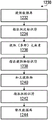
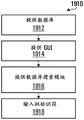
According to yet another aspect, the present disclosure is directed to a method of identifying a batch of cannabis products for recall. The method comprises the following steps: providing a database in which information associated with a plurality of batches of cannabis plants and a plurality of batches of cannabis products is stored, each batch being associated with a batch identifier, wherein each batch identifier in the database is associated with at least one batch identifier. The method further comprises the following steps: a graphical user interface implemented on a computer system is provided to enable a user to enter a suspect lot identifier associated with a defective cannabis product. The method further comprises the following steps: providing a database search module implemented on the computer system, the database search module configured to determine at least one suspect batch identifier in the database associated with the suspect batch identifier and all batch identifiers in the database associated with the at least one suspect batch identifier in response to a user entering the suspect batch identifier; and entering the suspect batch identifier into the graphical user interface.
According to yet another aspect, the present disclosure is directed to a system for identifying a batch of cannabis products for recall. The system comprises: a database having stored therein information associated with a plurality of batches of cannabis plants and a plurality of batches of cannabis products, each batch associated with a batch identifier, wherein each batch identifier in the database is associated with at least one batch identifier. The system further comprises: a graphical user interface implemented on a computer system for enabling a user to enter a suspect lot identifier associated with a defective cannabis product. The system further comprises: a database search module implemented on the computer system, the database search module configured to determine at least one suspect batch identifier in the database associated with the suspect batch identifier and a recall batch identifier in the database associated with the at least one suspect batch identifier in response to a user entering the suspect batch identifier through the graphical user interface.
According to yet another aspect, the present disclosure relates to a method for dynamically generating a hierarchical data set having a tree structure representing a process flow for converting a batch of cannabis plants into a series of cannabis products. The method comprises the following steps: recording, on a computer-readable storage medium, a batch identifier associated with the batch of cannabis plants, the batch identifier distinguishing the batch of cannabis plants among a plurality of batches of cannabis plants, wherein the batch identifier is a root level of the hierarchical data set. The method further comprises the following steps: processing a first portion of the batch of cannabis plants using a first process to produce a plurality of units of a first cannabis product; and recording a first batch number associated with the first cannabis products on the computer-readable storage medium. The method further comprises the following steps: processing a second portion of the batch of cannabis plants using a second process to produce units of a second cannabis product; and recording a second batch number associated with the second cannabis products on the computer-readable storage medium. The method further comprises the following steps: the first batch number and the second batch number are linked to the batch identifier in the hierarchical data set, whereby the first batch number forms a first branch of the hierarchical data set rising from the root node and the second batch number forms a second branch of the hierarchical data structure rising from the root node.
According to yet another aspect, the present disclosure relates to a method for bottling a beverage infused with cannabis. The method comprises the following steps: a filling line is provided comprising a filling station, a container marking station and a control device configured to control operation of the container marking station. The method further comprises the following steps: at the filling station, filling containers with a cannabis infused beverage supplied from a main batch of cannabis infused beverage, the main batch being prepared from a quantity of cannabis containing substance derived from cannabis plant material, the cannabis containing substance containing one or more cannabinoids, the main batch comprising a quantity of cannabis infused beverage to fill a plurality of containers, the filling station being configured to perform a supply switch from a first main batch of cannabis infused beverage to a second main batch, whereby a first group of containers are filled with cannabis infused beverage extracted from the first main batch and a second group of containers are filled with cannabis infused beverage extracted from the second main batch. The method further comprises the following steps: applying a marking on each container of the marking station, the marking indicating a master batch of cannabis infused beverage to be supplied to the filling station when the filling station fills the container. The method further comprises the following steps: controlling the operation of the marking station with the control device such that when a supply switch from the first main batch to the second main batch is performed, the marking station performs a marking transition from a first mark to a second mark, such that a container containing a cannabis infused beverage extracted from the first main batch is marked with the first mark associated with the first main batch, and a container containing a cannabis infused beverage extracted from the second main batch is marked with the second mark associated with the second main batch.
According to yet another aspect, the present disclosure relates to a method for manufacturing and packaging a cannabis infused consumable made from a cannabis-containing substance. The method comprises the following steps: providing a plurality of quantities of a cannabis-containing substance, each quantity of cannabis-containing substance being derived from cannabis plant material, the cannabis-containing substance containing one or more cannabinoids, each quantity of cannabis-containing substance being associated with an identifier, the identifier allowing one quantity to be distinguished from another quantity. The method further comprises the following steps: providing a control device having a machine readable storage; and storing an identifier associated with a respective one of the quantities of cannabis-containing substance in the machine-readable storage device. The method further comprises the following steps: diluting each amount of cannabis-containing substance with a diluent to produce a master batch of consumables; and distributing the master batch into a set of packages, each package containing a portion of the master batch. The method further includes applying indicia on the individual packages. The step of applying the indicia further comprises: feeding the individual package streams to a marking unit; and distinguishing in the stream individual packages containing consumables made from different amounts of a cannabis-containing substance, and controlling the marking unit with the control apparatus to apply to each individual package an indicium derived from an identifier of the respective amount of consumable made in the package.
According to yet another aspect, the present disclosure relates to a method for manufacturing and packaging a cannabis infused consumable made from a cannabis-containing substance. The method comprises the following steps: providing a plurality of cannabis-containing substances, each of the cannabis-containing substances being derived from cannabis plant material, the cannabis-containing substances containing one or more cannabinoids. The method comprises the following steps: providing a control device having a machine readable storage; and storing in the machine-readable storage means identifiers associated with respective ones of the quantities of cannabis-containing substance, the identifiers allowing one quantity to be distinguished from another quantity. The method further comprises the following steps: diluting each amount of cannabis-containing substance with a diluent to produce a respective master batch of consumables; and distributing the master batches into respective groups of individual packages, each package in a given group containing a portion of the respective master batch. The method further comprises the following steps: the stream of individual packages is fed to a marking unit, the order of which is determined by the master batch that is the source of the consumables contained in each individual package. The method further comprises the following steps: the operation of the marking unit is synchronized with the sequence of the stream of individual packages under the control of the control device such that each individual package receives a marking associated with the specific quantity of consumable product made in the package.
According to yet another aspect, the present disclosure relates to a method for manufacturing and packaging a cannabis infused consumable made from a cannabis-containing substance. The method comprises the following steps: providing a plurality of cannabis-containing materials, each cannabis-containing material being derived from cannabis plant material, the cannabis-containing materials containing one or more cannabinoids; and providing a control device having machine-readable storage. The method further comprises the following steps: each amount of cannabis-containing substance is diluted with a diluent to produce a corresponding master batch of consumables. The method further comprises the following steps: for each master batch, distributing the master batch into a set of individual packages, each package holding a portion of the master batch; and not dispensing the remaining volume of the master batch to the individual package when the remaining consumable volume is less than the consumable volume required to fill the individual package. The method further comprises the following steps: for one or more master batches, determining the number of individual packages filled from the master batch in a respective set of individual packages; storing the quantity in the machine-readable storage device; feeding the individual package streams to a marking unit; and controlling the marking unit with the control device, including deriving the quantity from the machine-readable storage and operating the marking unit a corresponding number of times to apply to each individual package in the group an indicium associated with the specific quantity of cannabis-containing substance from which the consumable in the package was made.
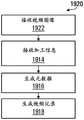
According to yet another aspect, the present disclosure is directed to a method of creating video content. The method comprises the following steps: receiving a video image of a hemp work area in which hemp material is being processed; and receiving process information associated with the process performed in the hemp work area. The method further comprises the following steps: generating metadata using at least some of the processing information; and generating a video recording by combining the video images and the metadata.
These and other aspects of the disclosure will now become apparent to those skilled in the art from a reading of the description of the embodiments taken in conjunction with the accompanying drawings.
Drawings
For a more complete understanding of this disclosure, reference is now made to the following descriptions taken in conjunction with the accompanying drawings, in which:
FIG. 1 is a flow chart illustrating an exemplary process for producing a cannabis product;
FIG. 2 is a block diagram illustrating an exemplary system for producing a cannabis product;
FIG. 3 illustrates an example format of a machine-readable code for a label;
FIGS. 4A-4N are block diagrams illustrating example systems implementing an Inventory Control System (ICS);
FIG. 5 is a block diagram illustrating an example embodiment of a barcode scanner in communication with a server of an ICS;
FIG. 6 is a flow diagram illustrating an example method according to one embodiment;
FIG. 7 illustrates the operation of a machine for generating labels, according to one embodiment;
fig. 8 is a flow chart illustrating an exemplary method of labeling cannabis products in an automated manufacturing process.
FIG. 9 is a flow chart illustrating an exemplary method for drying and/or curing hemp material;
FIG. 10 is a flow chart illustrating an exemplary method for grinding hemp material;
FIG. 11 is a flow chart illustrating an example method for producing a pre-rolled cannabis cigarette using a cone filler;
FIG. 12 is a flow chart illustrating an exemplary process for producing cannabis extract and other cannabis products;
FIG. 13 is a flow chart illustrating an exemplary method for decarboxylation of a cannabis product;
FIG. 14 is a schematic diagram showing a method for using CO2A flow diagram of an exemplary method of performing supercritical fluid extraction;
FIG. 15 is a flow chart illustrating an exemplary method for resin packaging;
FIG. 16 is a flow chart illustrating an example process for oil formulation;
FIG. 17 is a flow chart illustrating an example method for oil packing;
FIG. 18 is a flow chart illustrating an example method according to another embodiment.
FIG. 19 is a flow chart illustrating an exemplary method for irradiation of hemp product;
FIG. 20 is a flow chart illustrating an example method for final packaging;
FIG. 21 illustrates an example of batch recording;
FIG. 22 illustrates an example of an extract record;
FIG. 23 illustrates an example of an extraction process record;
FIG. 24 is a block diagram of a hemp manufacturer and hemp processor according to one embodiment;
fig. 25 is a schematic diagram illustrating a traceability example of a cannabis plant from a consumer product infused with cannabis to a batch of cannabis plants;
fig. 26-28 are block diagrams of a system for producing a cannabis infused beverage according to an embodiment;
FIG. 29 is a flow chart illustrating an example method of producing a cannabis infused beverage in accordance with an embodiment;
FIG. 30 is a flow chart illustrating an example method for applying indicia to a receptacle containing a cannabis infused beverage in accordance with another embodiment;
fig. 31 is a flow chart illustrating an example method of producing a consumer product infused with cannabis, in accordance with an embodiment.
FIG. 32 illustrates a system for identifying a batch of cannabis products for recall, according to one embodiment;
FIG. 33 is a flow chart illustrating an exemplary method of identifying a batch of cannabis product for recall;
FIG. 34 is a flow chart illustrating another example of a method of identifying a batch of cannabis product for recall; and
FIG. 35 is a flow chart illustrating an example method of creating video content.
Detailed Description
For the purpose of illustration, specific example embodiments will be explained in more detail below with reference to the accompanying drawings. It should be appreciated, however, that the present disclosure provides many applicable concepts that can be embodied in any of a wide variety of specific contexts. The specific embodiments discussed are merely illustrative and do not limit the scope of the disclosure. For example, embodiments may include more, different, or fewer features than shown in the figures. In the flow charts shown in the figures, a rectangle generally represents a step, device, apparatus, location, or operation, and a pentagon generally represents an input, product, or output.
The present disclosure relates in part to the production and traceability of cannabis products. The cannabis product may be any commercial product produced from cannabis or hemp, including, for example, plants, plant materials, oils, resins, drinks, food additives, comestibles, creams, aerosol sprays, and vaporized substances. These cannabis products may be used for medical and/or recreational purposes. Cannabis products may include active substances such as cannabinoids. However, the cannabis products described herein may not always include an active substance. As used herein, the term "cannabinoid" is generally understood to include any chemical compound that acts on a cannabinoid receptor. Cannabinoids may include endocannabinoids (naturally produced by humans and animals), phytocannabinoids (present in cannabis and some other plants), and synthetic cannabinoids (manufactured artificially). For the purposes of this specification, the expression "cannabinoid" means a compound such as cannabigerolic acid (CBGA), Cannabigerol (CBG), cannabigerol monomethyl ether (CBGM), Cannabigerol (CBGV), cannabichromene (CBC), cannabichromene (CBCV), Cannabidiol (CBD), cannabidiol monomethyl ether (CBDM), cannabidiol-C4 (CBD-C4), Cannabidiol (CBDV), cannabidiorocol (cannabidiorocol, CBD-C1), Δ -9-tetrahydrocannabinol (Δ 9-THC), Δ -9-tetrahydrocannabinolic acid a (THCA-a), Δ -9-tetrahydrocannabinolic acid B (THCA-B), Δ -9-tetrahydrocannabinolic acid-C4 (THCA-C4), Δ -9-tetrahydrocannabinol-C4, Δ -9-Tetrahydrocannabinol (THCV), Δ -9-tetrahydrocannabinol (THC-C1), Δ -7-cis-isocannabidivarin, Δ -8-tetrahydrocannabinol (Δ 8-THC), Cannabinol (CBL), Cannabidivarin (CBLV), Cannabigerol (CBE), Cannabinol (CBN), cannabinol methyl ether (CBNM), cannabinol-C4 (CBN-C4), Cannabidivarin (CBV), cannabinol-C2 (CBN-C2), cannabidivarin (CBN-C1), Cannabidiol (CBND), cannabinol (cannabidivarin, CBVD), dihydroxycannabinol (CBT), 10-ethoxy-9 hydroxy- Δ -6 a-tetrahydrocannabinol, 8, 9-dihydroxy- Δ -6 a-tetrahydrocannabinol, dihydroxycannabinol (cannabinol), CBTV), ethoxy-dihydroxycannabidivarin (CBTVE), Dehydrocannabidivarin (DCBF), Cannabifurane (CBF), cannabichromene (CBCN), Cannabichromene (CBT), 10-oxo- Δ -6 a-tetrahydrocannabinol (OTHC), Δ -9-cis-tetrahydrocannabinol (cis-THC), 3,4,5, 6-tetrahydro-7-hydroxy- α -2-trimethyl-9-n-propyl-2, 6-methano-2H-1-benzoxepin-5-methanol (OH-iso-HHCV), Cannabidiol (CBR), trihydroxy- Δ -9-tetrahydrocannabinol (triOH-THC), cannabinoid propyl variant (CBNV) and derivatives thereof.
For the purposes of this specification, the expression "cannabidiol" or "CBD" is generally understood to refer to one or more of the following compounds and, unless a particular one or more other stereoisomers is indicated, includes the compound "Δ 2-cannabidiol". These compounds are: (1) Δ 5-cannabidiol (2- (6-isopropenyl-3-methyl-5-cyclohexen-1-yl) -5-pentyl-1, 3-benzenediol); (2) Δ 4-cannabidiol (2- (6-isopropenyl-3-methyl-4-cyclohexen-1-yl) -5-pentyl-1, 3-benzenediol); (3) Δ 3-cannabidiol (2- (6-isopropenyl-3-methyl-3-cyclohexen-1-yl) -5-pentyl-1, 3-benzenediol); (4) Δ 3, 7-cannabidiol (2- (6-isopropenyl-3-methylenecyclohex-1-yl) -5-pentyl-1, 3-benzenediol); (5) Δ 2-cannabidiol (2- (6-isopropenyl-3-methyl-2-cyclohexen-1-yl) -5-pentyl-1, 3-benzenediol); (6) Δ 1-cannabidiol (2- (6-isopropenyl-3-methyl-1-cyclohexen-1-yl) -5-pentyl-1, 3-benzenediol); and (7) Δ 6-cannabidiol (2- (6-isopropenyl-3-methyl-6-cyclohexen-1-yl) -5-pentyl-1, 3-benzenediol).
Cannabis products may include cannabinoids or source materials including cannabinoids in their pure or isolated forms. Examples of source materials including cannabinoids include, but are not limited to: hemp or hemp plant material (e.g., flowers, seeds, trichomes, and hemp powder (keif)), ground hemp or hemp plant material, extracts obtained from hemp or hemp plant material (e.g., resins, waxes, and concentrates), and distillation extracts. In some embodiments, pure or isolated cannabinoids and/or source materials including cannabinoids may be mixed with water, lipids, hydrocarbons (e.g., butane), ethanol, acetone, isopropanol, or mixtures thereof.
Examples of phytocannabinoids include, but are not limited to, cannabigerolic acid (CBGA), Cannabigerol (CBG), cannabigerol monomethyl ether (CBGM), cannabigerol (cannabigerovorin) (CBGV), cannabichromene (CBC), cannabichromene (CBCV), Cannabidiol (CBD), cannabidiol monomethyl ether (CBDM), cannabidiol-C4 (CBD-C4), Cannabidiol (CBDV), cannabidiol (cannabib)idiorcol) (CBD-C1), delta-9-tetrahydrocannabinol (delta)9-THC), Δ -9-tetrahydrocannabinolic acid a (THCA-a), Δ -9-tetrahydrocannabinolic acid B (THCA-B), Δ -9-tetrahydrocannabinolic acid-C4 (THCA-C4), Δ -9-tetrahydrocannabinol-C4, Δ -9-Tetrahydrocannabivarin (THCV), Δ -9-tetrahydrocannabivarin (THC-C1), Δ -7-cis-isotetrahydrocannabinol, Δ -8 tetrahydrocannabinol (Δ -88-THC), Cannabinol (CBL), cannabidivarin (cannabiclovir) (CBLV), Cannabigerotin (CBE), Cannabinol (CBN), cannabinol methyl ether (CBNM), cannabinol-C4 (CBN-C4), Cannabidivarin (CBV), cannabinol-C2 (CBN-C2), cannabigerol (CBN-C1), Cannabidiol (CBND), cannabinol (cannabidivarin) (CBVD), Cannabidiol (CBT), 10-ethoxy-9-hydroxy- Δ -6 a-tetrahydrocannabinol, 8, 9-dihydroxy- Δ -6 a-tetrahydrocannabinol, cannabidivarin (cannabidivarin) (CBTV), ethoxy-dihydroxy Cannabidivarin (CBE), Dehydrocannabifuran (DCBF), Cannabifuranone (CBF), cannabichromenone (cn), Cannabidivarin (CBT), 10-oxo- Δ -6 a-tetrahydrocannabinol (OTHC), Δ -9-cis-tetrahydrocannabinol (cis-THC), 3,4,5, 6-tetrahydro-7-hydroxy- α -2-trimethyl-9-n-propyl-2, 6-methano-2H-1-benzoxepin-5-methanol (OH-iso-HHCV), Cannabidiol (CBR), trihydroxy- Δ -9-tetrahydrocannabinol (triOH-THC), cannabinoid propyl variant (CBNV), and derivatives thereof.
Examples of synthetic cannabinoids include, but are not limited to, naphthoyl indole, naphthylmethyl indole, naphthoyl pyrrole, naphthylmethyl indene, phenylacetyl indole, cyclohexyl phenol, tetramethylcyclopropyl indole, adamantane formyl indole, indazole carboxamide, and quinolinyl esters.
Cannabinoids may be in the acid form or in the non-acid form, the latter also being referred to as decarboxylated forms, as the non-acid form may be produced by decarboxylating the acid form. In the context of the present disclosure, when referring to a particular cannabinoid, the cannabinoid can be in its acid or non-acid form, or a mixture of both acid and non-acid forms.
In some embodiments, the cannabinoid is Tetrahydrocannabinol (THC). THC only in its decarboxylated stateIs psychologically active. The carboxylic acid form (THCA) is not psychoactive. Delta-9-tetrahydrocannabinol (Delta-9)9-THC) and delta-8-tetrahydrocannabinol (delta)8-THC) produces effects associated with cannabis by binding to CB1 cannabinoid receptors in the brain.
In some embodiments, the cannabinoid is Cannabidiol (CBD). The term "cannabidiol" or "CBD" is generally understood to refer to one or more of the following compounds and includes the compound "Δ" unless a particular one or more other stereoisomers is indicated 2-cannabidiol ". These compounds are: (1) delta5-cannabidiol (2- (6-isopropenyl-3-methyl-5-cyclohexen-1-yl) -5-pentyl-1, 3-benzenediol); (2) delta4-cannabidiol (2- (6-isopropenyl-3-methyl-4-cyclohexen-1-yl) -5-pentyl-1, 3-benzenediol); (3) delta3-cannabidiol (2- (6-isopropenyl-3-methyl-3-cyclohexen-1-yl) -5-pentyl-1, 3-benzenediol); (4) delta3,7-cannabidiol (2- (6-isopropenyl-3-methylenecyclohex-1-yl) -5-pentyl-1, 3-benzenediol); (5) delta2-cannabidiol (2- (6-isopropenyl-3-methyl-2-cyclohexen-1-yl) -5-pentyl-1, 3-benzenediol); (6) delta1-cannabidiol (2- (6-isopropenyl-3-methyl-1-cyclohexen-1-yl) -5-pentyl-1, 3-benzenediol); and (7) Delta6-cannabidiol (2- (6-isopropenyl-3-methyl-6-cyclohexen-1-yl) -5-pentyl-1, 3-benzenediol).
In some embodiments, the cannabis product is produced by a cannabis manufacturer. By a cannabis producer is meant any entity (e.g., individual or organization) that plants and/or processes cannabis to produce a cannabis product. Hemp producers may sometimes be referred to as licensing producers.
Summary of the procedures
FIG. 1 is a flow chart illustrating an exemplary process 100 for producing a cannabis product. Process 100 provides an overview of cannabis product production. Illustrative examples of various processes for the production of cannabis products are also described in detail elsewhere herein.
The process 100 includes an operation 102 of harvesting at least one batch of cannabis plants. By "batch" is meant a grouping or collection of cannabis plants. Each batch of cannabis plants may be assigned a unique Identifier (ID), referred to herein as a batch number. In general, the batch number may include alphanumeric characters and/or other symbols. For example, three different lots may be identified by lot numbers "lot-51", "lot-52", and "lot-53". In some embodiments, each cannabis plant is also assigned a unique ID, referred to herein as a plant number. Although numbers are exemplified herein, IDs associated with plants and/or other IDs herein may include alphanumeric characters and/or other symbols.
A batch of cannabis plants may be grown in a particular growing area. In some embodiments, the growing area is defined as an area where a cannabis-like plant is grown. The growing area may be provided in a greenhouse or other structure that supports the growing of cannabis plants. The growth region may be a continuous region, but need not be so in all embodiments. For example, a growth region comprising a plurality of non-adjacent regions is also possible. In some embodiments, the growth area may be controlled to provide specific and/or consistent growth conditions. The cannabis plants grown in the growing area may be from the same type of seed, or from the same maternal plant. A maternal plant is a plant grown for the purpose of obtaining cuttings or lateral shoots for growing more of the same plant. The growing area may alternatively be planted with plants from a plurality of different seed types and/or a plurality of different maternal plants.
Several different batches of cannabis plants may be grown and/or harvested in parallel. For example, a greenhouse may be divided into several different growing areas, each for growing a respective batch of cannabis plants. These batches of cannabis plants can be used to produce different cannabis products. A variety of cannabis products can be produced from a single batch of cannabis plants. Different batches of cannabis plants may also or alternatively be combined to produce a cannabis product.
The cannabis plant harvested in operation 102 is sent to operation 104 for plant part separation, which divides the plant into flowers and trim (trim)106 and waste 108. Cannabis flowers may also be referred to as buds and are typically harvested from mature cannabis plants. The trim includes the leaves of the cannabis plant separated from the flowers and stems. The trim can be harvested at plant maturity prior to flowering. For example, waste material from plant parts separation may include stalks, stems, and leaves that have not been separated into trim. In some embodiments, plant part separation comprises manual cutting or otherwise removing leaves and/or shoots from a cannabis plant. However, automated plant part separation processes may also or alternatively be used.
At least a portion of the flowers and clippings 106 may be sent to operation 110 for freshness processing, to operation 112 for drying, and/or to operation 114 for extraction. At least a portion of the waste material 108 may also or alternatively be sent to operation 114 for extraction. The remaining portion of the waste material 108 may be sent to operation 116 for destruction. For example, destroying the hemp waste material may include incinerating the waste material.
The freshness process at operation 110 may be used to produce fresh hemp product. Fresh hemp may include flowers or trim that have not been dried or cured. In some embodiments, the preservation process may include sealing the cannabis after the plant parts are detached to help prevent or reduce drying in the ambient atmosphere. The harvested flowers or clippings may also or alternatively be quickly transported to a packaging process, such as at operation 118, to help prevent or reduce drying prior to packaging.
The extraction process at operation 114 may be used to generate a cannabis product, such as a resin. Operation 114 may also include other processes, such as drying, curing, decarboxylation, winterization, distillation, and/or product formulation processes. For example, product formulation processes (such as oil formulation processes and liquid formulation processes) can be used to produce cannabis products, such as cannabis oils, vaporized substances, emulsions, food additives, comestibles, drinks, and oral sprays. Examples of extraction, drying, solidification, decarboxylation, winterization, distillation, and product formulation processes are discussed in more detail elsewhere herein.
The cannabis product produced in operations 110, 112, 114 is sent to operation 118 for batch packaging. "batch" refers to a grouping or collection of cannabis products. In some embodiments, the same batch of cannabis product has similar characteristics. For example, a batch may be a single type of cannabis product produced by the same batch of cannabis plants and/or by the same process or processes. Each batch is assigned a corresponding ID, e.g., "batch-5368," batch-5369, "and" batch-5370. The lot ID may also be referred to as a lot number. Typically, the lot number may include alphanumeric characters and/or other symbols. In some embodiments, a batch of cannabis plants may produce a batch of cannabis product. In other embodiments, a batch of cannabis plants may produce multiple batches of cannabis products, which may be the same type of cannabis product or include multiple different types of cannabis products. For example, a batch of cannabis plants may be processed to produce batches of dried cannabis, fresh cannabis, and/or cannabis oil.
In some embodiments, batches are assigned as follows: assigning a lot number to a particular cannabis product derived from a batch of cannabis plants; assigning a respective different batch number to each different cannabis product originating from the same batch; and assign a respectively different lot number to any cannabis product originating from a different lot. The batch number assigned to each cannabis product is for all units of the cannabis product.
Other methods of batch assignment are also possible. For example, two or more batches of cannabis plants may be mixed together. In some embodiments, such mixed batches of cannabis products may be assigned batch numbers in the following manner: assigning a lot number to a particular cannabis product derived from a mix of two or more batches of cannabis plants; assigning a respective different batch number to each different cannabis product originating from the same blend; and assigning a respectively different lot number to any cannabis product originating from a different mix of two or more lots. The batch number assigned to each cannabis product is for all units of the cannabis product.
Packaging at operation 118 may include transferring batches of the cannabis product to a storage container. As used herein, the phrase "storage container" refers to any container in which a cannabis product is or may be contained. Storage containers include containers for storing products before, during, and after processing, as well as containers for storing products for sale. In some embodiments, the storage container is used to isolate the cannabis product from its environment. In some embodiments, the storage container may provide a form of child-resistance, tamper-resistance, and/or tamper-detection. Examples of storage containers include cans, boxes, utensils, bags, pouches, boxes, bottles, and cartridges (e.g., for vaporization equipment), any of which may be made of wood, paper, cardboard, plastic, glass, and/or metal, for example. Some storage containers, such as jars and bottles, may be sealed with a lid or cap. In some embodiments, the cover includes a tamper-resistant induction seal. The storage container may also or alternatively be sealed with one or more of: such as foil seals, heat seals, induction seals and shrink wrap. One storage container of cannabis product may be referred to as a unit.
During operation 118, a label may be applied to the storage container. The label may associate the storage container with a particular cannabis product. The label may be applied prior to, simultaneously with, and/or after filling the storage container with the cannabis product. While the label may include a material that is adhered or otherwise attached to the storage container, this may not always be the case. For example, the label may be formed on or within the storage container, or printed directly on the surface of the storage container. Generally, the indicia may be applied to any of various types of containers and/or packages. In some embodiments, labeling involves printing or otherwise producing a label and affixing the label to the container and/or package. In other embodiments, the indicia may also or alternatively involve printing or otherwise forming indicia directly on the container and/or packaging. Thus, features disclosed herein in the context of labels or tags may be applied more generally to other types of indicia.
The label may include a written description of the storage container and/or the product in the storage container. The tag may also or alternatively include a unique identifier that distinguishes the storage container from other storage containers. Examples of unique identifiers include letters, numbers, symbols, machine-readable codes, and combinations thereof. The unique identifier may encode a description of the storage container and/or the product in the storage container. The following is a non-exhaustive list of the types of information any one or more of which may be included in the description of the storage container and/or the product in the storage container:
Numbering plants;
a batch number;
a batch number;
the name, phone number and/or email address of the cannabis manufacturer;
a hemp manufacturer number, which is a unique ID assigned to a particular hemp manufacturer;
customer name, phone number, and/or email address;
transportation information;
global trade item codes (GTIN);
a product name;
cannabinoid concentration;
a product type;
product composition;
unit or case number;
date(s) processed;
date of packaging(s);
security information;
supervision information;
expiration date or "best use date";
product/container weight;
product/container volume; and
unit size.
In some embodiments, a machine for making labels (such as a label maker) may be used in operation 118 to generate and/or apply labels to storage containers. During a first time period, the labeler may generate a label for a particular cannabis product derived from a particular batch of cannabis plants. Subsequently, during a second time period in which the cannabis products derived from the new batch of cannabis plants are packaged, the labeler may update the labels being generated such that they map back to the new batch of cannabis plants. In other embodiments, the label maker may be replaced with a machine that generates a cannabis storage container that already includes a label.
In process 100, packaged batches of cannabis product are sent to operation 120 for sterilization and testing. Sterilization may be performed to remove and/or kill unwanted biological agents, such as bacteria and fungi. Irradiation is one example of a sterilization process, which is discussed in more detail elsewhere herein. Tests may be performed to determine or confirm the composition of the cannabis product. For example, the test may determine the homogeneity of the product, the safety of the product, and/or the amount(s) and type(s) of cannabinoid(s) in the product. For example, the concentration of Tetrahydrocannabinol (THC) and/or Cannabidiol (CBD) may be determined by testing. Testing the cannabis product may also include sampling the cannabis product. As discussed in more detail below, in some embodiments, only certain storage containers of a batch of product may be sampled, while in other embodiments, each storage container in a batch may be sampled.
While the batch packaging at operation 118 is shown as being performed prior to sterilization and testing at operation 120, this may not always be the case. For example, the cannabis product is released for batch packaging after the product is tested and the results are considered satisfactory.
Final packaging and shipping occurs at operation 122. Operation 122 may also be referred to as picking, packaging, and shipping (PPS). In some embodiments, final packaging includes packaging the plurality of storage containers into a larger package for shipment. Generally, hemp products from multiple batches may be packaged together in operation 122. The final packaging may also or alternatively include removing the cannabis product from one storage container and adding it to another storage container. Operation 122 may further include updating and/or adding labels to the storage containers and/or packaging. The final packaging may provide for the shipment of the cannabis product, such as protecting and insulating the cannabis product. After final packaging, the cannabis products may be released for sale, which may include shipping the products to customers and/or storing the products in a particular area until they are shipped. In some embodiments, the shipment may be performed using courier services. As used herein, the term "customer" includes any individual or organization that receives a cannabis product from a cannabis manufacturer or processor. Examples of customers include end users of hemp products, distributors of hemp products, and other manufacturers of hemp products. Each customer may be assigned a unique customer ID.
FIG. 2 is a block diagram illustrating an example system 200 for producing a cannabis product. In some embodiments, the system 200 may be used to implement any or all of the operations 102, 104, 110, 112, 114, 116, 118, 120, 122 of fig. 1. System 200 includes planting and harvesting system 202, plant part separation system 204, waste destruction system 206, refreshment processing system 208, drying system 210, grinding system 212, decarboxylation system 214, extraction system 216, oil formulation system 218, packaging system 220, sterilization system 222, testing system 224, and transportation system 226. Various functions that may be performed by the systems 202, 204, 206, 208, 210, 212, 214, 216, 218, 220, 222, 224, 226 and the various components and devices that may be included in these systems are described elsewhere herein.
Fig. 2 illustrates various connections between systems 202, 204, 206, 208, 210, 212, 214, 216, 218, 220, 222, 224, 226. Typically, each of these connections indicates the transfer of a cannabis product between two different systems and/or means for transferring a cannabis product between two different systems. The transfer of the cannabis product may include a physical transfer and/or a logical transfer. Examples of physical transfers include moving storage containers of cannabis products from one facility to a different facility. Vehicles, carts, and/or dollies may be used to physically transfer storage containers. Examples of logic transfers include processing a cannabis product using one system and then processing the same cannabis product using another system, even if the cannabis product is not physically in place. These transfers, whether physical or logical, may include manual and/or automatic transfers.
Fig. 2 includes a connection between planting and harvesting system 202 and plant part separation system 204, which may enable transfer of harvested cannabis plants from the planting and harvesting system to the plant part separation system, for example, in a storage container.
The plant part separation system 204 is connected to a waste destruction system 206, which may enable waste material to be transferred from the plant part separation system to the waste destruction system, for example in a storage container. Plant part separation system 204 is further coupled to a freshness processing system 208, a drying system 210, a grinding system 212, and a decarboxylation system 214. These connections may enable, for example, transfer of cannabis flowers and/or trim from plant part separation system 204 to a refreshment processing system 208, a drying system 210, a grinding system 212, and/or a decarboxylation system 214 in a storage container.
The plant material may also or alternatively be processed in series by some or all of the drying system 210, grinding system 212, and decarboxylation system 214. The drying system 210 is connected to a grinding system 212 to transfer dry cannabis to the grinding system, for example, in a storage container. The milling system 212 is connected to a decarboxylation system 214, which enables transfer of ground cannabis to the decarboxylation system, for example, in a storage container. The decarboxylation system 214 is connected to the extraction system 216 to transfer the decarboxylated cannabis to the extraction system, for example, in a storage vessel. In some embodiments, plant material from plant part separation system 204 is not processed by drying system 210, grinding system 212, decarboxylation system 214, but is instead transferred to extraction system 216.
In the illustrated embodiment, the extraction system 216 is connected to an oil dispensing system 218, which enables transfer of the cannabis extract to the oil dispensing system, for example, in a storage container.
The freshness processing system 208, drying system 210, grinding system 212, decarboxylation system 214, extraction system 216, and oil formulation system 218 are connected to a packaging system 220. Any one or more different types of cannabis products produced by these systems may be transferred from these systems to the packaging system 220, for example, in the same or one or more different types of storage containers.
In some embodiments, the packaged cannabis product is sterilized and then tested, and the transfer of the sterilized cannabis product from sterilization system 222 to testing system 224 is illustrated in fig. 2. Alternatively, sterilized cannabis products may be shipped without testing, and the transfer of sterilized cannabis products from sterilization system 222 to shipping system 226 is also demonstrated. These transfers may involve transferring the cannabis product in packaging and/or storage containers.
The testing system 224 is also connected to a transportation system 226, which may enable the tested cannabis product to be transferred to the transportation system, for example, in a storage container.
The system and connections illustrated in fig. 2 represent example embodiments. Other embodiments may include more, fewer, and/or different systems, with similar and/or different interconnections.
Inventory control system
Inventory Control Systems (ICS) may be used to record, register, track, and/or monitor cannabis products throughout planting, harvesting, processing, marketing, transportation, and/or other operations. For example, the ICS may record the cannabis product throughout operations 102, 104, 110, 112, 114, 116, 118, 120, 122 of fig. 1. The ICS may also or alternatively be connected to or otherwise access any or all of the systems 202, 204, 206, 208, 210, 212, 214, 216, 218, 220, 222, 224, 226 of fig. 2 to provide information to and/or record information from these systems. The ICS may also or alternatively record any or all of the transfers of cannabis products within and/or between systems 202, 204, 206, 208, 210, 212, 214, 216, 218, 220, 222, 224, 226. In general, ICS can achieve traceability of any or all cannabis-containing material over at least a portion of the production process, including traceability on a batch level, or even plant level. This may include plants in planting, hemp products in processing, hemp products in warehouses, and/or hemp products that have been released for sale or sold. For example, in the event of a recall, the ICS may be used to determine the status and/or location of all cannabis products that are within the recall range.
For example, the transfer of cannabis-containing substance between the original storage container and the new storage container may be recorded in the ICS, for example using a transfer action. For example, the transfer action may begin by recording information from the labels on the original storage containers in the ICS, and designating these labels as those of the "source" container. If the new storage container has pre-existing labels, these labels can be recorded in the ICS and designated as the labels of the "target" storage container for the transfer. Alternatively, if the new storage container has no tags, tags may be created by the ICS, designated as tags of the target storage container, and applied to the new storage container. Once the transfer is complete, the ICS can record that the new storage container is now filled with the transferred cannabis-containing substance. For example, a record in the ICS associated with the transferred substance may be updated to indicate that the new storage container contains the substance.
In the case where the storage container is moved, information in the ICS relating to the storage container may be updated to include information such as any one or more of the following: a transfer date, a transfer time, an origin location, and/or a destination.
Cannabis products and processes used to produce cannabis products may be recorded and tracked in the form of "records" within the ICS. Records within an ICS typically involve a specific combination of variables, functions, and/or data structures. Recording can help provide convenient and logical organization of information within an ICS. For example, multiple types of records may be used within an ICS, where each record corresponds to a particular type of cannabis product or process. The record types may include, for example, extraction process records, extract records, oil container records, laboratory sampling records, and/or oil tank records. Recording is discussed in further detail elsewhere herein by way of example.
The ICS may create, store, and/or update records as the cannabis product is produced, processed, shipped, and sold. For example, a record may be created or updated in an ICS to record a batch of plants, a batch of products, or some instance of a process. Any measurements and/or data related to a batch, lot, or process can be added to the corresponding record in the ICS. Special cases of cannabis products or processes (such as deviations from standard operating procedures) may also be recorded in the records of the ICS. Thus, the records may provide a comprehensive source of information for the product. Records can be created and/or updated by entering information into forms, logs, and/or tables associated with the ICS. When a record is created, it can be assigned a unique ID to distinguish it from other records stored in the ICS, which can be referred to as a record ID. A plurality of different records may also be associated with each other. For example, a record of a process may be associated with a record of a product produced by the process.
The "action" may be used to record or update other information recorded and/or stored in the ICS. For example, if a cannabis product is transferred from one or more storage containers to one or more new storage containers, or a storage container is transferred from one location to a different location, such transfer may be recorded in the ICS using a "transfer" action. Another example of an action within an ICS is a "request," which may include, for example, a request to receive and/or view information stored on the ICS.
ICS can use labels applied to storage containers and/or other packaging to help record and track cannabis products. In some embodiments, a storage container with a pre-existing label may be used. For example, a label with a unique identifier may be applied to a storage container without knowledge of the cannabis product that will later be stored in the storage container. Once the cannabis product that has been or will be transferred to the storage container is known, the label may be recorded in the ICS along with information related to the cannabis product. For example, such information may include a cannabis manufacturer number, batch number, lot number, and/or plant number. Other information may also or alternatively be recorded in the ICS, such as the date, time, and location of the transfer. For example, the recorded information may be stored in the ICS in the form of a record. Recording of information in the ICS may occur before, simultaneously with, and/or after the cannabis product is transferred to the storage container.
In some embodiments, the unique identifier for the storage container label may be generated by the ICS. For example, after determining a cannabis product to be transferred to a storage container, the ICS may generate a unique identifier for the storage container. The ICS can generate the tag and/or unique identifier using a "create new tag" action. Generating the unique identifier may include generating a batch number for the product that has been or will be transferred to the storage container. The unique identifier may be recorded in the ICS by adding the unique identifier to a record associated with the cannabis product. The unique identifier may be printed directly onto a label on the storage container or onto a label that is later applied to the storage container. For example, the unique identifier may indicate a cannabis manufacturer number, lot number, batch number, and/or plant number of the product. In some embodiments, the storage container includes both pre-existing labels and ICS-generated labels. For example, the ICS itself may not generate or apply a label to a container or package, but may provide label information to a labeling machine or device.
The unique identifier on the tag may comprise a machine readable code. FIG. 3 illustrates an example format of a machine-readable code for a label. In example a, the machine-readable code 300 is a linear barcode that encodes numbers in a machine-readable pattern. Specifically, in this example, the machine-readable code 300 encodes a cannabis manufacturer number 310, a lot number 312, a lot number 314, and a plant number 316. In some embodiments, lot number 312 may be part of the GTIN or provided in addition to the GTIN. For example, all units of the same cannabis product from the same manufacturer may include a bar code encoding the same GTIN corresponding to the cannabis product, but assign different lot numbers to different batches of cannabis products and include them as part of the bar code.
Not all of the information shown in example a of fig. 3 needs to be encoded by the machine-readable code 300. For example, in some embodiments, the particular plant from which the cannabis product in the container is derived may not be known, and plant number 316 may not be encoded.
In example B, the lot number 312 and the manufacturer number 310 are encoded by the machine-readable code 302. Additional information may also be included as part of the numbers encoded by the machine-readable code 302. For example, digits may be reserved for future tracking, for internal use by regulatory agencies, and/or for internal use by hemp manufacturers. For example, there may also or alternatively be digits conveying other types of information such as the date of manufacture of the cannabis product and the expiration date or 'best-use date' of the product.
The machine- readable codes 302, 304 are illustrated in fig. 3 as linear or one-dimensional barcodes, but this is merely an example. Alternatively, the barcode may be a matrix barcode or a two-dimensional barcode, such as a Quick Response (QR) code. In example C, the machine-readable code 304 is a QR code that may convey the same information as the machine- readable code 300, 302 and/or different information. In some embodiments, the QR code may be used to navigate to a website hosted by the ICS, and the website may provide information related to the cannabis product.
The machine readable code may also or alternatively be carried by a "smart" tag, such as a Radio Frequency Identification (RFID) chip or tag. For example, the RFID chip may be integrated into a storage container or label and encode a unique identifier and/or information associated with the storage container and/or its contents.
Machine-readable code encoding information represents one illustrative example of how information may be conveyed in indicia on a label, container, or package. For example, the information itself may be included in the tag. These examples and/or other types of coding or indicia may be used to convey any of a variety of types of information.
Fig. 4A through 4M are block diagrams illustrating an example system 400 implementing ICS. As shown in fig. 4A-4M, respectively, the system 400 includes a planting and harvesting system 420a, a plant part separation system 420b, a waste destruction system 420c, a freshness processing system 420d, a drying system 420e, a grinding system 420f, a decarboxylation system 420g, an extraction system 420h, an oil formulation system 420i, a packaging system 420j, a sterilization system 420k, a testing system 420l, and a transportation system 420M. Systems 420a-420m provide illustrative examples of systems 202, 204, 206, 208, 210, 212, 214, 216, 218, 220, 222, 224, 226 of FIG. 2.
The system 400 also includes a server 402 that can implement, at least in part, ICS. The server 402 includes a memory 404 storing a database 414, a processor 406, a network interface 408, a display 410, and one or more input/output (I/O) devices 412. In some embodiments, these server components are interconnected to each other by an internal bus and/or other type(s) of connection(s).
The memory 404 may be or include one or more memory devices, such as one or more solid state memory devices, and/or one or more memory devices using removable or even removable storage media. A database 414 can be formatted or otherwise provided in the memory 404 to store any or all of the information recorded by the ICS. For example, database 414 can store records, parameters, measurements, and/or other information recorded and/or tracked by the ICS.
The processor 406 may be implemented by one or more processors executing instructions stored in the memory 404. For example, the processor 406 may be implemented, in whole or in part, using special purpose circuitry, such as an Application Specific Integrated Circuit (ASIC), a Graphics Processing Unit (GPU), and/or a programmed Field Programmable Gate Array (FPGA) to perform any of a variety of operations for the processor.
Other I/O devices 412 may also or alternatively be provided. For example, one or more user input devices may be provided that allow a user to manually input information, actions, and/or requests. Examples of user input devices include keyboards, computer mice, touch screens, buttons, dials, and switches. The I/O devices 412 may also or alternatively include one or more output devices, such as an output port for exporting data stored in the database 414. Other types of I/O devices are also contemplated. For example, an access card scanner may provide security and access control for the server 402.
In some embodiments, the server 402 itself does not include a user I/O device such as the display 410 or a user input device for receiving input from a user. User interaction with the server 402 may be accomplished through one or more separate components, such as one or more workstations in communication with the server 402 through a local connection to the server and/or a network connection through the network 416. For example, such a workstation may be identical or similar in structure to server 402, but may not store database 414 locally.
The network 416 is connected to or otherwise in communication with a plurality of servers 418a, 418b, 418c, 418d, 418e, 418f, 418g, 418h, 418i, 418j, 418k, 418l, 418M, 418n, shown in fig. 4A-4M, respectively. For example, physical connections such as cables and/or wires may be used and/or connections such as WIFI may be usedTMConnection, bluetoothTMA wireless connection or channel, such as a connection and/or longer-range wireless communication, to provide network/server communication.
Servers 418a-418n may be substantially similar in structure to server 402, but there may be at least operational and/or possible structural differences between the servers. For example, servers 418a-418n may participate in maintaining the ICS at server 402 by sending system-related information to server 402 via network 416, but servers 418a-418n may not locally store a complete copy of database 414.
In some embodiments, servers 418a-418n may relay information from other devices to server 402. Information may also or alternatively be stored on servers 418a-418 n. Although servers 418a-418n may be distributed throughout system 400 as shown, this may not always be the case. For example, two or more of servers 418a-418n may be co-located. Although shown in fig. 4A-4M, respectively, in some embodiments two or more of servers 418a-418n may be implemented using a single server. At least some of the systems 420a-420n may be connected to or otherwise communicate with the network 416 without the need for intermediate servers 418a-418 n. One or more components of the systems 420a-420n may communicate with the network 416 without having to go through a server when connecting to the network. The system components may also or alternatively communicate with the network 416 through some other type of communication device or apparatus that does not necessarily implement a server.
The planting and harvesting system 420a includes an operator registration device 422a, one or more computers 424a, one or more controllers 426a, one or more sensors 428a, one or more scales 430a, one or more taggers 432a, and one or more scanners 434 a. In the illustrated example, these components are each connected to a server 418 a. The connection between these components and the server 418 may include a wired and/or wireless connection through any of various types of interfaces. Each component connected to or otherwise in communication with server 418a includes an interface compatible with the interface provided at the server. The particular type(s) of interface(s) provided at the system components and server 418a will depend on the type of connection(s) and/or communication protocol(s) to be supported.
In some embodiments, one or more operator registration devices, such as 422a, may be implemented in the cannabis production system to record and track one or more operators participating in the process or using the device. As used herein with reference to at least fig. 4A-4M, the term "operator" refers to any person who participates in operating or using a cannabis production system. When each operator wants to enter a secure location and/or use a system device or equipment, the operator may be assigned a unique ID recorded by the operator registration equipment. Examples of operator registration devices include a punch-card reader for reading operator information from a punch-card of an operator, a magnetic-card reader for reading operator information from a magnetic stripe on an identification card or access card of an operator, and an RFID reader for reading an RFID tag or chip on an identification card or access card of an operator. The operator enrollment device may also or alternatively include a computer or controller in which the employee must enter login information including at least operator information, such as the operator's unique ID or username and password.
The operator information read or otherwise obtained by the operator registration device 422a may be stored locally at the planting and harvesting system 420a and/or transmitted to the server 402 for storage in the database 414. The local storage of operator information may be performed by the operator registration device 442a itself, and/or by one or more other components of the planting and harvesting system 420a, such as the computer 424a and/or the server 418 a.
Other information may also or alternatively be recorded. For example, the operator registration device may record the date and time that the operator entered the area, left the area, started the process or apparatus, and/or stopped the process or apparatus.
Any or all of the information obtained or generated by the operator registration device (such as the operator information and/or other information disclosed above by way of example) may be recorded in the ICS. For example, the operator registration device 422a may transmit information about the operators and/or their activities in the planting and harvesting system 420a to the server 418a, which may store the information and/or forward it to the server 402.
In some embodiments, one or more computers, such as 424a, may be implemented in the cannabis production system to enable an operator to manually input ICS data, otherwise interact with the ICS system, and/or control system devices. For example, the computer 424a may store and/or transmit the input data to the server 418a, which may store and/or forward the data to the server 402. The computer 424a may also or alternatively enable an operator to access ICS data, for example, in the database 414, and output an indication of the data on a display screen or other output device. Examples of computers include desktop computers, laptop computers, tablet computers, and other electronic devices. Generally, computer 424a may be similar in structure to server 402, but does not necessarily store database 414. Depending on the implementation, the computer 424a may or may not include a network interface. For example, in a server-based implementation as shown in FIG. 4A, computer 424A may include an interface, which may or may not be a network interface but is compatible with the interface provided at server 418 a.
In some embodiments, one or more controllers, such as 426a, may be implemented in the cannabis production system to control any or all of various types of equipment or devices. The controller may be integrated within the controlled device or appliance or separate from the controlled device or appliance as shown in fig. 4A. For example, a controller may be implemented using hardware, firmware, one or more components executing software stored in one or more non-transitory memory devices. Microprocessors, ASICs, FPGAs, and Programmable Logic Devices (PLDs) are examples of processing devices that may be used to execute software.
The controller 426a may store, receive, and/or otherwise obtain control settings and control one or more devices or apparatuses to operate according to the settings. For example, the controller 426a may be programmed by an operator (e.g., via the computer 424a and/or via a user interface of the controller) and/or via the ICS. The ICS programmable controller 426a may access, download, or otherwise determine or be programmed with control settings from the database 414. In some embodiments, the controller 426a may record control settings and/or other information in the ICS. Information used and/or obtained by the controller 426a may be stored locally, e.g., by the controller and/or another component of the planting and harvesting system 420a, and/or transmitted to the server 418a for local storage and/or transmission to the server 402.
In some embodiments, sensors, such as 428a, may be implemented in the cannabis production system to measure or otherwise determine any or various parameters involved in production. These parameters, and possibly other information (such as the time at which the measurement was made) may be recorded in the ICS. Examples of sensors (any one or more of which may be implemented in a cannabis production system) include the following:
a carbon dioxide sensor;
a nitrogen oxide sensor;
an oxygen sensor;
an ozone monitor;
a pH sensor;
a potential sensor;
a redox electrode;
a smoke detector;
a current sensor;
a metal detector;
a voltage detector;
an air pollution sensor;
a humidity sensor;
a rainfall sensor;
a snow gauge;
a soil humidity sensor;
an air flow meter;
a water meter;
a barometer;
a pressure sensor;
a pressure gauge;
a flame detector;
a light sensor;
a heat flow sensor; and
a thermometer.
The sensor readings or measurements may be stored locally, for example, by the sensor 430a and/or another component of the planting and harvesting system 420a, and/or transmitted to the server 418a for local storage and/or transmission to the server 402.
In some embodiments, one or more scales, such as 430a, may be implemented in a hemp production system, for example, to weigh products, waste, packaging, and/or storage containers. The scale may include, for example, an electronic scale in communication with or otherwise accessible to the ICS. For example, when an electronic scale measures the weight of a cannabis product and/or storage container, the scale may automatically transmit that weight to the ICS and record it therein. Non-electronic scales may also or alternatively be used in the cannabis production system, and the weights measured by these scales may be manually entered into the ICS, for example, using computer 424 a.
A description of the weight measured by the scale 430a may also be recorded in the ICS. The description may include information regarding the current production stage of the cannabis product and/or storage container at the time the cannabis product and/or storage container is weighed. For example, the operator may manually enter the description into electronic scale 430a or computer 424, which may then transmit the description to the ICS. The description of the measured weight may also or alternatively be inferred from the ICS. For example, electronic scale 430a may be associated with a particular step in a cannabis production process or a particular device or apparatus in a cannabis production system, and thus a description of the weight measured by the scale may be predefined within the ICS. In some embodiments, a certain scale may only be used to measure the weight of a storage container containing extract collected from an extraction process, and the ICS may automatically associate any or all weights measured by the scale with the production stage.
The recorded ID and/or other identifier of the cannabis product and/or storage container weighed by scale 430a may be recorded in the ICS. For example, electronic scale 430a may transmit a record ID and/or other identifier of the hemp product and/or storage container being weighed to the ICS along with the measured weight of the hemp product and/or storage container, allowing the ICS to determine in which record the weight should be recorded. To determine the record ID and/or other identifier, an operator may manually read the label on the storage container and use an electronic scale or another device to enter the information in the label into the ICS. Additionally or alternatively, a scanner may be used to read the label on the storage container and record it in the ICS. A scanner may be linked to the scale to automatically associate the label of the storage container with the measured weight.
Scale 430 may also receive control information and/or other information. For example, a scale may be controlled to record the weight only when the cannabis product or storage container is in the proper weighing position. In some embodiments, the controller sends a control signal to scale 430a to trigger the measurement. Such a controller may be integrated with scale 430a or separate from the scale. The measurement may also or alternatively be initiated or triggered manually by an operator through a user interface of the scale or another component connected or otherwise in communication with the scale.
The weight measurements, and possibly other information determined or otherwise obtained by or from scale 430a, may be stored locally, for example by the scale and/or another component of planting and harvesting system 420a, and/or transmitted to server 418a for local storage and/or transmission to server 402.
In some embodiments, one or more labeling makers 432a may be implemented in a cannabis production system to generate labels that are applied to, for example, storage containers. The label maker 432a can communicate with or otherwise access the ICS. In some embodiments, the ICS may control the label maker 432a, thereby controlling the particular label applied to the storage container. For example, the ICS may transmit information and/or a machine-readable code of the label to the labeler 432a, and the labeler may generate the label based on the information and/or the machine-readable code encoding the information. The ICS may also or alternatively send the image of the label to a label maker 432a, which may print the image onto an adhesive label and/or directly onto the storage container. In some embodiments, label maker 432a may generate information and/or machine readable code for a label, generate a label based on the information and/or machine readable code, and apply the label to one or more storage containers.
The label maker 432a can record each label in the ICS. For example, the label information may be stored locally, e.g., by label maker 432a and/or another component of planting and harvesting system 420a, and/or transmitted to server 418a for local storage and/or transmission to server 402.
The label maker 432a is an example of a labeling or marking system or station that may include a printing or marking device to print or mark on labels and/or directly on storage containers or packaging. In some embodiments, a single printing or marking apparatus is adapted to print or mark a plurality of substrates (such as labels and storage containers, labels and packaging, or labels, storage containers, and packaging) with, for example, ink. In embodiments involving printed or labeled labels, the labeling system or labeling station may further include a label applicator to apply the labels to the storage containers and/or packaging. The controller of the labeling system or the marking station may be integrated with the labeling system or the marking station or be a separate component.
In some embodiments, one or more scanners 434a may be implemented in the cannabis production system to read, record, and/or decode indicia that may be printed directly on the storage container and/or packaging and/or on a label that is affixed to the storage container and/or packaging. For example, a scanner may be used to read, record, and/or decode the machine-readable code(s) on the label.
Examples of the scanner 434a include a barcode scanner, an image scanner, and an RFID reader. The scanner 434a may be provided in the form of: a handheld scanner, a mobile electronic device, a scanner mounted to a structure (e.g., a console or counter), a scanner embedded in a structure, a scanner integrated into a device in a cannabis production system, and/or a wearable scanner. The scanner may be wired or wireless. Multiple scanners of the same type or different types may be implemented.
When the scanner 434a scans, for example, a mark on a label affixed to a storage container, any of various information can be recorded in the ICS. For example, the scanner 434a may be specific to a particular location, device, apparatus, and/or process in a cannabis production system. Scanning the label with the scanner indicates that the storage container or package associated with the label is located at the particular location, device, apparatus, and/or process.
The scanner may also receive information. In some embodiments, the scanner may receive search or control parameters and generate an alert or other output when the search or control parameters are found or satisfied. For example, the search parameter may be a batch identifier, and the scanner 434a may generate an alert when a mark is scanned that is consistent with the batch identifier. The count is an example of a control parameter, and the scanner 434a may generate an alarm or other output when a particular number of indicia have been scanned, and/or provide an output indicative of the count of the scanned indicia. The scanner 434a may also or alternatively confirm the lot number and/or the change in lot number at the correct time during the production run.
The example planting and harvesting system 420a in fig. 4A also includes one or more watering systems 450a, one or more lighting systems 452a, and one or more ventilation systems 454A. Watering system(s) 450a, lighting system(s) 452a, and ventilation system(s) 454a are connected to or otherwise in communication with and controlled by one or more of controllers 426 a. Control of the watering system 450a may involve controlling one or more valves, for example, to control the flow of water to the irrigation system and/or to certain components, such as sprinkler heads. For example, the lighting system 452a may be controlled by controlling the power of lights and/or shades. In some embodiments, control of the ventilation system(s) 454a may involve controlling one or more air inlets, one or more air outlets, one or more heaters, one or more coolers, and/or one or more airflow components (such as fans).
Control settings for any or all of watering system(s) 450a, lighting system(s) 452a, and ventilation system(s) 454a may be provided to, determined by, or otherwise obtained by controller(s) 426 a. Programs or schedules for watering, lighting, ventilation, and/or temperature may be downloaded to one or more controllers 426a and used to control any or all of watering system(s) 450a, lighting system(s) 452a, and ventilation system(s) 454 a. In some embodiments, one or more controllers 426a dynamically control any or all of watering system(s) 450a, lighting system(s) 452a, and ventilation system(s) 454a, e.g., based on sensor readings. Combinations of predetermined control and dynamic control are also contemplated. For example, any or all of watering system(s) 450a, lighting system(s) 452a, and ventilation system(s) 454a may be controlled according to a predetermined program or schedule as long as one or more monitored parameters are maintained within target ranges, and dynamic control of one or more of systems 450a, 452a, 454a may be initiated in response to out-of-range parameters.
The planting and harvesting system 420a also includes one or more growing areas 456a for planting cannabis plants. Watering system(s) 450a, lighting system(s) 452a, and ventilation system(s) 454a interact with growth area(s) 456a, and in this sense may be considered to be associated with the growth area(s). The interaction between watering system(s) 450a, lighting system(s) 452a, ventilation system(s) 454A and growing area 456a is illustrated in fig. 4A using dashed lines.
In fig. 4A-4M, the solid lines are intended to represent wired or wireless connections for communication between components. Dashed lines are intended to indicate that components interact or are related or associated in some way, but not necessarily communicate or couple with each other. For example, watering system(s) 450a may provide water to growth area(s) 456a, but this does not necessarily mean that the watering system(s) will be in communication with the growth area(s), or that the watering system(s) must be physically coupled with the growth area(s) in any way. Similarly, lighting system(s) 452a and ventilation system(s) 454a provide light and air flow to growth region(s) 456a, but are not necessarily coupled to the growth region(s).
Fig. 4A similarly illustrates growth region 456a as being associated with sensor 428a, which can measure, record, and/or track any of a variety of parameters and/or growth conditions in the growth region(s). In some embodiments, sensor(s) 428a may provide measurements or readings to one or more controllers 426a, and controller(s) may control one or more of watering system(s) 450a, lighting system(s) 452a, and ventilation system(s) 454a based on the measurements or readings from the sensor(s).
During and/or after harvesting, the cannabis plants from the growth area(s) 456a may be transferred to one or more plant storage containers 458 a. The plant storage container(s) 458a may be weighed by the scale(s) 430a, labeled by the labeler(s) 432a, and/or scanned by the scanner(s) 434A, and thus fig. 4A includes dashed lines representing interactions or associations between these components.
In some embodiments, the production system includes other systems having at least some components, which may be the same or similar to the components in the example planting and harvesting system 420 a. Referring to fig. 4B, for example, plant part separation system 420B may include one or more operator registration devices 422B, one or more computers 424B, one or more controllers 426B, one or more scales 430B-1 and/or 430B-2, one or more label makers 432B, and one or more scanners 434B-1 and/or 434B-2. These components are connected to or otherwise in communication with server 418 b. All of these component implementation options are described herein above at least with reference to fig. 4A. Although two sets of scale(s) and scanner(s) are shown at 430b-1, 430b-2 and 434b-1, 434b-2, in some embodiments, the plant part separation system may include only one set of these components or either or both of these components. For example, different storage containers may be transferred to the same weighing station with a set of scales. In some embodiments, different storage containers may be scanned with the same set of one or more portable scanners, in lieu of or in addition to the device-mounted or device-specific scanners. The different sets of scale(s) and scanner(s) shown at 430B-1, 430B-2 and 434B-1, 434B-2 are merely to simplify the illustration of the connecting lines in FIG. 4B.
The example plant part separation system 420b further includes one or more plant storage containers 450b, one or more manual plant part separators 452b, one or more automatic plant part separators 454b, one or more flower storage containers 456b, one or more trim storage containers 458b, and one or more waste storage containers 460 b. The storage containers 450b, 456b, 458b, 460b may be any of various types of containers, and different types of containers may be used to hold the harvested and separated plants. In some embodiments, the plant storage container(s) 450b are the same as the storage container(s) shown at 458a in fig. 4A. In some embodiments, manual plant part separator 452b includes one or more sorting trays or stations on which an operator sorts harvested plant material. The automated vegetation location segregator 454b may include a machine vision system or other means for distinguishing flowers, trim and waste from one another, as well as sorting stations for separating plant material that has been identified as flowers, trim and waste from one another. Some embodiments may include both manual and automated plant part separators.
The plant storage container(s) 450b may be weighed and/or scanned using the scale(s) 430b-1 and/or the scanner(s) 434b-1 to quantify and/or identify input to plant part separation. Cannabis plants from plant storage container(s) 450b may be transferred to manual plant site separator(s) 452b and/or automated plant site separator(s) 454b for plant site separation. At least the automatic vegetation part separator(s) 454b can be connected to or otherwise in communication with and controlled by the controller 426 b. Flowers, clippings, and waste produced by manual vegetation location separator(s) 452b and/or automatic vegetation location separator(s) 454b may be transferred to flower storage container(s) 456b, clippings storage container(s) 458b, and waste storage container(s) 460b, respectively. Flower storage container(s) 456b, trim storage container(s) 458b, and waste storage container(s) 460b may be weighed by scale(s) 430b-2 and/or labeled by labeler(s) 432b, and the indicia on the storage container(s) or label(s) may be scanned by scanner(s) 434 b-2. The weight measured by scale(s) 430b-2 can be used to check input plant material against output plant material to maintain a desired and/or required record of plant material during processing.
The example waste destruction system 420C in fig. 4C includes one or more operator registration devices 422C, one or more computers 424C, one or more controllers 426C, one or more scales 430C, one or more sensors 428C, and one or more scanners 434C. These components are connected to or otherwise in communication with server 418 c. All of these component implementation options are described herein above at least with reference to fig. 4A.
The example waste destruction system 420c further includes one or more waste storage containers 450c and one or more incinerators 452 c. Waste storage container(s) 452c may comprise any of a variety of types of containers, and in some embodiments waste storage container(s) 450c are those shown in fig. 4B at 460B. The waste storage container(s) 450c may be weighed and/or scanned using the scale(s) 430c and/or the scanner(s) 434c to quantify and/or identify input for waste destruction. Waste from waste storage container(s) 450c may be transferred to incinerator(s) 452c for incineration. Incinerator(s) 452c are connected to or otherwise communicate with sensor(s) 428c to measure operating parameters and/or monitor the incineration process. The incinerator(s) 452 are also connected or otherwise in communication with the controller(s) 426c to control the incineration process.
Referring now to FIG. 4D, an example refreshment processing system 420D includes one or more operator registration devices 422D, one or more computers 424D, one or more scales 430D-1 and/or 430D-2, one or more label makers 432D, and one or more scanners 434D-1 and/or 434D-2. These components are connected to or otherwise in communication with server 418 d. All of these component implementation options are described herein above at least with reference to fig. 4A. Although two sets of scale(s) and scanner(s) are shown at 430d-1, 430d-2 and 434d-1, 434d-2, in some embodiments the fresh food processing system may include only one set of these components or either or both of these components. The different sets of scale(s) and scanner(s) shown at 430D-1, 430D-2 and 434D-1, 434D-2 are merely to simplify the illustration of the connecting lines in FIG. 4D.
The example fresh food processing system 420d further includes one or more source product storage containers 450d and one or more fresh product storage containers 452 d. The containers 450d, 452d may comprise any of a variety of types of containers, and different container types may be used for the source product and the fresh produce. For example, source product storage container(s) 450d may contain cannabis flowers and/or trim from plant part separations. In some embodiments, the source product storage container(s) 450d are the same as the storage container(s) shown at 456B and/or 458B in fig. 4B.
The source product storage container(s) 450d may be weighed and/or scanned using the scale(s) 430d-1 and/or the scanner(s) 434d-1 to quantify and/or identify inputs to the freshness processing system 420 d. The source product(s) in the source product storage container(s) 450d can then be transferred to and sealed to the fresh product storage container(s) 452 d. The fresh produce storage container(s) 452d may be weighed by the scale(s) 430d-2 and/or labeled by the labeler(s) 432 d. Indicia on the storage container(s) or label(s) on the fresh produce storage container(s) 452d may be scanned by the scanner(s) 434 d-2. The weight as measured by scale(s) 430d-2 can be used to check the input source product against the total output fresh product to maintain a desired and/or required record of the source product during processing.
The example drying system 420E shown in FIG. 4E includes one or more operator registration devices 422E, one or more computers 424E, one or more controllers 426E, one or more sensors 428E, one or more scales 430E-1 and/or 430E-2, one or more label makers 432E, and one or more scanners 434E-1 and/or 434E-2. These components are connected to or otherwise in communication with a server 418 e. All of these component implementation options are described herein above at least with reference to fig. 4A. Although two sets of scale(s) and scanner(s) are shown at 430e-1, 430e-2 and 434e-1, 434e-2, in some embodiments the drying system may include only one set of these components or either or both of these components. The different sets of scale(s) and scanner(s) shown at 430E-1, 430E-2 and 434E-1, 434E-2 are merely to simplify the illustration of the connecting lines in FIG. 4E.
The drying system 420e further includes one or more source product storage containers 450e, one or more dryers 452e, and one or more dried product storage containers 454 e. The containers 450e, 454e may comprise any of a variety of types of containers, and different container types may be used for the source product and the dry product. For example, source product storage container(s) 450e may contain cannabis flowers and/or trim from plant part separation, and may include any of a variety of types of containers. In some embodiments, the source product storage container(s) 450e are the same as the storage container(s) shown at 456B and/or 458B in fig. 4B. Dryer(s) 452e may be or include any of a variety of types of dryers, such as one or more commercial extractor systems. Although fig. 4E illustrates only the dryer(s) 452E, the drying system may also or alternatively provide curing. For example, curing can be provided using a curing vessel, wherein a curing solution is applied to the source product to extract moisture from the source product. One or more of the controller(s) 426e may control solidification or parameters, such as by controlling one or more valves to control supply of solidification solution(s) from one or more solution storage containers to the solidification vessel, by controlling one or more heaters or coolers to heat or cool the vessel and/or solidification solution(s) to control solidification temperature, and/or by controlling a vacuum system or compression system to pressurize or depressurize the solidification vessel to control solidification pressure.
The source product storage container(s) 450e may be weighed and/or scanned using the scale(s) 430e-1 and/or the scanner(s) 434e-1 to quantify and/or identify inputs to the drying system. The source product(s) in the source product storage container(s) 450e may then be transferred to the dryer(s) 452e to dry the source product(s). The controller(s) 426e may be connected or otherwise in communication with the dryer(s) 452e to control the dryer(s). Sensor 428e may similarly be connected or otherwise in communication with dryer(s) 452e to measure one or more parameters of the drying process or apparatus and/or otherwise monitor one or more characteristics thereof. The dried product may then be transferred to the dried product storage container(s) 454 e. The dry product storage container(s) 454e may be weighed by the scale(s) 430e-2 and/or labeled by the labeler(s) 432 e. Indicia on the dry product storage container(s) 454e or label(s) may be scanned by the scanner(s) 434 e-2. The weight as measured by scale(s) 430e-2 can be used to collate the input source product with the total output dry product to maintain a desired and/or required record of the source product during processing.
FIG. 4F illustrates an example grinding system 420F that includes one or more operator registration devices 422F, one or more computers 424F, one or more controllers 426F, one or more sensors 428F, one or more scales 430F-1 and/or 430F-2, one or more label makers 432F, and one or more scanners 434F-1 and/or 434F-2. These components are connected to or otherwise in communication with a server 418 f. All of these component implementation options are described herein above at least with reference to fig. 4F. Although two sets of scale(s) and scanner(s) are shown at 430f-1, 430f-2 and 434f-1, 434f-2, in some embodiments, the lapping system may include only one set of these components or either or both of these components. The different sets of scale(s) and scanner(s) shown at 430F-1, 430F-2 and 434F-1, 434F-2 are merely to simplify the illustration of the connecting lines in FIG. 4F.
The grinding system 420f further includes one or more source product storage containers 450f, one or more grinders 452f, one or more screens 454f, and one or more dry product storage containers 456 f. The containers 450f, 456f may comprise any of a variety of types of containers, and different container types may be used for the source product and the dry product. For example, source product storage container(s) 450f may contain cannabis flowers and/or trim from plant part separation, and/or dried cannabis product from a drying process. In some embodiments, the source product storage container(s) 450f are the same as the storage container(s) shown at 456B, 458B, and/or 454E in fig. 4B and 4E.
Source product storage container(s) 450f may be weighed and/or scanned using scale(s) 430f-1 and/or scanner(s) 434f-1 to quantify and/or identify inputs to grinding system 420 f. The source product(s) in the source product storage container(s) 450f can then be transferred to the grinder(s) 452f, which can be implemented as a grinding device for grinding the source product(s) and/or one or more shredders for shredding the source product. One or more of the controller(s) 426f may be connected or otherwise in communication with the grinder(s) 452f to control the grinder(s). Sensor(s) 428f may similarly be connected or otherwise in communication with grinder(s) 452f to measure one or more parameters of a grinding process or device and/or to otherwise monitor one or more characteristics thereof.
The ground product may then be transferred to one or more sifters 454f and/or dry product storage container(s) 456 f. The screen(s) 454f may include one or more filters or screens to screen the ground hemp product and separate it based on particle size. The output from screen(s) 454f may also or alternatively be transferred to ground product storage container(s) 456 f. Ground product storage container(s) 456f may be weighed by scale(s) 430f-2 and/or labeled by labeler(s) 432 f. The indicia on the ground product storage container(s) or label(s) may be scanned by scanner(s) 434 f-2. The weight as measured by scale(s) 430f-2 can be used to check the input source product against the total output ground product to maintain a desired and/or required record of the source product during processing.
Referring now to FIG. 4G, an example decarboxylation system 420G includes one or more operator registration devices 422G, one or more computers 424G, one or more controllers 426G, one or more sensors 428G, one or more scales 430G-1 and/or 430G-2, one or more label makers 432G, and one or more scanners 434G-1 and/or 434G-2. These components connect or otherwise communicate with server 418 g. All of these component implementation options are described herein above at least with reference to fig. 4A. Although two sets of scale(s) and scanner(s) are shown at 430g-1, 430g-2 and 434g-1, 434g-2, in some embodiments the decarboxylation system may include only one set of these components or either or both of these components. The different sets of scale(s) and scanner(s) shown at 430G-1, 430G-2 and 434G-1, 434G-2 are merely to simplify the illustration of the connecting lines in FIG. 4G.
Decarboxylation system 420g further includes one or more source product storage containers 450g, one or more decarboxylation ovens 452g, and one or more decarboxylated product storage containers 454 g. The containers 450g, 454g may comprise any of various types of containers, and different container types may be used for the source product and the decarboxylation product. For example, source product storage container(s) 450g may contain cannabis flowers and/or trim from plant part separation, dried cannabis product from a drying process, and/or ground cannabis from a grinding process. In some embodiments, the source product storage container(s) 450g are the same as the storage container(s) shown at 456B, 458B, 454E, and/or 450F in fig. 4B, 4E, and 4F.
The source product storage container(s) 450g can be weighed and/or scanned using scale(s) 430g-1 and scanner(s) 434g-1 to quantify and/or identify input to the decarboxylation system 420 g. The source product(s) in source product storage container(s) 450g can then be transferred to decarboxylation oven(s) 452g to heat the source product(s), as described elsewhere herein. One or more of controller(s) 426g may be connected or otherwise in communication with decarboxylation oven(s) 452g to control the decarboxylation oven(s). Sensor(s) 428g may similarly be connected to or otherwise in communication with decarboxylation oven(s) 452g to measure one or more parameters of the decarboxylation process or apparatus and/or otherwise monitor one or more characteristics thereof.
The decarboxylated product may then be transferred to decarboxylated product storage vessel(s) 454 g. Decarboxylated product storage container(s) 454g may be weighed by scale(s) 430g-2 and/or labeled by label maker(s) 432 g. Indicia on the ground product storage container(s) 454g or label(s) may be scanned by scanner(s) 434 g-2. The weight as measured by scale(s) 430g-2 can be used to collate the input source product with the total output extracted product to maintain a desired and/or required record of the source product during processing.
An example extraction system 420H is shown in FIG. 4H and includes one or more operator registration devices 422H, one or more computers 424H, one or more controllers 426H, one or more sensors 428H, one or more scales 430H-1 and/or 430H-2, one or more taggers 432H, and one or more scanners 434H-1 and/or 434H-2. These components connect or otherwise communicate with server 418 g. All of these component implementation options are described herein above at least with reference to fig. 4A. Although two sets of scale(s) and scanner(s) are shown at 430h-1, 430h-2 and 434h-1, 434h-2, in some embodiments the extraction system may include only one set of these components or either or both of these components. The different sets of scale(s) and scanner(s) shown at 430H-1, 430H-2 and 434H-1, 434H-2 are merely to simplify the illustration of the connecting lines in FIG. 4H.
The extraction system 420h further includes one or more source product storage containers 450h, one or more extractors 452h, one or more winterization coolers 454h, one or more distillers 456h, and one or more extracted product storage containers 458 h. The containers 450h, 458h may comprise any of various types of containers, and different container types may be used for the source product and the extraction product. For example, source product storage container(s) 450h may contain a decarboxylated cannabis product. In some embodiments, the source product storage container(s) 450h are the same as the storage container(s) shown at 454G in fig. 4G.
The source product storage container(s) 450h may be weighed and/or scanned using the scale(s) 430h-1 and the scanner(s) 434h-1 to quantify and/or identify inputs to the extraction system 420 h. The source product(s) in source product storage container(s) 450h can then be transferred to extractor(s) 452h, which can perform any of a variety of extraction processes to produce one or more extracts from the source product(s). Examples of extraction processes and extracts are disclosed elsewhere herein.
The resulting extract(s) can be transferred to winterization cooler(s) 454h, distiller(s) 456h, and/or extract product storage container(s) 458 h. For example, winterized cooler 454h may include a refrigerator. In some embodiments, winterization cooler(s) 454h are provided to cool the mixture of extract and polar solvent(s) to a temperature at which waxes and/or lipids separate from the extract. One or more outputs of winterization cooler(s) 454h may also or alternatively be transferred to distiller(s) 456h and/or extract product storage container(s) 458 h.
Distiller(s) 456h can include a distillation column, for example, to separate one or more cannabinoids and/or terpenes from the extract(s). One or more outputs of distiller(s) 456h can also or alternatively be transferred to extract product storage container(s) 458 h.
One or more of the controller(s) 426h can be connected or otherwise in communication with the extractor(s) 452h, winterized cooler(s) 454h, and/or distiller(s) 456h to control these components. Sensor(s) 428h may similarly be connected or otherwise in communication with extractor(s) 452h, winterized cooler(s) 454h, and/or distiller(s) 456h to measure one or more parameters of an extraction process or device and/or otherwise monitor one or more characteristics thereof.
Extracted product storage container(s) 458h may be weighed by scale(s) 430 h-2. Label maker(s) 432h may generate and/or apply labels to extraction product storage container(s) 458 h. The indicia on the extracted product storage container(s) 458h may be scanned by the scanner(s) 434 h-2. The weight as measured by scale(s) 430h-2 can be used to check the input source product against the total output decarboxylation product to maintain a desired and/or required record of the source product during processing. In some embodiments, two or more extraction product storage containers 458h may be mixed and labeled accordingly.
FIG. 4I illustrates an example oil formulating system 420I that includes one or more operator registration devices 422I, one or more computers 424I, one or more controllers 426I, one or more sensors 428I, one or more scales 430I-1 and/or 430I-2, one or more labelers 432I, and one or more scanners 434I-1 and/or 434I-2. These components are connected to or otherwise in communication with a server 418 i. All of these component implementation options are described herein above at least with reference to fig. 4A. Although two sets of scale(s) and scanner(s) are shown at 430i-1, 430i-2 and 434i-1, 434i-2, in some embodiments, the oil formulation system may include only one set of these components or either or both of these components. The different sets of scale(s) and scanner(s) shown at 430I-1, 430I-2 and 434I-1, 434I-2 are merely to simplify the illustration of the connecting lines in FIG. 4I.
The oil formulating system 420i further includes one or more source product storage containers 450i, one or more intermediate oil storage containers 452i, one or more blending apparatus 454i, one or more dilution apparatus 456i, and one or more hemp oil storage containers 458 i. The containers 450i, 452i, 458i may comprise any of various types of containers, and different container types may be used for the source product, the vehicle oil, and the hemp oil. For example, source product storage container(s) 450i may contain a cannabis extract-based product, and in some embodiments may include one or more containers as shown at 458H in fig. 4H. The medium oil storage container(s) 452i may include medium oil that produces hemp oil and/or concentrate when mixed with hemp extract. Medium oil is discussed in more detail elsewhere herein.
The source product storage container(s) 450i and/or the media oil storage container(s) 452i may be weighed and/or scanned using the scale(s) 430i-1 and/or the scanner(s) 434i-1 to quantify and/or identify inputs to the oil dispensing system 420 i. Further, in some embodiments, the vehicle oil and/or source product may be tested prior to the mixing stage. In some embodiments, such testing is part of a Preventable Control Plan (PCP). In some embodiments, such tests may include allergen tests, tag validation tests, microbiological tests, mycotoxin tests, nutritional analysis, sensory tests, tests for heavy metals, foreign impurities, toxins, and/or other contaminants. The results of such testing may be recorded by the ICS in a database 414, for example, on server 402.
The source product(s) in source product storage container(s) 450i and medium oil(s) in medium oil storage container(s) 452i can then be transferred to mixing apparatus(s) 454i for mixing. The medium oil(s) may also be transferred to the dilution device 456 i. Mixing apparatus(s) 454i can dissolve source product(s) in vehicle oil(s) to produce a homogeneous mixture. For example, dilution device(s) 456i can add additional medium oil(s) to the mixture to reduce the concentration of cannabinoids in the mixture. The diluted mixture may be further mixed at 456i, returned to the mixer(s) 454i for further mixing. Examples of mixing and/or dilution devices that may be implemented at 454i, 456i include containers, vessels, and/or tools for mixing, hot water baths, ultrasonic water baths, heated stir plates, and heat guns.
One or more of the controller(s) 426i may be connected to or otherwise in communication with the mixing device(s) 454i and/or the diluting device(s) 456i to control these components. Sensor(s) 428i may similarly be connected or otherwise in communication with mixing device(s) 454i and/or diluting device(s) 456i to measure one or more parameters of an oil formulation process or apparatus and/or otherwise monitor one or more characteristics thereof.
The resulting cannabis oil(s) may be transferred from the blending device(s) 454i and/or dilution device(s) 456i to the cannabis oil storage container(s) 458 i. The cannabis oil storage container(s) 458i may be weighed by scale(s) 430 i-2. The label maker(s) 432i may generate and/or apply labels to the hemp oil storage container(s) 458i, and/or the scanner(s) 434i-2 may scan indicia on the container(s) or label(s). The weight as measured by scale(s) 430i-2 may be used to check the input source product against the total output hemp oil to maintain a desired and/or required record of the source product during processing.
In some embodiments, further testing may be performed after mixing by mixing device(s) 454i and dilution by dilution device(s) 456 i. Such testing may be performed in storage container(s) 458i, or after the product has been packaged or partially packaged. In some embodiments, such further testing is part of a Preventable Control Plan (PCP). In some embodiments, such further testing may include allergen testing, tag validation testing, microbiological testing, mycotoxin testing, nutritional analysis, sensory testing, testing for heavy metals, foreign materials, toxins, and/or other contaminants. The results of such further testing may be recorded by the ICS in, for example, a database 414 on the server 402.
Fig. 4N illustrates an example comestible formulation system 420N. The hemp-infused comestible includes, but is not limited to, cakes, brownies, other baked goods, chocolate, gelatin-based chewable candy (such as soft or jelly candy) and other candies, butter, edible oils, tinctures, dairy-based liquid comestibles (such as bhang lasi or bhang thandai), capsules containing one or more cannabinoids, and the like. The comestible dispensing system 420n includes one or more operator registration devices 422n, one or more computers 424n, one or more controllers 426n, one or more sensors 428n, one or more scales 430n-1 and/or 430n-2, one or more labeling machines 432n, and one or more scanners 434n-1 and/or 434 n-2. These components are connected to or otherwise in communication with a server 418 n. All of these component implementation options are described herein above at least with reference to fig. 4A. Although two sets of scale(s) and scanner(s) are shown at 430n-1, 430n-2, and 434n-1, 434n-2, in some embodiments, the comestible dispensing system may include only one set of these components or either or both of these components. The different sets of scale(s) and scanner(s) shown at 430N-1, 430N-2 and 434N-1, 434N-2 are merely to simplify the illustration of the connecting lines in fig. 4N.
The comestible formulation system 420n further includes one or more source product storage containers 450n, one or more base food storage containers 452n, one or more blending apparatus 454n, one or more dilution apparatus 456n, and one or more cannabis comestible storage containers 458 n. The containers 450n, 452n, 458n may comprise any of a variety of types of containers, and different container types may be used for the source product, base food, and hemp comestible. For example, source product storage container(s) 450N may contain a cannabis extract-based product (such as a distillate or emulsified cannabinoid mixture), and in some embodiments may include one or more containers as shown at 458N in fig. 4N. The base food storage container(s) 452n may include food products that produce cannabible foods when mixed with cannabis extract. Suitable food products include, but are not limited to, chocolate, gelatin-based chewable candy, and any other food product suitable for infusion of cannabis or a cannabis-based emulsion.
The source product storage container(s) 450n and/or base food storage container(s) 452n may be weighed and/or scanned using scale(s) 430n-1 and/or scanner(s) 434n-1 to quantify and/or identify inputs to comestible dispensing system 420 n. Further, in some embodiments, the base food and/or source product may be tested prior to the mixing stage. In some embodiments, such testing is part of a Preventable Control Plan (PCP). In some embodiments, such tests may include allergen tests, tag validation tests, microbiological tests, mycotoxin tests, nutritional analysis, sensory tests, tests for heavy metals, foreign impurities, toxins, and/or other contaminants. The results of such testing may be recorded by the ICS in a database 414, for example, on server 402.
The source product(s) in the source product storage container(s) 450n and the food product(s) in the food storage container(s) 452n may then be transferred to the blending apparatus(s) 454n for blending. The food product(s) may also be transferred to the dilution apparatus 456 n. Mixing apparatus(s) 454n may dissolve source product(s) in food product(s) to produce a homogeneous mixture. For example, the dilution device(s) 456n can add additional food product(s) to the mixture to reduce the concentration of cannabinoids in the mixture. The diluted mixture may be further mixed at 456n, returned to the mixer(s) 454n for further mixing. Examples of mixing and/or dilution equipment that may be implemented at 454n, 456n include containers, vessels, and/or tools for mixing, such as industrial food mixers, industrial blenders, industrial powder mixers, industrial drum/powder mixers, industrial ring layer mixers, industrial granulators, hot water baths, ultrasonic water baths, heated stir plates, and heat guns.
One or more of the controller(s) 426n may be connected to or otherwise in communication with the blending device(s) 454n and/or the dilution device(s) 456n to control these components. Sensor(s) 428n may similarly be connected or otherwise in communication with mixing device(s) 454n and/or diluting device(s) 456n to measure one or more parameters of a comestible formulation process or apparatus and/or otherwise monitor one or more characteristics thereof.
The resulting cannabis comestible(s) may be transferred from blending device(s) 454n and/or dilution device(s) 456n to cannabis comestible storage container(s) 458 n. The cannabis comestible storage container(s) 458n may be weighed by scale(s) 430 n-2. Label maker(s) 432n may generate and/or apply labels to cannabis comestible storage container(s) 458n, and/or scanner(s) 434n-2 may scan indicia on the container(s) or label(s). The weight as measured by scale(s) 430n-2 may be used to check the input source product against the total output cannabis comestible to maintain a desired and/or required record of the source product during processing.
In some embodiments, further testing may be performed after mixing by mixing apparatus(s) 454n and dilution by dilution apparatus(s) 456 n. Such testing may be performed in storage container(s) 458n, or after the product has been packaged or partially packaged. In some embodiments, such further testing is part of a Preventable Control Plan (PCP). In some embodiments, such further testing may include allergen testing, tag validation testing, microbiological testing, mycotoxin testing, nutritional analysis, sensory testing, testing for heavy metals, foreign materials, toxins, and/or other contaminants. The results of such further testing may be recorded by the ICS in, for example, a database 414 on the server 402.
Referring now to FIG. 4J, an embodiment of a packaging system 420J includes one or more operator registration devices 422J, one or more computers 424J, one or more controllers 426J, one or more sensors 428J, one or more scales 430J-1 and/or 430J-2, one or more label makers 432J, and one or more scanners 434J-1 and/or 434J-2. These components are connected to or otherwise in communication with a server 418 j. All of these component implementation options are described herein above at least with reference to fig. 4A. Although two sets of scale(s) and scanner(s) are shown at 430j-1, 430j-2 and 434j-1, 434j-2, in some embodiments, the packaging system may include only one set of these components or either or both of these components. The different sets of scale(s) and scanner(s) shown at 430J-1, 430J-2 and 434J-1, 434J-2 are merely to simplify the illustration of the connecting lines in FIG. 4J.
The packaging system 420j further includes one or more source product storage containers 450j, one or more cone fillers 452j, one or more bottling and/or capping machines 454j, and one or more destination storage containers 456 j. The containers 450j, 456j may comprise any of various types of containers, and different container types may be used as the containers. For example, source product storage container(s) 450j may contain cannabis flowers and/or trim, dried cannabis, ground cannabis, decarboxylated cannabis, cannabis extract, and/or cannabis oil. In some embodiments, the source product storage container(s) 450j may include containers that hold output from any one or more of the example systems 420a, 420b, 420d, 420e, 420f, 420g, 420h, and/or 420 i.
Source product storage container(s) 450j may be weighed and/or scanned using scale(s) 430j-1 and/or scanner(s) 434j-1 to quantify and/or identify inputs to packaging system 420 j. The ground cannabis source product(s) may be transferred to cone filler(s) 452j, which are provided for filling paper cones with cannabis product to produce cannabis cigarettes. The cannabis oil source product(s) may be transferred into bottles using bottling and/or capping machine(s) 454 j. Examples of cone fillers, bottling machines and capping machines are discussed in further detail elsewhere herein.
One or more of the controller(s) 426j may be connected to or otherwise in communication with the cone filler(s) 452j and/or the bottling and/or capping machine(s) 454j to control the cone filler(s) and/or the bottling and/or capping machine(s). The sensor(s) 428j may similarly be connected or otherwise in communication with the cone filler(s) 452j and/or the bottling and/or capping machine(s) 454j to measure one or more parameters of a packaging process or device, such as the cone filler(s) and/or the bottling and/or capping machine(s), and/or to otherwise monitor one or more characteristics thereof.
Some types of source products may also or alternatively be transferred from source product storage container(s) 450j to destination storage container(s) 456j, which may include transferring the cannabis product into a storage container intended for sale to a customer. For example, destination storage container 456j may contain a smaller amount of cannabis product than source product storage container(s) 450 j. The target storage container 456j may also include packaging that stores a plurality of cannabis product storage containers. The cannabis cigarettes produced by the cone filler(s) 452j and the bottles produced by the bottling and/or capping machine(s) 454j may also or alternatively be transferred to the target storage container(s) 456j, although this may not always be the case. For example, cannabis oil bottles produced by the bottling and/or capping machine(s) 454j may be considered storage containers intended for sale to customers.
The cannabis cigarettes, cannabis oil bottles, and/or target storage container(s) 456j may be weighed by scale(s) 430 j-2. Label maker(s) 432j may generate and/or apply labels to cannabis cigarettes, cannabis oil bottles, and/or target storage container(s) 456j, and/or scanner(s) 434j-2 may scan the markings on the cannabis product, container(s), or label(s). The weight as measured by the scale(s) 430j-2 can be used to collate the input source product with the total output product to maintain a desired and/or required record of the source product during processing.
The example sterilization system 420K in FIG. 4K includes one or more operator registration devices 422K, one or more computers 424K, one or more scales and 430K-1 and/or 430K-2, one or more labelers 432K, and one or more scanners 434K-1 and/or 434K-2. These components are connected to or otherwise in communication with a server 418 k. All of these component implementation options are described herein above at least with reference to fig. 4A. Although two sets of scale(s) and scanner(s) are shown at 430k-1, 430k-2 and 434k-1, 434k-2, in some embodiments, the sterilization system may include only one set of these components or either or both of these components. The different sets of scale(s) and scanner(s) are shown at 430K-1, 430K-2 and 434K-1, 434K-2 only to simplify the illustration of the connecting lines in FIG. 4K.
Sterilization system 420k further includes one or more source product storage containers 450k, irradiation facility 452k, and one or more sterilized product storage containers 454 k. The containers 450k, 454k may comprise any of various types of containers, and different container types may be used as the containers. In some embodiments, the source product storage container(s) 450k may include containers that hold output from any one or more of the example systems 420a, 420b, 420d, 420e, 420f, 420g, 420h, 420i, and/or 420 j.
The source product storage container(s) 450k may be weighed and/or scanned using the scale(s) 430k-1 and the scanner(s) 434k-1 to quantify and/or identify inputs to the sterilization system 420 k. Source product(s) may be transferred from source product storage container(s) 450k to irradiation facility 452k and then to sterilized product storage container(s) 454 k. Irradiation facility 452k may include a device having one or more internal and/or external controllers (not shown) to sterilize the source product(s) by irradiation. Other examples of sterilization processes that may also or alternatively be performed by devices in a sterilization system are also disclosed elsewhere herein.
One or more internal or external sensors (not shown) may also or alternatively be incorporated, connected, or otherwise in communication with irradiation facility 452k and/or other sterilization devices to measure one or more parameters of the sterilization device and/or otherwise monitor one or more characteristics of the sterilization process or device.
Sterilized product storage container(s) 454k may be weighed using scale(s) 430 k-2. The labeler(s) 432k may label using the sterilized product storage containers 454 k. Indicia on the sterilized product storage container(s) 454k or label(s) may be scanned using scanner(s) 434 k-2. The weight as measured by scale(s) 430k-2 can be used to collate the input source product with the total output product to maintain a desired and/or required record of the source product during processing.
An example of a testing system 420L is shown in fig. 4L and includes one or more operator registration devices 422L, one or more computers 424L, one or more controllers 426L, one or more scales 430L, one or more labelers 432L, and one or more scanners 434L. These components are connected to or otherwise in communication with a server 418 l. All of these component implementation options are described herein above at least with reference to fig. 4A.
The testing system 420l further includes one or more source product storage containers 450l, one or more sampling containers 452l, and one or more testing devices 454 l. The containers 450l, 452l may include any of various types of containers, and different container types may be used as the containers. In some embodiments, the source product storage container(s) 450l may include containers that hold output from any one or more of the example systems 420a, 420b, 420d, 420e, 420f, 420g, 420h, 420i, 420j, and/or 420 k.
At least a portion of the source product in each source product storage container(s) 450l may be transferred to a sampling container 452 l. Each sampling container 452l may store one or more samples for testing.
Source product storage container(s) 450l and/or sample container(s) 452l may be weighed and/or scanned using scale(s) 430l and/or scanner(s) 434l to quantify and/or identify inputs to testing system 420 l. The label maker(s) 432l may be used to apply labels to the sampling container(s) 452 l. Indicia on either or both of source product storage container(s) 450l and sampling container(s) 452l or label(s) on these containers may be scanned by scanner(s) 434l to track the particular source product(s) being sampled and tested.
The sample(s) in the sampling container(s) 452l can be tested by the testing device(s) 454 l. Examples of testing devices 454l include, but are not limited to, two devices configured to test for the presence of mold, and/or pesticides or other chemicals. The test device(s) 454l are connected or otherwise in communication with the server 418l, and may transmit the test results to the ICS through the server. Additionally or alternatively, the test results may be recorded manually, for example, using computer(s) 424 l.
One or more of the controller(s) 426l may connect or otherwise communicate with the test device(s) 454l to control the test device(s).
One or more internal or external sensors (not shown) may also or alternatively be incorporated, connected, or otherwise in communication with the test equipment(s) 454l to measure one or more parameters of the sterilization device and/or to otherwise monitor one or more characteristics of the test procedure or device.
Although not explicitly shown in fig. 4L, the source product storage container(s) 450L may be weighed using the scale(s) 430L after any sampling to check for source product input, source product remaining after testing, and source product samples. In some embodiments, the source product sample(s) are acquired and stored to maintain archived source product samples. In addition to source product samples tested by the testing device(s) 454l, archived source product samples may also be obtained. In some embodiments, archived samples may be weighed using scale(s) 430l, possibly labeled using label maker(s), and have the label scanned by scanner(s) 434l to enable recording and tracking of the archived samples.
In the example shown in fig. 4M, a transport system 420M includes one or more operator registration devices 422M, one or more computers 424M, one or more scales 430M, one or more label makers 432M, and one or more scanners 434M. These components are connected to or otherwise in communication with a server 418 m. All of these component implementation options are described herein above at least with reference to fig. 4A.
The transport system 420m further includes one or more customer order databases 450m, one or more selected storage containers 452m, one or more packages 454m, and one or more transport services 456m stored in the one or more memory devices. Customer order database(s) 450m store customer orders for cannabis products. The memory device(s) storing the customer order database(s) 450m are connected or otherwise in communication with the server 418m, and in some embodiments with the ICS. Although fig. 4M illustrates customer order database(s) 450M as separate components, in some embodiments customer order database(s) 450M may be stored within the ICS and/or computer 424M.
The selected storage container(s) 452m is intended to represent one or more storage containers that have been selected to satisfy cannabis product(s) of one or more customer orders stored in customer order database(s) 450m, and may include containers holding output from any one or more of example systems 420a, 420b, 420d, 420e, 420f, 420g, 420h, 420i, 420j, 420k, and/or 420 m. The selected storage container(s) 452m or contents (such as individual units) therein are transferred to one or more packages 454 m. Each package may include all storage containers or units selected to fill a customer order. Selecting and/or packaging storage container(s) into package(s) may include manual selection and packaging and/or automatic selection and packaging by a "pick" machine.
The package(s) 454m may then be transferred to a shipping service(s) 456m, which ships the packages to customers. The transport service(s) 456m may include, for example, courier services.
The selected storage container(s) 452m and/or package(s) 452m may be weighed and/or scanned using scale(s) 430m and scanner(s) 434 m. If the order is to be filled using some, but not all, of the contents of the storage container, the selected storage container(s) 452m may be weighed before and after the order is fulfilled.
The label maker(s) 432m may also or alternatively be used to apply labels to the package(s) 454 m. The transport service(s) 456m connect or otherwise communicate with the server 418 m. The transportation service 456m may be an entity separate from the hemp product manufacturer and connected to the server 418m through a different type of connection (e.g., using the internet) to other transportation system components. The tracking number provided by the transport service(s) 456m may then be stored, transmitted to the server 418m, and stored by the server and/or transmitted to the ICS for storage. For example, the shipping system tracking number may be used to track order fulfillment, confirm order shipment, monitor the location of the package(s) 454m after shipment, and/or confirm order delivery, etc.
The example system 400 shown in fig. 4A-4M and described in detail above represents one illustrative embodiment. Other embodiments are also contemplated. For example, although the various components are shown separately in these figures, multiple components may be implemented in a single component. In some embodiments, any two or more of the operator registration device(s), computer(s), controller(s), sensor(s), scale(s), label maker(s), and scanner(s) may be implemented using a single device. In one example, plant growing and harvesting and plant part separation are within one facility, and operator registration devices 422a, 422b are implemented using a single operator registration device. In another example, the label maker 432a and the scanner 434a are implemented using a single device. Other combinations are also contemplated.
Various implementations in ICS and applications of information, devices, and functions are possible. Illustrative examples are disclosed herein, and other examples may be or become apparent to one of ordinary skill in the art.
For example, ICS may use machine-readable codes to identify and record cannabis products. FIG. 5 is a block diagram illustrating an example implementation of a barcode scanner 502 in communication with an ICS through a server 500. Fig. 3 includes a barcode scanner 502 that is connected to or otherwise in communication with the server 500. The scanner 502 is illustrated as a portable barcode scanner, which may be wired or wireless, but this is merely an example. Server 500 may be servers 418a-M in any of the example systems shown in fig. 4A-4M. Various scanner and server implementation examples are disclosed elsewhere herein, at least with reference to fig. 4A-4M.
Fig. 5 also includes a package 506 having a label 508 that includes a bar code encoding the number "00536801234". In some embodiments, the number may be a unique identifier of the package 508. The package 508 stores a plurality of storage containers 510, 512, 514, 516. Each of the storage containers 510, 512, 514, 516 may contain a respective cannabis product. These cannabis products may be the same type of product, from the same batch of cannabis plants, and/or from the same batch of cannabis products. Alternatively, cannabis products may not have a relationship to each other. The storage containers 510, 512, 514, 516 each include a respective label 518, 520, 522, 524 with a barcode. Where the storage containers 510, 512, 514, 516 contain the same batch of cannabis product, the labels 518, 520, 522, 524 may be identical, or may include at least some of the same public information in multiple labels.
In some embodiments, the scanner 502 may read the tag 508 and determine the number "00536801234". For example, the scanner 502 may decode a barcode in the label 508. The scanner 502 can then transmit the number to the server 500 for local storage and/or transmission to a central ICS database. Alternatively or additionally, the scanner 502 may send a picture of the tag 508 to the server 500, and the tag may be decoded at the server or another server hosting the central ICS database. The scanner 502 may also or alternatively transmit an action or request to the server 500 along with the number. In one example, a user may want to determine the contents of the package 506. In this case, the scanner 502 may send a "look up" request numbered "00536801234" to the server 500. Upon receiving the request, the server 500 may search the local database or request a search of the central ICS database for one or more records associated with the number "00536801234". Any relevant records or information from such records may be sent to the server 500 and/or the scanner 502. For example, any or all of the information in the ICS related to the storage containers 510, 512, 514, 516 may be sent to the server 500 and/or the scanner 502. Device 502 may display such information to the operator on screen 504. This may be useful, for example, when a customer unpacks an order and verifies the contents of the package.
In another example, the package 506 may have been received at a new location (such as a storage facility). In this case, the scanner 502 may send the number "00536801234" and "received" action to the server 500. Server 500 may store the number locally and/or update one or more local records to indicate that package 506 has been received at the new location. The server 500 may also or alternatively send information to the central ICS database to enable the central ICS database to be similarly updated with the current state of the wrapper 506. In some embodiments, information such as a confirmation or receipt may be sent to the scanner 502 to confirm that the package status has been successfully updated.
Other actions and/or requests may also or alternatively be sent from the scanner 502 to the server 500, from the server 500 to the scanner 502, and/or from the server 500 to other components, such as a server hosting a central ICS database. For example, the scanner 502 may also or alternatively communicate with the server 500, and when the storage container tags 518, 520, 522, 524 are scanned, the server 500 may communicate with other components to enable traceability of the storage containers actually placed into and unpacked from the packaging 506, and/or to detect potential tampering when the packaging and unpacked storage container information do not match.
The scanner 502 is an illustrative example of an electronic device that may communicate with a server or other component implementing ICS. For example, other electronic devices (such as computers, scales, controllers, and/or sensors) may also or alternatively communicate with the ICS component, such as a server. These electronic devices may be portable or stationary, and wired or wireless. Examples of these devices are described in further detail elsewhere herein.
More generally, an embodiment having a bar code scanner as illustrated in fig. 5 is provided by way of example. Other ICS implementations may also or alternatively be used. For example, ICS may be implemented using physical files in addition to or in place of electronic files stored in computer memory. In some embodiments, the recording of products and processes within the ICS may be manual, automated, or a combination of both. In further embodiments, the authorization level may be implemented within the ICS such that the types of actions and/or requests that an operator or device may perform within the ICS are limited by its authorization level.
The ICS may be applied or used in any of a variety of ways, according to embodiments of the present disclosure. For example, FIG. 6 is a flow diagram illustrating an example method according to one embodiment. The example method 530 involves providing a database (such as database 414 in fig. 4A) at 532 to store information associated with cannabis plants and cannabis products. Such a database may be stored in one or more memory devices, which may include different types of memory devices. Examples of memory devices in which databases may be stored are disclosed elsewhere herein. The database may be populated with any of a variety of types of information. A plant identifier (such as a plant number disclosed elsewhere herein) represents an example of information associated with a cannabis plant and that may be stored in a database. For example, the plant information may also or alternatively include information conveying parameters or characteristics such as the growing area, any of various growing conditions, and/or harvesting details. Other examples of plant information are disclosed elsewhere herein. Similarly, any of a variety of types of information associated with cannabis products may be stored in a database, and examples of such information are disclosed elsewhere herein. The example method 530 is not limited to any particular cannabis product. The cannabis product information stored in the database may include different fields and/or different types of information for different types of cannabis products.
At 534, a batch identifier is assigned to a batch of cannabis plants. The lot identifier may be, for example, a lot number as disclosed elsewhere herein. In some embodiments, the batch identifiers are sequential, and when new batch identifiers are to be assigned, the most recently used batch identifier is incremented by one to generate or otherwise determine the next sequential batch identifier. In other embodiments, the lot identifiers need not be sequential. In general, any batch identifier generation or determination method that is capable of distinguishing different batches from each other may be applied.
The batch identifier may be generated or determined as desired as described above, but may also or alternatively be pre-generated and stored in memory for access or retrieval when assigning a new batch identifier. The central ICS server (such as server 402 in fig. 4A), planting and harvesting system server 418a, label maker(s) 432a, and/or another component of planting and harvesting system 420a may generate or determine a lot identifier.
In some embodiments, the actual assignment of the lot identifier at 534 may be accomplished by marking or otherwise recording the lot identifier as assigned, allocated, or reserved in memory to indicate that the lot identifier has been assigned to one lot of cannabis plants, and therefore should not be assigned to another lot. In some embodiments, the lot identifier is assigned and then incremented or otherwise changed so that a new lot identifier is assigned to the next batch of cannabis plants. Other batch identifier management methods are also possible.
At 536, plant material from a portion of the cannabis plants in the batch is processed using a first process to produce a plurality of units of a first cannabis product. At 538, plant material from another portion of the cannabis plants in the batch is processed using a second process to produce a plurality of units of a second cannabis product. The first process and the second process may be, but need not be, performed simultaneously. Examples of processes that can be used to produce different cannabis products are disclosed elsewhere herein, and any of these processes can be used to process plant material at 536, 538.
E.g. addition at 536, 538The tool may include any one or more of the following: isolating the plant material; drying the plant material; solidifying the plant material; and extracting one or more cannabinoids from the plant material. The extraction process for extracting one or more cannabinoids from a plant material may involve performing supercritical CO on the cannabinoids in the plant material2And (4) extracting. In some embodiments, extracting one or more cannabinoids from the plant material further involves producing a cannabis extract and distilling the cannabis extract.
A first batch identifier is assigned to a batch of multiple units of a first cannabis product at 540, and a second batch identifier is assigned to a batch of multiple units of a second cannabis product at 542. The first batch identifier and the second batch identifier may be, but are not necessarily, assigned at the same time. Examples of batches and batch identifiers are disclosed elsewhere herein, and any of these examples may be applied to demarcating batches and assigning batch identifiers at 540, 542. These units of the first cannabis product and the second cannabis product may be divided into batches in a similar or different manner. The lot identifiers of the lots of units of the first hemp product and the second hemp product may be of the same type or different types. In some embodiments, the lot identifier may be generated, determined, and/or assigned in a similar manner as described above for the lot number. For example, the batch identifier may be continuous and generated as needed.
Batch identifiers may be managed and/or assigned independently for different cannabis products. For example, the batch identifier may be unique within each type of cannabis product line to allow for the batch of each cannabis product to be uniquely identified, but not necessarily "globally" unique across all product lines. The same lot identifier may be assigned to lots of units of different cannabis products because these different cannabis products may be distinguished from each other based on product type even if the lot numbers are the same. In other embodiments, the lot identifier is unique across all product lines, and a particular lot identifier is assigned to only one lot.
The example method 530 also involves modifying the database to include information that conveys or indicates the batch identifier, the first batch identifier, and the second batch identifier, where the first batch identifier and the second batch identifier are each associated with the batch identifier at 544. In some embodiments, this association between batch identifiers and a batch identifier is inherent to the arrangement or organization of information in the database. For example, a database record may include a plurality of fields or entries that are populated with information conveying an associated identifier.
In some embodiments, modifying the database at 544 involves creating a batch record for each batch of units of cannabis product, wherein the batch record includes information conveying a batch identifier associated with the batch and information conveying a batch identifier associated with the batch identifier. In this example, the information conveying the batch identifier and the information conveying the batch identifier are in the same batch record, and the batch identifier-batch identifier association is inherent in the arrangement of information in the batch record. Respective batch records may be created for different batches, such as in the example described above, a first batch record for a batch of multiple units of a first cannabis product and a second batch record for a batch of multiple units of a second cannabis product.
The batch record may also include other information. In some embodiments, the batch record includes information indicative of one or more processes used in processing the plant material to produce the units of cannabis product associated with the batch. Examples of processes that may be conveyed or indicated in information in a batch record are disclosed elsewhere herein. Information conveying or indicative of any of the various parameters or characteristics of such processes may also or alternatively be included in the batch records.
The batch record may also or alternatively include information indicating the number of cannabis product units contained in the batch. For example, this information may be used to track production volume and/or concentration of active substance(s) in the cannabis product.
In some embodiments, another type of information that may be included in a batch record is information indicating the time, date, and/or other details of processing for producing the units of cannabis product contained in a batch.
Considering the first cannabis product in fig. 6, each unit of the cannabis product may be packaged to produce a first product package, and each product package may be marked with product information indicating a first lot identifier. The method may also or alternatively involve packaging each unit of the second cannabis product to produce a second package, and marking each second package with product information indicative of the second lot identifier. The variation of identifiers between different batches is also described in further detail elsewhere herein.
In some embodiments, the product information marked on the package is generated based at least in part on information retrieved from a database. The product information may be stored in a database, retrieved and used to mark the packaging, or the information retrieved from the database may be encoded or otherwise processed to generate product information for marking the packaging.
The product information for the package marking may include any one or more of the following:
information conveying the identity or contact information of a licensed producer of the cannabis plant;
information conveying the identity or contact information of a licensing processor for cannabis products;
information conveying brand names for cannabis products; communicating information of recommended storage conditions for cannabis products; and
conveying the date of packaging of the cannabis product.
The package marking may involve printing product information on the package. In some embodiments, marking each product package involves printing a label that includes product information and affixing the label to the package. Information may be retrieved from the database and the tag may then be generated using the information retrieved from the database.
In some embodiments, as initially described above with reference to fig. 6, units in a batch of cannabis products are produced from a batch of cannabis plants, and the batch identifier assigned to the product batch is associated with only one batch identifier. If cannabis plants from one batch are used to produce different batches, the batch identifiers assigned to the different batches may be associated with the same batch identifier. In other embodiments, cannabis plants from multiple batches are used to produce a batch of units, and a batch identifier for such a batch is associated with multiple batch identifiers.
Other variations of the example method 530 may be or become apparent to those of ordinary skill in the art.
The methods may be implemented using a processor-readable storage medium, examples of which are disclosed elsewhere herein. Such a storage medium may have stored thereon processor-executable instructions that, when executed by a processor, cause the processor to perform a method. Execution of the instructions may cause a computing device comprising the processor to implement a system configured to perform various operations. In some embodiments, the instructions, when executed, cause a computing device to implement a system configured to: an implementation database configured to store information associated with cannabis plants and cannabis products; assigning a batch identifier to a batch of cannabis plants; receiving processing information relating to processing plant material from a portion of the cannabis plants in the batch using a first process to produce a plurality of units of a first cannabis product; receiving processing information relating to processing plant material from another portion of the cannabis plant in the batch using a second process to produce a plurality of units of a second cannabis product; assigning a first batch identifier to a batch of multiple units of a first hemp product and a second batch identifier to a batch of multiple units of a second hemp product using the processing information; and modifying the database to include information related to the batch identifier, the first batch identifier, and the second batch identifier, wherein the first batch identifier and the second batch identifier are each associated with the batch identifier.
Examples of many of these features are described above with reference to fig. 530. A system implemented by a computing device may be configured to implement a database in one or more memory devices, e.g., for storing plant and product information, examples of which are described above and elsewhere herein. Such a system may also be configured to assign lot identifiers and modify the database, as described above and elsewhere herein.
Fig. 6 and its description relate to the processing of plant material to produce multiple units of cannabis products. The production system may include a processing device to process plant material using a process for producing multiple units of hemp product. For example, different processing devices may apply different processes to the plant material. The system implemented by the computing device may not include such a processing device itself, but may be part of the production system, or at least in communication with a processing device in the production system. For example, a system implemented by a computing device may receive process information from a process plant. In an embodiment, such a system is configured to: receiving processing information relating to processing plant material from a portion of the cannabis plants in the batch using a first process to produce a plurality of units of a first cannabis product; and receiving processing information relating to processing plant material from another portion of the cannabis plant in the batch using a second process to produce a plurality of units of a second cannabis product. Any of a variety of types of processing information may be received, and examples of information related to processing of plant material are disclosed elsewhere herein. Different types of processing may have different types of relevant information.
For example, in some embodiments, server 402 in fig. 4A, as well as other servers and computers in fig. 4A-4E, may be configured to receive such information.
The processing information may be used to assign a first batch identifier to a batch of multiple units of a first hemp product and a second batch identifier to a batch of multiple units of a second hemp product. For example, each lot identifier may be assigned based on the type of process conveyed or indicated in the process information that was used to produce the units in the lot.
A system implemented by a computing device may be configured to provide other features disclosed herein.
The example method 530 and the example system described above provide and modify databases that include various types of information. In some embodiments, the hierarchical data set may have a tree structure representing a process flow for converting a batch of cannabis plants into a series of cannabis products. A method for dynamically generating such hierarchical datasets may involve recording lot identifiers associated with a lot of cannabis plants on a computer-readable storage medium. Referring to FIG. 6, the lot identifier may be recorded on the computer-readable storage medium by modifying the database as shown at 544, for example. Although FIG. 6 shows the database being modified at the end of the example method 530, in other embodiments, information such as a lot identifier may be recorded in advance, such as when it is assigned.
The batch identifier may distinguish between a plurality of batches of cannabis plants. Examples of lot identifiers are disclosed elsewhere herein. In some embodiments, the batch identifier is a root level of the hierarchical data set.
A first portion of a batch of cannabis plants is processed using a first process to produce units of a first cannabis product, and such processing is disclosed by way of example with reference to 536 in fig. 6. The first batch number associated with the first cannabis product is recorded on the computer-readable storage medium, and this is also represented by way of example at 544 in fig. 6.
A second portion of the batch of cannabis plants is processed using a second process to produce units of a second cannabis product, and a second batch number associated with the second cannabis product is recorded on the computer-readable storage medium. In some embodiments, these operations are consistent with 538, 544.
Generating the hierarchical data set may also involve linking the first lot number and the second lot number to a lot identifier in the hierarchical data set. In some embodiments, the first batch number forms a first branch of the hierarchical data set that rises or falls from the root node, and the second batch number forms a second branch of the hierarchical data set that rises or falls from the root node.
As with other methods disclosed herein, example method 1720 may include fewer, additional, and/or different operations performed in a similar or different order.
For example, the hierarchical data set may include additional information, such as any one or more of the following:
information indicative of one or more processes used in the step of processing the first and second parts of a batch of cannabis plants;
information indicative of unit quantities of the first and second cannabis products produced;
information indicating the processing time and/or date for producing the units of the first hemp product and the second hemp product.
The processing of the first part of the batch of cannabis plants and the processing of the second part of the batch of cannabis plants may include, for example, any one or more of the following, which are also described elsewhere herein:
isolating the plant material;
drying the plant material;
solidifying the plant material; and
one or more cannabinoids are extracted from plant material.
In some embodiments, extracting one or more cannabinoids from a plant material involves performing supercritical CO on the cannabinoids in the plant material2And (4) extracting.
Extraction of cannabinoids from plant material may also or alternatively involve operations such as production of cannabis extracts and distillation of cannabis extracts.
In some embodiments, each unit of the first cannabis product is packaged to produce a first product package, and each first product package is marked with product information indicative of a first lot number. Similarly, each unit of the second cannabis product may be packaged to produce a second product package, and each second product package is marked with product information indicating a second lot number.
As in other embodiments disclosed herein, marking may involve directly marking the product packaging and/or printing a label that includes product information and affixing the label to the packaging.
The product information is not necessarily limited to only information indicating a lot number. The product information may also or alternatively include at least one of: information conveying the identity or contact information of a licensed producer of the cannabis plant; information conveying the identity or contact information of a licensing processor for cannabis products; information conveying brand names for cannabis products; communicating information of recommended storage conditions for cannabis products; and information conveying the date of packaging of the cannabis product.
Two parts of a batch of cannabis plants are mentioned above. Some embodiments relate to: processing plant material from a portion of a cannabis plant in another batch of cannabis plants associated with another batch of identifiers using a first process to produce a plurality of units of a first cannabis product; and linking the first lot number to another lot identifier in the hierarchical data set. Such linking or association between may be achieved in any of a variety of ways, examples of which are disclosed elsewhere herein.
The embodiment described above with reference to fig. 6 relates to correlating various identifiers and may relate to labeling aspects. For example, multiple units of a first cannabis product and a second cannabis product may be labeled with product information indicating different lot numbers. At least these characteristics may affect product labeling.
Fig. 7 illustrates the operation of a machine (specifically, for example, a labeler 552) for generating labels according to one embodiment. In the illustrated example, the labeler 554 is connected to or otherwise in communication with a server 550. In some embodiments, server 550 may be central ICS server 402 in fig. 4A or any of the other servers in fig. 4A-4M. Similarly, the labeler 552 may be a labeler as shown in any of fig. 4A-4M. Examples of servers and label makers are provided elsewhere herein.
For example, in fig. 7, during time period a, the labeler 552 generates labels for units of a particular cannabis product derived from a particular batch of cannabis plants. In this example, each label 554 includes a machine-readable code that encodes a number specific to the cannabis product and a number that maps back to the identification of the lot. In the illustrated example, the hemp product specific number is a GTIN and the number mapped back to the identification of the batch is a batch number. For example, in FIG. 7, label 554 is generated for hemp product "bedtime" sprouts with linear bar code 556 encoding GTIN 406972 and lot A232. All tags belonging to the same lot a232 of "bedtime" dry shoots have the same linear barcode 556, or at least include the same GTIN and lot number. Subsequently, during time period B, for example, when multiple units of cannabis product from different batches are labeled, labeler 552 updates the machine-readable code to update at least the number mapped back to the identification of the batch. For example, in FIG. 7, a label 560 with a linear bar code 562 is generated for the hemp product "bedtime" sprouts, which still encodes GTIN 406972, but with the lot number changed to A244. All tags belonging to "bedtime" dry shoots of the same lot a244 have the same linear barcode 562, or at least include the same GTIN and lot number.
The switching of the lot numbers is controlled by the server 550 in this example, but in other embodiments the label maker may count labeled cannabis product units and switch the lot numbers based on the number of units in the lot. Other control mechanisms are also contemplated.
In another embodiment, label maker 552 is replaced with a machine that generates a cannabis product package having a machine-readable code. In another embodiment, label maker 552 is replaced with a machine that generates anything associated with a cannabis product that includes a machine-readable code thereon.
In view of the foregoing, in some embodiments, a cannabis product is provided that includes packaging (e.g., a container in which the cannabis product is contained) and a machine-readable code included on or as part of the packaging (e.g., on a label affixed to the packaging). In some embodiments, the machine-readable code specifically communicates information (e.g., the information may be a lot number and/or batch number) of a particular batch of cannabis plants from which cannabis is to be linked back into a cannabis product.
Fig. 8 is a flow chart illustrating an example method of labeling a cannabis product in an automated manufacturing process and is directed to controlling a labeling system to label a cannabis product using information associated with different lot identifiers. An exemplary method 570 involves processing a portion of a first amount of a cannabinoid-containing substance at 572 to sequentially produce a first plurality of units of a cannabis product. The first amount of cannabinoid-containing substance is associated with a first cannabinoid-containing substance identifier. Examples of cannabinoid-containing substances and identifiers are disclosed elsewhere herein.
The example method 570 further involves determining the last unit of cannabis product produced in the first plurality of units, or in other words, the last unit in the first plurality of units, at 574. For example, the last unit can be determined based on the amount of cannabinoid-containing material used in producing each unit and how many units can be produced from the first amount of cannabinoid-containing material. These units are produced sequentially at 572 and, in some embodiments, are counted to identify the last unit of cannabis product produced from the first amount of cannabinoid-containing substance.
A second quantity of the same cannabinoid-containing substance or a portion of a different cannabinoid-containing substance may then be processed at 576 to sequentially produce a second plurality of units of the same cannabis product or possibly a different cannabis product. The second amount of cannabinoid-containing substance is associated with a second cannabinoid-containing substance identifier. Again, note that examples of cannabinoid-containing substances and identifiers are disclosed elsewhere herein.
At 578, the first plurality of units of cannabis product and the second plurality of units of cannabis product are labeled by controlling the automated labeling system to label the plurality of units of cannabis product with label information conveying a first lot identifier associated with the first cannabinoid-containing identifier until a last unit of cannabis product is labeled, and then, after that, label the plurality of units of cannabis product with label information conveying a second lot identifier associated with the second cannabinoid-containing identifier. This is consistent with the type of labeling shown in time periods a and B in fig. 7, for example.
As with the other embodiments, method 570 represents an illustrative example. Other embodiments may involve performing operations in a different order than shown, and/or performing different operations in place of, or in addition to, those shown in fig. 8.
For example, although shown sequentially in FIG. 8, the illustrated operations need not be performed in the order shown. The last unit of cannabis product may be determined at 574 before processing of the first amount of cannabinoid-containing material is completed at 572. Processing of the second amount of cannabinoid-containing material at 576 may also or alternatively begin before the last unit has been determined at 574. In some embodiments, the labeling at 578 may begin before other operations have been completed.
As an example of additional operations that may be performed in some embodiments, the units of cannabis product may be packaged into product packaging, and then labeling at 578 may involve affixing a label to the product packaging. Either or both of the product units and product packages may be labeled at 578.
With respect to the operation at 574, in a sequential production process of sequentially producing units, determining the last unit of cannabis product produced in the first plurality of units is equivalent to and may involve determining the first unit of cannabis product produced in the second plurality of units.
Processing a portion of the first amount of cannabinoid-containing material at 572 and/or processing a portion of the second amount of cannabinoid-containing material at 576 may involve one or more of the following, and examples of these types of processing are disclosed elsewhere herein:
metering out a quantity of cannabinoid-containing material;
diluting the cannabinoid-containing material;
emulsifying a cannabinoid-containing material to produce a concentrated cannabinoid emulsion;
distilling the cannabinoid-containing material to produce a distillate;
metering out a certain amount of distillate;
diluting the distillate; and
emulsifying the distillate to produce a concentrated cannabinoid emulsion.
In addition to the information conveying the first or second batch identifier, the label information for labeling the first and/or second plurality of units may include at least one of: information conveying the identity or contact information of the licensed producer of the cannabinoid-containing substance; information conveying the identity or contact information of a licensing processor for cannabis products; information conveying brand names for cannabis products; communicating information of recommended storage conditions for cannabis products; and information conveying the date of packaging of the cannabis product.
A processor-readable storage medium may be used in implementing a method consistent with fig. 8, where processor-executable instructions are stored on such a medium. The instructions, when executed by a processor, cause the processor to perform a method. In some embodiments, execution of the instructions may cause a computing device comprising the processor to implement a system configured to: receiving processing information related to processing of the cannabinoid-containing material as shown at 572 and described above; determining the last unit as shown at 574 and described above; receiving processing information related to processing of a cannabinoid-containing material as shown at 576 and described above; and the controlled automatic labeling system receives process information related to the processing of the cannabinoid-containing material as shown at 578 and described above.
An automated production system may include such a computing device, as well as a processing apparatus and an automated labeling system. The processing illustrated at 572 and 574 can be performed in one facility of the processing device or in a separate processing device. The first amount of cannabinoid-containing material may be supplied to the processing device until it is used up or the last unit has been produced from the first amount, and then the supply of cannabinoid-containing material may be switched to the second amount to continue production.
Various embodiments of an ICS and example systems, methods, and processor-readable storage media are discussed above. Specific parts of the production system or process and potential impacts from the perspective of ICS are discussed in further detail below.
Harvesting and plant part separation process
For the harvest of cannabis plants, any of various information may be recorded in the ICS. For example, information related to a batch of cannabis plants harvested in operation 102 of fig. 1 may be recorded in the ICS. For example, batch information may be recorded at the time of harvesting the plants. Batch information may also or alternatively be recorded during planting and then updated as plants are harvested.
In some embodiments, the batch information may be recorded in the ICS in the form of a batch record that includes or is otherwise associated with the batch identifier. Harvest information related to the harvest process may also or alternatively be recorded in the ICS as part of the batch record and/or a separate harvest record. The harvest record may include or otherwise be associated with a harvest identifier, which may be similar in form to other identifiers disclosed herein. The batch record may include a harvest identifier or otherwise be associated with a harvested harvest record, or multiple harvest records, for example, when the batch is harvested over multiple days or in different ways. Similarly, a harvest record may include a batch identifier or otherwise be associated with a batch record, or multiple batch records when multiple batches are harvested in one harvest.
The following is a non-exhaustive list of information of a batch of cannabis plants that may be recorded in an ICS. The batch records and/or harvest records may include any one or more of the following:
a source of seeds and/or cuttings for the growing batch;
storage locations for seeds and/or cuttings;
the number of plants in the batch, possibly recorded at different time points (e.g., number of plants at the time of planting versus number of plants at the time of harvest);
a cannabis plant line in the batch;
a pre-harvest planting period (e.g., harvesting performed 8 weeks after planting);
the number or percentage of plants dead during the growing and/or harvesting process, possibly also including a record of the time of death of the plants and/or the cause/mode of death;
the type, amount and/or composition of the cultivation substrate used during planting;
type, amount, composition, and/or application plan of nutrients (e.g., fertilizer) during planting;
type, amount, and/or planning of lighting during planting;
planning of temperature and/or humidity during planting;
type, amount, and/or planning of air ventilation during planting;
watering amount and/or watering period during planting period;
the number and/or percentage of plants that need particular attention, and the details that may need attention;
Treatments performed on the plant during planting;
root pH level during planting; and
plant nutrient levels during planting.
However, not every item listed above is necessarily applicable to every batch, and even if applicable to a particular batch, not all items are necessarily recorded.
During plant part separation, information can be recorded and/or updated in the ICS. For example, during operation 104 of fig. 1, the weight and/or volume of flowers and clippings 106 and waste 108 may be recorded in the ICS for each plant and/or batch. The time, date and/or location of plant part separation may also or alternatively be recorded in the ICS. Other information related to the plant part separation process may also or alternatively be recorded.
In some embodiments, the plant part separation information may be recorded in the ICS in the form of a plant part separation record that includes or is otherwise associated with a plant part separation record identifier. The plant part isolation record identifier may be similar in form to other identifiers disclosed herein.
Plant part separation information related to the plant part separation process may also or alternatively be recorded in the ICS as part of another record, such as a batch record associated with a batch of plants undergoing plant part separation. For example, a batch record may include or otherwise be associated with a plant part isolation identifier or with a plurality of plant part isolation records when the batch is processed through a plurality of plant part isolation processes or devices or in a different manner. Similarly, a plant part separation record may include a batch identifier or otherwise be associated with a batch record, or with a plurality of batch records when a plurality of batches are processed by plant part separation.
In the example planting and harvesting system 420a in fig. 4A, any one or more components, such as operator registration device(s) 422a, computer(s) 424A, controller(s) 426a, sensor(s) 428a, scale(s) 430a, label maker(s) 432a, and scanner(s) 434A, may participate in populating and/or updating the ICS. For example, any one or more of these components may be configured to generate, collect, and/or otherwise obtain batch and/or harvest information and transmit that information to server 402 (via server 418a in some embodiments) for use in populating and/or updating database 414 or particular records therein.
In some embodiments, one or more components of the example plant part separation system 420B in fig. 4B may all participate in populating and/or updating the ICS. For example, any one or more of operator enrollment device(s) 422b, computer(s) 424b, controller(s) 426b, sensor(s) 428b, scale(s) 430b-1 and/or 430b-2, label maker(s) 432b, and scanner(s) 434b-1 and/or 434b-2 may be configured to generate, collect, and/or otherwise obtain plant part isolation information and transmit that information to server 402 (fig. 4A) (in some embodiments, by server 418 b) for populating and/or updating database 414 or specific records therein. In some embodiments, the difference between the weight of plant material input to the process (e.g., as measured by scale(s) 430 b-1) and the weight of plant material output from the process (e.g., as measured by scale(s) 430 b-2) is compared to the amount of waste output from waste storage container(s) 460b to assess loss and/or theft of the material. This information may then be recorded by the ICS, for example, in a database 414 on the server 402.
Processing of fresh hemp
Information related to fresh cannabis products may be recorded within the ICS. In some embodiments, the lot number is assigned to the fresh cannabis product when the fresh cannabis plant material is sent to packaging. For example, a "new batch" action may be initiated automatically or manually within the ICS to assign a batch number to each different fresh cannabis product originating from a batch of cannabis plants. The generation and/or assignment of lot numbers may occur before, during, or after the packaging of the fresh cannabis material into the storage container. All storage containers containing fresh cannabis plant material from a single batch may be associated with and/or identified by the same batch number.
Examples of fresh product information that may be recorded in the ICS include the following, any one or more of which may be included in the batch record, for example:
numbering plants;
a batch number;
categories (e.g., flowers or clippings);
a brand name;
source (e.g., internal or external production);
weight of fresh hemp product;
volume of fresh hemp product.
For example, the weight of fresh cannabis product may be recorded using a scale connected to or otherwise communicable with the ICS. The scale can weigh the empty storage container and record this weight in the ICS. An operator or device in the production system may then add fresh cannabis product to the storage container and weigh the entire container using the same scale or another scale capable of communicating with the ICS. The scale may record the new weight in the ICS, and the ICS may compare this weight to the weight of the empty container to determine and/or confirm the weight of the fresh cannabis product stored in the storage container.
In some embodiments, the fresh cannabis product information may be recorded in a batch record in the ICS that includes or is otherwise associated with a batch identifier. The batch record may include a batch identifier or otherwise be associated with a batch record for a batch of fresh cannabis product, or with multiple batch records when the batch is used to produce multiple batches of fresh cannabis product. Similarly, a batch record may include a batch identifier or otherwise be associated with a batch record, or with batch records when multiple batches are used to produce fresh cannabis product in a batch.
In the example freshness processing system 420D in fig. 4D, any one or more components, such as operator registration device(s) 422D, computer(s) 424D, scale(s) 430D-1 and/or 430D-2, label maker(s) 432D, and scanner(s) 434D-1 and/or 434D-2, may participate in populating and/or updating the ICS. For example, any one or more of these components may be configured to generate, collect, and/or otherwise obtain source product and/or fresh product information and transmit that information to server 402 (via server 418d in some embodiments) for use in populating and/or updating database 414 or particular records therein.
In some embodiments, the difference between the weight of the source input into the process (e.g., as measured by scale(s) 430 f-1) and the weight of the abrasive product output from the process (e.g., as measured by scale(s) 430 f-2) is compared to assess loss and/or theft of material. This information may then be recorded by the ICS, for example, in a database 414 on the server 402.
Preparation of dried hemp
In some embodiments, any of a variety of information relating to the drying process and/or the dried cannabis product may be recorded in the ICS in the form of a dry record. The dry record may include or otherwise be associated with a dry record identifier, which may be similar in form to other identifiers disclosed herein. The drying information associated with the drying process and/or the dried cannabis product may also or alternatively be recorded in another type of record, such as a batch record.
The batch record may include a dry record identifier or otherwise be associated with a dry record of a drying process used to produce a batch of dry cannabis product, or with multiple dry records, for example, when the batch is dried in different devices, using different drying processes, and/or over multiple days. Similarly, the drying record may include or otherwise be associated with a batch identifier or multiple batch records when multiple batches of dried cannabis product are produced by the drying process or apparatus.
The following is a non-exhaustive list of information that may be recorded in the ICS for the drying process and/or curing process (if the curing process is also or alternatively used for producing a dried cannabis product):
the drying and/or curing process (es) used;
drying and/or curing time;
the type, amount, and/or schedule of illumination during drying and/or curing;
temperature(s) during drying and/or curing;
humidity during drying and/or curing;
the type, amount, and/or schedule of air venting during drying and/or curing;
the type and/or amount of any other ingredient(s) added during drying and/or curing.
Fig. 9 is a flow chart illustrating an example method 580 for drying and/or curing hemp material, such as the drying performed at operation 112 of fig. 1.
At step 582, cannabis plant material is selected for the drying process. In some embodiments, the cannabis plant material is selected from harvested cannabis plant material, such as flowers and trim. For example, the selection may be performed manually based on the weight and/or size of the cannabis plant material. For example, the selection may also or alternatively be performed automatically using one or more sorting machines.
Step 584 includes weighing the cannabis plant material selected at step 582. Alternatively, the storage container containing the cannabis plant material may be weighed. Weighing the cannabis plant material at step 584 may be performed using, for example, a laboratory scale connected to or otherwise communicable with the ICS, such as scale(s) 430E-1 in fig. 4E. In some embodiments, the measured weight of the drying process may be recorded in the ICS along with the batch number, lot number, and/or any other information associated with the cannabis plant material.
At step 586, the selected hemp material is transferred to one or more dryers, such as dryer(s) 452E in fig. 4E. In some embodiments, the dryer may be or include a commercial extractor. Typically, for example, the dryer may include components such as lights and/or other forms of heaters, fans, and controls. The controller may control the heater and/or the fan according to the setting of the dryer. Step 586 may include transferring the cannabis material to a carrier, such as a tray or tray, and loading the carrier onto shelves inside the dryer(s). In some embodiments, step 586 may include adding other ingredients or materials to the dryer. For example, ingredients may be added to adjust the flavor, aroma, appearance, and/or texture of the dried cannabis product.
At step 588, the cannabis material is dried in the dryer(s). Dryer settings may be manually controlled, predefined in the dryer controller, and/or received or otherwise obtained or determined by the controller. Examples of dryer settings include temperature, fan speed, and drying time. In some embodiments, the drying temperature is 60 ℃ and the drying time is at least 1.5 hours. Other dryer arrangements are possible. The cannabis material may also or alternatively be actively monitored by an operator and/or one or more sensors, such as sensor(s) 428E in fig. 4E, to determine or adjust dryer settings. The controller and/or one or more sensors may be connected to or access the ICS to record one or more characteristics of the dryer settings and/or the hemp material during the drying process. Alternatively, the information of the drying process may be manually recorded in the ICS using a computer such as 424E in fig. 4E, for example.
At step 590, the dried hemp material is removed from the dryer(s). When the predetermined drying time is reached, or when the operator or the sensor determines that the drying is completed, step 590 may be performed.
Step 592 includes weighing the dried hemp material, such as by a scale at 430E-2 in fig. 4E. The measured weight of the drying process can be recorded in the ICS.
At step 594, the dried cannabis material is transferred to one or more storage containers, shown by way of example at 454E in fig. 4E. The ICS may be used to apply the label to the storage container, or a pre-existing label on the storage container may be recorded in the ICS to indicate that the storage container is now filled with the dry cannabis product. The label maker(s) 432E and scanner(s) 434E-2 in fig. 4E are examples of system components that may be configured to respectively label storage containers and scan the labels on the storage containers. Either or both of these components may transmit the tag information to the other component for storage in or for updating of the ICS, such as in database 414 in fig. 4A.
In some embodiments, steps 592 and 594 may be reversed such that the dried cannabis material is weighed after transfer to the storage container(s).
At step 596, the storage container(s) containing the dry cannabis material is transferred to one or more storage areas. Any such transfer may be recorded within the ICS to help track the location of the storage container. The storage area may be the area where the storage container is waiting for further processing, such as irradiation, testing and/or final packaging. The storage area may also or alternatively be an area where storage containers are stored until they are released for sale. In some embodiments, the storage area is a vault and is accessible only to selected users.
Step 598 includes cleaning the workspace, dryer(s), and/or carrier(s) of the drying process. Other components or devices, such as any source product storage container(s) 450E in fig. 4E, may also or alternatively be cleaned.
Any of the various components of the drying system, such as the example drying system 420E in fig. 4E, may be configured to generate, collect, and/or otherwise obtain drying information and transmit that information to the server 402 in fig. 4A (via the server 418E in some embodiments) for use in populating and/or updating the database 414 or particular records therein. This includes the components mentioned above by way of example in the description of fig. 9 and/or possibly other components.
The foregoing description of fig. 9 relates primarily to drying, but may also or alternatively be applied to curing. Alternatively or in addition to the one or more dryers, the curing process may involve a curing device for curing the selected cannabis plant material.
For some cannabis products that use or include dried cannabis, smaller particle sizes and/or finer particle sizes of dried cannabis may be desired. For example, a fine particle size of dried hemp may be required to roll a hemp cigarette. Milling may be used to pulverize or chop hemp material (such as dried hemp produced by method 580) to produce a finer particle size.
In some embodiments, any of a variety of information relating to the milling process and/or the milled cannabis product may be recorded in the ICS in the form of milling records. The grind record may include or otherwise be associated with a grind record identifier, which may be similar in form to other identifiers disclosed herein. The milling information associated with the milling process and/or the milled cannabis product may also or alternatively be recorded in another type of record, such as a batch record.
The batch record may include a milling record identifier or otherwise be associated with a milling record of a milling process used to produce a batch of milled hemp product, or with a plurality of milling records when the batch is milled in a different device, using a different milling process, and/or over multiple days, for example. Similarly, the milling record may include or otherwise be associated with a batch identifier or multiple batch records when multiple batches of ground hemp product are produced by the milling process or apparatus.
Fig. 10 is a flow chart illustrating an example method 600 for grinding cannabis plant material.
Step 602 includes weighing one or more storage containers containing cannabis plant material to be ground. For example, fig. 4F illustrates source product storage container(s) 450F that may contain source material in the form of hemp plant material, and the weight may be measured by scale(s) at 430F-1. Alternatively, the cannabis plant material may be removed from the storage container(s) and weighed. The measured weight of the milling process, batch number, lot number, and/or any other information associated with the cannabis plant material may be recorded in the ICS. For example, the weight of cannabis plant material may be recorded in the ICS as the "pre-grind" weight.
At step 604, the cannabis plant material is transferred to one or more grinders, such as grinder(s) 452F in fig. 4F. In some embodiments, the grinder may include a rotating blade driven by a motor. External or integrated controllers may be used to control the grinding mill. Fig. 4F illustrates an external controller embodiment as an example, where the controller(s) 426F is connected or otherwise in communication with the grinder(s) 452F to control the grinder(s).
At step 606, the cannabis plant material is ground using a grinder(s). The grinding settings for the grinder(s) may be manually controlled, predefined in the grinding controller, and/or received or otherwise obtained or determined by the controller. Examples of grinding settings include grinding time and motor speed. The cannabis plant material may also or alternatively be actively monitored by an operator and/or one or more sensors, such as sensor(s) 428F in fig. 4F, to determine or adjust the grinding settings. A controller and/or one or more sensors may be connected to or access the ICS to record the grinding settings and/or one or more characteristics of the cannabis plant material during the grinding process. Alternatively, information of the grinding process may be manually recorded in the ICS using a computer such as 424F in fig. 4F, for example.
At step 608, the ground cannabis plant material is transferred to one or more storage containers, shown by way of example at 456F in fig. 4F. The storage container(s) may comprise the same storage container(s) containing the unmilled cannabis plant material, and/or one or more different storage containers. In some embodiments, the ground hemp material may be sieved using, for example, a sieve or mesh prior to transferring it to a storage container. Screening can separate the ground hemp material into different size categories. For example, ground hemp products can be divided into fine particles, "ideal grind" particles, and coarse particles. The ground hemp material of each size category can then be transferred to a corresponding storage container. The example grinding system 420F in fig. 4F includes one or more screens 454F.
Any transfer of ground hemp material to the storage container can be recorded in the ICS. This may also or alternatively be recorded in the ICS if the material in the storage container is sieved.
The label may be applied to the storage container using the ICS, or a pre-existing label on the storage container may be recorded in the ICS to indicate that the storage container is now filled with ground hemp material. The label maker(s) 432F and scanner(s) 434F-2 in fig. 4F are examples of system components that may be configured to individually label storage containers and scan the labels on the storage containers. Either or both of these components may transmit the tag information to the other component for storage in or for updating of the ICS, such as in database 414 in fig. 4A.
Step 610 includes weighing the storage container(s) containing the ground hemp material using, for example, scale(s) 430F-2 in fig. 4F. The measured weight can be recorded in the ICS as a "post-grind" weight. If sieving is also performed to separate the ground hemp material, the weight of the storage container can be recorded as the "ground/sieved" weight.
The storage container(s) may then be moved to one or more storage areas. Any such transfer may be recorded within the ICS to help track the location of the storage container. Examples of storage areas are provided elsewhere herein.
At step 612, the workspace is cleaned, which may involve cleaning any used grinders and/or sizers. The waste material produced during the grinding process may be weighed and/or otherwise recorded in the ICS before being destroyed.
Any of the various components of the grinding system, such as the example grinding system 420F in fig. 4F, may be configured to generate, collect, and/or otherwise obtain grinding information and transmit that information to the server 402 in fig. 4A (via the server 418F in some embodiments) for populating and/or updating the database 414 or particular records therein. This includes the components mentioned above by way of example in the description of fig. 10 and/or possibly other components.
For example, milled and/or dried cannabis may be used to produce "pre-rolled" cannabis cigarettes. Pre-rolled cigarettes may be rolled by the manufacturer during batch packaging, rather than by the user. The pre-rolled hemp cigarette can be produced manually or by means of a conical filling machine.
In some embodiments, any of a variety of information related to the pre-roll process and/or the pre-rolled cannabis product may be recorded in the ICS in the form of a pre-roll record. The pre-volume record may include or otherwise be associated with a pre-volume record identifier, which may be in a form similar to other identifiers disclosed herein. The pre-roll information associated with the pre-roll process and/or the pre-rolled cannabis product may also or alternatively be recorded in another type of record, such as a batch record.
The batch record may include a pre-roll record identifier or otherwise be associated with a pre-roll record of a pre-roll process used to produce a batch of pre-rolled hemp product, or with a plurality of pre-roll records, for example, when the batch is pre-rolled in a different device, using a different pre-roll process, and/or over multiple days. Similarly, the pre-roll record may include a batch identifier or otherwise be associated with a batch record, or with multiple batch records when multiple batches of pre-rolled cannabis product are produced by the pre-roll process or apparatus.
Figure 11 is a flow chart illustrating an example method 620 for producing a pre-rolled cannabis cigarette using a cone filler. In some embodiments, method 620 may be performed during operation 118 of fig. 1.
Step 602 includes weighing one or more storage containers containing a cannabis product. For example, such cannabis products may include dried and/or ground cannabis plant material. For example, fig. 4J illustrates source product storage container(s) 450J that may contain pre-rolled hemp product, and the weight may be measured by scale(s) at 430J-1. Alternatively, the source product may be removed from the storage container(s) and weighed. The measured weight of the pre-roll process, the batch number, the lot number, and/or any other information associated with the source product may be recorded in the ICS. For example, the measured weight may be recorded in the ICS as a "pre-roll" weight.
At step 624, the cannabis product is transferred from the storage container(s) to one or more cone fillers, shown by way of example at 452J in fig. 4J. For example, cannabis products may be loaded onto trays and/or other supply carriers to load the cone filler(s).
Step 626 involves loading the cone filler(s) with empty paper cones. In some embodiments, empty paper cones are placed on or in trays or other carriers that are loaded into the cone filler(s). The paper cones can be of various sizes, and the cone size determines the capacity of the hemp product per pre-rolled cigarette and the size of the pre-rolled cigarettes produced. The cone filler(s) may be loaded with cones of one size at a time, but need not be so in all embodiments. There may also or alternatively be multiple pre-wrap mechanisms in the machine to handle correspondingly differently sized cones, and/or multiple machines to handle correspondingly differently sized cones. In some embodiments, the cone filler is not size specific and is configured to handle cones of multiple sizes. The multi-size cone filler may dynamically detect cone sizes and process multiple different cone sizes at a time, or may be configured to process different cone sizes but only one cone size at a time.
Step 628 involves running or operating the cone filling machine(s) to fill the paper cones with the hemp product. One or more settings of the cone filler(s) may be adjusted before or during each run. For example, the weight and/or volume of cannabis to be added to each cone may be adjusted manually, or automatically by a controller in the cone filler based on the size and/or type of currently loaded cone. Generally, settings for the cone filler may be manually controlled, predefined in the controller, and/or received or otherwise obtained or determined by the controller. The fill weights and/or volumes mentioned above are examples of such arrangements. The cone filler may also or alternatively be actively monitored by an operator and/or one or more sensors, such as sensor(s) 428J in fig. 4J, to determine or adjust settings.
The controller and/or one or more sensors may be connected to or access the ICS to record settings and/or one or more characteristics of the cone filler(s), hemp product, blank paper cone, and/or machine output(s) during the pre-roll process. Alternatively, the information of the pre-roll process may be manually recorded in the ICS using a computer such as 424J in fig. 4J, for example.
Step 630 includes removing the filled paper cone from the cone filler(s). Step 630 may be performed manually by an operator or automatically by one or more machines. In some embodiments, the filled paper cone is ejected from the machine(s) and may be dropped or otherwise transferred to one or more storage containers.
The open ends of the filled cones through which the cones are filled may be closed by the cone filler(s) or may be closed by folding or twisting after the cones are removed from the cone filler(s) at 630. Closing the ends of the filled cone may reduce or prevent the cannabis product from falling out of the filled cone and forming a pre-rolled cannabis cigarette.
Some of the removed filled vertebral bodies may be damaged or otherwise unsuitable for sale. Any cannabis product in the damaged cones may be recovered into the cone filler(s) or the original storage container(s). The cone filler(s) may be run multiple times by loading the machine with additional empty cones and/or additional cannabis product. For example, as indicated in fig. 11 using dashed lines, steps 624, 626, 628, 630 may be repeated multiple times. For example, production of pre-rolled cigarettes may stop when a predefined number of cigarettes are produced, or the amount of remaining cannabis product is less than that required for the cone filler(s) to operate.
At step 632, the remaining cannabis product after completion of the pre-roll is removed from the cone filler(s) and returned to one or more storage containers, which may be the original storage container(s) from which the cone filler(s) were loaded.
Step 634 involves weighing the storage container(s). If the remaining cannabis product is transferred back to the original storage container(s) at 632, the original storage container(s) may be weighed again at 634. Otherwise, the storage container(s) to which the remaining cannabis product was transferred at 632 is also or alternatively weighed at 634. For example, unless the original storage containers are completely emptied, both the original and remaining cannabis product storage containers may be weighed so that the "pre-rolled" total remaining weight may be measured or otherwise determined and may be recorded in the ICS. The difference between the pre-rolled weight and the pre-rolled weight should be indicative of the weight of cannabis in the pre-rolled cannabis cigarette, provided that any remaining cannabis product (including the contents of any damaged filled cones) has been returned to the storage container or containers prior to measuring the pre-rolled weight(s).
At step 636, the pre-rolled cannabis cigarettes removed from the cone filler at step 630 are transferred to one or more new storage containers, shown by way of example in fig. 4J as target storage container(s) 4456J. Step 636 may also include weighing each pre-rolled cannabis cigarette to confirm that it does exceed the maximum weight. In one example, if a pre-rolled cigarette weighs more than 1.0g, it may be destroyed or recycled. In another example, a pre-rolled cigarette may be destroyed or recycled if its weight and/or volume deviates from a target weight/volume by more than a predefined tolerance. For example, the predefined tolerance may be 5% or 10%.
Step 638 includes weighing the new storage container(s) containing the pre-rolled cannabis cigarettes using scale(s) 430J-2 in figure 4J. In the case of pre-rolled cigarettes, the weight of the storage container includes the weight of the paper cone and the cannabis product in the pre-rolled cigarette. This weight can be entered into the ICS manually or automatically.
The label may be applied to the storage container using the ICS, or a pre-existing label on the storage container may be recorded in the ICS to indicate that the storage container is now filled with a pre-rolled cannabis cigarette. The label maker(s) 432J and scanner(s) 434J-2 in fig. 4J are examples of system components that may be configured to individually label storage containers and scan the labels on the storage containers. Either or both of these components may transmit the tag information to the other component for storage in or for updating of the ICS, such as in database 414 in fig. 4A.
The storage container(s) may then be moved to one or more storage areas. Any such transfer may be recorded within the ICS to help track the location of the storage container. Examples of storage areas are provided elsewhere herein.
At step 640, the workspace is cleaned, which may involve cleaning the cone filler(s). The waste material produced during the grinding process may be weighed and/or otherwise recorded in the ICS before being destroyed.
Any of the various components of the packaging system (such as the example packaging system 420J in fig. 4J) may be configured to generate, collect, and/or otherwise obtain pre-roll information and transmit that information to the server 402 in fig. 4A (via the server 418J in some embodiments) for use in populating and/or updating the database 414 or particular records therein. This includes the components mentioned above by way of example in the description of fig. 11 and/or possibly other components.
Preparation of hemp extract
Another example of a cannabis product is cannabis extract, which may be or include oils and non-oils, such as resins. The cannabis extract may be further processed to produce other cannabis products.
Fig. 12 is a flow diagram illustrating an example process 700 for producing cannabis extract and other cannabis products. Process 700 includes a grinding operation 702, a decarboxylation operation 704, an extraction operation 706, a resin packaging operation 708, an oil formulation operation 710, and an oil packaging operation 712. These operations are discussed in more detail below, with additional reference to other figures in some examples. Any or all of operations 702, 704, 706, 708, 710, 712 may be similar to one or more processes performed in operations 114, 118 of fig. 1. For example, operations 702, 704, 706 of FIG. 12 may be similar to the extraction performed in operation 114 of FIG. 1. Operations 708, 710, 712 may also or alternatively be similar to the batch wrapping performed in operation 118 of FIG. 1.
The harvested material 714 may be a source of the cannabis plant material of the process 700, and may include plant material output from a plant parts separation process, such as the plant parts separation process performed in the operation 104 of fig. 1 and/or by a plant parts separation system (such as the example system 420B in fig. 4B). The harvested material 714 can include a single batch or a single batch of cannabis plant material. Alternatively, the harvested material 714 can include batches or batches of cannabis plant material.
The fee processing material 716 may also or alternatively be a source of hemp material for the process 700. Charged processing refers to the situation where one company or entity processes cannabis material or products for another company or entity and returns the resulting product(s) to another company or entity for a fee. For example, the company performing process 700 may receive cannabis material from an outside company and process the plant material to produce an extract that is returned to the outside company. Important considerations for handling the charged process material 716 may include reducing cross-contamination, preventing the addition of any foreign substances, maintaining product integrity, and maintaining an accurate record of all products for identification and traceability.
When the charged processing material 716 is received, information such as the name of the person or organization from which the charged processing material is received, the site address from which the charged processing material is received, the date of receipt, the quantity of the received material, the intended use of the received material, and/or the brand name of the received material may be recorded in the ICS. Each storage container and/or package of the charged processing material 716 may be weighed and the weight may be recorded in the ICS. The measured weight may be compared to the weight listed in the order request to confirm that the received weight matches the ordered weight and/or the weight shipped to the recipient. The received product may then be placed into a new storage container, which may be labeled and recorded in the ICS. Alternatively, the original packaging or storage container of the fee-based processing material 716 may be labeled and/or recorded in the ICS. The storage containers may then be stored prior to processing, testing, and/or assigning lot numbers to the storage containers.
In some embodiments, the charged processing material 716 may be treated in the same or substantially the same manner as the source material or product in the example methods disclosed herein. The charged process material 716 may originate from a different source than the harvested material 714, but need not be processed in a substantially different manner or by a substantially different system or component due to its different source.
The example process 700 begins with hemp grinding at operation 702 to pulverize or grind hemp material for extraction. Examples of grinding processes and the potential impact on ICS are disclosed elsewhere herein. The grinding at 702 may reduce the particle size of the cannabis plant, which may improve the efficiency of other processes such as extraction. The harvested material 714 can be sent to operation 702 for grinding. For example, where the charged treatment material 716 includes unground flowers, trim, or waste, the charged treatment material may also or alternatively be sent to operation 702 for grinding. In some embodiments, only harvested material 714 or only charged processed material 716 is processed at one time in any operation.
In some embodiments, the ground cannabis plant material produced at operation 702 may be sent to operation 704 for decarboxylation. Decarboxylation is the process of converting the acidic form of a cannabinoid to its neutral form. More specifically, decarboxylation involves removal of carboxyl groups from cannabinoids and release of CO 2The chemical reaction of (1). It should be noted that the decarboxylation shown in fig. 12 is for illustrative purposes only and need not be performed in all embodiments.
As background related to decarboxylation, the term "cannabis plant" includes wild-type cannabis and also variants thereof, including chemical variants of cannabis that naturally contain varying amounts of individual cannabinoids. For example, some cannabis lines have been bred to produce the lowest levels of THC (the major psychoactive ingredient responsible for the excitement associated with it), and other lines have been selectively bred to produce high levels of THC and other psychoactive cannabinoids.
Cannabis plants produce a unique series of terpene-phenolic compounds, known as cannabinoids, which produce the "excitement" that humans experience as a result of consuming cannabis. 483 identifiable chemical components are known to be present in the cannabis plant and at least 85 different cannabinoids have been isolated from the plant. Two cannabinoids that are usually produced in the greatest abundance are Cannabidiol (CBD) and/or Δ 9-Tetrahydrocannabinol (THC), but only THC is psychoactive. Cannabis plants are classified by their chemical phenotype or "chemotype" based on the total amount of THC produced and the ratio of THC to CBD. Despite the influence of environmental factors on overall cannabinoid production, the THC/CBD ratio is genetically determined and remains fixed throughout the life cycle of the plant. Non-drug plants produce relatively low levels of THC and high levels of CBD, while drug plants produce high levels of THC and low levels of CBD.
The best studied cannabinoids include Tetrahydrocannabinol (THC), Cannabidiol (CBD) and Cannabinol (CBN). Other cannabinoids include, for example, cannabichromene (CBC), Cannabigerol (CBG), Cannabidiol (CBND), Cannabicyclol (CBL), Cannabidivarin (CBV), Tetrahydrocannabivarinol (THCV), Cannabidivarin (CBDV), cannabidivarin (CBCV), Cannabigerol (CBGV), cannabigerol monomethyl ether (CBGM).
Cannabinoids are obtained from the corresponding 2-carboxylic acid (2-COOH) by decarboxylation (catalysed by heat, light or alkaline conditions). Generally, the carboxylic acid form of the cannabinoid functions as a biosynthetic precursor.
As used herein, THC, CBD, CBN, CBC, CBG, CBND, CBL, CBV, THCV, CBDV, CBCV, CBGV and CBGM refer to decarboxylated forms of cannabinoids. And THCa, CBDa, CBNa, CBCa, CBGa, CBNDa, CBLa, CBVa, THCVa, CBDVa, CBCVa and CBGVa refer to the acid form of cannabinoids.
Tetrahydrocannabinol (THC) is the major psychoactive ingredient of the cannabis plant. THC is psychologically active only in the decarboxylated state. The carboxylic acid form (THCa) is non-psychoactive.
Delta-9-tetrahydrocannabinol (delta 9-THC, THC) and delta-8-tetrahydrocannabinol (delta 8-THC) mimic the action of anandamide, a neurotransmitter that occurs naturally in the body. These two THCs produce the effects associated with cannabis by binding to CB1 cannabinoid receptors in the brain. THC appears to relieve moderate pain (analgesia) and has neuroprotective effects, while also having the potential to reduce neuroinflammation and stimulate neurogenesis.
The term "cannabis plant" includes wild-type alfalfa cannabis, Indian cannabis, Afghanistan poplar cannabis, and other variants thereof, including cannabis lines that naturally contain varying amounts of individual cannabinoids. Also included are cannabis subspecies and plants produced by genetic crosses, selfing or crosses thereof. Also includes hemp plant. The term "cannabis extract" should be construed accordingly to include material extracted from one or more cannabis plants.
THC and CBD are the major pharmaceutically active ingredients in cannabis. However, these components are present in the cannabis plant in the form of biologically inactive carboxylic acids. When extracting THC or CBD from the cannabis plant, it has been the practice to convert storage precursor compounds of THCA and CBDA into a form that is more easily extracted and pharmacologically active. THC and CBD acids will slowly decarboxylate over time, and heating will increase the rate of decarboxylation.
Decarboxylation of cannabinoid acids is a function of time and temperature, and therefore, at higher temperatures, the time period required for a given amount of cannabinoid acid to be fully decarboxylated is shorter. However, in selecting appropriate decarboxylation conditions, consideration must be given to minimizing thermal degradation of the desired pharmaceutical cannabinoids to undesirable degradation products, particularly thermal degradation of THC to Cannabinol (CBN).
In some embodiments, any of a variety of information relating to the decarboxylation process and/or decarboxylated cannabis products may be recorded in the ICS in the form of a decarboxylation record. The decarboxylation record may include or otherwise be associated with a decarboxylation record identifier, which may be similar in form to other identifiers disclosed herein. Decarboxylation information related to the decarboxylation process and/or decarboxylated cannabis products may also or alternatively be recorded in another type of record, such as a batch record.
The batch record may include a decarboxylation record identifier or otherwise be associated with a decarboxylation record of a decarboxylation process used to produce a batch of a decarboxylated cannabis product, or with multiple decarboxylation records when, for example, the batch is conducted in a different apparatus, using a different decarboxylation process, and/or over multiple days. Similarly, the decarboxylation record may include a batch identifier or otherwise be associated with a batch record, or with multiple batch records when multiple batches of the decarboxylated cannabis product are produced by the decarboxylation process or apparatus.
Fig. 13 is a flow diagram illustrating an example method 800 for decarboxylation of a cannabis product, such as that performed at operation 704 of fig. 12 and/or in a decarboxylation system, such as the example system 420G in fig. 4G.
Step 802 involves weighing one or more storage containers containing the pre-decarboxylated cannabis product. One or more scales and one or more storage containers are shown, by way of example, at 430G-1 and 450G, respectively, in FIG. 4G. For example, a cannabis product may include plant material ground in operation 702 of fig. 12. In some embodiments, the measured weight may be recorded in the ICS along with a batch number, lot number, or any other information associated with the cannabis product and/or storage container(s). For example, this weight can be recorded in the ICS as the "before decarboxylation" weight.
At step 804, the cannabis product is transferred from the storage container(s) to one or more carriers, such as a tray. In some embodiments, the carrier is an aluminum tray. For example, food grade ethanol may be used to clean the carrier prior to transferring the cannabis product to the carrier.
Step 806 involves placing the carrier(s) in one or more ovens, such as decarboxylation oven(s) 452G in fig. 4G. It may not be necessary to use a removable carrier such as a tray in all embodiments. For example, the cannabis product may alternatively be loaded into one or more ovens without the use of a carrier.
The oven may be preheated to a specific temperature prior to addition of the cannabis product. In some embodiments, the oven may be set to a temperature of 150 ℃ and the cannabis product is not transferred to the oven until it reaches a minimum temperature of 120 ℃. A temperature probe or thermometer may be inserted into the cannabis product to monitor the temperature of the cannabis product during decarboxylation. The temperature probe may be connected to or access the ICS to record and track the temperature of the cannabis product. The temperature probe is an example of the sensor shown at 428G in FIG. 4G. The oven may also or alternatively access the ICS to record its actual and/or set point temperature.
The oven settings may be manually controlled, predefined in the oven controller, and/or received or otherwise obtained or determined by the controller. Examples of oven settings include temperature and decarboxylation time. Other arrangements are possible. The cannabis material may also or alternatively be actively monitored by an operator and/or one or more sensors, such as sensor(s) 428G in fig. 4G, to determine or adjust the oven settings. A controller and/or one or more sensors may be connected to or access the ICS to record the oven settings and/or one or more characteristics of the hemp material during the decarboxylation process. Alternatively, the information of the decarboxylation process may be manually recorded in the ICS using a computer such as 424G in fig. 4G, for example.
At step 808, the cannabis product is heated. Heating may be continued until the cannabis product reaches a predefined temperature. The temperature may be the temperature at which the decarboxylation process occurs. In some embodiments, the predefined temperature may be 120 ℃. It may be desirable to maintain the temperature of the cannabis product within a particular range of predefined temperatures. For example, the cannabis product may be maintained within 4 ℃ of 120 ℃. Heating the cannabis product to temperatures above this range of predefined temperatures may be undesirable. Such temperatures may cause other reactions, such as vaporization of cannabinoids and terpenes, which may affect the characteristics of the final cannabis product. In some embodiments, if the cannabis product reaches a temperature above 125 ℃, the set point temperature of the oven may be lowered. The damper and/or oven door may also or alternatively be opened to reduce the temperature of the oven.
At step 810, the cannabis product is removed from the oven(s) and transferred to one or more storage containers. Once a particular temperature is maintained or exceeded for a particular amount of time, the cannabis product may be removed from the oven(s). For example, the temperature and amount of time may depend on the temperature-related rate of the decarboxylation process for that particular cannabis product. In some embodiments, the cannabis product may be removed from the oven if the temperature of the cannabis product exceeds 90 ℃ for at least 100 minutes. The actual temperature of the cannabis product and/or the time at which the cannabis product is at a temperature above a particular temperature may be recorded in the ICS. After removal from the oven(s), the carrier with the cannabis product may be allowed to cool in ambient atmosphere. The cannabis product may then be transferred to the original storage container(s). The decarboxylated cannabis product may also or alternatively be transferred to one or more different storage containers, shown by way of example at 454G in fig. 4G.
The ICS may be used to apply the label to the storage container, or a pre-existing label on the storage container may be recorded in the ICS to indicate that the storage container is now filled with the dry cannabis product. The label maker(s) 432G and scanner(s) 434G-2 in fig. 4G are examples of system components that may be configured to label and scan labels on storage containers, respectively. Either or both of these components may transmit the tag information to the other component for storage in or for updating of the ICS, such as in database 414 in fig. 4A.
Step 812 includes weighing the storage container(s) containing the decarboxylated (decarboxylated) cannabis product material by, for example, scale 430G-2 in fig. 4G. For example, the measured weight can be recorded in the ICS as the "weight after decarboxylation".
The storage container(s) may then be moved to one or more storage areas. Any such transfer may be recorded within the ICS to help track the location of the storage container. Examples of storage areas are provided elsewhere herein.
At step 814, the workspace is cleaned, which may involve cleaning the oven(s) and/or any carrier(s) used for decarboxylation. The waste material produced during decarboxylation may be weighed and/or otherwise recorded in the ICS before being destroyed.
The decarboxylation method 800 illustrated in fig. 13 may be used to produce hemp material for the extraction process. However, it should be noted that other cannabis products besides decarboxylated cannabis products may be provided as input to the extraction process. The cannabis product does not necessarily need to undergo decarboxylation prior to extraction.
Referring again to fig. 12, operation 706 includes an extraction process for producing one or more cannabis extracts. The decarboxylated cannabis product from operation 704 or another cannabis material or product may be used as a source material for the extraction process at operation 706. The harvested material 714 and/or the fee-based processing material 716 may also or alternatively be used as a source material for the extraction process at operation 706. For example, premium process material 716 may have undergone milling and/or decarboxylation prior to being received, or decarboxylation may not be performed prior to extraction.
An extraction supply 718 is provided to support the extraction at operation 706. For example, the extraction supply 718 may include an extraction solvent and an extract collection vessel. The extraction solvent is used in a solvent extraction process that separates the compounds from the source material based on their relative solubility in the extraction solvent. The extract collecting vessel is a container for holding the extract produced by extraction. In some embodiments, the extract collection vessel may be a collection flask or other form of container. However, other extract collection vessels may also or alternatively be used.
In some embodiments, operation 706 includes using the CO2Performing supercritical fluid extraction. Using CO2The supercritical fluid extraction is carried out by using supercritical CO2Separating the extract from the matrix as an extraction solvent. When hemp material is used as the substrate, CO is used2Supercritical fluid extraction can separate cannabinoids and terpenes from cannabis material. These cannabinoids and terpenes may be captured in the form of cannabis extracts. The remaining hemp material can be considered waste.
In some embodiments, any of a variety of information related to the extraction process and/or cannabis extract may be recorded in the ICS in the form of an extract record. The extract record may include or otherwise be associated with an extract record identifier, which may be similar in form to other identifiers disclosed herein. The extraction information related to the extraction process and/or cannabis extract may also or alternatively be recorded in another type of record, such as a batch record.
The batch record may include an extract record identifier or otherwise be associated with an extract record of an extraction process used to produce a batch of cannabis extract, or with multiple extract records when, for example, the batch is generated in different extraction devices, using different extraction processes, and/or over multiple days. Similarly, the extract record may include or otherwise be associated with a batch identifier or multiple batch records when multiple batches of cannabis extract are produced by the extraction process or apparatus.
FIG. 14 is a graph showing the use of CO2A flow diagram of an example method 900 of performing supercritical fluid extraction. The example method 900 represents one possible option for the extraction process at 706 in fig. 12, and/or may be performed by the extractor(s) 452H in fig. 4H.
Step 902 includes preparing one or more supercritical fluid extractors. In some embodiments, the supercritical fluid extractor comprises compressed CO2A source, an extraction chamber, one or more heaters for heating the extraction chamber, one or more collection chambers connected to the extraction chamber for collecting the extract, a CO2Monitor for controlling CO2Inlet regulating valve into an extraction chamber for controlling CO2An outlet regulating valve exiting the extraction chamber, a vent valve (such as a needle valve) for controllably venting the extraction chamber, and a controller. For example, preparing the supercritical fluid extractor can include venting the extraction chamber and opening the extraction chamber. To vent the extraction chamber, the inlet and outlet regulator valves may be closed, and then the vent valve may be opened to release any CO in the extraction chamber2. Once the extraction chamber has been vented, the extraction chamber can be opened. This may include removing a portion of the extraction chamber, such as the top of the extraction chamber.
At step 904, the cannabis product is prepared for extraction. Step 904 may include transferring the cannabis product into an extraction bag. In some embodiments, approximately 5 grams of the cannabis product is transferred into an extraction bag. Transferring the cannabis product into the extraction bag may include placing and securing the extraction bag within an extraction chamber, adding the cannabis product to the bag using a funnel or other guide (if desired), and tying the top of the bag with the cannabis product inside. The extraction chamber can then be closed and sealed. For example, the top of the extraction chamber may be reassembled. A pressure check may be performed to test for any leaks and to ensure that all seals and fittings in the extraction chamber are functioning properly. Parameters or information (such as source material for the extraction process) may be recorded in the ICS. To record the source material, a lot number, and/or a label on the storage container(s) of the source material may be recorded in the ICS. The ICS may also or alternatively record the weight of the source material transferred to the extraction bag.
Step 906 involves running the extractor(s). Once the extraction chamber is closed and without any leakage, its inlet and outlet regulating valves can be adjusted to allow the extraction chamber to be filled with CO 2. CO as an example of sensor 428H in FIG. 4H2The monitor can be used to monitor CO in the extraction chamber2The amount of (c). Filling the extraction chamber with CO2And after a stable pressure is reached, the chamber heater may be activated. The extraction chamber may be left for a predefined time, such as 30 minutes, to allow the extraction chamber to reach a stable temperature. The chamber temperature and/or pressure may be measured by other sensor(s) 428 h.
After the temperature and pressure are stabilized, the extractor can then be operated to produce an extract from the source material. Operating the extractor may include adjusting heat and/or pressure in the extractor to convert the gaseous CO into gaseous CO2Is converted into a supercritical fluid. In some embodiments, running the extractor is an automated process. For example, the operating program of the extractor may define the parameters of the extraction run, including duration, CO2One or more of flow rate, temperature and pressure. The operating program may be stored on a controller of the extractor. The controller may control one or more of the valves, heaters, and/or other components of the extractor during operation. The parameters of the extraction run can be recorded in the ICS. For exampleThe controller may communicate with or access the ICS to record the extraction parameters of the extraction process record. The extraction parameters may also or alternatively be recorded manually in the ICS, for example using the computer 424H in FIG. 4H. The extracted information may also or alternatively be collected and/or provided by other components, such as one or more sensors 428 h.
The ICS may allow a user to view and monitor the status of the extraction run via a computer or other electronic device that has access to the ICS.
In some embodiments, steps 902, 904, 906 may be repeated multiple times to produce a greater amount of extract. This repetition is represented in fig. 12 using a dashed line. In some cases, 8 to 12 extractions may be performed before collection. Each extraction run at step 906 can be recorded using ICS (e.g., using the same extract record or a different extract record).
At step 908, the extract produced at step 906 is collected using a collection vessel in some embodiments. Step 908 may include connecting a collection chamber on the extractor to a collection vessel. Using CO2Purging the collection chamber may help to push the extract from the collection chamber into the collection vessel. The extract may be collected in the form of a resin. In some embodiments, an "extract" record may be created in the ICS to record and track the collected extracts. Alternatively, the collected extract may be added to an existing extract record in the ICS. For example, extract records may be identified as "EXTR-1", "EXTR-2", and "EXTR-3". The extract record can be associated with an extract record in the ICS.
Prior to collecting the extract at step 908, the empty extract collection vessel may be weighed and recorded in the ICS. The label may be generated by the ICS and applied to the collection vessel, or a pre-existing label on the collection vessel may be recorded in the ICS to indicate that the storage container is now filled with cannabis extract. After the extract is collected in the collection vessel, the weight and/or volume of the extract in the collection vessel may be recorded in the ICS. For example, the weight of the extract may be determined by comparing the weight of the collection vessel before and after it is filled. Either or both of these weights may be measured by one or more scales, such as scale(s) 430H-2 in FIG. 4H. The volume of the extract may be determined using volume markings on the collection vessel. At least a portion of the extract collected at step 908 can be sampled and sent to testing to determine, for example, the concentration of cannabinoids in the extract.
The collection vessel is an example of the extracted product storage container 458H in fig. 4H. The label maker(s) 432H and scanner(s) 434H-2 in fig. 4H are examples of system components that may be configured to individually label storage containers and scan the labels on the storage containers. Either or both of these components may transmit the tag information to the other component for storage in or for updating of the ICS, such as in database 414 in fig. 4A.
The storage container(s) may then be moved to one or more storage areas. Any such transfer may be recorded within the ICS to help track the location of the storage container. Examples of storage areas are provided elsewhere herein.
At step 910, the workspace is cleaned, which may involve cleaning the extractor(s). Waste and/or residual extract may be removed from the extractor(s). The waste material may include any cannabis product left in the extraction bag after the extraction process at step 906. The weight of the waste generated by the extraction run can be recorded in the ICS extraction process record. Comparing the weight of the source material to the weight of the waste material allows the amount of material used in the extraction run to be determined. Water and/or disinfectant may be sprayed inside the extractor(s) to remove residual extract. Cleaning the extractors may be particularly important if different batches or batches of cannabis product are used for subsequent extraction runs in the same extractor, as residual extract in the extractors may lead to cross-contamination of these subsequent extraction runs.
In some embodiments, other processes such as winterization and/or distillation may be applied to the extract. Fig. 4H illustrates winterization cooler(s) 454H and distiller(s) 456H that can be used to perform these processes.
In some embodiments, any of a variety of information related to winterized processes and/or winterized cannabis products may be recorded in the ICS in the form of a winterized record. The winterization record may include or otherwise be associated with a winterization record identifier, which may be similar in form to other identifiers disclosed herein. Winterization information related to the winterization process and/or winterized cannabis products may also or alternatively be recorded in another type of record, such as a batch record.
The batch record may include a winterization record identifier or otherwise be associated with a winterization record for a winterization process used to produce a batch of winterized cannabis products, or with multiple winterization records when the batch is winterized in different devices, using different winterization processes, and/or over multiple days, for example. Similarly, a winterization record may include or otherwise be associated with a batch record, or multiple batch records when multiple batches of winterized cannabis products are produced by a winterization process or device.
Similarly, in some embodiments, any of a variety of information related to the distillation process and/or the distilled cannabis product may be recorded in the ICS in the form of a distillation record. The distillation record may include or otherwise be associated with a distillation record identifier, which may be similar in form to other identifiers disclosed herein. Distillation information related to the distillation process and/or the distilled cannabis product may also or alternatively be recorded in another type of record, such as a batch record.
The batch record may include a distillation record identifier or otherwise be associated with a distillation record of a distillation process used to produce a batch of distilled cannabis product, or with a plurality of distillation records when, for example, the batch is distilled in a different device, using a different distillation process, and/or over multiple days. Similarly, distillation records may include or otherwise be associated with batch records, or multiple batch records when multiple batches of distilled cannabis product are produced by a distillation process or apparatus.
The winterization or distillation process may be substantially similar to the example process 900 in fig. 14. For example, a winterization or distillation apparatus (such as winterization cooler(s) 454H or distiller(s) 456H in fig. 4H) can be prepared for operation, a source cannabis product can be prepared for winterization or distillation, then the winterization or distillation apparatus can be operated for one or more runs, and then the exported winterized or distilled extract can be collected. The workspace and/or device may then be cleaned. The winterization or distillation process can also include any of a variety of information gathering, recording, and/or reporting features. Any such parameters, such as the weight of the storage container containing the active cannabis product and/or the output cannabis product, winterization or retort settings and/or conditions, and/or label information, may be measured or otherwise collected, recorded, and/or transmitted to fill or update the ICS. Other features may also or alternatively be provided in connection with winterization or distillation. Examples of winterization and distillation processes are also provided below.
Further, cannabinoids are typically subjected to supercritical CO2The extraction is carried out in CO2The step of winterization after extraction is carried out in order to retain the more polar cannabis molecules while removing most of the other waxes in the crude extract, which are commonly referred to as waxy ballast. Secondary extraction or "winterization" is an ethanol precipitation process used to remove waxy ballast and purify crude hemp extracts of wax esters, glycerides and unsaturated fatty acids, which hinder extraction in a refined liquid state. "winterization" releases any trapped solvent from the original extraction from the very viscous crude extract.
The process of removing waxy ballast from the coarse hemp extract using "winterization" involves cooling the coarse hemp extract to a temperature of less than or equal to about 0 ℃, alternatively less than or equal to about-10 ℃, alternatively less than or equal to about 20 ℃, for a period of time. The time period may be at least 1 hour, alternatively at least about 24 hours, alternatively at least about 48 hours, alternatively at least about 50 hours, alternatively at least about 72 hours. After the freezing period, the coarse hemp extract can be cold filtered to remove waxy ballast. For example, first using Whatman # 1 laboratory filters with vacuum assistance to remove insoluble material, and second passing the crude extract through syringe filters (e.g., 0.45 or 0.2 micron filters), any remaining plant material, as well as any bacteria present, can be removed.
Optionally, the process for obtaining a cannabis concentrate may further comprise a purification step, such as a distillation step, to further purify, isolate or crystallize the one or more cannabinoids. The cannabis concentrate obtained by distillation may be further cut with one or more terpenes (i.e., chemicals that are manufactured and stored in the trichomes of cannabis plants along with the cannabinoids.
At least a portion of the resin collected in the example method 900 may be sent to packaging, which may include, for example, transferring the resin from the extract collection vessel to one or more other storage containers. In some embodiments, the storage container(s) may be recorded in the ICS and assigned a lot number. The packaged resin may then be released for sale to a consumer. The packaged resin may also or alternatively be transferred to other hemp producers. For example, a hemp manufacturer may purchase a resin in bulk from another manufacturer and use this resin to create their own hemp oil brand. Operation 708 of fig. 12 illustrates an example of a resin package. Operation 708 receives an extract from the extraction at operation 706. Operation 708 also receives a resin container 726, which is an example of a storage container for non-oil extracts. For example, the resin container 726 may include a stainless steel container.
Fig. 15 is a flow chart illustrating an example method 1000 for resin packaging. The example method 1000 may be performed in a vertical laminar flow hood, for example, to help isolate an operator from any smoke generated by the resin. More generally, any or all of the processes involving cannabis extract may be performed in a laminar flow hood or other protective structure. Protective devices, such as face masks, may also or alternatively be used.
Step 1002 includes weighing the empty storage container. The measured weight can be recorded in the ICS. At step 1004, the storage container is filled with resin. For example, step 1004 may include transferring the resin from the extract collection vessel to a storage container. Step 1004 may be performed manually and/or automatically by one or more devices.
After the storage container is filled, the storage container is weighed again at step 1006. This weight can be recorded in the ICS and can be compared to the weight of an empty storage container to determine the weight of resin in the storage container. The weight of resin in the one or more storage containers may be compared to the weight of resin in the collection vessel to help ensure consistency. The ICS may generate a label for the storage container, or the ICS may record a pre-existing label on the storage container. In some embodiments, the storage container may be associated with an extract record in the ICS, and the label on the storage container may include an identification number of the extract record. Steps 1004, 1006 may be repeated multiple times, which is indicated in fig. 15 using dashed lines. For example, step 1004 may be performed twice, wherein resin from different extraction processes is transferred to the same storage vessel in each instance. At step 1006, the storage container may be weighed after each resin transfer to determine the weight of the respective resin added.
At step 1008, a storage container of resin is transferred to a storage area. This transfer may be recorded within the ICS to help track the location of the storage container. In some embodiments, the storage area may be a cool, dry, and/or dark area, such as a refrigerator, to help preserve the resin in the storage container.
The example method 1000 may be performed using the example packaging system 420J of fig. 4J. The scale(s) 430j-1 and/or 430j-2 may be used to weigh empty and full storage containers 456j, which may be filled and closed by the bottle/cap seamer(s) 454 j. Labeling and/or scanning may be performed by labeler(s) 432j and/or scanners 434j-1 and/or 434 j-2. Information related to the resin packaging may be transmitted from packaging system 420j or components therein to server 400 in fig. 4A (in some embodiments, by server 418 j) to populate or otherwise update database 414 or specific records therein.
At least a portion of the resin collected during extraction in the method 900 of fig. 14 may be used in oil formulation. In addition to or instead of resin packaging, oil formulation may be performed. Oil formulation is the process of producing hemp oil from hemp extract. In some embodiments, the cannabis oil is produced by adding medium oil to cannabis resin. The cannabinoid(s) in the resin can be infused into the carrier oil, which acts as a carrier for the cannabinoid(s). Referring again to fig. 12, oil formulating is performed at operation 710. Operation 710 receives cannabis extract from the extraction process at operation 706. Operation 710 also receives an oil formulation supply 720 and a vehicle oil supply 722. The oil formulation supply 720 may include, for example, a storage vessel, a flask, a protective device, a cleaning solution, and a mixer. The medium oil supply 722 can include any of a variety of food grade oils, such as peppermint oil, fractionated coconut oil (also known as MCT oil), palm oil, olive oil, sunflower oil, rapeseed oil, avocado oil, hemp seed oil, and grape seed oil. The medium oil supply 722 can include a mixture of two or more different medium oils.
In some embodiments, any of a variety of information related to the oil formulation process and/or the oil formulation cannabis product may be recorded in the ICS in the form of an oil formulation record. The oil formulation record may include or otherwise be associated with an oil formulation record identifier, which may be in a form similar to other identifiers disclosed herein. Oil formulation information relating to the oil formulation process and/or the oil formulation cannabis product may also or alternatively be recorded in another type of record, such as a batch record.
The batch record may include an oil formulation record identifier or otherwise be associated with an oil formulation record of an oil formulation process used to produce a batch of oil formulated cannabis product, or with multiple oil formulation records, for example, when the batch is dried in different installations, using different oil formulation processes, and/or over multiple days. Similarly, the oil formulation record may include or otherwise be associated with a batch identifier or multiple batch records when multiple batches of oil formulation cannabis product are produced by an oil formulation process or device.
Fig. 16 is a flow chart illustrating an example process 1100 for oil formulation. Extract 1102 and vehicle oil 1104 are inputs to the exemplary process 1100. In some embodiments, the extract 1102 is cannabis resin produced by an extraction process. For example, the resin may be received in a storage container or an extract collection vessel. The vehicle oil 1104 may be provided by a supplier and may include a single type of vehicle oil or a mixture of multiple types of vehicle oils, examples of which are provided elsewhere herein.
In some embodiments, at operation 1106, the vehicle oil 1104 is sterilized. Operation 1106 may include transferring at least a portion of the medium oil 1104 into a clean flask and measuring the volume and/or weight of the medium oil. The mouth of the flask can then be covered, for example with aluminium foil. The filled flask may be transferred to a sterilization apparatus or system, such as a Dry Heat Sterilization (DHS) oven. In some embodiments, the oven is operated at 180 ℃ for 2.5 hours for sterilization. The flask may then be removed from the oven and allowed to cool. A sterilization indicator tape may be affixed to the flask before it enters the oven. If the flask reaches a certain temperature, at least a portion of the indicator tape changes color, which may indicate successful sterilization. If sterilization is successful, the flask can be sealed, for example, with a cap. Information relating to sterilization and/or flask can be tagged on the flask and/or recorded in the ICS. For example, any one or more of the time of sterilization, the date of sterilization, one or more parameters of the sterilization process, the volume of vehicle oil, and the weight of vehicle oil can be recorded on the tag and/or in the ICS. In some embodiments, after sterilization, the flasks may be stored in a cool and dark place.
For example, fig. 4K illustrates a sterilization system 420K. Such a system can be used for sterilization of medium oils and not only for sterilization of cannabis products. In fig. 4K, sterilization is performed by irradiation in irradiation facility 452K. As an alternative or in addition to irradiation facility 452k, the sterilization of the medium oil may also or alternatively involve heating using an oven. The recording of sterilization information may involve one or more scales, such as scale(s) 430k-1 and/or 431k-2, and/or one or more scanners, such as scanner(s) 434k-1 and/or 434 k-2. Labeling source product storage container(s) 450k containing a medium oil and/or target storage container(s) (which may be the same container in the case of medium oil sterilization) containing a sterilized medium oil may involve one or more labelers, such as labeler(s) 432 k.
Sterilization of the vehicle oil may not be performed during all oil formulation processes. For example, the vehicle oil 1104 may be sent directly to operation 1108 without first being sterilized.
One or more other initial treatments of the medium oil 1104 may be performed in lieu of or in addition to sterilization prior to use of the medium oil in operation 1108. For example, operation 1106 may include testing the vehicle oil 1104 before and/or after sterilization, or the testing may be performed independently of sterilization. Storage containers containing untested vehicle oil may be labeled "untested" or "quality hold" in the label and/or ICS to indicate that the vehicle oil has not been tested and approved for use. To perform the test, a sample of the vehicle oil 1104 may be drawn from the storage container, for example using a dip tube, ladle, or pipette, and transferred to a sample container, such as a glass jar. The storage container may then be marked as "sampled" on the label and/or in the ICS. In some embodiments, a sample specific for a certain type of intermediate oil is tested by the United States Pharmacopeia (USP) monograph. USP monographs provide standards for the identity, quality, purity and/or strength of certain substances. The USP monograph may confirm that the type of vehicle oil tested matches that indicated and/or ordered on the label. For example, for testing olive oil, USP monograph USP29-NF24 may be used. Heavy metal contaminants may also or alternatively be screened in the vehicle oil sample.
If the sample test returns satisfactory results, the sampled storage container may be marked on the label and/or in the ICS as "approved for use". If a sample fails one or more tests, a second sample may be withdrawn from the storage container and tested. If the second sample also fails the test, the storage container can be marked "unusable" on the label and/or ICS and returned to the carrier oil supplier.
For example, FIG. 4L shows a test system 420L. Such a system may be used to test medium oils and not just hemp products. Source product storage container(s) 450l, sampling container(s) 452l, and testing device(s) 454l are all shown in fig. 4l and may be used to hold and test the medium oil. The recording of test information may involve one or more scales, such as scale(s) 430l, and/or one or more scanners, such as scanner(s) 434 l. Labeling source product storage container(s) 450l with medium oil, sample medium oil, and/or test medium oil and/or labeling sample container(s) 452l may involve one or more labelers, such as labeler(s) 432 l.
For each of the manufacturing examples described above, a batch release process may be implemented. In some embodiments, a batch of cannabis product may be tested to ensure that the batch of cannabis product is within a particular cannabinoid concentration range (e.g., milligrams of THC per milliliter of cannabis product, or milligrams of THC per gram of cannabis product). In some embodiments, such tests may include Quality Assurance (QA) tests and may be part of a Preventable Control Plan (PCP). In some embodiments, such QA tests may include allergen tests, tag validation tests, microbiological tests, mycotoxin tests, nutritional analysis, sensory tests, tests for heavy metals, foreign materials, toxins, and/or other contaminants. The results of such concentrations and QA tests can be recorded by the ICS, for example, in a database 414 on the server 402.
In some embodiments, the above-described testing may be performed prior to packaging or bottling. In some embodiments, the above-described tests may be performed after bottling or packaging of the cannabis product. In such embodiments, the test may be performed on a representative sample of the bottle or package. Once the batch release test is complete and the batch passes any concentration and QA tests, the batch is released.
In some embodiments, any of various information related to the medium oil test may be recorded in the ICS in the form of a medium oil test record. The intermediate oil test record may include or otherwise be associated with an intermediate oil test record identifier, which may be similar in form to other identifiers disclosed herein. The vehicle oil test information associated with the vehicle oil test may also or alternatively be recorded in another type of record, such as a sterilization record or a vehicle oil batch record.
The sterilization record or batch record may include or otherwise be associated with a medium oil test record identifier or multiple medium oil test records when, for example, the batch of medium oil is tested in different devices, using different test procedures, and/or over multiple days. Similarly, a vehicle oil test record may include or otherwise be associated with a sterilization identifier and/or a batch identifier, or multiple sterilization and/or batch records, for example, when multiple vehicle oil samples are tested at the same time and under the same test conditions.
Referring again to fig. 16, at operation 1108, medium oil 1104, which may have been sterilized, tested, and/or otherwise treated, is mixed with extract 1102. Such mixing may include dissolving and/or suspending the extract 1102 in a carrier oil. In some embodiments, operation 1108 is directed to preparing a supersaturated solution of cannabis resin and vehicle oil, which may also be referred to as a cannabinoid concentrate. Operation 1108 may include weighing the storage container with cannabis resin and recording the weight in the ICS. The medium oil can be transferred to a beaker or other vessel, and the weight and/or volume of the medium oil in the beaker can also be recorded in the ICS. The vehicle oil may then be transferred from the beaker to a storage vessel containing hemp resin.
In some embodiments, the vehicle oil is incrementally transferred. For example, if the weight of resin in the storage vessel is 50-100g, then the vehicle oil can be added in 10mL increments until all of the resin is dissolved in the oil. Medium oil may be added in increments of 50mL if the resin weight is 100-300g, and in increments of 100mL if the resin weight exceeds 300 g. Alternatively, a 3:2 medium oil to resin weight ratio may be used. Other extract and vehicle oil ranges, increments, and/or ratios are also possible, and in some embodiments such parameters may be dynamically determined and/or controlled.
The resin may be dissolved and/or suspended by the vehicle oil without any additional action to facilitate mixing, although this may not always be the case. For example, a resin with a high wax content may not be dissolved by the vehicle oil if no additional action is performed. The following is a non-limiting list of actions that may be used to facilitate dissolution of the resin in the vehicle oil, and any one or more of these actions may be performed at 1108:
submerging at least a portion of the storage vessel containing the resin and the vehicle oil in a hot water bath (e.g., the water bath may be at a temperature of 40 ℃);
submerging at least a portion of the storage vessel containing the resin and the vehicle oil in an ultrasonic water bath (e.g., the storage vessel may be sonicated every 5 minutes);
placing the storage container on a heated stir plate (e.g., the temperature of the stir plate may be set at 65 ℃);
aligning a heat gun to the storage container to dissolve the resin adhered to the wall of the storage container;
and (4) ultrasonic treatment.
Adding the vehicle oil to the storage vessel and/or performing any additional actions to dissolve the resin may be repeated multiple times until the resin is substantially dissolved by the vehicle oil. It may be possible to perform two or more actions simultaneously to dissolve the resin in the vehicle oil. For example, sonication and heating in a water bath may be performed simultaneously. The vehicle oil may also or alternatively be added to the storage vessel while performing additional actions to dissolve the resin. Any or all actions taken to dissolve the resin can be recorded in the ICS. When the resin is substantially dissolved by the vehicle oil, the solution may appear uniform. After mixing, the weight of the medium oil beaker and/or the weight of the storage vessel containing the produced hemp oil can be measured and recorded in the ICS. Comparing one or more of these weights to its initial weight can determine the weight of the vehicle oil added to the storage vessel. Using the weight/volume of resin in the storage vessel, the weight/volume of the vehicle oil added to the storage vessel, and the concentration of cannabinoid in the resin (e.g., as determined by previous testing), the concentration of cannabinoid in the produced cannabis oil can be determined. In some embodiments, a plurality of different resins and/or a plurality of different vehicle oils may be mixed in operation 1108. A plurality of different hemp oils may also or alternatively be mixed together in operation 1108.
For example, operation 1108 may be recorded in the ICS using a "suspend" action. For example, the hover process may be recorded in the ICS in the form of a hover record, to which a hover record ID may be assigned. The suspension action may modify the extract record associated with the extract 1102 to indicate that at least a portion of the extract is now suspended in the carrier oil. Using the levitation action, the volume of cannabis oil produced in operation 1108 may be recorded in the ICS, and the extract record in the ICS may be updated to have that volume. The suspension action may record the storage vessel that stores the produced hemp oil as an "oil container". An ID, such as "OC-1", "OC-2", or "OC-3", may be assigned to the oil container record.
In some embodiments, operation 1108 may further comprise diluting the hemp oil with additional sterilized vehicle oil. Dilution may be performed to achieve a specific cannabinoid concentration in the final cannabis oil. For example, hemp oil can be diluted so that the concentration of THC does not exceed 30 mg/mL. The volume and/or weight of the vehicle oil that should be added to the cannabis oil to achieve a particular cannabinoid concentration may be pre-calculated. Previous testing of cannabinoid concentrations in extracts used to produce cannabis oil and/or in cannabis oil itself may help determine the amount of additional vehicle oil that should be added during dilution. In the case of calculating the specific weight of additional vehicle oil, a bottle of undiluted hemp oil can be placed on a scale and the weight of the flask can be monitored as vehicle oil is added until the calculated weight is reached. A hot water bath, ultrasonic water bath, and/or a heated stir plate may be used to help homogenize the diluted solution. In some embodiments, the vehicle oil may be added to the hemp oil at a predefined dilution rate.
The dilution of cannabis oil can be recorded in the ICS using a "dilution" action. Using a dilution action, a diluted extract record and/or an oil container record may be selected. The weight and/or volume of diluted cannabis oil can be measured and recorded in the ICS. The weight, volume and/or type of vehicle oil added during dilution and the final weight and/or volume of diluted cannabis oil can also be measured and recorded in the ICS. If the diluted hemp oil is transferred to a different storage container, the dilution action may create a new oil container record.
Fig. 4I illustrates an example oil formulating system 420I. Storage containers for the medium oil, source hemp product and export hemp oil(s) are shown at 452i, 450i, 458i, respectively. The recording of information related to the oil formulation process may involve components such as scale(s) 430i-1 and/or 430i-2, sensor(s) 428i, and/or scanner(s) 434i-1 and/or 434 i-2. Other components may also or alternatively be used to collect and/or input oil formulation process information for recording in the ICS. The labeler(s) 432a may be used to label any or all of the storage containers 452i, 450i, 458 i.
As mentioned herein, the cannabis e-liquid has a viscosity and a flash point suitable for use in an e-liquid device, wherein the e-liquid device is configured to use e-liquids having a viscosity below a threshold at room temperature, and wherein the e-liquid device is further configured to heat the e-liquid at a vaporization temperature at which one or more cannabinoids in the e-liquid will vaporize.
Generally, there are several options to obtain cannabis e-liquid with the desired viscosity and flash point described herein for use in e-liquid devices.
The first option is to dilute the hemp concentrate with a viscosity above the threshold value at room temperature to the extent that the desired viscosity is obtained, using an additive with a flash point equal to or higher than the vaporization temperature. Dilution produces a mixture with a much lower viscosity than the cannabis concentrate without the additive, while maintaining a flash point at or above the vaporization temperature to safely vaporize the cannabinoid or cannabinoids contained in the cannabis concentrate. Furthermore, when the mixture is loaded into the cartridge component of an electronic vaping device with a pipette at room temperature, the mixture flows into and out of the pipette into the cartridge without great difficulty. In other words, the mixture behaves like a liquid.
A second option is to dilute the hemp concentrate with a flash point below the vaporization temperature to a point where the desired viscosity is obtained, with an additive having a viscosity above the threshold value at room temperature. In this option, the flash point of the cannabis concentrate is at or above the vaporization temperature, such that the flash point of the mixture resulting from dilution is at or above the vaporization temperature, to safely vaporize the one or more cannabinoids contained in the cannabis concentrate. In this option, the ratio of hemp concentrate and additive is selected such that the viscosity of the mixture is below a threshold while maintaining a flash point at or above the vaporization temperature.
In a practical embodiment, the additive comprises a compound operative to reduce the viscosity of the hemp concentrate. The additive may be a single material or a mixture of different materials. Optionally, the rate of addition of the additive to the cannabis concentrate may be adjusted according to the expected storage or operating parameters of the e-vapor device.
In one embodiment, the additives used in the present disclosure do not significantly alter the organoleptic properties of the cannabis concentrate; in other words, the taste, odor and feel of the cannabis concentrate is not significantly altered by the addition of additives.
In an advantageous non-limiting embodiment, a single additive is added to the hemp concentrate. This simplifies the manufacture of cannabis e-liquid and may increase the likelihood of obtaining regulatory approval by local regulatory authorities. However, it is also conceivable to add two or more different additives to the hemp concentrate, in particular when particularly further advantageous properties are to be achieved. For example, a first additive having a flash point at or above vaporization temperature may be used with a second additive having a flash point below vaporization temperature. In such cases, the overall proportion of hemp concentrate required to obtain a suitable flash point for the entire mixture may not be as high as in the case where the flash point of the additive(s) is below the vaporization temperature. Thus, less cannabis concentrate may be required to obtain cannabis oil with a suitable flash point, but the skilled person may still wish to include a higher proportion of cannabis concentrate in other cases to increase the efficacy of the cannabis oil, i.e. to increase the concentration of cannabinoid(s) in the cannabis e-liquid.
In one non-limiting embodiment, the cannabis e-liquid of the present disclosure comprises a mixture of cannabis concentrate and an additive, wherein the cannabis concentrate is present in a ratio of ≧ 40 wt.% relative to the weight of the additive. Preferably, the proportion of cannabis concentrate is ≦ 70 wt.% relative to the weight of the additive, such that the cannabis e-liquid retains sufficient free-flowing liquid properties to be used with e-vapor equipment.
Examples of additives that typically have a flash point above the vaporization temperature include Vegetable Glycerin (VG), polyethylene glycol (PEG), and Propylene Glycol (PG). Objectively, these compounds are less desirable than the other examples provided in this disclosure, as they are known to be likely to produce toxic and carcinogenic impurities due to thermal decomposition of VGs, PEG and PG.
In one non-limiting embodiment, the additive includes one or more carrier oils. In one non-limiting embodiment, the one or more medium oils are derived from plants. For example, but not limited to, terpenes, essential oils, and the like, such as d-limonene, sweet orange (citrus), b-myrcene, pine (pinus camphorata), fir (fir siberia or canadian), juniper berry (juniper berries), lemon-sour, peppermint oil, and the like.
In one non-limiting embodiment, the additive comprises Medium Chain Triglycerides (MCT) or a mixture of MCT with another additive. For example, the additive may comprise a mixture of peppermint oil and MCT in a ratio such that the typical taste of peppermint oil is reduced by the MCT.
The cannabis concentrates of the present disclosure may be obtained by any method known in the art. For example, cannabis concentrate mayTo be obtained by a process comprising: in CO2An extraction step using thermal decarboxylation is performed from the plant material before or after extraction (under subcritical or supercritical conditions) to convert the acid form of the cannabinoid to a neutral form, followed by optionally ethanol winterization to remove the waxiness. Optionally, the process for obtaining a cannabis concentrate may further comprise a purification step, such as a distillation step, to further purify, isolate or crystallize the one or more cannabinoids. The cannabis concentrate obtained by distillation may be further cut with one or more terpenes.
The cannabis concentrate includes one or more cannabinoids. Examples of cannabinoids include, but are not limited to, cannabigerolic acid (CBGA), Cannabigerol (CBG), cannabigerol monomethyl ether (CBGM), Cannabigerol (CBGV), cannabichromene (CBC), cannabichromene (CBCV), Cannabidiol (CBD), cannabidiol monomethyl ether (CBDM), cannabidiol-C4 (CBD-C4), Cannabidiol (CBDV), cannabidiorocol (cannabidiorocol, CBD-C1), Δ -9-tetrahydrocannabinol (Δ 9-THC), Δ -9-tetrahydrocannabinolic acid A (THCA-A), Δ -9-tetrahydrocannabinolic acid B (THCA-B), Δ -9-tetrahydrocannabinolic acid-C4 (THCA-C4), Δ -9-tetrahydrocannabinol-C4, Δ -9-Tetrahydrocannabinols (THCV), Δ -9-tetrahydrocannabinol (THC-C1), Δ -7-cis-isocannabidivarin, Δ -8-tetrahydrocannabinol (Δ 8-THC), Cannabinol (CBL), Cannabidivarin (CBLV), Cannabigerol (CBE), Cannabinol (CBN), cannabinol methyl ether (CBNM), cannabinol-C4 (CBN-C4), Cannabidivarin (CBV), cannabinol-C2 (CBN-C2), cannabidivarin (CBN-C1), Cannabidiol (CBND), cannabinol (cannabidivarin, CBVD), dihydroxycannabinol (CBT), 10-ethoxy-9 hydroxy- Δ -6 a-tetrahydrocannabinol, 8, 9-dihydroxy- Δ -6 a-tetrahydrocannabinol, dihydroxycannabinol (cannabinol), CBTV), ethoxy-dihydroxycannabidivarin (CBTVE), Dehydrocannabifuran (DCBF), Cannabifuran (CBF), cannabichromene (CBCN), Cannabidicarbacycloalkane (CBT), 10-oxo- Δ -6 a-tetrahydrocannabinol (OTHC), Δ -9-cis-tetrahydrocannabinol (cis-THC), 3,4,5, 6-tetrahydro-7-hydroxy- α -2-trimethyl-9-n-propyl-2, 6-methano-2H-1-benzoxetane-5-methanol (OH-iso-HHCV), Cannabivariolin (CBR), trihydroxy- Δ -9-tetrahydrocannabinol (triOH-THC), cannabinoid propyl variants (CBNV), And derivatives thereof.
In some embodiments, the cannabinoid is Tetrahydrocannabinol (THC). THC is psychologically active only in its decarboxylated state. The carboxylic acid form (THCA) is not psychoactive. Delta-9-tetrahydrocannabinol (delta 9-THC) and delta-8-tetrahydrocannabinol (delta 8-THC) make cannabis-associated effects by binding to CB1 cannabinoid receptors in the brain.
In some embodiments, the cannabinoid is Cannabidiol (CBD). The term "cannabidiol" or "CBD" is generally understood to refer to one or more of the following compounds and includes the compound "Δ 2-cannabidiol" unless a particular one or more other stereoisomers is indicated. These compounds are: (1) Δ 5-cannabidiol (2- (6-isopropenyl-3-methyl-5-cyclohexen-1-yl) -5-pentyl-1, 3-benzenediol); (2) Δ 4-cannabidiol (2- (6-isopropenyl-3-methyl-4-cyclohexen-1-yl) -5-pentyl-1, 3-benzenediol); (3) Δ 3-cannabidiol (2- (6-isopropenyl-3-methyl-3-cyclohexen-1-yl) -5-pentyl-1, 3-benzenediol); (4) Δ 3, 7-cannabidiol (2- (6-isopropenyl-3-methylenecyclohex-1-yl) -5-pentyl-1, 3-benzenediol); (5) Δ 2-cannabidiol (2- (6-isopropenyl-3-methyl-2-cyclohexen-1-yl) -5-pentyl-1, 3-benzenediol); (6) Δ 1-cannabidiol (2- (6-isopropenyl-3-methyl-1-cyclohexen-1-yl) -5-pentyl-1, 3-benzenediol); and (7) Δ 6-cannabidiol (2- (6-isopropenyl-3-methyl-6-cyclohexen-1-yl) -5-pentyl-1, 3-benzenediol).
In one embodiment, cannabis oils of the present disclosure include CBDs of ≧ 300mg/ml, e.g., ≧ 650mg/ml, ≧ 550mg/ml, ≧ 460mg/ml, ≧ 450mg/ml, ≧ 400mg/ml, and so forth.
In one embodiment, cannabis oils of the present disclosure include ≧ 300mg/ml THC, e.g., ≧ 650mg/ml, ≧ 550mg/ml, ≧ 460mg/ml, ≧ 450mg/ml, ≧ 400mg/ml, and so forth.
In one embodiment, cannabis oils of the present disclosure include ≧ 300mg/ml CBD and ≦ 30mg/ml THC, e.g., 30mg/ml ≦ 25mg/ml ≦ 20mg/ml, and the like.
The cannabis oil of the present disclosure may be used in any suitable cartridge component of an electronic smoking device.
The packaging of the hemp oil is shown at operation 1110 in fig. 16. Operation 1110 includes packaging diluted and/or undiluted cannabis oil in a storage container, such as a bottle. For example, packaging may include assigning a batch number to the oil container record using a new batch action. All storage containers containing cannabis oil from the oil container records may be labeled or otherwise identified with the lot number.
In some embodiments, cannabis oil is packaged into bottles using an automated bottling machine, such as the bottling/capping machine(s) 454J in fig. 4J. Fig. 17 is a flow chart illustrating an example method 1200 for oil packaging using a bottle filler.
At step 1202, an empty oil pan from which hemp oil is supplied to a bottling machine during a production run is weighed. In some embodiments, the oil pan is a pressure pan. Weighing the oil pan may include removing and/or separating the oil pan from the bottling machine and placing the oil pan on a scale. Alternatively, the grease pan may be weighed while coupled to the bottle filler. In this case, the oil pan and/or the bottling machine may have an integrated scale to measure the weight of the oil pan.
At step 1204, hemp oil is added to the oil vessel. The cannabis oil and/or any storage container(s) storing the cannabis oil may be recorded in the ICS. For example, hemp oil can be stored in one or more source product storage containers 450J in fig. 4J.
At step 1206, the oil pan is weighed again to determine the weight of the hemp oil added to the oil pan. Any or all of the weights measured in steps 1202, 1206 may be recorded in the ICS, and/or may be used to determine the weight of hemp oil for recording in the ICS. Cannabis oil may be measured in other ways, for example, by volume. In some embodiments, the volume of oil added to the oil vessel from the storage container may be metered at the time of addition.
The oil pan may then be re-coupled to the bottling machine as appropriate. For example, the input hose of the bottling machine may be placed into or otherwise fluidly connected to the contents of the oil vessel.
The bottling machine is then operated at step 1210. Prior to operation, any pneumatic connections, electrical connections, valves and/or piping on the bottling machine may be cleaned, inspected, aligned and/or tested to confirm that they are properly installed and/or operated. During operation, the bottling machine draws cannabis oil from the oil pan and adds a predefined volume of cannabis oil to each empty bottle. The bottling machine may include a controller to adjust the volume of cannabis oil added to each bottle, the rate at which cannabis oil is added, and/or the number of bottles filled.
Some settings of the bottling machine may be adjusted based on the characteristics of the hemp oil. For example, the pressure applied to the hemp oil during operation may be adjusted based on the viscosity of the oil. The controller may be connected to or otherwise access the ICS to receive and/or record any or all of the settings of the bottling machine.
The settings of the bottler may be manually controlled, predefined in the controller, and/or received or otherwise obtained or determined by the controller. Operation of the bottler may also or alternatively be actively monitored by an operator and/or one or more sensors, such as sensor(s) 428J in fig. 4J, to determine or adjust settings. A controller and/or one or more sensors may be connected to or access the ICS to record one or more parameters of the bottling machine settings and/or production run. Alternatively, the information of the drying process may be manually recorded in the ICS using a computer such as 424J in fig. 4J, for example.
In some embodiments, the bottling machine may be run multiple times before the oil pan is emptied. For example, a vessel full of oil may contain enough hemp oil to supply two or more runs of a bottling machine. In these embodiments, steps 1208, 1210 may be performed multiple times, as indicated using dashed lines in FIG. 17.
At step 1212, the oil pan is weighed again. This weight may be recorded in the ICS and/or used to determine and/or confirm the weight of cannabis oil added to the bottles in step 1210. Any unused hemp oil in the oil vessel can be returned to the original storage container or transferred to a new storage container. This transfer may be recorded in the ICS.
At step 1214, the filled bottle is sealed. This may include, for example, removing the bottles from the bottling machine and then loading them into a capping machine to cap the bottles with caps. The capping may be performed manually, in whole or in part, by one or more operators. In some embodiments, capping may be performed in the same device as bottling, as in the example packaging system 420J in fig. 4J. Each bottle may be weighed by one or more scales, such as scale(s) 430J-2 in fig. 4J, to determine if the correct amount of cannabis oil has been added. If the weight of the bottle differs from the target weight by more than a threshold value, for example 5%, the bottle may be rejected and its contents may be recycled to another production run or destroyed.
At step 1216, a label is applied to the bottle. These tags may be generated by the ICS and may include any of a variety of types of information about the cannabis oil they contain. The label may also or alternatively include the volume of hemp oil in the bottle, the date the bottle was packaged, and/or any other information about the contents of the bottle. The label maker(s) 432J and scanner(s) 434J-2 in fig. 4J are examples of system components that may be configured to individually label storage containers and scan the labels on the storage containers. Either or both of these components may transmit the tag information to the other component for storage in or for updating of the ICS, such as in database 414 in fig. 4A.
At step 1218, the bottles are transferred to a storage area, examples of which are provided elsewhere herein. Any such transfer may be recorded within the ICS to help track the location of the storage container.
At step 1220, the workspace, the bottle filler(s), and/or the oil vessel(s) are cleaned. Step 1220 may include washing or rinsing certain components of the bottling machine with a solvent (e.g., water and/or ethanol) and/or compressed air.
Any of the various components of the packaging system (such as the example packaging system 420J in fig. 4J) may be configured to generate, collect, and/or otherwise obtain information and transmit that information to the server 402 in fig. 4A (via the server 418J in some embodiments) for populating and/or updating the database 414 or particular records therein. This includes the components mentioned above by way of example in the description of fig. 17 and/or possibly other components.
In some embodiments, the storage container with cannabis oil may be recorded in the ICS as a "tank log". For example, each bottle filled with hemp oil in the example method 1200 may be recorded as a tank log. The tank records may be identified as "JAR-1", "JAR-2", and "JAR-3". For example, these records may be created using a "new tank" action. For example, a new tank action may record any one or more of the following information:
Label(s) on the storage container;
the volume of hemp oil in the storage vessel;
the weight of the storage container; and
the location of the container is stored.
Multiple storage containers of cannabis oil may also or alternatively be recorded in the ICS as a tank log. For example, in this case, a "new batch" action may be used to create a tank log. For example, the new batch action may record any one or more of the following information:
an oil container record associated with the storage container;
the number of storage containers;
the volume of hemp oil in each storage vessel;
the weight of hemp oil in each storage vessel; and
the weight of each empty storage container.
Referring again to fig. 16, at least a portion of the hemp oil produced at operation 1108 and/or a portion of the hemp oil packaged at operation 1110 may be sent to operation 1112 for sampling. Sampling may be performed to collect cannabis oil for testing and/or archiving for future testing.
For example, a storage container of cannabis oil that has been selected for sampling may be weighed using scale 430L in fig. 4L, and this weight may be recorded in the ICS as a "pre-sample weight". A sample container (such as a glass vial), shown by way of example at 452L in fig. 4L, may be used to hold a cannabis oil sample. The weight of the empty sample container can be measured and recorded in the ICS using, for example, the scale 430L in FIG. 4L. The cannabis oil may then be transferred from the storage container to the sample container using, for example, a pipette. The amount of cannabis oil transferred may be predetermined. For example, the desired sample volume may be 50 mL. The sample container may then be closed using, for example, a lid and/or an induction seal. For example, the filled sample container and/or the storage container with cannabis oil may be re-weighed using the scale 430L in fig. 4L. Any or all of the measured weights can be recorded in the ICS. The weight of the storage container after sampling may be recorded as a "post-sampling weight" which may be used to determine or confirm the weight of the hemp oil transferred into the sample container. The sample containers may then be labeled using, for example, labeler(s) 432L in fig. 4L, and/or the sample containers may be stored in a storage area to await testing. In some embodiments, the sample is tested at the time of sampling.
For example, the sampling process may be recorded in the ICS using a "create sample" action. This action may create a "laboratory sample" record in the ICS to record any of a variety of information about a given cannabis oil sample. Laboratory sample records may be assigned specific identifiers, such as "LS-1", "LS-2", and "LS-3". When a laboratory sample is sent for testing, the associated laboratory sample record may be marked in the ICS as "sent to laboratory".
Although the sampling process described above is primarily directed to cannabis oil, a similar process may be performed to collect samples of other cannabis products, such as resins and/or plant materials. Similar procedures may also or alternatively be applied to sampling cannabis plants during planting, harvesting and/or plant part separation. In some embodiments, samples of cannabis products may be archived and possibly tested at a later time.
Fig. 18 is a flow chart illustrating an exemplary method according to another embodiment related to cannabis extracts. The example method 1230 involves providing a database to store information associated with cannabis plants and cannabis products at 1232, and assigning a batch identifier to a batch of cannabis plants at 1234. For example, these operations are described above by way of example with reference to FIG. 6. Fig. 6 and its description relate to processing plant material using a first process and a second process. Example method 1230 involves a process of extracting one or more cannabinoids from plant material of a portion of a cannabis plant in the batch using an extraction method at 1236 to produce a cannabis extract. In some embodiments, extracting cannabinoids from plant material at 1236 involves performing supercritical CO on the cannabinoids 2And (4) extracting. Extracting cannabinoids from plant material at 1236 may also or alternatively involve distilling the cannabis extract and/or other operations as disclosed elsewhere herein.
An extract identifier is assigned to the cannabis extract at 1238. For example, the extract identifier may include alphanumeric characters and/or other symbols, and may be managed and/or assigned in the same manner as the batch identifier or batch identifier.
At 1240, an amount of the cannabis extract is processed to produce a plurality of units of cannabis product. The processing at 1240 can involve, for example, any one or more of the following:
metering out an amount of cannabis extract, illustratively by weight and/or by volume;
diluting the cannabis extract with one or more diluents (such as medium oil);
emulsifying the cannabis extract to produce a cannabinoid emulsion;
distilling the cannabis extract to produce a distillate;
metering out an amount, illustratively, by weight and/or by volume, of the distillate;
diluting the distillate with one or more diluents (such as water and/or oil);
emulsifying the distillate to produce the cannabinoid emulsion.
Examples of these processes are disclosed elsewhere herein.
At 1242, a batch of multiple units of cannabis product is assigned a batch identifier, and at 1244 the database is modified to include information related to the batch identifier, the extract identifier, and the batch identifier, wherein the batch identifier is associated with the extract identifier, and the extract identifier is associated with the batch identifier. Batch delineation, batch identifiers, modification databases, and identifier associations are disclosed elsewhere herein by way of example.
For example, similar to the example described above, modifying the database at 1244 may involve creating a batch record for the batch of the plurality of units of cannabis product. The batch record may include information conveying or indicating a batch identifier associated with the batch and information conveying or indicating at least one of a batch identifier and an extract identifier associated with the batch identifier.
The batch record may include other information, such as information indicative of one or more processes used to produce units of cannabis product at 1240.
In some embodiments, the batch record further includes information indicating the number of cannabis product units contained in the batch. For example, this type of information may be used to confirm that cannabis extract is used to produce a desired number of cannabis product units.
Other examples of information that may be part of a batch record include information indicating at least one of:
extraction time for production of cannabis extract;
the extraction date used to produce the cannabis extract;
processing time for producing a plurality of units of cannabis product contained in a batch;
the processing date for the various units of cannabis product contained in the production lot.
As with other methods disclosed herein, method 1230 is an illustrative example. Other embodiments may involve performing operations in a different order than shown, and/or performing different operations in place of, or in addition to, those shown in fig. 18. For example, units of cannabis products may be packaged for storage and/or transportation, and one method may involve packaging each unit of cannabis product to produce a product package. Each product package may be marked with product information indicating a batch identifier. In some embodiments, the product packaging may be marked with other information.
Product information may be generated at least in part from information retrieved from a database, and examples of product information generation are disclosed elsewhere herein.
Marking each product package may involve directly marking the product package, and/or printing a label including product information and affixing the label to the package. In some embodiments, a method involves retrieving information from a database and generating a tag using the information retrieved from the database.
The product information used to mark the product packaging may include at least one of:
information conveying or indicating the identity or contact information of the licensed manufacturer of the cannabis product;
information conveying or indicating identity or contact information of a licensing processor for cannabis products;
information conveying brand names for cannabis products;
communicating information of recommended storage conditions for cannabis products;
conveying the date of packaging of the cannabis product.
Other variations of the example method 1230 may be or become apparent to those of ordinary skill in the art.
A processor-readable storage medium may be used in implementing the method, wherein processor-executable instructions are stored on such medium. The instructions, when executed by a processor, cause the processor to perform a method. In some embodiments, execution of the instructions may cause a computing device comprising the processor to implement a system configured to: an implementation database configured to store information associated with cannabis plants and cannabis products; assigning a batch identifier to a batch of cannabis plants; receiving extraction information relating to extracting one or more cannabinoids from plant material of a portion of the cannabis plant in the batch using an extraction method to produce a cannabis extract; assigning an extract identifier to the cannabis extract; receiving processing information relating to processing of an amount of the cannabis extract to produce units of a cannabis product; assigning a batch identifier to a batch of a plurality of units of cannabis products; and modifying the database to include information related to a lot identifier, an extract identifier, and a lot identifier, wherein the lot identifier is associated with the extract identifier and the extract identifier is associated with the lot identifier.
Examples of many of these features are described above with reference to fig. 18. A system implemented by a computing device may be configured to implement a database in one or more memory devices, e.g., for storing plant and product information, examples of which are described above and elsewhere herein. Such a system may also be configured to assign lot, extract, and batch identifiers and modify the database, as described above and elsewhere herein.
Fig. 18 and the description thereof relate to the extraction of one or more cannabinoids from plant material and processing of the cannabis extract to produce a plurality of units of cannabis product. The production system may comprise devices such as an extraction device for extracting cannabinoids from plant material and a processing device for processing the cannabis extract. A system implemented by a computing device may not include such a device itself, but may be part of, or at least in communication with, a device in a production system. For example, a system implemented by a computing device may receive information from a production system device. In embodiments, such a system is configured to receive extraction information related to extracting one or more cannabinoids from plant material using an extraction method to produce a cannabis extract, and to receive processing information related to processing a quantity of cannabis extract to produce a plurality of units of a cannabis product. Any of a variety of types of process information may be received, and examples of information related to extraction and processing are disclosed elsewhere herein. Different types of operations (such as extraction and processing) may have different types of relevant information.
The extraction information may be used to assign an extract identifier, and the processing information may be used to assign a batch identifier to the cannabis product units in a batch. For example, the extract identifier may be assigned based on the extraction type as communicated or indicated in the extraction information, and/or the lot identifier may be assigned based on the process type used to produce the units in the lot as communicated or indicated in the processing information.
A system implemented by a computing device may be configured to provide other features disclosed herein.
Other embodiments are also contemplated. For example, the features described above with reference to fig. 18 may relate to various components of the example system 400 illustrated in fig. 4A-4M.
Sterilization of the medium oil is shown at 1106 in fig. 16, but sterilization may also or alternatively be performed on the cannabis material and/or cannabis product at any of the various stages of production. For example, sterilization may be performed during or after harvesting, plant part separation, drying, grinding, decarboxylation, pre-rolling, extraction, and/or packaging. Sterilization may be performed before and/or after assigning a lot number to a cannabis product. For example, the sterilization process may be recorded in the ICS in the form of a sterilization record, and the sterilization record ID may be assigned to the sterilization record.
Irradiation is one method of sterilizing hemp products, as shown by an exemplary sterilization system 420K in fig. 4K. During the irradiation process, ionizing radiation may be directed at the cannabis product to kill bacteria and/or other organic matter present on and/or within the cannabis product. Examples of ionizing radiation include gamma rays, X-rays, and electron beams. In some embodiments, the ionizing radiation may penetrate the walls of a storage container containing the cannabis product (such as source product storage container(s) 450K in fig. 4K), and thus the cannabis product may not be removed from the storage container during irradiation. The irradiation process may be performed by the hemp manufacturer, but may not always be the case. For example, the hemp product may be sent to another company for irradiation.
FIG. 19 is a flow chart illustrating an example method 1300 for irradiation of hemp product. In the exemplary method 1300, step 1302 includes weighing empty transport boxes that are used to transport the hemp product to an external facility for irradiation. The irradiation facility may be owned and/or managed by the manufacturer of the hemp product, or may be owned and/or managed by another company. The weight of the empty transport box can be recorded in the ICS. Although the example transport system 420M of fig. 4M is described above primarily in the context of customer order fulfillment, a similar system may be used to transport hemp products for irradiation. For example, the empty transport case may be weighed by one or more scales, such as scale(s) 430 m.
At step 1304, the storage container containing the cannabis product to be irradiated is weighed by one or more scales, such as scale(s) 430M in fig. 4M. These weights can be recorded in the ICS as "pre-irradiation" weights. The storage container is then transferred to a transport box at step 1306, and the entire transport box is weighed by one or more scales (such as 430M in fig. 4M) at step 1308. The weight of the entire transport box may be recorded in the ICS and compared to the total weight of the storage container and the air transport box to confirm that the weight of the entire transport box is consistent with the total weight of the air transport box and the storage container. The label of the transport box may be generated by and/or recorded by the ICS. Labeling and/or recording may involve components such as one or more labelers and/or one or more scanners, examples of which are shown at 432M and 434M in fig. 4M.
One or more tamper-evident seals may be provided on the transport box. Such a seal may be incorporated into or separate from the label.
At step 1310, the transport box is transported to the irradiation facility, and at step 1312, the transport box is received from the irradiation facility at some later time. Receiving the transport box may include recording the label on the transport box in the ICS. The ICS may then be updated to indicate that the transport box has been received. The shipping box may also be weighed and compared to the weight recorded at step 1308 to confirm that no cannabis product has been lost or added. The received transport containers and storage containers within the transport containers represent an example of source product storage container(s) 450K in fig. 4K. For example, the weight and/or label records may relate to one or more scales 430k-1 and/or one or more scanners 434 k-1.
At 1314, the storage vessel is irradiated, for example, in irradiation facility 452K in fig. 4K. The storage container may be removed from the transport box prior to irradiation or the irradiation may be performed without removal from the transport box.
At step 1318, the storage containers are transferred to one or more storage areas to await, for example, further processing and/or transportation. Any such transfer may be recorded in the ICS.
Any of the various components of the transport system and/or sterilization system (such as the example systems 420M, 420k in fig. 4M and 4J) may be configured to generate, collect, and/or otherwise obtain information and transmit that information to the server 402 in fig. 4A (transmitted by the servers 418M, 418J in some embodiments) for populating and/or updating the database 414 or particular records therein. This includes the components mentioned above by way of example in the description of fig. 19 and/or possibly other components.
Testing of cannabis products is disclosed herein by way of example, and may be performed on cannabis materials and/or cannabis products at any or all stages of production. For example, the test may be performed before and/or after sterilization. In some embodiments, sampling may be performed first to collect a representative sample of cannabis material and/or cannabis product for testing. For example, the number n of storage containers selected for testing from a batch of cannabis products may be defined as Where N is the total number of storage containers in the batch. However, other selection criteria may also or alternatively be used. Some samples may be tested at the time of acquisition, and/or some samples may be stored as archived samples for future testing.
The test may be performed by the cannabis manufacturer and/or another entity. For example, a test may be recorded in the ICS in the form of a test record, and a test record ID may be assigned to the record. In some embodiments, the lot number is not assigned to the cannabis product until after at least one sample of the cannabis product passes one or more quality assurance tests. The result(s) of the test(s) may be recorded in the ICS and/or on the label of the cannabis product. For example, cannabinoid concentrations determined for cannabis products by testing can be recorded in ICS using new batch actions, and/or added to labels.
The test may also or alternatively be used to determine the safety and/or effectiveness of a storage container containing a cannabis product. For example, a storage container sample of cannabis oil may be tested for leaks before and/or after filling the storage container with cannabis oil.
The leak test may be performed in any of a variety of ways. In some embodiments, one or more storage containers may contain the test liquid and be placed on a piece of clean blotter paper or any other material that stains or otherwise changes appearance when contacted with the liquid. In one example of leak testing, the storage container may be placed at a 45 ° chamfer down horizontally with the container closure in the lowest position and without any obstructions. The blotter paper may be checked for any signs of leakage after a certain amount of time, such as one hour. If visual inspection of the absorbent paper reveals any trace of the test liquid, this indicates that the storage container has not passed the leak test and that the same type of storage container may not be used to package a cannabis product. If no trace of the test liquid is found on the paper, the sample passes the leak test and the same type of storage container can be used for the hemp oil. The result(s) of the leak test(s) may be recorded in the ICS. For example, other testing of the storage container may include testing for tamper-detecting seals and/or child-resistant features.
Test system 420L is shown by way of example in FIG. 4L. Such a testing system may be used to test cannabis materials and/or cannabis products, and storage container testing may be performed in the same or similar manner.
In each of the above systems, the difference between the weight of material input to a process (or series of processes) and the weight of material output from the process (or series of processes) may be compared to the amount of any scrap output from the process (or series of processes) to assess the loss and/or theft of material. This information may then be recorded by the ICS, for example, in a database 414 on the server 402.
Packaging and shipping
Final packaging and shipping can be managed by the ICS. For example, the ICS may include a database to store information related to final packaging and shipping. FIG. 20 is a flow chart illustrating an example method 1400 for final packaging. The method 1400 may be similar to the final wrapping performed at operation 122 in fig. 1.
At step 1402, one or more storage containers containing the same or different cannabis products are selected for final packaging. For example, fig. 4M illustrates one or more selected storage containers 452M.
The number of storage containers selected at step 1402 and/or the type(s) of cannabis product(s) stored in these storage containers may be based on a customer order. This selection can be performed automatically by the ICS, and/or manually by an operator. The label on the storage container may be used to help identify the desired storage container(s) for selection. For example, step 1402 may include selecting and retrieving a storage container from a storage area. Step 1402 may also or alternatively include selecting and transferring storage containers directly from a production system or process. In some embodiments, at step 1402, the cannabis product from one or more storage containers may be transferred to one or more different storage containers. For example, a batch of cannabis product may be stored in one large storage container and then transferred to a plurality of smaller storage containers during final packaging.
The storage containers selected at step 1402 can be transferred to a packaging and/or shipping area or device, and the weight and/or other information associated with each selected storage container can be recorded in the ICS. One or more scales, such as scale(s) 430M in fig. 4M, may measure the weight(s) of the selected storage container(s) 452M. The scanner(s) 434M in fig. 4M are illustrative of devices that can collect additional information related to each selected storage container 452M.
For example, the ICS may record all storage containers transferred to the main bin(s) by scanning the labels of the storage container(s). The ICS can also record any or all of the labels on the master box(s). One or more scanners, such as scanner(s) 434M in fig. 4M, may be used for scanning of the container, main box, and/or label.
In some embodiments, the main bin(s) are transferred into one or more shipping bins, as shown at step 1406. The transport case(s) may include protective and/or insulating materials to help protect the cannabis product. In some embodiments, these transport boxes may be specific to courier services for transporting cannabis products. Similar to the main box(s), the transport box(s) may be labeled and/or recorded in the ICS using, for example, label maker(s) 432M and/or scanner(s) 434M in fig. 4M. The weight of the transport case(s) and/or main case(s) may also or alternatively be recorded in the ICS, for example, using scale(s) 430M in fig. 4M. In some embodiments, orders are placed directly into the shipping box without using a separate main box.
The label on the shipping box may include shipping information such as the customer's name and address. Step 1406 may include transferring the shipping container to a pickup location for courier services, and/or actually transporting the shipping container(s). Any such transfer and/or transport may be recorded within the ICS. Other information, such as the date, time, and/or location of final packaging and/or shipping, may also or alternatively be recorded in the ICS.
Step 1408 includes transferring any unused storage containers to one or more storage areas. Any such transfer may be recorded in the ICS. For example, multiple containers may be retrieved from a warehouse, but only some of these containers may be selected for order fulfillment. The remaining containers may then be returned to the warehouse.
The following example describes a specific example embodiment of a method 1400 for final packaging of dry cannabis in accordance with a customer order. At step 1402, the ICS selects a storage container of dry cannabis to fulfill the customer order. The ICS instructs the storage container to be stored in a specific storage area. Using a bar code scanner, an operator can locate the storage container and scan the label on the storage container to confirm that it is the storage container of choice for the ICS. The storage container may then be transferred to a final packaging area. Step 1402 also includes transferring the dry cannabis from the storage container to a plurality of bags, which are recorded within the ICS. The number of bags and the weight of dry hemp per bag may be specified by the customer order and/or the ICS. The bags are then transferred to the main box, which is also recorded in the ICS, at step 1404. The master container is then transferred to an courier transport container and the transport container is placed at the courier pickup location, at step 1406. At 1408, the dried cannabis remaining in the original storage container may be sealed and the storage container may be transferred back to the storage area.
The transport may be performed by courier service and/or postal service, although other modes of transport are possible. The cannabis product may be shipped to stores or private homes. The cannabis product may also or alternatively be shipped to another cannabis manufacturer, for example, in a batch transaction. Further, as discussed elsewhere herein, the cannabis product may be shipped to another manufacturer for further processing.
The ICS can record and track any or all aspects of the final packaging and shipping. For example, the weight, volume, and/or type of any or all products undergoing final packaging and shipping can be recorded in the ICS. Information relating to the transport destination(s) may also or alternatively be recorded in the ICS. The tracking number assigned to the shipped package may be recorded in the ICS. The ICS may access a package tracking system provided by the courier/postal service to actively track the location of the shipped packages. The proof of delivery may also or alternatively be recorded in the ICS. In some embodiments, the amount of hemp product shipped to each customer may be recorded to ensure that any quota and/or shipping limitations are not exceeded. ICS can convert shipped cannabis products to equal quantities of cannabis plants for recording.
Any of the various components of the transport system (such as the example transport system 420M in fig. 4M) may be configured to generate, collect, and/or otherwise obtain information and transmit that information to the server 402 in fig. 4A (transmitted by the server 418M in some embodiments) for populating and/or updating the database 414 or particular records therein. This includes the components mentioned above by way of example in the description of fig. 20 and/or possibly other components.
Various types of records that can be stored in an ICS are mentioned herein. Several detailed examples are shown in fig. 21-23. Fig. 21 illustrates an example of a batch record, fig. 22 illustrates an example of an extract record, and fig. 23 illustrates an example of an extraction process record.
The example batch record in FIG. 21 includes a record ID and a record type. In this example, the creation date and creator of the record are also included in the record creation date and record creator fields.
The batch number field in this example illustrates one way in which batch(s) and/or their identifiers may be correlated. By including the batch number in the batch record, the batch number in the batch number field is explicitly associated with the batch to which the batch record corresponds. The plant number (if specified in the plant number field) similarly associates the plant and/or plant number with the batch and/or lot number, and possibly also with one or more batches and/or lot numbers.
In FIG. 21, the batch record also includes a batch number field, which may be useful if the batch record has a different record ID that does not match the batch number. For batch records, it may be more preferable to use a batch number as the record ID, but this may not always be the case.
Other information about the batch is also included in the example batch record in the following fields: GTIN, hemp manufacturer ID, product type, product volume, product weight, number of storage containers in a batch, and THC concentration (by weight).
Other explicit associations are also included in the example batch record in the following fields: harvest record ID, plant part separation record ID, drying record ID, grinding record ID, decarboxylation record ID, extraction process record ID, extract ID, suspension (i.e., mixing/dilution) process record ID, oil container record ID, sterilization record ID, storage container ID, sampling record ID, and test record ID.
The batch information may be searchable, whether stored in batch records or otherwise. Searchable batch information may be particularly useful in facilitating traceability. For example, using a computer to search for lot numbers in an ICS database may allow any associated lot to be identified more quickly and reliably than if the operator had manually searched for lot information. For example, speed and reliability may be critical in applications such as identifying batches for product recalls.
Explicit associations as shown in the example batch record in fig. 21 may also affect search speed and reliability.
The example batch record in FIG. 21 represents one embodiment. All fields are filled in fig. 21, but this may not be the case for every batch. Further, in other embodiments, the batch records may include more, fewer, and/or different fields arranged in a similar or different order. In other embodiments, batch records may not even be used, and in these embodiments, the information related to the batch is instead stored in some other manner.
Referring now to the example extract record in FIG. 22, the example record, like the example batch record in FIG. 21, also includes a record ID field, a record type field, a record creation date field, and a record creator field. In fig. 22, the example record includes a record ID without using a separate extract identifier, which demonstrates an embodiment in which a cannabis product identifier (in this case, an extract identifier) is used as the record ID and need not be separately specified in the record.
Including the lot number field in the extract record is one way in which the lot(s) and extract(s) and/or their identifiers may be correlated. The lot number in the lot number field is explicitly associated with the extract and/or extract identifier to which the extract record corresponds. The plant number (if specified in the plant number field) similarly associates the plant and/or plant number with the extract and/or extract number, and possibly also with one or more batches and/or batch numbers.
In some embodiments, the extract record may include a lot number field in addition to or in place of the lot number field. In the absence of a lot number field, the lot number field may provide an "indirect" association between the extract and the lot. For example, one or more lot numbers may be specified in the lot number field to associate the lot number(s) with the extract number, and the extract-lot association may then be determined from the lot record that includes the one or more associated lot numbers in the lot number field. In the examples shown in fig. 21 and 22, the lot number is explicitly associated with the lot number (fig. 21) and the extract number (fig. 22), and from these associations, a lot-extract association can be determined. There is also an explicit association between the batch and the extract because the batch record in FIG. 21 includes the record ID of the extract record in FIG. 22 in the extract ID field of the batch record.
Other information about extracts is also included in the example extract record in the following fields: hemp manufacturer ID, product type, product volume, product weight, and THC concentration (by weight). The collection vessel (full) and collection vessel (empty) fields in the example extract record represent examples of fields that may be used to determine or verify values in other fields. As shown in fig. 22, the collection vessel (full) weight minus the collection vessel (empty) weight is consistent with the product weight entry. The product weight entry may be calculated from the collection vessel (full) weight and the collection vessel (empty) weight, or may be measured and verified using the collection vessel (full) weight and the collection vessel (empty) weight.
Other explicit associations are also included in the example extract record in the following fields: harvest record ID, plant part separation record ID, drying record ID, grinding record ID, decarboxylation record ID, extraction process record ID, collection vessel ID, suspension (i.e., mixing/dilution) process record ID, oil container record ID, sampling record ID, and test record ID.
The extract information may be searchable, whether stored in an extract record or otherwise stored. Searchable extract information may be particularly useful in facilitating traceability. For example, searching the ICS database for lot numbers using a computer may identify any associated extracts more quickly and reliably than if the operator manually searched the extract information. For example, speed and reliability may be critical in applications such as identifying batches for product recalls.
Explicit associations as shown in the example extract record in fig. 22 may also affect search speed and reliability.
As with the example batch record of FIG. 21, the example extract record of FIG. 22 represents one embodiment. All fields are filled in fig. 22, but this may not be the case for every extract. Further, in other embodiments, the extract record may include more, fewer, and/or different fields arranged in a similar or different order. In other embodiments, the extract record may not even be used, in which embodiments the information related to the extract is instead stored in some other way.
Turning to FIG. 23, as with the example records of FIGS. 21 and 22, the example extraction process record also includes a record ID field, a record type field, a record creation date field, and a record creator field. In fig. 23, as in fig. 22, the example record includes a record ID that does not use a separate extraction process identifier. This demonstrates another embodiment in which the process identifier (in this case, the extraction process identifier) is used as the record ID and does not need to be separately specified in the record.
Other extraction process details are specified in the following fields: hemp manufacturer ID, extraction date, extraction start time, extraction end time, extraction performer, extraction run number, pre-run source material weight, post-run source material weight, extractor operating program ID, extractor temperature, extractor pressure, extraction run time, CO2Flow rate, winterization process and distillation process.
Several associations are also explicitly specified in the extract record ID field, source material batch number field, and source material plant number field of the example extract records. The entry in the extract record ID field references the extract record in FIG. 22, which cross-references the extraction process record in its extraction process record ID field. The entries in the source material lot number field and the source material plant number field in fig. 23 include the same lot numbers and plant numbers as the entries in the lot number field and the plant number field in the example lot record in fig. 21 and the example extract record in fig. 22. The example batch record in FIG. 21 also cross-references the extraction process record in its extraction process record ID field.
Such associations and cross-references can make the accessibility of various types of information in the ICS database much higher relative to manually maintained records and/or even electronic records that are not highly organized or cross-referenced as in the illustrated example. Explicit associations between common information and/or related records that appear in multiple records can greatly improve search speed and reliability. Automated information collection, record creation, and/or field population in records may be particularly preferred to maintain record integrity and accuracy.
The extraction process information may be searchable, whether stored in an extraction process record or otherwise stored. Searchable extraction process information may be particularly useful in facilitating traceability. For example, searching the ICS database for lot numbers using a computer may identify any associated extraction processes more quickly and reliably than if an operator manually searched the extraction process information. At least as described above with respect to the example records in fig. 21 and 22, for example, speed and reliability are critical in applications such as identifying batches for product recalls, while explicit associations as shown in the example extract records in fig. 23 may also affect search speed and reliability.
As with the example batch record of FIG. 21 and the example extract record of FIG. 23, the example extraction process record of FIG. 23 represents one embodiment. All fields are filled in fig. 23, but this may not be the case for every extraction process. Further, in other embodiments, the extraction process record may include more, fewer, and/or different fields arranged in a similar or different order. In other embodiments, the extraction process record may not even be used, in which embodiments the information related to the extraction process is instead stored in some other way.
Fig. 21 to 23 provide illustrative examples of records that can be used to store information relating to batches, extracts and extraction processes, respectively, within an ICS. Similar or different records may be used to store other types of information. Examples of information that may be stored for cannabis plant material, other cannabis products, and/or other processes are disclosed by way of example elsewhere herein.
Some embodiments disclosed herein relate to a hierarchical data set in which a lot identifier is a root node and lot numbers form branches of the hierarchical data set from the root node. For example, consider two batch records of the form shown in FIG. 21. Two batches of cannabis product may be produced from the same batch of plants, and each batch may have a corresponding batch record including the same batch number. In this sense, a batch number may be considered a branch of the same batch number in a hierarchical dataset. Other branches in such a data set are also possible. For example, multiple units of cannabis products having a particular lot number may be further processed to produce a variety of different cannabis products, such as beverages and comestibles, which may be assigned further identifiers. These further identifiers branch from their original lot numbers, which in turn branch from one lot number or possibly multiple lot numbers, as in the example shown in fig. 21.
The hierarchical data set is not limited to only two levels (batch level and batch level) and is not even limited to the levels associated with batches and/or batches.
Manufacture of a consumer product infused with hemp
In some embodiments, a cannabis plant from a batch of cannabis plants is processed by a cannabis manufacturer to produce one or more units of cannabinoid-containing material. Cannabinoid-containing substances are any substance that contains cannabinoids. Cannabinoid-containing substances are themselves a cannabis product. However, the subsequent products produced using cannabinoid-containing materials may also be referred to as cannabis products. In addition, cannabinoid-containing substances may sometimes alternatively be referred to as cannabis-containing substances.
In some embodiments, the tracking and traceability systems disclosed herein are also used to track other materials that may be used in the manufacture of cannabis products and/or materials that may form part of a cannabis product. For example, in some embodiments, edible ingredients such as chocolate, gelling agents, emulsifiers, and the like may be tracked and/or traced by the traceability system disclosed herein. As described in more detail above, in some embodiments, the process of tracking such edible ingredients forms part of a Preventive Control Program (PCP) or other such protocol that explains how food and the risk of consuming animals may be identified and controlled.
In some embodiments, some or all of a unit of cannabinoid-containing material is used as an ingredient in the process of producing one or more cannabis infused consumable products. The following is a non-exhaustive list of examples of cannabinoid-containing materials that may be used as ingredients in the process of producing one or more consumer products infused with cannabis:
extracts (e.g. substances output from extraction processes or machines, e.g. from CO)2Resin resulting from the extraction process);
a distillate (e.g., a material output from a distillation or fractionation process or machine, e.g., a distillation extract containing almost pure cannabinoid or a mixture of cannabinoids, such as at least 90 wt.% pure cannabinoid);
a distillate/extract in an emulsification system (e.g., a substance in which the distillate or extract has been mixed with one or more emulsifiers, e.g., hydrophobic cannabinoid molecules that have been covered/smeared with or incorporated into the emulsifiers);
cannabinoid emulsions (e.g., distillate/extract + aqueous liquid in an emulsification system);
concentrated cannabinoid emulsions (e.g., cannabinoid emulsions having a high concentration of cannabinoids, e.g., having at least 3 wt.% cannabinoids, while taking into account acid forms of cannabinoids (such as THC-a) and decarboxylated forms of cannabinoids (such as THC)).
The following is a non-exhaustive list of examples of cannabis infused consumable products that may be produced using cannabinoid-containing materials as ingredients:
a cannabis infused beverage (a beverage that incorporates cannabinoid(s) and is consumed in the same manner as a beverage drink);
cannabis infused comestibles (incorporating cannabinoid(s) containing products and consumed in the same manner as food products);
cannabis infused topical applications (products incorporating cannabinoid(s) and intended for use on external body surfaces such as skin, hair and/or nails);
mucosal delivery systems for infused cannabis (products that incorporate cannabinoid(s) and are intended for use on mucosal body surfaces such as the oral cavity, anus, nasal cavity, and vagina);
cannabis infused e-cigarette oil (an oil product that incorporates cannabinoid(s) and is intended for consumption in an e-cigarette device, such as an e-cigarette);
a cartridge containing E-liquid infused hemp.
The entity that uses a unit or quantity of some or all of the cannabinoid-containing material as an ingredient to produce one or more cannabis infused consumer products will be referred to as a cannabis processor. Hemp processors are sometimes also referred to as license processors. In some embodiments, the cannabis manufacturer and the cannabis processor may be the same entity. More generally, however, cannabis processors are entities distinct from cannabis producers, who receive one or more units of cannabinoid-containing material from a cannabis producer and then use some or all of the one or more units of cannabinoid-containing material to produce one or more units of cannabis infused consumer product. Consumer products are sometimes referred to as consumables.
Fig. 24 is a block diagram of a hemp producer 1502 and a hemp processor 1504 according to an embodiment. Hemp producer 1502 uses an ICS 1506, such as the ICS previously described with respect to fig. 4A-4M. Likewise, hemp processor 1504 uses ICS 1508. ICS 1506 and ICS 1508 may be the same ICS, for example, if cannabis producer 1502 and cannabis processor 1504 are the same entity or related entities. In the description of FIG. 24 below, it will be assumed that the hemp manufacturer 1502 and hemp processor 1504 are different entities, and that the ICS 1506 and ICS 1508 are different ICS.
An example of the ICS 1506 is shown in the dashed bubble box 1522. The ICS 1506 includes a server 1524 having a memory 1526, a processor 1528, and a network interface 1530. Processor 1528 controls the operation of ICS 1506. The processor 1528 may be implemented by one or more processors executing instructions stored in the memory 1526. Alternatively, some or all of the processors 1528 may be implemented using special purpose circuitry, such as an ASIC, GPU, or FPGA to perform the operations of the processors 1528. Several input/output (I/O) devices 1534 connect to the server 1524 via the network 1532. Examples of I/O devices 1534 include computers, displays, scanners, scales, label makers, etc., which are used by the hemp manufacturer 1502 as part of the hemp production process. For example, server 1524 may be server 402 in fig. 4A, and I/O devices 1534 may include items such as the following:
Computer(s) 424a, sensor(s) 428a, scale(s) 430a, label maker(s) 432a, and/or scanner(s) 434a in planting and harvesting system 420 a; and/or
Scale(s) 430b-1 and 430b-2, scanner(s) 434b-1 and 434b-2, computer(s) 424b, and/or labeler(s) 432b in plant part separation system 420 b; and/or
Scale(s) 430c, scanner(s) 434c, computer(s) 424c, and/or sensor(s) 428c in the waste destruction system 420 c; and/or
Scale(s) 430d-1 and 430d-2, scanner(s) 434d-1 and 434d-2, computer(s) 424d, and/or label maker(s) 432d in the refreshment processing system 420 d; and/or
Scale(s) 430e-1 and 430e-2, scanner(s) 434e-1 and 434e-2, computer(s) 424e, sensor(s) 428e, and/or labeler(s) 432e in drying system 420 e; and/or
Scale(s) 430f-1 and 430f-2, scanner(s) 434f-1 and 434f-2, computer(s) 424f, sensor(s) 428f, and/or labeler(s) 432f in grinding system 420 f; and/or
Scale(s) 430g-1 and 430g-2, scanner(s) 434g-1 and 434g-2, computer(s) 424g, sensor(s) 428g, and/or labeler(s) 432g in decarboxylation system 420 g; and/or
Scale(s) 430h-1 and 430h-2, scanner(s) 434h-1 and 434h-2, computer(s) 424h, sensor(s) 428h, and/or labeler(s) 432h in extraction system 420 h; and/or
Scale(s) 430i-1 and 430i-2, scanner(s) 434i-1 and 434i-2, computer(s) 424i, sensor(s) 428i, and/or labeler(s) 432i in oil dispensing system 420 i; and/or
Scale(s) 430j-1 and 430j-2, scanner(s) 434j-1 and 434j-2, computer(s) 424j, sensor(s) 428j, and/or label maker(s) 432j in packaging system 420 j; and/or
Scale(s) 430k-1 and 430k-2, scanner(s) 434k-1 and 434k-2, computer(s) 424k, and/or labeler(s) 432k in sterilization system 420 k; and/or
Scale(s) 430l, scanner(s) 434l, label maker(s) 432l, and/or computer(s) 424l in testing system 420 l; and/or
Scale(s) 430m, scanner(s) 434m, label maker(s) 432m, and/or computer(s) 424m in transport system 420 m.
An example of ICS 1508 is shown in dashed bubble box 1542. ICS 1508 includes a server 1544 having a memory 1546, a processor 1548, and a network interface 1550. Processor 1548 controls the operation of ICS 1508. The processor 1548 may be implemented by one or more processors executing instructions stored in the memory 1546. Alternatively, some or all of the processors 1548 may be implemented using dedicated circuitry, such as an ASIC, GPU, or FPGA for performing the operations of the processor 1548. Several I/O devices 1554 connect to the server 1544 via the network 1552. Examples of I/O devices 1554 include computers, displays, scanners, scales, label makers, etc., which are used by hemp processor 1504 as part of the processing.
In some embodiments, ICS 1506 and ICS 1508 may share information, as shown by dashed line 1510. In some embodiments, the shared information may be transmitted over a network, and the information may relate to records and/or associations between batches, for example, linking a batch number on a cannabis infused consumer product produced by a cannabis processor 1504 back to a unit of cannabinoid-containing batch number received from a cannabis producer 1502 and used to manufacture the cannabis infused consumer product.
In operation, the cannabis producer 1502 produces one or more units of a cannabinoid-containing substance, e.g., a cannabinoid emulsion, which is used by the cannabis processor 1504 as a source material/ingredient to produce one or more units of a cannabis infused consumable product, e.g., a cannabis infused comestible, beverage, and/or topical product. Cannabis producers 1502 use their ICS 1506 to record, register, track, and/or monitor the production of cannabinoid-containing materials throughout planting, harvesting, processing, marketing, transportation, and/or other operations, e.g., as described in detail previously. Cannabis processor 1504 similarly uses its ICS 1508 to record, register, track, and/or monitor its cannabis infused consumer products, e.g., from receiving cannabinoids from hemp producer 1502 to producing cannabis infused consumer products and to shipping and/or selling cannabis infused consumer products.
For example, ICS 1508 may be used by cannabis processor 1504 to record information related to the production of consumer products per batch of injected cannabis. ICS 1508 can record any or all transfers of cannabinoid-containing substances or products or intermediate products incorporating some or all of the cannabinoid-containing substances within and/or between systems used by cannabis processors 1504. ICS 1508 can enable traceability of any or all cannabis over at least a portion of the production process, including traceability on a batch level and/or batch level. This may include enabling traceability to: a main batch of cannabis infused consumer product produced using a specific batch of cannabinoid-containing material; and/or cannabinoid-containing substances as received from cannabis producer 1502; and/or diluted forms of cannabinoid-containing materials (e.g., if the cannabinoid-containing material received from cannabis producer 1502 is diluted or added to a larger volume of other liquid); and/or using a plurality of units of a consumer product produced containing a cannabinoid; and/or units of consumer products in a warehouse; and/or a number of units of consumer products that have been released for sale or sold.
For example, in the event of a recall, ICS 1508 may be used to determine the status and/or location of all cannabis infused consumer products that fall within the scope of the recall. As another example, ICS 1508 can be used to track a particular cannabis infused consumable product (e.g., edible, beverage, or topical) to a particular batch of cannabinoid-containing material received from cannabis producer 1502. Thus, ICS 1508 can facilitate traceability back to cannabis producer 1502, e.g., a lot number associated with a particular unit of cannabis infused consumable product can be traced back to a unit of cannabinoid-containing lot number received from cannabis producer 1502. This may allow the following two aspects to be achieved: (1) the cannabis processor 1504 determines which other cannabis infused consumer products may need to be recalled; and (2) the cannabis producer 1502 uses its ICS 1506 to determine which batches of cannabis plants, and thus which other cannabinoid-containing substances produced by the cannabis producer 1502, may need to be recalled.
Fig. 25 is a schematic diagram illustrating a traceability example of a consumer product infused with cannabis tracing back to a batch of cannabis plants. The hemp producer 1502 plants and harvests different batches of hemp plants, two of which are shown and assigned batch numbers B376 and B377, respectively. Batches may be planted or harvested in parallel or in series. Lot numbers B376 and B377 are stored in ICS 1506. In this illustrative example, at least some of the plants from batch B376 undergo an extraction process to produce an extract, which optionally undergoes additional processing (e.g., distillation, addition of emulsifiers, etc.). The result is a plurality of units 1572 of cannabinoid-containing material, in this particular example, each unit 1572 is cannabis in concentrated form. An extraction process number E231 is assigned to the extraction process, and a process number P402 is assigned to the additional processing (if performed). The numbers E231 and P402 are stored in the ICS 1506 in association/linkage with the batch number B376. The cannabinoid-containing substances of the plurality of units 1572 are each assigned the same lot number a12 that is marked on the storage container of each of the plurality of units 1572, e.g., via a label. Lot number a12 is stored in association/linked with the process number and lot numbers E231, P402, and B376 in ICS 1506.
Similarly, in this illustrative example, at least some plants from batch B377 undergo an extraction process to produce an extract, which optionally undergoes additional processing (e.g., distillation, addition of emulsifiers, etc.) to produce a plurality of units 1574 of cannabinoid-containing material, in this particular example, each unit 1574 is cannabis in concentrated form. Extraction process number E232 is assigned to the extraction process, and process number P403 is assigned to the additional processing (if performed). Numbers E232 and P403 are stored in ICS 1506 in association/linkage with batch number B377. The cannabinoid-containing materials of units 1574 are each assigned the same lot number a13 that is marked on the storage container of each of the units 1574, e.g., via a label. Lot number a13 is stored in ICS 1506 in association/linkage with the processing number and lot numbers E232, P403, and B377.
Some or all of the lot number, process number, and batch number (e.g., numbers B376, B377, E231, E232, P402, P403, a12, and a13) may be generated by ICS 1506, or alternatively generated manually or by a local device and stored in ICS 1506.
In the embodiment illustrated in fig. 25, lot a12 assigned to each unit 1572 of cannabinoid-containing material originating from lot B376 and output from extraction process E231 (and optional additional processing P402) is different from lot a13 assigned to each unit 1574 of cannabinoid-containing material originating from lot B377 and output from extraction process E232 (and optional additional processing P403). Thus, the lot number allows for traceability from a unit of cannabinoid-containing material through ICS 1506 up to the particular lot of cannabis plants used to produce the unit of cannabinoid-containing material.
Similarly, in this illustrative example, cannabis processor 1504 received a unit 1574 of cannabinoid-containing material lot a 13. Lot number A13 is stored in ICS 1508. Some or all of the cannabinoid-containing material of the unit 1574 is used in combination with other ingredients in the production of consumer products to produce multiple units 1584 of cannabis infused consumer products for sale, e.g., multiple cannabis infused beverages. The cannabis infused consumer products of the plurality of units 1584 are each assigned the same lot number 3Y4 that is marked on each of the plurality of units 1584, e.g., via a label. Batch No. 3Y4 was stored in association/linked with batch No. a13 containing cannabinoid, in ICS 1508. Other process numbers may be assigned and linked to lot numbers 3Y4 and a13 during production of the consumer product, e.g., a master consumer product lot number, a process number, a tank number, etc., depending on the implementation.
In this example, lot number 3Y4 assigned to each consumer product unit 1584 was the same because unit 1584 originated from the same amount (lot) of cannabinoid-containing material a 13. Similarly, lot No. 3Y3 assigned to each consumer product unit 1582 was the same, since unit 1582 originated from the same amount (lot) of cannabinoid-containing material a 12. However, batch No. 3Y4 differs from batch No. 3Y3 in that the consumable product unit 1582 is derived from a different quantity (batch) of cannabinoid-containing material than the consumable product unit 1584.
In the embodiment illustrated in fig. 25, the markings marked on a unit of cannabis infused consumable product (e.g., lot No. 3Y3) indicate (e.g., map back) a specific amount (e.g., a specific lot) of cannabinoid-containing substance. The specific amount of cannabinoid-containing material is derived from a specific cannabis plant material and contains one or more cannabinoids. The specific amount of cannabinoid-containing substance may be a specific lot of cannabinoid-containing substance, which is assigned a specific lot number and is different from another specific amount (lot) of cannabinoid-containing substance. For example, in fig. 25, a token in the form of lot number 3Y3 maps back (indicates) lot number a12, lot number a12 originates from, and ultimately maps back to, the particular lot of cannabis plant material from which the cannabis originated (e.g., lot number 3Y3 maps back to lot number a12, lot number a12 maps back to cannabis plant lot number B376). In some embodiments, a lot number on a unit of infused cannabis consumer product (e.g., lot number 3Y3) may also be used to identify a particular process or other step in the process of manufacturing the unit of infused cannabis consumer product from a batch of cannabis plants (e.g., lot number 3Y3 links back to extraction process E231). The ICSs 1506 and 1508 facilitate traceability by storing the processing records and numbers in association with each other.
The exact processing performed by the cannabis processor 1504 is implementation specific and depends on the cannabis infused consumer product produced. Some examples will now be described in the context of producing a beverage infused with cannabis.
Fig. 26 is a block diagram of a system 1650 for producing a beverage infused with cannabis, according to an embodiment. The system 1650 includes: a filling line 1652; a filling station 1654 having a plurality of nozzles 1656 a-n; a container marking station 1658 for applying indicia to units of containers or packages of infused cannabis beverage, which in this embodiment is a labeling station that applies labels on each container; a control apparatus 1660 including a processor 1662 and computer-readable storage in the form of a memory 1664; a plurality of canisters 1666a-k, each having a respective level sensor 1668 a-k; and a supply selector valve 1670 interposed between and in fluid communication with the canisters 1666a-k and the filling station 1654. The processor 1662 may be implemented by one or more processors executing instructions stored in memory 1664. Alternatively, some or all of the processors 1662 may be implemented using special-purpose circuitry, such as ASICs, GPUs, or FPGAs. The processor 1662 performs operations of the control device 1660. The control device may also be referred to as a controller.
The filling line 1652 includes a container conveyor. In the illustrated embodiment, the container is a bottle 1675. In general, any type of container may be used, for example, a glass, plastic or aluminum container. Although bottles 1675 are shown in the conveyor line, the conveyor line is merely an example. Different configurations may alternatively be used, such as pallets or trays that contain bottles that are provided to the filling station 1654 and filled in batches. The filling station 1654 fills the bottles 1675 with the cannabis infused beverage from the reservoirs 1666a-k using the nozzles 1656 a-n. Several bottles are filled in parallel, with each bottle being filled by a corresponding one of nozzles 1656 a-n. A container marking station 1658 prints and applies labels to each bottle. Instead of generating labels, marking station 1658 may alternatively apply markings to each bottle in another manner, such as by stamping each bottle or providing indentations in each bottle, etc. The supply selector valves 1670 are capable of selectively accessing a plurality of supply positions, each supply position associating a respective tank with a filling station 1654 to supply the filling station 1654 from the respective tank.
The operation of system 1650 will be explained in the context of the example introduced with respect to FIG. 25. A cannabis processor 1504 receives a unit of cannabinoid-containing material from a cannabis producer 1502 with lot a 12. The cannabis processor 1504 uses the unit of cannabinoid-containing substance to prepare a first master batch of cannabis infused beverage and stores the first master batch of cannabis infused beverage in the holding tank 1666 a. Preparing the first main batch may include processing steps such as adding additional ingredients (e.g., water, flavor), and possibly first diluting or otherwise modifying the cannabinoid-containing material to make it into a form suitable for addition as an ingredient (e.g., forming an emulsion from the cannabinoid-containing material if the received batch of cannabinoid-containing material is not an emulsion). In some embodiments, the cannabinoid concentration levels of the host batch may be tested. In some embodiments, the level of cannabinoid concentration determined as a result of the test can be recorded by ICS 1508.
In some embodiments, cannabinoid concentration levels may be recorded in a master batch record.
In some embodiments, ICS 1508 may also store tank numbers and/or master batch numbers and/or other process number(s) in association/linkage with product lot number 3Y3 to enable traceability throughout the process performed by cannabis processor 1504. By way of example, product lot number 3Y3 may also be associated with: (1) a master batch number MB35, wherein "MB 35" is a number associated with a master batch of a particular unit produced using cannabinoid-containing material batch number a12 and stored in a particular reservoir 1666 a; and (2) a tank number HT1, wherein "HT 1" is the number assigned to tank 1666a containing a unit master batch. This may enable traceability in the operations of a cannabis processor, for example, if a particular bottle of cannabis infused beverage is a problem, ICS 1508 may use lot number 3Y3 on the bottle label to identify that cannabis infused beverage to that particular bottle is stored in storage tank HT1 and is from master lot MB35, and master lot MB35 is a batch of cannabis infused beverage made using a unit of cannabinoid-containing material with lot number a 12. Traceability can also be traced back through the hemp producer 1502: the cannabinoid-containing material of lot a12 was produced using the extract of extraction process E231, and the input to the extraction process was cannabis from planted/harvested cannabis plants of lot B376. In this manner, in some embodiments, lot number 3Y3 on bottle 1675 may be used to track some or all of the steps of a process involving cannabis ingredients, possibly going back to a batch of plants grown and harvested for production of cannabis ingredients.
In fig. 26, a second main batch of cannabis infused beverage is prepared using a unit of cannabinoid-containing substance from another batch of a13, and is stored in reservoirs 1666b and 1666 k. The second master batch of cannabis infused beverage is kept in a holding tank until the first master batch of cannabis infused beverage has been depleted. For example, control device 1660 controls valve 1670 to open a flow line from reservoir 1666a (as shown at 1680) and close a flow line from reservoirs 1666a and 1666k (as shown at 1682).
Turning to fig. 27, in some embodiments, a signal 1684 from a level sensor 1668a in a pod 1666a indicates to the control device 1660 that the cannabis infused beverage in the pod 1666a is about to be depleted such that the control device 1660 knows when a bottle needs to be filled alternatively from the pod 1668 b. Alternatively, the control device 1660 may fix or know in advance the number of bottles that may be filled with the cannabis infused beverage in the pitcher, such that the control device 1660 may simply count the number of bottles and switch to the next pitcher when the maximum number of bottles for the pitcher has been filled, in which case the level sensors 1668a-k may not be used or present. In some embodiments, the control device 1660 may count and store the counted number, e.g., such that the number of bottles that can be filled is known for future main batches and/or known for future batches (quantities) of cannabinoid-containing substance.
The control device 1660 stores information from the ICS 1508 indicating that the storage tank 1668b contains a second master lot of beverage from injected cannabis associated with a different product lot number 3Y 4. Accordingly, the control device 1660 sends a signal 1686 to the marking station 1658 to modify the affixed label to reflect the lot number 3Y4 and to begin applying the label to each bottle beginning with the first bottle to receive a beverage from the second master lot of infused cannabis.
Turning to fig. 28, at the appropriate switch point, the control device 1660 transmits a signal 1688 to the valve 1670 to close the filling line from the pitcher 1666a (as shown at 1690) and open the filling line from the pitcher 1666b (as shown at 1692). Although not shown, when the beverage of the pitcher 1666b is depleted, a similar switch occurs to pass from the pitcher 1666b to the pitcher 1666 k. However, in this example, lot No. 3Y4 did not change because both canisters 1666b and 1666k included beverages from the same second main lot of cannabinoid-containing material derived from lot No. a 13. In an alternative embodiment, lot number 3Y4 may change when switching from reservoir 1666b to reservoir 1666k in order to uniquely associate a lot number with a particular reservoir.
In some embodiments, the lot numbers on the unit of the consumer product infused with cannabis (e.g., 3Y3 and 3Y4) and/or the lot numbers on the unit containing cannabinoid (e.g., a12 and a13) may be encoded as a machine-readable code, e.g., a barcode. The bar code may be decoded by a computer to obtain the lot number. In some embodiments, a computer can be connected to (or in network communication with) ICS 1506 and/or ICS 1508. In some embodiments, any number discussed herein (e.g., B376, B377, E231, E232, P402, P403, 3Y3, and 3Y4) may be encoded as machine-readable code. In addition, each number is an identifier, which may typically include alphanumeric characters and/or other symbols.
In fig. 26-28, the container marking station 1658 is located upstream (i.e., before) the filling station 1654. However, in other embodiments, the container marking station 1658 may be located downstream (i.e., after) the filling station 1654 and apply labels after the bottles are filled, which may be useful if the controller 1660 is unable to predetermine the exact filling switch point from one master lot (e.g., one master lot or lot number) to another master lot (e.g., another master lot or lot number). For example, the controller 1660 may receive a signal from the sensor 1668a indicating that the liquid in the canister 1666a is empty, near empty, or depleted, which may result in insufficient liquid to fill another bottle, at which time the controller 1660 may switch the supply to a second master batch in the canister 1666 b. The controller 1660 will then control the marking station 1658 downstream of the filling station 1654 to change the marking applied to each bottle to update the lot number 3Y3 to 3Y4 when the cannabis infused beverage supply switches from the can 1666a to the can 1666 b. In any event, the control device 1660 synchronizes the operation of the marking station 1658 with the ordered sequence of the stream of individual receptacles so that each individual receptacle receives a marking (e.g., a lot number) associated with the particular batch of cannabinoid-containing substance from which the consumable product in the receptacle was made.
It should be understood that the general methods and approaches described above with respect to fig. 26-28 may also be applied in a simple manner to a cannabis infused non-beverage consumer product, such as a cannabis infused comestible, a topical application, a mucosal delivery system, e-liquid cartridge, etc. For example, a group of multiple units of infused cannabis-containing consumer product derived from the same lot of cannabinoid-containing material may have the same indicia (e.g., label) on the packaging of each unit, wherein the indicia conveys the same lot number and the lot number is different from the lot number for the group of multiple units of consumer product derived from a different lot of cannabinoid-containing material. The control device 1660 synchronizes the operation of the marking station 1658 with the ordered sequence of the stream of individual packages such that each individual package receives an indicium (e.g., a lot number) associated with the particular batch of cannabinoid-containing substance from which the consumer product in the package was made.
Fig. 29 is a method of producing a cannabis infused beverage, according to an embodiment.
In step 1702, a unit of cannabinoid-containing substance is received from a cannabis producer 1502. The unit contains a cannabinoid-containing material having a specified dosage and a specified lot number. The unit of cannabinoid-containing substance has or is derived from a particular quantity (e.g., has or is derived from a particular lot) that includes an amount of cannabinoid-containing substance derived from cannabis plant material used to produce the lot having the particular lot number. The unit of cannabinoid-containing substance may be associated with a specific extraction process record, and/or extract record, and/or oil container record, and/or laboratory sampling record, and/or oil tank record, and/or batch record stored in the ICS 1506 of the cannabis producer 1502. However, not all of this recorded information must be transmitted to ICS 1508 of the hemp processor 1504. In some embodiments, the cannabis processor 1504 may be provided only with a lot number and other required information (e.g., the dosage of the cannabinoid-containing substance, the name or ID of the cannabis manufacturer 1502, etc.). The lot number and possibly other information (e.g., the dosage of the cannabinoid-containing substance and the name/ID of the cannabis manufacturer 1502) is stored in ICS 1508, e.g., in a record created and stored in ICS 1508 in association with the unit of cannabinoid-containing substance received.
Optionally, in step 1704, the cannabinoid-containing material is processed to produce it into a form for use by the cannabis processor 1504. Whether step 1704 is performed, and if so the degree of processing in step 1704, will depend on the unit of cannabinoid-containing form as received from the cannabis producer 1502. For example, if the unit of cannabinoid-containing material is received as a "ready to mix" concentrated cannabinoid emulsion, step 1704 may not need to be performed at all, while if the unit of cannabinoid-containing material is received as a distillate, step 1704 may be performed and include mixing the distillate with one or more emulsifiers.
In step 1706, cannabinoid-containing material is added to the liquid in the one or more barrels. For example, the liquid may be or consist essentially of water. ICS 1508 can generate a record describing the transfer of the cannabinoid-containing material, e.g., date and/or time of transfer, amount transferred to each bucket, buckets receiving the cannabinoid-containing material, and the like.
In step 1708, any other desired ingredients are added to the cannabis infused liquid in the one or more kegs and/or any desired processing is performed to produce a master batch of cannabis infused beverages. The master batch may sometimes alternatively be referred to simply as a "batch". ICS 1508 can generate a record of the master lot, e.g., assign a master lot number associated/linked with the record describing the transfer containing the cannabinoid and the lot number containing the cannabinoid.
In step 1710, the master batch is transferred to one or more storage tanks. The ICS 1508 can generate a record that describes the transfer. The record may include the assigned tank number(s) to which the master batch was transferred.
In step 1712, the master batch of cannabis infused beverage held in one or more storage containers is transferred to a group of containers, for example, to bottles or cans.
In step 1714A, the workspace, the bottling machine(s) and filling line and/or pitcher are optionally cleaned. Step 1714A may include washing or rinsing certain components of the bottling machine with a solvent (e.g., water and/or ethanol) and/or compressed air. The cleaning/flushing device helps to prevent cross-contamination of toxins/contaminants from batch to batch and also isolates the cannabinoids from batch to batch, which further improves the traceability of cannabinoids.
In step 1714B, a token (e.g., a label with a lot number) is provided, with a corresponding token provided on each container in the set of containers. In some embodiments, the indicia may be provided prior to filling the set of containers, for example, as shown in fig. 26, which illustrates a marking station upstream of the filling station. The indicia are indicia and each indicia includes an identification (e.g., text, numbers, and/or machine readable code) that is unique to a group of containers containing the cannabis infused beverage containing the cannabinoid from the particular unit received from the cannabis producer 1502. For example, the token may include a consumer product lot number (e.g., lot number 3Y3 in the example above). In some embodiments, each container in the set of containers is applied with the same indicia (e.g., the same lot number and/or the same other information) because each container in the set of containers has an infused cannabis beverage derived from the same lot of cannabinoid-containing material. In some embodiments, the indicia comprises a dosage of cannabis in the beverage, which indicia is labeled the same for each container in the set, e.g., "cannabis content: 2.5 mg THC per bottle.
In some embodiments, steps 1702-1714B are repeated for each subsequent different lot number of cannabinoid-containing substance received from the cannabis producer 1502. A different record and/or marking is created in ICS 1508 for each batch of cannabinoid-containing material received for use in producing a corresponding batch of cannabis infused beverage containers. In this manner, the markings on a particular container of cannabis infused beverage may be used to trace back to a particular cannabinoid-containing substance (e.g., a batch number of cannabinoid-containing substances) used by the cannabis processor 1504 to produce the particular container of cannabis infused beverage, and may also indicate a particular dosage, e.g., a particular concentration of cannabinoid(s) in the particular container, which in some embodiments may vary between different batches of cannabinoid-containing substance. The same indicia may be used for containers containing the same batch of beverage (e.g., bottles containing cannabis from the same batch).
Fig. 26 to 28 and their description relate primarily to a beverage infused with cannabis. Fig. 30 is a flow chart illustrating an example method for applying indicia to a receptacle containing a beverage infused with cannabis, in accordance with another embodiment. For example, the container may be a glass bottle, a plastic bottle, or a can. The example method 1720 involves providing a marking station at 1722 to mark a container containing a beverage filled with cannabis with a marking. The marking station is not provided to imply that the marking station is manufactured as part of example method 1720. For example, the marking station may be purchased or otherwise obtained.
In some embodiments, the marking indicates a specific amount of cannabinoid-containing substance derived from cannabis plant material and containing one or more cannabinoids, the cannabis infused beverage is prepared from the specific amount of cannabinoid-containing substance, and the marking station is configured to receive a series of containers containing the cannabis infused beverage. The series of containers are arranged in successive groups, wherein each group of containers contains a cannabis infused beverage made from a corresponding amount of a cannabinoid-containing substance.
At 1724, a first indicium is applied to each container in the first group. The first indicia is associated with a first quantity of cannabinoid-containing substance from which the cannabis infused beverage dispensed in the first set of containers is made. For completeness, it should be noted that the cannabis infused beverage may be dispensed into the container by any of various types of dispensing or container filling devices and transported or otherwise provided to a marking station for marking. Applying the indicia at 1724 may involve, for example, printing the indicia onto the container, otherwise marking the indicia on the container, or generating a label including the indicia and applying the label to the container.
A transition from the first set of containers to a second set of containers in the series of containers is detected at 1726. The first group of containers holds a cannabis infused beverage prepared from a first amount of a cannabinoid-containing substance, and the second group of containers holds a cannabis infused beverage prepared from a second amount of the cannabinoid-containing substance. The detection may be based on a count of a predetermined number of containers, a dynamically determined number of containers that may be filled from a supply of available cannabinoid-containing material, and/or other production, processing, or control parameters.
The example method 1720 also involves controlling the marking station to apply a first marking to a last container in the first group in the series and a second marking to a next container in the series of containers, i.e., a first container in the second group, at 1728. As described above, the first token is associated with a first quantity and the second token is associated with a second quantity.
A beverage production run may include a cannabis infused beverage prepared from different amounts (e.g., may be different batches) of cannabinoid-containing material. The description above for fig. 30 refers to the first amount and the second amount, but additional amounts are possible. Subsequent transitions between sets of containers containing infused cannabis beverages prepared from different amounts of cannabinoid-containing substances may be detected to initiate marking system control and signature changes for additional sets of containers. Thus, containers containing a cannabis infused beverage prepared from different amounts of a cannabinoid-containing substance may be individually labeled with different indicia to allow each container to be tracked to the amount of the cannabinoid-containing substance from which the cannabis infused beverage contained therein was prepared.
A processor-readable storage medium may be used in carrying out operations at least at 1724, 1726, 1728, where processor-executable instructions are stored on such medium. The instructions, when executed by a processor, cause the processor to perform a method. In some embodiments, execution of the instructions may cause a computing device comprising the processor to implement a system configured to: the marking station is controlled as shown at 1724 and described above to apply markings, one or more transitions are detected as shown at 1726 and described above, and the marking system is controlled as shown at 1728 and described above to change markings between groups of containers.
An automated marking system may include such a computing device, as well as a marking station (such as an automated labeling system). These and/or other possible implementation options may be or become apparent with respect to systems that may be configured or used to perform methods consistent with fig. 30. For example, fig. 26-28 illustrate one possible embodiment of a system in which components may be configured to perform such a method.
In an embodiment, a variation of the example method 1720 relates to a method for bottling a beverage infused with cannabis. In the context of such a method or system implementing or performing such a method, the term "bottling" is intended to generally indicate filling containers, which may include bottles such as glass and/or plastic bottles, and may also or alternatively include other types of containers, such as cans. In general, the container may be or comprise one or more of: glass containers, plastic containers, and/or other containers, such as aluminum containers.
FIG. 30 shows the provision of a marking station at 1722. In some embodiments, a filling line is provided that includes a filling station, a container marking station, and a control device. The provision of a filling line is not intended to imply that the filling line is manufactured as part of a bottling process. As described above, a filler line or filler line device may be purchased or otherwise obtained and thereby provided for use in a bottling process.
The filling station is operable to fill containers, and various examples of filling stations will be apparent to those familiar with bottling or filling lines. Although the particular configuration of the filling station may vary depending on the type of container(s) to be filled, the filling station includes: a supply or input stage or substation to prepare or receive the beverage(s) to be used to fill the container; a dispensing station or sub-station comprising a dispenser or a group of dispensers, such as nozzles that dispense beverage(s) into one or more containers at a time; and an output stage through which the filled containers are output for further processing. For example, the containers may be sealed by a sealing stage or substation of the filling station or a separate device on the filling line.
Examples of marking stations are provided elsewhere herein.
The control equipment of the filling line is configured to control the operation of the container marking station and may also control other components of the filling line. For example, the control device may be implemented as part of a production control system. Examples of control devices such as controllers are provided elsewhere herein.
Although not shown in fig. 30, some embodiments may involve filling the container at a filling station with a cannabis infused beverage supplied from a master batch of cannabis infused beverages. The master batch may be prepared from an amount of a cannabis-containing substance derived from cannabis plant material. The cannabis-containing material contains one or more cannabinoids. The master batch comprises an amount of a cannabis infused beverage to fill the plurality of containers, and the filling station is configured to perform a supply switch from a first master batch to a second master batch of cannabis infused beverage. For example, supply switching may switch from one supply source to another and involve controlling one or more valves. The first group of containers is filled with the cannabis infused beverage extracted from the first master batch, and after the supply switch, the second group of containers is filled with the cannabis infused beverage extracted from the second master batch.
A marking may be applied to each container at a marking station, such as discussed above with reference to operation 1724. In the present embodiment involving multiple master batches, the indicia indicate the master batch of cannabis infused beverage that is supplied to the filling station when the filling station fills the containers. In some embodiments, the token is, includes, communicates or indicates a lot number.
The example method 1720 includes controlling the marking station at 1728, and the bottling method may similarly involve controlling operation of the marking station with a control apparatus of the filling line such that the marking station performs a marking transition from the first marking to the second marking when performing a supply switch from the first master batch to the second master batch. The operation of the marking station is controlled to perform a marking switch such that a container containing a cannabis-infused beverage extracted from a first master batch is marked with a first marking associated with the first master batch and a container containing a cannabis-infused beverage extracted from a second master batch is marked with a second marking associated with the second master batch. Examples of indicia and how the indicia may be applied to a container are disclosed elsewhere herein.
The bottling process may also involve other operations, such as preparing a master batch from a quantity of cannabis-containing substance. Preparing the primary batch may include diluting the cannabis-containing substance with a diluent. In an embodiment, the diluent comprises water.
In some embodiments, the bottling method includes adjusting the amount of diluent added to the cannabis-containing substance to achieve a target concentration of cannabinoids in the main batch, which may be a predetermined concentration or a dynamically determined concentration. A method may involve storing the prepared master batch and/or the master batch provided in a prepared and pourable form in or to a holding tank. The filling station may then be supplied with the cannabis infused beverage from the pitcher.
As part of the bottling method, a plurality of tanks may be provided, each configured to hold a respective master batch of beverage infused with cannabis. As described elsewhere herein with respect to other components, such as marking stations and filling lines, providing a cartridge may involve purchasing or otherwise obtaining the cartridge without necessarily manufacturing the cartridge.
Some embodiments relate to supply selector valves that are manufactured or otherwise provided in fluid communication with the tank and the filling station. The supply selection valve is capable of selectively accessing any of a plurality of supply positions, wherein each supply position associates a respective tank with a filling station to supply the filling station from the respective tank. Such a supply selection valve may be manually operated. However, in an automated bottling system, the control device of the filling line may control the supply selection valve and instruct the supply selection valve to take the selected supply position in its supply position.
For example, in an embodiment, the control device is configured to command the supply selector valve to switch the supply position to perform a supply switch from a first tank containing a first main batch to a second tank containing a second main batch. The control device may command the supply selector valve to switch the supply position to perform a supply switch from the first tank to the second tank upon sensing that the first tank is empty or equal to or below a minimum threshold volume for the first main batch.
In some embodiments, the first and second reservoirs include respective level sensors that generate outputs indicative of a level of the cannabis infused beverage in the respective reservoirs, and the control device receives the outputs of the respective level sensors. The control device is thus able to determine the filling quantity of the currently supplied tank from which the container is currently being filled, and to switch the supply to another tank when the currently supplied tank becomes low or empty. For example, a supply switch may be made when the volume of beverage remaining in the currently supplying tank is equal to or lower than the volume required to fill a particular number of containers. The number of containers that determine the minimum volume threshold may be one in order to minimize production losses or waste, or may be greater than one in order to potentially reduce the likelihood of tank depletion and production interruptions. Different minimum volumes may be used for different tanks and/or different main batches.
The supply switching may alternate between tanks rather than just switching from one tank to another. For example, a fill line operable with either of the two reservoirs may switch supply from the first reservoir to the second reservoir when the volume of beverage in the first reservoir is at or below a minimum volume. The first tank may then be refilled with another main batch, when the volume of beverage in the second tank is equal to or below the minimum volume, the supply may be cut back to the first tank, and then the second tank may be refilled with another main batch. Filling lines working in conjunction with more than two reservoirs or supplies are also contemplated.
In some embodiments, the filling station receives a series of empty containers and fills the empty containers with the beverage infused with cannabis. The containers may be filled sequentially, one at a time. In other embodiments, the filling station includes a nozzle or other type of dispenser so that a group of multiple empty containers can be filled simultaneously.
The marking station may be or comprise, for example, a labelling station for applying a label on each container, in which case the label carries the indicia to be applied to the container. In such embodiments, the marking station may include a label supply and be configured to apply labels from the label supply to each container.
The marking station may be configured to apply indicia to labels from a label supply and apply labels to containers. In some embodiments, the labels in the label supply are preprinted with indicia. The label supply may include a plurality of sets of labels preprinted with respective different indicia, and the marking station may then select one of the plurality of sets of labels for the container based on the indicia to be used to mark the container.
Tag-based tagging is one illustrative embodiment. The marking station may also or alternatively print a mark on the container.
Whether the marking station applies label-based marking or other types of marking, the marking station may apply indicia to each container prior to filling the container with the cannabis infused beverage. In some embodiments, the marking station may apply indicia to each container after the containers are filled with the beverage infused with cannabis.
The control device may comprise, or at least access, computer readable storage means and be configured to determine the number of containers filled with a particular master batch from a beverage injected with cannabis and store the determined number in the computer readable storage means. This may be useful, for example, in tracking productivity and/or inventory control.
The control apparatus may include an input for receiving an identifier associated with a quantity of cannabis-containing substance, and further operable to link the determined number of containers containing infused cannabis beverage made from the quantity of cannabis-containing substance and the identifier into the computer-readable storage device. The control apparatus may also or alternatively be operable to link indicia applied to a container containing an infused cannabis beverage made from the quantity of cannabis-containing substance and an identifier associated with the predetermined quantity of cannabis-containing substance into the computer-readable storage device.
A processor-readable storage medium may be used in carrying out at least some of these variations of the example method 1720, where processor-executable instructions are stored on such a medium. The instructions, when executed by a processor, cause the processor to perform a method. In some embodiments, execution of the instructions may cause a computing device comprising the processor to implement a system configured to: filling the container, applying the marking, and controlling the marking station as discussed above and/or elsewhere herein.
An automated marking system may include such computing equipment, as well as filling stations and marking stations (such as automated labeling systems). These and/or other possible implementation options may be or become apparent with respect to systems that may be configured or used to perform methods consistent with these variations in the example method illustrated in fig. 30. For example, fig. 26-28 illustrate one possible embodiment of a system in which components may be configured to perform such a method.
Fig. 31 is a method of producing a consumable product infused with cannabis, according to an embodiment. The cannabis infused consumer product may be any of the examples described above, such as edible, beverage, topical, mucosal delivery systems, e-liquid cartridges, and the like.
In step 1732, a unit of cannabinoid-containing substance is received from the cannabis producer 1502. The unit contains a cannabinoid-containing material having a specified dosage and a specified lot number. The unit of cannabinoid-containing substance has or is derived from a particular quantity (e.g., has or is derived from a particular lot) that includes an amount of cannabinoid-containing substance derived from cannabis plant material used to produce the lot having the particular lot number. The unit of cannabinoid-containing substance may be associated with a specific extraction process record, and/or extract record, and/or oil container record, and/or laboratory sampling record, and/or oil tank record, and/or batch record stored in the ICS 1506 of the cannabis producer 1502. However, not all of this recorded information must be transmitted to ICS 1508 of the hemp processor 1504. In some embodiments, the cannabis processor 1504 may be provided only with a lot number and other required information (e.g., the dosage of the cannabinoid-containing substance, the name or ID of the cannabis manufacturer 1502, etc.). The lot number and possibly other information (e.g., the dosage of the cannabinoid-containing substance and the name/ID of the cannabis manufacturer 1502) is stored in ICS 1508, e.g., in a record created and stored in ICS 1508 in association with the unit of cannabinoid-containing substance received.
Optionally, at step 1734, the cannabinoid-containing material is processed to make it available to the cannabis processor 1504. Whether step 1704 is performed, and if so the degree of processing in step 1704, will depend on the unit of cannabinoid-containing form as received from the cannabis producer 1502.
Optionally, in step 1736, the cannabinoid-containing material is diluted with a diluent. In some embodiments, the diluent may be water and/or oil.
In step 1738, the cannabinoid-containing material is combined with other ingredients to produce a master batch of the consumable product. ICS1508 can generate a record of the master lot, e.g., assign a master lot number associated/linked with the record describing the transfer containing the cannabinoid and the lot number containing the cannabinoid. Identifiers (e.g., lot numbers) can be stored in the memory of the ICS1508 and/or the control device (e.g., control device 1660) in association with the master batch and/or in association with units of the consumer product produced from the master batch.
In step 1740, the master batch is dispensed into one or more packages. In some embodiments, the package is a container or bottle, depending on the consumer product. Each package contains a portion of the master batch.
In step 1742, a token (e.g., a lot number) is applied to the individual packages by feeding the stream of individual packages to a marking station. The marking station is sometimes referred to as a marking unit.
In step 1744A, the workspace, the bottling machine(s) and filling line and/or pitcher are optionally cleaned. Step 1744A may include washing or rinsing certain components of the bottling machine with a solvent (e.g., water and/or ethanol) and/or compressed air. The cleaning/flushing device helps to prevent cross-contamination of toxins/contaminants from batch to batch and also isolates the cannabinoids from batch to batch, which further improves the traceability of cannabinoids.
In step 1744B, step 1732 and 1742 are repeated for each unit of cannabinoid-containing substance, and in step 1742, the control device (e.g., control device 1660) distinguishes between individual packages containing a unit of consumable product made from different batches of the cannabinoid-containing substance. The marking station is controlled by the control device to apply a marking (e.g. a batch number) to each individual package, which marking is derived from an identifier (e.g. a batch number) of the cannabinoid-containing substance of the respective batch from which the consumer product in the package was manufactured.
In some embodiments, when dispensing a master batch of consumer product into individual packages, it may result in a residual volume of consumer product from the master batch that is less than the volume required to fill the individual packages with the consumer product. A control device (e.g., control device 1660 previously described) may obtain the number of individual packages that are or may be filled from the master batch. The quantity may be stored in a machine-readable storage (e.g., memory 1664) accessible by the control device. In some embodiments, the control device controls the marking station to operate the marking station a corresponding number of times to apply a marking associated/linked with a batch of cannabinoid-containing material made into the master batch (and each consumable product in each package originating from the master batch) to each individual package originating from the master batch. In this way, the control device controls the marking station to apply the correct marking (e.g. batch number) to each package originating from different main batches of cannabinoid-containing substance from different batches.
In some embodiments, the dispensing of the master batch is performed such that the consumable product in each package in a group of packages is derived from the same single amount (e.g., the same batch) of the cannabinoid-containing material. In some embodiments, the number of packages may be counted and stored by the control device.
In another embodiment, a method for manufacturing and packaging a cannabis infused consumable made from a cannabis-containing substance may include at least some operations similar to those in fig. 30. For example, a manufacturing process may include providing one or more manufacturing inputs, such as various amounts of a cannabis-containing substance containing one or more cannabinoids. Each amount of cannabis-containing substance may be derived from cannabis plant material and associated with an identifier that allows one amount to be distinguished from another. Extract identifiers and lot identifiers as disclosed elsewhere herein are examples of identifiers that may be associated with each amount to enable the amounts to be distinguished from one another.
One or more production lines or system components may also be provided. For example, one method of manufacturing and packaging may involve providing a control apparatus having, or at least having access to, a machine-readable storage device. A method may then include storing identifiers associated with respective amounts of cannabis-containing substance in the machine-readable storage device.
In the manufacture of consumables, one method may involve diluting each amount of cannabis-containing substance, for example, with a diluent or diluent (such as water or oil) to produce a master batch of consumables. The master batch may then be distributed into a group of packages, where each package contains a portion of the master batch. A marking unit or station may be provided, as shown for example at 1722, and one method may include applying indicia to individual packages, as shown by way of example at 1744B. Applying the marking may include: feeding the individual package streams to a marking unit or station; and distinguishing individual packages in the stream with consumables made from different amounts of cannabis-containing substance, and controlling the marking unit or station with a control device to apply to each individual package a marking derived from an identifier of the respective amount of consumable made in the package, as shown for example at 1728. The token may be, include, communicate or indicate a quantity of the identifier.
In some embodiments, the consumable infused with cannabis is e-liquid. In such an embodiment, each package may be an e-cartridge containing e-liquid.
Another example of a consumable is a beverage infused with cannabis.
In some embodiments, the consumable is an emulsion.
The dispensing of the master batch may be performed such that the consumable in each package is derived from a single amount of cannabis-containing substance. For example, this may involve the control apparatus controlling the filling or dispensing device to fill the package from a single source of diluted concentrate. A different source may then be used to fill another group of packages.
A method may include determining a number of packages produced from a particular amount of a cannabis-containing substance, such as by counting, and storing the counted number in a machine-readable storage device. For example, the number of packages may be used for production monitoring and/or inventory control.
Another embodiment of a method for manufacturing and packaging a cannabis infused consumable made from a cannabis containing substance further relates to: providing a plurality of amounts of a cannabis-containing substance containing one or more cannabinoids, wherein each dose is derived from cannabis plant material; providing a control device having a machine readable storage; storing identifiers associated with respective ones of the quantities of cannabis-containing substance in the machine-readable storage device to allow one quantity to be distinguished from another; diluting each amount of cannabis-containing substance with a diluent to produce a respective master batch of consumables; and distributing the master batches into respective groups of individual packages, wherein each package in a given group contains a portion of the respective master batch, as described in the above example. In this embodiment, the stream of individual packages is fed to the marking unit and the order of the stream is determined by the master batch which is the source of the consumables contained in each individual package. For example, packages originating from one master batch may first be fed to the marking unit, followed by packages originating from a different master batch. Other arrangements are also possible.
The operation of the marking unit is synchronized with the sequence of the arrangement of the stream of individual packages under the control of the control device, so that each individual package receives a marking associated with a specific dose of the consumable in the manufactured package. This synchronization may be based on the number of packages originating from each quantity. For example, if an amount is the source of "x" packages, the marking unit, control apparatus, or another component may count the packages until the "x" packages have received the indicia associated with the amount, and then the control apparatus may control the marking unit to change the indicia to a different indicia associated with a different amount of cannabis-containing substance that is the source of a subsequent package in the stream of packages.
In another embodiment, a method for manufacturing and packaging a cannabis infused consumable made from a cannabis-containing substance involves the operations of providing multiple quantities of cannabis-containing substance, providing control equipment, and diluting each quantity of cannabis-containing substance with a diluent or diluent, as described above. In an embodiment, each amount is diluted to produce a respective master batch of consumables. For each master batch, the master batch is dispensed into a set of individual packages, wherein each package contains a portion of the master batch and the individual packages are not dispensed with a remaining consumable volume of the master batch when the remaining consumable volume is less than the consumable volume required to fill the individual packages.
For one or more master batches, the number of individual packages filled from the master batch in a respective set of individual packages may be determined, and then the number may be stored in a machine-readable storage device.
The individual package streams may be fed to a marking unit, which is controlled by a control device. Controlling the marking unit may include deriving the number of filled packages from the machine-readable storage device and operating the marking unit a corresponding number of times to apply to each individual package in the group a marking associated with the specific amount of cannabis-containing substance from which the consumable in the package is made. In this way, groups of packages comprising consumables produced from respective different quantities of cannabis-containing substance are marked by the marking unit in relation to the respective quantities.
In some embodiments, residual amounts from multiple cannabis-containing quantities may be combined to collect a sufficient volume to fill one or more packages. The marking unit may then apply one or more markings associated with each of the plurality of quantities of cannabis-containing substance to such packaging under the control of the control device.
The amount of residue may alternatively be designated as waste and collected for destruction. For example, residual quantities may be measured and recorded and used for production monitoring and/or inventory control.
The features disclosed elsewhere herein may be implemented in conjunction with such methods of manufacture and packaging. For example, this method may be used to manufacture and package cannabis infused consumables in the form of e-liquid. In some embodiments, each package for e-liquid may be an e-cartridge containing e-liquid. Oil is one example of a diluent that may be used to make e-liquid.
A cannabis infused beverage is another example of a consumable. In some embodiments, the diluent used to make the cannabis infused beverage is water.
Another example of a consumable is an emulsion.
In the manufacturing method, the step of dispensing the master batch may be performed such that the consumable in each package is derived from a single amount of cannabis-containing substance.
Some embodiments may include counting the number of packages produced from a particular amount of cannabis-containing substance and storing the counted number in a machine-readable storage device.
In some embodiments, the cannabis-containing substance may be a cannabis extract.
As described above with respect to at least other embodiments, a processor-readable storage medium may be used in carrying out at least some of these example methods relating to a consumer product infused with cannabis, where processor-executable instructions are stored on such a medium. The instructions, when executed by a processor, cause the processor to perform a method. In some embodiments, execution of the instructions may cause a computing device comprising a processor to implement a system configured to perform at least some of the method operations discussed above and/or elsewhere herein.
A production system may include such computing devices, as well as other components involved in producing a consumer product infused with cannabis. These and/or other possible implementation options may be or become apparent with respect to systems that may be configured or used to perform methods consistent with the example methods disclosed herein. For example, fig. 26-28 illustrate one possible embodiment of a system in which components may be configured to perform such a method.
In some embodiments, the cannabis-containing substance is a food additive. The food additives provided herein that include emulsion or nanoemulsion microencapsulation systems can be formed using any technique that can be used to make emulsions and nanoemulsions. Available techniques are generally classified as either high energy or low energy methods.
High energy methods use mechanical devices called "homogenizers" which produce a strong destructive force that mixes the oil and water phases together and breaks larger droplets into smaller droplets. O/W emulsions are typically prepared by homogenizing together an oil phase and an aqueous phase in the presence of a water-soluble hydrophilic emulsifier. Various specialized homogenizing devices may be used to make the emulsions and nanoemulsions, including but not limited to high shear mixers, high pressure valve homogenizers, microfluidizers, colloid mills, ultrasonic homogenizers, and membrane and microchannel homogenizers.
The high shear mixer is a rotor-stator device of the type that homogenizes oil, water, and other ingredients in a batch process. Typically, the droplets produced by the high shear mixer have a diameter in the range of between about 1 μm to about 10 μm. Suitable vessels may have e.g. a few cm3Or up to several m3. The rapid rotation of the mixing head creates a combination of longitudinal, rotational and radial velocity gradients in the fluid that can disrupt the interface between the oil and water phases, causing the liquids to become mixed and breaking up larger droplets into smaller droplets. Effective homogenization is achieved when the horizontal and vertical flow profiles are such that the liquid is evenly distributed throughout the vessel, which can be achieved by fixing baffles on the inner wall of the vessel. The design of the mixing head determines the efficiency of the homogenization process and many different types can be used in different situations, such as blades, propellers and turbines.
High pressure valve homogenizers are used to produce fine emulsions from pre-existing emulsions ("macroemulsions") in which the emulsion droplets are as small as 0.1 μm. The homogenizer has a pump which, on its return stroke, pulls the coarse emulsion into the chamber and then forces it through a narrow valve at the end of the chamber, and on its forward stroke it is subjected to a combination of strong destructive forces which cause the larger droplets to break up into smaller droplets. The manner in which the flow responsible for breaking up the droplets in a particular high pressure valve homogenizer depends on the properties of the material being homogenized, the size of the homogenizer, and the design of the homogenizing nozzle.
Microfluidization produces emulsions with very fine droplets, which may be less than 0.1 μm in diameter. This type of homogenizer usually consists of a fluid inlet (single or two), some kind of pumping device and an interaction chamber containing two channels. The fluid is introduced into the homogenizer, accelerated to high velocity and then allowed to simultaneously impinge upon each other on the solid surface, which causes the fluid to mix and break up larger droplets.
Colloid mills are used for homogenizing liquids of medium and high viscosity. Colloid mills typically contain two discs: a rotor (rotating disc) and a stator (stationary disc). The liquid to be homogenized and the other ingredients are usually fed to the center of the colloid mill in the form of a pre-existing emulsion. The intensity of the shear stress (and hence droplet break-down force) can be varied to reduce droplet size by varying the rotational speed, gap thickness, rotor/stator type and throughput. Generally, colloid mills can be used to produce emulsions having droplet diameters in the range of about 1 μm to about 5 μm.
Ultrasonic homogenizers use high intensity ultrasonic waves that create intense shear and pressure gradients within the material that disrupt droplets primarily through cavitation and turbulence effects. The present invention may use any available method that may be used to generate high intensity ultrasonic waves, including but not limited to piezoelectric transducers and liquid jet generators.
The membrane homogenizer can be used to process emulsions in two main ways, direct homogenization and premix homogenization. Direct homogenization involves forming an emulsion directly from separate oil and water phases in the presence of a suitable emulsifier. Premix homogenization involves reducing the size of the droplets present in the existing macroemulsion. The obtained droplet size depends on the pore size of the membrane, the oil-water interfacial tension, the applied pressure, the flow profile of the continuous phase, and the type and amount of emulsifier used.
The low energy method of producing emulsions and nanoemulsions relies on the spontaneous formation of oil droplets in surfactant-oil-water mixtures, the composition or environment of which changes in a controlled manner. Examples of low energy methods include, but are not limited to, spontaneous emulsification methods, emulsion inversion point methods, and phase transition temperature methods.
Spontaneous emulsification involves titrating a mixture of oil and water-soluble surfactant into an aqueous phase under continuous stirring. Small oil droplets form spontaneously at the oil-water interface as the surfactant molecules move from the oil phase to the water phase. Spontaneous emulsification methods have been widely used in the pharmaceutical industry to encapsulate and deliver lipophilic drugs. Depending on the size of the droplets produced, such systems are known as self-emulsifying drug delivery systems (SEDDS) or self-nanoemulsifying drug delivery systems (SNEDDS). Self-emulsifying formulations readily disperse in the gastrointestinal tract where peristaltic movement of the stomach and small intestine provides the agitation required for emulsification.
The emulsion inversion point method involves titrating water into a mixture of oil and water-soluble surfactant under continuous stirring. As the amount of water added increases, a W/O emulsion is first formed, then an O/W/O emulsion, and then an O/W emulsion.
The phase transition temperature (PIT) process relies on heating the surfactant-oil-water mixture to about or slightly above its PIT and quenching it with continuous stirring. When the emulsion is subjected to PIT, the optimum curvature tends to be uniform, resulting in ultra-low interfacial tension and a high dynamic interface. For a general overview of emulsification Techniques, see, e.g., McClements, David J., Food Emulsions: Principles, Practices, and Techniques [ Food Emulsions: principles, practices and techniques ], 3 rd edition (becaton, florida: CRC press, 2016).
In some embodiments, emulsions of cannabinoids as described herein may comprise, for example, specific cannabis extracts such as THC, CBD, terpene (e.g., D-limonene), or any mixture thereof, up to 1g/ml, up to 750mg/ml, up to 700mg/ml, up to 650mg/ml, up to 600mg/ml, up to 550mg/ml, up to 500mg/ml, up to 450mg/ml, up to 400mg/ml, up to 350mg/ml, up to 300mg/ml, up to 250mg/ml, up to 200mg/ml, up to 150mg/ml, up to 100mg/ml, up to 50mg/ml, up to 40mg/ml, up to 35mg/ml, up to 30mg/ml, up to 25mg/ml, up to 20mg/ml, or up to 15mg/ml, per total volume of the emulsion.
In some embodiments, once a suitable cannabinoid emulsion is produced, the emulsion can typically be dehydrated using spray drying to form a powder. For example, the emulsion may be dried to obtain a water activity (a) of less than 0.6w) For example, 0.04. ltoreqawLess than or equal to 0.3. Water activity can be measured using Aqualab water activity meter 4TE (Decagon Devices, inc., u.s.a.)). For additional protection, the resulting powder may be atomized and coated with a second layer, typically a high melting point fat or starch.
In some embodiments, the food additive is a beverage additive comprising a cannabinoid emulsion described herein. Dilution or injection of the beverage additive in a cannabinoid-free beverage or blending with a beverage base results in a beverage product comprising at least 0.002mg/ml of cannabinoid in the total volume of the beverage product. For example, the beverage product can contain from 0.002mg/ml to about 1mg/ml of cannabinoid, in the volume of the beverage product.
In some embodiments, the food additive is a beverage additive comprising a cannabinoid emulsion described herein. Dilution or injection of a beverage additive in a cannabinoid-free beverage or blending with a beverage base results in a beverage product comprising at least 0.002mg/ml of cannabinoid in the volume of the beverage product, the beverage product having less than 0.05cm at 600nm -1Turbidity of (d).
In some embodiments, the food additive is a beverage additive comprising a cannabinoid emulsion described herein. Dilution or injection of the beverage additive in a cannabinoid-free beverage or blending with a beverage base results in a beverage product comprising at least 0.002mg/ml of cannabinoid in the volume of the beverage product, the beverage product having a viscosity, measured at room temperature, selected from the range of 50mPas (for fruit juice based beverages) to 1500mPas (for more honey based beverages, such as fruit juice concentrates). In some embodiments, the beverage product can have a viscosity that is substantially the same as the viscosity of a beverage without cannabinoids.
In some embodiments, the food additive is a beverage additive comprising a cannabinoid emulsion described herein. Dilution or injection of the beverage additive in the cannabinoid-free beverage or blending with the beverage base results in a beverage product comprising at least 0.002mg/ml of cannabinoid in a volume of the beverage product, the beverage product having an odor index that is substantially the same as the odor index of the cannabinoid-free beverage. The odor index may be determined based on odor intensity index measurement methods known in the art by which the actual odor intensity may be objectively and easily measured, such as, but not limited to, those described in PLOS ONE 10(12): e0144160, by Somchai Rice and Jacek Koziel.
In some embodiments, the food additive is a beverage additive comprising a cannabinoid emulsion described herein. Dilution or injection of a beverage additive into a cannabinoid-free beverage produces a beverage comprising at least 0.002mg/ml of cannabinoid in the total volume of the liquid beverage and having an odor index substantially the same as that of the cannabinoid-free beverage. Test methods for assessing taste index are known in the art, and some of these are described in ACS Symposium Series [ ACS family Symposium ], volume 289, chapter 1, pages 1-10, of McDaniel.
In one embodiment, the expression "substantially the same" as used herein in reference to the same tested parameter of a cannabinoid-containing beverage generally means that the values derived from the test are more or less 20% identical, or more or less 15% identical, or more or less 10% identical, when compared to the tested parameter in a cannabinoid-free beverage. Typically, this occurs when no significant change is detected by the sensory evaluation (by the subject, e.g., taste, smell, observation, touch), but may result in slight measurement changes, e.g., more or less 20% identical, or more or less 15% identical, or more or less 10% identical, depending on the instrument used. However, since it is a sensory evaluation that may have a more significant effect on the user experience and/or derived commercial interests, even such minor variations will be considered "substantially the same" from the user's perspective, i.e., for the consumer's purposes.
In some embodiments, the cannabinoids may be microencapsulated in micelles. Micelles consist of small clusters of surfactant molecules that self-assemble into a structure in which the hydrophobic tail is on the inside and the hydrophilic head is on the outside. Micelles are thermodynamically stable systems over a specific range of compositions and environmental conditions and should therefore form spontaneously. However, some form of energy (such as simple mixing) must typically be applied during its formation to overcome the kinetic energy barrier to self-assembly of the surfactant molecules. Micelles are one of the smallest colloidal particles widely used as delivery systems, where the diameter is typically in the range from about 5 to 20 nm. The non-polar active agent may be solubilized in the hydrophobic interior of the micelle, while the amphiphilic active agent may be incorporated in the exterior thereof, with the loading depending on the molecular size of the active agent and the optimal curvature of the surfactant monolayer. Larger thermodynamically stable micelles (e.g., up to 100nm in diameter) may also contain an oil phase and possibly a co-surfactant. IUPAC refers to this as a "microemulsion", and larger thermodynamically stable micelles can solubilize higher levels of non-polar active agents. They are typically made from one or more small molecule surfactants, but amphiphilic block copolymers can also be used.
In some embodiments, cannabinoids may be microencapsulated in a solid lipid nanoparticle or nanostructured lipid carrier. Solid Lipid Nanoparticles (SLNs) have a similar structure to a nanoemulsion (or emulsion), but the oil phase is crystalline, rather than liquid. SLN is usually achieved by heating at a temperature above the melting point (T) of the oil phasem) Preparing an oil-in-water nanoemulsion and then cooling the system well below TmTo promote droplet crystallization. In principle, crystallization of the lipid phase will slow down the molecular diffusion process inside the particles, which may help to protect the encapsulated active agent from chemical degradation. SLNs have proven to be useful delivery systems for many applications in the pharmaceutical industry where they are used primarily to encapsulate hydrophobic drugs. However, if the lipid phase is not carefully selected, it can be very challenging to use for this purpose. Lipids that form highly regular crystalline structures, such as pure triacylglycerols, have a tendency to expel other non-polar materials when undergoing liquid-to-solid transitions. In addition, the morphology of lipid nanoparticles may change greatly, from spherical to irregular, when the lipid phase crystallizes or undergoes a polymorphic transition. Due to the increased surface area of the particles, the emulsifier may not be sufficient to coat the particles, which results in substantial aggregation. These problems can be overcome by using Nanostructured Lipid Carriers (NLCs). In this case, the lipid is selected to form more irregular crystals upon curing A phase which results in less expulsion of the encapsulated active agent and less aggregation of the particles.
In some embodiments, the cannabinoid can be microencapsulated in liposomes, nanoliposomes, or niosomes. Liposomes (diameter)>100nm) and nanoliposomes (diameter)<100nm) is a colloidal system consisting of particles consisting of concentric layers of phospholipid bilayers. Liposomes are formed when nonionic surfactants assemble into similar structures. The bilayer formation is due to hydrophobic interactions, that is, the system tends to reduce the contact area between the non-polar phospholipid or surfactant tail and water. These systems may comprise one (monolayer) or more (multilayer) phospholipid bilayers, depending on the preparation method and the components used. Hydrophilic functional ingredients may be entrapped within the aqueous interior of liposomes and nanoliposomes, while amphiphilic and lipophilic active agents may be entrapped in the bilayer region. Liposomes and nanoliposomes can be made from natural components such as phospholipids. Cholesterol is often added to the formulation because it increases the rigid strength of the membrane and imparts steric stability. Egg yolk and soy derived phosphatidylcholines are commonly used to form liposomes, and 80、
80、 80 and sucrose laurate have been used to form liposomes.
In some embodiments, the cannabinoids may be microencapsulated in polymer or hydrogel particles. Polymer microparticles (diameter >100nm) and nanoparticles (diameter <100nm) are made from synthetic or natural polymers such as proteins and polysaccharides. Generally, they are produced by an anti-solvent precipitation method in which a polymer dissolved in a good solvent is injected into a poor solvent, which promotes spontaneous particle formation. Hydrogel particles (sometimes referred to as nanogels or microgels) can also be made from synthetic or natural polymers, but they contain relatively high levels of water (typically > 80% to 90%). A wide variety of different methods can be used to produce hydrogel particles, including injection, templating, emulsion, and phase separation methods. The composition and porosity of the hydrogel particles must be carefully controlled to ensure proper loading, retention and release characteristics.
In some embodiments, the food additive provided herein can further comprise a terpene or terpenoid. The term "terpene" is generally understood to include any organic compound that is biosynthetically derived from isoprene units, and the term "terpenoid" generally refers to a chemically modified terpene (e.g., by oxidation). As used herein, terpenes include terpenoids. Terpenes can be classified in a number of ways, such as by their size. For example, suitable terpenes may include monoterpenes, sesquiterpenes, or triterpenes. At least some terpenes are expected to interact with and enhance cannabinoid activity.
Examples of terpenes known to be extractable from cannabis include bergamotene, bergamottin, bisabolene, borneol, 4-3-carene, caryophyllene, eucalyptol/cineole, p-cymene, dihydrojasmone, elemene, farnesene, fenchyl alcohol, geranyl acetate, guaiacol, lupinene, isopulegol, limonene, linalool, menthone, menthol, menthofuran, myrcene, neryl acetate, neomint acetate, ocimene, perillyl alcohol, phellandrene, pinene, pulegone, sabinene, terpinene, terpineol, 4-terpineol, terpinolene, and derivatives thereof.
Other examples of terpenes include nerolidol, phytol, geraniol, alpha-bisabolol, thymol, genipin, astragaloside, asiaticoside, camphene, beta-resinol, thujone, citronellol, 1, 8-cineole, cycloartenol and derivatives thereof. Additional examples of terpenes are discussed in U.S. patent application publication No. US 2016/0250270.
In some embodiments, the edible products provided herein can further comprise other additives. Examples of suitable other additives include, but are not limited to, carbonation, pH control agents, vitamins, minerals, chelating agents, antioxidants, antimicrobials, flavoring agents, sweeteners, colorants, weighting agents, fat substitutes, and mixtures thereof.
In some casesIn embodiments, the food additives provided herein can be made using a method comprising the steps of: (1) adding hemp oil, powder, distillate or isolate to water; (2) adding an emulsifier; (3) the mixture was placed in a high shear mixer as described by the internet website of prosciientic, which is found at the following addresses:https:// proscientific.com/cannabis31/7/2018.
In some embodiments, the food additives provided herein can be made using a method comprising the steps of: (1) gently heating the cannabis extract in a water bath; (2) adding starch-based powders, such as maltodextrin, to the warmed cannabis extract; (3) mixing together a cannabis extract and a starch-based powder to form a homogeneously concentrated cannabis extract powder; and (4) adding the powder to hot water to dissolve the powder and emulsify the extract as disclosed in U.S. patent No. 9,629,886B 2. The preferred temperature of the water bath is between 80 and 100 degrees fahrenheit, and more preferably between 84 and 90 degrees fahrenheit. The ratio of starch-based powder to cannabis extract may be at least 24:1 w/w. The mixing step may be performed using an industrial mixer to ensure that the powder is uniformly absorbed by the extract. Other types of powders suitable for human consumption may be used in place of the starch-based powders, including but not limited to whey protein isolate (both dairy and vegetable based), xanthan gum, guar gum (guarana), mono-and diglycerides, and carboxymethyl cellulose (cellulose gum), as long as they absorb oil when blended together, dissolve when added to a liquid, remain dissolved in the liquid, and do not separate after mixing of the powder and oil.
In some embodiments, the food additives provided herein can be made using a method comprising the steps of: (1) heating the oil; (2) adding cannabis extract to the heated mixture; (3) adding water or an aqueous solution to the heated mixture; (4) adding at least one emulsifier to the heated mixture; and (5) mixing the heated mixture with additional ingredients, as disclosed in WO 2017/180948 a 1. The oil is preferably in the range of 0.1% to 40% of the liquid formulation. The preferred oil temperature is between 120 and 220 degrees fahrenheit. The amount of cannabis extract will range from about 5mg to 30mg per 2 ounces of liquid formulation. Water or aqueous solutions will be present in the range of 60% to 99.9% of the liquid formulation. The emulsifier(s) is added in an amount of 0.15% to 2% of the total volume of the edible product and may be selected from the group consisting of: xanthan gum, guar gum, cyclodextrin, lecithin, carrageenan, monoglyceride, natural emulsifier and organic emulsifier which can be safely ingested by human body. The mixing step may be performed using a high speed mixer (or similar machine). The stirrer is run at high speed for 30 seconds to 2 minutes. In some embodiments, caffeine (or anhydrous caffeine) may be added after the mixing step in an amount in the range of 10-300mg per 2 ounces of the emulsion. Alternatively, caffeine may be added prior to or simultaneously with the addition of the emulsifier.
In some embodiments, the food additives provided herein can be made using a method comprising the steps of: (1) adding water; (2) adding one or more surfactants; (3) mixing water and one or more emulsifiers using a magnetic stir plate or bar; (4) adding hemp oil to the mixture; (5) placing the mixture in a low shear mixer; (6) the mixture was placed in a high shear mixer as described by UK's analytical internet website, which is found at the following addresses:https://analytik.co.uk/wp-content/uploads/2017/03/application-note- use-of-microfluidizer-technology-for-cannabis-products.pdf31/7/2018. The low shear mixer may be a rotor-stator mixer. The high shear mixer may be a microfluidizer. The mixture may be passed through each mixer one or more times. The pressure, number of passes and temperature of the process can be adjusted.
In some embodiments, the food additives provided herein can be made using a method comprising the steps of: (1) mixing hemp oil with a first emulsifier; (2) adding baicalein; (3) adding ethanol; (4) heating the mixture to 50 ℃ until all ingredients melt to form an oil phase mixture; (5) mixing a second emulsifier with water to form an aqueous phase mixture; (6) mixing the aqueous phase and the oil phase mixture; (7) placing the mixture in a high shear mixer for 5 minutes; (8) the mixture was placed in a microfluidizer as described in the following references: juntaoyin et al, "Biocompatible nanoemulsions based on hemp oil and a few surfactants for oral administration of baicalein" for oral delivery of baicalein with enhanced bioavailability "(2017) Int J Nanomedicine, 12, 2923. A particle size of 90.6nm was achieved using a mixture of 20mL water including 40mg baicalein, 1,000mg hemp oil, 50mg poly (ethylene glycol) monooleate as the first emulsifier and 50mg sodium oleate as the second emulsifier. The ratio of the first emulsifier to the second emulsifier can be about 1: 1.
In some embodiments, the food additives provided herein can be made using a method comprising the steps of: (1) diluting the cannabis extract with oil; (2) adding an emulsifier; (3) sonicating to produce an oil hemp mixture; and (4) emulsifying the oil-hemp mixture with water as described in the hielscher company's internet website:https:// www.hielscher.com/ultrasonic-cannabis-oil-emulsion.htm29/7/2018. The oil may be a vegetable oil, such as olive oil or coconut oil. The extract to oil ratio may be about 1:40 v/v. The emulsifying agent may be lecithin, gum arabic or a starch-based emulsifying agent. The ratio of extract to emulsifier may be between 1:10 and 1:15 w/v. The sonication step may be performed using an ultrasonic homogenizer. The ratio of hemp oil mixture to water can be about 2:5 v/v. The emulsification step may be performed using an ultrasonic homogenizer.
In some embodiments, the food additives provided herein can be made using a method comprising the steps of: (1) adding hemp oil, distillate or isolate; (2) adding medium oil; (3) adding an emulsifier mixture; (4) adding distilled water; (5) the mixture was sonicated to produce a nanoemulsion with droplet sizes of about 20nm to 40nm as described by sonomecanics' internet website, which can be searched at the following addresses: http://blog.sonomechanics.com/ blog/stabilizer-package-for-production-water-solve-cannabis-extracts31/7/2018. The ultrasonic treatment may be carried out by using ultrasonic wavesA prime mover to execute.
In some embodiments, the food additives provided herein can be made using a method comprising the steps of: (1) adding hemp oil, distillate or isolate; (2) adding medium oil; (3) adding a first emulsifier; (4) heating the mixture to 110 ℃; (5) the mixture was cooled for 24 hours; (6) mixing water and a second emulsifier, heating the mixture to 45 ℃, and then cooling the mixture for 24 hours; (7) mixing the two mixtures at room temperature with a magnetic stirrer; (8) the mixture was sonicated as described in the following web pages:https://leherbe.com/knowledge-center/experiment/ emulsification31/7/2018. The first emulsifier may be Span 80. The second emulsifier may be Tween 80. Preferably, the oil volume fraction is in
 And the total emulsifier volume fraction is
 Preferably, the sonication time is between 5 and 7.5 minutes.
In some embodiments, the food additives provided herein can be made using a method comprising the steps of: (1) adding hemp oil; (2) adding 5 or 10 wt% of a suitable pair of emulsifiers with a hydrophilic-lipophilic balance (HLB) in the range of 6 to 10; (3) adding distilled water; (4) heating the mixture to 70 ℃; (5) the mixture was immediately sonicated for 15 minutes as described in the following documents: mikulcov et al, "Formulation, Characterization and Properties of Hemp Seed Oil and Emulsions thereof", molecule (2017)22, 700. Particles ranging from 84 to 122nm in diameter were produced using 10 wt% Tween 85 and Span 85 as emulsifiers.
In some embodiments, the food additives provided herein can be made using a method comprising the steps of: (1) spreading hemp oil onOn a thin layer of parchment paper or PTFE sheet; (2) purging the oil in a vacuum oven for 100 hours until hemp rags are formed; (3) during the course of the procedure, the extracted solution was turned over on a 12-hour schedule or twice daily; (4) cooling the hemp pieces; (5) heating the pieces to 50-60 ℃ to a semi-smooth texture; (5) adding 190/200-degree ethanol; (6) heating the mixture and reducing its weight to near the starting weight; (7) cooling the mixture in an ice bath; (8) slowly carrying out ultrasonic treatment on the mixture in a timely manner, pausing the ultrasonic instrument for 2 minutes every 1 minute, and stirring in the middle; (9) sonicating the mixture at an output of 30000J for 5 to 8 minutes; (10) the mixture was placed in a magnetic stirring hot plate [ temperature 60C, rotation speed 300-320rpm ] and mixed continuously for 72 hours as described in the following webpage]:https:// cdn.shopify.com/s/files/1/1726/3473/files/A_Methodology_for_the_Preparation_ of_Liquid_Textured_Cannabinoids.pdf1482204384727249634131/7/2018. A preferred enthalpy of vaporization catalyst may be added in step (6). The ratio of oil to catalyst may be 1: 1.
In some embodiments, the food additives provided herein can be made using a method comprising the steps of: (1) adding a water soluble surfactant to distilled water to form an aqueous phase; (2) heating the aqueous phase mixture to 70 ℃; (3) mixing an oil soluble surfactant with hemp oil to form an oil phase; (4) heating the oil phase mixture to 70 ℃; (5) adding the aqueous phase drop by drop to the oil phase; (6) stirring the mixture at a constant speed for 30 minutes; (7) the temperature of the process was maintained at 70 ℃ as described in the following documents: mikulcova et al, "Formulation, Characterization and Properties of Hemp Seed Oil and Its Emulsions", molecule (2017)22, 700. The water-soluble surfactant may be a Tween surfactant. The oil soluble surfactant may be a Span surfactant. Particles ranging from 502nm to 1050nm in diameter were produced using 5 wt% Tween 80 and Span 80 as emulsifiers.
In some embodiments, the food additives provided herein can be made using a method comprising the steps of: (1) preparing a mixture consisting of triglycerides, polyethylene glycol 40-hydroxy castor oil, Tween 20 and Span 80; (2) preparing a separate mixture consisting of amphiphilic co-solvent and soya lecithin and heating the mixture to 40 ℃ until complete dissolution; (3) mixing the mixtures obtained in the steps (1) and (2); (4) stirring lightly; (5) heating the mixture to 40 ℃ until a homogeneous pre-concentrated solution is formed; (6) adding cannabinoid to the preconcentrate; (7) gently stirring the mixture, wherein after gently stirring the cannabinoid in the aqueous phase, the preconcentrate spontaneously forms a drug-encapsulated O/W nanodispersion; (8) the mixture was heated to 40 ℃ as described in WO 2013/108254 a1 until a homogeneous solution was formed.
The ratio of triglyceride to polyethylene glycol 40-hydroxy castor oil to Tween 20 to Span 80 may be about 1:1:1: 1. The amphiphilic co-solvent may be ethyl lactate. The ratio of amphiphilic co-solvent to lecithin may be about 4: 1. The mixture of emulsifiers in step (1) may consist of 14.1% w/w polysorbate 20, 14.1% w/w sorbitan monooleate, 8.3% w/w lecithin, 14.1% w/w tricaprine (tricaprine), 14.1% w/w polyethylene glycol 40-hydroxy castor oil and 35.4% w/w ethyl lactate. A mixture consisting of an amphiphilic co-solvent and soya lecithin may be heated in a scintillation vial. In some embodiments, the cannabinoid may be tetrahydrocannabinol or cannabidiol. The cannabinoid may be added at 3% w/w.
In some embodiments, the food additives provided herein can be made using a method comprising the steps of: (1) preparing a mixture of water and a lipid source in a flask; (2) heating the water-lipid source mixture to boiling; (3) removing the boiling water lipid source from the heat source; (3) adding cannabis material in a tea bag (or similar porous closure) immediately to a boiling water lipid source; and (4) soaking the hemp mixture. The lipid source may include, but is not limited to, milk (such as 10% milk), or butter, or a combination thereof. The ratio of water to lipid source may be about 4: 1. The cannabis material may be sprouts or trims (trim). Hemp material can be processed using a hand grinder, such as a hand held food processor, or an industrial grinder. The heating step may be performed using an electric water heater or microwaves (e.g., set to a time length of 2 minutes). The soaking step may last from about 3 minutes to about 10 minutes.
In some embodiments, the edible products provided herein further comprise an antidote to a cannabinoid. One skilled in the art will readily appreciate that in one embodiment, an antidote may be included in the cannabinoid-containing food additive. In an alternative embodiment, the skilled person will readily understand that the antidote may be included in the edible product, separate from the cannabinoid-containing food additive.
As used herein, the term "antidote" refers to any compound capable of reducing or neutralizing the cannabinoid effect.
In some embodiments, the cannabinoid have psychoactive activity. In the context of the present disclosure, a cannabinoid is psychoactive if it affects the mood, perception, consciousness, cognition or behavior of a subject when consumed due to a change in nervous system function. The psychoactive effects of cannabinoids may include extreme excitement, increased happiness, ease of laughing, relaxation, fatigue, somnolence, dysphoria, anxiety, panic, delusional disorder, personality disintegration, enhanced sensory perception, feeling of floating or sinking in the body, enhanced sexual experience, hallucinations, altered temporal perception, worsening mental state, fragmented thinking, increased creativity, memory disturbances, impaired attention, headache, gait instability, ataxia, slurred speech, weakness, decreased or improved motor coordination, learning disabilities, analgesia, muscle relaxation, improved taste response, appetite stimulation, craving for cannabis, nausea, vomiting, and antiemetic effects. An antidote for psychoactive cannabinoids is a compound that is capable of reducing or neutralising the effects of the psychoactive cannabinoids.
In some embodiments, the psychoactive cannabinoid provided herein is THC, and the antidote is: CBD; calamus or its extract; black pepper or an extract thereof; citrus fruit or an extract thereof; pine nuts or extracts thereof; pistachio nuts or extracts thereof; fruit of Vaccinium uliginosum (Pistacia terebinthus) or extract thereof; piperine; or terpenes such as beta-caryophyllene, limonene, myrcene, or alpha-pinene. The antidote may be encapsulated in a different microencapsulation system than that of THC.
Complaint, recall, return and feedback handling
The ICS discussed herein (e.g., ICS implemented via system 400 and/or ICS 1506 and/or ICS 1508) may be used to manage and record complaints, recalls, returns, and/or feedback on cannabis products. The complaint can be recorded in the ICS using a "create complaint" action. For example, complaints may stem from customer adverse reactions and/or dislikes of cannabis products. However, complaints may not always be directly related to cannabis products. For example, problems with storage containers containing cannabis products may also or alternatively lead to complaints. For example, the complaint may be received in the form of a telephone call, an email, or a written letter. Any or all information about the complaint can be recorded in the ICS. A non-limiting list of complaint information includes:
The type and/or brand of product that caused the complaint;
any or all identification numbers (e.g., lot number(s), and/or plant number (s)) of the product;
the number of products used by the customer;
the number of remaining products owned by the customer;
the time and date of receipt of the complaint;
providing name and contact information of the customer of the complaint; and
customer instructions for complaints.
A recall may be initiated within the ICS using a "new recall" action. For example, a recall may be initiated upon receipt of a customer complaint. Product testing that returns undesirable results may also or alternatively trigger a product recall. For example, customer complaints may lead to testing or retesting of archived samples of cannabis products, which may produce unacceptable results, leading to recalls of the cannabis products. The new recall action may record a complaint, test results, and/or other reasons for initiating the recall. The products to be recalled may be identified within the ICS by a batch number, plant number, batch number, or any other form of product identifier. When a recall is created, the ICS can be automatically updated to reflect the recall. Products affected by the recall but still held by the hemp manufacturer can be frozen in the ICS so that they are not sold or transported. In some embodiments, these products may also or alternatively be labeled to indicate that they have been recalled, transferred to a screening area, and/or destroyed.
In the event of a recall, the ICS may generate a list of clients affected by the recall. Customers affected by the recall may include distributors who have received and/or sold the recalled product, hemp processors, other producers who use the recalled product to produce other products, and end users who have received the recalled product or products that include or contain the recalled product. The list can be organized into different areas to which the recalled products are distributed. A recall notification may be issued to any or all customers on the list and provided with an indication to return the affected product. For example, the distributor may be instructed to stop selling the recalled products, provide an inventory of the recalled products, and/or contact customers who have purchased the recalled products. A return package may also or alternatively be sent to the customer to assist them in safely returning the recalled products. The return kit may include labeled packaging for returning the recalled products to the cannabis manufacturer. The return kits can be packaged, shipped, and/or recorded in the ICS using any of the methods described herein. After the recalled products are returned to the hemp manufacturer, they can be weighed and/or recorded in the ICS. Labels may also or alternatively be added and/or updated on returned products. In certain circumstances, the returned product may be diverted to the inspection area and/or destroyed. Replacement products can be sent to affected customers at any time during and/or after the recall. In some embodiments, at least some communication with the customer may be automated during the recall using the ICS.
Products may also be returned without issuing a recall. For example, a customer may address a complaint that a product does not need to be recalled, and the customer may be provided with an indication to return the relevant product, a return kit, and/or a replacement product. These returns may be recorded in the ICS using a "create returns" action. Creating a return action may record any or all of the information about the complaint, the information about the returned product, and/or the information about the shipped replacement product.
Fig. 32 illustrates a system 1802 for identifying a batch of cannabis product for recall, according to one embodiment. The system 1802 includes memory (e.g., database 1804) and a processing module 1806. The processing module 1806 may be implemented by one or more processors executing instructions stored in the memory 1804. Alternatively, some or all of the processing modules 1806 may be implemented using special purpose circuitry, such as an ASIC, GPU, or FPGA. In fig. 32, the processing module 1806 includes a database search module 1806a and a filtering module 1806b that operate in the following manner.
In the illustrated example of fig. 32, the database 1804 and the processing module 1806 are part of the ICS. However, this is merely an example. In other embodiments, the database 1804 and/or the processing module 1806 can be separate and/or independent of the ICS.
The database 1804 has stored therein information associated with a plurality of batches of cannabis plants. Each lot is associated with a lot identifier called a lot number. Also stored in database 1804 is information associated with multiple batches of cannabis products. Each batch is associated with a batch identifier called a batch number. Each batch number is linked to/associated with the batch number of each batch of cannabis product originating from that batch. Figure 32 shows an example where some plants in batch B803 are processed into a batch a22 of dry shoots, other plants in batch B803 are processed into a batch a23 of dry shoots, and other plants in batch B803 are processed to produce a batch a24 of distillate product. Thus, lot number B803 is associated with lot numbers a22, a23, and a 24. The example of FIG. 32 also shows a single lot A25 produced from lot B804, and two lots A26 and A27 produced from lot B805. Although not shown in the examples, it may also occur that one or more batches originate from more than one batch (e.g., another batch a28 (not shown) may be produced using plants in batches B803 and B805).
A user interface (e.g., a Graphical User Interface (GUI)1808 in the form of a display) is coupled to the processing module 1806 and the database 1804. In the example of fig. 32, this is implemented through GUI 1808 communicatively coupled to the ICS via network 1810. The GUI 1808 allows the user to enter information relating to a unit of defective cannabis product, for example, to enter a lot number for the unit of cannabis product, as shown at 1812. In alternative embodiments, the user interface may not be a GUI, and/or it may include other components. For example, the user interface may be or include a bar code scanner that reads the lot number encoded in the machine-readable code on the cannabis product unit.
The particular GUI 1808 illustrated in fig. 32 also allows the user to enter defect information indicating the nature of the defect that caused the unit of defective cannabis product, as shown at 1814. However, other embodiments may not support this functionality.
The lot number for a unit of defective cannabis product provided by the user, for example, via GUI 1808, will be referred to as a "suspect lot number". This is the lot number of the lot suspected of being defective. In some embodiments, one or more of the processing modules 1806 (e.g., database search module 1806a) queries the database 1804 to identify any lot numbers associated with the suspect lot number. The associated lot number will be referred to as the "suspect lot number". The database search module 1806a may then query the database 1804 to determine all lot numbers associated with each suspect lot number. For example, if the suspect lot number is A22, then there is one suspect lot number (B803), and the associated lot numbers are A22, A23, and A24. Each lot number associated with a suspect lot number will be referred to as a "recalled lot number" (or recalled lot identifier) because it is a lot number that may be affected by the recall. For example, if the suspect lot number is B803, then the lot numbers A22, A23, and A24 are recalled.
In some embodiments, there may be one or more units of archived cannabis material associated with each batch and/or lot, and information identifying the archived material may be stored in database 1804. For example, in FIG. 32, each batch has archived samples and is identified by a corresponding number stored in the database 1804. For example, lot a22 is associated with an archived sample identified as X637, lot a23 is associated with archived sample X638, and lot a24 is associated with archived sample X639, such that lot number B803 is associated with three archived samples X637, X638, and X639. In some embodiments, any archived cannabis material sample associated with a suspect lot identifier is inspected or tested to determine if it is defective. If the tested archived cannabis material sample is found to be defective, the associated lot number(s) in database 1804 is identified and a recall of the affected lot(s) may be triggered.
In some embodiments, each lot number may have process information stored in the database 1804 and associated with the lot. The process information may be associated with a manufacturing process used to manufacture the batch of cannabis product. An example of this is illustrated in FIG. 32, where the process information is included in database 1804. For example, the process information for lot A22 identifies that the product of lot A22 is a dry bud, which was produced using drying and curing process D12 and packaged into a container using packaging process P135 or the like. Examples of manufacturing processes may include processes such as: isolating the plant material; and/or drying the plant material; and/or solidifying the plant material; and/or extracting cannabinoids from plant material to produce a cannabis extract; and/or distilling the cannabis extract to produce a distillate.
In some embodiments, GUI 1808 enables a user to input defect information indicating the nature of the defect that caused the defective cannabis product. The filtering module 1806b then obtains the defect information from the GUI 1808. The filtering module 1806b also obtains process information associated with the recall batch identifier associated with the at least one suspect batch identifier from the database 1804. The filtering module 1806b may then use the process information and the defect information to filter the recall lot identifiers, e.g., to identify which lots may require recalls (and which lots may be exempt from recalls) based on the defect information and the process information.
As an example: the defect information entered on GUI 1808 is that a unit batch of a22 hemp product contains mold, as shown in the illustrated GUI 1808. Thus, the suspect lot number is B803, and thus the recall lot identifiers are A22, A23, and A24. The filter module 1806b retrieves process information for each recall batch identifier. The process information associated with recall batch a24 indicates that the manufacturing process for production batch a24 includes extracting cannabinoids from plant material to produce a cannabis extract and distilling the cannabis extract to produce a distillate. It is known that the act of distillation eliminates the possibility of mold, i.e., distillation repairs the mold defect, so lot a24 does not require a recall. Thus, filter module 1806b exempts the recall of lot A24 by filtering out recall lot number A24. Only the products of lot numbers a22 and a23 were identified as requiring recall.
Recall application examples of identifiers representing various assignments and records disclosed herein. These identifiers may be used to track hemp products over at least a portion of the processing or production chain, and possibly plant batches or even individual plants, depending on the depth or granularity of the identifier.
Fig. 33 is a flow chart illustrating an example method of identifying a batch of cannabis product for recall. The example method 1900 involves providing a database having information associated with batches of cannabis plants stored therein at 1902. Each lot is associated with a lot identifier. Information associated with multiple batches of cannabis products is also stored in the database. Each batch is associated with a batch identifier. Each batch identifier in the database is also associated with at least one batch identifier.
Providing the database at 1902 does not necessarily involve populating the database. For example, the database may have been pre-populated with information during harvesting of the cannabis plants, processing of these plants into any of a variety of cannabis products, and/or during packaging of these products. Thus, providing a database at 1902 may, but need not, involve populating or otherwise generating the database. To identify a batch of cannabis products for recall, and/or for possible other embodiments involving use of information in a database, providing the database may require providing access to an existing database.
The example method 1900 also involves, at 1904, using a lot identifier associated with the defective cannabis product to determine at least one suspect lot identifier associated with the lot identifier. As described above, each lot identifier in the database is also associated with at least one lot identifier, and thus the lot identifier associated with a defective cannabis product may be used to determine the lot identifier associated with that lot identifier, or each associated lot identifier if more than one lot identifier is associated with that lot identifier. If plant material from multiple batches of cannabis plants is used to produce a defective cannabis product, multiple batch identifiers may be associated with the same batch identifier. The determined batch identifier may be considered a "suspect" batch identifier because it is associated with the batch identifier of a defective cannabis product.
The batch identifier associated with the defective cannabis product may be received or entered into the recall process in any of a variety of ways. For example, indicia on the product container, product packaging, product container label, and/or product packaging label may be scanned, and information conveying or otherwise indicating at least the batch identifier may be transmitted or otherwise entered into the recall process. It is also contemplated to manually enter a batch identifier or other information that enables determination of a batch identifier.
In some embodiments, one or more cannabis material samples are archived for each batch of cannabis plants. The sample analysis at 1906 represents determining, for each archived cannabis material sample associated with at least one suspect lot identifier, whether the archived cannabis material sample is defective. The sample analysis may involve any of a variety of analytical processes. In some embodiments, sample analysis may involve reviewing test records previously performed during processing or production (e.g., at 120 in fig. 1). Sample analysis may also or alternatively involve repeating previous tests and/or performing different tests or analyses on one or more archived samples. The type(s) of testing or analysis performed at 1906 may be predetermined and/or selected based on one or more factors, such as the type of cannabis product associated with the lot identifier, the manner of defect of the cannabis product, parameters or characteristics associated with the lot(s) associated with the at least one suspect lot identifier, and/or other factors.
The sample analysis at 1906 can find one or more archived material samples defective. One method may include, as shown at 1908, determining all lot identifiers in the database associated with each archived cannabis material sample found to be defective. A batch of cannabis plants may have been processed into multiple batches of one or more cannabis products, in which case multiple batch identifiers may be associated with the same batch identifier. The determination at 1906 may involve determining such lot identifiers using the lot identifiers associated with each defective sample of archived cannabis material, possibly including other lot identifiers in addition to the lot identifiers associated with the defective cannabis product. For example, batch records may be searched for each batch identifier associated with a defective sample of archived cannabis material, and then the batch identifier associated with each batch record including any searched batch identifiers may be determined.
The example method 1900 may thus involve a "two-way" search or tracking in a database. At 1904, the search or trace is done from batch to batch, and then at 1908, the search or trace is done in the opposite direction, from batch to batch.
Fig. 33 helps to illustrate not only the potential importance of traceability for recall purposes, but also how the depth or granularity of the identifier may affect the functions or tasks necessary or desired to determine the batch or plant source of a cannabis product. For example, a larger plant lot and/or smaller lot size may result in a larger number of product lots being associated with a lot. This in turn may lead to more extensive recalls if any of a batch is determined to be defective. Smaller batches of plant and/or larger batch sizes may result in fewer associated batches per batch, but may require the use of multiple batches of plant material to produce a batch of sufficient product, in which case recalling a defective batch may extend to multiple batches and all batches that may be associated with any of those multiple batches. Any of these and/or other factors may be considered in determining a manageable lot and/or lot size.
The recall process may also include other features. For example, one or more of any batch identifiers determined at 1908 can be included in the product recall. Not all of the determined batch identifiers need be included in the recall. For example, a defect may be associated with a particular substance that is used only in certain production processes and not in others. Defects may be associated with processing or handling residues that affect only certain types of products. It is possible to recall only those particular types of product batches even if other products are also produced from the same batch(s). Other defects may affect the same and/or other product types, or all products.
Another example of a method of identifying a batch of cannabis product for recall is illustrated by the flow chart in fig. 34. Example method 1910 involves providing, at 1912, a database having stored therein information associated with a plurality of batches of cannabis plants and a plurality of batches of cannabis products. Each batch is associated with a batch identifier, each batch is associated with a batch identifier, and each batch identifier in the database is associated with at least one batch identifier. Providing a database is discussed elsewhere herein, such as above with reference to fig. 33.
A GUI implemented on the computer system is provided at 1914 to enable a user to enter a suspect lot identifier associated with a defective cannabis product. Also provided at 1916 is a database search module implemented on the computer system. The database search module is configured to determine at least one suspect batch identifier in the database associated with the suspect batch identifier and all batch identifiers in the database associated with the at least one suspect batch identifier in response to a user entering the suspect batch identifier. Providing the GUI and database search module may involve, for example, accessing a computer system in which the GUI and database search module is implemented. In some embodiments, these features are implemented at least in part using software and one or more components (such as a processor) in a computer system that executes the software. The software may also or alternatively configure the database search module to determine at least one suspect batch identifier in the database and all batch identifiers associated with the at least one suspect batch identifier. Such batch-to-batch searching or tracking is disclosed elsewhere herein, such as above with reference to fig. 33.
The example method 1910 also involves entering a suspect batch identifier into a graphical user interface at 1918. In response to such entry of the suspect batch identifier, the database search module determines at least one suspect batch identifier in the database associated with the suspect batch identifier and all batch identifiers in the database associated with the at least one suspect batch identifier. The database search module may provide an output indicative of any one or more of the suspect batch identifier, the at least one suspect batch identifier, and the batch identifier associated with the at least one suspect batch identifier in the database. The output may be provided to a user and/or other components of the system and may be used to generate, for example, one or more batch recall notifications or commands.
A processor-readable storage medium may be used in carrying out at least some of the operations of the example recall related methods 1900 and/or 1910, wherein processor-executable instructions are stored on such medium. The instructions, when executed by a processor, cause the processor to perform a method. Execution of the instructions may cause a computing device comprising the processor to implement a system configured to perform such a method.
In some embodiments, a system for identifying a batch of cannabis products for recall, whether implemented using a processor-readable storage medium and a processor or in some other manner, may include a database, a graphical user interface, and a database search module. In the database, information associated with a plurality of batches of cannabis plants and a plurality of batches of cannabis products is stored. As in other embodiments disclosed herein, such as with reference to fig. 29 and 30, each lot is associated with a lot identifier, and each lot identifier in the database is associated with at least one lot identifier. A graphical user interface is implemented on the computer system to enable a user to enter a suspect lot identifier associated with a defective cannabis product, and a database search module is also implemented on the computer system. The database search module is configured to determine at least one suspect lot identifier in the database associated with the suspect lot identifier and a recall lot identifier in the database associated with the at least one suspect lot identifier in response to a user entering the suspect lot identifier through the graphical user interface. These operations are discussed elsewhere herein, e.g., above with reference to fig. 34.
In some embodiments, for each batch identifier, the database further includes process information associated with a manufacturing process (es) for manufacturing an associated batch of cannabis product from plant material of one or more batches of cannabis plants. The graphical user interface may be further configured to enable a user to input defect information indicative of the nature of the defect that caused the defective cannabis product.
The filtering module may also be implemented on a computer system using software and components of the computer system, such as a processor executing the software. The filtering module may be configured to: receiving defect information input by a user; receiving process information associated with the recalled batch identifiers in the database that are associated with the at least one suspect batch identifier; and filters these recall lot identifiers using the process information and the defect information. This filtering represents an example of how only lot identifiers associated with product lots that may be affected by a defect may be distinguished from unaffected product lots, at least for certain defects that do not necessarily affect all products or all product types derived from affected lots of plants.
Examples of machining or manufacturing processes are provided elsewhere herein. The manufacturing process for manufacturing the batch of cannabis product from plant material of one or more batches of cannabis plants may include one or more of: isolating the plant material; drying the plant material; solidifying the plant material; extracting cannabinoids from the plant material to produce a cannabis extract; distilling the cannabis extract to produce a distillate; and/or other processes disclosed herein.
In some embodiments, the filtering module is configured to filter out recall lot identifiers associated with manufacturing processes known to cause repair of defects that result in defective hemp products. Defects may be associated with plant bacteria that are killed by certain types of manufacturing processes (e.g., extraction). In this example, the filtering module may filter out recall batch identifiers associated with the extraction.
As another example, if the defect information indicates that a nature of the defect causing the defective cannabis product correlates with the presence of mold, the filtering module may be configured to filter out a recall batch identifier associated with process information indicating that the manufacturing process used in producing the batch includes extracting cannabinoids from plant material to produce a cannabis extract and distilling the cannabis extract to produce one of a distillate.
The recall related methods and systems described above are for illustrative purposes only. Other embodiments may include fewer, more, and/or different features performed or arranged in a similar or different order than described. For example, features described in the context of a method may be provided in a system embodiment and features described in the context of a system may be provided in a method embodiment.
Moreover, recall-related features are not necessarily directed to recalls only. The same or similar features may also or alternatively be used in other applications where determining batches or plant sources of cannabis products may be necessary or useful. For example, it may be desirable to trace back cannabis products with high customer ratings through the production stream. This may enable the determination of breeding, harvesting and/or processing parameters or conditions, and possibly replication, in an effort to replicate high-grade cannabis products that are expected to be popular with customers.
As described above with respect to at least other embodiments, a processor-readable storage medium may be used in carrying out at least some of the example methods related to recalls, where processor-executable instructions are stored on such medium. The instructions, when executed by a processor, cause the processor to perform a method. In some embodiments, execution of the instructions may cause a computing device comprising a processor to implement a system configured to perform at least some of the method operations discussed above and/or elsewhere herein.
The system may include such computing devices, as well as other components involved in producing a consumer product infused with cannabis. These and/or other possible implementation options may be or become apparent with respect to systems that may be configured or used to perform methods consistent with the example methods disclosed herein. For example, fig. 32 illustrates one possible embodiment of a system in which components may be configured to perform such a method.
Manufacturing area monitoring
In some embodiments, for example, for safety and/or regulatory purposes, cameras are installed in the field to record activities related to the processing and/or processing of cannabis. For example, the camera may record images of a hemp work area where hemp material is being processed.
In addition to video recording, process information associated with the processing of hemp material may also be recorded and stored, for example, in ICS. The machining information may include information such as:
a batch identifier/number identifying a batch of cannabis plants associated with cannabis material processed in the work area; and/or
A batch identifier/number identifying a batch of hemp product associated with hemp material processed in the hemp work area; and/or
The identity of the person or persons working in the hemp work area; and/or
The date and/or time the machining was performed; and/or
The date and/or time that these video images were recorded; and/or
The location of the hemp working area.
As an example, an ICS may record therein: plants harvested from batch B378 were placed into storage container H212 at 2 pm on day 4 and 15 of 2019. As another example, an ICS may record therein: the dried shoots of 50 containers were packaged at 4 pm on day 1 of 5/2019, yielding lot a 75. During this time, the camera(s) record video images of all such activities.
In some embodiments, the process information is used as metadata that is tagged to the video recording by combining the video image with the metadata. Then, when a video clip needs to be reviewed to investigate a question, for example, the ICS can use the metadata to automatically retrieve and present the relevant video clip to a user interface (e.g., GUI).
As an example, 50 containers of dry shoots were packaged at 4 pm on day 1 of month 5 in 2019, resulting in lot a 75. The ICS stores the created lot number a75 in memory (e.g., in a record). At the same time, a digital video recording of the event is also stored in the database. The ICS then associates the following two items: (1) the container package of production lot a75 and (2) a video recording of the event. For example, the start and end times of the package may be entered into the ICS by a human or machine, or the ICS may select a predefined time window around the time indicated by the human or machine, e.g., if the package occurs at 4 pm, a window of 3:45-4:15 pm may be selected. The video clips at the time and the location can then be indexed with the tooling information. Then, for example, if it is later determined that the dry shoot container of lot A75 has a problem, the ICS can automatically retrieve and present to the user interface the index video clip of the package in which lot A75 was recorded. Thus, the user does not have to manually pick among a large number of video clips. Instead, the relevant video segments are presented to the user for viewing.
In some embodiments, the process information metadata may be superimposed on the video clip. For example, in the above scenario, when a video clip of a lot package around 4 pm on 5/1/2019 is presented to the user, the "package lot a 75" information may be superimposed on the video image, possibly with other metadata (e.g., date/time recorded in the ICS, person performing the package, etc.).
In some embodiments, the ICS uses links between batch, processing, and batch identifiers to associate all video clips related to the creation of a particular batch of cannabis product together. For example, if a problem is identified with a unit of cannabis product belonging to lot a75, the ICS may retrieve all video segments associated with the creation of lot a75 and present those video segments (for selection by the user), e.g., from the harvest of a batch of cannabis plants from which cannabis in lot a75 originated, to a record of the movement/transfer of the cannabis, to a record of any processing performed on the cannabis, up to the container packaging of lot a 75. The ICS is able to automatically retrieve the video because: (1) associations in the ICS with the harvest of a particular batch of cannabis plants from which the cannabis in a batch originates, all the way through to all steps in the process, up to and including the record relating to the creation of the batch; and (2) association of video images with each processing step.
As an example: video segment 'a' is associated with the harvest of batch B378; video segment 'B' is associated with the transfer of the harvested plants of lot B378 into storage container H212; video clip 'C' is associated with extraction process E567 performed on the plants in storage container H212; the video clip 'D' is associated with a batch wrapper that is applied to the output of the extraction process E567 to produce batch a 93. The association between lot B378, storage container H212, extraction process E567, and lot A93 is stored in the ICS to associate lot A93 with all previous processing operations, and can be traced back to lot B378. Subsequently, if there is a problem with a unit of cannabis product in batch a93, the ICS may retrieve any or all of the video segments ' a ' through ' D ' for presentation to the user interface, depending on the user's request.
In this manner, in some embodiments, the ICS associates a unit of cannabis product from a particular batch with a plurality of digital video segments, each digital video segment corresponding to a respective different portion of a multi-step process for producing the unit of cannabis product from a particular batch of cannabis plants.
In some embodiments, the video images may be tagged with metadata associated with the detected security event. Examples of security events are attempts or actual unauthorized entry into or illegal action within a hemp operations area. For example, if the security system triggers an alarm signal, a relevant video image (e.g., a video recording of the location at which the alarm was triggered, around the time the alarm was triggered) may be stored in the ICS in association with the alarm signal. Metadata indicative of the alert signal may be generated and may be superimposed over the video image.
Method embodiments related to video content are also contemplated. FIG. 35 is a flow diagram illustrating an example method of creating video content according to one embodiment. The example method 1920 involves receiving, at 1922, a video image of a hemp work area where hemp material is being processed. The video images are captured by one or more cameras installed to record the activity of one or more job zones, and may be transmitted to a central ICS server hosting and ICS database, and/or to one or more other components.
For example, referring to fig. 4A, one or more cameras may be provided to record activity during planting (e.g., in growth area(s) 456 a) and/or during harvesting. The cameras may be connected or otherwise in communication with the server 418a and/or to other components of the example planting and harvesting system 420a, such as the computer 424a and/or the controller 426a, to transmit video images to the server 418a and/or other component(s). The video images may be stored locally by the video camera(s) and/or other component(s) to which the video images are transmitted by the video camera(s), and/or further transmitted, for example, to server 402.
In some embodiments, the camera is connected or otherwise in communication with one or more controllers 426a to control the operation of the camera. The cameras may be configured or controlled to record continuously or according to a program or schedule. Dynamic camera control and/or recording is also contemplated. For example, when any operator first registers with an empty facility or area that is not currently registered by other operators using operator registration device 422a, the camera may be turned on and video images may be recorded until all operators have logged off. The camera may also or alternatively be responsive to intrusion detection by the security system. Such dynamic control may be implemented in connection with programmed or planned recording. The cameras operate according to a program or schedule unless or until a triggering event occurs, such as operator registration or intrusion detection. After the triggering event is no longer valid or active, such as after all operators exit the monitored facility or area or the intrusion detector is reset, the camera may return to the programmed or scheduled recording.
Other camera settings or parameters may also or alternatively be predetermined and/or controlled. Examples of such settings or parameters include lighting settings of the camera lights or controllers, video speed (such as frames per second), and/or focus settings.
In some embodiments, camera orientation may also or alternatively be controlled. This may involve, for example, controlling the camera and/or a movable platform or base on which the camera is mounted.
One or more cameras may be provided to record activity in any hemp work area. Video monitoring of planting and harvesting and providing one or more cameras in the example planting and harvesting system 420a are intended as illustrative example embodiments. One or more cameras may also or alternatively be provided to monitor other hemp work areas.
At 1914 in fig. 35, processing information associated with processing performed in the hemp work area is received. Examples of such elaboration information and how such information may be used with video images are provided elsewhere herein (at least in the context of creating video content above). The process information can be received from other components, such as one or more of computer(s) 424A, controller(s) 426a, sensor(s) 428a, scale(s) 430a, label maker(s) 432a, and scanner(s) 434A in fig. 4A. As noted above, the example planting and harvesting system 420a is an illustrative example application of video surveillance, which may also or alternatively be provided for other hemp work areas. For other hemp work areas, processing information may be received from similar and/or different components.
The example method 1920 of fig. 35 also includes generating metadata at 1916 using at least some of the processing information. The metadata may include an excerpt of the process information itself. In some embodiments, a one-way transformation, such as a hash function, is applied to at least some of the processed information to generate metadata. The resulting transformed values (such as hash values) may then be used to verify the portion(s) of the process information to which the transformation was applied. Another example of metadata is code generated based on at least some of the processing information. Such a code may encode at least some of the process information and be used to recover the encoded portion(s) of the process information. In some embodiments, the code is machine readable code. Other types of metadata based on at least some of the processing information are also contemplated.
Referring again to the example planting and harvesting system 420a in fig. 4A as an illustrative example, the metadata may be generated by any one or more of the computer 424A, another component that generates or collects processing information, the server 418a, and the server 402. For example, if the metadata is generated based only on process information from a particular sensor or a particular device, the sensor or the device or its controller may generate the metadata and store and/or transmit the metadata with the process information.
At 1918, a video record is generated by combining the video image and the metadata. The video images and metadata may be combined in any of a variety of ways to generate a video recording. The metadata may be added to a video file including video images as, for example, file metadata. The metadata and video images may also or alternatively be stored in a video recording. Generating the video recording may involve overlaying at least a portion of the metadata onto the video image. The file metadata, storing the metadata and video images in a video recording, and overlaying a portion of the metadata onto the video images represent illustrative examples of how the metadata and video images may be combined to generate a video recording.
The video recordings may be stored in a database, such as database 414 in fig. 4A. The tooling information can be used to index video recordings stored in such a database. For example, the processing information may include a lot identifier/number and/or a lot identifier/number. As disclosed elsewhere herein, other types of records in an ICS may include such identifiers/numbers, and video records may similarly include and/or be otherwise indexed by batches and/or batch identifiers/numbers. Examples of records are provided herein with reference to at least fig. 21-23, and in some embodiments, a video record may include at least some similar record fields.
As with other methods disclosed herein, method 1920 is an illustrative embodiment. Variations of this method are also contemplated. For example, one method may involve receiving an alarm signal. For example, the alarm signal may indicate an attempted or actual unauthorized entry into or illegal action within the hemp service area. Metadata indicative of the alert signal may be generated and combined with the video data when the video recording is generated. An example of metadata generation is provided herein above at least with reference to step 1918 in FIG. 35. In some embodiments, both metadata indicative of the alert signal and metadata based on at least some of the process information are combined with the video data when the video recording is generated.
Video images as discussed herein represent one example of visual content. The images are not necessarily continuous in time. For example, a series of images spaced beyond a visually perceptible time gap may be sufficient for monitoring a hemp work area. The series of images may also be considered a form of video image, despite the time interval. In general, any of the features disclosed herein in the context of video content or video images may also or alternatively be applied to still images.
As described above at least with respect to other method embodiments, a processor-readable storage medium may be used in carrying out at least some of the operations of the methods related to video content, where processor-executable instructions are stored on such medium. The instructions, when executed by a processor, cause the processor to perform a method. In some embodiments, execution of the instructions may cause a computing device comprising a processor to implement a system configured to receive video images, receive processing information, generate metadata, and generate video recordings.
A system may include such a computing device, and possibly other components. For example, embodiments involving video content may be implemented in any of various ways in the example system 400 in fig. 4A-4M.
Report on
In some embodiments, the ICS systems described herein may use any information collected and/or stored to generate periodic or temporary reports related to any aspect of planting, extraction, processing, manufacturing, testing, packaging, shipping, or any other activity, task, or operation described herein. Such reports may be used to feed into an integrated system (e.g., an Enterprise Resource Planning (ERP) platform) for managing business processes. The ICS system described herein may also generate compliance, operations, and Business Intelligence (BI) reports. Examples of such reports include, but are not limited to:
● regulatory reports, such as monthly reports, annual reports, notifications to regulatory agencies, field inspection reports, including:
report the amount of hemp lost or stolen,
list of cannabis products available for sale,
list of the amount of hemp produced and the type of hemp,
the amount and nature of the deviation and the corrective action taken,
the number of shipments and the associated geographic locations,
adverse reaction list per batch/batch,
complaint lists per batch/lot,
the amount of cannabis product recalled (and lot/batch identification),
o the amount of hemp product produced for development,
o inventory reports, including:
■ list of inventory items (oils, extracts, distillates, terpenes, etc.)
■ physical location of inventory, current weight/volume;
reports on whether a process performed according to a predetermined Standard Operating Procedure (SOP), which may include review of camera footage associated with a particular task and/or time period and/or batch/lot; and
adverse reaction reports associated with the customer's adverse reactions to a particular batch/lot;
● financial reports, such as government body reports relating to taxes and statistics;
● business intelligence reports relating to cost per product line/task, manufacturing Cost (COM) reports, assessment costs; and
● Quality Assurance (QA) reports include the results of testing for cannabinoid concentration levels and the presence or absence of heavy metals, microbial contaminants, and/or pesticides in the final product.
Conclusion
ICS as disclosed herein may be utilized in any of a variety of ways to track, monitor, validate and/or control any of a number of logistical or operational aspects of cannabis production, from planting to final sale and any stage in between of cannabis products. The ICS may include at least an asset inventory, including asset location, status, and/or other information related to the asset. Any or all transfers of cannabis-containing substance between different storage containers and/or different locations may also or alternatively be recorded. Generally, the ICS can be updated with any of a variety of types of information at any time during the production, combination, isolation and/or transfer of cannabis-containing material.
Whenever "number" is used herein, it includes any permutation of characters or symbols, for example, it also includes alphanumeric numbers, characters and/or symbols. The term "number" may be used interchangeably with "identifier" or "token".
While the foregoing has been described with reference to certain particular embodiments, various modifications to these embodiments will be readily apparent to those skilled in the art without departing from the scope of the invention as defined by the claims.
For example, the embodiments disclosed in the context of a cannabis manufacturer or cannabis processor are not necessarily unique to the cannabis manufacturer application or cannabis processor application. The examples may potentially be applicable to hemp manufacturers and/or hemp processors.
To achieve traceability, embodiments are disclosed mainly in terms of collecting and recording information and controlling labeling. Other features may also or alternatively be provided. An audit of the inventory stored within the ICS can be routinely performed to verify that the ICS is accurate. Inventory audits may include accounting for assets, for example, by counting and/or weighing all hemp seeds and plants, counting and/or weighing all dry hemp, counting and/or weighing all storage containers for dry and fresh hemp, counting and/or weighing all storage containers for hemp oil and resin, and counting and/or weighing all hemp waste. Alternatively, randomly selected cannabis products may be counted, weighed, and/or otherwise accounted for. The results of the inventory audit can be checked against the ICS to determine if the ICS is consistent with the inventory audit. If a discrepancy is found between the ICS and the inventory audit, a survey can be initiated to determine the cause of the discrepancy.
Any module, component, or device executing instructions exemplified herein can include or otherwise have access to one or more non-transitory computer/processor-readable storage media for storing information, such as computer/processor-readable instructions, data structures, program modules, and/or other data. A non-exhaustive list of examples of non-transitory computer/processor readable storage media includes: magnetic cassettes, magnetic tape, magnetic disk storage devices, or other magnetic storage devices; optical discs, e.g. compact Disc read-only memory (CD-ROM), digital video Disc or Digital Versatile Disc (DVD), Blu-ray DiscTMOr other optical storage devices; volatile and nonvolatile, removable and non-removable media implemented in any method or technology, Random Access Memory (RAM), Read Only Memory (ROM), Electrically Erasable Programmable Read Only Memory (EEPROM), flash memory, or other memory technology. Any such non-transitory computer/processor storage medium may be part of, or accessible to, or connected to a device. Any of the applications or modules described herein may be implemented using computer/processor readable/executable instructions that may be stored or otherwise maintained by such non-transitory computer/processor readable storage media.
Claims (118)
Applications Claiming Priority (5)
| Application Number | Priority Date | Filing Date | Title |
|---|---|---|---|
| CA3033404 | 2019-02-11 | ||
| CA3033404A CA3033404A1 (en) | 2019-02-11 | 2019-02-11 | Methods and systems for industrial processes |
| CA3048298A CA3048298C (en) | 2019-02-11 | 2019-06-28 | Methods and systems for industrial processes |
| CA3048298 | 2019-06-28 | ||
| PCT/CA2020/050180 WO2020163949A1 (en) | 2019-02-11 | 2020-02-11 | Methods and systems for industrial processes of cannabis products |
Publications (1)
| Publication Number | Publication Date |
|---|---|
| CN113519002A true CN113519002A (en) | 2021-10-19 |
Family
ID=72044292
Family Applications (1)
| Application Number | Title | Priority Date | Filing Date |
|---|---|---|---|
| CN202080017867.1A Pending CN113519002A (en) | 2019-02-11 | 2020-02-11 | Methods and systems for industrial processes of cannabis products |
Country Status (8)
| Country | Link |
|---|---|
| US (1) | US20220129835A1 (en) |
| EP (1) | EP3924913A4 (en) |
| CN (1) | CN113519002A (en) |
| AU (1) | AU2020220241A1 (en) |
| CA (1) | CA3070689C (en) |
| IL (1) | IL285385A (en) |
| MX (1) | MX2021009553A (en) |
| WO (1) | WO2020163949A1 (en) |
Cited By (4)
| Publication number | Priority date | Publication date | Assignee | Title |
|---|---|---|---|---|
| US20220270036A1 (en) * | 2021-02-23 | 2022-08-25 | Metrc Llc | Method of data driven regulation for cannabis |
| CN115046785A (en) * | 2022-06-06 | 2022-09-13 | 温州市金榜轻工机械有限公司 | High-sensitivity fault detection and troubleshooting system in lithium fluoride drying system |
| CN116160720A (en) * | 2023-02-27 | 2023-05-26 | 山东泰宝信息科技集团有限公司 | Device and method for producing packaging boxes with built-in radio frequency tags in corrugated paper interlayers |
| CN116739424A (en) * | 2023-06-16 | 2023-09-12 | 安徽皓峰生态农业科技有限公司 | Equipment operation and maintenance management system suitable for gastrodia elata processing production line |
Families Citing this family (12)
| Publication number | Priority date | Publication date | Assignee | Title |
|---|---|---|---|---|
| US11504327B1 (en) | 2019-01-21 | 2022-11-22 | Eric Morrison | Method of preparing nanoparticles by hot-melt extrusion |
| CN111444191B (en) * | 2019-06-13 | 2021-10-12 | 黄亚娟 | Cosmic space data system, method, computer device and storage medium |
| AU2021229920A1 (en) * | 2020-03-04 | 2022-10-27 | Sonny FONG | Method and system for making a packaged confectionery product |
| US12599163B2 (en) * | 2020-04-17 | 2026-04-14 | TAAC Naturals, LLC | Cannabis products and methods for producing same |
| US20220211660A1 (en) * | 2020-10-24 | 2022-07-07 | Mason Cave | High viscosity thc product and method of manufacture thereof |
| US20220175004A1 (en) * | 2020-10-24 | 2022-06-09 | Mason Cave | Low viscosity thc apparatus and method of manufacture thereof |
| US20220172225A1 (en) * | 2020-12-01 | 2022-06-02 | The Bar Code Registry, Inc. | Systems and methods for cannabis product authentication and verification |
| CN113936679A (en) * | 2021-09-23 | 2022-01-14 | 电子科技大学 | Low signal-to-noise ratio speech enhancement method based on information distillation and polymerization |
| CN115214916B (en) * | 2022-06-29 | 2024-08-02 | 深圳市艾普生物科技有限公司 | Automatic tobacco tar production system and production method |
| WO2024125762A1 (en) * | 2022-12-13 | 2024-06-20 | Sidel Participations | Automated tracking system and method for a plant for packaging pourable products |
| CN118379152B (en) * | 2024-06-27 | 2024-09-06 | 浪潮通用软件有限公司 | Financial verification method, equipment and medium of ERP system |
| US20260037984A1 (en) * | 2024-07-31 | 2026-02-05 | Honeywell International Inc. | Batch recall assessment |
Family Cites Families (10)
| Publication number | Priority date | Publication date | Assignee | Title |
|---|---|---|---|---|
| WO1998009598A1 (en) * | 1996-09-06 | 1998-03-12 | Merck & Co., Inc. | Customer specific packaging line |
| GB0308258D0 (en) * | 2003-04-10 | 2003-05-14 | Central Science Lab Representi | Marking system and method |
| WO2005074665A2 (en) * | 2004-01-30 | 2005-08-18 | Rudolph Thomas E | Method and apparatus to procure and grow medicinal plants |
| DE102007030559B4 (en) * | 2007-06-30 | 2010-02-18 | Khs Ag | Method for filling bottles or similar containers and filling system |
| EP2444867B2 (en) * | 2010-10-20 | 2021-01-20 | Tetra Laval Holdings & Finance S.A. | Marking of packaged consumer products |
| WO2014145490A2 (en) * | 2013-03-15 | 2014-09-18 | Biotech Institute, Llc | Breeding, production, processing and use of specialty cannabis |
| US9852393B2 (en) * | 2014-03-19 | 2017-12-26 | Michael Walden | Cannabis chain of custody management |
| US9629886B2 (en) * | 2015-02-24 | 2017-04-25 | Ers Holdings, Llc | Method for conducing concentrated cannabis oil to be stable, emulsifiable and flavorless for use in hot beverages and resulting powderized cannabis oil |
| AU2016225026A1 (en) * | 2015-02-27 | 2017-09-07 | Canopy Growth Corporation | Compositions comprising combinations of purified cannabinoids, with at least one flavonoid, terpene, or mineral |
| CA3024645A1 (en) * | 2018-11-19 | 2019-01-18 | Hexo Operations Inc. | High cannabinoid concentration cannabis vape oil, method of use and of making same |
-
2019
- 2019-06-28 CA CA3070689A patent/CA3070689C/en active Active
-
2020
- 2020-02-11 CN CN202080017867.1A patent/CN113519002A/en active Pending
- 2020-02-11 WO PCT/CA2020/050180 patent/WO2020163949A1/en not_active Ceased
- 2020-02-11 EP EP20756075.6A patent/EP3924913A4/en not_active Withdrawn
- 2020-02-11 MX MX2021009553A patent/MX2021009553A/en unknown
- 2020-02-11 AU AU2020220241A patent/AU2020220241A1/en not_active Abandoned
- 2020-02-11 US US17/429,924 patent/US20220129835A1/en not_active Abandoned
-
2021
- 2021-08-04 IL IL285385A patent/IL285385A/en unknown
Cited By (5)
| Publication number | Priority date | Publication date | Assignee | Title |
|---|---|---|---|---|
| US20220270036A1 (en) * | 2021-02-23 | 2022-08-25 | Metrc Llc | Method of data driven regulation for cannabis |
| US12493851B2 (en) * | 2021-02-23 | 2025-12-09 | Metrc Llc | Method of data driven regulation for cannabis |
| CN115046785A (en) * | 2022-06-06 | 2022-09-13 | 温州市金榜轻工机械有限公司 | High-sensitivity fault detection and troubleshooting system in lithium fluoride drying system |
| CN116160720A (en) * | 2023-02-27 | 2023-05-26 | 山东泰宝信息科技集团有限公司 | Device and method for producing packaging boxes with built-in radio frequency tags in corrugated paper interlayers |
| CN116739424A (en) * | 2023-06-16 | 2023-09-12 | 安徽皓峰生态农业科技有限公司 | Equipment operation and maintenance management system suitable for gastrodia elata processing production line |
Also Published As
| Publication number | Publication date |
|---|---|
| CA3070689A1 (en) | 2019-09-06 |
| MX2021009553A (en) | 2021-11-12 |
| WO2020163949A1 (en) | 2020-08-20 |
| AU2020220241A1 (en) | 2021-08-26 |
| EP3924913A4 (en) | 2022-11-16 |
| US20220129835A1 (en) | 2022-04-28 |
| EP3924913A1 (en) | 2021-12-22 |
| IL285385A (en) | 2021-09-30 |
| CA3070689C (en) | 2021-12-07 |
Similar Documents
| Publication | Publication Date | Title |
|---|---|---|
| CA3070689C (en) | Methods and systems for industrial processes | |
| CA3048298C (en) | Methods and systems for industrial processes | |
| US20210379131A1 (en) | Methods and systems for industrial processes of cannabis products | |
| Sobel | Microencapsulation in the food industry: a practical implementation guide | |
| US20220211660A1 (en) | High viscosity thc product and method of manufacture thereof | |
| US20220125755A1 (en) | Cannabis time release apparatus and method of manufacture thereof | |
| US20200078433A1 (en) | Apparatus and method for processing organic bamboo leaf extract products | |
| US20210383315A1 (en) | Methods and systems for industrial processes of cannabis products | |
| CA3135215C (en) | Methods and systems for industrial processes | |
| US20210299367A1 (en) | Cannabinoid-containing products, containers, systems, and methods | |
| US20220175719A1 (en) | Dissolvable thc beverage tablet production method | |
| US20220125091A1 (en) | Thc beverage preparation apparatus and method of use thereof | |
| WO2021035123A1 (en) | Kava product made from noble kava and process of making the same | |
| US20230240347A1 (en) | Dissolvable thc beverage tablet apparatus | |
| US20220241238A1 (en) | Method for forming a beverage with a dissolvable thc tablet | |
| US20220125810A1 (en) | Thc container apparatus and method of use thereof | |
| US20220127058A1 (en) | Food / beverage nootropic amendment apparatus and method of use thereof | |
| US20220175004A1 (en) | Low viscosity thc apparatus and method of manufacture thereof | |
| Villa | Brewing with cannabis: using THC and CBD in beer | |
| Sergeev et al. | Non-alcoholic carbonated tonic drink technology development from grape pomace | |
| US20220125094A1 (en) | Food / beverage spray product amendment apparatus and method of use thereof | |
| US11708258B2 (en) | Beverage product amendment apparatus and method of use thereof | |
| Silver et al. | Product selection and dosing considerations | |
| US20220125088A1 (en) | Thc food / beverage product method of manufacture | |
| US11786573B2 (en) | Apparatus and method for processing organic bamboo leaf extract products |
Legal Events
| Date | Code | Title | Description |
|---|---|---|---|
| PB01 | Publication | ||
| PB01 | Publication | ||
| SE01 | Entry into force of request for substantive examination | ||
| SE01 | Entry into force of request for substantive examination |