CN113772697A - Nano lithium carbonate and preparation method thereof - Google Patents
Nano lithium carbonate and preparation method thereof Download PDFInfo
- Publication number
- CN113772697A CN113772697A CN202110974199.8A CN202110974199A CN113772697A CN 113772697 A CN113772697 A CN 113772697A CN 202110974199 A CN202110974199 A CN 202110974199A CN 113772697 A CN113772697 A CN 113772697A
- Authority
- CN
- China
- Prior art keywords
- lithium
- carbonate
- lithium carbonate
- organic solvent
- sulfoxide
- Prior art date
- Legal status (The legal status is an assumption and is not a legal conclusion. Google has not performed a legal analysis and makes no representation as to the accuracy of the status listed.)
- Granted
Links
- XGZVUEUWXADBQD-UHFFFAOYSA-L lithium carbonate Chemical compound [Li+].[Li+].[O-]C([O-])=O XGZVUEUWXADBQD-UHFFFAOYSA-L 0.000 claims abstract description 169
- 229910052808 lithium carbonate Inorganic materials 0.000 claims abstract description 169
- IAZDPXIOMUYVGZ-UHFFFAOYSA-N Dimethylsulphoxide Chemical compound CS(C)=O IAZDPXIOMUYVGZ-UHFFFAOYSA-N 0.000 claims abstract description 66
- 238000006243 chemical reaction Methods 0.000 claims abstract description 61
- 239000002244 precipitate Substances 0.000 claims abstract description 33
- 239000003960 organic solvent Substances 0.000 claims abstract description 28
- PEDCQBHIVMGVHV-UHFFFAOYSA-N Glycerine Chemical compound OCC(O)CO PEDCQBHIVMGVHV-UHFFFAOYSA-N 0.000 claims abstract description 27
- 238000001035 drying Methods 0.000 claims abstract description 25
- 238000002360 preparation method Methods 0.000 claims abstract description 25
- BVKZGUZCCUSVTD-UHFFFAOYSA-L Carbonate Chemical compound [O-]C([O-])=O BVKZGUZCCUSVTD-UHFFFAOYSA-L 0.000 claims abstract description 24
- LYCAIKOWRPUZTN-UHFFFAOYSA-N Ethylene glycol Chemical compound OCCO LYCAIKOWRPUZTN-UHFFFAOYSA-N 0.000 claims abstract description 24
- 229910003002 lithium salt Inorganic materials 0.000 claims abstract description 24
- 159000000002 lithium salts Chemical class 0.000 claims abstract description 24
- 238000005406 washing Methods 0.000 claims abstract description 19
- DNIAPMSPPWPWGF-UHFFFAOYSA-N Propylene glycol Chemical compound CC(O)CO DNIAPMSPPWPWGF-UHFFFAOYSA-N 0.000 claims abstract description 9
- CCAFPWNGIUBUSD-UHFFFAOYSA-N diethyl sulfoxide Chemical compound CCS(=O)CC CCAFPWNGIUBUSD-UHFFFAOYSA-N 0.000 claims abstract description 9
- CZZYITDELCSZES-UHFFFAOYSA-N diphenylmethane Chemical compound C=1C=CC=CC=1CC1=CC=CC=C1 CZZYITDELCSZES-UHFFFAOYSA-N 0.000 claims abstract description 8
- GTTSNKDQDACYLV-UHFFFAOYSA-N Trihydroxybutane Chemical compound CCCC(O)(O)O GTTSNKDQDACYLV-UHFFFAOYSA-N 0.000 claims abstract description 3
- CDBYLPFSWZWCQE-UHFFFAOYSA-L Sodium Carbonate Chemical compound [Na+].[Na+].[O-]C([O-])=O CDBYLPFSWZWCQE-UHFFFAOYSA-L 0.000 claims description 74
- WMFOQBRAJBCJND-UHFFFAOYSA-M Lithium hydroxide Chemical compound [Li+].[OH-] WMFOQBRAJBCJND-UHFFFAOYSA-M 0.000 claims description 42
- INHCSSUBVCNVSK-UHFFFAOYSA-L lithium sulfate Inorganic materials [Li+].[Li+].[O-]S([O-])(=O)=O INHCSSUBVCNVSK-UHFFFAOYSA-L 0.000 claims description 37
- 229910000029 sodium carbonate Inorganic materials 0.000 claims description 37
- RBTVSNLYYIMMKS-UHFFFAOYSA-N tert-butyl 3-aminoazetidine-1-carboxylate;hydrochloride Chemical compound Cl.CC(C)(C)OC(=O)N1CC(N)C1 RBTVSNLYYIMMKS-UHFFFAOYSA-N 0.000 claims description 37
- LFQSCWFLJHTTHZ-UHFFFAOYSA-N Ethanol Chemical compound CCO LFQSCWFLJHTTHZ-UHFFFAOYSA-N 0.000 claims description 29
- KWGKDLIKAYFUFQ-UHFFFAOYSA-M lithium chloride Chemical compound [Li+].[Cl-] KWGKDLIKAYFUFQ-UHFFFAOYSA-M 0.000 claims description 28
- BWHMMNNQKKPAPP-UHFFFAOYSA-L potassium carbonate Chemical compound [K+].[K+].[O-]C([O-])=O BWHMMNNQKKPAPP-UHFFFAOYSA-L 0.000 claims description 26
- 238000000034 method Methods 0.000 claims description 23
- UIIMBOGNXHQVGW-UHFFFAOYSA-M Sodium bicarbonate Chemical compound [Na+].OC([O-])=O UIIMBOGNXHQVGW-UHFFFAOYSA-M 0.000 claims description 16
- 229910000027 potassium carbonate Inorganic materials 0.000 claims description 13
- 229910000030 sodium bicarbonate Inorganic materials 0.000 claims description 8
- 235000017557 sodium bicarbonate Nutrition 0.000 claims description 8
- 125000000524 functional group Chemical group 0.000 claims description 4
- 150000003462 sulfoxides Chemical class 0.000 claims description 4
- 125000000475 sulfinyl group Chemical group [*:2]S([*:1])=O 0.000 claims description 2
- 239000002245 particle Substances 0.000 abstract description 20
- 239000013078 crystal Substances 0.000 abstract description 14
- 238000002425 crystallisation Methods 0.000 abstract description 6
- 230000008025 crystallization Effects 0.000 abstract description 6
- 238000010899 nucleation Methods 0.000 abstract description 2
- 230000006911 nucleation Effects 0.000 abstract description 2
- 238000011084 recovery Methods 0.000 description 30
- 239000000243 solution Substances 0.000 description 24
- 238000005119 centrifugation Methods 0.000 description 20
- 239000003795 chemical substances by application Substances 0.000 description 20
- 238000010828 elution Methods 0.000 description 15
- XLYOFNOQVPJJNP-UHFFFAOYSA-N water Substances O XLYOFNOQVPJJNP-UHFFFAOYSA-N 0.000 description 15
- 239000000047 product Substances 0.000 description 12
- 238000003756 stirring Methods 0.000 description 11
- 230000000052 comparative effect Effects 0.000 description 10
- 239000008367 deionised water Substances 0.000 description 10
- 229910021641 deionized water Inorganic materials 0.000 description 10
- 239000000203 mixture Substances 0.000 description 10
- 239000006228 supernatant Substances 0.000 description 9
- 238000002441 X-ray diffraction Methods 0.000 description 8
- WHXSMMKQMYFTQS-UHFFFAOYSA-N Lithium Chemical compound [Li] WHXSMMKQMYFTQS-UHFFFAOYSA-N 0.000 description 7
- 229910052744 lithium Inorganic materials 0.000 description 7
- 239000011259 mixed solution Substances 0.000 description 6
- 238000000746 purification Methods 0.000 description 6
- HBBGRARXTFLTSG-UHFFFAOYSA-N Lithium ion Chemical compound [Li+] HBBGRARXTFLTSG-UHFFFAOYSA-N 0.000 description 5
- UIIMBOGNXHQVGW-DEQYMQKBSA-M Sodium bicarbonate-14C Chemical compound [Na+].O[14C]([O-])=O UIIMBOGNXHQVGW-DEQYMQKBSA-M 0.000 description 5
- 239000003153 chemical reaction reagent Substances 0.000 description 5
- 238000004090 dissolution Methods 0.000 description 5
- 229910001416 lithium ion Inorganic materials 0.000 description 5
- 238000002156 mixing Methods 0.000 description 5
- 239000002105 nanoparticle Substances 0.000 description 4
- 239000002994 raw material Substances 0.000 description 4
- 238000000926 separation method Methods 0.000 description 4
- 239000002904 solvent Substances 0.000 description 4
- OKKJLVBELUTLKV-UHFFFAOYSA-N Methanol Chemical compound OC OKKJLVBELUTLKV-UHFFFAOYSA-N 0.000 description 3
- HEMHJVSKTPXQMS-UHFFFAOYSA-M Sodium hydroxide Chemical compound [OH-].[Na+] HEMHJVSKTPXQMS-UHFFFAOYSA-M 0.000 description 3
- GELKBWJHTRAYNV-UHFFFAOYSA-K lithium iron phosphate Chemical compound [Li+].[Fe+2].[O-]P([O-])([O-])=O GELKBWJHTRAYNV-UHFFFAOYSA-K 0.000 description 3
- 239000000463 material Substances 0.000 description 3
- 238000012876 topography Methods 0.000 description 3
- CSCPPACGZOOCGX-UHFFFAOYSA-N Acetone Chemical compound CC(C)=O CSCPPACGZOOCGX-UHFFFAOYSA-N 0.000 description 2
- CURLTUGMZLYLDI-UHFFFAOYSA-N Carbon dioxide Chemical compound O=C=O CURLTUGMZLYLDI-UHFFFAOYSA-N 0.000 description 2
- LRHPLDYGYMQRHN-UHFFFAOYSA-N N-Butanol Chemical compound CCCCO LRHPLDYGYMQRHN-UHFFFAOYSA-N 0.000 description 2
- PMZURENOXWZQFD-UHFFFAOYSA-L Sodium Sulfate Chemical compound [Na+].[Na+].[O-]S([O-])(=O)=O PMZURENOXWZQFD-UHFFFAOYSA-L 0.000 description 2
- 239000007864 aqueous solution Substances 0.000 description 2
- 238000009835 boiling Methods 0.000 description 2
- 229910002092 carbon dioxide Inorganic materials 0.000 description 2
- 239000008139 complexing agent Substances 0.000 description 2
- 210000003298 dental enamel Anatomy 0.000 description 2
- 238000011161 development Methods 0.000 description 2
- 239000003792 electrolyte Substances 0.000 description 2
- 238000001914 filtration Methods 0.000 description 2
- 239000012535 impurity Substances 0.000 description 2
- 238000002386 leaching Methods 0.000 description 2
- AMXOYNBUYSYVKV-UHFFFAOYSA-M lithium bromide Chemical compound [Li+].[Br-] AMXOYNBUYSYVKV-UHFFFAOYSA-M 0.000 description 2
- HQRPHMAXFVUBJX-UHFFFAOYSA-M lithium;hydrogen carbonate Chemical compound [Li+].OC([O-])=O HQRPHMAXFVUBJX-UHFFFAOYSA-M 0.000 description 2
- 238000012856 packing Methods 0.000 description 2
- 238000001556 precipitation Methods 0.000 description 2
- 239000002002 slurry Substances 0.000 description 2
- 229910052938 sodium sulfate Inorganic materials 0.000 description 2
- 235000011152 sodium sulphate Nutrition 0.000 description 2
- OKTJSMMVPCPJKN-UHFFFAOYSA-N Carbon Chemical compound [C] OKTJSMMVPCPJKN-UHFFFAOYSA-N 0.000 description 1
- 206010026749 Mania Diseases 0.000 description 1
- AFCARXCZXQIEQB-UHFFFAOYSA-N N-[3-oxo-3-(2,4,6,7-tetrahydrotriazolo[4,5-c]pyridin-5-yl)propyl]-2-[[3-(trifluoromethoxy)phenyl]methylamino]pyrimidine-5-carboxamide Chemical compound O=C(CCNC(=O)C=1C=NC(=NC=1)NCC1=CC(=CC=C1)OC(F)(F)F)N1CC2=C(CC1)NN=N2 AFCARXCZXQIEQB-UHFFFAOYSA-N 0.000 description 1
- 239000010405 anode material Substances 0.000 description 1
- 238000000498 ball milling Methods 0.000 description 1
- 230000009286 beneficial effect Effects 0.000 description 1
- 229910052799 carbon Inorganic materials 0.000 description 1
- 239000001569 carbon dioxide Substances 0.000 description 1
- 150000005323 carbonate salts Chemical class 0.000 description 1
- 239000000919 ceramic Substances 0.000 description 1
- 239000007810 chemical reaction solvent Substances 0.000 description 1
- 230000007547 defect Effects 0.000 description 1
- 238000009792 diffusion process Methods 0.000 description 1
- 239000006185 dispersion Substances 0.000 description 1
- 238000009826 distribution Methods 0.000 description 1
- 230000000694 effects Effects 0.000 description 1
- 239000007772 electrode material Substances 0.000 description 1
- 239000003480 eluent Substances 0.000 description 1
- 238000005516 engineering process Methods 0.000 description 1
- 230000007613 environmental effect Effects 0.000 description 1
- 238000003912 environmental pollution Methods 0.000 description 1
- 238000002474 experimental method Methods 0.000 description 1
- 230000002349 favourable effect Effects 0.000 description 1
- 239000011521 glass Substances 0.000 description 1
- 238000010438 heat treatment Methods 0.000 description 1
- 229910000398 iron phosphate Inorganic materials 0.000 description 1
- WBJZTOZJJYAKHQ-UHFFFAOYSA-K iron(3+) phosphate Chemical compound [Fe+3].[O-]P([O-])([O-])=O WBJZTOZJJYAKHQ-UHFFFAOYSA-K 0.000 description 1
- 150000002576 ketones Chemical class 0.000 description 1
- NMHMDUCCVHOJQI-UHFFFAOYSA-N lithium molybdate Chemical compound [Li+].[Li+].[O-][Mo]([O-])(=O)=O NMHMDUCCVHOJQI-UHFFFAOYSA-N 0.000 description 1
- FUJCRWPEOMXPAD-UHFFFAOYSA-N lithium oxide Chemical compound [Li+].[Li+].[O-2] FUJCRWPEOMXPAD-UHFFFAOYSA-N 0.000 description 1
- 229910001947 lithium oxide Inorganic materials 0.000 description 1
- 239000000696 magnetic material Substances 0.000 description 1
- 238000004519 manufacturing process Methods 0.000 description 1
- 238000013508 migration Methods 0.000 description 1
- 230000005012 migration Effects 0.000 description 1
- 230000003287 optical effect Effects 0.000 description 1
- 239000003495 polar organic solvent Substances 0.000 description 1
- 239000000843 powder Substances 0.000 description 1
- 230000002035 prolonged effect Effects 0.000 description 1
- BDERNNFJNOPAEC-UHFFFAOYSA-N propan-1-ol Chemical compound CCCO BDERNNFJNOPAEC-UHFFFAOYSA-N 0.000 description 1
- 208000020016 psychiatric disease Diseases 0.000 description 1
- 238000004064 recycling Methods 0.000 description 1
- 238000010900 secondary nucleation Methods 0.000 description 1
- 238000005245 sintering Methods 0.000 description 1
- 239000007790 solid phase Substances 0.000 description 1
- 238000012360 testing method Methods 0.000 description 1
- 238000001291 vacuum drying Methods 0.000 description 1
- 239000010926 waste battery Substances 0.000 description 1
- 239000002699 waste material Substances 0.000 description 1
Images



Classifications
-
- C—CHEMISTRY; METALLURGY
- C01—INORGANIC CHEMISTRY
- C01D—COMPOUNDS OF ALKALI METALS, i.e. LITHIUM, SODIUM, POTASSIUM, RUBIDIUM, CAESIUM, OR FRANCIUM
- C01D15/00—Lithium compounds
- C01D15/08—Carbonates; Bicarbonates
-
- B—PERFORMING OPERATIONS; TRANSPORTING
- B82—NANOTECHNOLOGY
- B82Y—SPECIFIC USES OR APPLICATIONS OF NANOSTRUCTURES; MEASUREMENT OR ANALYSIS OF NANOSTRUCTURES; MANUFACTURE OR TREATMENT OF NANOSTRUCTURES
- B82Y40/00—Manufacture or treatment of nanostructures
-
- C—CHEMISTRY; METALLURGY
- C01—INORGANIC CHEMISTRY
- C01P—INDEXING SCHEME RELATING TO STRUCTURAL AND PHYSICAL ASPECTS OF SOLID INORGANIC COMPOUNDS
- C01P2004/00—Particle morphology
- C01P2004/60—Particles characterised by their size
- C01P2004/62—Submicrometer sized, i.e. from 0.1-1 micrometer
-
- C—CHEMISTRY; METALLURGY
- C01—INORGANIC CHEMISTRY
- C01P—INDEXING SCHEME RELATING TO STRUCTURAL AND PHYSICAL ASPECTS OF SOLID INORGANIC COMPOUNDS
- C01P2004/00—Particle morphology
- C01P2004/60—Particles characterised by their size
- C01P2004/64—Nanometer sized, i.e. from 1-100 nanometer
-
- C—CHEMISTRY; METALLURGY
- C01—INORGANIC CHEMISTRY
- C01P—INDEXING SCHEME RELATING TO STRUCTURAL AND PHYSICAL ASPECTS OF SOLID INORGANIC COMPOUNDS
- C01P2006/00—Physical properties of inorganic compounds
- C01P2006/12—Surface area
-
- C—CHEMISTRY; METALLURGY
- C01—INORGANIC CHEMISTRY
- C01P—INDEXING SCHEME RELATING TO STRUCTURAL AND PHYSICAL ASPECTS OF SOLID INORGANIC COMPOUNDS
- C01P2006/00—Physical properties of inorganic compounds
- C01P2006/80—Compositional purity
-
- Y—GENERAL TAGGING OF NEW TECHNOLOGICAL DEVELOPMENTS; GENERAL TAGGING OF CROSS-SECTIONAL TECHNOLOGIES SPANNING OVER SEVERAL SECTIONS OF THE IPC; TECHNICAL SUBJECTS COVERED BY FORMER USPC CROSS-REFERENCE ART COLLECTIONS [XRACs] AND DIGESTS
- Y02—TECHNOLOGIES OR APPLICATIONS FOR MITIGATION OR ADAPTATION AGAINST CLIMATE CHANGE
- Y02E—REDUCTION OF GREENHOUSE GAS [GHG] EMISSIONS, RELATED TO ENERGY GENERATION, TRANSMISSION OR DISTRIBUTION
- Y02E60/00—Enabling technologies; Technologies with a potential or indirect contribution to GHG emissions mitigation
- Y02E60/10—Energy storage using batteries
Landscapes
- Chemical & Material Sciences (AREA)
- Engineering & Computer Science (AREA)
- Materials Engineering (AREA)
- Nanotechnology (AREA)
- Organic Chemistry (AREA)
- Condensed Matter Physics & Semiconductors (AREA)
- Physics & Mathematics (AREA)
- General Physics & Mathematics (AREA)
- Manufacturing & Machinery (AREA)
- Crystallography & Structural Chemistry (AREA)
- Inorganic Chemistry (AREA)
- Inorganic Compounds Of Heavy Metals (AREA)
- Battery Electrode And Active Subsutance (AREA)
Abstract
The invention discloses a nanometer lithium carbonate and a preparation method thereof, wherein the preparation method of the nanometer lithium carbonate comprises the specific steps of introducing a high-polarity organic solvent into a reaction system of carbonate and lithium salt, carrying out reaction crystallization to obtain a precipitate, washing, centrifuging and drying the precipitate to obtain the nanometer lithium carbonate, wherein the high-polarity organic solvent comprises at least one of ethylene glycol, propylene glycol, glycerol, butanetriol, dimethyl sulfoxide, diethyl sulfoxide and benzyl benzene sulfoxide, the high-polarity organic solvent is introduced into the reaction system of the carbonate and the lithium salt, and because the lithium carbonate is insoluble in the high-polarity organic solvent in the system, therefore, the introduction of the high-polarity organic solvent can reduce the solubility of the lithium carbonate and increase the supersaturation degree, thereby increasing the nucleation rate of the lithium carbonate crystal, leading the lithium carbonate crystal to be rapidly separated out, and obtaining the nano lithium carbonate with high purity, low crystallinity and uniform size; the nanometer lithium carbonate has a particle size of 50-500 nm and a BET specific surface area of 13-30 m2/g。
Description
Technical Field
The invention belongs to the technical field of preparation of lithium carbonate, and particularly relates to nano lithium carbonate and a preparation method thereof.
Background
Lithium carbonate is extremely widely used industrially, and is often used as a raw material for other lithium salts such as lithium chloride, lithium bromide, lithium molybdate, lithium hydroxide, lithium oxide, and the like; the lithium ion battery has wide application in the industries of enamel, special glass, ceramics, enamel, electronic components, atomic energy industry and the like, and is a necessity for preparing optical materials, magnetic materials, electronic information materials and various fine lithium salts; lithium carbonate also plays an important role in the treatment of psychiatric diseases such as mania.
With the development of the times, 5G and new energy vehicles begin to be popularized, and the consumption of secondary batteries increases day by day, so that the consumption of lithium carbonate in the battery industry is greatly increased, the lithium carbonate can be used as a raw material for preparing an electrode material of a lithium iron phosphate battery and can also be used as a raw material for preparing other lithium battery electrodes, even the lithium carbonate cannot participate in the preparation process of electrolyte, and the film forming performance of the battery can be improved by adding the lithium carbonate into the electrolyte, so that the cycle performance and the low-temperature discharge performance of the battery are improved. The most mature preparation process of the lithium iron phosphate as the battery anode material at present adopts a solid-phase sintering mode of iron phosphate, lithium carbonate and an organic carbon source; and whether the lithium carbonate, which is one of the raw materials, has low crystallinity and size uniformity or not will affect the uniformity of the prepared lithium iron phosphate, the migration rate and diffusion rate of lithium ions, and further affect the electrical properties.
The large consumption of the lithium source directly brings a series of problems of lithium resource crisis, supply guarantee, environmental damage and the like, and the development of a high-efficiency, green and low-cost waste battery recovery technology is an effective method for solving the major problems. The traditional recovery processes such as wet recovery process, dry recovery process and biological recovery process can not meet the requirement for recovering and extracting lithium, and secondary pollution and resource waste are often caused in the recovery process. Therefore, it is important to improve the conventional lithium resource recovery process and extract and recover the lithium resource efficiently to convert the lithium resource into an industrial nano lithium carbonate source with low crystallinity and uniform size.
CN109942009A discloses a preparation method of battery-grade lithium carbonate, which is to crush industrial lithium carbonate to 100 meshesThen stirring and mixing with water to prepare lithium carbonate slurry, then introducing the lithium carbonate slurry into a packed tower, and mixing with high-purity CO2And (3) carrying out countercurrent contact, then uniformly mixing with a sulfate radical complexing agent, and finally heating and decomposing in a tower to obtain the lithium carbonate. The method for preparing lithium carbonate starts from crushing industrial lithium carbonate, reacts in a packing tower to generate lithium bicarbonate, and decomposes the lithium bicarbonate to generate lithium carbonate, the process flow for instantly recycling the lithium carbonate finished product in the tower is complex, the requirement on the packing tower is high, the finally obtained lithium carbonate finished product needs to be washed by sodium hydroxide solution with the pH value of 12-12.5 and deionized water, and the washing frequency is not less than two times. The whole process is extremely complicated, the production cost is too high, and the added complexing agent also influences the purity of the lithium carbonate.
CN102408119A discloses a method for preparing lithium carbonate ultrafine powder by crystallization reaction, which mainly comprises introducing one or more organic reagents selected from methanol, ethanol, propanol, butanol and acetone as reaction solvent into a water-soluble lithium salt system, and adding a carbonate system or carbon dioxide to crystallize and precipitate lithium carbonate. Although the method is simple to operate, the selected alcohol or ketone leaching agents such as ethanol and the like have the characteristics of inflammability and volatility, and are very easy to bring about the problems of danger and environmental pollution. In addition, the secondary nucleation particle size of lithium carbonate crystals prepared by using the organic solvent-out agent is still in a micron level, does not meet the actual requirement that the particle size of battery-level lithium carbonate is in a nanometer level, can meet the industrial application condition only by carrying out post-treatment such as ball milling and the like, and is inconvenient for industrialization.
Therefore, how to further improve the lithium carbonate recovery process to convert the lithium carbonate into nano lithium carbonate with high purity, low crystallinity and uniform size still remains to be solved.
Disclosure of Invention
In order to solve the above problems, the present invention aims to provide a nano lithium carbonate, a preparation method and an application thereof.
In order to achieve the purpose, the following technical scheme is provided:
a preparation method of nano lithium carbonate comprises the specific steps of introducing a high-polarity organic solvent into a reaction system of carbonate and lithium salt, reacting and crystallizing to obtain a precipitate, and washing, centrifuging and drying the precipitate to obtain the nano lithium carbonate.
Further, the high-polarity organic solvent comprises at least one of dihydric alcohol containing a dihydroxy functional group, trihydric alcohol containing a trihydroxy functional group and sulfoxide containing a sulfinyl functional group.
Further, the dihydric alcohol comprises at least one of ethylene glycol and propylene glycol; the trihydric alcohol comprises at least one of glycerol and butanetriol; the sulfoxide includes at least one of dimethyl sulfoxide, diethyl sulfoxide and benzyl benzene sulfoxide.
Furthermore, the concentration of the carbonate is 0.02-0.4 mol/L, and the concentration of the lithium salt is 0.02-0.4 mol/L.
Further, the carbonate comprises at least one of sodium carbonate, potassium carbonate and sodium bicarbonate; the lithium salt includes at least one of lithium sulfate, lithium chloride and lithium hydroxide.
Furthermore, the volume ratio of the high-polarity organic solvent to the reaction system of the carbonate and the lithium salt is (0.1-5): 1.
Further, the drying temperature is 20-40 ℃, the vacuum drying is carried out, the drying time is prolonged when the temperature is low, the temperature is high, and the drying time is shortened.
The nano lithium carbonate prepared by the preparation method has the advantages of high purity, low crystallinity and uniform size.
Compared with the prior art, the invention has the beneficial effects that:
(1) according to the invention, the high-polarity organic solvent is introduced into the reaction system of carbonate and lithium salt, and because lithium carbonate is insoluble in the high-polarity organic solvent in the reaction system, the introduction of the high-polarity organic solvent can reduce the solubility of the lithium carbonate and increase the supersaturation, so that the nucleation rate of lithium carbonate crystals is increased, the lithium carbonate crystals are rapidly precipitated, and the nano lithium carbonate with high purity, low crystallinity and uniform size is obtained;
(2) the different proportions of the high-polarity organic solvent and the system water solution and the different mixing and dissolving degrees of the high-polarity organic solvent and the system water solution lead to different precipitation speeds and different crystallization qualities of lithium carbonate crystals, thereby causing different crystallinity and different particle sizes; according to the invention, the supersaturation degree of lithium carbonate is increased by adjusting the ratio of the high-polarity organic solvent to the aqueous solution of the reaction system of carbonate and lithium salt, so that the lithium carbonate precipitate with low crystallinity and uniform size is rapidly nucleated and separated out;
(3) the particle size of the nano lithium carbonate provided by the invention is within the range of 50-500 nm; large specific surface area (BET specific surface area can reach 13-30 m)2/g;
(4) The whole preparation process of the nano lithium carbonate provided by the invention has no scaling phenomenon, no damage is caused to a reaction container, and the prepared lithium carbonate sample is easy to obtain and can be directly obtained through centrifugation or filtration separation; and the recovery yield is high, the process flow is simple, the reaction condition is mild (room temperature is 20 ℃), the implementation cost is low, and the method is convenient for industrial application.
Additional aspects and advantages of the invention will be set forth in part in the description which follows and, in part, will be obvious from the description, or may be learned by practice of the invention.
Drawings
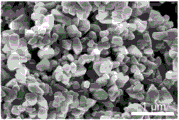
Fig. 1 is a Scanning Electron Microscope (SEM) morphology of a lithium carbonate sample prepared in example 1 of the present invention;
FIG. 2 is an SEM topography of a lithium carbonate sample prepared in example 2 of the present invention;
FIG. 3 is an SEM topography of a lithium carbonate sample prepared in example 3 of the present invention;
FIG. 4 is an SEM topography of a lithium carbonate sample prepared by using ethanol as a dissolution agent in comparative example 2 of the invention;
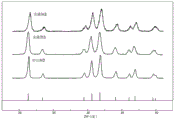
fig. 5 is an X-ray diffraction pattern (XRD) of a lithium carbonate sample prepared in examples 2 and 3 of the present invention and comparative example 2.
Detailed Description
The invention will be further described with reference to the following examples and the accompanying drawings, but the scope of the invention is not limited thereto.
The experimental procedures in the following examples are conventional unless otherwise specified. The test materials used in the following examples were purchased from a conventional reagent store unless otherwise specified.
Unless otherwise defined, technical or scientific terms used herein shall have the ordinary meaning as understood by one of ordinary skill in the art to which this invention belongs.
Example 1
The embodiment provides a preparation method of nano lithium carbonate, which comprises the following steps:
preparing a reaction system of sodium carbonate and lithium sulfate with the total volume of 100mL in a 250 mL reaction vessel, wherein the concentrations of the sodium carbonate and the lithium sulfate are both 0.1mol/L, and adjusting the pH value of the system to be 11;
adding 50 mL of high-polarity organic solvent dimethyl sulfoxide into a reaction system of sodium carbonate and lithium sulfate at one time, stirring to uniformly mix the solution, quickly transferring the solution into a centrifuge tube after two minutes for centrifugal treatment (the rotating speed is 5000 r/min), pouring out supernatant obtained by centrifugation, collecting precipitate obtained by centrifugation, washing the precipitate with a small amount of deionized water for three times, and finally drying the precipitate in a vacuum oven at the drying temperature of 40 ℃ for 24 hours to obtain the nano lithium carbonate.
Because sodium carbonate, lithium sulfate and lithium carbonate are not dissolved in dimethyl sulfoxide, and the solubility of lithium carbonate is minimum, lithium carbonate can be quickly separated out after dimethyl sulfoxide is introduced into a reaction system, and dimethyl sulfoxide plays a role in dissolution and separation and also plays a role in dispersing lithium carbonate crystals;
the experimental results show that: the specific surface area of the lithium carbonate prepared in the embodiment can reach 13m2(ii) in terms of/g and a uniform particle size dimension of about 500nm, as shown in FIG. 1. The method has the advantages of simple process flow, low implementation cost, mild reaction conditions, recovery yield of about 70.0 percent and purity of the product nano lithium carbonate which is washed and purified to be more than 99 percent.
Example 2
The embodiment provides a preparation method of nano lithium carbonate, which comprises the following steps:
preparing a reaction system of sodium carbonate and lithium sulfate with the total volume of 100mL in a 250 mL reaction vessel, wherein the concentrations of the sodium carbonate and the lithium sulfate are both 0.1mol/L, and adjusting the pH value of the system to be 11;
adding 100mL of high-polarity organic solvent dimethyl sulfoxide into a reaction system of sodium carbonate and lithium sulfate at one time, stirring to uniformly mix the solution, quickly transferring the solution into a centrifuge tube after two minutes for centrifugal treatment (the rotating speed is 5000 r/min), pouring out supernatant obtained by centrifugation, collecting precipitate obtained by centrifugation, washing the precipitate with a small amount of deionized water for three times, and finally placing the precipitate in a vacuum oven for drying at the drying temperature of 40 ℃ for 24 hours to obtain the nano lithium carbonate.
Because sodium carbonate, lithium sulfate and lithium carbonate are not dissolved in dimethyl sulfoxide, and the solubility of lithium carbonate is minimum, lithium carbonate can be quickly separated out after dimethyl sulfoxide is introduced into a reaction system, and a elution agent, namely dimethyl sulfoxide, plays a role in elution and also plays a role in dispersing lithium carbonate crystals;
the experimental results show that: the specific surface area of the lithium carbonate prepared in the example can reach 22.7m2The morphology is shown in FIG. 2, and in comparison with example 1 and example 2, the volume size of lithium carbonate is not changed significantly after the addition amount of dimethyl sulfoxide is increased, and the particle size is still uniform, and is about 130 nm. Meanwhile, the recovery yield is improved to about 93.2 percent, and the purity of the product can reach more than 99 percent after washing and purification.
In example 1-2, the volume ratio of the highly polar organic solvent to the reaction system of carbonate and lithium salt was 0.5:1 and 1: 1.
The different proportions of the high-polarity organic solvent and the system water solution and the different mixing and dissolving degrees of the high-polarity organic solvent and the system water solution lead to different precipitation speeds and different crystallization qualities of lithium carbonate crystals, thereby causing different crystallinity and different particle sizes; the supersaturation degree of the lithium carbonate is increased by adjusting the ratio of the high-polarity organic solvent to the aqueous solution of the reaction system of the carbonate and the lithium salt, so that the lithium carbonate precipitate with low crystallinity and uniform size is rapidly nucleated and separated out.
Example 3
The embodiment provides a preparation method of nano lithium carbonate, which comprises the following steps:
preparing a reaction system of sodium carbonate and lithium sulfate with the total volume of 100mL in a 250 mL reaction vessel, wherein the concentrations of the sodium carbonate and the lithium sulfate are both 0.2mol/L, and adjusting the pH value of the system to be 11;
adding 100mL of high-polarity organic solvent dimethyl sulfoxide into a reaction system of sodium carbonate and lithium sulfate at one time, stirring to uniformly mix the solution, quickly transferring the solution into a centrifuge tube after two minutes for centrifugal treatment (the rotating speed is 5000 r/min), pouring out supernatant obtained by centrifugation, collecting precipitate obtained by centrifugation, washing the precipitate with a small amount of deionized water for three times, and finally placing the precipitate in a vacuum oven for drying at the drying temperature of 40 ℃ for 24 hours to obtain the nano lithium carbonate.
Because sodium carbonate, lithium sulfate and lithium carbonate are not dissolved in dimethyl sulfoxide, and the solubility of lithium carbonate is minimum, lithium carbonate can be quickly separated out after dimethyl sulfoxide is introduced into a reaction system, and the dimethyl sulfoxide introduced into the system not only plays a role in dissolution, but also plays a role in dispersion;
the experimental results show that: the specific surface area of the lithium carbonate prepared in the embodiment can reach 25 m2The shape of the lithium carbonate nanoparticles is shown in fig. 3, in comparative example 2, the addition amount of dimethyl sulfoxide is kept unchanged, and after the concentrations of sodium carbonate and lithium sulfate are increased, the particle size of the obtained lithium carbonate nanoparticles is uniform and is about 100 nm; the XRD spectrogram shows that the nano crystallinity of the lithium carbonate is basically kept unchanged (as shown in figure 5), the recovery yield is further improved to 94.2%, and the purity of the product after washing and purification can reach more than 96%.
Example 4
The embodiment provides a preparation method of nano lithium carbonate, which comprises the following steps:
preparing a reaction system of sodium carbonate and lithium sulfate with the total volume of 100mL in a 250 mL reaction vessel, wherein the concentrations of the sodium carbonate and the lithium sulfate are both 0.4mol/L, and adjusting the pH value of the system to be 11;
adding 100mL of high-polarity organic solvent dimethyl sulfoxide into a reaction system of sodium carbonate and lithium sulfate at one time, stirring to uniformly mix the solution, quickly transferring the solution into a centrifuge tube after two minutes for centrifugal treatment (the rotating speed is 5000 r/min), pouring out supernatant obtained by centrifugation, collecting precipitate obtained by centrifugation, washing the precipitate with a small amount of deionized water for three times, and finally placing the precipitate in a vacuum oven for drying at the drying temperature of 40 ℃ for 24 hours to obtain the nano lithium carbonate.
Because sodium carbonate, lithium sulfate and lithium carbonate are not dissolved in dimethyl sulfoxide, and the solubility of lithium carbonate is minimum, lithium carbonate can be quickly separated out after dimethyl sulfoxide is introduced into a reaction system, and a elution agent, namely dimethyl sulfoxide, plays a role in elution and also plays a role in dispersing lithium carbonate crystals;
the experimental results show that: the morphology of the lithium carbonate prepared in the embodiment still maintains a smaller particle size, and compared with the lithium carbonate prepared in the embodiment 2, after the concentrations of the sodium carbonate and the lithium sulfate are increased, the specific surface area of the lithium carbonate can reach 30 m2The particle size is still uniform and is about 50nm without obvious change of the size, but the crystallinity of the lithium carbonate nano particles is greatly reduced, the recovery yield is greatly improved and is about 98.2 percent, and the purity of the product can reach more than 95 percent after washing and purification.
In examples 2-4, the carbonate concentration was 0.1-0.4mol/L, i.e., 100-400 mM. The higher the carbonate concentration is, the higher the carbonate ion concentration is, the higher the supersaturation degree of the lithium carbonate after the addition of the dissolving agent is, so that the lithium carbonate is easier to crystallize and separate out; thus, the concentration of carbonate affects the recovery yield, with higher carbonate concentrations giving higher recovery yields. However, when the carbonate concentration exceeds 0.4mol/L, the addition of the elution reagent causes impurities such as sodium sulfate, thereby lowering the purity of the lithium carbonate to be obtained. The embodiment of the invention adopts carbonate with the concentration of 0.1-0.4mol/L, and is determined by comprehensively considering various factors such as recovery yield, purity and the like.
In examples 2 to 4, the concentration of the lithium salt was 0.1 to 0.4mol/L, i.e., 100-400 mM. The higher the concentration of the lithium salt is, the higher the concentration of lithium ions is, the higher the supersaturation degree of the lithium carbonate is after the solvent is added, so that the lithium carbonate is easier to crystallize and precipitate; therefore, the concentration of the lithium salt affects the recovery yield, and the higher the concentration of the lithium salt, the higher the recovery yield. However, when the concentration of the lithium salt exceeds 0.4mol/L, the addition of the elution reagent causes impurities such as sodium sulfate, thereby lowering the purity of the lithium carbonate to be obtained. The embodiment of the invention adopts the lithium salt with the concentration of 0.1-0.4mol/L, and is determined by comprehensively considering various factors such as recovery yield, purity and the like. After the concentration of the sodium carbonate and the lithium sulfate is improved, the recovery yield of the lithium carbonate is effectively increased, and meanwhile, a simple process flow and mild reaction conditions are kept, so that the direct industrialization is facilitated.
Example 5
The embodiment provides a preparation method of nano lithium carbonate, which comprises the following steps:
preparing a reaction system of sodium carbonate, lithium chloride and lithium hydroxide with the total volume of 100mL in a 250 mL reaction vessel, wherein the concentration of the sodium carbonate is 0.2mol/L, the lithium chloride and the lithium hydroxide are added in equal volumes, the final concentration of lithium ions is 0.2mol/L, and the pH value of the system is adjusted to be 11;
adding 100mL of high-polarity organic solvent dimethyl sulfoxide into a reaction system of sodium carbonate, lithium chloride and lithium hydroxide at one time, stirring to uniformly mix the solution, quickly transferring the solution into a centrifuge tube after two minutes for centrifugal treatment (the rotating speed is 5000 r/min), pouring out supernatant obtained by centrifugation, collecting precipitate obtained by centrifugation, washing the precipitate with a small amount of deionized water for three times, and finally drying the precipitate in a vacuum oven at the drying temperature of 40 ℃ for 24 hours to obtain the nano lithium carbonate.
Because sodium carbonate, lithium chloride, lithium hydroxide and lithium carbonate are not dissolved in dimethyl sulfoxide, and the solubility of lithium carbonate is minimum, lithium carbonate can be quickly separated out after dimethyl sulfoxide is introduced into a reaction system, and a solvent-out agent, namely dimethyl sulfoxide, has a dissolving-out function and also has a dispersing function on lithium carbonate crystals;
the experimental results show that: in the embodiment, when the reaction system of the sodium carbonate, the lithium chloride and the lithium hydroxide is adopted to prepare the nano lithium carbonate, the specific surface area of the nano lithium carbonate can reach 20m2The volume size of the lithium carbonate is not obviously changed, the particle size is still uniform and is about 135nm, meanwhile, the high recovery yield can be still maintained, and is about 91.7%, and the purity of the product can reach more than 99% after washing and purification.
Example 6
The embodiment provides a preparation method of nano lithium carbonate, which comprises the following steps:
preparing a reaction system of potassium carbonate and sodium bicarbonate with a total volume of 100mL and lithium sulfate in a 250 mL reaction container, wherein the final concentration of carbonate ions added in the potassium carbonate and the sodium bicarbonate with equal volume is 0.4mol/L, the concentration of lithium sulfate is 0.4mol/L, and the pH value of the system is adjusted to be 11;
adding 10 mL of high-polarity organic solvent-out agent ethylene glycol and benzyl benzene sulfoxide (the volume ratio of the ethylene glycol to the benzyl benzene sulfoxide is 1: 1) into a reaction system of potassium carbonate, sodium bicarbonate and lithium sulfate at one time, stirring to uniformly mix the solution, quickly transferring the solution into a centrifuge tube after two minutes for centrifugal treatment (the rotating speed is 5000 r/min), pouring out the supernatant obtained by centrifugation, collecting the precipitate obtained by centrifugation, washing with a small amount of deionized water for three times, and finally placing in a vacuum oven for drying at the drying temperature of 40 ℃ for 24 hours to obtain the nano lithium carbonate.
Because the potassium carbonate, the sodium bicarbonate, the lithium sulfate and the lithium carbonate are not dissolved in the ethylene glycol and the benzyl benzene sulfoxide, and the solubility of the lithium carbonate is minimum, the lithium carbonate can be quickly separated out after the ethylene glycol and the benzyl benzene sulfoxide are introduced into a reaction system, and the elution agents, namely the ethylene glycol and the benzyl benzene sulfoxide, not only play a role in elution, but also play a role in dispersing lithium carbonate crystals;
the experimental results show that: in the embodiment, when the reaction system of potassium carbonate, sodium bicarbonate and lithium sulfate is adopted to prepare the nano lithium carbonate, the specific surface area of the nano lithium carbonate can reach 15 m2The volume size of the lithium carbonate is not obviously changed, the particle size is still uniform and is about 200 nm, the high recovery yield can be still maintained, the recovery yield is about 90.8%, and the purity of the product after washing and purification can reach more than 97%.
Example 7
The embodiment provides a preparation method of nano lithium carbonate, which comprises the following steps:
preparing a reaction system of potassium carbonate and sodium bicarbonate, lithium chloride and lithium hydroxide with a total volume of 100mL in a 250 mL reaction vessel, wherein the potassium carbonate and the sodium bicarbonate are added in equal volumes, the final concentration of carbonate ions is 0.1mol/L, the lithium chloride and the lithium hydroxide are added in equal volumes, the final concentration of lithium ions is 0.1mol/L, and the pH value of the system is adjusted to be 11;
adding 100mL of a mixed solution of high-polarity organic solvent glycerol and diethyl sulfoxide (the volume ratio of glycerol to diethyl sulfoxide in the mixed solution is 1: 1) into a reaction system of potassium carbonate, sodium bicarbonate, lithium chloride and lithium hydroxide at one time, stirring to uniformly mix the solution, quickly transferring the solution into a centrifuge tube after two minutes for centrifugal treatment (the rotating speed is 5000 r/min), pouring out the supernatant obtained by centrifugation, collecting the precipitate obtained by centrifugation, washing with a small amount of deionized water for three times, and finally drying in a vacuum oven at the drying temperature of 40 ℃ for 24 hours to obtain the nano lithium carbonate.
Because the potassium carbonate, the sodium bicarbonate, the lithium chloride and the lithium hydroxide are not dissolved in the mixed solution of the glycerol and the diethyl sulfoxide, and the solubility of the lithium carbonate is minimum, the lithium carbonate can be quickly separated out after the mixed solution of the glycerol and the diethyl sulfoxide is introduced into a reaction system, and a elution agent of the mixed solution of the glycerol and the diethyl sulfoxide plays a role in elution and also plays a role in dispersing lithium carbonate crystals;
the experimental results show that: in the embodiment, the specific surface area of the nano lithium carbonate prepared by adopting the reaction system of potassium carbonate and sodium bicarbonate, lithium chloride and lithium hydroxide can reach 19m2And/g, when the mixed solution of glycerol and diethyl sulfoxide is used as a elution agent, the volume size of the lithium carbonate is not obviously changed, the particle size is still uniform and is about 148nm, meanwhile, the recovery yield can still be kept high and is about 91.3%, and the purity of the product can reach more than 99% after washing and purification.
Example 8
The embodiment provides a preparation method of nano lithium carbonate, which comprises the following steps:
preparing a reaction system of sodium carbonate and lithium sulfate with the total volume of 100mL in a 250 mL reaction vessel, wherein the concentrations of the sodium carbonate and the lithium sulfate are both 0.02mol/L, and adjusting the pH value of the system to be 11;
adding 500 mL of high-polarity organic solvent dimethyl sulfoxide into a reaction system of sodium carbonate and lithium sulfate at one time, stirring to uniformly mix the solution, quickly transferring the solution into a centrifuge tube after two minutes for centrifugal treatment (the rotating speed is 5000 r/min), pouring out supernatant obtained by centrifugation, collecting precipitate obtained by centrifugation, washing the precipitate with a small amount of deionized water for three times, and finally placing the precipitate in a vacuum oven for drying at the drying temperature of 40 ℃ for 24 hours to obtain the nano lithium carbonate.
Because sodium carbonate, lithium sulfate and lithium carbonate are not dissolved in dimethyl sulfoxide, and the solubility of lithium carbonate is minimum, lithium carbonate can be quickly separated out after dimethyl sulfoxide is introduced into a reaction system, and dimethyl sulfoxide plays a role in dissolution and separation and also plays a role in dispersing lithium carbonate crystals;
the experimental results show that: the specific surface area of the lithium carbonate prepared in the embodiment can reach 13.3m2(ii) a/g and a uniform particle size dimension of about 450 nm. The method has the advantages of simple process flow, low implementation cost, mild reaction conditions, recovery yield of about 68.0 percent and purity of the product nano lithium carbonate which is washed and purified to be more than 99 percent.
In an embodiment, the carbonate salt comprises at least one of sodium carbonate, potassium carbonate, and sodium bicarbonate; the lithium salt includes at least one of lithium sulfate, lithium chloride, and lithium hydroxide.
According to the preparation method of the nano lithium carbonate provided by the embodiment of the invention, no scaling phenomenon is generated in the whole preparation process, no damage is caused to a reaction container, the prepared lithium carbonate sample is easy to obtain, and the lithium carbonate sample can be directly obtained through centrifugation or filtration separation; and the recovery yield is high, the process flow is simple, the reaction condition is mild (room temperature is 20 ℃), the implementation cost is low, and the method is convenient for industrial application.
The nano lithium carbonate prepared by the embodiment of the invention has high recovery yield and large specific surface (the BET specific surface area can reach 13-30 m)2Per gram), high purity (more than 95 percent), low crystallinity, nanometer grade (the grain diameter is 50-500 nm), uniform grain diameter and the like.
Comparative example 1
In this comparative example, no elution agent was added to the reaction system of sodium carbonate and lithium sulfate, and as a result, no lithium carbonate was produced, as follows:
in a 250 mL reaction vessel, preparing a reaction system of sodium carbonate and lithium sulfate with a total volume of 100mL, wherein the concentrations of the sodium carbonate and the lithium sulfate are both 0.1mol/L, stirring to uniformly mix the solution, and adding no eluent, so that no lithium carbonate is separated out.
This is because the critical saturation concentration of lithium carbonate at room temperature (20 ℃ C.) is about 0.117mol/L, and under such conditions, the actual concentration of lithium carbonate is 0.1mol/L which is lower than the critical saturation concentration thereof, so that it cannot be precipitated. Therefore, the aim of effectively recovering the lithium carbonate cannot be achieved under the condition of not introducing a dissolution agent, and the preparation of the high-activity nano lithium carbonate with low crystallinity and uniform size cannot be further realized.
Comparative example 2
The comparative example provides a method for preparing lithium carbonate by adding ethanol as a low-polarity elution agent, which comprises the following steps:
in a 250 mL reaction vessel, a reaction system of sodium carbonate and lithium sulfate with a total volume of 100mL is prepared, wherein the concentrations of the sodium carbonate and the lithium sulfate are both 0.1 mol/L.
Adding 100mL of solvent ethanol into a reaction system of sodium carbonate and lithium sulfate at one time, stirring to uniformly mix the solution, quickly transferring the solution into a centrifuge tube after two minutes for centrifugal treatment (the rotating speed is 5000 r/min), pouring out supernatant obtained by centrifugation, collecting precipitate obtained by centrifugation, washing the precipitate with a small amount of deionized water for three times, and finally drying the precipitate in a vacuum oven at the drying temperature of 40 ℃ for 24 hours to obtain the nano lithium carbonate.
The experimental results show that: although the low-polarity ethanol is used as a solvent out agent, the lithium carbonate can be separated out, but the experimental result shows that the lithium carbonate product obtained by the method has poor uniformity of particle size scale, wide distribution range from hundreds of nanometers to micron-sized, and small specific surface area (6.0 m)2(g) (as shown in fig. 4), which does not meet the requirement that the battery-grade lithium carbonate is nano-scale particles with uniform particle size; under the same condition, the high-polarity dimethyl sulfoxide is used as the organic solvent, so that the product with uniform particle size (about 130 nm) and large specific surface area (22.7 m) can be quickly obtained2/g) and nano-grade lithium carbonate with low crystallinity completely meet the requirement of battery-grade lithium carbonate, and the recovery yield is higher and can reach more than 93 percent (see table 1). In addition, the crystallization rate of lithium carbonate particles obtained by adopting ethanol as a solvent is slow, and the crystallinity is obviously improved(see FIG. 5), the recovery yield was significantly low (about 63.8%).
TABLE 1 comparison of lithium carbonate Properties with different elution Agents
| Elution reagent | Recovery yield | Particle size | Degree of crystallinity | Specific surface area | Rate of crystallization |
| Ethanol | 63.8% | Several hundred nanometers to micrometers | Height of | 6.0 m2/g | Slow |
| Dimethyl sulfoxide | 93.2% | 130 nm | Is low in | 22.7 m2/g | Fast-acting toy |
In addition, the low-polarity ethanol is used as a leaching agent, has the obvious defects of easy volatilization, low boiling point, poor thermal stability and high risk, and is inconvenient for industrialization; and the high-polarity dimethyl sulfoxide is used as a dissolving out agent, so that the characteristics of difficult volatilization, high boiling point, good thermal stability and high safety are more favorable for direct industrialization.
Figure 5 of the present invention is an X-ray diffraction pattern (XRD) of the lithium carbonate sample prepared in examples 2 and 3 and comparative example 2. The width of the peak pattern in the XRD pattern correlates with the crystallinity of the sample, and generally the wider the peak pattern, the lower the crystallinity of the sample. The XRD peak widths of the lithium carbonate samples prepared in example 2 and example 3 were different, so the crystallinity was different. Compared with the comparative example 2, the XRD peak width of the example 2 is obviously wider than that of the comparative example 2, which shows that the nano lithium carbonate with low crystallinity can not be prepared when ethanol is used as the elutriation agent, and the nano lithium carbonate with low crystallinity can be prepared well when dimethyl sulfoxide is used as the elutriation agent.
Claims (8)
1. A preparation method of nano lithium carbonate is characterized by comprising the specific steps of introducing a high-polarity organic solvent into a reaction system of carbonate and lithium salt, reacting and crystallizing to obtain a precipitate, and washing, centrifuging and drying the precipitate to obtain the nano lithium carbonate.
2. The method for preparing nano lithium carbonate as claimed in claim 1, wherein the high-polarity organic solvent comprises at least one of dihydric alcohol containing a dihydroxy functional group, trihydric alcohol containing a trihydroxy functional group and sulfoxide containing a sulfinyl functional group.
3. The method for preparing nano lithium carbonate according to claim 2, wherein the dihydric alcohol comprises at least one of ethylene glycol and propylene glycol; the trihydric alcohol comprises at least one of glycerol and butanetriol; the sulfoxide includes at least one of dimethyl sulfoxide, diethyl sulfoxide and benzyl benzene sulfoxide.
4. The method for preparing nano lithium carbonate according to claim 1, wherein the concentration of the carbonate is 0.02-0.4 mol/L, and the concentration of the lithium salt is 0.02-0.4 mol/L.
5. The method for preparing nano lithium carbonate according to claim 4, wherein the carbonate comprises at least one of sodium carbonate, potassium carbonate and sodium bicarbonate; the lithium salt includes at least one of lithium sulfate, lithium chloride and lithium hydroxide.
6. The method for preparing nano lithium carbonate according to claim 1, wherein the volume ratio of the high-polarity organic solvent to the reaction system of the carbonate and the lithium salt is (0.1-5): 1.
7. the method for preparing nano lithium carbonate according to claim 1, wherein the drying step is carried outTemperature ofThe temperature is 20-40 ℃.
8. Nano lithium carbonate prepared by the preparation method as claimed in any one of claims 1 to 7.
Priority Applications (1)
| Application Number | Priority Date | Filing Date | Title |
|---|---|---|---|
| CN202110974199.8A CN113772697B (en) | 2021-08-24 | 2021-08-24 | Nanometer lithium carbonate and preparation method thereof |
Applications Claiming Priority (1)
| Application Number | Priority Date | Filing Date | Title |
|---|---|---|---|
| CN202110974199.8A CN113772697B (en) | 2021-08-24 | 2021-08-24 | Nanometer lithium carbonate and preparation method thereof |
Publications (2)
| Publication Number | Publication Date |
|---|---|
| CN113772697A true CN113772697A (en) | 2021-12-10 |
| CN113772697B CN113772697B (en) | 2024-01-09 |
Family
ID=78838760
Family Applications (1)
| Application Number | Title | Priority Date | Filing Date |
|---|---|---|---|
| CN202110974199.8A Active CN113772697B (en) | 2021-08-24 | 2021-08-24 | Nanometer lithium carbonate and preparation method thereof |
Country Status (1)
| Country | Link |
|---|---|
| CN (1) | CN113772697B (en) |
Cited By (2)
| Publication number | Priority date | Publication date | Assignee | Title |
|---|---|---|---|---|
| WO2024036581A1 (en) * | 2022-08-18 | 2024-02-22 | Techtronic Cordless Gp | Lithium carbonate and uses thereof |
| CN118479497A (en) * | 2024-05-11 | 2024-08-13 | 江苏新锂元科技有限公司 | Preparation method and application of battery-grade lithium hydroxide |
Citations (4)
| Publication number | Priority date | Publication date | Assignee | Title |
|---|---|---|---|---|
| CN102408119A (en) * | 2010-09-20 | 2012-04-11 | 华东理工大学 | A kind of method adopting dissolution-reaction crystallization to prepare lithium carbonate superfine powder |
| CN102583296A (en) * | 2011-01-06 | 2012-07-18 | 河南师范大学 | Method for preparing nanometer lithium iron phosphate in liquid phase |
| CN106654265A (en) * | 2017-03-14 | 2017-05-10 | 中国科学院青海盐湖研究所 | Method for preparing battery level micrometer lithium carbonate |
| CN108821313A (en) * | 2018-09-25 | 2018-11-16 | 青海大学 | A method of Lithium hydroxide monohydrate is prepared using lithium carbonate |
-
2021
- 2021-08-24 CN CN202110974199.8A patent/CN113772697B/en active Active
Patent Citations (4)
| Publication number | Priority date | Publication date | Assignee | Title |
|---|---|---|---|---|
| CN102408119A (en) * | 2010-09-20 | 2012-04-11 | 华东理工大学 | A kind of method adopting dissolution-reaction crystallization to prepare lithium carbonate superfine powder |
| CN102583296A (en) * | 2011-01-06 | 2012-07-18 | 河南师范大学 | Method for preparing nanometer lithium iron phosphate in liquid phase |
| CN106654265A (en) * | 2017-03-14 | 2017-05-10 | 中国科学院青海盐湖研究所 | Method for preparing battery level micrometer lithium carbonate |
| CN108821313A (en) * | 2018-09-25 | 2018-11-16 | 青海大学 | A method of Lithium hydroxide monohydrate is prepared using lithium carbonate |
Cited By (2)
| Publication number | Priority date | Publication date | Assignee | Title |
|---|---|---|---|---|
| WO2024036581A1 (en) * | 2022-08-18 | 2024-02-22 | Techtronic Cordless Gp | Lithium carbonate and uses thereof |
| CN118479497A (en) * | 2024-05-11 | 2024-08-13 | 江苏新锂元科技有限公司 | Preparation method and application of battery-grade lithium hydroxide |
Also Published As
| Publication number | Publication date |
|---|---|
| CN113772697B (en) | 2024-01-09 |
Similar Documents
| Publication | Publication Date | Title |
|---|---|---|
| CN112194201B (en) | A method for recycling valuable metals from waste lithium-ion batteries and regenerating ternary positive electrode materials | |
| CN102408120B (en) | Method for preparing high-purity ultrafine lithium-carbonate micro powder | |
| CN113264821B (en) | Recovery method and application of lithium iron phosphate waste | |
| CN106542512A (en) | Using the high-purity phosphoric acid lithium preparation method of the lithium waste liquid of old and useless battery | |
| CN115974036B (en) | Spherical lithium iron manganese phosphate nanoparticles and preparation method thereof | |
| CN103708434B (en) | LiFePO 4 material and preparation method thereof | |
| CN110713197B (en) | Method for recovering lithium salt from mother solution generated in preparation of lithium iron phosphate by hydrothermal method | |
| CN113772697B (en) | Nanometer lithium carbonate and preparation method thereof | |
| Wang et al. | Effect of OH− on morphology of Cu2O particles prepared through reduction of Cu (II) by glucose | |
| CN106169580A (en) | A kind of preparation method of battery grade iron phosphate/graphene composite material | |
| CN113003613A (en) | Preparation method of 2-4 mu m battery grade cobalt tetroxide | |
| CN116768176A (en) | Preparation method and application of iron phosphate precursor | |
| CN105060266B (en) | A kind of hydrothermal synthesis method of nano-grade lithium iron phosphate | |
| CN111186862A (en) | Preparation method of battery-grade high-purity trimanganese tetroxide | |
| CN114899392A (en) | Preparation method of lithium iron phosphate or lithium ferromanganese anode material of lithium ion battery | |
| CN1297364C (en) | Precipitation reduction method of preparing nano-cobalt powder | |
| CN115472942B (en) | Alumina-coated ternary positive electrode material and method for preparing waste ternary batteries | |
| JP2025511646A (en) | High purity nanoscale lithium sulfide, its preparation method and its uses | |
| CN117602603A (en) | Nano-iron phosphate and its preparation method, nano-lithium iron phosphate cathode material and its preparation method and application | |
| CN116675195A (en) | A method for preparing high-purity lithium phosphate by using salt lake brine lithium precipitation mother liquor | |
| CN113651349B (en) | Method for preparing stable spherical vaterite phase calcium carbonate in organic medium | |
| CN115020659A (en) | LiFePO 4 Preparation method of/C composite positive electrode material | |
| CN112661189A (en) | Manganese carbonate nano material and preparation method thereof | |
| CN113149041A (en) | Method for concentrating and recycling lithium in lithium precipitation mother liquor in lithium carbonate production | |
| CN102581289B (en) | Method for preparing monodisperse high-crystallinity silver powder |
Legal Events
| Date | Code | Title | Description |
|---|---|---|---|
| PB01 | Publication | ||
| PB01 | Publication | ||
| SE01 | Entry into force of request for substantive examination | ||
| SE01 | Entry into force of request for substantive examination | ||
| GR01 | Patent grant | ||
| GR01 | Patent grant |