Physical gel based on zwitterion modified polysaccharide and preparation method thereof
Technical Field
The invention relates to the technical field of polymer gel, in particular to a physical gel based on zwitterion modified polysaccharide and a preparation method thereof.
Background
All water-soluble or hydrophilic polymers can form hydrogel through certain chemical crosslinking or physical crosslinking. These polymers can be classified into two types, natural ones and synthetic ones, according to their origin, and the natural hydrophilic polymers include polysaccharides (starch, cellulose, alginic acid, hyaluronic acid, chitosan, etc.) and polypeptides (collagen, poly-L-lysine, poly-L-glutamic acid, etc.). The synthesized hydrophilic polymer comprises alcohol, acrylic acid and derivatives thereof (polyacrylic acid, polymethacrylic acid, polyacrylamide and the like).
Zwitterionic materials are those materials that have both a positive and a negative charge on a molecular chain and are generally uncharged. Due to good biocompatibility and protein adsorption resistance, zwitterionic materials have attracted extensive attention in the field of drug delivery to tumors. Hydrogel materials based on zwitterionic polymers and biopolysaccharides have wide application in the biomedical field, but each has certain disadvantages, such as difficulty in degrading the zwitterionic polymers, and weak protein adhesion resistance of polysaccharide materials. Most of the current zwitterionic polymer-based gel materials are not degradable. The degradability is of great significance to the nanogel. There is therefore a need for a physical gel that can combine zwitterionic polymers with hydrogel materials of biopolysaccharides to produce degradable gel materials.
Disclosure of Invention
Aiming at the defects of the prior art, the invention provides a physical gel based on zwitterion modified polysaccharide and a preparation method thereof. The invention can realize the control of the polymerization degree n by utilizing an ATRP method of high polymer polymerization, thereby accurately regulating and controlling the polymerization degree of the zwitterion side chain and further controlling the size of the ion interaction force. Thereby realizing the phase transformation of the polymer in the gradient salt ion solution, namely 'solution-gel-precipitation'. Screening out a prescription with physiological solution sensitivity, and preparing the biodegradable zwitterionic polysaccharide-based hydrogel.
The invention is realized by the following technical scheme:
in a first aspect of the present invention, there is provided a method for preparing a zwitterionic modified polysaccharide-based physical gel, comprising the steps of:
(1) dissolving polysaccharide in dimethylformamide, then placing the solution in an ice water bath for cooling, adding 4-dimethylpyridine, and stirring the solution for activating functional groups to obtain a solution A;
(2) dissolving bromine-isobutyryl bromide in dimethylformamide, and uniformly stirring to obtain a solution B;
(3) dropwise adding the solution B into the solution A, simultaneously dropwise adding triethylamine, reacting in an ice bath, dispersing in glacial ethanol after the reaction is finished, and collecting precipitate to obtain a macroinitiator D-Br;
(4) dissolving the macroinitiator D-Br and the complexing agent Bpy obtained in the step (3) in DMSO to obtain a solution C;
(5) dissolving a zwitterionic monomer in DMSO to obtain a solution D;
(6) transferring the solution C and the solution D into a Schlenk tube, removing oxygen in the reaction, adding cuprous bromide under the condition of introducing nitrogen, carrying out closed reaction, dispersing in glacial methanol after the reaction is finished, and collecting a product to obtain the zwitterion graft modified polysaccharide derivative D X -G-ZWI Y ;
(7) Preparation of physiological saline sensitive physical gel: to D obtained in step (6) X -G-ZWI Y Adding physiological saline, and standing to obtain the physical gel based on the zwitterion modified polysaccharide.
Preferably, in step (1), the polysaccharide is selected from dextran or hyaluronic acid; the addition ratio of the polysaccharide to the dimethylformamide to the 4-dimethylpyridine is (0.5-3) g: (20-150) mL: (0.1g-0.5) g.
Preferably, in step (2), the volume ratio of the bromine-isobutyryl bromide solution to dimethylformamide is 1mL: (1-5) mL.
Preferably, in the step (3), the volume ratio of the solution A to the solution B to the triethylamine is 1mL: (0.1-1) mL: (0.1-1) mL; the dropping rate of the solution B is 0.2-3 mL/min; the dropwise adding rate of the triethylamine is 0.2-3 mL/min; the reaction time is 6-48 h.
Preferably, in the step (4), the addition amount of the macroinitiator D-Br, the complexing agent Bpy and DMSO is (0.01-0.2) g: (0.1-1.5) g: (5-50) mL.
Preferably, in step (5), the zwitterionic monomer is SBMA or CBMA; the ratio of the addition amount of the zwitterionic monomer to the addition amount of DMSO is (0.1-3) g: (5-30) mL.
Preferably, in the step (6), the addition ratio of the solution C, the solution D and the cuprous bromide is (5-50) mL: (5-30) mL: (0.05-3) g;
D X -G-ZWI Y wherein X is the substitution degree of bromine, the substitution degree is 10-70%, Y is the polymerization degree of a zwitterionic monomer (CBMA or SBMA), and the polymerization degree is 10-50.
Preferably, in step (7), D X -G-ZWI Y The adding amount ratio of the physiological saline to the physiological saline is (0.1-0.5) g, (1-5) mL; the standing time is 5-120 min.
In a second aspect of the invention, the physical gel based on the zwitterion modified polysaccharide prepared by the preparation method is provided, and is characterized in that the physical gel is degradable.
Preferably, the physical gel is added with excess physiological saline, and the gel skeleton is disintegrated accordingly.
The invention has the beneficial effects that:
(1) according to the invention, a molecular brush structure is formed by polymerizing a zwitterionic monomer and a polysaccharide main chain by an Atom Transfer Radical Polymerization (ATRP) technology, a physical gel with anti-protein adhesion property is formed by utilizing electrostatic interaction inside the material, and biodegradability is given to a gel framework by utilizing the self-degradable property of biological polysaccharide, so that the two materials are organically combined, the early stage of protein adhesion resistance in vivo implantation is realized, and the later stage degradation avoids secondary damage caused by taking out the implant by an operation.
(2) The gel prepared by the invention has good transparency and flexibility, and can be used for medicinesLoading and application of skin wounds. In the drug loading process, the drug is simply dissolved in the normal saline, and then the normal saline solution containing the drug is added into the solution D X -G-ZWI Y High-efficiency loading of the drug is realized in the high-molecular polymer powder. The drug loading method is simple, can be used for loading a plurality of types of drugs, and the carrier can be gradually dissociated and degraded in the salt solution, thereby having wide application prospect in the fields of medicine and cosmetics.
Drawings
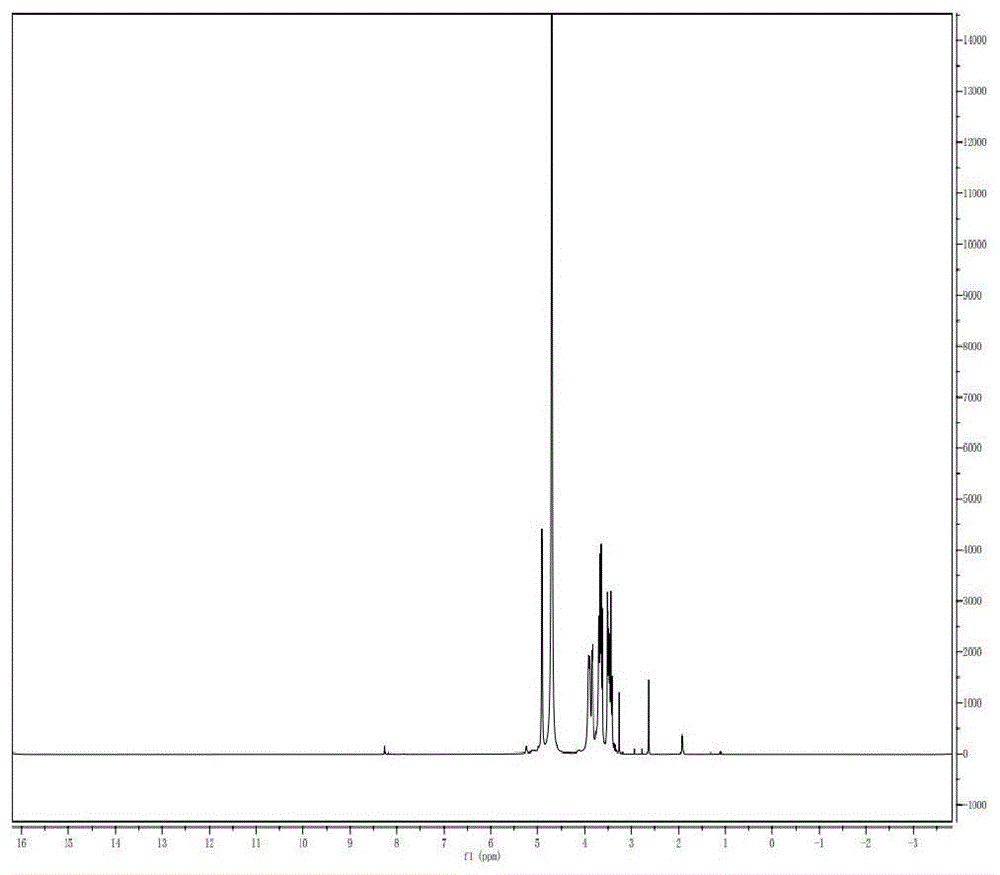
FIG. 1 is a dextran macroinitiator (D-Br) nuclear magnetic map;
FIG. 2 shows the preparation of zwitterionic modified dextran polysaccharide derivative (D) X -G-PSBMAy) nuclear magnetic map;
FIG. 3 is D X -initial saline solution image (a), digital photograph image (b) and SEM image (c) of G-PSBMAy polymer hydrogel.
FIG. 4 is a schematic representation of the "gel-sol" transition of a zwitterionic physical hydrogel;
FIG. 5 is a schematic representation of the use of a zwitterionic physical hydrogel;
FIG. 6 is a graph showing the effect of a zwitterionic physical hydrogel applied to combat intestinal adhesion.
FIG. 7 is a graph showing the effect of H & E staining and Masson's staining of zwitterionic physical hydrogels applied to resist intestinal adhesion.
Detailed Description
It should be noted that the following detailed description is exemplary and is intended to provide further explanation of the disclosure. Unless defined otherwise, all technical and scientific terms used herein have the same meaning as commonly understood by one of ordinary skill in the art to which this application belongs.
As mentioned in the background, most of the current zwitterionic polymer-based gel materials are not degradable. Based on the physical gel, the invention provides a physical gel based on zwitter-ion modified polysaccharide and a preparation method thereof. The invention uses Atom Transfer Radical Polymerization (ATRP) technology to polymerize zwitterionic monomer and polysaccharide main chain to form molecular brush structure, uses the electrostatic interaction in the material to form physical gel with anti-protein adhesion property, and uses the self-degradable property of biological polysaccharide to endow gel skeleton with biodegradability.
In order to make the technical solutions of the present application more clearly understood by those skilled in the art, the technical solutions of the present application will be described in detail below with reference to specific embodiments. If the experimental conditions not specified in the examples are specified, the conditions are generally conventional or recommended by the reagent company; reagents, consumables, and the like used in the following examples are commercially available unless otherwise specified.
Example 1
1. Preparation of macroinitiator (D-Br)
Preparing a solution A: 3g of dextran is weighed and dissolved in 150mL of dimethylformamide solution, then the system is placed in an ice-water bath for cooling, 0.3g of 4-lutidine activating agent is added, and stirring is carried out for 3 hours to activate functional groups.
Preparing solution B: 3g of bromine-isobutyryl bromide reagent is precisely weighed and dissolved in 5g of dimethylformamide, and the mixture is uniformly stirred for standby.
Dropwise adding the solution B into the system A through a dropping funnel, simultaneously dropwise adding acid-binding agent triethylamine with the molar quantity equal to that of bromine-isobutyryl bromide, placing the system in an ice bath, and reacting for 24 hours. After the reaction is finished, dispersing the system in the glacial ethanol, collecting, washing and precipitating, and naming the product as the D-Br monomolecular initiator.
2. Preparation of zwitterionic graft-modified polysaccharide derivatives
Preparing a solution C: 0.1g of the prepared macroinitiator D-Br and 0.15g of a complexing agent Bpy were precisely weighed and dissolved in 10ml of DSMSO.
Preparing a solution D: a precision weight of 0.6g of SBMA was dissolved in 20ml of LDMSO.
Transferring the prepared solution C and the solution D into a Schlenk tube, performing vacuumizing-nitrogen introduction repeated 5 cycles on the system through a Schlenk system, removing oxygen in the reaction, adding 0.3g of cuprous bromide under the condition of introducing nitrogen, repeating the vacuumizing-nitrogen introduction cycle for 5 times, sealing the system, and reacting for 24 hours. After the reaction, the system was dispersed in 10 times the amount of glacial methanolWashing and collecting the product to obtain a product D X -G-PSBMA Y 。
3. Preparation of physiological saline sensitive physical gel
Weighing 0.2g of zwitter-ion graft modified polysaccharide derivative with the degree of substitution X of 26% and the certain degree of polymerization Y of 30, placing the zwitter-ion graft modified polysaccharide derivative into a glass bottle, adding 1mL of physiological saline, and standing for 20min to obtain the ion-sensitive physical gel.
Example 2
1. Preparation of macroinitiator (D-Br)
Preparing a solution A: 3g of hyaluronic acid is weighed and dissolved in 150mL of dimethylformamide solution, then the system is placed in an ice-water bath for cooling, 0.3g of 4-dimethylpyridine activator is added, and stirring is carried out for 3 hours to activate functional groups.
Preparing solution B: 5g of bromine-isobutyryl bromide reagent is precisely weighed and dissolved in 11.2g of dimethylformamide, and the mixture is uniformly stirred for standby.
Dropwise adding the solution B into the system A through a dropping funnel, simultaneously dropwise adding a certain amount of triethylamine as an acid-binding agent, placing the system in an ice bath, and reacting for 24 hours. After the reaction is finished, dispersing the system in the glacial ethanol, collecting, washing and precipitating, and naming the product as the D-Br monomolecular initiator.
2. Preparation of zwitterionic graft-modified polysaccharide derivatives
Preparing a solution C: 0.1g of the prepared macroinitiator D-Br and 0.15g of the complexing agent Bpy were precisely weighed and dissolved in 10ml of TMSO.
Preparing a solution D: a precision weight of 0.3g of SBMA was dissolved in 20ml of LDMSO.
Transferring the prepared solution C and the solution D into a Schlenk tube, performing vacuumizing-nitrogen introduction repeated 5 cycles on the system through a Schlenk system, removing oxygen in the reaction, adding 0.3g of cuprous bromide under the condition of introducing nitrogen, repeating the vacuumizing-nitrogen introduction cycle for 5 times, sealing the system, and reacting for 24 hours. After the reaction is finished, dispersing the system in 10 times of ice methanol, washing and collecting the product to obtain a product D X -G-CBMA Y 。
3. Preparation of physiological saline sensitive physical gel
Weighing 0.15g of zwitter-ion graft modified polysaccharide derivative with the substitution degree X of 33.2 percent and the certain polymerization degree Y of 15, placing the zwitter-ion graft modified polysaccharide derivative into a glass bottle, adding 1mL of physiological saline, and standing for 20min to obtain the ion-sensitive physical gel, wherein the ion-sensitive physical gel is shown in figure 5.
Example 3
The physical gel prepared in example 1 was added to 5mL of physiological saline solution, and as the net content of ion concentration in the system increased, the electrostatic interaction between zwitterions was gradually shielded and dissociated, and the gel matrix was disintegrated.
Test example: d X -G-ZWI Y Degradation experiments of gels
Two mediums, namely physiological saline and deionized water are selected for testing. 0.1g of D prepared in example 1 was precisely weighed X -G-ZWI Y The powder was placed in a 15mL centrifuge tube, and then 0.9mL of physiological saline was added thereto and left to stand for 1h to form a physical gel. The gel was lyophilized for 48h to give a dry gel for testing (initial gel weight W) 0 ) (ii) a 9mL of physiological saline (or deionized water) was added to the centrifuge tube, which was then placed in a 37 ℃ incubator. The saline group was changed with fresh medium every day, and the deionized water group was changed once a week for 4 weeks continuously. At a time point preset in advance, the gel is removed, freeze-dried and weighed (Wt); the mass loss Δ W% was calculated according to the following formula (4 samples in each set): Δ W% ((W)) 0 -W t )/W 0
The physical gel has a faster mass loss process in physiological saline, and the mass loss of the gel can reach 80% at the test time point of the third day. In deionized water, the mass loss of the sample in deionized water may be due to polymer molecular chain scission, since there is not a large amount of electrolyte. The mass loss of the gel samples was approximately 18% over a period of 4 weeks, see figures 3 and 4.
The zwitterionic physical hydrogel prepared in example 1 was used in the field of anti-intestinal adhesion in a rat abdominal-cecal adhesion model, and the group treated with the uncoated hydrogel was used as a control group (model group). The hydrogel prepared in example 1 was implanted in rats and observed by opening the abdominal cavity 7 days after the operation, and it was found that the hydrogel of the present invention had superior anti-adhesion effect compared to the control group, see fig. 6 and 7.
The above description is only a preferred embodiment of the present application and is not intended to limit the present application, and various modifications and changes may be made to the present application by those skilled in the art. Any modification, equivalent replacement, improvement and the like made within the spirit and principle of the present application shall be included in the protection scope of the present application.