CN115443473A - Information processing system, information processing device, information processing method, and information processing program - Google Patents
Information processing system, information processing device, information processing method, and information processing program Download PDFInfo
- Publication number
- CN115443473A CN115443473A CN202080099442.XA CN202080099442A CN115443473A CN 115443473 A CN115443473 A CN 115443473A CN 202080099442 A CN202080099442 A CN 202080099442A CN 115443473 A CN115443473 A CN 115443473A
- Authority
- CN
- China
- Prior art keywords
- output
- reservoir
- input
- layer
- aforementioned
- Prior art date
- Legal status (The legal status is an assumption and is not a legal conclusion. Google has not performed a legal analysis and makes no representation as to the accuracy of the status listed.)
- Pending
Links
Images


Classifications
-
- G—PHYSICS
- G06—COMPUTING OR CALCULATING; COUNTING
- G06F—ELECTRIC DIGITAL DATA PROCESSING
- G06F7/00—Methods or arrangements for processing data by operating upon the order or content of the data handled
- G06F7/38—Methods or arrangements for performing computations using exclusively denominational number representation, e.g. using binary, ternary, decimal representation
- G06F7/48—Methods or arrangements for performing computations using exclusively denominational number representation, e.g. using binary, ternary, decimal representation using non-contact-making devices, e.g. tube, solid state device; using unspecified devices
- G06F7/544—Methods or arrangements for performing computations using exclusively denominational number representation, e.g. using binary, ternary, decimal representation using non-contact-making devices, e.g. tube, solid state device; using unspecified devices for evaluating functions by calculation
- G06F7/5443—Sum of products
-
- G—PHYSICS
- G06—COMPUTING OR CALCULATING; COUNTING
- G06N—COMPUTING ARRANGEMENTS BASED ON SPECIFIC COMPUTATIONAL MODELS
- G06N3/00—Computing arrangements based on biological models
- G06N3/02—Neural networks
- G06N3/08—Learning methods
-
- G—PHYSICS
- G06—COMPUTING OR CALCULATING; COUNTING
- G06N—COMPUTING ARRANGEMENTS BASED ON SPECIFIC COMPUTATIONAL MODELS
- G06N3/00—Computing arrangements based on biological models
- G06N3/02—Neural networks
- G06N3/04—Architecture, e.g. interconnection topology
- G06N3/044—Recurrent networks, e.g. Hopfield networks
-
- G—PHYSICS
- G06—COMPUTING OR CALCULATING; COUNTING
- G06N—COMPUTING ARRANGEMENTS BASED ON SPECIFIC COMPUTATIONAL MODELS
- G06N3/00—Computing arrangements based on biological models
- G06N3/02—Neural networks
- G06N3/04—Architecture, e.g. interconnection topology
- G06N3/045—Combinations of networks
-
- G—PHYSICS
- G06—COMPUTING OR CALCULATING; COUNTING
- G06N—COMPUTING ARRANGEMENTS BASED ON SPECIFIC COMPUTATIONAL MODELS
- G06N3/00—Computing arrangements based on biological models
- G06N3/02—Neural networks
- G06N3/06—Physical realisation, i.e. hardware implementation of neural networks, neurons or parts of neurons
- G06N3/063—Physical realisation, i.e. hardware implementation of neural networks, neurons or parts of neurons using electronic means
- G06N3/065—Analogue means
-
- G—PHYSICS
- G06—COMPUTING OR CALCULATING; COUNTING
- G06N—COMPUTING ARRANGEMENTS BASED ON SPECIFIC COMPUTATIONAL MODELS
- G06N3/00—Computing arrangements based on biological models
- G06N3/02—Neural networks
- G06N3/08—Learning methods
- G06N3/09—Supervised learning
-
- G—PHYSICS
- G06—COMPUTING OR CALCULATING; COUNTING
- G06F—ELECTRIC DIGITAL DATA PROCESSING
- G06F2207/00—Indexing scheme relating to methods or arrangements for processing data by operating upon the order or content of the data handled
- G06F2207/38—Indexing scheme relating to groups G06F7/38 - G06F7/575
- G06F2207/48—Indexing scheme relating to groups G06F7/48 - G06F7/575
- G06F2207/4802—Special implementations
- G06F2207/4814—Non-logic devices, e.g. operational amplifiers
Landscapes
- Engineering & Computer Science (AREA)
- Physics & Mathematics (AREA)
- Theoretical Computer Science (AREA)
- General Physics & Mathematics (AREA)
- Health & Medical Sciences (AREA)
- Life Sciences & Earth Sciences (AREA)
- Biomedical Technology (AREA)
- Biophysics (AREA)
- General Engineering & Computer Science (AREA)
- Computing Systems (AREA)
- Molecular Biology (AREA)
- Software Systems (AREA)
- Evolutionary Computation (AREA)
- Data Mining & Analysis (AREA)
- Computational Linguistics (AREA)
- Artificial Intelligence (AREA)
- Mathematical Physics (AREA)
- General Health & Medical Sciences (AREA)
- Neurology (AREA)
- Computational Mathematics (AREA)
- Mathematical Analysis (AREA)
- Pure & Applied Mathematics (AREA)
- Mathematical Optimization (AREA)
- Complex Calculations (AREA)
- Multi Processors (AREA)
Abstract
本发明抑制储层计算模型的过度学习。储层具有共用的输入层、基于给予至输入层的输入来输出第一读出值和第二读出值的第一输出层和第二输出层,包括具有输入层和第一输出层的第一部分储层、输入层与第二输出层之间的尺寸大于输入层与第一输出层之间的尺寸的第二部分储层,学习处理具有:(1)计算减小第一输出与教师数据的差分的第三输出权重的第一处理,第一输出是由第一输出层基于第一输入而输出的第三读出值与第一输出权重的乘积和值;(2)计算减小第二输出与差分教师数据的差分的第四输出权重的第二处理,第二输出是由第二输出装置基于第一输入而输出的第四读出值与第二输出权重的乘积和值,差分教师数据是第三读出值与第三输出权重的乘积和值与教师数据的差分。
The present invention suppresses over-learning of reservoir computing models. The reservoir has a common input layer, a first output layer and a second output layer that output a first readout and a second readout based on an input given to the input layer, including a second output layer having the input layer and the first output layer A portion of the reservoir, a second portion of the reservoir whose size between the input layer and the second output layer is greater than the size between the input layer and the first output layer, the learning process has: (1) Computationally reducing the first output and the teacher data The first processing of the third output weight of the difference, the first output is the product sum value of the third readout value and the first output weight output by the first output layer based on the first input; (2) calculate and reduce the first output weight Second processing of the fourth output weight of the difference of the second output and the differential teacher data, the second output being the product sum value of the fourth readout value output by the second output means based on the first input and the second output weight, the difference The teacher data is the difference between the product sum of the third readout value and the third output weight and the teacher data.
Description
技术领域technical field
本发明涉及信息处理系统、信息处理装置、信息处理方法以及信息处理程序。The present invention relates to an information processing system, an information processing device, an information processing method, and an information processing program.
背景技术Background technique
作为机器学习模型之一,神经网络非常普及。特别是,基于深度学习的深度神经网络(以下,称为DNN(Deep Neural Network)。)在图像处理等中报告高性能。这些DNN是分层神经网络。另外,作为DNN之一的递归神经网络(以下,称为RNN(Recurrent NeuralNetwork)。)具有将过去时刻的神经元的状态反馈输入到自己或者其他的神经元的结构。反馈输入是取决于过去的输入历史的过去时刻的状态,适用于基于时间序列输入的前后关系来进行推理的模型。As one of the machine learning models, neural network is very popular. In particular, a deep neural network (hereinafter referred to as DNN (Deep Neural Network)) based on deep learning reports high performance in image processing and the like. These DNNs are layered neural networks. In addition, a recurrent neural network (hereinafter referred to as RNN (Recurrent Neural Network)), which is one of DNNs, has a structure in which the state of a neuron in the past is fed back to itself or another neuron. Feedback input is the state of the past moment depending on the past input history, and is suitable for models that perform inference based on the context of time series input.
另一方面,众所周知,在RNN中,由于运算处理复杂化,而在DNN的学习工序中应用为了优化参数而进行的反向误差传播法是不现实的。On the other hand, it is well known that in the RNN, it is not practical to apply the back error propagation method for parameter optimization in the learning process of the DNN due to the complexity of the calculation process.
在储层计算(Reservoir Computing)中,利用能够通过RNN所具有的递归反馈将过去的状态反映到当前的状态中的性质,在学习工序中不更新构成RNN的储层的权重,而更新由储层的输出节点构成的全耦合层的权重(输出权重)。由此,能够大幅削减学习工序的运算的负荷。In reservoir computing (Reservoir Computing), using the property that the past state can be reflected in the current state through the recursive feedback of RNN, the weight of the reservoir constituting the RNN is not updated in the learning process, but the weight of the reservoir composed of the RNN is updated. The weight (output weight) of the fully coupled layer composed of the output nodes of the layer. Thereby, it is possible to significantly reduce the calculation load of the learning process.
在储层计算中,由于储层内的神经元具有非线性特性,所以提出了代替储层而利用具有非线性的特性的物理结构物。在本发明中,能够应用于通过处理器执行计算机程序来实现储层的情况和通过物理储层来实现储层的情况中的任意一个情况。In reservoir calculation, since neurons in the reservoir have nonlinear characteristics, it has been proposed to use a physical structure having nonlinear characteristics instead of the reservoir. In the present invention, it can be applied to either a case where a processor executes a computer program to realize a reservoir or a case where a physical reservoir realizes a reservoir.
专利文献1:日本特表2004-511866号公报Patent Document 1: Japanese PCT Publication No. 2004-511866
专利文献2:国际公开第2018/212201号Patent Document 2: International Publication No. 2018/212201
专利文献3:日本特开2018-180701号公报Patent Document 3: Japanese Patent Laid-Open No. 2018-180701
非专利文献1:http://eeip.t.u-tokyo.ac.jp/gtanaka/siryo/tanaka201902_ieice.pdf电子信息通信学会学报Vol.102,No.2,2019《储层计算的概念和最近的动向》田中刚平Non-Patent Document 1: http://eeip.t.u-tokyo.ac.jp/gtanaka/siryo/tanaka201902_ieice.pdf Journal of the Society for Electronics, Information and Communication Vol.102, No.2, 2019 "The concept of reservoir calculation and recent trends "Takehei Tanaka
非专利文献2:https://www.nature.com/articles/s41467-017-02337-y.pdfNon-Patent Document 2: https://www.nature.com/articles/s41467-017-02337-y.pdf
越增大储层的尺寸,储层具有越高维函数的特性。但是,若以具有高维函数特性的储层进行学习,则会成为过度学习,模型成为过度拟合状态。As the size of the reservoir is increased, the reservoir is characterized by a higher dimensional function. However, if learning is performed using a reservoir having high-dimensional function characteristics, it will become over-learning and the model will be in an over-fitting state.
发明内容Contents of the invention
因此,本实施方式的第一方面的目的在于提供一种与能够抑制由过度学习引起的过度拟合状态的储层计算相关的信息处理系统、信息处理装置、信息处理方法以及信息处理程序。Therefore, an object of the first aspect of the present embodiment is to provide an information processing system, an information processing device, an information processing method, and an information processing program related to reservoir calculation capable of suppressing an overfitting state caused by overlearning.
本实施方式的第一方面是一种信息处理系统,具有:The first aspect of this embodiment is an information processing system, which has:
信息处理装置,具有存储器和访问上述存储器的处理器;以及an information processing device having a memory and a processor accessing the memory; and
储层,能够与上述信息处理装置进行通信,a reservoir capable of communicating with said information processing means,
上述储层具有:The above reservoir has:
输入层,被给予输入;the input layer, given the input;
第一输出层,基于上述输入来输出第一读出值;a first output layer, outputting a first readout value based on the above-mentioned input;
第二输出层,基于上述输入来输出第二读出值;a second output layer, outputting a second readout value based on the above input;
第一部分储层,具有上述输入层和上述第一输出层;a first portion of the reservoir having the aforementioned input layer and the aforementioned first output layer;
第二部分储层,具有上述输入层和上述第二输出层,上述输入层与上述第二输出层之间的尺寸大于上述输入层与上述第一输出层之间的尺寸,a second partial reservoir having said input layer and said second output layer, the dimension between said input layer and said second output layer being greater than the dimension between said input layer and said first output layer,
上述处理器执行上述储层的学习处理,said processor performs learning processing of said reservoir,
上述学习处理包括:The learning process described above includes:
第一处理,计算减小第一输出与对应于上述第一输入的教师数据的差分的第三输出权重,其中,上述第一输出是由上述第一输出层基于第一输入而输出的第三读出值与第一输出权重的乘积和值;以及The first process is to calculate a third output weight that reduces the difference between the first output and the teacher data corresponding to the first input, wherein the first output is the third output output by the first output layer based on the first input. a sum of products of the readout value and the first output weight; and
第二处理,计算减小第二输出与差分教师数据的差分的第四输出权重,其中,上述第二输出是由上述第二输出层基于上述第一输入而输出的第四读出值与第二输出权重的乘积和值,上述差分教师数据是上述第三读出值与上述第三输出权重的乘积和值与上述教师数据的差分。The second process is to calculate a fourth output weight that reduces the difference between the second output and the differential teacher data, wherein the second output is the fourth readout value output by the second output layer based on the first input and the first Two sum of products of output weights, the difference teacher data is the difference between the sum of products of the third readout value and the third output weight and the teacher data.
根据第一侧面,能够抑制由过度学习引起的过度拟合状态。According to the first aspect, an overfitting state caused by overlearning can be suppressed.
附图说明Description of drawings
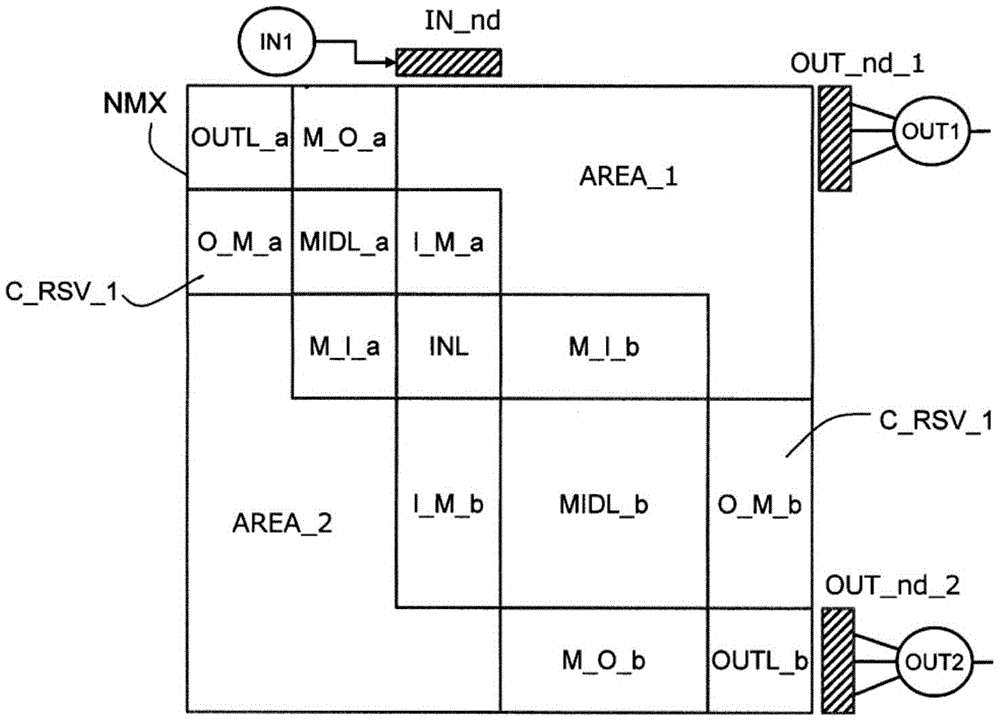
图1是实现本实施方式中的储层计算模型的信息处理系统的示意图。Fig. 1 is a schematic diagram of an information processing system for implementing a reservoir calculation model in this embodiment.
图2是表示储层计算模型的网络的一个例子的图。Fig. 2 is a diagram showing an example of a network of a reservoir calculation model.
图3是表示作为储层计算模型而使用了作为物理储层之一的交叉开关储层的信息处理系统的图。FIG. 3 is a diagram showing an information processing system using a crossbar reservoir as one of physical reservoirs as a reservoir calculation model.
图4是表示交叉开关储层(Crossbar Reservoir)的一个例子和作为读出部的全耦合层的一个例子的图。FIG. 4 is a diagram showing an example of a crossbar reservoir and an example of a fully coupled layer serving as a readout unit.
图5是表示对应于图2的例子的交叉开关储层的相邻矩阵的一个例子的图。FIG. 5 is a diagram showing an example of an adjacency matrix of a crossbar reservoir corresponding to the example of FIG. 2 .
图6是分类表示交叉开关储层的相邻矩阵所表示的交叉点的耦合的图。FIG. 6 is a graph showing the coupling of intersections represented by an adjacency matrix of a crossbar reservoir by category.
图7是表示图6的相邻矩阵中示出的九个区域的关系的图。FIG. 7 is a diagram showing the relationship of nine regions shown in the adjacency matrix of FIG. 6 .
图8是表示第一实施方式中的储层计算模型的图。Fig. 8 is a diagram showing a reservoir calculation model in the first embodiment.
图9是表示第二实施方式中的储层计算模型的图。Fig. 9 is a diagram showing a reservoir calculation model in the second embodiment.
图10是表示第一实施方式中的储层计算模型的相邻矩阵的区域的图。Fig. 10 is a diagram showing the area of the adjacency matrix of the reservoir calculation model in the first embodiment.
图11是表示图10的相邻矩阵中示出的九个区域的关系的图。FIG. 11 is a diagram showing the relationship of nine regions shown in the adjacency matrix of FIG. 10 .
图12是表示相邻矩阵的具体例的图。FIG. 12 is a diagram showing a specific example of an adjacency matrix.
图13是表示第一实施方式和第二实施方式的储层计算模型的学习工序的流程图。Fig. 13 is a flowchart showing the learning process of the reservoir calculation model in the first embodiment and the second embodiment.
图14是表示第一实施方式和第二实施方式的储层计算模型的推理工序的处理的流程图。Fig. 14 is a flowchart showing the processing of the inference step of the reservoir calculation model according to the first embodiment and the second embodiment.
图15是进行学习工序的输出权重的更新的FORCE学习的流程图。FIG. 15 is a flowchart of FORCE learning for updating output weights in a learning process.
图16是表示第三实施方式中的储层计算模型的图。Fig. 16 is a diagram showing a reservoir calculation model in the third embodiment.
具体实施方式detailed description
图1是实现本实施方式中的储层计算模型的信息处理系统的示意图。信息处理装置10例如是PC、HPC等计算机。信息处理装置10具有处理器12、处理器所访问的主存储器14、以及与外部的接口装置16。另外,信息处理装置10在大容量的辅助存储装置20~26中储存储层模型的学习程序20、推理程序22、用于学习的训练数据24以及具有储层模型的构成数据和输出权重等参数的储层模型数据26。处理器12通过执行从辅助存储装置读出并在主存储器14中展开的学习程序20和推理程序22,来执行学习工序的运算以及推理工序的运算。另外,处理器12执行储层模型数据26所包含的运算程序,对时间序列的输入运算储层的状态的迁移。Fig. 1 is a schematic diagram of an information processing system for implementing a reservoir calculation model in this embodiment. The
另外,在图1的信息处理系统中,设置物理储层18。由此,处理器12也能够经由接口16参照物理储层18的物理上的变化,来代替参照储层模型数据26运算储层的状态的迁移。在该情况下,处理器12在学习工序中不进行储层的状态迁移的运算,代替其而获取物理储层18的输出,通过运算来进行减少教师数据与输出的误差的输出权重的更新。In addition, in the information processing system of FIG. 1, a
从多个终端装置30、32经由网络NW访问信息处理装置10。响应于来自终端装置的学习处理的请求、推理处理的请求,处理器12执行学习模型、推理模型,执行所请求的学习处理以及推理处理的运算。The
图2是表示储层计算模型的网络的一个例子的图。以下,将储层的神经元称为节点。储层RSV具有节点N1~N5和节点间耦合或者节点的自耦合。耦合被称为边缘。另外,耦合具有用箭头表示的方向和与各方向对应的权重。在图中,储层RSV内的箭头是节点间耦合或者节点的自耦合。例如,节点N1、N3具有自耦合。在节点N1与节点N2之间具有双向的耦合。在节点N2与N3之间,具有从节点N2向节点N3的朝向的一个方向的耦合。Fig. 2 is a diagram showing an example of a network of a reservoir calculation model. Hereinafter, the neurons of the reservoir are referred to as nodes. The reservoir RSV has nodes N1 to N5 and inter-node couplings or self-couplings of nodes. Coupling is called fringing. In addition, the coupling has directions indicated by arrows and weights corresponding to the respective directions. In the figure, the arrows within the RSV of the reservoir are inter-node couplings or self-couplings of nodes. For example, nodes N1, N3 have self-coupling. There is bidirectional coupling between node N1 and node N2. Between the nodes N2 and N3, there is coupling in one direction from the node N2 toward the node N3.
在学习之前,随机或者根据规定的规则来决定储层RSV的节点间耦合或者自耦合的有无和各耦合的权重。所谓的规定的规则,例如,以节点间的耦合概率、耦合的权重的方差为参数。Before learning, the presence or absence of inter-node coupling or self-coupling of reservoir RSV and the weight of each coupling are determined randomly or according to prescribed rules. The so-called predetermined rules use, for example, coupling probabilities between nodes and variances of coupling weights as parameters.
若在时刻t从输入端子IN1向节点N1给予输入,则基于该输入和时刻t之前的时刻的节点的状态推移节点N1~N5的状态。然后,输出节点N4和N5的状态,将基于节点N4和N5的输出(读出数)和输出权重w4、w5运算出的活性输入至输出端子OUT。节点N4、N5、输出权重w4、w5的耦合以及输出端子OUT构成全耦合层FCL。像这样,储层计算模型具有储层RSV和针对储层的输出构成全耦合层FCL的读出部。When an input is given from the input terminal IN1 to the node N1 at time t, the states of the nodes N1 to N5 are shifted based on the input and the states of the nodes at the time before the time t. Then, the states of the nodes N4 and N5 are output, and the activities calculated based on the outputs (read numbers) of the nodes N4 and N5 and the output weights w4 and w5 are input to the output terminal OUT. The nodes N4, N5, the coupling of the output weights w4, w5 and the output terminal OUT constitute a fully coupled layer FCL. As such, the reservoir calculation model has a reservoir RSV and a readout whose output for the reservoir constitutes a fully coupled layer FCL.
在图2的储层RSV中,节点N1对应于被给予输入的输入层,节点N4、N5对应于输出层,其状态作为输出被读出。而且,输入层的节点N1与输出层的节点N4、N5之间的节点N2、N3对应于中间层。In the reservoir RSV of Figure 2, node N1 corresponds to the input layer to which the input is given, and nodes N4, N5 correspond to the output layer, the state of which is read out as output. Furthermore, nodes N2 and N3 between the node N1 of the input layer and the nodes N4 and N5 of the output layer correspond to the intermediate layer.
在储层计算模型的学习工序中,在固定了储层内的节点间耦合、节点自耦合的状态下,用梯度法更新作为读出部的全耦合层FCL的输出权重。即,通过梯度法更新输出权重w4、w5,以使教师数据与输出节点OUT的误差最小化。储层内的耦合的权重不会通过学习工序中的梯度法来更新。因此,在储层计算模型的学习工序中,通过更新而调整的输出权重少,学习处理被简化,能够以少的训练数据完成学习工序。In the learning process of the reservoir calculation model, the output weight of the fully coupled layer FCL, which is the readout unit, is updated using the gradient method while inter-node coupling and node self-coupling in the reservoir are fixed. That is, the output weights w4 and w5 are updated by the gradient method to minimize the error between the teacher data and the output node OUT. The weights of the couplings within the reservoir are not updated by the gradient method in the learning process. Therefore, in the learning process of the reservoir calculation model, there are few output weights to be adjusted by updating, the learning process is simplified, and the learning process can be completed with a small amount of training data.
储层计算模型也能够以物理上构成储层RSV的物理储层来实现,也能够通过基于计算机程序的运算来计算储层的状态的迁移。以下,作为物理储层的一个例子,以利用非线性元件的交叉开关储层的例子进行说明。The reservoir calculation model can also be realized as a physical reservoir that physically constitutes the reservoir RSV, and can also calculate the transition of the state of the reservoir by calculation based on a computer program. Hereinafter, an example of a crossbar switch reservoir using a nonlinear element will be described as an example of a physical reservoir.
图3是表示作为储层计算模型而使用了作为物理储层之一的交叉开关储层的信息处理系统的图。图3的储层计算模型的信息处理系统具有包含处理器的信息处理装置10和作为物理储层的交叉开关储层C_RSV。交叉开关储层C_RSV具有对应于节点的输入的列线和对应于节点的输出的行线,虽然未图示,但在列线与行线之间设置具有非线性特性的忆阻器(Memristor)、CR电路等模拟电路等物理电路。FIG. 3 is a diagram showing an information processing system using a crossbar reservoir as one of physical reservoirs as a reservoir calculation model. The information processing system of the reservoir calculation model in FIG. 3 has an
另一方面,若对应于图2的储层计算模型,则从处理器向交叉开关储层C_RSV内的输入层的节点N1的输入供给输入IN1,并将输出层的节点N4、N5的输出(读出值)输出至处理器。处理器通过对作为读出部的全耦合层执行计算机程序,来执行学习工序以及推理工序的运算。On the other hand, if it corresponds to the reservoir calculation model of FIG. 2 , the processor supplies the input IN1 to the input of the node N1 of the input layer in the crossbar reservoir C_RSV, and outputs the outputs of the nodes N4 and N5 of the output layer ( readout value) to the processor. The processor executes the calculation of the learning process and the inference process by executing the computer program on the fully coupled layer as the readout unit.
因此,在储层计算模型中,执行学习程序的处理器将训练数据的输入IN1给予至交叉开关储层C_RSV的输入层的节点N1,响应于此,交叉开关储层C_RSV的状态从过去的状态迁移至当前的状态。而且,处理器输入表示交叉开关储层C_RSV的输出层的节点N4、N5的状态的输出,并执行学习程序,对作为读出部的全耦合层FCL执行基于梯度法的输出权重的更新。通过反复该学习,输出权重被优化,生成储层计算模型,该储层计算模型生成与教师数据相同或者接近的输出。Thus, in the reservoir computing model, the processor executing the learning program gives an input IN1 of training data to node N1 of the input layer of the crossbar reservoir C_RSV, in response to which the state of the crossbar reservoir C_RSV changes from the past state Migrate to the current state. Then, the processor inputs an output indicating the state of the nodes N4 and N5 of the output layer of the crossbar switch reservoir C_RSV, executes a learning program, and updates the output weights of the fully coupled layer FCL as a readout unit by the gradient method. By repeating this learning, the output weights are optimized to generate a reservoir calculation model that generates outputs that are the same as or close to the teacher data.
图4是表示交叉开关储层的一个例子和作为读出部的全耦合层的一个例子的图。交叉开关储层C_RSV针对图2所示的五个节点N1~N5,具有对应于节点的输入的五根列线(纵线)N1~N5、对应于节点的输出的五根行线(横线)N1~N5、以及配置于列线与行线的交叉点的25个耦合电路f11~f55。耦合电路f11~f55例如是忆阻器。FIG. 4 is a diagram showing an example of a crossbar reservoir and an example of a fully coupled layer serving as a readout. For the five nodes N1-N5 shown in Figure 2, the crossbar storage layer C_RSV has five column lines (vertical lines) N1-N5 corresponding to the input of the nodes, and five row lines (horizontal lines) corresponding to the output of the nodes. ) N1-N5, and 25 coupling circuits f11-f55 arranged at the intersections of the column lines and the row lines. The coupling circuits f11 to f55 are, for example, memristors.
在图4的交叉开关储层C_RSV中,在所有的五根列线和五根行线之间设置有耦合电路f11~f55,但该耦合电路也可以仅设置于任意的列线和行线之间。例如,在图2的储层RSV中,节点间耦合和节点自耦合仅设置在一部分的节点间以及节点。相同的节点的列线和行线之间的耦合电路对应于节点自耦合。另外,不同的节点的列线和行线之间的耦合电路对应于从列线的节点到行船的节点的方向的单向节点间耦合。而且,耦合电路对应于图2的储层内的耦合的权重。In the crossbar storage layer C_RSV in Fig. 4, coupling circuits f11-f55 are provided between all five column lines and five row lines, but the coupling circuits can also be provided only between any column lines and row lines between. For example, in the reservoir RSV in Fig. 2, inter-node coupling and nodal self-coupling are set only at a part of the inter-nodes and nodes. A coupled circuit between column and row lines of the same node corresponds to node self-coupling. In addition, the coupling circuit between the column line and the row line of different nodes corresponds to a unidirectional inter-node coupling in the direction from the node of the column line to the node of the boat. Also, the coupling circuit corresponds to the weighting of the couplings within the reservoir of FIG. 2 .
在图4的例子中,向对应于节点的输入的五根列线,输入通过DAC(数字-模拟转换器)对从输入部IN_1的输入端子IN1供给的数字信号转换后的模拟信号X1~X5。输入部IN_2、IN_3也同样。其中,在向储层内的一部分节点给予输入的情况下,对输入端子IN1的数字信号进行DAC转换后的模拟信号被给予至一部分节点的输入。In the example of FIG. 4, analog signals X1 to X5 obtained by converting the digital signal supplied from the input terminal IN1 of the input unit IN_1 by a DAC (Digital-to-Analog Converter) are input to the five column lines corresponding to the input of the node. . The same applies to the input units IN_2 and IN_3. However, when an input is given to some of the nodes in the reservoir, an analog signal obtained by DAC-converting the digital signal at the input terminal IN1 is given as an input to some of the nodes.
另一方面,对应于节点的输出的五根列线的模拟信号y1~y5被ADC(模拟-数字转换器)转换,并输出至全耦合层FCL_1,全耦合层FCL_1的乘积和值的数字信号作为活性输出至输出节点OUT1。乘积和值如下。On the other hand, the analog signals y1~y5 of the five column lines corresponding to the output of the node are converted by ADC (Analog-Digital Converter) and output to the fully coupled layer FCL_1, the digital signal of the product sum value of the fully coupled layer FCL_1 Output as active to output node OUT1. The product sum values are as follows.
OUT1=y1*w1+y2*w2+y3*w3+y4*w4+y5*w5OUT1=y1*w1+y2*w2+y3*w3+y4*w4+y5*w5
其他全耦合层FCL_2、FCL_3也同样。其中,在将输出从储层内的一部分节点输出的情况下,五根行线的一部分节点的输出输出至全耦合层。The same applies to the other fully coupled layers FCL_2 and FCL_3. However, when the output is output from a part of the nodes in the reservoir, the output of a part of the nodes of the five row lines is output to the fully coupled layer.
在图2的储层的情况下,25个耦合电路中的f11、f12、f21、f24、f32、f33、f35、f45、f51、f54具有有限的值,剩余的无限大,换句话说非耦合。在这样的交叉开关储层C_RSV中,若在时间序列的输入中的时刻t1将输入x1给予至输入层的节点N1,则全节点N1~N5的状态迁移至以下的式子所示的输出y1~y5。In the case of the reservoir of Fig. 2, f11, f12, f21, f24, f32, f33, f35, f45, f51, f54 of the 25 coupled circuits have finite values, and the remaining ones are infinite, in other words uncoupled . In such a crossbar storage layer C_RSV, when the input x1 is given to the node N1 of the input layer at time t1 in the time-series input, the states of all the nodes N1 to N5 transition to the output y1 expressed by the following formula ~y5.
y1_t1={f11(x1)+f12(x2)}+α*y1_t0y1_t1={f11(x1)+f12(x2)}+α*y1_t0
y2_t1={f21(x1)+f24(x4)}+α*y2_t0y2_t1={f21(x1)+f24(x4)}+α*y2_t0
y3_t1={f32(x2)+f33(x3)+f35(x5)}+α*y3_t0y3_t1={f32(x2)+f33(x3)+f35(x5)}+α*y3_t0
y4_t1={f45(x5)}+α*y4_t0y4_t1={f45(x5)}+α*y4_t0
y5_t1={f51(x1)+f54(x4)}+α*y5_t0y5_t1={f51(x1)+f54(x4)}+α*y5_t0
在这里,f11(x)~f55(x)是对节点的输入x求出输出至节点的输出y的值的函数。另外,时刻t0是输入时的时刻t1的前一时刻,y1_t1是时刻t1的状态,y1_t0是时刻t0的状态。而且,α对应于节点的状态的衰减率。在耦合电路为忆阻器的情况下,函数f11(x)~f55(x)的特性基于某一时刻的输入而非线性地变化。Here, f11(x) to f55(x) are functions for obtaining the value of the output y output to the node with respect to the input x of the node. In addition, time t0 is a time immediately before time t1 at the time of input, y1_t1 is a state at time t1, and y1_t0 is a state at time t0. Also, α corresponds to the decay rate of the state of the node. When the coupling circuit is a memristor, the characteristics of the functions f11(x) to f55(x) change linearly based on an input at a certain time.
如上所述,在作为物理储层的交叉开关储层中,各节点保持基于过去的输入的状态,并且针对时间序列的输入逐个迁移至新的状态。像这样,输入被交叉开关储层C_RSV非线性转换,转换后的状态被映射到高维的特征空间。另一方面,交叉开关储层C_RSV的输出层的节点的状态在全耦合层FCL中线性耦合,输出输出OUT。As described above, in the crossbar reservoir as a physical reservoir, each node maintains a state based on past inputs, and transitions to a new state one by one for time-series inputs. Like this, the input is transformed nonlinearly by the crossbar reservoir C_RSV, and the transformed state is mapped to a high-dimensional feature space. On the other hand, the states of the nodes of the output layer of the crossbar reservoir C_RSV are linearly coupled in the fully coupled layer FCL, and the output OUT is output.
在这里,对用矩阵表示交叉开关储层C_RSV的节点间耦合和节点自耦合的权重的相邻矩阵进行说明。通过利用相邻矩阵,容易理解具有交叉开关储层的输入层、中间层、输出层的节点、以及节点间耦合和节点自耦合的交叉开关储层的结构。Here, an adjacency matrix representing the weights of inter-node coupling and node self-coupling of the crossbar reservoir C_RSV in a matrix will be described. By using the adjacency matrix, it is easy to understand the structure of the input layer with the crossbar reservoir, the intermediate layer, the nodes of the output layer, and the internode coupling and node self-coupling of the crossbar reservoir.
图5是表示对应于图2的例子的交叉开关储层的相邻矩阵的一个例子的图。相邻矩阵在对应于节点N1~N5的输入的列和对应于节点N1~N5的输出的行的交叉位置示出节点间耦合的权重和节点自耦合的权重。例如,在节点N1的列与节点N1的行的交叉位置,示出节点N1的自耦合的权重。另一方面,在节点N1的列和节点N2的行的交叉位置,示出从节点N1向节点N2的节点间耦合的权重。相反,在节点N2的列和节点N1的行的交叉位置,示出从节点N2向节点N1的节点间耦合的权重。因此,在图5中,在通过上述的式子表示的函数f11、f12、f21、f24、f32、f33、f35、f45、f51、f54的位置示出各个权重。FIG. 5 is a diagram showing an example of an adjacency matrix of a crossbar reservoir corresponding to the example of FIG. 2 . The adjacency matrix shows inter-node coupling weights and node self-coupling weights at intersection positions of columns corresponding to inputs of nodes N1 to N5 and rows corresponding to outputs of nodes N1 to N5 . For example, at the intersection of the column of the node N1 and the row of the node N1, the weight of the self-coupling of the node N1 is shown. On the other hand, at the intersection position of the column of the node N1 and the row of the node N2, the weight of the inter-node coupling from the node N1 to the node N2 is shown. In contrast, at the intersection of the column of the node N2 and the row of the node N1, the weight of the inter-node coupling from the node N2 to the node N1 is shown. Therefore, in FIG. 5 , respective weights are shown at the positions of the functions f11 , f12 , f21 , f24 , f32 , f33 , f35 , f45 , f51 , and f54 represented by the above-mentioned formulas.
图6是分类示出交叉开关储层的相邻矩阵所表示的交叉点的耦合的图。在图2的储层的例子中,节点N1为输入层INL,节点N4、N5是输出层OUTL,输入层与输出层之间的节点N2、N3为中间层MIDL。因此,在相邻矩阵中,节点N1的列与行的交叉位置表示为输入层INL,节点N4、N5的列与行的交叉位置表示为输出层OUTL,节点N2、N3的列与行的交叉位置表示为中间层MIDL。输入层INL、中间层MIDL、输出层OUTL为构成各层的节点的数量的正方矩阵,对应于节点的自耦合区域。FIG. 6 is a graph showing the coupling of intersections represented by an adjacency matrix of a crossbar reservoir by category. In the example of the reservoir in FIG. 2, the node N1 is the input layer INL, the nodes N4 and N5 are the output layer OUTL, and the nodes N2 and N3 between the input layer and the output layer are the intermediate layer MIDL. Therefore, in the adjacent matrix, the intersection position of the column and row of node N1 is represented as the input layer INL, the intersection position of the column and row of nodes N4 and N5 is represented as the output layer OUTL, and the intersection position of the column and row of nodes N2 and N3 The location is expressed as the middle layer MIDL. The input layer INL, the intermediate layer MIDL, and the output layer OUTL are square matrices of the number of nodes constituting each layer, and correspond to the self-coupling regions of the nodes.
进一步,further,
将节点N1的列与N2、N3的行的交叉位置表示为从输入层向中间层的节点间耦合区域I_MDenote the intersection position of the column of node N1 and the row of N2, N3 as the inter-node coupling region I_M from the input layer to the middle layer
将节点N2、N3的列与N4、N5的行的交叉位置表示为从中间层向输出层的节点间耦合区域M_ODenote the intersection position of the columns of nodes N2, N3 and the rows of N4, N5 as the inter-node coupling region M_O from the middle layer to the output layer
将节点N2、N3的列与N1的行的交叉位置表示为从中间层向输入层的节点间耦合区域M_IDenote the intersection position of the columns of nodes N2, N3 and the row of N1 as the inter-node coupling region M_I from the middle layer to the input layer
将节点N4、N5的列与N2、N3的行的交叉位置表示为从输出层向中间层的节点间耦合区域O_MDenote the intersection position of the columns of nodes N4, N5 and the rows of N2, N3 as the inter-node coupling region O_M from the output layer to the middle layer
进一步,further,
将节点N1的列与N4、N5的行的交叉位置表示为从输入层向输出层的节点间耦合区域I_ODenote the intersection position of the column of node N1 and the row of N4, N5 as the inter-node coupling region I_O from the input layer to the output layer
将节点N4、N5的列与节点N1的行的交叉位置表示为从输出层向输入层的节点间耦合区域O_I。The intersecting position of the columns of the nodes N4 and N5 and the row of the node N1 is represented as an inter-node coupling region O_I from the output layer to the input layer.
图7是表示图6的相邻矩阵中示出的九个区域的关系的图。在图7中,示出输入层INL、中间层MIDL、输出层OUTL和这些层之间的节点间耦合的区域I_M、M_O、I_O、O_M、M_I、I_O的关系。FIG. 7 is a diagram showing the relationship of nine regions shown in the adjacency matrix of FIG. 6 . In FIG. 7 , the relationship between the input layer INL, the intermediate layer MIDL, the output layer OUTL and the regions I_M, M_O, I_O, O_M, M_I, I_O of the inter-node coupling between these layers is shown.
因此,参照图4、图5、图6、图7的交叉开关储层的结构以及相邻矩阵,针对图2的储层RSV,对针对时间序列的输入的节点的状态的迁移进行说明。其中,在以下的说明中,从图2的储层RSV的节点N1向节点N5的耦合为非耦合。因此,图7的节点间耦合的区域O_I、I_O为非耦合。Therefore, with reference to the structure and adjacency matrix of the crossbar switch reservoir in FIG. 4 , FIG. 5 , FIG. 6 , and FIG. 7 , the state transition of the node for the time-series input will be described with respect to the reservoir RSV in FIG. 2 . However, in the following description, the coupling from the node N1 to the node N5 of the reservoir RSV in FIG. 2 is non-coupling. Therefore, the regions O_I and I_O of the inter-node coupling in FIG. 7 are uncoupled.
若在时刻t1向节点N1给予输入,则If an input is given to node N1 at time t1, then
(1)输入层INL的节点N1推移为如下变化之和,即:(1) The transition of node N1 of the input layer INL is the sum of the following changes, namely:
时刻t1的输入x1的变化;The change of input x1 at time t1;
基于时刻t0的输入层INL的节点状态x1和自耦合的N1的变化;以及Changes in the node state x1 and self-coupled N1 of the input layer INL based on time t0; and
基于时刻t0的中间层MIDL的节点状态x2、x3和N1的区域M_I的节点间耦合M_I(N2、N3到N1)的N1的变化。The change of N1 of the internode coupling M_I (N2, N3 to N1) of the region M_I based on the node states x2, x3 of the intermediate layer MIDL at time t0 and N1.
(2)中间层MIDL的节点N2、N3推移为如下变化之和,即:(2) The transition of nodes N2 and N3 of the middle layer MIDL is the sum of the following changes, namely:
基于时刻t1的输入x1和区域I_M的节点间耦合(N1到N2、N3)的N2、N3的变化;The change of N2, N3 based on the input x1 at time t1 and the inter-node coupling (N1 to N2, N3) of region I_M;
基于时刻t0的中间层MIDL的节点状态x2、x3和中间层的自耦合的N2、N3的变化;以及Changes of node states x2, x3 of the middle layer MIDL and self-coupling N2, N3 of the middle layer based on time t0; and
基于时刻t0的输出层OUTL的节点状态x4、x5和区域O_M的节点间耦合(N4、N5到N2、N3)的N2、N3的变化。Changes of N2, N3 based on the node states x4, x5 of the output layer OUTL and the inter-node couplings (N4, N5 to N2, N3) of the region O_M at time t0.
(3)输出层OUTL的节点N4、N5推移为如下变化之和,即:基于时刻t0的中间层MIDL的节点状态x2、x3和区域M_O的节点间耦合(N2、N3到N4、N5)的N4、N5的变化;以及(3) The transition of the nodes N4 and N5 of the output layer OUTL is the sum of the following changes, namely: the node states x2 and x3 of the middle layer MIDL based on time t0 and the inter-node coupling (N2, N3 to N4, N5) of the region M_O Changes in N4, N5; and
基于时刻t0的输出层OUTL的节点状态x4、x5和输出层的自耦合的N4、N5的变化。Changes based on node states x4 , x5 of the output layer OUTL and self-coupling N4 , N5 of the output layer at time t0 .
如上所述,交叉开关储层的输入层INL、中间层MIDL、输出层OUTL成为相邻矩阵内的正方形的区域,分别具有自耦合。另外,这些层间的节点间耦合位于相邻矩阵内的区域I_M、M_O、O_M、M_I、I_O、O_I。As described above, the input layer INL, the intermediate layer MIDL, and the output layer OUTL of the crossbar reservoir form a square area in an adjacent matrix, and each has self-coupling. In addition, the inter-node coupling between these layers is located in the regions I_M, M_O, O_M, M_I, I_O, O_I within the adjacent matrix.
[本实施方式中的储层计算模型][Reservoir calculation model in this embodiment]
越增大储层的尺寸,储层具有越高维的函数特性。但是,若通过训练数据对具有高维的函数特性的储层进行学习,则成为过度学习,模型成为对训练数据过度拟合状态。As the size of the reservoir increases, the reservoir has higher dimensional functional properties. However, if a reservoir having high-dimensional functional characteristics is learned from training data, it becomes over-learning, and the model becomes in a state of overfitting to the training data.
图8是表示第一实施方式中的储层计算模型的图。图8的模型是具有作为物理储层的一个例子的交叉开关储层C_RSV和信息处理装置10的信息处理系统。Fig. 8 is a diagram showing a reservoir calculation model in the first embodiment. The model of FIG. 8 is an information processing system having a crossbar reservoir C_RSV as an example of a physical reservoir and an
交叉开关储层C_RSV具有第一部分储层C_RSV_1和第二部分储层C_RSV_2,第二部分储层C_RSV_2与第一部分储层C_RSV_1相比,输入层与输出层之间的尺寸较大,且具有较高维函数特性。第一部分储层C_RSV_1和第二部分储层C_RSV_2具有共用的输入节点IN_nd,具有各自的输出节点OUT_nd_1、OUT_nd_2,且分别具有共用的输入节点与各个输出节点间的中间层的节点。共用的输入节点IN_nd构成共用的输入层,各个输出节点OUT_nd_1、OUT_nd_2构成各个输出层。对于交叉开关储层C_RSV的结构,在后面示出相邻矩阵进行说明。储层的尺寸例如是中间层的节点数。The cross-switch reservoir C_RSV has a first partial reservoir C_RSV_1 and a second partial reservoir C_RSV_2. Compared with the first partial reservoir C_RSV_1, the second partial reservoir C_RSV_2 has a larger dimension between the input layer and the output layer, and has a higher dimensional function properties. The first partial reservoir C_RSV_1 and the second partial reservoir C_RSV_2 have a common input node IN_nd, have respective output nodes OUT_nd_1, OUT_nd_2, and respectively have intermediate layer nodes between the common input node and each output node. The common input node IN_nd constitutes a common input layer, and the respective output nodes OUT_nd_1 and OUT_nd_2 constitute respective output layers. As for the structure of the cross-switch reservoir C_RSV, an adjacent matrix is shown below for description. The size of the reservoir is, for example, the number of nodes in the middle layer.
来自各个输出层的输出节点OUT_nd_1、OUT_nd_2的读出值被输出至图1所记载的信息处理装置10,处理器12运算读出值与输出权重的线性耦合的乘积和值,生成两个输出OUT1、OUT2,计算两个输出的和作为交叉开关储层C_RSV的输出。另外,处理器12在后述的步骤中进行基于学习工序中的训练数据的输出权重的优化。The read values from the output nodes OUT_nd_1 and OUT_nd_2 of the respective output layers are output to the
图9是表示第二实施方式中的储层计算模型的图。图9的模型是具有利用作为物理储层的一个例子的材料的非线性特性的材料储层M_RSV和信息处理装置10的信息处理系统。材料储层的例子例如是具有电非线性的材料的块、具有光学的非线性的材料的块等。Fig. 9 is a diagram showing a reservoir calculation model in the second embodiment. The model of FIG. 9 is an information processing system having a material reservoir M_RSV utilizing the nonlinear characteristics of a material as an example of a physical reservoir and an
材料储层M_RSV是材料的块。若在材料的任意位置设定输入输入IN1的输入层的输入节点IN_nd和取出读出值的输出层的输出节点OUT_nd,则输入层和输出层的节点间的材料成为中间层的虚拟的节点。与第一实施方式同样,对于第二实施方式,材料储层M_RSV也具有第一部分储层M_RSV_1和第二部分储层M_RSV_2,第二部分储层M_RSV_2与第一部分储层M_RSV_1相比,输入与输出之间的尺寸较大且具有较高维函数特性。第一部分储层M_RSV_1和第二部分储层M_RSV_2具有部分重合的区域,在该区域设置共用的输入层的输入节点IN_nd。另外,在第一部分储层M_RSV_1和第二部分储层M_RSV_2设置各个输出层的节点OUT_nd_1、OUT_nd_2。材料储层M_RSV的尺寸例如是输入节点IN_nd与输出节点OUT_nd间的距离。A material reservoir M_RSV is a block of material. If the input node IN_nd of the input layer that inputs the input IN1 and the output node OUT_nd of the output layer that fetches the read value are set at arbitrary positions in the material, the material between the nodes of the input layer and the output layer becomes a virtual node of the intermediate layer. As with the first embodiment, for the second embodiment, the material reservoir M_RSV also has a first sub-reservoir M_RSV_1 and a second sub-reservoir M_RSV_2, the second sub-reservoir M_RSV_2 is compared with the first sub-reservoir M_RSV_1, the input and output The size between is larger and has higher dimensional function properties. The first sub-reservoir M_RSV_1 and the second sub-reservoir M_RSV_2 have a partially overlapping area in which an input node IN_nd of a common input layer is arranged. In addition, nodes OUT_nd_1, OUT_nd_2 of the respective output layers are provided for the first sub-reservoir M_RSV_1 and the second sub-reservoir M_RSV_2. The size of the material reservoir M_RSV is, for example, the distance between the input node IN_nd and the output node OUT_nd.
与第一实施方式同样,来自各个输出层的输出节点OUT_nd_1、OUT_nd_2的读出值被输出至信息处理装置10,处理器运算读出值和输出权重的线性耦合的乘积和值,生成两个输出OUT1、OUT2,计算两个输出的和作为材料储层M_RSV的输出。另外,处理器在后述的步骤中进行基于学习工序中的训练数据的输出权重的优化。As in the first embodiment, the read values from the output nodes OUT_nd_1 and OUT_nd_2 of each output layer are output to the
图10是表示第一实施方式中的储层计算模型的相邻矩阵的区域的图。如图8所示,作为物理储层的一个例子的交叉开关储层C_RSV具有第一部分储层C_RSV_1和第二部分储层C_RSV_2,第二部分储层C_RSV_2的尺寸大于第一部分储层C_RSV_1的尺寸。另外,图11是表示图10的相邻矩阵所示的九个区域的关系的图。Fig. 10 is a diagram showing the area of the adjacency matrix of the reservoir calculation model in the first embodiment. As shown in FIG. 8 , a crossbar reservoir C_RSV as an example of a physical reservoir has a first partial reservoir C_RSV_1 and a second partial reservoir C_RSV_2 having a larger size than the first partial reservoir C_RSV_1 . In addition, FIG. 11 is a diagram showing the relationship of the nine regions shown in the adjacency matrix in FIG. 10 .
第一部分储层C_RSV_1具备:具有输入节点IN_nd的输入层INL、具有第一输出节点OUT_nd_1的第一输出层OUTL_a以及具有输入层INL与第一输出层OUTL_a之间的第一中间节点组的第一中间层MIDL_a。而且,与图6、图7同样,第一部分储层C_RSV_1具有:包含从输入层INL的节点朝向第一中间层MIDL_a的节点的节点间耦合的区域I_M_a、以及包含从第一中间层MIDL_a的节点朝向第一输出层OUTL_a的节点的节点间耦合的区域M_O_a。同样地,具有:包含从输出层OUTL的节点朝向第一中间层MIDL_a的节点的节点间耦合的区域O_M_a和包含从第一中间层MIDL_a的节点朝向输入层INL的节点的节点间耦合的区域M_I_a。此外,图10的区域AREA_1与AREA_2内的区域I_O_a和O_I_a的节点间耦合均是非耦合。这是因为,在物理储层的情况下,一般地输入节点组与输出节点组之间的距离长,所以这些节点间耦合为非耦合。The first partial reservoir C_RSV_1 has: an input layer INL with an input node IN_nd, a first output layer OUTL_a with a first output node OUT_nd_1, and a first Middle layer MIDL_a. 6 and 7, the first partial reservoir C_RSV_1 has: a region I_M_a including an inter-node coupling from a node of the input layer INL toward a node of the first intermediate layer MIDL_a; The area M_O_a of the inter-node coupling towards the nodes of the first output layer OUTL_a. Likewise, there is an area O_M_a including inter-node couplings from nodes of the output layer OUTL toward nodes of the first intermediate layer MIDL_a and an area M_I_a including inter-node couplings from nodes of the first intermediate layer MIDL_a toward nodes of the input layer INL . In addition, the coupling between the nodes of the areas I_O_a and O_I_a in the areas AREA_1 and AREA_2 in FIG. 10 is non-coupling. This is because, in the case of a physical reservoir, generally, the distance between the input node group and the output node group is long, so the coupling between these nodes is non-coupling.
第一输出层的第一输出节点OUT_nd_1的读出值和输出权重的乘积和值为第一输出OUT1。该全耦合层的输出权重在学习工序中被更新为最佳值。The product sum value of the readout value of the first output node OUT_nd_1 of the first output layer and the output weight is the first output OUT1. The output weights of this fully coupled layer are updated to optimal values in the learning process.
第二部分储层C_RSV_2具备:具有输入节点IN_nd的输入层INL、具有第二输出节点OUT_nd_2的第二输出层OUTL_b以及具有输入层INL和第二输出层OUTL_b之间的第二中间节点组的第二中间层MIDL_b。而且,与图6、图7同样,第二部分储层C_RSV_2具有:包含从输入层INL的节点朝向第二中间层MIDL_b的节点的节点间耦合的区域I_M_b和包含从第二中间层MIDL_b的节点朝向第二输出层OUTL_b的节点的节点间耦合的区域M_O_b。同样地,具有:包含从输出层OUTL的节点朝向第二中间层MIDL_b的节点的节点间耦合的区域O_M_b和包含从第二中间层MIDL_b的节点朝向输入层INL的节点的节点间耦合的区域M_I_b。此外,图10的区域AREA_1与AREA_2内的区域I_O_b和O_I_b的节点间耦合均为非耦合。理由如上所述。The second partial reservoir C_RSV_2 has an input layer INL with an input node IN_nd, a second output layer OUTL_b with a second output node OUT_nd_2, and a second output layer OUTL_b with a second set of intermediate nodes between the input layer INL and the second output layer OUTL_b. Two intermediate layers MIDL_b. 6 and 7, the second partial reservoir C_RSV_2 has: the region I_M_b that includes the inter-node coupling from the node of the input layer INL to the node of the second intermediate layer MIDL_b and the region I_M_b that includes the node from the second intermediate layer MIDL_b. The region M_O_b of the inter-node coupling towards the nodes of the second output layer OUTL_b. Likewise, there is an area O_M_b including inter-node couplings from nodes of the output layer OUTL toward nodes of the second intermediate layer MIDL_b and an area M_I_b including inter-node couplings from nodes of the second intermediate layer MIDL_b toward nodes of the input layer INL . In addition, the inter-node couplings of the areas I_O_b and O_I_b in the areas AREA_1 and AREA_2 in FIG. 10 are all non-coupling. The reasons are as mentioned above.
第二输出层的第二输出节点OUT_nd_2的读出值和输出权重的乘积和值为第二输出OUT2。该全耦合层的输出权重在学习工序中被更新为最佳值。The product sum value of the readout value of the second output node OUT_nd_2 of the second output layer and the output weight is the second output OUT2. The output weights of this fully coupled layer are updated to optimal values in the learning process.
图12是表示相邻矩阵的具体例的图。该相邻矩阵NMX是20×20行的例子,因此是对应于20个节点的交叉开关储层的相邻矩阵。根据该相邻矩阵NMX,具有20个节点的交叉开关储层被分割为节点N7、N8的输入节点组、第一输出节点组N1、N2、第二输出节点组N19、N20、第一中间节点组N3~N6以及第二中间节点组N9~N18。FIG. 12 is a diagram showing a specific example of an adjacency matrix. The adjacency matrix NMX is an example of 20x20 rows, thus an adjacency matrix corresponding to a crossbar reservoir of 20 nodes. According to this adjacency matrix NMX, the crossbar storage layer with 20 nodes is divided into the input node group of nodes N7, N8, the first output node group N1, N2, the second output node group N19, N20, the first intermediate node groups N3-N6 and second intermediate node groups N9-N18.
而且,第一部分储层具有输入节点组N7、N8(IN_nd)、第一输出节点组N1、N2以及第一中间节点组N3~N6。第一输出节点组N1、N2(OUT_nd_1)的读出值与输出权重的乘积和值为第一输出OUT1。同样地,第二部分储层具有输入节点组N7、N8(IN_nd)、第二输出节点组N19、N20(OUT_nd_2)以及第二中间节点组N9~N18。第二输出节点组N19、N21的读出值与输出权重的乘积和值为第二输出OUT2。Furthermore, the first partial reservoir has input node groups N7 and N8 (IN_nd), first output node groups N1 and N2, and first intermediate node groups N3 to N6. The sum of the products of the read value and the output weight of the first output node group N1, N2 (OUT_nd_1) is the first output OUT1. Likewise, the second partial reservoir has input node groups N7 and N8 (IN_nd), a second output node group N19 and N20 (OUT_nd_2), and second intermediate node groups N9 to N18. The sum of the products of the read values of the second output node groups N19 and N21 and the output weights is the second output OUT2.
如图12所示,在除了区域AREA_1和AREA_2以外的区域,在任意交叉位置分配有权重的值。除此以外的交叉位置的权重=0是指非耦合。根据在储层计算模型中实现的目的,适当地初始设计将交叉储层的哪个交叉位置设为怎样的权重。As shown in FIG. 12 , in areas other than the areas AREA_1 and AREA_2 , values with weights are assigned at arbitrary intersection positions. The weight=0 of other intersection positions means non-coupling. According to the purpose realized in the reservoir calculation model, it is appropriate to initially design which intersection position of the intersecting reservoir is set with what weight.
图10、图11、图12的相邻矩阵也可以应用于材料储层。材料储层由于针对被给予至输入节点的输入在输出节点生成非线性特性的读出值,所以通过设定与该非线性特性对应的权重,能够涉及具有作为目的的非线性特性的储层的相邻矩阵。The adjacency matrices of Figures 10, 11, 12 can also be applied to material reservoirs. Since a material reservoir generates a readout value of a nonlinear characteristic at an output node in response to an input given to an input node, by setting a weight corresponding to the nonlinear characteristic, it is possible to relate to a reservoir having the desired nonlinear characteristic. adjacency matrix.
图13是表示第一实施方式和第二实施方式的储层计算模型的学习工序的流程图。处理器执行学习程序并执行以下的处理。首先,处理器对储层的输出权重进行初始化(S1)。接下来,处理器将训练数据的输入值输入至储层的输入节点(S2)。若将输入值输入至输入节点,则在物理储层中,节点数少或者小尺寸的第一部分储层基于输入值和过去的节点的状态以及节点间耦合和节点自耦合,生成各节点的状态(S3)。同样地,在物理储层中,输入层与输出层之间的节点数多于第一部分储层或者输入层与输出层之间的尺寸更大的第二部分储层基于输入值和过去的节点的状态以及节点间耦合和节点自耦合,生成各节点的状态(S4)。换句话说,响应于相同的输入值的输入,第一部分储层和第二部分储层的各自的状态迁移,第一部分储层的第一输出节点和第二部分储层的第二输出节点的状态迁移。Fig. 13 is a flowchart showing the learning process of the reservoir calculation model in the first embodiment and the second embodiment. The processor executes the learning program and performs the following processing. First, the processor initializes (S1) the output weights of the reservoir. Next, the processor inputs the input value of the training data to the input node of the reservoir (S2). If the input value is input to the input node, in the physical reservoir, the first part of the reservoir with a small number of nodes or a small size generates the state of each node based on the input value, past node states, and inter-node coupling and node self-coupling (S3). Likewise, in physical reservoirs, the number of nodes between the input layer and the output layer is greater than the first part of the reservoir or the second part of the reservoir between the input layer and the output layer is larger in size based on the input values and past nodes The state of each node and the inter-node coupling and node self-coupling generate the state of each node (S4). In other words, in response to the input of the same input value, the respective states of the first partial reservoir and the second partial reservoir transition, the first output node of the first partial reservoir and the second output node of the second partial reservoir State transition.
对于上述的第一部分储层和第二部分储层的状态迁移,也可以处理器进行第一部分储层和第二部分储层的状态迁移的运算,并进行第一部分储层的第一输出节点和第二部分储层的第二输出节点的状态。For the above-mentioned state transition of the first part of the reservoir and the second part of the reservoir, the processor can also perform the operation of the state transition of the first part of the reservoir and the second part of the reservoir, and perform the first output node and the first part of the first part of the reservoir The state of the second output node for the second part of the reservoir.
接下来,处理器首先执行将第一部分储层的输出权重调整为最佳值的第一参数调整(S5)。在该第一参数调整中,对于将通过基于第一部分储层的第一输出节点的读出值的第一输出权重的线性耦合求出的乘积和值作为第一输出的第一全耦合层,处理器更新第一输出权重,以使第一输出与教师数据的差分减少。输出权重的更新能够通过梯度法来进行,或者使用线性回归等简单的算法来学习输出权重。Next, the processor firstly performs a first parameter adjustment (S5) of adjusting the output weight of the first part of the reservoir to an optimal value. In the first parameter adjustment, for the first fully coupled layer whose first output is the sum of products obtained by linear coupling of the first output weight based on the readout value of the first output node of the first partial reservoir, The processor updates the weights of the first output such that the difference between the first output and the teacher data is reduced. The update of the output weight can be performed by a gradient method, or a simple algorithm such as linear regression can be used to learn the output weight.
并且,处理器将第一部分储层的第一输出权重设定为更新后的值,运算针对工序S2的输入值的第一输出,并运算该第一输出与教师数据的差分作为差分教师数据(S6)。And, the processor sets the first output weight of the first partial reservoir to the updated value, calculates the first output for the input value of step S2, and calculates the difference between the first output and the teacher data as the difference teacher data ( S6).
接下来,处理器执行将第二部分储层的输出权重调整为最佳值的第二参数调整(S7)。在该第二十一参数调整中,对于将基于在工序S4中获取或者运算出的第二部分储层的第二输出节点的读出值和第二输出权重的乘积和值作为第二输出的第二全耦合层,处理器更新第二输出权重,以使第二输出和差分教师数据的差分变小。该输出权重的更新除了使用差分教师数据以外与第一部分储层相同。Next, the processor performs a second parameter adjustment (S7) of adjusting the output weight of the second partial reservoir to an optimal value. In the twenty-first parameter adjustment, for the second output, the sum of the read value of the second output node and the second output weight based on the second output node acquired or calculated in step S4 is In the second fully coupled layer, the processor updates the weight of the second output, so that the difference between the second output and the differential teacher data becomes smaller. The update of the output weights is the same as for the first partial reservoir except using differential teacher data.
处理器对所有教师数据反复执行从输入上述的训练数据的输入值的工序S2到第二参数调整的工序S7的处理(S8)。或者,对多个教师数据反复执行,直到模型的输出精度达到目标精度。模型的输出精度通过第一部分储层的读出部的第一输出和第二部分储层的读出部的第二输出的和与教师数据的差分除以上述和等来求出。The processor repeatedly executes the process from step S2 of inputting the input value of the above-mentioned training data to step S7 of second parameter adjustment for all the teacher data ( S8 ). Alternatively, iteratively execute on multiple teacher data until the output accuracy of the model reaches the target accuracy. The output accuracy of the model is obtained by dividing the difference between the sum of the first output of the readout unit of the first partial reservoir and the second output of the readout unit of the second partial reservoir and the teacher data by the above-mentioned sum.
在由第一部分储层进行的学习工序中,由于第一部分储层的尺寸小且节点数少,所以生成相对低维的函数模型。其结果是,通过学习而被优化的第一部分储层和读出部生成低频成分的第一输出。由于是低维的函数,所以在学习工序中能够避免过度学习。另一方面,由于第二部分储层的尺寸大于第一部分储层的尺寸且节点数多,所以生成比第一部分储层高维的函数模型。其结果是,通过学习而被优化的第二部分储层和读出部生成高频成分的第二输出。而且,第一输出和第二输出的和成为储层计算模型的输出。因此,储层计算模型能够生成对低频成分的第一输出加上高频成分的第二输出所得的输出。In the learning process performed by the first partial reservoir, since the first partial reservoir has a small size and a small number of nodes, a relatively low-dimensional function model is generated. As a result, the first portion of the reservoir and readout optimized by learning generates a first output of low frequency content. Since it is a low-dimensional function, excessive learning can be avoided in the learning process. On the other hand, since the size of the second partial reservoir is larger than that of the first partial reservoir and the number of nodes is larger, a higher-dimensional function model than that of the first partial reservoir is generated. As a result, the second portion of the reservoir and readout optimized by learning generates a second output of high frequency content. Also, the sum of the first output and the second output becomes the output of the reservoir calculation model. Therefore, the reservoir calculation model can generate an output obtained by adding the second output of the high frequency component to the first output of the low frequency component.
图14是表示第一实施方式和第二实施方式的储层计算模型的推理工序的处理的流程图。处理器将输入值输入至储层(S10)。在物理储层中,节点数少的小尺寸的第一部分储层和节点数多的大尺寸的第二部分储层根据基于输入值和过去的输入历史的各个储层的状态和节点间耦合以及节点的自耦合来迁移其状态(S11、S12)。进一步,处理器基于第一部分储层的输出节点的值和输出权重来运算读出部的第一输出(S13),并基于第二部分储层的输出节点的值和输出权重来运算读出部的第二输出(S14)。此时的输出权重是在学习工序中调整后的最佳的输出权重。而且,处理器运算第一输出与第二输出的和,计算推理值(S15)。处理器反复上述的推理工序S10~S15,直到推理结束(S16)。Fig. 14 is a flowchart showing the processing of the inference step of the reservoir calculation model according to the first embodiment and the second embodiment. The processor inputs the input value to the reservoir (S10). In the physical reservoir, the first part of the reservoir with a small size and a small number of nodes and the second part of the reservoir with a large size and a large number of nodes are based on the state of each reservoir based on the input value and the past input history and the inter-node coupling and self-coupling of nodes to migrate their states (S11, S12). Further, the processor calculates the first output of the readout unit based on the value of the output node of the first partial reservoir and the output weight (S13), and calculates the first output of the readout unit based on the value of the output node of the second partial reservoir and the output weight. The second output (S14). The output weight at this time is the optimal output weight adjusted in the learning process. Then, the processor calculates the sum of the first output and the second output to calculate an inferred value (S15). The processor repeats the above inference steps S10 to S15 until the inference ends (S16).
与学习工序同样地,在推理工序中,处理器通过第一部分储层和其读出部生成推理输出的低频成分,并通过第二部分储层和其读出部生成推理输出的高频成分。根据本实施方式,由于在学习工序中未成为过度学习状态,所以能够生成泛化性高的储层计算模型。As in the learning step, in the inference step, the processor generates a low-frequency component of an inference output from the first partial reservoir and its readout unit, and generates a high-frequency component of an inference output from the second partial reservoir and its readout unit. According to the present embodiment, since the over-learning state is not reached in the learning step, it is possible to generate a highly generalizable reservoir calculation model.
图15是进行学习工序的输出权重的更新的FORCE学习的流程图。在FORCE学习(First Order Reduced and Controlled Error Learning:一阶减少和受控错误学习)中,首先,处理器输入储层输出向量(输出节点所输出的读出值的向量)r(t)和教师数据f(t)(S20)。在n个输出节点的情况下,储层输出向量r(t)是时刻t下的1行n列的矩阵,n个输出节点的读出值是矩阵的n个要素。FIG. 15 is a flowchart of FORCE learning for updating output weights in a learning process. In FORCE learning (First Order Reduced and Controlled Error Learning: first-order reduction and controlled error learning), first, the processor inputs the reservoir output vector (the vector of the readout value output by the output node) r(t) and the teacher Data f(t) (S20). In the case of n output nodes, the reservoir output vector r(t) is a matrix of 1 row and n columns at time t, and the readout values of n output nodes are n elements of the matrix.
接下来,处理器在初次的学习中(S21的“是”),对矩阵P(t)和输出权重w(t)分别进行初始化(S22、S23)。矩阵P是用于计算输出权重向量w(t)的矩阵,以单位矩阵I进行初始化。然后,进行差分e的更新(S26)。Next, the processor initializes the matrix P(t) and the output weight w(t) during the initial learning ("Yes" in S21) (S22, S23). The matrix P is a matrix used to calculate the output weight vector w(t), and is initialized with the identity matrix I. Then, the difference e is updated (S26).
接下来,处理器输入储层输出向量r(t)和教师数据f(t)(S29),由于是初次以外的情况(S21的“否”),所以进行矩阵P的更新和输出权重w(t)的更新(S24、S25)。各个更新的计算式被示于图15。在矩阵P的更新中,处理器根据前一时刻t-Δt的矩阵P(t-Δt),通过S24所示的计算式,来计算当前时刻t的矩阵P(t)(S24)。另外,在输出权重w的更新中,处理器根据前一时刻t-Δt的输出权重w(t-Δt),通过S25所示的计算式,来计算当前时刻t的输出权重w(t)(S25)。然后,处理器进行差分e的更新(S26)。在差分e的更新中,处理器对在前一时刻t-Δt更新的输出权重w的转置矩阵乘以当前时刻t的储层输出向量r(t)来进行乘积和运算,并将乘积和运算值与教师数据f(t)的差分作为当前时刻t的差分e(t)来输出。Next, the processor inputs the reservoir output vector r(t) and the teacher data f(t) (S29), and since it is not the first time (“No” in S21), it updates the matrix P and outputs the weight w( t) update (S24, S25). The calculation formulas for each update are shown in FIG. 15 . In updating the matrix P, the processor calculates the matrix P(t) at the current time t according to the matrix P(t-Δt) at the previous time t-Δt through the calculation formula shown in S24 (S24). In addition, in updating the output weight w, the processor calculates the output weight w(t) at the current time t according to the output weight w(t-Δt) at the previous time t-Δt through the calculation formula shown in S25 ( S25). Then, the processor updates the difference e (S26). In updating the difference e, the processor multiplies the transposed matrix of the output weight w updated at the previous time t-Δt by the reservoir output vector r(t) at the current time t to perform a product sum operation, and the product sum The difference between the calculated value and the teacher data f(t) is output as the difference e(t) at the current time t.
之后,每当输入新的教师数据和储层输出向量,处理器就反复执行工序S24~S26,并更新输出权重w(t)的处理。上述的输出权重的更新处理通过图13的第一部分储层和读出部的输出权重的更新处理S5以及第二部分储层和读出部的输出权重的更新处理S7来进行。在第二部分储层和读出部的输出权重的更新处理S7中,教师数据为差分教师数据。Thereafter, whenever new teacher data and reservoir output vectors are input, the processor repeatedly executes steps S24 to S26 to update the output weight w(t). The update process of the above-mentioned output weight is performed by the update process S5 of the output weight of the first partial reservoir and the readout unit and the update process S7 of the output weight of the second partial reservoir and readout unit in FIG. 13 . In the update process S7 of the output weights of the second partial reservoir and the readout unit, the teacher data is differential teacher data.
图16是表示第三实施方式中的储层计算模型的图。图16的模型与图9同样是具有材料储层M_RSV和信息处理装置10的信息处理系统。Fig. 16 is a diagram showing a reservoir calculation model in the third embodiment. The model in FIG. 16 is an information processing system including a material reservoir M_RSV and an
材料储层M_RSV具有第一部分储层M_RSV_1、尺寸大于第一部分储层M_RSV_1的尺寸且具有更高维的函数特性的第二部分储层M_RSV_2、以及尺寸大于第二部分储层M_RSV_2的尺寸且具有更高维的函数特性的第三部分储层M_RSV_3。第一部分储层M_RSV_1、第二部分储层M_RSV_2以及第三部分储层M_RSV_3具有部分重合的区域,且在该区域设置共用的输入层的输入节点IN_nd。另外,在第一部分储层M_RSV_1、第二部分储层M_RSV_2、第三部分储层M_RSV_3,设置各个输出层的节点OUT_nd_1、OUT_nd_2、OUT_nd_3。The material reservoir M_RSV has a first partial reservoir M_RSV_1, a second partial reservoir M_RSV_2 that is larger in size than the first partial reservoir M_RSV_1 and has higher dimensional functional properties, and a larger size than the second partial reservoir M_RSV_2 and has a more High-dimensional functions characterize the third part of the reservoir M_RSV_3. The first sub-reservoir M_RSV_1 , the second sub-reservoir M_RSV_2 , and the third sub-reservoir M_RSV_3 have a partially overlapping area, and an input node IN_nd of a common input layer is provided in this area. In addition, nodes OUT_nd_1, OUT_nd_2, and OUT_nd_3 of the respective output layers are provided for the first sub-reservoir M_RSV_1, the second sub-reservoir M_RSV_2, and the third sub-reservoir M_RSV_3.
与第一实施方式同样,来自各个输出层的输出节点OUT_nd_1、OUT_nd_2、OUT_nd_3的读出值被输出至信息处理装置10,处理器运算读出值和输出权重的线性耦合的乘积和值,生成三个输出OUT1、OUT2、OUT3,并计算三个输出OUT1、OUT2、OUT3的和作为交叉开关储层的输出。As in the first embodiment, the readout values from the output nodes OUT_nd_1, OUT_nd_2, and OUT_nd_3 of each output layer are output to the
另外,处理器进行基于学习工序中的训练数据的输出权重的优化。在该学习工序中,如图13所示,将训练数据的输入值输入至输入节点IN_nd,并使三个部分储层的状态迁移,并且,从尺寸小的部分储层开始按尺寸增大的顺序,分别更新三个部分储层的读出部的权重。在该情况下,在第二部分储层和读出部中,将基于第一部分储层的读出部的更新后的输出权重的第一输出与教师数据的差分作为差分教师数据。另外,在第三部分储层和读出部中,将基于第一部分储层的读出部的更新后的输出权重的第一输出与第二部分储层中的同样的第二输出的和与教师数据的差分作为差分教师数据。而且,处理器将与三个部分储层对应的第一输出、第二输出、第三输出的和作为材料储层的输出来输出。In addition, the processor performs optimization of the output weight based on the training data in the learning process. In this learning process, as shown in FIG. 13 , the input value of the training data is input to the input node IN_nd, and the states of the three partial reservoirs are shifted, and the partial reservoirs are increased in size starting from the small-sized partial reservoirs. In order, the weights of the readouts of the three partial reservoirs are updated respectively. In this case, in the second partial reservoir and the readout unit, the difference between the first output based on the updated output weight of the readout unit of the first partial reservoir and the teacher data is used as differential teacher data. In addition, in the third partial reservoir and readout, the sum of the first output based on the updated output weights of the readout of the first partial reservoir and the same second output in the second partial reservoir is combined with The difference of the teacher data is referred to as the difference teacher data. Also, the processor outputs the sum of the first output, the second output, the third output corresponding to the three partial reservoirs as an output of the material reservoir.
[实施例][Example]
在实施例中,通过处理器执行交叉开关储层的状态迁移运算程序来实现图8的交叉开关储层。交叉开关储层的节点间耦合和自耦合的权重以及输入节点和两个输出节点的例子例如与图12相同。其中,与图12的节点数为20个不同,在本实施例中,节点数为100个,是图12的5倍多。处理器执行在交叉开关结构的交点设置有具有非线性特性的忆阻器等电路元件的情况下的状态迁移运算程序。In an embodiment, the crossbar storage layer in FIG. 8 is realized by the processor executing the state transition operation program of the crossbar storage layer. An example of the inter-node coupling and self-coupling weights of the crossbar reservoir and the input node and two output nodes is the same as in FIG. 12 , for example. Wherein, unlike the number of nodes in FIG. 12 which is 20, in this embodiment, the number of nodes is 100, which is more than five times that in FIG. 12 . The processor executes the state transition calculation program under the condition that the intersection of the crossbar structure is provided with circuit elements such as memristors with nonlinear characteristics.
另外,在本实施例中,将输入节点设为10个,将第一输出节点设为10个,将第二输出节点设为10个,将第一部分储层的第一中间层的节点数设为20个,将第二部分储层的第二中间层的节点数设为50个。交叉开关储层的节点间耦合和自耦合随机地选择,如输入节点和输出节点那样,未接近的节点间的耦合成为未耦合。In addition, in this embodiment, the number of input nodes is set to 10, the number of first output nodes is set to 10, the number of second output nodes is set to 10, and the number of nodes in the first intermediate layer of the first partial reservoir is set to is 20, and the number of nodes in the second intermediate layer of the second part of the reservoir is set to 50. The inter-node coupling and self-coupling of the crossbar reservoir are randomly selected, and the coupling between nodes that are not close becomes uncoupled like the input node and the output node.
作为比较例,使用未分割为多个部分储层的储层,采用所有节点数为100个、输入节点数为10个、输出节点数为10个、中间层的节点数为80个的储层模型。As a comparative example, using a reservoir that is not divided into multiple partial reservoirs, a reservoir with 100 all nodes, 10 input nodes, 10 output nodes, and 80 nodes in the middle layer is used Model.
在实施例的实验中,将被称为NARMA10的非线性函数的预测问题作为模型的任务。NARMA10作为RNN的评价方法一般来说是已知的。NARMA10的非线性函数若输入某个长度的时间序列的输入数据,则输出针对输入的时间序列的数值数据。该输入和输出的时间序列的数值数据是训练数据的输入数据和教师数据。In the experiment of the embodiment, the prediction problem of the nonlinear function called NARMA10 was used as the task of the model. NARMA10 is generally known as an evaluation method for RNN. The nonlinear function of NARMA10 outputs numerical data corresponding to the input time series when input data of a time series of a certain length is input. The input and output time-series numerical data are input data and teacher data for training data.
在实施例的实验中,向本实施例的储层计算模型按时间序列输入上述训练数据的输入数据,并反复执行了使用对应的教师数据来优化模型的输出权重的学习。然后,计算出在将NARMA10的输入数据给予至学习后的模型时由模型生成的输出数据的与NARMA10的函数输出的正解数据的误差的归一化双均方根误差(NRMSE)。另外,比较例的储层模型也计算了同样的学习和学习后的误差。其结果是,在比较例的储层模型中,误差为0.2033,相对于此,在本实施方式的储层模型中,误差小到0.1718。In the experiment of the embodiment, the input data of the above-mentioned training data was input into the reservoir calculation model of the embodiment in time series, and the learning of optimizing the output weight of the model using the corresponding teacher data was repeatedly performed. Then, the normalized double root mean square error (NRMSE) of the error between the output data generated by the model and the positive solution data output by the function of NARMA10 when the input data of NARMA10 was given to the learned model was calculated. In addition, the same learning and post-learning errors were calculated for the reservoir model of the comparative example. As a result, in the reservoir model of the comparative example, the error was 0.2033, whereas in the reservoir model of the present embodiment, the error was as small as 0.1718.
如上所述,本实施方式的储层计算模型向将储层按各个尺寸依次增大的多个部分储层输入共用的输入,并进行按尺寸从小到达的顺序更新各部分储层和读出部的输出权重以使输出和教师数据的差分变小的学习。在该情况下,在最小的第一部分储层和读出部中,更新其输出权重,以使读出部的第一输出与教师数据的差分变小,在第二小的第二部分储层和读出部中,更新其输出权重,以使读出部的第二输出与差分教师数据(从教师数据中减去以更新完毕输出权重求出的第一输出所得的值)的差分,并且,在第K部分储层和读出部中,更新其输出权重,以使读出部的第K输出与差分教师数据(从教师数据中减去以更新完毕输出权重求出的第一输出~第K-1输出的和所得的值)的差分变小。As described above, the reservoir calculation model of this embodiment inputs a common input to a plurality of partial reservoirs in which the reservoirs are sequentially increased in size, and updates the partial reservoirs and the readout unit in the order of arrival from the smallest in size. The learning of the output weights to make the difference between the output and the teacher data smaller. In this case, in the smallest first partial reservoir and the readout, update its output weights so that the difference between the first output of the readout and the teacher data becomes smaller, and in the second smallest second partial reservoir In the sum reading section, the output weight is updated so that the difference between the second output of the reading section and the difference teacher data (a value obtained by subtracting the first output obtained by subtracting the first output obtained with the updated output weight from the teacher data), and , in the Kth part of the reservoir and the readout section, update its output weight, so that the Kth output of the readout section and the difference teacher data (subtracted from the teacher data to obtain the first output ~ The difference between the K-1th output and the obtained value) becomes smaller.
根据本实施方式,储层计算模型在尺寸最小的部分储层和其读出部生成输出最低的周波成分,随着尺寸增大,生成输出更高的频率成分。由此,能够抑制学习工序中的过度学习,生成泛化性高的储层计算模型。According to the present embodiment, the reservoir calculation model generates the cycle component with the lowest output in the smallest-sized part of the reservoir and its readout unit, and generates and outputs higher frequency components as the size increases. As a result, excessive learning in the learning process can be suppressed, and a highly generalizable reservoir calculation model can be generated.
附图标记说明:10…信息处理装置;12…处理器;18…物理储层;RSV…储层;C_RSV…交叉开关储层;M_RSV…材料储层;C_RSV_1…第一部分储层;C_RSV_2…第二部分储层;INL…输入层;OUTL…输出层;MIDL…中间层;FCL…全耦合层、读出部;IN_nd…输入节点;OUT_nd_1、OUT_nd_2…输出节点;OUT1、OUT2…输出节点;w1、w2…输出权重;N1~N5…节点。Description of reference numerals: 10...information processing device; 12...processor; 18...physical reservoir; RSV...reservoir; C_RSV...crossbar reservoir; M_RSV...material reservoir; C_RSV_1...first part reservoir; C_RSV_2...second Two-part reservoir; INL...input layer; OUTL...output layer; MIDL...intermediate layer; FCL...full coupling layer, readout; IN_nd...input node; OUT_nd_1, OUT_nd_2...output node; OUT1, OUT2...output node; w1 , w2...output weight; N1~N5...nodes.
Claims (8)
Applications Claiming Priority (1)
| Application Number | Priority Date | Filing Date | Title |
|---|---|---|---|
| PCT/JP2020/015877 WO2021205581A1 (en) | 2020-04-08 | 2020-04-08 | Information processing system, information processing device, information processing method, and information processing program |
Publications (1)
| Publication Number | Publication Date |
|---|---|
| CN115443473A true CN115443473A (en) | 2022-12-06 |
Family
ID=78023581
Family Applications (1)
| Application Number | Title | Priority Date | Filing Date |
|---|---|---|---|
| CN202080099442.XA Pending CN115443473A (en) | 2020-04-08 | 2020-04-08 | Information processing system, information processing device, information processing method, and information processing program |
Country Status (5)
| Country | Link |
|---|---|
| US (1) | US12596927B2 (en) |
| EP (1) | EP4134882A4 (en) |
| JP (1) | JP7376832B2 (en) |
| CN (1) | CN115443473A (en) |
| WO (1) | WO2021205581A1 (en) |
Families Citing this family (3)
| Publication number | Priority date | Publication date | Assignee | Title |
|---|---|---|---|---|
| CN115378814B (en) * | 2022-08-22 | 2024-12-31 | 中国科学院微电子研究所 | Storage pool computing network optimization method and related device |
| WO2024116229A1 (en) | 2022-11-28 | 2024-06-06 | Tdk株式会社 | Signal processing device |
| CN117744644B (en) * | 2023-12-20 | 2025-01-07 | 北京百度网讯科技有限公司 | Data processing method, data processing model and training method thereof |
Family Cites Families (9)
| Publication number | Priority date | Publication date | Assignee | Title |
|---|---|---|---|---|
| JP4093858B2 (en) | 2000-10-13 | 2008-06-04 | フラウンホーファー−ゲゼルシャフト・ツア・フォルデルング・デア・アンゲヴァンテン・フォルシュング・エー・ファウ | Recurrent neural network |
| JP5157359B2 (en) * | 2006-10-10 | 2013-03-06 | オムロン株式会社 | Time-series data analysis device, time-series data analysis system, control method for time-series data analysis device, program, and recording medium |
| US9165246B2 (en) * | 2013-01-29 | 2015-10-20 | Hewlett-Packard Development Company, L.P. | Neuristor-based reservoir computing devices |
| US10395168B2 (en) * | 2015-10-26 | 2019-08-27 | International Business Machines Corporation | Tunable optical neuromorphic network |
| US11188818B2 (en) * | 2017-04-03 | 2021-11-30 | International Business Machines Corporation | Reservoir computing system |
| JP6791800B2 (en) | 2017-04-05 | 2020-11-25 | 株式会社日立製作所 | Calculation method using computer system and recurrent neural network |
| WO2018212201A1 (en) | 2017-05-15 | 2018-11-22 | 国立大学法人大阪大学 | Information processing device and information processing method |
| CN109009033A (en) * | 2018-07-10 | 2018-12-18 | 华南理工大学 | A kind of blood pressure prediction technique based on wavelet analysis and echo state network |
| CN109640351A (en) * | 2019-01-25 | 2019-04-16 | 南京邮电大学 | A joint prediction method for base station traffic |
-
2020
- 2020-04-08 EP EP20930582.0A patent/EP4134882A4/en active Pending
- 2020-04-08 JP JP2022513781A patent/JP7376832B2/en active Active
- 2020-04-08 WO PCT/JP2020/015877 patent/WO2021205581A1/en not_active Ceased
- 2020-04-08 CN CN202080099442.XA patent/CN115443473A/en active Pending
-
2022
- 2022-10-03 US US17/958,476 patent/US12596927B2/en active Active
Also Published As
| Publication number | Publication date |
|---|---|
| EP4134882A4 (en) | 2023-05-10 |
| EP4134882A1 (en) | 2023-02-15 |
| WO2021205581A1 (en) | 2021-10-14 |
| JPWO2021205581A1 (en) | 2021-10-14 |
| JP7376832B2 (en) | 2023-11-09 |
| US20230023123A1 (en) | 2023-01-26 |
| US12596927B2 (en) | 2026-04-07 |
Similar Documents
| Publication | Publication Date | Title |
|---|---|---|
| CN114219076B (en) | Quantum neural network training method and device, electronic equipment and medium | |
| CN111078621B (en) | Optimizing apparatus and control method of optimizing apparatus | |
| CN115017178B (en) | Training method and device for data-to-text generation model | |
| US12596927B2 (en) | Information processing system having an information processing device and multiple partial reservoirs that are trained, information processing device that trains multiple partial reservoirs, and non-transitory computer readable memory medium that stores information processing program for training multiple partial reservoirs | |
| KR20190128795A (en) | Method for formatting weight matrix, accelerator using the formatted weight matrix and system including the same | |
| CN113728338B (en) | DNN training with asymmetric RPU devices | |
| EP3614314B1 (en) | Method and apparatus for generating chemical structure using neural network | |
| KR20180075368A (en) | Dropout method for improving training speed and memory efficiency on artificial neural network and learning method based on the same | |
| Bauer et al. | Exodus: Stable and efficient training of spiking neural networks | |
| Salvatori et al. | Predictive coding can do exact backpropagation on convolutional and recurrent neural networks | |
| KR20230005309A (en) | Efficient Tile Mapping for Row-by-Row Convolutional Neural Network Mapping for Analog Artificial Intelligence Network Inference | |
| Nowlan | Gain variation in recurrent error propagation networks | |
| CN111077768A (en) | Optimization device and control method of optimization device | |
| JP7034336B2 (en) | Methods, equipment, and related products for processing data | |
| JP2021119425A (en) | Model generator, model generator and program | |
| US20240143886A1 (en) | Method of correcting layout for semiconductor process using machine learning, method of manufacturing semiconductor device using the same, and layout correction system performing the same | |
| JPH0520294A (en) | New network type information processing equipment | |
| CN117610636A (en) | An on-chip training method for in-memory computing memory artificial neural networks | |
| KR20210113722A (en) | Matrix multiplier structure and multiplying method capable of transpose matrix multiplication | |
| Lavaei et al. | Dynamic analysis of structures using neural networks | |
| WO2021095512A1 (en) | Machine learning device, information processing method, and recording medium | |
| WO2020054402A1 (en) | Neural network processing device, computer program, neural network manufacturing method, neural network data manufacturing method, neural network use device, and neural network downscaling method | |
| JP7824903B2 (en) | Learning device, learning method, and learning program | |
| CN112241782B (en) | Neural programming interpreter with modeling primitives | |
| JP2024034088A (en) | Machine learning device, information processing method, and program |
Legal Events
| Date | Code | Title | Description |
|---|---|---|---|
| PB01 | Publication | ||
| PB01 | Publication | ||
| SE01 | Entry into force of request for substantive examination | ||
| SE01 | Entry into force of request for substantive examination |