Disclosure of Invention
In order to overcome the above-mentioned drawbacks of the prior art, an embodiment of the present invention provides a monitoring and analyzing system for waking up from anesthesia and patient, which determines the anesthesia waking state of the patient in multiple dimensions by combining state entropy information, reaction entropy information and body temperature information generated when the patient wakes up from anesthesia after surgery, and evaluates the anesthesia waking state according to the entropy index and the body temperature state of the patient, monitors the anesthesia waking state of the patient, comprehensively analyzes the anesthesia waking state by combining the entropy index and the body temperature, determines the evaluation degree of the patient's anesthesia waking in each acquisition time period, and evaluates and displays the comprehensive anesthesia waking index, so as to help a doctor analyze the quantitative expression value of the temperature change of the patient involved in the lateral prodomain brain-derived neurotrophic factor positive neuron during the anesthesia waking state process according to the comprehensive anesthesia waking index of the patient, and analyze the brain activity rule of the patient and the comprehensive expression of the lateral prodigial brain-derived neurotrophic factor positive neuron during hypothalamic vision, so as to solve the above-mentioned problems in the background art.
In order to achieve the purpose, the invention provides the following technical scheme:
a monitoring and analyzing system for body temperature and anesthesia awakening comprises an anesthesia awakening evaluation module, a data acquisition module, an anesthesia analysis module and a data storage module, wherein the data acquisition module, the anesthesia analysis module and the data storage module are in communication connection with the anesthesia awakening evaluation module;
the anesthesia awakening evaluation module is used for processing data from at least one component of a monitoring and analyzing system for body temperature and anesthesia awakening, and evaluating the anesthesia awakening state of a patient by utilizing the comprehensive anesthesia awakening index combined entropy index monitoring information and the body temperature monitoring information, wherein the evaluation mechanism of the comprehensive anesthesia awakening index is as follows:
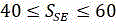
when in use
When, is greater or less>
;
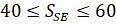
When in use
And->
When, is greater or less>
(ii) a When +>
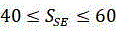
And is provided with
In combination of time>
;
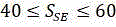
When the temperature is higher than the set temperature
In combination of time>
;
In the formula:
status entropy obtained for the patient by monitoring>
The entropy of the response obtained by the patient through monitoring, device for selecting or keeping>
For comprehensive anesthesia and revival index>
Is the body temperature monitoring value and is based on>
、
A first adjustment coefficient and a second adjustment coefficient, respectively, which are adjusted in value according to the historical patient monitoring data and which are to be evaluated>
The control is within a pre-specified threshold interval.
Furthermore, the data acquisition module is used for acquiring entropy index monitoring information and body temperature monitoring information of a patient, cleaning the acquired data, sending the cleaned information to the anesthesia analysis module for analysis and processing, and sending the acquired information to the data storage module for storage, and the data acquisition module comprises three electrode plates, an entropy index analysis module and an anal temperature probe which is placed at the anus of the patient and used for measuring the rectal temperature of the patient.
Further, the data storage module is used for storing historical monitoring data of the patient, the historical monitoring data comprises entropy index monitoring information and body temperature monitoring information, and the entropy index information comprises state entropy and reaction entropy.
Furthermore, the entropy index monitoring information in the data acquisition module is acquired by acquiring electroencephalogram signals with frequency of 0.8-32 HZ and frontal muscle electrical signals with frequency of 32-47 HZ through three electrode plates pasted on the forehead of a patient, the entropy index analysis module quantifies the electroencephalogram signals by using a nonlinear analysis method, and state entropy and reaction entropy are acquired through digital processing, wherein the state entropy is used for reflecting the situation that cerebral cortex is inhibited in an operation, and the reaction entropy is used for reflecting the inhibition degree of the cerebral cortex and the excitation degree of forehead skeletal muscle in the operation.
Furthermore, after the anesthesia analysis module receives the information sent by the data acquisition module, the data stored in the data storage module is called by the anesthesia awakening evaluation module to analyze and process the entropy index monitoring data and the body temperature monitoring data to obtain a body temperature difference value and an analgesia effect expression value, and the body temperature difference value and the analgesia effect expression value are sent to the anesthesia awakening evaluation module.
Further, the temperature difference value obtained in the anesthesia analysis module is an average value of the anal temperature monitoring value of the patient obtained every other one minute within five minutes and the difference value of 30 ℃, and the analgesic effect expression value is an average value of the reaction entropy and the state entropy difference value obtained every other 30 seconds within two minutes.
A monitoring and analyzing method for waking up from anesthesia and body temperature is used for analyzing the state of waking up from anesthesia and body temperature monitoring information by the monitoring and analyzing system for waking up from anesthesia and body temperature, and comprises the following steps:
step S1, regularly acquiring body temperature monitoring information of a patient, and determining a body temperature adjusting state of the patient in an anesthesia awakening process according to the information;
s2, acquiring electroencephalogram signals with the frequency of 0.8-32 HZ and frontal muscle electrical signals with the frequency of 32-47 HZ of the patient, and determining the state entropy and the reaction entropy of the anesthesia awakening state according to the electroencephalogram signals and the frontal muscle electrical signals;
s3, performing data cleaning on the acquired body temperature monitoring information and the acquired entropy index information, and eliminating abnormal values and outliers;
s4, acquiring body temperature monitoring information and entropy index information of the patient, acquiring a differential body temperature value and an analgesic effect expression value, and determining the anesthesia state of the patient during anesthesia awakening according to the numerical value of state entropy;
and S5, determining the anesthesia awakening evaluation degree of the patient in each acquisition time period according to the values of the differential body temperature value, the analgesia effect expression value, the state entropy and the reaction entropy of the patient, evaluating and displaying a comprehensive anesthesia awakening index, helping a doctor analyze a brain temperature regulation mechanism, the suppression condition of cerebral cortex in operation and the comprehensive expression of the forehead skeletal muscle excitation degree of the patient in the anesthesia awakening state process according to the comprehensive anesthesia awakening index of the patient, and analyzing the brain activity rule of the patient and the quantitative expression value of the body temperature change involved by the lateral view brain-derived neurotrophic factor positive neurons in the hypothalamic anterior region when the patient is awakened from anesthesia.
The monitoring and analyzing system for body temperature and anesthesia awakening provided by the invention has the technical effects and advantages that:
the invention determines the anesthesia awakening state of a patient in multiple dimensions by combining state entropy information, reaction entropy information and body temperature information generated when the patient is subjected to postoperative anesthesia awakening, evaluates the anesthesia awakening state according to the entropy index and the body temperature state of the patient during anesthesia awakening, monitors the anesthesia awakening state of the patient, and comprehensively analyzes the anesthesia awakening state by combining the entropy index and the body temperature;
the invention determines the anesthesia awakening evaluation degree of the patient in each acquisition time period according to the entropy index monitoring information and the body temperature monitoring information of the patient, evaluates and displays the comprehensive anesthesia awakening index, helps a doctor analyze the brain temperature regulation mechanism, the inhibition condition of cerebral cortex in operation and the comprehensive expression of the forehead skeletal muscle excitation degree of the patient in the process of the anesthesia awakening state according to the comprehensive anesthesia awakening index of the patient, and analyzes the brain activity rule of the patient and the quantitative expression value of the body temperature change involved by the lateral view precordial brain-derived neurotrophic factor positive neurons in the hypothalamic precordial region when the patient is awakened from anesthesia.
Detailed Description
The technical solutions in the embodiments of the present invention will be clearly and completely described below with reference to the drawings in the embodiments of the present invention, and it is obvious that the described embodiments are only a part of the embodiments of the present invention, and not all of the embodiments. All other embodiments, which can be obtained by a person skilled in the art without making any creative effort based on the embodiments in the present invention, belong to the protection scope of the present invention.
Example 1
The invention discloses a monitoring and analyzing system for body temperature and anesthesia awakening, which is characterized in that the state of the patient for anesthesia awakening is determined in a multi-dimensional manner by combining state entropy information, reaction entropy information and body temperature information generated when the patient is subjected to anesthesia awakening after operation, the anesthesia awakening state of the patient is evaluated according to the entropy index of the patient for anesthesia awakening and the body temperature state, the anesthesia awakening state of the patient is monitored, and the comprehensive analysis is carried out on the anesthesia awakening state by combining the entropy index and the body temperature.
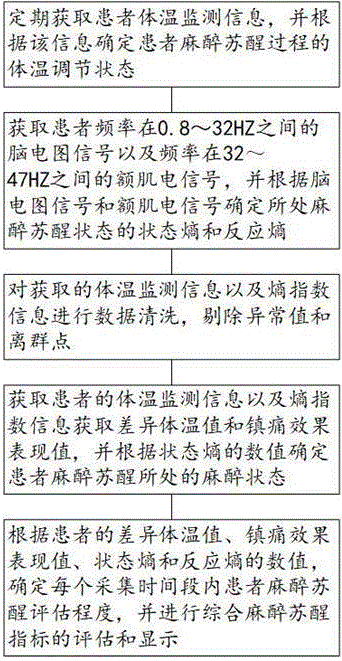
Fig. 1 shows a monitoring and analyzing flow chart of the monitoring and analyzing system for body temperature and anesthesia recovery according to the present invention, which comprises the following steps:
step S1, regularly acquiring body temperature monitoring information of a patient, and determining a body temperature adjusting state of the patient in an anesthesia awakening process according to the information; s2, acquiring electroencephalogram signals with the frequency of 0.8-32 HZ and frontal muscle electrical signals with the frequency of 32-47 HZ of the patient, and determining the state entropy and the reaction entropy of the anesthesia awakening state according to the electroencephalogram signals and the frontal muscle electrical signals;
s3, performing data cleaning on the acquired body temperature monitoring information and the acquired entropy index information, and eliminating abnormal values and outliers;
s4, acquiring body temperature monitoring information and entropy index information of the patient, acquiring a differential body temperature value and an analgesic effect expression value, and determining the anesthesia state of the patient during anesthesia awakening according to the numerical value of state entropy;
and S5, determining the anesthesia awakening evaluation degree of the patient in each acquisition time period according to the values of the differential body temperature value, the analgesia effect expression value, the state entropy and the reaction entropy of the patient, evaluating and displaying a comprehensive anesthesia awakening index, helping a doctor analyze a brain temperature regulation mechanism, the suppression condition of cerebral cortex in operation and the comprehensive expression of the forehead skeletal muscle excitation degree of the patient in the anesthesia awakening state process according to the comprehensive anesthesia awakening index of the patient, and analyzing the brain activity rule of the patient and the quantitative expression value of the body temperature change involved by the lateral view brain-derived neurotrophic factor positive neurons in the hypothalamic anterior region when the patient is awakened from anesthesia.
Specifically, the detailed process of each step of the invention is as follows: step S1:
the invention firstly acquires the body temperature monitoring information of the patient periodically and determines the body temperature adjusting state of the patient in the anesthesia awakening process according to the information.
The body temperature monitoring information is obtained from the body of the patient at intervals of one minute within five minutesThe placed anal temperature probe acquires five rectal temperature monitoring values of the patient, the rectal temperature monitoring values are collected in the data acquisition module, data stream storage of historical rectal temperature monitoring values is realized through the data storage module, and the five rectal temperature monitoring values are recorded as
、
、
、
And
。
it should be noted that, in the above description, five rectal temperature monitoring values are adopted
、
、
、
And->
The method is characterized in that the method is a normal value obtained by monitoring the anal temperature monitoring probe, when the temperature value obtained by monitoring the anal temperature monitoring probe is lower than 30 ℃ or higher than 45 ℃, an abnormal value at the position is removed in a linear interpolation mode, and vacancy value interpolation is carried out by combining two adjacent normal monitoring values.
Step S2:
the invention obtains the electroencephalogram signals with the frequency of 0.8-32 HZ and the frontal muscle electrical signals with the frequency of 32-47 HZ of a patient, and determines the state entropy and the reaction entropy of the anesthesia awakening state according to the electroencephalogram signals and the frontal muscle electrical signals.
It should be noted that the entropy index monitoring information is acquired by collecting electroencephalogram signals with frequency of 0.8-32 HZ and frontal muscle electrical signals with frequency of 32-47 HZ through three electrode plates adhered to the forehead of a patient, an entropy index analysis module quantifies the electroencephalogram signals by using a nonlinear analysis method, and state entropy and reaction entropy are acquired through digital processing, wherein the state entropy is used for reflecting the situation that cerebral cortex is inhibited in an operation, and the reaction entropy is used for reflecting the inhibition degree of the cerebral cortex and the excitation degree of forehead skeletal muscles in the operation. The neural activity has the characteristics of nonlinearity and irregularity, the entropy index is that an electroencephalogram signal is quantized by using a nonlinear analysis method, and an anesthesia depth value is measured by digital processing, and the operational principle is that the irregularity and the unpredictability of the signal are described by comprehensively analyzing an electroencephalogram signal EEG and a frontal muscle electrical signal FEMG. The entropy index is different from monitoring indexes BIS and AEP, and can reflect the anesthesia depth change and consciousness disappearance state of the patient at the same time: research shows that compared with BIS, when propofol is used for induction, the entropy index has higher accuracy than BIS sedation depth prediction, the influence of body position factors on the entropy index is smaller than that of BIS, and the response speed to the consciousness recovery of patients is more sensitive and quicker; compared with AEP, the entropy index has strong anti-interference capability, is slightly interfered by muscle activity and an electrotome in operation, has no sound stimulation, is suitable for patients with hearing impairment, and is a subcortical reaction of nociceptive stimulation body movement caused by intubation and skin cutting, and the reaction entropy in the entropy index can reflect subcutaneous electroencephalogram activity.
It should be noted that, the entropy index monitoring data may have an outlier exceeding a threshold caused by the use and function of an electrode, and such data is displayed and cleaned, so as to avoid the influence of the data on the evaluation and analysis of the subsequent anesthesia awakening.
And step S3:
the method carries out data cleaning on the obtained body temperature monitoring information and the entropy index information, and eliminates abnormal values and outliers.
And step S4:
in step S4, the body temperature monitoring information and the entropy index information of the patient are mainly obtained to obtain the differential body temperature value and the analgesia effect expression value, and the anesthesia state of the patient during anesthesia awakening is determined according to the numerical value of the state entropy.
It should be noted that the differential body temperature value is an average value of the anal temperature monitoring value of the patient obtained every other one minute within five minutes and the difference value of 30 ℃, and the analgesic effect expression value is an average value of the reaction entropy and state entropy difference values obtained every other 30 seconds within two minutes. The temperature of the rectum is the lowest temperature of the rectum for carrying out transient stopping circulation in shallow low-temperature stopping circulation anesthesia inner-covering type aortic arch replacement, and the rectum is easy to cause organ damage of low-temperature stopping circulation when the temperature is lower than the lowest temperature.
Step S5:
in step S5, according to the values of the patient 'S differential body temperature value, the analgesia effect expression value, the state entropy and the reaction entropy, the evaluation degree of the patient' S anesthesia awakening in each acquisition time period is determined, and the evaluation and display of the comprehensive anesthesia awakening index are performed, so that a doctor is helped to analyze the brain temperature regulation mechanism, the suppression condition of cerebral cortex in the operation and the comprehensive expression of the excitability of forehead skeletal muscle of the patient in the anesthesia awakening state process of the patient according to the comprehensive anesthesia awakening index of the patient, and the brain activity rule of the patient and the quantitative expression value of the body temperature change involved by the side-looking brain-derived neurotrophic factor positive neurons in the hypothalamic preoptic area when the patient is awakened from anesthesia.
It should be noted that, the patient anesthesia awakening assessment degree in each acquisition time period is analyzed by the numerical value of the comprehensive anesthesia awakening index, the anesthesia awakening assessment module is used for processing data from at least one component of the monitoring and analysis system for body temperature and anesthesia awakening, the anesthesia awakening state of the patient is assessed by the comprehensive anesthesia awakening index in combination with the entropy index monitoring information and the body temperature monitoring information, and the assessment mechanism of the comprehensive anesthesia awakening index is as follows:
when in use
In combination of time>
;
When in use
And->
When, is greater or less>
;
When the temperature is higher than the set temperature
And->
When, is greater or less>
;
When in use
In combination of time>
;
In the formula:
status entropy obtained for the patient by monitoring>
Entropy of response obtained by monitoring for patients>
For comprehensive anesthesia and revival index>
Is the body temperature monitoring value and is based on>
、
A first adjustment coefficient and a second adjustment coefficient, respectively, which are adjusted in value according to the historical patient monitoring data and which are to be evaluated>
The control is within a pre-specified threshold interval.
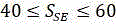
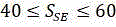
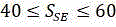
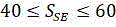
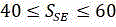
The method comprises the steps of maintaining anesthesia after anesthesia induction of a patient to a target anesthesia depth, completing external circulation building and blood flow low-temperature regulation, performing shallow low-temperature stop circulation anesthesia internal covering type aortic arch replacement, performing aortic arch internal covering type replacement suture after surgery is completed, suturing and repairing an incision and a catheter port, removing a descending aorta balloon catheter, opening a clamped aorta, recovering external circulation, slowly perfusing at a proper large flow rate, enabling the central temperature to rise at a constant speed, performing rewarming, gradually stopping external circulation after circulation is stable, recovering mechanical ventilation and vasoactive drug pumping of an anesthesia machine, reinflating autologous blood and machine blood, withdrawing an external circulation cannula, giving a protamine injection to maintain heparin mild anticoagulation effect, ensuring wound hemostasis, retaining a thoracic cavity and a pericardial drainage tube, closing the chest, monitoring respiration and circulation functions, enabling the patient to return to an ICU (intensive care unit) with a trachea cannula, and returning to the cardiac surgery, and entering anesthesia recovery stage for monitoring. When the values of the state entropy and the reaction entropy are both between 40 and 60, the anesthesia state is suitable, in this case, the difference value of the reaction entropy and the state entropy can reflect the analgesia effect of the anesthesia to guide anesthesia and analgesia, when the difference value of the reaction entropy and the state entropy is lower than 5 or more than 10, the analgesia is not enough, and the condition is reflected in that

In (b), the combined anesthesia wake-up index is adjusted to be e>

Exponentially amplifying, wherein the numerical value of the comprehensive anesthesia awakening index provides a data basis for analysis for a doctor to adjust the medication of the analgesic in the anesthesia; when the values of the state entropy and the reaction entropy are less than 40, the state is in a deep anesthesia state, and therefore the value of the comprehensive anesthesia awakening index is set to be 1; when the state entropy is larger than 60, the patient is in a shallow anesthesia state, the patient is adjusted depending on the blood temperature in shallow low-temperature extracorporeal circulation anesthesia, the rectal temperature is enabled to be in a shallow low-temperature rewarming state, the temperature change involved by the external side view anterior brain neurotrophic factor positive neuron in the hypothalamic epiopthalmic region is utilized to inhibit the anesthesia from reviving, the hypothermia anesthesia deepens the depth, the hypothermia anesthesia also participates in the reviving of the anesthesia, the body temperature of the patient is monitored in a set threshold range, and the temperature of the patient is monitored so as to be based on the temperature change>

The change of the temperature regulation mechanism is reflected on a formula of a comprehensive anesthesia awakening index, so that the numerical expression of the anesthesia awakening state of the patient is realized, and an analysis data basis is provided for a doctor to adjust the extracorporeal circulation temperature to deepen the anesthesia depth; when/is>
And->
When, is greater or less>
The results indicate that the depth of anesthesia is appropriate and the analgesic effect is appropriate, and that the comprehensive recovery index of anesthesia is numerically 0.
Example 2
The difference between embodiment 2 and embodiment 1 of the present invention is that this embodiment describes a monitoring and analyzing system for body temperature and anesthesia recovery.
Fig. 2 is a schematic structural diagram of a monitoring and analyzing system for body temperature and anesthesia awaking according to the present invention, which includes an anesthesia awaking evaluation module, and a data acquisition module, an anesthesia analysis module and a data storage module which are communicatively connected to the anesthesia awaking evaluation module;
the anesthesia awakening evaluation module is used for processing data from at least one component of a monitoring and analyzing system for body temperature and anesthesia awakening, and evaluating the anesthesia awakening state of a patient by utilizing the comprehensive anesthesia awakening index combined entropy index monitoring information and the body temperature monitoring information, wherein the evaluation mechanism of the comprehensive anesthesia awakening index is as follows:
when in use
When, is greater or less>
;
When in use
And->
In combination of time>
;
When in use
And->
When, is greater or less>
;
When in use
When, is greater or less>
(ii) a In the formula:
Status entropy obtained for the patient by monitoring>
The entropy of the response obtained by the patient through monitoring, device for selecting or keeping>
For combined anesthesia wake-up criteria>
Is the body temperature monitoring value and is based on>
、
A first adjustment coefficient and a second adjustment coefficient, respectively, which are adjusted in value according to the historical patient monitoring data and which are to be evaluated>
The control is within a pre-specified threshold interval.
The data acquisition module is used for acquiring entropy index monitoring information and body temperature monitoring information of a patient, cleaning the acquired data, sending the cleaned information to the anesthesia analysis module for analysis and processing, and sending the acquired information to the data storage module for storage, and the data acquisition module comprises three electrode plates, an entropy index analysis module and an anus temperature probe which is placed at the anus of the patient and used for measuring the rectal temperature of the patient.
The data storage module is used for storing historical monitoring data of the patient, the historical monitoring data comprises entropy index monitoring information and body temperature monitoring information, and the entropy index information comprises state entropy and reaction entropy.
After the anesthesia analysis module receives the information sent by the data acquisition module, the data stored in the data storage module is called by the anesthesia awakening evaluation module to analyze and process the entropy index monitoring data and the body temperature monitoring data to obtain a body temperature difference value and an analgesia effect expression value, and the body temperature difference value and the analgesia effect expression value are sent to the anesthesia awakening evaluation module.
The anesthesia recovery evaluation module may be configured to process data and/or information from at least one component of a monitoring analysis system for body temperature and anesthesia recovery or an external data source (e.g., a cloud data center). In some embodiments, the anesthesia wake assessment module may be local or remote. For example, the anesthesia wake-up assessment module may access information and/or data from a data storage device, a terminal device, and/or a data acquisition device via a network. As another example, the anesthesia wake assessment module may be directly connected to a data storage device, a terminal device, and/or a data acquisition device to access information and/or data. In some embodiments, the anesthesia wake assessment module may be implemented on a cloud platform. For example, the cloud platform may include a private cloud, a public cloud, a hybrid cloud, a community cloud, a distributed cloud, an inter-cloud, a multi-cloud, and the like, or any combination thereof.
The above formulas are all calculated by taking the numerical value of the dimension, the formula is a formula which obtains the latest real situation by acquiring a large amount of data and performing software simulation, and the preset parameters and the threshold value in the formula are selected and set by the technical personnel in the field according to the actual situation.
The above embodiments may be implemented in whole or in part by software, hardware, firmware, or any combination thereof. When implemented in software, the above-described embodiments may be implemented in whole or in part in the form of a computer program product. The computer program product comprises one or more computer instructions or computer programs. The procedures or functions according to the embodiments of the present application are wholly or partially generated when the computer instructions or the computer program are loaded or executed on a computer. The computer may be a general purpose computer, a special purpose computer, a network of computers, or other programmable device. The computer instructions may be stored on a computer readable storage medium or transmitted from one computer readable storage medium to another computer readable storage medium, for example, the computer instructions may be transmitted from one website, computer, server, or data center to another website, computer, server, or data center by wire (e.g., infrared, wireless, microwave, etc.). The computer-readable storage medium can be any available medium that can be accessed by a computer or a data storage device, such as a server, data center, etc., that contains one or more collections of available media. The usable medium may be a magnetic medium (e.g., floppy disk, hard disk, magnetic tape), an optical medium (e.g., DVD), or a semiconductor medium. The semiconductor medium may be a solid state disk.
Those of ordinary skill in the art will appreciate that the various illustrative elements and algorithm steps described in connection with the embodiments disclosed herein may be implemented as electronic hardware or combinations of computer software and electronic hardware. Whether such functionality is implemented as hardware or software depends upon the particular application and design constraints imposed on the implementation. Skilled artisans may implement the described functionality in varying ways for each particular application, but such implementation decisions should not be interpreted as causing a departure from the scope of the present application.
It is clear to those skilled in the art that, for convenience and brevity of description, the specific working processes of the above-described systems, apparatuses and units may refer to the corresponding processes in the foregoing method embodiments, and are not described herein again.
In the several embodiments provided in the present application, it should be understood that the disclosed system, apparatus and method may be implemented in other ways. For example, the above-described apparatus embodiments are merely illustrative, and for example, the division of the units is only one logical division, and other divisions may be realized in practice, for example, a plurality of units or components may be combined or integrated into another system, or some features may be omitted, or not executed. In addition, the shown or discussed mutual coupling or direct coupling or communication connection may be an indirect coupling or communication connection through some interfaces, devices or units, and may be in an electrical, mechanical or other form.
The units described as separate parts may or may not be physically separate, and parts displayed as units may or may not be physical units, may be located in one place, or may be distributed on a plurality of network units. Some or all of the units can be selected according to actual needs to achieve the purpose of the solution of the embodiment.
In addition, functional units in the embodiments of the present application may be integrated into one processing unit, or each unit may exist alone physically, or two or more units are integrated into one unit.
The functions, if implemented in the form of software functional units and sold or used as a stand-alone product, may be stored in a computer readable storage medium. Based on such understanding, the technical solution of the present application or portions thereof that substantially contribute to the prior art may be embodied in the form of a software product stored in a storage medium and including instructions for causing a computer device (which may be a personal computer, a server, or a network device) to execute all or part of the steps of the method according to the embodiments of the present application. And the aforementioned storage medium includes: various media capable of storing program codes, such as a usb disk, a removable hard disk, a read-only memory (ROM), a Random Access Memory (RAM), a magnetic disk, or an optical disk.
The above description is only for the specific embodiments of the present application, but the scope of the present application is not limited thereto, and any person skilled in the art can easily think of the changes or substitutions within the technical scope of the present application, and shall be covered by the scope of the present application. Therefore, the protection scope of the present application shall be subject to the protection scope of the claims.
And finally: the above description is only for the purpose of illustrating the preferred embodiments of the present invention and is not to be construed as limiting the present invention, and any modifications, equivalents, improvements and the like made within the spirit and principle of the present invention should be included in the scope of the present invention.