CN116113473A - MCL-1 inhibitor formulations - Google Patents
MCL-1 inhibitor formulations Download PDFInfo
- Publication number
- CN116113473A CN116113473A CN202180062139.7A CN202180062139A CN116113473A CN 116113473 A CN116113473 A CN 116113473A CN 202180062139 A CN202180062139 A CN 202180062139A CN 116113473 A CN116113473 A CN 116113473A
- Authority
- CN
- China
- Prior art keywords
- solid dispersion
- amg
- amorphous
- pharmaceutical formulation
- copolymer
- Prior art date
- Legal status (The legal status is an assumption and is not a legal conclusion. Google has not performed a legal analysis and makes no representation as to the accuracy of the status listed.)
- Pending
Links
Images




Classifications
-
- A—HUMAN NECESSITIES
- A61—MEDICAL OR VETERINARY SCIENCE; HYGIENE
- A61K—PREPARATIONS FOR MEDICAL, DENTAL OR TOILETRY PURPOSES
- A61K9/00—Medicinal preparations characterised by special physical form
- A61K9/0012—Galenical forms characterised by the site of application
- A61K9/0053—Mouth and digestive tract, i.e. intraoral and peroral administration
-
- A—HUMAN NECESSITIES
- A61—MEDICAL OR VETERINARY SCIENCE; HYGIENE
- A61K—PREPARATIONS FOR MEDICAL, DENTAL OR TOILETRY PURPOSES
- A61K31/00—Medicinal preparations containing organic active ingredients
- A61K31/33—Heterocyclic compounds
- A61K31/395—Heterocyclic compounds having nitrogen as a ring hetero atom, e.g. guanethidine or rifamycins
- A61K31/55—Heterocyclic compounds having nitrogen as a ring hetero atom, e.g. guanethidine or rifamycins having seven-membered rings, e.g. azelastine, pentylenetetrazole
- A61K31/553—Heterocyclic compounds having nitrogen as a ring hetero atom, e.g. guanethidine or rifamycins having seven-membered rings, e.g. azelastine, pentylenetetrazole having at least one nitrogen and one oxygen as ring hetero atoms, e.g. loxapine, staurosporine
-
- A—HUMAN NECESSITIES
- A61—MEDICAL OR VETERINARY SCIENCE; HYGIENE
- A61K—PREPARATIONS FOR MEDICAL, DENTAL OR TOILETRY PURPOSES
- A61K9/00—Medicinal preparations characterised by special physical form
- A61K9/14—Particulate form, e.g. powders, Processes for size reducing of pure drugs or the resulting products, Pure drug nanoparticles
- A61K9/141—Intimate drug-carrier mixtures characterised by the carrier, e.g. ordered mixtures, adsorbates, solid solutions, eutectica, co-dried, co-solubilised, co-kneaded, co-milled, co-ground products, co-precipitates, co-evaporates, co-extrudates, co-melts; Drug nanoparticles with adsorbed surface modifiers
- A61K9/146—Intimate drug-carrier mixtures characterised by the carrier, e.g. ordered mixtures, adsorbates, solid solutions, eutectica, co-dried, co-solubilised, co-kneaded, co-milled, co-ground products, co-precipitates, co-evaporates, co-extrudates, co-melts; Drug nanoparticles with adsorbed surface modifiers with organic macromolecular compounds
-
- A—HUMAN NECESSITIES
- A61—MEDICAL OR VETERINARY SCIENCE; HYGIENE
- A61K—PREPARATIONS FOR MEDICAL, DENTAL OR TOILETRY PURPOSES
- A61K9/00—Medicinal preparations characterised by special physical form
- A61K9/20—Pills, tablets, discs, rods
-
- A—HUMAN NECESSITIES
- A61—MEDICAL OR VETERINARY SCIENCE; HYGIENE
- A61P—SPECIFIC THERAPEUTIC ACTIVITY OF CHEMICAL COMPOUNDS OR MEDICINAL PREPARATIONS
- A61P35/00—Antineoplastic agents
-
- A—HUMAN NECESSITIES
- A61—MEDICAL OR VETERINARY SCIENCE; HYGIENE
- A61P—SPECIFIC THERAPEUTIC ACTIVITY OF CHEMICAL COMPOUNDS OR MEDICINAL PREPARATIONS
- A61P35/00—Antineoplastic agents
- A61P35/02—Antineoplastic agents specific for leukemia
-
- C—CHEMISTRY; METALLURGY
- C07—ORGANIC CHEMISTRY
- C07B—GENERAL METHODS OF ORGANIC CHEMISTRY; APPARATUS THEREFOR
- C07B2200/00—Indexing scheme relating to specific properties of organic compounds
- C07B2200/13—Crystalline forms, e.g. polymorphs
-
- C—CHEMISTRY; METALLURGY
- C07—ORGANIC CHEMISTRY
- C07D—HETEROCYCLIC COMPOUNDS
- C07D519/00—Heterocyclic compounds containing more than one system of two or more relevant hetero rings condensed among themselves or condensed with a common carbocyclic ring system not provided for in groups C07D453/00 or C07D455/00
Landscapes
- Health & Medical Sciences (AREA)
- Chemical & Material Sciences (AREA)
- Animal Behavior & Ethology (AREA)
- Public Health (AREA)
- Medicinal Chemistry (AREA)
- Pharmacology & Pharmacy (AREA)
- Life Sciences & Earth Sciences (AREA)
- Veterinary Medicine (AREA)
- General Health & Medical Sciences (AREA)
- Organic Chemistry (AREA)
- Epidemiology (AREA)
- Nuclear Medicine, Radiotherapy & Molecular Imaging (AREA)
- Chemical Kinetics & Catalysis (AREA)
- General Chemical & Material Sciences (AREA)
- Engineering & Computer Science (AREA)
- Bioinformatics & Cheminformatics (AREA)
- Hematology (AREA)
- Oncology (AREA)
- Nutrition Science (AREA)
- Physiology (AREA)
- Medicinal Preparation (AREA)
- Pharmaceuticals Containing Other Organic And Inorganic Compounds (AREA)
- Acyclic And Carbocyclic Compounds In Medicinal Compositions (AREA)
- Nitrogen And Oxygen Or Sulfur-Condensed Heterocyclic Ring Systems (AREA)
- Processes Of Treating Macromolecular Substances (AREA)
Abstract
Provided herein are solid dispersions comprising AMG397, methods of preparing the solid dispersions, and pharmaceutical formulations comprising AMG 397.
Description
Background
Cross Reference to Related Applications
The present application claims the benefit of U.S. provisional application No. 63/070,630, filed 8/26/2020, which is incorporated by reference herein in its entirety for all purposes as if fully set forth herein.
Technical Field
The present disclosure relates to (1S, 3'R,6' R,7'R,8' E,11'S,12' R) -6-chloro-7 '-methoxy-11', 12 '-dimethyl-7' - ((9 aR) -octahydro-2H-pyrido [1,2-a ]]Pyrazin-2-ylmethyl) -3, 4-dihydro-2 h,15 'h-spiro [ naphthalene-1, 22' - [20 ]]Oxa [13 ]]Thia [1,14]Diazatetracyclo [14.7.2.0 3,6 .0 19,24 ]Cyclopentadec carbon [8,16,18,24 ]]Tetraenes]-15' -ketone 13',13' -dioxide (AMG 397), a salt or solvate thereof. AMG397 is an inhibitor of the myeloid leukemia 1 protein (Mcl-1). The disclosure further relates to solid dispersions comprising amorphous AMG397 and a polymer, methods of preparing the solid dispersions, crystalline hydrate forms of AMG397, pharmaceutical formulations thereof, and methods of treating cancer in a subject.
Background
Compound (1S, 3'R,6' R,7'R,8' E,11'S,12' R) -6-chloro-7 '-methoxy-11', 12 '-dimethyl-7' - ((9 aR) -octahydro-2H-pyrido [1, 2-a) ]Pyrazin-2-ylmethyl) -3, 4-dihydro-2 h,15 'h-spiro [ naphthalene-1, 22' - [20 ]]Oxa [13 ]]Thia [1,14]Diazatetracyclo [14.7.2.0 3,6 .0 19,24 ]Cyclopentadec carbon [8,16,18,24 ]]Tetraenes]-15' -ketone 13',13' -dioxide (AMG 397) is useful as an inhibitor of myeloid leukemia 1 (Mcl-1):

one common feature of human cancers is Mcl-1 overexpression. Mcl-1 overexpression prevents cancer cells from undergoing apoptosis (apoptosis), allowing these cells to survive despite extensive genetic damage.
Mcl-1 is a member of the Bcl-2 family of proteins. The Bcl-2 family includes pro-apoptotic members (e.g., BAX and BAK) that upon activation form homooligomers in the mitochondrial outer membrane, which lead to pore formation and leakage of mitochondrial content, a step that triggers apoptosis. Anti-apoptotic members of the Bcl-2 family (e.g., bcl-2, bcl-XL and Mcl-1) block the activity of BAX and BAK. Other proteins (e.g., BID, BIM, BIK and BAD) exhibit additional regulatory functions. Studies have shown that Mcl-1 inhibitors can be used to treat cancer. Mcl-1 is overexpressed in a variety of cancers.
U.S. patent No. 10,300,075, which is incorporated herein by reference in its entirety, discloses AMG 397 as an Mcl-1 inhibitor and provides a method for preparing the compound.
Disclosure of Invention
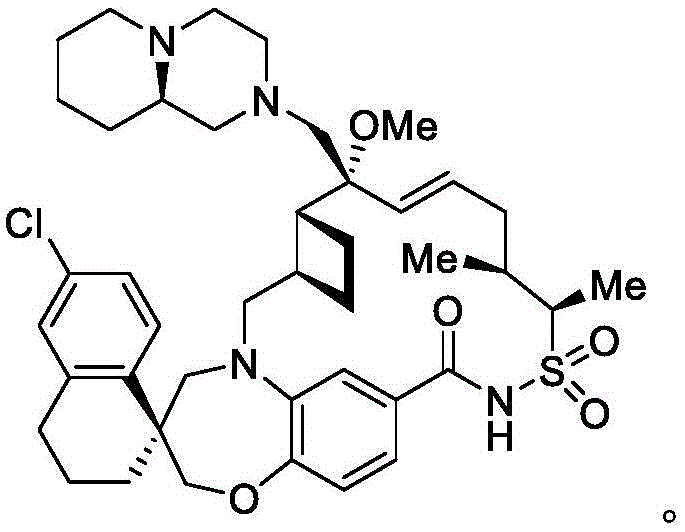
Provided herein are solid dispersions comprising amorphous AMG 397, or a pharmaceutically acceptable salt or solvate thereof, and a polymer, wherein AMG 397 has the structure
Also provided herein are pharmaceutical formulations comprising a solid dispersion as described herein and a pharmaceutically acceptable excipient.
Also provided herein are methods of preparing a solid dispersion as described herein, the methods comprising
Amorphous AMG 397 and polymer are mixed in a solvent to form a solution, and the solution is spray dried to form a solid dispersion.
Also provided herein are crystalline hydrate forms of AMG 397 characterized by a solid state at 13.57, 19.13, 20.39, 24.04, 25.54, 27.75, 30.09, 31.05, 36.84, 38.27, 39.48, 43.15, 49.53, 50.30, 51.84, 54.40, 56.15, 57.28, 57.78, 60.23, 61.80, 65.65, 78.05, 85.23, 115.91, 123.10, 124.60, 128.11, 130.53, 133.18, 133.87, 134.99, 139.72, 141.47, 143.08, 151.76 and 174.30 ±0.5ppm 13 C NMR peak.
Also provided herein are pharmaceutical formulations comprising crystalline hydrate forms of AMG 397 as described herein and pharmaceutically acceptable excipients.
Also provided herein are methods of treating a subject having cancer, comprising administering to the subject a therapeutically effective amount of a pharmaceutical formulation comprising a crystalline hydrate form of AMG 397 as described herein and a pharmaceutically acceptable excipient.
Also provided herein are crystalline hydrate forms of AMG397 characterized by XRPD pattern peaks at 10.3, 16.3, and 17.1±0.2° 2θ using Cu ka radiation.
Also provided herein are pharmaceutical formulations comprising crystalline hydrate forms of AMG397 as described herein and pharmaceutically acceptable excipients.
Also provided herein are methods of treating a subject having cancer comprising administering to the subject a therapeutically effective amount of a pharmaceutical formulation comprising a crystalline hydrate form of AMG397 as described herein and a pharmaceutically acceptable excipient.
Drawings
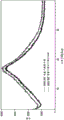
Fig. 1 depicts an X-ray powder diffraction ("XRPD") pattern of an amorphous form of AMG 397.
Fig. 2 depicts a differential scanning calorimetry ("DSC") thermogram of an amorphous form of AMG397 and a thermogravimetric analysis ("TGA") trace of an amorphous form of AMG 397.
Fig. 3 depicts the moisture absorption profile of an amorphous form of AMG 397.
Fig. 4 depicts a particle size distribution plot of an amorphous form of AMG 397.
Fig. 5 depicts a two-stage microcubiquity graph comparing the amorphous form of AMG397 and the crystalline hydrate form of AMG 397.
Fig. 6 depicts a graph of plasma concentration after oral administration of solid dispersions and crystalline hydrate forms of AMG397 at 3mg/kg to male beagle dogs without pretreatment.
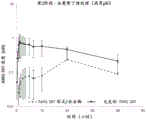
Fig. 7 depicts a graph of plasma concentration after oral administration of solid dispersions and crystalline hydrate forms of AMG 397 at 3mg/kg to male beagle dogs with high gastric pH with pretreatment with famotidine.
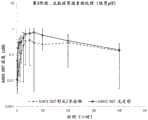
Fig. 8 depicts a graph of plasma concentration after oral administration of solid dispersions and crystalline hydrate forms of AMG 397 at 3mg/kg to male beagle dogs with low gastric pH with a pentapeptide gastrin pretreatment.
Fig. 9 depicts a graph of plasma concentration after oral administration of solid dispersions and crystalline hydrate forms of AMG 397 at 3mg/kg to male beagle dogs with low gastric pH, pretreated with pentapeptide gastrin and administered with Pgp inhibitors.
Fig. 10 depicts an X-ray powder diffraction ("XRPD") pattern of crystalline hydrate form of AMG 397.
Fig. 11 depicts a TGA trace of crystalline hydrate form of AMG 397.
Fig. 12 depicts a DSC thermogram of the crystalline hydrate form of AMG 397.
Fig. 13 depicts the moisture absorption profile of the crystalline hydrate form of AMG 397.
FIG. 14 depicts the solid state of the crystalline hydrate form of AMG 397 13 C NMR。
Fig. 15 depicts a single crystal X-ray crystal structure of the crystalline hydrate form of AMG 397.
Detailed Description
Provided herein are solid dispersions comprising (1 s,3' r,6' r,7's,8' e,11's,12' r) -6-chloro-7 ' -methoxy-11 ',12' -dimethyl-3, 4-dihydro-2 h,15' h-spiro [ naphthalene-1, 22' [20 ] ]Oxa [13 ]]Thia [1,14]Diazatetracyclo [14.7.2.0 3,6 .0 19,24 ]Cyclopentadec carbon [8,16,18,24 ]]Tetraenes]-15' -ketone 13',13' -dioxide (AMG 397) or a pharmaceutically acceptable salt or solvate thereof, and a polymer, wherein AMG 397 has the structure U.S. patent No. 10,300,075, which is incorporated herein by reference in its entirety, describes AMG 397 and its activity as Mcl-1 inhibitor and discloses the preparation of AMG 397.
Also disclosed herein are pharmaceutical formulations comprising the solid dispersions and methods of treating a subject having cancer comprising administering to the subject a therapeutically effective amount of the pharmaceutical formulations. Solid dispersions provide benefits including, but not limited to: higher oral bioavailability, better stability when stored under various conditions, and less variability in bioavailability when gastric pH is changed than other forms of AMG 397, while other formulations (e.g., crystalline hydrate forms of AMG 397) show up to a 2-fold decrease in bioavailability when gastric pH is outside of normal range.
Provided herein are methods of preparing the solid dispersions disclosed herein, wherein the methods may include mixing amorphous AMG 397 and a polymer in a solvent to form a solution, and spray drying the solution to form the solid dispersion.
Further provided herein are crystalline hydrate forms of AMG 397, pharmaceutical formulations thereof, and methods of treating a subject having cancer comprising administering to the subject a therapeutically effective amount of the pharmaceutical formulations.
Unless otherwise indicated, it is contemplated that these formulations, dosage forms, and methods include embodiments comprising any combination of one or more of the additional optional elements, features, and steps (including those shown in the tables) described further below.
Unless otherwise specified, the following definitions apply to terms appearing in the present specification and claims:
"treatment" means any treatment of a disease in a patient, including: a) Preventing the disease, i.e., preventing the clinical symptoms of the disease from developing; b) Inhibiting the disease; c) Slowing or stopping the progression of clinical symptoms; and/or d) alleviating the disease, i.e., causing the clinical symptoms to subside. Treatment of diseases and disorders herein is intended to also include prophylactic administration of the pharmaceutical formulations described herein to a subject (i.e., animal, preferably mammal, most preferably human) deemed in need of treatment (e.g., like cancer).
The term "therapeutically effective amount" means an amount effective to treat a disease when administered to a human or non-human patient, e.g., a therapeutically effective amount may be an amount sufficient to treat a disease or disorder in response to myosin activation. The therapeutically effective amount may be determined experimentally, for example by determining the blood concentration of a chemical entity, or by calculating bioavailability by theory.
"pharmaceutically acceptable salts" include, but are not limited to, inorganic acid salts such as hydrochloride (i.e., hydrochloride), phosphate, hydrogen phosphate, hydrobromide, sulfate, sulfite, nitrate, and the like; and organic acid salts such as malate, maleate, fumarate, tartrate, succinate, citrate, acetate, lactate, mesylate, p-toluenesulfonate, 2-isethionate, benzoate, salicylate, stearate and alkanoates (e.g., acetate, HOOC- (CH) 2 ) n - -COOH (where n is 0-4)) and the like. Similarly, pharmaceutically acceptable cations include, but are not limited to, sodium, potassium, calcium, aluminum, lithium, and ammonium. Those skilled in the art will recognize a variety of synthetic methods that may be used to prepare non-toxic pharmaceutically acceptable addition salts.
The term "hydrate" refers to chemical entities formed by the interaction of water and a compound, including, for example, hemihydrate, monohydrate, dihydrate, trihydrate, and the like. Solvates of AMG 397 used in the formulations herein are within the scope of the invention. As used herein, a hydrate may have a variable amount of water, for example 0.6 to 2 water molecules per AMG 397 molecule.
"crystalline form" and "polymorphic form" are used interchangeably herein and are intended to include all crystalline and amorphous forms of a compound, including, for example, polymorphs, pseudopolymorphs (pseudopolymorphs), solvates, hydrates, undissolved polymorphs (including amorphous), conformational polymorphs and amorphous forms, and mixtures thereof, unless otherwise specified.
Solid dispersion
Provided herein are solid dispersions comprising amorphous AMG 397, or a pharmaceutically acceptable salt or solvate thereof, and a polymer, wherein aMG 397 has a structure of
The solid dispersions disclosed herein comprise AMG 397 in an amorphous form. Amorphous AMG 397 may be characterized by an X-ray powder diffraction (XRPD) pattern substantially as shown in figure 1, wherein "substantially" means that the reported peaks may vary by ±0.2°.
A Differential Scanning Calorimetry (DSC) thermogram of amorphous AMG 397 was obtained. DSC curves indicate endothermic transitions at 196 ℃ ± 3 ℃. Thus, in some embodiments, amorphous AMG 397 may be characterized by a DSC thermogram with an endothermic transition at 188 ℃ to 205 ℃. In some embodiments, amorphous AMG 397 is characterized by a DSC as shown in fig. 2.
The polymer in the solid dispersion may be any polymer known to those skilled in the art that can stabilize amorphous AMG 397 and/or provide better bioavailability to amorphous AMG 397. In some embodiments of the present invention, in some embodiments, the polymer may comprise pullulan, dextrin, polyacrylic acid, polymethacrylic acid, polymethylvinyl ether co-maleic anhydride, polyvinylpyrrolidone, polyethylene oxide, polyethylene glycol, hydroxypropyl cellulose, hydroxypropyl methylcellulose, hydroxyethyl cellulose, hydroxymethyl methacrylate, sodium carboxymethyl cellulose, calcium carboxymethyl cellulose, methylcellulose, maltodextrin, xanthan gum, tragacanth gum, agar, gellan gum, karaya gum (karaya gum), alginic acid, pectin, pregelatinized starch, polyvinyl alcohol, carboxymethyl ethyl cellulose, cellulose acetate phthalate, cellulose acetate succinate, methyl cellulose phthalate, hydroxymethyl ethyl cellulose phthalate, hydroxypropyl methyl cellulose acetate succinate polyvinyl alcohol phthalate, polyvinyl butyl phthalate, polyvinyl acetate phthalate, vinyl acetate/maleic anhydride copolymer, styrene/maleic acid monoester copolymer, methyl acrylate/methacrylic acid copolymer, styrene/acrylic acid copolymer, methyl acrylate/methacrylic acid/octyl acrylate copolymer, methacrylic acid/methyl methacrylate copolymer, benzyl aminomethylcellulose, diethylaminomethyl cellulose, piperidylethylhydroxyethyl cellulose, dimethylaminoacetate, vinyldiethylamine/vinyl acetate copolymer, vinylbenzylamine/vinyl acetate copolymer, polyvinyl acetal diethylaminoacetate, vinylpiperidylethylacetal/vinyl acetate copolymer, polydiaminomethylstyrene, methyl methacrylate/butyl methacrylate/dimethylaminoethyl methacrylate and polydimethylaminoethyl methacrylate, 2-methyl-5-vinylpyridine/methyl methacrylate/methacrylic acid copolymer, 2-methyl-5-vinylpyridine/methyl acrylate/methacrylic acid copolymer, 2-vinyl-5-ethylpyridine/methacrylic acid/methyl acrylate copolymer, 2-vinylpyridine/methacrylic acid/acrylonitrile copolymer, carboxymethyl piperidinylstarch, carboxymethyl benzyl amino cellulose, N-vinylglycine/styrene copolymer, chitosan, poly (vinyl alcohol), maleic anhydride copolymer, poly (vinylpyrrolidone), starch-based polymer, poly (2-ethyl-2-oxazoline), poly (ethyleneimine), polyurethane hydrogel, welan gum (welan gum), murine gum (rhamsan gum), polyvinyl acetate, ethylcellulose, eudragit RL, eudragit RS, eudragit D30, EMM D30, or a combination thereof. In some embodiments, the polymer may comprise hydroxypropyl methylcellulose, hydroxypropyl methylcellulose acetate succinate, polyvinylpyrrolidone, polyvinyl alcohol, poly (vinylpyrrolidone), hydroxypropyl cellulose. In some embodiments, the polymer comprises hydroxypropyl methylcellulose (HPMC).
The solid dispersions disclosed herein can include any amount of amorphous AMG 397, or a pharmaceutically acceptable salt or solvate thereof, based on the total weight of the solid dispersion. A particularly contemplated amount of amorphous AMG 397 includes amorphous AMG 397 present in an amount of 1% to 90% by weight based on the total weight of the solid dispersion, for example in an amount of 5% to 80%, or 10% to 70%, or 20% to 60%, or 30% to 60%, or 40% to 60%, or 50% to 60% by weight based on the total weight of the solid dispersion. In some embodiments, the solid dispersion may include amorphous AMG 397 and polymer each present in 50wt% based on the total weight of the solid dispersion. In some embodiments, the solid dispersion may include amorphous AMG 397 present at 25wt% and the polymer present at 75 wt%. In some embodiments, the solid dispersion may include amorphous AMG 397 present at 75wt% and a polymer present at 25 wt%. For example, the solid dispersion may include amorphous AMG 397 present at 10wt%, 20wt%, 25wt%, 30wt%, 40wt%, 50wt%, 60wt%, 70wt%, 75wt%, 80wt%, 90wt%, or 95 wt%. For example, the solid dispersion may include a polymer present at 10wt%, 20wt%, 25wt%, 30wt%, 40wt%, 50wt%, 60wt%, 70wt%, 75wt%, 80wt%, 90wt%, or 95 wt%.
The solid dispersions disclosed herein have improved stability compared to other forms of AMG 397. In some embodiments, the solid dispersion exhibits stability (as measured by the amount of impurities formed during storage). In various embodiments, the solid dispersion exhibits such stability that the amount of impurities formed after storage in an open container for 1 month at 40 ℃ and 75% relative humidity is less than 10%. For example, the solid dispersion may have stability such that less than 9% of the impurity is formed, less than 8% of the impurity is formed, less than 7% of the impurity is formed, less than 6% of the impurity is formed, less than 5% of the impurity is formed, less than 4% of the impurity is formed, less than 3% of the impurity is formed, or less than 2% of the impurity is formed when stored in an open container for 1 month at 40 ℃ and 75% of relative humidity. For example, the solid dispersion may have such stability that less than 3% of impurities are formed when stored in a closed container for 1 month at 40 ℃ and 75% relative humidity. For example, the solid dispersion may have such stability that less than 2% of impurities are formed when stored in a closed container for 1 month at 40 ℃ and 75% relative humidity.
Pharmaceutical formulations
Provided herein are pharmaceutical formulations comprising a solid dispersion as described herein and a pharmaceutically acceptable excipient. In some embodiments, the pharmaceutical formulation is in the form of a tablet. In some embodiments, the pharmaceutical formulation is in the form of an immediate release tablet. Solid oral pharmaceutical compositions (e.g., tablets) or formulations have various release profiles, for example, an immediate release profile as cited by the FDA guidelines ("Dissolution Testing of Immediate Release Solid Oral Dosage Forms [ dissolution test of immediate release solid oral dosage forms ]", published in 8 1997, section IV-Sup>A). In the dissolution test guideline for the immediate release profile, at least 80% of the material dissolved in the solution within the first 30 minutes to 60 minutes meets the conditions for the immediate release profile. Thus, immediate release solid dosage forms allow for the release of most or all of the active ingredient in a short period of time (e.g., 60 minutes or less) and allow for rapid absorption of the drug. In contrast, sustained release solid oral dosage forms allow for the release of the active ingredient over an extended period of time in an effort to maintain therapeutically effective plasma levels, improve dosing compliance, and/or alter other pharmacokinetic properties of the active ingredient over a similar extended period of time.
By "pharmaceutically acceptable excipient" is meant a broad range of ingredients that can be combined with a compound or salt of the present invention to prepare a pharmaceutical composition or formulation. Excipients are additives included in the formulation because they confer or enhance the stability, delivery and manufacturability of the pharmaceutical product and are physiologically harmless to its recipients. Regardless of the reasons for including excipients, these excipients are components necessary for the integrity of the pharmaceutical product, and thus the excipients need to be safe and well tolerated by the patient. In view of the teachings and guidance provided herein, those skilled in the art will be readily able to vary the amount or range of excipients without increasing viscosity to undesirable levels. Excipients may be selected to achieve the desired bioavailability, the desired stability, resistance to aggregation or degradation or precipitation, protection under freezing, lyophilization or high temperature conditions, or other characteristics. Typically, excipients include, but are not limited to, diluents, colorants, vehicles, anti-adherents, glidants, disintegrants, flavoring agents, coating agents, binders, sweeteners, lubricants, adsorbents, preservatives, and the like. Examples of suitable excipients are well known to those skilled in the art of tablet formulation and can be found, for example, in Handbook of Pharmaceutical Excipients [ handbook of pharmaceutical excipients ] (editions Rowe, shekey and Quinn), 6 th edition 2009.
As used herein, the term "excipient" is intended to mean, inter alia, alkalizing agents, solubilizing agents, glidants, fillers, binders, lubricants, diluents, preservatives, surfactants, dispersants and the like. The term also includes pharmaceutical agents such as sweeteners, flavoring agents, coloring agents and preserving agents. Such components are typically present in the tablet in admixture.
Examples of solubilizing agents include, but are not limited to, ionic surfactants (including both ionic and nonionic surfactants), such as sodium lauryl sulfate, cetyltrimethylammonium bromide, polysorbates (e.g., polysorbate 20 or polysorbate 80), poloxamers (e.g., poloxamer 188 or poloxamer 207), and polyethylene glycols.
Examples of lubricants, glidants and flow aids include, but are not limited to, magnesium stearate, calcium stearate, stearic acid, hydrogenated vegetable oil, glyceryl palmitostearate, glyceryl behenate, sodium stearyl fumarate, colloidal silicon dioxide and talc. The amount of lubricant in the tablet may generally be between 0.1% and 5% by weight.
Examples of disintegrants include, but are not limited to, starch, cellulose, crosslinked PVP, sodium starch glycolate, crosslinked sodium carboxymethyl cellulose, and the like.
Examples of fillers (also known as bulking agents) or diluents include, but are not limited to, starch, maltodextrin, polyols (e.g., lactose) and cellulose. Tablets provided herein may include lactose and/or microcrystalline cellulose. Lactose can be used in either anhydrous or hydrated form (e.g., monohydrate) and is typically prepared by spray drying, fluid bed granulation, or roller drying.
Examples of binders include, but are not limited to, crosslinked PVP, HPMC, microcrystalline cellulose, sucrose, starch, and the like.
In embodiments, the pharmaceutically acceptable excipient may comprise one or more diluents, binders or disintegrants. In an embodiment, the pharmaceutically acceptable excipient may comprise: diluents including one or more of microcrystalline cellulose, starch, dicalcium phosphate, lactose, sorbitol, mannitol, sucrose and methyl dextrin, binders including one or more of povidone, hydroxypropyl methylcellulose, hydroxypropyl cellulose and sodium carboxymethyl cellulose, and disintegrants including one or more of crospovidone, sodium starch glycolate and sodium croscarmellose.
The tablets provided herein may be uncoated or coated (in which case they include a coating). Although uncoated tablets may be used, it is more common to provide coated tablets, in which case conventional non-enteric coatings may be used. Film coatings are known in the art and may be composed of hydrophilic polymeric materials, but are not limited to polysaccharide materials, such as hydroxypropyl methylcellulose (HPMC), methylcellulose, hydroxyethyl cellulose (HEC), hydroxypropyl cellulose (HPC), poly (vinyl alcohol-co-ethylene glycol), and other water soluble polymers. Although the water-soluble materials included in the film coatings of the present invention may comprise a single polymeric material, it may also be formed using mixtures of more than one polymer. The coating may be white or colored, for example, gray. Suitable coatings include, but are not limited to, polymeric film coatings, such as those comprising polyvinyl alcohol, e.g. "  II "(which includes partially hydrolyzed PVA, titanium dioxide, polyethylene glycol 3350 and talc, with optional coloration, e.g., iron oxide or indirubin or yellow iron oxide or FD)&C yellow 6 (FD)&C yellow # 6)). The amount of coating is typically between 2% and 4% by weight of the core, and in certain embodiments is 3%. Unless specifically stated otherwise, in the case of coating a dosage form, references to weight% of the tablet are understood to mean the weight of the total tablet, i.e. including the coating. />
The pharmaceutical formulations disclosed herein may further comprise a surfactant. As used herein, surfactants may be cationic, anionic, or nonionic. In some embodiments, the pharmaceutical formulation may comprise a nonionic surfactant. In some embodiments, the surfactant may comprise polysorbate, poloxamer, or a combination thereof. In some embodiments, the surfactant may comprise polysorbate 20, polysorbate 60, polysorbate 80, or a combination thereof.
The pharmaceutical formulations disclosed herein exhibit improved AMG397 bioavailability compared to other formulations of AMG 397. In some embodiments, AMG397 of the disclosed pharmaceutical formulation exhibits a bioavailability (%f) of at least 15% within 24 hours, as assessed in a 48 hour beagle PK study (as described in the examples below). In some embodiments, AMG397 of the disclosed pharmaceutical formulation exhibits a bioavailability (%f) of at least 15% within 24 hours, as assessed in a 48 hour beagle PK study (as described in the examples below). For example, the bioavailability of AMG397 in the disclosed pharmaceutical formulation may be 15%, 17.5%, 20%, 22.5%, 25%, 30% or more as assessed in a beagle PK study over 48 hours (as described in the examples below).
Cancer patients typically have a more basic gastric environment (e.g., a pH greater than 5, or a pH of 6 to 7) than healthy patients. However, not all cancer patients exhibit such an alkaline gastric environment. Thus, the development of pharmaceutical formulations that exhibit comparable bioavailability of chemotherapeutic agents at typical gastric pH (e.g., pH 2 to 3) and more basic gastric pH (e.g., pH 6 to 7) helps clinicians to better determine how a patient will be exposed to the chemotherapeutic agent. In some embodiments, the pharmaceutical formulations disclosed herein can provide at least 15% AMG397 bioavailability (% F) when the stomach of a subject is at a pH of 6-7. In some embodiments, the pharmaceutical formulations disclosed herein can provide at least 15% amorphous AMG397 bioavailability (% F) when the stomach of a subject is at a pH of 2-3.
P-gp inhibitors are administered to some cancer patients and, like the variability of gastric pH in cancer patients, affect the release profile of chemotherapeutic agents in the stomach. In some embodiments, the pharmaceutical formulations disclosed herein can provide at least 25% amorphous AMG397 bioavailability within 48 hours when co-administered with a P-gp inhibitor, as assessed in a beagle PK study over 48 hours.
Method for producing solid dispersion
Further provided herein are methods of preparing a solid dispersion as disclosed herein. These methods include mixing amorphous AMG 397 and a polymer disclosed herein in a solvent to form a solution, and spray drying the solution to form a solid dispersion.
In general, the solvent may include an organic solvent and/or water. In some embodiments, the solvent may comprise water, methanol, ethanol, dichloromethane (DCM), acetone, tetrahydrofuran (THF), ethyl acetate, chloroform, dimethylformamide, dimethyl sulfoxide, glycerol, or a combination thereof. In some embodiments, the solvent may comprise an aprotic organic solvent. In some embodiments, the solvent may include a co-solvent. In some embodiments, the solvent may comprise water and methanol, ethanol, dichloromethane (DCM), acetone, tetrahydrofuran (THF), ethyl acetate, chloroform, dimethylformamide, dimethyl sulfoxide, glycerol, or a combination thereof. In some embodiments, the solvent may comprise water and DCM, THF, or a combination of DCM and THF. In some embodiments, the solvent comprises DCM, THF, or a combination thereof. In some embodiments, the solvent is DCM or DCM and water. In some embodiments, the solvent is THF or THF and water.
In some embodiments, the solution can be spray dried at any suitable mL/min rate suitable to one of ordinary skill in the art. In some embodiments, the solution can be spray dried at a rate of 0.1mL/min to 10mL/min (e.g., 0.1mL/min, 0.5mL/min, 1mL/min, 1.5mL/min, 2mL/min, 2.5mL/min, 3mL/min, 3.5mL/min, 4mL/min, 5mL/min, 6mL/min, 7mL/min, 8mL/min, 9mL/min, or 10 mL/min).
The method of preparing a solid dispersion as disclosed herein may further comprise drying the solid dispersion after spray drying. In some embodiments, the solid dispersion may be dried under vacuum at a pressure of 1mmHg to 700mmHg (e.g., 10 mmHg). In some embodiments, the solid dispersion may be dried at an elevated temperature, for example, 30 ℃ to 100 ℃, or 40 ℃ to 90 ℃, or 50 ℃ to 70 ℃. For example, the solid dispersion may be dried at a temperature of 60 ℃. In some embodiments, the solid dispersion may be dried for an extended period of time, for example, 12 hours to 72 hours, or 16 hours to 60 hours, or 24 hours to 48 hours. For example, the solid dispersion may be dried for 48 hours.
In some embodiments, the solid dispersion provided by the method of preparing the solid dispersion can be formulated into a pharmaceutical formulation, e.g., a pharmaceutical formulation described herein.
Crystalline hydrate forms
Also provided herein are crystalline hydrate forms of AMG 397. The crystalline hydrate form of AMG 397 may be characterized by a solid state obtained as described in the examples 13 C NMR having peaks at 13.57, 19.13, 20.39, 24.04, 25.54, 27.75, 30.09, 31.05, 36.84, 38.27, 39.48, 43.15, 49.53, 50.30, 51.84, 54.40, 56.15, 57.28, 57.78, 60.23, 61.80, 65.65, 78.05, 85.23, 115.91, 123.10, 124.60, 128.11, 130.53, 133.18, 133.87, 134.99, 139.72, 141.47, 143.08, 151.76 and 174.30 ±0.5ppm. In some embodiments, the crystalline hydrate form of AMG 397 has a solid state substantially as shown in fig. 14 13 C NMR, where "substantially" means that the reported peak may vary by + -0.5 ppm.
The crystalline hydrate form of AMG 397 may be further characterized by an X-ray powder diffraction pattern having peaks at 10.3, 16.3, and 17.1±0.2° 2θ using Cu ka radiation obtained as described in the examples. The crystalline hydrate form of AMG 397 may optionally be further characterized by an X-ray powder diffraction pattern using Cu ka radiation with additional peaks at 8.23, 24.40, 25.03, 25.49 and 32.03 ±0.2° 2θ. The crystalline hydrate form of AMG 397 may optionally be further characterized by an X-ray powder diffraction pattern using Cu ka radiation having additional peaks at 14.4, 14.7, 15.9, 17.7, 18.1, 19.8, 20.9, 21.7, 21.9 and 25.0±0.2° 2θ. In some embodiments, the crystalline hydrate form of AMG 397 has an X-ray powder diffraction pattern substantially as shown in fig. 10, wherein "substantially" means that the reported peaks may vary by ±0.2°. It is well known in the XRPD art that although the relative peak heights in the spectra depend on a variety of factors, such as sample preparation and instrument geometry, the peak positions are relatively insensitive to experimental details.
As described in the examples, a Differential Scanning Calorimetry (DSC) thermogram of the crystalline hydrate form of AMG397 was obtained. DSC curves indicate endothermic transitions at 221 ℃ ± 3 ℃. Thus, in some embodiments, the crystalline hydrate form of AMG397 may be characterized by a DSC thermogram with an onset of transition endotherm at 218 ℃ to 224 ℃. For example, in some embodiments, the crystalline hydrate form of AMG397 is characterized by a DSC as shown in fig. 11.
The crystalline hydrate form of AMG397 may also be characterized by thermogravimetric analysis (TGA). Thus, the crystalline hydrate form of AMG397 may be characterized by a weight loss in the range of about 0% to about 3% with an onset temperature of 218 ℃ to 224 ℃. For example, the crystalline hydrate form of AMG397 may be characterized by a weight loss of up to about 2% at about 200 ℃. In some embodiments, the crystalline hydrate form of AMG397 has a thermogravimetric analysis substantially as depicted in fig. 12, wherein "substantially" means that the reported TGA profile may vary by ±5 ℃.
The crystalline hydrate form of AMG397 may be characterized by a hygroscopic profile. For example, in some embodiments, the crystalline hydrate form of AMG397 is characterized by a moisture absorption curve as shown in fig. 13, which shows a weight gain of 3.3% at 95% RH.
The crystalline hydrate form of AMG 397 is further characterized by a single crystal structure substantially as shown in fig. 15 or as described in the examples.
Further provided herein are pharmaceutical formulations comprising a crystalline hydrate form of AMG 397 as described herein and a pharmaceutically acceptable excipient. In some embodiments, the pharmaceutical formulation is in the form of a tablet. In some embodiments, the pharmaceutical formulation is in the form of an immediate release tablet.
Methods of treating a subject
Further provided herein are methods of treating a subject having cancer, comprising administering to the subject a therapeutically effective amount of a pharmaceutical formulation as disclosed herein. In some embodiments, the cancer is multiple myeloma, non-hodgkin's lymphoma, or acute myelogenous leukemia.
It is to be understood that the foregoing description and the following examples, while being read in connection with the detailed description thereof, are intended to illustrate and not limit the scope of the disclosure, which is defined by the scope of the appended claims. Other aspects, advantages, and modifications are within the scope of the following claims.
Examples
Example 1: preparation of spray-dried solutions
Solvent selection: the solubility of AMG 397 is measured in solvents commonly used for spray drying. Table 1 shows the solubility results and the characteristics of each solvent. Tetrahydrofuran (THF) was chosen as the solvent for the initial spray drying work based on the solubility data and further work was performed in DCM. Solubility in various proportions of THF-water was also tested, as the presence of water has been shown to minimize residual THF levels. The solubility of AMG 397 in THF decreases significantly in the presence of water and the concentration is too low to be considered for spray drying.
TABLE 1 solubility of AMG 397 in common solvents

The stability of AMG 397 in both THF and DCM was evaluated over 24 hours to cover the treatment time in solvent. Stability was evaluated in amber and clear glass vials to evaluate the effect of light on stability.
TABLE 2 stability of AMG 397 at 1mg/mL in THF at RT

TABLE 3 stability of AMG 397 at 1mg/mL in DCM at room temperature

Stability data shows that AMG 397 is unstable in THF and in the presence of light-accelerated degradation. AMG 397 was stable in DCM for up to 24 hours at room temperature, but degradation was observed at longer time points. In DCM, light had little effect on degradation for up to 72 hours.
Example 2: amorphous AMG
397 generation and characterization
Prior to producing a solid dispersion of amorphous AMG397, a spray dryer was used to prepare amorphous AMG397 drug substance. This material was used to characterize amorphous forms and for in vitro and in vivo proof of concept studies.
Powder X-ray diffraction: x-ray powder diffraction data were obtained on a PANalytical X' Pert PRO X-ray diffraction system with RTMS detector. Cuka radiation was used in a continuous mode of 5-45 ° (2θ) at 45kV and 40mA in steps of 0.0334 ° The sample is scanned. The incident beam path was equipped with a 0.02 radian soiler slit, a 15mm mask, a 4 ° fixed anti-scatter slit, and a programmable divergence slit. The diffracted beam was equipped with a 0.02 radian soiler slit, a programmable anti-scatter slit, and a 0.02mm nickel filter. Samples were prepared on a low background sample holder and placed on a rotating table for a 2s rotation time. For variableTemperature study samples were prepared on a flat plate sample holder and placed on a TTK-450 temperature console. For variable humidity studies, a modular humidity generator (proud) generator was used to control the atmosphere in the THC humidity sample chamber. The XRPD pattern of amorphous AMG397 material is shown in figure 1.
Thermal analysis: differential Scanning Calorimetry (DSC) was performed on a TA instrument Q1000/2000 calorimeter in a Tzero aluminum pan at 50ml/min under dry nitrogen. Thermogravimetric analysis (TGA) was performed on a TA instrument Q500 analyzer at 60ml/min flow under dry nitrogen in a platinum tray. DSC and TGA of amorphous AMG 397 are shown in FIG. 2.
Moisture absorption: moisture absorption data were collected using a surface measurement system DVSAdvantage instrument. Balance criteria were set to weight change + 0.001% within 10 minutes, with a maximum balance time of 360 minutes. The moisture absorption curve of amorphous AMG 397 is shown in fig. 3.
Particle size distribution:
| particle type | Non-spherical shape |
| Dispersing agent (for PSD measurement) | Heptane and 0.5% span 85 (refractive index 1.387) |
| Dispersing agent (for sample preparation) | Heptane and 0.5 |
| |
10 |
| Sample measurement | |
| 10 seconds | |
| Number of measurements during |
3 |
| Delay between |
10 seconds |
| Predicted |
5 |
| Shading level | |
| 10%-20% | |
| Stirrer speed | 3000rpm |
| Ultrasonic treatment | Without any means for |
| Sensitivity analysis/calculation | General purpose (sensitivity=normal) |
| Result type | Volume distribution |
30-100mg of AMG 397 test sample was weighed and transferred to scintillation vials. Approximately 2-5mL of dispersant was then added to the vial. The capped samples were tilted several times to ensure suspension and dispersion of the particles (without agglomeration). The cell system was rinsed once with one acetone wash followed by two dispersant (heptane +0.5% span 85) washes. The system was refilled with dispersant, the laser was aligned and background measurements were made. The suspension sample was added to the cell via a pipette until the observed shade fell between 10% -20%, and then the measurement was started. The particle size distribution of amorphous AMG 397 is shown in fig. 4.
TABLE 4 AMG 397 target spray drying conditions

XRPD analysis confirmed that the material was amorphous after spray drying and did not crystallize after secondary drying (fig. 1). The dried material was also checked by polarized microscopy to ensure that there was no longer crystallinity. The glass transition (Tg) is shown around 196 ℃ in a modulated DSC experiment (fig. 2) performed in a sealed, non-airtight pan heated at 3 ℃/min (modulation of +/-0.5 ℃ per 40 seconds). The corresponding TGA trace (fig. 2) was obtained by heating the sample in an open platinum TGA tray at 10 ℃/min under a constant nitrogen flow and shows a weight loss of 1.3% associated with dehydration (water content of 1.6% by karl fischer titration) and a weight loss of 4.9% after Tg. The moisture absorption curve of amorphous AMG 397 is shown in fig. 3 and shows a weight gain of about 6.4% at 95% RH.
Using a similar procedure, an additional batch of amorphous AMG 397 was produced by spray drying. The initial amorphous material was used for solid state characterization, physical stability and in vitro dissolution experiments. Batch 1 and batch 2 were generated to support biopharmaceutical PK studies.
Particle size of four batches of amorphous DS was measured using a Horiba laser particle size analyzer. The sample measurement was performed in 10 seconds using heptane as the dispersant and a stirrer speed of 3000 rpm. The sample was added to the dispersant until the observed shade fell between 10% -20%. The results are summarized in fig. 4 and table 5.
TABLE 5 particle size distribution data for amorphous AMG 397 produced by spray drying

The amorphous drug substance has a nearly monodisperse particle size with a D50 value <3 μm. As the spray dryer outlet temperature decreases, the D50 and span (span) increase.
Example 3: amorphous and crystalline hydrate AMG
397 in vitro comparison
A 2-stage micro-dissolution experiment was performed to compare the solubility of amorphous AMG 397 drug substance with the crystalline hydrate form of AMG 397 as shown in fig. 5. Amorphous AMG 397 dissolved significantly faster in simulated gastric fluid (faSSGF) than the crystalline hydrate form of AMG 397 and increased in concentration by about 8-fold after 20 minutes. After dilution with fasted simulated intestinal fluid (faSSIF, pH 6.0 after dilution), the concentration of amorphous material was observed to drop first, then increase and reach a plateau over the next 10 minutes. No precipitation of amorphous material was observed and it maintained a 5-fold higher concentration than the crystalline hydrate form of AMG 397 during the experiment. The dissolution of the crystalline hydrate form of AMG 397 was significantly slower and the concentration reached in the faSSGF compartment was maintained during the experiment. Unlike amorphous materials, once the medium is changed to faSSIF, no further dissolution of the crystalline hydrate form occurs. The dissolution data indicates that amorphous formulations with precipitation inhibition can be used to enhance AMG 397 exposure.
Example 4: amorphous and crystalline hydrate AMG
397 in vivo comparison
After oral administration of a suspension of AMG 397 in crystalline hydrate form or amorphous suspension in 2% HPMC, 0.01% Tween 80 to male beagle dogs, the pharmacokinetics of AMG 397 were evaluated. The complete protocol is described in the Megaku Anin (Amgen) research number 150528. The purpose of this study was to determine if amorphous materials would lead to increased bioavailability and if variability in dosing could be reduced. Furthermore, tumor patients may be receiving acid-reducing agents (acid-reducing agents) as a combination, so it is important to determine if exposure decreases with increasing gastric pH and if amorphous formulations of AMG 397 can overcome drug-drug interactions (DDI). For the following study, form 1 was the crystalline hydrate form of AMG 397 and the amorphous form was the amorphous form of AMG 397.
Briefly, five male beagle dogs were assigned to each group in the study at each stage. All animals fasted at least eight hours prior to dosing and four hours prior to blood sample collection at each stage. After the last blood sample was collected at a four hour collection interval, food was resumed within 30 minutes. Each animal at stage 1 received a single oral (PO) gavage dose of the appropriate test formulation (as summarized in study design table 6). The oral gavage formulation was continuously stirred throughout the administration process. After administration (prior to removal of the tube), the tube was rinsed with approximately 10mL of tap water. After each study phase, a 7 day washout period was allowed before dosing in the next phase. During the study period, the same five dogs were assigned to either group 1 or group 2 formulations.
Additional study details: the following details represent standard research conditions/methods. Suitable SOP references can be found in the latest animal care and use recommendations for that species, filed by the Institutional Animal Care and Use Committee (IACUC).
Source and disposal: the animals used in the study were non-initial trials from MPI Research (MPI Research) The beagle stock population (stock colle) (999-885) was transferred. The original source/health record is archived at the MPI research company. After completion of the study, all animals returned to the stock population.
Number, body weight and age: this study design uses as few animals as possible, which meets the study objectives, the scientific needs of sponsors, and contemporary scientific standards. The animal weighs between about 6kg and 16kg. The actual range may vary, but is recorded in the data. Animals at least five months old will be reserved for use. The actual age of the animal will be kept in the stock population record.
The identification method comprises the following steps: each animal was assigned a Provantis TM And is implanted with a microchip having a unique identification number. Each animal had a permanent tattoo on its pinna, which was assigned to the supplier animal number. Individual animal numbers, implant numbers and/or tattoos, and MPI research company study numbers constitute unique identifiers for each animal.
Adaptation, selection and randomization: all animals had previously completed acclimation at MPI research company. Only healthy animals were selected for study. Randomization is not required.
Feeding: animals were housed individually in stainless steel cages (ground-mounted stainless steel or plastic coating materials) or allowed to run after each administration. Animals were housed together (provided that each animal had a suitable caged) after the initial 24 hour sample collection and observation, if applicable, unless the study function (e.g., urine collection) required individual housing. Animals were housed individually for a duration of more than one week after each administration. These dogs were provided with at least 30 consecutive minutes of activity, three times a week, according to SOP, if desired. However, unless the experimental executive is consulted and indicated as acceptable, the animals under study (and the animals of the adjacent stock population, if applicable) may not be active on the day of administration. Fluorescent lighting was provided via an automated timer for approximately 12 hours per day. Sometimes, the dark cycle is briefly interrupted in order to conduct the study function that occurs during a 12 hour dark cycle. Where applicable, the food is provided according to a food intake schedule according to SOP (Lab Diet □ Certified canine diet (Certified Canine Diet) #5007[ pmi nutrition international limited (PMI Nutrition International)]) Except during fasting or restriction. Where applicable, water may be available at will, except for a limited period. Temperature and humidity were maintained as described for SOP. Archiving daily eating/drinking analysis results at MPI research company; no contaminants are present in the food or water that would affect the results of the study. As part of the veterinary standard of care, it may be necessary to provide supplemental food during the course of the study. The food is not a certified diet, but isWill be a commercially available food product that has been analyzed for nutritional value. To the best of the experimental responsibility, no contaminants were present in the supplemental diet that could affect the results of the study.
Analysis and preparation of test article: where applicable, sponsors are responsible for recording the characteristics and analysis results of one or more bulk test items as well as the uniformity, stability and/or concentration of the administered formulation. If desired, the pre-formulated dosing formulation is transferred to a suitable container for convenient dosing.
Catheterization: catheters were inserted into peripheral veins for intravenous administration using standard procedures.
Restriction: for intravenous administration, previously adapted animals may be placed in a sling (slip) for up to eight hours. At the end of the restriction, the catheter is removed and the animal is returned to the cage where urine collection begins (if needed).
Table 6: detail of test article preparation


a Form 1 (group 1) and amorphous (group 2)
Table 7: details of dosage administration


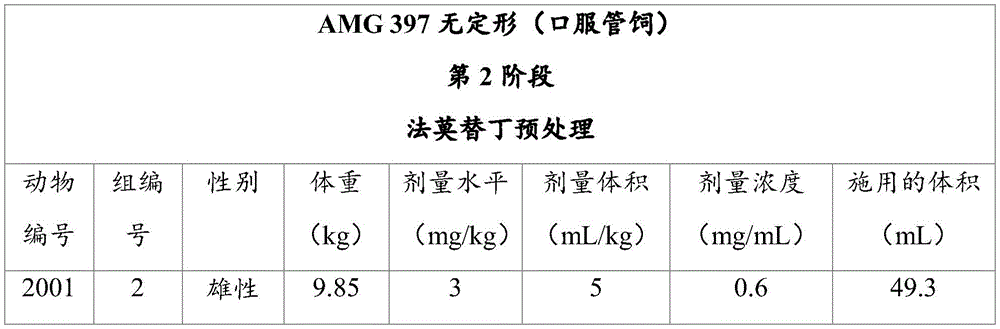

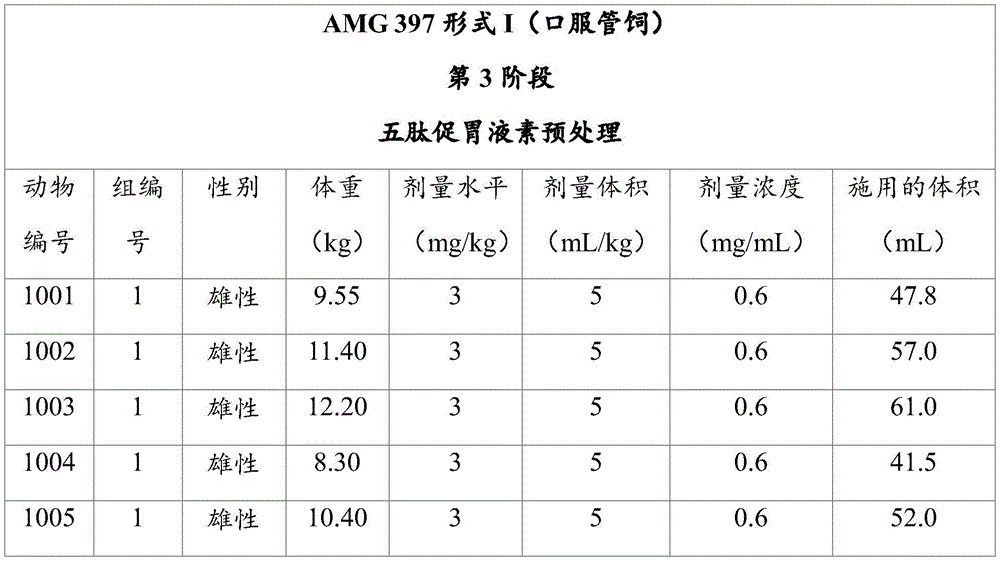


Table 8: clinical observations


Test article application: a total of 10 male beagle dogs were initially assigned for study. Where applicable, all animals were fasted at least eight hours prior to dosing and four hours prior to blood sample collection at each stage (where applicable, food would resume within 30 minutes after the last blood sample was collected at a four hour collection interval). The total fasted time did exceed 24 hours.
Each animal in groups 1 and 2 at stage 1 received a single oral (PO) gavage dose of the appropriate test formulation (as outlined in the study design table below). The oral gavage formulation was continuously stirred throughout the administration process. After administration (prior to removal of the tube), the tube was rinsed with approximately 10mL of tap water. No pretreatment is required in stage 1.
After a 7 day washout period, each animal in groups 1 and 2 at stage 2 received a single oral (PO) gavage dose of the appropriate test formulation (as outlined in the study design form below). The oral gavage formulation was continuously stirred throughout the administration process. After administration (prior to removal of the tube), the tube was rinsed with approximately 10mL of tap water. Two hours prior to dosing, each animal received two 20mg (40 mg total) famotidine oral tablets followed by a 10mL dose of deionized water.
After another 7 day washout period, each animal in groups 1 and 2 at stage 3 received a single oral (PO) gavage dose of the appropriate test formulation (as outlined in the study design form below). The oral gavage formulation was continuously stirred throughout the administration process. After administration (prior to removal of the tube), the tube was rinsed with approximately 10mL of tap water. Thirty minutes prior to dosing, each animal received an intramuscular dose of pentapeptide gastrin in phosphate buffered saline at a dose level of 0.006mg/kg and a dose volume of 0.05 mL/kg.
After the last 7-day washout period, each animal in groups 1 and 2 at stage 4 received a single oral (PO) gavage dose of the appropriate test formulation (as outlined in the study design form below). The oral gavage formulation was continuously stirred throughout the administration process. After administration (prior to removal of the tube), the tube was rinsed with approximately 10mL of tap water. Thirty minutes prior to dosing, each animal received an intramuscular dose of pentapeptide gastrin in phosphate buffered saline at a dose level of 0.006mg/kg and a dose volume of 0.05mL/kg, and additional inhibitor added by correction.
TABLE 9 design of crystalline hydrate and amorphous AMG 397 dog PK study

Each stage of the study was assigned a different pretreatment to simulate several situations:
1. no pretreatment was applied at stage 1, as it served as a control.
2. During phase 2, all animals were pre-treated with two 20mg (40 mg total) famotidine oral tablets followed by a 10mL dose of deionized water at 1 hour 54 min to 1 hour 58 min prior to dose administration. This dose shows that the stomach pH of the dog is raised to about pH 6.5. This was used to determine the effect of gastric pH on exposure.
3. During phases 3 and 4, all animals were pre-treated with a single intramuscular dose of pentapeptide gastrin (pH 7.4) in phosphate buffered saline at a dose level of 0.006mg/kg and a dose volume of 0.05mL/kg 30 to 38 minutes prior to dose administration. The pentapeptide gastrin dose is used to ensure that the gastric pH of the dog is normalized to a pH of about 2.0, as it is well known that, under resting conditions, the gastric pH of the dog is generally higher than the gastric pH of a human.
4. Furthermore, at stage 4, P-gp inhibitor (GF 120918) was administered by oral gavage at a dose level of 3mg/kg and a dose volume of 4mL/kg 1 hour 3 min to 1 hour 6 min before dosing and 4 hours 10 min to 4 hours 11 min after dosing. This last stage was used to investigate whether P-gp plays a role in absorption. The pharmacokinetic results are shown in fig. 6-9 and summarized in tables 10 and 11.
TABLE 10 pharmacokinetic results of AMG 397 after oral administration of crystalline hydrate to Male beagle dogs at 3mg/kg

TABLE 11 pharmacokinetic results of amorphous AMG 397 after oral administration to Male beagle dogs at 3mg/kg

Under all pretreatment conditions, the amorphous material has a higher bioavailability than the crystalline hydrate form. Since group IV was not included in the study, the relative bioavailability values for each treatment group compared to phase 1 of each form were reported. As expected, the untreated dogs behaved similarly to dogs with elevated gastric pH. Amorphous AMG 397 has a 1.6-fold higher bioavailability than the crystalline hydrate form when the gastric pH is low and a 3.4-fold higher bioavailability when the gastric pH is elevated. This difference is caused by the fact that: amorphous material is not affected by gastric pH, whereas crystalline hydrate forms decrease 2-fold in exposure level as gastric pH decreases. Both formulations were equally affected by the addition of P-gp inhibitor, with a 44% increase in exposure level.
Example 5: solid dispersion stability test
Two AMG 397 Amorphous Solid Dispersions (ASD) were prepared by spray drying using THF as the solvent. The polymers used to prepare these dispersions were soluplus and HPMC-AS-LF (Affinisol 716). These polymers were chosen because they have been approved for use by the Amgen America Ann company (Amgen). The drug to polymer ratio for the dispersion was 50:50, based on a Tm/Tg ratio of 1.27, which was expected to produce a physically stable ASD.
The chemical and physical stability of AMG 397 50% drug load ASD produced from THF by spray drying was monitored over 4 weeks under accelerated conditions. Chemical stability was measured by HPLC, while physical stability was measured by XRPD, DSC and TGA. Samples were stored at 40 ℃/75% RH open, 40 ℃/75% RH closed, 25 ℃/60% RH closed, and 5 ℃ closed conditions. All samples were tested after 4 weeks of storage, except for 40 ℃/75% rh open conditions, which were also tested at weeks 1 and 2. THF ASD samples were significantly degraded at T0 due to the use of THF as the spray solvent. For amorphous AMG 397, an increase in total impurities was observed at 4 weeks under all storage conditions. The increase in total impurities is associated with storage at elevated temperature and humidity. Unlike amorphous DS, ASD samples were stable when stored at 5 ℃ for 4 weeks. The total impurities present in the soluplus ASD were also lower after 4 weeks of storage under all conditions compared to HPMC-AS ASD.
Thus, two other Amorphous Solid Dispersions (ASD) were prepared by spray drying using DCM instead of THF as solvent. Soluplus was used to prepare both dispersions because of its improved stability compared to HPMC-AS ASD produced from THF. The spray drying process conditions used to produce ASD are shown in table 12. Two drug loads, 25% and 50% were studied.
TABLE 12 spray drying conditions for producing a Soluppus ASD from DCM


During each treatment step, the chemical stability of the AMG 397Soluplus ASD produced by spray drying using DCM was monitored to ensure that no degradation occurred during spray drying or secondary drying. Samples were also stored for 4 weeks under the following conditions: sealing at 5 ℃, sealing at 25 ℃/60% rh, opening at 40 ℃/75% rh, and sealing at 40 ℃/75% rh. Residual solvent levels were also tracked during this process. These results are shown in tables 13-16.
ASD produced using DCM as a solvent system is stable during spray drying and secondary drying. Impurity formation was observed after 4 weeks of storage under accelerated conditions at 40 ℃/75% rh open and 40 ℃/75% rh closed conditions. When stored under closed conditions at 5 ℃ and 25 ℃, the total impurity level still exceeded the specified limit of 3.5% and the sample was stable.


Example 6: AMG (automated mechanical Transmission)
397 and characterization of the crystalline hydrate form
The crystalline hydrate form of AMG 397 is formed by combining AMG 397 with about 10 volumes of 95:5 ethanol/water. The heat was cycled to 70 ℃ in a sealed vial for 15min, then cooled.
Powder X-ray diffraction: x-ray powder diffraction data were obtained on a PANalytical X' Pert PRO X-ray diffraction system with RTMS detector. Cuka radiation was used in a continuous mode of 5-45 ° (2θ) at 45kV and 40mA in steps of 0.0334 ° The sample is scanned. The incident beam path was equipped with a 0.02 radian soiler slit, a 15mm mask, a 4 ° fixed anti-scatter slit, and a programmable divergence slit. The diffracted beam was equipped with a 0.02 radian soiler slit, a programmable anti-scatter slit, and a 0.02mm nickel filter. Samples were prepared on a low background sample holder and placed on a rotating table for a 2s rotation time. For variable temperature studies, samples were prepared on a flat plate sample holder and placed on a TTK-450 temperature console. For variable humidity studies, a modular humidity generator (proud) generator was used to control the atmosphere in the THC humidity sample chamber. The XRPD pattern of the crystalline hydrate form of
 AMG 397 material is shown in fig. 14.
Thermal analysis: differential Scanning Calorimetry (DSC) was performed on a TA instrument Q1000/2000 calorimeter in a Tzero aluminum pan at 50ml/min under dry nitrogen. DSC of the crystalline hydrate form of AMG 397 is shown in fig. 11. Thermogravimetric analysis (TGA) was performed on a TA instrument Q500 analyzer at 60ml/min flow under dry nitrogen in a platinum tray. DSC and TGA of the crystalline hydrate form of AMG 397 is shown in FIG. 12.
Moisture absorption: moisture absorption data were collected using a surface measurement system DVSAdvantage instrument. Balance criteria were set to weight change + 0.001% within 10 minutes, with a maximum balance time of 360 minutes. The moisture absorption curve of the crystalline hydrate form of AMG 397 is shown in fig. 13.
Table 17: XRPD data sheet


Table 18: solid state 13 C NMR data


Single crystal data: dry powder samples in the form of AMG 397 crystalline hydrate were used for single crystal structure determination. The sample selected for data acquisition is of approximately size 0.002x 0.008x 0.025mm 3 Is provided. Mounting crystals on MiTeGen with mineral oil TM On a stand (STP oil treatment). The first diffraction pattern shows that the crystals have an edge (marginal) mass, produce diffuse elongated and discrete reflections, and diffract only weakly.
Cu K alpha radiation from I [ mu ] S micro light source Diffraction data (/ for) were collected at 100K on a Bruker-AXS X8 Kappa (Kappa) diffractometer coupled to a Bruker APEX2CCD detector>
 -and ω -scan). Using the program SAINT [1 ]]Data reduction was performed and the program SADABS [2 ] was used]An equivalent based semi-empirical absorption correction is performed. A summary of the crystal properties and data/refinement statistics is given in table 19.
The structure of AMG 397 crystalline hydrate was determined at 100K in the monoclinic chiral space group P21 with AMG 397 of one molecule in the asymmetric unit and 80% of water molecules.
Table 19: x-ray single structure data

Claims (37)
Applications Claiming Priority (3)
| Application Number | Priority Date | Filing Date | Title |
|---|---|---|---|
| US202063070630P | 2020-08-26 | 2020-08-26 | |
| US63/070,630 | 2020-08-26 | ||
| PCT/US2021/047237 WO2022046690A1 (en) | 2020-08-26 | 2021-08-24 | Mcl-1 inhibitor formulations |
Publications (1)
| Publication Number | Publication Date |
|---|---|
| CN116113473A true CN116113473A (en) | 2023-05-12 |
Family
ID=77802255
Family Applications (1)
| Application Number | Title | Priority Date | Filing Date |
|---|---|---|---|
| CN202180062139.7A Pending CN116113473A (en) | 2020-08-26 | 2021-08-24 | MCL-1 inhibitor formulations |
Country Status (11)
| Country | Link |
|---|---|
| US (1) | US20230312606A1 (en) |
| EP (1) | EP4203922A1 (en) |
| JP (2) | JP7825954B2 (en) |
| CN (1) | CN116113473A (en) |
| AR (1) | AR123327A1 (en) |
| AU (1) | AU2021330948A1 (en) |
| CA (1) | CA3192624A1 (en) |
| MX (1) | MX2023002352A (en) |
| TW (1) | TW202222321A (en) |
| UY (1) | UY39393A (en) |
| WO (1) | WO2022046690A1 (en) |
Cited By (1)
| Publication number | Priority date | Publication date | Assignee | Title |
|---|---|---|---|---|
| CN116618182A (en) * | 2023-05-22 | 2023-08-22 | 昆明理工大学 | A kind of inhibitor and application of flotation separation of talc and chalcopyrite |
Families Citing this family (1)
| Publication number | Priority date | Publication date | Assignee | Title |
|---|---|---|---|---|
| JP7825954B2 (en) * | 2020-08-26 | 2026-03-09 | アムジエン・インコーポレーテツド | MCL-1 Inhibitor Formulations |
Citations (2)
| Publication number | Priority date | Publication date | Assignee | Title |
|---|---|---|---|---|
| CN105120844A (en) * | 2013-03-14 | 2015-12-02 | 美国安进公司 | Heterocyclic compounds and their uses |
| WO2018183418A1 (en) * | 2017-03-30 | 2018-10-04 | Amgen Inc. | Compounds that inhibit mcl-1 protein |
Family Cites Families (3)
| Publication number | Priority date | Publication date | Assignee | Title |
|---|---|---|---|---|
| NZ602288A (en) * | 2010-03-10 | 2014-02-28 | Abbvie Bahamas Ltd | Solid compositions comprising amorphous (2r,6s,13as,14ar,16as,z)-n-(cyclopropylsulfonyl)-6-(5-methylpyrazine-2-carboxamido)-5,16-dioxo-2-(phenanthridin-6-yloxy)-1,2,3,5,6,7,8,9,10,11,13a,14,14a,15,16,16a-hexadecahydrocyclopropa[e]pyrrolo[1,2-a][1,4]diazacyclopentadecine-14a-carboxamide |
| KR20220134015A (en) * | 2020-02-06 | 2022-10-05 | 팔로젠 인코포레이티드 | Nanopore sensor device and methods for manufacturing the same |
| JP7825954B2 (en) * | 2020-08-26 | 2026-03-09 | アムジエン・インコーポレーテツド | MCL-1 Inhibitor Formulations |
-
2021
- 2021-08-04 JP JP2021127983A patent/JP7825954B2/en active Active
- 2021-08-18 TW TW110130474A patent/TW202222321A/en unknown
- 2021-08-23 UY UY0001039393A patent/UY39393A/en unknown
- 2021-08-23 AR ARP210102377A patent/AR123327A1/en not_active Application Discontinuation
- 2021-08-24 MX MX2023002352A patent/MX2023002352A/en unknown
- 2021-08-24 CN CN202180062139.7A patent/CN116113473A/en active Pending
- 2021-08-24 JP JP2023513126A patent/JP2023539198A/en not_active Withdrawn
- 2021-08-24 AU AU2021330948A patent/AU2021330948A1/en active Pending
- 2021-08-24 WO PCT/US2021/047237 patent/WO2022046690A1/en not_active Ceased
- 2021-08-24 CA CA3192624A patent/CA3192624A1/en active Pending
- 2021-08-24 US US18/022,905 patent/US20230312606A1/en active Pending
- 2021-08-24 EP EP21772900.3A patent/EP4203922A1/en active Pending
Patent Citations (2)
| Publication number | Priority date | Publication date | Assignee | Title |
|---|---|---|---|---|
| CN105120844A (en) * | 2013-03-14 | 2015-12-02 | 美国安进公司 | Heterocyclic compounds and their uses |
| WO2018183418A1 (en) * | 2017-03-30 | 2018-10-04 | Amgen Inc. | Compounds that inhibit mcl-1 protein |
Non-Patent Citations (1)
| Title |
|---|
| SHRAWAN BAGHEL等: "Polymeric Amorphous Solid Dispersions: A Review of Amorphization, Crystallization, Stabilization, Solid-State Characterization, and Aqueous Solubilization of Biopharmaceutical Classification System Class II Drugs", 《J PHARM SCI》, vol. 105, no. 9, 30 September 2016 (2016-09-30), pages 1 - 18, XP055430383, DOI: 10.1016/j.xphs.2015.10.008 * |
Cited By (1)
| Publication number | Priority date | Publication date | Assignee | Title |
|---|---|---|---|---|
| CN116618182A (en) * | 2023-05-22 | 2023-08-22 | 昆明理工大学 | A kind of inhibitor and application of flotation separation of talc and chalcopyrite |
Also Published As
| Publication number | Publication date |
|---|---|
| JP2022039996A (en) | 2022-03-10 |
| UY39393A (en) | 2022-02-25 |
| US20230312606A1 (en) | 2023-10-05 |
| AU2021330948A1 (en) | 2023-03-30 |
| EP4203922A1 (en) | 2023-07-05 |
| WO2022046690A1 (en) | 2022-03-03 |
| AR123327A1 (en) | 2022-11-23 |
| TW202222321A (en) | 2022-06-16 |
| CA3192624A1 (en) | 2022-03-03 |
| JP2023539198A (en) | 2023-09-13 |
| JP7825954B2 (en) | 2026-03-09 |
| MX2023002352A (en) | 2023-04-14 |
Similar Documents
| Publication | Publication Date | Title |
|---|---|---|
| US20250109136A1 (en) | Dosage form compositions comprising an inhibitor of bruton's tyrosine kinase | |
| JP2024123028A (en) | Salts and crystalline forms of omecamtivmecarbil | |
| KR102498693B1 (en) | tablet composition | |
| CN115135308A (en) | Amorphous kinase inhibitor formulations and methods of use thereof | |
| CN116113473A (en) | MCL-1 inhibitor formulations | |
| US20140341993A1 (en) | Solid pharmaceutical composition comprising an antibiotic from the quinolone family and method of production thereof | |
| WO2020243273A2 (en) | Methods of treating cholangiocarcinoma | |
| KR20250143348A (en) | Intravesical erdafitinib for use in the treatment of bladder cancer | |
| RU2826604C1 (en) | Pharmaceutical composition of pyrazole compound dispersed in polymer matrix | |
| US20230061806A1 (en) | Solid forms of 7-[[(1s)-1-[4-[(1s)-2-cyclopropyl-1-(4-prop-2-enoylpiperazin-1-yl)ethyl]phenyl]ethyl]amino]-1-ethyl-4h-pyrimido[4,5-d][1,3]oxazin-2-one | |
| CZ2015250A3 (en) | Vemurafenib amorphous forms | |
| WO2026085809A1 (en) | Pharmaceutical composition of protein kinase inhibitor | |
| HK40119664A (en) | Dosage forms for tyk2 inhibitors | |
| HK40119662A (en) | Dosage forms for tyk2 inhibitors | |
| HK40119663A (en) | Dosage forms for tyk2 inhibitors | |
| CN117940434A (en) | Solid form of 7-[[(1S)-1-[4-[(1S)-2-cyclopropyl-1-(4-prop-2-enoylpiperazin-1-yl)ethyl]phenyl]ethyl]amino]-1-ethyl-4H-pyrimido[4,5-d][1,3]oxazin-2-one | |
| CZ2015537A3 (en) | Solid forms of the amorphous dolutegravir |
Legal Events
| Date | Code | Title | Description |
|---|---|---|---|
| PB01 | Publication | ||
| PB01 | Publication | ||
| SE01 | Entry into force of request for substantive examination | ||
| SE01 | Entry into force of request for substantive examination | ||
| WD01 | Invention patent application deemed withdrawn after publication |
Application publication date: 20230512 |
|
| WD01 | Invention patent application deemed withdrawn after publication |