CN116170077A - Quantum and classical laser communication multiplexing receiving device and system - Google Patents
Quantum and classical laser communication multiplexing receiving device and system Download PDFInfo
- Publication number
- CN116170077A CN116170077A CN202310442465.1A CN202310442465A CN116170077A CN 116170077 A CN116170077 A CN 116170077A CN 202310442465 A CN202310442465 A CN 202310442465A CN 116170077 A CN116170077 A CN 116170077A
- Authority
- CN
- China
- Prior art keywords
- quantum
- optical
- classical
- signal
- signals
- Prior art date
- Legal status (The legal status is an assumption and is not a legal conclusion. Google has not performed a legal analysis and makes no representation as to the accuracy of the status listed.)
- Granted
Links
Images
Classifications
-
- H—ELECTRICITY
- H04—ELECTRIC COMMUNICATION TECHNIQUE
- H04B—TRANSMISSION
- H04B10/00—Transmission systems employing electromagnetic waves other than radio-waves, e.g. infrared, visible or ultraviolet light, or employing corpuscular radiation, e.g. quantum communication
- H04B10/29—Repeaters
- H04B10/291—Repeaters in which processing or amplification is carried out without conversion of the main signal from optical form
- H04B10/2912—Repeaters in which processing or amplification is carried out without conversion of the main signal from optical form characterised by the medium used for amplification or processing
- H04B10/2916—Repeaters in which processing or amplification is carried out without conversion of the main signal from optical form characterised by the medium used for amplification or processing using Raman or Brillouin amplifiers
-
- H—ELECTRICITY
- H04—ELECTRIC COMMUNICATION TECHNIQUE
- H04B—TRANSMISSION
- H04B10/00—Transmission systems employing electromagnetic waves other than radio-waves, e.g. infrared, visible or ultraviolet light, or employing corpuscular radiation, e.g. quantum communication
- H04B10/70—Photonic quantum communication
-
- H—ELECTRICITY
- H04—ELECTRIC COMMUNICATION TECHNIQUE
- H04J—MULTIPLEX COMMUNICATION
- H04J14/00—Optical multiplex systems
- H04J14/02—Wavelength-division multiplex systems
- H04J14/0201—Add-and-drop multiplexing
- H04J14/0202—Arrangements therefor
- H04J14/0209—Multi-stage arrangements, e.g. by cascading multiplexers or demultiplexers
-
- H—ELECTRICITY
- H04—ELECTRIC COMMUNICATION TECHNIQUE
- H04J—MULTIPLEX COMMUNICATION
- H04J14/00—Optical multiplex systems
- H04J14/02—Wavelength-division multiplex systems
- H04J14/0201—Add-and-drop multiplexing
- H04J14/0202—Arrangements therefor
- H04J14/021—Reconfigurable arrangements, e.g. reconfigurable optical add/drop multiplexers [ROADM] or tunable optical add/drop multiplexers [TOADM]
Landscapes
- Engineering & Computer Science (AREA)
- Computer Networks & Wireless Communication (AREA)
- Signal Processing (AREA)
- Physics & Mathematics (AREA)
- Electromagnetism (AREA)
- Optics & Photonics (AREA)
- Optical Communication System (AREA)
Abstract
A quantum and classical laser communication multiplexing receiving device and system, the quantum and classical laser communication multiplexing receiving device includes: the first intensive optical wave multiplexer is used for separating each signal in the received multiplexing signals to obtain classical optical signals with at least one wavelength and optical quantum signals with at least one wavelength; the at least one laser communication decoding detector is used for detecting classical optical signals with one wavelength in a one-to-one correspondence manner to obtain a first detection electric signal; the at least one first FP cavity filter is used for filtering the optical quantum signals with one wavelength in a one-to-one correspondence manner to obtain first filtered quantum signals; at least one quantum decoder for decoding the filtered signal of one wavelength in a one-to-one correspondence to obtain a decoded optical signal; and the at least one single photon detector is used for detecting the decoding optical signals with one wavelength in a one-to-one correspondence manner to obtain second detection electric signals.
Description
Technical Field
The invention relates to the field of wavelength division multiplexing and optical narrowband filtering based on an FP cavity, in particular to a quantum and classical laser communication multiplexing receiving device and system.
Background
Quantum and laser communication technology is a hotspot problem of current international research. The Quantum Key Distribution (QKD) experiment based on the optical fiber gradually expands the key distribution distance to 830km, and the networked application is realized through the trusted relay; in the scene of limited optical fiber resources such as ultra-long distance, moving targets, islands, standing-outside institutions and the like, quantum communication can be realized through free space channels transferred by satellites. On the basis of successful butt joint of the quantum secret communication jinghu trunk line and the quantum satellite of the 'ink horn', the research team of China university of science and technology constructs a rudiment for constructing an heaven-earth integrated wide-area quantum secret communication network, and realizes 4600km of quantum communication. Quantum and classical laser communication multiplexing is a common scheme for quantum communication at present. For quantum communication of classical fiber channel, strong light of classical laser communication can cause noise of Raman scattering; for quantum communications of free space channels, sunlight in the daytime can introduce a broad spectrum of background noise. To achieve high signal-to-noise ratio quantum communication, it is desirable to reduce the impact of classical laser communication on the optical quantum signal.
Implementation schemes of related quantum and classical laser communication multiplexing systems can be generally divided into three categories: the first method is to multiplex optical quantum signals with different working wavelengths and classical laser communication through a wavelength division multiplexer, so that the influence of the classical laser communication on the optical quantum signals is reduced, for example, the wavelength of the optical quantum signals is 1550nm, and the working wavelength of the classical laser communication is 1310nm; the second type adopts hollow optical fiber to complete multiplexing of optical quantum signals and classical laser communication, the nonlinear effect of the hollow optical fiber is much weaker than that of the conventional optical fiber, and less noise is introduced; and thirdly, multiplexing of the light quantum signals and classical laser communication is realized by adopting a multi-core optical fiber, and the light quantum signals and the classical laser communication respectively use different fiber cores, so that the influence of the classical laser communication on the light quantum signals is reduced.
In the first scheme, in order to realize high noise suppression, the working wavelength of classical laser communication is required to be far away from the working wavelength of the optical quantum signal, so that the wavelength selection of the classical laser communication is greatly limited, and the wavelength utilization rate of the system is reduced. Wavelength conversion can be used to remove the wavelength limitations of classical laser communications, but it is clear that the complexity of the system and the technical costs are increased. And all three schemes only have the inhibition effect on the quanta of the fiber channel and the noise of the classical laser communication multiplexing system, and have limited effect on the quanta of the free space channel and the classical laser communication multiplexing system.
Disclosure of Invention
In view of the above, the main object of the present invention is to provide a device and a system for multiplexing and receiving quantum and classical laser communication, which can reduce the wavelength interval between the channel of classical optical signals and quantum channels, provide more available wavelength channels, expand the capacity of the channels, and increase the transmission rate.
According to an embodiment of the present invention, as a first aspect of the present invention, there is provided a quantum and classical laser communication multiplexing reception apparatus comprising:
the first intensive optical wave multiplexer is suitable for separating each signal in the received multiplexing signals to obtain classical optical signals with at least one wavelength and optical quantum signals with at least one wavelength;
at least one laser communication decoding detector, wherein each laser communication decoding detector is suitable for detecting classical optical signals with one wavelength in a one-to-one correspondence manner to obtain a first detection electric signal;
at least one first FP cavity filter, where each first FP cavity filter is adapted to filter an optical quantum signal of a wavelength in a one-to-one correspondence, to obtain a first filtered quantum signal;
at least one quantum decoder, each quantum decoder is suitable for decoding the filtered signal with one wavelength in a one-to-one correspondence manner to obtain a decoded optical signal;
at least one single photon detector, each single photon detector is suitable for detecting the decoding optical signal with one wavelength in a one-to-one correspondence manner to obtain a second detection electric signal;
wherein the filter linewidth of the first FP-cavity filter is configured such that a distance between the channel of the optical quantum signal and the channel of the classical optical signal is less than or equal to 0.8nm.
According to an embodiment of the present invention, the first FP cavity filter includes:
the input collimator is suitable for expanding the light quantum signals and converting the expanded light quantum signals into free space for transmission;
the optical filter is suitable for filtering the quantum signals transmitted in the free space;
the FP cavity is suitable for filtering the optical quantum signals transmitted in the free space after being filtered by the optical filter to obtain the first filtered quantum signals;
the thermistor is suitable for collecting the ambient temperature of the FP cavity;
the semiconductor refrigerator is suitable for controlling the ambient temperature of the FP cavity;
and the output collimator is used for outputting the first filtered quantum signal.
According to an embodiment of the present invention, the single photon detector is an ingaas detector or a superconducting detector.
According to an embodiment of the present invention, the decoding mode of the quantum decoder is a passive decoding mode.
As a second aspect of the present invention, there is also provided a quantum and classical laser communication multiplexing system comprising:
the quantum and classical laser communication transmitting device is suitable for multiplexing at least one wavelength classical optical signal and at least one wavelength optical quantum signal to obtain a multiplexing signal and transmitting the multiplexing signal.
The quantum and classical laser communication multiplexing receiving device;
and the processing device is suitable for processing the first detection electric signal and the second detection electric signal to obtain a secret key and managing the secret key.
According to an embodiment of the present invention, the quantum and classical laser communication emitting device includes:
at least one communication laser adapted to emit said classical optical signal of at least one wavelength;
at least one quantum laser adapted to emit said optical quantum signal of at least one wavelength;
at least one classical encoder, each classical encoder is connected with a communication laser with a wavelength in a one-to-one correspondence manner, and the classical encoder is suitable for encoding classical optical signals with corresponding wavelengths to obtain encoded classical optical signals;
at least one quantum encoder, each quantum encoder is suitable for being connected with a quantum laser with one wavelength in a one-to-one correspondence manner, and the quantum encoder is suitable for encoding optical quantum signals with corresponding wavelengths to obtain encoded optical quantum signals;
at least one optical fiber amplifier, each optical fiber amplifier is suitable for amplifying the coded classical optical signals in a one-to-one correspondence manner to obtain amplified classical optical signals;
at least one second FP cavity filter, where each of the first FP cavity filters is adapted to filter a coded light quantum signal of one wavelength in a one-to-one correspondence, to obtain a second filtered light quantum signal;
at least one attenuator, each attenuator is suitable for attenuating the second filtering quantum signal with one wavelength in a one-to-one correspondence manner to obtain an attenuated quantum signal;
the second intensive optical wave multiplexer is suitable for multiplexing all the attenuation quantum signals and all the amplifying classical optical signals to obtain the multiplexing signals.
According to an embodiment of the present invention, the encoding mode of the quantum encoder is based on a polarization encoded decoy state protocol, the decoy state protocol being a signal state, a decoy state, and a vacuum state, the signal state being different from the average photon number of the decoy state.
According to an embodiment of the invention, the polarization encoding comprises a horizontal polarization state encoding, a vertical polarization state encoding, a positive 45 ° polarization state encoding, or a negative 45 ° polarization state encoding.
According to an embodiment of the present invention, the quantum laser is a single longitudinal mode DFB laser.
According to the embodiment of the invention, at least one first FP cavity filter is arranged in the quantum and classical laser communication multiplexing receiving device, and the first FP cavity filter is used for filtering optical quantum signals with one wavelength in a one-to-one correspondence manner, and the filtering linewidth of the first FP cavity filter is configured to enable the distance between a channel of the optical quantum signals and a channel of classical optical signals to be smaller than or equal to 0.8nm, so that the wavelength interval between the channel of classical optical signals and a quantum channel is smaller, more available wavelength channels are provided, the capacity of the channels is expanded, and the transmission rate is improved.
According to the embodiment of the invention, the first FP cavity filter can effectively inhibit noise introduced by Raman scattering caused by strong light of classical optical signals in transmission; meanwhile, the first FP cavity filter can effectively inhibit background noise introduced by sunlight in the daytime. And the typical line width value of the narrow-line-width high-efficiency high-performance integrated FP cavity filter is 10pm, and the pm-level filtering line width can effectively filter noise outside the light quantum signal.
Drawings
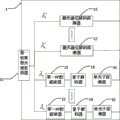
Fig. 1 is a block diagram of a quantum and classical laser communication multiplexing receiving device provided according to an embodiment of the present invention;
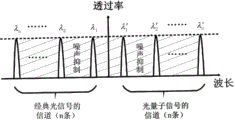
fig. 2A is a schematic channel diagram of a quantum and classical laser communication multiplexing receiving device using a first FP cavity filter for filtering according to an embodiment of the present invention;
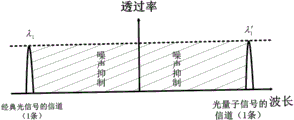
fig. 2B is a schematic channel diagram of a conventional quantum and classical laser communication multiplexing receiving device;
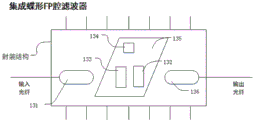
fig. 3 is a composition diagram of a first FP-cavity filter provided according to an embodiment of the present invention;
fig. 4 is a block diagram of a quantum and classical laser communication multiplexing system provided in accordance with an embodiment of the invention.
Description of the reference numerals
1 quantum and classical laser communication multiplexing receiving device
11 first dense optical wave multiplexer
12 laser communication decoding detector
13 first FP cavity filter
131 input collimator
132 optical filter
133 FP cavity
134 thermistor
135 semiconductor refrigerator
136 output collimator
14 quantum decoder
15 single photon detector
2 quanta and classical laser communication transmitting device
21 communication laser
22 quantum laser
23 classical encoder
24 quantum encoder
25 optical fiber amplifier
26 second FP cavity filter
27 attenuator
28 second dense optical wave multiplexer
3 treatment device
31 data processor
32 key manager
Detailed Description
The present invention will be further described in detail below with reference to specific embodiments and with reference to the accompanying drawings, in order to make the objects, technical solutions and advantages of the present invention more apparent.
Fig. 1 is a block diagram of a quantum and classical laser communication multiplexing receiving device provided according to an embodiment of the present invention.
As shown in fig. 1, a quantum and classical laser communication multiplexing reception device 1 includes: a first dense optical wave multiplexer 11, at least one laser communication decoding detector 12, at least one first FP cavity filter 13, at least one quantum decoder 14, and at least one single photon detector 15.
The first dense optical multiplexer 11 is adapted to separate signals of the received multiplexed signal to obtain at least one wavelength (e.g. ~
~ ) And at least one wavelength (e.g. is +.>
 ~
~ ) Is a light quantum signal of (a). Each of the laser
 communication decoding detectors 12 is adapted to detect classical optical signals of one wavelength in a one-to-one correspondence to obtain a first detected electrical signal. Each of the first FP-cavity filters 13 is adapted to filter an optical quantum signal of one wavelength in a one-to-one correspondence, so as to obtain a first filtered quantum signal. Each of the quantum decoders 14 is adapted to decode a filtered signal of one wavelength in a one-to-one correspondence to obtain a decoded optical signal. Each of the single photon detectors 15 is adapted to detect the decoded optical signal with one wavelength in a one-to-one correspondence manner, so as to obtain a second detection electrical signal;
wherein the filter linewidth of the first FP cavity filter 13 is configured such that a distance between the channel of the optical quantum signal and the channel of the classical optical signal is less than or equal to 0.8nm.
According to the embodiment of the invention, at least one first FP cavity filter 13 is arranged in the quantum and classical laser communication multiplexing receiving device, and the first FP cavity filter 13 is used for filtering the optical quantum signals with one wavelength in a one-to-one correspondence manner, and the filtering linewidth of the first FP cavity filter 13 is configured to enable the distance between the channel of the optical quantum signals and the channel of the classical optical signals to be smaller than or equal to 0.8nm, so that the wavelength interval between the channel of the classical optical signals and the quantum channels can be reduced, more available wavelength channels can be provided, the capacity of the channels can be expanded, and the transmission rate can be improved.
Fig. 2A is a schematic channel diagram of a quantum and classical laser communication multiplexing receiving device using a first FP cavity filter for filtering according to an embodiment of the present invention.
Fig. 2B is a schematic channel diagram of a conventional quantum and classical laser communication multiplexing receiving device.
As shown in fig. 2A and fig. 2B, the first FP cavity filter is used to perform narrowband filtering, so that the wavelength interval between the channel of the classical optical signal and the quantum channel can be reduced, more available wavelength channels are provided, the capacity of the channel is expanded, and the transmission rate is improved.
According to the embodiment of the present invention, the first FP cavity filter 13 can effectively suppress noise introduced by raman scattering caused by strong light of classical optical signals in transmission; meanwhile, the first FP cavity filter 13 can effectively suppress background noise introduced by sunlight in the daytime. And the typical line width value of the first FP cavity filter 13 with narrow line width, high efficiency and high performance integration is 10pm, and the pm-level filtering line width can effectively filter noise outside the light quantum signal.
Fig. 3 is a composition diagram of a first FP-cavity filter provided according to an embodiment of the present invention.
As shown in fig. 3. Taking an integrated butterfly FP-cavity filter as an example, the first FP-cavity filter 13 described above includes: an input collimator 131, a filter 132, an FP cavity 133, a thermistor 134, a semiconductor refrigerator 135, and an output collimator 136.
The input collimator 131 is adapted to expand the light quantum signal and convert the expanded light quantum signal into a free space for transmission. The optical filter 132 is adapted to filter the above-mentioned optical quantum signals transmitted in free space. The FP cavity 133 is adapted to filter the optical quantum signal that is filtered by the optical filter and transmitted in free space, to obtain the first filtered quantum signal. The thermistor 134 is adapted to collect the ambient temperature of the FP cavity 133 as described above. The semiconductor refrigerator 135 is adapted to control the ambient temperature of the FP cavity 33 as described above. The output collimator 136 is adapted to output the first filtered quantum signal. The filter 132 may be a WDM/bandpass coherence filter/bandpass filter structure.
According to an embodiment of the present invention, both the thermistor 134 and the FP cavity 133 are integrated on the semiconductor refrigerator 135 to achieve stable control of the FP cavity 133 temperature. The input collimator 131, the optical filter 132, the FP cavity 133, the thermistor 134, the semiconductor refrigerator 135, the output collimator 136, and the like are packaged in the same micro-package, resulting in the first FP cavity filter 13. The first FP cavity filter 13 obtained after packaging is less influenced by the external environment, and high-efficiency optical coupling can be realized. The integrated first FP cavity filter can realize narrow linewidth and high-efficiency filtering, and has the characteristics of stability, convenience in use and the like.
According to the embodiment of the invention, the quantum and classical laser communication multiplexing system combined by the first FP cavity filter 13 and the intensive optical wave multiplexer has wide application fields in quantum communication. By replacing FP cavity 133 and filter 132, the integrated FP cavity filter can be adapted for all different amounts of sub-channels, different communication wavelengths, different filtering requirements of the quantum and classical multiplexing system.
According to an embodiment of the present invention, the single photon detector 15 is an ingaas detector or a superconducting detector.
According to an embodiment of the present invention, the decoding mode of the quantum decoder 14 is a passive decoding mode.
Fig. 4 is a block diagram of a quantum and classical laser communication multiplexing system provided in accordance with an embodiment of the invention.
As shown in fig. 4, the quantum and classical laser communication multiplexing system comprises: a quantum and classical laser communication transmitting device 2, a quantum and classical laser communication multiplexing receiving device 1 and a processing device 3.
The quantum and classical laser communication emitting device 2 is adapted to multiplex at least one wavelength classical optical signal and at least one wavelength optical quantum signal to obtain a multiplexed signal and to emit said multiplexed signal. The quantum and classical laser communication multiplexing receiving device 1 is adapted to obtain a first detection electrical signal and a second detection electrical signal from the multiplexed signal. The processing means 3 are adapted to process the first detection signal and the second detection signal to obtain a key and to manage the key, wherein the processing means 3 comprise a data processor 31 and a key manager 32. The data processor 31 is adapted to take the first detected electrical signal as a synchronous electrical signal, so as to perform a processing such as a base vector comparison and a steganographic amplification on the second detected electrical signal, so as to obtain a secret key. The key manager 32 is adapted to perform key management on the obtained key.
According to the embodiment of the invention, the multiplexed classical optical signal with at least one wavelength and the optical quantum signal with at least one wavelength are transmitted to a quantum and classical laser communication multiplexing receiving device through a quantum channel. The quantum channel is a fibre channel or a free space channel.
According to an embodiment of the present invention, the quantum and classical laser communication emitting device includes: at least one communication laser 21, at least one quantum laser 22, at least one classical encoder 23, at least one quantum encoder 24, at least one fiber amplifier 25, at least one second FP cavity filter 26, at least one attenuator 27, and a second dense optical wave multiplexer 28.
The at least one communication laser 21 is adapted to emit the above-mentioned classical optical signal of at least one wavelength. The at least one quantum laser 22 is adapted to emit the above-mentioned optical quantum signal of at least one wavelength. Each of the classical encoders 23 is connected to a communication laser of one wavelength in a one-to-one correspondence, and is adapted to encode a classical optical signal of the corresponding wavelength to obtain an encoded classical optical signal. Each of the quantum encoders 24 is adapted to be coupled to a quantum laser 22 of a wavelength in a one-to-one correspondence, and the quantum encoder 24 is adapted to encode an optical quantum signal of a corresponding wavelength to obtain an encoded optical quantum signal. Each of the optical fiber amplifiers 25 is adapted to amplify the encoded classical optical signal in a one-to-one correspondence to obtain an amplified classical optical signal. Each of the second FP-cavity filters 26 is adapted to filter the encoded optical quantum signal of one wavelength in a one-to-one correspondence to obtain a second filtered quantum signal. Each of the attenuators 27 is adapted to attenuate a second filtered quantum signal of one wavelength in a one-to-one correspondence to obtain an attenuated quantum signal. The second dense optical multiplexer 28 is adapted to multiplex all of the attenuated quantum signals with all of the amplified classical optical signals to obtain the multiplexed signal.
According to an embodiment of the invention, quantum laser 22 and quantum encoder 24 constitute a quantum light source.
According to the embodiment of the invention, in the quantum and classical laser communication transmitting device 2 and the quantum and classical laser communication multiplexing receiving device 1, optical fiber connection is adopted between all devices, so that channels of optical quantum signals in the quantum and classical laser communication transmitting device 2 and the quantum and classical laser communication multiplexing receiving device 1 are optical fiber channels. In an embodiment of the invention, the wavelengths of both the optical quantum signal and the classical optical signal are selected in the C-band. This is because, for transmission of optical quantum signals of a fiber channel, an optical fiber exhibits the lowest loss in the C-band, and is greatly advantageous in a long-distance transmission system. The free space channel is between the quantum and classical laser communication transmitting device 2 and the quantum and classical laser communication multiplexing receiving device 1, aiming at quantum communication (propagation of optical quantum signals) of the free space channel, a communication window is arranged in the atmosphere in the C wave band, the laser loss is lower, the solar background radiation of the wave band is smaller, and the noise is lower. Selecting n wavelengths which are 0.8nm apart and sequentially reduced as the working wavelength of the optical quantum signal by taking the central wavelength of 1550.12 nm as a reference; based on the center wavelength of 1550.12 nm, n wavelengths which are spaced by 0.8nm and sequentially increase are selected as the operating wavelength of the classical optical signal. Here, 0.8nm is the wavelength interval of a typical commercial DWDM. A more closely spaced custom dense optical multiplexer (DWDM) can better fit the system.
According to an embodiment of the present invention, the quantum laser is a single longitudinal mode DFB laser. The DFB laser adopts an external modulation scheme. Under the external modulation condition, the high-speed electric signal is not directly acted on the laser, so that the laser is in a stable continuous working state, and the frequency chirp of the output laser is reduced.
According to an embodiment of the present invention, a laser communication light source outputs a classical optical signal, the laser communication light source comprising a communication laser 21, a classical encoder 23 and a fiber amplifier 25, which is an Erbium Doped Fiber Amplifier (EDFA).
According to an embodiment of the present invention, the encoding mode of the quantum encoder is based on a polarization encoded decoy state protocol, where the decoy state protocol is a signal state, a decoy state, or a vacuum state, and the signal state is different from the average photon number of the decoy state.
According to an embodiment of the present invention, the polarization encoding includes a horizontal polarization state encoding, a vertical polarization state encoding, a positive 45 ° polarization state encoding, or a negative 45 ° polarization state encoding.
According to an embodiment of the present invention, the second dense optical wave multiplexer in the quantum and classical laser communication multiplexing reception apparatus 1 realizes multiplexing of quantum and laser communication. Typically, second dense optical multiplexer 28 can select a C-band DWDM, with standard adjacent wavelength spacing of 0.8nm as is common in the industry.
According to an embodiment of the invention, the first dense optical wave multiplexer in the quantum and classical laser communication transmitting device 2 implements the demultiplexing of the quantum and laser communication. The first dense optical multiplexer 11 can select a DWDM in the C-band, and the standard adjacent wavelength interval used in the industry is 0.8nm.
The foregoing description of the embodiments has been provided for the purpose of illustrating the general principles of the invention, and is not meant to limit the invention thereto, but to limit the invention thereto, and any modifications, equivalents, improvements and equivalents thereof may be made without departing from the spirit and principles of the invention.
Claims (9)
1. A quantum and classical laser communication multiplexing receiving device, comprising:
the first intensive optical wave multiplexer is suitable for separating each signal in the received multiplexing signals to obtain classical optical signals with at least one wavelength and optical quantum signals with at least one wavelength;
at least one laser communication decoding detector, wherein each laser communication decoding detector is suitable for detecting classical optical signals with one wavelength in a one-to-one correspondence manner to obtain a first detection electric signal;
each first FP cavity filter is suitable for filtering optical quantum signals of one wavelength in a one-to-one correspondence manner to obtain first filtered quantum signals;
at least one quantum decoder, each quantum decoder is suitable for decoding a filtered signal with one wavelength in a one-to-one correspondence manner to obtain a decoded optical signal;
at least one single photon detector, each single photon detector is suitable for detecting the decoding optical signal with one wavelength in a one-to-one correspondence manner to obtain a second detection electric signal;
wherein the filter linewidth of the first FP cavity filter is configured such that a distance between the channel of the optical quantum signal and the channel of the classical optical signal is less than or equal to 0.8nm.
2. The quantum and classical laser communication multiplexing receiving device of claim 1, wherein the first FP cavity filter comprises:
the input collimator is suitable for expanding the light quantum signals and converting the expanded light quantum signals into free space transmission;
the optical filter is suitable for filtering the optical quantum signals transmitted in the free space;
the FP cavity is suitable for filtering the optical quantum signals transmitted in the free space after being filtered by the optical filter to obtain the first filtered quantum signals;
the thermistor is suitable for collecting the ambient temperature of the FP cavity;
the semiconductor refrigerator is suitable for controlling the ambient temperature of the FP cavity;
and the output collimator is suitable for outputting the first filtered quantum signal.
3. The quantum and classical laser communication multiplexing receiver according to claim 1, wherein the single photon detector is an ingaas detector or a superconducting detector.
4. The quantum and classical laser communication multiplexing receiver of claim 1, wherein the quantum decoder decodes in a passive decoding mode.
5. A quantum and classical laser communication multiplexing system, comprising:
the quantum and classical laser communication transmitting device is suitable for multiplexing at least one wavelength classical optical signal and at least one wavelength optical quantum signal to obtain a multiplexing signal and transmitting the multiplexing signal;
the quantum and classical laser communication multiplexing receiving device of any of claims 1-4, adapted to derive a first detection electrical signal and a second detection electrical signal from said multiplexed signal;
the processing device is suitable for processing the first detection electric signal and the second detection electric signal to obtain a secret key and managing the secret key.
6. The system of claim 5, wherein the quantum and classical laser communication emitting device comprises:
at least one communication laser adapted to emit said classical optical signal of at least one wavelength;
at least one quantum laser adapted to emit said optical quantum signal of at least one wavelength;
the system comprises at least one classical encoder, a plurality of optical sensors and a plurality of optical sensors, wherein each classical encoder is connected with a communication laser with one wavelength in a one-to-one correspondence manner and is suitable for encoding classical optical signals with corresponding wavelengths to obtain encoded classical optical signals;
at least one quantum encoder, each quantum encoder is suitable for being connected with a quantum laser with one wavelength in a one-to-one correspondence manner, and the quantum encoder is suitable for encoding optical quantum signals with corresponding wavelengths to obtain encoded optical quantum signals;
at least one optical fiber amplifier, each optical fiber amplifier is suitable for amplifying the coded classical optical signals in a one-to-one correspondence manner to obtain amplified classical optical signals;
each first FP cavity filter is suitable for filtering coded light quantum signals of one wavelength in a one-to-one correspondence manner to obtain second filtered light quantum signals;
at least one attenuator, each attenuator is suitable for attenuating the second filtering quantum signal with one wavelength in a one-to-one correspondence manner, so as to obtain an attenuated quantum signal;
and the second intensive optical wave multiplexer is suitable for multiplexing all the attenuation quantum signals and all the amplifying classical optical signals to obtain the multiplexing signals.
7. The system of claim 6, wherein the quantum encoder is encoded based on a polarization encoded decoy-state protocol that is a signal state, a decoy state, or a vacuum state that is different from an average photon number of the decoy state.
8. The system of claim 7, wherein the polarization encoding comprises a horizontal polarization encoding, a vertical polarization encoding, a positive 45 ° polarization encoding, or a negative 45 ° polarization encoding.
9. The system of claim 6, wherein the quantum laser is a single longitudinal mode DFB laser.
Priority Applications (1)
| Application Number | Priority Date | Filing Date | Title |
|---|---|---|---|
| CN202310442465.1A CN116170077B (en) | 2023-04-24 | 2023-04-24 | Quantum and classical laser communication multiplexing receiving device and system |
Applications Claiming Priority (1)
| Application Number | Priority Date | Filing Date | Title |
|---|---|---|---|
| CN202310442465.1A CN116170077B (en) | 2023-04-24 | 2023-04-24 | Quantum and classical laser communication multiplexing receiving device and system |
Publications (2)
| Publication Number | Publication Date |
|---|---|
| CN116170077A true CN116170077A (en) | 2023-05-26 |
| CN116170077B CN116170077B (en) | 2023-08-29 |
Family
ID=86416689
Family Applications (1)
| Application Number | Title | Priority Date | Filing Date |
|---|---|---|---|
| CN202310442465.1A Active CN116170077B (en) | 2023-04-24 | 2023-04-24 | Quantum and classical laser communication multiplexing receiving device and system |
Country Status (1)
| Country | Link |
|---|---|
| CN (1) | CN116170077B (en) |
Cited By (2)
| Publication number | Priority date | Publication date | Assignee | Title |
|---|---|---|---|---|
| CN116886296A (en) * | 2023-08-04 | 2023-10-13 | 中国电信股份有限公司技术创新中心 | Quantum optical signal processing methods, devices, storage media and electronic equipment |
| CN118646490A (en) * | 2024-07-12 | 2024-09-13 | 广东电网有限责任公司广州供电局 | Co-fiber demultiplexing device and signal transmission method based on co-fiber demultiplexing device |
Citations (18)
| Publication number | Priority date | Publication date | Assignee | Title |
|---|---|---|---|---|
| US20060045527A1 (en) * | 2004-09-02 | 2006-03-02 | Nec Corporation | Multiplexing communication system and crosstalk elimination method |
| CN101057424A (en) * | 2005-02-22 | 2007-10-17 | 中兴通讯股份有限公司 | Device and method for centralized monitoring of wavelengths in a DWDM system |
| US20080137858A1 (en) * | 2006-12-06 | 2008-06-12 | Magiq Technologies, Inc. | Single-channel transmission of qubits and classical bits over an optical telecommunications network |
| US20080144823A1 (en) * | 2004-07-12 | 2008-06-19 | Mitsubishi Denki Kabushiki Kaisha | Photon Detecting Device and Optical Communication System |
| EP3301851A1 (en) * | 2016-10-03 | 2018-04-04 | ID Quantique S.A. | Apparatus and method for direct quantum cryptography system implementation over wdm telecommunication network |
| CN207717226U (en) * | 2017-12-19 | 2018-08-10 | 湖南宏动光电有限公司 | Hyperspectral imaging devices based on periodically interference membrane system FP chambers scanning |
| CN109039589A (en) * | 2017-06-09 | 2018-12-18 | 广东国盾量子科技有限公司 | A kind of device and method of quantum signal and the transmission of classical signals multiplexing fiber-optic |
| CN109150318A (en) * | 2018-07-27 | 2019-01-04 | 西安空间无线电技术研究所 | The full-time empty quantum of one kind and laser communication system |
| CN209170378U (en) * | 2018-12-31 | 2019-07-26 | 华南师范大学 | A noise processing system for quantum-classical fusion transmission |
| CN110460383A (en) * | 2019-09-23 | 2019-11-15 | 中国科学技术大学 | A Quantum Key Distribution Light Source |
| CN209895019U (en) * | 2019-03-05 | 2020-01-03 | 中国科学技术大学 | Miniature FP Cavity Narrow Band Filter |
| CN110749959A (en) * | 2019-11-11 | 2020-02-04 | 中国科学技术大学 | Multistage filtering miniature narrow-band filter |
| CN111147145A (en) * | 2019-12-06 | 2020-05-12 | 太原理工大学 | Large-key space chaotic optical communication transceiver |
| CN211348711U (en) * | 2019-11-11 | 2020-08-25 | 中国科学技术大学 | A Miniature Narrowband Filter with Multistage Filtering |
| CN112769554A (en) * | 2020-12-30 | 2021-05-07 | 华南师范大学 | Noise processing system and noise processing method for quantum classical fusion transmission |
| WO2021136165A1 (en) * | 2019-12-31 | 2021-07-08 | 广东尤科泊得科技发展有限公司 | Mdm-sdm-based quantum and classical hybrid communication system and transmission method |
| CN113885048A (en) * | 2021-10-18 | 2022-01-04 | 南京信息工程大学 | Double-edge Rayleigh laser radar system based on iodine molecule absorption pool |
| CN114465717A (en) * | 2021-12-31 | 2022-05-10 | 华南师范大学 | Quantum key distribution system and method capable of controlling pulse delay |
-
2023
- 2023-04-24 CN CN202310442465.1A patent/CN116170077B/en active Active
Patent Citations (18)
| Publication number | Priority date | Publication date | Assignee | Title |
|---|---|---|---|---|
| US20080144823A1 (en) * | 2004-07-12 | 2008-06-19 | Mitsubishi Denki Kabushiki Kaisha | Photon Detecting Device and Optical Communication System |
| US20060045527A1 (en) * | 2004-09-02 | 2006-03-02 | Nec Corporation | Multiplexing communication system and crosstalk elimination method |
| CN101057424A (en) * | 2005-02-22 | 2007-10-17 | 中兴通讯股份有限公司 | Device and method for centralized monitoring of wavelengths in a DWDM system |
| US20080137858A1 (en) * | 2006-12-06 | 2008-06-12 | Magiq Technologies, Inc. | Single-channel transmission of qubits and classical bits over an optical telecommunications network |
| EP3301851A1 (en) * | 2016-10-03 | 2018-04-04 | ID Quantique S.A. | Apparatus and method for direct quantum cryptography system implementation over wdm telecommunication network |
| CN109039589A (en) * | 2017-06-09 | 2018-12-18 | 广东国盾量子科技有限公司 | A kind of device and method of quantum signal and the transmission of classical signals multiplexing fiber-optic |
| CN207717226U (en) * | 2017-12-19 | 2018-08-10 | 湖南宏动光电有限公司 | Hyperspectral imaging devices based on periodically interference membrane system FP chambers scanning |
| CN109150318A (en) * | 2018-07-27 | 2019-01-04 | 西安空间无线电技术研究所 | The full-time empty quantum of one kind and laser communication system |
| CN209170378U (en) * | 2018-12-31 | 2019-07-26 | 华南师范大学 | A noise processing system for quantum-classical fusion transmission |
| CN209895019U (en) * | 2019-03-05 | 2020-01-03 | 中国科学技术大学 | Miniature FP Cavity Narrow Band Filter |
| CN110460383A (en) * | 2019-09-23 | 2019-11-15 | 中国科学技术大学 | A Quantum Key Distribution Light Source |
| CN110749959A (en) * | 2019-11-11 | 2020-02-04 | 中国科学技术大学 | Multistage filtering miniature narrow-band filter |
| CN211348711U (en) * | 2019-11-11 | 2020-08-25 | 中国科学技术大学 | A Miniature Narrowband Filter with Multistage Filtering |
| CN111147145A (en) * | 2019-12-06 | 2020-05-12 | 太原理工大学 | Large-key space chaotic optical communication transceiver |
| WO2021136165A1 (en) * | 2019-12-31 | 2021-07-08 | 广东尤科泊得科技发展有限公司 | Mdm-sdm-based quantum and classical hybrid communication system and transmission method |
| CN112769554A (en) * | 2020-12-30 | 2021-05-07 | 华南师范大学 | Noise processing system and noise processing method for quantum classical fusion transmission |
| CN113885048A (en) * | 2021-10-18 | 2022-01-04 | 南京信息工程大学 | Double-edge Rayleigh laser radar system based on iodine molecule absorption pool |
| CN114465717A (en) * | 2021-12-31 | 2022-05-10 | 华南师范大学 | Quantum key distribution system and method capable of controlling pulse delay |
Non-Patent Citations (6)
| Title |
|---|
| SHI-HAI.ETC: "Multiplexed and broadband quantum storage of single-photons at telecom C-band", 2021 CONFERENCE ON LASER AND ELECTRO-OPTICS * |
| 刘春桐;蔡可;: "基于FP滤波法噪声影响研究", 通信技术, no. 09 * |
| 孙咏梅;牛佳宁;纪越峰;: "量子信号与经典光信号共纤传输中的噪声抑制技术", 电信科学, no. 09 * |
| 曹蕾;刘尉悦;王潮泽;李凤芝;蒋志迪;彭承志;: "一种基于单光子探测器的激光通信方法", 核电子学与探测技术, no. 06 * |
| 费礼;陈苗;陈思井;任继刚;周金荣;: "海上平台量子密钥分发技术应用研究", 舰船科学技术, no. 05 * |
| 钱懿;林翔宇;王东;胡小豹;陈金剑;陈文皓;: "量子密钥分发和经典光通信波分复用共纤传输研究", 电信科学, no. 09 * |
Cited By (3)
| Publication number | Priority date | Publication date | Assignee | Title |
|---|---|---|---|---|
| CN116886296A (en) * | 2023-08-04 | 2023-10-13 | 中国电信股份有限公司技术创新中心 | Quantum optical signal processing methods, devices, storage media and electronic equipment |
| WO2025030740A1 (en) * | 2023-08-04 | 2025-02-13 | 中国电信股份有限公司技术创新中心 | Quantum optical signal processing method and apparatus, storage medium and electronic device |
| CN118646490A (en) * | 2024-07-12 | 2024-09-13 | 广东电网有限责任公司广州供电局 | Co-fiber demultiplexing device and signal transmission method based on co-fiber demultiplexing device |
Also Published As
| Publication number | Publication date |
|---|---|
| CN116170077B (en) | 2023-08-29 |
Similar Documents
| Publication | Publication Date | Title |
|---|---|---|
| US7248695B1 (en) | Systems and methods for transmitting quantum and classical signals over an optical network | |
| CN116170077B (en) | Quantum and classical laser communication multiplexing receiving device and system | |
| US6782209B2 (en) | Optical transmission systems including optical amplifiers and methods | |
| JP2004533163A (en) | Method and system for communicating a clock signal over an optical link | |
| CA2385429C (en) | Method and system for transmitting information in an optical communication system using distributed amplification | |
| JP3887603B2 (en) | Method call system for demultiplexing non-intensity modulated wavelength division multiplexed (WDM) signals | |
| KR100324797B1 (en) | Wavelength-division-multiplexed free-space optical communication systems | |
| JP2004530374A (en) | Receiver and method for receiving a multi-channel optical signal | |
| CN111492599A (en) | Optical data transmission system | |
| JP3940083B2 (en) | Method and system for adjusting optical signals based on propagation conditions | |
| Nielsen et al. | 8 x 10 Gb/s 1.3-μm unrepeatered transmission over a distance of 141 km with Raman post-and pre-amplifiers | |
| WO2019006748A1 (en) | Optical amplification device, optical communication station, and optical communication system | |
| KR20090007356A (en) | System and method for implementing a no-booster optical communication system | |
| US20040196532A1 (en) | Undersea optical transmission system employing Raman gain to mitigate shallow water repair penalties | |
| US8989585B2 (en) | Free space optical communications link node, network and method of transmitting traffic | |
| CN103560833A (en) | Method for restraining SRS crosstalk in optical access network | |
| US20050200945A1 (en) | Optical fiber communication systems with brillouin effect amplification | |
| Dheyab et al. | An Erbium-Doped EDFA Amplifier Pump with a 1550-Nm Pumped Erbium-Doped Fibre | |
| CN121643907A (en) | Optical amplifier module and optical amplifying system | |
| CA2496185A1 (en) | Optical transmission system employing erbium-doped optical amplifiers and raman amplifiers | |
| Nabiyeva et al. | Research on the Performance of Wireless Optical Networks Using System DWDM | |
| Anderson et al. | Comparative study of EDFA and SOA in WDM optical network placed at different position | |
| Chagnon et al. | Experimental colorless reception of 16× DP-16QAM at 28 and 30 Gbaud using a Si-integrated coherent receiver | |
| Li et al. | A low-cost RN design for large-scale metro-access network based on dual-fiber ring | |
| Lee et al. | Raman Amplification Based Bidirectional WDM-PON Using Spectrum Sliced ASE Upstream Source Recycling Residual Raman Pump |
Legal Events
| Date | Code | Title | Description |
|---|---|---|---|
| PB01 | Publication | ||
| PB01 | Publication | ||
| SE01 | Entry into force of request for substantive examination | ||
| SE01 | Entry into force of request for substantive examination | ||
| GR01 | Patent grant | ||
| GR01 | Patent grant |