CN116311237A - A steel microstructure identification algorithm based on deep learning network - Google Patents
A steel microstructure identification algorithm based on deep learning network Download PDFInfo
- Publication number
- CN116311237A CN116311237A CN202310149249.8A CN202310149249A CN116311237A CN 116311237 A CN116311237 A CN 116311237A CN 202310149249 A CN202310149249 A CN 202310149249A CN 116311237 A CN116311237 A CN 116311237A
- Authority
- CN
- China
- Prior art keywords
- deep learning
- image
- algorithm based
- learning network
- steel microstructure
- Prior art date
- Legal status (The legal status is an assumption and is not a legal conclusion. Google has not performed a legal analysis and makes no representation as to the accuracy of the status listed.)
- Pending
Links
Images


Classifications
-
- G—PHYSICS
- G06—COMPUTING OR CALCULATING; COUNTING
- G06V—IMAGE OR VIDEO RECOGNITION OR UNDERSTANDING
- G06V20/00—Scenes; Scene-specific elements
- G06V20/60—Type of objects
- G06V20/69—Microscopic objects, e.g. biological cells or cellular parts
- G06V20/698—Matching; Classification
-
- G—PHYSICS
- G06—COMPUTING OR CALCULATING; COUNTING
- G06V—IMAGE OR VIDEO RECOGNITION OR UNDERSTANDING
- G06V10/00—Arrangements for image or video recognition or understanding
- G06V10/70—Arrangements for image or video recognition or understanding using pattern recognition or machine learning
- G06V10/77—Processing image or video features in feature spaces; using data integration or data reduction, e.g. principal component analysis [PCA] or independent component analysis [ICA] or self-organising maps [SOM]; Blind source separation
- G06V10/774—Generating sets of training patterns; Bootstrap methods, e.g. bagging or boosting
-
- G—PHYSICS
- G06—COMPUTING OR CALCULATING; COUNTING
- G06V—IMAGE OR VIDEO RECOGNITION OR UNDERSTANDING
- G06V10/00—Arrangements for image or video recognition or understanding
- G06V10/70—Arrangements for image or video recognition or understanding using pattern recognition or machine learning
- G06V10/82—Arrangements for image or video recognition or understanding using pattern recognition or machine learning using neural networks
-
- G—PHYSICS
- G06—COMPUTING OR CALCULATING; COUNTING
- G06V—IMAGE OR VIDEO RECOGNITION OR UNDERSTANDING
- G06V20/00—Scenes; Scene-specific elements
- G06V20/60—Type of objects
- G06V20/69—Microscopic objects, e.g. biological cells or cellular parts
- G06V20/695—Preprocessing, e.g. image segmentation
-
- Y—GENERAL TAGGING OF NEW TECHNOLOGICAL DEVELOPMENTS; GENERAL TAGGING OF CROSS-SECTIONAL TECHNOLOGIES SPANNING OVER SEVERAL SECTIONS OF THE IPC; TECHNICAL SUBJECTS COVERED BY FORMER USPC CROSS-REFERENCE ART COLLECTIONS [XRACs] AND DIGESTS
- Y02—TECHNOLOGIES OR APPLICATIONS FOR MITIGATION OR ADAPTATION AGAINST CLIMATE CHANGE
- Y02P—CLIMATE CHANGE MITIGATION TECHNOLOGIES IN THE PRODUCTION OR PROCESSING OF GOODS
- Y02P90/00—Enabling technologies with a potential contribution to greenhouse gas [GHG] emissions mitigation
- Y02P90/30—Computing systems specially adapted for manufacturing
Landscapes
- Engineering & Computer Science (AREA)
- Theoretical Computer Science (AREA)
- Multimedia (AREA)
- Health & Medical Sciences (AREA)
- General Health & Medical Sciences (AREA)
- Physics & Mathematics (AREA)
- General Physics & Mathematics (AREA)
- Evolutionary Computation (AREA)
- Life Sciences & Earth Sciences (AREA)
- Biomedical Technology (AREA)
- Molecular Biology (AREA)
- Artificial Intelligence (AREA)
- Computer Vision & Pattern Recognition (AREA)
- Computing Systems (AREA)
- Databases & Information Systems (AREA)
- Medical Informatics (AREA)
- Software Systems (AREA)
- Image Analysis (AREA)
Abstract
Description
技术领域technical field
本发明涉及一种基于深度学习网络的钢铁微观组织识别算法,属于图像识别方法技术领域。The invention relates to a steel microstructure recognition algorithm based on a deep learning network, and belongs to the technical field of image recognition methods.
背景技术Background technique
钢铁微观组织分析技术对于研究金属材料成分、热处理工艺、组织结构具有重要的作用。目前微观组织识别主要采用光学显微镜观察记录、人工分析的方式。组织分析对于人员技术能力要求较高,普通检验人员对疑难组织认识度低,需要多年的经验积累和培养。不同的检验人员,对同类样品的评测标准不统一,受主观意识影响大,大部分检验项目评判主要靠人员多年的检测经验,多数环节都需要专家参与和把关。Iron and steel microstructure analysis technology plays an important role in the study of metal material composition, heat treatment process, and organizational structure. At present, microstructure identification mainly adopts the methods of optical microscope observation record and manual analysis. Organizational analysis requires high technical ability of personnel, and ordinary inspectors have low awareness of difficult organizations, which requires years of experience accumulation and training. Different inspectors have different evaluation standards for similar samples, which are greatly influenced by subjective consciousness. The evaluation of most inspection items mainly depends on the personnel's years of inspection experience, and most links require the participation and checks of experts.
发明内容Contents of the invention
本发明目的是提供一种基于深度学习网络的钢铁微观组织识别算法,利用深度学习算法,结合图像处理,降低人工分辨金相组织图像类别的误差率,提高分辨效率,有效节约了人员成本和时间成本,有效地解决了背景技术中存在的上述问题。The purpose of the present invention is to provide a steel microstructure recognition algorithm based on a deep learning network, using the deep learning algorithm, combined with image processing, to reduce the error rate of manual resolution of metallographic structure image categories, improve resolution efficiency, and effectively save personnel costs and time Cost effectively solves the above-mentioned problems existing in the background technology.
本发明的技术方案是:一种基于深度学习网络的钢铁微观组织识别算法,包含以下步骤:The technical solution of the present invention is: a steel microstructure recognition algorithm based on a deep learning network, comprising the following steps:
S1、试样选材:选取不同钢种和不同热处理工艺下的中碳、高碳及低碳钢铁材料,按金相试样要求进行切割选材;S1. Sample material selection: select medium-carbon, high-carbon and low-carbon steel materials under different steel types and different heat treatment processes, and cut and select materials according to the requirements of metallographic samples;
S2、试样制备:按照标准金相制样要求,对试样进行磨、抛和腐蚀;S2. Sample preparation: grind, polish and corrode the sample according to the standard metallographic sample preparation requirements;
S3、图像采集:利用显微镜采集各组织图像;S3. Image collection: using a microscope to collect images of various tissues;
S4、图像预处理:将采集图像进行归一化和分割处理,经旋转、平移和裁剪方式进行数据增强后形成训练集;S4. Image preprocessing: normalize and segment the collected images, perform data enhancement by means of rotation, translation and cropping to form a training set;
S5、深度模型训练:基于Tensorflow框架搭建Resnet50模型,利用训练集训练该模型;S5. In-depth model training: build a Resnet50 model based on the Tensorflow framework, and use the training set to train the model;
S6、成果测试:利用测试集检验Resnet50模型泛化能力, 即检验模型对训练样本之外微观组织图像的识别准确率。S6. Achievement test: use the test set to test the generalization ability of the Resnet50 model, that is, to test the recognition accuracy of the model for microscopic tissue images other than the training samples.
所述步骤S3中,利用蔡司级金相显微镜采集各组织图像,调节显微镜焦距亮度,可清晰显示组织细节,选取合适的视场,共采集铁素体、珠光体、马氏体、贝氏体和奥氏体组织。In the step S3, use a Zeiss-level metallographic microscope to collect images of each tissue, adjust the brightness of the microscope focal length, and clearly display the details of the tissue, select a suitable field of view, and collect ferrite, pearlite, martensite, and bainite and austenite structure.
所述步骤S4中,将采集图像进行归一化和分割处理,将图像经过裁剪后分为四等份,在图像上下增加相应灰度条,放大,进行数据增强后形成训练集。In the step S4, normalize and segment the collected image, divide the image into four equal parts after cropping, add corresponding gray scale bars on the top and bottom of the image, zoom in, and perform data enhancement to form a training set.
所述步骤S5中,基于TensorFlow框架搭建Resnet50网络, 即在卷积神经网络中加入残差学习。In the step S5, a Resnet50 network is built based on the TensorFlow framework, that is, residual learning is added to the convolutional neural network.
本发明的有益效果是:利用深度学习算法,结合图像处理,降低人工分辨金相组织图像类别的误差率,提高分辨效率,有效节约了人员成本和时间成本。The beneficial effects of the present invention are: using a deep learning algorithm, combined with image processing, to reduce the error rate of manually distinguishing metallographic structure image categories, improve resolution efficiency, and effectively save personnel costs and time costs.
附图说明Description of drawings
图1是本发明的流程图;Fig. 1 is a flow chart of the present invention;
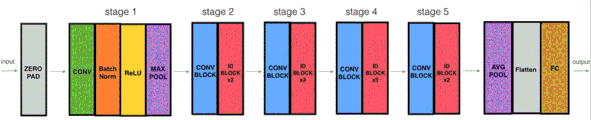
图2是本发明深度学习Resnet50网络模型图;;Fig. 2 is the deep learning Resnet50 network model diagram of the present invention;;
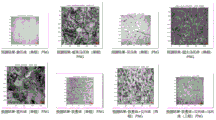
图3是本发明实施例的测试图;Fig. 3 is the test figure of the embodiment of the present invention;
图4是本发明实施例的测试数据结果图。Fig. 4 is a diagram of test data results of the embodiment of the present invention.
实施方式Implementation
为了使发明实施案例的目的、技术方案和优点更加清楚,下面将结合实施案例中的附图,对本发明实施案例中的技术方案进行清晰的、完整的描述,显然,所表述的实施案例是本发明一小部分实施案例,而不是全部的实施案例,基于本发明中的实施案例,本领域普通技术人员在没有做出创造性劳动前提下所获得的所有其他实施案例,都属于本发明保护范围。In order to make the purpose, technical solutions and advantages of the invention implementation cases clearer, the technical solutions in the implementation cases of the present invention will be clearly and completely described below in conjunction with the accompanying drawings in the implementation cases. Obviously, the implementation cases described are the present invention Invention of a small part of the implementation cases, not all of the implementation cases, based on the implementation cases in the present invention, all other implementation cases obtained by those of ordinary skill in the art without creative work, all belong to the protection scope of the present invention.
一种基于深度学习网络的钢铁微观组织识别算法,包含以下步骤:A steel microstructure identification algorithm based on a deep learning network, comprising the following steps:
S1、试样选材:选取不同钢种和不同热处理工艺下的中碳、高碳及低碳钢铁材料,按金相试样要求进行切割选材;S1. Sample material selection: select medium-carbon, high-carbon and low-carbon steel materials under different steel types and different heat treatment processes, and cut and select materials according to the requirements of metallographic samples;
S2、试样制备:按照标准金相制样要求,对试样进行磨、抛和腐蚀;S2. Sample preparation: grind, polish and corrode the sample according to the standard metallographic sample preparation requirements;
S3、图像采集:利用显微镜采集各组织图像;S3. Image collection: using a microscope to collect images of various tissues;
S4、图像预处理:将采集图像进行归一化和分割处理,经旋转、平移和裁剪方式进行数据增强后形成训练集;S4. Image preprocessing: normalize and segment the collected images, perform data enhancement by means of rotation, translation and cropping to form a training set;
S5、深度模型训练:基于Tensorflow框架搭建Resnet50模型,利用训练集训练该模型;S5. In-depth model training: build a Resnet50 model based on the Tensorflow framework, and use the training set to train the model;
S6、成果测试:利用测试集检验Resnet50模型泛化能力, 即检验模型对训练样本之外微观组织图像的识别准确率。S6. Achievement test: use the test set to test the generalization ability of the Resnet50 model, that is, to test the recognition accuracy of the model for microscopic tissue images other than the training samples.
所述步骤S3中,利用蔡司级金相显微镜采集各组织图像,调节显微镜焦距亮度,可清晰显示组织细节,选取合适的视场,放大倍数为500X或者1000X,共采集铁素体、珠光体、马氏体、贝氏体和奥氏体组织类型17类,共计4000张。In the step S3, use a Zeiss-level metallographic microscope to collect images of each tissue, adjust the brightness of the microscope focal length, and clearly display tissue details, select a suitable field of view, and a magnification of 500X or 1000X to collect ferrite, pearlite, There are 17 types of martensite, bainite and austenite, with a total of 4000 sheets.
所述步骤S4中,将采集图像进行归一化和分割处理,原始图像为1292×968像素大小,将图像经过裁剪后分为四等份,每张图像大小为324×242,在图像上下增加相应灰度条,放大至672×672像素大小。进行数据增强后形成训练集,训练集总量共16000张。In the step S4, the collected image is normalized and segmented. The original image is 1292×968 pixels in size, and the image is divided into four equal parts after cutting. The size of each image is 324×242. Corresponding grayscale bar, enlarged to 672×672 pixel size. After data enhancement, a training set is formed, and the total number of training sets is 16,000.
所述步骤S5中,基于TensorFlow框架搭建Resnet50网络, 即在卷积神经网络中加入残差学习,网络结构共有50层,输入图像大小为672×672像素。In the step S5, the Resnet50 network is built based on the TensorFlow framework, that is, residual learning is added to the convolutional neural network, the network structure has 50 layers, and the input image size is 672×672 pixels.
在实际应用中,如图2,深度学习Resnet50网络模型中,其中的CONV表示卷积层,Batch Norm表示Batch归一化层,ID BLOCK表示Identity块,由多个层构成,Conv BLOCK表示卷积块,由多个层构成。为了使得model个结构更加清晰,才提取出了conv block和idblock两个块,分别把它们封装成函数。In practical applications, as shown in Figure 2, in the deep learning Resnet50 network model, CONV represents the convolution layer, Batch Norm represents the Batch normalization layer, ID BLOCK represents the Identity block, which is composed of multiple layers, and Conv BLOCK represents convolution A block, made up of multiple layers. In order to make the structure of the model clearer, two blocks, conv block and idblock, are extracted and encapsulated into functions respectively.
本发明提供的方法,可以实现钢铁微观组织识别。对于实施例公开的方法而言,由于其与实施例公开的方法相对应,所以描述的比较简单,相关之处参见方法部分说明即可。The method provided by the invention can realize the identification of steel microstructure. As for the method disclosed in the embodiment, since it corresponds to the method disclosed in the embodiment, the description is relatively simple, and for the related part, please refer to the description of the method part.
本文中应用了具体个例对本发明的原理及实施方式进行了阐述,以上实施例的说明只是用于帮助理解本发明的方法及其核心思想;同时,对于本领域的一般技术人员,依据本发明的思想,在具体实施方式及应用范围上均会有改变之处。综上所述,本说明书内容不应理解为对本发明的限制。In this paper, specific examples have been used to illustrate the principle and implementation of the present invention. The description of the above embodiments is only used to help understand the method of the present invention and its core idea; meanwhile, for those of ordinary skill in the art, according to the present invention Thoughts, there will be changes in specific implementation methods and application ranges. In summary, the contents of this specification should not be construed as limiting the present invention.
Claims (4)
Priority Applications (1)
| Application Number | Priority Date | Filing Date | Title |
|---|---|---|---|
| CN202310149249.8A CN116311237A (en) | 2023-02-22 | 2023-02-22 | A steel microstructure identification algorithm based on deep learning network |
Applications Claiming Priority (1)
| Application Number | Priority Date | Filing Date | Title |
|---|---|---|---|
| CN202310149249.8A CN116311237A (en) | 2023-02-22 | 2023-02-22 | A steel microstructure identification algorithm based on deep learning network |
Publications (1)
| Publication Number | Publication Date |
|---|---|
| CN116311237A true CN116311237A (en) | 2023-06-23 |
Family
ID=86798986
Family Applications (1)
| Application Number | Title | Priority Date | Filing Date |
|---|---|---|---|
| CN202310149249.8A Pending CN116311237A (en) | 2023-02-22 | 2023-02-22 | A steel microstructure identification algorithm based on deep learning network |
Country Status (1)
| Country | Link |
|---|---|
| CN (1) | CN116311237A (en) |
Cited By (1)
| Publication number | Priority date | Publication date | Assignee | Title |
|---|---|---|---|---|
| CN117237930A (en) * | 2023-11-13 | 2023-12-15 | 成都大学 | Etching hardware SEM image identification method based on ResNet and transfer learning |
Citations (4)
| Publication number | Priority date | Publication date | Assignee | Title |
|---|---|---|---|---|
| CN110619355A (en) * | 2019-08-28 | 2019-12-27 | 武汉科技大学 | Automatic steel material microstructure identification method based on deep learning |
| CN113313004A (en) * | 2021-05-25 | 2021-08-27 | 武汉工程大学 | Steel microstructure segmentation method based on self-supervision learning |
| KR20220073287A (en) * | 2020-11-26 | 2022-06-03 | 현대제철 주식회사 | Analysis method and system for micro structures of steel using deep learning |
| CN114972300A (en) * | 2022-06-17 | 2022-08-30 | 鞍钢集团北京研究院有限公司 | A material image segmentation and recognition method based on computer vision and deep learning |
-
2023
- 2023-02-22 CN CN202310149249.8A patent/CN116311237A/en active Pending
Patent Citations (4)
| Publication number | Priority date | Publication date | Assignee | Title |
|---|---|---|---|---|
| CN110619355A (en) * | 2019-08-28 | 2019-12-27 | 武汉科技大学 | Automatic steel material microstructure identification method based on deep learning |
| KR20220073287A (en) * | 2020-11-26 | 2022-06-03 | 현대제철 주식회사 | Analysis method and system for micro structures of steel using deep learning |
| CN113313004A (en) * | 2021-05-25 | 2021-08-27 | 武汉工程大学 | Steel microstructure segmentation method based on self-supervision learning |
| CN114972300A (en) * | 2022-06-17 | 2022-08-30 | 鞍钢集团北京研究院有限公司 | A material image segmentation and recognition method based on computer vision and deep learning |
Non-Patent Citations (1)
| Title |
|---|
| 何福贵: "《Python深度学习 逻辑、算法与编程实战》", 30 June 2020, 北京:机械工业出版社, pages: 124 - 126 * |
Cited By (1)
| Publication number | Priority date | Publication date | Assignee | Title |
|---|---|---|---|---|
| CN117237930A (en) * | 2023-11-13 | 2023-12-15 | 成都大学 | Etching hardware SEM image identification method based on ResNet and transfer learning |
Similar Documents
| Publication | Publication Date | Title |
|---|---|---|
| CN112395932B (en) | A quantitative statistical distribution characterization method for the whole field of view of microstructure in metal materials | |
| CN102867299B (en) | Image analysis method based on singular value decomposition and method applied to defect detection of fabric | |
| US20230184703A1 (en) | Quantitative statistical characterization method of micron-level second phase in aluminum alloy based on deep learning | |
| Laub et al. | Determination of grain size distribution of prior austenite grains through a combination of a modified contrasting method and machine learning | |
| CN116311237A (en) | A steel microstructure identification algorithm based on deep learning network | |
| Yang et al. | Crack identification of automobile steering knuckle fluorescent penetrant inspection based on deep convolutional generative adversarial networks data enhancement | |
| Xie et al. | Research on controllable deep learning of multi-channel image coding technology in Ferrographic Image fault classification | |
| Ran et al. | Sketch-guided spatial adaptive normalization and high-level feature constraints based GAN image synthesis for steel strip defect detection data augmentation | |
| Wang et al. | Prior austenite grain boundary recognition in martensite microstructure based on deep learning: XD Wang et al. | |
| Bueno et al. | Microscopic image quality in few-shot GAN-generated cyanobacteria images and its impact on classification networks | |
| CN116228706B (en) | Deep learning-based cytoautophagy immunofluorescence image analysis system and method | |
| Zhao et al. | Artificial intelligence based microcracks research in 3D printing concrete | |
| Zhang et al. | A deep learning-based approach for the automatic measurement of laser-cladding coating sizes | |
| CN113313004A (en) | Steel microstructure segmentation method based on self-supervision learning | |
| Gao et al. | Processing of eddy current infrared thermography and magneto-optical imaging for detecting laser welding defects | |
| CN120355714B (en) | Method for automatically evaluating average grain size of metal material by adopting intercept point method | |
| Feng et al. | Research on the application of deep learning based surface defect detection and treatment method for hot rolled strip steel | |
| Yang et al. | Optimizing foreign fiber segmentation performance with DeepLab V3+ and GAN in industrial IoE environments | |
| CN119168865A (en) | A lightweight scanning electron microscope image super-resolution method based on diffusion model | |
| CN108416794A (en) | A Segmentation Method for Surface Defect Image of Nickel Foam | |
| CN110044900B (en) | A method for characterizing the microstructure of dual-phase composites | |
| Ibrahim et al. | Automated segmentation and quantification of retained austenite in AISI 4140 using image processing techniques | |
| Li et al. | MAM‐UNet: A multiple attention mechanism UNet for the eutectic segmentation of superalloys | |
| CN113822857A (en) | Statistical method, storage medium and system for carbide content of high-nickel-chromium cast iron rolls | |
| CN112862763A (en) | System and method for detecting heat treatment state of high-steel-grade thick-wall pipe fitting based on deep learning |
Legal Events
| Date | Code | Title | Description |
|---|---|---|---|
| PB01 | Publication | ||
| PB01 | Publication | ||
| SE01 | Entry into force of request for substantive examination | ||
| SE01 | Entry into force of request for substantive examination |