CN1205487C - Method of communicating between remote units and a control unit - Google Patents
Method of communicating between remote units and a control unit Download PDFInfo
- Publication number
- CN1205487C CN1205487C CNB99804301XA CN99804301A CN1205487C CN 1205487 C CN1205487 C CN 1205487C CN B99804301X A CNB99804301X A CN B99804301XA CN 99804301 A CN99804301 A CN 99804301A CN 1205487 C CN1205487 C CN 1205487C
- Authority
- CN
- China
- Prior art keywords
- electronic tracking
- tracking tag
- transmission
- command
- bit pattern
- Prior art date
- Legal status (The legal status is an assumption and is not a legal conclusion. Google has not performed a legal analysis and makes no representation as to the accuracy of the status listed.)
- Expired - Fee Related
Links
Images
Classifications
-
- G—PHYSICS
- G01—MEASURING; TESTING
- G01S—RADIO DIRECTION-FINDING; RADIO NAVIGATION; DETERMINING DISTANCE OR VELOCITY BY USE OF RADIO WAVES; LOCATING OR PRESENCE-DETECTING BY USE OF THE REFLECTION OR RERADIATION OF RADIO WAVES; ANALOGOUS ARRANGEMENTS USING OTHER WAVES
- G01S13/00—Systems using the reflection or reradiation of radio waves, e.g. radar systems; Analogous systems using reflection or reradiation of waves whose nature or wavelength is irrelevant or unspecified
- G01S13/74—Systems using reradiation of radio waves, e.g. secondary radar systems; Analogous systems
- G01S13/76—Systems using reradiation of radio waves, e.g. secondary radar systems; Analogous systems wherein pulse-type signals are transmitted
-
- G—PHYSICS
- G06—COMPUTING OR CALCULATING; COUNTING
- G06K—GRAPHICAL DATA READING; PRESENTATION OF DATA; RECORD CARRIERS; HANDLING RECORD CARRIERS
- G06K7/00—Methods or arrangements for sensing record carriers, e.g. for reading patterns
- G06K7/10—Methods or arrangements for sensing record carriers, e.g. for reading patterns by electromagnetic radiation, e.g. optical sensing; by corpuscular radiation
- G06K7/10009—Methods or arrangements for sensing record carriers, e.g. for reading patterns by electromagnetic radiation, e.g. optical sensing; by corpuscular radiation sensing by radiation using wavelengths larger than 0.1 mm, e.g. radio-waves or microwaves
- G06K7/10019—Methods or arrangements for sensing record carriers, e.g. for reading patterns by electromagnetic radiation, e.g. optical sensing; by corpuscular radiation sensing by radiation using wavelengths larger than 0.1 mm, e.g. radio-waves or microwaves resolving collision on the communication channels between simultaneously or concurrently interrogated record carriers.
-
- G—PHYSICS
- G01—MEASURING; TESTING
- G01S—RADIO DIRECTION-FINDING; RADIO NAVIGATION; DETERMINING DISTANCE OR VELOCITY BY USE OF RADIO WAVES; LOCATING OR PRESENCE-DETECTING BY USE OF THE REFLECTION OR RERADIATION OF RADIO WAVES; ANALOGOUS ARRANGEMENTS USING OTHER WAVES
- G01S13/00—Systems using the reflection or reradiation of radio waves, e.g. radar systems; Analogous systems using reflection or reradiation of waves whose nature or wavelength is irrelevant or unspecified
- G01S13/74—Systems using reradiation of radio waves, e.g. secondary radar systems; Analogous systems
- G01S13/75—Systems using reradiation of radio waves, e.g. secondary radar systems; Analogous systems using transponders powered from received waves, e.g. using passive transponders, or using passive reflectors
- G01S13/751—Systems using reradiation of radio waves, e.g. secondary radar systems; Analogous systems using transponders powered from received waves, e.g. using passive transponders, or using passive reflectors wherein the responder or reflector radiates a coded signal
- G01S13/758—Systems using reradiation of radio waves, e.g. secondary radar systems; Analogous systems using transponders powered from received waves, e.g. using passive transponders, or using passive reflectors wherein the responder or reflector radiates a coded signal using a signal generator powered by the interrogation signal
-
- G—PHYSICS
- G06—COMPUTING OR CALCULATING; COUNTING
- G06K—GRAPHICAL DATA READING; PRESENTATION OF DATA; RECORD CARRIERS; HANDLING RECORD CARRIERS
- G06K7/00—Methods or arrangements for sensing record carriers, e.g. for reading patterns
- G06K7/0008—General problems related to the reading of electronic memory record carriers, independent of its reading method, e.g. power transfer
-
- G—PHYSICS
- G01—MEASURING; TESTING
- G01S—RADIO DIRECTION-FINDING; RADIO NAVIGATION; DETERMINING DISTANCE OR VELOCITY BY USE OF RADIO WAVES; LOCATING OR PRESENCE-DETECTING BY USE OF THE REFLECTION OR RERADIATION OF RADIO WAVES; ANALOGOUS ARRANGEMENTS USING OTHER WAVES
- G01S13/00—Systems using the reflection or reradiation of radio waves, e.g. radar systems; Analogous systems using reflection or reradiation of waves whose nature or wavelength is irrelevant or unspecified
- G01S13/74—Systems using reradiation of radio waves, e.g. secondary radar systems; Analogous systems
- G01S13/82—Systems using reradiation of radio waves, e.g. secondary radar systems; Analogous systems wherein continuous-type signals are transmitted
- G01S13/825—Systems using reradiation of radio waves, e.g. secondary radar systems; Analogous systems wherein continuous-type signals are transmitted with exchange of information between interrogator and responder
Landscapes
- Engineering & Computer Science (AREA)
- Remote Sensing (AREA)
- Radar, Positioning & Navigation (AREA)
- Physics & Mathematics (AREA)
- General Physics & Mathematics (AREA)
- Computer Networks & Wireless Communication (AREA)
- Computer Vision & Pattern Recognition (AREA)
- Health & Medical Sciences (AREA)
- Artificial Intelligence (AREA)
- Theoretical Computer Science (AREA)
- Toxicology (AREA)
- General Health & Medical Sciences (AREA)
- Electromagnetism (AREA)
- Radar Systems Or Details Thereof (AREA)
- Mobile Radio Communication Systems (AREA)
- Near-Field Transmission Systems (AREA)
Abstract
Description
技术领域technical field
本发明涉及数字数据通信协议,尤其涉及数目和身份(identity)未知的多个远程单元通信。This invention relates to digital data communication protocols, and more particularly to communication between multiple remote units of unknown number and identity.
背景技术Background technique
一些通信系统由一基站和该基站周围的通信场(field)内配置的多个远程单元构成的。通常,基站收集包含在远程单元中的信息并可把信息写入这些远程单元。通信场可由基站与每个远程单元之间的铜或光纤链路构成。或者,通信场可以是基站与远程单元之间的无线电波发送的形式。后者的一个例子是利用附着于诸如家畜、机场行李处理系统中的行李、安全区中的个人电子跟踪标签卡(badge)等东西上的射频识别装置(RFID)的系统。询问器(interrogator)单元(也叫做阅读器单元)向RFID(也叫做电子跟踪标签(tag))广播射频信号,这些RFID被调制成把信息传送给这些电子跟踪标签。电子跟踪标签中的调制电路允许把信息发送回基站。Some communication systems consist of a base station and a plurality of remote units disposed in a communication field around the base station. Typically, a base station collects information contained in remote units and can write information to these remote units. The communication field may consist of copper or fiber optic links between the base station and each remote unit. Alternatively, the communication field may be in the form of radio wave transmissions between the base station and the remote unit. An example of the latter is a system utilizing radio frequency identification devices (RFID) attached to things such as livestock, luggage in an airport baggage handling system, personal electronic tracking badges in secure areas, and the like. Interrogator units (also called reader units) broadcast radio frequency signals to RFIDs (also called electronic tracking tags (tags)) that are modulated to transmit information to these electronic tracking tags. Modulation circuits in electronic tracking tags allow information to be sent back to the base station.
在大多数应用中,询问场中存在许多电子跟踪标签,从而通常不止一个电子跟踪标签将检测到来自基站的发送。因而,基站对包含在电子跟踪标签中的信息的请求可产生来自许多电子跟踪标签的多个发送,导致在基站处检测到错乱的响应。相反,旨在特定电子跟踪标签的信息将被询问场内的所有电子跟踪标签所拾取。In most applications, there are many electronic tracking tags in the interrogation field, so often more than one electronic tracking tag will detect a transmission from the base station. Thus, a base station's request for information contained in an electronic tracking tag may result in multiple transmissions from many electronic tracking tags, resulting in garbled responses being detected at the base station. Instead, information intended for a specific electronic tracking tag will be picked up by all electronic tracking tags in the field of interrogation.
通过发送仅有目标电子跟踪标签将响应的识别信息可避免这些问题。然而,基站通常事先不知道询问场内配置有哪些电子跟踪标签。此外,通常,存在电子跟踪标签因其中使用RFID电子跟踪标签的环境的动态本质的结果而进入或离开询问场的情况。已改进了识别方案,其中基站启动识别所配置的电子跟踪标签的过程。These problems can be avoided by sending identification information that only the target electronic tracking tag will respond to. However, the base station generally does not know in advance which electronic tracking tags are deployed in the interrogation field. Furthermore, generally, there are instances where electronic tracking tags enter or leave the field of interrogation as a result of the dynamic nature of the environment in which RFID electronic tracking tags are used. An identification scheme has been improved in which the base station initiates the process of identifying deployed electronic tracking tags.
例如,在5,365,551和5,500,650号美国专利中揭示了一种系统和方法,其中命令者(commander)站(阅读器单元)向响应者站(电子跟踪标签)发出一命令,使每个响应者产生一随机数,其后该随机数被用作识别该响应者的鉴别(arbitration)号。然后,命令者站收集每个响应者的鉴别号,从而允许命令者站随后与任一个响应者站直接通信。For example, in U.S. Patent Nos. 5,365,551 and 5,500,650, a system and method is disclosed in which the commander (commander) station (reader unit) issues a command to the responder stations (electronic tracking tags), causing each responder to generate a A random number, which is then used as an arbitration number to identify the responder. The Commander station then collects each Responder's identification number, allowing the Commander station to subsequently communicate directly with any of the Responder stations.
在5,434,572号美国专利中揭示了一种方法,用于通过逐步排除其它电子跟踪标签来访问想要的电子跟踪标签。给每个电子跟踪标签分配一具有N位位置的独有二进制ID号。阅读器把位命令发送给这些电子跟踪标签。一个这样的命令是BIT0命令,它使当前位位置为‘0’的每个电子跟踪标签响应,并使当前位位置为‘1’的每个电子跟踪标签进入复位。类似地,BIT1命令使当前位位置为‘1’的每个电子跟踪标签响应,并使当前位位置为‘0’的每个电子跟踪标签进入复位。电子跟踪标签的响应包括发送一返回信号以及把内部计数器递增到下一位位置。因此,阅读器可通过发出一适当的BIT0和BIT1命令序列获得对具有给定二进制ID的电子跟踪标签的访问,继而相继使不想要的电子跟踪标签进入复位,直到仅使想要的电子跟踪标签保持有效。In US Patent No. 5,434,572 a method is disclosed for accessing a desired electronic tracking tag by phasing out other electronic tracking tags. Assign a unique binary ID number with N bits to each electronic tracking tag. The reader sends bit commands to these electronic tracking tags. One such command is the BIT0 command, which causes every electronic tracking tag whose current bit position is '0' to respond and every electronic tracking tag whose current bit position is '1' to go into reset. Similarly, the BIT1 command causes each electronic tracking tag whose current bit position is '1' to respond, and causes each electronic tracking tag whose current bit position is '0' to enter reset. The response of the electronic tracking tag includes sending a return signal and incrementing the internal counter to the next bit position. Therefore, the reader can gain access to the electronic tracking tags with a given binary ID by issuing an appropriate sequence of BIT0 and BIT1 commands, and then successively put the unwanted electronic tracking tags into reset until only the desired electronic tracking tags are reset. stay active.
在5,489,908号美国专利中揭示了一种用于多个电子跟踪标签的系统,其中每个电子跟踪标签具有独有的识别码。阅读器构成发送到这些电子跟踪标签的位串。每个电子跟踪标签把位串与其识别码的最低位相比较,如果发生误匹配则该电子跟踪标签不响应。每当阅读器检测到对一发送的多个响应时,把一附加位添加到该位串时,并发送经修改的串。相继添加附加位,直到阅读器检测到已接收到单个响应,在此时存储此代码。重复整个程序,直到记录该场中所有电子跟踪标签的识别码。In US Patent No. 5,489,908 a system for multiple electronic tracking tags is disclosed, wherein each electronic tracking tag has a unique identification code. The reader composes the bit string sent to these electronic tracking tags. Each electronic tracking tag compares the bit string with the lowest bit of its identification code, and if a mismatch occurs, the electronic tracking tag does not respond. Whenever the reader detects multiple responses to a transmission, an additional bit is added to the bit string and the modified string is sent. Additional bits are added successively until the reader detects that a single response has been received, at which point this code is stored. Repeat the entire procedure until the identification codes of all electronic tracking tags in the field are recorded.
在5,602,538号美国专利中揭示了一种多电子跟踪标签系统,其中这些电子跟踪标签响应于接收到来自阅读器的询问命令而发送其各自的识别码。检测来自最靠近阅读器的电子跟踪标签的信号,并存储其识别码。然后,阅读器发送包括该接收到的识别码的另一询问命令。除了其识别码已包含在此发送中的这个电子跟踪标签以外,所有的电子跟踪标签都通过发送其各自的识别码来响应。再者,阅读器检测最强的信号并记录包含在该信号中的识别码。阅读器发送又一个询问命令,此时该命令包括第一和第二识别码。再者,除了其识别码已包含在此发送中的这两个电子跟踪标签以外,所有的电子跟踪标签以其各自的识别码来响应。阅读器检测最强的信号,并记录包含在该信号中的识别码。重复这一过程,直到已识别询问场中的所有电子跟踪标签。A system of multiple electronic tracking tags is disclosed in US Patent No. 5,602,538, wherein the electronic tracking tags transmit their respective identification codes in response to receiving an interrogation command from a reader. Detects the signal from the electronic tracking tag closest to the reader and stores its identification code. The reader then sends another interrogation command including this received identification code. All electronic tracking tags respond by sending their respective identification codes except this one, whose identification code was included in this transmission. Again, the reader detects the strongest signal and records the identification code contained in that signal. The reader sends yet another interrogation command, this time including the first and second identification codes. Again, all electronic tracking tags respond with their respective identification codes except for the two electronic tracking tags whose identification codes were included in the transmission. The reader detects the strongest signal and records the identification code contained in that signal. This process is repeated until all electronic tracking tags in the interrogation field have been identified.
5,294,931号美国专利揭示了一种不同的途径,从而在基于阅读器单元附近的每个电子跟踪标签的多电子跟踪标签环境下访问各电子跟踪标签。构成每个电子跟踪标签,使它们仅在询问脉冲所产生的充电电压落在固定电压范围内时才响应于询问。因而,当阅读器发出的询问脉冲处于给定能量时,将把靠近阅读器的电子跟踪标签充电到此电压范围以上的电压值,继而此电子跟踪标签将不作响应。类似地,将把远的电子跟踪标签充电到此电压范围以下的值,继而该电子跟踪标签将不作响应。将仅把位于离开阅读器适当距离处的电子跟踪标签充电到落在此电压值范围内的值,继而该电子跟踪标签将响应于阅读器。通过改变发出的脉冲的能量,阅读器能询问位于其场内的所有电子跟踪标签。US Patent No. 5,294,931 discloses a different approach to accessing each electronic tracking tag in a multiple electronic tracking tag environment based on the proximity of each electronic tracking tag to the reader unit. Each electronic tracking tag is constructed so that they respond to interrogation only when the charging voltage generated by the interrogation pulse falls within a fixed voltage range. Therefore, when the interrogation pulse sent by the reader is at a given energy, the electronic tracking tag close to the reader will be charged to a voltage value above this voltage range, and then the electronic tracking tag will not respond. Similarly, a remote electronic tracking tag will be charged to a value below this voltage range, and then the electronic tracking tag will not respond. Only an electronic tracking tag located at an appropriate distance from the reader will be charged to a value that falls within this range of voltage values, and then the electronic tracking tag will respond to the reader. By varying the energy of the pulses emitted, the reader is able to interrogate all electronic tracking tags within its field.
这些已有技术途径中的每一个的基站和/或RFID电子跟踪标签都需要附近的电路和/或智能来实现识别协议。例如,’931专利的电子跟踪标签中需要精度元件,以检测允许在其内进行操作的窄电压窗。The base station and/or RFID electronic tracking tag of each of these prior art approaches requires nearby circuitry and/or intelligence to implement the identification protocol. For example, precision components are required in the electronic tracking tag of the '931 patent to detect the narrow voltage window within which operation is permitted.
因此,需要一种RFID电子跟踪标签识别方法,把基站和包括该系统的RFID的设计和实现的复杂性减到最小。想要一种方法,该方法可适用于类似的通信系统,其中控制单元与两个或更多的远程单元进行通信。Therefore, there is a need for an RFID electronic tracking tag identification method that minimizes the complexity of designing and implementing a base station and an RFID including the system. A method is desired that is applicable to similar communication systems where a control unit communicates with two or more remote units.
发明内容Contents of the invention
在具有一基站和单个远程单元的通信系统中,依据本发明的通信方法包括,在远程单元中延迟随机的一段时间周期,并发送第一位模式(bit pattern)。在接收到无差错的位模式时,基站发送一确认脉冲。如果一远程单元在其发送第一位模式后的第一时间周期内检测到确认脉冲的发送,则该远程单元(现在叫做选中远程单元)将发送第二位模式。基站在检测到此第二位模式时,发送由该远程单元检测和执行的一个或多个命令。基站广播一主信号,该信号用作基站和远程单元测量经过的时间的时基。In a communication system having a base station and a single remote unit, the communication method according to the present invention includes delaying in the remote unit for a random period of time and transmitting a first bit pattern. Upon receipt of an error-free bit pattern, the base station sends an acknowledgment pulse. If a remote unit detects the transmission of an acknowledgment pulse within a first period of time after it transmits the first bit pattern, that remote unit (now called the selected remote unit) will transmit the second bit pattern. The base station, upon detecting this second bit pattern, sends one or more commands to be detected and executed by the remote unit. The base station broadcasts a master signal which is used as a time base for the base station and remote units to measure elapsed time.
如果一远程单元在第一时间周期以外检测到任何发送,则该远程单元保持安静,并监测第一或第二命令的发送。在此情况下,所有这些远程单元都以随机时间间隔重新发送第一位模式。在检测到第一命令时,被选中的远程单元进入监测第二命令的状态。If a remote unit detects any transmission outside of the first time period, the remote unit remains silent and monitors for transmission of the first or second command. In this case, all of these remote units resend the first bit pattern at random intervals. Upon detection of the first command, the selected remote unit enters a state of monitoring for a second command.
如果一远程单元在第一时间周期后的随机选中时间周期内未检测到任何发送,则该远程单元以随机时间间隔继续发送第一位模式。If a remote unit does not detect any transmissions for a randomly selected time period after the first time period, the remote unit continues to transmit the first bit pattern at random time intervals.
在本发明的一个较佳实施例中,远程单元是射频识别装置,基站为阅读器单元。第一命令为SET QUIET BIT(设定静止位)命令,而第二命令为RESET QUIETBIT(复位静止位)命令。In a preferred embodiment of the invention, the remote unit is a radio frequency identification device and the base station is a reader unit. The first command is a SET QUIET BIT (set quiet bit) command, and the second command is a RESET QUIETBIT (reset quiet bit) command.
附图概述Figure overview
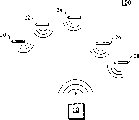
图1A和1B示出与一基础单元通信的多个远程单元的普通视图(图1A)及这一通信系统的特例(图1B)。1A and 1B show a general view of multiple remote units in communication with a base unit (FIG. 1A) and a specific example of such a communication system (FIG. 1B).
图2是依据本发明的处理的流程图。Figure 2 is a flow diagram of processing in accordance with the present invention.
图3是示出在一远程单元中发生的状态转换的状态转换图。Figure 3 is a state transition diagram showing state transitions occurring in a remote unit.
图4A-4C是示出在一远程单元中发生的各种事件的时间线。4A-4C are timelines illustrating various events occurring in a remote unit.
本发明的较佳实施方式Preferred Embodiments of the Invention
参考图1A,本发明旨在一种通信系统100,它包括中央控制单元(基站)10和多个远程单元20-28。该系统的特征在于,基站10通过经由一通信媒体30向所有的远程单元广播信号而与远程单元20-28进行通信。类似地,远程单元通过经由同一媒体向基站10广播信号来进行通信。该系统的进一步特征在于,远程单元20-28相互异步地进行操作,包括把信息发送到基站10。Referring to FIG. 1A, the present invention is directed to a
虽然本发明的方法可适用于许多通信环境,但该方法已缩小到在射频识别装置(RFID)的区域中实施。因而,以下讨论将针对RFID设备,但应记住本方法可适用于诸如以上所列出的那些系统。While the method of the present invention is applicable to many communication environments, the method has narrowed down to implementation in the area of radio frequency identification devices (RFID). Thus, the following discussion will be directed to RFID devices, but it should be kept in mind that the method is applicable to systems such as those listed above.
参考图1B,典型的RFID设备包括一基站(询问单元,阅读器单元等)10和在该阅读器单元的询问场内所配置的多个RFID(电子跟踪标签)20-28。通信原理是公知的。简而言之,阅读器单元10发送一载波频率无线电信号,该信号被电子跟踪标签所检测。这些电子跟踪标签通过对接收到的RF载波进行整流并以经整流的信号对一存储电容器进行充电来得到其各自的功率。通过调制此RF载波把信息传送到一电子跟踪标签,此电子跟踪标签检测并解调该信息。该电子跟踪标签把入射的RF载波反射回阅读器单元,并以此方式与阅读器单元通信。继而,通过调制反射的信号把信息“发送”阅读器单元。Referring to FIG. 1B, a typical RFID device includes a base station (interrogation unit, reader unit, etc.) 10 and a plurality of RFID (electronic tracking tags) 20-28 disposed within the interrogation field of the reader unit. The principles of communication are well known. Briefly, the
通常,一电子跟踪标签包括对RF载波进行整流的电路以及使得把RF载波(即,发送信息)反射回阅读器单元的调制振荡回路(tank circuit)。此外,电子跟踪标签还设有诸如EEPROM等存储库来存储诸如识别号以及该电子跟踪标签中的其它信息等数据。Typically, an electronic tracking tag includes circuitry to rectify the RF carrier and a modulating tank circuit that causes the RF carrier (ie, transmitted information) to be reflected back to the reader unit. In addition, the electronic tracking tag is also equipped with a memory bank such as EEPROM to store data such as an identification number and other information in the electronic tracking tag.
参考图1B和2,在流程图200中示出在电子跟踪标签20-28和阅读器单元10中发生的事件的序列。每个电子跟踪标签在接收到来自阅读器单元10的RF载波信号时被上电,步骤202。在通过一初始化序列后,每个电子跟踪标签产生一随机时间周期,步骤204。有许多技术来产生随机数。例如,可把存储在电子跟踪标签中的识别号用作随机数发生器的种子(seed)。或者,可分配该电子跟踪标签中的一个分开的存储单元来包含该种子。这将允许用户独立地以不同的种子号来种植(seed)每个电子跟踪标签。另一种技术是从相应于电子跟踪标签的识别号的检错码(诸如,冗余校验码)中得到该种子。Referring to FIGS. 1B and 2 , a sequence of events occurring in electronic tracking tags 20 - 28 and
接着,每个电子跟踪标签在等于随机产生的时间的一段时间周期内延迟处理,步骤206。原则上,每个电子跟踪标签将具有根据其各自随机选中的时间周期的不同延迟周期。在延迟周期截止时,每个电子跟踪标签把一报头(header)发送给阅读器单元10,步骤208。在此较佳实施例中,报头是一4位数据,它对于每个电子跟踪标签都是相同的值。此方案简化了阅读器单元的设计,这是因为此后阅读器单元只需要检测该4位数据的无差错接收。或者,报头可以是每个电子跟踪标签的识别号的子集。注意,报头不限于四位,而可以是更长或更短的位模式。Next, each electronic tracking tag delays processing for a period of time equal to a randomly generated time, step 206 . In principle, each electronic tracking tag will have a different delay period according to its respective randomly selected time period. When the delay period expires, each electronic tracking tag sends a header to the
在发送该报头后,每个电子跟踪标签监测来自阅读器单元的ACK脉冲的发送,步骤210。如更详细地说明,必须在报头发送后的一个时间周期的特定部分期间检测ACK脉冲。把此时间周期叫做收听窗口(listening window)。After sending the header, each electronic tracking tag monitors the sending of ACK pulses from the reader unit, step 210 . As explained in more detail, the ACK pulse must be detected during a certain portion of a time period after the header is sent. This time period is called the listening window.
在另一个实施例中,可以诸如重新发送报头命令等命令来替换ACK脉冲。发送的实际内容不重要,只要阅读器单元能在收听窗口的特定部分期间启动发送。In another embodiment, the ACK pulse may be replaced by a command such as a resend header command. The actual content of the transmission is not important, as long as the reader unit can initiate the transmission during a specific part of the listening window.
从步骤210继续,如果在收听窗口的所需部分内检测到一ACK脉冲(步骤201),则检测到该ACK的电子跟踪标签将发送其识别号(ID),步骤218,并且进到对从阅读器单元10发送的命令进行监测,步骤205。此电子跟踪标签就说成被选中。如果被选中的电子跟踪标签在该ID发送后的另一收听窗口期间未接收到命令,则选中的电子跟踪标签重复步骤218。然而,若被选中的电子跟踪标签确实接收到命令,则进行检查以确定该命令是否是一SET QUIET命令,步骤207。如果该命令不是SET QUIET命令,则进行检查以确定该命令是否是一RESET QUIET命令,步骤209。如果发送的是RESET QUIET命令,则处理在步骤204处重新开始。否则,该电子跟踪标签执行该命令,该命令可能涉及阅读器单元10与此电子跟踪标签之间的附加发送,步骤222。在该命令完成时,此电子跟踪标签准备下一命令,步骤205,并重新开始监测附加的命令。返回判断步骤207,如果接收到SET QUIET命令,则此电子跟踪标签进入忽略来自阅读器单元的后续命令(除了RESET QUIET命令以外)的状态,步骤224,此时,电子跟踪标签重新开始步骤204处的处理。Continuing from step 210, if an ACK pulse is detected within the required portion of the listening window (step 201), the electronic tracking tag that detected the ACK will send its identification number (ID), step 218, and proceed to The commands sent by the
最好,每个电子跟踪标签的ID是独有的,且包括检错信息。因而,两个或更多电子跟踪标签刚好在同一时间发送其自己的报头(步骤208)不大可能,阅读器单元随后将通过检测ID码接收中的差错来检测这一发生(步骤236)。然后,阅读器单元通过发送一RESET QUIET命令并彻底地开始该序列来解决冲突。Preferably, the ID of each electronic tracking tag is unique and includes error detection information. Thus, it is unlikely that two or more electronic tracking tags will transmit their own headers at exactly the same time (step 208), the reader unit will then detect this occurrence by detecting errors in the reception of the ID code (step 236). The reader unit then resolves the conflict by sending a RESET QUIET command and starting the sequence completely.
现在返回判断步骤201,如果在收听窗口期间未检测到ACK,则该电子跟踪标签就说成未被选中。所有未被选中的电子跟踪标签在此时产生一新的随机时间周期,步骤212。未选中电子跟踪标签在其各自随机产生的时间周期内监测来自阅读器单元10的任何发送,步骤214。如果检测到任何这样的发送(步骤203),则意味着在询问场中存在与阅读器单元通信的选中电子跟踪标签。情况既然这样,未选中电子跟踪标签将进入一连续监测状态(不精确地叫做无限收听窗口),直到检测到一SET QUIET命令或RESET QUIET(步骤216),此时,未选中电子跟踪标签将重新开始步骤204处的处理。Returning now to decision step 201, if no ACK is detected during the listening window, the electronic tracking tag is said to be unselected. All unselected electronic tracking tags generate a new random time period at this time, step 212 . The unselected electronic tracking tags monitor for any transmissions from the
返回判断步骤203,如果在未选中电子跟踪标签的随机时间周期内未检测到发送,则认为阅读器单元未与任何电子跟踪标签进行通信(即,还未选中任何电子跟踪标签),在此情况下,该电子跟踪标签继续步骤208处的处理,以尝试抓住阅读器单元的注意力。Returning to judgment step 203, if no transmission is detected within the random time period of the unselected electronic tracking tag, then it is considered that the reader unit is not communicating with any electronic tracking tag (that is, any electronic tracking tag has not been selected), in this case Next, the electronic tracking tag continues processing at step 208 in an attempt to grab the reader unit's attention.
此时,有两点值得注意。第一,SET QUIET命令起到双重功能:(i)SET QUIET命令使选中的电子跟踪标签进入无限收听模式,直到检测到一RESET QUIET命令(步骤224),或直到它因来自阅读器单元的RF载波信号的停止而断电;(ii)SET QUIET命令使未选中的电子跟踪标签从其无限收听窗口中“唤醒”(步骤216)并进到尝试可以获得对阅读器单元的访问。因而,阅读器单元在结束与选中电子跟踪标签的业务时,通过发送一SET QUIET命令使该选中电子跟踪标签入睡并唤醒未选中电子跟踪标签,以指示阅读器单元已准备好与另一电子跟踪标签的交易。这给每个未选中电子跟踪标签提供了使它们跟随与选中电子跟踪标签相同的序列的机会。第二,RESET QUIET命令的效果是通知所有的电子跟踪标签(包括选中电子跟踪标签),它们可尝试取得阅读器单元的注意(步骤216和224)。At this point, there are two points worth noting. First, the SET QUIET command plays a dual role: (i) the SET QUIET command causes the selected electronic tracking tag to enter an infinite listening mode until a RESET QUIET command is detected (step 224), or until it is triggered by an RF signal from the reader unit. (ii) SET QUIET command makes unselected electronic tracking tags "wake up" (step 216) from its infinite listening window and proceed to try to obtain access to the reader unit. Therefore, when the reader unit ends the business with the selected electronic tracking tag, it sends a SET QUIET command to make the selected electronic tracking tag fall asleep and wake up the unselected electronic tracking tag to indicate that the reader unit is ready to communicate with another electronic tracking tag. Label transactions. This gives each unselected electronic tracking tag the opportunity to have them follow the same sequence as the selected electronic tracking tag. Second, the effect of the RESET QUIET command is to notify all electronic tracking tags (including the selected electronic tracking tag) that they may try to get the attention of the reader unit (steps 216 and 224).
在本发明的实现中,SET QUIET命令使选中的电子跟踪标签在其存储库中设定一QUIET位。该位使电子跟踪标签中的调制电路无效,从而此电子跟踪标签不能向阅读器单元发送任何东西。RESET QUIET命令使QUIET位复位,继而重新使能调制电路。In the implementation of the present invention, the SET QUIET command makes the selected electronic tracking tag set a QUIET bit in its memory bank. This bit disables the modulation circuitry in the tag so that the tag cannot send anything to the reader unit. The RESET QUIET command resets the QUIET bit, which in turn re-enables the modulation circuitry.
此外,电子跟踪标签支持全局命令。全局命令是作用于所有电子跟踪标签(无论选中还是未选中)的命令。全局命令的一个例子是RESET QUIET命令。然而,并非所有的全局命令导致这些电子跟踪标签发送信号。例如,与RESET QUIET命令不同,一全局WRITE WORD(写字)命令使每个电子跟踪标签把阅读器单元所发送的信息写入其非易失性存储器中,而不影响该电子跟踪标签的选中/未选中状态。In addition, electronic tracking tags support global commands. The global command is a command that acts on all electronic tracking tags (no matter selected or not selected). An example of a global command is the RESET QUIET command. However, not all global commands cause these electronic tracking tags to send signals. For example, unlike the RESET QUIET command, a global WRITE WORD (write word) command causes each electronic tracking tag to write the information sent by the reader unit into its non-volatile memory without affecting the selection/ Unchecked state.
返回流程图200,阅读器单元10中的处理以发送一RF载波信号开始,步骤230。这提供了对这些电子跟踪标签进行初始化的功率。接着,阅读器单元10监测对来自电子跟踪标签之一的无差错报头的接收,步骤232和211。在检测到无差错报头时,阅读器单元在检测到无差错报头后的一个时间周期内发送一ACK脉冲,步骤234。此时间周期将与电子跟踪标签之一(即,其报头被成功检测到的电子跟踪标签)的收听窗口一致。接着,阅读器单元将监测对来自选中电子跟踪标签的ID码的接收,步骤236。在接收到此ID码时,阅读器单元将向选中电子跟踪标签发送一个或多个命令,以实行选中电子跟踪标签的想要操作,步骤238和213。当阅读器单元已结束它与选中电子跟踪标签的交易时,它将发送一QUIET命令(步骤240),并重新开始监测下一报头(步骤232)。Returning to flowchart 200, processing in the
现在参考图3,可看出,一电子跟踪标签处于五个可能状态中的任一个:断电状态301、初始化状态302、选中状态303、静止状态304和未选中状态305。因而,虽然流程图200示出本发明方法的特定实现,但状态图300提供了对依据本发明的电子跟踪标签行为的更抽象描述,它与处于特殊考虑的任何实现无关。Referring now to FIG. 3 , it can be seen that an electronic tracking tag is in any of five possible states: powered off
电子跟踪标签最初处于断电状态301。这是阅读器单元(基站)不发送任何RF载波的情况。在接收到RF载波时,此电子跟踪标签将转换(312)到初始化状态。相反,当RF载波被除去时,电子跟踪标签将从任何其它状态转换(321、331、341、351)回到断电状态。The electronic tracking tag is initially in a powered off
在初始化状态期间,每个电子跟踪标签以随机时间间隔发送其报头。电子跟踪标签在其收听窗口的特定时间周期内检测到一ACK脉冲时将移(323)入选中状态303。或者,如果电子跟踪标签在其收听窗口以外检测到来自阅读器单元的任何发送,则该电子跟踪标签移(325)入未选中状态305。在检测到一SET QUIET命令或一RESET QUIET命令时,该电子跟踪标签将从未选中状态转换(352)回到空闲状态。During the initialization state, each electronic tracking tag transmits its header at random intervals. The electronic tracking tag will move (323) into the selected
如果该电子跟踪标签在其收听窗口后的一个时间周期内未检测到任何发送,则此电子跟踪标签保持(322)处于初始化状态,并继续以随机时间间隔发送其报头。If the electronic tracking tag does not detect any transmissions within a period of time after its listening window, the electronic tracking tag remains (322) in the initialized state and continues to transmit its headers at random intervals.
在到达选中状态303时,此电子跟踪标签保持在该处(333),只要它接收到来自阅读器单元的命令。当检测到SET QUIET命令时,该电子跟踪标签从选中状态303转换(334)到静止状态304。此电子跟踪标签保持在静止状态,直到它检测到RESET QUIET命令,此时,它转换(342)到空闲状态。在检测到一RESET QUIET命令时,此电子跟踪标签从选中状态转换(332)到空闲状态302。Upon reaching the selected
参考图4A-4C,一电子跟踪标签中所发生的事件的时间线以在阅读器单元广播RF载波信号时发生的上电事件时开始。每个电子跟踪标签延迟随机选择的时间周期,如图4A中的时间周期D所示。接着,该电子跟踪标签在时间周期H内发送其报头。此后接着是收听窗口L1。Referring to Figures 4A-4C, a timeline of events occurring in an electronic tracking tag begins with a power-up event that occurs when the reader unit broadcasts the RF carrier signal. Each electronic tracking tag is delayed for a randomly selected time period, shown as time period D in FIG. 4A. Next, the electronic tracking tag sends its header within a time period H. This is followed by the listening window L1.
图4A的严格检验示出,收听窗口L1包括第一、第二和第三位时间。RF载波信号用作阅读器单元和电子跟踪标签的时基。RF载波的每个周期是一时钟周期。因而,把一个位时间定义为经过RF载波信号的许多载波周期(时钟)。在本发明的一个实施例中,RF载波是一13.56MHz信号,一位时间可限定在64时钟/位到1024时钟/位的范围内。在另一实施例中,RF载波为125KHz,其位时间可在8时钟/位到128时钟/位的范围内。由于RF载波是由阅读器单元向每个电子跟踪标签广播的,所以为了测量时间推移,设有用于阅读器单元和电子跟踪标签的公共时基。A rigorous examination of FIG. 4A shows that the listening window L1 includes the first, second and third bit times. The RF carrier signal is used as the time base for reader units and electronic tracking tags. Each cycle of the RF carrier is a clock cycle. Thus, a bit time is defined as a number of carrier cycles (clocks) over the RF carrier signal. In one embodiment of the present invention, the RF carrier is a 13.56MHz signal, and one bit time can be limited in the range of 64 clocks/bit to 1024 clocks/bit. In another embodiment, the RF carrier is 125 KHz, and the bit time can be in the range of 8 clocks/bit to 128 clocks/bit. Since the RF carrier is broadcast by the reader unit to each electronic tracking tag, in order to measure the passage of time there is a common time base for the reader unit and the electronic tracking tags.
返回图4A,回想在电子跟踪标签发送报头后检测来自阅读器单元的ACK脉冲发生在收听窗口L1期间。依据本发明,此电子跟踪标签在收听窗口的第一位时间后以及在第二位时间结束前的任何时间寻找所发生的ACK脉冲。例如,考虑以125KHz的载波进行操作并使用8时钟/位(即,一个位时间为64毫秒)的阅读器/电子跟踪标签系统。在其报头发送后,电子跟踪标签将在监测对来自阅读器单元的ACK脉冲的检测前,延迟至少64毫秒(第一位时间结束)。类似地,阅读器单元在接收到一无差错报头时,将在接收到此报头后发送ACK脉冲前延迟至少64毫秒。Returning to FIG. 4A , recall that detecting an ACK pulse from the reader unit occurs during the listening window L1 after the electronic tracking tag transmits the header. According to the present invention, the tag looks for an ACK pulse to occur any time after the first bit time of the listening window and before the end of the second bit time. For example, consider a reader/tag system operating on a 125 KHz carrier and using 8 clocks/bit (ie, one bit time is 64 milliseconds). After its header is sent, the electronic tracking tag will delay at least 64 milliseconds (end of first bit time) before monitoring for the detection of an ACK pulse from the reader unit. Similarly, the reader unit, upon receiving an error-free header, will delay at least 64 milliseconds before sending an ACK pulse after receiving the header.
继续图4A,假设在收听窗口L1的第二位时间内的某一时间检测到一ACK脉冲,则选中的电子跟踪标签将在时间周期I1内发送其ID码。然后,该电子跟踪标签进入另一收听窗口L2,并等待来自阅读器单元的命令的发送。最好,该电子跟踪标签仅在第二位时间内寻找整个命令的发送。事实上,在此较佳实施例中,甚至ACK脉冲也是在第二位时间内发送的。通过忽略第一和第三位时间,该电子跟踪标签避免了错误地检测它自己的发送作为来自阅读器单元的输入的可能性。在接收到该命令时,电子跟踪标签进到在时间周期X内执行该命令,该命令可能涉及与阅读器的附加发送。在该命令完成时,此电子跟踪标签在收听窗口L3内再次监测命令,重复上述序列。Continuing with FIG. 4A , assuming that an ACK pulse is detected at a certain time within the second bit time of the listening window L1, the selected electronic tracking tag will send its ID code within the time period I1. Then, the electronic tracking tag enters another listening window L2, and waits for the transmission of a command from the reader unit. Preferably, the electronic tracking tag only looks for the transmission of the entire command in a second bit time. In fact, even the ACK pulse is sent during the second bit time in the preferred embodiment. By ignoring the first and third digit times, the electronic tracking tag avoids the possibility of falsely detecting its own transmission as input from the reader unit. Upon receipt of the command, the electronic tracking tag proceeds to execute the command for a time period X, which command may involve additional transmissions with the reader. When the command is completed, the electronic tracking tag monitors the command again within the listening window L3, repeating the above sequence.
图4B的时间线示出该电子跟踪标签在收听窗口L1内未检测到ACK的情况。依据本发明,此电子跟踪标签在随机选择的时间周期D2内继续收听。如果仍未检测到发送,则此电子跟踪标签在时间周期H2重新发送其报头,并重复收听序列。在此情况下,在时间周期L2的第三位时间内检测到ACK脉冲。然后,选中的电子跟踪标签在时间I1继续发送其识别码,并如以上参考图4A所述继续。The timeline of FIG. 4B shows that the electronic tracking tag does not detect an ACK within the listening window L1. According to the present invention, the electronic tracking tag continues to listen for a randomly selected time period D2. If transmission is still not detected, the tag retransmits its header at time period H2 and the listening sequence is repeated. In this case, the ACK pulse is detected during the third bit time of the time period L2. The selected electronic tracking tag then proceeds to transmit its identification code at time I1 and continues as described above with reference to FIG. 4A .
图4C示出在延迟周期D2内在收听窗口L1后检测到发送的情况。回想这指示选中询问场中的另一电子跟踪标签,且阅读器单元与其通信。在此情况下,此电子跟踪标签将进入未选中状态(305,图3),并进入无限收听窗口,从而监测QUIET命令或全局命令的发送。图4C示出,在时间t1发出一QUIET命令。在检测到此命令时,该电子跟踪标签醒来,并通过发送其报头再次尝试取得阅读器单元的注意(步骤208,图2)。Figure 4C shows the case where a transmission is detected after the listening window L1 within the delay period D2. Recall that this indicates that another electronic tracking tag in the field is selected for interrogation, and the reader unit communicates with it. In this case, the electronic tracking tag will enter the unselected state (305, Fig. 3) and enter an infinite listening window to monitor the sending of the QUIET command or the global command. Fig. 4C shows that a QUIET command is issued at time t1. Upon detection of this command, the electronic tracking tag wakes up and tries again to gain the attention of the reader unit by sending its header (step 208, Figure 2).
Claims (21)
Applications Claiming Priority (2)
| Application Number | Priority Date | Filing Date | Title |
|---|---|---|---|
| US09/046,374 | 1998-03-23 | ||
| US09/046,374 US6104279A (en) | 1998-03-23 | 1998-03-23 | Method of communication between a plurality of remote units and a control unit |
Publications (2)
| Publication Number | Publication Date |
|---|---|
| CN1294684A CN1294684A (en) | 2001-05-09 |
| CN1205487C true CN1205487C (en) | 2005-06-08 |
Family
ID=21943101
Family Applications (1)
| Application Number | Title | Priority Date | Filing Date |
|---|---|---|---|
| CNB99804301XA Expired - Fee Related CN1205487C (en) | 1998-03-23 | 1999-02-02 | Method of communicating between remote units and a control unit |
Country Status (10)
| Country | Link |
|---|---|
| US (1) | US6104279A (en) |
| EP (1) | EP1071968A4 (en) |
| JP (1) | JP2002507756A (en) |
| KR (1) | KR20010034624A (en) |
| CN (1) | CN1205487C (en) |
| CA (1) | CA2325423A1 (en) |
| MY (1) | MY114626A (en) |
| NO (1) | NO20004782D0 (en) |
| TW (1) | TW496964B (en) |
| WO (1) | WO1999049335A1 (en) |
Families Citing this family (34)
| Publication number | Priority date | Publication date | Assignee | Title |
|---|---|---|---|---|
| ES2207833T3 (en) * | 1997-05-14 | 2004-06-01 | Btg International Limited | IMPROVED IDENTIFICATION SYSTEM. |
| US6456191B1 (en) * | 1999-03-23 | 2002-09-24 | Exi Wireless Systems Inc. | Tag system with anti-collision features |
| FR2803673A1 (en) * | 2000-01-07 | 2001-07-13 | Gemplus Card Int | METHOD FOR IDENTIFYING ELECTRONIC LABELS BY DISCRIMINATING SIGNAL AMPLITUDE IN A NON-DETERMINISTIC PROTOCOL |
| JP2002064404A (en) * | 2000-06-12 | 2002-02-28 | Supersensor Pty Ltd | Electronic radio frequency identification system |
| US7057511B2 (en) | 2001-02-12 | 2006-06-06 | Symbol Technologies, Inc. | Method, system, and apparatus for communicating with a RFID tag population |
| US7200130B2 (en) * | 2001-02-13 | 2007-04-03 | Nokia Corporation | Short range RF network configuration |
| US20020111702A1 (en) * | 2001-02-15 | 2002-08-15 | Angel Jeffrey R. | Factory personnel monitors |
| US6951305B2 (en) * | 2001-11-21 | 2005-10-04 | Goliath Solutions, Llc. | Advertising compliance monitoring system |
| US6837427B2 (en) * | 2001-11-21 | 2005-01-04 | Goliath Solutions, Llc. | Advertising compliance monitoring system |
| US7374096B2 (en) | 2001-11-21 | 2008-05-20 | Goliath Solutions, Llc | Advertising compliance monitoring system |
| WO2003050757A1 (en) * | 2001-12-11 | 2003-06-19 | Tagsys Australia Pty Ltd | Secure data tagging systems |
| WO2003085843A2 (en) * | 2002-04-05 | 2003-10-16 | Ip And Innovation Company Holdings (Proprietary) Limited | Transponder-based communication systems |
| US7295115B2 (en) * | 2002-10-18 | 2007-11-13 | Aeroscout, Ltd. | Radio-frequency identification (RFID) tag employing unique reception window and method therefor |
| JP2004259123A (en) * | 2003-02-27 | 2004-09-16 | Nec Micro Systems Ltd | Rfid (radio frequency identification) system and program for rfid |
| US7012524B2 (en) * | 2003-03-07 | 2006-03-14 | Omron Corporation | Anti-intruder security system with sensor network and actuator network |
| JP4110530B2 (en) * | 2003-10-22 | 2008-07-02 | ソニー株式会社 | Information recording processing apparatus, information reproducing processing apparatus, information recording medium and method, and computer program |
| GB2410867B (en) | 2004-02-06 | 2009-04-08 | Btg Int Ltd | Selection and arbitration method and system |
| JPWO2005081420A1 (en) * | 2004-02-19 | 2008-06-19 | 株式会社アンプレット | CDMA-RFID |
| DE102004020956B4 (en) | 2004-04-28 | 2009-03-26 | Atmel Germany Gmbh | Communication methods in RFID or remote sensor systems |
| US7889058B2 (en) * | 2004-07-29 | 2011-02-15 | Mitsubishi Electric Corporation | Radio-tag reading system, radio-tag reader, and radio tag |
| US7426197B2 (en) * | 2004-11-24 | 2008-09-16 | Qualcomm Incorporated | Method and apparatus for location determination of a wireless device within an environment |
| US8090065B2 (en) * | 2005-11-29 | 2012-01-03 | Sonosite, Inc. | Implied clock |
| US20070125837A1 (en) * | 2005-12-01 | 2007-06-07 | Chan-Won Park | Method for processing reception call in mobile RFID service, and a wireless communication terminal employing the same |
| US7310070B1 (en) | 2006-08-23 | 2007-12-18 | Goliath Solutions, Llc | Radio frequency identification shelf antenna with a distributed pattern for localized tag detection |
| US20080108298A1 (en) * | 2006-11-07 | 2008-05-08 | Selen Mats A | Certified two way source initiated transfer |
| KR100839594B1 (en) * | 2006-12-06 | 2008-06-19 | 한국전자통신연구원 | Reverse data transmission method using data transmission network in broadcasting system and reverse data transmission management method therefor |
| DE102007007309A1 (en) * | 2007-02-07 | 2008-08-14 | Atmel Germany Gmbh | Method for at least temporarily unlocking a bidirectional communication and transponder |
| FR2925736B1 (en) * | 2007-12-21 | 2010-09-24 | Eads Secure Networks | METHOD FOR PRODUCING PROOF OF PRESENCE OR OPERATION OF AN ENTITY IN AN IDENTIFIED AREA DURING A PERIOD EXCEEDING A THRESHOLD, AND MONITORING SYSTEM |
| EP2166485B1 (en) * | 2008-09-19 | 2016-02-24 | Rockwell Automation Germany GmbH & Co. KG | RFID Reaction time reduction |
| US8942623B2 (en) * | 2011-12-02 | 2015-01-27 | Qualcomm Incorporated | Reducing NFC peer mode connection times |
| CN104506306A (en) * | 2014-12-17 | 2015-04-08 | 张君 | Encrypted signal bidirectional transmission method for liquid food filling production |
| CN104504419A (en) * | 2014-12-17 | 2015-04-08 | 张君 | Safe two-way label signal transmission system for filled liquid food production |
| JP6753755B2 (en) * | 2016-10-06 | 2020-09-09 | 京セラ株式会社 | Distance measuring device, vehicle and distance measuring method |
| TWI638315B (en) * | 2017-05-03 | 2018-10-11 | 九齊科技股份有限公司 | Method and device for transmission of radio-frequency signal |
Family Cites Families (9)
| Publication number | Priority date | Publication date | Assignee | Title |
|---|---|---|---|---|
| DE301127T1 (en) * | 1987-07-31 | 1989-08-24 | Texas Instruments Deutschland Gmbh, 8050 Freising | TRANSPONDER ARRANGEMENT. |
| US5457461A (en) * | 1993-08-11 | 1995-10-10 | Texas Instruments Deutschland Gmbh | Method and arrangement for detecting adjacent transponders |
| US5294931A (en) * | 1992-04-29 | 1994-03-15 | Texas Instruments Deutschland Gmbh | Method of interrogating a plurality of transponders arranged in the transmission range of an interrogating device and transponders for use in the said method |
| US5365551A (en) * | 1992-12-15 | 1994-11-15 | Micron Technology, Inc. | Data communication transceiver using identification protocol |
| US5500650A (en) * | 1992-12-15 | 1996-03-19 | Micron Technology, Inc. | Data communication method using identification protocol |
| US5434572A (en) * | 1994-06-07 | 1995-07-18 | Ramtron International Corporation | System and method for initiating communications between a controller and a selected subset of multiple transponders in a common RF field |
| US5602538A (en) * | 1994-07-27 | 1997-02-11 | Texas Instruments Incorporated | Apparatus and method for identifying multiple transponders |
| US5489908A (en) * | 1994-07-27 | 1996-02-06 | Texas Instruments Deutschland Gmbh | Apparatus and method for identifying multiple transponders |
| US5771462A (en) * | 1995-07-07 | 1998-06-23 | International Business Machines Corporation | Bus arbitration infrastructure for deployment of wireless networks |
-
1998
- 1998-03-23 US US09/046,374 patent/US6104279A/en not_active Expired - Lifetime
-
1999
- 1999-02-02 WO PCT/US1999/002226 patent/WO1999049335A1/en not_active Ceased
- 1999-02-02 EP EP99905641A patent/EP1071968A4/en not_active Withdrawn
- 1999-02-02 CA CA002325423A patent/CA2325423A1/en not_active Abandoned
- 1999-02-02 KR KR1020007010509A patent/KR20010034624A/en not_active Ceased
- 1999-02-02 CN CNB99804301XA patent/CN1205487C/en not_active Expired - Fee Related
- 1999-02-02 JP JP2000538252A patent/JP2002507756A/en not_active Withdrawn
- 1999-02-23 MY MYPI99000630A patent/MY114626A/en unknown
- 1999-03-15 TW TW088103925A patent/TW496964B/en not_active IP Right Cessation
-
2000
- 2000-09-25 NO NO20004782A patent/NO20004782D0/en not_active Application Discontinuation
Also Published As
| Publication number | Publication date |
|---|---|
| CN1294684A (en) | 2001-05-09 |
| NO20004782L (en) | 2000-09-25 |
| US6104279A (en) | 2000-08-15 |
| NO20004782D0 (en) | 2000-09-25 |
| MY114626A (en) | 2002-11-30 |
| WO1999049335A1 (en) | 1999-09-30 |
| JP2002507756A (en) | 2002-03-12 |
| EP1071968A1 (en) | 2001-01-31 |
| HK1033980A1 (en) | 2001-10-05 |
| KR20010034624A (en) | 2001-04-25 |
| CA2325423A1 (en) | 1999-09-30 |
| TW496964B (en) | 2002-08-01 |
| EP1071968A4 (en) | 2003-04-23 |
Similar Documents
| Publication | Publication Date | Title |
|---|---|---|
| CN1205487C (en) | Method of communicating between remote units and a control unit | |
| US5550547A (en) | Multiple item radio frequency tag identification protocol | |
| US7173518B2 (en) | Method and apparatus for efficiently querying and identifying multiple items on a communication channel | |
| US5929801A (en) | Method for repeating interrogations until failing to receive unintelligible responses to identify plurality of transponders by an interrogator | |
| US20070176751A1 (en) | Multiple Item Radio Frequency Tag Identification Protocol | |
| US7737823B2 (en) | Method for efficiently querying and identifying multiple items on a communication channel | |
| US20100019883A1 (en) | Methods of identifying RFID tag for preventing RFID tag collision, RFID reader and RFID tag using the same | |
| KR20060131773A (en) | Method and apparatus for identifying devices | |
| WO1999043127A1 (en) | Method of identifying wireless units | |
| US20050237159A1 (en) | RFID tag systems, RFID tags and RFID processes with reverse link burst mode | |
| EP1994512A2 (en) | Rfid tag data retention verification and refresh | |
| US7612672B2 (en) | Query tree based tag identification method in RFID systems | |
| CN1413389A (en) | Information communication system, noncontactic IC card and IC chip | |
| US20050237158A1 (en) | RFID tag systems, RFID tags and RFID processes using N-ary FSK | |
| CN1201540A (en) | Enhanced detection of multiple data transmissions | |
| US6452980B1 (en) | Encoding/decoding system for coherent signal interference reduction | |
| WO2003107256A1 (en) | Electronic identification system | |
| HK1033980B (en) | Method of communication between a plurality of remote units and a control unit | |
| EP1372103A1 (en) | Electronic identification system | |
| Rahman et al. | An efficient anti-collision technique for Radio Frequency Identification Systems | |
| Ali | Enabling ultra large-scale radio identification systems |
Legal Events
| Date | Code | Title | Description |
|---|---|---|---|
| BB1A | Publication of application | ||
| C06 | Publication | ||
| PB01 | Publication | ||
| C10 | Entry into substantive examination | ||
| SE01 | Entry into force of request for substantive examination | ||
| C14 | Grant of patent or utility model | ||
| GR01 | Patent grant | ||
| C56 | Change in the name or address of the patentee | ||
| CP01 | Change in the name or title of a patent holder |
Address after: American California Patentee after: Atmel Corp. Address before: American California Patentee before: Atmel Corporation |
|
| C17 | Cessation of patent right | ||
| CF01 | Termination of patent right due to non-payment of annual fee |
Granted publication date: 20050608 Termination date: 20100202 |