CN1221380C - Honeycomb structure - Google Patents
Honeycomb structure Download PDFInfo
- Publication number
- CN1221380C CN1221380C CNB018112021A CN01811202A CN1221380C CN 1221380 C CN1221380 C CN 1221380C CN B018112021 A CNB018112021 A CN B018112021A CN 01811202 A CN01811202 A CN 01811202A CN 1221380 C CN1221380 C CN 1221380C
- Authority
- CN
- China
- Prior art keywords
- cell
- lines
- sheet material
- light sheet
- wall
- Prior art date
- Legal status (The legal status is an assumption and is not a legal conclusion. Google has not performed a legal analysis and makes no representation as to the accuracy of the status listed.)
- Expired - Fee Related
Links
Images


Classifications
-
- B—PERFORMING OPERATIONS; TRANSPORTING
- B29—WORKING OF PLASTICS; WORKING OF SUBSTANCES IN A PLASTIC STATE IN GENERAL
- B29C—SHAPING OR JOINING OF PLASTICS; SHAPING OF MATERIAL IN A PLASTIC STATE, NOT OTHERWISE PROVIDED FOR; AFTER-TREATMENT OF THE SHAPED PRODUCTS, e.g. REPAIRING
- B29C66/00—General aspects of processes or apparatus for joining preformed parts
- B29C66/01—General aspects dealing with the joint area or with the area to be joined
- B29C66/05—Particular design of joint configurations
- B29C66/10—Particular design of joint configurations particular design of the joint cross-sections
- B29C66/11—Joint cross-sections comprising a single joint-segment, i.e. one of the parts to be joined comprising a single joint-segment in the joint cross-section
- B29C66/112—Single lapped joints
- B29C66/1122—Single lap to lap joints, i.e. overlap joints
-
- B—PERFORMING OPERATIONS; TRANSPORTING
- B29—WORKING OF PLASTICS; WORKING OF SUBSTANCES IN A PLASTIC STATE IN GENERAL
- B29C—SHAPING OR JOINING OF PLASTICS; SHAPING OF MATERIAL IN A PLASTIC STATE, NOT OTHERWISE PROVIDED FOR; AFTER-TREATMENT OF THE SHAPED PRODUCTS, e.g. REPAIRING
- B29C65/00—Joining or sealing of preformed parts, e.g. welding of plastics materials; Apparatus therefor
- B29C65/48—Joining or sealing of preformed parts, e.g. welding of plastics materials; Apparatus therefor using adhesives, i.e. using supplementary joining material; solvent bonding
-
- B—PERFORMING OPERATIONS; TRANSPORTING
- B29—WORKING OF PLASTICS; WORKING OF SUBSTANCES IN A PLASTIC STATE IN GENERAL
- B29C—SHAPING OR JOINING OF PLASTICS; SHAPING OF MATERIAL IN A PLASTIC STATE, NOT OTHERWISE PROVIDED FOR; AFTER-TREATMENT OF THE SHAPED PRODUCTS, e.g. REPAIRING
- B29C65/00—Joining or sealing of preformed parts, e.g. welding of plastics materials; Apparatus therefor
- B29C65/48—Joining or sealing of preformed parts, e.g. welding of plastics materials; Apparatus therefor using adhesives, i.e. using supplementary joining material; solvent bonding
- B29C65/50—Joining or sealing of preformed parts, e.g. welding of plastics materials; Apparatus therefor using adhesives, i.e. using supplementary joining material; solvent bonding using adhesive tape, e.g. thermoplastic tape; using threads or the like
- B29C65/5057—Joining or sealing of preformed parts, e.g. welding of plastics materials; Apparatus therefor using adhesives, i.e. using supplementary joining material; solvent bonding using adhesive tape, e.g. thermoplastic tape; using threads or the like positioned between the surfaces to be joined
-
- B—PERFORMING OPERATIONS; TRANSPORTING
- B29—WORKING OF PLASTICS; WORKING OF SUBSTANCES IN A PLASTIC STATE IN GENERAL
- B29C—SHAPING OR JOINING OF PLASTICS; SHAPING OF MATERIAL IN A PLASTIC STATE, NOT OTHERWISE PROVIDED FOR; AFTER-TREATMENT OF THE SHAPED PRODUCTS, e.g. REPAIRING
- B29C66/00—General aspects of processes or apparatus for joining preformed parts
- B29C66/40—General aspects of joining substantially flat articles, e.g. plates, sheets or web-like materials; Making flat seams in tubular or hollow articles; Joining single elements to substantially flat surfaces
- B29C66/41—Joining substantially flat articles ; Making flat seams in tubular or hollow articles
- B29C66/43—Joining a relatively small portion of the surface of said articles
- B29C66/438—Joining sheets for making hollow-walled, channelled structures or multi-tubular articles
-
- B—PERFORMING OPERATIONS; TRANSPORTING
- B31—MAKING ARTICLES OF PAPER, CARDBOARD OR MATERIAL WORKED IN A MANNER ANALOGOUS TO PAPER; WORKING PAPER, CARDBOARD OR MATERIAL WORKED IN A MANNER ANALOGOUS TO PAPER
- B31D—MAKING ARTICLES OF PAPER, CARDBOARD OR MATERIAL WORKED IN A MANNER ANALOGOUS TO PAPER, NOT PROVIDED FOR IN SUBCLASSES B31B OR B31C
- B31D3/00—Making articles of cellular structure, e.g. insulating board
- B31D3/02—Making articles of cellular structure, e.g. insulating board honeycombed structures, i.e. the cells having an essentially hexagonal section
- B31D3/0207—Making articles of cellular structure, e.g. insulating board honeycombed structures, i.e. the cells having an essentially hexagonal section of particular shape or construction
-
- B—PERFORMING OPERATIONS; TRANSPORTING
- B32—LAYERED PRODUCTS
- B32B—LAYERED PRODUCTS, i.e. PRODUCTS BUILT-UP OF STRATA OF FLAT OR NON-FLAT, e.g. CELLULAR OR HONEYCOMB, FORM
- B32B3/00—Layered products comprising a layer with external or internal discontinuities or unevennesses, or a layer of non-planar shape; Layered products comprising a layer having particular features of form
- B32B3/10—Layered products comprising a layer with external or internal discontinuities or unevennesses, or a layer of non-planar shape; Layered products comprising a layer having particular features of form characterised by a discontinuous layer, i.e. formed of separate pieces of material
- B32B3/12—Layered products comprising a layer with external or internal discontinuities or unevennesses, or a layer of non-planar shape; Layered products comprising a layer having particular features of form characterised by a discontinuous layer, i.e. formed of separate pieces of material characterised by a layer of regularly- arranged cells, e.g. a honeycomb structure
-
- B—PERFORMING OPERATIONS; TRANSPORTING
- B29—WORKING OF PLASTICS; WORKING OF SUBSTANCES IN A PLASTIC STATE IN GENERAL
- B29C—SHAPING OR JOINING OF PLASTICS; SHAPING OF MATERIAL IN A PLASTIC STATE, NOT OTHERWISE PROVIDED FOR; AFTER-TREATMENT OF THE SHAPED PRODUCTS, e.g. REPAIRING
- B29C65/00—Joining or sealing of preformed parts, e.g. welding of plastics materials; Apparatus therefor
- B29C65/48—Joining or sealing of preformed parts, e.g. welding of plastics materials; Apparatus therefor using adhesives, i.e. using supplementary joining material; solvent bonding
- B29C65/4805—Joining or sealing of preformed parts, e.g. welding of plastics materials; Apparatus therefor using adhesives, i.e. using supplementary joining material; solvent bonding characterised by the type of adhesives
- B29C65/481—Non-reactive adhesives, e.g. physically hardening adhesives
- B29C65/4815—Hot melt adhesives, e.g. thermoplastic adhesives
-
- B—PERFORMING OPERATIONS; TRANSPORTING
- B29—WORKING OF PLASTICS; WORKING OF SUBSTANCES IN A PLASTIC STATE IN GENERAL
- B29C—SHAPING OR JOINING OF PLASTICS; SHAPING OF MATERIAL IN A PLASTIC STATE, NOT OTHERWISE PROVIDED FOR; AFTER-TREATMENT OF THE SHAPED PRODUCTS, e.g. REPAIRING
- B29C65/00—Joining or sealing of preformed parts, e.g. welding of plastics materials; Apparatus therefor
- B29C65/48—Joining or sealing of preformed parts, e.g. welding of plastics materials; Apparatus therefor using adhesives, i.e. using supplementary joining material; solvent bonding
- B29C65/4805—Joining or sealing of preformed parts, e.g. welding of plastics materials; Apparatus therefor using adhesives, i.e. using supplementary joining material; solvent bonding characterised by the type of adhesives
- B29C65/481—Non-reactive adhesives, e.g. physically hardening adhesives
- B29C65/4825—Pressure sensitive adhesives
-
- B—PERFORMING OPERATIONS; TRANSPORTING
- B29—WORKING OF PLASTICS; WORKING OF SUBSTANCES IN A PLASTIC STATE IN GENERAL
- B29C—SHAPING OR JOINING OF PLASTICS; SHAPING OF MATERIAL IN A PLASTIC STATE, NOT OTHERWISE PROVIDED FOR; AFTER-TREATMENT OF THE SHAPED PRODUCTS, e.g. REPAIRING
- B29C65/00—Joining or sealing of preformed parts, e.g. welding of plastics materials; Apparatus therefor
- B29C65/48—Joining or sealing of preformed parts, e.g. welding of plastics materials; Apparatus therefor using adhesives, i.e. using supplementary joining material; solvent bonding
- B29C65/4805—Joining or sealing of preformed parts, e.g. welding of plastics materials; Apparatus therefor using adhesives, i.e. using supplementary joining material; solvent bonding characterised by the type of adhesives
- B29C65/483—Reactive adhesives, e.g. chemically curing adhesives
-
- B—PERFORMING OPERATIONS; TRANSPORTING
- B29—WORKING OF PLASTICS; WORKING OF SUBSTANCES IN A PLASTIC STATE IN GENERAL
- B29C—SHAPING OR JOINING OF PLASTICS; SHAPING OF MATERIAL IN A PLASTIC STATE, NOT OTHERWISE PROVIDED FOR; AFTER-TREATMENT OF THE SHAPED PRODUCTS, e.g. REPAIRING
- B29C65/00—Joining or sealing of preformed parts, e.g. welding of plastics materials; Apparatus therefor
- B29C65/48—Joining or sealing of preformed parts, e.g. welding of plastics materials; Apparatus therefor using adhesives, i.e. using supplementary joining material; solvent bonding
- B29C65/4805—Joining or sealing of preformed parts, e.g. welding of plastics materials; Apparatus therefor using adhesives, i.e. using supplementary joining material; solvent bonding characterised by the type of adhesives
- B29C65/483—Reactive adhesives, e.g. chemically curing adhesives
- B29C65/4835—Heat curing adhesives
-
- B—PERFORMING OPERATIONS; TRANSPORTING
- B29—WORKING OF PLASTICS; WORKING OF SUBSTANCES IN A PLASTIC STATE IN GENERAL
- B29C—SHAPING OR JOINING OF PLASTICS; SHAPING OF MATERIAL IN A PLASTIC STATE, NOT OTHERWISE PROVIDED FOR; AFTER-TREATMENT OF THE SHAPED PRODUCTS, e.g. REPAIRING
- B29C65/00—Joining or sealing of preformed parts, e.g. welding of plastics materials; Apparatus therefor
- B29C65/48—Joining or sealing of preformed parts, e.g. welding of plastics materials; Apparatus therefor using adhesives, i.e. using supplementary joining material; solvent bonding
- B29C65/4805—Joining or sealing of preformed parts, e.g. welding of plastics materials; Apparatus therefor using adhesives, i.e. using supplementary joining material; solvent bonding characterised by the type of adhesives
- B29C65/483—Reactive adhesives, e.g. chemically curing adhesives
- B29C65/4845—Radiation curing adhesives, e.g. UV light curing adhesives
-
- B—PERFORMING OPERATIONS; TRANSPORTING
- B29—WORKING OF PLASTICS; WORKING OF SUBSTANCES IN A PLASTIC STATE IN GENERAL
- B29C—SHAPING OR JOINING OF PLASTICS; SHAPING OF MATERIAL IN A PLASTIC STATE, NOT OTHERWISE PROVIDED FOR; AFTER-TREATMENT OF THE SHAPED PRODUCTS, e.g. REPAIRING
- B29C65/00—Joining or sealing of preformed parts, e.g. welding of plastics materials; Apparatus therefor
- B29C65/48—Joining or sealing of preformed parts, e.g. welding of plastics materials; Apparatus therefor using adhesives, i.e. using supplementary joining material; solvent bonding
- B29C65/50—Joining or sealing of preformed parts, e.g. welding of plastics materials; Apparatus therefor using adhesives, i.e. using supplementary joining material; solvent bonding using adhesive tape, e.g. thermoplastic tape; using threads or the like
- B29C65/5007—Joining or sealing of preformed parts, e.g. welding of plastics materials; Apparatus therefor using adhesives, i.e. using supplementary joining material; solvent bonding using adhesive tape, e.g. thermoplastic tape; using threads or the like characterised by the structure of said adhesive tape, threads or the like
- B29C65/5021—Joining or sealing of preformed parts, e.g. welding of plastics materials; Apparatus therefor using adhesives, i.e. using supplementary joining material; solvent bonding using adhesive tape, e.g. thermoplastic tape; using threads or the like characterised by the structure of said adhesive tape, threads or the like being multi-layered
-
- B—PERFORMING OPERATIONS; TRANSPORTING
- B29—WORKING OF PLASTICS; WORKING OF SUBSTANCES IN A PLASTIC STATE IN GENERAL
- B29C—SHAPING OR JOINING OF PLASTICS; SHAPING OF MATERIAL IN A PLASTIC STATE, NOT OTHERWISE PROVIDED FOR; AFTER-TREATMENT OF THE SHAPED PRODUCTS, e.g. REPAIRING
- B29C66/00—General aspects of processes or apparatus for joining preformed parts
- B29C66/70—General aspects of processes or apparatus for joining preformed parts characterised by the composition, physical properties or the structure of the material of the parts to be joined; Joining with non-plastics material
- B29C66/71—General aspects of processes or apparatus for joining preformed parts characterised by the composition, physical properties or the structure of the material of the parts to be joined; Joining with non-plastics material characterised by the composition of the plastics material of the parts to be joined
-
- B—PERFORMING OPERATIONS; TRANSPORTING
- B29—WORKING OF PLASTICS; WORKING OF SUBSTANCES IN A PLASTIC STATE IN GENERAL
- B29K—INDEXING SCHEME ASSOCIATED WITH SUBCLASSES B29B, B29C OR B29D, RELATING TO MOULDING MATERIALS OR TO MATERIALS FOR MOULDS, REINFORCEMENTS, FILLERS OR PREFORMED PARTS, e.g. INSERTS
- B29K2077/00—Use of PA, i.e. polyamides, e.g. polyesteramides or derivatives thereof, as moulding material
- B29K2077/10—Aromatic polyamides [polyaramides] or derivatives thereof
-
- B—PERFORMING OPERATIONS; TRANSPORTING
- B29—WORKING OF PLASTICS; WORKING OF SUBSTANCES IN A PLASTIC STATE IN GENERAL
- B29K—INDEXING SCHEME ASSOCIATED WITH SUBCLASSES B29B, B29C OR B29D, RELATING TO MOULDING MATERIALS OR TO MATERIALS FOR MOULDS, REINFORCEMENTS, FILLERS OR PREFORMED PARTS, e.g. INSERTS
- B29K2277/00—Use of PA, i.e. polyamides, e.g. polyesteramides or derivatives thereof, as reinforcement
- B29K2277/10—Aromatic polyamides [Polyaramides] or derivatives thereof
-
- B—PERFORMING OPERATIONS; TRANSPORTING
- B29—WORKING OF PLASTICS; WORKING OF SUBSTANCES IN A PLASTIC STATE IN GENERAL
- B29L—INDEXING SCHEME ASSOCIATED WITH SUBCLASS B29C, RELATING TO PARTICULAR ARTICLES
- B29L2031/00—Other particular articles
- B29L2031/60—Multitubular or multicompartmented articles, e.g. honeycomb
- B29L2031/608—Honeycomb structures
-
- Y—GENERAL TAGGING OF NEW TECHNOLOGICAL DEVELOPMENTS; GENERAL TAGGING OF CROSS-SECTIONAL TECHNOLOGIES SPANNING OVER SEVERAL SECTIONS OF THE IPC; TECHNICAL SUBJECTS COVERED BY FORMER USPC CROSS-REFERENCE ART COLLECTIONS [XRACs] AND DIGESTS
- Y10—TECHNICAL SUBJECTS COVERED BY FORMER USPC
- Y10T—TECHNICAL SUBJECTS COVERED BY FORMER US CLASSIFICATION
- Y10T156/00—Adhesive bonding and miscellaneous chemical manufacture
- Y10T156/10—Methods of surface bonding and/or assembly therefor
- Y10T156/1002—Methods of surface bonding and/or assembly therefor with permanent bending or reshaping or surface deformation of self sustaining lamina
- Y10T156/1003—Methods of surface bonding and/or assembly therefor with permanent bending or reshaping or surface deformation of self sustaining lamina by separating laminae between spaced secured areas [e.g., honeycomb expanding]
-
- Y—GENERAL TAGGING OF NEW TECHNOLOGICAL DEVELOPMENTS; GENERAL TAGGING OF CROSS-SECTIONAL TECHNOLOGIES SPANNING OVER SEVERAL SECTIONS OF THE IPC; TECHNICAL SUBJECTS COVERED BY FORMER USPC CROSS-REFERENCE ART COLLECTIONS [XRACs] AND DIGESTS
- Y10—TECHNICAL SUBJECTS COVERED BY FORMER USPC
- Y10T—TECHNICAL SUBJECTS COVERED BY FORMER US CLASSIFICATION
- Y10T428/00—Stock material or miscellaneous articles
- Y10T428/12—All metal or with adjacent metals
- Y10T428/1234—Honeycomb, or with grain orientation or elongated elements in defined angular relationship in respective components [e.g., parallel, inter- secting, etc.]
-
- Y—GENERAL TAGGING OF NEW TECHNOLOGICAL DEVELOPMENTS; GENERAL TAGGING OF CROSS-SECTIONAL TECHNOLOGIES SPANNING OVER SEVERAL SECTIONS OF THE IPC; TECHNICAL SUBJECTS COVERED BY FORMER USPC CROSS-REFERENCE ART COLLECTIONS [XRACs] AND DIGESTS
- Y10—TECHNICAL SUBJECTS COVERED BY FORMER USPC
- Y10T—TECHNICAL SUBJECTS COVERED BY FORMER US CLASSIFICATION
- Y10T428/00—Stock material or miscellaneous articles
- Y10T428/24—Structurally defined web or sheet [e.g., overall dimension, etc.]
- Y10T428/24149—Honeycomb-like
-
- Y—GENERAL TAGGING OF NEW TECHNOLOGICAL DEVELOPMENTS; GENERAL TAGGING OF CROSS-SECTIONAL TECHNOLOGIES SPANNING OVER SEVERAL SECTIONS OF THE IPC; TECHNICAL SUBJECTS COVERED BY FORMER USPC CROSS-REFERENCE ART COLLECTIONS [XRACs] AND DIGESTS
- Y10—TECHNICAL SUBJECTS COVERED BY FORMER USPC
- Y10T—TECHNICAL SUBJECTS COVERED BY FORMER US CLASSIFICATION
- Y10T428/00—Stock material or miscellaneous articles
- Y10T428/31504—Composite [nonstructural laminate]
- Y10T428/31971—Of carbohydrate
- Y10T428/31975—Of cellulosic next to another carbohydrate
- Y10T428/31978—Cellulosic next to another cellulosic
- Y10T428/31982—Wood or paper
-
- Y—GENERAL TAGGING OF NEW TECHNOLOGICAL DEVELOPMENTS; GENERAL TAGGING OF CROSS-SECTIONAL TECHNOLOGIES SPANNING OVER SEVERAL SECTIONS OF THE IPC; TECHNICAL SUBJECTS COVERED BY FORMER USPC CROSS-REFERENCE ART COLLECTIONS [XRACs] AND DIGESTS
- Y10—TECHNICAL SUBJECTS COVERED BY FORMER USPC
- Y10T—TECHNICAL SUBJECTS COVERED BY FORMER US CLASSIFICATION
- Y10T428/00—Stock material or miscellaneous articles
- Y10T428/31504—Composite [nonstructural laminate]
- Y10T428/31971—Of carbohydrate
- Y10T428/31993—Of paper
Landscapes
- Engineering & Computer Science (AREA)
- Mechanical Engineering (AREA)
- Laminated Bodies (AREA)
- Catalysts (AREA)
- Filtering Materials (AREA)
Abstract
本发明涉及一种蜂窝结构,其具有增大厚度的单元壁,其中,除了在两个相对的单元壁侧面上以外,多层单元壁材料没有结合在一起。本发明还包括一种制造这样的蜂窝结构的方法。
This invention relates to a honeycomb structure having thickened cell walls, wherein the multiple cell wall materials are not bonded together except on two opposing cell wall sides. The invention also includes a method for manufacturing such a honeycomb structure.
Description
发明背景 Background of the invention
发明领域field of invention
蜂窝结构一般通过组合波纹部件或者通过膨胀一叠已经按特定构造粘合在一起的平板来制造。过去,使用波纹部件已经制造了重蜂窝结构,因为把重或厚板膨胀成蜂窝结构需要更大的力。本发明涉及通过膨胀一叠平板制造的重蜂窝结构。Honeycomb structures are generally manufactured by combining corrugated parts or by expanding a stack of flat plates that have been bonded together in a specific configuration. In the past, heavy honeycomb structures have been fabricated using corrugated components because of the greater force required to expand heavy or thick plates into a honeycomb structure. The present invention relates to heavy honeycomb structures produced by expanding a stack of flat plates.
相关技术描述Related technical description
根据D.G.Judge的申请在1970年2月3日授权的美国专利No.3,493,450公开了波纹蜂窝制造和膨胀蜂窝制造的比较并且详细描述了一种膨胀蜂窝制造的方法。US Patent No. 3,493,450 issued February 3, 1970 to D.G. Judge discloses a comparison of corrugated and expanded honeycomb fabrication and describes in detail a method of expanded honeycomb fabrication.
根据E.L.Rule的申请在1965年5月18日授权的美国专利No.3,184,365公开了一种以准确的记录(registry)印刷、切割和叠层折叠的蜂窝层合物的相同的板的方法和设备。U.S. Patent No. 3,184,365 issued May 18, 1965 under E.L. Rule discloses a method and apparatus for printing, cutting and laying up identical panels of folded honeycomb laminates with accurate registry .
根据F.Huebner等的申请在1997年9月23日和1998年8月11日授权的美国专利No.5,670,001和5,792,295公开了制造折叠蜂窝的方法和设备,所述蜂窝可以通过避免蜂窝层的早期浸渍容易地膨胀。U.S. Patent Nos. 5,670,001 and 5,792,295 issued September 23, 1997 and August 11, 1998 to F. Huebner et al. disclose methods and apparatus for fabricating folded honeycombs that can be manufactured by avoiding the early Dipping easily swells.
发明概述 Summary of the invention
本发明涉及一种蜂窝结构,其具有许多折叠蜂窝单元,每个蜂窝单元有6个具有基本相等的单元壁长度的单元壁,并且每个单元壁包含至少两层薄板材料,其中每个单元的两个相对壁的所有层的薄板材料相互结合并且结合到其它单元的壁上,每个单元的其余四个壁的层没有一个结合在一起或结合到其它单元的壁上。本发明还涉及一种制造这样的蜂窝结构的方法,其包括以下步骤:(a)对一层薄板材料涂敷粘合剂的线条使得这些线条平行并具有一个单元壁长度的最终结构长度,并且在粘合剂线条之间分开一个单元壁长度的最终结构长度;(b)把一层薄板材料放在步骤(a)的薄板材料上;(c)向步骤(b)的层上涂敷粘合剂的线条使得这些线条平行并具有一个单元壁长度的最终结构长度,并且在粘合剂线条之间分开三个单元壁长度的最终结构长度,并且直接位于与步骤(a)的薄板材料上的粘合剂线条一致的位置上;(d)在步骤(c)的薄板材料上放一层薄板材料;(e)向步骤(d)的层上涂敷粘合剂的线条使得这些线条平行并具有一个单元壁长度的最终结构长度,并且在粘合剂线条之间分开一个单元壁长度的最终结构长度,并且至少部分直接位于与步骤(c)的薄板材料上的粘合剂线条一致的位置上。The present invention relates to a honeycomb structure having a number of folded honeycomb cells, each cell having 6 cell walls having substantially equal cell wall lengths, and each cell wall comprising at least two layers of sheet material, wherein each cell All layers of sheet material of two opposing walls are bonded to each other and to the walls of other cells, none of the layers of the remaining four walls of each cell are bonded together or bonded to the walls of other cells. The invention also relates to a method of making such a honeycomb structure comprising the steps of: (a) applying lines of adhesive to a layer of sheet material such that the lines are parallel and have a final structural length of one cell wall length, and Separate the final structure length by one cell wall length between adhesive lines; (b) place a layer of sheet material on the sheet material of step (a); (c) apply adhesive to the layer of step (b) lines of adhesive such that the lines are parallel and have a final structural length of one cell wall length and are separated between adhesive lines by a final structural length of three cell wall lengths and are directly on the sheet material from step (a) (d) placing a layer of sheet material on top of the sheet material of step (c); (e) applying lines of adhesive to the layer of step (d) such that the lines are parallel and have a final structural length of one cell wall length, and are separated between adhesive lines by a final structural length of one cell wall length, and are at least partially located directly in line with the adhesive lines on the sheet material of step (c) position.
附图简述 Brief description of the drawings
图1a是现有技术折叠蜂窝的薄板层的示意图。Figure 1a is a schematic illustration of the veneer layers of a prior art folded honeycomb.
图1b是膨胀形式的该现有技术蜂窝的示意图。Figure 1b is a schematic illustration of this prior art honeycomb in expanded form.
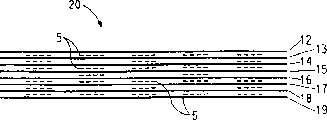
图2a是本发明的蜂窝的薄板层的示意图。Figure 2a is a schematic illustration of a veneer layer of a honeycomb according to the invention.
图2b是膨胀形式的该蜂窝的示意图。Figure 2b is a schematic illustration of the honeycomb in expanded form.
发明详述 Detailed description of the invention
如上所述,通过使用粘合在一起的波纹部件的方法和通过使用膨胀的薄板材料叠层以产生蜂窝构造的方法制造蜂窝结构。到目前为止,最容易的蜂窝工艺是膨胀薄板法,但是,对蜂窝单元壁厚度的限制已经成为一个严重缺点。为了从一叠薄板制造蜂窝,所述叠层必须被膨胀,并且通过拉开该叠层的面层实现膨胀。如果在叠层中的薄板太厚或太硬,则该叠层不能被膨胀,并且不能形成蜂窝。As described above, honeycomb structures are produced by methods using corrugated members bonded together and by methods using expanded sheet material laminates to create a honeycomb structure. By far the easiest honeycomb process is the expanded sheet method, however, limitations on cell wall thickness have become a serious drawback. In order to make a honeycomb from a stack of sheets, the stack must be expanded, and the expansion is achieved by pulling apart the facing layers of the stack. If the sheets in the laminate are too thick or too rigid, the laminate cannot be expanded and honeycombs cannot be formed.
膨胀一叠薄板所需的力的意义可以通过考虑薄板的弯曲力矩获得,其中:M=弯曲力矩;r=弯曲的曲率半径;E=薄板材料的弹性模量;b=薄板的宽度(所得蜂窝的厚度);h=薄板的厚度。A sense of the force required to expand a stack of sheets can be obtained by considering the bending moment of the sheets, where: M = bending moment; r = radius of curvature of the bend; E = modulus of elasticity of the sheet material; b = width of the sheet (resulting honeycomb Thickness); h = thickness of the sheet.
M=r(Ebh3)/12M=r(Ebh 3 )/12
对于一定的蜂窝单元尺寸和给定的薄板材料,弯曲力矩随薄板厚度的三次方增大—厚度上非常小的增大迅速导致弯曲力矩的大量增大。当薄板材料层合在一起以增大所得蜂窝的强度时,弯曲力矩不仅随着薄板厚度的立方增大,而且其随着由于使层合薄板结合在一起所用粘结剂或粘合剂所引入的刚性而增大。For a given cell size and given sheet material, the bending moment increases as the cube of the sheet thickness - very small increases in thickness quickly lead to large increases in bending moment. When sheet materials are laminated together to increase the strength of the resulting honeycomb, the bending moment not only increases with the cube of the sheet thickness, but it also increases with the increased rigidity.
本发明人已经发现,在单元壁中使用至少两层薄板材料但是保持这些层基本相互独立而没有在使其弯曲制造单元壁的点上层合它们,可以制造蜂窝。通过保持独立的薄板,弯曲力矩仅与层数成比例增大而不随这些层数的三次方增大。这种构造使得可以用远比使用更厚的薄板材料膨胀相同重量的结构所需的更小的力来膨胀一种蜂窝结构。The present inventors have discovered that honeycombs can be produced by using at least two layers of sheet material in the cell walls but keeping the layers substantially independent of each other without laminating them at the point where they are bent to make the cell walls. By maintaining separate sheets, the bending moment increases only proportionally to the number of layers and not the cube of the number of layers. This configuration makes it possible to expand a honeycomb structure with far less force than would be required to expand a structure of the same weight using thicker sheet material.
所述薄板并不是完全独立的。所述薄板在每个蜂窝单元的两个相对的单元壁处结合在一起;但是这些薄板在任何其它四个单元壁的位置上根本不结合。在这些薄板之间当它们形成单元时也可以有一些摩擦。The sheets are not completely self-contained. The sheets are bonded together at two opposing cell walls of each honeycomb unit; however, the sheets are not bonded at all at any of the other four cell wall locations. There can also be some friction between the sheets as they form a unit.
参考附图,图1a和1b表示现有技术的典型蜂窝结构。折叠的叠层10包括薄板1、2、3和4,其中仔细排列位于薄板之间的粘合剂5的有间隔的线条,其排列方式使得当板1和4被拉开时,折叠的叠层10被膨胀成蜂窝结构11。Referring to the drawings, Figures 1a and 1b show typical prior art honeycomb structures. The folded
图2a和2b表示本发明的两层蜂窝结构。折叠的叠层20包括薄板12-19,其中与图1a和1b一样仔细排列在薄板之间的粘合剂5的有间隔的线条,以便当拉开薄板12和19时可以制造膨胀蜂窝结构21。折叠叠层20的研究发现,成对的薄板12和13、14和15、16和17、以及18和19被结合在一起产生具有双倍厚度的蜂窝单元壁。但是,当膨胀该蜂窝时,在该结构的弯曲点处并不存在粘合剂5;并且不存在粘合剂可以用远远小于双层壁完全结合在一起或者具有双倍厚度的单层壁所需的力来弯曲该双层壁。重要的是以产生一个单元壁的最终结构长度的量把粘合剂5的线条涂敷到这些薄板上。Figures 2a and 2b show a two-layer honeycomb structure of the present invention. The folded
本发明的蜂窝的单元有6个壁,并且涂敷粘合剂使得在每个单元中的2个相对壁粘合到构成该单元的层上并粘合到相邻单元的其它层上,而没有粘合剂涂敷到所述单元中的任何其它4个壁的层上。The cells of the honeycomb of the present invention have 6 walls, and the adhesive is applied so that in each cell the 2 opposing walls are bonded to the layers that make up the cell and to the other layers of adjacent cells, while No adhesive was applied to any other 4 wall layers in the cell.
当说明粘合剂涂敷到一个单元壁的最终结构长度上并且用一个单元壁或三个单元壁的最终结构长度间隔开时,其是指使用足够的粘合剂使得在完成该蜂窝结构时,所用粘合剂的量正好足够在一个单元壁的宽度上把相邻的薄板结合在一起并且按一个或三个单元壁的宽度分开。由于不同的粘合剂和薄板材料相互之间的响应不同,估计产生一个单元壁的最终结构长度应该涂敷的粘合剂的准确量是一个简单试验的问题。When it is stated that the adhesive is applied to the final structural length of one cell wall and spaced apart by one cell wall or the final structural length of three cell walls, it means that sufficient adhesive is applied such that when the honeycomb structure is completed , the amount of adhesive used is just sufficient to hold adjacent sheets together over the width of one cell wall and separate by one or three cell wall widths. Since different adhesives and sheet materials respond differently to each other, estimating the exact amount of adhesive that should be applied to produce the final structural length of a cell wall is a matter of simple experimentation.
粘合剂可以是用于在蜂窝的薄板之间粘合或产生粘合的任何材料。例如,粘合剂可以是热塑性或热固性树脂、反应性聚合物、低聚物或单体、聚合物溶液、聚合物悬浮体或乳液,能量吸收材料等。The adhesive can be any material used to bond or create a bond between the sheets of the honeycomb. For example, the binder can be a thermoplastic or thermosetting resin, a reactive polymer, oligomer or monomer, a polymer solution, a polymer suspension or emulsion, an energy absorbing material, and the like.
用于实践本发明的薄板材料可以是任何对预定蜂窝目的具有足够强度的可弯曲薄板。材料的性质可以是塑料薄板或薄膜、纸、无纺织物、纺织品、针织品、或金属薄板或箔等。具体材料可以是芳族聚酰胺纸包括间芳族聚酰胺和对芳族聚酰胺、纤维玻璃织物、铝箔、牛皮纸、聚酰亚胺和聚酯薄膜等。The sheet material used in the practice of this invention may be any bendable sheet of sufficient strength for the intended honeycomb purpose. The nature of the material may be plastic sheet or film, paper, non-woven fabric, textile, knit, or metal sheet or foil, among others. Specific materials can be aramid paper including meta-aramid and para-aramid, fiber glass fabric, aluminum foil, kraft paper, polyimide and polyester film, etc.
如果是必须的或优选的,基于薄板材料的性质或最终蜂窝产品的要求,折叠叠层在膨胀前可以切成希望的高度。其它的工艺步骤如膨胀前的软化(增塑)、在膨胀前或膨胀后用树脂浸渍或涂敷薄板、膨胀后蜂窝结构的热固化等可以与本发明的方法一起进行。If necessary or preferred, the folded layup can be cut to a desired height prior to expansion, based on the properties of the sheet material or the requirements of the final honeycomb product. Further process steps such as softening (plasticizing) before expansion, impregnating or coating the sheet with resin before or after expansion, thermal curing of the honeycomb structure after expansion, etc. can be carried out together with the method of the invention.
为了制造本发明的蜂窝结构,把粘合剂的平行线条按照图2a所示的间隔涂敷到一层薄板材料上,以便对于粘合剂和对于在粘合剂线条之间的间隔,获得一个单元壁长度的最终结构长度。该层和粘合剂相当于图2a的层19。把另一层薄板材料放在第一层上,再次涂敷粘合剂的平行线条,但是直接在下面的薄板上的粘合剂交替线条上面(与其重合)。该层和粘合剂相当于图2a的层18。然后按照特定蜂窝结构所要求或所希望的,重复层构造的这两个步骤多次。一旦完成这些薄板的堆叠,必须使粘合剂固化以保证在该结构相邻层之间的结合。In order to manufacture the honeycomb structure of the present invention, parallel lines of adhesive are applied to a layer of sheet material at the intervals shown in Figure 2a, so as to obtain a The final structural length of the cell wall length. This layer and adhesive correspond to
可以通过适合于所用特定粘合剂的任何方法进行粘合剂的固化。热塑性和热固性树脂一般通过加热和/或加压来固化。反应性树脂通过与反应性组分的反应固化,反应性组分一般是一种流体,但是也可能是某种形式的辐射,例如实现反应性树脂的交联。聚合物溶液通过蒸发与该聚合物伴随的溶剂来固化。能量吸收材料用来吸收某种形式的辐射能以便与蜂窝薄板的材料反应或熔化该材料—铁氧体等可以用作能量吸收材料,以便使用微波辐射熔化在蜂窝薄板中的可熔化成分。Curing of the adhesive can be carried out by any method suitable for the particular adhesive used. Thermoplastic and thermosetting resins are generally cured by heat and/or pressure. The reactive resin cures by reaction with a reactive component, typically a fluid, but some form of radiation is also possible, for example to effect crosslinking of the reactive resin. The polymer solution solidifies by evaporating the solvent accompanying the polymer. Energy absorbing materials are used to absorb some form of radiant energy in order to react with or melt the material of the honeycomb sheet - ferrite etc. can be used as energy absorbing material to melt the meltable components in the honeycomb sheet using microwave radiation.
应该指出,本发明的粘合剂可以涂敷到任何蜂窝薄板材料的一面或两面;并且如果涂敷到两面,则相邻薄板的相应区域不需要涂敷。同样,粘合剂可以在所述薄板放在叠层上之前涂敷到这些薄板上。It should be noted that the adhesive of the present invention may be applied to one or both sides of any honeycomb sheet material; and if applied to both sides, the corresponding areas of adjacent sheets need not be applied. Also, adhesive may be applied to the veneers before the veneers are placed on the stack.
本发明的方法不需要按照以上提出的步骤的准确顺序进行。例如,步骤(b)的层可以在两面涂敷—即在与步骤(a)的层接触的如步骤(a)中指定的一个面上和在与步骤(c)的层接触的另一个面上;或者步骤(a)的层可以仅在一面上涂敷,步骤(d)的层可以在两面上涂敷—即在与步骤(b)的层接触的面上和在与该结构中的下一个后续层接触的在步骤(e)中指定的另一个面上。只要在粘合剂固化前粘合剂合适地位于根据图2a的各个层上,就可以实施本发明的方法。The method of the invention does not need to be performed in the exact order of the steps set forth above. For example, the layer of step (b) may be applied on both sides - i.e. on one side as specified in step (a) which is in contact with the layer of step (a) and on the other side which is in contact with the layer of step (c) or the layer of step (a) may be applied on one side only, and the layer of step (d) may be applied on both sides—that is, on the side in contact with the layer of step (b) and on the side in the structure The next subsequent layer contacts the other face specified in step (e). The method of the invention can be implemented as long as the adhesive is suitably located on the respective layers according to FIG. 2 a before the adhesive is cured.
所得的本发明的蜂窝结构是折叠的,并且最终必须膨胀以产生6个面的单元的结构。本发明的方法还包括以下步骤:即使粘合剂固化以便把薄板材料的层结合在一起,和把结合的薄板在垂直于板面的方向上拉开,从而膨胀蜂窝结构的蜂窝单元,使得6个单元壁每一个形成六边形的一个边。在膨胀的构造中,在许多情况下,蜂窝结构的薄板用树脂浸渍以便硬化和稳定蜂窝单元。本发明的独立、多层单元壁由于其较小的厚度可以更快更完全地浸渍,并且在某些情况下,允许更大的树脂吸收量。The resulting honeycomb structure of the present invention is folded and must eventually be expanded to produce a 6-sided cell structure. The method of the present invention further comprises the steps of curing the adhesive to bond the layers of sheet material together, and pulling apart the bonded sheets in a direction perpendicular to the face of the sheet, thereby expanding the cells of the honeycomb structure such that 6 Each of the cell walls forms a side of the hexagon. In the expanded configuration, in many cases, the sheets of the honeycomb structure are impregnated with resin to stiffen and stabilize the honeycomb cells. The free-standing, multi-layered cell walls of the present invention allow faster and more complete impregnation due to their smaller thickness and, in some cases, allow for greater resin uptake.
浸渍树脂可以是该目的常用的任何材料,包括热塑性或热固性溶液、乳液、反应性体系等。可以通过浸没、涂布、喷涂等完成浸渍;并且一旦完成浸渍,可以用适合于所选树脂体系的任何方法硬化所述树脂。The impregnating resin can be any material commonly used for this purpose, including thermoplastic or thermosetting solutions, emulsions, reactive systems, and the like. Impregnation can be accomplished by immersion, coating, spraying, etc.; and once impregnation is complete, the resin can be hardened by any method suitable for the chosen resin system.
测试方法 Test Methods
通过根据ASTM D 645测定测试材料样品的厚度确定薄板和叠层的厚度。The thickness of sheets and laminates is determined by measuring the thickness of test material samples according to ASTM D 645.
根据在ASTM C 271-61中提出的过程和计算测定膨胀的蜂窝芯的密度。The density of the expanded honeycomb core was determined according to the procedure and calculations set forth in ASTM C 271-61.
根据ASTM C 365-57的过程在Instron型试验机上测定所述芯的稳定的或平放的耐压强度和模量。The steady or lay flat compressive strength and modulus of the cores were determined on an Instron type testing machine according to the procedure of ASTM C 365-57.
根据ASTM C 273-61中提出的过程和计算在Instron型试验机上测定所述芯的“L”和“W”平板剪切强度和模量。The "L" and "W" plate shear strength and modulus of the cores were determined on an Instron type testing machine according to the procedure and calculations set forth in ASTM C 273-61.
在以下实施例中,实施例1说明根据本发明制备本发明的蜂窝结构的一种方法。In the following examples, Example 1 illustrates one method of preparing a honeycomb structure of the present invention according to the present invention.
实施例2在小型试样上,说明与蜂窝制造的传统方法相比,膨胀本发明的芯所需力的减小。对于相同的最终构造和相同尺寸的结构,根据本发明的方法仅需要419g的膨胀力,相比之下,传统方法需要609g,本发明的方法减小了30%以上。Example 2 On a small scale sample, the reduction in force required to expand the core of the present invention is demonstrated compared to conventional methods of honeycomb manufacture. For the same final configuration and the same size structure, the method according to the present invention only needs 419g of expansion force, compared with 609g required by the traditional method, the method of the present invention reduces by more than 30%.
实施例1Example 1
基重为27.8g/m2(0.82oz/yd2)且厚度为37.6微米(1.48密耳)并由67重量%对芳族聚酰胺絮状物和33重量%的间芳族聚酰胺类纤维组成的芳族聚酰胺纸用作起始薄板材料。间芳族聚酰胺类纤维由聚(间亚苯基间苯二酰胺)制造,如美国专利No.3,756,908中所述。对芳族聚酰胺絮状物是由聚(对亚苯基对苯二酰胺)制备的絮状物,其线密度为1.6分特(1.42旦尼尔),长度为6.4mm(由E.I.Du Pont de Nemoursand Company以商品名KEVLAR49销售)。Basis weight 27.8 g/m 2 (0.82 oz/yd 2 ) and thickness 37.6 microns (1.48 mils) and composed of 67 wt. % para-aramid floe and 33 wt. % meta-aramid-based fibers Composed aramid paper was used as starting sheet material. Meta-aramid-based fibers are made from poly(m-phenylene isophthalamide), as described in US Patent No. 3,756,908. Para-aramid floe is floe prepared from poly(p-phenylene terephthalamide) with a linear density of 1.6 dtex (1.42 denier) and a length of 6.4 mm (by EIDu Pont de Nemours and Company sells it under the tradename KEVLAR (R) 49).
粘合剂的线条使用实验室凹板式涂布机印刷在纸上。使用两个不同的印刷辊,对于不同的纸板,线条之间的距离分别为6.35mm(0.25英寸)和12.7mm(0.5英寸)。粘合剂从Marshall Consulting Co.以MC-3节点线粘合剂获得。Lines of adhesive were printed on paper using a laboratory gravure coater. Using two different printing rolls, the distance between the lines was 6.35 mm (0.25 inches) and 12.7 mm (0.5 inches) for the different boards. The adhesive was obtained from Marshall Consulting Co. as MC-3 node wire adhesive.
把印刷的薄板按照这样的顺序叠层,使得在叠层中的每个第二块板具有更大的间距(12.7mm)的线条。薄板的叠层具有根据图2a印刷的粘合剂。The printed sheets were stacked in such an order that every second plate in the stack had lines of greater pitch (12.7 mm). The stack of veneers has an adhesive printed according to Figure 2a.
在81℃压45分钟,使得该叠层的薄板结合在一起。通过在与板面垂直的方向上拉开结合的薄板来膨胀该薄板叠层,然后把该叠层在270℃加热固化10分钟。The laminated sheets were bonded together by pressing at 81°C for 45 minutes. The veneer laminate was expanded by pulling apart the bonded veneers in a direction perpendicular to the plate surface, and the laminate was heat cured at 270°C for 10 minutes.
此后,把膨胀的叠层浸在酚醛树脂(得自Oxychem Co.的“Oxychem23169”)溶液中,并在约180℃干燥和固化。Thereafter, the expanded laminate was dipped in a solution of phenolic resin ("Oxychem 23169" from Oxychem Co.), dried and cured at about 180°C.
该产品具有单元壁为6.35mm(0.25英寸)边长的蜂窝结构,密度约为54kg/m3(2.8lb/ft3)。该结构的力学性能如下:稳定的耐压强度为1.32MPa(191psi),稳定的耐压模量为124MPa(18kpsi),“L”平板剪切强度为1.21MPa(175psi),“L”平板剪切模量为117MPa(17kpsi),“W”平板剪切强度为0.50MPa(72psi),“W”平板剪切模量为2.4MPa(3.6kpsi)。The product has a honeycomb structure with cell walls of 6.35 mm (0.25 inches) on a side and a density of approximately 54 kg/m 3 (2.8 lb/ft 3 ). The mechanical properties of the structure are as follows: stable compressive strength of 1.32MPa (191psi), stable compressive modulus of 124MPa (18kpsi), "L" plate shear strength of 1.21MPa (175psi), "L" plate shear The shear modulus is 117MPa (17kpsi), the "W" plate shear strength is 0.50MPa (72psi), and the "W" plate shear modulus is 2.4MPa (3.6kpsi).
实施例2Example 2
本实施例是膨胀折叠的蜂窝结构所需力的测试。This example is a test of the force required to expand a folded honeycomb structure.
0.3毫米厚的回收纤维素纸用作本实施例的薄板材料。Recycled cellulose paper of 0.3 mm thickness was used as the veneer material in this example.
切割8个1.90cm(0.75英寸)宽和22.86cm(9英寸)长的纸带,手工产生2.54cm(英寸)宽的粘合剂线条。根据图2a把这些带组合在一起。使用由Power Poxy Adhesives,Inc.提供的尿烷基材料作为粘合剂。Eight strips of paper 1.90 cm (0.75 inches) wide and 22.86 cm (9 inches) long were cut to create 2.54 cm (inches) wide adhesive lines by hand. The strips are combined according to Fig. 2a. A urethane-based material supplied by Power Poxy Adhesives, Inc. was used as the adhesive.
使粘合剂在室温固化24小时,并用相同的粘合剂把纺织品(Kevlar牌芳族聚酰胺织物,由Clark-Schwebel生产的Style 708)的圈连接到折叠的蜂窝结构的外层中心部分上,用作膨胀该蜂窝的夹持点。The adhesive was allowed to cure at room temperature for 24 hours and the same adhesive was used to attach the loops of textile (Kevlar® brand aramid fabric, Style 708 produced by Clark-Schwebel) to the outer center portion of the folded honeycomb structure , used as a clamping point for expanding the honeycomb.
在最后固化后,把所述圈放在Instron 1122的夹具中,并且以5.06厘米/分钟(2英寸/分钟)的速度把该折叠的蜂窝结构膨胀到其完全打开(两个中心单元完全膨胀)。在该结构的膨胀过程中的最大力为419g(0.923磅)。After final curing, the ring was placed in an Instron 1122 fixture and the folded honeycomb structure was expanded to its full open (both center cells fully expanded) at a rate of 5.06 cm/min (2 in/min) . The maximum force during expansion of the structure was 419 g (0.923 lbs).
作为对比,按如上所述切割8条与上面所用的相同的纸带。As a comparison, 8 strips of the same paper strips as used above were cut as described above.
使用约5重量%(按纸的重量计)的相同粘合剂把这8个纸带层合成4个双层纸带。粘合剂仅充满纸表面的孔隙结构中,这4个最终的纸带具有纸的原始厚度二倍的厚度(0.6毫米),而没有任何来自粘合剂的增加。These 8 paper tapes were layered into 4 double layer paper tapes using about 5% by weight (based on the weight of the paper) of the same adhesive. The 4 final paper strips had twice the original thickness of the paper (0.6 mm) without any gain from the binder, in which the binder only filled the pore structure of the paper surface.
用相同的粘合剂手工产生2.54厘米(1英寸)宽的粘合剂线条,并且根据图1a把这4个层合的带组合在一起。A 2.54 cm (1 inch) wide line of adhesive was manually created with the same adhesive, and the 4 laminated tapes were assembled according to Figure 1a.
象前面一样,固化粘合剂,把纺织品的圈连结到外层的中心部分,使粘合剂固化,并膨胀该折叠的蜂窝结构,所有的过程都在与前面所述的相同条件和相同速度进行。As before, curing the adhesive, joining the loops of textile to the center portion of the outer layer, allowing the adhesive to cure, and expanding the folded honeycomb structure, all under the same conditions and at the same speed as previously described conduct.
在该结构膨胀过程中的最大力为609克(1.34磅)。The maximum force during expansion of the structure was 609 grams (1.34 pounds).
Claims (8)
Applications Claiming Priority (2)
| Application Number | Priority Date | Filing Date | Title |
|---|---|---|---|
| US09/595,740 US6592963B1 (en) | 2000-06-16 | 2000-06-16 | Honeycomb structure |
| US09/595,740 | 2000-06-16 |
Publications (2)
| Publication Number | Publication Date |
|---|---|
| CN1436121A CN1436121A (en) | 2003-08-13 |
| CN1221380C true CN1221380C (en) | 2005-10-05 |
Family
ID=24384480
Family Applications (1)
| Application Number | Title | Priority Date | Filing Date |
|---|---|---|---|
| CNB018112021A Expired - Fee Related CN1221380C (en) | 2000-06-16 | 2001-06-12 | Honeycomb structure |
Country Status (11)
| Country | Link |
|---|---|
| US (1) | US6592963B1 (en) |
| EP (1) | EP1289749B1 (en) |
| JP (1) | JP4837872B2 (en) |
| CN (1) | CN1221380C (en) |
| AU (2) | AU2001268356B2 (en) |
| BR (1) | BR0111632B1 (en) |
| CA (1) | CA2407932C (en) |
| DE (1) | DE60116491T2 (en) |
| MX (1) | MXPA02012421A (en) |
| RU (1) | RU2003101054A (en) |
| WO (1) | WO2001098075A1 (en) |
Families Citing this family (32)
| Publication number | Priority date | Publication date | Assignee | Title |
|---|---|---|---|---|
| US20040140072A1 (en) * | 2002-09-10 | 2004-07-22 | Fibermark, Inc. | High temperature paper containing aramid component |
| US6910659B2 (en) * | 2002-10-22 | 2005-06-28 | The Boeing Company | Method and apparatus for liquid containment, such as for aircraft fuel vessels |
| US7175136B2 (en) * | 2003-04-16 | 2007-02-13 | The Boeing Company | Method and apparatus for detecting conditions conducive to ice formation |
| FR2857616B1 (en) * | 2003-07-18 | 2007-04-06 | Solvay | METHOD FOR ASSEMBLING ELEMENTS OF A STRUCTURE COMPRISING A HONEYCOMB SOUL |
| DE102004008969A1 (en) * | 2004-02-24 | 2005-09-15 | Conteyor Multibag Systems N.V. | Multi-chamber subdivision element |
| US20050230072A1 (en) * | 2004-04-16 | 2005-10-20 | Levit Mikhail R | Aramid paper blend |
| DE102004044278B4 (en) * | 2004-09-10 | 2007-03-22 | Heinz Schmidt | Honeycomb material of thermofusible material, and an apparatus and a method for producing such a honeycomb material |
| RU2286428C2 (en) * | 2005-02-16 | 2006-10-27 | Валериан Маркович Соболев | Heat-insulated building member |
| US7331421B2 (en) | 2005-03-30 | 2008-02-19 | The Boeing Company | Flow restrictors for aircraft inlet acoustic treatments, and associated systems and methods |
| JP4678731B2 (en) * | 2005-09-09 | 2011-04-27 | 株式会社リコー | Manufacturing method of honeycomb structure or fine composite part |
| US7785520B2 (en) * | 2006-12-15 | 2010-08-31 | E.I. Du Pont De Nemours And Company | Processes for making shaped honeycomb and honeycombs made thereby |
| US20080145602A1 (en) * | 2006-12-15 | 2008-06-19 | Gary Lee Hendren | Processes for making shaped honeycomb and honeycombs made thereby |
| US7771811B2 (en) * | 2006-12-15 | 2010-08-10 | E.I. Du Pont De Nemours And Company | Honeycomb from controlled porosity paper |
| CN101254669B (en) * | 2008-03-14 | 2011-03-16 | 杨军 | Horizontal fibers honeycomb papers core and cardboard |
| CN101980860B (en) * | 2008-04-04 | 2014-01-29 | 纳幕尔杜邦公司 | Composite panels with improved fluid impermeability |
| DE102008019065B4 (en) * | 2008-04-15 | 2011-06-16 | Airbus Operations Gmbh | Process for producing a core composite provided with cover layers on both sides and core composite |
| US20100047515A1 (en) * | 2008-08-21 | 2010-02-25 | E. I. Du Pont De Nemours And Company | Honeycomb Core Having a High Compression Strength and Articles Made from the Same |
| US20100048078A1 (en) * | 2008-08-21 | 2010-02-25 | E. I. Du Pont De Nemours And Company | Folded Core Having a High Compression Modulus and Articles Made from the Same |
| US20130157001A1 (en) | 2011-12-19 | 2013-06-20 | E I Du Pont De Nemours And Company | Structural core |
| CN103662112A (en) * | 2013-12-03 | 2014-03-26 | 上海卫星装备研究所 | Non-contact ultrahigh-heat-flux infrared lamp array heating system |
| CN105291490B (en) * | 2015-11-17 | 2017-12-15 | 北京金轮沃德科技有限公司 | It is a kind of to be used to form thin plate layer, honeycomb of honeycomb and preparation method thereof |
| CN108215339B (en) * | 2017-12-30 | 2020-04-21 | 嘉兴雅港复合材料有限公司 | A kind of high-strength aramid paper honeycomb core and manufacturing method thereof |
| CN108177393B (en) * | 2017-12-30 | 2020-03-31 | 嘉兴雅港复合材料有限公司 | Method for manufacturing low-cost paper honeycomb core |
| CN108481824A (en) * | 2018-05-22 | 2018-09-04 | 西安威信科技有限责任公司 | A kind of honeycomb core material |
| CN108859281A (en) * | 2018-05-22 | 2018-11-23 | 西安威信科技有限责任公司 | A kind of manufacturing method of honeycomb core material |
| US10886507B2 (en) * | 2018-06-15 | 2021-01-05 | Rivian Ip Holdings, Llc | Battery pack with laminates to reduce impact of side rupture and method of manufacturing same |
| CN110005126A (en) * | 2019-03-05 | 2019-07-12 | 哈尔滨乾行达科技有限公司 | Cellular material method for adjusting intensity and cellular material |
| CN111583236B (en) * | 2020-05-09 | 2023-05-23 | 中南大学 | Geometric form dynamic adjustment method, device and production method of honeycomb product |
| CN113972501B (en) * | 2021-10-19 | 2024-10-01 | 哈尔滨工业大学(威海) | Wave-absorbing composite material with axial folding honeycomb structure and preparation method thereof |
| FR3133338B1 (en) * | 2022-03-10 | 2024-06-21 | Airbus Operations Sas | HONEYCOMB STRUCTURE WITH IMPROVED THERMAL CONDUCTIVITY |
| CN115257128B (en) * | 2022-07-15 | 2024-03-26 | 南京工程学院 | Device and method for manufacturing fiber reinforced thermoplastic resin matrix honeycomb core |
| WO2025182025A1 (en) * | 2024-02-29 | 2025-09-04 | 日産自動車株式会社 | Honeycomb structure |
Family Cites Families (17)
| Publication number | Priority date | Publication date | Assignee | Title |
|---|---|---|---|---|
| CH343803A (en) | 1956-04-12 | 1959-12-31 | Dufaylite Dev Ltd | Cellular element and process for its manufacture |
| GB876220A (en) | 1956-09-17 | 1961-08-30 | George May | Structural honeycomb materials |
| US3184365A (en) | 1961-11-14 | 1965-05-18 | Hexcel Products Inc | Apparatus for manufacturing honeycomb |
| US3493450A (en) | 1965-10-23 | 1970-02-03 | Honeycomb Co Of America Inc | Honeycomb core machine and method |
| US3979252A (en) | 1973-12-21 | 1976-09-07 | The Hoyt Corporation | Apparatus for manufacturing cellular structures |
| US4290837A (en) | 1979-12-28 | 1981-09-22 | Bova Joseph D | Method and apparatus for making unexpanded honeycomb material |
| JPS6154927A (en) * | 1984-08-24 | 1986-03-19 | ヨハン・ヨセフ・マグダレ−ナ・エリザベス・ウエイツ | Double wall structure material and manufacture thereof |
| US4677013A (en) * | 1985-10-25 | 1987-06-30 | Hunter Douglas Inc. | Honeycomb structure having a longitudinally extending back face |
| JPH0622955B2 (en) * | 1986-03-21 | 1994-03-30 | マツダ株式会社 | Manufacturing method of honeycomb panel structure |
| JPH0297026A (en) * | 1988-10-03 | 1990-04-09 | Fujitsu Ltd | Hetero-bipolar transistor |
| JPH0617529Y2 (en) * | 1989-01-19 | 1994-05-11 | ナゴヤ芯材工業株式会社 | Honeycomb structure |
| CH683829A5 (en) | 1991-08-05 | 1994-05-31 | Alusuisse Lonza Services Ag | A method of manufacturing a honeycomb core from a ribbon-shaped foil, apparatus for performing the method and use of the honeycomb core for laminated plates. |
| US5498462A (en) * | 1994-04-01 | 1996-03-12 | Hexcel Corporation | High thermal conductivity non-metallic honeycomb |
| US5746879A (en) | 1994-04-13 | 1998-05-05 | Plascore, Inc. | Apparatus for making honeycomb from substrates and node strips |
| DE19509972C2 (en) * | 1995-03-18 | 1998-04-09 | Krauss Maffei Verkehrstechnik | Sandwich plate |
| JP3298782B2 (en) * | 1996-02-07 | 2002-07-08 | 昭和飛行機工業株式会社 | Buffer honeycomb core and method of manufacturing the same |
| US5792295A (en) | 1996-08-12 | 1998-08-11 | Plascore, Inc. | Honeycomb fabrication |
-
2000
- 2000-06-16 US US09/595,740 patent/US6592963B1/en not_active Expired - Lifetime
-
2001
- 2001-06-12 AU AU2001268356A patent/AU2001268356B2/en not_active Ceased
- 2001-06-12 CA CA002407932A patent/CA2407932C/en not_active Expired - Fee Related
- 2001-06-12 DE DE60116491T patent/DE60116491T2/en not_active Expired - Lifetime
- 2001-06-12 CN CNB018112021A patent/CN1221380C/en not_active Expired - Fee Related
- 2001-06-12 JP JP2002503533A patent/JP4837872B2/en not_active Expired - Fee Related
- 2001-06-12 WO PCT/US2001/018913 patent/WO2001098075A1/en not_active Ceased
- 2001-06-12 EP EP01946285A patent/EP1289749B1/en not_active Expired - Lifetime
- 2001-06-12 BR BRPI0111632-0A patent/BR0111632B1/en not_active IP Right Cessation
- 2001-06-12 AU AU6835601A patent/AU6835601A/en active Pending
- 2001-06-12 RU RU2003101054/12A patent/RU2003101054A/en not_active Application Discontinuation
- 2001-06-12 MX MXPA02012421A patent/MXPA02012421A/en active IP Right Grant
Also Published As
| Publication number | Publication date |
|---|---|
| MXPA02012421A (en) | 2003-06-06 |
| EP1289749A1 (en) | 2003-03-12 |
| RU2003101054A (en) | 2004-06-20 |
| CN1436121A (en) | 2003-08-13 |
| AU6835601A (en) | 2002-01-02 |
| BR0111632B1 (en) | 2009-12-01 |
| WO2001098075A1 (en) | 2001-12-27 |
| EP1289749B1 (en) | 2006-01-04 |
| BR0111632A (en) | 2003-09-16 |
| JP4837872B2 (en) | 2011-12-14 |
| US6592963B1 (en) | 2003-07-15 |
| AU2001268356B2 (en) | 2005-05-26 |
| DE60116491D1 (en) | 2006-03-30 |
| CA2407932A1 (en) | 2001-12-27 |
| DE60116491T2 (en) | 2006-08-24 |
| JP2003535731A (en) | 2003-12-02 |
| CA2407932C (en) | 2009-11-17 |
Similar Documents
| Publication | Publication Date | Title |
|---|---|---|
| CN1221380C (en) | Honeycomb structure | |
| AU2001268356A1 (en) | Honeycomb structure | |
| US5789059A (en) | Honeycomb core | |
| JP5495789B2 (en) | Method for manufacturing molded honeycomb and honeycomb manufactured by the method | |
| CA2669103C (en) | Shaped honeycomb | |
| CN101595260A (en) | Honeycomb structure made of controlled porosity paper | |
| KR20110043779A (en) | Honeycomb Cores with High Compressive Strength and Articles Made therefrom | |
| JP6659675B2 (en) | Honeycomb core with high compressive strength | |
| JP7498317B2 (en) | Manufacturing method of honeycomb laminate, honeycomb laminate, laminate | |
| EP3774323A1 (en) | Mica based three dimensional structures | |
| EP1008566B1 (en) | Honeycomb structure and method for preparing the same | |
| JP3369372B2 (en) | Manufacturing method of honeycomb panel | |
| JP3107473B2 (en) | Method for manufacturing flexible honeycomb core and flexible honeycomb core | |
| RU2029037C1 (en) | Laminated panel | |
| EP4703131A1 (en) | Method and apparatus for manufacturing an assembly of honeycomb structures and articles comprising the assembly of honeycomb structures | |
| JPH0825535A (en) | Flexible honeycomb panel | |
| JP3115471B2 (en) | Honeycomb core and method of manufacturing the same | |
| JP7499964B2 (en) | Ribbon laminate, honeycomb core precursor, honeycomb core, cylindrical structure, central cylinder for artificial satellite, and ribbon laminate manufacturing method | |
| JPH0911372A (en) | Method for manufacturing honeycomb core made of fiber reinforced plastic | |
| JP3143009B2 (en) | Manufacturing method of honeycomb core | |
| JPH11277651A (en) | Method for manufacturing bisect type fiber reinforced plastic honeycomb core | |
| JPH06312473A (en) | Honeycomb core and manufacture thereof | |
| JPH05286064A (en) | Honeycomb core | |
| TWM589115U (en) | Polymer substrate composite material support structure | |
| JPH0529549B2 (en) |
Legal Events
| Date | Code | Title | Description |
|---|---|---|---|
| C06 | Publication | ||
| PB01 | Publication | ||
| C10 | Entry into substantive examination | ||
| SE01 | Entry into force of request for substantive examination | ||
| C14 | Grant of patent or utility model | ||
| GR01 | Patent grant | ||
| CF01 | Termination of patent right due to non-payment of annual fee | ||
| CF01 | Termination of patent right due to non-payment of annual fee |
Granted publication date: 20051005 Termination date: 20200612 |