CN1232402A - Methods and compositions for immunomodulation - Google Patents
Methods and compositions for immunomodulation Download PDFInfo
- Publication number
- CN1232402A CN1232402A CN97198565A CN97198565A CN1232402A CN 1232402 A CN1232402 A CN 1232402A CN 97198565 A CN97198565 A CN 97198565A CN 97198565 A CN97198565 A CN 97198565A CN 1232402 A CN1232402 A CN 1232402A
- Authority
- CN
- China
- Prior art keywords
- antibody
- host
- cells
- antigen
- cell
- Prior art date
- Legal status (The legal status is an assumption and is not a legal conclusion. Google has not performed a legal analysis and makes no representation as to the accuracy of the status listed.)
- Pending
Links
Images











Classifications
-
- A—HUMAN NECESSITIES
- A61—MEDICAL OR VETERINARY SCIENCE; HYGIENE
- A61K—PREPARATIONS FOR MEDICAL, DENTAL OR TOILETRY PURPOSES
- A61K39/00—Medicinal preparations containing antigens or antibodies
- A61K39/395—Antibodies; Immunoglobulins; Immune serum, e.g. antilymphocytic serum
-
- C—CHEMISTRY; METALLURGY
- C07—ORGANIC CHEMISTRY
- C07K—PEPTIDES
- C07K16/00—Immunoglobulins [IG], e.g. monoclonal or polyclonal antibodies
- C07K16/18—Immunoglobulins [IG], e.g. monoclonal or polyclonal antibodies against material from animals or humans
- C07K16/28—Immunoglobulins [IG], e.g. monoclonal or polyclonal antibodies against material from animals or humans against receptors, cell surface antigens or cell surface determinants
- C07K16/2878—Immunoglobulins [IG], e.g. monoclonal or polyclonal antibodies against material from animals or humans against receptors, cell surface antigens or cell surface determinants against the NGF-receptor/TNF-receptor superfamily, e.g. CD27, CD30, CD40, CD95
-
- A—HUMAN NECESSITIES
- A61—MEDICAL OR VETERINARY SCIENCE; HYGIENE
- A61P—SPECIFIC THERAPEUTIC ACTIVITY OF CHEMICAL COMPOUNDS OR MEDICINAL PREPARATIONS
- A61P29/00—Non-central analgesic, antipyretic or antiinflammatory agents, e.g. antirheumatic agents; Non-steroidal antiinflammatory drugs [NSAID]
-
- A—HUMAN NECESSITIES
- A61—MEDICAL OR VETERINARY SCIENCE; HYGIENE
- A61P—SPECIFIC THERAPEUTIC ACTIVITY OF CHEMICAL COMPOUNDS OR MEDICINAL PREPARATIONS
- A61P35/00—Antineoplastic agents
-
- A—HUMAN NECESSITIES
- A61—MEDICAL OR VETERINARY SCIENCE; HYGIENE
- A61P—SPECIFIC THERAPEUTIC ACTIVITY OF CHEMICAL COMPOUNDS OR MEDICINAL PREPARATIONS
- A61P37/00—Drugs for immunological or allergic disorders
-
- A—HUMAN NECESSITIES
- A61—MEDICAL OR VETERINARY SCIENCE; HYGIENE
- A61K—PREPARATIONS FOR MEDICAL, DENTAL OR TOILETRY PURPOSES
- A61K39/00—Medicinal preparations containing antigens or antibodies
- A61K2039/505—Medicinal preparations containing antigens or antibodies comprising antibodies
-
- A—HUMAN NECESSITIES
- A61—MEDICAL OR VETERINARY SCIENCE; HYGIENE
- A61K—PREPARATIONS FOR MEDICAL, DENTAL OR TOILETRY PURPOSES
- A61K38/00—Medicinal preparations containing peptides
Landscapes
- Health & Medical Sciences (AREA)
- Chemical & Material Sciences (AREA)
- Life Sciences & Earth Sciences (AREA)
- Medicinal Chemistry (AREA)
- Organic Chemistry (AREA)
- Immunology (AREA)
- General Health & Medical Sciences (AREA)
- Animal Behavior & Ethology (AREA)
- Pharmacology & Pharmacy (AREA)
- Public Health (AREA)
- Veterinary Medicine (AREA)
- Nuclear Medicine, Radiotherapy & Molecular Imaging (AREA)
- General Chemical & Material Sciences (AREA)
- Chemical Kinetics & Catalysis (AREA)
- Bioinformatics & Cheminformatics (AREA)
- Molecular Biology (AREA)
- Proteomics, Peptides & Aminoacids (AREA)
- Engineering & Computer Science (AREA)
- Biochemistry (AREA)
- Biophysics (AREA)
- Genetics & Genomics (AREA)
- Rheumatology (AREA)
- Pain & Pain Management (AREA)
- Microbiology (AREA)
- Mycology (AREA)
- Epidemiology (AREA)
- Medicines Containing Antibodies Or Antigens For Use As Internal Diagnostic Agents (AREA)
- Peptides Or Proteins (AREA)
- Medicines Containing Material From Animals Or Micro-Organisms (AREA)
- Pharmaceuticals Containing Other Organic And Inorganic Compounds (AREA)
Abstract
Description
发明背景Background of the Invention
4-1BB是属于神经生长因子受体超家族的诱导型T细胞受体。这种新抗原表达于激活的脾脏T细胞和胸腺淋巴细胞表面。这种I型跨膜蛋白的胞外域同源于神经生长因子超家族成员。其胞质域含有同源于T细胞特异性酪氨酸激酶p56lck结合位点的序列。4-1BB is an inducible T cell receptor belonging to the nerve growth factor receptor superfamily. This neoantigen is expressed on the surface of activated splenic T cells and thymus lymphocytes. The ectodomain of this type I transmembrane protein is homologous to members of the nerve growth factor superfamily. Its cytoplasmic domain contains sequences homologous to the binding site of the T cell-specific tyrosine kinase p56 lck .
尽管越来越多的证据表明4-1BB作为信号分子参与T细胞激活,但是其体内作用仍不清楚。例如,在抗CD3刺激的T细胞上4-1BB与单克隆抗体53A2交联导致T细胞增殖增强2-10倍(Pollok等,J.Immunol.151:1255(1933))。此外,Zhou等(Immunol.Letters41:177-184(1994))已证实,4-1BB表达于已激活的肠上皮内T淋巴细胞,并且用抗4-1BB单克隆抗体引发激活的IELS可以提高针对抗分泌抗CD4杂交瘤细胞的IEL细胞毒水平。抗4-1BB抗体的交联也可以增强IELS的增殖。Although accumulating evidence indicates that 4-1BB is involved in T cell activation as a signaling molecule, its role in vivo remains unclear. For example, crosslinking of 4-1BB with the monoclonal antibody 53A2 on anti-CD3 stimulated T cells resulted in a 2-10 fold enhancement of T cell proliferation (Pollok et al., J. Immunol. 151:1255 (1933)). In addition, Zhou et al. (Immunol. Letters 41: 177-184 (1994)) have demonstrated that 4-1BB is expressed in activated intestinal intraepithelial T lymphocytes, and eliciting activated IELS with an anti-4-1BB monoclonal antibody can increase the response to IEL cytotoxicity levels of anti-secreting anti-CD4 hybridoma cells. Cross-linking of anti-4-1BB antibody can also enhance the proliferation of IELS.
已经鉴定了至少两种4-1BB候选配体。Chalupny等(Proc.Natl.Acad.Sci.U.S.A.89:10360-10364(1992))采用可溶性4-1BB免疫球蛋白融合蛋白(4-1BB Rg)来证实4-1BB结合到胞外基质蛋白(EMC)。Goodwin等(Eur.J.Immunol.23:2631(1993))报道了分离鼠4-1BB配体(4-1BB-L)的cDNA,鼠4-1BB配体是具有C-末端氨基酸同源性的emerging配体家族成员,所述emerging配体家族成员包括TNF、α-和β-淋巴毒素(LT)、CD40-L、Cd27-L、CD30-L和Fas-L。At least two candidate ligands for 4-1BB have been identified. (Proc.Natl.Acad.Sci.U.S.A.89:10360-10364 (1992)) used soluble 4-1BB immunoglobulin fusion protein (4-1BB Rg) to confirm that 4-1BB binds to extracellular matrix protein (EMC ). Goodwin et al. (Eur.J.Immunol.23:2631 (1993)) reported the isolation of the cDNA of the murine 4-1BB ligand (4-1BB-L), which has C-terminal amino acid homology The emerging ligand family members include TNF, α- and β-lymmotoxin (LT), CD40-L, Cd27-L, CD30-L and Fas-L.
已经克隆了鼠4-1BB的人类似物(hu4-1BB)和鼠4-1-BB-L的人类似物(hu4-1-BB-L)(Alderson等,Eur.J.Immunol.24:2219-2227(1994))。抗hu4-1BB的单克隆抗体和用hu4-1BB-L转染的细胞在有丝分裂原共同刺激的初级T细胞中诱导强增殖反应。Human analogs of murine 4-1BB (hu4-1BB) and murine 4-1-BB-L (hu4-1-BB-L) have been cloned (Alderson et al., Eur. J. Immunol. 24: 2219-2227 (1994)). Monoclonal antibodies against hu4-1BB and cells transfected with hu4-1BB-L induce strong proliferative responses in mitogen costimulated primary T cells.
因此,存在开发4-1BB拮抗剂的需要。本发明针对这种需要和更多需要。Therefore, there is a need to develop antagonists of 4-1BB. The present invention addresses this need and more.
发明概述Invention Summary
本发明的一个方面是抑制宿主对抗原的初次和再次体液免疫应答的方法,该方法包括给予所述宿主有效剂量的抗4-1BB抗体。One aspect of the invention is a method of suppressing primary and secondary humoral immune responses to an antigen in a host, the method comprising administering to said host an effective amount of an anti-4-1BB antibody.
本发明的其它方面是包含单克隆抗体1D8、3B8或3E1的组合物。Other aspects of the invention are compositions comprising monoclonal antibody 1D8, 3B8 or 3E1.
本发明的又一方面是包含抗4-1BB抗体的组合物,其中所述抗体抑制体内对羊红细胞的抗体应答。Yet another aspect of the invention is a composition comprising an anti-4-1BB antibody, wherein said antibody inhibits the antibody response to sheep erythrocytes in vivo.
本发明的另一方面是阻断宿主T细胞依赖性免疫应答的方法,包括给予所述宿主有效剂量抗4-1BB抗体。Another aspect of the invention is a method of blocking a T cell-dependent immune response in a host comprising administering to said host an effective amount of an anti-4-1BB antibody.
本发明的另一方面是增强宿主淋巴细胞杀伤肿瘤细胞的方法,包括给予所述宿主有效剂量抗4-1BB抗体。Another aspect of the present invention is a method for enhancing the killing of tumor cells by host lymphocytes, comprising administering to the host an effective dose of anti-4-1BB antibody.
本发明的另一方面是增强宿主细胞毒T细胞发育的方法,包括给予所述宿主有效剂量抗4-1BB抗体。Another aspect of the invention is a method of enhancing the development of cytotoxic T cells in a host comprising administering to said host an effective amount of an anti-4-1BB antibody.
本发明的另一方面是治疗患有T细胞自身免疫病的宿主的方法,包括给予所述宿主有效剂量抗4-1BB抗体。Another aspect of the invention is a method of treating a host suffering from a T cell autoimmune disease, comprising administering to said host an effective amount of an anti-4-1BB antibody.
附图简述Brief description of attached drawings
图1是描述鼠4-1BB配体结合到固定化4-1BB的曲线图。Figure 1 is a graph depicting the binding of murine 4-1BB ligand to immobilized 4-1BB.
图2图释用抗4-1BB单克隆抗体(mAb)阻断4-1BB结合到其配体。Figure 2 illustrates the blocking of 4-1BB binding to its ligand by anti-4-1BB monoclonal antibody (mAb).
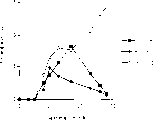
图3是描述刺激后时间与激活T细胞中4-1BB表达的曲线图。圆形代表4-1BB mRNA水平。方形代表激活T细胞系DO.11.10表面的4-1BB受体水平。Figure 3 is a graph depicting time post-stimulation versus 4-1BB expression in activated T cells. Circles represent 4-1BB mRNA levels. Squares represent 4-1BB receptor levels on the surface of the activated T cell line DO.11.10.
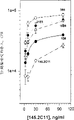
图4图释亚适剂量(suboptimal dose)的抗CD3单克隆抗体145.2C11和抗4-1BB单克隆抗体共同刺激T细胞激活。Figure 4 illustrates that suboptimal doses of anti-CD3 monoclonal antibody 145.2C11 and anti-4-1BB monoclonal antibody co-stimulate T cell activation.
图5图释抗4-1BB单克隆抗体1D8的药代动力学。每种符号代表不同小鼠。Figure 5 illustrates the pharmacokinetics of anti-4-1BB monoclonal antibody 1D8. Each symbol represents a different mouse.
图6图释抗4-1BB抗体抑制初次以及再次抗羊红细胞应答。Figure 6 illustrates that anti-4-1BB antibodies inhibit primary and secondary anti-sheep erythrocyte responses.
图7图释抗4-1BB抗体抑制细胞毒T细胞的产生。Figure 7 illustrates that anti-4-1BB antibodies inhibit the generation of cytotoxic T cells.
图8图释用抗4-1BB mAb处理后P815肿瘤的退化。Figure 8 illustrates the regression of P815 tumors after treatment with anti-4-1BB mAb.
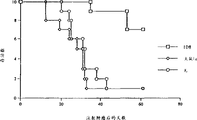
图9图释用抗4-1BB mAb处理后有P815腹水的小鼠长期存活。Figure 9 illustrates long-term survival of mice with P815 ascites after treatment with anti-4-1BB mAb.
图10图释CD4和CD8的去除在1D8诱导的排斥P815肿瘤细胞中的效应。Figure 10 illustrates the effect of depletion of CD4 and CD8 in 1D8-induced rejection of P815 tumor cells.
图11图释接受静脉内注射AG104肉瘤细胞的小鼠的治疗。Figure 11 illustrates the treatment of mice receiving intravenous injection of AG104 sarcoma cells.
图12(A-C)描述(A)在GvHD期间抑制CTC应答的体内产生;(B)抗4-1BB mAb加速CTC介导的杀伤BDF1脾细胞作用;(C)在发生GvHD的小鼠中,CD8+T细胞的百分率升高。Figure 12 (AC) depicts (A) suppression of in vivo generation of CTC responses during GvHD; (B) anti-4-1BB mAb accelerated CTC-mediated killing of BDF 1 splenocytes; (C) in mice developing GvHD, The percentage of CD8 + T cells was elevated.
图13图释抗4-1BB-PE40免疫毒素杀伤激活的鼠T细胞。Figure 13 illustrates killing of activated murine T cells by anti-4-1BB-PE40 immunotoxin.
图14图释抗4-1BB抗体阻断实验性自身免疫性脑脊髓炎发生的能力。Figure 14 illustrates the ability of anti-4-1BB antibodies to block the development of experimental autoimmune encephalomyelitis.
具体实施方案的说明 Specific Implementation Plan Description
免疫抑制治疗通常用于炎症控制、癌症治疗和器官移植。传统治疗,例如使用肾上腺皮质激素和其诱导剂、促肾上腺皮质激素、化疗药物和放射治疗,可能导致非特异性免疫抑制和免疫缺陷。因此,极其需要诱导免疫抑制的替代方法。本发明的抗体提供了优先导向表达于T细胞表面的特定多肽(即4-1BB)的机会。Immunosuppressive therapy is commonly used for inflammation control, cancer treatment, and organ transplantation. Traditional treatments, such as the use of corticosteroids and their inducers, corticotropin, chemotherapeutic agents, and radiation therapy, may result in nonspecific immunosuppression and immunodeficiency. Therefore, alternative methods of inducing immunosuppression are highly desired. The antibodies of the invention provide the opportunity to preferentially target a specific polypeptide (ie 4-1BB) expressed on the surface of T cells.
本文使用的术语“4-1BB”是指鼠细胞表面蛋白4-1BB和存在于其它物种(包括人)的该蛋白的同系物。尽管预计在不同物种的同系物之间存在一定程度的氨基酸同源性,但是同源程度可能低达约50%。因此,4-1BB同系物定义为与鼠4-1BB的氨基酸序列同源性至少为50%、表达于激活T细胞上的跨膜蛋白。此外,4-1BB的定义中包括4-1BB和同系物的等位基因、具有保守氨基酸替代的4-1BB和同系物、以及可溶形式的4-1BB和同系物。As used herein, the term "4-1BB" refers to the murine cell surface protein 4-1BB and homologues of this protein found in other species, including humans. Although some degree of amino acid homology is expected to exist between homologues in different species, the degree of homology may be as low as about 50%. Thus, a 4-1BB homologue is defined as a transmembrane protein expressed on activated T cells having at least 50% amino acid sequence identity to murine 4-1BB. In addition, alleles of 4-1BB and homologs, 4-1BB and homologs with conservative amino acid substitutions, and soluble forms of 4-1BB and homologs are included in the definition of 4-1BB.
本文使用的术语“体液应答”是指可以随血清转移的免疫反应,通常由存在的特异性抗体而产生。术语“初次”和“再次”免疫应答是分别指所述宿主首次暴露于抗原和随后的暴露于抗原。在上述体液免疫应答中,通常在初次应答早期(即第一周)主要抗体类型为IgM,而再次应答中的主要抗体类型为IgG。The term "humoral response" as used herein refers to an immune response that can be transferred with serum, usually resulting from the presence of specific antibodies. The terms "primary" and "secondary" immune responses refer to the first and subsequent exposure of the host to an antigen, respectively. In the above-mentioned humoral immune response, the main antibody type is usually IgM in the early stage of the initial response (ie, the first week), while the main antibody type in the secondary response is IgG.
本发明的单克隆抗体可以是任何类别的抗体,但是优选IgG或IgM。The monoclonal antibodies of the present invention may be of any class of antibodies, but are preferably IgG or IgM.
对于给予人类例如作为体内治疗组合物的组分的单克隆抗体,本发明的单克隆抗体优选为大致人的,以使免疫原性最小,而且是大致纯形式。“大致人的”是指所述组合物的免疫球蛋白部分一般含有至少大约70%人抗体序列,优选至少大约80%人抗体序列,最优选至少大约90-95%或更高的人抗体序列。当指“抗体”时,当然是指非免疫球蛋白序列可任选地存在于该分子中,只要该分子保留结合4-1BB的能力。For administration of monoclonal antibodies to humans, eg, as components of in vivo therapeutic compositions, the monoclonal antibodies of the invention are preferably substantially human in order to minimize immunogenicity, and are in substantially pure form. "Substantially human" means that the immunoglobulin portion of the composition generally contains at least about 70% human antibody sequences, preferably at least about 80% human antibody sequences, and most preferably at least about 90-95% or more human antibody sequences . When referring to "antibody" it is of course meant that non-immunoglobulin sequences may optionally be present in the molecule so long as the molecule retains the ability to bind 4-1BB.
可能最理想的是,采用重组DNA技术,将非人单克隆抗体(例如得自已制备好的抗人4-1BB同系物的鼠单克隆抗体)的抗原结合区(例如F(ab’)2、可变区或高变区(互补性决定区))转移到人抗体恒定区(Fc)或构架区,由此产生大致人的分子。这类方法一般是本领域技术人员已知的,并描述于例如,美国专利第4,816,397号欧洲公告第173,494号和第239,400号,所述文献通过引用结合到本文中。另一方面,按照一般操作流程通过筛选得自人B细胞的DNA文库,人们可以分离编码特异性结合到4-1BB的人单克隆抗体或其部分的DNA序列,所述操作流程由Huse等(Science246:1275-1281(1989))概述并描述于WO90/14430,上述文献通过引用结合到本文中,然后克隆和扩增编码具有所需要特异性的抗体(或结合片段)的序列。在其它实施方案中,可以制备结合到4-1BB的单链结合多肽。通过克隆和连接结合到4-1BB的单克隆抗体的重链和轻链的可变区,可以产生这些单链多肽。关于产生单链结合多肽的方法详细描述于例如,美国专利第4,946,778号,该专利通过引用结合到本文中。Perhaps most desirably, the antigen-binding domain (eg, F(ab') 2 , F(ab') 2 , Variable or hypervariable regions (complementarity determining regions)) are transferred to human antibody constant (Fc) or framework regions, thereby resulting in a roughly human molecule. Such methods are generally known to those skilled in the art and are described, for example, in US Patent No. 4,816,397, European Publication Nos. 173,494 and 239,400, which are incorporated herein by reference. On the other hand, one can isolate DNA sequences encoding human monoclonal antibodies or portions thereof that specifically bind to 4-1BB by screening DNA libraries obtained from human B cells following the general protocol described by Huse et al. ( Science 246:1275-1281 (1989)) and described in WO 90/14430, which is hereby incorporated by reference, the sequence encoding the antibody (or binding fragment) having the desired specificity is then cloned and amplified. In other embodiments, single-chain binding polypeptides that bind to 4-1BB can be prepared. These single chain polypeptides can be produced by cloning and linking the variable regions of the heavy and light chains of a monoclonal antibody that binds to 4-1BB. Methods for producing single-chain binding polypeptides are described in detail, eg, in US Patent No. 4,946,778, which is incorporated herein by reference.
本文所使用的术语“治疗”包括:(1)防止受治疗者发生不良症状和病理状态,所述受治疗者倾向于发生这些不良症状和病理状态,但是尚未确诊有这些症状和病理状态;(2)抑制不良症状和病理状态,即控制其发展;或(3)改善或缓解不良症状或病理状态,即使上述不良症状或病理状态消退。达到上述任一目的的本发明组合物的量称为“有效量”,并且包括所述组合物的预防性和治疗性应用。The term "treating" as used herein includes: (1) preventing adverse symptoms and pathological conditions in a subject who is predisposed to developing these adverse symptoms and pathological conditions, but has not been diagnosed with these symptoms and pathological conditions; ( 2) inhibiting adverse symptoms and pathological conditions, that is, controlling their development; or (3) improving or alleviating adverse symptoms or pathological conditions, even if the aforementioned adverse symptoms or pathological conditions subside. The amount of a composition of the invention to achieve any of the above purposes is referred to as an "effective amount" and includes both prophylactic and therapeutic uses of the composition.
本发明的抗体可用于预防和治疗得益于免疫抑制疗法的疾病或病理状态,所述疾病或病理状态包括但不限于炎症性肠疾病、多发性硬化、自身免疫性糖尿病、类风湿性关节炎、移植物抗宿主疾病、系统性红斑狼疮、其它T细胞自身免疫病和癌症。The antibodies of the invention are useful in the prevention and treatment of diseases or conditions that would benefit from immunosuppressive therapy, including but not limited to inflammatory bowel disease, multiple sclerosis, autoimmune diabetes, rheumatoid arthritis , graft-versus-host disease, systemic lupus erythematosus, other T-cell autoimmune diseases, and cancer.
作为药用组合物的组分可以掺入用于本发明单克隆抗体或其它化合物,所述药用组合物含有治疗或预防量的至少一种所述单克隆抗体或其结合片段和药用有效载体。The monoclonal antibodies or other compounds used in the present invention may be incorporated as components of pharmaceutical compositions containing therapeutic or prophylactic amounts of at least one of said monoclonal antibodies or binding fragments thereof and pharmaceutically effective carrier.
在制备可用于本方法的药用组合物中,可以采用药用载体,所述药用载体为任何适合将所述抗体或其结合片段或根据本文公开的方法鉴定的治疗药物传递到人的相容的非毒性物质。无菌水、乙醇、脂肪、蜡、惰性固体甚至脂质体可以用作所述载体。药学上可接受的辅助剂(缓中剂、分散剂)也可以掺入所述药用组合物。上述抗体及其组合物特别适用于肠胃外给药,即静脉内、动脉内、肌肉内或皮下给药。然而,也可以用鼻腔内或其它气雾制剂。诸如用于给药的制剂中的抗体的化合物浓度可以各不相同,即从低于大约0.5%(重量)、通常至少为1%(重量)到高达15或20%(重量)甚至更高,并且主要根据流体体积、粘滞度等选择浓度,优选用于所选定的具体给药模式。制备可给药组合物的实际方法是本领域技术人员已知或明白的,并更详细地描述于例如,Remington’Pharmaceutical Science,第17版,Mack PublishingCo.,Easton,PA(1985),该文献通过引用结合到本文中。In preparing the pharmaceutical compositions useful in the present methods, a pharmaceutically acceptable carrier can be employed, which is any phase suitable for delivering the antibody or binding fragment thereof, or therapeutic agent identified according to the methods disclosed herein, to a human. Contains non-toxic substances. Sterile water, ethanol, fats, waxes, inert solids and even liposomes can be used as the carrier. Pharmaceutically acceptable adjuvants (buffers, dispersants) may also be incorporated into the pharmaceutical compositions. The above antibodies and compositions thereof are particularly suitable for parenteral administration, ie intravenous, intraarterial, intramuscular or subcutaneous administration. However, intranasal or other aerosol formulations may also be used. The concentration of the compound, such as an antibody, in the formulation for administration can vary from less than about 0.5% by weight, usually at least 1% by weight, to as high as 15 or 20% by weight or even higher, And the concentration is selected primarily based on fluid volume, viscosity, etc., preferably for the particular mode of administration selected. Actual methods of preparing administrable compositions are known or appreciated by those skilled in the art and are described in more detail, for example, in Remington' Pharmaceutical Science, 17th Ed., Mack Publishing Co., Easton, PA (1985), which Incorporated herein by reference.
可以给予可用于抑制对一种或多种抗原免疫应答的本发明化合物,进行预防或治疗处理。在预防性应用的处理中,给予下述病人所述组合物,所述病人可能暴露于一种或多种特定抗原,诸如接受组织移植(包括转输血液或血清)病人中的抗原;或暴露于诸如抗生素类的免疫原性化合物。可以在暴露于所述一种或多种抗原之前或同时,给予本发明的化合物。为了防止疾病复发及其后遗症,可以每天、每周或其它预定维持治疗性地给予所述组合物。所述治疗方案也取决于其剂量及其有效力、计划的用途和病人的总体健康状态。进行治疗的内科医生、牙科医生或其他健康专家可以选择给药剂量水平和给药类型,即给药途径和单次或多次给药。Compounds of the invention useful for suppressing the immune response to one or more antigens may be administered for prophylactic or therapeutic treatment. In treatment for prophylactic applications, the composition is administered to a patient who may be exposed to one or more specific antigens, such as an antigen in a patient receiving a tissue transplant (including transfusion of blood or serum); or exposed to in immunogenic compounds such as antibiotics. The compounds of the invention may be administered prior to or concurrently with exposure to the one or more antigens. The composition may be administered therapeutically on a daily, weekly or other scheduled maintenance basis in order to prevent disease recurrence and its sequelae. The treatment regimen will also depend on its dosage and its potency, the intended use and the general state of the patient's health. The treating physician, dentist or other health professional can select the dosage level and type of administration, ie, route of administration and single or multiple administrations.
在治疗性应用中,可以将本发明的化合物给予已经患有不良症状或病理的病人,化合物的给药量足以至少部分抑制对上述抗原的免疫应答。足以达到该目的的量定义为“治疗有效量”。关于该用途的有效量取决于所使用的化合物、给药途径、不良症状或病理状态的严重程度和病人的一般健康状态。通过本领域技术人员熟知的技术,可以确定抑制对抗原免疫应答的本发明化合物的有效剂量。例如,采用各种熟知的体外诊断方法,可以监测抗原特异性免疫球蛋白的降低以及由此监测目的组合物效能。In therapeutic applications, the compounds of the present invention may be administered to a patient already suffering from an adverse condition or pathology in an amount sufficient to at least partially suppress the immune response to the aforementioned antigens. An amount sufficient for this purpose is defined as "therapeutically effective amount". Amounts effective for this use will depend on the compound used, the route of administration, the severity of the adverse symptom or pathological condition and the general health of the patient. An effective dose of a compound of the invention that inhibits an immune response to an antigen can be determined by techniques well known to those skilled in the art. For example, the reduction in antigen-specific immunoglobulins and thus the efficacy of the composition of interest can be monitored using various well-known in vitro diagnostic methods.
所述宿主病人暴露的抗原(或多种抗原)最好是T细胞依赖性抗原。大多数抗原是T细胞依赖性的,即需要T细胞以引发免疫应答。T细胞依赖性抗原通常是具有多个、重复性抗原决定簇免疫的大聚合物分子。通常,T细胞依赖性抗原具有有丝分裂原性质。The antigen (or antigens) to which the host patient is exposed is preferably a T cell-dependent antigen. Most antigens are T cell dependent, ie require T cells to elicit an immune response. T cell-dependent antigens are usually large polymeric molecules with multiple, repetitive epitopes for immunity. Typically, T cell-dependent antigens have mitogenic properties.
在本发明的其它实施方案中,本发明的抗4-1BB抗体可以用于亲和层析以纯化4-1BB多肽,诸如4-1BB的胞外区、可溶形式的4-1BB和4-1BB融合到诸如免疫球蛋白的其它分子的融合物。也可以用诸如荧光素、碱性磷酸酶等报道分子标记本发明的抗4-1BB抗体,并用来显现细胞表面上4-1BB的存在。放射性标记抗体可以用来定量细胞上的4-1BB量。在其它实施方案中,本发明的抗4-1BB抗体可以用于与4-1BB配体的竞争性分析。In other embodiments of the invention, the anti-4-1BB antibodies of the invention can be used in affinity chromatography to purify 4-1BB polypeptides, such as the extracellular region of 4-1BB, soluble forms of 4-1BB and 4-1BB Fusions of 1BB fused to other molecules such as immunoglobulins. Anti-4-1BB antibodies of the invention can also be labeled with reporter molecules such as fluorescein, alkaline phosphatase, etc., and used to visualize the presence of 4-1BB on the cell surface. Radiolabeled antibodies can be used to quantify the amount of 4-1BB on cells. In other embodiments, the anti-4-1BB antibodies of the invention can be used in competition assays with 4-1BB ligands.
提供以下实施例是为了阐明本发明,而不是限制本发明。The following examples are provided to illustrate the invention, not to limit it.
实施例Ⅰ.免疫接种和筛选流程Embodiment Ⅰ. Immunization and Screening Process
构建由鼠4-1BB分子的胞外部分和人免疫球蛋白(Ig)恒定区域组成的融合蛋白(EP0595659,该专利通过引用全部结合到本发明),以用于免疫接种和筛选。所述4-1BBIg融合蛋白在所述4-1BB和所述分子的Ig部分之间含有蛋白酶凝血酶切割位点。用凝血酶切割所述融合蛋白,然后通过一个A蛋白柱以去除未消化蛋白和Ig片段,以用于免疫接种。由该过程产生的未结合物质用于免疫接种,通过SDS-PAGE分析,所述未结合物质含有几条带。A fusion protein consisting of the extracellular portion of the murine 4-1BB molecule and the constant region of a human immunoglobulin (Ig) (EP0595659, which is incorporated by reference in its entirety) was constructed for immunization and screening. The 4-1BBIg fusion protein contains a protease thrombin cleavage site between the 4-1BB and the Ig portion of the molecule. The fusion protein was cleaved with thrombin and passed through a protein A column to remove undigested protein and Ig fragments for immunization. The unbound material resulting from this process was used for immunization and contained several bands as analyzed by SDS-PAGE.
采用免疫脾细胞和鼠骨髓瘤AG8(Keamey等,J.Immunol.123:1548-1550(1974))细胞系作融合配偶体,产生大鼠-小鼠杂交瘤,并用标准技术进行选择。从两个分离的融合细胞获得抗体。在实验当天和第3天,于爪垫将RIBI佐剂(RIBI Immunochemical)的20μg蛋白注射到Sprague-Dawley大鼠两次之后,从融合细胞产生mAb 3B8和1D8;在第10天,所述大鼠接受第三次爪垫注射PBS中的20μg蛋白,并在第13天取出引流的腘淋巴结(draining popliteallymph node),并进行融合。在4次腹腔内注射RIBI中的20μg蛋白之后5个月内,于第2种脾细胞融合体产生余下的mAb。在融合之前17和3天静脉内注射30μg蛋白。Ⅱ.抗4-1BB抗体的特征鉴定Rat-mouse hybridomas were generated using immunized spleen cells and the murine myeloma AG8 (Keamey et al., J. Immunol. 123:1548-1550 (1974)) cell line as fusion partners and selected using standard techniques. Antibodies were obtained from two isolated fused cells. On the day of the experiment and on the 3rd day, after injecting 20 μg of protein in RIBI adjuvant (RIBI Immunochemical) into Sprague-Dawley rats twice on the paw pad, mAbs 3B8 and 1D8 were produced from fusion cells; on the 10th day, the rats Mice received a third footpad injection of 20 μg protein in PBS, and draining popliteallymph nodes were removed on day 13 and fused. The remaining mAb was produced in the second splenocyte fusion within 5 months after 4 ip injections of 20 μg protein in RIBI. 30 μg protein was injected intravenously 17 and 3 days before fusion. Ⅱ. Characterization of anti-4-1BB antibodies
首先通过在标准ELISA中特异性结合到4-1BBIg融合物鉴定抗体。确立所述抗体特异性的其它标准有:(1)结合到表达全长4-1BB分子的COS细胞,而不能结合到模拟转染的对照细胞;(2)结合到D0-11-10T细胞杂交瘤系,该T细胞杂交瘤系被激活以表达4-1BB(用10ng/mlPMA和0.5μg/ml离子霉素激活12小时)。在ELISA检测中采用同种型特异性过氧化物酶试剂(Zymed)和所述4-1BBIg蛋白测定,3B8抗体同种型抗体是大鼠IgM,而其它抗体均是IgG2a同种型。Ⅲ.纯化抗体Antibodies were first identified by binding specifically to the 4-1BBIg fusion in a standard ELISA. Other criteria for establishing the specificity of the antibody were: (1) binding to COS cells expressing the full-length 4-1BB molecule, but not to mock-transfected control cells; (2) binding to D0-11-10T cell hybridization Tumor line, this T cell hybridoma line was activated to express 4-1BB (activation with 10 ng/ml PMA and 0.5 μg/ml ionomycin for 12 hours). Using isotype-specific peroxidase reagent (Zymed) and the 4-1BBIg protein assay in ELISA detection, the 3B8 antibody isotype antibody is rat IgM, while other antibodies are all IgG2a isotype. Ⅲ. Purified Antibody
在抗κ链(mAb RG7(ATCC TIB172))柱上亲和纯化3B8mAb(IgM)。用免疫纯Ig洗脱缓冲液(Pierce)洗脱该mAb,然后对磷酸缓冲盐溶液(PBS)透析。RG7纯化的物质确实含有用所述完整抗体共纯化的某些游离轻链。在G蛋白(Gammabind Plus,Pharmacia)上纯化所有其它抗体。免疫纯Ig洗脱缓冲液用来洗脱所述抗体。使用前对PBS透析该洗脱的抗体。Ⅳ.通过mAb抑制4-1BB配体结合到4-1BB蛋白3B8 mAb (IgM) was affinity purified on an anti-κ chain (mAb RG7 (ATCC TIB172)) column. The mAbs were eluted with Immunopure Ig Elution Buffer (Pierce) and then dialyzed against phosphate buffered saline (PBS). The RG7 purified material did contain some free light chains co-purified with the whole antibody. All other antibodies were purified on protein G (Gammabind Plus, Pharmacia). Immunopure Ig Elution Buffer was used to elute the antibodies. The eluted antibody was dialyzed against PBS before use. IV. Inhibition of 4-1BB ligand binding to 4-1BB protein by mAb
由所述4-1BB配体羧基末端的胞外部分和鼠CD8氨基末端的胞外部分组成的可溶性融合蛋白用作替代物,以研究对配体结合到所述4-1BB分子的抑制。采用含有一个BamHI位点的上游引物(5’-GCGGCGGATCCCCGCACCGAGCCTCGGCCAGCG-3’)和含有一个XbaI位点的下游引物(5’-CGCTCTAGAGGATAGTTCTCATTCCCATGG-3’),通过聚合酶链式反应(PCR)产生编码鼠4-1BB配体胞外域(残基104-309)的DNA。所述鼠4-1BB配体DNA片段在阅读框架中克隆到CDM7(B-)载体中,该载体含有CD8胞外域并后接一个BamHI位点。该分子在本文称为4-1BB配体(4-1-BBL)。在ELISA和基于细胞的检测系统中评价抗4-1-1BB mAb阻断配体结合到4-1BB分子的能力。用mAb53.6(ATCC TIB105),通过用40%丙二醇/60%50mMTris(pH7.0)/1.25M(NH4)2SO4洗脱,在抗CD8亲和柱上纯化该4-1-BBL,并对磷酸缓冲盐液(PBS)透析。所纯化的物质作为主要宽带在还原SDS-PAGE中迁移,所述宽带估计分子量为55,000。当用HPLC凝胶过滤评价时洗脱产生3个峰。主峰的估计分子量为300,000。A soluble fusion protein consisting of the carboxy-terminal extracellular part of the 4-1BB ligand and the amino-terminal extracellular part of murine CD8 was used as a surrogate to study the inhibition of ligand binding to the 4-1BB molecule. Using an upstream primer (5'-GCGGCGGATCCCCGCACCGAGCCTCGGCCAGCG-3') containing a BamHI site and a downstream primer (5'-CGCTCTAGAGGATAGTTCTCATTCCCATGG-3') containing an XbaI site, the mouse 4-encoding gene was generated by polymerase chain reaction (PCR). - DNA of the extracellular domain of the 1BB ligand (residues 104-309). The murine 4-1BB ligand DNA fragment was cloned in frame into a CDM7(B-) vector containing the CD8 ectodomain followed by a BamHI site. This molecule is referred to herein as 4-1BB ligand (4-1-BBL). Anti-4-1-1BB mAbs were evaluated for their ability to block ligand binding to the 4-1BB molecule in ELISA and cell-based assay systems. The 4-1-BBL was purified on an anti-CD8 affinity column with mAb53.6 (ATCC TIB105) by eluting with 40% propylene glycol/60% 50mMTris (pH 7.0)/1.25M (NH 4 ) 2 SO 4 , and dialyzed against phosphate-buffered saline (PBS). The purified material migrated in reducing SDS-PAGE as the major broadband with an estimated molecular weight of 55,000. Elution yielded 3 peaks when evaluated by HPLC gel filtration. The estimated molecular weight of the main peak is 300,000.
按如下所述进行抑制4-1BBL结合的ELISA检测。所述4-1BBIg蛋白以含0.1μg/ml的PBS液于4℃过夜包被到ELISA孔上,用样品稀释液(Genetic Systems)封闭,并与所纯化抗体温育1小时。然后加入配体,mAb和配体的混合物再温育1小时。洗涤所述板,并与生物素化mAb53.6(抗CD80)温育,之后与链霉抗生物素-辣根过氧化物酶(HRPO)缀合物温育。ELSIA信号降低表明结合被抑制。配体结合到4-1BBIg的效价测定结果显示在图1。鼠gp39-CD8融合蛋白对照不结合4-1BB,而所述4-1BB配体以剂量依赖性方式特异性结合到4-1BB。在类似形式的ELISA中所述mAb阻断配体结合到4-1BBIg的能力显示在图2。Ⅴ.激活DO-11-10细胞以表达4-1BB蛋白An ELISA assay for inhibition of 4-1BBL binding was performed as described below. The 4-1BBIg protein was coated onto ELISA wells with 0.1 μg/ml PBS solution overnight at 4°C, blocked with sample diluent (Genetic Systems), and incubated with the purified antibody for 1 hour. Ligand was then added and the mixture of mAb and ligand was incubated for an additional 1 hour. The plates were washed and incubated with biotinylated mAb53.6 (anti-CD80) followed by streptavidin-horseradish peroxidase (HRPO) conjugate. A decrease in ELSIA signal indicates inhibition of binding. The results of the potency assay for ligand binding to 4-1BBIg are shown in FIG. 1 . The murine gp39-CD8 fusion protein control did not bind 4-1BB, whereas the 4-1BB ligand specifically bound to 4-1BB in a dose-dependent manner. The ability of the mAbs to block ligand binding to 4-1BBIg in a similar format of the ELISA is shown in FIG. 2 . V. Activation of DO-11-10 cells to express 4-1BB protein
通过用PMA(10ng/ml)和离子霉素(0.5μg/ml)处理不同时间,激活上述T细胞杂交瘤D0-11-10,以表达所述4-1BB分子,之后分别用Northern分析或FACS分析检测4-1BB mRNA或4-1BB的细胞表面表达(图3)。未处理细胞不能结合4-BBL蛋白。激活细胞结合所述4-1BBL蛋白,但是不结合gp39和Lyta2a的类似融合蛋白构建物(Hollenbaugh等,EMBO J.11(12):4313-4321(1992))。只有当所述细胞系激活时,抗4-1BB抗体1D8和3B8才结合到D0-11-10细胞。那些mAb与DO-11-10细胞预温育,可以阻断随后的4-1BBL的结合。采用抗CD8 mAb(53.6)缀合的抗血清(Biosource)确定4-1BBL结合到细胞。The above T cell hybridoma D0-11-10 was activated by treating with PMA (10 ng/ml) and ionomycin (0.5 μg/ml) for different times to express the 4-1BB molecule, followed by Northern analysis or FACS, respectively The assay detects 4-1BB mRNA or cell surface expression of 4-1BB (Figure 3). Untreated cells cannot bind 4-BBL protein. Activated cells bind the 4-1BBL protein, but not similar fusion protein constructs of gp39 and Lyta2a (Hollenbaugh et al., EMBO J. 11(12):4313-4321 (1992)). Anti-4-1BB antibodies 1D8 and 3B8 bound to D0-11-10 cells only when the cell line was activated. Preincubation of those mAbs with DO-11-10 cells could block the subsequent binding of 4-1BBL. Binding of 4-1BBL to cells was determined using anti-CD8 mAb (53.6) conjugated antiserum (Biosource).
在其它实验中,研究了抗4-1BB抗体共同刺激T细胞激活的能力。用亚适剂量的抗CD3 mAb145.2C1l和10μg/ml抗4-1BB mAb刺激静息T细胞,使细胞增殖较单独的145.2C11刺激增强2.5-8倍(图4)。结合亲和力或阻断配体结合的能力和所述mAb共刺激T细胞的能力之间几乎没有关系。Ⅵ.抗4-1BB单克隆抗体1D8和3B8抑制抗SRBC抗体应答的发生In other experiments, the ability of anti-4-1BB antibodies to co-stimulate T cell activation was investigated. Stimulation of resting T cells with suboptimal doses of anti-CD3 mAb 145.2C1l and 10 μg/ml anti-4-1BB mAb enhanced cell proliferation by 2.5-8 fold compared to stimulation with 145.2C11 alone (Figure 4). There was little relationship between binding affinity or ability to block ligand binding and the ability of the mAb to co-stimulate T cells. VI. Anti-4-1BB monoclonal antibodies 1D8 and 3B8 inhibit the development of anti-SRBC antibody responses
每只小鼠静脉注射250mg抗4-1BB mAb 1D8之后,评估其药代动力学。从第8天开始到第42天结束,收集血清样品并分析其中的抗4-1BB mAb。显示在图5的结果证明,1D8的半衰期为7天。这些结果也证明,在这些动物中不产生抗大鼠IgG(抗1D8)抗体。3B8为大鼠IgM抗体,其半衰期为6.5hr(数据未显示)。The pharmacokinetics of anti-4-1BB mAb 1D8 were assessed after intravenous injection of 250 mg per mouse. From the beginning of
每5只小鼠为一组,用T细胞依赖性抗原羊红细胞(SRBC)和或250mg1D8或3B8进行静脉注射。每两天再注射一次抗体,持续6天。定期从每只小鼠收集血清样品直到第7周,并检测抗SRBC效价。在第7周所述小鼠接受第二次SRBC免疫,但是不再给予抗4-1BB mAb。在2周内收集血清样品,并检测抗SRBC抗体。1D8和3B8均阻断对SRBC的初次和再次攻击(图6)。这些实验尤其是3B8的结果表明,该处理导致长期不应答性。Ⅶ.抑制细胞毒T细胞的产生Each group of 5 mice was intravenously injected with T cell-dependent antigen sheep red blood cells (SRBC) and or 250 mg 1D8 or 3B8. Antibody injections were given again every two days for 6 days. Serum samples were collected from each mouse periodically until week 7 and tested for anti-SRBC titers. At week 7 the mice received a second SRBC immunization, but no anti-4-1BB mAb was given. Serum samples were collected over 2 weeks and tested for anti-SRBC antibodies. Both 1D8 and 3B8 blocked primary and secondary challenges to SRBC (Figure 6). The results of these experiments, especially 3B8, indicate that this treatment leads to long-term non-responsiveness. VII. Suppresses the production of cytotoxic T cells
为了确定4-1BB表达是否对其它T细胞效应子功能重要的,检测在急性抑制物抗宿主病(GvHD)期间1D8和几种得自第二种融合物的mAb影响CTL产生的能力。在静脉注射107C57BL/6(H-2b)脾T细胞后10天,从BDF1(H-2db)小鼠分离脾T细胞。在组织培养中用重组小鼠IL-2(R&DSystems)扩增5天后,检测活T细胞对或Iad(P815)或Iab(EL4)51Cr标记靶的细胞毒毒性。图7中的结果表明,用对照mAb或PBS处理的脾T细胞以低达3∶1的比率有效杀伤含有合适Ⅱ类MHC单倍型(Iad)的靶。相反,得自注射1D8小鼠的脾T细胞,在E∶T比率达到50∶1时才能杀伤靶,甚至其杀伤作用降低75%。用mAb 22B6获得类似结果。mAb 3E1完全抑制CTL的产生/存活,而mAb 21E5的抑制作用较小。在EL-4(Iab)靶上未观察到杀伤效应(数据未显示)。这些观测结果不是因为在培养物中存在抗4-1BB mAb,因为这类抗体加入到CTL检测中不能阻断CLT杀伤作用。在加入所述抗体到靶之前,所培养的T细胞的显微镜坚检查显示,完全缺乏激活的细胞,存在在对照培养物没有的许多小静息活细胞和大量的凋亡细胞或死细胞。Ⅷ.在体内GvHD期间增加CTL的产生To determine whether 4-1BB expression is important for other T cell effector functions, 1D8 and several mAbs derived from the second fusion were tested for their ability to affect CTL production during acute suppressor-versus-host disease (GvHD). Splenic T cells were isolated from BDF 1 (H-2 db )
根据上述研究,用抗4-1BB mAb处理的GvHD小鼠不能证实在有IL-2或无IL-2体外培养5天后对合适靶的CTL活性(数据未显示),然而对照小鼠在存在IL-2的情况下发生显著的CTL反应。该观察结果是令人惊奇的,因为显著的1D8诱导的CTL杀伤肿瘤细胞恒定地发现于独立的体内转移和非转移肿瘤疾病模型中(图8、9、10和11)。此外,正常大小脾脏相比,从抗4-1BB处理的GvHD小鼠取出的脾脏比正常脾脏大小增大了2-3倍,Ab对照小鼠也一样。为了阐明该矛盾的观察结果,如前重复该GvHD实验,但是这次在外科手术取出脾脏后立即评价CTL活性,消除IL-2体外扩增CTL作用。该实验的结果显著不同于上述报告的结果。在图12A可以看到,已知结合到4-1BB分子不同区的两种抗4-1BB mAb,即1D8和22B6,与在对照GvHD动物中观察到的结果相比,CTL活性增强几乎4倍。相反,mAb 21E5对CTL产生无明显影响,而配体结合最强阻断剂之一的mAb 3E1完全抑制CTL发育。图12B显示从用这两种抗体处理的小鼠回收的总的活脾细胞数显著下降,进一步证实了1D8和22B6 mAb对CTL发育增强活性的强力作用。此外,脾细胞表型分析揭示,在用1D8 mAb处理的小鼠中,CD8+T细胞的百分率增加到总细胞数的30%(图12C),而用6E9注射处理的GvHD小鼠,即同型匹配的非结合对照或未接受抗体的小鼠,其CD8+T细胞百分率为5%-8%。采用其中进行了域交换的4-1BB融合蛋白进行抗4-1BB mAb的表位作图研究,证明1D8 mAb是独特的,因为1D8 mAb结合到该4-1BB分子胞外域的近膜端区,而不涉及4-1BBL的结合(数据未显示)。Ⅸ.增强细胞毒T细胞的发育According to the studies above, GvHD mice treated with anti-4-1BB mAb could not demonstrate CTL activity against appropriate targets after 5 days of in vitro culture with or without IL-2 (data not shown), whereas control mice in the presence of IL-2 Significant CTL response occurred in case of -2. This observation was surprising, since significant 1D8-induced CTL killing of tumor cells was consistently found in independent in vivo models of metastatic and non-metastatic tumor disease (Figures 8, 9, 10 and 11). Furthermore, spleens removed from anti-4-1BB-treated GvHD mice were 2-3 times larger than normal in size compared to normal-sized spleens, as were Ab control mice. To clarify this contradictory observation, the GvHD experiment was repeated as before, but this time evaluating CTL activity immediately after surgical removal of the spleen, abolishing the IL-2 in vitro expansion of CTL. The results of this experiment differed significantly from those reported above. As can be seen in Figure 12A, two anti-4-1BB mAbs known to bind to different regions of the 4-1BB molecule, namely 1D8 and 22B6, had an almost 4-fold increase in CTL activity compared to that observed in control GvHD animals . In contrast, mAb 21E5 had no significant effect on CTL development, while mAb 3E1, one of the strongest blockers of ligand binding, completely inhibited CTL development. Figure 12B shows a significant decrease in the total number of viable splenocytes recovered from mice treated with these two antibodies, further confirming the potent effect of 1D8 and 22B6 mAbs on CTL development enhancing activity. Furthermore, splenocyte phenotype analysis revealed that in mice treated with 1D8 mAb, the percentage of CD8 + T cells increased to 30% of the total cell number (Fig. 12C), while GvHD mice treated with 6E9 injection, i.e. Matched non-binding controls or mice that did not receive antibody had a CD8 + T cell percentage of 5%-8%. Epitope mapping studies of the anti-4-1BB mAb using the 4-1BB fusion protein in which the domains were swapped demonstrated that the 1D8 mAb is unique in that the 1D8 mAb binds to the membrane-proximal region of the ectodomain of the 4-1BB molecule, Binding of 4-1BBL was not involved (data not shown). Ⅸ. Enhances the development of cytotoxic T cells
在这些实验中,抗4-1BB单克隆抗体用来增强细胞毒T细胞的发育,然后细胞毒T细胞杀伤高转移性弱免疫原性和非免疫原性肿瘤。In these experiments, anti-4-1BB monoclonal antibodies were used to enhance the development of cytotoxic T cells, which then killed highly metastatic weakly immunogenic and non-immunogenic tumors.
图8图示实验结果,在该实验中于实验当天用105P815肥大细胞瘤细胞皮下注射Balb/C小鼠,5只Balb/C小鼠组成一组。对照小鼠接受抗人CD5 mAb 10.2。然而,注射或1D8或3E1(抗4-1BB)mAb的小鼠迅速排斥其肿瘤。在第3天和6天,每只小鼠腹膜内注射抗体400mg。Figure 8 shows the results of an experiment in which Balb/C mice were subcutaneously injected with 10 5 P815 mastocytoma cells on the day of the experiment, and a group of 5 Balb/C mice was formed. Control mice received anti-human CD5 mAb 10.2. However, mice injected with either 1D8 or 3E1 (anti-4-1BB) mAbs rapidly rejected their tumors. On
图9图示给予P815肿瘤和用1D8 mAb处理的小鼠的长期存活情况。Figure 9 is a graphical representation of the long-term survival of mice given P815 tumors and treated with 1D8 mAb.
图10所示的数据证明,从给予P815肿瘤和1D8 mAb的小鼠去除CD4或CD8阳性T细胞后,不能排斥所述肿瘤。我们没有受限于任何一种理论,但这些结果提示CD4和CD8细胞均是mAb 1D8发挥效用所需要的。The data shown in Figure 10 demonstrate that after depletion of CD4 or CD8 positive T cells from mice administered P815 tumors and 1D8 mAb, the tumors were not rejected. We are not bound by any one theory, but these results suggest that both CD4 and CD8 cells are required for mAb 1D8 to be effective.
图11所示的数据证明,通过1D9 mAb刺激诱导的CTL,可以杀伤非免疫原性的肉瘤AG104。在该实验中,将105AG104肿瘤细胞皮下注射到Balb/C小鼠,每10只Balb/C小鼠组成一组。如上所述,在第3和6天皮下注射单克隆抗体。在第60天时,70%所述小鼠存活。因为该肿瘤模型极具攻击性,所以该结果非常有意义。Ⅹ.杀伤激活的鼠T细胞The data shown in Figure 11 demonstrate that the CTL induced by 1D9 mAb stimulation can kill the non-immunogenic sarcoma AG104. In this experiment, 10 5 AG104 tumor cells were injected subcutaneously into Balb/C mice in groups of 10 Balb/C mice. Monoclonal antibodies were injected subcutaneously on
在本实验中,通过克隆1D8 mAb的可变区产生抗4-1-BB-PE40免疫毒素,由此构建单链Fv。然后将该SFv用来产生SFv-PE40(Siegall等,Drug Dev.Res.,34:210-219(1995))免疫毒素。FACS分析表明,这种免疫毒素只结合到4-1BB+激活的细胞。图13的结果证明,该免疫毒素以剂量依赖性方式特异性杀伤激活的4-1BB+T细胞,而对照免疫毒素无此作用。Ⅺ.阻止EAE发育In this experiment, an anti-4-1-BB-PE40 immunotoxin was produced by cloning the variable region of 1D8 mAb, thereby constructing a single-chain Fv. This SFv was then used to generate the SFv -PE40 (Siegall et al., Drug Dev. Res., 34:210-219 (1995)) immunotoxin. FACS analysis showed that this immunotoxin only bound to 4-1BB + activated cells. The results in Figure 13 demonstrate that the immunotoxin specifically kills activated 4-1BB + T cells in a dose-dependent manner, while the control immunotoxin has no such effect. Ⅺ. Prevents EAE from developing
下列实验采用具有T细胞自身免疫性的小鼠模型,T细胞自身免疫性即发生实验性自身免疫(或变应性的)脑脊髓炎(EAE)(参见例如,Alvord,G.C.Jr.编辑,Experimental Allergic Encephalomyelitis:A UsefulModel for Multiple Sclerosis,Liss,NY(1984))。The following experiments employed a mouse model with T-cell autoimmunity, ie, experimental autoimmune (or allergic) encephalomyelitis (EAE) (see, e.g., Alvord, G.C. Jr. ed., Experimental Allergic Encephalomyelitis: A Useful Model for Multiple Sclerosis, Liss, NY (1984)).
实验当天用100μl完全弗氏佐剂中的1mg/ml兔脑髓鞘碱性蛋白皮内注射PL X SJL/F1雌性小鼠。静脉注射200μl的1μg/ml百日咳外毒素溶液(PBS)。On the day of the experiment, PL X SJL/F 1 female mice were intradermally injected with 1 mg/ml rabbit brain myelin basic protein in 100 μl complete Freund's adjuvant. 200 μl of 1 μg/ml pertussis exotoxin solution (PBS) was injected intravenously.
在第0、2和4天,将200μg的1mg/mlPBS溶液注射8只为一组的小鼠,所述PBS液含有一种下列单克隆抗体(所有均得自大鼠,并是-IgG2A同种型):(a)对照mAb 6E9(一种大鼠抗人gp39 mAb);(b)抗4-1BB mAb3E1;(c)抗4-1BB mAb 3H3。通过观察从尾麻痹到后肢麻痹(在此时由于人道的原因处死动物)分析小鼠的EAE的发生。On
图14所示的数据证实抗4-1BB抗体阻断EAE发生的能力。The data presented in Figure 14 demonstrate the ability of anti-4-1BB antibodies to block the onset of EAE.
尽管为了清楚理解,通过图解和举例在一定详细程度上描述了上述发明,但是可以在所附权利要求书范围内实施的一定变化和改进是显而易见的。Although the foregoing invention has been described in a certain degree of detail by way of illustration and example for purposes of clarity of understanding, it will be apparent that certain changes and modifications can be practiced within the scope of the appended claims.
为了各种目的,本文所引用的所有文献通过引用整个结合到本发明中。All documents cited herein are hereby incorporated by reference in their entirety for all purposes.
Claims (22)
Applications Claiming Priority (2)
| Application Number | Priority Date | Filing Date | Title |
|---|---|---|---|
| US2827096P | 1996-10-11 | 1996-10-11 | |
| US60/028,270 | 1996-10-11 |
Publications (1)
| Publication Number | Publication Date |
|---|---|
| CN1232402A true CN1232402A (en) | 1999-10-20 |
Family
ID=21842492
Family Applications (1)
| Application Number | Title | Priority Date | Filing Date |
|---|---|---|---|
| CN97198565A Pending CN1232402A (en) | 1996-10-11 | 1997-10-03 | Methods and compositions for immunomodulation |
Country Status (15)
| Country | Link |
|---|---|
| US (1) | US6210669B1 (en) |
| EP (1) | EP0948353A1 (en) |
| JP (1) | JP2001502325A (en) |
| KR (1) | KR100520339B1 (en) |
| CN (1) | CN1232402A (en) |
| AU (1) | AU738981B2 (en) |
| BR (1) | BR9712278A (en) |
| CA (1) | CA2268340A1 (en) |
| HU (1) | HUP9904697A3 (en) |
| IL (1) | IL129138A0 (en) |
| NO (1) | NO991676L (en) |
| NZ (1) | NZ334691A (en) |
| PL (1) | PL188749B1 (en) |
| RU (1) | RU2192281C2 (en) |
| WO (1) | WO1998016249A1 (en) |
Cited By (2)
| Publication number | Priority date | Publication date | Assignee | Title |
|---|---|---|---|---|
| CN1867585B (en) * | 2003-10-10 | 2011-02-09 | 布里斯托尔-迈尔斯·斯奎布公司 | Fully human antibody against human 4-1BB (CD137) |
| CN111065652A (en) * | 2018-01-22 | 2020-04-24 | 江苏恒瑞医药股份有限公司 | Anti-4-1 BB antibody, antigen binding fragment thereof, and medical use thereof |
Families Citing this family (140)
| Publication number | Priority date | Publication date | Assignee | Title |
|---|---|---|---|---|
| US6312700B1 (en) * | 1998-02-24 | 2001-11-06 | Andrew D. Weinberg | Method for enhancing an antigen specific immune response with OX-40L |
| KR20000034847A (en) * | 1998-11-17 | 2000-06-26 | 성재갑 | Humanized Antibody Specific for Human 4-1BB Molecule and Pharmaceutical Composition Comprising Same |
| DK1234031T3 (en) | 1999-11-30 | 2017-07-03 | Mayo Foundation | B7-H1, AN UNKNOWN IMMUNE REGULATORY MOLECULE |
| US7572631B2 (en) | 2000-02-24 | 2009-08-11 | Invitrogen Corporation | Activation and expansion of T cells |
| US7541184B2 (en) * | 2000-02-24 | 2009-06-02 | Invitrogen Corporation | Activation and expansion of cells |
| KR100468321B1 (en) * | 2001-02-08 | 2005-01-27 | 학교법인 울산공업학원 | Polypeptides for treatment of cancers and AIDS |
| US7651686B2 (en) * | 2001-10-09 | 2010-01-26 | Mayo Foundation For Medical Education And Research | Enhancement of immune responses by 4-1bb-binding agents |
| KR100452954B1 (en) * | 2002-02-26 | 2004-10-14 | 주식회사 엘지생명과학 | Manufacturing Method of Enhancing binding affinity of Humanized antibody specific for human 4-1BB molecule through modifying amino acid substitutions in variable region |
| US20050084967A1 (en) | 2002-06-28 | 2005-04-21 | Xcyte Therapies, Inc. | Compositions and methods for eliminating undesired subpopulations of T cells in patients with immunological defects related to autoimmunity and organ or hematopoietic stem cell transplantation |
| US20040175373A1 (en) * | 2002-06-28 | 2004-09-09 | Xcyte Therapies, Inc. | Compositions and methods for eliminating undesired subpopulations of T cells in patients with immunological defects related to autoimmunity and organ or hematopoietic stem cell transplantation |
| ES2422193T3 (en) * | 2002-06-28 | 2013-09-09 | Life Technologies Corp | Methods to restore the immune repertoire in patients with immunological defects related to autoimmunity and transplantation of hematopoietic organs or stem cells |
| US20040109847A1 (en) * | 2002-07-15 | 2004-06-10 | Lieping Chen | Treatment and prophylaxis with 4-1BB-binding agents |
| JP2006500921A (en) * | 2002-07-30 | 2006-01-12 | ブリストル−マイヤーズ スクイブ カンパニー | Humanized antibody against human 4-1BB |
| EP1575672A2 (en) * | 2002-12-16 | 2005-09-21 | Herbert Schwarz | Use of cd137 antagonists for the treatment of tumors |
| US20040197312A1 (en) * | 2003-04-02 | 2004-10-07 | Marina Moskalenko | Cytokine-expressing cellular vaccine combinations |
| US7288638B2 (en) * | 2003-10-10 | 2007-10-30 | Bristol-Myers Squibb Company | Fully human antibodies against human 4-1BB |
| KR20050082389A (en) * | 2004-02-18 | 2005-08-23 | 메덱스젠 주식회사 | Pharmaceutical composition for treatment of transplantation rejection comprising concatameric immunoadhesin |
| KR20060132006A (en) | 2004-03-23 | 2006-12-20 | 비오겐 아이덱 엠에이 아이엔씨. | Receptor Coupling Agents and Their Therapeutic Uses |
| US20070253961A1 (en) * | 2004-06-09 | 2007-11-01 | Ulsan Industrial Education Foundation | Pharmaceutical Composition Comprising the Anti-4-1Bb Antibody for Treating or Preventing Rheumatoid Arthritis |
| US20080152655A1 (en) * | 2004-09-08 | 2008-06-26 | The Ohio State University Research Foundation | Combination Therapy With Anti-Ctla4 and Anti-4-1BB Antibodies |
| DK1810026T3 (en) | 2004-10-06 | 2018-07-16 | Mayo Found Medical Education & Res | B7-H1 AND PD-1 FOR TREATMENT OF RENAL CELL CARCINOM |
| PT1817342E (en) * | 2004-12-02 | 2013-05-15 | Bac Ip B V | Method for affinity purification |
| US20080019905A9 (en) * | 2005-02-18 | 2008-01-24 | Strome Scott E | Method of using an anti-CD137 antibody as an agent for radioimmunotherapy or radioimmunodetection |
| EP2399935A3 (en) * | 2005-02-15 | 2012-02-22 | GTC Biotherapeutics, Inc. | An anti-CD137 antibody as an agent in the treatment of cancer and glycosylation variants thereof |
| US20060182744A1 (en) * | 2005-02-15 | 2006-08-17 | Strome Scott E | Anti-CD137 antibody as an agent in the treatment of cancer and glycosylation variants thereof |
| KR20140133958A (en) * | 2005-10-21 | 2014-11-20 | 엘에프비 유에스에이, 인크. | Antibodies with enhanced antibody-dependent cellular cytotoxicity activity, methods of their production and use |
| WO2007082144A2 (en) * | 2006-01-05 | 2007-07-19 | Mayo Foundation For Medical Education And Research | B7-h1 and survivin in cancer |
| WO2007082154A2 (en) * | 2006-01-05 | 2007-07-19 | Mayo Foundation For Medical Education And Research | B7-h1 and b7-h4 in cancer |
| WO2007124361A2 (en) * | 2006-04-20 | 2007-11-01 | Mayo Foundation For Medical Education And Research | Soluble b7-h1 |
| WO2009111315A2 (en) * | 2008-02-29 | 2009-09-11 | Mayo Foundation For Medical Education And Research | Methods for reducing granulomatous inflammation |
| WO2010042433A1 (en) | 2008-10-06 | 2010-04-15 | Bristol-Myers Squibb Company | Combination of cd137 antibody and ctla-4 antibody for the treatment of proliferative diseases |
| WO2010132389A2 (en) * | 2009-05-14 | 2010-11-18 | University Of Maryland, Baltimore | Methods for treating cancers and diseases associated with 4-1bb (cd137) expression |
| ES2377785B2 (en) | 2010-09-08 | 2012-09-26 | Universidad Miguel Hernández De Elche | PHARMACEUTICAL COMPOSITION FOR DRY EYE TREATMENT. |
| MX337040B (en) | 2010-09-09 | 2016-02-09 | Pfizer | 4-1bb binding molecules. |
| DK2699598T3 (en) * | 2011-04-19 | 2019-04-23 | Pfizer | COMBINATIONS OF ANTI-4-1BB ANTIBODIES AND ADCC-INducing ANTIBODIES FOR TREATMENT OF CANCER |
| US20140234320A1 (en) * | 2011-06-20 | 2014-08-21 | La Jolla Institute For Allergy And Immunology | Modulators of 4-1bb and immune responses |
| RU2493873C1 (en) * | 2012-06-07 | 2013-09-27 | Сергей Михайлович Юдин | Injection preparation for higher sperm production in farm breeders and cocks, and method for using it |
| US9302005B2 (en) | 2013-03-14 | 2016-04-05 | Mayo Foundation For Medical Education And Research | Methods and materials for treating cancer |
| ES2714708T3 (en) | 2013-10-01 | 2019-05-29 | Mayo Found Medical Education & Res | Procedures for the treatment of cancer in patients with elevated levels of Bim |
| EA201690746A1 (en) | 2013-10-25 | 2016-12-30 | Фармасайкликс Элэлси | TREATMENT WITH THE USE OF BLUTON AND IMMUNOTHERAPY THYROZINKINASE INHIBITORS |
| WO2015069703A1 (en) | 2013-11-06 | 2015-05-14 | Bristol-Myers Squibb Company | Immunotherapeutic dosing regimens and combinations thereof |
| US10899840B2 (en) | 2014-02-04 | 2021-01-26 | Pfizer Inc. | Combination of a PD-1 antagonist and a 4-1BB agonist for treating cancer |
| US10302653B2 (en) | 2014-05-22 | 2019-05-28 | Mayo Foundation For Medical Education And Research | Distinguishing antagonistic and agonistic anti B7-H1 antibodies |
| WO2016014148A1 (en) | 2014-07-23 | 2016-01-28 | Mayo Foundation For Medical Education And Research | Targeting dna-pkcs and b7-h1 to treat cancer |
| JP6991857B2 (en) | 2014-10-10 | 2022-01-13 | イデラ ファーマシューティカルズ インコーポレイテッド | Treatment of cancer with TLR9 agonists with checkpoint inhibitors |
| KR20250004095A (en) | 2015-04-17 | 2025-01-07 | 브리스톨-마이어스 스큅 컴퍼니 | Compositions comprising a combination of an anti-pd-1 antibody and another antibody |
| US9708412B2 (en) | 2015-05-21 | 2017-07-18 | Harpoon Therapeutics, Inc. | Trispecific binding proteins and methods of use |
| US10786547B2 (en) | 2015-07-16 | 2020-09-29 | Biokine Therapeutics Ltd. | Compositions, articles of manufacture and methods for treating cancer |
| US20180230431A1 (en) | 2015-08-07 | 2018-08-16 | Glaxosmithkline Intellectual Property Development Limited | Combination Therapy |
| WO2017046746A1 (en) | 2015-09-15 | 2017-03-23 | Acerta Pharma B.V. | Therapeutic combinations of a btk inhibitor and a gitr binding molecule, a 4-1bb agonist, or an ox40 agonist |
| WO2017075045A2 (en) | 2015-10-30 | 2017-05-04 | Mayo Foundation For Medical Education And Research | Antibodies to b7-h1 |
| JP7137474B2 (en) | 2016-03-15 | 2022-09-14 | メルサナ セラピューティクス,インコーポレイティド | NaPi2b targeting antibody-drug conjugates and methods of use thereof |
| LT3458053T (en) | 2016-05-20 | 2022-02-25 | Biohaven Pharmaceutical Holding Company Ltd. | Use of riluzole, riluzole prodrugs or riluzole analogs with immunotherapies to treat cancers |
| EP3493844A4 (en) | 2016-05-20 | 2021-03-24 | Harpoon Therapeutics Inc. | SINGLE DOMAIN SERIAL ALBUMIN BINDING PROTEIN |
| US11623958B2 (en) | 2016-05-20 | 2023-04-11 | Harpoon Therapeutics, Inc. | Single chain variable fragment CD3 binding proteins |
| IL263744B2 (en) | 2016-06-17 | 2023-11-01 | Magenta Therapeutics Inc | Compositions and methods for depleting CD117 plus cells |
| TWI788307B (en) | 2016-10-31 | 2023-01-01 | 美商艾歐凡斯生物治療公司 | Engineered artificial antigen presenting cells for tumor infiltrating lymphocyte expansion |
| US10780080B2 (en) | 2016-11-23 | 2020-09-22 | Translational Drug Development, Llc | Benzamide and active compound compositions and methods of use |
| US11135307B2 (en) | 2016-11-23 | 2021-10-05 | Mersana Therapeutics, Inc. | Peptide-containing linkers for antibody-drug conjugates |
| MX2019007963A (en) | 2017-01-06 | 2019-10-21 | Iovance Biotherapeutics Inc | Expansion of tumor infiltrating lymphocytes (tils) with tumor necrosis factor receptor superfamily (tnfrsf) agonists and therapeutic combinations of tils and tnfrsf agonists. |
| EP3571230A4 (en) | 2017-01-20 | 2020-12-16 | Magenta Therapeutics, Inc. | COMPOSITIONS AND METHODS OF DEPRODUCTION FROM CD137 + CELLS |
| US20180271996A1 (en) | 2017-02-28 | 2018-09-27 | Mersana Therapeutics, Inc. | Combination therapies of her2-targeted antibody-drug conjugates |
| EP3601355A1 (en) | 2017-03-31 | 2020-02-05 | Bristol-Myers Squibb Company | Methods of treating tumor |
| KR20240017409A (en) | 2017-04-13 | 2024-02-07 | 아게누스 인코포레이티드 | Anti-cd137 antibodies and methods of use thereof |
| EP3621994A4 (en) | 2017-05-12 | 2020-12-30 | Harpoon Therapeutics, Inc. | MESOTHELINE BINDING PROTEINS |
| AR112072A1 (en) | 2017-06-05 | 2019-09-18 | Iovance Biotherapeutics Inc | METHODS OF USE OF INFILTRATING TUMOR LYMPHOCYTES IN DOUBLE REFRACTORY MELANOMA |
| AU2018301393B2 (en) | 2017-07-11 | 2025-02-27 | Compass Therapeutics Llc | Agonist antibodies that bind human CD137 and uses thereof |
| US11512134B2 (en) | 2017-08-01 | 2022-11-29 | Eli Lilly And Company | Anti-CD137 antibodies |
| CA3071383C (en) | 2017-08-01 | 2022-04-12 | Eli Lilly And Company | Anti-cd137 antibodies |
| IL315737A (en) | 2017-10-13 | 2024-11-01 | Harpoon Therapeutics Inc | B cell maturation antigen binding proteins |
| MX2020003915A (en) | 2017-10-13 | 2020-10-08 | Harpoon Therapeutics Inc | TRISPECIFIC PROTEINS AND METHODS OF USE. |
| CN111247169A (en) | 2017-10-15 | 2020-06-05 | 百时美施贵宝公司 | Method for treating tumors |
| WO2019089753A2 (en) | 2017-10-31 | 2019-05-09 | Compass Therapeutics Llc | Cd137 antibodies and pd-1 antagonists and uses thereof |
| CR20200251A (en) | 2017-11-17 | 2020-07-17 | Iovance Biotherapeutics Inc | EXPANSION OF LENGTH OF FINE NEEDLE ASPIRATES AND PUNCTURE BIOPSIES |
| EP3713961A2 (en) | 2017-11-20 | 2020-09-30 | Compass Therapeutics LLC | Cd137 antibodies and tumor antigen-targeting antibodies and uses thereof |
| WO2019104289A1 (en) | 2017-11-27 | 2019-05-31 | Mersana Therapeutics, Inc. | Pyrrolobenzodiazepine antibody conjugates |
| CN111757757A (en) | 2017-12-21 | 2020-10-09 | 梅尔莎纳医疗公司 | Pyrrolobenzodiazepine antibody conjugates |
| EP3737743A1 (en) | 2018-01-08 | 2020-11-18 | Iovance Biotherapeutics, Inc. | Processes for generating til products enriched for tumor antigen-specific t-cells |
| WO2019136459A1 (en) | 2018-01-08 | 2019-07-11 | Iovance Biotherapeutics, Inc. | Processes for generating til products enriched for tumor antigen-specific t-cells |
| US11713446B2 (en) | 2018-01-08 | 2023-08-01 | Iovance Biotherapeutics, Inc. | Processes for generating TIL products enriched for tumor antigen-specific T-cells |
| CA3090795A1 (en) | 2018-02-13 | 2019-08-22 | Iovance Biotherapeutics, Inc. | Expansion of tumor infiltrating lymphocytes (tils) with adenosine a2a receptor antagonists and therapeutic combinations of tils and adenosine a2a receptor antagonists |
| JP7059388B2 (en) | 2018-03-23 | 2022-04-25 | イーライ リリー アンド カンパニー | Anti-CD137 antibody for combination with anti-PD-L1 antibody |
| EP3768715A1 (en) | 2018-03-23 | 2021-01-27 | Bristol-Myers Squibb Company | Antibodies against mica and/or micb and uses thereof |
| CA3094957A1 (en) | 2018-03-29 | 2019-10-03 | Iovance Biotherapeutics, Inc. | Processes for production of tumor infiltrating lymphocytes and uses of same in immunotherapy |
| KR20200139724A (en) | 2018-03-30 | 2020-12-14 | 브리스톨-마이어스 스큅 컴퍼니 | How to treat a tumor |
| WO2019210131A1 (en) | 2018-04-27 | 2019-10-31 | Iovance Biotherapeutics, Inc. | Closed process for expansion and gene editing of tumor infiltrating lymphocytes and uses of same in immunotherapy |
| WO2019217753A1 (en) | 2018-05-10 | 2019-11-14 | Iovance Biotherapeutics, Inc. | Processes for production of tumor infiltrating lymphocytes and uses of same in immunotherapy |
| TW202031273A (en) | 2018-08-31 | 2020-09-01 | 美商艾歐凡斯生物治療公司 | Treatment of nsclc patients refractory for anti-pd-1 antibody |
| IL281423B2 (en) | 2018-09-20 | 2024-08-01 | Iovance Biotherapeutics Inc | Expansion of tils from cryopreserved tumor samples |
| US12195544B2 (en) | 2018-09-21 | 2025-01-14 | Harpoon Therapeutics, Inc. | EGFR binding proteins and methods of use |
| US10815311B2 (en) | 2018-09-25 | 2020-10-27 | Harpoon Therapeutics, Inc. | DLL3 binding proteins and methods of use |
| CN113365664A (en) | 2018-10-29 | 2021-09-07 | 梅尔莎纳医疗公司 | Cysteine engineered antibody-drug conjugates with peptide-containing linkers |
| EP3873540A4 (en) | 2018-10-31 | 2022-07-27 | Mayo Foundation for Medical Education and Research | METHODS AND MATERIALS FOR THE TREATMENT OF CANCER |
| WO2020092839A1 (en) | 2018-10-31 | 2020-05-07 | Mayo Foundation For Medical Education And Research | Methods and materials for treating cancer |
| MY210603A (en) | 2018-11-05 | 2025-10-01 | Iovance Biotherapeutics Inc | Processes for production of tumor infiltrating lymphocytes and uses of the same in immunotherapy |
| WO2020096927A1 (en) | 2018-11-05 | 2020-05-14 | Iovance Biotherapeutics, Inc. | Expansion of tils utilizing akt pathway inhibitors |
| JP7854297B2 (en) | 2018-11-05 | 2026-05-01 | アイオバンス バイオセラピューティクス,インコーポレイテッド | Improved selection of tumor-responsive T cells |
| US12611427B2 (en) | 2018-11-05 | 2026-04-28 | Iovance Biotherapeutics, Inc. | Treatment of NSCLC patients refractory for anti-PD-1 antibody |
| CA3123392A1 (en) | 2018-12-19 | 2020-06-25 | Iovance Biotherapeutics, Inc. | Methods of expanding tumor infiltrating lymphocytes using engineered cytokine receptor pairs and uses thereof |
| US20220177841A1 (en) | 2019-03-29 | 2022-06-09 | Myst Therapeutics Llc | Ex vivo methods for producing a t cell therapeutic and related compositions and methods |
| WO2020232029A1 (en) | 2019-05-13 | 2020-11-19 | Iovance Biotherapeutics, Inc. | Methods and compositions for selecting tumor infiltrating lymphocytes and uses of the same in immunotherapy |
| WO2020243570A1 (en) | 2019-05-30 | 2020-12-03 | Bristol-Myers Squibb Company | Cell localization signature and combination therapy |
| US20220363760A1 (en) | 2019-05-30 | 2022-11-17 | Bristol-Myers Squibb Company | Multi-tumor gene signature for suitability to immuno-oncology therapy |
| KR20220016155A (en) | 2019-05-30 | 2022-02-08 | 브리스톨-마이어스 스큅 컴퍼니 | Methods of Identifying Suitable Subjects for Immuno-Oncology (I-O) Therapy |
| EP4048295A1 (en) | 2019-10-25 | 2022-08-31 | Iovance Biotherapeutics, Inc. | Gene editing of tumor infiltrating lymphocytes and uses of same in immunotherapy |
| US20230032934A1 (en) | 2019-11-27 | 2023-02-02 | Myst Therapeutics, Llc | Method of producing tumor-reactive t cell composition using modulatory agents |
| US12516291B2 (en) | 2019-12-11 | 2026-01-06 | Iovance Biotherapeutics, Inc. | Processes for the production of tumor infiltrating lymphocytes (TILs) and methods of using the same |
| CA3168337A1 (en) | 2020-02-17 | 2021-08-26 | Marie-Andree Forget | Methods for expansion of tumor infiltrating lymphocytes and use thereof |
| EP4512828A3 (en) | 2020-02-27 | 2025-05-14 | Turnstone Biologics Corp. | Methods for ex vivo enrichment and expansion of tumor reactive t cells and related compositions thereof |
| CA3177413A1 (en) | 2020-05-04 | 2021-11-11 | Michelle SIMPSON-ABELSON | Selection of improved tumor reactive t-cells |
| CA3176826A1 (en) | 2020-05-04 | 2021-11-11 | Iovance Biotherapeutics, Inc. | Processes for production of tumor infiltrating lymphocytes and uses of the same in immunotherapy |
| WO2021236658A1 (en) | 2020-05-19 | 2021-11-25 | Boehringer Ingelheim International Gmbh | Binding molecules for the treatment of cancer |
| AU2021334361A1 (en) | 2020-08-31 | 2023-05-11 | Bristol-Myers Squibb Company | Cell localization signature and immunotherapy |
| WO2022076606A1 (en) | 2020-10-06 | 2022-04-14 | Iovance Biotherapeutics, Inc. | Treatment of nsclc patients with tumor infiltrating lymphocyte therapies |
| JP2023546359A (en) | 2020-10-06 | 2023-11-02 | アイオバンス バイオセラピューティクス,インコーポレイテッド | Treatment of NSCLC patients with tumor-infiltrating lymphocyte therapy |
| WO2022120179A1 (en) | 2020-12-03 | 2022-06-09 | Bristol-Myers Squibb Company | Multi-tumor gene signatures and uses thereof |
| EP4259164A1 (en) | 2020-12-11 | 2023-10-18 | Iovance Biotherapeutics, Inc. | Treatment of cancer patients with tumor infiltrating lymphocyte therapies in combination with braf inhibitors and/or mek inhibitors |
| EP4262827A1 (en) | 2020-12-17 | 2023-10-25 | Iovance Biotherapeutics, Inc. | Treatment of cancers with tumor infiltrating lymphocytes |
| AU2021401302A1 (en) | 2020-12-17 | 2023-07-06 | Iovance Biotherapeutics, Inc. | Treatment with tumor infiltrating lymphocyte therapies in combination with ctla-4 and pd-1 inhibitors |
| JP2024501029A (en) | 2020-12-28 | 2024-01-10 | ブリストル-マイヤーズ スクイブ カンパニー | Subcutaneous administration of PD1/PD-L1 antibodies |
| US20220233693A1 (en) | 2020-12-28 | 2022-07-28 | Bristol-Myers Squibb Company | Antibody Compositions and Methods of Use Thereof |
| CA3207359A1 (en) | 2021-02-05 | 2022-08-11 | Cecile Chartier-Courtaud | Adjuvant therapy for cancer |
| EP4301138A2 (en) | 2021-03-05 | 2024-01-10 | Iovance Biotherapeutics, Inc. | Tumor storage and cell culture compositions |
| JP2024512029A (en) | 2021-03-25 | 2024-03-18 | アイオバンス バイオセラピューティクス,インコーポレイテッド | Methods and compositions for T cell co-culture efficacy assays and use with cell therapy products |
| EP4314068A1 (en) | 2021-04-02 | 2024-02-07 | The Regents Of The University Of California | Antibodies against cleaved cdcp1 and uses thereof |
| CA3215830A1 (en) | 2021-04-19 | 2022-10-27 | Rafael CUBAS | Chimeric costimulatory receptors, chemokine receptors, and the use of same in cellular immunotherapies |
| JP2024519029A (en) | 2021-05-17 | 2024-05-08 | アイオバンス バイオセラピューティクス,インコーポレイテッド | PD-1 gene-edited tumor-infiltrating lymphocytes and their use in immunotherapy |
| JP2024527961A (en) | 2021-07-28 | 2024-07-26 | アイオバンス バイオセラピューティクス,インコーポレイテッド | Treatment of cancer patients with tumor-infiltrating lymphocyte therapy in combination with KRAS inhibitors |
| US20250000903A1 (en) | 2021-09-24 | 2025-01-02 | Iovance Biotherapeutics, Inc. | Expansion processes and agents for tumor infiltrating lymphocytes |
| WO2023077015A2 (en) | 2021-10-27 | 2023-05-04 | Iovance Biotherapeutics, Inc. | Systems and methods for coordinating manufacturing of cells for patient-specific immunotherapy |
| CA3237410A1 (en) | 2021-11-10 | 2023-05-19 | Friedrich Graf Finck VON FINCKENSTEIN | Methods of expansion treatment utilizing cd8 tumor infiltrating lymphocytes |
| CA3243416A1 (en) | 2022-01-28 | 2023-08-03 | Iovance Biotherapeutics, Inc. | Tumor infiltrating lymphocytes engineered to express payloads |
| WO2023178329A1 (en) | 2022-03-18 | 2023-09-21 | Bristol-Myers Squibb Company | Methods of isolating polypeptides |
| JP2025512401A (en) | 2022-04-15 | 2025-04-17 | アイオバンス バイオセラピューティクス,インコーポレイテッド | TIL Expansion Process Using Specific Cytokine Combinations and/or AKTi Treatment |
| KR20250022071A (en) | 2022-06-02 | 2025-02-14 | 브리스톨-마이어스 스큅 컴퍼니 | Antibody composition and method of use thereof |
| US20260021181A1 (en) | 2022-08-01 | 2026-01-22 | Iovance Biotherapeutics, Inc. | Chimeric costimulatory receptors, chemokine receptors, and the use of same in cellular immunotherapies |
| WO2024151885A1 (en) | 2023-01-13 | 2024-07-18 | Iovance Biotherapeutics, Inc. | Use of til as maintenance therapy for nsclc patients who achieved pr/cr after prior therapy |
| WO2025038763A1 (en) | 2023-08-15 | 2025-02-20 | Bristol-Myers Squibb Company | Ceramic hydroxyapatite chromatography flow through method |
| WO2025101484A1 (en) | 2023-11-06 | 2025-05-15 | Iovance Biotherapeutics, Inc. | Treatment of endometrial cancers with tumor infiltrating lymphocyte therapies |
| WO2025145207A1 (en) | 2023-12-29 | 2025-07-03 | Bristol-Myers Squibb Company | Combination therapy of kras inhibitor and treg-depleting agent |
Family Cites Families (7)
| Publication number | Priority date | Publication date | Assignee | Title |
|---|---|---|---|---|
| DE3815472A1 (en) * | 1988-05-06 | 1989-11-16 | Centre Regional De Transfusion | MONOCLONAL ANTICOERPER AND ITS USE |
| US5474771A (en) * | 1991-11-15 | 1995-12-12 | The Trustees Of Columbia University In The City Of New York | Murine monoclonal antibody (5c8) recognizes a human glycoprotein on the surface of T-lymphocytes, compositions containing same |
| CA2109398A1 (en) | 1992-10-30 | 1994-05-01 | Alejandro A. Aruffo | Extracellular matrix receptor ligands that modulate leukocyte function |
| JPH09503911A (en) * | 1993-09-16 | 1997-04-22 | インディアナ・ユニバーシティー・ファウンデーション | Human H4-1BB receptor |
| AU5369996A (en) * | 1995-03-23 | 1996-10-08 | Indiana University Foundation | Monoclonal antibody against human receptor protein 4-1bb and methods of its use for treatment of diseases |
| DK0766745T3 (en) * | 1995-04-08 | 2002-11-25 | Lg Chemical Ltd | Monoclonal antibody specific for human 4-1BB as well as cell line producing this |
| KR960035080U (en) * | 1995-04-25 | 1996-11-21 | Combustion Burners for Boilers |
-
1997
- 1997-10-03 RU RU99109594/14A patent/RU2192281C2/en active
- 1997-10-03 NZ NZ334691A patent/NZ334691A/en not_active IP Right Cessation
- 1997-10-03 CN CN97198565A patent/CN1232402A/en active Pending
- 1997-10-03 BR BR9712278-5A patent/BR9712278A/en not_active Application Discontinuation
- 1997-10-03 WO PCT/US1997/018035 patent/WO1998016249A1/en not_active Ceased
- 1997-10-03 CA CA002268340A patent/CA2268340A1/en not_active Abandoned
- 1997-10-03 PL PL97332699A patent/PL188749B1/en unknown
- 1997-10-03 IL IL12913897A patent/IL129138A0/en unknown
- 1997-10-03 JP JP10518414A patent/JP2001502325A/en not_active Ceased
- 1997-10-03 KR KR10-1999-7003114A patent/KR100520339B1/en not_active Expired - Lifetime
- 1997-10-03 AU AU47470/97A patent/AU738981B2/en not_active Expired
- 1997-10-03 US US08/943,529 patent/US6210669B1/en not_active Expired - Lifetime
- 1997-10-03 HU HU9904697A patent/HUP9904697A3/en unknown
- 1997-10-03 EP EP97909987A patent/EP0948353A1/en not_active Withdrawn
-
1999
- 1999-04-09 NO NO991676A patent/NO991676L/en not_active Application Discontinuation
Cited By (2)
| Publication number | Priority date | Publication date | Assignee | Title |
|---|---|---|---|---|
| CN1867585B (en) * | 2003-10-10 | 2011-02-09 | 布里斯托尔-迈尔斯·斯奎布公司 | Fully human antibody against human 4-1BB (CD137) |
| CN111065652A (en) * | 2018-01-22 | 2020-04-24 | 江苏恒瑞医药股份有限公司 | Anti-4-1 BB antibody, antigen binding fragment thereof, and medical use thereof |
Also Published As
| Publication number | Publication date |
|---|---|
| NO991676D0 (en) | 1999-04-09 |
| EP0948353A4 (en) | 1999-10-13 |
| JP2001502325A (en) | 2001-02-20 |
| HUP9904697A2 (en) | 2000-08-28 |
| RU2192281C2 (en) | 2002-11-10 |
| CA2268340A1 (en) | 1998-04-23 |
| NZ334691A (en) | 2000-12-22 |
| KR20000049045A (en) | 2000-07-25 |
| PL188749B1 (en) | 2005-04-29 |
| AU738981B2 (en) | 2001-10-04 |
| BR9712278A (en) | 1999-08-31 |
| AU4747097A (en) | 1998-05-11 |
| WO1998016249A1 (en) | 1998-04-23 |
| HUP9904697A3 (en) | 2001-06-28 |
| US6210669B1 (en) | 2001-04-03 |
| PL332699A1 (en) | 1999-09-27 |
| IL129138A0 (en) | 2000-02-17 |
| EP0948353A1 (en) | 1999-10-13 |
| KR100520339B1 (en) | 2005-10-12 |
| NO991676L (en) | 1999-04-09 |
Similar Documents
| Publication | Publication Date | Title |
|---|---|---|
| CN1232402A (en) | Methods and compositions for immunomodulation | |
| CN1212155C (en) | CD40 binding molecules and CTL peptides for treating tumors | |
| KR100717901B1 (en) | Induction of anti-tumor CTL immunity through in vivo triggering of 4-1kV and / or CD40 | |
| CN1214043C (en) | Humanized antibodies to gamma-interferon | |
| KR100912994B1 (en) | Modulation of nkg2d | |
| AU7681994A (en) | Antibodies to cd40 | |
| US7476385B2 (en) | Methods of inhibiting IgE responses to thymus-dependent antigens with the anti-gp39 antibody MR1 | |
| JP2852705B2 (en) | Treatment of autoimmune diseases | |
| EP0742721B1 (en) | Methods of prolonged suppression of humoral immunity | |
| KR100204733B1 (en) | Monoclonal antibodies specific for human 4-1 BB molecules and have immunosuppressive effects | |
| CN1173735C (en) | Use of anti-gp 39 antibodies in the treatment and/or reversal of lupus and related renal diseases | |
| CZ124699A3 (en) | Antibody anti-4-1BB | |
| MXPA99003283A (en) | Methods and compositions for immunomodulation | |
| CN118922450A (en) | Antigen binding protein targeting CD40 and preparation and application thereof | |
| HK1093898A (en) | Treatment of t cell mediated autoimmune disorders |
Legal Events
| Date | Code | Title | Description |
|---|---|---|---|
| C06 | Publication | ||
| PB01 | Publication | ||
| C10 | Entry into substantive examination | ||
| SE01 | Entry into force of request for substantive examination | ||
| C02 | Deemed withdrawal of patent application after publication (patent law 2001) | ||
| WD01 | Invention patent application deemed withdrawn after publication |