CN1237175C - Protein production in transgenic alfalfa plants - Google Patents
Protein production in transgenic alfalfa plants Download PDFInfo
- Publication number
- CN1237175C CN1237175C CNB988129256A CN98812925A CN1237175C CN 1237175 C CN1237175 C CN 1237175C CN B988129256 A CNB988129256 A CN B988129256A CN 98812925 A CN98812925 A CN 98812925A CN 1237175 C CN1237175 C CN 1237175C
- Authority
- CN
- China
- Prior art keywords
- alfalfa
- plants
- transgenic
- transformed
- alfalfa plants
- Prior art date
- Legal status (The legal status is an assumption and is not a legal conclusion. Google has not performed a legal analysis and makes no representation as to the accuracy of the status listed.)
- Expired - Fee Related
Links
Images



Classifications
-
- C—CHEMISTRY; METALLURGY
- C07—ORGANIC CHEMISTRY
- C07K—PEPTIDES
- C07K14/00—Peptides having more than 20 amino acids; Gastrins; Somatostatins; Melanotropins; Derivatives thereof
- C07K14/435—Peptides having more than 20 amino acids; Gastrins; Somatostatins; Melanotropins; Derivatives thereof from animals; from humans
- C07K14/705—Receptors; Cell surface antigens; Cell surface determinants
- C07K14/70503—Immunoglobulin superfamily
-
- C—CHEMISTRY; METALLURGY
- C12—BIOCHEMISTRY; BEER; SPIRITS; WINE; VINEGAR; MICROBIOLOGY; ENZYMOLOGY; MUTATION OR GENETIC ENGINEERING
- C12N—MICROORGANISMS OR ENZYMES; COMPOSITIONS THEREOF; PROPAGATING, PRESERVING, OR MAINTAINING MICROORGANISMS; MUTATION OR GENETIC ENGINEERING; CULTURE MEDIA
- C12N15/00—Mutation or genetic engineering; DNA or RNA concerning genetic engineering, vectors, e.g. plasmids, or their isolation, preparation or purification; Use of hosts therefor
- C12N15/09—Recombinant DNA-technology
- C12N15/63—Introduction of foreign genetic material using vectors; Vectors; Use of hosts therefor; Regulation of expression
- C12N15/79—Vectors or expression systems specially adapted for eukaryotic hosts
- C12N15/82—Vectors or expression systems specially adapted for eukaryotic hosts for plant cells, e.g. plant artificial chromosomes (PACs)
- C12N15/8241—Phenotypically and genetically modified plants via recombinant DNA technology
- C12N15/8242—Phenotypically and genetically modified plants via recombinant DNA technology with non-agronomic quality (output) traits, e.g. for industrial processing; Value added, non-agronomic traits
- C12N15/8257—Phenotypically and genetically modified plants via recombinant DNA technology with non-agronomic quality (output) traits, e.g. for industrial processing; Value added, non-agronomic traits for the production of primary gene products, e.g. pharmaceutical products, interferon
- C12N15/8258—Phenotypically and genetically modified plants via recombinant DNA technology with non-agronomic quality (output) traits, e.g. for industrial processing; Value added, non-agronomic traits for the production of primary gene products, e.g. pharmaceutical products, interferon for the production of oral vaccines (antigens) or immunoglobulins
Landscapes
- Health & Medical Sciences (AREA)
- Life Sciences & Earth Sciences (AREA)
- Chemical & Material Sciences (AREA)
- Genetics & Genomics (AREA)
- Organic Chemistry (AREA)
- Immunology (AREA)
- Molecular Biology (AREA)
- Zoology (AREA)
- Medicinal Chemistry (AREA)
- Cell Biology (AREA)
- General Health & Medical Sciences (AREA)
- Biophysics (AREA)
- Biochemistry (AREA)
- Engineering & Computer Science (AREA)
- Proteomics, Peptides & Aminoacids (AREA)
- General Engineering & Computer Science (AREA)
- Wood Science & Technology (AREA)
- Bioinformatics & Cheminformatics (AREA)
- Toxicology (AREA)
- Biomedical Technology (AREA)
- Biotechnology (AREA)
- Gastroenterology & Hepatology (AREA)
- Plant Pathology (AREA)
- Physics & Mathematics (AREA)
- Microbiology (AREA)
- Pharmacology & Pharmacy (AREA)
- Breeding Of Plants And Reproduction By Means Of Culturing (AREA)
- Peptides Or Proteins (AREA)
- Preparation Of Compounds By Using Micro-Organisms (AREA)
Abstract
Description
本发明涉及在苜蓿植株中生产转基因蛋白。更具体地讲,本发明涉及转基因苜蓿植株中生产多聚体蛋白,以用于诸如诊断测定的多种应用。The present invention relates to the production of transgenic proteins in alfalfa plants. More specifically, the present invention relates to the production of multimeric proteins in transgenic alfalfa plants for various applications such as diagnostic assays.
发明背景Background of the invention
参考资料的完整出处在实施例部分的结尾列出。Full citations for references are listed at the end of the Examples section.
用于多种药物相关应用的蛋白的使用要符合政府确立的严格管理要求。例如,在美国,生物制品评价和研究中心(CBER)公布了一套文件,概述了关于转基因生产的蛋白的生产和监测的要求(参见fttp://www.fda.gov/cber/cberftp/html),在加拿大,有一套相似的与生物制品生产的应用相关的管理条例。CBER文件指出,应该由可靠的持续的资源生产生物制品,以确保获得一致的制品(ftp://ftp.fda.gov/cber/ptc/ptc_mab.txt)。这是因为:在批准所述制品使用之前,必须对所述制品进行多方面测试和验证,并且所述制品必须可以以同样的形式得到以用于未来的销售。有几个建立成熟的表达系统用以生产生物制品,包括:用于细胞培养物的主细胞库、转基因植物的种子库、用于转基因表达系统的病毒种子原种和用于转基因动物的建立者品系。为使用瞬时表达系统必须产生主载体种子原种,并且定期测试所述表达构成物的稳定性。如果要由细胞系生产诸如单克隆抗体的蛋白,则主细胞库和工作细胞库均需要关于亲代细胞系的特征鉴定、细胞生产方案、纯化和质量控制的文件。尤其是如果开始临床试验,对生产或配制的任何改变则需要对主细胞库和工作细胞库以及制品进行广泛的再特征鉴定,因为这些改变可能导致生物活性的显著改变。CBER文件“用于人类用途的单克隆抗体制品的生产和测试中考虑的要点”(1997年2月28日)中陈述:“建议用于临床前研究的材料的生产采用的方法应该与用于或计划用于生产临床试验的材料的方法相同”。而且,如果将进行任何扩大生产,例如用于2期研究,则“可能必须证明制品的可比性…这可能需要或不需要额外的临床研究”(ftp://ftp.fda.gov/cber/ptc/ptc_mab.txt)、The use of proteins for a variety of drug-related applications is subject to strict regulatory requirements established by the government. For example, in the United States, the Center for Biologics Evaluation and Research (CBER) has published a set of documents outlining requirements for the production and monitoring of transgenically produced proteins (see fttp://www.fda.gov/cber/cberftp/html ), in Canada, there is a similar set of regulations related to the application of biological products. The CBER document states that biological products should be produced from reliable and ongoing sources to ensure consistent product availability (ftp://ftp.fda.gov/cber/ptc/ptc_mab.txt). This is because the product must be extensively tested and certified before it is approved for use and must be available in the same form for future sale. There are several well-established expression systems for the production of biologics, including: master cell banks for cell cultures, seed banks for transgenic plants, virus seed stocks for transgene expression systems and founders for transgenic animals strain. To use a transient expression system it is necessary to generate a master vector seed stock and periodically test the stability of the expression construct. If a protein such as a monoclonal antibody is to be produced from a cell line, both the master cell bank and the working cell bank require documentation on the characterization of the parental cell line, cell production protocol, purification, and quality control. Especially if clinical trials are initiated, any changes to manufacturing or formulation will require extensive re-characterization of master and working cell banks and preparations, as these changes may result in significant changes in biological activity. The CBER document "Points for Consideration in the Production and Testing of Monoclonal Antibody Preparations for Human Use" (February 28, 1997) states: "Materials proposed for preclinical or materials intended for the production of clinical trials". And, if any scale-up will be done, such as for a
已经用植物来生产转基因蛋白,然而,以上讨论的适用于主细胞系的维持的考虑同样适用于植物相当物(参见Miele,1997)。由于种子不可能无限贮存,因此用于转基因植物的种子库需要定期扩增。种子原种的贮存必须减少对所述目的转基因(the transgene of interest)的潜在的遗传损害。可能影响种子库的任何其它因素也必须加以控制,包括昆虫、真菌或细菌对种子的污染。此外,必须检测所述转基因的稳定性以及产物在一批给定种子的代表植株中的表达水平、或在再扩增种子库后产物在各批种子之间的表达水平。也可能需要比较由不同种子库生产的制品的额外的资料。这后一特征鉴定也适用于鉴定在收获种子原种中年与年之间的变异。一般而言,制品的研制需要持续检测转基因产物的生化特性和生物特性(Miele,1997)。当这些标准与用以生产多聚体蛋白植物系统结合时,问题复杂化了,因为为了生产能够生产多聚体蛋白的杂交种子,得自各批同源种子、如上概述需要再扩增和维持的转基因植株需要杂交,以生产最终的杂交种子,这又必须如上所述进行维持。显然,需要稳定的并且导致持续供应蛋白、而不需广泛维持多个种子库的替代的转基因蛋白的资源。Plants have been used to produce transgenic proteins, however, the considerations discussed above that apply to the maintenance of master cell lines apply equally to plant equivalents (see Miele, 1997). Since seeds cannot be stored indefinitely, seed banks for transgenic plants need to be expanded periodically. Storage of seed stock must minimize potential genetic damage to the transgene of interest. Any other factors that may affect the seed bank must also be controlled, including contamination of the seeds by insects, fungi or bacteria. In addition, the stability of the transgene must be tested as well as the level of expression of the product in representative plants from a given batch of seeds, or between batches of seeds after reamplification of the seed bank. Additional data comparing products produced by different seed banks may also be required. This latter characterization is also suitable for identifying year-to-year variation in harvested seed stocks. In general, the development of a product requires continuous testing of the biochemical and biological properties of the transgene product (Miele, 1997). The problem is compounded when these criteria are combined with plant systems for the production of multimeric proteins, since in order to produce hybrid seeds capable of producing multimeric proteins, re-expansion and maintenance from batches of homologous seeds, as outlined above, are required. The transgenic plants need to be crossed to produce the final hybrid seed, which in turn must be maintained as described above. Clearly, there is a need for a source of alternative transgenic proteins that is stable and results in a continuous supply of protein without extensive maintenance of multiple seed banks.
在文献中,充分确立了用植物制备转基因蛋白,并且已经建立了几个成功的转化系统。已经通过烟草植株的有性杂交子代生产多聚体蛋白(Hiatt 1990,Hiatt和Pinney,1992;Ma等1995),然而,迄今为止,在药学应用方面已经用于转基因蛋白生产的所有植物来源都利用一年生植物。这必需不断地如上所述扩增并且再检验种子库原种。显然,如果利用多年生植物物种来产生转基因蛋白,则可能大大降低总体维持费用和各批之间的变异性。而且,如果收获多年生植物的营养体结构作为转基因蛋白的来源,则更降低了管理上的要求。为了确保转基因蛋白多年生来源的生产,必须考虑涉及上述关于得自稳定、持续来源的制品的可靠性一致性的要求的许多因素。Production of transgenic proteins in plants is well established in the literature, and several successful transformation systems have been established. Multimeric proteins have been produced by sexual crosses of tobacco plants (Hiatt 1990, Hiatt and Pinney, 1992; Ma et al. 1995), however, to date, all plant sources that have been used for the production of transgenic proteins for pharmaceutical applications are Use annuals. This entails continually expanding and retesting the seed bank stocks as described above. Clearly, if perennial plant species were utilized to produce transgenic proteins, the overall maintenance costs and batch-to-batch variability could be greatly reduced. Furthermore, management requirements are further reduced if the vegetative structures of perennial plants are harvested as a source of transgenic protein. In order to ensure the production of transgenic proteins from perennial sources, a number of factors related to the above-mentioned requirements for consistent reliability of preparations from stable, continuous sources must be considered.
最重要的血液分组试剂之一是用以检测不凝集型抗体的抗人IgG试剂。已经获得了具有合适抗人IgG特异性的小鼠mAb,并用其逐渐取代传统用于Coombs试剂的兔多克隆抗人IgG(St Laurent等1993)。这些mAb用B细胞杂交瘤的大规模培养物生产。尽管该方法可靠,但该方法很昂贵,因为它需要复杂的设备、昂贵的培养基和受过训练的人员。与mAb其它诊断应用相比,用于血库测试的蛋白的市场是高度竞争性的;因此蛋白的价格相对低,并且mAb生产的成本效率已成为关键的问题。One of the most important blood grouping reagents is the anti-human IgG reagent used to detect nonagglutinating antibodies. Mouse mAbs with suitable anti-human IgG specificity have been obtained and gradually replaced the rabbit polyclonal anti-human IgG traditionally used in Coombs reagent (St Laurent et al 1993). These mAbs are produced using large scale cultures of B cell hybridomas. Although reliable, the method is expensive as it requires complex equipment, expensive media and trained personnel. The market for proteins for blood bank testing is highly competitive compared to other diagnostic applications of mAbs; thus the price of proteins is relatively low and cost-effectiveness of mAb production has become a critical issue.
编码mAb轻链和重链的cDNA克隆的分离,已经允许抗体基因在各种异源系统中表达,所述异源系统包括细菌、真菌、昆虫细胞、植物和非淋巴类哺乳动物细胞(Wang等1995;Wright等1992)。在这些系统中,植物看来是成本效率方面最有前途的系统之一。然而,根据烟草中的初步证明,重要的是发现使该技术可以满足市场性的现代要求的作物。Hiatt等(WO 96/21012,1996年7月11日公开)公开了用于在植物中制备用于抗真菌病原体的治疗免疫球蛋白(“保护蛋白”)的方法。在EP 0 657 538中,Galeffi和Natali公开了用于治疗或诊断应用、识别乳房肿瘤和卵巢肿瘤中存在的HER-2癌基因的抗体的生产。重要的是发现可以生产重组蛋白、且可以满足对市场性的现代要求的作物。这些要求不仅包括生产成本的竞争性,而且包括可靠性,这暗示:除非可以建立长期稳定的纯化重组分子的供应,否则必须开发一些方法,确保可以衍生克隆群体的认可的源材料的持久性(perenniality)。对于B细胞杂交瘤,通过建立主细胞库确保持久性,所述主细胞库包括取自同源库并在液氮中冷藏的等份细胞。Hiatt(1990)提出,苜蓿、大豆、番茄和马铃薯作为繁殖抗体的宿主可能是有用的供替代的选择。苜蓿是在目前农业生态系统中生产的最便宜的植物生物质之一,在大多数气候条件下的其多年生性使得它成为持续农业的有吸引力的作物。而且,苜蓿(Medicago sativa L.)不需要每年耕种和栽种,并且建立成熟了残留植物组织用于动物饲料的用途(Austin和Bingham,1997)。然而,几项研究已经检查了青贮饲料物种中蛋白水解的程度,已知蛋白水解在豆科植物饲料物种中比禾本科植物物种中更加广泛,而苜蓿显示最高水平和程度的蛋白水解(Jones等1995;Papadopoulos和McKersie,1983)。此外,本领域众所周知,不是所有的苜蓿植物都是多年生的,在多年生苜蓿植物中,不是所有的均适合于转化方案(Desgagnés,1995)。Isolation of cDNA clones encoding mAb light and heavy chains has allowed expression of antibody genes in a variety of heterologous systems including bacteria, fungi, insect cells, plants and non-lymphoid mammalian cells (Wang et al. 1995; Wright et al. 1992). Among these systems, plants appear to be one of the most promising systems in terms of cost efficiency. However, based on initial demonstrations in tobacco, it is important to find crops that would allow this technology to meet the modern requirements of marketability. Hiatt et al. (WO 96/21012, published Jul. 11, 1996) disclose methods for producing therapeutic immunoglobulins ("protector proteins") in plants for use against fungal pathogens. In
在文献中已经已经关注到转基因蛋白在植物组织中以及在提取时的稳定性。然而,对于抗体在植物细胞系统中的稳定性知之甚少(Wongsamuth和Doran,1997)。数位研究人员(Hiatt等(1989)、During等(1990)、Ma等(1995)、Ma和Hein(1995)、Schouten(1996))已经观察到,包含指导构成物在内质网中共同翻译插入的信号序列的嵌合构成物,提高构成物在转基因植物中的稳定性。在缺乏前导序列的情况下,转基因蛋白的得率非常低(Hiatt等,1989)。通常的作法是,在提取混合物中包括蛋白抑制剂,以便将来自转基因植物组织的蛋白得率最大化。然而,由植物适合市场地生产转基因蛋白需要简单性。例如,Austin和Bingham(1997)综述了于田间位点的大规模浸渍和汁液提取方案,并且数小时后于加工厂进行加工。这类方案使用水和机械浸渍,并且如果提取物中的蛋白水解严重,或如果在提取期间需要蛋白酶抑制剂,则这类方案可能不可行。对于已知尤其在收获后表现出高速率蛋白水解的苜蓿物种的应用而言,尤其如此(Jones等1995;Papadopoulos和McKersie 1983)。The stability of transgenic proteins in plant tissues and upon extraction has been noted in the literature. However, little is known about the stability of antibodies in plant cell systems (Wongsamuth and Doran, 1997). Several researchers (Hiatt et al. (1989), During et al. (1990), Ma et al. (1995), Ma and Hein (1995), Schouten (1996)) have observed that co-translational insertion of The chimeric construct of the signal sequence improves the stability of the construct in transgenic plants. In the absence of a leader sequence, the yield of transgenic protein was very low (Hiatt et al., 1989). It is common practice to include protein inhibitors in the extraction mixture in order to maximize protein yield from transgenic plant tissue. However, the marketable production of transgenic proteins from plants requires simplicity. For example, Austin and Bingham (1997) reviewed a large-scale maceration and juice extraction protocol at the field site and processed hours later at the processing plant. Such protocols use water and mechanical maceration, and may not be feasible if proteolysis in the extract is severe, or if protease inhibitors are required during extraction. This is especially true for the application of alfalfa species known to exhibit high rates of proteolysis, especially after harvest (Jones et al. 1995; Papadopoulos and McKersie 1983).
目前1公斤的mAb的市值为$1,000,000-$10,000,000。在当预期产量为每年100g的250m2的温室条件下,估计产生的每克C5-1的生产成本(包括用于提取和纯化的加热、人力和消耗品在内)时,每克C5-1的成本将为$500-$600,而产生的市值为$400,000。这类估计表明,在植物中可以成本有效地生产重组蛋白,然而,需要建立合适的植物系统。本发明一个实施方案的一个方面涉及确定合适转基因植物系所需的特性,所述转基因植物系可以用来生产符合CBER建议书中建立的关于生物制品化合物标准的目的转基因蛋白。The current market value for 1 kg of mAb is $1,000,000-$10,000,000. When estimating the production cost per gram of C5-1 (including heating, manpower and consumables for extraction and purification) incurred under greenhouse conditions of 250 m2 with an expected yield of 100 g per year, each gram of C5-1 The cost of will be $500-$600, resulting in a market value of $400,000. Such estimates suggest that recombinant proteins can be produced cost-effectively in plants, however, appropriate plant systems need to be established. An aspect of one embodiment of the present invention relates to identifying the desired properties of a suitable transgenic plant line that can be used to produce a transgenic protein of interest that meets the criteria established in the CBER Recommendation for Biological Compounds.
发明概述Summary of the invention
本发明涉及在苜蓿植物中生产转基因蛋白。The present invention relates to the production of transgenic proteins in alfalfa plants.
本发明也涉及生产用于血清学测定的蛋白的方法,包括用编码所述蛋白的目的基因转化苜蓿植株,并选择表达所述蛋白的转化苜蓿植株或选定苜蓿植株的子代,以及从转化植株提取所述蛋白。本发明一个实施方案的一个方面涉及用亲和层析纯化所述蛋白。The present invention also relates to a method for producing a protein used in serological assays, comprising transforming alfalfa plants with a gene of interest encoding said protein, and selecting transformed alfalfa plants or progeny of selected alfalfa plants expressing said protein, and transforming alfalfa plants from transformed The plant extracts the protein. An aspect of one embodiment of the invention relates to purifying said protein using affinity chromatography.
本发明也涉及用于红细胞血清学的单克隆抗体的生产方法,包括:The invention also relates to a method for the production of monoclonal antibodies for erythrocyte serology, comprising:
a)用包含编码单克隆抗体的基因的载体转化苜蓿,以产生转化体,a) transforming alfalfa with a vector comprising a gene encoding a monoclonal antibody to produce a transformant,
b)根据所述转基因基因的存在选择转化体,b) selecting transformants based on the presence of said transgenic gene,
c)培育所述转化体,以生产由所述转基因基因编码的单克隆抗体,c) growing said transformant to produce a monoclonal antibody encoded by said transgenic gene,
d)收获所述转基因苜蓿植株的地上部分,d) harvesting the aerial parts of the transgenic alfalfa plants,
e)从所述转基因苜蓿的所需组织提取所述单克隆抗体,e) extracting the monoclonal antibody from the desired tissue of the transgenic alfalfa,
f)让所述转基因苜蓿植株再生长,和f) regrowing said transgenic alfalfa plants, and
g)重复步骤c)-f),g) repeat steps c)-f),
并且可任选地复制所述转基因植株。本发明也涉及该方法,其中可任选的繁殖所述转基因植物的步骤包括任何无性繁殖方法,包括茎繁殖或胚胎发生繁殖。本发明一个实施方案的再一方面涉及用亲和层析纯化所述单克隆抗体。And optionally the transgenic plants can be replicated. The present invention also relates to such methods, wherein the optional step of propagating said transgenic plants comprises any method of vegetative propagation, including stem propagation or embryogenic propagation. A further aspect of one embodiment of the present invention relates to purification of said monoclonal antibody using affinity chromatography.
本发明也包括用该方法生产的单克隆抗体。The invention also includes monoclonal antibodies produced by this method.
本发明也涉及在转化苜蓿中生产目的蛋白的方法,包括:The present invention also relates to a method for producing the protein of interest in transformed alfalfa, comprising:
a)用含编码目的蛋白的基因的载体转化合适的苜蓿基因型,以产生转化体,a) transforming an appropriate alfalfa genotype with a vector containing a gene encoding a protein of interest to produce transformants,
b)根据所述转基因基因的存在筛选合适的转化苜蓿基因型,b) screening for suitable transformed alfalfa genotypes based on the presence of said transgenic gene,
c)培育所述转化的合适苜蓿基因型,以生产所述目的蛋白,c) breeding said transformed alfalfa genotype suitable for production of said protein of interest,
d)收获所述合适的转基因苜蓿基因型的地上部分,d) harvesting aerial parts of said suitable transgenic alfalfa genotype,
e)从所述合适的转基因苜蓿基因型的所需组织提取所述目的蛋白,e) extracting said protein of interest from desired tissues of said suitable transgenic alfalfa genotype,
f)让所述合适的转基因苜蓿基因型再生长,和f) regrowing said suitable transgenic alfalfa genotype, and
g)重复步骤c)-f)。g) Repeat steps c)-f).
本发明也涉及能够表达多聚体生物活性蛋白的转基因苜蓿植株。The invention also relates to transgenic alfalfa plants capable of expressing multimeric bioactive proteins.
尽管本发明以单克隆抗体C5-1的制备作为实例,但实际上可以按照本发明的方案在转化苜蓿中制备任何目的产物。现有技术中尚未公开过的、采用合适的苜蓿基因型来表达转基因蛋白的优点,包括蛋白在以下部分中的稳定性:Although the present invention takes the preparation of monoclonal antibody C5-1 as an example, any target product can be produced in transformed alfalfa according to the protocol of the present invention. Advantages of using an appropriate alfalfa genotype to express a transgenic protein, not disclosed in the prior art, include protein stability in:
1)收获的组织,得自所述植株并让其风干,且在提取之前贮存;1) Harvested tissue, obtained from the plant and allowed to air dry, and stored prior to extraction;
2)在水中收获的提取物,所述提取物于室温下且在缺乏以下物质的情况下收获:稳定剂、蛋白酶抑制剂、缓冲剂、盐、抗氧化剂、还原剂、稳定剂或通常加入提取混合物中以确保蛋白稳定性和活性的其它添加剂;2) Extracts harvested in water at room temperature and in the absence of: stabilizers, protease inhibitors, buffers, salts, antioxidants, reducing agents, stabilizers or generally added to the extract Other additives in the mixture to ensure protein stability and activity;
3)在生长季节内和生长季节之间的同一植株过度重复收获物;和3) Excessive repeated harvests of the same plant within and between growing seasons; and
4)无性繁殖体。4) Asexual propagule.
此外,因为苜蓿是多年生植物,能够营养繁殖,所以在跨越许多生长季节的相当长的时间内可以获得并收获无性材料。这确保在转基因苜蓿内目的蛋白的稳定来源。在用于转基因蛋白生产的其它常用的植物内没有发现这类特征,所述常用的植物往往是一年生植物,包括烟草、拟南芥属、大豆和玉米。然而,不是所有的苜蓿变种均是多年生的,并且已知许多多年生且高产(从农艺上讲)的变种不适合于转化方案。因此,本发明也涉及用于生产转基因蛋白的合适的苜蓿系或基因型的选择方法,所述方法包括:Furthermore, because alfalfa is a perennial plant capable of vegetative propagation, vegetative material can be obtained and harvested over a considerable period of time spanning many growing seasons. This ensures a stable source of the protein of interest within the transgenic alfalfa. Such traits are not found in other commonly used plants for transgenic protein production, which tend to be annuals, including tobacco, Arabidopsis, soybean and corn. However, not all alfalfa varieties are perennial, and many perennial and high-yielding (agronomically speaking) varieties are known to be unsuitable for transformation protocols. Accordingly, the present invention also relates to a method for selecting a suitable alfalfa line or genotype for the production of a transgenic protein, said method comprising:
a)筛选苜蓿基因型或品系的文库,以确定多年生的基因型或品系;a) screening a library of alfalfa genotypes or lines to determine perennial genotypes or lines;
b)根据胚胎发生潜力筛选在(a)中鉴定的所选择的品系或基因型;b) screening the selected lines or genotypes identified in (a) for their embryogenic potential;
c)根据转化能力筛选在(b)中鉴定的所选择的品系或基因型;c) screening the selected lines or genotypes identified in (b) for transformability;
d)根据转基因蛋白的稳定性筛选在(c)中鉴定的所选择的品系或基因型。d) Screening the selected lines or genotypes identified in (c) for the stability of the transgenic protein.
本发明也涉及合适的苜蓿基因型或得自所述合适的苜蓿基因型的繁殖体,用于生产在符合生物制品管理批准要求方面有用的转基因蛋白。所述合适的苜蓿基因型在特征在于:为多年生的,表现出为胚胎发生潜力,可被转化,且不降解所述转基因蛋白,使得所述蛋白在体内在干燥的气生组织中以及在提取步骤期间是稳定的。此外,本发明包括所述合适的苜蓿基因型的繁殖体,包括无性衍生的繁殖体诸如茎,或胚胎衍生的繁殖体。The invention also relates to suitable alfalfa genotypes or propagules derived from said suitable alfalfa genotypes for use in the production of transgenic proteins useful in meeting biologics regulatory approval requirements. The suitable alfalfa genotype is characterized in that it is perennial, exhibits embryogenic potential, can be transformed, and does not degrade the transgenic protein so that the protein is in vivo in dried aerial tissue and in extracted is stable during the step. Furthermore, the invention includes propagules of said suitable alfalfa genotype, including vegetatively derived propagules such as stems, or embryo-derived propagules.
附图简述Brief description of the drawings
根据以下说明,参见附图,本发明的这些特征和其它特征将变得显而易见,其中:These and other features of the invention will become apparent from the following description, taken with reference to the accompanying drawings, in which:
图1显示C5-1mAb cDNA在转基因苜蓿植物中的表达。由转基因植株和对照植物分离的总RNA(15μg/泳道)在1%琼脂糖甲醛凝胶上分离,并转移至Hybond-N尼龙膜。转录物的大小以千碱基显示。通过于-70℃曝光24h,产生放射自显影图。图1A,将用pGA643-κcDNA转化的植株的提取物与得自κcDNA的放射标记探针(600bp)杂交。1、2和4-9道含有得自转基因植株的RNA提取物;3道含有得自非转化基因型11.9的RNA。图1B,将用pGA643-γ的植株的提取物与完整的放射标记的γcDNA杂交。1-5道含有得自转基因植株的RNA提取物;6道含有得自非转化的11.9的RNA。图1C,将所述F1子代植株的提取物与κ和γ探针的混合物杂交。1-5道和7道含有得自转基因植株的RNA提取物;6道含有得自非转化的11.9的RNA。Figure 1 shows the expression of C5-1 mAb cDNA in transgenic alfalfa plants. Total RNA (15 μg/lane) isolated from transgenic and control plants was separated on 1% agarose formaldehyde gel and transferred to Hybond-N nylon membrane. Transcript sizes are shown in kilobases. Autoradiograms were generated by exposure at -70°C for 24 h. Figure 1A, Extracts from plants transformed with pGA643-κ cDNA were hybridized with a radiolabeled probe (600 bp) derived from κ cDNA.
图2显示C5-1肽在单转基因苜蓿植株和双转基因苜蓿植株中的表达和装配。不用巯基乙醇,在Tris-HCl(50mM)、PMSF(2mM)和NaCl(150mM)的存在下提取蛋白。将蛋白经SDS PAGE分离,并电转移至硝酸纤维素膜上。通过用兔抗小鼠IgG,然后用偶联于过氧化物酶的抗兔IgG,在印迹上检测C5-1肽。用Boehringer Manheim BM化学发光试剂盒,经化学发光检测到过氧化物酶活性。L道:得自表达κcDNA的亲代植株的蛋白提取物。H道:得自表达γcDNA的亲代植株的蛋白提取物。F1道:得自既表达κcDNA也表达γcDNA的F1子代的蛋白提取物。Hyb道:由杂交瘤细胞分离的C5-1mAb。Figure 2 shows the expression and assembly of the C5-1 peptide in single and double transgenic alfalfa plants. Proteins were extracted without mercaptoethanol in the presence of Tris-HCl (50 mM), PMSF (2 mM) and NaCl (150 mM). Proteins were separated by SDS PAGE and electrotransferred to nitrocellulose membranes. The C5-1 peptide was detected on the blot by using rabbit anti-mouse IgG followed by anti-rabbit IgG conjugated to peroxidase. Peroxidase activity was detected by chemiluminescence using the Boehringer Manheim BM chemiluminescence kit. Lane L: protein extracts from parental plants expressing κ cDNA. Lane H: protein extracts from parental plants expressing γ cDNA. F1 lane: protein extracts from F1 progeny expressing both kappa and gamma cDNA. Lane Hyb: C5-1 mAb isolated from hybridoma cells.
图3显示植株C5-1的纯化。图3A,由膨胀床亲和层析(STREAMLINETM-r蛋白A基质)纯化的C5-1的洗脱分布图。每个流分含有1.5ml流出液,由这些流出液每道上样20μl,图3B,并在非还原条件下在SDS-PAGE上分离,并用考马斯蓝染色。Figure 3 shows the purification of plant C5-1. Figure 3A, Elution profile of C5-1 purified by expanded bed affinity chromatography (STREAMLINE™-r Protein A matrix). Each fraction contained 1.5 ml flow-through from which 20 μl per lane were loaded, Figure 3B, and resolved on SDS-PAGE under non-reducing conditions and stained with Coomassie blue.
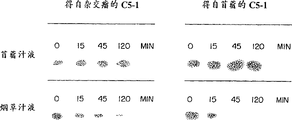
图4显示在苜蓿叶或烟草叶的情况下共同提取的C5-1蛋白的蛋白质印迹。在2μg转基因植物或杂交瘤培养物生产的C5-1的存在下,提取2克苜蓿叶或烟草叶组织。于0℃用10ml水进行提取,于20,000xg离心,并于25℃温育至多3小时,然后进行蛋白质测定,以测定提取溶液中残留的C5-1的量。Figure 4 shows a Western blot of co-extracted C5-1 proteins in the case of alfalfa leaves or tobacco leaves. Two grams of alfalfa or tobacco leaf tissue were extracted in the presence of 2 μg of C5-1 produced by transgenic plants or hybridoma cultures. Extraction was performed with 10 ml of water at 0°C, centrifuged at 20,000 xg, and incubated at 25°C for up to 3 hours, followed by protein assay to determine the amount of C5-1 remaining in the extraction solution.
图5显示得自表达C5-1的双转基因苜蓿植株地上部分的蛋白的蛋白质印迹,将所述地上部分切割并让其于室温下干燥至多5天。将等量的收获组织于20%的相对湿度下保持0h、7h、1天、2天和5天,然后提取并确定蛋白分布图(图5A),并用蛋白质分析测定C5-1的水平(图5B)。Figure 5 shows a Western blot of proteins from aerial parts of double transgenic alfalfa plants expressing C5-1, which were excised and allowed to dry at room temperature for up to 5 days. The same amount of harvested tissue was kept at 20% relative humidity for 0h, 7h, 1 day, 2 days and 5 days, then extracted and determined the protein profile (Fig. 5A), and the level of C5-1 was determined by protein analysis (Fig. 5B).
图6显示在静脉内注射后的一个月时期内植物衍生的C5-1(●)和杂交瘤衍生的C5-1(○)在小鼠中稳定性。用抗固定化人IgG的ELISA进行检测。Figure 6 shows the stability of plant-derived C5-1 (•) and hybridoma-derived C5-1 (o) in mice over a period of one month after intravenous injection. Detection was performed by ELISA against immobilized human IgG.
优选实施方案的描述Description of the preferred embodiment
本发明涉及在转基因苜蓿植株内生产蛋白。The present invention relates to protein production in transgenic alfalfa plants.
按照本发明,“目的基因”是指能够编码蛋白的基因。然而,该定义也适用于其混合的转录和翻译产物导致产生多聚体蛋白的目的基因,所述多聚体蛋白用作生物制品,诸如血清学测定内的生物制品。可以采用既立的方案(例如Desgagnés等,1995),用目的基因转化苜蓿。尽管苜蓿基因组的复杂性,但通过农杆菌介导的基因转移获得的性状是稳定的,并按照简单的孟德尔模式进行有性传递(Desgagnés等,1995)。这种特征对于生产的蛋白(包括多聚体蛋白在内)是必需的。尽管不希望限制可以用本发明以任何方式生产的蛋白的类型,但多聚体蛋白的一个实例可以是mAb,诸如C5-1。以下例举该蛋白的生产和特性。According to the present invention, "target gene" refers to a gene capable of encoding a protein. However, this definition also applies to a gene of interest whose mixed transcription and translation products lead to the production of a multimeric protein for use as a biological product, such as in a serological assay. Transformation of alfalfa with the gene of interest can be done using established protocols (eg Desgagnes et al., 1995). Despite the complexity of the alfalfa genome, traits acquired by Agrobacterium-mediated gene transfer are stable and sexually transmitted following a simple Mendelian pattern (Desgagnés et al., 1995). This feature is essential for the proteins produced, including multimeric proteins. One example of a multimeric protein would be a mAb, such as C5-1, although not wishing to limit the type of protein that can be produced in any way with the present invention. The production and properties of this protein are exemplified below.
“启动子”是指在所述启动子区控制下基因表达的起始和调节方面有活性的DNA序列区,正如本领域技术人员所通常理解的。该DNA序列通常在结构基因编码序列的上游(5’),通过为RNA聚合酶和/或使转录于正确位点起始所需的其它因子提供识别,而控制所述编码区的表达。"Promoter" refers to a region of a DNA sequence active in the initiation and regulation of gene expression under the control of the promoter region, as commonly understood by those skilled in the art. This DNA sequence is usually upstream (5') of the coding sequence of the structural gene and controls the expression of the coding region by providing recognition for RNA polymerase and/or other factors required to initiate transcription at the correct site.
一般有两种类型的启动子,即诱导型和组成型。“诱导型启动子”是能够直接或间接激活一种或多种DNA序列或基因对诱导物应答而转录的启动子。在缺乏诱导物时,所述DNA序列或基因将不被转录。通常,特异性地结合于诱导型启动子以激活转录的蛋白因子以无活性形式存在,然后被诱导物直接或间接地转化为活性形式。诱导物可以是化学因子,诸如蛋白、代谢物、生长调节剂、除草剂或酚类化合物,或是由热、冷、盐或毒性成分直接施加的生理胁迫,或通过病原体或诸如病毒的致病因子的作用间接施加的生理胁迫。通过将诱导物诸如通过喷洒、浇水、加热或类似的方法外部应用于所述细胞或植物,可以将含有诱导型启动子的植物细胞暴露于所述诱导物。另外,诱导型启动子包括组织特异性启动子,它们以组织特异性方式起作用,以在所述植物的选定组织中调节目的基因。这类组织特异性启动子的实例包括种子、花或根特异性启动子,它们也是本领域众所周知的。There are generally two types of promoters, inducible and constitutive. An "inducible promoter" is a promoter capable of directly or indirectly activating the transcription of one or more DNA sequences or genes in response to an inducer. In the absence of an inducer, the DNA sequence or gene will not be transcribed. Typically, protein factors that specifically bind to an inducible promoter to activate transcription exist in an inactive form that is then directly or indirectly converted to an active form by the inducer. Inducers can be chemical agents, such as proteins, metabolites, growth regulators, herbicides, or phenolic compounds, or physiological stresses applied directly by heat, cold, salt, or toxic ingredients, or through pathogenic or pathogenic agents such as viruses Physiological stress imposed indirectly by the action of factors. A plant cell containing an inducible promoter may be exposed to an inducer by applying the inducer externally to the cell or plant, such as by spraying, watering, heating or the like. In addition, inducible promoters include tissue-specific promoters, which act in a tissue-specific manner to regulate a gene of interest in a selected tissue of the plant. Examples of such tissue-specific promoters include seed, flower or root specific promoters, which are also well known in the art.
“组成型启动子”是指指导基因在植物的所有不同部分并且在整个植物发育中持续表达。已知的组成型启动子的实例包括与CaMV35S转录物和农杆菌Ti质粒胭脂碱合酶基因相关的启动子:"Constitutive promoter" refers to directing the expression of a gene in all different parts of the plant and throughout plant development. Examples of known constitutive promoters include those associated with the CaMV35S transcript and the Agrobacterium Ti plasmid nopaline synthase gene:
本发明的基因构成物包括3’非翻译区。3’非翻译区是指基因包含这样的DNA区段的部分,所述DNA区段含有多腺苷酸化信号和能够实现mRNA加工或基因表达的任何其它调节信号。所述多腺苷酸化信号的特征通常为:实现将多腺苷酸积加至mRNA前体的3’端。根据存在与规范形式5’AATAAA-3’的同源性而识别多腺苷酸化信号,尽管变异是常见的。合适的3’区的非限制性实例是含有以下基因的多腺苷酸化信号的3’转录的非翻译区:农杆菌肿瘤诱导(Ti)质粒基因诸如胭脂碱合酶(Nos基因),和植物基因,诸如大豆贮藏蛋白基因和核酮糖-1,5-二磷酸羧化酶小亚基(ssRUBISCO)基因。The genetic constructs of the present invention include a 3' untranslated region. The 3' untranslated region refers to the portion of a gene that includes the DNA segment that contains the polyadenylation signal and any other regulatory signals that enable mRNA processing or gene expression. The polyadenylation signal is typically characterized by effecting the addition of polyadenylate to the 3' end of the pre-mRNA. The polyadenylation signal was identified based on the presence of homology to the canonical form 5'AATAAA-3', although variations are common. Non-limiting examples of suitable 3' regions are the 3' transcribed untranslated regions containing the polyadenylation signals of Agrobacterium tumor-inducing (Ti) plasmid genes such as nopaline synthase (Nos gene), and plant Genes such as the soybean storage protein gene and the ribulose-1,5-bisphosphate carboxylase small subunit (ssRUBISCO) gene.
本发明的基因构成物也可以包括其它可任选的调节基元,诸如可能是需要的增强子或者为翻译增强子或者为转录增强子。这些增强子区对于本领域技术人员是熟知的,可以包括例如35S调节区的增强子区以及得自其它调节区的其它增强子和/或ATG起始密码子和相邻序列。起始密码子必须符合编码序列的读框,以确保翻译完整的序列。翻译控制信号和起始密码子可以得自多种起源,包括天然和合成的。翻译起始区可以由转录起始区源提供,或由结构基因提供。所述序列也可以得自选择以表达所述基因的增强子,且可以被特异性地修饰,以增加所述mRNA的翻译。The genetic constructs of the invention may also include other optional regulatory motifs, such as enhancers that may be required either as translational or as transcriptional enhancers. These enhancer regions are well known to those skilled in the art and may include, for example, the enhancer region of the 35S regulatory region as well as other enhancers from other regulatory regions and/or the ATG initiation codon and adjacent sequences. The initiation codon must be in-frame with the coding sequence to ensure translation of the complete sequence. Translational control signals and initiation codons can be derived from a variety of origins, both natural and synthetic. The translation initiation region can be provided by the source of the transcription initiation region, or by a structural gene. The sequence can also be obtained from an enhancer selected to express the gene, and can be specifically modified to increase translation of the mRNA.
为有助于转化植物细胞的鉴别,还可以操作本发明的构成物,以包括植物选择标记。有用的选择标记包括但不限于提供对抗生素抗性的酶,所述抗生素诸如庆大霉素、潮霉素、卡那霉素等。同样,提供产生可根据颜色变化鉴别的混合物的酶诸如GUS(β-葡糖醛酸糖苷酶)或提供产生可根据发光鉴别的化合物的酶诸如荧光素酶是有用的。To aid in the identification of transformed plant cells, the constructs of the invention can also be manipulated to include a plant selectable marker. Useful selectable markers include, but are not limited to, enzymes that confer resistance to antibiotics such as gentamicin, hygromycin, kanamycin, and the like. Also, it is useful to provide an enzyme such as GUS (beta-glucuronidase) that produces a mixture that is identifiable by a color change, or an enzyme such as luciferase that produces a compound that is identifiable by luminescence.
本发明也考虑了含有本发明嵌合基因构成物的转基因植物。本发明也涉及得自表达目的基因的转基因植株的部分,例如叶、茎、种子、花或根。这些选定的植物部分可以得自用包含或者组成型或者诱导型启动子的载体转化的植物。由植物细胞再生整个植株的方法是本领域已知的,获得转化和再生的植株的方法对于本发明不重要。一般而言,在合适的培养基中培养转化的植物细胞,所述培养基可以含有诸如抗生素的选择剂,在此选择标记用来便于转化植物细胞的鉴别。一旦形成愈伤组织,则可以通过利用合适的植物激素,按照已知方法,促进形成胚胎或苗,并且将苗转移至生根培养基以再生植株。然后,可以或者由种子或者采用营养繁殖技术用所述植株建立重复世代。The invention also contemplates transgenic plants containing the chimeric genetic constructs of the invention. The invention also relates to parts, such as leaves, stems, seeds, flowers or roots, obtained from transgenic plants expressing the gene of interest. These selected plant parts may be obtained from plants transformed with vectors comprising either constitutive or inducible promoters. Methods of regenerating whole plants from plant cells are known in the art, the method of obtaining transformed and regenerated plants is not critical to the present invention. In general, transformed plant cells are grown in a suitable medium, which may contain a selection agent such as an antibiotic, where a selectable marker is used to facilitate identification of transformed plant cells. Once the callus has formed, the formation of embryos or shoots can be promoted by using appropriate phytohormones according to known methods, and the shoots transferred to rooting medium to regenerate plants. The plants can then be used to establish repeated generations, either from seeds or using vegetative propagation techniques.
可以采用Ti质粒、Ri质粒、植物病毒载体、直接DNA转化、微注射、电穿孔等,将本发明的构成物引入植物细胞中。关于这类技术的综述,请参见例如Weissbach和Weissbach(1988)和Geierson和Corey(1988)。本发明还包括包含所述嵌合基因构成物和参与所述基因构成物表达的相关5’和3’调节区的合适的载体。The constructs of the present invention can be introduced into plant cells by using Ti plasmids, Ri plasmids, plant virus vectors, direct DNA transformation, microinjection, electroporation, and the like. For a review of such techniques see eg Weissbach and Weissbach (1988) and Geierson and Corey (1988). The invention also includes suitable vectors comprising said chimeric gene construct and associated 5' and 3' regulatory regions involved in the expression of said gene construct.
“合适的苜蓿系”或“合适的苜蓿基因型”是指多年生的、表现出胚胎发生潜力(例如每20个叶圆盘或其它外植体组织至少1个胚胎发生愈伤组织)、可转化并且其中根据所述文件讨论的稳定性标准(参见实施例3)转基因蛋白是稳定的苜蓿基因型或系。不是所有的苜蓿基因型或系都是多年生的,众所周知,许多苜蓿多年生基因型或系是不能进行胚胎发生的,并且不能转化,或者这些特性在转化后可能改变(Desgagnés,1995)。即使由于先前所述的优点,苜蓿植株看来作为宿主植株是有前途的,但已知苜蓿植株表现出高蛋白酶活性。事实上,在表征的饲料物种中,豆科饲料在青贮中表现出比禾本科物种更高程度和速率的蛋白水解,而苜蓿在豆科饲料中显示最大程度和最高速率的蛋白水解(Jones等1995)。而且,已经证明,在诸如烟草的其它植物物种中,转基因蛋白易于被内源蛋白水解活性降解(例如Hiatt等,1989)。当人们综合考虑这两种因素时,完全未预料到,可能分离出表现出确保转基因蛋白稳定性的特性的合适的苜蓿基因型。因此,重要的是确定合适的苜蓿基因型中任何蛋白水解活性是否针对所述植株中生产的目的转基因蛋白。为了确保可接受的蛋白水解活性,应该获得某些最低标准。这些最低标准将根据所述转基因蛋白的应用需要而变化。例如,如果需要大量的所述转基因蛋白,则所述蛋白应该在水性提取物中是稳定的,最好在缺乏任何加入的组分(诸如蛋白酶抑制剂)或通常加入提取溶液中的其它试剂的情况下是稳定的。也可能要求:所述转基因蛋白在干燥过程中和干的收获的组织中是稳定的,便于大规模收获所述植物。A "suitable alfalfa line" or "suitable alfalfa genotype" refers to a perennial, exhibiting embryogenic potential (e.g., at least 1 embryogenic callus per 20 leaf discs or other explant tissue), capable of transformation. And wherein the transgenic protein is a stable alfalfa genotype or line according to the stability criteria discussed in said document (see Example 3). Not all alfalfa genotypes or lines are perennial, and it is known that many alfalfa perennial genotypes or lines are embryogenic and cannot be transformed, or these characteristics may change after transformation (Desgagnés, 1995). Even though alfalfa plants appear to be promising as host plants due to the previously stated advantages, alfalfa plants are known to exhibit high protease activity. In fact, among the forage species characterized, legumes exhibited a higher degree and rate of proteolysis in silage than grass species, while alfalfa showed the greatest degree and rate of proteolysis among legumes (Jones et al. 1995). Furthermore, it has been shown that in other plant species such as tobacco, transgenic proteins are susceptible to degradation by endogenous proteolytic activities (eg Hiatt et al., 1989). When one considers these two factors together, it is quite unexpected that it is possible to isolate suitable alfalfa genotypes that exhibit properties that ensure the stability of the transgenic protein. Therefore, it is important to determine whether any proteolytic activity in the appropriate alfalfa genotype is directed against the transgenic protein of interest produced in that plant. To ensure acceptable proteolytic activity, certain minimum standards should be achieved. These minimum standards will vary according to the application needs of the transgenic protein. For example, if large quantities of the transgenic protein are desired, the protein should be stable in aqueous extracts, preferably in the absence of any added components (such as protease inhibitors) or other agents commonly added to extraction solutions. The situation is stable. It may also be desirable that the transgenic protein is stable during drying and in dried harvested tissue to facilitate large-scale harvesting of the plants.
通过筛选苜蓿植物文库,以确定多年生的苜蓿植株,然后根据胚胎发生潜力筛选这些选定基因型或系,然后根据转化能力筛选选定的基因型或系,而获得合适的苜蓿基因型或系。然后,用目的蛋白转化这些植株,并测定所述蛋白在粗提取物中和在干燥的气生组织中的稳定性。然后,可任选地,验证转基因蛋白用作生物制品的实用性。为了举例说明本发明,表征一个胚胎发生苜蓿基因型11.9,然而,也可能已经使用了其它基因型。确立该基因型为多年生、胚胎发生、可转化的并且如下指出的,表现出可忽略的针对转基因蛋白的蛋白水解活性。然而,人们会理解,该基因型将被认为是可以采用上述标准选择的可能的苜蓿基因型或系的一个实例,并且该基因型不意味着在筛选方法应用或由于该筛选方案获得的植株方面是限制性的。Suitable alfalfa genotypes or lines are obtained by screening a library of alfalfa plants to identify perennial alfalfa plants, then screening these selected genotypes or lines for embryogenic potential, and then screening the selected genotypes or lines for transformation ability. These plants were then transformed with the protein of interest, and the stability of the protein was determined in crude extracts and in dried aerial tissues. Then, optionally, the utility of the transgenic protein for use as a biological product is verified. To illustrate the present invention, an embryogenic alfalfa genotype 11.9 was characterized, however, other genotypes may have been used as well. This genotype was established as perennial, embryogenic, transformable and, as noted below, exhibited negligible proteolytic activity against the transgenic protein. However, it will be understood that this genotype will be considered as an example of a possible alfalfa genotype or line that can be selected using the above criteria, and that this genotype does not imply any significance in the application of the screening method or in the plants obtained as a result of the screening scheme. is restrictive.
为了研究可以用于试剂中的目的蛋白的成本有效的制备方法,考虑了在合适的苜蓿基因型或系中生产转基因蛋白。因为已经证明mAbC5-1可用于红细胞血清学,所以由杂交瘤细胞cDNA文库克隆了C5-1重链和轻链,并且在转化苜蓿植株之前将其置于35S启动子控制之下(参见实施例1)。然而,人们会理解,该mAb以及35S启动子的应用可以分别作为可以使用并在合适的苜蓿基因型或系中生产的嵌合基因构成物和蛋白的一个实施例提供,并且该实施例决不是限制性的。Production of transgenic proteins in appropriate alfalfa genotypes or lines was considered in order to investigate cost-effective preparations of proteins of interest that could be used in reagents. Because mAbC5-1 has been shown to be useful in erythrocyte serology, the C5-1 heavy and light chains were cloned from a hybridoma cDNA library and placed under the control of the 35S promoter prior to transformation of alfalfa plants (see Example 1). However, it will be understood that the use of this mAb and the 35S promoter may be provided as an example of a chimeric genetic construct and protein, respectively, that may be used and produced in a suitable alfalfa genotype or line, and that this example is in no way restrictive.
通过RNA印迹分析(图1)和蛋白质印迹分析(图5)证实所述基因在转基因组织中表达,确定C5-1在合适的转基因苜蓿植株中的表达。通过提取组织的蛋白质印迹测定,所述转基因表达的mAb在于室温下或在大田条件下经数天干燥的气生组织中是稳定的(实施例3,图5)。当在苜蓿叶的情况下共同提取时,该mAb也是稳定的,而与烟草叶共同提取C5-1时,该mAb显著低(实施例3,图4)。当其它抗体与苜蓿共同提取并在一段时间内温育时,也观察到类似的结果(参见实施例3,表1和表2)。此外,当静脉内注射给小鼠时,由植物衍生的C5-1表现出与由杂交瘤衍生的C5-1相同的稳定性(图6),表明由于植物衍生蛋白的糖基化如同杂交瘤衍生蛋白的糖基化,因此获得类似程度的保护。如果考虑采用苜蓿大规模生产和收获目的蛋白,则由于这类方法通常使收获的组织暴露于长期的风干和简单的水性提取方案,所以这些特性是重要。Expression of the gene in transgenic tissues was confirmed by Northern blot analysis (Figure 1) and Western blot analysis (Figure 5), confirming the expression of C5-1 in appropriate transgenic alfalfa plants. The transgenically expressed mAbs were stable in aerial tissue dried for several days at room temperature or under field conditions as determined by Western blot of extracted tissues (Example 3, Figure 5). The mAb was also stable when co-extracted with alfalfa leaves, whereas it was significantly lower when C5-1 was co-extracted with tobacco leaves (Example 3, Figure 4). Similar results were observed when other antibodies were co-extracted with alfalfa and incubated over a period of time (see Example 3, Table 1 and Table 2). Furthermore, plant-derived C5-1 exhibited the same stability as hybridoma-derived C5-1 when intravenously injected into mice (Fig. Glycosylation of the derived protein and thus a similar degree of protection. These properties are important if alfalfa is being considered for large-scale production and harvesting of the protein of interest since such methods typically expose the harvested tissue to prolonged air-drying and simple aqueous extraction protocols.
已知某些苜蓿变种的营养结构表现出低水平的鞣质(Morris和Robbins 1997)。尽管不希望受理论的束缚,但这些苜蓿组织提取物中蛋白的稳定性提高可能是酚类化合物和鞣质水平降低的结果。已经发现这些特征限制了苜蓿作物饲料作物的应用,正在进行的第一步是提高该植物中酚类化合物的水平,以提高其作物饲料的效率(Morris和Robbins 1997),然而,这些特性对于本发明公开的目的是有益的。The vegetative structure of certain alfalfa varieties is known to exhibit low levels of tannins (Morris and Robbins 1997). While not wishing to be bound by theory, the increased protein stability in these alfalfa tissue extracts may be the result of decreased levels of phenolic compounds and tannins. These characteristics have been found to limit the use of alfalfa as a forage crop, and the first step underway is to increase the levels of phenolic compounds in this plant to increase its efficiency as a crop forage (Morris and Robbins 1997), however, these characteristics are not The purpose of the invention disclosure is beneficial.
采用粗制澄清的提取物的亲和层析纯化植物C5-1,在用考马斯蓝染色时,表明最终的制备物无污染物(参见实施例2)。对于先前报道的方法(例如During等1990)这是一个显著的改进。在纯化过程期间也没有明显的C5-1损失,因此由植物中的C5-1至纯化的C5-1的得率估计超过70%。Purification of plant C5-1 by affinity chromatography using the crude clarified extract showed that the final preparation was free of contaminants when stained with Coomassie blue (see Example 2). This is a significant improvement over previously reported methods (eg During et al. 1990). There was also no appreciable loss of C5-1 during the purification process, so the yield from C5-1 in plants to purified C5-1 was estimated to be over 70%.
当在ELISA和标准化血细胞凝集测定中测试时,纯化的植物衍生C5-1的免疫反应性与其得自杂交瘤细胞的对应物类似。虽然在粗提取物中存在几种装配类型,但所公开的纯化方法产生的H2L2形式用作杂交瘤衍生C5-1在血清学试验中的反应性应答方面不可区别。这表明,植物C5-1可以与杂交瘤衍生的C5-1一样有效地用作诊断蛋白。The immunoreactivity of purified plant-derived C5-1 was similar to that of its hybridoma-derived counterparts when tested in ELISA and standardized hemagglutination assays. Although several assembly types were present in the crude extract, the H2L2 form produced by the disclosed purification method was indistinguishable in terms of reactive response in serological assays for use as hybridoma-derived C5-1. This indicates that plant C5-1 can be used as a diagnostic protein as effectively as hybridoma-derived C5-1.
为了批准基于mAb的蛋白,管理机构要求:用于mAb生产的活材料必须是稳定的,以确保所述生物活性分子的质量和产量不随时间而变化(www.fda.gov/cber/cberftp/html;Miele,1997)。通过测定由F1子代两个基因型获得的再生体内C5-1的浓度,并比较这些浓度与亲代材料内的浓度(参见实施例3),检查植物繁殖体之间C5-1的稳定性。这些结果表明,植物组织内C5-1的浓度在繁殖体之间保持恒定,并且这类转基因苜蓿系看来是稳定的C5-1mAb源。可以体外引入如11.9的具有高胚胎发生潜力的基因型,来以高比率产生无性繁殖体。可以使所述繁殖体进入休眠、干燥至15-20%含水量,用人工胚乳包被,并于-80℃贮藏(McKersie和Bowley,1993)。该克隆材料可以保持数年而不显著丧失萌发潜力,因此构成了回收(retrieve)与原始活材料相同的材料以起始新的生产循环的细胞库。也设想:本领域技术人员已知的无性繁殖体的其它来源可以用来持续繁殖合适的苜蓿基因型。其它来源可以包括但不限于:胚、茎或能够繁殖的其它营养结构。In order to approve mAb-based proteins, regulatory agencies require that the living material used for mAb production must be stable to ensure that the quality and yield of the bioactive molecule does not change over time (www.fda.gov/cber/cberftp/html ; Miele, 1997). The stability of C5-1 between plant propagules was examined by measuring the concentrations of C5-1 in regenerates obtained from both genotypes of the F1 progeny and comparing these concentrations with those in the parental material (see Example 3). These results indicate that the concentration of C5-1 in plant tissue remains constant between propagules and that such transgenic alfalfa lines appear to be a stable source of C5-1 mAb. A genotype with high embryogenic potential, such as 11.9, can be introduced in vitro to produce clonal propagules at high rates. The propagules can be brought into dormancy, dried to 15-20% moisture, coated with artificial endosperm, and stored at -80°C (McKersie and Bowley, 1993). This clonal material can be maintained for several years without significant loss of germination potential, thus constituting a cell bank that retrieves the same material as the original living material to initiate a new production cycle. It is also contemplated that other sources of vegetative propagules known to those skilled in the art may be used to continuously propagate suitable alfalfa genotypes. Other sources may include, but are not limited to: embryos, stems, or other vegetative structures capable of reproduction.
此外,因为苜蓿是多年生植物且能够营养繁殖,所以可以获得无性材料,并在跨越许多生长季节的相当长的时间内直接从大田收获。这意味着一棵植株可以在10年或10年以上的时间内重复收获。同一原种材料的这种再生能力和可更新有效性,确保了在转基因苜蓿中目的蛋白的一致来源。在通常用于转基因蛋白生产的其它植物中,诸如在烟草、拟南芥、大豆、玉米或许多苜蓿基因型或系中,没有发现这类能力和特征。Furthermore, because alfalfa is a perennial and capable of vegetative propagation, vegetative material can be obtained and harvested directly from the field over a considerable period of time spanning many growing seasons. This means that a single plant can be harvested repeatedly for 10 years or more. This regenerative capacity and renewable availability of the same stock material ensures a consistent source of the protein of interest in the transgenic alfalfa. Such abilities and characteristics are not found in other plants commonly used for transgenic protein production, such as in tobacco, Arabidopsis, soybean, maize or many alfalfa genotypes or lines.
作为植物体(plantibody)策略商业应用,在转基因苜蓿中大规模生产C5-1mAb是非常有前途的,因为与包括其它植物在内的许多异源系统相比,它代表一个经济的选择。而且,应用合适的苜蓿基因型提供最大限度降低根据生物制品的批准和临床试验所需的特征鉴定和维持细胞库的成本的能力。As a commercial application of the plantibody strategy, large-scale production of C5-1 mAb in transgenic alfalfa is very promising as it represents an economical option compared to many heterologous systems including other plants. Furthermore, the use of appropriate alfalfa genotypes provides the ability to minimize the cost of characterizing and maintaining cell banks according to the characteristics required for approval and clinical trials of biologics.
在大田规模方面,成熟苜蓿植物地段有1-3×10⁶单株/公顷;这确立了无性繁殖体的生产成本为约$8,000。根据我们对繁殖的转基因苜蓿中抗体含量的估计(0.13-1.0%总可溶性蛋白),每年一公顷的产量将为500-1000g。苜蓿是多年生作物,这种植物的田间生产性能可以维持3-4年。这将使得在开放耕地利用(open-field exploitation)方面所述原料的生产成本为$3,000/kg mAb。用常规杂交瘤细胞培养物(约50mg C5-1mAb/L)生产1kg C5-1mAb的生产成本估计为约2×10⁶美元。即使将杂交瘤培养物的抗体产量提高20-40倍,降低的成本(约750,000$/kg)仍显著高于植物衍生的C5-1。On a field scale, plots of mature alfalfa plants ranged from 1-3 x 10⁶ per hectare; this established a production cost of vegetative propagules at about $8,000. Based on our estimates of the antibody content in the bred transgenic alfalfa (0.13-1.0% total soluble protein), the yield per hectare would be 500-1000 g per year. Alfalfa is a perennial crop, and the field performance of this plant can last for 3-4 years. This would result in a production cost of the feedstock of $3,000/kg mAb in terms of open-field exploitation. The production cost for 1 kg of C5-1 mAb produced from conventional hybridoma cell culture (approximately 50 mg C5-1 mAb/L) is estimated to be about 2 x 10 6 US dollars. Even with a 20-40 fold increase in antibody production from hybridoma cultures, the reduced cost (about 750,000$/kg) is still significantly higher than that of plant-derived C5-1.
关于从转基因植物大规模纯化mAb尚未有报道。先前的关于纯化植物衍生mAb的报道表明,纯化为均质在亲和层析前后需要复杂的操作(During等1990)。利用膨胀床吸附层析,有助于按比率扩大本发明的纯化方法。该技术在缩短的时间范围内,由大体积的粗略澄清的提取物产生纯化的肽,因此看起来开创了降低从胶体提取物的纯化成本的新方法。There is no report on large-scale purification of mAbs from transgenic plants. Previous reports on the purification of plant-derived mAbs indicated that purification to homogeneity required complex manipulations before and after affinity chromatography (During et al. 1990). Scale-up of the purification process of the present invention is facilitated by the use of expanded bed adsorption chromatography. This technique produces purified peptides from large volumes of crudely clarified extracts in a shortened time frame, thus appearing to open a new approach to reducing the cost of purification from colloidal extracts.
此外,用得自杂交瘤细胞培养物的未纯化上清液制备Coombs试剂,因此,如果观察到部分纯化的植物制备物于4℃的较长的稳定性,则它们可能适用于这种诊断。In addition, Coombs reagents were prepared using unpurified supernatants from hybridoma cell cultures, so if longer stability at 4°C is observed for partially purified plant preparations, they may be suitable for this diagnosis.
实施例Example
得到以下方法,来选择用于生产目的转基因蛋白的合适的苜蓿基因型或系。在随后的实施例中更详细地描述该方法的不同步骤。该方法包括:The following method was developed to select the appropriate alfalfa genotype or line for production of the transgenic protein of interest. The different steps of the method are described in more detail in the examples that follow. The method includes:
(a)筛选苜蓿基因型文库,以确定多年生的基因型或系;(a) screening the library of alfalfa genotypes to determine perennial genotypes or lines;
(b)根据胚胎发生潜力筛选在(a)中鉴定的选定的基因型或系;(b) screening the selected genotype or line identified in (a) for embryogenic potential;
(c)根据转化能力筛选在(b)中鉴定的选定的基因型或系;(c) screening the selected genotype or line identified in (b) for transformability;
(d)根据所述转基因蛋白的稳定性筛选在(c)中鉴定的选定的基因型或系。(d) Screening the selected genotype or line identified in (c) for the stability of said transgenic protein.
植物材料plant material
根据具有胚胎发生潜力和转化能力的多年生苜蓿的选择,我们先前已经鉴定了基因型11.9,该基因型分离自商用育种系(Desgagnés等,1995)。为了进一步确保根据以上标准选择的植物的适用性,应用该基因型作为模式系统进行试验,以举例说明本发明的实用性。然而,该基因型的用途决不被认为是限制性的。应用基因型11.9是为了举例说明选择方案和具有所需特性的选定植株的特性。人们会理解,以上选择方案可以用来选择其它苜蓿基因型或系。We have previously identified genotype 11.9, isolated from a commercial breeding line, based on selection of perennial alfalfa with embryogenic potential and transformation ability (Desgagnes et al., 1995). To further ensure the suitability of plants selected according to the above criteria, experiments were carried out using this genotype as a model system to illustrate the utility of the present invention. However, the use of this genotype is by no means considered limiting. Genotype 11.9 was used to illustrate the selection scheme and characterization of selected plants with desired traits. It will be appreciated that the above selection scheme can be used to select other alfalfa genotypes or lines.
细菌菌株、双元载体Bacterial strains, binary vectors
大肠杆菌菌株DH5α用于DNA克隆。用根癌农杆菌的解甲章鱼碱菌株(LBA4404)进行植物转化。双元植物表达载体pGA643用于DNA转移(An等1988)。E. coli strain DH5α was used for DNA cloning. Plant transformation was performed with a disarmed octopine strain (LBA4404) of Agrobacterium tumefaciens. The binary plant expression vector pGA643 was used for DNA transfer (An et al. 1988).
C5-1杂交瘤细胞系的选择Selection of C5-1 hybridoma cell line
通过将SP2/0小鼠骨髓瘤细胞与用人IgG超免疫的Balb/c小鼠的脾细胞融合,制备杂交瘤细胞系。如先前所述(St Laurent等1993),根据上清液针对弱致敏的红细胞的反应性筛选C5-1杂交瘤细胞系。Hybridoma cell lines were prepared by fusing SP2/0 mouse myeloma cells with splenocytes from Balb/c mice hyperimmunized with human IgG. The C5-1 hybridoma cell line was screened for reactivity of the supernatant against weakly sensitized erythrocytes as previously described (St Laurent et al. 1993).
cDNA分离、亚克隆和DNA构成物cDNA isolation, subcloning and DNA construction
从杂交瘤细胞cDNA文库克隆重链(H)和轻链(L)的cDNA。加入合适的限制位点后,将包括5’非翻译前导序列的全长cDNA均亚克隆入pGA643中,将其置于35S启动子的转录控制之下,产生pGA643-γ和pGA643-κ。这些cDNA可得自加拿大红十字会,Transfusion Dept.,Sainte-Foy,Quebec。The heavy (H) and light (L) chain cDNAs were cloned from a hybridoma cDNA library. After addition of appropriate restriction sites, the full-length cDNA including the 5' untranslated leader sequence was subcloned into pGA643, which was placed under the transcriptional control of the 35S promoter, generating pGA643-γ and pGA643-κ. These cDNAs are available from the Canadian Red Cross, Transfusion Dept., Sainte-Foy, Quebec.
植物转化、选择和杂交Plant Transformation, Selection and Crossing
按照所述方法(Desgagnés等1995),将pGA643-γ和pGA643-κ引入根癌农杆菌中,并将T-DNA转移入基因型11.9。不用去雄,使表达κ链和γ链的转基因植株杂交。根据RNA杂交筛选子代,并通过蛋白质印迹法测试双转基因植株的IgG含量。pGA643-γ and pGA643-κ were introduced into Agrobacterium tumefaciens and T-DNA transferred into genotype 11.9 as described (Desgagnes et al. 1995). Transgenic plants expressing kappa and gamma chains were crossed without detasseling. Progeny were screened based on RNA hybridization, and double transgenic plants were tested for IgG content by Western blotting.
RNA分离和RNA印迹分析RNA isolation and Northern blot analysis
按照所述方法(de Vries等1988),从对照苜蓿叶和转基因苜蓿叶分离总RNA。将总RNA(15μg/道)在1%琼脂糖-甲醛凝胶上分级分离,并转移至Hybond-N尼龙膜上。用由κcDNA的0.6kb EcoRI\Hinc II片段或完整的γ链cDNA组成的32P-标记探针进行杂交。Total RNA was isolated from control and transgenic alfalfa leaves as described (de Vries et al. 1988). Total RNA (15 μg/lane) was fractionated on a 1% agarose-formaldehyde gel and transferred to a Hybond-N nylon membrane. Hybridization was performed with a 32P-labeled probe consisting of a 0.6 kb EcoRI\Hinc II fragment of κ cDNA or the complete γ chain cDNA.
蛋白质提取和免疫检测Protein extraction and immunodetection
将1克叶组织在5ml提取缓冲液(50mM Tris-HCl,pH 8.0,1%SDS,1%β-巯基乙醇)和海沙中匀浆。将匀浆通过1层Miracloth过滤并经离心澄清(20,000g,20min)。对于稳定性研究,在蒸馏水中进行匀浆和澄清,在匀浆期间通过加入25μg NaOH/g叶鲜重,使提取物为中性。对于在非还原条件下的研究,在50mM Tris-HCl,pH 7.5,150mM NaCl和2mM PMSF中进行提取。通过SDS-聚丙烯酰胺凝胶电泳分离提取物,并电转移至硝酸纤维素膜上。封闭膜,并用Boehringer Manheim的BM化学发光试剂盒,按照生产商的说明进行缀合的过氧化物酶活性的检测。用兔抗小鼠抗体(Jackson ImmunoResearch Laboratories,WestGrove,PA)于4℃进行第一次温育。通过用0.4%β巯基乙醇处理样品,同时加入或不加入10mM抗坏血酸钠,并于100℃加热5分钟,进行重组IgG中二硫键的断裂。1 gram of leaf tissue was homogenized in 5 ml extraction buffer (50 mM Tris-HCl, pH 8.0, 1% SDS, 1% β-mercaptoethanol) and sea sand. The homogenate was filtered through 1 layer of Miracloth and clarified by centrifugation (20,000 g, 20 min). For stability studies, homogenization and clarification were performed in distilled water, during which the extract was made neutral by adding 25 μg NaOH/g leaf fresh weight. For studies under non-reducing conditions, extractions were performed in 50mM Tris-HCl, pH 7.5, 150mM NaCl and 2mM PMSF. Extracts were separated by SDS-polyacrylamide gel electrophoresis and electrotransferred to nitrocellulose membranes. Membranes were blocked and detection of conjugated peroxidase activity was performed using the BM chemiluminescence kit from Boehringer Manheim following the manufacturer's instructions. The first incubation was performed at 4°C with a rabbit anti-mouse antibody (Jackson ImmunoResearch Laboratories, West Grove, PA). Cleavage of disulfide bonds in recombinant IgG was performed by treating samples with 0.4% beta-mercaptoethanol with or without the addition of 10 mM sodium ascorbate and heating at 100°C for 5 minutes.
植物mAb的纯化和表征Purification and Characterization of Plant mAbs
将20克叶组织在100ml提取缓冲液A(50mM Tris碱pH 7.4,150mM NaCl,6mM PMSF)中匀浆。如上所述将匀浆过滤和澄清。使上清液在Whatman纸上过滤,并上样至通过将人IgG偶联于CNBr-Sepharose(Sigma)制备的亲和柱。该柱用PBS洗涤,并用甘氨酸缓冲液(100mM,pH 2.3)洗脱抗体。收集含抗体的流分,用0.1M Tris-HCl(pH7.0)中和并对PBS透析。按照所述方法(Bradford,1976)测定植物纯化C5-1量和提取物中存在的蛋白量。20 g of leaf tissue were homogenized in 100 ml of extraction buffer A (50 mM Tris base pH 7.4, 150 mM NaCl, 6 mM PMSF). The homogenate was filtered and clarified as described above. The supernatant was filtered on Whatman paper and loaded onto an affinity column prepared by coupling human IgG to CNBr-Sepharose (Sigma). The column was washed with PBS, and the antibody was eluted with glycine buffer (100 mM, pH 2.3). Antibody-containing fractions were pooled, neutralized with 0.1M Tris-HCl (pH 7.0) and dialyzed against PBS. The amount of plant purified C5-1 and the amount of protein present in the extracts were determined as described (Bradford, 1976).
血细胞凝集测定Hemagglutination assay
采用旋转管技术(Issit,1985)研究植物C5-1mAb对致敏红细胞的反应性。通过与人抗-Rh(D)试剂一起温育使Rh(o)-阳性人红细胞致敏,并用PBS洗涤。将40μl 2%(v/v的PBS溶液)致敏红细胞悬浮液加入玻璃试管中的已知浓度的40μl C5-1mAb中。将试管混合,并于室温下温育5分钟后以500g离心20秒。目测估计凝集程度。效价为给出阳性凝集反应的最后的稀释度的倒数。The reactivity of plant C5-1 mAb to sensitized erythrocytes was studied using the spinning tube technique (Issit, 1985). Rh(o)-positive human erythrocytes were sensitized by incubation with human anti-Rh(D) reagent and washed with PBS. Add 40 μl of 2% (v/v in PBS) sensitized erythrocyte suspension to 40 μl of C5-1 mAb of known concentration in a glass test tube. The tubes were mixed and centrifuged at 500g for 20 seconds after incubation for 5 minutes at room temperature. Estimate the degree of agglutination by visual inspection. The titer is the reciprocal of the last dilution that gave a positive agglutination reaction.
ELISAELISA
微量培养板(Costar)的各孔用在碳酸缓冲液(100mM,pH 9.6)中以5μg/ml稀释的山羊抗小鼠或人IgG包被过夜。用含0.25%酪蛋白的PBS(PBS-酪蛋白)进行封闭。按照先前关于亲和纯化所述的方法制备植物提取物,并在PBS-酪蛋白中稀释(1/10和1/100)后,直接上样至包被板的各孔中。温育后,洗涤板,用山羊抗小鼠IgG-过氧化物酶缀合物(Jackson Imm.Res.Lab)显示C5-1的结合。用邻苯二胺(Gibco BRL)底物显示酶缀合物。在微量培养板读板仪(Dynatech MR 5000,Alexandria,Va.,USA)上测量490nm下的光密度。Wells of a microplate (Costar) were coated overnight with goat anti-mouse or human IgG diluted at 5 μg/ml in carbonate buffer (100 mM, pH 9.6). Blocking was performed with PBS containing 0.25% casein (PBS-casein). Plant extracts were prepared as previously described for affinity purification and, after dilution (1/10 and 1/100) in PBS-casein, were directly loaded into wells of coated plates. After incubation, plates were washed and binding of C5-1 was visualized with goat anti-mouse IgG-peroxidase conjugate (Jackson Imm. Res. Lab). Enzyme conjugates were revealed with o-phenylenediamine (Gibco BRL) substrate. Optical density at 490 nm was measured on a microplate reader (Dynatech MR 5000, Alexandria, Va., USA).
实施例1Example 1
为了例举苜蓿在蛋白(包括如mAb的多聚体蛋白)表达方面的有用性,由高亲和性鼠抗人IgG mAb(St Laurent等1993)文库中选择一种高亲和性mAb(C5-1)。当用以血型抗体微弱致敏的红细胞测试时,C5-1mAb给出的反应性类似于商用兔多克隆试剂。To exemplify the usefulness of alfalfa in the expression of proteins, including multimeric proteins such as mAbs, a high affinity mAb (C5 -1). When tested with erythrocytes weakly sensitized with blood group antibodies, the C5-1 mAb gave reactivity similar to that of commercial rabbit polyclonal reagents.
转基因在苜蓿中的整合和表达Integration and expression of transgene in alfalfa
按照Desgagnés等的方案(1995),将编码C5-1轻链和重链的cDNA转移入苜蓿植株中。分别获得κ链和γ链的15株植株和25株植株。通过RNA杂交监测κ链和γ链的mRNA水平。探针与约1.25kbpκ链mRNA(图1A)和1.75kbp的γ链mRNA(图1B)特异性杂交。苜蓿衍生mRNA比鼠cDNA约长250bp,表明在这两种情况下,使用了基因7的多腺苷酸化信号。在分析的29株F1植株中,发现7株同时表达H链cDNA和L链cDNA。图1C显示在随机选择的F1子代植株中在κcDNA和γcDNA表达中获得的变异。The cDNAs encoding the C5-1 light and heavy chains were transferred into alfalfa plants following the protocol of Desgagnes et al. (1995). 15 plants and 25 plants of κ chain and γ chain were obtained respectively. The mRNA levels of kappa chain and gamma chain were monitored by RNA hybridization. The probe specifically hybridized to approximately 1.25 kbp kappa chain mRNA (Fig. 1A) and 1.75 kbp gamma chain mRNA (Fig. 1B). The alfalfa-derived mRNA was approximately 250 bp longer than the murine cDNA, indicating that in both cases the polyadenylation signal of
C5-1 mAb H链和L链在F1子代中的表达和装配Expression and assembly of C5-1 mAb H chain and L chain in F1 progeny
对随机选择的表现出同时表达H和L链cDNA的F1子代植株,通过免疫检测分析相应亚基的存在。这一初步筛选表明,所有这些植株均含有两种mAb肽链(数据未显示)。这些双转基因植株之一与相应的亲代植株相比的进一步分析表明,表达L链cDNA的单转基因植株不积累显著量的相应肽,表达H链cDNA的单转基因植株仅含有H链二聚体,而F1子代的双转基因植株有5中装配类型,分子量对应于H2L2、H2L、H2、HL和H复合物(图2)。完全装配的植物IgG(H2L2)的分子量类似于杂交瘤衍生的C5-1mAb。为了打开二硫键,用0.4%β巯基乙醇处理样品。在这些条件下,所有免疫反应性物质于100℃加热时均沉淀。然而,当加入抗坏血酸时,两种组成亚基保持在溶液中,将其在SDS-丙烯酰胺凝集上分离。全变性条件下的分离表明,植物衍生C5-1的组成亚基在大小上与杂交瘤衍生C5-1相同(数据未显示)。Randomly selected F1 progeny plants expressing both H and L chain cDNA were analyzed by immunoassay for the presence of the corresponding subunits. This initial screen showed that all of these plants contained both mAb peptide chains (data not shown). Further analysis of one of these double transgenic plants compared to the corresponding parental plants showed that the single transgenic plants expressing the L chain cDNA did not accumulate significant amounts of the corresponding peptides and the single transgenic plants expressing the H chain cDNA contained only H chain dimers, However, the double transgenic plants of the F1 progeny had 5 assembly types, and the molecular weights corresponded to H2L2, H2L, H2, HL and H complexes (Fig. 2). The molecular weight of the fully assembled plant IgG (H2L2) is similar to that of the hybridoma-derived C5-1 mAb. To open disulfide bonds, samples were treated with 0.4% β-mercaptoethanol. Under these conditions, all immunoreactive material precipitated upon heating at 100°C. However, when ascorbic acid was added, the two constituent subunits remained in solution, which were separated on SDS-acrylamide agglutination. Isolation under fully denaturing conditions showed that the constituent subunits of plant-derived C5-1 were identical in size to hybridoma-derived C5-1 (data not shown).
实施例2Example 2
亲和纯化affinity purification
苜蓿衍生C5-1mAb的肽含量和稳定性。用亲和纯化从转基因苜蓿植株的叶提取物中回收C5-1mAb(图3A)。用各个F1双转基因植株的叶提取物的定量测定表明,C5-1抗体水平的范围为总可溶性蛋白的0.13-1.0%。在还原条件下纯化蛋白的SDS-PAGE分析(图3B)表明,通过考马斯蓝染色检测到两条链,并且其迁移率与得自杂交瘤细胞的对应物相同。这些结果提示,植物衍生C5-1通过糖基化而受到保护的程度与用杂交瘤细胞生产的C5-1的程度相同。Peptide content and stability of the alfalfa-derived C5-1 mAb. C5-1 mAb was recovered from leaf extracts of transgenic alfalfa plants by affinity purification (Fig. 3A). Quantitative assays using leaf extracts from individual F1 double transgenic plants showed that C5-1 antibody levels ranged from 0.13-1.0% of total soluble protein. SDS-PAGE analysis of the purified protein under reducing conditions (Fig. 3B) showed that both chains were detected by Coomassie blue staining and had the same mobility as their counterparts from hybridoma cells. These results suggest that plant-derived C5-1 is protected by glycosylation to the same extent as C5-1 produced with hybridoma cells.
实施例3Example 3
在苜蓿中生产并由其提取的转基因蛋白的稳定性Stability of transgenic proteins produced in and extracted from alfalfa
已经表明,重组IgG的蛋白水解发生于烟草(Nicotiana tabacum)和拟南芥(Arabidopsis thaliana)中(Hiatt等,1989;Ma等1994)。尽管在植物中合成了具有信号肽的非截短的IgG,所述信号肽促进靶向惰性胞外基质(De Wilde等1996),但已经观察到,IgG可以在提取时被内源蛋白酶降解(Hiatt等(1989)、During等(1990)、Ma等(1995)、Ma和Hein(1995)、Schouten(1996))。因为本发明涉及在苜蓿中制备单体蛋白或多聚体蛋白诸如mAb C5-1,所以检查了这类制品的稳定性。Proteolysis of recombinant IgG has been shown to occur in Nicotiana tabacum and Arabidopsis thaliana (Hiatt et al., 1989; Ma et al. 1994). Although non-truncated IgG is synthesized in plants with a signal peptide that facilitates targeting to the inert extracellular matrix (De Wilde et al. 1996), it has been observed that IgG can be degraded by endogenous proteases upon extraction ( Hiatt et al. (1989), During et al. (1990), Ma et al. (1995), Ma and Hein (1995), Schouten (1996)). Since the present invention concerns the preparation of monomeric or multimeric proteins such as mAb C5-1 in alfalfa, the stability of such preparations was examined.
1)与烟草提取物相比,苜蓿提取物中蛋白的稳定性1) Protein stability in alfalfa extract compared to tobacco extract
为了确立蛋白在苜蓿组织的粗提取物中是否稳定,在苜蓿(11.9基因型)叶的存在下,在水中共同提取植物衍生的或杂交瘤衍生的C5-1,让其于25℃温育至多5天。在此温育期间,取出等分样品,使得可以采用蛋白质分析测定C5-1的水平。所述mAb与所述来源无关,在水中制备的苜蓿提取物中是稳定的。显示该实施例前3小时的数据,然后在温育5天后观察到相同程度的稳定性。此外,在图4中,当在多种缓冲液中制备所述mAb时,所述mAb是稳定的(数据未显示)。在烟草组织的情况下共同提取C5-1的同一试验的结果也示于图4。可以看出,在烟草提取物的情况下温育的C5-1的水平随时间降低,在温育3小时后不可检测到。因此,对于从苜蓿中提取转基因蛋白而言,不需要加入通常加入提取介质中的缓冲盐、抗氧化剂、还原剂、稳定剂、蛋白酶抑制剂等,以稳定目的转基因蛋白,诸如例如mAb C5-1。To establish whether the protein was stable in crude extracts of alfalfa tissue, plant-derived or hybridoma-derived C5-1 were co-extracted in water in the presence of alfalfa (genotype 11.9) leaves and incubated at 25°C for up to 5 days. During this incubation, aliquots were taken so that protein assays could be used to determine the levels of C5-1. The mAb was independent of the source and was stable in the alfalfa extract prepared in water. Data are shown for the first 3 hours of this example, then the same degree of stability was observed after 5 days of incubation. Furthermore, in Figure 4, the mAbs were stable when prepared in various buffers (data not shown). The results of the same experiment for the co-extraction of C5-1 in the case of tobacco tissue are also shown in FIG. 4 . It can be seen that the level of C5-1 incubated in the presence of tobacco extract decreases over time and is not detectable after 3 hours of incubation. Therefore, for the extraction of transgenic proteins from alfalfa, there is no need to add buffer salts, antioxidants, reducing agents, stabilizers, protease inhibitors, etc., which are usually added to extraction media, in order to stabilize the transgenic protein of interest, such as for example mAb C5-1 .
采用在缺乏上述缓冲液(参见表1)的情况下与苜蓿共同提取的单克隆抗体(25F5,人mAb)和多克隆(hISG,人免疫球蛋白)抗体,进一步研究蛋白在苜蓿提取物中的稳定性。结果表明,在4天温育后,在于室温下贮藏的苜蓿提取物中有显著量的免疫学可检测到的蛋白。Protein expression in alfalfa extracts was further investigated using monoclonal (25F5, human mAb) and polyclonal (hISG, human immunoglobulin) antibodies co-extracted with alfalfa in the absence of the above buffers (see Table 1). stability. The results showed that after 4 days of incubation, there was a significant amount of immunologically detectable protein in the alfalfa extract stored at room temperature.
表1与苜蓿提取物共同收获的和在苜蓿提取物中温育的蛋白的稳定性Table 1 Stability of proteins co-harvested with alfalfa extract and incubated in alfalfa extract
2)在从转基因苜蓿植株提取期间重组蛋白的稳定性2) Stability of recombinant protein during extraction from transgenic alfalfa plants
通过将双转基因植物叶在纯水中匀浆,也证明了粗提取物中转基因C5-1的稳定性。这类叶提取物具有小但显著的缓冲能力,这是在含100g新鲜叶的提取物中以约0.4pH单位(pH 6.5-8.5)/摩尔NaOH确立的。结果表明,这些提取物可以于室温保持,而至少2小时pH不显著改变。作为转基因C5-1的提取剂,单独的水与含蛋白酶抑制剂的缓冲液(缓冲液A)一样好,在该基本提取系统中,C5-1于室温下保持100%稳定至少2小时(表2)。The stability of transgenic C5-1 in crude extracts was also demonstrated by homogenizing double transgenic plant leaves in pure water. Such leaf extracts have a small but significant buffering capacity, which was established at about 0.4 pH units (pH 6.5-8.5) per mole of NaOH in extracts containing 100 g of fresh leaves. The results showed that these extracts could be maintained at room temperature without significant change in pH for at least 2 hours. As an extractant for transgenic C5-1, water alone is as good as a buffer containing protease inhibitors (buffer A), and in this basic extraction system, C5-1 remained 100% stable at room temperature for at least 2 hours (Table 2).
表2-植物C5-1在粗蛋白提取物中的稳定性Table 2 - Stability of Plant C5-1 in Crude Protein Extract
_*通过鼠IgG特异性ELISA测定_ * Determined by mouse IgG-specific ELISA
3)蛋白在收获的植物组织中的稳定性3) Protein stability in harvested plant tissues
为了确定将苜蓿地上部分干燥对C5-1水平和/或从转基因气生组织提取C5-1的能力是否有影响,收获了一株双转基因植株,让其于25℃、20%的相对湿度下干燥至多30天。在该干燥时期结束时,叶材料的含水量低于20%,这是在大田条件下观察到的水平。在该干燥期间收获等量的叶材料,对其提取并用蛋白质分析测定C5-1水平。正如在显示前5天数据的图5中观察到的,对于来自正在干燥或已经干燥的苜蓿叶的可提取转基因蛋白的量,没有观察到降低。当收获植株并在大田条件下保持时,在干燥30天后观察到相同的结果。To determine whether desiccating the aerial parts of alfalfa had an effect on C5-1 levels and/or the ability to extract C5-1 from transgenic aerial tissues, a double transgenic plant was harvested and kept at 25°C and 20% relative humidity. Dry up to 30 days. At the end of this drying period, the moisture content of the leaf material was below 20%, which is the level observed under field conditions. Equal amounts of leaf material were harvested during this drying period, extracted and assayed for C5-1 levels by protein analysis. As observed in Figure 5, which shows data for the first 5 days, no reduction was observed for the amount of extractable transgenic protein from alfalfa leaves that were drying or had been dried. The same results were observed after 30 days of drying when the plants were harvested and maintained under field conditions.
4)C5-1在给予小鼠后的稳定性4) Stability of C5-1 after administration to mice
给小鼠静脉内给予等量的苜蓿衍生C5-1或杂交瘤衍生的C5-1,检测在28天的时期内获得的血浆样品中的蛋白的存在。该试验的结果示于图6。给予的C5-1蛋白在小鼠中的半衰期对于杂交瘤衍生蛋白或植物衍生蛋白是相同的。这提示,植物衍生C5-1通过糖基化受到保护,其程度与杂交瘤衍生蛋白相似。在5天时间内注射的蛋白损失50%后,剩余的蛋白在接下来的20天时期内再下降25%。评价时期结束时,在小鼠内可检测到原始供应的蛋白的25%。Equal amounts of alfalfa-derived C5-1 or hybridoma-derived C5-1 were administered intravenously to mice and plasma samples obtained over a 28-day period were examined for the presence of the protein. The results of this test are shown in FIG. 6 . The half-life of the administered C5-1 protein in mice was the same for hybridoma-derived or plant-derived proteins. This suggests that plant-derived C5-1 is protected by glycosylation to a similar extent as hybridoma-derived proteins. After a loss of 50% of the injected protein over a 5-day period, the remaining protein dropped a further 25% over the next 20-day period. At the end of the evaluation period, 25% of the original supplied protein was detectable in the mice.
5)苜蓿繁殖体中蛋白的稳定性5) Protein stability in alfalfa propagules
为了确立转基因表达在转基因苜蓿繁殖体内的稳定性,检查15株得自F1子代的两种基因型的叶组织中的C5-1浓度。通过在节间茎节(stem section)上诱导生根,制备繁殖体。分析来自这两种基因型的15株再生植株的C5-1含量,将其与亲代材料中的C5-1水平比较。表3所示数据显示这一试验的结果,并表明C5-1水平在亲代材料和繁殖的材料中观察到的水平之间保持不变。To establish the stability of transgene expression in transgenic alfalfa propagules, the concentration of C5-1 in the leaf tissue of 15 plants from F1 progeny of both genotypes was examined. Propagates were prepared by inducing rooting on internode stem sections. The C5-1 content of 15 regenerated plants from both genotypes was analyzed and compared with the C5-1 levels in the parental material. The data presented in Table 3 show the results of this experiment and show that C5-1 levels remained constant between the levels observed in parental and propagated material.
表3-可提取的C5-1在世代之间的稳定性Table 3 - Stability of extractable C5-1 between generations
*在先前的试验中已经测定了原始值为14.4 * A raw value of 14.4 has been determined in a previous experiment
实施例4Example 4
抗原结合活性和血细胞凝集素活性Antigen binding activity and hemagglutinin activity
用ELISA试验进一步测试植物衍生C5-1mAb的抗原结合能力。来自生产C5-1的植株的叶提取物的连续稀释液用于该试验。表4A显示了用1/10稀释样品获得的光密度值。结果表明,植物C5-1mAb被抗小鼠IgG抗体识别,提示植物产生的抗体的总体构象为IgG的构象。此外,植物C5-1特异性地识别人IgG,表明H链和L链正确折叠形式抗原结合位点。初步试验表明,C5-1植物提取物可以特异性地使以人IgG致敏的红细胞凝集。对亲和纯化的物质的更完全的表征与杂交瘤衍生C5-1mAb平行进行。结果(表4B)表明,植物衍生C5-1mAb特异性地使抗D-致敏人RBC凝集,于6μg/ml下产生完全的(4+)反应,这与用杂交瘤衍生的C5-1mAb观察到的结果相似。The antigen-binding ability of plant-derived C5-1 mAb was further tested by ELISA assay. Serial dilutions of leaf extracts from plants producing C5-1 were used for this test. Table 4A shows the optical density values obtained with 1/10 diluted samples. The results showed that the plant C5-1 mAb was recognized by the anti-mouse IgG antibody, suggesting that the overall conformation of the antibody produced by the plant was that of IgG. Furthermore, plant C5-1 specifically recognized human IgG, indicating that the H and L chains were correctly folded to form the antigen-binding site. Preliminary experiments showed that C5-1 plant extracts can specifically agglutinate erythrocytes sensitized with human IgG. A more complete characterization of the affinity purified material was performed in parallel with the hybridoma derived C5-1 mAb. The results (Table 4B) show that the plant-derived C5-1 mAb specifically agglutinates anti-D-sensitized human RBCs, producing a complete (4+) response at 6 μg/ml, which is consistent with that observed with the hybridoma-derived C5-1 mAb. The results obtained are similar.
用抗鼠IgG作为包被抗体的ELISA测定也用来测定亲代转基因植株的反应性。表5A表明,在L-单转基因植株中没有检测到信号,而在含有H链的植株中检测到信号。这些结果用来确定粗提取物中免疫反应性物质的量。然后,在用人IgG包被的孔中测试已知量的粗提取物的反应性(表5B)。这第二个试验表明,单独的重链不与人IgG反应。它也表明,植物H2L2的比活与来自杂交瘤细胞的C5-1的比活相似。通过测定平衡下的解离常数,比较植物衍生抗体对其抗原的真正的亲和力与杂交瘤衍生抗体的亲和力。植物衍生C5-1和杂交瘤衍生C5-1的KD分别为4.7×10⁻¹⁰M和4.6×10⁻¹⁰M。An ELISA assay using anti-mouse IgG as the coating antibody was also used to determine the reactivity of the parental transgenic plants. Table 5A shows that no signal was detected in the L-single transgenic plants, whereas a signal was detected in the plants containing the H chain. These results were used to determine the amount of immunoreactive material in the crude extract. Then, known amounts of crude extract were tested for reactivity in wells coated with human IgG (Table 5B). This second experiment showed that the heavy chain alone does not react with human IgG. It also shows that the specific activity of plant H2L2 is similar to that of C5-1 from hybridoma cells. The true affinity of the plant-derived antibody for its antigen is compared to that of the hybridoma-derived antibody by determining the dissociation constant at equilibrium. The K D of plant-derived C5-1 and hybridoma-derived C5-1 were 4.7×10 -10 M and 4.6×10 -10 M, respectively.
表4-植物衍生C5-1mAb的反应性。(A)ELISA测定;Table 4 - Reactivity of plant derived C5-1 mAbs. (A) ELISA assay;
(B)血细胞凝集(B) Hemagglutination
_A) 490nm下的光密度
B) 血细胞凝集素强度
表5-亲代和F1转基因植株的免疫反应性(A)和比活(OD/100ng)(B)Table 5-immunoreactivity (A) and specific activity (OD/100ng) (B) of parental and F1 transgenic plants
A)
B)
--
*来自纯化的流分,0.28μg/ml * Fraction from purification, 0.28 μg/ml
**根据H2L2结构计算的 ** Calculated based on H2L2 structure
实施例5Example 5
植物C5-1的大规模纯化Large-Scale Purification of Plant C5-1
将300克植株材料在1.2L含50mM硼酸盐和4M NaCl的pH 9.0提取缓冲液中匀浆。匀浆通过在包酪布上过滤澄清。然后将该匀浆通过向上流动至Streamline rProtein A基质(Pharmacia)的膨胀床上直接上样。于4℃以7ml/min的速率上样。该柱用250ml提取缓冲液洗涤,用50mM柠檬酸钠、50mM磷酸钠和300mM NaCl pH 3.0洗脱。回收流分(1.5ml),立即用100μl 1.5M Tris pH 8.8中和。Homogenize 300 g of plant material in 1.2 L of extraction buffer, pH 9.0, containing 50 mM borate and 4M NaCl. The homogenate was clarified by filtration on cheesecloth. The homogenate was then directly loaded by upflow onto an expanded bed of Streamline rProtein A matrix (Pharmacia). Samples were loaded at 4°C at a rate of 7ml/min. The column was washed with 250ml extraction buffer and eluted with 50mM sodium citrate, 50mM sodium phosphate and 300mM NaCl pH 3.0. The fraction (1.5ml) was recovered and immediately neutralized with 100μl 1.5M Tris pH 8.8.
选择膨胀床吸附(STREAMLINETMr Protein A),使得可以将部分澄清的含胶体物质的植物提取物以高流速上样。采用该技术,由非澄清的植物粗提取物纯化植物C5-1,通过在SDS-PAGE凝胶上的考马斯蓝染色,显示纯化的植物C5-1作为单一肽(图3B)。Expanded bed adsorption (STREAMLINE ™ r Protein A) was selected to allow loading of partially clarified plant extracts containing colloidal substances at high flow rates. Using this technique, plant C5-1 was purified from non-clarified plant crude extracts, and the purified plant C5-1 was visualized as a single peptide by Coomassie blue staining on SDS-PAGE gels (Fig. 3B).
所有科学出版物和专利文件均通过引用结合到本文中。All scientific publications and patent documents are incorporated herein by reference.
已经通过优选实施方案描述了本发明。然而,对于本领域技术人员显而易见的是,在不偏离以下权利要求所述的本发明范围的情况下,可以进行多种变化和修改。The invention has been described through preferred embodiments. However, it will be apparent to those skilled in the art that various changes and modifications can be made without departing from the scope of the present invention as described in the following claims.
参考文献references
An,G.,Ebert,P.R.和Ha,S.B.1988.A3第1页-Plant Mol.Biol.Manual,Gevin,S.B.和Shilperoot,R.A.(编辑)Kluwer Academic Publisher,Dordrecht。An, G., Ebert, P.R. and Ha, S.B. 1988.A3 p. 1 - Plant Mol. Biol. Manual, Gevin, S.B. and Shilperoot, R.A. (eds.) Kluwer Academic Publisher, Dordrecht.
Austin S.,Bingham E.T.1997转基因苜蓿作为生产酶的生物反应器的潜力应用。Biotechnology and the Improvement of Forage Legumes.McKersie B.D.和Brown D.C.W.(编辑)CAB InternationalAustin S., Bingham E.T. 1997 Potential application of transgenic alfalfa as a bioreactor for enzyme production. Biotechnology and the Improvement of Forage Legumes. McKersie B.D. and Brown D.C.W. (Editors) CAB International
Bradford,M.M.1976.利用蛋白染料结合的原理定量测定微克量蛋白的快速而敏感的方法。Anal Biochem 72:248-254。Bradford, M.M. 1976. A rapid and sensitive method for the quantitative determination of microgram amounts of protein using the principle of protein dye binding. Anal Biochem 72:248-254.
De Wilde,C.,De Neve,M.,De Rycke,R.,Bruyns,A.-M.,De Jaeger,G.,Montagu,M.V.,Depicker,A.和Engler,G.1996.完整的抗原结合MAK33抗体和Fab片段在拟南芥的细胞内空间积累。PlantScience.114:233-241。De Wilde, C., De Neve, M., De Rycke, R., Bruyns, A.-M., De Jaeger, G., Montagu, M.V., Depicker, A. and Engler, G. 1996. The complete antigen Antibody and Fab fragments bound to MAK33 accumulate in the intracellular space of Arabidopsis. Plant Science. 114:233-241.
de Vries,S.,H.和Bisseling,T.1988.B6 ppl-Plant Mol.Biol.Manual,Gevin,S.B.和Shilperoot,R.A.(编辑)Kluwer Academic Publisher,Dordrecht。de Vries, S., H. and Bisseling, T. 1988. B6 ppl-Plant Mol. Biol. Manual, Gevin, S.B. and Shilperoot, R.A. (eds.) Kluwer Academic Publisher, Dordrecht.
Desgagnés,R.,Laberge,S.,Allard,G.,Khoudi,H.,Castonguay,Y.,Lapointe,J.,Michaud,R.和Vézina,L.-P.1995.苜蓿(Medicagosativa)商用育种系的遗传转化。Plant Cell Tissue Organ Culture.42:129-140。Desgagnés, R., Laberge, S., Allard, G., Khoudi, H., Castonguay, Y., Lapointe, J., Michaud, R. and Vézina, L.-P. 1995. Commercial breeding of alfalfa (Medicagosativa) genetic transformation of lines. Plant Cell Tissue Organ Culture. 42:129-140.
During,K.,Hippe,S.,Kreuzaler,F.和Schell,J.1990.功能性单克隆抗体在转基因烟草中的合成和自我装配。Plant Mol.Biol.15:281-293。During, K., Hippe, S., Kreuzaler, F., and Schell, J. 1990. Synthesis and self-assembly of functional monoclonal antibodies in transgenic tobacco. Plant Mol. Biol. 15:281-293.
Geierson和Corey(1988),Plant Molecular Biology,第2版。Geierson and Corey (1988), Plant Molecular Biology, 2nd ed.
Hiatt,A.,Caferky,R.和Bowdish,K.1989.在转基因植物中生产抗体。Nature 342:76-78。Hiatt, A., Caferky, R. and Bowdish, K. 1989. Antibody production in transgenic plants. Nature 342:76-78.
Hiatt,A.1990.在植物中生产的抗体。Nature 344:469-470Hiatt, A. 1990. Antibodies produced in plants. Nature 344: 469-470
Hiatt,A.和Pinney,R.1992.第159-176页.Antibody expression andengineering A practical guide Borrebaeck,C.A.K.(编辑)FreemanW.H.and company,New York.Hiatt, A. and Pinney, R. 1992. pp. 159-176. Antibody expression and engineering A practical guide Borrebaeck, C.A.K. (eds.) Freeman W.H. and company, New York.
Issit,P.D.1985.Applied blood group serology.Montgomery ScientificPublications Miami.Issit, P.D. 1985. Applied blood group serology. Montgomery Scientific Publications Miami.
Jones,B.A.等1995苜蓿和红三叶草中蛋白水解的特征鉴定。Crop Sc.35:537-541.Jones, B.A. et al. 1995 Characterization of proteolysis in alfalfa and red clover. Crop Sc. 35:537-541.
Ma.J.K.-C.,Leehner,T.,Sabtila,P.,Fux,C.I.和Hiatt,A.1994.在转基因烟草植株中具有IgG1和IgA重链结构域的单克隆抗体的装配。Eur.J.Immunol.24:131-138.Ma. J. K.-C., Leehner, T., Sabtila, P., Fux, C. I., and Hiatt, A. 1994. Assembly of monoclonal antibodies with IgGl and IgA heavy chain domains in transgenic tobacco plants. Eur. J. Immunol. 24: 131-138.
McKersie,B.D.和Bowley,S.R.1993.第231-255页.Synseed.Redenbaugh(编辑)CRC Press.McKersie, B.D. and Bowley, S.R. 1993. pp. 231-255. Synseed. Redenbaugh (eds.) CRC Press.
Miele,L.1997植物作为生物药物的生物反应器:管理上的考虑。TIBTECH 15:45-50.Miele, L. 1997 Plants as bioreactors for biopharmaceuticals: Regulatory considerations. TIBTECH 15: 45-50.
Morris P.和Robbins M.P.1997在饲用豆科植物中操作浓缩鞣质。Biotechnology and the Improvement of Forage Legumes.McKersieB.D.和Brown D.C.W.(编辑)CAB International.Morris P. and Robbins M.P. 1997 Manipulation of concentrated tannins in forage legumes. Biotechnology and the Improvement of Forage Legumes. McKersie, B.D. and Brown, D.C.W. (Editors) CAB International.
Papadopoulos,Y.A.,McKersie,B.D.1983在6种饲料物种萎蔫和青贮期间蛋白降解的比较。Can.J.Plt.Sc.63:903-912.Papadopoulos, Y.A., McKersie, B.D. 1983 Comparison of protein degradation during wilting and silage in six forage species. Can. J. Plt. Sc. 63:903-912.
St Laurent,M.,Marcil,A.,Verrette,S.和Lemieux,R.1993.在常规血细胞凝集试验中人IgG特异性鼠单克隆抗体在检测弱血型抗体中的功能协作。Vox Sang.64:99-105.St Laurent, M., Marcil, A., Verrette, S., and Lemieux, R. 1993. Functional collaboration of human IgG-specific murine monoclonal antibodies in the detection of weak blood group antibodies in a conventional hemagglutination assay. Vox Sang. 64:99-105.
Wang,H.Y.和Imanaka,T.1995.抗体表达和工程。American chemicalsociety,Washington,DC.Wang, H.Y. and Imanaka, T. 1995. Antibody expression and engineering. American chemical society, Washington, DC.
Weissbach和Weissbach,(1988)Methods for Plant Molecular Biology,Academy Press,New York VIII,第421-463页。Weissbach and Weissbach, (1988) Methods for Plant Molecular Biology, Academy Press, New York VIII, pp. 421-463.
Whitelam,G.C.和Cockburn,W.1996.转基因植物中的抗体表达。Trends in Plant Science 8:268-272.Whitelam, G.C. and Cockburn, W. 1996. Antibody expression in transgenic plants. Trends in Plant Science 8: 268-272.
Wongsamuth和Doran,1997.由烟草毛根生产单克隆抗体。Biotechnology and Bioengineering.54,401-415.Wongsamuth and Doran, 1997. Production of monoclonal antibodies from tobacco hairy roots. Biotechnology and Bioengineering. 54, 401-415.
Wright,A.,Shin,S-U和Morrison,S.L.1992.基因工程抗体:进展和展望。Crit.Rev.Immunol.12,125-168.Wright, A., Shin, S-U, and Morrison, S.L. 1992. Genetically engineered antibodies: progress and prospects. Crit. Rev. Immunol. 12, 125-168.
Claims (11)
Applications Claiming Priority (2)
| Application Number | Priority Date | Filing Date | Title |
|---|---|---|---|
| CA2220563 | 1997-11-10 | ||
| CA002220563A CA2220563C (en) | 1997-11-10 | 1997-11-10 | Protein production in transgenic alfalfa plants |
Publications (2)
| Publication Number | Publication Date |
|---|---|
| CN1290302A CN1290302A (en) | 2001-04-04 |
| CN1237175C true CN1237175C (en) | 2006-01-18 |
Family
ID=4161739
Family Applications (1)
| Application Number | Title | Priority Date | Filing Date |
|---|---|---|---|
| CNB988129256A Expired - Fee Related CN1237175C (en) | 1997-11-10 | 1998-11-10 | Protein production in transgenic alfalfa plants |
Country Status (12)
| Country | Link |
|---|---|
| EP (1) | EP1029064B1 (en) |
| JP (2) | JP4444495B2 (en) |
| CN (1) | CN1237175C (en) |
| AT (1) | ATE326538T1 (en) |
| AU (1) | AU756886B2 (en) |
| CA (1) | CA2220563C (en) |
| DE (1) | DE69834570T2 (en) |
| DK (1) | DK1029064T3 (en) |
| ES (1) | ES2265671T3 (en) |
| IL (1) | IL136049A0 (en) |
| NZ (1) | NZ504473A (en) |
| PT (1) | PT1029064E (en) |
Families Citing this family (2)
| Publication number | Priority date | Publication date | Assignee | Title |
|---|---|---|---|---|
| WO2009087580A2 (en) * | 2008-01-09 | 2009-07-16 | Her Majesty The Queen In Right Of Canada As Represented By The Minister Of Agriculture And Agri-Food Canada | Method and constructs for increasing recombinant protein production in plants dehydration stress |
| CA2971151C (en) | 2014-01-09 | 2020-10-27 | Kentucky Bioprocessing, Inc. | Method of purifying monoclonal antibodies |
Family Cites Families (1)
| Publication number | Priority date | Publication date | Assignee | Title |
|---|---|---|---|---|
| US5202422A (en) * | 1989-10-27 | 1993-04-13 | The Scripps Research Institute | Compositions containing plant-produced glycopolypeptide multimers, multimeric proteins and method of their use |
-
1997
- 1997-11-10 CA CA002220563A patent/CA2220563C/en not_active Expired - Fee Related
-
1998
- 1998-11-10 ES ES98954088T patent/ES2265671T3/en not_active Expired - Lifetime
- 1998-11-10 NZ NZ504473A patent/NZ504473A/en not_active IP Right Cessation
- 1998-11-10 PT PT98954088T patent/PT1029064E/en unknown
- 1998-11-10 EP EP98954088A patent/EP1029064B1/en not_active Expired - Lifetime
- 1998-11-10 CN CNB988129256A patent/CN1237175C/en not_active Expired - Fee Related
- 1998-11-10 AT AT98954088T patent/ATE326538T1/en active
- 1998-11-10 JP JP2000519586A patent/JP4444495B2/en not_active Expired - Fee Related
- 1998-11-10 DE DE69834570T patent/DE69834570T2/en not_active Expired - Lifetime
- 1998-11-10 DK DK98954088T patent/DK1029064T3/en active
- 1998-11-10 AU AU11383/99A patent/AU756886B2/en not_active Ceased
- 1998-11-10 IL IL13604998A patent/IL136049A0/en not_active IP Right Cessation
-
2008
- 2008-12-16 JP JP2008320291A patent/JP2009136289A/en not_active Withdrawn
Also Published As
| Publication number | Publication date |
|---|---|
| JP4444495B2 (en) | 2010-03-31 |
| PT1029064E (en) | 2006-09-29 |
| EP1029064A1 (en) | 2000-08-23 |
| JP2009136289A (en) | 2009-06-25 |
| AU756886B2 (en) | 2003-01-23 |
| DE69834570T2 (en) | 2007-05-16 |
| ES2265671T3 (en) | 2007-02-16 |
| DE69834570D1 (en) | 2006-06-22 |
| IL136049A0 (en) | 2001-05-20 |
| CA2220563C (en) | 2008-06-03 |
| AU1138399A (en) | 1999-05-31 |
| CN1290302A (en) | 2001-04-04 |
| DK1029064T3 (en) | 2006-09-18 |
| NZ504473A (en) | 2001-12-21 |
| ATE326538T1 (en) | 2006-06-15 |
| EP1029064B1 (en) | 2006-05-17 |
| JP2001521756A (en) | 2001-11-13 |
| CA2220563A1 (en) | 1999-05-10 |
Similar Documents
| Publication | Publication Date | Title |
|---|---|---|
| CN1145691C (en) | Production of water stress or salt stress tolerant transgenic cereal plants | |
| Khoudi et al. | Production of a diagnostic monoclonal antibody in perennial alfalfa plants | |
| US8546646B2 (en) | Grain quality through altered expression of seed proteins | |
| US6858778B1 (en) | Plants transformed with a DNA construct comprising a nucleic acid molecule encoding an 18 kD α-globulin | |
| US20050160488A1 (en) | Grain quality through altered expression of seed proteins | |
| JP2003527080A (en) | Herbicide-tolerant plants | |
| US5990385A (en) | Protein production in transgenic alfalfa plants | |
| CN1219885C (en) | Transgenic plants and methods for their production | |
| EP2365071B1 (en) | Transformed soybean plant which stores vaccine, and use thereof | |
| CN101778943A (en) | Protein production in plants | |
| CN1098931C (en) | Application of glucose oxidase gen to breeding disease-resistant transfer-gen | |
| CN1265704A (en) | Process for increasing yield in plants | |
| CN1237175C (en) | Protein production in transgenic alfalfa plants | |
| CN1636056A (en) | Commercial use of Arabidopsis for the production of therapeutic and diagnostic proteins for humans and animals | |
| AU775017B2 (en) | Antibody-mediated down-regulation of plant proteins | |
| CN1379783A (en) | Method for increasing plant cell proliferation by functionally inhibiting plant cyclin inhibitor genes | |
| CA2592894C (en) | Improved grain quality through altered expression of gamma-zein protein | |
| Busse et al. | Production of antibodies in alfalfa (Medicago sativa) | |
| JP3940793B2 (en) | Method of accumulating arbitrary peptides in plant protein granules | |
| JP2001521756A5 (en) | ||
| MXPA00004527A (en) | Protein production in transgenic alfalfa plants | |
| US6767742B1 (en) | Antibody-mediated down-regulation of plant proteins | |
| HK1159675A (en) | A method for the production of a human protein in a plant, in particular a human recombinant lysosomal enzyme in a cereal endosperm | |
| CN1254381A (en) | Expression of fungicide-binding polypeptides in plants for producing fungicide tolerance |
Legal Events
| Date | Code | Title | Description |
|---|---|---|---|
| C06 | Publication | ||
| PB01 | Publication | ||
| C10 | Entry into substantive examination | ||
| SE01 | Entry into force of request for substantive examination | ||
| ASS | Succession or assignment of patent right |
Owner name: HEMA - QUEBEC COMPANY; LAVAL UNIVERSITY Free format text: FORMER OWNER: HEMA - QUEBEC COMPANY; CANADA BLOOD SERVICE CORPORATION; LAVAL UNIVERSITY Effective date: 20031104 |
|
| C41 | Transfer of patent application or patent right or utility model | ||
| TA01 | Transfer of patent application right |
Effective date of registration: 20031104 Address after: Quebec Applicant after: Her Majesty The Queen In Right of Canade, The Minister of Agriculture Co-applicant after: HEMA - Quebec company Co-applicant after: Univ. of Laval Address before: Quebec Applicant before: Her Majesty The Queen In Right of Canade, The Minister of Agriculture Co-applicant before: HEMA - Quebec company Co-applicant before: Canadian Blood Services Co-applicant before: Univ. of Laval |
|
| C14 | Grant of patent or utility model | ||
| GR01 | Patent grant | ||
| C17 | Cessation of patent right | ||
| CF01 | Termination of patent right due to non-payment of annual fee |
Granted publication date: 20060118 Termination date: 20121110 |