CN1237232A - Latch arrangements - Google Patents
Latch arrangements Download PDFInfo
- Publication number
- CN1237232A CN1237232A CN97199683A CN97199683A CN1237232A CN 1237232 A CN1237232 A CN 1237232A CN 97199683 A CN97199683 A CN 97199683A CN 97199683 A CN97199683 A CN 97199683A CN 1237232 A CN1237232 A CN 1237232A
- Authority
- CN
- China
- Prior art keywords
- housing parts
- shutoff device
- hook
- extension part
- arch
- Prior art date
- Legal status (The legal status is an assumption and is not a legal conclusion. Google has not performed a legal analysis and makes no representation as to the accuracy of the status listed.)
- Pending
Links
Images




Classifications
-
- F—MECHANICAL ENGINEERING; LIGHTING; HEATING; WEAPONS; BLASTING
- F16—ENGINEERING ELEMENTS AND UNITS; GENERAL MEASURES FOR PRODUCING AND MAINTAINING EFFECTIVE FUNCTIONING OF MACHINES OR INSTALLATIONS; THERMAL INSULATION IN GENERAL
- F16B—DEVICES FOR FASTENING OR SECURING CONSTRUCTIONAL ELEMENTS OR MACHINE PARTS TOGETHER, e.g. NAILS, BOLTS, CIRCLIPS, CLAMPS, CLIPS OR WEDGES; JOINTS OR JOINTING
- F16B7/00—Connections of rods or tubes, e.g. of non-circular section, mutually, including resilient connections
- F16B7/10—Telescoping systems
- F16B7/14—Telescoping systems locking in intermediate non-discrete positions
-
- F—MECHANICAL ENGINEERING; LIGHTING; HEATING; WEAPONS; BLASTING
- F16—ENGINEERING ELEMENTS AND UNITS; GENERAL MEASURES FOR PRODUCING AND MAINTAINING EFFECTIVE FUNCTIONING OF MACHINES OR INSTALLATIONS; THERMAL INSULATION IN GENERAL
- F16B—DEVICES FOR FASTENING OR SECURING CONSTRUCTIONAL ELEMENTS OR MACHINE PARTS TOGETHER, e.g. NAILS, BOLTS, CIRCLIPS, CLAMPS, CLIPS OR WEDGES; JOINTS OR JOINTING
- F16B2/00—Friction-grip releasable fastenings
- F16B2/02—Clamps, i.e. with gripping action effected by positive means other than the inherent resistance to deformation of the material of the fastening
- F16B2/18—Clamps, i.e. with gripping action effected by positive means other than the inherent resistance to deformation of the material of the fastening using cams, levers, eccentrics, or toggles
- F16B2/185—Clamps, i.e. with gripping action effected by positive means other than the inherent resistance to deformation of the material of the fastening using cams, levers, eccentrics, or toggles using levers
-
- Y—GENERAL TAGGING OF NEW TECHNOLOGICAL DEVELOPMENTS; GENERAL TAGGING OF CROSS-SECTIONAL TECHNOLOGIES SPANNING OVER SEVERAL SECTIONS OF THE IPC; TECHNICAL SUBJECTS COVERED BY FORMER USPC CROSS-REFERENCE ART COLLECTIONS [XRACs] AND DIGESTS
- Y10—TECHNICAL SUBJECTS COVERED BY FORMER USPC
- Y10S—TECHNICAL SUBJECTS COVERED BY FORMER USPC CROSS-REFERENCE ART COLLECTIONS [XRACs] AND DIGESTS
- Y10S292/00—Closure fasteners
- Y10S292/49—Toggle catches
-
- Y—GENERAL TAGGING OF NEW TECHNOLOGICAL DEVELOPMENTS; GENERAL TAGGING OF CROSS-SECTIONAL TECHNOLOGIES SPANNING OVER SEVERAL SECTIONS OF THE IPC; TECHNICAL SUBJECTS COVERED BY FORMER USPC CROSS-REFERENCE ART COLLECTIONS [XRACs] AND DIGESTS
- Y10—TECHNICAL SUBJECTS COVERED BY FORMER USPC
- Y10T—TECHNICAL SUBJECTS COVERED BY FORMER US CLASSIFICATION
- Y10T24/00—Buckles, buttons, clasps, etc.
- Y10T24/14—Bale and package ties, hose clamps
- Y10T24/1412—Bale and package ties, hose clamps with tighteners
- Y10T24/1418—Self-locking [dead center or snap action]
-
- Y—GENERAL TAGGING OF NEW TECHNOLOGICAL DEVELOPMENTS; GENERAL TAGGING OF CROSS-SECTIONAL TECHNOLOGIES SPANNING OVER SEVERAL SECTIONS OF THE IPC; TECHNICAL SUBJECTS COVERED BY FORMER USPC CROSS-REFERENCE ART COLLECTIONS [XRACs] AND DIGESTS
- Y10—TECHNICAL SUBJECTS COVERED BY FORMER USPC
- Y10T—TECHNICAL SUBJECTS COVERED BY FORMER US CLASSIFICATION
- Y10T292/00—Closure fasteners
- Y10T292/08—Bolts
- Y10T292/0911—Hooked end
- Y10T292/0913—Sliding and swinging
- Y10T292/0914—Operating means
- Y10T292/0917—Lever
Landscapes
- Engineering & Computer Science (AREA)
- General Engineering & Computer Science (AREA)
- Mechanical Engineering (AREA)
- Clamps And Clips (AREA)
- Filtering Of Dispersed Particles In Gases (AREA)
- Snaps, Bayonet Connections, Set Pins, And Snap Rings (AREA)
- Oscillators With Electromechanical Resonators (AREA)
- Amplifiers (AREA)
- Closures For Containers (AREA)
Abstract
Description
发明领域field of invention
本发明涉及闭锁装置。它尤其涉及专门适合于和空气滤清器外壳结合使用的闭锁装置。The present invention relates to locking devices. In particular, it relates to latching devices specially adapted for use in conjunction with air cleaner housings.
发明背景Background of the invention
空气滤清器外壳常包括互相固连起来的两部分以在组装和使用中使外壳关闭。为了维修常必需有通向外壳内部的方便的通道。例如,当在一外壳内的一空气过滤元件需要维修时,通常必须松开闭锁装置,以打开该外壳。Air cleaner housings often consist of two parts secured to each other to allow closure of the housing during assembly and use. Easy access to the interior of the housing is often necessary for servicing. For example, when an air filter element within a housing requires maintenance, it is often necessary to release the latch to open the housing.
空气滤清器外壳有时安装在通道空间有限的车辆的某些部位上。希望即使在通道有些受限制时也必须能方便地操作闭锁装置。Air cleaner housings are sometimes installed on certain parts of the vehicle where access space is limited. It is desirable that the locking device must be easily operable even when access is somewhat restricted.
在有些情况下,可使用塑料外壳。例如,这种外壳可用一种商品级塑料制成,如由美国特拉华州威尔明顿市的杜邦公司供应的Himont聚丙烯(填充了20%的玻璃),如HIMONT SB-224-2。这种塑料,尤其如较薄时,当与一牢固夹紧的锁扣反复啮合后会变软并稍微变得疲劳并/或受损。In some cases, plastic housings may be used. For example, the housing can be made of a commercial grade plastic such as Himont polypropylene (20% glass filled) available from DuPont, Wilmington, Delaware, USA, such as HIMONT SB-224-2 . Such plastics, especially as thinner as they are, tend to soften and become somewhat fatigued and/or damaged after repeated engagement with a securely gripped buckle.
发明概要Summary of the invention
按照本发明,提供多种安装在具有第一外壳部分和第二外壳部分的外壳上的扣锁装置。总的说来,诸扣锁装置被构制和设置得可安装在该第一外壳部分上的一锁扣座上,并可选择地啮合于在该第二外壳部分上的一收置槽内,以将第一外壳部分和第二外壳部分固连在一起。According to the present invention, a plurality of latches are provided for mounting on a housing having a first housing part and a second housing part. In general, latches are constructed and arranged to mount on a latch seat on the first housing portion and to selectively engage in a receiving slot on the second housing portion , so as to fix the first shell part and the second shell part together.
在本发明的第一实施例中,该扣锁装置包括一手柄段和一可绕安装在该手柄段上的一支点回转的锁扣段。在该实施例中,扣锁装置最好由单根弯曲的金属丝构成,该金属丝包括一具有啮合凸端部的钩子部分。该啮合凸端部的外形可在第一和第二侧向支撑臂之间限定一悬伸尖端部,该啮合凸端部的尺寸和外形是这样的:当该扣锁装置的状态处于第一外壳部分扣锁于第二外壳部分时该悬伸尖端部伸入该收置槽;并且,当该扣锁装置的状态处于第一外壳部分扣锁于第二外壳部分时,该啮合凸端部的第一侧向支撑臂靠在第二外壳部分的一部分上,这部分位于收置槽的一侧,与第二侧向支撑臂靠在第二外壳部分的另一部分相对。在诸最佳装置中,第一和第二侧向支撑臂是在同一平面内的弯曲金属丝的延伸部,每一延伸部在弯头之间的长度为至少约0.03英寸(通常约0.06英寸)(即,约0.07-0.16厘米)。最好是该啮合凸端部包括一长至少为0.5英寸(即,约1.2-1.3厘米)的金属丝延伸部,该延伸部在与该啮合凸端部啮合点在隔开至少0.4英寸,通常约0.57英寸(即,约1-1.5厘米)的诸侧向钩子延伸部之间延伸。In the first embodiment of the present invention, the locking device includes a handle section and a locking section that can rotate around a fulcrum mounted on the handle section. In this embodiment, the latching means is preferably formed from a single bent wire including a hook portion having an engaging male end. The shape of the engaging lug may define a cantilevered tip between the first and second lateral support arms, the dimension and shape of the engaging lug being such that when the latch is in the first When the shell part is locked on the second shell part, the overhang tip part extends into the receiving groove; and, when the state of the locking device is that the first shell part is locked on the second shell part, the engaging convex end The first lateral support arm rests on a part of the second shell part, which part is located on one side of the receiving groove, and is opposite to the other part of the second lateral support arm against the second shell part. In preferred arrangements, the first and second lateral support arms are extensions of bent wire in the same plane, each extension having a length between the bends of at least about 0.03 inches (usually about 0.06 inches) ) (ie, about 0.07-0.16 cm). It is preferred that the end of the engagement lug includes a wire extension that is at least 0.5 inches (i.e., about 1.2-1.3 centimeters) apart from the point of engagement with the end of the engagement lug by at least 0.4 inches, usually About 0.57 inches (ie, about 1-1.5 centimeters) extend between the lateral hook extensions.
在诸最佳装置中,诸悬伸尖端部从处在同一平面内的第一和第二侧向支撑臂伸出至少0.05英寸(通常约0.08英寸)(即,约0.1-0.3厘米)的距离。最好是,该悬伸尖端部包括大致呈“V”字形的弯曲金属丝。In preferred arrangements, the cantilevered tips protrude a distance of at least 0.05 inches (typically about 0.08 inches) (i.e., about 0.1-0.3 centimeters) from the first and second lateral support arms lying in the same plane . Preferably, the cantilevered tip portion comprises a generally "V" shaped curved wire.
在某些最佳实施例中,扣锁装置包括第一和第二侧向隔开的钩子延伸部,每个钩子延伸部可转动地固连于手柄段。在某些实施例中,每个第一和第二钩子延伸部最好包括一延伸臂和一弯曲的钩子端。该弯曲的钩子端最好以约0.15英寸-0.2英寸(通常约0.170英寸)(即,约0.3-0.6厘米)的半径弯曲。每个钩子延伸部的延伸臂最好包括一金属丝的拱形延伸部,该金属丝的拱形延伸部的长度为至少1英寸(即,约2-3厘米),该拱形延伸部弯曲成使对于任一给定的延伸臂在其两端部间的直线距离比沿着该拱形延伸部的弧的实际长度短约1%-5%。In certain preferred embodiments, the latch means includes first and second laterally spaced apart hook extensions, each hook extension being rotatably secured to the handle segment. In some embodiments, each of the first and second hook extensions preferably includes an extension arm and a curved hook end. The curved hook end is preferably bent with a radius of about 0.15 inches to 0.2 inches (typically about 0.170 inches) (ie, about 0.3 to 0.6 centimeters). The extension arm of each hook extension preferably includes an arcuate extension of a wire having a length of at least 1 inch (i.e., about 2-3 centimeters), the arcuate extension being curved. This is such that for any given extension arm the straight line distance between its ends is about 1%-5% shorter than the actual length along the arc of the arcuate extension.
按照本发明的某些最佳扣锁装置包括弯曲的金属丝,其中的每一个第一和第二钩子延伸部包括一拱形延伸臂和一弯曲的钩子端,使拱形延伸臂的弯曲半径不小于约1.0英寸(即,约2-3厘米),最好约1.3-1.7英寸(通常约1.50英寸)(即,约3.2-4.4厘米)。当然,并不需要一个严格的圆弧形拱形延伸部。Some preferred latching devices according to the present invention include curved wires wherein each of the first and second hook extensions includes an arcuate extension arm and a curved hook end such that the radius of curvature of the arcuate extension arm Not less than about 1.0 inches (ie, about 2-3 cm), preferably about 1.3-1.7 inches (usually about 1.50 inches) (ie, about 3.2-4.4 cm). Of course, a strictly rounded arched extension is not required.
另外,或者另一种情况,按照本发明的最佳扣锁装置的结构使每一个第一和第二钩子延伸部包括一拱形延伸臂和一弯曲的钩子端,该钩子端的结构使当从侧视方向看去该扣锁装置处于水平的锁定情况时,扣锁操作是水平的,每一个钩子延伸部的每一拱形延伸臂的一顶点或最高点直接位于所述啮合凸端部的所述悬伸尖端部之上。在这一点上,名词“直接位于......之上”意味着该顶点无论位于与啮合凸端部的悬伸尖端部相交的一垂直线的哪一侧,它相对于该直线的夹角在约15°之内,最好约10°内。In addition, or alternatively, according to the construction of the preferred latch device of the present invention, each of the first and second hook extensions includes an arcuate extension arm and a curved hook end configured such that when viewed from the When the buckle device is in a horizontal locked condition as viewed from the side, the buckle operation is horizontal, and a vertex or highest point of each arched extension arm of each hook extension is directly located at the end of the engaging protrusion. above the tip of the overhang. In this regard, the term "directly above" means that the apex is located on whichever side of a vertical line intersects the overhanging tip of the end of the engaging projection, it is relative to the direction of the line The included angle is within about 15°, preferably within about 10°.
此外,按照本发明,提供一空气滤清器外壳装置。该空气滤清器外壳装置最好包括一第一外壳部分,其上具有一锁扣座,和一第二外壳部分,其上具有一收置槽。该空气滤清器外壳还最好包括一上述的扣锁装置,该扣锁装置安装在锁扣座上并使其方位能使在使用时可选择地将第一外壳部分固连于第二外壳部分。在某些实施例中,最佳扣锁装置是如上所述的装置。Furthermore, according to the present invention, an air cleaner housing device is provided. The air cleaner housing assembly preferably includes a first housing portion having a latch seat thereon, and a second housing portion having a receiving slot thereon. The air filter housing also preferably includes a snap-lock device as described above, the snap-lock device is installed on the snap-lock seat and its orientation is such that the first shell part can be selectively fixedly connected to the second shell when in use. part. In some embodiments, the preferred latching device is a device as described above.
本文还将陈述组装和使用的方法。The article will also describe the method of assembly and use.
附图简要说明Brief description of the drawings
图1是已有技术的空气滤清器装置的立体图,该装置具有一位于其上的已有技术的扣锁装置;FIG. 1 is a perspective view of a prior art air cleaner assembly having a prior art latch mechanism thereon;
图2是图1所示装置的部分分解立体图;Fig. 2 is a partially exploded perspective view of the device shown in Fig. 1;
图3是一总的沿着图2中的“3-3”线的、经放大的部分剖面图;Fig. 3 is a general, enlarged partial sectional view along " 3-3 " line among Fig. 2;
图4是按照图1的、一已有技术锁扣的部分示意俯视图,表示了它与一已有技术外壳的一部分啮合,其中的外壳部分用示意图画出;Figure 4 is a partial schematic top view of a prior art latch according to Figure 1, showing its engagement with a portion of a prior art housing, wherein the housing portion is schematically drawn;
图5是在图4中表示的已有技术锁扣的侧视图,其中,以部分和剖面方式显示出被啮合的外壳的一部分;图中所示的该装置的一手柄部分摆到脱开的方位;Figure 5 is a side view of the prior art latch shown in Figure 4, showing partly and in section a part of the engaged housing; position;
图6是一沿着与图5的方向大致类似的方向看的、如图4和5所示的装置的侧视图;在图6中,该扣锁装置从如图5所示的方向看去正处在朝关闭或锁定状态移动的中途;Figure 6 is a side view of the device shown in Figures 4 and 5, viewed in a direction generally similar to that of Figure 5; in Figure 6, the latch is viewed from the direction shown in Figure 5 is in the middle of moving towards a closed or locked state;
图7是一按照图4-6的装置的侧视图,该装置处于关闭和锁定的方位;Figure 7 is a side view of the device according to Figures 4-6, in a closed and locked position;
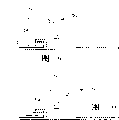
图8是按照本发明第一实施例的一扣锁装置的俯视图,表示一锁定方位,并定向安装在部分示意表示的另一种已有技术外壳的一部位上;该视图的视向大致与表示一已有技术扣锁装置的图4的视向类似;Fig. 8 is a top view of a snap lock device according to the first embodiment of the present invention, showing a locking orientation, and oriented installed on a part of another kind of prior art housing partially schematically shown; The direction of view of Fig. 4 representing a prior art snap lock device is similar;
图9是图8所示的扣锁装置的侧视图;本图的视向大致与图5的类似,并表示了处于一脱开方位的新的扣锁装置;Fig. 9 is a side view of the locking device shown in Fig. 8; the viewing direction of this figure is roughly similar to that of Fig. 5, and shows the new locking device in a disengaged orientation;
图10是图9所示的锁扣被部分关闭时的侧视图;该图的视向大致与图6的类似;Fig. 10 is a side view of the latch shown in Fig. 9 when it is partially closed; the direction of view of this figure is roughly similar to that of Fig. 6;
图11是图8-10所示装置的侧视图,其中的锁扣处于完全关闭的方位;本图总体上是类似于图7的另一种方式;Figure 11 is a side view of the device shown in Figures 8-10, with the latch in a fully closed position; this figure is generally another form similar to Figure 7;
图12是按照本发明扣锁装置的第二实施例的俯视图,该装置安装在一局部示出的外壳装置上并处于关闭方位;该图的视向大致与图4和8的类似;Figure 12 is a plan view of a second embodiment of the latching device according to the present invention, mounted on a partly shown housing device and in a closed position; the orientation of this figure is generally similar to that of Figures 4 and 8;
图13是图12所示的装置的侧视图,本图表示该扣锁装置处于完全关闭的方位;其视向大致与图7和11的类似;Figure 13 is a side view of the device shown in Figure 12, this figure showing the latch in a fully closed orientation; its viewing orientation is generally similar to that of Figures 7 and 11;
图14表示图8-11所示的扣锁装置从任一外壳装置上卸下后的俯视图;Figure 14 shows a top view of the locking device shown in Figures 8-11 after it is removed from any housing device;
图15是图14所示的扣锁装置的仰视图;Fig. 15 is a bottom view of the snap lock device shown in Fig. 14;
图16是图14和15所示的扣锁装置的侧视图;Figure 16 is a side view of the catcher shown in Figures 14 and 15;
图17是图14-16所示装置的立体图;Figure 17 is a perspective view of the device shown in Figures 14-16;
图18是图17所示装置的端视图,是朝着锁扣端看去的端视图;Figure 18 is an end view of the device shown in Figure 17, looking towards the latch end;
图19是朝向与图18中的那端相反的一端的端视图;以及Figure 19 is an end view towards the end opposite to that in Figure 18; and
图20是一外壳组合件的侧视图,该组合件包括装在上面的按图14-16的扣锁装置,假想线表示某些可以任选的外壳结构件。Figure 20 is a side view of a housing assembly including the latch assembly of Figures 14-16 attached thereto, with phantom lines showing some of the optional housing structures.
详细说明Detailed description
Ⅰ.一种已有技术的扣锁和空气滤清器装置Ⅰ. A prior art latch and air cleaner assembly
首先看图1-7。在图1和2中表示了一种已有技术的空气滤清器外壳装置。总的说来,该装置1包括一外壳5。该外壳的结构能在其中合适地安置一过滤元件6,如图2所示。总的说来,空气滤清器外壳,如外壳5,包括一些合适的结构供待过滤的空气进入和已过滤的空气向外流到一进气系统。例如,所示的具体的装置是一车辆如卡车、农业设备(拖拉机)或工业专用设备(叉车)的发动机的进气系统的一部分。对于如图1和2所示的具体的外壳5,用标号“7”表示待滤空气的进气口,而标号“8”表示通向发动机进气口的清净空气出气口。First look at Figure 1-7. A prior art air cleaner housing assembly is shown in FIGS. 1 and 2 . Overall, the device 1 comprises a
在图1和2中表示的具体的外壳5使用了一个用于选定的预滤水平的“漩风式分离”系统。也就是说,当待过滤的空气进入进气口7后,是以类似漩风方式流经外壳5的。当发生这种情况时,被空气流携带的一些物料将会从空气流掉落到在图1中总的以标号“10”表示的空气滤清器的“底部”。在该底部10上示出一传统的排泄口装置11(可任选的),用于除去这些物料。The
空气滤清器装置1的外壳5包括第一和第二部分14和15。当该空气滤清器装置1被组装时,该两部分14和1 5限定了该外壳5。当将这两部分14和15拉开,就提供了向该外壳5内部的通道。照此,就可操作位于外壳5内的空气过滤器6而进行维修。在图2中,两部分14和15已被拉开,从而露出过滤元件6。如两部分14与15被进一步分开,就能维修该元件6。从附图可清楚看到:对于该所示的具体组件,任一部分14或15稍呈盘形或桶形,即,每个部分有一端部和一略呈圆筒形的侧壁。对于所图示的具体装置,没有哪一部分14或15简单地是一端盖,而均有一较深的,即至少为2.5-5.0厘米深度的侧壁。在通常这样的装置里,部分15的侧壁约5至10英寸(即约12至26厘米)长,部分14的侧壁通常为2至6英寸(即约5至16厘米)长。这样的过滤器外壳其结构一般适用于下列车辆和机器:如反铲、导轨转向装载机、轮子装载机、拖拉机、喷撒机、发动机、小卡车和客车等。The
两部分14和15由锁扣17固连在一起。在诸通常的系统中,设有至少两只锁扣17。在直径约为6英寸(即约15-16厘米)或更大的圆筒形外壳的系统中通常使用了至少三只锁扣。The two
在部分14上每只锁扣17安装在一锁扣座20上。每只锁扣17包括一手柄部分或手柄段21和一钩子或锁扣段22。在图1、4和7中所表示的诸锁扣17处于“锁定”或“扣锁”位置。在操作时,如下面要详细讨论的,如手柄段21沿着大致如图7中的箭头“A”所示的弧线移动时,锁扣段22将沿着如箭头“B”所示的总的方向移动。这样,就导致钩子段22的凸端23从部分15中的收置槽24中脱开。Each
关于锁扣17的工作,现在参阅图4-7。在图4中,表示了锁扣17的俯视图。总的说来,手柄21包括分别与支座20上的收置槽29和30啮合的两相对的第一销27和第二销28。其结果是,手柄21能沿着图5、6和7中所示的总的方向以销子27和28为枢轴而摆动。对于典型的系统,支座20的设置应使:槽或孔29、30离开锁扣17与部分15相啮合的地点,即离开槽24的入口的距离约为0.62英寸(即约1.5-1.6厘米)。Regarding the operation of the
在图3中,提供了沿着图2中的线“3-3”的部分的剖面图。回过来再看图2和3,显然,在图2中所示外壳部分15包括它的端部31的一个朝外突出的凸缘33。在该凸缘33上设置有诸收置槽24。凸缘33还包括邻接于其外缘34的一圆周段或凸缘区35。对于每个槽24,凸缘区或凸缘段35是一将槽24与外缘34分开并部分限定该槽24的薄条或薄段35a。In FIG. 3 , a cross-sectional view of a portion along line "3-3" in FIG. 2 is provided. Referring back to Figures 2 and 3, it will be apparent that in Figure 2 the
现在参阅图7,在使用时,当要将部分14与15互相接合时,每只锁扣17就与诸槽24中被选定的一条槽对准。通过如从图5、图6到图7所示的顺序表示出与槽的啮合。Referring now to FIG. 7, in use, each
参阅图5,其中的手柄21正处于脱开方位。锁扣段22转动而使其尖端部23邻接于或进入与部分15的部分36啮合的位置。并且,该尖端部23已经对准于收置槽24。如从图6至7所示的顺序,当手柄21朝着图7中的锁定位置转动时,凸端部23压入收置槽24。最后,当到达图7中的位置后,手柄21就摆过中心而达到锁定。如此,如图4所示,在锁定啮合期间凸端部23被部分插入收置槽24中。Referring to Fig. 5, the
一般说来,图1-7所示的这种锁扣由两段弯曲的金属丝组成。手柄通常由直径约0.086英寸(即,约0.2-0.3厘米)的金属丝制成;钩子部分由直径约0.08英寸(即0.06-0.09英寸)(即,约0.1-0.3厘米)的金属丝制成。通常,该金属丝为琴用钢弦,经弹性调质处理,还加上防锈涂层。该金属丝的结构要使能用手将它卡入支座20到位。如需要的话,也能用手将它卸开和更换。Generally speaking, a latch of the type shown in Figures 1-7 consists of two curved lengths of wire. The handle is usually made of wire about 0.086 inches (ie, about 0.2-0.3 cm) in diameter; the hook portion is made of wire about 0.08 inches (ie, 0.06-0.09 inches) in diameter (ie, about 0.1-0.3 cm) . Typically, the wire is piano string, elastically tempered, and coated with an anti-rust coating. The wire is configured so that it can be snapped into place by hand into the
再参阅图4-7,锁扣座20包括在外壳部分14上的横制塑料延伸部。该支座20包括图4所示的诸收置槽,以分别收置销子27和28。Referring again to FIGS. 4-7 , the
手柄部分21由单根弯曲金属丝构成,它包括一手柄段21a、中心环21b和销子29和30。中心环21b可用来容纳锁扣部分22的一部分作为回转的支承点。The
手柄部分21可有许多种形状,以便方便地抓握和操作。如图4所示,位于中心环21b与销子27和28之间有一延伸段21c。参阅图7,大致上将延伸段21c相对于手柄段21a弯折一正确的角度,而中心环21b位于该转角的急拐侧。这样有助于当扣锁装置17如图7所示的形状时,手柄21摆动“过中心”以确保由锁扣段22提供的弹簧张力而达到锁定啮合。或者说,当该扣锁装置处于图7所示的扣锁位置时,钩子段22在点21d与21e之间处于张紧状态;而且,点21d与21e之间的一直线位于枢轴销28之下方。这样,该系统处于张紧状态,并“越过”中心,故能保持锁定。The
在这方面,词汇“正确角度”的意思指的是在延伸部21c与21a之间测得的三维角度。如图7所示,该弯角的投影的尺寸约为150°至160°,通常为153.9°。但是,必须理解的是:在图7中,延伸部21c沿着从环21b朝着安装槽30的方向略微离开观察者而延伸。一般说来,对于如图4-7所示的已有技术来说,该正确角度相对于投影角度只有一点点,也许是1°-3°的变化。In this connection, the term "correct angle" means the three-dimensional angle measured between the
锁扣部分22的结构外形呈一大拱形,在图4中的销子22a(啮合于环21b)与端部23之间的范围内延伸。从图7的侧视图可看到这一大拱形,当该装置17“过中心”锁定(如图7所示)时,还提供一些弹簧张力。The locking
参阅图7,一般紧挨着看钩子段凸端部23处,该钩子段22包括一肩部结构37,在扣锁过程中该肩部结构直接紧靠或啮合于薄段35a中。图7中表示出啮合发生在37a处。Referring to Fig. 7, looking generally adjacent to the
上述的装置是一种已有技术的滤清器结构,该种装置由本发明的受让人,即Donaldson Company,Inc.在全世界范围内制造和出售。它已包括到Donaldson产品中,其中一些被出售以用在上面提到的一些车辆和设备上。The above-described device is a prior art filter construction manufactured and sold worldwide by The Donaldson Company, Inc., the assignee of the present invention. It has been incorporated into Donaldson products, some of which are sold for use on some of the vehicles and equipment mentioned above.
在前面一段提到过的Donaldson Company的产品包括用HIMONT SB-224-2,即一种商用等级的塑料制成的外壳。外壳上的每条收置槽24的宽度大致为约15-16毫米,它在8°至14°的径向弧度内延伸。每个部分15通常包括16至24条槽24,这取决于外壳直径大小。另外,该装置在每条槽24与外缘34之间有一宽度约1-2毫米的塑料凸缘或薄段35a,在扣锁过程中,该凸缘35a上延伸有钩子段22。如图7所示,在扣锁过程中钩子段尖端部23通常被收置在槽24中。The Donaldson Company product mentioned in the previous paragraph includes housings made of HIMONT SB-224-2, a commercial grade plastic. The width of each receiving
在使用时,在按照上述已有技术的装置中产生有一些磨损或疲劳问题。这种磨损或疲劳以多种方式表现出来。In use, some wear or fatigue problems arise in devices according to the prior art described above. This wear or fatigue manifests itself in a variety of ways.
例如,当金属丝凸肩部37直接啮合于薄段或凸缘35a上,即在37a处啮合时,过一段时间就会看到较软的商业等级的塑料发生了变形。尤其是,硬的金属丝凸肩部37将会卡入薄段35a并在其上形成凹槽,削弱了这些部位的塑料。如在组装过程中维修该空气滤清器装置1的人员使用锁扣17将部分14“咬”住部分15时,就加剧了这种现象的发生。也就是说,如在开始扣锁操作之前,维修外壳5的人将部分14用力加压于部分15时,前面讨论过的这种凸肩部分34卡入凸缘或薄段35a的现象还会发生,但有所减弱。但是,我们可以看到:在实际的实线中,维修如图1和2所示的这样的外壳的人员会将部分14朝部分15推,但在扣锁住之前不完全进入邻接位置。在发生这种情况时,维修该空气滤清器1的人员将锁扣17用作一杠杆,以将外壳两部分14和15彼此推在一起而相互咬合。这样一个杠杆作用通常将凸肩部37进一步卡入凸缘或薄段35a中。For example, when the
此外,如图4-7所示的锁扣结构由于杠杆作用会使薄段35a多少朝外离开部分1 5的其余部分。这情况大致由图7中的箭头38表示了。这样能削弱或疲劳在薄段35a区域的塑料,甚至更坏。In addition, the locking structure shown in Figures 4-7 will cause the
上述这种现象的结果在有些情况下能使在薄段或凸缘35a区域的外壳5部分损坏。所以,希望有一种另外的外壳/锁扣结构设计,以减少这种现象。The result of this phenomenon described above can in some cases damage parts of the
下面讨论三种新的锁扣设计,以多种方式论述这三个问题。Three new latch designs are discussed below, addressing these three issues in a variety of ways.
Ⅱ.第一种锁扣设计Ⅱ. The first lock design
按照本文所述某些原理设计的第一种新的锁扣结构在图8-11和14-19中表示为标号“50”。该锁扣50是一两件式金属丝锁扣。特别是,如图16所示,该锁扣50包括手柄段51和钩子或卡子段52。手柄段51可与手柄段21相同,即,它可为一传统的手柄段。A first new latch structure, designed according to some of the principles described herein, is designated as "50" in Figures 8-11 and 14-19. The
在图14-19中表示了从外壳结构分离出来的锁扣装置50。在图14中表示出一俯视图;图15中表示了一仰视图;图16表示了一侧视图;图17中表示了该装置的立体图;图18为一面向钩子段52注视的端视图;图19为一与图18相反的端视图。在图17中,表示该装置50装在另一种传统的外壳5上。The
在图8中表示了安装在一外壳上的扣锁装置50的俯视图。在图9-11中表示了扣锁装置50的侧视图,从一脱开方位到一扣锁方位。In FIG. 8 a top view of the
锁扣50的钩子或卡子段52基本上与图4-7所示的段22不同。如下所述,这些差别带来了明显的优点。The hook or catch
有关这些差异,总的请参阅图8,9,10,11,14,15,16,17,18和19。先参阅图17,钩子段52有一包括凸肩部56和57及延伸部58和59的端部55和凸端部60。凸端部60在延伸部58和59之间延伸。延伸部58和59通过凸肩部56和57连接于钩子段52的剩余部分。如此,延伸部58、59和凸肩部56、57一起限定了两个钩子延伸部。很明显,在图17中所示的、在点58a与59a之间延伸的一侧向凸端延伸部60比外壳5上的一相关的收置槽24宽些。这点可从图8看出。See Figures 8, 9, 10, 11, 14, 15, 16, 17, 18 and 19 in general for these differences. Referring first to FIG. 17, the
说得更准确些,参阅图15,凸端部60包括一中央突出的尖端部64和侧臂或延伸部65和66。在使用时,该类端部64的尺寸和外形设计得使可伸入一收置槽24内。侧臂或延伸部65和66的尺寸和外形设计得使如图3和8中所示的、可支承在总的以“70”和“71”表明的、槽24的相对侧的那部分外壳部分14上。此外,图8中的延伸部58和59的尺寸和外形设计得使当锁扣50被啮合后(如图11所示),有助于阻止凸肩部56和57强力地压入段35中。More specifically, referring to FIG. 15,
由于这样的形状,当锁扣50被啮合时,尖端部64被推入收置槽24中,以便被牢固啮合在部分14与15之间。延伸部65和66支承在部分70和71上,使凸肩部56和57不直接压到段35a中。如此,钩子段52将不会如图4-7所示的已有技术装置的段22那样,直接压入段35a中。照这样,就能减小或避免某种损坏,即凸肩部37直接压在薄段35a(见图4)上产生的损害。Due to this shape, when the
总的说来,图15中的延伸部65和66是在同一平面内。也就是说,尖端部64的两较直段沿相反方向延伸但总的在同一平面内。最好是,它俩他是“相对地”在同一直线上,即,它俩不是共线,就是彼此交成一约9°-11°的尖角,它俩的假想的中心线将会相交。它们并不笔直地延伸一很大距离,通常只是约0.03至0.09英寸(即,约0.06-0.3厘米)。Generally speaking, the
总的说来,这里描述了最佳的距离和角度。已经知道:金属丝弯曲常常不可能很精确,常常会发生一些变化。但是,对所提供的长度、角度等的具体描述是可取的和有利的。In general, optimal distances and angles are described here. It is already known: wire bending is often not very precise, and some variations often occur. However, specific descriptions of the lengths, angles, etc. provided are desirable and advantageous.
锁扣50的形状设计得可在使用时减小产生对段35a的向外的杠杆作用或撕拉作用的力。与此有关的诸特点涉及延伸部58和59的长度、它们伸出时所朝的方向、凸肩部56和57的形状和位置以及延伸部75和76的拱形部,如图17。另外,延伸部58和59、凸肩部56和57以及延伸部75和76总的限定了在钩子件52中的两侧向间隔开的钩子延伸部。The
现在来对比一下图7和11。在图7中以侧视图方式表示了已有技术的锁扣17,图中显示,当该锁扣安装在一锁扣座20上,并被固定在一关闭或扣锁位置时,此时的扣锁力将部分14固连于部分15,并使两者的方位或多或少为水平的。在图11中表示出了一类似的锁扣结构设计50。Now compare Figures 7 and 11. In Fig. 7, a
先来看图7的已有技术装置中的延伸部41。延伸部41是呈拱形的。当被闭锁时,即从图7的侧视图看,该拱形部的一“顶点”42相对于锁扣17的凸端部23位于下列诸特征部的“手柄侧”:凸端部23和该凸端部23扣入槽24的那一点37a。在这里使用的名词“顶点”指的是当从图7的侧视图看去时的拱形部41的弯弧的最高点。Consider first the
此外,参阅图4和7,段41的拱形部的弧的大小设计得使段43沿一大致向上倾斜的方向延伸,并越过锁扣座20朝向凸肩部37的顶点44延伸。In addition, referring to FIGS. 4 and 7 , the arc of the arcuate portion of
现在来看图11,这是一个表示处于扣锁或锁定方位的新锁扣设计的侧视图。延伸部76的顶点或最高点85处在略为向前的方位。例如,尽管图7中所示的顶点42几乎直接在手柄21的枢轴27和28之上方,而图11中所示的顶点85基本上比这个位置靠前,即,更靠近外壳部分14。事实上,顶点85或直接位于槽24的上方,或比其更靠前些。它也可或直接位于段35a和啮合点37之上方,或比其更靠前些。Turning now to Figure 11, this is a side view showing the new latch design in the latched or locked orientation. The apex or
本文中当谈到顶点85位于某些零件的直接上前方部位时,类似于图11从侧视图中观察某零件时有一基准作为参考,同时图中所示的夹紧部分一段处于水平状态。例如,在图11中所示的一条虚线垂直通过了槽24、段35a和尖端部64。顶部85或与虚线86相交,或其位置点处于此虚线86的任一侧并与此虚线交成夹角在5°以内。当遇到这样的情况时,此顶点85可表征为“基本上直接”或“直接”在假想的垂线所通过的该特征部的上方。当然,这里的“直接在上方”指的是图11的平面投影,因此,需要说明的事实是:顶点85实际上在三维方向比起槽24更靠近观察者。When referring to the apex 85 in the direct upper front position of some parts in this paper, there is a benchmark as a reference when observing a certain part from a side view similar to Fig. 11, and a section of the clamping part shown in the figure is in a horizontal state simultaneously. For example, a dotted line shown in FIG. 11 passes through
另外,仍然参阅图11和8,延伸部76有足够长度,使得细长延伸部58和59沿着一总的与第二部分14相反的方向离开槽24而延伸出至少1.1-1.4英寸(即约2.7-3.6厘米),最好为1.298英寸(即,约3.2-3.3厘米),直到急拐弯或弯弧77处为止。延伸部75的形状是类似的(和延伸部76镜面对称)。In addition, still referring to FIGS. 11 and 8, the
有关延伸部75和76的形状和长度等特征的描述有助于确保:当手柄段51位于如图11所示的超过中心和锁定方位时钩子段52趋于沿着比较直接朝向部分14和锁扣座20的方向拉动而靠住侧边70和71,而且比起图4-7中的已有技术的装置,具有较少的将段35a向外撕裂的分力。事实上,对延伸部75和76采用一合适的长度和曲率,能大大减小施加于段35a上的朝外的撕拉力。The description of the shape and length of the
Ⅲ.第二种锁扣设计Ⅲ. Second lock design
现在看图12和13,其中的第二种锁扣设计包含了一些按照本发明选取的特点。总的说来,图12和13所示的锁扣设计采用了一种多少类似于在图8-11中所示的该装置的结构的凸端部外形,将段70和71加压在槽24的侧面,而不是加压在段35a上。但是,图12和13所示的装置未采用图8-11所示的延伸的弧形段75和76,来防止作用于段35的向外的力。图12和13所示的第二种锁扣设计总地解除了锁扣凸肩直接卡入段35a中的许多问题,但是并未象图8-11所示的装置那样,在超过中心锁定过程中大大地将向外拉的作用在段35a上的力大大减小。Referring now to Figures 12 and 13, the second latch design wherein includes some selected features according to the present invention. In general, the latch design shown in Figures 12 and 13 employs a male end profile somewhat similar to the construction of the device shown in Figures 8-11, pressing segments 70 and 71 against the slots. 24, rather than pressing on
让我们详细看看图12和13,其中描绘了锁扣设计100。该锁扣100包括一手柄段101和一钩子或锁扣段102。手柄段101可与上面的的手柄段51和52相同。Let us look in detail at Figures 12 and 13, which depict the
仍然看图12和13,钩子或锁扣段102包括侧向延伸部106和107、凸肩部110和111以及钩子伸出部或端部113,该端部具有延伸部114和115以及在它俩之间的悬伸尖端部116。延伸部114和115的尺寸和外形设计得使当如图12和13所示的锁扣100啮合时延伸部114、115支承在侧边70和71上。照这样,延伸部114和115的操作总的类似于上述如图15所示的延伸部65和66。也就是说,在操作时,锁扣100的结构和外形使得在使用时凸肩部110和111并不直接支承在段35a上。而恰恰是:与图8-11的设计类似,由于锁扣设计100的啮合引起的负荷将施加在侧边70和71上。Still looking at Figures 12 and 13, the hook or
另一方面,如图12和13所示的该装置的侧向延伸部106和107总的类似于图4-7所示的已有技术的装置的侧向延伸部。参阅图13的侧视图,延伸部107是拱形的,它有一顶点123,该顶点总的处在锁扣座20的上方而几乎直接位于枢轴点124之上方。总的说来,它是从收置槽24和段35a明显地朝向手柄段101。此外,延伸部106和107的外形使得当锁扣100被啮合时,凸肩部110和111较邻近于槽24,并且使部分112从凸肩110和111大致向上朝顶点123延伸。这意味着:当该装置100已啮合(即,超过中心锁定)时,就产生了大致沿着由图13中的箭头“140”所示的方向的一些力,这些力多少作用于段35a将它朝外拉。如此,如上说明的,图12和13的装置100会减少对图4-7所示的已有技术装置讨论过的那种凸肩部与段35a相啮合的问题,但它并未大大减小对已有技术装置所描述的朝外的拉力(这是由于延伸部75和76的形状而得以减小或变得最小,如结合图8-11和14-19的锁扣设计50所描述的)。On the other hand, the
具体实施例specific embodiment
从上述描述,将能理解按照本发明的多种扣锁装置的总的操作原理。在这一部分里要详细揭示一些最佳实施例的技术参数、程序和材料等。From the foregoing description, the general principles of operation of various latch arrangements according to the present invention will be understood. In this part, the technical parameters, procedures and materials of some preferred embodiments will be disclosed in detail.
外壳shell
总的来说,在许多最佳实施例中,外壳可由一种聚丙烯塑料,通常为HIMONTSB-224-2制成。In general, in many preferred embodiments, the housing can be made of a polypropylene plastic, typically HIMONTSB-224-2.
在按照这里的揭示内容的空气滤清器装置中使用的塑料外壳可做成多种尺寸和形状。一段,可以包括内径为约4至8英寸(即,约10-21厘米)和外部长度约7至16英寸(即,约17-41厘米)的外壳。这样的外壳能用于多种车辆和设备,例如反向铲、滑道转向装载机、车辆装载机、拖拉机、喷洒机、发电机、小卡车和客车等。Plastic housings used in air cleaner assemblies according to the disclosure herein can be made in a variety of sizes and shapes. One segment, may include a shell having an inner diameter of about 4 to 8 inches (ie, about 10-21 centimeters) and an outer length of about 7 to 16 inches (ie, about 17-41 centimeters). Such enclosures can be used on a variety of vehicles and equipment such as backhoes, skid steer loaders, vehicle loaders, tractors, sprayers, generators, pickup trucks and passenger cars, among others.
通常,外壳侧壁的厚度用注模技术可模制成约0.07至0.12英寸(即约0.1-0.3厘米)。与图3中的凸缘33对应的凸缘一般制成宽6-8毫米、厚4-6毫米,并在其中制有彼此均匀分布的并具有扩展弧约为8°-14°的诸条槽。通常对于这样的装置,这些槽24的宽度约为2至5毫米,长度约为14至18毫米。这样将在段33留下一厚度约1至2毫米的、如图3中所示的外缘35a。Typically, the thickness of the housing sidewalls can be molded to a thickness of about 0.07 to 0.12 inches (ie, about 0.1-0.3 centimeters) using injection molding techniques. The flange corresponding to the
外壳可模制为带有多种入口和出口配置方案,并且可随意地带有或不带有排泄口。如需要的话,该装置可设计成具有漩风作用以供预过滤之用。该装置可设计有多种密封结构用于不同的过滤元件。如Donaldson的FPG空气滤清器的产品通常设计成可用诸如欧洲专利0329659中描述的那些径向密封装置,该欧洲专利揭示的全部内容已被包含在本文中以供参考。多种元件结构设计能用于包括具有相似的结构的外壳上。此外,还有多种特定的结构可用于径向密封部分,包括最佳的有台阶的而不是平滑的设计。The housing can be molded with a variety of inlet and outlet configurations, optionally with or without a drain. The unit can be designed with cyclone action for pre-filtration if desired. The device can be designed with various sealing configurations for different filter elements. Products such as Donaldson's FPG air cleaner are generally designed to utilize radial seals such as those described in European Patent 0329659, the disclosure of which is incorporated herein by reference in its entirety. A variety of element structural designs can be used including housings with similar structures. In addition, there are a variety of specific configurations available for the radial seal section, including preferably stepped rather than smooth designs.
当然,该外壳通常可模制成两部分,锁扣座就可与其中一个部分整体性模制在一起。锁扣座通常还具有在其中延伸的或穿通的枢轴孔,直径约2-4毫米。这些枢轴孔在外壳5组装时通常离收置槽24的入口约1.5-2.5厘米。Of course, the housing can generally be molded in two parts, with the latch seat being integrally molded with one of the parts. The latch mount also typically has a pivot hole extending therethrough or therethrough, approximately 2-4 mm in diameter. These pivot holes are usually about 1.5-2.5 cm away from the entrance of the receiving
金属丝扣锁装置Wire buckle lock device
金属丝扣锁装置可使用多种特定的形状。这里即使考虑到对最佳操作规定了诸功能,仍有多种弯曲金属丝的结构可以办到。图14-19所示的特定的装置是可取的,至少一部分可取,因为当在一外壳上使用该装置时,它提供了一种有吸引力的并引入注目的外貌。当然,图14-19的装置在某些部分的确具有最佳的尺寸和弯曲度足以作出最佳的动作。但是,明显的是:本文所述的具体原理能用在具有多种外貌的扣锁装置上。Wire shackles are available in a variety of specific shapes. Here, even taking into account the functions specified for optimal operation, various configurations of bent wires are possible. The particular arrangement shown in Figures 14-19 is desirable, at least in part, because it provides an attractive and eye-catching appearance when the arrangement is used on a housing. Of course, the device of Figures 14-19 does have some parts that are optimally sized and curved enough for optimal motion. However, it should be apparent that the specific principles described herein can be used on latches having a variety of appearances.
当涉及图8-11(和图14-19)的金属丝扣锁装置或图12和13的第二实施例时,金属丝材料可用于两锁定的部分。一般,可使用琴钢丝、弹簧回火、镀锌、直径约为0.06-0.09英寸(通常为0.08英寸)(即,约0.1-0.3厘米)的黄色彩的金属丝。这种金属丝由伊利诺斯州芝加哥W.Roosevelt路5100号的Dudek and Bock公司供应。When referring to the wire snap lock device of Figures 8-11 (and Figures 14-19) or the second embodiment of Figures 12 and 13, wire material may be used for both locking parts. Typically, music wire, spring tempered, galvanized, yellow colored wire having a diameter of about 0.06-0.09 inches (typically 0.08 inches) (ie, about 0.1-0.3 centimeters) may be used. This wire was supplied by Dudek and Bock, 5100 W. Roosevelt Road, Chicago, Illinois.
手柄段(51,101)通常由一长约4.5-5.5英寸(即,约11-14厘米),最好为约5.262英寸(即,约13.3-13.4厘米)的单根金属丝形成。见图14-18,各销301、302伸长约0.1-0.3英寸(即,约0.2-0.8厘米),最好为约0.245英寸(即,约0.6-0.7厘米)的距离到达90°弯头处303、304。各环305、306从毗连的弯头(303,304)的中心开始一长度约为0.36-0.42英寸(即,约0.9-1.1厘米),最好为约0.384英寸(即,约0.9-1厘米),然后以约0.07-0.12英寸(即,约0.1-0.2厘米),最好为约0.097英寸(即,约0.2-0.3厘米)的半径扭转,在每个环里留下一小孔,其直径约为0.06-0.16英寸(即,约0.1-0.5厘米),最好约0.114英寸(即,约0.2-0.3厘米)。从各环(305,306)的端部到每下一个毗连的弯头处(307,308),一般将为一长约0.4-0.7英寸(即,约1-1.8厘米),最好约0.582英寸(即,约1.4-1.5厘米)的延伸部。弯头(307,308)的弯角约为131-135°,最好约133.9°。从弯头307到图14的中央弯头处309约为0.2-0.5英寸(即,约0.5-1.3厘米),最好约0.366英寸(即,约0.9-1厘米)。从弯头307到中央弯头处308的距离最好相同。The handle segments (51, 101) are typically formed from a single wire that is about 4.5-5.5 inches (ie, about 11-14 centimeters), preferably about 5.262 inches (ie, about 13.3-13.4 centimeters) long. 14-18, each
见图16,在段312与段313之间的投影角310一般为约152°-156°,最可取的是约153.9°。真实角与这一投影角之间多少有几度的差别。该“真实”角是在段312与段313之间按三维测量的角。见图14,在段316与段317之间的投影角315一般约为130°-136°,通常为约133.9°。真实角将略有变化(在几度内)。最后,在图14中的手柄51的尖端部309上的角308一般延伸为约50°-60°,通常为55°的角。Referring to Figure 16, the projected
如上面描述所指出的,图8-11(14-19)的装置的锁扣段与图12和13的第二装置的锁扣段不同。首先注意图8-11(和14-19)的锁扣段52。As indicated in the above description, the locking section of the device of Figs. 8-11 (14-19) is different from that of the second device of Figs. 12 and 13 . Attention is first drawn to the
先参阅图15,在凸端部60中的点330与点331间的一距离,即凸端部60延伸在延伸部58与59间的距离,一般约约0.5-0.7英寸(即,约1.2-1.8厘米),最好为为0.63英寸(即,约1.6-1.7厘米)。沿着这一距离,各臂65、66延伸一约0.04-0.08英寸(即,约0.1-0.3厘米),通常约0.060英寸(即,约0.1-0.2厘米)的距离,并分别在弯曲部332、333处以一约0.03-0.07英寸(即,约0.05-0.2厘米),通常约0.050英寸(即,约0.1厘米)的半径向下弯曲到尖端部64。在弯角部332、333与尖端部64间的延伸部的长度通常约0.130-0.190英寸(即,约0.3-0.5厘米),最好约0.160英寸(即,约0.4-0.5厘米)。总的说来,由于诸弯角部的存在,凸端部60在点330与331间的总长度约0.5-1英寸(即,约1.2-2.6厘米),通常约0.706英寸(即,约1.7-1.8厘米),点330与331间的直线距离比凸端部60的伸展后的实际长度短约5-20%,通常短约10.8%。Referring first to FIG. 15 , the distance between
尖端部64从各臂65、66伸出一至少为0.07-0.09英寸(即,约0.1-0.3厘米),通常约0.085英寸(即,约0.2-0.3厘米)的距离。
最好在使用时,在65、66处的诸突肩部或延伸部伸出槽24的侧边一段约0.130-0.150英寸(即,约0.3-0.4厘米)的距离,以便以所述的最佳方式啮合。总的说来,图12和13所示的实施例的凸端部113可采用类似的尺寸。Preferably, in use, the shoulders or extensions at 65, 66 protrude a distance of about 0.130-0.150 inches (i.e., about 0.3-0.4 centimeters) from the sides of
仍然参阅图8-11(和14-19)所示的第一实施例,现在注意钩子或锁扣段52的剩余部分。参阅图14,组件52一般是从一长约4.5-5.5英寸(即,约11.4-14厘米),通常为约5.014英寸(即,约12-13厘米)的单根金属丝弯成。延伸部350、351延伸了一约0.1-0.4英寸(即,约0.2-1厘米),通常为约0.220英寸(即,约0.5-0.6厘米)的直线距离,然后在弯角部352、353处弯转一约60°-80°,通常为约70.6°的角度。销子350、351伸过在段51中的环305,306,达到稳固的枢轴转动啮合。Still referring to the first embodiment shown in FIGS. 8-11 (and 14-19 ), attention is now directed to the remainder of the hook or
在延伸部350、351的每个拱形侧,弯曲部352、353与弯曲部355、356的起始部之间的距离是约1-1.5英寸(即,约2.5-3.9厘米),通常约1.169英寸(即,约2.8-3.1厘米)。沿着图16的虚线360在弯曲部353与356之间的直线距离为约1-1.4英寸(即,约2.5-3.6厘米),通常约1.14英寸(即,约2.8-3厘米)。如此,段370的弧的半径通常为约1.3-1.6英寸(即,约3.3-4.1厘米),最好约1.5英寸(即,约3.8厘米)。沿着直线360的直线距离比弧长短约1%-5%,通常约3%。On each arcuate side of
从图14和15注意到:最佳的延伸部350、351彼此间基本上不弯成弓形。恰恰相反,当从俯视方向看时,在弯曲部352、353与355、356间它们是相对笔直的延伸部。Note from Figures 14 and 15 that the
参阅图15和16,对于每个延伸部(75,76),最好在如图11所示的锁定方位时,弯曲部381的中心380离枢轴353/352的直线距离至少约为1.1-1.5英寸(即,约2.7-3.9厘米),通常约1.295英寸(即,约3.2-3.3厘米)。另外,最好使段75、76的拱形延伸部的顶点85位于图11中的槽24之上方或槽24的前方(在50内)。Referring to Figures 15 and 16, for each extension (75, 76), preferably in the locked orientation as shown in Figure 11, the
参阅图16,弯曲部380的半径最好为约0.1-0.2英寸(即,约0.2-0.6厘米),通常约0.170英寸(即,约0.4-0.5厘米)。还有,图15中的侧向延伸部58和59最好在遇到弯曲部330、331之前伸长一约0.1-0.3英寸(即,约0.2-0.8厘米),通常约0.280英寸(即,约0.7厘米)的距离。Referring to FIG. 16, the radius of the
总的说来,图8-11和14-19所示的结构方案总的包括某些可取的特征。如选择了一根直径和长度如上所述的金属丝,并将它弯成如上述这些图所示的形状,就能容易地构制成有用的扣锁装置。In general, the structural solutions shown in Figures 8-11 and 14-19 generally include certain desirable features. By selecting a wire of the above diameter and length and bending it into the shape shown in the above figures, useful latching means can be readily constructed.
参阅图16,点387与388之间沿着直线389的距离最好为0.7-0.9英寸(即,约1.7-2.3厘米),通常为0.845英寸(即,约2.1-2.2厘米)。Referring to Fig. 16, the distance between
现在将注意力转向图12和13的该装置。段101总的能被视作上述的段51。Attention is now turned to the device of FIGS. 12 and 13 .
另外,对于图8-11(和14-19)的该实施例,前面已描述了凸端部113的最佳“尺寸”和形状,尤其是对臂114、115和尖端部116的描述。与用于图8-11(和14-19)的装置的形状类似的形状能用于图12和13的实施例。Additionally, for this embodiment of Figures 8-11 (and 14-19), the optimum "size" and shape of the
关于锁扣段102的剩余部分,现在注意如图12和13所示的具体结构。销子400、401的长度和弯曲部402、403的尺寸总的能和上述图8-11(和14-19)的装置相似。总的说来,一根其总长大致与已有技术的装置(图4-7)相等的金属丝可用于一典型的锁扣段102。每个延伸部弯成一基本的弧形段,该弧的半径约为0.5-0.7英寸(即,约1.2-1.8厘米),通常为0.6英寸(即,约1.5-1.6厘米)(尽管有时多少变成扁圆的)。另外,参阅图12,有时最好在段430与431之间稍微有些弓形。With regard to the remainder of the
顶点123总的将在位于槽24的入口与环432之间的装置的一部分的上方,典型的是位于槽24的入口与环432之间的中心处的上方,最典型的是:或者直接在枢轴124的上方,或者与一垂直通过图13中的水平面并通过枢轴124(将枢转点作为起始点)的直线夹一约10°以内的角度。通常,当从图13的方位观察时,顶点123将在枢转点124之上面或高于该枢转点124至少约0.1英寸(即,约0.2厘米)的距离,通常为0.2-0.4英寸(即,约0.5-1厘米)。The apex 123 will generally be over a portion of the device located between the inlet of the
还看图13,弯曲部440的半径约为0.02-0.1英寸(即,约0.05-0.3厘米),通常约0.05英寸(即,约0.1-0.2厘米)。Referring also to FIG. 13, the radius of the
Claims (11)
Applications Claiming Priority (2)
| Application Number | Priority Date | Filing Date | Title |
|---|---|---|---|
| US08/751,041 | 1996-11-15 | ||
| US08/751,041 US6022055A (en) | 1996-11-15 | 1996-11-15 | Latch arrangements; air cleaners with the latch arrangement; and methods |
Publications (1)
| Publication Number | Publication Date |
|---|---|
| CN1237232A true CN1237232A (en) | 1999-12-01 |
Family
ID=25020226
Family Applications (1)
| Application Number | Title | Priority Date | Filing Date |
|---|---|---|---|
| CN97199683A Pending CN1237232A (en) | 1996-11-15 | 1997-11-05 | Latch arrangements |
Country Status (11)
| Country | Link |
|---|---|
| US (1) | US6022055A (en) |
| EP (1) | EP0937208A1 (en) |
| JP (1) | JP2001508527A (en) |
| KR (1) | KR20000053285A (en) |
| CN (1) | CN1237232A (en) |
| AU (1) | AU715389B2 (en) |
| BR (1) | BR9714637A (en) |
| CA (1) | CA2271104A1 (en) |
| PL (1) | PL333239A1 (en) |
| WO (1) | WO1998021492A1 (en) |
| ZA (1) | ZA9710129B (en) |
Cited By (4)
| Publication number | Priority date | Publication date | Assignee | Title |
|---|---|---|---|---|
| CN102374080A (en) * | 2011-11-27 | 2012-03-14 | 蚌埠国威滤清器有限公司 | Air filter provided with lockable back cover |
| CN103591089A (en) * | 2013-11-28 | 2014-02-19 | 北京汽车股份有限公司 | Clamping structure of automobile ventilation plaque sealing board |
| CN112502876A (en) * | 2020-10-27 | 2021-03-16 | 温州职业技术学院 | Automobile filter convenient for replacing filter paper and machining device thereof |
| CN114379784A (en) * | 2021-12-30 | 2022-04-22 | 哈瓦国际航空技术(深圳)有限公司 | Aerial fire extinguishing cloud platform and unmanned aerial vehicle |
Families Citing this family (20)
| Publication number | Priority date | Publication date | Assignee | Title |
|---|---|---|---|---|
| US6093237A (en) * | 1998-06-04 | 2000-07-25 | Donaldson Company, Inc. | Stack filter assembly and methods |
| US6419718B1 (en) | 2000-10-13 | 2002-07-16 | Donaldson Company, Inc. | Cover member and air cleaner construction; use; and, method of assembly |
| JP2005519230A (en) * | 2002-03-08 | 2005-06-30 | ウィジャヤ、ヘル、プラサンタ | Assembled air filter for internal combustion engines |
| US7311748B2 (en) * | 2004-03-02 | 2007-12-25 | Parker-Hannifin Corporation | Air filter assembly system and method |
| US8567828B2 (en) * | 2005-02-07 | 2013-10-29 | Kapman Ab | Snap-type locking device |
| DE602006015503D1 (en) * | 2005-10-12 | 2010-08-26 | Kohler Co | Luftreinigeranordnung |
| US7963369B2 (en) * | 2007-01-26 | 2011-06-21 | Werner Co. | Step stool and method |
| KR100887022B1 (en) * | 2007-05-21 | 2009-03-04 | 동 규 김 | Ceiling type air purifier |
| US8460420B2 (en) * | 2007-09-07 | 2013-06-11 | Parker-Hannifin Corporation | Filter element |
| USD632770S1 (en) | 2008-06-13 | 2011-02-15 | Kohler Co. | Cyclonic air cleaner housing |
| US8808432B2 (en) | 2008-06-13 | 2014-08-19 | Kohler Co. | Cyclonic air cleaner |
| DE202008014053U1 (en) * | 2008-10-22 | 2010-03-11 | Mann+Hummel Gmbh | Locking device for filter housing |
| CN101866888B (en) * | 2009-04-14 | 2013-06-05 | 富准精密工业(深圳)有限公司 | Heat radiation device |
| DE202010002337U1 (en) * | 2010-02-12 | 2010-05-06 | Hailo-Werk Rudolf Loh Gmbh & Co. Kg | Ladder, in particular step ladder or folding step, with a platform, a riser, a support member and a bracket |
| RU2530364C1 (en) * | 2013-03-26 | 2014-10-10 | Открытое акционерное общество "Конструкторское бюро химавтоматики" | Liquid-propellant rocket engine chamber lock |
| US10066427B2 (en) | 2013-07-19 | 2018-09-04 | Gopro, Inc. | Simplified draw latch with bent wireform mid-linkage |
| US20170166000A1 (en) * | 2014-08-25 | 2017-06-15 | James W. Eberly, JR. | Paint can holder for painting |
| CA2928282C (en) * | 2015-05-14 | 2018-01-02 | Mercedes Textiles Ltd. | Cam and groove coupling with locking wire mechanism |
| CA2928281C (en) | 2015-05-15 | 2018-02-06 | Mercedes Textiles Ltd. | Cam and groove coupling with wire clip |
| US12239118B2 (en) * | 2023-01-11 | 2025-03-04 | Antonio Garrido | Fishing pole support assembly |
Family Cites Families (14)
| Publication number | Priority date | Publication date | Assignee | Title |
|---|---|---|---|---|
| US611445A (en) * | 1898-09-27 | Box-fastener | ||
| US783338A (en) * | 1904-02-11 | 1905-02-21 | Frederick H Ward | Sash-fastener. |
| US899084A (en) * | 1908-06-19 | 1908-09-22 | Caloric Fireless Cook Stove Company | Box-fastener. |
| US1042511A (en) * | 1909-05-03 | 1912-10-29 | David B Gann | Box-fastener. |
| US1372812A (en) * | 1919-06-05 | 1921-03-29 | Lyman L Harmon | Radiator-cap holder |
| US3847423A (en) * | 1973-04-02 | 1974-11-12 | Rexnord Inc | Dual spring action self adjusting latch |
| DE2802006C3 (en) * | 1978-01-18 | 1981-02-12 | Filterwerk Mann & Hummel Gmbh, 7140 Ludwigsburg | Knee lever lock for air intake filters of internal combustion engines, compressors and other air-sucking machines |
| DE8524040U1 (en) * | 1985-08-22 | 1985-12-19 | Lind, Werner, 2391 Oeversee | Quick release stopper |
| FI80768C (en) * | 1988-10-24 | 1990-07-10 | Rannila Paavo Oy | Joint for air conditioners |
| DE4024898A1 (en) * | 1990-08-06 | 1992-02-13 | Mann & Hummel Filter | INTAKE AIR FILTER FOR THE COMBUSTION ENGINE OF A VEHICLE |
| DE9214938U1 (en) * | 1992-11-03 | 1993-03-18 | Filterwerk Mann & Hummel Gmbh, 7140 Ludwigsburg | Toggle lever lock for intake air filters of internal combustion engines, compressors and other air-intake machines |
| US5441307A (en) * | 1993-09-01 | 1995-08-15 | Black Diamond Equipment, Ltd. | Adjustable length ski pole/clamp |
| US5547480A (en) * | 1994-01-21 | 1996-08-20 | Donaldson Company, Inc. | Cylindrical air filter with radially directed seal |
| US5545241B1 (en) * | 1995-01-17 | 1999-09-28 | Donaldson Co Inc | Air cleaner |
-
1996
- 1996-11-15 US US08/751,041 patent/US6022055A/en not_active Expired - Fee Related
-
1997
- 1997-11-05 JP JP52261398A patent/JP2001508527A/en active Pending
- 1997-11-05 BR BR9714637-4A patent/BR9714637A/en active Search and Examination
- 1997-11-05 PL PL97333239A patent/PL333239A1/en unknown
- 1997-11-05 CN CN97199683A patent/CN1237232A/en active Pending
- 1997-11-05 CA CA002271104A patent/CA2271104A1/en not_active Abandoned
- 1997-11-05 KR KR1019990704268A patent/KR20000053285A/en not_active Withdrawn
- 1997-11-05 WO PCT/US1997/019950 patent/WO1998021492A1/en not_active Ceased
- 1997-11-05 EP EP97946466A patent/EP0937208A1/en not_active Withdrawn
- 1997-11-05 AU AU51628/98A patent/AU715389B2/en not_active Ceased
- 1997-11-11 ZA ZA9710129A patent/ZA9710129B/en unknown
Cited By (6)
| Publication number | Priority date | Publication date | Assignee | Title |
|---|---|---|---|---|
| CN102374080A (en) * | 2011-11-27 | 2012-03-14 | 蚌埠国威滤清器有限公司 | Air filter provided with lockable back cover |
| CN103591089A (en) * | 2013-11-28 | 2014-02-19 | 北京汽车股份有限公司 | Clamping structure of automobile ventilation plaque sealing board |
| CN103591089B (en) * | 2013-11-28 | 2016-08-24 | 北京汽车股份有限公司 | A kind of clamping structure of automotive ventilation plaque sealing plate |
| CN112502876A (en) * | 2020-10-27 | 2021-03-16 | 温州职业技术学院 | Automobile filter convenient for replacing filter paper and machining device thereof |
| CN112502876B (en) * | 2020-10-27 | 2021-10-15 | 温州职业技术学院 | A kind of automobile filter and its processing device which is easy to replace the filter paper |
| CN114379784A (en) * | 2021-12-30 | 2022-04-22 | 哈瓦国际航空技术(深圳)有限公司 | Aerial fire extinguishing cloud platform and unmanned aerial vehicle |
Also Published As
| Publication number | Publication date |
|---|---|
| KR20000053285A (en) | 2000-08-25 |
| JP2001508527A (en) | 2001-06-26 |
| BR9714637A (en) | 2000-05-23 |
| WO1998021492A1 (en) | 1998-05-22 |
| CA2271104A1 (en) | 1998-05-22 |
| US6022055A (en) | 2000-02-08 |
| AU5162898A (en) | 1998-06-03 |
| PL333239A1 (en) | 1999-11-22 |
| ZA9710129B (en) | 1999-05-11 |
| EP0937208A1 (en) | 1999-08-25 |
| AU715389B2 (en) | 2000-02-03 |
Similar Documents
| Publication | Publication Date | Title |
|---|---|---|
| CN1237232A (en) | Latch arrangements | |
| US7473292B2 (en) | Air cleaner | |
| CN1064184C (en) | Wiring structure | |
| CN1279743A (en) | Air cleaner assembly and method | |
| CN1156342A (en) | Glands for cable connections | |
| CN1379214A (en) | Air conditioner | |
| JP2006298351A (en) | Wiper connector cap | |
| CN1292918A (en) | Tape leader pin assembly and method for making the same | |
| CN101036017A (en) | Pipe fixing system | |
| CN1268988C (en) | Developer processing appts. | |
| CN100340753C (en) | Throttle control apparatus having internally supporting structure | |
| US20160327058A1 (en) | Hinge interface for two-piece fan shroud | |
| CN1427915A (en) | Vehicle window glass holder | |
| CN1183496C (en) | Combined flag | |
| CN100335307C (en) | Fuel cap | |
| CN1622771A (en) | Slider for locking slide fastener and slide fastener having the slider | |
| CN1104365C (en) | Box body with antitheft function | |
| CN1315637A (en) | Device for mounting scavenger fan | |
| CN2714388Y (en) | Improved structure of windshield wiper | |
| US12083951B2 (en) | Light securing device having a plurality of legs for securing a lighting device to a structure | |
| CN1765585A (en) | Nail gun high stability nail groove top cover structure | |
| CN2705278Y (en) | Toolbox Fastener Structure | |
| CN221809971U (en) | Self-locking anti-fake bottle cap | |
| KR101151898B1 (en) | One-body type grommet for door panel | |
| CN205026592U (en) | Make things convenient for car light lamp stand of dismouting and mounting structure of motor car tail lamp lamp stand |
Legal Events
| Date | Code | Title | Description |
|---|---|---|---|
| C06 | Publication | ||
| PB01 | Publication | ||
| C10 | Entry into substantive examination | ||
| SE01 | Entry into force of request for substantive examination | ||
| C02 | Deemed withdrawal of patent application after publication (patent law 2001) | ||
| WD01 | Invention patent application deemed withdrawn after publication |