CN1492964A - A structure including an inclusion between two glass substrates, especially for thermochromic windows - Google Patents
A structure including an inclusion between two glass substrates, especially for thermochromic windows Download PDFInfo
- Publication number
- CN1492964A CN1492964A CNA028040082A CN02804008A CN1492964A CN 1492964 A CN1492964 A CN 1492964A CN A028040082 A CNA028040082 A CN A028040082A CN 02804008 A CN02804008 A CN 02804008A CN 1492964 A CN1492964 A CN 1492964A
- Authority
- CN
- China
- Prior art keywords
- spacers
- glass
- glazing
- spacer
- height
- Prior art date
- Legal status (The legal status is an assumption and is not a legal conclusion. Google has not performed a legal analysis and makes no representation as to the accuracy of the status listed.)
- Granted
Links
Images


Classifications
-
- E—FIXED CONSTRUCTIONS
- E06—DOORS, WINDOWS, SHUTTERS, OR ROLLER BLINDS IN GENERAL; LADDERS
- E06B—FIXED OR MOVABLE CLOSURES FOR OPENINGS IN BUILDINGS, VEHICLES, FENCES OR LIKE ENCLOSURES IN GENERAL, e.g. DOORS, WINDOWS, BLINDS, GATES
- E06B3/00—Window sashes, door leaves, or like elements for closing wall or like openings; Layout of fixed or moving closures, e.g. windows in wall or like openings; Features of rigidly-mounted outer frames relating to the mounting of wing frames
- E06B3/66—Units comprising two or more parallel glass or like panes permanently secured together
- E06B3/6612—Evacuated glazing units
-
- E—FIXED CONSTRUCTIONS
- E06—DOORS, WINDOWS, SHUTTERS, OR ROLLER BLINDS IN GENERAL; LADDERS
- E06B—FIXED OR MOVABLE CLOSURES FOR OPENINGS IN BUILDINGS, VEHICLES, FENCES OR LIKE ENCLOSURES IN GENERAL, e.g. DOORS, WINDOWS, BLINDS, GATES
- E06B3/00—Window sashes, door leaves, or like elements for closing wall or like openings; Layout of fixed or moving closures, e.g. windows in wall or like openings; Features of rigidly-mounted outer frames relating to the mounting of wing frames
- E06B3/66—Units comprising two or more parallel glass or like panes permanently secured together
- E06B3/663—Elements for spacing panes
-
- E—FIXED CONSTRUCTIONS
- E06—DOORS, WINDOWS, SHUTTERS, OR ROLLER BLINDS IN GENERAL; LADDERS
- E06B—FIXED OR MOVABLE CLOSURES FOR OPENINGS IN BUILDINGS, VEHICLES, FENCES OR LIKE ENCLOSURES IN GENERAL, e.g. DOORS, WINDOWS, BLINDS, GATES
- E06B3/00—Window sashes, door leaves, or like elements for closing wall or like openings; Layout of fixed or moving closures, e.g. windows in wall or like openings; Features of rigidly-mounted outer frames relating to the mounting of wing frames
- E06B3/66—Units comprising two or more parallel glass or like panes permanently secured together
- E06B3/663—Elements for spacing panes
- E06B3/66304—Discrete spacing elements, e.g. for evacuated glazing units
-
- E—FIXED CONSTRUCTIONS
- E06—DOORS, WINDOWS, SHUTTERS, OR ROLLER BLINDS IN GENERAL; LADDERS
- E06B—FIXED OR MOVABLE CLOSURES FOR OPENINGS IN BUILDINGS, VEHICLES, FENCES OR LIKE ENCLOSURES IN GENERAL, e.g. DOORS, WINDOWS, BLINDS, GATES
- E06B3/00—Window sashes, door leaves, or like elements for closing wall or like openings; Layout of fixed or moving closures, e.g. windows in wall or like openings; Features of rigidly-mounted outer frames relating to the mounting of wing frames
- E06B3/66—Units comprising two or more parallel glass or like panes permanently secured together
- E06B3/663—Elements for spacing panes
- E06B3/66309—Section members positioned at the edges of the glazing unit
- E06B3/66328—Section members positioned at the edges of the glazing unit of rubber, plastics or similar materials
-
- E—FIXED CONSTRUCTIONS
- E06—DOORS, WINDOWS, SHUTTERS, OR ROLLER BLINDS IN GENERAL; LADDERS
- E06B—FIXED OR MOVABLE CLOSURES FOR OPENINGS IN BUILDINGS, VEHICLES, FENCES OR LIKE ENCLOSURES IN GENERAL, e.g. DOORS, WINDOWS, BLINDS, GATES
- E06B3/00—Window sashes, door leaves, or like elements for closing wall or like openings; Layout of fixed or moving closures, e.g. windows in wall or like openings; Features of rigidly-mounted outer frames relating to the mounting of wing frames
- E06B3/66—Units comprising two or more parallel glass or like panes permanently secured together
- E06B3/67—Units comprising two or more parallel glass or like panes permanently secured together characterised by additional arrangements or devices for heat or sound insulation or for controlled passage of light
- E06B3/6715—Units comprising two or more parallel glass or like panes permanently secured together characterised by additional arrangements or devices for heat or sound insulation or for controlled passage of light specially adapted for increased thermal insulation or for controlled passage of light
- E06B3/6722—Units comprising two or more parallel glass or like panes permanently secured together characterised by additional arrangements or devices for heat or sound insulation or for controlled passage of light specially adapted for increased thermal insulation or for controlled passage of light with adjustable passage of light
-
- Y—GENERAL TAGGING OF NEW TECHNOLOGICAL DEVELOPMENTS; GENERAL TAGGING OF CROSS-SECTIONAL TECHNOLOGIES SPANNING OVER SEVERAL SECTIONS OF THE IPC; TECHNICAL SUBJECTS COVERED BY FORMER USPC CROSS-REFERENCE ART COLLECTIONS [XRACs] AND DIGESTS
- Y02—TECHNOLOGIES OR APPLICATIONS FOR MITIGATION OR ADAPTATION AGAINST CLIMATE CHANGE
- Y02A—TECHNOLOGIES FOR ADAPTATION TO CLIMATE CHANGE
- Y02A30/00—Adapting or protecting infrastructure or their operation
- Y02A30/24—Structural elements or technologies for improving thermal insulation
- Y02A30/249—Glazing, e.g. vacuum glazing
-
- Y—GENERAL TAGGING OF NEW TECHNOLOGICAL DEVELOPMENTS; GENERAL TAGGING OF CROSS-SECTIONAL TECHNOLOGIES SPANNING OVER SEVERAL SECTIONS OF THE IPC; TECHNICAL SUBJECTS COVERED BY FORMER USPC CROSS-REFERENCE ART COLLECTIONS [XRACs] AND DIGESTS
- Y02—TECHNOLOGIES OR APPLICATIONS FOR MITIGATION OR ADAPTATION AGAINST CLIMATE CHANGE
- Y02B—CLIMATE CHANGE MITIGATION TECHNOLOGIES RELATED TO BUILDINGS, e.g. HOUSING, HOUSE APPLIANCES OR RELATED END-USER APPLICATIONS
- Y02B80/00—Architectural or constructional elements improving the thermal performance of buildings
- Y02B80/22—Glazing, e.g. vaccum glazing
-
- Y—GENERAL TAGGING OF NEW TECHNOLOGICAL DEVELOPMENTS; GENERAL TAGGING OF CROSS-SECTIONAL TECHNOLOGIES SPANNING OVER SEVERAL SECTIONS OF THE IPC; TECHNICAL SUBJECTS COVERED BY FORMER USPC CROSS-REFERENCE ART COLLECTIONS [XRACs] AND DIGESTS
- Y10—TECHNICAL SUBJECTS COVERED BY FORMER USPC
- Y10T—TECHNICAL SUBJECTS COVERED BY FORMER US CLASSIFICATION
- Y10T428/00—Stock material or miscellaneous articles
- Y10T428/24—Structurally defined web or sheet [e.g., overall dimension, etc.]
- Y10T428/24777—Edge feature
Landscapes
- Engineering & Computer Science (AREA)
- Civil Engineering (AREA)
- Structural Engineering (AREA)
- Joining Of Glass To Other Materials (AREA)
- Securing Of Glass Panes Or The Like (AREA)
Abstract
包括至少两层分开一距离(i)的玻璃基板(10,11)的结构,至少有一种物质(12)填充在两层基板之间的至少一部分空间中,且在两层基板之间设置间隔物(13)以便维持两层基板的间隔,其特征在于所述间隔物(13)与至少一基板固定在一起。
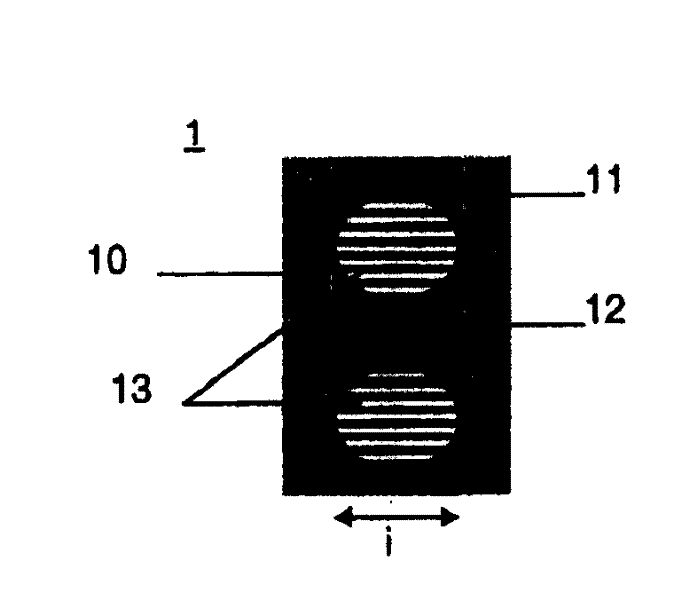
The structure includes at least two glass substrates (10, 11) separated by a distance (i), wherein at least one substance (12) is filled in at least a portion of the space between the two substrates, and a spacer (13) is provided between the two substrates to maintain the spacing between the two substrates, characterized in that the spacer (13) is fixed together with at least one substrate.
Description
本发明涉及一种包括至少两层分开距离为i的玻璃基板的结构,至少有一种物质,尤其是一种聚合物溶体,填充在两层基板之间的至少一部分空间,且在两层基板之间设置间隔物以便维持两层基板的分离。一聚合的、无机的或金属的周向垫圈确保密封和两基板周边的机械稳定性。The invention relates to a structure comprising at least two glass substrates separated by a distance i, at least one substance, especially a polymer solution, filling at least part of the space between the two substrates, and between the two substrates A spacer is placed in between to maintain the separation of the two substrates. A polymeric, inorganic or metallic circumferential gasket ensures sealing and mechanical stability around the two substrates.
尽管本发明不限于这种应用,但是本发明将通过一般用于屋顶或阳台壁的热致变色玻璃窗的实施方式进行更详细的描述。在一热致变色玻璃窗中内含的聚合物溶体按照已知方式是一种水凝胶,其在一特定的温度之上时是不透光的,因而阻断了可见光和红外线透过玻璃窗的传输。Although the invention is not limited to this application, the invention will be described in more detail in the context of thermochromic glazing generally used in roof or balcony walls. The polymer solution contained in a thermochromic window is known in a known manner as a hydrogel which is opaque above a certain temperature and thus blocks the transmission of visible and infrared light through the glass window transmission.
玻璃窗处于竖直位置的事实导致该溶体因重力不明显地向下流,这会造成玻璃窗中的变形。因而在玻璃窗的上部玻璃板趋向于靠拢而在其下部将会凸起而产生应力,该应力将会导致该玻璃窗的爆裂。The fact that the glazing is in a vertical position causes the solution to flow downwards insignificantly due to gravity, which causes deformations in the glazing. The glass sheets will thus tend to come together in the upper part of the glazing and will bulge in the lower part creating stresses which will cause the glazing to burst.
因而已证实,在这类玻璃窗处于竖直位置时最好使玻璃板之间分开的距离保持恒定。It has thus been found that it is advantageous to keep the distance separating the panes constant when such glazing is in a vertical position.
日本专利申请JP 09 222 618公开了一种包括一聚合物溶体的玻璃窗。处于竖直位置的玻璃窗的爆裂被在该玻璃窗内部相对于外部的负压状态造成的均一性所避免,尤其是在两个玻璃板之间插入间隔物,该间隔物在制造时随机地分布在该聚合物溶体的表面,但不固定于其上。Japanese patent application JP 09 222 618 discloses a glazing comprising a polymer solution. The bursting of the glazing in the vertical position is avoided by the homogeneity caused by the state of negative pressure inside the glazing relative to the outside, especially by inserting a spacer between the two panes, which is randomly produced during manufacture Distributed on the surface of the polymer solution, but not fixed on it.
但是随着时间的推移,自由地处于该溶体中的间隔物趋向于向着该玻璃窗的下部降落。因而其在该玻璃窗的上部不再保证其功能,产生已经提到的流体静力学的负压问题。But over time, spacers that are free in the solution tend to sink towards the lower part of the glazing. It thus no longer guarantees its function in the upper part of the glazing, creating the already mentioned problem of hydrostatic underpressure.
本发明的目的是克服玻璃窗的这类结构的变形缺陷,尤其是玻璃窗处于竖直位置时。The object of the present invention is to overcome the deformation drawbacks of this type of construction of glazing, especially when the glazing is in a vertical position.
因而,根据本发明,间隔物与至少一基板固连在一起,以防止该结构在竖直位置时间隔物的下落。Thus, according to the invention, the spacers are fixed to at least one substrate in order to prevent the spacers from falling when the structure is in a vertical position.
根据一特征,所述间隔物构成该结构的嵌入件,其以有机粘胶或者无机粘合物,例如搪瓷,通过粘贴保持固定在基板中的至少一个上。According to one feature, said spacer constitutes an insert of the structure, which remains fixed on at least one of the substrates by gluing with an organic glue or an inorganic adhesive, such as enamel.
所述间隔物例如是球或其它体积形式,由钢或其它与该物质化学相容的材料。优选最好是玻璃的,以便确保该玻璃窗极佳的光学性能。例如可以是玻璃的球体、圆柱体或平行六面体,或其它形状,例如在专利申请WO99/56 302中所述的玻璃间隔物。Said spacers are for example balls or other volumetric forms, made of steel or other material chemically compatible with the substance. It is preferably preferably glass in order to ensure excellent optical properties of the glazing. It can be, for example, a sphere, cylinder or parallelepiped of glass, or other shapes, such as the glass spacers described in patent application WO 99/56 302.
可化学加强所述间隔物以便增大它们的机械稳定性。还可化学和/或热加强所述玻璃板,以便增大它们的机械稳定性。The spacers can be chemically strengthened in order to increase their mechanical stability. The glass sheets may also be chemically and/or thermally strengthened in order to increase their mechanical stability.
根据另一优选特征,所述间隔物以非随机方式分布在该结构的连带表面上。事实上,发明人提出了间隔物的优选数量和位置,其可减少该隔离作用在制造这类玻璃窗费用中的成本,同时确保足够的机械稳定性。According to another preferred feature, said spacers are distributed in a non-random manner on the associated surfaces of the structure. In fact, the inventors have proposed a preferred number and position of spacers that makes it possible to reduce the cost of this insulation in the expense of manufacturing such glazing, while ensuring sufficient mechanical stability.
我们可以选择均匀分布隔离物或不均匀分布隔离物。我们知道在均匀分布中该分布沿该矩形玻璃窗的至少一中线对称。We can choose to distribute spacers evenly or to distribute spacers unevenly. We know that in a uniform distribution the distribution is symmetrical along at least one median line of the rectangular glazing.
所述间隔物的一种均匀分布由公式
所述间隔物的一种均匀分布由公式
根据这些公式的一特征,该结构的高度h被包括在0~4米之间。根据另一特征,该安全系数f被包括在1.3~2.3之间。According to a feature of these formulas, the height h of the structure is comprised between 0 and 4 metres. According to another feature, the safety factor f is comprised between 1.3 and 2.3.
因此,对于一均匀分布,间隔物一起形成基本上为两个梯形的几何形状且相对于该结构中线对称,较大的基部分别设置在该处于竖直位置的结构的上下端部。Thus, for a uniform distribution, the spacers together form essentially two trapezoidal geometries and are symmetrical with respect to the center line of the structure, the larger bases being respectively placed at the upper and lower ends of the structure in vertical position.
两基板之间的内含物可以是液体或固体的,且尤其不含有任何气体成分。事实上,绝对有必要在两基板之间没有任何气体成分以便不造成可能在该玻璃窗中意外发生的额外流动或变形。The content between the two substrates can be liquid or solid and in particular does not contain any gaseous components. In fact, it is absolutely necessary that there be no gaseous constituents between the two substrates in order not to cause additional flows or deformations that might accidentally occur in the glazing.
最后,作为例子,该结构的密封可由本领域的技术人员很熟悉的双垫圈完成,且其包括一丁基橡胶垫圈和一硅酮垫圈。优选的,其尤其可以是三垫圈,包括在该结构内部的一丁基橡胶垫圈和一硬腈纶线,以及与该玻璃窗的外部接触的一硅酮垫圈。用于热致变色玻璃窗的这类结构可与至少一块玻璃板和/或至少一块隔热玻璃相结合以便构成具有良好机械稳定性的窗。Finally, as an example, the sealing of the structure can be accomplished by a double gasket well known to those skilled in the art and comprising a butyl rubber gasket and a silicone gasket. Preferably, it may especially be three gaskets, comprising a butyl rubber gasket and a stiff acrylic thread inside the structure, and a silicone gasket in contact with the exterior of the glazing. Such structures for thermochromic glazing can be combined with at least one glass pane and/or at least one insulating glass in order to form a window with good mechanical stability.
本发明的结构可用于其它类型的玻璃窗,例如热致性、应电性或电致变色玻璃窗。本发明的其它特点和优点在结合附图的下述描述中将更为清楚,附图如下:The structures of the present invention can be used in other types of glazing, such as thermotropic, electrotropic or electrochromic glazing. Other features and advantages of the present invention will be clearer in the following description in conjunction with accompanying drawing, and accompanying drawing is as follows:
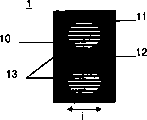
图1是一个按照本发明的玻璃窗的部分剖视图;Figure 1 is a partial sectional view of a glazing according to the present invention;
图2是一该玻璃窗边缘的部分剖视图;Figure 2 is a partial sectional view of the edge of the glass window;
图3~5表示间隔物形状的变型;Figures 3 to 5 represent variations in the shape of the spacer;
图6表示间隔物在玻璃窗中的均匀分布;Figure 6 shows the uniform distribution of spacers in the glazing;
图7示意性地表示间隔物在玻璃窗中的不均匀分布。Figure 7 schematically represents the non-uniform distribution of spacers in a glazing.
图1所示的热致变色玻璃窗1包括至少两板分开距离为i的玻璃板10和11,一种例如为聚合物溶体的物体12充填了两玻璃板分开的空隙,而该间隔物13被设置在两玻璃板之间,且用于当该玻璃窗处于竖直位置玻璃板变形时维持该固定的距离i。The
这类玻璃窗的尺寸例如为高2m且宽80cm,玻璃板的厚度可以在2~12mm之间,最好在4~8mm之间。The size of this type of glass window is, for example, 2m high and 80cm wide, and the thickness of the glass plate can be between 2mm and 12mm, preferably between 4mm and 8mm.
该聚合物溶体12是一种水凝胶,其例如可由30%的聚乙酸己内酰胺(PVCL)和70%的水构成。其可在25~30℃之间的一温度之上时变得不透明,阻挡可见光和红外波长的光波。透光率从80%降至10~15%。The
相应于玻璃板分开的距离i的该溶体12的厚度为0.1~3mm,最好为2mm以便在转换状态和非转换状态之间获得足够不同的透光系数TL。The thickness of the
如图2所示的这类该玻璃窗周边的密封和固定通过一优选的三层垫圈2实现,其包括:与该溶体12接触的一丁基橡胶垫圈20,设置在该垫圈20周围的一硬腈纶线21,和设置在该线21之上与该玻璃窗的外部接触的一硅酮垫圈22。在变型中,该硬腈纶线21和该丁基橡胶垫圈20可用相反的方式设置。The sealing and fixing of the periphery of the glass window of this type as shown in Figure 2 is achieved by a preferred three-layer gasket 2, which includes: a
该丁基橡胶垫圈20确保了对该玻璃窗内部水蒸气的密封,并确保了对该玻璃窗外部密封可在该聚合物溶体内分解的气体。该丁基橡胶垫圈20是柔性的且随该玻璃窗一起形变。The
最后,该硅酮垫圈22和该腈纶线21可密封液体或溶剂。该硅酮垫圈22保证了两个玻璃板10和11的组装和机械强度的维持。Finally, the silicone gasket 22 and the
当然,所有其它类型的已知密封垫圈都可适合被使用。Of course, all other types of known sealing gaskets may suitably be used.
在玻璃窗的竖直位置,该溶体12下降,该下降造成该玻璃窗上下之间的梯度变形;这两个玻璃板在玻璃窗上部趋向于靠近而在玻璃窗下部趋向于分开。间隔物13可使玻璃板保持基本上固定的分开距离i。In the vertical position of the glazing, the
按照本发明,由嵌入元件构成的间隔物13与至少一个玻璃板固连在一起,以便在该玻璃窗的整个使用寿命内保持玻璃板位置的稳固。According to the invention,
玻璃、金属或其它材料的间隔物通过根据用于所述间隔物的材料类型的粘接机构与至少一个玻璃板固连在一起。这些粘接机构例如为在该聚合物溶体的使用期限内相容且不反应的粘结剂,或瓷漆。例如商标为Loctite UV 3491的腈纶粘结剂或商标为Ciba 2011,DEL 04302的粘结剂。A spacer of glass, metal or other material is secured together with at least one glass pane by an adhesive mechanism depending on the type of material used for said spacer. These bonding means are, for example, adhesives which are compatible and non-reactive over the lifetime of the polymer solution, or enamels. For example acrylic adhesives under the trademark Loctite UV 3491 or under the trademarks Ciba 2011, DEL 04302.
如图3~5所述的不同类型和形状的间隔物是可以预见的。间隔物的材料必须在化学上与该聚合物溶体12相容。Different types and shapes of spacers as described in Figures 3-5 are envisioned. The spacer material must be chemically compatible with the
例如直径为2mm的钢球是合适的,其需要以10μm左右或超过10μm的大小进行合适地分类,以满足该玻璃窗的机械稳定性。For example steel balls with a diameter of 2 mm are suitable, which need to be properly sorted with a size around or above 10 μm in order to satisfy the mechanical stability of the glazing.
但是,玻璃的间隔物优选要使该玻璃窗产生高的光性能。这种玻璃间隔物可以是球形(图3),圆柱体(图4),亦或是十字类形(图5)或例如为专利申请WO99/56 302中公开的一种形状,这些形状尤其为Saint-Gobain Display Glass公司的商标为TAGLIA的形状。However, the glass spacer is preferably such that the glazing produces a high optical performance. Such glass spacers may be spherical (Fig. 3), cylindrical (Fig. 4), or cross-shaped (Fig. 5) or for example one of the shapes disclosed in patent application WO 99/56 302, which are especially A trademark of the company Saint-Gobain Display Glass is the shape of TAGLIA (R) .
厚度由在一2m×0.8m的玻璃窗中使用的直径为1mm和直径为2mm的玻璃球决定。The thickness is determined by using glass spheres with a diameter of 1 mm and a diameter of 2 mm in a glazing of 2 m x 0.8 m.
对于2m×0.8m尺寸的一玻璃窗尤其定制直径为2mm的玻璃球。For a glass window with a size of 2m x 0.8m, glass balls with a diameter of 2mm are specially ordered.
关于直径至少为1mm的玻璃圆柱体形的变型,其具有足够的屈曲强度来抵抗由玻璃板施加的应力。这些圆柱体通过它们两个基面中的一个粘在基板10或11上。Regarding the glass cylindrical variant with a diameter of at least 1 mm, which has sufficient buckling strength to resist the stresses imposed by the glass sheet. These cylinders are glued to the
当为图5所示的十字形间隔物时,其可是磨光或粗锯切的,它们的断裂载荷足够高,以便保证对玻璃板的很好抗力。其尺寸由1.6mm的高度1和矩形表面30(a×b)确定,其中b=2.1mm且a=0.2mm。这些间隔物通过包括表面30的两个十字形基部中的一个被粘贴。In the case of cross-shaped spacers as shown in Figure 5, which may be ground or rough-sawn, their breaking load is high enough to ensure good resistance to the glass sheet. Its dimensions are determined by a
专利申请WO99/56 302中的其它间隔物TAGLIA可以是能达到足够的断裂载荷的尺寸,它们根据间隔物的布置方式和玻璃窗的大小定制出尺寸。Other spacers TAGLIA (R) of patent application WO 99/56 302 can be of a size to achieve a sufficient breaking load, they are dimensioned according to the arrangement of the spacers and the size of the glazing.
下述表概述出在一热致变色玻璃窗(2m×0.8m)中使用的对玻璃间隔物的不同变型测出的破裂载荷。
除了其破裂载荷高以外,十字形间隔物相对于球形具有优势,因为与球形间隔物相比,它的受压面较大,这会减少玻璃板缺刻的危险。In addition to its high fracture load, a cross-shaped spacer has an advantage over a spherical shape because it has a larger compression surface compared to a spherical spacer, which reduces the risk of nicks in the glass sheet.
根据本发明,间隔物在一玻璃窗的矩形表面上的几何布置可不同,可以基本上是矩形的,梯形的,也可是圆形的。According to the invention, the geometric arrangement of the spacers on the rectangular surface of a glazing can vary, being substantially rectangular, trapezoidal or circular.
但是,这些间隔物可以以非随机方式布置在该玻璃板的表面上。事实上,发明人已经指出,可以预见到在合理设置计算出在每种几何布置中每个间隔物经受的负载的条件下,可减少间隔物的数量。还可以减小该玻璃窗经受的负载,使其具有良好的机械稳定性(玻璃或间隔物不破碎)并降低间隔物的数量并因而减少在该玻璃窗中因隔离作用带来的花费。However, the spacers may be arranged in a non-random manner on the surface of the glass pane. In fact, the inventors have pointed out that it is foreseeable that the number of spacers can be reduced, given reasonable settings that account for the loads experienced by each spacer in each geometric arrangement. It is also possible to reduce the loads to which the glazing is subjected, to have good mechanical stability (glass or spacers not to break) and to reduce the number of spacers and thus the costs associated with insulation in the glazing.
此外,玻璃板厚度的增加对于玻璃板同一数值的变形也可降低间隔物的数量,但不超过间隔物的碎裂应力。In addition, an increase in the thickness of the glass sheet also reduces the number of spacers for the same amount of deformation of the glass sheet, but does not exceed the breakage stress of the spacers.
最后,我们可优选一种均匀或不均匀的几何布置。我们知道均匀布置是沿矩形玻璃窗的至少一平分线对称的布置。Finally, we can prefer a uniform or non-uniform geometry. We know that a uniform arrangement is a symmetrical arrangement along at least one bisector of a rectangular glass window.
对于一均匀布置,根据间隔物之间的间隔和间隔物的全部数量的分配逻辑与该玻璃窗的高度和宽度有关。发明人提供一种计算方案:For a uniform arrangement, the distribution logic according to the spacing between spacers and the overall number of spacers is related to the height and width of the glazing. The inventor provides a calculation scheme:
-在一水平线上两个间隔物之间以厘米给出的间隔d由以下方式示出:- The spacing d given in centimeters between two spacers on a horizontal line is shown by:
其中e以毫米表示最薄的玻璃,h以米表示0~4m之间的高度,而f是可在1.5~2.3之间变化的一系数。f是我们可以称作安全系数的一个加倍系数,其给出在间隔物之间间隔优化中的限度,及因而定出的间隔物总数,以避免间隔物的碎裂。该系数f越小,由间隔物由流体静力学负压引起的载荷越小;且Among them, e represents the thinnest glass in millimeters, h represents the height between 0 and 4m in meters, and f is a coefficient that can vary between 1.5 and 2.3. f is a multiplication factor which we may call a safety factor, which gives the limit in the optimization of the spacing between spacers, and thus the total number of spacers, in order to avoid breakage of the spacers. The smaller the coefficient f, the smaller the load caused by the hydrostatic negative pressure of the spacer; and
-因而间隔物的总数n表示为:-The total number n of spacers is thus expressed as:
其中h是玻璃窗的高度,c是玻璃窗的宽度,而d是以米表示的按上述方法计算出的间隔。对于该算法,首先需要计算出两个数学表示式中的每一个,并在相乘前被下取整以便给出整数n。where h is the height of the glazing, c is the width of the glazing and d is the spacing in meters calculated as above. For this algorithm, each of the two mathematical expressions needs to be calculated first and floored to give the integer n before being multiplied.
对于一非均匀布置,也就是说没有任何对称,间隔物之间的间隔和间隔物的数量的分配逻辑与相对于该玻璃窗底的线的高度有关,在该线上定位了间隔物。发明人提供下述计算方案:For a non-uniform arrangement, that is to say without any symmetry, the spacing between the spacers and the distribution logic of the number of spacers relate to the height relative to the line at the bottom of the glazing on which the spacers are positioned. The inventor provides the following calculation scheme:
其中d’是以厘米表示的一水平线上的两间隔物之间的间隔,该线相对于以米表示并包括0~4m的玻璃窗底位于g的高度,e以毫米表示最薄的玻璃,而f是可在1.3~2.3之间变化的安全系数;且where d' is the distance between two spacers on a horizontal line expressed in centimeters, the line is at a height of g relative to the bottom of the glass window expressed in meters and including 0 to 4m, and e is the thinnest glass in millimeters, And f is a safety factor that can vary between 1.3 and 2.3; and
-相对于该玻璃窗底以一高度g设置的线上的间隔物的数量n’因而表示为:- The number n' of spacers on a line arranged at a height g with respect to the bottom of the glazing is thus expressed as:
此处c是以米表示的玻璃窗的宽度,d’是上述方法计算出的间隔物之间的间隔且在公式中以米表示,表达式c/d’在进行减法操作前被下取整。Here c is the width of the glazing in meters, d' is the distance between the spacers calculated by the above method and expressed in meters in the formula, the expression c/d' is rounded down before the subtraction operation .
作为例子,下述给定的数值按照均匀布置的公式。下述对照是相对于在同样的2m×0.8m玻璃窗尺寸以及玻璃板呈现厚度为4mm的间隔物的两种不同的分布。As an example, the values given below follow the formula for uniform placement. The comparisons described below are relative to two different distributions at the same glazing size of 2m x 0.8m and the glass pane exhibiting a spacer thickness of 4mm.
对于第一种分布,该安全系数固定为2.3;间隔物的总数n为144,沿18条线以相等的高度和宽度有规律地以10.4cm的间隔d分布,每线设置8个间隔物。For the first distribution, the safety factor was fixed at 2.3; the total number of spacers n was 144, and they were regularly distributed along 18 lines with an equal height and width at an interval d of 10.4 cm, and 8 spacers were set for each line.
对于第二种分布:沿19条线以相等的高度和宽度有规律地分布着总数为126个的间隔物,但根据高度成梯度数量变化,布局可类似于以该玻璃窗一半高度对称的两个基本上为梯形的结构,如图6所示,间隔物的数量在上线或上部和下线或底部处(例如9个)多于在中心线处(例如4个)。For the second distribution: a total of 126 spacers are regularly distributed along 19 lines with equal height and width, but according to the number of gradients in height, the layout can be similar to two symmetrically placed at half the height of the glazing. A substantially trapezoidal structure, as shown in Figure 6, with more spacers at the upper line or upper and lower line or bottom (eg 9) than at the center line (eg 4).
下述表给出了一个间隔物所受负载和玻璃窗外表面经受的应力的比较结果。
我们看到按所谓梯形的第二种均匀分布逻辑的间隔物的布置可优选地减少间隔物的数量,降低了每个间隔物所受的负载(降低20%)并且减少个该玻璃窗可能经受的应力(降低25%)。We see that the arrangement of spacers according to the second uniform distribution logic of the so-called trapezoid can preferably reduce the number of spacers, reduce the load experienced by each spacer (20% reduction) and reduce the number of windows that the glazing may experience. stress (25% reduction).
按一种非均匀分布也可减少间隔物的数量,但是该布置逻辑中每个间隔物所受的负载还是165N,该玻璃窗上的应力还是12Mpa,有关玻璃窗的机械强度的安全值保持完全相同。图7示意性地示出一种非均匀分布的例子,其用于与上述作为例子的均匀分布所用的玻璃窗相同尺寸的玻璃窗,高2m宽0.80m。对于安全系数f等于2.1时,需要71个间隔物,间隔物之间的距离因线高度的不同而不同。According to a non-uniform distribution, the number of spacers can also be reduced, but the load on each spacer in this layout logic is still 165N, the stress on the glass window is still 12Mpa, and the safety value of the mechanical strength of the glass window remains completely same. Figure 7 schematically shows an example of a non-uniform distribution for a glazing of the same size as that used for the uniform distribution as an example above, 2 m high and 0.80 m wide. For a safety factor f equal to 2.1, 71 spacers are required, and the distance between the spacers varies with the line height.
这种不均匀分布需要较少的间隔物(71),且有比该均匀布置(144个间隔物且f=2.3)更大的安全系数(f=2.1)。然而,与均匀分布相反,对于均匀分布该玻璃窗可处于竖直位置而不管是什么方向,而对于非均匀分布必须遵从该处于竖直位置的玻璃窗的指定方向,向该玻璃窗的高处设置间隔物的集中区域。This non-uniform distribution requires fewer spacers (71 ) and has a greater safety factor (f = 2.1 ) than the uniform arrangement (144 spacers and f = 2.3). However, contrary to a uniform distribution, for which the glazing can be in a vertical position regardless of the orientation, for a non-uniform distribution it must obey the specified orientation of the glazing in the vertical position, towards the height of the glazing Sets the concentration area for the spacer.
一种玻璃窗制造方法的例子如下所述。An example of a glass window manufacturing method is as follows.
在一个第一玻璃板上,我们画出点,这些点将在该玻璃窗制成后被擦去,这些点相应于在该玻璃板的背面上根据一种选定分布设置间隔物13的位置。On a first glass plate we draw points, which will be wiped off after the glazing is made, corresponding to the positions where
在设计用于接纳这些间隔物的表面上,我们在其周边设置该第一丁基橡胶密封垫圈20。在间隔物上设置一胶点之后,将间隔物粘贴到该玻璃板的选定位置。一紫外线(UV)灯可使该胶成网状以便完全固定住这些间隔物。On the surface designed to receive these spacers, we place this first butyl
该第二密封垫圈,也就是该硬腈纶线21,被设置在该玻璃板周边并环绕该第一垫圈20。The second sealing gasket, ie the stiff
然后该聚合物溶体层12在被该第一垫圈20限定的容积内展开。The
然后,该第二玻璃板被压靠在该第一玻璃板上,四个例如泡沫塑料制成的插入件被设置在两个玻璃板之间,以便保持大于间隔物高度的分开高度,应为该溶体12还不能与该第二玻璃板接触。The second glass plate is then pressed against the first glass plate, and four inserts, for example made of foamed plastic, are placed between the two glass plates in order to maintain a separation height greater than the height of the spacers, which should be The
最后将两玻璃板组装件引入一真空室中,并通过压紧插入件使两玻璃板靠近。离开该室时,通过在该玻璃窗的边缘采用硅酮垫圈22对该玻璃板进行最后的固定和它们的最终密封。Finally the two glass pane assemblies are introduced into a vacuum chamber and the two glass panes are brought closer together by pressing the insert. On leaving the chamber, the final fixation of the panes and their final sealing are carried out by applying
在制造方法的一变型中,该硅酮垫圈可以省略并通过焊接该玻璃板的边缘获得固定。In a variant of the manufacturing method, the silicone gasket can be omitted and fixation obtained by welding the edges of the glass plate.
此外,在实施该方法的示例中在设置聚合物溶体12之前所用的两个第一垫圈20和21可在切割玻璃之后以及固定该玻璃窗之前的任何时候安放。Furthermore, the two
上述玻璃窗的结构在其作为一热致变色玻璃窗使用时已经竖起。The above-mentioned glazing structure has been erected when it is used as a thermochromic glazing.
当然,其可应用于在两个玻璃基板之间引入一液体物质或粘性物质并可包括固体颗粒的任何产品。我们可例举出太阳能收集器,构成一日光屏的液体单元,以液晶为基础的含凝胶的液晶窗,包括能流动的凝胶或液体的电致变色或光致变色窗,或产生紫色的(viologène)窗以及应电性窗。Of course, it is applicable to any product that introduces a liquid or viscous substance between two glass substrates and may include solid particles. We can exemplify solar collectors, liquid cells making up daylight screens, liquid crystal based windows containing gels, electrochromic or photochromic windows including gels or liquids that can flow, or produce purple The (viologène) window and the responsive window.
Claims (17)
Applications Claiming Priority (2)
| Application Number | Priority Date | Filing Date | Title |
|---|---|---|---|
| FR01/00912 | 2001-01-24 | ||
| FR0100912A FR2819802B1 (en) | 2001-01-24 | 2001-01-24 | STRUCTURE, PARTICULARLY FOR THERMOCHROME GLAZING, COMPRISING A SUBSTANCE CONTAINED BETWEEN TWO GLASS SUBSTRATES |
Publications (2)
| Publication Number | Publication Date |
|---|---|
| CN1492964A true CN1492964A (en) | 2004-04-28 |
| CN1254600C CN1254600C (en) | 2006-05-03 |
Family
ID=8859160
Family Applications (1)
| Application Number | Title | Priority Date | Filing Date |
|---|---|---|---|
| CNB028040082A Expired - Fee Related CN1254600C (en) | 2001-01-24 | 2002-01-23 | Structure comprising at least two glass substrates, glazing and thermochromic glazing |
Country Status (10)
| Country | Link |
|---|---|
| US (1) | US7306833B2 (en) |
| EP (1) | EP1354115B1 (en) |
| JP (1) | JP4142441B2 (en) |
| KR (1) | KR100808971B1 (en) |
| CN (1) | CN1254600C (en) |
| AT (1) | ATE357574T1 (en) |
| DE (1) | DE60218981T2 (en) |
| ES (1) | ES2284811T3 (en) |
| FR (1) | FR2819802B1 (en) |
| WO (1) | WO2002064937A1 (en) |
Cited By (2)
| Publication number | Priority date | Publication date | Assignee | Title |
|---|---|---|---|---|
| CN104136390A (en) * | 2012-03-07 | 2014-11-05 | 松下电器产业株式会社 | Multi-layer glass |
| TWI712834B (en) * | 2014-02-06 | 2020-12-11 | 德商馬克專利公司 | Device for the regulation of light transmission, its use and method for producing the same |
Families Citing this family (32)
| Publication number | Priority date | Publication date | Assignee | Title |
|---|---|---|---|---|
| US8225957B1 (en) * | 2002-06-14 | 2012-07-24 | Volan Ken M | Method for manufacturing a thermally insulated drinking glass or glass bottle |
| EP1502902A1 (en) * | 2003-07-30 | 2005-02-02 | Glaverbel | Glazing Panel |
| EP1654202A1 (en) * | 2003-07-30 | 2006-05-10 | Glaverbel | Glazing panel |
| US8266852B2 (en) * | 2006-03-31 | 2012-09-18 | Samuels Diane I | Method for manufacturing a filled insulated glass unit and such a unit |
| DE102006061360A1 (en) * | 2006-12-22 | 2008-06-26 | Futech Gmbh | Heat-insulating glazing element, its manufacture and use |
| DK2106560T3 (en) | 2007-01-24 | 2017-08-07 | Ravenbrick Llc | THERMAL REPLACED OPTICAL DOWN CONVERTER FILTER |
| GB2450474A (en) * | 2007-06-07 | 2008-12-31 | Vincent John Hinksman | Glazing structure comprising liquid between two layers |
| CN101802679B (en) | 2007-07-11 | 2012-12-12 | 雷文布里克有限责任公司 | Thermally switched reflective optical shutter |
| US8908267B2 (en) | 2007-09-19 | 2014-12-09 | Ravenbrick, Llc | Low-emissivity window films and coatings incorporating nanoscale wire grids |
| US20090233020A1 (en) * | 2007-09-20 | 2009-09-17 | Cardinal Lg Company | Glazing assembly and method |
| US8169685B2 (en) | 2007-12-20 | 2012-05-01 | Ravenbrick, Llc | Thermally switched absorptive window shutter |
| US20090194156A1 (en) * | 2008-02-01 | 2009-08-06 | Grommesh Robert C | Dual seal photovoltaic glazing assembly and method |
| WO2009126186A1 (en) | 2008-04-10 | 2009-10-15 | Cardinal Ig Company | Manufacturing of photovoltaic subassemblies |
| AU2009240500B2 (en) | 2008-04-23 | 2011-09-08 | Ravenbrick, Llc | Glare management of reflective and thermoreflective surfaces |
| US9116302B2 (en) | 2008-06-19 | 2015-08-25 | Ravenbrick Llc | Optical metapolarizer device |
| KR101331058B1 (en) | 2008-08-20 | 2013-11-20 | 라벤브릭 엘엘씨 | Methods for fabricating thermochromic filters |
| ES2616252T3 (en) | 2009-04-10 | 2017-06-12 | Ravenbrick, Llc | Thermally switched optical filter incorporating a host-host architecture |
| US8947760B2 (en) | 2009-04-23 | 2015-02-03 | Ravenbrick Llc | Thermotropic optical shutter incorporating coatable polarizers |
| FR2951812B1 (en) * | 2009-10-22 | 2012-04-27 | Saint Gobain | SOLAR COLLECTOR |
| US8867132B2 (en) | 2009-10-30 | 2014-10-21 | Ravenbrick Llc | Thermochromic filters and stopband filters for use with same |
| ES2748829T3 (en) | 2010-03-29 | 2020-03-18 | Ravenbrick Llc | Polymer stabilized thermotropic liquid crystal device |
| JP5862902B2 (en) | 2010-06-01 | 2016-02-16 | レイブンブリック,エルエルシー | Multifunctional structural components |
| US9328512B2 (en) | 2011-05-05 | 2016-05-03 | Eversealed Windows, Inc. | Method and apparatus for an insulating glazing unit and compliant seal for an insulating glazing unit |
| DE102011102843B4 (en) | 2011-05-30 | 2022-05-25 | Grenzebach Maschinenbau Gmbh | +Vacuum - Insulating glass with increased stability and method for its production |
| KR101380486B1 (en) * | 2011-08-30 | 2014-04-01 | (주)엘지하우시스 | Vacuum glass having different distance between arranged pillars and method of manufacturing thereof |
| US20150233174A1 (en) * | 2014-02-14 | 2015-08-20 | Eversealed Windows, Inc. | Method and apparatus for spacers for inter-pane cavity of vacuum insulating glass units and vacuum insulating glass units incorporating same |
| JP6463036B2 (en) * | 2014-08-21 | 2019-01-30 | 日本板硝子株式会社 | Spacing member |
| RU2016139428A (en) * | 2016-10-09 | 2018-04-09 | Сергей Анатольевич Давыденко | Variable transparency item |
| CN106515185A (en) * | 2016-10-21 | 2017-03-22 | 巢湖市伟业玻璃有限公司 | Method for manufacturing tempered glass and tempered glass manufactured by adopting method |
| WO2019219590A1 (en) * | 2018-05-14 | 2019-11-21 | Agc Glass Europe | Asymmetrical vacuum-insulated glazing unit |
| EP3803015B1 (en) * | 2018-05-25 | 2022-08-24 | AGC Glass Europe | High-performance vacuum insulating glazing unit |
| CN112902315B (en) * | 2021-01-13 | 2022-02-11 | 常州大学 | Circulating dehumidification and cooling system |
Family Cites Families (16)
| Publication number | Priority date | Publication date | Assignee | Title |
|---|---|---|---|---|
| US3742600A (en) * | 1971-07-26 | 1973-07-03 | Research Frontiers Inc | Method for maintaining the separation of plates |
| DE2635942C3 (en) * | 1976-08-10 | 1980-09-04 | Siemens Ag, 1000 Berlin Und 8000 Muenchen | Method of manufacturing a liquid crystal cell |
| JPS5770520A (en) * | 1980-10-20 | 1982-05-01 | Hitachi Ltd | Liquid crystal element |
| JPS6237247A (en) * | 1985-05-08 | 1987-02-18 | Nissan Motor Co Ltd | Nonglaring mirror |
| JPH01282505A (en) * | 1988-05-09 | 1989-11-14 | Tabai Espec Corp | Filter device |
| US5124185A (en) * | 1989-10-03 | 1992-06-23 | Ppg Industries, Inc. | Vacuum insulating unit |
| DE4127130C2 (en) * | 1991-08-15 | 1995-07-20 | Home Ges Fuer Kuehltechnik Mbh | Compound window to dazzle sunlight |
| AUPM888994A0 (en) * | 1994-10-19 | 1994-11-10 | University Of Sydney, The | Design improvement to vacuum glazing |
| DE19525263A1 (en) * | 1995-07-11 | 1997-03-06 | Ver Glaswerke Gmbh | Fire-resistant glazing |
| US5608995A (en) * | 1995-08-15 | 1997-03-11 | Borden; Rex M. | Solar-actuated fluid window shutter |
| JPH09222618A (en) | 1996-02-19 | 1997-08-26 | Affinity Kk | High-polymer solution laminate |
| US6111684A (en) * | 1997-04-02 | 2000-08-29 | Gentex Corporation | Electrochromic rearview mirror incorporating a third surface metal reflector and a display/signal light |
| US5940201A (en) * | 1997-04-02 | 1999-08-17 | Gentex Corporation | Electrochromic mirror with two thin glass elements and a gelled electrochromic medium |
| FR2778180B3 (en) | 1998-04-29 | 2000-05-19 | Saint Gobain Vitrage | TAPERED FIBERGLASS AND PROCESS FOR PRODUCING THE SAME |
| FR2787133B1 (en) * | 1998-12-10 | 2001-01-26 | Saint Gobain Vitrage | VACUUM INSULATING GLAZING AND METHOD FOR PRODUCING THE SAME |
| US6444281B1 (en) * | 1999-10-13 | 2002-09-03 | Guardian Industries Corp. | Vacuum IG window unit with spacers between first and second edge seals |
-
2001
- 2001-01-24 FR FR0100912A patent/FR2819802B1/en not_active Expired - Fee Related
-
2002
- 2002-01-23 DE DE60218981T patent/DE60218981T2/en not_active Expired - Lifetime
- 2002-01-23 WO PCT/FR2002/000277 patent/WO2002064937A1/en not_active Ceased
- 2002-01-23 US US10/433,902 patent/US7306833B2/en not_active Expired - Fee Related
- 2002-01-23 KR KR1020037008595A patent/KR100808971B1/en not_active Expired - Fee Related
- 2002-01-23 EP EP02700384A patent/EP1354115B1/en not_active Expired - Lifetime
- 2002-01-23 CN CNB028040082A patent/CN1254600C/en not_active Expired - Fee Related
- 2002-01-23 JP JP2002564233A patent/JP4142441B2/en not_active Expired - Fee Related
- 2002-01-23 AT AT02700384T patent/ATE357574T1/en not_active IP Right Cessation
- 2002-01-23 ES ES02700384T patent/ES2284811T3/en not_active Expired - Lifetime
Cited By (2)
| Publication number | Priority date | Publication date | Assignee | Title |
|---|---|---|---|---|
| CN104136390A (en) * | 2012-03-07 | 2014-11-05 | 松下电器产业株式会社 | Multi-layer glass |
| TWI712834B (en) * | 2014-02-06 | 2020-12-11 | 德商馬克專利公司 | Device for the regulation of light transmission, its use and method for producing the same |
Also Published As
| Publication number | Publication date |
|---|---|
| WO2002064937A1 (en) | 2002-08-22 |
| JP2004529052A (en) | 2004-09-24 |
| US7306833B2 (en) | 2007-12-11 |
| FR2819802B1 (en) | 2004-07-23 |
| CN1254600C (en) | 2006-05-03 |
| DE60218981T2 (en) | 2007-12-13 |
| KR20030072578A (en) | 2003-09-15 |
| ES2284811T3 (en) | 2007-11-16 |
| ATE357574T1 (en) | 2007-04-15 |
| US20040081775A1 (en) | 2004-04-29 |
| EP1354115A1 (en) | 2003-10-22 |
| EP1354115B1 (en) | 2007-03-21 |
| FR2819802A1 (en) | 2002-07-26 |
| JP4142441B2 (en) | 2008-09-03 |
| KR100808971B1 (en) | 2008-03-04 |
| DE60218981D1 (en) | 2007-05-03 |
Similar Documents
| Publication | Publication Date | Title |
|---|---|---|
| CN1254600C (en) | Structure comprising at least two glass substrates, glazing and thermochromic glazing | |
| US9732552B2 (en) | Vacuum insulating glass unit with viscous edge seal | |
| CN101076447A (en) | Glass laminated substrate with improved impact-resisting load bearing capacity and antistatic load bearing capacity | |
| CN1234524A (en) | Method for producing liquid crystal display device | |
| JP6621937B2 (en) | Image display device and method of manufacturing image display device | |
| CN1243502A (en) | Double-glazing unit | |
| CN101616964A (en) | Impact-absorbing layer having excellent impact resistance and film having impact-absorbing use and comprising the impact-absorbing layer | |
| CN1168708A (en) | Design improvements to vacuum glazing | |
| CN1734325A (en) | Backlight assembly, liquid crystal display device, support member and method | |
| WO2007013688B1 (en) | Fluorescent lamp and backlight unit | |
| CN103838037A (en) | Method for manufacturing member for electronic device, method for manufacturing electronic device, and member for electronic device | |
| CN103412431A (en) | Liquid crystal display panel motherboard | |
| KR20110059528A (en) | Bonding method of light-transmissive substrate and manufacturing method of display | |
| CN103592797B (en) | The manufacture method of use for electronic equipment component and electronic installation and use for electronic equipment component | |
| JP4042643B2 (en) | Building glass brick and glass brick wall | |
| CN1811561A (en) | Backlight assembly, method of manufacturing the same and liquid crystal display apparatus having the same | |
| SU1481217A1 (en) | Laminated glass | |
| CN1940679A (en) | Backlight system | |
| CN216285794U (en) | Integrally formed quantum dot diffusion plate | |
| CN207276537U (en) | A 9H nano-silica gel direct-coated composite explosion-proof membrane | |
| CN210803919U (en) | Backlight module for narrow-frame display screen and liquid crystal display device | |
| CN101968578A (en) | Liquid crystal display device and frame thereof | |
| CN214522499U (en) | Explosion-proof acrylic plate | |
| CN2435230Y (en) | Breakage-proof composite transparent double glazing | |
| CN101387787B (en) | Backlight lamp reflecting plate and back light module of liquid crystal display |
Legal Events
| Date | Code | Title | Description |
|---|---|---|---|
| C06 | Publication | ||
| PB01 | Publication | ||
| C10 | Entry into substantive examination | ||
| SE01 | Entry into force of request for substantive examination | ||
| C14 | Grant of patent or utility model | ||
| GR01 | Patent grant | ||
| C17 | Cessation of patent right | ||
| CF01 | Termination of patent right due to non-payment of annual fee |
Granted publication date: 20060503 Termination date: 20140123 |