CN1574443A - Pouch lithium secondary battery - Google Patents
Pouch lithium secondary battery Download PDFInfo
- Publication number
- CN1574443A CN1574443A CNA2004100694625A CN200410069462A CN1574443A CN 1574443 A CN1574443 A CN 1574443A CN A2004100694625 A CNA2004100694625 A CN A2004100694625A CN 200410069462 A CN200410069462 A CN 200410069462A CN 1574443 A CN1574443 A CN 1574443A
- Authority
- CN
- China
- Prior art keywords
- positive electrode
- lithium secondary
- pouch
- secondary battery
- case
- Prior art date
- Legal status (The legal status is an assumption and is not a legal conclusion. Google has not performed a legal analysis and makes no representation as to the accuracy of the status listed.)
- Granted
Links
Images





Classifications
-
- H—ELECTRICITY
- H01—ELECTRIC ELEMENTS
- H01M—PROCESSES OR MEANS, e.g. BATTERIES, FOR THE DIRECT CONVERSION OF CHEMICAL ENERGY INTO ELECTRICAL ENERGY
- H01M10/00—Secondary cells; Manufacture thereof
- H01M10/05—Accumulators with non-aqueous electrolyte
- H01M10/058—Construction or manufacture
- H01M10/0585—Construction or manufacture of accumulators having only flat construction elements, i.e. flat positive electrodes, flat negative electrodes and flat separators
-
- H—ELECTRICITY
- H01—ELECTRIC ELEMENTS
- H01M—PROCESSES OR MEANS, e.g. BATTERIES, FOR THE DIRECT CONVERSION OF CHEMICAL ENERGY INTO ELECTRICAL ENERGY
- H01M10/00—Secondary cells; Manufacture thereof
- H01M10/05—Accumulators with non-aqueous electrolyte
- H01M10/052—Li-accumulators
-
- H—ELECTRICITY
- H01—ELECTRIC ELEMENTS
- H01M—PROCESSES OR MEANS, e.g. BATTERIES, FOR THE DIRECT CONVERSION OF CHEMICAL ENERGY INTO ELECTRICAL ENERGY
- H01M10/00—Secondary cells; Manufacture thereof
- H01M10/05—Accumulators with non-aqueous electrolyte
- H01M10/052—Li-accumulators
- H01M10/0525—Rocking-chair batteries, i.e. batteries with lithium insertion or intercalation in both electrodes; Lithium-ion batteries
-
- H—ELECTRICITY
- H01—ELECTRIC ELEMENTS
- H01M—PROCESSES OR MEANS, e.g. BATTERIES, FOR THE DIRECT CONVERSION OF CHEMICAL ENERGY INTO ELECTRICAL ENERGY
- H01M10/00—Secondary cells; Manufacture thereof
- H01M10/05—Accumulators with non-aqueous electrolyte
- H01M10/058—Construction or manufacture
- H01M10/0587—Construction or manufacture of accumulators having only wound construction elements, i.e. wound positive electrodes, wound negative electrodes and wound separators
-
- H—ELECTRICITY
- H01—ELECTRIC ELEMENTS
- H01M—PROCESSES OR MEANS, e.g. BATTERIES, FOR THE DIRECT CONVERSION OF CHEMICAL ENERGY INTO ELECTRICAL ENERGY
- H01M50/00—Constructional details or processes of manufacture of the non-active parts of electrochemical cells other than fuel cells, e.g. hybrid cells
- H01M50/10—Primary casings; Jackets or wrappings
- H01M50/116—Primary casings; Jackets or wrappings characterised by the material
- H01M50/117—Inorganic material
- H01M50/119—Metals
-
- H—ELECTRICITY
- H01—ELECTRIC ELEMENTS
- H01M—PROCESSES OR MEANS, e.g. BATTERIES, FOR THE DIRECT CONVERSION OF CHEMICAL ENERGY INTO ELECTRICAL ENERGY
- H01M50/00—Constructional details or processes of manufacture of the non-active parts of electrochemical cells other than fuel cells, e.g. hybrid cells
- H01M50/10—Primary casings; Jackets or wrappings
- H01M50/116—Primary casings; Jackets or wrappings characterised by the material
- H01M50/121—Organic material
-
- H—ELECTRICITY
- H01—ELECTRIC ELEMENTS
- H01M—PROCESSES OR MEANS, e.g. BATTERIES, FOR THE DIRECT CONVERSION OF CHEMICAL ENERGY INTO ELECTRICAL ENERGY
- H01M50/00—Constructional details or processes of manufacture of the non-active parts of electrochemical cells other than fuel cells, e.g. hybrid cells
- H01M50/10—Primary casings; Jackets or wrappings
- H01M50/116—Primary casings; Jackets or wrappings characterised by the material
- H01M50/124—Primary casings; Jackets or wrappings characterised by the material having a layered structure
- H01M50/126—Primary casings; Jackets or wrappings characterised by the material having a layered structure comprising three or more layers
- H01M50/129—Primary casings; Jackets or wrappings characterised by the material having a layered structure comprising three or more layers with two or more layers of only organic material
-
- H—ELECTRICITY
- H01—ELECTRIC ELEMENTS
- H01M—PROCESSES OR MEANS, e.g. BATTERIES, FOR THE DIRECT CONVERSION OF CHEMICAL ENERGY INTO ELECTRICAL ENERGY
- H01M50/00—Constructional details or processes of manufacture of the non-active parts of electrochemical cells other than fuel cells, e.g. hybrid cells
- H01M50/10—Primary casings; Jackets or wrappings
- H01M50/147—Lids or covers
- H01M50/166—Lids or covers characterised by the methods of assembling casings with lids
- H01M50/169—Lids or covers characterised by the methods of assembling casings with lids by welding, brazing or soldering
-
- H—ELECTRICITY
- H01—ELECTRIC ELEMENTS
- H01M—PROCESSES OR MEANS, e.g. BATTERIES, FOR THE DIRECT CONVERSION OF CHEMICAL ENERGY INTO ELECTRICAL ENERGY
- H01M50/00—Constructional details or processes of manufacture of the non-active parts of electrochemical cells other than fuel cells, e.g. hybrid cells
- H01M50/10—Primary casings; Jackets or wrappings
- H01M50/172—Arrangements of electric connectors penetrating the casing
- H01M50/174—Arrangements of electric connectors penetrating the casing adapted for the shape of the cells
- H01M50/178—Arrangements of electric connectors penetrating the casing adapted for the shape of the cells for pouch or flexible bag cells
-
- H—ELECTRICITY
- H01—ELECTRIC ELEMENTS
- H01M—PROCESSES OR MEANS, e.g. BATTERIES, FOR THE DIRECT CONVERSION OF CHEMICAL ENERGY INTO ELECTRICAL ENERGY
- H01M50/00—Constructional details or processes of manufacture of the non-active parts of electrochemical cells other than fuel cells, e.g. hybrid cells
- H01M50/10—Primary casings; Jackets or wrappings
- H01M50/183—Sealing members
- H01M50/184—Sealing members characterised by their shape or structure
-
- H—ELECTRICITY
- H01—ELECTRIC ELEMENTS
- H01M—PROCESSES OR MEANS, e.g. BATTERIES, FOR THE DIRECT CONVERSION OF CHEMICAL ENERGY INTO ELECTRICAL ENERGY
- H01M50/00—Constructional details or processes of manufacture of the non-active parts of electrochemical cells other than fuel cells, e.g. hybrid cells
- H01M50/10—Primary casings; Jackets or wrappings
- H01M50/183—Sealing members
- H01M50/186—Sealing members characterised by the disposition of the sealing members
- H01M50/188—Sealing members characterised by the disposition of the sealing members the sealing members being arranged between the lid and terminal
-
- H—ELECTRICITY
- H01—ELECTRIC ELEMENTS
- H01M—PROCESSES OR MEANS, e.g. BATTERIES, FOR THE DIRECT CONVERSION OF CHEMICAL ENERGY INTO ELECTRICAL ENERGY
- H01M50/00—Constructional details or processes of manufacture of the non-active parts of electrochemical cells other than fuel cells, e.g. hybrid cells
- H01M50/50—Current conducting connections for cells or batteries
- H01M50/531—Electrode connections inside a battery casing
- H01M50/533—Electrode connections inside a battery casing characterised by the shape of the leads or tabs
-
- H—ELECTRICITY
- H01—ELECTRIC ELEMENTS
- H01M—PROCESSES OR MEANS, e.g. BATTERIES, FOR THE DIRECT CONVERSION OF CHEMICAL ENERGY INTO ELECTRICAL ENERGY
- H01M50/00—Constructional details or processes of manufacture of the non-active parts of electrochemical cells other than fuel cells, e.g. hybrid cells
- H01M50/50—Current conducting connections for cells or batteries
- H01M50/531—Electrode connections inside a battery casing
- H01M50/534—Electrode connections inside a battery casing characterised by the material of the leads or tabs
-
- H—ELECTRICITY
- H01—ELECTRIC ELEMENTS
- H01M—PROCESSES OR MEANS, e.g. BATTERIES, FOR THE DIRECT CONVERSION OF CHEMICAL ENERGY INTO ELECTRICAL ENERGY
- H01M50/00—Constructional details or processes of manufacture of the non-active parts of electrochemical cells other than fuel cells, e.g. hybrid cells
- H01M50/50—Current conducting connections for cells or batteries
- H01M50/543—Terminals
- H01M50/545—Terminals formed by the casing of the cells
-
- H—ELECTRICITY
- H01—ELECTRIC ELEMENTS
- H01M—PROCESSES OR MEANS, e.g. BATTERIES, FOR THE DIRECT CONVERSION OF CHEMICAL ENERGY INTO ELECTRICAL ENERGY
- H01M50/00—Constructional details or processes of manufacture of the non-active parts of electrochemical cells other than fuel cells, e.g. hybrid cells
- H01M50/50—Current conducting connections for cells or batteries
- H01M50/543—Terminals
- H01M50/547—Terminals characterised by the disposition of the terminals on the cells
- H01M50/55—Terminals characterised by the disposition of the terminals on the cells on the same side of the cell
-
- H—ELECTRICITY
- H01—ELECTRIC ELEMENTS
- H01M—PROCESSES OR MEANS, e.g. BATTERIES, FOR THE DIRECT CONVERSION OF CHEMICAL ENERGY INTO ELECTRICAL ENERGY
- H01M50/00—Constructional details or processes of manufacture of the non-active parts of electrochemical cells other than fuel cells, e.g. hybrid cells
- H01M50/50—Current conducting connections for cells or batteries
- H01M50/543—Terminals
- H01M50/552—Terminals characterised by their shape
- H01M50/553—Terminals adapted for prismatic, pouch or rectangular cells
-
- H—ELECTRICITY
- H01—ELECTRIC ELEMENTS
- H01M—PROCESSES OR MEANS, e.g. BATTERIES, FOR THE DIRECT CONVERSION OF CHEMICAL ENERGY INTO ELECTRICAL ENERGY
- H01M50/00—Constructional details or processes of manufacture of the non-active parts of electrochemical cells other than fuel cells, e.g. hybrid cells
- H01M50/50—Current conducting connections for cells or batteries
- H01M50/543—Terminals
- H01M50/562—Terminals characterised by the material
-
- H—ELECTRICITY
- H01—ELECTRIC ELEMENTS
- H01M—PROCESSES OR MEANS, e.g. BATTERIES, FOR THE DIRECT CONVERSION OF CHEMICAL ENERGY INTO ELECTRICAL ENERGY
- H01M50/00—Constructional details or processes of manufacture of the non-active parts of electrochemical cells other than fuel cells, e.g. hybrid cells
- H01M50/50—Current conducting connections for cells or batteries
- H01M50/571—Methods or arrangements for affording protection against corrosion; Selection of materials therefor
-
- H—ELECTRICITY
- H01—ELECTRIC ELEMENTS
- H01M—PROCESSES OR MEANS, e.g. BATTERIES, FOR THE DIRECT CONVERSION OF CHEMICAL ENERGY INTO ELECTRICAL ENERGY
- H01M50/00—Constructional details or processes of manufacture of the non-active parts of electrochemical cells other than fuel cells, e.g. hybrid cells
- H01M50/50—Current conducting connections for cells or batteries
- H01M50/572—Means for preventing undesired use or discharge
- H01M50/584—Means for preventing undesired use or discharge for preventing incorrect connections inside or outside the batteries
- H01M50/588—Means for preventing undesired use or discharge for preventing incorrect connections inside or outside the batteries outside the batteries, e.g. incorrect connections of terminals or busbars
-
- H—ELECTRICITY
- H01—ELECTRIC ELEMENTS
- H01M—PROCESSES OR MEANS, e.g. BATTERIES, FOR THE DIRECT CONVERSION OF CHEMICAL ENERGY INTO ELECTRICAL ENERGY
- H01M50/00—Constructional details or processes of manufacture of the non-active parts of electrochemical cells other than fuel cells, e.g. hybrid cells
- H01M50/50—Current conducting connections for cells or batteries
- H01M50/572—Means for preventing undesired use or discharge
- H01M50/584—Means for preventing undesired use or discharge for preventing incorrect connections inside or outside the batteries
- H01M50/59—Means for preventing undesired use or discharge for preventing incorrect connections inside or outside the batteries characterised by the protection means
- H01M50/595—Tapes
-
- H—ELECTRICITY
- H01—ELECTRIC ELEMENTS
- H01M—PROCESSES OR MEANS, e.g. BATTERIES, FOR THE DIRECT CONVERSION OF CHEMICAL ENERGY INTO ELECTRICAL ENERGY
- H01M6/00—Primary cells; Manufacture thereof
- H01M6/04—Cells with aqueous electrolyte
- H01M6/06—Dry cells, i.e. cells wherein the electrolyte is rendered non-fluid
- H01M6/10—Dry cells, i.e. cells wherein the electrolyte is rendered non-fluid with wound or folded electrodes
- H01M2006/106—Elliptic wound cells
-
- H—ELECTRICITY
- H01—ELECTRIC ELEMENTS
- H01M—PROCESSES OR MEANS, e.g. BATTERIES, FOR THE DIRECT CONVERSION OF CHEMICAL ENERGY INTO ELECTRICAL ENERGY
- H01M50/00—Constructional details or processes of manufacture of the non-active parts of electrochemical cells other than fuel cells, e.g. hybrid cells
- H01M50/10—Primary casings; Jackets or wrappings
- H01M50/102—Primary casings; Jackets or wrappings characterised by their shape or physical structure
- H01M50/103—Primary casings; Jackets or wrappings characterised by their shape or physical structure prismatic or rectangular
-
- H—ELECTRICITY
- H01—ELECTRIC ELEMENTS
- H01M—PROCESSES OR MEANS, e.g. BATTERIES, FOR THE DIRECT CONVERSION OF CHEMICAL ENERGY INTO ELECTRICAL ENERGY
- H01M50/00—Constructional details or processes of manufacture of the non-active parts of electrochemical cells other than fuel cells, e.g. hybrid cells
- H01M50/10—Primary casings; Jackets or wrappings
- H01M50/116—Primary casings; Jackets or wrappings characterised by the material
- H01M50/124—Primary casings; Jackets or wrappings characterised by the material having a layered structure
-
- Y—GENERAL TAGGING OF NEW TECHNOLOGICAL DEVELOPMENTS; GENERAL TAGGING OF CROSS-SECTIONAL TECHNOLOGIES SPANNING OVER SEVERAL SECTIONS OF THE IPC; TECHNICAL SUBJECTS COVERED BY FORMER USPC CROSS-REFERENCE ART COLLECTIONS [XRACs] AND DIGESTS
- Y02—TECHNOLOGIES OR APPLICATIONS FOR MITIGATION OR ADAPTATION AGAINST CLIMATE CHANGE
- Y02E—REDUCTION OF GREENHOUSE GAS [GHG] EMISSIONS, RELATED TO ENERGY GENERATION, TRANSMISSION OR DISTRIBUTION
- Y02E60/00—Enabling technologies; Technologies with a potential or indirect contribution to GHG emissions mitigation
- Y02E60/10—Energy storage using batteries
-
- Y—GENERAL TAGGING OF NEW TECHNOLOGICAL DEVELOPMENTS; GENERAL TAGGING OF CROSS-SECTIONAL TECHNOLOGIES SPANNING OVER SEVERAL SECTIONS OF THE IPC; TECHNICAL SUBJECTS COVERED BY FORMER USPC CROSS-REFERENCE ART COLLECTIONS [XRACs] AND DIGESTS
- Y02—TECHNOLOGIES OR APPLICATIONS FOR MITIGATION OR ADAPTATION AGAINST CLIMATE CHANGE
- Y02P—CLIMATE CHANGE MITIGATION TECHNOLOGIES IN THE PRODUCTION OR PROCESSING OF GOODS
- Y02P70/00—Climate change mitigation technologies in the production process for final industrial or consumer products
- Y02P70/50—Manufacturing or production processes characterised by the final manufactured product
Landscapes
- Chemical & Material Sciences (AREA)
- Chemical Kinetics & Catalysis (AREA)
- Electrochemistry (AREA)
- General Chemical & Material Sciences (AREA)
- Engineering & Computer Science (AREA)
- Manufacturing & Machinery (AREA)
- Inorganic Chemistry (AREA)
- Materials Engineering (AREA)
- Secondary Cells (AREA)
- Sealing Battery Cases Or Jackets (AREA)
- Connection Of Batteries Or Terminals (AREA)
Abstract
Description
本申请要求2003年6月24日在韩国知识产权局申请的韩国专利申请NO.2003-41052的优先权,在此将其全部内容引作参考。This application claims priority to Korean Patent Application No. 2003-41052 filed with the Korean Intellectual Property Office on June 24, 2003, the entire contents of which are hereby incorporated by reference.
技术领域technical field
本发明涉及锂二次电池,尤其涉及具有改进结构的袋状锂二次电池,使得同等的电压施加于壳体和正电极接头。The present invention relates to a lithium secondary battery, and more particularly to a pouch-shaped lithium secondary battery having an improved structure such that equal voltages are applied to a case and a positive electrode contact.
背景技术Background technique
一般而言,与一次电池不同,由于例如数码相机、移动电话、笔记本电脑等便携式电子设备的发展,对可充电二次电池的研究已经非常广泛。二次电池包括镍-镉电池、镍-金属氢化物电池、镍-氢电池、锂二次电池等。In general, unlike primary batteries, research on rechargeable secondary batteries has been extensive due to the development of portable electronic devices such as digital cameras, mobile phones, notebook computers, and the like. The secondary battery includes a nickel-cadmium battery, a nickel-metal hydride battery, a nickel-hydrogen battery, a lithium secondary battery, and the like.
锂二次电池的工作电压是镍-镉电池或镍-金属氢化物电池的三倍,锂二次电池通常具有3.6V或更高的工作电压,通常用作便携式电子设备的电源。每单位重量的锂二次电池还具有更高的能量密度。近来在便携式电子设备中锂二次电池使用量的增加就是因为这些优点。The operating voltage of the lithium secondary battery is three times that of the nickel-cadmium battery or the nickel-metal hydride battery, and the lithium secondary battery generally has an operating voltage of 3.6V or higher, and is generally used as a power source of portable electronic devices. Lithium secondary batteries also have higher energy density per unit weight. The recent increase in the use of lithium secondary batteries in portable electronic equipment is due to these advantages.
锂二次电池可根据所用电解质的类型分为液体电解质电池和聚合物电解质电池。一般来说,含有液体电解质的锂二次电池被称作锂离子电池,含有聚合物电解质的锂二次电池被称作锂聚合物电池。Lithium secondary batteries can be classified into liquid electrolyte batteries and polymer electrolyte batteries according to the type of electrolyte used. Generally, a lithium secondary battery containing a liquid electrolyte is called a lithium ion battery, and a lithium secondary battery containing a polymer electrolyte is called a lithium polymer battery.
锂二次电池可制造成各种形状。锂离子电池通常制造成圆柱形或棱柱形。近来,更多的注意力集中在可容纳在挠性袋中的锂聚合物电池。锂聚合物电池操作安全、重量轻,因此适用于体积小、重量轻的便携式电子设备。Lithium secondary batteries can be manufactured in various shapes. Lithium-ion batteries are usually manufactured in cylindrical or prismatic shapes. Recently, more attention has been focused on lithium polymer batteries that can be housed in flexible pouches. Lithium polymer batteries are safe to operate and light in weight, making them suitable for small and light portable electronic devices.
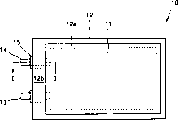
参见图1,常规的袋状锂二次电池10包括电池单元11和提供用于容纳电池单元11的空间12a的壳体12。Referring to FIG. 1 , a conventional pouch-shaped lithium
通过沿一个方向卷绕正电极板、隔板和负电极板的叠层的方式、或者通过反复层叠正电极板、隔板和负电极板的方式形成电池单元11。电池单元11的正电极板和负电极板分别电连接到正电极接头13和负电极接头14。The
正电极接头13和负电极接头14的每一个的端部经过壳体12的密封部分12b,延伸到壳体12的外部。正电极接头13和负电极接头14向外延伸的端部连接到保护电路板的端口(未示出)。An end portion of each of the positive electrode tab 13 and the
位于壳体12的密封部分12b的正电极接头13和负电极接头14的每一个的一部分用密封带15缠绕以防止电短路。A portion of each of the positive electrode tab 13 and the
壳体12是由中间金属箔和贴在中间金属箔的相对表面上的内、外绝缘膜构成的袋子,这种袋状壳体非常有柔性。The
壳体12具有用于容纳电池单元11的空间12a,如上所述。围绕空间12a的边缘形成可热熔的密封部分12b。The
图2A是沿图1中的线I-I取向的截面放大图。图2B是图2的局部放大图。FIG. 2A is an enlarged cross-sectional view oriented along line I-I in FIG. 1 . FIG. 2B is a partially enlarged view of FIG. 2 .
参见图2A和2B,壳体12由金属箔例如铝箔制成的中间层12c和贴在中间层12c的相对面上作为保护层的内层12d和外层12e构成的复合膜制成。2A and 2B, the
在壳体12的空间12a中装入包括相互层叠的正电极板11a、隔板11c和负电极板11b的卷状物的电池单元11。正电极接头13和负电极接头14分别从正电极板11a和负电极板11b引出,如图1所示。如上所述,正电极接头13和负电极接头14的每一个的端部露出到壳体12的外部,用密封带15缠绕位于密封部分12b中的正电极接头13和负电极接头14的每一个的一部分。In the
在具有上述结构的袋状锂二次电池10的制造过程中,正电极板11a和负电极板11b分别电连接到正电极接头13和负电极接头14,并将正电极板11a、隔板11c和负电极板11b的叠层卷绕起来以形成电池单元11。In the manufacturing process of the pouch-shaped lithium
在进行伸长步骤使得各正电极接头13和负电极接头14的端部露出壳体12之外以后,将电池单元11放置在壳体12的空间12a中。The
在此状态下,将预定量的热量和压力施加到壳体12的密封部分12b,完成袋状锂二次电池10的制造。对袋状锂二次电池10进行包括充电、老化、放电等的一系列的化成工艺,使袋状锂二次电池10在结构上稳定,并确定它是否正常工作。In this state, a predetermined amount of heat and pressure is applied to the sealing
然而,常规袋状锂二次电池10具有下述问题。However, the conventional pouch-shaped lithium
在对作为由绝缘内层12d、金属中间层12c和绝缘外层12e构成的复合膜的壳体12进行构形时在内层12d中出现了小缝隙的情况下,在运转电池10时正电极接头13和负电极接头14会电连接到中间层12c。In the case where a small gap occurs in the inner layer 12d when the
当由于内层12d的损坏造成由镍板制成的负电极接头14接触由铝制成的中间层12c的时候,这是尤为严重的问题,这是因为壳体12就具有了负电位。结果,在电池工作时,由于在中间层12c和来自电解液并粘接到中间层12c表面的锂离子之间的电位差,造成了中间层12c不能再由内层12d保护而腐蚀。This is a particularly serious problem when the
随着壳体12的逐渐腐蚀,中间层12c分解,在壳体12中形成缝隙并让外部空气经过该缝隙进入壳体12中。As the
随着潮湿的空气进入壳体12中,在空气中的水分与处于充电状态的电池单元11反应,尤其是与电池单元11的负电极板11b反应,并产生气体。产生的气体可使壳体12膨胀并打开锂二次电池10的电池组的密封部分12b。As humid air enters the
因此,在制成锂二次电池10之后的化成工艺中,需要检查是否由于内层12d的损坏而造成了在中间层12c和负电极接头14之间的电接触。Therefore, in the formation process after the lithium
然而,甚至在由于在中间层12c和负电极接头14之间的电接触造成袋状锂二次电池10严重腐蚀和膨胀的时候,人们也会根据从化成工艺中测出的袋状锂二次电池10的电压值而确定它处于正常充电状态。换句话说,不可能精确判断袋状锂二次电池10是否正常工作。此外,锂二次电池10的膨胀引起电池组的变形。However, even when the pouch lithium
发明内容Contents of the invention
本发明提供一种袋状锂二次电池,该电池具有电连接到袋状壳体的正电极板,从而响应于在电池工作时壳体的损坏造成的电池单元的负电极板接触壳体会引起短路。因此,在电池开路电压中的变化是可检测到的,更容易检测出袋状锂二次电池的故障。The present invention provides a pouch-shaped lithium secondary battery having a positive electrode plate electrically connected to a pouch-shaped case so that the contact of the negative electrode plate of the battery cell with the case caused by the damage of the case during battery operation will cause short circuit. Therefore, a change in the open-circuit voltage of the battery is detectable, and it is easier to detect a malfunction of the pouch-shaped lithium secondary battery.
本发明的其它方案和/或优点部分列在下面的说明书中,部分从说明书中就很容易看出,或可通过对本发明的实践得知。Other schemes and/or advantages of the present invention are partly listed in the description below, partly can be easily seen from the description, or can be known through the practice of the present invention.
根据本发明的一个方案,袋状锂二次电池包括:电池单元,包括正电极板、负电极板、和设置在正电极板和负电极板之间的隔板;与正电极板电连接的正电极接头;与负电极板电连接的负电极接头;具有容纳电池单元的空间和围绕该空间的密封边缘的壳体;以及向正电极接头和壳体施加正电极电压的正电极电压施加单元。According to a solution of the present invention, the pouch-shaped lithium secondary battery includes: a battery cell including a positive electrode plate, a negative electrode plate, and a separator arranged between the positive electrode plate and the negative electrode plate; a positive electrode tab; a negative electrode tab electrically connected to the negative electrode plate; a case having a space for accommodating the battery cell and a sealing edge surrounding the space; and a positive electrode voltage applying unit for applying a positive electrode voltage to the positive electrode tab and the case .
壳体可包括:包含金属薄膜的中间层;和分别覆盖在中间层的相对表面的内、外层。通过露出一部分中间层并将中间层的露出部分和正电极接头电连接,从而形成正电极电压施加单元。作为选择,通过去除壳体的一部分内层以露出一部分中间层并使正电极接头的外表面与中间层的露出部分接触,从而形成正电极电压施加单元。通过使正电极接头的外表面与壳体中间层的外部露出边缘接触,从而形成正电极电压施加单元。The case may include: an intermediate layer including a metal thin film; and inner and outer layers covering opposite surfaces of the intermediate layer, respectively. A positive electrode voltage applying unit is formed by exposing a part of the intermediate layer and electrically connecting the exposed portion of the intermediate layer to the positive electrode tab. Alternatively, the positive electrode voltage applying unit is formed by removing a portion of the inner layer of the case to expose a portion of the intermediate layer and bringing the outer surface of the positive electrode tab into contact with the exposed portion of the intermediate layer. The positive electrode voltage applying unit is formed by bringing the outer surface of the positive electrode tab into contact with the outer exposed edge of the case intermediate layer.
附图说明Description of drawings
根据下面结合附图对实施方式的以下描述,本发明的这些和/或其它方面和优点将更为明显并且更容易理解,其中:These and/or other aspects and advantages of the present invention will be more apparent and easier to understand from the following description of embodiments in conjunction with the accompanying drawings, wherein:
图1是常规二次电池的平面图;FIG. 1 is a plan view of a conventional secondary battery;
图2A是沿图1的线I-I截取的截面图;FIG. 2A is a cross-sectional view taken along line I-I of FIG. 1;
图2B是图2A的局部放大图;Figure 2B is a partially enlarged view of Figure 2A;
图3A是根据本发明实施方式的袋状锂二次电池的分解透视图;3A is an exploded perspective view of a pouch-shaped lithium secondary battery according to an embodiment of the present invention;
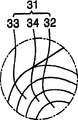
图3B是图3A中的电池单元的放大图;Figure 3B is an enlarged view of the battery cell in Figure 3A;
图3C是图3A中的壳体的放大图;Figure 3C is an enlarged view of the housing in Figure 3A;
图4A是在图3A中形成正电极接头的区域的局部放大截面图;Figure 4A is a partial enlarged cross-sectional view of the region where the positive electrode joint is formed in Figure 3A;
图4B是图4A的局部放大截面图;Fig. 4B is a partially enlarged cross-sectional view of Fig. 4A;
图5是根据本发明另一实施例的袋状锂二次电池的分解透视图;5 is an exploded perspective view of a pouch-shaped lithium secondary battery according to another embodiment of the present invention;
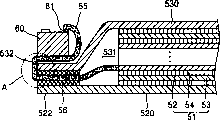
图6A是在图5中形成正电极接头的区域的局部放大截面图;Figure 6A is a partial enlarged cross-sectional view of the region where the positive electrode joint is formed in Figure 5;
图6B是图6A的局部放大截面图;Figure 6B is a partially enlarged cross-sectional view of Figure 6A;
图7A是在图5中形成负电极接头的区域的局部放大截面图;FIG. 7A is a partial enlarged cross-sectional view of the region where the negative electrode tab is formed in FIG. 5;
图7B是图7A的局部放大截面图;和Figure 7B is a partially enlarged cross-sectional view of Figure 7A; and
图8是根据本发明的再一个实施例的袋状锂二次电池的分解透视图。FIG. 8 is an exploded perspective view of a pouch-shaped lithium secondary battery according to still another embodiment of the present invention.
具体实施方式Detailed ways
现在参考本发明的实施方式详细描述本发明,在附图中描述了本发明的实施例,其中相同的参考标记通篇代表相同的元件。下面参考附图描述实施方式,从而解释本发明。The present invention will now be described in detail with reference to embodiments of the invention, embodiments of which are illustrated in the accompanying drawings, wherein like reference numerals refer to like elements throughout. The embodiments are described below in order to explain the present invention by referring to the figures.
图3A表示根据本发明实施方式的锂二次电池30。图3B和3C分别是图3A中的电池单元31和壳体310的详细图。FIG. 3A shows a lithium
参见图3A至3C,锂二次电池30包括电池单元31和容纳电池单元31的壳体310。电池单元31包括正电极板32、负电极板33和插在正电极板32和负电极板33之间、以使电极板彼此绝缘的隔板34。电池单元31可具有胶卷型结构,在这种结构中,将正电极板32、隔板34和负电极板33的单个叠层卷绕起来,或者把包括正电极板32、隔板34和负电极板33的多个叠层的层叠结构卷绕起来。参照胶卷型电池单元描述这种实施方式。Referring to FIGS. 3A to 3C , a lithium
用包含锂氧化物基粘合剂、导电剂等的正电极活性材料层涂覆由条状薄金属板例如铝箔制成的正电极集电器,由此形成正电极板32。正电极接头35电连接到正电极板32。正电极接头35可由铝板制成,并用正电极密封带36缠绕。A positive electrode current collector made of a strip-shaped thin metal plate such as aluminum foil is coated with a positive electrode active material layer containing a lithium oxide-based binder, a conductive agent, and the like, thereby forming the
用包含碳基粘合剂、导电剂等的负电极活性材料层涂覆由条状薄金属板例如铜箔制成的负电极集电器,由此形成负电极板33。负电极接头37电连接到负电极板33。负电极接头37可由镍板制成,并用负电极密封带38缠绕。A negative electrode current collector made of a strip-shaped thin metal plate such as copper foil is coated with a negative electrode active material layer containing a carbon-based binder, a conductive agent, and the like, thereby forming the
在正电极板32和负电极板33之间插入至少一个隔板34以便绝缘。隔板34可由聚乙烯膜、聚丙烯膜或聚乙烯-聚丙烯复合膜制成。隔板34可具有比正电极板32和负电极板33更宽的宽度,从而防止在正电极板32和负电极板33之间短路。At least one
壳体310包括上壳体320和连接到上壳体320的下壳体330,从而形成密封空间。可将各上壳体320和下壳体330的至少一个边缘固定地连接在一起。当上壳体320和下壳体330连接在一起时,壳体310可具有六面体形状。The
下壳体330具有容纳电池单元31的空间331和围绕空间331的下密封边缘332。上壳体320具有对应于下密封边缘332的上密封边缘322。在将电池单元31放入空间331中之后,可将上密封边缘322和下密封边缘332热熔合以密封壳体310。The
上壳体320和下壳体330可由基本上相同的材料制成。壳体310可包括由柔性金属例如铝箔制成的中间层340,通过在中间层340的内表面上涂覆聚合物而形成为防护层、以防止与电解质反应的内层350,以及通过在中间层340的外表面上涂覆聚合物而形成为防护层、以防止中间层340暴露于空气中的外层360。The
根据本发明实施方式的袋状锂二次电池30的特点在于,借助正电压施加单元将正电位施加于与正电极板32电连接的正电极接头35和壳体310的中间层340。The pouch lithium
图4A是图3中的袋状锂二次电池的局部截面图,图4B是图4A的局部放大截面图。FIG. 4A is a partial sectional view of the pouch-shaped lithium secondary battery in FIG. 3 , and FIG. 4B is a partial enlarged sectional view of FIG. 4A .
参见图4A和4B,电池单元31容纳在壳体310中,该电池单元31通过卷绕正电极板32、隔板34和负电极板33的叠层而形成。在围绕容纳电池单元31的空间331的上壳体320的上密封边缘332和下壳体330的下密封边缘332之间,设置连接到正电极板32的正电极接头35和连接到负电极板33的负电极接头37(参见图3A)。Referring to FIGS. 4A and 4B , a
各正电极接头35和负电极接头37的端部伸出到已经通过施加热量和压力而热熔合的上壳体320和下壳体330之外。各正电极接头35和负电极接头37接触上密封边缘322和下密封边缘332的一部分用密封带38缠绕。这部分正电极接头35用正电极密封带36缠绕,这部分负电极接头37用负电极密封带38缠绕。Ends of each of the
通过正电极电压施加单元将正电极接头35电连接到壳体310。特别是,位于上密封边缘322和下密封边缘332之间的正电极接头35的未缠绕部分35a没有用正电极密封带36缠绕,直接接触下密封边缘332。位于未缠绕部分35a的两侧上的正电极接头35的部分分别用第一和第二正电极密封带部分36a和36b缠绕。作为选择,当用密封带36缠绕正电极接头35时,位于上、下密封边缘322和332之间的正电极接头35的一侧部分可保持不缠绕。The
对应于正电极接头35的未缠绕部分35a的一部分壳体310没有内层350,这样由金属薄膜例如铝箔制成的中间层340的露出部分341就与正电极接头35的未缠绕部分35a电连接。A part of the
为了使正电极接头35的未缠绕部分35a和中间层340的露出部分341之间更好地进行接触,正电极接头35的未缠绕部分35a可向下弯曲,形成凹部35b。凹部35b的顶点接触中间层340的露出部分341。In order to make better contact between the unwound portion 35a of the
由于正电极接头35的凹部35b与壳体310的中间层340的露出部分341电连接,因此当电池工作时就将相同的正电极电位施加于正电极接头35和中间层340。与正电极接头35不同,负电极接头37位于上、下密封边缘322和332之间的部分完全用负电极密封带38缠绕起来。Since the concave portion 35b of the
如上所述,在根据本发明实施方式的袋状锂二次电池30中,壳体310与正电极接头35电连接并具有正电极电压,但与负电极接头37绝缘。As described above, in the pouch-shaped lithium
通过对正电极接头35的未缠绕部分35a进行弯曲,由此形成了凹部35b,所述凹部35b是通过用第一、第二正电极密封带部分36a和36b卷绕在未缠绕部分35a的两侧上的上述部分而得到的。可通过刮去或通过控制热熔合处理中的温度而形成中间层340的露出部分341。By bending the unwound portion 35a of the
图5表示根据本发明另一实施方式的锂二次电池50。图6A是图5的局部截面图,表示在袋状锂二次电池50中的正电极接头55。图6B是图6A的局部放大图。FIG. 5 shows a lithium secondary battery 50 according to another embodiment of the present invention. FIG. 6A is a partial cross-sectional view of FIG. 5 showing the
参见图5,锂二次电池50包括电池单元51和容纳电池单元51的壳体510。电池单元51包括以胶卷或叠层结构的正电极板52、隔板54和负电极板53。正电极接头55从正电极板52中伸出并用正电极密封带56缠绕。负电极接头57从负电极板53中伸出并用负电极密封带58缠绕。正电极接头55可由铝板制成。负电极接头57可由镍板制成。Referring to FIG. 5 , a lithium secondary battery 50 includes a
壳体510包括上壳体520和连接到上壳体520的下壳体530。当利用至少一条铰接公共边连接在一起时,上壳体520和下壳体530可形成六面体。下壳体530具有容纳电池单元51的空间531和围绕该空间531的下密封边缘532。上壳体520具有对应于下密封边缘532的上密封边缘522。如图6B所示,壳体510可包括由挠性金属例如铝箔制成的中间层540、通过在中间层540的内表面上涂覆聚合物而形成的内层550、以及通过在中间层540的外表面上涂覆聚合物而形成的外层560。The
伸出到壳体510之外的各正电极接头55和负电极接头57的端部分别电连接到在保护电路板60中的正电极引线61和负电极引线62,所述保护电路板60被安装成当电池过充电时切断电流。The ends of the respective
由于袋状锂二次电池50的正电极接头55连接到保护电路板60,因此可通过外部正电极电压施加单元将正电极电压施加给壳体510。Since the
参见图6A和6B,把通过卷绕正电极板52、隔板54和负电极板53的叠层而形成的电池单元51装入壳体510中。正电极接头55的端部从上壳体520的上密封边缘522和围绕容纳电池单元51的下壳体530的空间531形成的下密封边缘532之间伸出到壳体510之外。Referring to FIGS. 6A and 6B , a
在密封的上、下壳体520和530之间、伸出的正电极接头55的端部用正电极密封带56缠绕。正电极接头55的伸出端部朝着壳体510至少折叠一次,并电连接到在保护电路板60中的正电极引线61上。Between the sealed upper and
伸出上、下密封边缘522和532之外预定长度的正电极接头55的折叠未缠绕部分55a没有用正电极密封带56缠绕。作为进行切割以形成壳体510的结果,露出了与上、下密封边缘522和532对齐的壳体510的中间层540的边缘541。The folded unwound portion 55 a of the
折成与保护电路板60连接的正电极接头55的未缠绕部分55a与中间层540的边缘541电连接。为了在正电极接头55和壳体510之间更稳定地电连接,可局部地去除在下密封边缘532之上的壳体510的外层560的一部分,从而使正电极接头55的未缠绕部分55a与通过外层560的去除部分露出的壳体510的中间层540电连接。The unwound portion 55 a of the
如上所述,由于伸出到壳体510之外的正电极接头55的未缠绕部分55a与中间层540的边缘541或通过外层560的去除部分露出的中间层540的另一部分电连接,因此当电池工作时可将相同的正电极电位施加于正电极接头55和壳体510。As described above, since the unwound portion 55a of the
与正电极接头55不同,负电极接头57与壳体510绝缘,如图7A和7B所示。尤其是,负电极接头57在围绕容纳电池单元51的空间531的上、下密封边缘522和532之间伸出到壳体510之外。负电极接头57的端部伸出到密封的上、下壳体520、530之外并用负电极密封带58卷绕。与正电极接头55一样,用负电极密封带58缠绕的负电极接头57的伸出端朝着壳体510至少折叠一次,并电连接到在保护电路板60中的负电极引线62。Unlike the
然而,与正电极接头55不同,对应于中间层540的边缘541的负电极接头57的折叠部分57a完全用负电极密封带58缠绕以与壳体510绝缘。负电极接头57没有与壳体50的中间层540的边缘541电连接,即使当折叠后以与保护电路板60连接时也是如此。However, unlike the
如上所述,在根据本发明的这种实施方式的、图5中的袋状锂二次电池50中,壳体510与正电极接头55电连接并具有正电极电压,但与负电极接头57绝缘。As described above, in the pouch-shaped lithium secondary battery 50 in FIG. insulation.
图8是根据本发明再一实施方式的袋状锂二次电池的局部截面图。参见图8,将通过卷绕正电极板82、隔板84和负电极板83的叠层而形成的电池单元81装入壳体830中。连接到正电极板82的正电极接头85经由围绕着容纳电池单元81的壳体830中的空间831而形成的密封的上、下密封边缘822和832伸出到壳体830之外。用正电极密封带86缠绕位于上、下密封边缘822、832之间的一部分正电极接头85,从而当上、下密封边缘822、832热熔合时提供更紧密的密封。8 is a partial cross-sectional view of a pouch-shaped lithium secondary battery according to still another embodiment of the present invention. Referring to FIG. 8 , a battery cell 81 formed by winding a stack of a positive electrode plate 82 , a separator 84 , and a negative electrode plate 83 is loaded into a case 830 . The positive electrode tab 85 connected to the positive electrode plate 82 protrudes out of the case 830 via sealed upper and lower sealing edges 822 and 832 formed around a space 831 in the case 830 accommodating the battery cell 81 . A portion of positive electrode tab 85 between upper and lower sealing edges 822, 832 is wrapped with positive electrode sealing tape 86 to provide a tighter seal when upper and lower sealing edges 822, 832 are heat fused.
正电极接头85通过正电极电压施加单元与壳体830电连接。正电极电压施加单元包括导电销800,导电销800穿过壳体830和正电极接头85。由铝箔制成的壳体830的中间层通过导电销800与正电极接头85电连接。结果,当电池工作时,正电极电压可同时施加于壳体830和正电极接头85。虽然未示出,但负电极接头与壳体830绝缘。The positive electrode joint 85 is electrically connected to the case 830 through the positive electrode voltage applying unit. The positive electrode voltage applying unit includes a conductive pin 800 passing through the case 830 and the positive electrode joint 85 . The middle layer of the casing 830 made of aluminum foil is electrically connected to the positive electrode contact 85 through the conductive pin 800 . As a result, when the battery is operating, a positive electrode voltage can be applied to the case 830 and the positive electrode tab 85 simultaneously. Although not shown, the negative electrode tab is insulated from the case 830 .
在下面的实施例中,对具有上述结构的袋状锂二次电池进行电压测量和腐蚀试验,这些电压测量和腐蚀试验经常在化成工艺中进行。结果如下。In the following examples, the pouch-shaped lithium secondary battery having the above structure was subjected to voltage measurement and corrosion tests, which are often performed in the formation process. The result is as follows.
{实施例1至3}{Example 1 to 3}
制造图3A至4B中所示的袋状锂二次电池30。通过卷绕正电极板32、隔板34和负电极板33的叠层、然后放入壳体310的空间331中,由此制成了胶卷型电池单元31。连接到电池单元31的各正电极接头35和负电极接头37的端部经由上、下密封边缘322和332伸出到壳体310之外。The pouch-shaped lithium
用正电极绝缘条36部分地卷绕经由上、下密封边缘322、332伸出的正电极接头35,从而露出未缠绕部分35a。在上、下密封边缘322、332之间的负电极接头37的一部分完全用负电极绝缘条38卷绕。The
在正电极接头35的未卷绕部分35a中形成凹部35b。将对应于凹部35b的、壳体310的一部分内层350除去,以使凹部35b接触在内层350的去除部分下面的中间层340,从而使正电极接头35与壳体310电连接。A recess 35 b is formed in the unwound portion 35 a of the
将壳体310的上、下密封边缘322、332在压力下热密封以提供袋状锂二次电池30。The upper and lower sealing edges 322 , 332 of the
{对比例1至3}{Comparative Examples 1 to 3}
除了伸出到壳体之外的正电极接头和负电极接头分别用正电极绝缘带和负电极绝缘带完全缠绕、没有形成凹部以及没有去除壳体的内层之外,以与实施例1相同的方式制造袋状锂二次电池,这样正电极接头和负电极接头都与壳体绝缘。The procedure was the same as in Example 1 except that the positive electrode tab and the negative electrode tab protruding out of the case were completely wound with positive electrode insulating tape and negative electrode insulating tape respectively, no recess was formed, and the inner layer of the case was not removed. A pouch-shaped lithium secondary battery is manufactured in such a manner that both the positive electrode tab and the negative electrode tab are insulated from the case.
采用在实施例1至3和对比例1至3中制造的袋状二次电池,测量相对于时间和腐蚀程度的开路电压(OCV)。此外,观察到膨胀是否发生。如果在袋状二次电池中出现了腐蚀或膨胀,由于在壳体中产生了微裂纹,因此在负电极接头和壳体之间的短路更易发生。Using the pouch-shaped secondary batteries manufactured in Examples 1 to 3 and Comparative Examples 1 to 3, open circuit voltage (OCV) was measured with respect to time and corrosion degree. Additionally, it was observed whether swelling occurred. If corrosion or swelling occurs in the pouch-shaped secondary battery, a short circuit between the negative electrode tab and the case is more likely to occur due to microcracks generated in the case.
结果示于表1中。The results are shown in Table 1.
表1
如表1所示,在刚刚制成后,根据本发明实施方式的实施例1至3的袋状锂二次电池分别具有4.1840V、4.1844V和4.1841V的开路电压,在它们的外观上没有变化。在制成1天后,实施例1至3的袋状锂二次电池分别具有4.1838V、4.1819V和4.0169V的开路电压,仅在实施例3中出现局部腐蚀。在制成5天后,实施例1至3的袋状锂二次电池分别具有4.1835V、1.8200V和0.8560V的开路电压,在三个电池中都没有出现膨胀。但在实施例2和3中制造的锂二次电池中出现了局部腐蚀。As shown in Table 1, the pouch-shaped lithium secondary batteries of Examples 1 to 3 according to the embodiment of the present invention have open circuit voltages of 4.1840V, 4.1844V, and 4.1841V, respectively, immediately after they are fabricated, and there is no difference in their appearance. Variety. After 1 day of fabrication, the pouch-shaped lithium secondary batteries of Examples 1 to 3 had open circuit voltages of 4.1838V, 4.1819V, and 4.0169V, respectively, and localized corrosion occurred only in Example 3. The pouch-shaped lithium secondary batteries of Examples 1 to 3 had open circuit voltages of 4.1835 V, 1.8200 V, and 0.8560 V, respectively, after 5 days of fabrication, and no swelling occurred in any of the three batteries. However, localized corrosion occurred in the lithium secondary batteries manufactured in Examples 2 and 3.
从上面可以看出,在制成1天之后,在实施例1至3的袋状锂二次电池的开路电压中都没有大的变化。然而,在5天之后出现腐蚀,在实施例3的锂二次电池中的开路电压从约4.2V降至约1.82V。这是因为壳体的内层通过腐蚀损坏。内层的损坏使具有与正电极接头相反极性的负电极接头与被施加了正电极电压的壳体的中间层接触,由此引起短路。As can be seen from the above, there was no large change in the open circuit voltage of the pouch-shaped lithium secondary batteries of Examples 1 to 3 after 1 day of fabrication. However, corrosion occurred after 5 days, and the open circuit voltage in the lithium secondary battery of Example 3 dropped from about 4.2V to about 1.82V. This is because the inner layer of the housing is damaged by corrosion. Damage to the inner layer brings the negative electrode tab, which has the opposite polarity to the positive electrode tab, into contact with the middle layer of the case to which the positive electrode voltage is applied, thereby causing a short circuit.
据了解,根据本发明的实施方式制造的袋状锂二次电池中没有膨胀是因为由短路引起的电池放电。由于出现短路而使锂二次电池放电,锂离子迁移到正电极板,在负电极板中没有反应,因此即使在锂二次电池暴露于水分中时也不会产生气体。It is known that there is no swelling in the pouch-shaped lithium secondary battery manufactured according to the embodiment of the present invention because of battery discharge caused by a short circuit. When the lithium secondary battery is discharged due to a short circuit, lithium ions migrate to the positive electrode plate, and there is no reaction in the negative electrode plate, so no gas is generated even when the lithium secondary battery is exposed to moisture.
如上所述,根据本发明的实施方式,在实施例1至3的袋状锂二次电池中,由壳体内层的损坏而造成的电位腐蚀可由开路电压的变化测量出来。此外,在根据本发明实施方式的袋状锂二次电池中,即使在它们的壳体腐蚀时,也没有出现膨胀。As described above, according to an embodiment of the present invention, in the pouch-shaped lithium secondary batteries of Examples 1 to 3, galvanic corrosion caused by damage to the inner layer of the case can be measured from a change in open circuit voltage. Furthermore, in the pouch-shaped lithium secondary batteries according to the embodiments of the present invention, swelling did not occur even when their cases were corroded.
同时,如表1中所示,在对比例1至3中制造的袋状锂二次电池分别具有4.1846V、4.1847V和4.1823V的开路电压,在其外观上没有变化。在制成1天后,对比例1至3的锂二次电池的开路电压相对保持稳定,分别为4.1837V、4.1846V和4.1822V。此外,三个锂二次电池中有两个腐蚀。即使在制成5天后,对比例1至3的锂二次电池的开路电压仍相对稳定,分别为4.1832V、4.1841V和4.1817V。此外,对比例1至3的所有锂二次电池都腐蚀和膨胀。Meanwhile, as shown in Table 1, the pouch-shaped lithium secondary batteries manufactured in Comparative Examples 1 to 3 had open circuit voltages of 4.1846V, 4.1847V, and 4.1823V, respectively, with no change in their appearance. After one day of fabrication, the open circuit voltages of the lithium secondary batteries of Comparative Examples 1 to 3 remained relatively stable, being 4.1837V, 4.1846V and 4.1822V, respectively. In addition, two of the three lithium secondary batteries were corroded. Even after 5 days of fabrication, the open circuit voltages of the lithium secondary batteries of Comparative Examples 1 to 3 were relatively stable, being 4.1832V, 4.1841V and 4.1817V, respectively. In addition, all the lithium secondary batteries of Comparative Examples 1 to 3 corroded and swelled.
如上所述,在常规袋状锂二次电池中,甚至在制成达5天后在开路电压方面也没有变化。然后,对于所采用的常规电池,在充电状态中水分渗入锂二次电池并通过与正电极板的反应产生气体,因此使常规电池膨胀。换句话说,常规袋状锂二次电池的问题在于,甚至在它们膨胀时,它们的开路电压也几乎恒定,这意味着不可能精确地确定常规电池的工作是否正常。As described above, in the conventional pouch-shaped lithium secondary battery, there was no change in the open circuit voltage even after being manufactured for up to 5 days. Then, with the conventional battery employed, moisture penetrates into the lithium secondary battery in a charged state and generates gas by reaction with the positive electrode plate, thus swelling the conventional battery. In other words, a problem with conventional pouch-shaped lithium secondary batteries is that even when they swell, their open-circuit voltage is almost constant, which means that it is impossible to accurately determine whether the conventional batteries are operating normally.
根据如上所述的本发明的实施方式的袋状锂二次电池具有以下作用。The pouch-shaped lithium secondary battery according to the embodiment of the present invention as described above has the following effects.
首先,由于将正电极电压同时施加于壳体的金属中间层和电池的正电极接头,因此当由于壳体内层的损坏而使负电极接头接触壳体的金属中间层时容易引起短路,从而能够检测开路电压的变化,筛选出出现故障的二次电池。First of all, since the positive electrode voltage is applied to the metal intermediate layer of the case and the positive electrode contact of the battery at the same time, it is easy to cause a short circuit when the negative electrode contact contacts the metal intermediate layer of the case due to the damage of the inner layer of the case, thereby being able to Changes in open circuit voltage are detected to screen out faulty secondary batteries.
其次,即使当锂二次电池的袋状壳体腐蚀时,在由于短路而引起放电的锂二次电池的负电极板中没有反应发生,这样能够防止膨胀,确保锂二次电池的安全。此外,容纳锂二次电池的电池组的熔合密封部分没有因膨胀而破裂,但仍保持密封。Second, even when the pouch case of the lithium secondary battery is corroded, no reaction occurs in the negative electrode plate of the lithium secondary battery that is discharged due to a short circuit, which can prevent swelling and ensure the safety of the lithium secondary battery. In addition, the fusion-sealed portion of the battery pack housing the lithium secondary battery was not broken due to swelling, but remained sealed.
虽然已经示出并描述了本发明的几个例子,但很显然,本领域技术人员也可以在不脱离本发明的原理和精神的条件下对这些实施例进行修改,本发明的范围由权利要求书和其等同物加以限定。Although several examples of the present invention have been shown and described, it is obvious that those skilled in the art can also modify these embodiments without departing from the principle and spirit of the present invention, and the scope of the present invention is defined by the claims book and its equivalents.
Claims (34)
Applications Claiming Priority (3)
| Application Number | Priority Date | Filing Date | Title |
|---|---|---|---|
| KR1020030041052A KR100544119B1 (en) | 2003-06-24 | 2003-06-24 | Pouch Type Lithium Secondary Battery |
| KR41052/2003 | 2003-06-24 | ||
| KR41052/03 | 2003-06-24 |
Related Child Applications (2)
| Application Number | Title | Priority Date | Filing Date |
|---|---|---|---|
| CN2008101301994A Division CN101345323B (en) | 2003-06-24 | 2004-06-24 | Pouch lithium secondary battery |
| CN200810130198XA Division CN101355181B (en) | 2003-06-24 | 2004-06-24 | Pouched lithium secondary battery |
Publications (2)
| Publication Number | Publication Date |
|---|---|
| CN1574443A true CN1574443A (en) | 2005-02-02 |
| CN100446333C CN100446333C (en) | 2008-12-24 |
Family
ID=34056790
Family Applications (3)
| Application Number | Title | Priority Date | Filing Date |
|---|---|---|---|
| CNB2004100694625A Expired - Lifetime CN100446333C (en) | 2003-06-24 | 2004-06-24 | Pouch-shaped lithium secondary battery |
| CN2008101301994A Expired - Lifetime CN101345323B (en) | 2003-06-24 | 2004-06-24 | Pouch lithium secondary battery |
| CN200810130198XA Expired - Lifetime CN101355181B (en) | 2003-06-24 | 2004-06-24 | Pouched lithium secondary battery |
Family Applications After (2)
| Application Number | Title | Priority Date | Filing Date |
|---|---|---|---|
| CN2008101301994A Expired - Lifetime CN101345323B (en) | 2003-06-24 | 2004-06-24 | Pouch lithium secondary battery |
| CN200810130198XA Expired - Lifetime CN101355181B (en) | 2003-06-24 | 2004-06-24 | Pouched lithium secondary battery |
Country Status (4)
| Country | Link |
|---|---|
| US (1) | US7427453B2 (en) |
| JP (1) | JP4121481B2 (en) |
| KR (1) | KR100544119B1 (en) |
| CN (3) | CN100446333C (en) |
Cited By (7)
| Publication number | Priority date | Publication date | Assignee | Title |
|---|---|---|---|---|
| CN101030634B (en) * | 2006-02-15 | 2010-11-17 | Nec能源元器件株式会社 | Battery covered with film and battery pack using same |
| US8034481B2 (en) | 2007-05-21 | 2011-10-11 | Samsung Sdi Co., Ltd. | Pouch-type secondary battery |
| CN102376976A (en) * | 2010-08-24 | 2012-03-14 | 台达电子工业股份有限公司 | Flexible packaged energy storage cavity, device and system using same, and manufacturing method thereof |
| CN102804451A (en) * | 2009-06-19 | 2012-11-28 | 锂电池科技有限公司 | Battery Arrangement And Method For The Production Thereof |
| CN103427131A (en) * | 2012-05-22 | 2013-12-04 | 联想(北京)有限公司 | Lithium ion battery and lithium ion battery detection system |
| CN109997242A (en) * | 2016-12-20 | 2019-07-09 | Sk新技术株式会社 | Bag type secondary battery |
| CN113497310A (en) * | 2020-04-02 | 2021-10-12 | 丰田自动车株式会社 | Laminated power storage device and short-circuit inspection method therefor |
Families Citing this family (49)
| Publication number | Priority date | Publication date | Assignee | Title |
|---|---|---|---|---|
| KR100958647B1 (en) * | 2002-12-18 | 2010-05-20 | 삼성에스디아이 주식회사 | Pouch Type Secondary Battery Unit |
| CN100541867C (en) * | 2004-04-13 | 2009-09-16 | 株式会社Lg化学 | Electrochemical device comprising electrode lead with protector element |
| KR100614353B1 (en) | 2004-11-29 | 2006-08-21 | 삼성에스디아이 주식회사 | Secondary battery |
| KR100965049B1 (en) | 2005-03-23 | 2010-06-21 | 에스케이에너지 주식회사 | Lamination Structure of High Power Lithium Secondary Battery Unit Cell |
| KR101042132B1 (en) | 2005-03-23 | 2011-06-16 | 에스케이이노베이션 주식회사 | Case for high output lithium secondary battery |
| KR100686807B1 (en) | 2005-03-25 | 2007-02-26 | 삼성에스디아이 주식회사 | Polymer battery packs and manufacturing methods thereof |
| US8852791B2 (en) * | 2005-03-28 | 2014-10-07 | Samsung Sdi Co., Ltd. | Pouch type lithium secondary battery with sleeve and method of fabricating |
| KR100846074B1 (en) * | 2005-05-09 | 2008-07-14 | 주식회사 엘지화학 | Three-dimensional electrode terminal of pouch type battery |
| KR100709881B1 (en) * | 2005-09-28 | 2007-04-20 | 삼성에스디아이 주식회사 | Pouch-type lithium secondary battery and method for manufacturing same |
| US7775183B2 (en) * | 2005-12-27 | 2010-08-17 | Vehicle Enhancement Labs | Electronic voltage remover |
| KR101048225B1 (en) * | 2006-02-23 | 2011-07-08 | 에스케이이노베이션 주식회사 | Short circuit safety device for high power battery |
| KR100947982B1 (en) * | 2006-03-28 | 2010-03-18 | 삼성에스디아이 주식회사 | Electrode assembly and pouch type lithium secondary battery having same |
| CN101523656B (en) * | 2006-07-31 | 2011-09-14 | 株式会社Lg化学 | Secondary battery with structurally improved upper sealing portion |
| JP5271498B2 (en) * | 2007-01-26 | 2013-08-21 | 三菱重工業株式会社 | Lithium secondary battery and battery pack |
| KR20080096165A (en) * | 2007-04-27 | 2008-10-30 | 삼성에스디아이 주식회사 | Pouch type secondary battery and manufacturing method thereof |
| KR101054833B1 (en) | 2007-10-29 | 2011-08-05 | 에스케이이노베이션 주식회사 | Lithium Secondary Battery Unit Set and Lithium Secondary Battery Set |
| US8420254B2 (en) * | 2007-12-25 | 2013-04-16 | Byd Co. Ltd. | End cover assembly for an electrochemical cell |
| US20090181298A1 (en) * | 2008-01-10 | 2009-07-16 | Eaglepicher Energy Products Corporation | Integral electrochemical device |
| KR101103755B1 (en) | 2008-09-03 | 2012-01-06 | 에스케이이노베이션 주식회사 | Lithium secondary battery unit set with bus bar and lithium secondary battery set with bus bar |
| KR101108118B1 (en) * | 2008-11-27 | 2012-01-31 | 주식회사 엠플러스 | Secondary Battery Manufacturing Method and Secondary Battery |
| KR101428002B1 (en) * | 2009-07-16 | 2014-08-08 | 주식회사 엘지화학 | Method for manufacturing pouch secondary battery with voluntary anti-corrosive layer and Pouch secondary battery thereof |
| KR101075304B1 (en) * | 2009-10-09 | 2011-10-19 | 삼성에스디아이 주식회사 | Battery pack and manufacture method thereof |
| KR101156240B1 (en) * | 2009-12-08 | 2012-06-13 | 삼성에스디아이 주식회사 | Secondary battery |
| WO2011080989A1 (en) | 2009-12-28 | 2011-07-07 | Jmエナジー株式会社 | Electricity-storage device |
| CN102129916B (en) * | 2010-01-20 | 2012-11-07 | 杰克陈 | Solid electrolytic capacitor and production method thereof |
| US20110281140A1 (en) * | 2010-05-14 | 2011-11-17 | Lee Seong-Joon | Battery pack |
| JP5548827B2 (en) * | 2010-08-09 | 2014-07-16 | エルジー・ケム・リミテッド | Secondary battery with improved safety |
| JP5364751B2 (en) * | 2011-03-30 | 2013-12-11 | 三菱重工業株式会社 | Battery cell |
| DE102011110815A1 (en) * | 2011-08-17 | 2013-02-21 | Li-Tec Battery Gmbh | Electrochemical energy storage cell with metallic housing, process for producing an electrochemical energy storage cell with metallic housing |
| WO2014022908A1 (en) * | 2012-08-10 | 2014-02-13 | Mahy E Cell Partnership | Battery cell terminal made from a plurality of materials and battery cell and battery pack using same |
| US20140091748A1 (en) * | 2012-09-28 | 2014-04-03 | Quantumscape Corporation | Battery control systems |
| KR101567651B1 (en) * | 2013-12-19 | 2015-11-10 | 현대자동차주식회사 | High voltage battery for vehicle |
| KR102266594B1 (en) * | 2015-03-13 | 2021-06-17 | 삼성에스디아이 주식회사 | Rechargeable battery |
| US10109842B2 (en) * | 2015-10-16 | 2018-10-23 | Hyundai Motor Company | Battery cell |
| CN108886126B (en) | 2016-01-06 | 2021-11-26 | 宁德新能源科技有限公司 | Secondary battery |
| US11038227B2 (en) * | 2016-09-20 | 2021-06-15 | Apple Inc. | Battery pouch including nanoceramic coating |
| KR20180033972A (en) * | 2016-09-27 | 2018-04-04 | 현대자동차주식회사 | Battery cell |
| PL3373374T3 (en) * | 2016-09-28 | 2019-12-31 | Lg Chem, Ltd. | Method for sealing pouch case of secondary battery |
| JP6789749B2 (en) * | 2016-09-30 | 2020-11-25 | 三洋電機株式会社 | Square secondary battery |
| US10641833B2 (en) * | 2016-11-18 | 2020-05-05 | Pacesetter, Inc. | Method of screening high rate electrochemical cells |
| EP3358644B1 (en) * | 2017-02-03 | 2019-09-11 | Robert Bosch GmbH | Battery cell and battery module |
| KR102261683B1 (en) * | 2017-07-06 | 2021-06-08 | 주식회사 엘지에너지솔루션 | Pouch-Type Secondary Battery Having Electrode Lead with Asymmetric Notch |
| WO2019017994A1 (en) | 2017-07-21 | 2019-01-24 | Quantumscape Corporation | Active and passive battery pressure management |
| CN111244388B (en) * | 2018-07-13 | 2022-02-25 | 宁德时代新能源科技股份有限公司 | Pole piece, manufacturing method of pole piece, and secondary battery |
| KR102325036B1 (en) * | 2018-08-29 | 2021-11-11 | 주식회사 엘지에너지솔루션 | The Pouch Type Secondary Battery And The Pouch For The Secondary Battery |
| CN112397851B (en) * | 2019-07-31 | 2023-05-02 | 东莞新能德科技有限公司 | Battery cell structure and battery structure with same |
| CN112952218B (en) * | 2019-11-26 | 2022-12-13 | 东莞新能德科技有限公司 | Battery, battery manufacturing method, electronic device and battery testing method |
| CN113471637B (en) * | 2021-06-30 | 2024-01-09 | 东莞新能安科技有限公司 | Batteries, battery modules and electronic devices |
| US12515058B1 (en) * | 2022-03-07 | 2026-01-06 | The Alfred E. Mann Foundation For Scientific Research | Medical device including a pouch and method of manufacturing the same |
Family Cites Families (9)
| Publication number | Priority date | Publication date | Assignee | Title |
|---|---|---|---|---|
| US6042966A (en) * | 1998-01-20 | 2000-03-28 | Valence Technology, Inc. | Battery terminal insulation |
| US6267790B1 (en) * | 1998-03-18 | 2001-07-31 | Ntk Powerdex, Inc. | Treatment of conductive feedthroughs for battery packaging |
| JP2000353502A (en) * | 1999-06-11 | 2000-12-19 | Gs-Melcotec Co Ltd | Non-aqueous electrolyte secondary battery |
| JP2000353496A (en) | 1999-06-11 | 2000-12-19 | Japan Storage Battery Co Ltd | Battery |
| EP1120846A4 (en) * | 1999-07-23 | 2005-03-30 | Mitsubishi Electric Corp | CELL AND CELL INSPECTION METHOD |
| JP4070367B2 (en) * | 1999-08-24 | 2008-04-02 | 日立マクセル株式会社 | Laminated polymer electrolyte battery and sheet battery manufacturing method |
| JP4087044B2 (en) * | 2000-06-14 | 2008-05-14 | 三菱電機株式会社 | battery |
| JP2003346779A (en) | 2002-05-23 | 2003-12-05 | Sanyo Gs Soft Energy Co Ltd | Non-aqueous electrolyte secondary battery |
| KR100496433B1 (en) | 2002-08-06 | 2005-06-20 | 에스케이씨 주식회사 | Lithium ion secondry battery |
-
2003
- 2003-06-24 KR KR1020030041052A patent/KR100544119B1/en not_active Expired - Lifetime
-
2004
- 2004-06-09 US US10/863,510 patent/US7427453B2/en active Active
- 2004-06-23 JP JP2004184640A patent/JP4121481B2/en not_active Expired - Lifetime
- 2004-06-24 CN CNB2004100694625A patent/CN100446333C/en not_active Expired - Lifetime
- 2004-06-24 CN CN2008101301994A patent/CN101345323B/en not_active Expired - Lifetime
- 2004-06-24 CN CN200810130198XA patent/CN101355181B/en not_active Expired - Lifetime
Cited By (12)
| Publication number | Priority date | Publication date | Assignee | Title |
|---|---|---|---|---|
| CN101030634B (en) * | 2006-02-15 | 2010-11-17 | Nec能源元器件株式会社 | Battery covered with film and battery pack using same |
| US8034481B2 (en) | 2007-05-21 | 2011-10-11 | Samsung Sdi Co., Ltd. | Pouch-type secondary battery |
| US8268483B2 (en) | 2007-05-21 | 2012-09-18 | Samsung Sdi Co., Ltd. | Pouch-type secondary battery |
| US8318348B2 (en) | 2007-05-21 | 2012-11-27 | Samsung Sdi Co., Ltd. | Pouch-type secondary battery |
| CN102804451A (en) * | 2009-06-19 | 2012-11-28 | 锂电池科技有限公司 | Battery Arrangement And Method For The Production Thereof |
| CN102376976A (en) * | 2010-08-24 | 2012-03-14 | 台达电子工业股份有限公司 | Flexible packaged energy storage cavity, device and system using same, and manufacturing method thereof |
| CN103427131A (en) * | 2012-05-22 | 2013-12-04 | 联想(北京)有限公司 | Lithium ion battery and lithium ion battery detection system |
| CN103427131B (en) * | 2012-05-22 | 2015-11-25 | 联想(北京)有限公司 | A kind of lithium ion battery and Li-ion Battery Testing System |
| CN109997242A (en) * | 2016-12-20 | 2019-07-09 | Sk新技术株式会社 | Bag type secondary battery |
| US11482747B2 (en) | 2016-12-20 | 2022-10-25 | Sk Innovation Co., Ltd. | Pouch-type secondary battery |
| CN109997242B (en) * | 2016-12-20 | 2023-06-20 | Sk新能源株式会社 | Pouch type secondary battery |
| CN113497310A (en) * | 2020-04-02 | 2021-10-12 | 丰田自动车株式会社 | Laminated power storage device and short-circuit inspection method therefor |
Also Published As
| Publication number | Publication date |
|---|---|
| CN100446333C (en) | 2008-12-24 |
| JP2005019404A (en) | 2005-01-20 |
| US7427453B2 (en) | 2008-09-23 |
| CN101345323A (en) | 2009-01-14 |
| JP4121481B2 (en) | 2008-07-23 |
| CN101355181B (en) | 2010-06-23 |
| CN101345323B (en) | 2010-06-23 |
| KR20050000594A (en) | 2005-01-06 |
| CN101355181A (en) | 2009-01-28 |
| US20050014036A1 (en) | 2005-01-20 |
| KR100544119B1 (en) | 2006-01-23 |
Similar Documents
| Publication | Publication Date | Title |
|---|---|---|
| CN1574443A (en) | Pouch lithium secondary battery | |
| US8518575B2 (en) | Pouch-type lithium secondary battery and fabrication method thereof | |
| CN1276538C (en) | Battery group and secondary battery using said same | |
| CN102195025B (en) | Electrode assembly and secondary battery using the same | |
| CN105122494B (en) | Battery cell with round shape corner | |
| US7585589B2 (en) | Pouch-type lithium secondary battery | |
| JP4628682B2 (en) | Battery unit and lithium secondary battery using the same | |
| US8999566B2 (en) | Pouch-type lithium secondary battery and fabrication method thereof | |
| CN102097611B (en) | Secondary battery | |
| CN1713417A (en) | Electrode and rechargeable battery therewith | |
| CN1901266A (en) | Jelly-roll type electrode assembly and lithium secondary battery with the same | |
| CN1753238A (en) | Lithium secondary battery and method for manufacturing the same | |
| CN1495932A (en) | Cylindrical lithium secondary battery and manufacturing method thereof | |
| KR100865399B1 (en) | Secondary battery | |
| CN101609905A (en) | Battery assembly, electrode assembly of the battery assembly, and method for forming the electrode assembly | |
| KR20120040447A (en) | Secondary battery of improved insulating properties | |
| KR101146465B1 (en) | Pouch type secondary battery and the fabrication method thereof | |
| KR102637306B1 (en) | Battery pack and method for manufacturing the same | |
| KR100580767B1 (en) | Pouch Type Lithium-ion Polymer Battery | |
| KR101308242B1 (en) | Pouch type secondary battery | |
| KR100551886B1 (en) | Pouch Type Lithium Secondary Battery | |
| KR20220033944A (en) | The Electrode Assembly And The Secondary Battery | |
| CN121909560A (en) | Secondary batteries and methods for manufacturing secondary batteries | |
| KR20080036743A (en) | Secondary battery |
Legal Events
| Date | Code | Title | Description |
|---|---|---|---|
| C06 | Publication | ||
| PB01 | Publication | ||
| C10 | Entry into substantive examination | ||
| SE01 | Entry into force of request for substantive examination | ||
| C14 | Grant of patent or utility model | ||
| GR01 | Patent grant | ||
| CX01 | Expiry of patent term |
Granted publication date: 20081224 |
|
| CX01 | Expiry of patent term |