CN201345665Y - Wireless transmitting/receiving unit - Google Patents
Wireless transmitting/receiving unit Download PDFInfo
- Publication number
- CN201345665Y CN201345665Y CN 200820175473 CN200820175473U CN201345665Y CN 201345665 Y CN201345665 Y CN 201345665Y CN 200820175473 CN200820175473 CN 200820175473 CN 200820175473 U CN200820175473 U CN 200820175473U CN 201345665 Y CN201345665 Y CN 201345665Y
- Authority
- CN
- China
- Prior art keywords
- mac
- pdu
- ees
- processor
- rlc
- Prior art date
- Legal status (The legal status is an assumption and is not a legal conclusion. Google has not performed a legal analysis and makes no representation as to the accuracy of the status listed.)
- Expired - Lifetime
Links
- 238000000034 method Methods 0.000 claims abstract description 33
- 238000004891 communication Methods 0.000 claims abstract description 15
- 230000011218 segmentation Effects 0.000 claims abstract description 13
- 230000008569 process Effects 0.000 claims description 12
- 239000000872 buffer Substances 0.000 claims description 6
- 230000008878 coupling Effects 0.000 claims 1
- 238000010168 coupling process Methods 0.000 claims 1
- 238000005859 coupling reaction Methods 0.000 claims 1
- 230000000717 retained effect Effects 0.000 claims 1
- 230000006978 adaptation Effects 0.000 description 23
- 230000008859 change Effects 0.000 description 14
- 230000007704 transition Effects 0.000 description 10
- 230000005540 biological transmission Effects 0.000 description 9
- 238000010586 diagram Methods 0.000 description 9
- 230000006870 function Effects 0.000 description 9
- 108700026140 MAC combination Proteins 0.000 description 6
- 238000011084 recovery Methods 0.000 description 5
- 239000012634 fragment Substances 0.000 description 4
- 239000000284 extract Substances 0.000 description 3
- 238000013507 mapping Methods 0.000 description 3
- 230000011664 signaling Effects 0.000 description 3
- 230000004913 activation Effects 0.000 description 2
- 238000013467 fragmentation Methods 0.000 description 2
- 238000006062 fragmentation reaction Methods 0.000 description 2
- 101000955215 Homo sapiens Protein DDI1 homolog 1 Proteins 0.000 description 1
- 102100038994 Protein DDI1 homolog 1 Human genes 0.000 description 1
- 230000006399 behavior Effects 0.000 description 1
- 230000001413 cellular effect Effects 0.000 description 1
- 238000004590 computer program Methods 0.000 description 1
- 101150017296 ddi-1 gene Proteins 0.000 description 1
- 230000002708 enhancing effect Effects 0.000 description 1
- 239000004973 liquid crystal related substance Substances 0.000 description 1
- 230000003287 optical effect Effects 0.000 description 1
- 239000004065 semiconductor Substances 0.000 description 1
- 230000003068 static effect Effects 0.000 description 1
- 230000001960 triggered effect Effects 0.000 description 1
Images


Landscapes
- Mobile Radio Communication Systems (AREA)
Abstract
一种无线发射/接收单元,该无线发射/接收单元包括被配置为接收无线数据的接收机、被配置为传送无线数据的发射机以及与接收机和发射机连接并且与接收机和发射机通信的处理器。该处理器被配置为刷新混合自动重复请求(HARQ)过程、将所有被映射至增强型专用信道(E-DCH)的逻辑信道的状态变量CURRENT_TSN设置为零、以及丢弃被保留在分段实体中的分段。
A wireless transmit/receive unit comprising a receiver configured to receive wireless data, a transmitter configured to transmit wireless data, and connected to and in communication with the receiver and the transmitter processor. The processor is configured to flush the Hybrid Automatic Repeat Request (HARQ) procedure, set the state variable CURRENT_TSN to zero for all logical channels mapped to the Enhanced Dedicated Channel (E-DCH), and discards are kept in the Segmentation Entity segment.
Description
技术领域 technical field
本申请涉及无线通信中的无线发射/接收单元。This application relates to a wireless transmitting/receiving unit in wireless communication.
背景技术 Background technique
在第三代合作伙伴计划(3GPP)版本6(R6)系统中,应答模式(AM)中的无线电链路控制(RLC)层使用固定协议数据单元(PDU)大小运行。另外,基站中的媒体接入控制高速(MAC-hs)层和无线发射/接收单元(WTRU)中的媒体接入控制(MAC)不支持来自较高层的服务数据单元(SDU)的分段。这些限制可能导致性能局限性,尤其是随着高速分组接入(HSPA)朝着高数据速率方向发展。In 3rd Generation Partnership Project (3GPP) Release 6 (R6) systems, the Radio Link Control (RLC) layer in Answered Mode (AM) operates with a fixed Protocol Data Unit (PDU) size. Additionally, the medium access control high-speed (MAC-hs) layer in the base station and the medium access control (MAC) in the wireless transmit/receive unit (WTRU) do not support segmentation of service data units (SDUs) from higher layers. These limitations can lead to performance limitations, especially as High Speed Packet Access (HSPA) moves towards higher data rates.
为了实现较高数据速率和减小协议开销和填充,在3GPP规范的版本7中引入了对于层2(L2)协议的许多新特征。下行链路中的可变的RLC PDU大小和MAC分段在所引入的概念之中。也提议在上行系统中增强L2操作。已经提出的一些增强指向,例如:为可变的RLC PDU大小引入支持、为MAC分段引入支持、允许旧的和新的协议格式之间的平滑过渡、以及支持CELL_DCH、CELL_FACH、CELL_PCH和URA_PCH之间的无缝状态转换(例如,取决于对CELL_FACH UL传送的潜在提高)。In order to achieve higher data rates and reduce protocol overhead and padding, many new features for Layer 2 (L2) protocols were introduced in Release 7 of the 3GPP specifications. Variable RLC PDU size and MAC segmentation in the downlink are among the concepts introduced. It is also proposed to enhance L2 operation in the uplink system. Some of the enhancements that have been proposed point to, for example: introducing support for variable RLC PDU size, introducing support for MAC segmentation, allowing smooth transition between old and new protocol formats, and supporting CELL_DCH, CELL_FACH, CELL_PCH and URA_PCH Seamless state transitions between (e.g., depending on potential enhancements to CELL_FACH UL transmissions).
图1示出了传统协议架构100(例如具有MAC层及以下)以及例如3GPP规范的版本7中描述的增强型专用信道(EDCH)的使用。特定于E-DCH的使用的MAC子层为MAC-es和MAC-e子层。潜在地,可以通过增强RLC子层(图1中未示出)、MAC-es和MAC-e子层,可以实现对L2协议的改进。要注意的是,在基站中只终止了MAC-e子层。Figure 1 shows a legacy protocol architecture 100 (eg with a MAC layer and below) and the use of an Enhanced Dedicated Channel (EDCH) eg as described in Release 7 of the 3GPP specification. The MAC sublayers specific to the use of E-DCH are the MAC-es and MAC-e sublayers. Potentially, improvements to the L2 protocol can be achieved by enhancing the RLC sublayer (not shown in FIG. 1 ), MAC-es and MAC-e sublayers. Note that only the MAC-e sublayer is terminated in the base station.
改进的L2增强型MAC-e/es实体可以称作MAC-i-is实体。改进的L2特征可用做CELL_DCH中的E-DCH传输或用作CELL_FACH中的E-DCH传输。后者也称作E-RACH传输。The improved L2 enhanced MAC-e/es entity may be called a MAC-i-is entity. The improved L2 feature can be used as E-DCH transmission in CELL_DCH or as E-DCH transmission in CELL_FACH. The latter is also referred to as E-RACH transmission.
由于新特征的使用,例如系统中改进的上行链路(UL)层2协议的使用通常不能同时在整个系统中进行,在一段时间内,将有被不支持新特征的基站覆盖的区域。即使这些基站是被支持新特征的无线电网络控制器(RNC)控制的无线电网络子系统的一部分,也会是这种情况。随着这些传统基站将邻近执行新特征的基站(“增强型基站”),将存在在被增强型基站所覆盖的区域之内开始其通信并且在被传统基站覆盖的区域之内移动的WTRU。Due to the use of new features, such as the use of improved uplink (UL) layer 2 protocols in the system usually cannot be carried out in the whole system at the same time, for a period of time, there will be areas covered by base stations that do not support the new features. This is the case even if these base stations are part of a radio network subsystem controlled by a radio network controller (RNC) supporting the new features. As these legacy base stations will be adjacent to base stations implementing the new features ("enhanced base stations"), there will be WTRUs that start their communication within the area covered by the enhanced base station and move within the area covered by the legacy base station.
因而,提供一种用于当WTRU移动至由传统基站所覆盖的区域中时支持由增强型基站所覆盖的区域中的上行链路协议同时提供平稳过渡的方法和装置是有利的。Accordingly, it would be advantageous to provide a method and apparatus for supporting uplink protocols in an area covered by an enhanced base station while providing a smooth transition when a WTRU moves into an area covered by a legacy base station.
实用新型内容Utility model content
为了当WTRU移动至由传统基站所覆盖的区域中时支持由增强型基站所覆盖的区域中的上行链路协议同时提供平稳过渡,本实用新型提供了一种无线发射/接收单元(WTRU)。该WTRU包括被配置为接收无线数据的接收机、被配置为传送无线数据的发射机以及与所述接收机和所述发射机耦合并与所述接收机和所述发射机通信的处理器。所述处理器被配置为刷新混合自动重复请求(HARQ)过程、将所有被映射至增强型专用通道(E-DCH)的逻辑通道的状态变量CURRENT_TSN设置为零以及丢弃保留在分段实体中的分段。To support uplink protocols in areas covered by enhanced base stations while providing a smooth transition when the WTRU moves into areas covered by legacy base stations, the present invention provides a wireless transmit/receive unit (WTRU). The WTRU includes a receiver configured to receive wireless data, a transmitter configured to transmit wireless data, and a processor coupled to and in communication with the receiver and the transmitter. The processor is configured to flush Hybrid Automatic Repeat Request (HARQ) procedures, set the state variable CURRENT_TSN of all logical channels mapped to Enhanced Dedicated Channel (E-DCH) to zero and discard the Segmentation.
本实用新型提供的WTRU能在移动至由传统基站所覆盖的区域中时支持由增强型基站所覆盖的区域中的上行链路协议同时提供平稳过渡。The present invention provides a WTRU capable of supporting uplink protocols in an area covered by an enhanced base station while providing a smooth transition when moving into an area covered by a legacy base station.
附图说明 Description of drawings
从下面结合附图以实例方式给出的描述中可以获得更详细的理解,其中:A more detailed understanding can be obtained from the following description given by way of example in conjunction with the accompanying drawings, in which:
图1示出了传统协议架构;Figure 1 shows a traditional protocol architecture;
图2示出了包括WTRU和多个节点-B的无线通信系统的实例;Figure 2 shows an example of a wireless communication system including a WTRU and multiple Node-Bs;
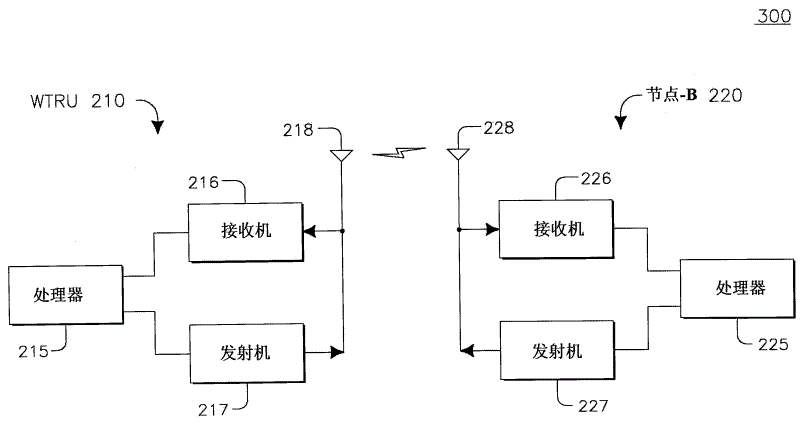
图3为图2的WTRU和节点-B的示例性功能框图;FIG. 3 is an exemplary functional block diagram of the WTRU and Node-B of FIG. 2;
图4为执行MAC复位的方法的流程图;4 is a flowchart of a method for performing a MAC reset;
图5示出了E-DCH协议架构;Figure 5 shows the E-DCH protocol architecture;
图6示出了MAC PDU创建的示例图;Figure 6 shows an example diagram of MAC PDU creation;
图7示出了替换MAC PDU创建的示例图;以及Figure 7 shows an example diagram of replacement MAC PDU creation; and
图8示出了另一替换MAC PDU创建的示例图。Figure 8 shows an example diagram of another alternative MAC PDU creation.
具体实施方式 Detailed ways
下文提及的“无线发射/接收单元(WTRU)”包括但不局限于用户设备(UE)、移动站、固定或移动用户单元、传呼机、蜂窝电话、个人数字助理(PDA)、计算机或能够在无线环境中操作的任何其它类型的用户设备。下文提及的“基站”包括但不局限于节点-B、站点控制器、接入点(AP)或能够在无线环境中操作的任何其它类型的接口设备。References below to "Wireless Transmit/Receive Unit (WTRU)" include, but are not limited to, User Equipment (UE), Mobile Station, Fixed or Mobile Subscriber Unit, Pager, Cellular Phone, Personal Digital Assistant (PDA), Computer or Capable Any other type of user equipment operating in a wireless environment. A "base station" referred to below includes, but is not limited to, a Node-B, a site controller, an access point (AP), or any other type of interface device capable of operating in a wireless environment.
图2示出了包括WTRU 210和多个节点-B 220(指2201和2202)的无线通信系统200。如图2中所示,WTRU 210与节点-B 2201通信。在图2的实例中,WTRU 210可从与节点-B 2201通信转换为与节点-B 2202通信,此处节点-B 2201为增强型节点-B(例如3GPP规范版本8中的节点-B),而节点-B 2202为已经被添加至有效集合的非增强型节点-B(例如版本6或7)。要注意的是,尽管图2中描述了WTRU 210和节点-B 220的示例结构,任何无线和有线装置的组合可被包括在无线通信系统200中。例如,无线电网络控制器(RNC-未示出)可被包括在无线通信系统200中并且与一个或多个节点-B 220通信。Figure 2 shows a wireless communication system 200 comprising a WTRU 210 and a plurality of Node-Bs 220 (referred to as 2201 and 2202 ). As shown in Figure 2, the WTRU 210 communicates with a Node-B 2201 . In the example of FIG. 2, WTRU 210 may transition from communicating with Node-B 2201 to communicating with Node-B 2202 , where Node-B 2201 is an enhanced Node-B (e.g., Node-B in Release 8 of the 3GPP specification -B), while Node-B 2202 is a non-enhanced Node-B (eg, version 6 or 7) that has been added to the active set. It is noted that although an example configuration of WTRU 210 and Node-B 220 is depicted in FIG. 2 , any combination of wireless and wired devices may be included in wireless communication system 200 . For example, a Radio Network Controller (RNC—not shown) may be included in the wireless communication system 200 and communicate with one or more Node-Bs 220 .
图3为图2的无线通信系统200的WTRU 210和节点-B 220的示例性功能框图300。如图3中所示,WTRU 210与节点-B 220通信。3 is an exemplary functional block diagram 300 of the WTRU 210 and the Node-B 220 of the wireless communication system 200 of FIG. 2 . As shown in FIG. 3, WTRU 210 communicates with Node-B 220.
除了可以在典型的WTRU中找到的元件以外,WTRU 210还包括处理器215、接收机216、发射机117和天线218。接收机216和发射机117与处理器215通信。天线218与接收机216和发射机117两者通信以促进无线数据的传送和接收。WTRU 210的处理器215被配置为支持UL协议。WTRU 210 includes
除了在典型的节点-B中可以找到的元件以外,节点-B 220还包括处理器225、接收机226、发射机227和天线228。接收机226和发射机227与处理器225通信。天线228与接收机226和发射机227两者通信以促进无线数据的传送和接收。节点-B 220的处理器225被配置为支持UL协议。Node-B 220 includes
下面描述多个允许WTRU 210在连接到增强型UL L2服务无线电网络控制器(SRNC)时以传统节点-B 220运行的方法。这样,如果SRNC是R8SRNC,则WTRU 210能够在连接至传统(例如,R6、R7)节点-B 220时实现增强型L2协议。此外,下面描述的方法可在WTRU 210转换到支持或不支持增强型L2协议的区域或转换自支持或不支持增强型L2协议的区域时提供平滑过渡,以及提供用于恢复数据的方法。A number of methods are described below to allow the WTRU 210 to operate as a legacy Node-B 220 when connected to an Enhanced UL L2 Serving Radio Network Controller (SRNC). Thus, if the SRNC is an R8 SRNC, the WTRU 210 is able to implement the enhanced L2 protocol when connected to a legacy (eg, R6, R7) Node-B 220. Additionally, the methods described below may provide a smooth transition when the WTRU 210 transitions to or from a region that supports or does not support the Enhanced L2 protocol, as well as provide a method for restoring data.
另外,尽管下面描述的某些方法涉及UL上下文,它们也可应用到具有瓦解(collapsed)的架构的下行链路(DL),例如在该DL中,节点-B和RNC功能性处于一个节点中。术语“MAC-i/is”实体指具有UL L2改进的增强型MAC-e/es实体。因而,在下面的描述中MAC-i/is和MAC-e/es可交替使用。Additionally, although some of the methods described below refer to the UL context, they are also applicable to the downlink (DL) with a collapsed architecture, e.g., in which Node-B and RNC functionality are in one node . The term "MAC-i/is" entity refers to an enhanced MAC-e/es entity with UL L2 improvements. Therefore, MAC-i/is and MAC-e/es may be used interchangeably in the following description.
如果非增强型节点-B 220被添加至有效集合,那么在增强型L2协议中运行的WTRU 210也可回溯到在传统L2协议中运行。相反地,如果在有效集合中的所有节点-B 220都是增强型节点-B,那么在传统L2协议中运行WTRU 210如果想要使用增强型L2协议运行,则可能需要执行一些重新配置功能。A WTRU 210 operating in the enhanced L2 protocol may also fall back to operating in the legacy L2 protocol if a non-enhanced Node-B 220 is added to the active set. Conversely, if all Node-Bs 220 in the Active Set are Enhanced Node-Bs, then a WTRU 210 operating in the legacy L2 protocol may need to perform some reconfiguration functions if it wants to operate using the Enhanced L2 protocol.
在一个实例中,当MAC协议从增强型协议转换成非增强型协议,或从非增强型协议转换成增强型协议,则刷新任何混合自动重复请求(HARQ)过程。此外,可以执行全面MAC-e/es复位。MAC-e/es复位可经由无线电资源控制(RRC)消息、例如RRC重新配置消息(即,无线电承载重新配置、传输信道重新配置等等)或经由有效集合更新消息来以信号告知。In one example, when the MAC protocol transitions from an enhanced protocol to a non-enhanced protocol, or from a non-enhanced protocol to an enhanced protocol, any hybrid automatic repeat request (HARQ) procedures are flushed. Additionally, a full MAC-e/es reset can be performed. A MAC-e/es reset may be signaled via a radio resource control (RRC) message, such as an RRC reconfiguration message (ie, radio bearer reconfiguration, transport channel reconfiguration, etc.), or via an active set update message.
图4为执行MAC复位的方法400的流程图。在步骤410中,MAC协议可改变为增强型协议或改变自增强型协议。例如,当有效集合中的所有节点-B是增强型节点-B时,MAC协议可从非增强型协议改变成增强型协议,并且当非增强型节点-B被添加到有效集合时,MAC协议可从增强型协议改变成非增强型协议。FIG. 4 is a flowchart of a method 400 of performing a MAC reset. In step 410, the MAC protocol may be changed to or from an enhanced protocol. For example, when all Node-Bs in the active set are enhanced Node-Bs, the MAC protocol can be changed from a non-enhanced protocol to an enhanced protocol, and when a non-enhanced Node-B is added to the active set, the MAC protocol Can be changed from enhanced protocol to non-enhanced protocol.
当MAC协议改变时(步骤410),可触发MAC-e/es复位(步骤420)。一旦发生这种情况,刷新HARQ过程(步骤430),对于所有被映射到E-DCH的逻辑信道,状态变量CURRENT_TSN被设置为零(步骤440),并且从分段缓冲器或实体中丢弃任何保留的分段(步骤450)。When the MAC protocol changes (step 410), a MAC-e/es reset may be triggered (step 420). Once this happens, the HARQ process is flushed (step 430), the state variable CURRENT_TSN is set to zero for all logical channels mapped to E-DCH (step 440), and any reserved segment (step 450).
如上所述,可利用RRC信令来识别L2协议改变的WTRU 210。为了完成这个目的,可采用一个或多个下列消息从而以信号告知重新配置:As described above, RRC signaling may be utilized to identify the
●有效集合更新:一个或多个下列配置信息元素(IE)或信息可被添加至有效集合更新消息:- Active Set Update: One or more of the following Configuration Information Elements (IEs) or information may be added to the Active Set Update message:
○“RLC信息”在需要时警告WTRU 210在固定的与可变的RLCPDU之间改变。o "RLC Info" alerts the
○增强型MAC-e/es与普通MAC-e/es之间的改变。这应当在该信息之内以信号告知,作为E-DCH信息或重新配置的链接的一部分。o Changes between Enhanced MAC-e/es and Normal MAC-e/es. This should be signaled within this message, as part of the E-DCH message or reconfigured linkage.
○MAC-e/es复位指示器。○MAC-e/es reset indicator.
○无线电承载(RB)映射信息。o Radio bearer (RB) mapping information.
○“用于重新配置的RB信息”IE-以新的协议重新配置的所有无线电承载列表。IE“用于重新配置的RB信息”可包含以上列出的某些其它信息元素,例如,RLC信息、RB映射信息等等。o "RB Information for Reconfiguration" IE - List of all radio bearers reconfigured with new protocol. The IE "RB Information for Reconfiguration" may contain some of the other information elements listed above, eg, RLC information, RB mapping information, and so on.
●重新配置消息(无线电承载/传输信道重新配置):有效集合更新可以在RRC重新配置消息之后用于更新层2协议参数。可替换地,层2的重新配置可以RRC重新配置消息来直接以信号告知,而不需要有效集合更新。UL RLC协议从固定至可变的改变可在该信息中以信号告知。此外,可更改IE“RLC信息”以使其指示哪个RLC协议版本用于上行链路(例如,固定的或可变的)。RRC消息还应当以信号告知使用增强型MAC-e/es还是旧的MAC-e/es。- Reconfiguration message (radio bearer/transport channel reconfiguration): Active Set Update can be used to update layer 2 protocol parameters after the RRC reconfiguration message. Alternatively, the layer 2 reconfiguration can be signaled directly with an RRC reconfiguration message without requiring an active set update. The change of UL RLC protocol from fixed to variable may be signaled in this message. Furthermore, the IE "RLC Info" can be changed so that it indicates which RLC protocol version is used for the uplink (eg, fixed or variable). The RRC message should also signal whether enhanced MAC-e/es or old MAC-e/es is used.
从增强型L2协议运用重新配置或将重新配置运用至增强型L2协议的一种途径是利用在无线通信系统中的设备的子层的操作和界面,例如图2的无线通信系统200。因而,图5示出E-DCH协议架构500。协议架构500包括WTRU 210、节点-B 220、DRNC 230和SRNC 240。One way to employ reconfiguration from or to an enhanced L2 protocol is to utilize the operations and interfaces of sub-layers of devices in a wireless communication system, such as the wireless communication system 200 of FIG. 2 . Thus, FIG. 5 shows an
如图1所示,来自传统架构的协议架构500中的MAC-e子层未改变。增强型MAC功能性、例如分段和/或逻辑信道复用,完全由增强型MAC-es子层所支持,增强型MAC-es指图5中的“MAC-ees”。这允许WTRU 210和SRNC 240将增强型功能性用于传统节点-B 230。As shown in Figure 1, the MAC-e sublayer in the
适配子层(即图5中的MAC-e适配子层)被插入MAC-ees与MAC-e之间,并且在WTRU 210和SRNC 240中。在WTRU 210侧的适配子层构建了能够完全由传统节点-B处理的MAC-e PDU。下面将参照图5中描述的层或子层以及图6、7和8的MAC PDU创建图来更详细地描述该结构。传统节点-B 220接收在MAC-e PDU之内由MAC-ees产生的数据并且将该数据识别为传统MAC-es PDU。从而,节点-B 220将其作为传统MAC-es PDU处理。接着,MAC-es PDU被转发至SRNC 240,在这里它们再次被最初作为传统MAC-es PDU处理。然而,这些使用E-DCH帧协议传输的MAC-es PDU随后在SRNC 240中由适配子层处理,该适配子层将它们转换成MAC-eesPDU。The adaptation sublayer (ie, the MAC-e adaptation sublayer in Figure 5) is inserted between the MAC-ees and the MAC-e, and in the
因此,当非增强型节点-B 220被添加到有效集合时,WTRU 210不必转变成传统L2协议,(即旧的MAC-e/es和固定的RLC PDU大小)。只要SRNC240为R8 SRNC 240,(即包含MAC-ees和MAC-e适配子层),WTRU 210可以采用增强型L2协议运行。可以采用许多方式来处理逻辑信道标识和MAC-ees功能性。Therefore, when the non-enhanced Node-B 220 is added to the active set, the
例如,在一种实施方式中,根据服务质量(QoS)特性,逻辑信道指数(index)的含义被保持在MAC-e子层。这意味着,在MAC-e子层的逻辑信道#n与在上层的逻辑信道#n的含义。这样,节点-B 220可以根据它的不同逻辑信道的QoS合理调度WTRU 210。而且,节点-B 220执行MAC-ePDU至MAC-es PDU的解复用并将它们经由Iub界面转发到SRNC。For example, in one embodiment, the meaning of the logical channel index (index) is maintained at the MAC-e sublayer in terms of quality of service (QoS) characteristics. This means the meaning of logical channel #n at the MAC-e sublayer and logical channel #n at the upper layer. In this way, the Node-B 220 can properly schedule the
图6示出了MAC PDU创建的示例图600。在图6中完全图示了每个MAC-ees的不同功能性、适配功能和MAC-e层。MAC-ees子层的功能性包括下列各项。在WTRU 210侧,来自给定逻辑信道或可能来自给定的MAC-d流的MAC-ees SDU(或MAC-d PDU)被连接和/或被分段以适应用于该传输的逻辑信道(或MAC-d流)的有效比特。除MAC-ees报头外所得到的数据形成了MAC-ees PDU。对于每个记录PDU,MAC-ees报头包括下列信息:FIG. 6 shows an example diagram 600 of MAC PDU creation. The different functionalities, adaptation functions and MAC-e layers of each MAC-ees are fully illustrated in FIG. 6 . The functionality of the MAC-ees sublayer includes the following. On the
-用于在SRNC处帮助记录的传输序列号(TSN)字段。- A Transmission Sequence Number (TSN) field used to facilitate logging at the SRNC.
-用于指示MAC-ees PDU的第一和最末部分是否是分段或完整PDU(用与MAC-ehs相同的方式)的分段描述(SD)字段。- Segment description (SD) field to indicate whether the first and last part of the MAC-ees PDU is a segment or a complete PDU (in the same way as MAC-ehs).
-指示每个MAC-ees SDU或其分段的长度的字段(例如,指示每个分段的字节数量的长度指示符(LI))。- A field indicating the length of each MAC-ees SDU or its segments (eg, a Length Indicator (LI) indicating the number of bytes per segment).
当在3GPP规范的版本6/7中时,逻辑信道标识可以从MAC-ees报头忽略并且通过MAC-e报头的数据描述指示符(DDI)字段来指示。然而,也可为每个MAC-ees SDU(或其分段)或每个MAC-ees提供逻辑信道标识。As in Release 6/7 of the 3GPP specification, the logical channel identity may be omitted from the MAC-ees header and indicated through the Data Description Indicator (DDI) field of the MAC-e header. However, a logical channel identity may also be provided per MAC-ees SDU (or a segment thereof) or per MAC-ees.
适配功能的功能性包括下列各项。在WTRU 210侧,对于每个记录PDU,子层确定表示实际MAC-es PDU大小的DDI和N字段的组合,该组合的大小大于或等于该包括报头的MAC-ees PDU的大小。适配子层选择表示尽可能接近MAC-ees PDU的实际大小的大小(减去TSN字段的大小)的组合。The functionality of the adaptation function includes the following. On the
例如,如果MAC-ees PDU具有3100比特的大小并且存在被映射到相应的具有320比特的MAC-d PDU大小的逻辑信道的DDI值,则适配功能可选择该具有N=10的DDI值。一旦建立DDI和N的合适组合,适配子层附加至每个MAC-ees PDU,所需数量的填充比特使其扩展的大小与对应于DDI和N组合的实际MAC-es PDU的大小相匹配。在所描述的实例中,适配子层需要附加106比特,(即320×10-3100+6),因此除6比特的TSN之外,扩展的MAC-ees PDU的大小与由大小为320比特的10个MAC-es SDU组成的MAC-es PDU的大小相匹配。For example, if a MAC-ees PDU has a size of 3100 bits and there is a DDI value mapped to a corresponding logical channel with a MAC-d PDU size of 320 bits, the adaptation function may select this DDI value with N=10. Once a suitable combination of DDI and N is established, an adaptation sublayer is appended to each MAC-ees PDU with the required number of padding bits to make the size of the extension match the size of the actual MAC-es PDU corresponding to the combination of DDI and N . In the described example, the adaptation sublayer requires an additional 106 bits, (i.e. 320×10-3100+6), so in addition to the 6-bit TSN, the size of the extended MAC-ees PDU is 320 bits The size of the MAC-es PDU composed of 10 MAC-es SDUs matches the size of the MAC-es PDU.
同样,适配层可选择避免添加任何填充至MAC-ees PDU。可通过限定MAC-ee子层以产生具有与预先确定的比特组的组合之一相同的大小的MAC-ees PDU来避免这种添加。然而,在不具有足够数据的情况下,适配功能添加填充至MAC-ees PDU。选择的MAC-ees PDU大小被选择以尽可能接近最大允许的比特数或逻辑信道的有效比特数。分段或请求RLC发送可变的RLC PDU大小的能力可使其实现。Likewise, the adaptation layer may choose to avoid adding any padding to the MAC-ees PDU. This addition can be avoided by defining the MAC-ee sublayer to produce a MAC-ees PDU with the same size as one of the predetermined combinations of bit groups. However, in case there is not enough data, the adaptation function adds padding to the MAC-ees PDU. The selected MAC-ees PDU size is chosen to be as close as possible to the maximum allowed number of bits or effective number of bits for a logical channel. Segmentation or the ability to request RLC to send variable RLC PDU sizes makes this possible.
于是,WTRU 210的MAC-e子层构建MAC-e PDU,该MAC-e PDU由每个MAC-es PDU的选择的DDI和N值、以所需数目的填充比特扩展的MAC-ees PDU以及可选地由DDI和/或调度信息字段构成。应注意的是,进入MAC-e PDU中的不同逻辑信道的复用(即MAC-es PDU)被保持在MAC-e层。The MAC-e sublayer of the
因此,如图6所示,MAC-e PDU的MAC-e报头部分包括附加到MAC-e有效载荷的DDI和N字段。于是由适合的MAC-es PDU形成MAC-e有效载荷,其中包括MAC-ees PDU报头和有效载荷。Therefore, as shown in Figure 6, the MAC-e header part of the MAC-e PDU includes the DDI and N fields appended to the MAC-e payload. The MAC-e payload is then formed from the appropriate MAC-es PDU, which includes the MAC-ees PDU header and payload.
在节点-B 220侧,MAC-e子层用与传统无线通信系统中类似的方式处理MAC-e PDU。即,每个MAC-e PDU被解复用成使用E-DCH帧协议传送的MAC-es PDU,在Iub上传递每个MAC-es PDU的DDI和N字段。由于在传统节点-B 220中的MAC-e子层没有察觉到填充比特,该MAC-e子层将每个扩展的MAC-ees PDU作为R6/R7MAC-es PDU处理。On the Node-B 220 side, the MAC-e sublayer processes MAC-e PDUs in a similar manner as in conventional wireless communication systems. That is, each MAC-e PDU is demultiplexed into MAC-es PDUs delivered using the E-DCH frame protocol, and the DDI and N fields of each MAC-es PDU are delivered over Iub. Since the MAC-e sublayer in legacy Node-B 220 is not aware of padding bits, the MAC-e sublayer handles each extended MAC-ees PDU as an R6/R7 MAC-es PDU.
在网络侧,以上描述的操作通常颠倒。例如,不同的MAC-ees PDU被解复用并且数据被路由至对应于各自的逻辑信道(或MAC-d流)的重排序、分解和重组实体。于是在分解和重组实体的输出端,MAC-ees SDU被发送到上层。On the network side, the operations described above are generally reversed. For example, different MAC-ees PDUs are demultiplexed and data are routed to reordering, disassembly and reassembly entities corresponding to respective logical channels (or MAC-d flows). Then at the output of the disassembly and reassembly entity, MAC-ees SDUs are sent to upper layers.
例如,SRNC 240在它们各自的MAC-d流上接收MAC-es PDU并且SRNC 240中的重新分配功能层基于DDI字段将它们发送至正确的逻辑信道流。可替换地,如果不利用DDI字段并且MAC-ees报头包含逻辑标识(LCH-ID),列分配功能可基于LCH-ID字段而路由PDU。For example,
于是,在SRNC 240侧的适配子层从MAC-es PDU提取MAC-ees PDU。这通过移除任何被添加以使MAC-ees PDU适应于预先确定大小之一的填充比特实现。可通过读取指示单独的MAC-ees SDU或分段的长度的MAC-ees报头字段(例如在LI字段中)来实现填充比特的移除。可替换地,在MAC-ees子层中执行合适数目填充比特的移除。由此,MAC-ees PDU可被路由至MAC-ees子层。一旦MAC-ees PDU到达SRNC 240中的MAC-ees子层,就可利用MAC-ees PDU的报头将MAC-ees PDU重排序和分解成MAC-eesSDU和其分段。Then, the adaptation sublayer at the
应注意的是,作为分解/组合过程的一部分,填充比特的移除能在重排序之前或之后进行。也应注意到,为了促进采用适配子层的有效操作,每个逻辑信道的DDI值可以以最小化填充比特的数目的方式来设计。It should be noted that the removal of stuffing bits can be done before or after reordering as part of the disassembly/combination process. It should also be noted that in order to facilitate efficient operation with the adaptation sublayer, the DDI values for each logical channel may be designed in such a way as to minimize the number of padding bits.
作为图6的替换方式,在MAC-e与其它子层之间,逻辑信道指数不必为可识别的。为了促进不同DDI值至不同有效载荷大小的映射,可限定在MAC-e子层处的不同逻辑信道。从WTRU 210侧,DDI映射的值和N用于增加WTRU 210可指示至节点-B 220的一组可能的大小。更明确的,DDI*N将给出MAC-es PDU的总大小或可替换地给出MAC-ees PDU的总大小(即,所有重排序的PDU的大小复用在一起)。As an alternative to Figure 6, the logical channel index does not have to be identifiable between MAC-e and other sublayers. To facilitate the mapping of different DDI values to different payload sizes, different logical channels at the MAC-e sublayer may be defined. From the
因而,DDI字段的6比特被WTRU 210使用以给出一较大组可能的大小。R8节点-B 220察觉到DDI字段对应于一组MAC-ees PDU大小并且确信不将DDI与逻辑信道、MAC-d流和MAC-d PDU大小相关联。然而,R7节点-B 220对DDI字段进行不同的解释,并且R7节点-B 220可被配置为同样考虑逻辑信道和DDI字段的MAC-d流。然而,即使在Iub帧之上以DDI和N字段转发MAC-es PDU,SRNC 240忽略所提供的DDI和N字段并且因此处理接收到的PDU。Thus, 6 bits of the DDI field are used by the
图7示出替换MAC PDU创建的示例图700。在图7中,MAC-ees子层的功能性包括下列各项。在WTRU 210侧,来自给定逻辑信道(或可能来自给定MAC-d流)的MAC-ees SDU(或MAC-d PDU)连接和/或被分段以适应用于该传送的逻辑信道(或MAC-d流)的有效比特数。该操作的结果称作“记录PDU”。此外,MAC-ees子层将来自不同逻辑信道(或MAC-d流)的记录PDU复用在一起并且使用MAC-ees报头添加该结果以形成MAC-eesPDU。对于每个记录PDU,MAC-ees报头包括下列信息:FIG. 7 shows an example diagram 700 of replacement MAC PDU creation. In FIG. 7, the functionality of the MAC-ees sublayer includes the following items. On the
-用于在SRNC处帮助记录的传输序列号(TSN)字段。- A Transmission Sequence Number (TSN) field used to facilitate logging at the SRNC.
-用于指示记录PDU的第一和最末部分是否是分段或完整PDU(用与MAC-ehs相同的方式)的分段描述(SD)字段。- Segment description (SD) field to indicate whether the first and last part of the recorded PDU is a segment or a complete PDU (in the same way as MAC-ehs).
-指示每个MAC-ees SDU或其分段的长度的字段(例如,指示每个分段的字节数量的长度指示符(LI))。- A field indicating the length of each MAC-ees SDU or its segments (eg, a Length Indicator (LI) indicating the number of bytes per segment).
-用于每个MAC-ees SDU(或其分段)的逻辑信道标识,或可能仅针对每个记录PDU。- Logical channel identification for each MAC-ees SDU (or fragment thereof), or possibly just for each record PDU.
在WTRU 210侧,对于产生的MAC-ees PDU,适配子层以与图6中所用的方式类似的方式确定表示实际MAC-es PDU大小的DDI和N字段的组合,该组合的大小大于或等于MAC-ees PDU的大小。一个不同之处仅在于MAC-e PDU中提供了一个MAC-ees PDU,并且因而仅一个DDI和N字段将被并入MAC-e PDU中。该适应功能同样确保填充比特的数量被最小化。On the
于是,WTRU 210的MAC-e子层构建MAC-e PDU,该MAC-e PDU由MAC-ees PDU的选定的DDI和N值、使用所需数量的填充比特扩展的MAC-ees PDU、以及可选的由DDI(DDI 2)、调度信息(SI)字段、和/或填充比特组成。在该操作中,MAC-e报头将包括DDI和N字段,并且可选的包括任何附加DDI字段(例如DDI 2)。于是,MAC-e有效载荷部分将包括MAC-es PDU(其包括MAC-ees PDU和任何填充比特)以及可选的包括任何SI字段。The MAC-e sublayer of the
此外,在节点-B 220侧,MAC-e子层可以使用传统方式处理MAC-ePDU。即,由于仅仅提供一个DDI和N字段,从MAC-e PDU提取MAC-esPDU,然后通过Iub框架协议传送该MAC-es PDU。此外,由于MAC-e没发现MAC-es PDU中的填充比特,则没有发现MAC-es PDU包含来自不只一个逻辑信道的数据。Furthermore, at the Node-B 220 side, the MAC-e sublayer can process MAC-ePDUs in a conventional manner. That is, since only one DDI and N fields are provided, the MAC-esPDU is extracted from the MAC-e PDU, and then the MAC-es PDU is transmitted by the Iub framework protocol. Furthermore, since the MAC-e does not see the padding bits in the MAC-es PDU, it does not see that the MAC-es PDU contains data from more than one logical channel.
在SRNC 240侧,通常,执行反向操作。例如,不同的重排序PDU被解复用,并且数据被路由到与各自的逻辑信道(或MAC-d流)对应的重排序、分解和重组实体。在分解和重组实体的输出端的MAC-ees SDU接着被发送到上层。On the
在SRNC 240侧的适配子层从MAC-es PDU中提取MAC-ees PDU。通过移除被添加以使MAC-ees PDU适应预先确定的大小之一的填充比特来实现。可通过读取指示单独的重排序PDU、MAC-ees SDU或每个重排序PDU之内的分段的长度的MAC-ees报头字段来实现填充比特的移除。接着可将MAC-ees PDU路由至MAC-ees子层,其中MAC-ees PDU的报头用于将MAC-ees PDU解复用至原始的重排序PDU。接着可将重排序PDU路由至正确的重排序流,在该重排序流处执行重排序、分解和重组。The adaptation sublayer at the
可替换地,可在MAC-ees子层中执行合适数目的填充比特的移除,这可在执行将MAC-es PDU解复用成重排序PDU时完成。此外,应当注意到,为了促进适配子层的有效操作,可以以最小化填充比特的数目的方式设计用于每个逻辑信道的DDI值。Alternatively, removal of a suitable number of padding bits may be performed in the MAC-ees sublayer, which may be done when performing demultiplexing of MAC-es PDUs into reordered PDUs. Furthermore, it should be noted that in order to facilitate efficient operation of the adaptation sublayer, the DDI values for each logical channel can be designed in such a way as to minimize the number of padding bits.
图8示出另一替换MAC PDU创建的示例图800。这样,若干DDI和N字段(例如DDI 1...DDI K和N1...NK)被用于描述MAC-ees PDU的长度,不管是上图6中描述的MAC-ees PDU还是图7中描述的MAC-ees PDU。DDI值由多个基值(例如1、10、1000、10000等)组成,并且不同基值和N字段的组合可指示MAC-ees PDU或被发送数据的总长度。DDI*N字段的总和给出了MAC-ees PDU的总的大小。例如,如果PDU的大小为23040比特,则相应的DDI和N字段将是下列各项:(DDI1指数=10000,N1=2),(DDI2指数=1000,N2=3)以及(DDI3指数10,N3=4)。在该实例中,MAC-e报头包括DDI1/N1...DDIK/NK字段和任何附加DDI(例如DDI 2)字段,而MACe-有效载荷部分又包括MAC-ees PDU和任何填充或SI字段。FIG. 8 shows an example diagram 800 of another alternative MAC PDU creation. In this way, several DDI and N fields (such as
在网络侧,在这种情况下应当以与以上所用相同的基数(base)配置传统节点-B 220。为了确保反向兼容性并且避免节点-B 220接收属于相同逻辑信道的DDI字段的情况,网络可将所有的DDI基数配置成属于不同的逻辑信道(即对于逻辑信道1配置成基数DDI=10,而对于逻辑信道2,DDI=1000,依此类推)。这可通过节点-B应用部分(NBAP)信令完成。可替换地,DDI基数可以是相同逻辑信道和MAC-d流的一部分。On the network side, legacy Node-B 220 should in this case be configured with the same base as used above. To ensure backward compatibility and to avoid the situation where Node-B 220 receives DDI fields belonging to the same logical channel, the network can configure all DDI bases to belong to different logical channels (i.e. base DDI=10 for
当节点-B 220接收MAC-e PDU时,可假定每个DDI和N字段属于MAC-es PDU并且因此将MAC-e PDU解复用或者分段为许多分段。所述分段被发送到SRNC 240,并且SRNC 240中的适配层将所有被分段的数据重组到MAC-ees PDU中。接着MAC-ees PDU被发送至MAC-ees子层并被处理。When Node-B 220 receives a MAC-e PDU, it may assume that each DDI and N field belongs to a MAC-es PDU and therefore demultiplex or segment the MAC-e PDU into many segments. The segments are sent to
当传统节点-B 220被添加到R8有效集合,使得所有的节点-B R8节点-B220、WTRU 210和R8节点-B 220改变MAC-e报头格式、启动适配子层功能并且开始将MAC-e报头格式解释为传统MAC-e协议。When the legacy Node-B 220 is added to the R8 active set, so that all Node-B R8 Node-B 220,
R8 MAC-e格式可以是静态的并且与传统MAC-e格式相同。这可通过使用在上图5、6、7和8中所描述的一种选择来实现,此处适配层变为当WTRU 210连接至R8 SRNC 240时始终存在的实体。The R8 MAC-e format can be static and is the same as the legacy MAC-e format. This can be achieved by using one of the options described in Figures 5, 6, 7 and 8 above, where the adaptation layer becomes an entity that is always present when the
然而,当R8MAC-e格式不同于当传统节点-B 220被添加到有效集合或反之亦然时使用的格式时,可能需要一些方法来处理MAC-e协议行为中的改变。例如,当发生有效集合更新,并且传统节点-B 220被添加到仅具有R8节点-B 220的有效集合或反之亦然时,WTRU 210和节点-B应当察觉到变化。特别是,所有的R8节点-B 220将需要察觉到变化。However, when the R8MAC-e format differs from the format used when a legacy Node-B 220 is added to the active set or vice versa, some method may be needed to handle changes in the MAC-e protocol behavior. For example, when an Active Set update occurs and a Legacy Node-B 220 is added to the Active Set with only R8 Node-B 220 or vice versa, the
WTRU 210可通过RRC有效集合更新消息获悉MAC-e报头的改变或者WTRU 210可隐式地检测R7/R6节点-B 220被添加。当WTRU 210接收该指示或检测变化时,在给定的激活时刻或切换时刻,WTRU 210可执行作为有效集合更新过程的一部分的下列步骤中的一个或下列步骤的组合:The
●以R8MAC-e格式刷新包含MAC-e PDU的HARQ过程。● Refresh the HARQ process containing MAC-e PDU in R8MAC-e format.
●执行MAC-e/es复位(即,复位TSN、刷新HARQ过程和丢弃分段实体或缓冲器中的任何保留的分段)。• Perform a MAC-e/es reset (ie reset TSN, flush HARQ process and discard any reserved segments in the segment entity or buffer).
●提取已经在HARQ过程中的旧的MAC-e PDU并且使用新的MAC-e格式重新创建这些旧的MAC-e PDU。● Extract old MAC-e PDUs already in the HARQ process and recreate these old MAC-e PDUs using the new MAC-e format.
●激活/去激活MAC-e适配层并且开始使用新的MAC-e格式。• Activate/deactivate the MAC-e adaptation layer and start using the new MAC-e format.
另外,已经在有效集合中的节点-B 220在WTRU 210开始使用相同的格式时开始解释新的MAC-e报头格式。格式的变化可通过NBAP信令进程来以信号告知,并且协议中的改变可在WTRU 210和节点-B 220中给定的激活时刻发生。Additionally, the Node-B 220 already in the active set starts interpreting the new MAC-e header format when the
在另一实施方式中,当非增强型小区被添加至增强型有效集合时,WTRU 210可连续或在半可变的RLC PDU模式下开始操作。半可变的AMRLC格式是允许WTRU 210创建具有不同大小但在一组固定大小之内的RLC PDU的模式。In another embodiment, the
当非增强型小区被添加到有效集合并且同时WTRU 210保持连接至增强型SRNC 240时,网络对逻辑信道实体进行配置以开始使用半可变的RLCPDU模式开始操作。网络以信号发送可在应答模式(AM)和其相应的DDI字段中使用的一组RLC PDU大小。RLC被允许创建具有选自被配置的集合大小的RLC PDU,可正好在传输时刻之前或更早创建RLC PDU。When a non-enhanced cell is added to the active set and while the
由RLC选择的大小可基于下列标准之一或下列标准的组合:The size selected by the RLC may be based on one or a combination of the following criteria:
●增强型上行链路传输格式组合(E-TFC)选择:MAC请求RLC传送具有选自被配置的集合的大小的N PDU。RLC创建具有所请求的大小的PDU,如果所述PDU与被配置的大小之一匹配。- Enhanced Uplink Transport Format Combination (E-TFC) selection: MAC requests RLC to transmit N PDU with a size selected from the configured set. The RLC creates a PDU of the requested size if the PDU matches one of the configured sizes.
●以一个最大的PLC PDU大小来配置RLC。如果有足够的数据可用,则将RLC PDU设置成最大的大小。如果没有的足够的数据可用于满足最大的RLC PDU大小,则从被配置的集合中选择下一个最小的RLC PDU大小,由此以被添加的最小填充来传送该可用的数据。● Configure RLC with a maximum PLC PDU size. If enough data is available, set the RLC PDU to the maximum size. If not enough data is available to satisfy the maximum RLC PDU size, the next smallest RLC PDU size is selected from the configured set whereby the available data is transmitted with the smallest padding added.
●MAC在每个TTI将RLC PDU的大小告知RLC。The MAC informs the RLC of the size of the RLC PDU every TTI.
●MAC首先请求RLC PDU大小。RLC PDU不断创建具有所请求大小的RLC PDU,直到MAC改变请求。● The MAC first requests the RLC PDU size. RLC PDUs keep creating RLC PDUs with the requested size until a MAC change is requested.
●可配置绝对最大的RLC PDU大小和最小的RLC PDU大小。●Configurable absolute maximum RLC PDU size and minimum RLC PDU size.
半可变的RLC PDU可允许WTRU 210调整到选定的E-TFC,同时仍旧能够使用相同的非增强型MAC报头,也就是说能够指示来自被配置的集合的RLC PDU的大小以及具有相同大小的RLC PDU的数量(即DDI和N字段)。The semi-variable RLC PDU may allow the
然而,当前非增强型MAC具有只包括相同大小的来自MAC-es PDU中的一个逻辑信道的MAC SDU的限制。因此,MAC可执行一个或多个进程。However, current non-enhanced MACs have the limitation of only including MAC SDUs of the same size from one logical channel in a MAC-es PDU. Thus, a MAC may execute one or more processes.
例如,MAC可仅允许具有相同大小的RLC PDU在一个MAC-es PDU中。这将限制RLC建立或发送具有不同大小的MAC RLC PDU。这可导致这样的情况:重新传送的RLC PDU大小不同于第一次传送的RLC PDU的大小。于是发射机可仅在TTI中传送被重新传送的RLC PDU并且等待下一TTI传送下一个RLC PDU。可替换地,如果发生重新传送的情况并且在TB里仍旧存在可用的空间,那么RLC PDU可等待并且在给定的TTI处,该RLCPDU可创建一个或多个具有与被重新传送的RLC PDU相同的大小的新的RLC PDU。可换地,可应用限制至该规则,由此RLC不被允许创建具有比MAC请求的RLC PDU还大的大小的RLC PDU,即使被重新传送的RLCPDU更大。For example, the MAC may only allow RLC PDUs of the same size in one MAC-es PDU. This will restrict RLC from establishing or sending MAC RLC PDUs with different sizes. This can lead to a situation where the retransmitted RLC PDU has a different size than the first transmitted RLC PDU. The transmitter may then only transmit the retransmitted RLC PDU in a TTI and wait for the next TTI to transmit the next RLC PDU. Alternatively, if a retransmission situation occurs and there is still space available in the TB, the RLC PDU can wait and at a given TTI, the RLC PDU can create one or more RLC PDUs with the same A new RLC PDU of the size. Alternatively, a restriction may be applied to this rule whereby the RLC is not allowed to create an RLC PDU with a size larger than that requested by the MAC, even if the retransmitted RLC PDU is larger.
同样的,在一个TTI中,MAC可支持具有不同大小的RLC PDU。这可通过建立若干对应于相同逻辑信道但具有不同的DDI字段的MAC-es PDU实现。Likewise, the MAC can support RLC PDUs of different sizes within one TTI. This can be achieved by creating several MAC-es PDUs corresponding to the same logical channel but with different DDI fields.
当非增强型节点-B 220被添加至有效集合并且发射机配置有半可变的RLC PDU模式时,MAC协议应当改变,以使非增强型节点-B 220能够解码MAC-e PDU。因此,可执行MAC配置。When a non-enhanced Node-B 220 is added to the active set and the transmitter is configured with a semi-variable RLC PDU mode, the MAC protocol should be changed to enable the non-enhanced Node-B 220 to decode MAC-e PDUs. Therefore, MAC configuration can be performed.
在一个实施方式中,MAC被配置以作为非增强型MAC操作。因而,可使用当前版本6MAC-es和MAC-e报头格式,并且MAC可不具有分段能力。In one embodiment, the MAC is configured to operate as a non-enhanced MAC. Thus, current Release 6 MAC-es and MAC-e header formats may be used, and the MAC may not have fragmentation capability.
可替换的,MAC可被配置以使用当前的非增强型MAC-e报头格式,然而该MAC具有执行分段的能力。这将允许MAC处理RLC重新传输,其具有比选定的传输块大小更大的大小。为了连同旧的MAC-e报头格式一起支持分段,WTRU 210可仅仅创建大小等于被配置的RLC PDU大小集合之一的分段。MAC-es报头以信号告知TSN和SI值,然而MAC-e将以信号告知DDI和N值。Alternatively, the MAC can be configured to use the current non-enhanced MAC-e header format, however with the ability to perform fragmentation. This will allow the MAC to handle RLC retransmissions with a larger size than the selected transport block size. In order to support segmentation along with the old MAC-e header format, the
如果保留的分段小于或不完全适合DDI大小之一,可使用填充来使PDU具有下一最小的DDI值。可替换地,如果没有可能的分段组合,MAC可能不能将RLC PDU分段,这将导致所有的分段具有与DDI值之一匹配的大小。If the reserved segment is smaller than or does not fit exactly in one of the DDI sizes, padding may be used to make the PDU have the next smallest DDI value. Alternatively, the MAC may not be able to fragment the RLC PDU if there is no possible combination of fragments, which would result in all fragments having a size matching one of the DDI values.
如果MAC中的填充在执行分段的情况被允许,则MAC-es报头应当以信号告知网络已经增加填充比特。这可以通过将附加比特添加到MAC-es报头格式实现,并且如果所述比特被设置,则另一指示分段在何处结束的字段以及填充比特被添加。可选地,接收机侧(即节点-B 220和RNC)仅当知道MAC-es包含分段时仅检查填充比特指示符是否存在。将移除被添加的比特和重组分段的功能性引入接收MAC-es侧。If padding in the MAC is allowed in case segmentation is performed, the MAC-es header shall signal to the network that padding bits have been added. This can be achieved by adding an additional bit to the MAC-es header format, and if that bit is set, another field indicating where the segment ends and padding bits are added. Optionally, the receiver side (i.e. Node-B 220 and RNC) only checks if the padding bit indicator is present if it knows that the MAC-es contains a segment. The functionality to remove added bits and reassemble segments is introduced to the receiving MAC-es side.
从可变的到半可变的或反之亦然的配置的改变、或者从固定的到半可变的或反之亦然的配置的改变以及MAC的改变可以使用先前描述的方法之一来以信号告知。A change in configuration from variable to semi-variable or vice versa, or from fixed to semi-variable or vice versa, and a change in MAC can be signaled using one of the previously described methods inform.
另外,上述方法中的一些可能导致数据丢失。因此,当可能导致数据丢失的事件发生时,数据恢复可能是有用的。例如,下述过程中的任何一个都可能产生数据恢复操作的需要:Also, some of the above methods may result in data loss. Therefore, data recovery may be useful when an event occurs that may result in data loss. For example, any of the following procedures may create the need for data recovery operations:
WTRU 210从增强型移动到非增强型L2协议。The
改变SRNS。Change SRNS.
执行命令MAC_i/is复位或重新配置的切换。Execute the command MAC_i/is to reset or reconfigure the switch.
在CELL_DCH或CELL_FACH下执行MAC_i/is复位。Perform a MAC_i/is reset on CELL_DCH or CELL_FACH.
执行MAC_i/is复位。Perform a MAC_i/is reset.
通过来自节点_B 220的显示指示释放在CELL_FACH下的E-DCH资源,并且WTRU 210应当丢弃来自MAC_i/is分段实体的分段而不应当执行MAC_i/is复位。Release of E-DCH resources under CELL_FACH is indicated by explicit indication from Node_B 220, and
紧接在从CELL_FACH转换到CELL_DCH之后,执行MAC_i/is复位,或需要WTRU 210刷新HARQ过程。Immediately after transitioning from CELL_FACH to CELL_DCH, a MAC_i/is reset is performed, or the
需要WTRU 210丢弃MAC_i/is实体中的分段实体中的分段。The
当上述提到的情况之一发生时,MAC就与RLC通信,由此RLC能恢复没有被MAC成功或者完整传送的数据。MAC可以将失败的RLC PDU通知RLC。When one of the above-mentioned situations occurs, the MAC communicates with the RLC, whereby the RLC can recover data that was not successfully or completely transmitted by the MAC. The MAC can notify the RLC of failed RLC PDUs.
例如,分段被存储在MAC的分段缓冲器/实体之一中。在上述描述情况下,分段实体中的分段将被丢弃,因此RLC PDU在没有该分段的情况下不可能成功地被传送/被重组。因此,MAC通知相应的RLC实体,如果RLC实体对应于AM RLC实体,则属于RLC PDU的分段决不被传送。RLC一收到允许数据更快恢复的指示后就可以触发重新传输。同样地,如果分段对应于UM RLC实体,则MAC可以将失败的PDU通知RLC,并且UM RLC实体可以丢弃RLC SDU以及任何与相应的SDU关联的任何其它PDU。For example, segments are stored in one of the MAC's segment buffers/entities. In the case described above, the segment in the segment entity will be discarded, so it is not possible for the RLC PDU to be successfully delivered/reassembled without this segment. Therefore, the MAC informs the corresponding RLC entity that, if the RLC entity corresponds to the AM RLC entity, the segments belonging to the RLC PDU are never transmitted. The RLC can trigger a retransmission as soon as it receives an indication to allow faster recovery of the data. Likewise, if the segment corresponds to a UM RLC entity, the MAC may inform the RLC of the failed PDU, and the UM RLC entity may discard the RLC SDU and any other PDUs associated with the corresponding SDU.
另外,如果所述分段对应于SRB或者如果所述分段属于CCCH消息,MAC可以将丢弃的分段通知RRC层。这样可以允许RRC恢复消息并不必等待RRC进程定时器期满就重新传送消息。Additionally, the MAC may inform the RRC layer of the discarded segment if the segment corresponds to an SRB or if the segment belongs to a CCCH message. This allows the RRC to recover the message and retransmit the message without waiting for the RRC progress timer to expire.
另一种恢复数据的方法包括包含被传送但未被应答的数据的HARQ过程。在此情况下,MAC将在其HARQ缓冲器中的所有PDU通知RLC。Another method of recovering data involves HARQ processes involving transmitted but unacknowledged data. In this case, the MAC informs the RLC of all PDUs in its HARQ buffer.
为了支持上述数据恢复方法,可以修改MAC-i/is复位进程,由此在丢弃存储的分段之前,MAC-i/is实体将存储在其缓冲器中的分段和其所属的RLC PDU通知相应的RLC。还应当注意,所描述的数据恢复方法也可应用到MAC-e/es实体。To support the data recovery method described above, the MAC-i/is reset procedure can be modified whereby the MAC-i/is entity notifies the segment stored in its buffer and the RLC PDU it belongs to before discarding the stored segment The corresponding RLC. It should also be noted that the described data recovery methods are also applicable to MAC-e/es entities.
虽然本实用新型的特征和元素以特定的结合进行了描述,但每个特征或元素可以在没有其它特征和元素的情况下单独使用,或在与或不与其它特征和元素结合的各种情况下使用。这里提供的方法或流程图可以在由通用计算机或处理器执行的计算机程序、软件或固件中实施。关于计算机可读存储介质的实例包括只读存储器(ROM)、随机存取存储器(RAM)、寄存器、缓冲存储器、半导体存储设备、内部硬盘和可移动磁盘之类的磁介质、磁光介质以及CD-ROM磁盘和数字多功能光盘(DVD)之类的光介质。Although features and elements of the present invention have been described in particular combinations, each feature or element can be used alone without other features and elements, or in various combinations with or without other features and elements. use below. The methods or flowcharts provided herein can be implemented in a computer program, software or firmware executed by a general purpose computer or processor. Examples of computer-readable storage media include read-only memory (ROM), random-access memory (RAM), registers, buffer memory, semiconductor storage devices, magnetic media such as internal hard disks and removable disks, magneto-optical media, and CDs - Optical media such as ROM discs and Digital Versatile Discs (DVD).
举例来说,恰当的处理器包括:通用处理器、专用处理器、常规处理器、数字信号处理器(DSP)、多个微处理器、与DSP核相关联的一个或多个微处理器、控制器、微控制器、专用集成电路(ASIC)、现场可编程门阵列(FPGA)电路、任何一种集成电路(IC)和/或状态机。Suitable processors include, by way of example, a general purpose processor, a special purpose processor, a conventional processor, a digital signal processor (DSP), multiple microprocessors, one or more microprocessors associated with a DSP core, Controller, microcontroller, application specific integrated circuit (ASIC), field programmable gate array (FPGA) circuit, any kind of integrated circuit (IC) and/or state machine.
与软件相关联的处理器可以用于实现一个射频收发机,以便在无线发射接收单元(WTRU)、用户设备(UE)、终端、基站、无线网络控制器(RNC)或任何主机计算机中加以使用。WTRU可以与采用硬件和/或软件形式实施的模块结合使用,例如相机、摄像机模块、可视电话、扬声器电话、振动设备、扬声器、麦克风、电视收发机、免提耳机、键盘、蓝牙
Claims (5)
Applications Claiming Priority (4)
| Application Number | Priority Date | Filing Date | Title |
|---|---|---|---|
| US97615907P | 2007-09-28 | 2007-09-28 | |
| US60/976,159 | 2007-09-28 | ||
| US60/982,634 | 2007-10-25 | ||
| US61/038,443 | 2008-03-21 |
Publications (1)
| Publication Number | Publication Date |
|---|---|
| CN201345665Y true CN201345665Y (en) | 2009-11-11 |
Family
ID=41277249
Family Applications (1)
| Application Number | Title | Priority Date | Filing Date |
|---|---|---|---|
| CN 200820175473 Expired - Lifetime CN201345665Y (en) | 2007-09-28 | 2008-09-28 | Wireless transmitting/receiving unit |
Country Status (1)
| Country | Link |
|---|---|
| CN (1) | CN201345665Y (en) |
Cited By (1)
| Publication number | Priority date | Publication date | Assignee | Title |
|---|---|---|---|---|
| CN102123520A (en) * | 2010-01-07 | 2011-07-13 | Lg电子株式会社 | Method for processing MAC protocol data unit in a wireless communication system |
-
2008
- 2008-09-28 CN CN 200820175473 patent/CN201345665Y/en not_active Expired - Lifetime
Cited By (1)
| Publication number | Priority date | Publication date | Assignee | Title |
|---|---|---|---|---|
| CN102123520A (en) * | 2010-01-07 | 2011-07-13 | Lg电子株式会社 | Method for processing MAC protocol data unit in a wireless communication system |
Similar Documents
| Publication | Publication Date | Title |
|---|---|---|
| CN101809926B (en) | Method and apparatus for supporting uplink protocol change | |
| CN101675683B (en) | Method and device for controlling handover between UTRA R6 cell and R7 cell | |
| CN103024833B (en) | The wireless communications method reconfigured for supporting radio link control parameters and equipment | |
| CN201504242U (en) | Wireless transmitting/receiving unit | |
| CN201345665Y (en) | Wireless transmitting/receiving unit |
Legal Events
| Date | Code | Title | Description |
|---|---|---|---|
| C14 | Grant of patent or utility model | ||
| GR01 | Patent grant | ||
| ASS | Succession or assignment of patent right |
Owner name: RAKUTEN INC. Free format text: FORMER OWNER: INTERDIGITAL PATENT HOLDINGS INC. Effective date: 20141212 |
|
| C41 | Transfer of patent application or patent right or utility model | ||
| TR01 | Transfer of patent right |
Effective date of registration: 20141212 Address after: Tokyo, Japan, Japan Patentee after: Rakuten Inc. Address before: Delaware Patentee before: Interdigital Patent Holdings Inc. |
|
| CX01 | Expiry of patent term | ||
| CX01 | Expiry of patent term |
Granted publication date: 20091111 |