CN212166319U - Balloon catheter capable of directionally releasing medicine - Google Patents
Balloon catheter capable of directionally releasing medicine Download PDFInfo
- Publication number
- CN212166319U CN212166319U CN202020189754.7U CN202020189754U CN212166319U CN 212166319 U CN212166319 U CN 212166319U CN 202020189754 U CN202020189754 U CN 202020189754U CN 212166319 U CN212166319 U CN 212166319U
- Authority
- CN
- China
- Prior art keywords
- balloon
- catheter
- flap
- drug
- valve
- Prior art date
- Legal status (The legal status is an assumption and is not a legal conclusion. Google has not performed a legal analysis and makes no representation as to the accuracy of the status listed.)
- Active
Links
- 239000003814 drug Substances 0.000 title claims abstract description 69
- 239000000463 material Substances 0.000 claims abstract description 24
- 239000007788 liquid Substances 0.000 claims abstract description 7
- 229940079593 drug Drugs 0.000 claims description 30
- 239000003550 marker Substances 0.000 claims description 5
- 238000004891 communication Methods 0.000 claims description 4
- HWLDNSXPUQTBOD-UHFFFAOYSA-N platinum-iridium alloy Chemical group [Ir].[Pt] HWLDNSXPUQTBOD-UHFFFAOYSA-N 0.000 claims description 3
- 230000037361 pathway Effects 0.000 claims 1
- 238000013461 design Methods 0.000 abstract description 3
- 239000011148 porous material Substances 0.000 description 9
- 210000004204 blood vessel Anatomy 0.000 description 5
- 230000000694 effects Effects 0.000 description 5
- 206010057469 Vascular stenosis Diseases 0.000 description 3
- 208000037803 restenosis Diseases 0.000 description 3
- 210000005077 saccule Anatomy 0.000 description 3
- 208000031481 Pathologic Constriction Diseases 0.000 description 2
- 229910000566 Platinum-iridium alloy Inorganic materials 0.000 description 2
- 238000010586 diagram Methods 0.000 description 2
- 230000036262 stenosis Effects 0.000 description 2
- 208000037804 stenosis Diseases 0.000 description 2
- 230000002966 stenotic effect Effects 0.000 description 2
- 206010008190 Cerebrovascular accident Diseases 0.000 description 1
- 241000282414 Homo sapiens Species 0.000 description 1
- 229930012538 Paclitaxel Natural products 0.000 description 1
- 208000006011 Stroke Diseases 0.000 description 1
- 238000002399 angioplasty Methods 0.000 description 1
- 230000002490 cerebral effect Effects 0.000 description 1
- 230000007547 defect Effects 0.000 description 1
- 230000010339 dilation Effects 0.000 description 1
- 201000010099 disease Diseases 0.000 description 1
- 208000037265 diseases, disorders, signs and symptoms Diseases 0.000 description 1
- 238000002474 experimental method Methods 0.000 description 1
- 239000007943 implant Substances 0.000 description 1
- 238000002513 implantation Methods 0.000 description 1
- 239000000411 inducer Substances 0.000 description 1
- 230000003902 lesion Effects 0.000 description 1
- 238000000034 method Methods 0.000 description 1
- 238000012986 modification Methods 0.000 description 1
- 230000004048 modification Effects 0.000 description 1
- 208000010125 myocardial infarction Diseases 0.000 description 1
- 229960001592 paclitaxel Drugs 0.000 description 1
- FYPMFJGVHOHGLL-UHFFFAOYSA-N probucol Chemical compound C=1C(C(C)(C)C)=C(O)C(C(C)(C)C)=CC=1SC(C)(C)SC1=CC(C(C)(C)C)=C(O)C(C(C)(C)C)=C1 FYPMFJGVHOHGLL-UHFFFAOYSA-N 0.000 description 1
- 229960003912 probucol Drugs 0.000 description 1
- ZAHRKKWIAAJSAO-UHFFFAOYSA-N rapamycin Natural products COCC(O)C(=C/C(C)C(=O)CC(OC(=O)C1CCCCN1C(=O)C(=O)C2(O)OC(CC(OC)C(=CC=CC=CC(C)CC(C)C(=O)C)C)CCC2C)C(C)CC3CCC(O)C(C3)OC)C ZAHRKKWIAAJSAO-UHFFFAOYSA-N 0.000 description 1
- 239000002356 single layer Substances 0.000 description 1
- QFJCIRLUMZQUOT-HPLJOQBZSA-N sirolimus Chemical compound C1C[C@@H](O)[C@H](OC)C[C@@H]1C[C@@H](C)[C@H]1OC(=O)[C@@H]2CCCCN2C(=O)C(=O)[C@](O)(O2)[C@H](C)CC[C@H]2C[C@H](OC)/C(C)=C/C=C/C=C/[C@@H](C)C[C@@H](C)C(=O)[C@H](OC)[C@H](O)/C(C)=C/[C@@H](C)C(=O)C1 QFJCIRLUMZQUOT-HPLJOQBZSA-N 0.000 description 1
- 229960002930 sirolimus Drugs 0.000 description 1
- RCINICONZNJXQF-MZXODVADSA-N taxol Chemical compound O([C@@H]1[C@@]2(C[C@@H](C(C)=C(C2(C)C)[C@H](C([C@]2(C)[C@@H](O)C[C@H]3OC[C@]3([C@H]21)OC(C)=O)=O)OC(=O)C)OC(=O)[C@H](O)[C@@H](NC(=O)C=1C=CC=CC=1)C=1C=CC=CC=1)O)C(=O)C1=CC=CC=C1 RCINICONZNJXQF-MZXODVADSA-N 0.000 description 1
Images




Landscapes
- Media Introduction/Drainage Providing Device (AREA)
Abstract
The utility model discloses a balloon catheter capable of directionally releasing medicine, which relates to the field of medicine balloon catheters and comprises a balloon, a catheter and a handle, wherein the catheter is provided with an axial hollow cavity, the balloon is close to the first end of the catheter, and the handle is positioned at the second end of the catheter; the balloon is of a flap structure and comprises a first balloon flap and a second balloon flap, wherein the first balloon flap carries a medicament, and the second balloon flap does not carry a medicament or is sprayed with a medicament on the surface; the handle may be connected to a liquid or air pump. The utility model adopts the multi-cavity structure of the catheter and improves the controllability of the balloon catheter by matching with a special balloon marking mode; a split balloon design is adopted, and a drug-loading groove is formed on the surface of the balloon, so that the drug-loading rate of the balloon is remarkably improved; meanwhile, the material and the structure of the balloon are improved, so that the utilization rate and the treatment accuracy of the medicine are improved, and the balloon has clinical application value.
Description
Technical Field
The utility model relates to a medicine sacculus pipe field especially relates to a sacculus pipe of directional release medicine.
Background
The vascular stenosis is one of the important inducers of diseases such as myocardial infarction and cerebral apoplexy, and forms a great threat to the life health of human beings. For a long time, through the continuous efforts of medical workers, several schemes of drug treatment, stent implantation, balloon catheter interventional dilation angioplasty and the like are gradually formed aiming at the vascular stenosis.
The balloon catheter intervenes to dilate the blood vessel for forming, directly acts on a narrow focus, immediately recovers the smoothness of the blood vessel, does not need subsequent large-scale medicine taking, and avoids potential risks brought to patients by the implant; however, after the blood vessel is expanded by the balloon catheter, restenosis still has a larger probability, and the drug balloon catheter is produced at the same time.
The medicine balloon catheter is a balloon catheter loaded with medicines for treating vascular stenosis and preventing restenosis, such as paclitaxel, rapamycin, probucol and the like on the surface. The medicine saccule reaches the focus of stenosis, and is inflated after pressurization, and the saccule expands the blood vessel and releases the medicine to the focus, thereby achieving the purposes of treating stenosis and preventing restenosis.
In the existing medicine balloon catheter, the balloon is usually an integral body made of uniform materials, and is in a regular spherical or ellipsoidal shape after being filled, and the surface of the balloon is mostly coated with medicines in a loading mode, so that the medicine loading capacity is generally limited; meanwhile, due to the irregularity of the inner wall of the stenotic vessel, when the drug balloon catheter expands the vessel, the part of the balloon in contact with the stenotic focus occupies a small proportion of the surface area of the balloon, and most of the surface of the balloon is in contact with the vessel wall of the non-focus, so that the drug loss is inevitably caused.
Therefore, the technical personnel in the field are dedicated to develop a balloon catheter capable of directionally releasing the medicine, the multi-cavity structure of the catheter is matched with a special balloon marking mode, the balloon can be adjusted according to the position and the direction of a lesion in practical application, and the controllability of the balloon catheter is improved; through the improvement of the balloon structure and the design of a split balloon, a drug-loading groove is formed on the surface of the balloon, so that the drug-loading rate of the balloon is remarkably improved; meanwhile, the material of the balloon is improved, so that the directional release of the medicine to the narrow focus is realized, unnecessary loss is avoided, the utilization rate and the treatment accuracy of the medicine are improved, and the balloon has clinical application value.
SUMMERY OF THE UTILITY MODEL
In view of the above-mentioned defects in the prior art, the technical problem to be solved in the present invention is to develop a balloon catheter capable of directionally releasing drugs, which improves the utilization rate and treatment effect of drugs by improving the balloon structure, the catheter structure and the balloon material.
In order to achieve the above object, the present invention provides a balloon catheter capable of directionally releasing a drug, which is characterized in that the balloon catheter comprises a balloon, a catheter and a handle, wherein the catheter has an axial hollow cavity, the balloon is close to a first end of the catheter, and the handle is located at a second end of the catheter; the balloon is of a flap structure and comprises a first balloon flap and a second balloon flap, wherein the first balloon flap carries a medicament, and the second balloon flap does not carry a medicament or is sprayed with a medicament on the surface; the handle may be connected to a liquid or air pump.
Further, the first balloon flap and the second balloon flap are independent from each other and are spliced together to form the balloon.
Further, the first balloon valve and the second balloon valve are made of balloon materials with different conformability.
Further, the first balloon flap and the second balloon flap have a height difference and a morphology difference, so that grooves are formed on the surface of the balloon.
Further, the first end of the conduit tapers conically.
Further, the catheter is a multi-cavity tube with a single-layer tube wall, and a pore canal which is connected to the inside of the sacculus valve from the second end of the catheter is arranged inside the catheter wall.
Further, within the effective length of the balloon, a mark line with different lengths and interruptions is arranged through the center of the communication port between the pore passage and the balloon valve.
Further, the marking line is made of platinum-iridium alloy or other materials which do not project lines, and the marking line is embedded in the wall of the catheter or attached to the surface of the catheter.
Further, a corresponding relationship exists between the pore canal and the balloon valve, and a corresponding relationship exists between the balloon valve and the marking line.
Further, the second balloon flap is capable of establishing a drug release channel upon inflation.
The utility model provides a sacculus pipe has following technological effect:
1. through the improvement of the balloon structure and the design of a split balloon, a drug-loading groove is formed on the surface of the balloon, so that the drug-loading rate of the balloon is remarkably improved;
2. the multi-cavity structure of the catheter is matched with a special balloon marking mode, and the balloon can be adjusted according to the position and the direction of a focus in practical application, so that the controllability of the balloon catheter is improved;
3. by improving the material of the saccule, the directional release of the medicine to the narrow focus is realized, unnecessary loss is avoided, the utilization rate and the treatment effect of the medicine are improved, and the medicine has clinical application value.
The conception, the specific structure and the technical effects of the present invention will be further described with reference to the accompanying drawings, so as to fully understand the objects, the features and the effects of the present invention.
Drawings
FIG. 1 is a general schematic view of a preferred embodiment of the present invention;
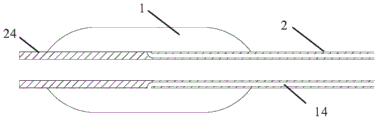
fig. 2 is a schematic cross-sectional view of a balloon of a preferred embodiment of the present invention when not inflated;
fig. 3 is a schematic side sectional view of a catheter in accordance with a preferred embodiment of the present invention;
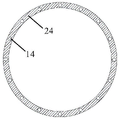
fig. 4 is a schematic cross-sectional view of a catheter in accordance with a preferred embodiment of the present invention;
FIG. 5 is a schematic view of a balloon valve marking in accordance with a preferred embodiment of the present invention;
fig. 6 is a schematic view of the balloon valve of a preferred embodiment of the present invention being filled with medication;
fig. 7 is a schematic cross-sectional view of another preferred embodiment of the balloon of the present invention when it is not inflated.
Detailed Description
The technical contents of the preferred embodiments of the present invention will be more clearly understood and appreciated by referring to the drawings attached to the specification. The present invention may be embodied in many different forms of embodiments, and the scope of the invention is not limited to the embodiments described herein.
In the drawings, structurally identical elements are represented by like reference numerals, and structurally or functionally similar elements are represented by like reference numerals throughout the several views. The size and thickness of each component shown in the drawings are arbitrarily illustrated, and the present invention is not limited to the size and thickness of each component. The thickness of the components may be exaggerated where appropriate in the figures to improve clarity.
Example one
Fig. 1 is an overall schematic view of a balloon catheter capable of directionally releasing a drug, which mainly comprises a balloon 1, a catheter 2 and a handle 3. Wherein, the sacculus 1 is of a flap type structure, the sacculus flap 11 carries medicine, and the sacculus flap 12 does not carry medicine or carries medicine sprayed on the surface. Herein, the balloon valve 11 and the balloon valve 12 represent a type of balloon valve, respectively, rather than a specific balloon valve in the schematic drawing.
The catheter 2 has an axially hollow lumen 23 through which the catheter 2 can be placed in communication with the balloon 1 via a guidewire or other device. The end of the catheter 1 adjacent the balloon 1 is referred to as the distal end 21, the end of the catheter 1 adjacent the handle 3 is referred to as the proximal end 22, and the distal end 21 of the catheter 1 is tapered to fit closely over a guidewire to prevent scoring of the blood vessel. The handle 3 may be connected to a liquid or air pump, and the form thereof is not limited to that shown in the drawings.
As shown in fig. 2, is a schematic cross-sectional view of the balloon 1 when it is not inflated. The balloon valve 11 and the balloon valve 12 are made of balloon materials with different conformability, the balloon valve 11 and the balloon valve 12 are independent from each other, namely the balloon material forming the balloon valve 11 and the balloon material forming the balloon valve 12 are mutually divided and spliced together to form the balloon 1; the balloon valve 11 and the balloon valve 12 have certain height and shape difference, so that grooves are formed on the surface of the balloon, and a larger amount of medicine 13 can be filled in the grooves, wherein 24 is a catheter wall, and 14 is a pore channel inside the balloon valve (11 or 12).
Fig. 3 is a schematic side cross-sectional view of a catheter. The catheter 2 is a single-wall multi-lumen tube, and the catheter wall 24 has a bore 14 therein which connects from the proximal end of the catheter to the interior of the balloon 1.
As shown in fig. 4, which is a schematic cross-sectional view of the proximal end of the catheter, the orifice 14 extends through the catheter wall 24 and communicates with the balloon valve, and filling of the balloon valve is achieved by injecting a liquid or gas into the orifice 14.
Corresponding relations exist between the pore canals at different positions on the cross section of the near end of the catheter and the balloon valve, the pore canals are marked, and liquid or gas is injected into the pore canals at specific positions, so that the filling of the specific balloon valve can be realized.
As shown in fig. 5, which is a schematic diagram of a marking mode of a balloon, i.e. a balloon valve, a marking line 26 with different lengths and discontinuities is arranged in the effective length of the balloon and passes through the center of a communication port 25 of a duct and the balloon valve. The marker line dots may be of platinum iridium alloy or other non-line-projecting material embedded in the catheter wall or attached to the catheter surface. The way in which the balloon valve is marked is not limited to that shown in the figures.
The pore canal on the section of the near end of the catheter is in corresponding relation with the balloon valve, and the balloon valve is in corresponding relation with the marking line. In clinical operation, the position of a narrow focus corresponds to a certain marking line, if the marking line corresponds to a drug-loaded balloon valve, liquid or gas is injected into a corresponding pore channel to fill the balloon valve, so that the aim of directionally releasing the drug can be fulfilled; if the mark point corresponds to a non-drug-loaded balloon valve, the drug-loaded balloon valve can be aligned to a narrow focus by properly rotating the balloon catheter, and then the balloon is filled to directionally release the drug.
Example two
Fig. 6 is a schematic diagram showing the operation of the balloon valve filled with the drug. In order to improve the utilization efficiency of the medicine and avoid the medicine loss, the non-medicine-carrying balloon valve 12 can be filled firstly to establish the medicine release channel 15 and then the medicine-carrying balloon valve 11 can be filled when the medicine is released directionally.
EXAMPLE III
As shown in fig. 3, the balloon flap 11 and the balloon flap 12 are made of the same balloon material, but the balloon flap 11 and the balloon flap 12 are made of different balloon materials with different thicknesses and uniformity, so that the compliance is different, at this time, the balloon material constituting the balloon flap 11 and the balloon material constituting the balloon flap 12 are independent units which are mutually divided, that is, the balloon flap 11 and the balloon flap 12 are independent units which are mutually divided, and the balloon flap 11 and the balloon flap 12 form the balloon 1 by splicing or other methods; the balloon valve 11 and the balloon valve 12 have certain height and shape difference, so that grooves are formed on the surface of the balloon, and a larger amount of medicine 13 can be filled in the grooves.
Example four
As shown in fig. 3, the balloon flap 11 and the balloon flap 12 are made of the same balloon material, and the balloon material constituting the balloon flap 11 and the balloon material constituting the balloon flap 12 are made of the same balloon material, but have different thicknesses and uniformity, so that the compliance is different, that is, the balloon flap 11 and the balloon flap 12 are made of the same balloon material, and the balloon 1 is folded or otherwise formed into the balloon flap 11 and the balloon flap 12. The balloon valve 11 and the balloon valve 12 have certain height and shape difference, so that grooves are formed on the surface of the balloon, and a larger amount of medicine 13 can be filled in the grooves.
EXAMPLE five
As shown in fig. 7, the balloon flap 11 and the balloon flap 12 are made of the same balloon material, but the balloon flap 11 is folded or otherwise made to have a different height and shape from the balloon flap 12, so that grooves are formed on the surface of the balloon, and a larger amount of the drug 13 can be filled.
EXAMPLE six
Two or more of the three, four or five embodiments can be adopted simultaneously to realize the difference of the height and the shape between the balloon valve 11 and the balloon 12, so that a groove is formed on the surface of the balloon to facilitate the loading of a larger amount of medicine.
EXAMPLE seven
The balloon 1 is composed of three or more different kinds of balloon flaps, using one or more of the solutions of examples one to five.
Example eight
Using one or more of examples one through seven, the radiopaque material is embedded as a marker in the polymeric material that makes up the balloon valve, or the marker is otherwise made to the balloon valve.
The foregoing has described in detail preferred embodiments of the present invention. It should be understood that numerous modifications and variations could be devised by those skilled in the art in light of the teachings of this invention without undue experimentation. Therefore, the technical solutions that can be obtained by a person skilled in the art through logic analysis, reasoning or limited experiments based on the prior art according to the concepts of the present invention should be within the scope of protection defined by the claims.
Claims (10)
1. A balloon catheter for the directional release of a drug, comprising a balloon, a catheter and a handle, wherein the catheter has an axially hollow cavity, the balloon is located near a first end of the catheter, and the handle is located at a second end of the catheter; the balloon is of a flap structure and comprises a first balloon flap and a second balloon flap, wherein the first balloon flap carries a medicament, and the second balloon flap does not carry a medicament or is sprayed with a medicament on the surface; the handle may be connected to a liquid or air pump.
2. A drug directable balloon catheter as in claim 1, wherein said first balloon valve and said second balloon valve are independent of each other and are spliced together to form said balloon.
3. A drug targetable balloon catheter as in claim 1, wherein the first and second balloon lobes are of different compliant balloon materials.
4. A drug directable balloon catheter as in claim 1, wherein the first balloon valve has a height differential and a morphology differential with the second balloon valve to form a groove in the surface of the balloon.
5. A drug directable release balloon catheter as in claim 1, wherein the first end of the catheter is conically tapered.
6. A drug directable balloon catheter as in claim 1, wherein the catheter is a single wall multi-lumen tube having an interior with an opening therein connected from the second end of the catheter to the interior of the balloon valve.
7. A balloon catheter for the directional release of drugs according to claim 6, wherein there are marking lines of different lengths and different discontinuities across the center of the communication opening of the tunnel with the balloon valve within the effective length of the balloon.
8. A balloon catheter for the directional release of drugs according to claim 7, wherein said marker wire is platinum iridium, embedded in the catheter wall or attached to the catheter surface.
9. A drug directable balloon catheter as in claim 8, wherein there is correspondence between the aperture and the balloon valve and correspondence between the balloon valve and the marker line.
10. A balloon catheter for the directional release of a drug according to claim 1, wherein said second balloon flap is inflated to establish a drug release pathway.
Priority Applications (1)
| Application Number | Priority Date | Filing Date | Title |
|---|---|---|---|
| CN202020189754.7U CN212166319U (en) | 2020-02-20 | 2020-02-20 | Balloon catheter capable of directionally releasing medicine |
Applications Claiming Priority (1)
| Application Number | Priority Date | Filing Date | Title |
|---|---|---|---|
| CN202020189754.7U CN212166319U (en) | 2020-02-20 | 2020-02-20 | Balloon catheter capable of directionally releasing medicine |
Publications (1)
| Publication Number | Publication Date |
|---|---|
| CN212166319U true CN212166319U (en) | 2020-12-18 |
Family
ID=73773180
Family Applications (1)
| Application Number | Title | Priority Date | Filing Date |
|---|---|---|---|
| CN202020189754.7U Active CN212166319U (en) | 2020-02-20 | 2020-02-20 | Balloon catheter capable of directionally releasing medicine |
Country Status (1)
| Country | Link |
|---|---|
| CN (1) | CN212166319U (en) |
Cited By (3)
| Publication number | Priority date | Publication date | Assignee | Title |
|---|---|---|---|---|
| CN111110991A (en) * | 2020-02-20 | 2020-05-08 | 玮铭医疗器械(上海)有限公司 | A balloon catheter capable of directional drug release |
| CN116020042A (en) * | 2021-10-26 | 2023-04-28 | 赛微医疗科技(上海)有限公司 | A labeled drug-loaded balloon |
| CN117959572A (en) * | 2024-03-12 | 2024-05-03 | 中山大学孙逸仙纪念医院 | A drug balloon catheter |
-
2020
- 2020-02-20 CN CN202020189754.7U patent/CN212166319U/en active Active
Cited By (4)
| Publication number | Priority date | Publication date | Assignee | Title |
|---|---|---|---|---|
| CN111110991A (en) * | 2020-02-20 | 2020-05-08 | 玮铭医疗器械(上海)有限公司 | A balloon catheter capable of directional drug release |
| CN111110991B (en) * | 2020-02-20 | 2024-12-03 | 玮铭医疗器械(上海)有限公司 | A balloon catheter capable of directional drug release |
| CN116020042A (en) * | 2021-10-26 | 2023-04-28 | 赛微医疗科技(上海)有限公司 | A labeled drug-loaded balloon |
| CN117959572A (en) * | 2024-03-12 | 2024-05-03 | 中山大学孙逸仙纪念医院 | A drug balloon catheter |
Similar Documents
| Publication | Publication Date | Title |
|---|---|---|
| US11617867B2 (en) | Drug-coated balloon catheter | |
| CN102380156A (en) | Sectional type balloon expanding catheter | |
| US6344028B1 (en) | Replenishable stent and delivery system | |
| CN102416217B (en) | Sacculus expansion catheter for drug treatment | |
| CN206950442U (en) | medicinal balloon catheter | |
| CN213589483U (en) | Balloon dilatation catheter | |
| CN217886753U (en) | Balloon catheter | |
| CN212593456U (en) | Balloon catheter | |
| CN114082085A (en) | Pre-expanding type double-layer drug perfusion balloon dilatation catheter | |
| US11364370B2 (en) | Multi-purpose balloon catheter for intra cavity radiation delivery | |
| CN111110991A (en) | A balloon catheter capable of directional drug release | |
| CN205903515U (en) | Balloon dilatation catheter | |
| CN106994204A (en) | Double sacculus medicine-coated balloon dilating catheters | |
| US11511087B2 (en) | Dual double balloon catheter | |
| CN115300767A (en) | Double-layer medicine self-perfusion balloon, balloon catheter system and using method | |
| CN113521505B (en) | Balloon catheter and preparation method thereof | |
| CN109381779A (en) | Foley's tube | |
| CN114159676B (en) | Balloon Catheter | |
| CN205903514U (en) | Multicavity way sacculus pipe | |
| CN222777530U (en) | A drug balloon catheter | |
| CN107898540B (en) | Combination of sinus balloon catheter and balloon-expandable intra-nasal stent | |
| CN208372275U (en) | Foley's tube | |
| CN106236340B (en) | A kind of loading can withdraw branch's protection intravascular stent system of conduit | |
| CN207575540U (en) | Double sacculus medicine-coated balloon dilating catheters | |
| CN109938893A (en) | Sacculus dilating catheter and its medicinal balloon |
Legal Events
| Date | Code | Title | Description |
|---|---|---|---|
| GR01 | Patent grant | ||
| GR01 | Patent grant |