CN86102020A - The preparation method of rhizoxin derivatives and in pharmaceutically application - Google Patents
The preparation method of rhizoxin derivatives and in pharmaceutically application Download PDFInfo
- Publication number
- CN86102020A CN86102020A CN86102020.0A CN86102020A CN86102020A CN 86102020 A CN86102020 A CN 86102020A CN 86102020 A CN86102020 A CN 86102020A CN 86102020 A CN86102020 A CN 86102020A
- Authority
- CN
- China
- Prior art keywords
- formula
- compound
- acid
- core
- carboxylic acid
- Prior art date
- Legal status (The legal status is an assumption and is not a legal conclusion. Google has not performed a legal analysis and makes no representation as to the accuracy of the status listed.)
- Granted
Links
Classifications
-
- C—CHEMISTRY; METALLURGY
- C07—ORGANIC CHEMISTRY
- C07D—HETEROCYCLIC COMPOUNDS
- C07D493/00—Heterocyclic compounds containing oxygen atoms as the only ring hetero atoms in the condensed system
- C07D493/02—Heterocyclic compounds containing oxygen atoms as the only ring hetero atoms in the condensed system in which the condensed system contains two hetero rings
- C07D493/04—Ortho-condensed systems
-
- A—HUMAN NECESSITIES
- A61—MEDICAL OR VETERINARY SCIENCE; HYGIENE
- A61P—SPECIFIC THERAPEUTIC ACTIVITY OF CHEMICAL COMPOUNDS OR MEDICINAL PREPARATIONS
- A61P35/00—Antineoplastic agents
-
- C—CHEMISTRY; METALLURGY
- C07—ORGANIC CHEMISTRY
- C07D—HETEROCYCLIC COMPOUNDS
- C07D493/00—Heterocyclic compounds containing oxygen atoms as the only ring hetero atoms in the condensed system
- C07D493/12—Heterocyclic compounds containing oxygen atoms as the only ring hetero atoms in the condensed system in which the condensed system contains three hetero rings
- C07D493/14—Ortho-condensed systems
Landscapes
- Organic Chemistry (AREA)
- Chemical & Material Sciences (AREA)
- Health & Medical Sciences (AREA)
- Life Sciences & Earth Sciences (AREA)
- General Health & Medical Sciences (AREA)
- Nuclear Medicine, Radiotherapy & Molecular Imaging (AREA)
- General Chemical & Material Sciences (AREA)
- Pharmacology & Pharmacy (AREA)
- Chemical Kinetics & Catalysis (AREA)
- Animal Behavior & Ethology (AREA)
- Medicinal Chemistry (AREA)
- Public Health (AREA)
- Veterinary Medicine (AREA)
- Pharmaceuticals Containing Other Organic And Inorganic Compounds (AREA)
- Heterocyclic Carbon Compounds Containing A Hetero Ring Having Oxygen Or Sulfur (AREA)
- Steroid Compounds (AREA)
- Organic Low-Molecular-Weight Compounds And Preparation Thereof (AREA)
Abstract
瑞藏芯的及瑞藏芯-2-烯的酰化衍生物可以由瑞藏芯或瑞藏芯-2-烯与酸或其活性衍生物反应而制备。它们具有优良的抗肿瘤活性。The acylated derivatives of Ruizoxin and Ruizoxin-2-ene can be prepared by reacting Ruizoxin or Ruizoxin-2-ene with an acid or its reactive derivative. They have excellent antitumor activity.
Description
The present invention relates to a series of new derivatives of the compound, namely the Tibetan core. The invention also provides a preparation process of the compound, a preparation for applying the compound and a use method of the preparation.
The Tibetan core is a known compound having the following structural formula:
sword-leaved Cork and its acetate were published in the journal of antibiotics (J.antibiotics) at volume 37, page 354 (1984), and their anticancer activities were published in theJapanese tumor Society, 43 th congress Abstract (Abstracts of the 43rd GeneraL Meet-ing of the Japanese Cancer Society), page 243, title No. 1005 (1984).
Thorassian core-2-ene was reported in 1984 at 18.12.1984 at the Pacific regional Association held in Sandalwood, Hawaii, International conference on chemistry in 1984.
We have now found a series of derivatives of the Tibetan heart which have anticancer activity far higher than that of the Tibetan heart and its acetate and have intrinsically lower toxicity than the Tibetan heart itself.
The compounds of the present invention are those having the structure (I):
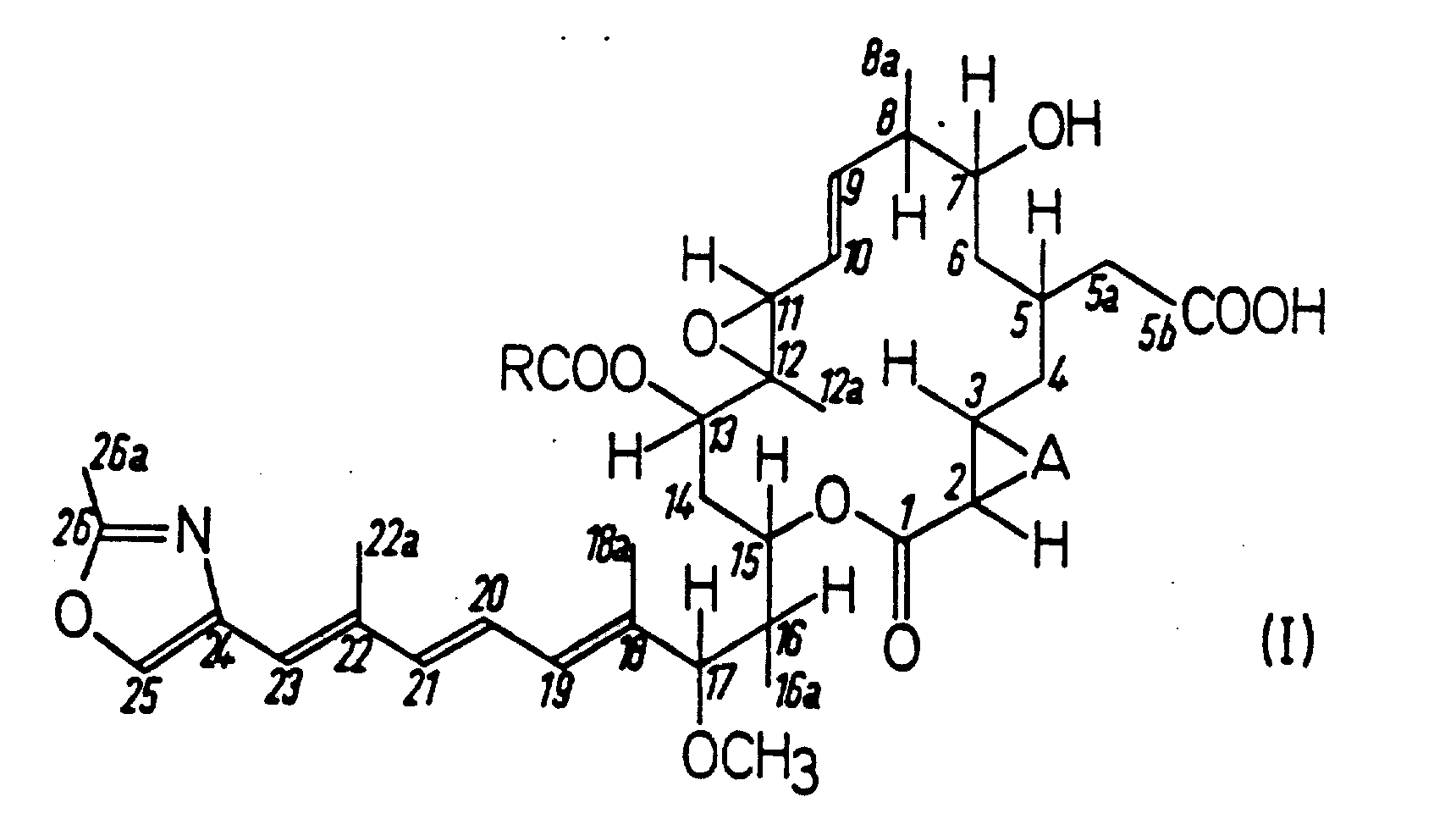
wherein:
r represents an alkane having at least 2 carbon atoms and A represents an additional carbon-carbon bond or an oxygen atom, and pharmaceutically acceptable salts and ring-closed lactones thereof.
The corresponding ring-closed lactone of compound (I) can be represented by structural formula (II):
wherein R and A are as described above.
The compound of formula (II) may be prepared from a compound of formula (III):
wherein A is as defined above, with a carboxylic acid of formula (IV) wherein R is as defined above, or a reactive derivative thereof:
salts of the compounds of formula (I) may be prepared by reacting a compound of formula (II) with a suitable base. The free acid of formula (I) may be prepared by reacting a salt thereof with an acid.
The invention also provides a pharmaceutical composition comprising an antineoplastic agent in admixture with a pharmaceutically acceptable carrier diluent, wherein the antineoplastic agent is at least one compound selected from the group consisting of compounds of formula (I), compounds of formula (II) and pharmaceutically acceptable salts of said compounds of formula (I).
The invention also provides a method of treatment of a mammal, including a human, having a tumor, by administering an effective amount of an antineoplastic agent to the animal. Wherein said antineoplastic agent is at least one compound selected from the group consisting of a compound of formula (I), a compound of formula (II), and a salt of said compound of formula (I).
In the compounds of the invention, R represents an alkyl group having a minimum of 2 carbon atoms. Such alkyl groups may be straight-chain or branched and may in principle contain a number of carbon atoms exceeding that of the corresponding acid of interest practically available, without upper limit. In most cases, a practical upper limit is perhaps about 40 carbon atoms, and more preferably about 30 carbon atoms. Examples of such groups include ethyl, propyl, isopropyl, butyl, sec-butyl, isobutyl, tert-butyl, pentyl, isopentyl, neopentyl, tert-pentyl, hexyl, 1-methylpentyl, 2-methylpentyl, 3-methylpentyl, isohexyl, heptyl, 1-methylhexyl, 2-methylhexyl, 5-methylhexyl, 3-ethylpentyl, octyl, 2-methylheptyl, 6-methylheptyl, 2-ethylhexyl, 2-ethyl-3-methylpentyl, 3-ethyl-2-methylpentyl, nonyl, 2-methyloctyl, 7-methyloctyl, 4-ethylheptyl, 3-ethyl-2-methylhexyl, 2-ethyl-1-methylhexyl, decyl, 2-methylnonyl, 8-methylnonyl, 5-ethyloctyl, 3-ethyl-2-methylheptyl, 3, 3-diethylhexyl, undecyl, 2-methyldecyl, 9-methyldecyl, 4-ethylnonyl, 3, 5-dimethylnonyl, 3-propyloctyl, 5-ethyl-4-methyloctyl, dodecyl, 1-methylundecyl, 10-methylundecyl, 3-ethyldecyl, 5-propylnonyl, 3, 5-diethyloctyl, tridecyl, 11-methyldecyl, 7-ethylundecyl, 4-propyldecyl, 5-ethyl-3-methyldecyl, 3-pentyloctyl, tetradecyl, 12-methyltridecyl, the content of the 8-ethyl dodecyl group,6-propylundecyl, 4-butyldecyl, 2-pentylnonyl, pentadecyl, 13-methyltetradecyl, 10-ethyltridecyl, 7-propyldodecyl, 5-ethyl-3-methyldodecyl, 4-pentyldecyl, hexadecyl, 14-methylpentadecyl, 6-ethyltetradecyl, 4-propyltridecyl, 2-butyldodecyl, heptadecyl, 15-methylhexadecyl, 7-ethylpentadecyl, 3-propyltetradecyl, 5-pentyldodecyl, octadecyl, 16-methylheptadecyl, 5-propyldodecylPentadecyl, nonadecyl, 17-methyloctadecyl, 4-ethylheptadecyl, eicosyl 18-methylnonadecyl, 3-ethyloctadecyl, heneicosyl, docosyl, tricosyl, tetracosyl and pentacosyl. Of these groups, it is considered that C is preferable3-C17More preferably C7-C13Alkyl groups, whether straight-chain or branched.
The compounds of formula (i) are free acids and can therefore form salts with bases, which, provided that the resulting salts are pharmaceutically suitable, is well known in the art, meaning that the salts do not reduce (or reduce to no more than a permissible extent) activity or increase (or increase to no more than a permissible extent) toxicity relative to the original acid, nor do they interfere with the nature of the salt-forming cation. Examples of suitable salts include metal salts with amino acids and salts with ammonia and organic amines. Suitable metal salts include those with: alkali metals, e.g. sodium or potassium, alkaline earth metals, e.g. calcium or magnesium, and other pharmaceutically suitable metals, e.g. aluminium, iron, zinc, copper, Examples of amino acids which can form salts with the compounds of formula (I) include basic amino acids such as arginine, lysine, histidine, α, gamma-diaminobutyric acid and ornithine examples of amines which can form salts with the compounds of formula (I) include tert-octylamine, dibenzylamine, dicyclohexylamine, morpholine, alkyl esters of D-phenylglycine and D-glucosamine.
In terms of naming of the compounds of the present invention, Semi-systematic (Semi systematic) nomenclature is adopted according to the "Organic chemical naming principle" (Nomencla canal of Organic Chemistry) section F, as suggested by the International Union of pure and applied Chemistry, with rhizoxin as the basic name.
Thus, the compound of formula (II) wherein A represents an oxygen atom is a simple ester of the Switzerland core with an acid of formula RCOOH and is thus designated as Switzerland core-13-yl acylate. The ring-opened analogues of the Tibetan core are called Tibetan core-5 b-acids, and thus compounds of formula (i) a substituted by one oxygen atom are called 13-acyloxy derivatives thereof, for example: 13-acyloxy-13-dehydroxy scandent core-5 b-acid.
The compounds of formula (II) in which A represents an additional carbon-carbon bond can be considered as derivatives of rzTibet core-2-ene, more generally under the name 2, 3-deoxyrzTibet core-2-ene. Thus, the compounds of formulae (I) and (II) in which A represents such a bond may be referred to as 13-acyloxy-13-dehydroxy-2, 3-deoxyrhodanin-2-en-5 b-oic acid and 2, 3-deoxyrhodanin-2-en-13-yl acylate, respectively.
Examples of the compounds according to the invention are given in the table below and the numbers in the table below represent these compounds.
1.13-Butyloxy-13-dehydrozetimothin-5 b-oic acid
2. Retinoic acid core-13-yl butyrate
3.13-Pentanyloxy-13-dehydropregnene-5 b-oic acid
4. Sword-Tibet-13-yl valerate
5.13-Isovaleryloxy-13-dehydroxyDactyl-5 b-oic acid
6. Thamnolia vermicularis-13-yl isovalerate
7.13-hexanoyloxy-13-deshydroxy-scandent-5 b-oic acid
8. Retinoic acid 13-ethylhexanoate
9.13- (3, 3-Dibutyryloxy) -13-dehydrozeugineol-5 b-oic acid
10. Sword heart-13-yl 3, 3-dimethylbutyrate
11.13-Heptoxy-13-dehydrozeocin core-5 b-oic acid
12. Retinoc acid-13-yl heptanoate
13.13- (5-Methanoyloxy) -13-dehydropregnene-5 b-oic acid
14. Retinoxin-13-yl 5-methylhexanoate
15.13- (4-Methylcaproyloxy) -13-dehydropregnen-5 b-oic acid
16. Retinoxin-13-yl 4-methylhexanoate
17.13-Octanyloxy-13-dehydroxyDactylen-5 b-oic acid
18. Tibet Cor-13-yl octanoate
19.13- (6-methylheptoyloxy) -13-dehydrozeranol-5 b-oic acid
20. Retinoxin-13-yl 6-methylheptanoate
21.13- (4-ethylhexanoyloxy) -13-dehydroxyDactylen-5 b-oic acid
22. Retinoc core-13-yl 4-ethylhexanoate
23.13-Nonoyloxy-13-dehydroxyDactyl-5 b-oic acid
24. Retinoic acid 13-yl nonanoate
25.13- (4-Ethyl-3-methylhexanoyloxy) -13-dehydro-scandent Cor-5 b-oic acid
26. Retinoxin-13-yl 4-ethyl-3-methylhexanoate
27.13- (7-Methyloctanoyloxy) -13-dehydrozeugineol-5 b-oic acid
28. Sword-core-13-yl 7-methyl octanoate
29.13-decanoyloxy-13-deshydroxy-Cicer arietinum-5 b-oic acid
30. Retinoic acid 13-yl decanoate
31.13- (8-methylnonanoyloxy) -13-deshydroxy-scandent-5 b-oic acid
32. Retinoic acid core-13-yl 8-methylnonanoate
33.13- (5-Ethyloctanoyloxy) -13-dehydroxyDactyleno-5 b-oic acid
34. Sword-core-13-yl 5-ethyl octanoate
35.13-undecanoyloxy-13-deshydroxy Tibetan-5 b-carboxylic acid
36. Retinoic acid 13-ylundecanoate
37.13- (9-Methyldecanoyloxy) -13-dehydroxyDactylen-5 b-oic acid
38. Retinoic acid 13-yl 9-methyl decanoate
39.13- (6-ethylnonanoyloxy) -13-deshydroxy Tibetan-5 b-carboxylic acid
40. Retinout Cor-13-yl 6-Ethyl nonanoate
41.13-dodecanoyloxy-13-deshydroxy-scandent Tibet-5 b-oic acid
42. Retinoic acid 13-yl dodecanoate
43.13- (10-methylundecenoyloxy) -13-deshydroxy-ruizan-5 b-oic acid
44. 10-methylundecanoate Cor-13-Yl Ruzan
45.13- (6-ethyl-5-methylnonanoyloxy) -13-deshydroxy-scandent ceo-5 b-oic acid
46. Retinoxin-13-yl 6-ethyl-5-methylnonanoate
47.13-Tridecanoyloxy-13-dehydroxyDactylen-5 b-oic acid
48. Retinodecor-13-yl tridecanoate
49.13- (11-methyldodecanoyloxy) -13-dehydro-daphne-5 b-oic acid
50. Retinout Cor-13-yl 11-methyldodecanoate
51.13- (4, 6-diethylnonanoyloxy) -13-deshydroxy-scandent-5 b-oic acid
52. Retinoxin-13-yl 4, 6-diethylnonanoate
53.13-tetradecanoyloxy-13-deshydroxy-Daphne-5 b-oic acid
54. Retinoic acid 13-yltetradecanoate
55.13- (8-ethyldodecanoyloxy) -13-dehydrozeugine-5 b-oic acid
56. Retinoc acid-13-yl 8-ethyldodecanoate
57.13-pentadecyloxy-13-deshydroxy Tibetan-5 b-carboxylic acid
58. Retinoic acid 13-ylpentadecanoate
59.13- (9-ethyltridecyloxy) -13-dehydroxyDactyl-5 b-oic acid
60. Retinoxin-13-yl 9-ethyltridecanoate
61.13-Hexadecanoyl-13-dehydroxyDactylen-5 b-oic acid
62. Retinoic acid 13-yl palmitate
63.13- (8-propyltridecyloxy) -13-dehydroxyDactyl-5 b-oic acid
64. Retinoxin-13-yl 8-propyltridecanoate
65.13-heptadecanoyloxy-13-deshydroxy Tibetan-5 b-carboxylic acid
66. Retinoc core-13-ylheptadecanoate
67.13- (7-Ethylpentadecanoyloxy) -13-dehydroxyDactylen-5 b-oic acid
68. Retinoc acid-13-yl 7-ethyl pentadecanoate
69.13-Octadecyloxy-13-deshydroxy-Daphne-5 b-oic acid
70. Retinoic acid 13-yl octadecanoic acid ester
71.13- (8-ethylhexadecanoyloxy) -13-dehydroxyDactyl-5 b-oic acid
72. Retinoc core-13-yl 8-ethylhexadecanoate
73.13-nineteen acyloxy-13-deshydroxy Tibetan-5 b-acid
74. Retinocornl-13-yl nonadecanoate
75.13-eicosanoyloxy-13-deshydroxy Tibetan-5 b-oic acid
76. Sword-David-13-yl eicosanoic acid ester
77.13-Heptoxy-13-dehydroxy-2, 3-deoxyruikan-2-en-5 b-oic acid
78.2, 3-deoxyruizan-2-en-13-ylheptanoate
79.13-octanoyloxy-13-dehydroxy-2, 3-deoxyruikan-2-ene-5 b-carboxylic acid
80.2, 3-deoxyruikan-2-en-13-yl octanoate
81.13-Nonoyloxy-13-dehydroxy-2, 3-deoxyruikan-2-en-5 b-oic acid
82.2, 3-deoxyruienscen-2-en-13-yl nonanoate
83.13- (7-Methylooctanoyloxy) -13-dehydroxy-2, 3-deoxyruizan-2-en-5 b-oic acid
84.2, 3-deoxyrzeugen-2-en-13-yl 7-methyloctanoate
85.13-decanoyloxy-13-dehydroxy-2, 3-deoxyruikan-2-en-5 b-oic acid
86.2, 3-deoxyruikan-2-en-13-yldecanoate
87.13- (8-methylnonanoyloxy) -13-dehydroxy-2, 3-deoxyruinene-2-en-5 b-oic acid
88.2, 3-deoxyruikan-2-en-13-yl 8-methylnonanoate
89.13-undecanoyloxy-13-dehydroxy-2, 3-deoxyruizan-2-en-5 b-oic acid
90.2, 3-deoxyruiensol-2-en-13-ylundecanoate
91.13- (9-methyldecanoyloxy) -13-dehydroxy-2, 3-deoxyruikan-2-en-5 b-oic acid
92.2, 3-deoxyruikan-2-en-13-yl 9-methyldecanoate
93.13-Dodecaacyloxy-13-dehydroxy-2, 3-deoxyruikan-2-en-5 b-oic acid
94.2, 3-deoxyruikan-2-en-13-yldodecanoate
95.13-Tridecanoyloxy-13-dehydroxy-2, 3-deoxyruikan-2-en-5 b-oic acid
96, 3-deoxyruikan-2-en-13-yl tridecanoate
Among the compounds listed in the above table, compounds No. 18, No. 29, No. 30, No. 42 and No. 54 are particularly preferable.
The compounds of the present invention may have various forms of geometric isomers due to the configuration of their various substituents, and also various forms of optical isomers due to the presence of many asymmetric carbon atoms. These isomers and mixtures thereof can be represented by a general formula. The present invention includes both individual isomers and mixtures thereof. Generally, we prefer that the compounds of the invention have the same configuration as the Tibetan core.
The ring-closed lactone derivative of formula (II) can be obtained by reacting a compound of formula (III) with a carboxylic acid of formula (IV) or an activated derivative thereof, wherein the compound of formula (III) can be Rezan core (A is an oxygen atom) or Rezan core-2-ene (A is an additional carbon-carbon bond). This reaction is a simple and conventional acylation reaction and can be carried out by a well-known acylation reaction method.
When the carboxylic acid of the formula (IV) is used as such, the reaction is preferably carried out in the presence of a condensing agent having dehydrating efficiency. Such condensing agents are preferably dicyclohexylcarbodiimide (dicyclohexylcarbodiimide) and carbonyldiimidazole (carbondim-imidazole). The reaction is preferably carried out in the presence of a solvent, the nature of which is not critical provided that the solvent does not adversely affect the reaction. Examples of suitable vehicles include: aromatic hydrocarbons, such as benzene, toluene or xylene, aliphatic hydrocarbons, such as hexane, heptane cyclohexane or petroleum ether, halogenated hydrocarbons, in particular halogenated aliphatic hydrocarbons, such as chloroform, carbon tetrachloride or dichloromethane, and ethers, such as tetrahydrofuran or dioxane. The reaction will take place over a wide temperature range and it is not strictly necessary to select the exact temperature. We have generally found that suitable temperatures for carrying out the reaction are in the range of from 0 to 40 ℃ and preferably around room temperature.
Suitable reactive derivatives of carboxylic acids of formula (IV) include acid halides, acid anhydrides, mixed acid anhydrides, reactive esters and reactive amides, of which acid halides (such as acid chlorides or acid bromides) and acid anhydrides (including mixed acid anhydrides) are preferred.
The reaction using an acid halide is preferably carried out in the presence of an inert solvent and an acid binder. The nature of the solvent used is not critical to the invention provided that it does not adversely affect the reaction. The vehicle is preferably an organic vehicle, for example: aromatic hydrocarbons such as benzene, toluene or xylene, halogenated aliphatic hydrocarbons such as chloroform, dichloromethane or 1, 1, 2-trichloroethane, ethers such as diethyl ether, tetrahydrofuran or dioxane, dialkylamides of fatty acids such as dimethylformamide or dimethylacetamide, nitriles such as acetonitrile, ketones such as acetone, dimethyl sulfoxide, and pyridine. The acid-binding agent functions to remove the hydrogen halide produced in the reaction, and any compound that can react with the hydrogen halide and remove them from the reaction can be used. Examples of suitable acid binders include: alkali metal hydroxides such as sodium hydroxide or potassium hydroxide, alkali metal carbonates such as sodium carbonate or potassium carbonate, and organic bases such as triethylamine, pyridine, 4-dimethylaminopyridine or 1-methylimidazole. The reaction can be carried out over a wide temperature range, but is preferably from-10 ℃ to +130 ℃.
When the compound anhydride of the formula (IV) is used, the reaction is preferably carried out in the presence of an additional solvent. However, if a sufficient excess of the acid anhydride is used, no additional solvent is required. In the case of the use of a solvent, the nature of the solvent is not critical provided that it does not adversely affect the reaction. Examples of suitable vehicles include: aromatic hydrocarbons, such as benzene, toluene or xylene, ethers, such as dioxane, tetrahydrofuran and diethylene glycol dimethyl ether. The reaction will be carried out over a wide temperature range, but a more preferred temperature range is from room temperature to 160 ℃.
The product of this reaction is a lactone of formula (II). Suitable pharmaceutically acceptable carboxylates of formula (I) may be prepared by reacting a lactone of formula (II) with a base. This is a conventional reaction for the generation of salts from lactones and can be carried out using techniques well known in the art.
For example, the metal salts of carboxylic acids of formula (I) may be prepared by reacting lactones of formula (II) with the appropriate metal hydroxide or carbonate, preferably in an aqueous vehicle. If the solvent has no adverse effect on the reaction, the properties of the solvent are not critical. Suitable vehicles include water itself and mixtures of water with one or more organic vehicles, for example: an alcohol such as methanol or ethanol, an ether such as ethylene glycol dimethyl ether or dioxane, a ketone such as acetone, or other solvents such as hexane, ethyl acetate, dimethylformamide, or dimethylsulfoxide-type pyridine. It may be particularly advantageous to use a mixture of a hydrophilic organic solvent and water. The reaction temperature is not critical and we prefer to carry out the reaction at about room temperature. But can be carried out under slight heating if desired.
In order to avoid cleavage of the lactone formed between the carbon atoms in the 15-and 1-positions, it is advantageous to carry out the ring-opening reaction under relatively mild conditions, for example using a relatively dilute alkali solution and/or at relatively low temperatures, for example in the room temperature range.
Amine salts of carboxylic acids of formula (I) may be prepared by reacting a lactone of formula (II) with an amine. Preferably in an aqueous medium. The choice of solvent is not critical provided it does not adversely affect the reaction. Suitable vehicles include water itself and mixtures of water with one or more organic vehicles, for example: an alcohol such as methanol or ethanol, an ether such as tetrahydrofuran, a nitrile such as acetonitrile, or a ketone such as acetone. A more preferred vehicle is aqueous acetone. The reaction is preferably carried out at a pH of 7 to 8.5, and although the reaction temperature is not particularly critical, it is preferred to carry out the reaction at a relatively low temperature to avoid side reactions. Accordingly, the temperature is preferably lower than room temperature, more preferably 5 to 10 ℃. The reaction is completed quickly. The amine salt may also be produced by a salt exchange reaction, that is, by adding a desired inorganic acid salt of the amine (e.g., hydrochloric acid) to an aqueous solution of a metal salt of the compound of formula (I).
The amino acid salt of the carboxylic acid of formula (I) may be prepared by reacting the lactone of formula (II) with a suitable amino acid, preferably in an aqueous vehicle. The solvent is not critical provided that it does not adversely affect the reaction and is not critical, and suitable solvents are aqueous solvents, such as water itself and mixtures of water with one or more organic solvents, for example: an alcohol, such as methanol or ethanol, or an ether, such as tetrahydrofuran. The reaction temperature may not be critical, but best results are obtained by heating the reactants at 50 ℃ to 60 ℃.
The free acid of formula (I) may be prepared by reacting a salt thereof with an acid. The reaction can be carried out by conventional methods, which are well known in the art of preparation. For example, the reaction is preferably carried out in the presence of a solvent, which is not critical to the reaction, provided that it does not adversely affect the properties of the solvent. Suitable solvents include, for example, methanol, acetone, dimethylformamide and dimethylacetamide. The carboxylate salt (i) is dissolved in such a vehicle and then a stoichiometric amount or a slight excess of an acid is added. Provided that the acid used does not have any adverse effect on the desired compound. The nature of the acid used is not particularly specified and any organic or inorganic acid may be used. Suitable acids include trifluoroacetic acid, hydrochloric acid and sulfuric acid.
Alternatively, the compound of formula (I) may be obtained by reacting a ring-opened lactone corresponding to the compound of formula (III) with a compound of formula (IV) or a reactive derivative thereof. However, this is not the method that is currently preferred.
The compounds of the invention prepared by any of the methods described above may be recovered from the reaction mixture and, if desired, further purified by any conventional technique or combination thereof. For example, one suitable collection operation consists of: pouring the reaction mixture into water, extracting with a water-immiscible solvent such as benzene, diethyl ether or ethyl acetate, and if necessary drying the extractive solution and then evaporating to remove the solvent to obtain the final product.
If desired, purification may be effected by adsorption chromatography using, for example, activated carbon or silica gel as the adsorbent, ion exchange chromatography, gel filtration, using a suitable adsorbent such as Sophadex (trade mark), or by recrystallisation from an organic solvent such as diethyl ether, ethyl acetate or chloroform. Naturally, a combination of these techniques may be used, if appropriate.
The starting material for the various processes of the invention is helexin, which may be obtained by culturing a helexin-producing mould, for example of the genus Rhizopus (Rhizopus), on a culture medium and then separating the helexin from the culture broth. The mold is preferably Rhizopus chinensis species and most preferably Rhizopus chinensis SANK 21584.
Rhizopus chinensis SANK21584 was grown at a temperature ranging from 20 ℃ to 47 ℃. It can grow very fast on potato-glucose agar medium at a temperature of 26 ℃. Hairy mycelium grew well. As the sporangia spores are formed, the color of the hyphae changes from beige to dark brown. Most sporocysts are unbranched and one to a few sporocysts grow vertically in the region of a single-shaped rhizoid.
The size of the sporocyst stalk is 100-600X 7-12 microns. Sporangia are spherical to spheroidal in size, 50-120 microns, and turn brown when they mature. The small column is spheroidal to ellipsoid and has a size of 15-50 μm. The spore is brown globular to elliptical, and has a size of 6-10 × 3-8 μm. The resulting branched spores have various morphologies. No combined sporulation occurred.
The SANK21584 strain has been identified with reference to the following literature, and it was identified as a Rhizopus chinensis Saito strain.
Inui et al, "research on the taxonomy of the Genus Rhizopus (Taxon-medical students on Genus Rhizopus)", J.Gen.Appl.Microbiol.11, pp.1-108 (1965);
ellis, "modification of sporocysts of Thermophilic Species of the Rhizopus genus and of Some similar Genera (Sporangiosporaorganization of Thermophilic Rhizopus specifices and Some Allied Genera", Mycoliga, Vol.73, p.511-523 (1981).
Rhiz-opus chinensis SANK21584 was deposited at 14.2.1985 with the accession number ferm p-8093 at the institute of fermentation, Tokyo, Japan and deposited again at 15.2.1986 with the accession number BP-989 under the conditions prescribed by the Budapest treaty.
The compounds of the present invention exhibit superior anti-tumour activity in mice implanted with P388 leukaemia cells and are therefore useful as anti-tumour agents for the treatment of such tumours in animals, particularly in warm-blooded animals such as humans.
As will be demonstrated below in the physiological activity data in example 6, the compounds of the invention show a marked ability to prolong life, measured by the life-extending Index (ILS), in test animals implanted with such tumors. ILS represents a balanced effect on animals or patients between the therapeutic effect of a drug and its toxicity, and therefore, there is no simple relationship between the dose and ILS. Since a small value of ILS indicates a short survival time of the animal or patient (regardless of whether the cause of death is due to tumor or drug toxicity) and a high value of ILS indicates a longer survival time, a key feature of a potential antitumor agent is to maximize its ILS value, regardless of the dose at which the maximum ILS is reached, and in this regard, the criteria for evaluating the antitumor agent are different from those for most other drugs, including antibiotics, hypotensive drugs, etc. The compounds of the invention show ILS values which indicate their potential antitumor activity with lower toxicity and clearly better performance than the helexin core and its known derivatives.
The compounds may be administered by any suitable route, for example parenterally (e.g. by intravenous, subcutaneous or intramuscular injection) or by suppositories, or orally (e.g. tablets, capsules, powders or granules).
The compounds of the invention may be administered as desired, but are preferably combined with a conventional pharmaceutically acceptable carrier or diluent, as appropriate for the particular route of administration.
For example, the compositions may contain suspending, stabilizing or dispersing agents which may be provided in powder form for constitution with a suitable solvent before administration, e.g., a pyrogen-free sterile aqueous solvent. For example, such powders may be prepared by instilling an acetone solution of one compound in a glass vial, adding water and then lyophilizing the mixture. Various preparations for oral administration may be prepared as tablets, capsules, powders, granules or syrups containing the compound of the present invention in an appropriate amount.
The injectable preparation is preferably prepared in the form of an ampoule containing a unit dose or a vial containing several times the dose.
If desired, the compounds of the invention may be used in combination with other anticancer agents, for example nitrosoureas such as ACNu or BCNu, cisplatin (cisplastin), 5-fluorouracil (5-Fu), daunomycin (daunomycin), adriamycin (adriamycin), mitomycin C (mitomycin) or etoposide (eloside).
The dosage of the compounds of the invention will vary depending on the nature and severity of the disease, as well as on the route, frequency and period of administration. However, a suitable dose for adults may be between 1 and 100 mg per day, which may be administered in one or several divided doses.
The preparation of the compounds of the invention and their biological activity are further illustrated in the following examples.
Example 1
Ruizan core-13-yl decanoate (compound No. 30)
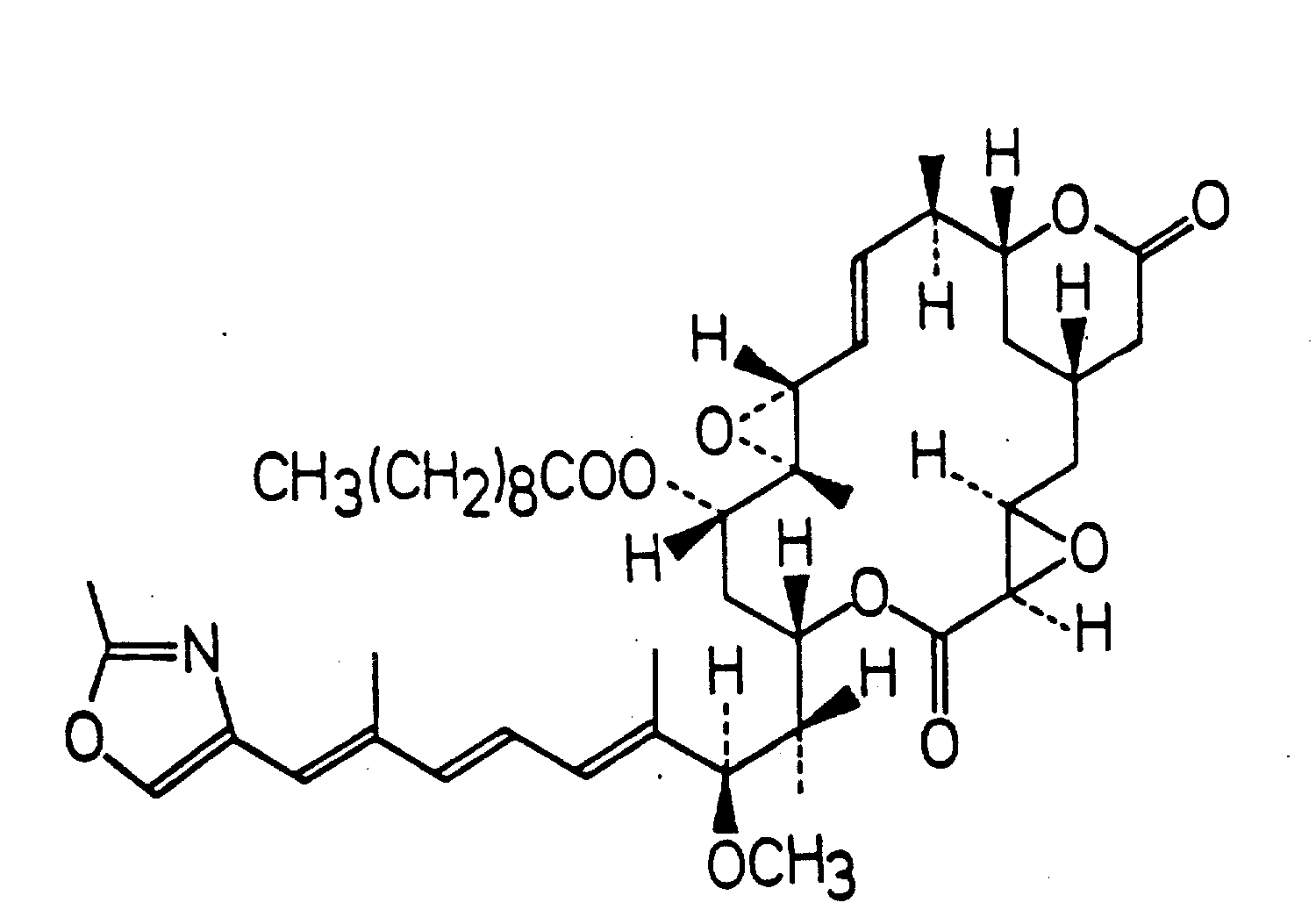
To a solution of 625 mg (1 mmol) of the Tibetan core and 285 mg (1.5 mmol) of decanoyl chloride in 10 ml of benzene were added 250 mg (3.0 mmol) of pyridine and a catalytic amount of 4-dimethylaminopyridine under ice-cooling, and the mixture was stirred at room temperature for about 30 minutes. The reaction mixture was then washed with dilute hydrochloric acid and water in that order. Then, the mixture was dried over anhydrous sodium sulfate, and the solvent was distilled off under reduced pressure. The residue was purified by silica gel column chromatography eluting with a 95: 5 by volume mixture of benzene and acetone to give a crystal, which was recrystallized from methanol to give 500 mg of the title compound as white crystals having a melting point: 168 ℃ and 169 ℃.
Ultraviolet absorption Spectroscopy (CH)3OH)λmaxnm(ε):297(43,700),309(55,800),323(41,100)。
Infrared absorption Spectrum (CCl)4)υmaxcm-1:2940,2855,1740,1580,1450,1225,1190,1110,1090。
Electron collision mass spectrometry: 779 (M)+),232。
Example 2
The following compounds were prepared using the same procedure as in example 1 but using different acid chlorides:

(1) ruizan core-13-yl butyrate (compound No. 2)
R=-CH2CH2CH3: white powder
Ultraviolet absorption Spectroscopy (CH)3OH)λmaxnm(ε):
297(44,400),309(56,600),323(41,700)。
Infrared absorption Spectrum (CCl)4)υmaxem-1:
2970,2940,2870,1740,1580,1450,1380,1225,1190,1175,1110,1090。
Electron collision mass spectrometry: 625 (M)+) 232 (C-17 to C-26a fragments).
(2) Rui Tibet core-13-yl isovalerate (No. 6 compound)
R=-CH2CH(CH2)2: white powder:
ultraviolet absorption Spectroscopy (CH)3OH)λmaxnm(ε):
297(42,800),309(55,200),323(40,300)。
Infrared absorption Spectrum (CCl)4)υmaxcm-1:
2970,2940,2870,1740,1580,1460,1225,1190,1110,1090。
Electron collision mass spectrometry: 751 (M)+),232。
(3) Rui Tibet core-13-yl octanoate (compound No. 18)
R=-(CH2)6CH3: white powder:
ultraviolet absorption Spectroscopy (CH)3OH)λmaxnm(ε):
297(43,400),309(55,200),323(40,700)。
Infrared absorption Spectrum (CCl)4)υmaxcm-1:
2970,2940,2855,1740,1580,1450,1225,1190,1110,1090。
Electron collision mass spectrometry: 751 (M)+),232
(4) Rui Tibetan core-13-yl dodecanoate (Compound No. 42)
R=-(CH2)10CH3: white crystal, melting point 141-142 ℃.
Ultraviolet absorption Spectroscopy (CH)3OH)λmaxnm(ε):
296(42,800),309(54,600),323(40,300)。
Infrared absorption Spectrum (CCl)4)υmaxcm-1:
2940,2855,1740,1580,1455,1225,1190,1110,1090。
Electron collision mass spectrometry: 807 (M)+),232。
(5) Rui Tibetan core-13-yl octadecanoic acid ester (compound No. 70)
R=-(CH2)16CH3: white crystals, melting point 62-64 ℃.
Ultraviolet absorption Spectroscopy (CH)3OH)λmaxnm(ε):
297(40,500),309(51,500),323(38,100)。
Infrared absorption Spectrum (CCl)4)υmaxcm-1:
2940,2855,1740,1580,1455,1225,1190,1110,1090。
Electron collision mass spectrometry: 891 (M)+),232。
(6) Rui Ting Xin-13-yl myristate (compound No. 54)
R=-(CH2)12CH3: white crystals, melting point 116.5-117.5 ℃.
Ultraviolet absorption spectrum (ethanol)λmaxnm(ε):
298(41800),310(53400),324(39800)。
Infrared absorption spectrum (KBr)υmaxcm-1:
2925,2853,1736,1231,1187,1109,1084,983。
Electron collision mass spectrometry: 835 (M)+),232。
Example 3
13-decanoyloxy-13-dehydroxygen Tibet core-56-sodium salt (Compound No. 29 sodium salt)

2 ml (0.2 mmol) of 0.1N aqueous sodium hydroxide solution are added dropwise to a stirred solution of 156 mg (0.2 mmol) of Rezan core-13-yl decanoate (prepared as described in example 1 above) in 8 ml of ethylene glycol dimethyl ether and the mixture is stirred at room temperature for 10 minutes. The organic solvent was then evaporated at room temperature under reduced pressure and the remaining aqueous solution was lyophilized to give 164 mg of the title compound as a white powder, melting point: 115 ℃ and 120 ℃.
Ultraviolet absorption Spectroscopy (CH)3OH)λmaxnm(ε):
297(40,200),309(51,500),323(37,900)。
Infrared absorption Spectrum (CCl)4)υmaxcm-1:
3300 (wide), 2940, 2855, 1740, 1575, 1450, 1410, 1190, 1110, 1090.
Electron collision mass spectrometry: 780 (M)+-ONa),779(M+HONa), 232 (base peak).
Example 4
13-decanoyloxy-13-dehydro-rui tibet core acid-5 b (Compound No. 29)
A sample of sodium 13-decanoyloxy-13-dehydropregnene-5 b-ate (prepared as described in example 3 above) was dissolved in methanol and 1.1 equivalents of 0.1N aqueous hydrochloric acid were added thereto. The mixture was checked by thin layer chromatography (silica gel 60F-254, Merck) to show the title compound, corresponding to the free acid as a spot. A mixture of benzene and isopropanol in a volume ratio of 4: 1 was used as a developing solvent, and the Rf value was 0.40, and a mixture of benzene and acetone in a volume ratio of 1: 1 was used as a developing solvent, and the Rf value was 0.23. As a control, the Rf values of the helea core in these developers were 0.82 and 0.89, respectively.
Example 5
2, 3-deoxyruikan-2-en-13-yldecanoate (Compound No. 86).
183 mg (0.3 mmol) of rzan-2-ene (prepared as described below), 100 mg (0.99 mmol) of triethylamine and a catalytic amount of 4-dimethylaminopyridine are dissolved in 10 ml of dry benzene, and 86 mg (0.45 mmol) of decanoyl chloride is added dropwise to the stirred ice-cold solution. Stirring was continued at room temperature for one more hour, and then the reaction mixture was washed with water and dried over anhydrous magnesium sulfate. The organic solvent was evaporated under reduced pressure. The residue was separated by silica gel column chromatography eluting with a 95: 5 by volume mixture of benzene and acetone to give crude crystals which were recrystallized from methanol to give 165 mg of the title compound as white crystals, m.p.: 145-146 ℃.
Ultraviolet absorption Spectroscopy (CH)3OH)λmaxnm(ε):
297(44,000),309(56,900),323(41,500)。
Infrared absorption Spectrum (CCl)4)υmaxcm-1:
2940,2855,1735,1650,1580,1450,1380,1320,1210,1195,1170,1110,1080,1040,980,965,
Electron collision mass spectrometry: 763 (M)+) 232 (base peak).
Preparation of
Sword heart-2-ene
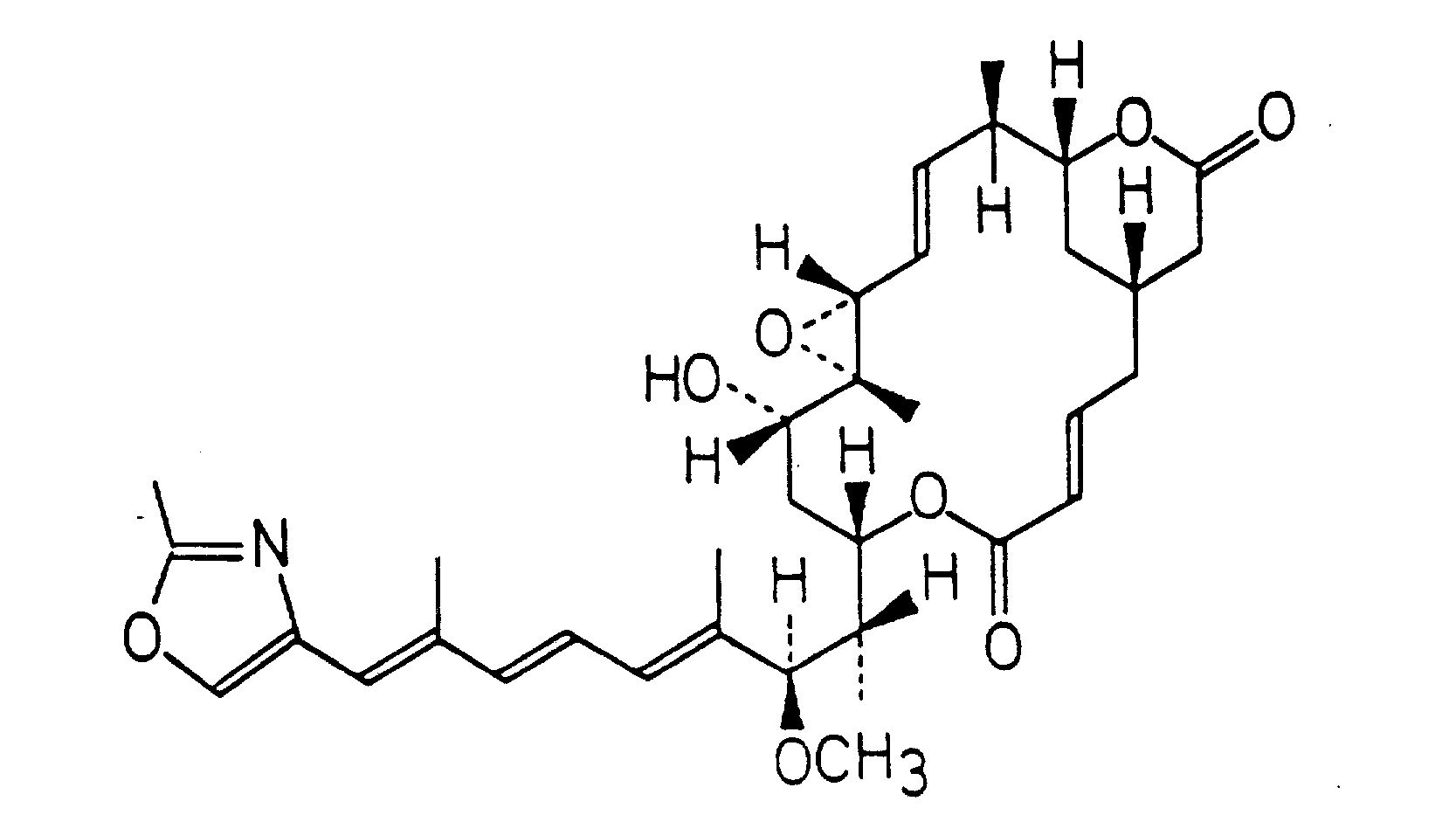
A500 ml Erlenmeyer flask was inoculated with a full slant of mycelia from a Rhizopus chinensis (FERM-8093) culture, containing 100 ml of a medium (in weight percent) containing the following components:
glucose 1% K2HPO40.75%
Lactose 1% MgSO4.7H2O 0.25%
Polyprotein jelly 1% (NH)4)2SO40.2%
KH2PO40.25%
pH (before Sterilization) 6.8
(the medium had been sterilized at 120 ℃ for 45 minutes before). The culture was shake-cultured at 28 ℃ for 24 hours.
Then 200 ml of the resulting pre-inoculated liquid was transferred to a 500-liter jar containing 300 liters of the medium in which the above components were combined, and the mixture was incubated at 28 ℃ for 95 hours while aeration was applied at a rate of 15 liters per minute while maintaining an internal pressure of 1.0 kg/cm2And stirred at 200 rpm.
At the end of the reaction, the culture broth was filtered through Celite (trade mark) filter aid and the filtrate was extracted with equal volume of ethyl acetate. The solvent was evaporated and the residue was subjected to LH20 column chromatography using acetone as eluent to give a fraction containing the title compound. The fraction was then subjected to silica gel column chromatography, eluting with a mixture of benzene and acetone in a volume ratio of 85: 15, to give a mixture of the title compound and Tibetan core. This mixture was further purified by LH20 column chromatography and silica gel chromatography to give 15 mg of the title compound with a purity of about 90% and 670 mg of helan core with the same purity, which was obtained from 300 l of the culture broth. The title compound was finally purified by high pressure liquid chromatography using ODS column to give a white powder, melting point: 125 ℃ and 128 ℃.
Ultraviolet absorption Spectroscopy (CH)3OH)λmaxnm(ε):
297(48,600),309(64,400),323(46,300)。
Infrared absorption Spectrum (CCl)4)υmaxcm-1:
3580,2970,2940,2880,1740,1720,1650,1580,1450,1385,1320,1310,1220,1195,1170,1110,1080,1050,980,965。
Electronic deviceCollision mass spectrometry: 609 (M)+) 232 (base peak).
Example 6
Biological activity
The animal used for the test was CDF1Female mice grown for 8 weeks were bred. The mice were divided into groups of 5 mice each, and all mice in the same group were treated identically. Each mouse is implanted with 1 × 10 of the Chinese medicinal herbs in the abdominal cavity6Mouse leukemia P-388 (mouse leukemia P-388) cells.
The test compounds listed in the table below were suspended in sterile physiological saline and the suspension was administered intraperitoneally on the first, fifth and ninth days after implantation of leukemia cells. The duration of survival of the mice was determined and the control group was treated identically except for the absence of active drug.
The antitumor effect is expressed in terms of elongation (ILS%) in the following table, calculated according to the following equation:
ILS(%)=(Dt/Dc-1)×100
in the formula
Dt is the average number of days of survival of the test group;
dc is the average number of days of survival for the control group;
in this test, Dc was 10.6 days
The compounds of the invention are identified in the following tables with the reference numerals identified in the preceding tables. The compounds A, B and C are daphne core, daphne core-2-dilute and daphne core-13-yl acetate.
The results shown above show that the compound of the invention has obvious antitumor activity. All compounds of the invention had ILS values ranging from 98 to 241 at least at one dosage level, indicating higher antitumor activity than that of Rezan, Rezan-2-ene and Rezan-13-yl acetate, and the highest ILS values of the latter three were 73 (2 mg/kg/day), 65 (8 mg/kg/day) and 38 (4 mg/kg/day), respectively. Negative ILS values indicate that the mean survival of the test group is lower than that of the control group. Thus, the rzeppan core showed the highest ILS value at 2 mg/kg/day dose, butthe toxicity was greater than its antitumor activity at 6 mg/kg/day dose. On the other hand, compound No. 29 reached its maximum ILS value until a dose (those tested) of 64 mg/kg/day and most of the compounds of the present invention showed their maximum ILS value at the 8 mg/kg/day dose.
Error meter
CPCH866093
Before and after the file name page line is corrected
Specification 1 Reversal 2 far from high and far from high
24 alkyl of alkane
272 (mg/day) (mg/kg/day)
(watch)
Claims (11)
1. A process for the preparation of a compound of formula (I):

[ wherein:
r represents a hydrocarbon group having at least 2 carbon atoms; and
a represents an additional carbon-carbon bond or an oxygen atom], and pharmaceutically acceptable salts and ring-closed lactones thereof, which comprises the steps of:
(wherein A is as defined above) with a carboxylic acid of formula (IV):
(wherein R is as defined above) or an activated derivative thereof to give a compound of formula (II):
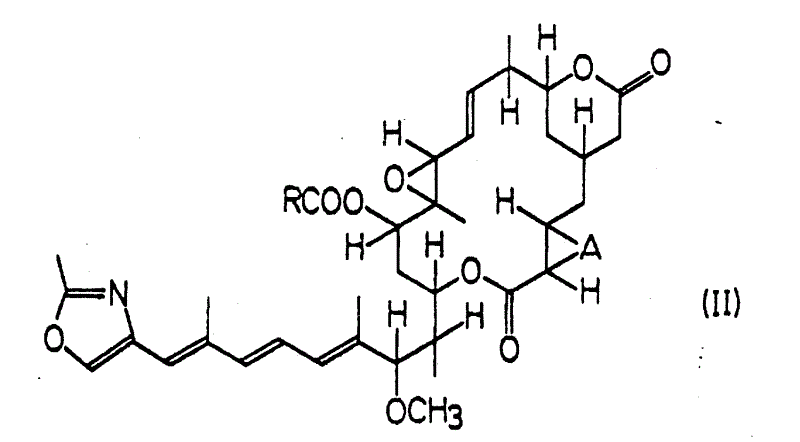
(wherein R and A are as defined above);
(b) optionally reacting said compound of formula (II) with a base to provide a salt of said compound of formula (I); and (C) optionally reacting said salt with an acid to provide said compound of formula (I).
2. A process according to claim 1 wherein R represents a C in said carboxylic acid of formula (IV)3-C17A hydrocarbon group.
3. A process according to claim 1 wherein R represents a C in said carboxylic acid of formula (IV)7-C13A hydrocarbon group.
4. A process according to claim 1 wherein R in said carboxylic acid of formula (IV) represents a heptyl, nonyl, undecyl or tridecyl group.
5. The process according to any one of the preceding claims, wherein said compound of formula (iii) is the rasagiline core itself.
6. A process according to any one of claims 1 to 5 wherein said compound of formula (II) is prepared using only step (a).
7. A process for obtaining rosavin-13-yl octanoate according to claim 1, wherein said compound of formula (iii) is rosavin itself, said carboxylic acid of formula (iv) is octanoic acid, and only step (a) is used.
8. A process for obtaining 13-decanoyloxy-13-deshydroxy-scandent core-5 b-oic acid or a pharmaceutically acceptable salt thereof according to claim 1, wherein the compound of formula (iii) is scandent core itself, the carboxylic acid of formula (iv) is capric acid, and steps (a) and (b) and optionally step (c) are used.
9. A process for obtaining ruizan-13-yl decanoate according to claim 1, wherein the compound of formula (iii) is ruizan itself, the compound of formula (iv) is decanoic acid, and only step (a) is used.
10. A process for obtaining rosavin-13-yldodecanoate according to claim 1, wherein said compound of formula (iii) is rosavin itself, said compound of formula (iv) is dodecanoic acid, and only step (a) is used.
11. A process for obtaining restartane-13-yltetradecanoate according to claim 1, wherein said compound of formula (iii) is restartane itself, said carboxylic acid of formula (iv) is tetradecanoic acid, and step (a) is used only.
Applications Claiming Priority (2)
| Application Number | Priority Date | Filing Date | Title |
|---|---|---|---|
| JP3939985 | 1985-02-28 | ||
| JP39399/85 | 1985-02-28 |
Publications (2)
| Publication Number | Publication Date |
|---|---|
| CN86102020A true CN86102020A (en) | 1986-10-01 |
| CN1009554B CN1009554B (en) | 1990-09-12 |
Family
ID=12551912
Family Applications (1)
| Application Number | Title | Priority Date | Filing Date |
|---|---|---|---|
| CN86102020A Expired CN1009554B (en) | 1985-02-28 | 1986-02-28 | Rhizoxin derivatives and its process for preparing the same |
Country Status (8)
| Country | Link |
|---|---|
| US (1) | US4791128A (en) |
| EP (1) | EP0218310B1 (en) |
| JP (1) | JPS6287A (en) |
| CN (1) | CN1009554B (en) |
| AT (1) | ATE61590T1 (en) |
| CA (1) | CA1271763A (en) |
| DE (1) | DE3678086D1 (en) |
| ES (1) | ES8705449A1 (en) |
Families Citing this family (6)
| Publication number | Priority date | Publication date | Assignee | Title |
|---|---|---|---|---|
| JPH07116198B2 (en) * | 1987-04-02 | 1995-12-13 | 三共株式会社 | Rhizoxin derivative |
| JPS63295447A (en) * | 1987-05-27 | 1988-12-01 | Matsushita Electric Ind Co Ltd | Production of optical glass element |
| US5352689A (en) * | 1988-07-06 | 1994-10-04 | Sankyo Company, Limited | Rhizoxin derivatives and their use as anti-tumor agents |
| JPH02131484A (en) * | 1988-07-06 | 1990-05-21 | Sankyo Co Ltd | Rhizoxin derivative |
| AU3905993A (en) * | 1992-04-28 | 1993-11-29 | Sankyo Company Limited | Fat emulsion containing fatty acid ester of rhizoxin |
| DE102012000956A1 (en) * | 2011-06-21 | 2012-12-27 | Leibniz-Institut Für Naturstoff-Forschung Und Infektionsbiologie | New rhizoxin derivatives useful as drugs, fungicides, cytostatic agents, and as cytotoxic agents |
Family Cites Families (1)
| Publication number | Priority date | Publication date | Assignee | Title |
|---|---|---|---|---|
| JPS6084220A (en) * | 1983-10-17 | 1985-05-13 | Norin Suisansyo Nogyo Kankyo Gijutsu Kenkyusho | Antitumor agent containing phizoxin which is metabolite of plant pathogenic germ phizopus chinensis |
-
1986
- 1986-02-28 DE DE8686301465T patent/DE3678086D1/en not_active Expired - Fee Related
- 1986-02-28 JP JP61042007A patent/JPS6287A/en active Granted
- 1986-02-28 ES ES552563A patent/ES8705449A1/en not_active Expired
- 1986-02-28 EP EP86301465A patent/EP0218310B1/en not_active Expired - Lifetime
- 1986-02-28 CA CA000503062A patent/CA1271763A/en not_active Expired - Fee Related
- 1986-02-28 AT AT86301465T patent/ATE61590T1/en active
- 1986-02-28 CN CN86102020A patent/CN1009554B/en not_active Expired
-
1988
- 1988-01-11 US US07/143,314 patent/US4791128A/en not_active Expired - Fee Related
Also Published As
| Publication number | Publication date |
|---|---|
| ES8705449A1 (en) | 1987-05-01 |
| EP0218310B1 (en) | 1991-03-13 |
| ATE61590T1 (en) | 1991-03-15 |
| EP0218310A3 (en) | 1987-12-23 |
| EP0218310A2 (en) | 1987-04-15 |
| CA1271763A (en) | 1990-07-17 |
| DE3678086D1 (en) | 1991-04-18 |
| US4791128A (en) | 1988-12-13 |
| JPH0474356B2 (en) | 1992-11-26 |
| JPS6287A (en) | 1987-01-06 |
| CN1009554B (en) | 1990-09-12 |
| ES552563A0 (en) | 1987-05-01 |
Similar Documents
| Publication | Publication Date | Title |
|---|---|---|
| CN1020194C (en) | Process for preparation of difluoronucleoside derivatives | |
| CN1084623C (en) | Novel pharmaceutical compositions | |
| CN1143965A (en) | Carbocyclic compound | |
| CN1705662A (en) | Preparation, separation and purification methods of epothilone B, and X-ray crystal structure of epothilone B | |
| CN1016507B (en) | Process for preparation of forskolin derivatives | |
| CN1108657A (en) | Calanthamine derivatives, a process for their preparation and their use as medicaments | |
| CN1193979A (en) | macrolide compound | |
| CN1305482A (en) | Artemisinin derivatives, method for preparation thereof and pharmaceutical compositions containing the same | |
| CN86102020A (en) | The preparation method of rhizoxin derivatives and in pharmaceutically application | |
| CN1106401A (en) | Novel macrolides and the use thereof | |
| CN88101674A (en) | Chromone derivatives | |
| CN1028997C (en) | Preparation method of new anthracycline drug derivative or its pharmaceutically acceptable acid addition salt | |
| CN1033631A (en) | Epipodophyllotoxin glucoside 4 '-acyl derivative | |
| CN1039591A (en) | Enamine quaternary compounds and manufacture method and the application in muscle relaxant thereof | |
| CN1147491C (en) | Acridine carboxylic ester compound, preparation and medicinal composition thereof | |
| CN1056500A (en) | 3'-Deamino-4'deoxy-4'-amino-8-fluoroanthracycline and its preparation | |
| CN1064679A (en) | Quinone derivatives | |
| CN1192999C (en) | Aromatic diketo derivatives as glucose-6-phosphate translocase inhibitors | |
| CN1322525A (en) | Dehydrogenated falcate micromelum costusic alcohol derivative as medicine for preventing or treating cerebral retrogressive lesion | |
| CN1029973C (en) | Process for the preparation of substituted thienoimidazole derivatives | |
| CN1322721A (en) | New agarofuran derivatives and their prepn. medicine composition and use as medicine | |
| CN1142914C (en) | Neophenanthridine compound | |
| CN1028235C (en) | Pyranobenzoxadiazole derivatives, their preparation and their use as medicaments | |
| CN85104455A (en) | Novel tetrahydro-beta-carboline derivatives and process for preparing same | |
| CN1082548A (en) | Antineoplastic agent 4-oxa--1-azabicyclo [3,2, O] heptane-7-ketone derivatives |
Legal Events
| Date | Code | Title | Description |
|---|---|---|---|
| C06 | Publication | ||
| PB01 | Publication | ||
| C10 | Entry into substantive examination | ||
| SE01 | Entry into force of request for substantive examination | ||
| C13 | Decision | ||
| GR02 | Examined patent application | ||
| C14 | Grant of patent or utility model | ||
| GR01 | Patent grant |