DE102015225745B4 - Electrostatic soot sensor - Google Patents

Electrostatic soot sensor Download PDF

Info

Publication number
DE102015225745B4
DE102015225745B4 DE102015225745.2A DE102015225745A DE102015225745B4 DE 102015225745 B4 DE102015225745 B4 DE 102015225745B4 DE 102015225745 A DE102015225745 A DE 102015225745A DE 102015225745 B4 DE102015225745 B4 DE 102015225745B4
Authority
DE
Germany
Prior art keywords
electrode
guard
potential
soot sensor
soot
Prior art date
Legal status (The legal status is an assumption and is not a legal conclusion. Google has not performed a legal analysis and makes no representation as to the accuracy of the status listed.)
Active
Application number
DE102015225745.2A
Other languages
German (de)
Other versions
DE102015225745A1 (en
Inventor
Hong Zhang
Current Assignee (The listed assignees may be inaccurate. Google has not performed a legal analysis and makes no representation or warranty as to the accuracy of the list.)
EmiSense Technologies LLC
Original Assignee
Vitesco Technologies GmbH
Priority date (The priority date is an assumption and is not a legal conclusion. Google has not performed a legal analysis and makes no representation as to the accuracy of the date listed.)
Filing date
Publication date
Application filed by Vitesco Technologies GmbH filed Critical Vitesco Technologies GmbH
Priority to DE102015225745.2A priority Critical patent/DE102015225745B4/en
Priority to EP16809356.5A priority patent/EP3391024B1/en
Priority to PCT/EP2016/080094 priority patent/WO2017102505A1/en
Priority to CN201680074179.2A priority patent/CN108369174A/en
Priority to US16/062,798 priority patent/US10900882B2/en
Publication of DE102015225745A1 publication Critical patent/DE102015225745A1/en
Application granted granted Critical
Publication of DE102015225745B4 publication Critical patent/DE102015225745B4/en
Active legal-status Critical Current
Anticipated expiration legal-status Critical

Links

Images

Classifications

    • GPHYSICS
    • G01MEASURING; TESTING
    • G01NINVESTIGATING OR ANALYSING MATERIALS BY DETERMINING THEIR CHEMICAL OR PHYSICAL PROPERTIES
    • G01N15/00Investigating characteristics of particles; Investigating permeability, pore-volume or surface-area of porous materials
    • G01N15/06Investigating concentration of particle suspensions
    • G01N15/0656Investigating concentration of particle suspensions using electric, e.g. electrostatic methods or magnetic methods

Landscapes

  • Chemical & Material Sciences (AREA)
  • Dispersion Chemistry (AREA)
  • Physics & Mathematics (AREA)
  • Health & Medical Sciences (AREA)
  • Life Sciences & Earth Sciences (AREA)
  • Analytical Chemistry (AREA)
  • Biochemistry (AREA)
  • General Health & Medical Sciences (AREA)
  • General Physics & Mathematics (AREA)
  • Immunology (AREA)
  • Pathology (AREA)
  • Investigating Or Analyzing Materials By The Use Of Electric Means (AREA)

Abstract

Elektrostatischer Rußsensor (1) mit einer Spannungsversorgung (6), wobei der elektrostatische Rußsensor (1) eine erste Elektrode (2), eine zweite Elektrode (3) und eine Guardelektrode (16)aufweist, wobei die erste Elektrode (2) und die zweite Elektrode (3) durch einen Isolationskörper (5) elektrisch voneinander isoliert sind und zwischen der ersten Elektrode (2) und der zweiten Elektrode (3) die Guardelektrode (16) angeordnet ist, wobei auch die Guardelektrode (16) durch den Isolationskörper (5) elektrisch von der ersten Elektrode (2) und der zweiten Elektrode (3) isoliert ist, wobei mit der Spannungsversorgung (6) ein erstes elektrisches Potential (14) an die erste Elektrode (2) angelegt ist und wobei mit der Spannungsversorgung (6) ein zweites elektrisches Potential (18) an die zweite Elektrode (2) angelegt ist, sodass eine elektrischen Spannung zwischen der ersten Elektrode (2) und der zweiten Elektrode (3) entsteht, dadurch gekennzeichnet, dass mit der Spannungsversorgung (6) an die Guardelektrode (16) ein Guardpotential angelegt ist, das in der Warmlaufphase des Rußsensors (1) einem ersten Guardpotential (19) entspricht und in der Messphase des Rußsensors (1) einem zweiten Guardpotential (20) entspricht, wobei die Spannungsversorgung (6) das an der Guardelektrode (16) anliegende Guardpotential mit dem Erreichen einer Taupunktfreigabe von dem ersten Guardpotential (19) auf das zweite Guardpotential (20) umschaltet.

Figure DE102015225745B4_0000
Electrostatic soot sensor (1) with a voltage supply (6), the electrostatic soot sensor (1) having a first electrode (2), a second electrode (3) and a guard electrode (16), the first electrode (2) and the second Electrode (3) are electrically insulated from one another by an insulation body (5) and the guard electrode (16) is arranged between the first electrode (2) and the second electrode (3), the guard electrode (16) also being arranged by the insulation body (5) is electrically insulated from the first electrode (2) and the second electrode (3), with a first electrical potential (14) being applied to the first electrode (2) with the voltage supply (6) and one being connected with the voltage supply (6) second electrical potential (18) is applied to the second electrode (2), so that an electrical voltage arises between the first electrode (2) and the second electrode (3), characterized in that the voltage supply (6) to di e guard electrode (16) a guard potential is applied which corresponds to a first guard potential (19) in the warm-up phase of the soot sensor (1) and corresponds to a second guard potential (20) in the measuring phase of the soot sensor (1), the voltage supply (6) When the dew point is released, the guard potential applied to the guard electrode (16) switches from the first guard potential (19) to the second guard potential (20).
Figure DE102015225745B4_0000

Description

Die Erfindung betrifft einen elektrostatischen Rußsensor sowie ein Verfahren zum Betreiben eines elektrostatischen Rußsensors.The invention relates to an electrostatic soot sensor and a method for operating an electrostatic soot sensor.

Die Verringerung von Abgasemissionen bei Kraftfahrzeugen ist ein wichtiges Ziel bei der Entwicklung neuer Kraftfahrzeuge. Daher werden Verbrennungsprozesse in Brennkraftmaschinen thermodynamisch optimiert, so dass der Wirkungsgrad der Brennkraftmaschine deutlich verbessert wird. Im Kraftfahrzeugbereich werden zunehmend Dieselmotoren eingesetzt, die, bei moderner Bauart, einen sehr hohen Wirkungsgrad aufweisen. Der Nachteil dieser Verbrennungstechnik gegenüber optimierten Otto-Motoren ist jedoch ein deutlich erhöhter Ausstoß von Ruß. Der Ruß ist besonders durch die Anlagerung polyzyklischer Aromate stark krebserregend, worauf mit verschiedenen Vorschriften bereits reagiert wurde. So wurden beispielsweise Abgas-Emissionsnormen mit Höchstgrenzen für die Rußemission erlassen. Um die Abgas-Emissionsnormen flächendeckend für Kraftfahrzeuge mit Dieselmotoren erfüllen zu können, besteht die Notwendigkeit, preisgünstige Sensoren herzustellen, die den Rußgehalt im Abgasstrom des Kraftfahrzeuges zuverlässig messen.Reducing exhaust emissions from automobiles is an important goal in the development of new automobiles. Therefore, combustion processes in internal combustion engines are thermodynamically optimized so that the efficiency of the internal combustion engine is significantly improved. In the automotive sector, diesel engines are increasingly being used which, with a modern design, have a very high efficiency. The disadvantage of this combustion technology compared to optimized gasoline engines, however, is a significantly increased emission of soot. The soot is particularly carcinogenic due to the addition of polycyclic aromas, which has already been reacted to with various regulations. For example, exhaust emission standards with maximum limits for soot emissions have been issued. In order to be able to meet the exhaust gas emission standards nationwide for motor vehicles with diesel engines, there is a need to produce inexpensive sensors which reliably measure the soot content in the exhaust gas flow of the motor vehicle.

Der Einsatz derartiger Rußsensoren dient der Messung des aktuell ausgestoßenen Rußes, damit dem Motormanagement in einem Kraftfahrzeug in einer aktuellen Fahrsituation Informationen zukommen, um mit regelungstechnischen Anpassungen die Emissionswerte zu reduzieren. Darüber hinaus kann mit Hilfe der Rußsensoren eine aktive Abgasreinigung durch Abgas-Rußfilter eingeleitet werden oder eine Abgasrückführung zur Brennkraftmaschine erfolgen. Im Falle der Rußfilterung werden regenerierbare Filter verwendet, die einen wesentlichen Teil des Rußgehaltes aus dem Abgas herausfiltern. Benötigt werden Rußsensoren für die Detektion von Ruß, um die Funktion der Rußfilter zu überwachen bzw. um deren Regenerationszyklen zu steuern. The use of soot sensors of this type is used to measure the soot currently emitted, so that engine management in a motor vehicle receives information in a current driving situation in order to reduce the emission values by adapting the control technology. In addition, the soot sensors can be used to initiate active exhaust gas purification through exhaust soot filters or exhaust gas recirculation to the internal combustion engine. In the case of soot filtering, regenerable filters are used which filter out a substantial part of the soot content from the exhaust gas. Soot sensors are required for the detection of soot, to monitor the function of the soot filter or to control their regeneration cycles.

Dazu kann dem Rußfilter, der auch als Dieselpartikelfilter bezeichnet wird, ein Rußsensor vorgeschaltet sein und/oder ein Rußsensor nachgeschaltet sein.For this purpose, a soot sensor can be connected upstream of the soot filter, which is also referred to as a diesel particle filter, and / or a soot sensor can be connected downstream.

Der dem Dieselpartikelfilter vorgeschaltete Sensor dient zur Erhöhung der Systemsicherheit und zur Sicherstellung eines Betriebes des Dieselpartikelfilters unter optimalen Bedingungen. Da dies in hohem Maße von der im Dieselpartikelfilter eingelagerten Rußmenge abhängt, ist eine genaue Messung der Partikelkonzentration vor dem Dieselpartikelfiltersystem, insbesondere die Ermittlung einer hohen Partikelkonzentration vor dem Dieselpartikelfilter, von hoher Bedeutung.The sensor upstream of the diesel particle filter serves to increase system security and to ensure operation of the diesel particle filter under optimal conditions. Since this depends to a large extent on the amount of soot stored in the diesel particle filter, an exact measurement of the particle concentration upstream of the diesel particle filter system, in particular the determination of a high particle concentration upstream of the diesel particle filter, is of great importance.

Ein dem Dieselpartikelfilter nachgeschalteter Rußsensor bietet die Möglichkeit, eine fahrzeugeigene Diagnose vorzunehmen und dient ferner der Sicherstellung des korrekten Betriebes der Abgasnachbehandlungsanlage.A soot sensor downstream of the diesel particle filter offers the possibility of carrying out a vehicle-specific diagnosis and also serves to ensure the correct operation of the exhaust gas aftertreatment system.

Der Stand der Technik zeigt verschiedene Ansätze zur Detektion von Ruß. Ein in Laboratorien weithin verfolgter Ansatz besteht in der Verwendung der Lichtstreuung durch die Rußpartikel. Diese Vorgehensweise eignet sich für aufwändige Messgeräte. Wenn versucht wird, dies auch als mobiles Sensorsystem im Abgasstrang einzusetzen, muss festgestellt werden, dass Ansätze zur Realisierung eines optischen Sensors in einem Kraftfahrzeug mit sehr hohen Kosten verbunden sind. Weiterhin bestehen ungelöste Probleme bezüglich der Verschmutzung der benötigten optischen Fenster durch Verbrennungsabgase.The prior art shows different approaches for the detection of soot. One approach that has been widely followed in laboratories is to use light scattering from the soot particles. This procedure is suitable for complex measuring devices. If an attempt is also made to use this as a mobile sensor system in the exhaust system, it must be ascertained that approaches to realizing an optical sensor in a motor vehicle are associated with very high costs. Furthermore, there are unsolved problems regarding the pollution of the required optical windows by combustion exhaust gases.

Aus der DE 10 2007 046 099 A1 ist ein Sensorelement zur Detektion von Partikeln in einem Gasstrom bekannt, welches ein Messelektrodensystem mit mindestens einer ersten und einer zweiten kammartig ineinandergreifenden Messelektrode, eine Isolationsschicht und eine Trägerschicht aufweist. Messelektrodenzuleitungen werden mit jeweils einer Messelektrodenzuleitungsisolation versehen, wobei die Messelektrodenzuleitungsisolation die Messeletrodenzuleitung umgibt oder über und/oder neben der Messelektrodenzuleitung oder über und/oder neben und unter der Messelektrodenzuleitung angeordnet ist.From the DE 10 2007 046 099 A1 a sensor element for the detection of particles in a gas stream is known, which has a measuring electrode system with at least a first and a second comb-like intermeshing measuring electrode, an insulation layer and a carrier layer. Measuring electrode leads are each provided with a measuring electrode lead insulation, the measuring electrode lead insulation surrounding the measuring electrode lead or being arranged above and / or next to the measuring electrode lead or above and / or next to and below the measuring electrode lead.

Weitere Verfahren und Vorrichtungen zum Betreiben von Ruß- bzw. Partikelsensoren sind aus der DE 10 2007 046 096 A1 , der DE 10 2010 055 478 A1 und der DE 10 2010 030 634 Al bekannt.Other methods and devices for operating soot or particle sensors are from the DE 10 2007 046 096 A1 , of the DE 10 2010 055 478 A1 and the DE 10 2010 030 634 Al known.

Die DE 195 36 705 Al offenbart eine Vorrichtung zur Messung von Rußpartikeln, wobei ein elektrisches Feld zwischen einer von dem Gasstrom durchströmten Mantel-Elektrode und einer Innen-Elektrode innerhalb dieser Mantel-Elektrode durch Anlegen einer konstanten elektrischen Gleichspannung erzeugt wird und der Ladestrom zur Aufrechterhaltung der konstanten Gleichspannung zwischen Mantel-Elektrode und Innen-Elektrode gemessen wird. Gute Messergebnisse werden im Rahmen der Offenbarung der DE 195 36 705 Al erzielt, wenn eine Gleichspannung von 2000 bis 3000 Volt zur Erzeugung des elektrischen Feldes verwendet wird.The DE 195 36 705 A1 discloses a device for measuring soot particles, an electric field between a jacket electrode through which the gas flow flows and an inner electrode within this jacket electrode is generated by applying a constant DC electrical voltage and the charging current for maintaining the constant DC voltage between the jacket -Electrode and inner electrode is measured. Good measurement results are within the scope of the revelation of the DE 195 36 705 Al is achieved when a DC voltage of 2000 to 3000 volts is used to generate the electric field.

Bei diesen elektrostatischen Rußsensoren ändert sich der Strom zwischen den beiden Elektroden in Abhängigkeit von der Rußkonzentration im Abgasstrom. Die hier auftretenden Ströme sind jedoch relativ klein und deren Stromstärke liegt in der Größenordnung von nA. Daher muss die gesamte Messanordnung für diese elektrostatischen Rußsensoren sehr hochohmig ausgeführt sein.In these electrostatic soot sensors, the current between the two electrodes changes depending on the soot concentration in the exhaust gas flow. However, the currents occurring here are relatively small and their current strength is of the order of magnitude of nA. Therefore, the entire Measuring arrangement for these electrostatic soot sensors can be very high-resistance.

Ein Problem, das bei der Messung von Rußpartikeln mit Hilfe von elektrostatischen Rußsensoren im Abgasstrang eines Kraftfahrzeuges besteht, ist, dass ein kalter Rußsensor, zum Beispiel nach dem Start eines erkalteten Verbrennungsmotors, nicht zur Rußmessung verwendet werden kann, da sich Kondenswasser aus dem Abgasstrom auf und in dem Rußsensor ablagert und diesen zunächst unstabil für einen Hochspannungsbetrieb macht, was eine zuverlässige Rußmessung ausschließt. Im Abgas eines Verbrennungsmotors ist immer ein hoher Anteil von Wasser in der Gasphase vorhanden, da die Kohlenwasserstoffe zum Beispiel aus dem Dieselkraftstoff vorwiegend zu Wasser und Kohlendioxyd verbrennen. Solange der Rußsensor kalt ist, kondensiert das Wasser aus dem Abgas zu flüssigen Wasser auf den Elektroden und dem Isolationskörper und stört damit die Rußmessung nachhaltig. Daher muss mit dem Beginn der Rußmessung so lange gewartet werden, bis der Rußsensor derart warm geworden ist, dass kein Wasser aus dem Abgasstrom mehr auskondensieren kann und das schon auskondensierte Wasser aus dem Rußsensor abgetrocknet ist. Zu diesem Zeitpunkt erfolgt die sogenannte Taupunktfreigabe für den Rußsensor. Ausschließlich anhand von Motormodellen in Verbindung mit einer Temperaturmessung im Abgasstrom kann nur eine sehr ungenaue Taupunktfreigabe erfolgen, da die vollständige Trocknung des Rußsensors von sehr vielen Faktoren (zum Beispiel Umgebungstemperatur des Fahrzeuges, Luftfeuchtigkeit der Ansaugluft, Gasmassenstrom im Abgasstrang) abhängt.A problem that arises when measuring soot particles with the aid of electrostatic soot sensors in the exhaust line of a motor vehicle is that a cold soot sensor, for example after the start of a cooled internal combustion engine, cannot be used for soot measurement, since condensed water is present in the exhaust gas stream and deposits in the soot sensor and initially makes it unstable for high-voltage operation, which precludes reliable soot measurement. A high proportion of water is always present in the gas phase in the exhaust gas of an internal combustion engine, since the hydrocarbons, for example from diesel fuel, burn primarily to form water and carbon dioxide. As long as the soot sensor is cold, the water from the exhaust gas condenses into liquid water on the electrodes and the insulation body and thus permanently interferes with the soot measurement. Therefore, at the start of the soot measurement, you have to wait until the soot sensor has become so warm that water from the exhaust gas stream can no longer condense and the water that has already condensed out has dried out of the soot sensor. At this point the so-called dew point release for the soot sensor takes place. Only with the help of engine models in connection with a temperature measurement in the exhaust gas flow can only an inaccurate dew point release be made, since the complete drying of the soot sensor depends on many factors (e.g. ambient temperature of the vehicle, air humidity of the intake air, gas mass flow in the exhaust gas line).

Es ist eine Aufgabe der vorliegenden Erfindung, einen elektrostatischer Rußsensor mit einer Spannungsversorgung und ein Verfahren zum Betreiben eines elektrostatischen Rußsensors mit einer Spannungsversorgung anzugeben, mit dem zuverlässig und genau die Messbereitschaft des elektrostatischen Rußsensors bestimmt werden kann. Der elektrostatische Rußsensor soll dabei möglichst kostengünstig herstellbar sein.It is an object of the present invention to provide an electrostatic soot sensor with a voltage supply and a method for operating an electrostatic soot sensor with a voltage supply, with which the readiness for measurement of the electrostatic soot sensor can be determined reliably and precisely. The electrostatic soot sensor should be inexpensive to manufacture.

Die Aufgabe wird durch die Merkmale des unabhängigen Anspruchs 1 gelöst.The object is achieved by the features of independent claim 1.

Dadurch, dass mit der Spannungsversorgung an die Guardelektrode ein Guardpotential angelegt ist, das in der Warmlaufphase des Rußsensors einem ersten Guardpotential entspricht und in der Messphase des Rußsensors einem zweiten Guardpotential entspricht, kann in der Warmlaufphase der gesamte Leckstrom von der ersten Elektrode zur zweiten Elektrode geführt werden. Dadurch wird es möglich die Leckstrommessung mit demselben Strommesselement durchzuführen, das auch genutzt wird, um dem vom Ruß hervorgerufenen Stromfluss während der Messphase zu bestimmen. Beim Erreichen der Messbereitschaft des Rußsensors, also der sogenannten Taupunktfreigabe, kann die Messphase beginnen in der das zweite Guardpotential dafür sorgt, dass alle eventuell noch fließenden Leckströme von der Guardelektrode abgeleitet werden und nicht zwischen der ersten Elektrode zur zweiten Elektrode fließen. Damit wird in der Messphase zwischen der der ersten Elektrode zur zweiten Elektrode ausschließlich der vom Ruß hervorgerufene Stromfluss vom Strommesselement erfasst. Dies stellt eine hohe Genauigkeit der Messergebnisse des Rußsensors sicher. Mit nur einem einzigen Strommesselement kann sowohl der Leckstrom während der Warmlaufphase, als auch der vom Ruß hervorgerufene Messstromfluss bestimmt werden. Da nur ein einziges Strommesselement verwendet wird, ist der elektrostatische Rußsensor kostengünstig herstellbar.Because a voltage is applied to the guard electrode to the guard electrode, which corresponds to a first guard potential in the warm-up phase of the soot sensor and corresponds to a second guard potential in the measuring phase of the soot sensor, the entire leakage current can be conducted from the first electrode to the second electrode in the warm-up phase become. This makes it possible to carry out the leakage current measurement with the same current measuring element that is also used to determine the current flow caused by the soot during the measurement phase. When the soot sensor is ready for measurement, i.e. the so-called dew point release, the measurement phase can begin in which the second guard potential ensures that any leakage currents that are still flowing are derived from the guard electrode and do not flow between the first electrode and the second electrode. Thus, in the measurement phase between the first electrode and the second electrode, only the current flow caused by the soot is recorded by the current measuring element. This ensures a high accuracy of the measurement results of the soot sensor. Both the leakage current during the warm-up phase and the measurement current flow caused by the soot can be determined with just a single current measuring element. Since only a single current measuring element is used, the electrostatic soot sensor can be produced inexpensively.

Die Spannungsversorgung schaltet das an der Guardelektrode anliegende Guardpotential bei dem Erreichen einer Taupunktfreigabe von dem ersten Guardpotential auf das zweite Guardpotential um. Dadurch kann die Strommessung vor und nach der Taupunktfreigabe mit nur einem einzigen Strommesselement erfolgen, was die Herstellungskosten des Rußsensors erheblich senkt.The voltage supply switches the guard potential applied to the guard electrode from the first guard potential to the second guard potential when a dew point release is reached. As a result, the current measurement before and after the dew point release can be carried out with only a single current measuring element, which considerably reduces the manufacturing costs of the soot sensor.

Bei einer Ausgestaltung liegt der Betrag des ersten Guardpotentials näher am Betrag des höheren elektrischen Potentials, das an der ersten Elektrode oder der zweiten Elektrode anliegt, als der Betrag des zweiten Guardpotentials. Damit kann die Guardelektrode nahezu den gesamten Leckstrom an die zweite Elektrode weiterleiten.In one configuration, the amount of the first guard potential is closer to the amount of the higher electrical potential that is present at the first electrode or the second electrode than the amount of the second guard potential. The guard electrode can thus transmit almost the entire leakage current to the second electrode.

Im Folgenden wird die vorliegende Erfindung unter Bezugnahme auf die begleitenden Zeichnungen und anhand bevorzugter Ausführungsformen erläutert. Diese Ausführungsformen umfassen Rußsensoren für den Einsatz in einem Kraftfahrzeug. Es zeigen:

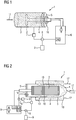
  • 1 einen Rußsensor,
  • 2 einen weiteren Rußsensor,
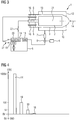
  • 3 eine erfindungsgemäßen Rußsensor, der mit dem erfindungsgemäßen Verfahren betrieben werden kann,
  • 4 beispielhaft die unterschiedlichen elektrischen Potentiale,
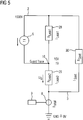
  • 5 ein Ersatzschaltbild des erfindungsgemäßen elektrostatischen Rußsensors,
  • 6 eine Strom-Zeit-Kurve, die von einem erfindungsgemäßen Rußsensor erzeugt wurde.
The present invention is explained below with reference to the accompanying drawings and on the basis of preferred embodiments. These embodiments include soot sensors for use in a motor vehicle. Show it:
  • 1 a soot sensor,
  • 2nd another soot sensor,
  • 3rd a soot sensor according to the invention which can be operated using the method according to the invention,
  • 4th the different electrical potentials, for example,
  • 5 an equivalent circuit diagram of the electrostatic soot sensor according to the invention,
  • 6 a current-time curve, which was generated by a soot sensor according to the invention.

1 zeigt einen Rußsensor 1. Der Rußsensor 1 besteht aus einer ersten Elektrode 2, die im Inneren einer zweiten Elektrode 3 angeordnet ist. Zwischen der ersten Elektrode 2 und der zweiten Elektrode 3 befindet sich das Abgas 17 des Verbrennungsmotors, in dem Rußpartikel 4 enthalten sind. Die Konzentration der Rußpartikel 4 im Abgas 17 soll durch den Rußsensor 1 gemessen werden. Mit anderen Worten kann gesagt werden, dass mit dem Rußsensor 1 der Rußgehalt im Abgasstrom 17 bestimmt werden soll. Dazu wird eine Messspannung durch die Spannungsversorgung 6 zwischen der ersten Elektrode 2 und der zweiten Elektrode 3 angelegt. Diese Spannung resultiert aus einem erstes elektrisches Potential, das an die erste Elektrode 2 angelegt ist und einem zweiten elektrischen Potential, das an die zweite Elektrode 3 angelegt ist. Die erste Elektrode 2 ist von der zweiten Elektrode 3 mithilfe des Isolationskörpers 5 elektrisch isoliert. Der Isolationskörper 5 kann zum Beispiel als Scheibe aus einem keramischen Material aufgebaut sein. Darüber hinaus ist im Rußsensor 1 eine Guardelektrode 16 angeordnet, die in erster Linie zur Stabilisierung der Spannungsverhältnisse und elektrischen Potentiale im Rußsensor 1 genutzt wird und dafür sorgt, dass im Messbetrieb des Rußsensors 1 keine Leckströme zwischen der erste Elektrode 2 und der zweiten Elektrode 3 fließen. Leckströme sind unerwünschte Ströme, die infolge unzureichender Isolationseigenschaften über den Isolationskörper 5 im Messbetrieb des Rußsensors 1 fließen und damit die Messergebnisse des Rußsensors 1 wesentlich verfälschen. Im Rußmessbetrieb wird das Potential der Guardelektrode 16 etwas oberhalb des Potentials der zweiten Elektrode 3 eingestellt. Dadurch fließen eventuell vorhandene Leckströme zur Guardelektrode 16 und werden dort abgeleitet, ohne die Strommessung des Rußsensors 1 zu beeinflussen. Bei einer typischen Messkonfiguration liegt die zweite Elektrode 3 auf Ground-Potential GND, also auf 0 V, die Guardelektrode 16 auf etwas erhöhtem Potential, zum Beispiel auf 0,5 V und die erste Elektrode auf sehr hohem Potential, zum Beispiel 1000 V. 1 shows a soot sensor 1 . The soot sensor 1 consists of a first electrode 2nd that are inside a second electrode 3rd is arranged. Between the first electrode 2nd and the second electrode 3rd is the exhaust gas 17th of the internal combustion engine, in the soot particle 4th are included. The concentration of the soot particles 4th in the exhaust gas 17th supposed to be through the soot sensor 1 be measured. In other words, it can be said that with the soot sensor 1 the soot content in the exhaust gas stream 17th should be determined. For this purpose, a measuring voltage through the power supply 6 between the first electrode 2nd and the second electrode 3rd created. This voltage results from a first electrical potential that is connected to the first electrode 2nd is applied and a second electrical potential that is applied to the second electrode 3rd is created. The first electrode 2nd is from the second electrode 3rd using the insulation body 5 electrically isolated. The insulation body 5 can be constructed, for example, as a disk from a ceramic material. It is also in the soot sensor 1 a guard electrode 16 arranged primarily to stabilize the voltage conditions and electrical potentials in the soot sensor 1 is used and ensures that in the measuring operation of the soot sensor 1 no leakage currents between the first electrode 2nd and the second electrode 3rd flow. Leakage currents are undesirable currents that occur as a result of inadequate insulation properties across the insulation body 5 in the measuring mode of the soot sensor 1 flow and thus the measurement results of the soot sensor 1 significantly falsify. In soot measuring mode, the potential of the guard electrode 16 slightly above the potential of the second electrode 3rd set. This causes any leakage currents to flow to the guard electrode 16 and are derived there without the current measurement of the soot sensor 1 to influence. In a typical measurement configuration, the second electrode is located 3rd to ground potential GND, i.e. to 0 V, the guard electrode 16 at a slightly higher potential, for example to 0.5 V and the first electrode at a very high potential, for example 1000 V.

Weiterhin ist in 1 zu erkennen, dass zwischen der Spannungsversorgung und der zweiten Elektrode 3 ein ohmscher Widerstand 7 geschaltet ist, der hochohmig ausgeführt ist, um die relativ kleinen Ströme zu messen, die sich aufgrund der Rußpartikel 4 zwischen der ersten Elektrode 2 und der zweiten Elektrode 3 ausbilden können. Die Messung dieser Ströme erfolgt durch das Strommesselement 8, das mit einer Auswerteelektronik 9 verbunden ist. Derartige Rußsensoren 1 werden zur On-Board-Diagnose in Kraftfahrzeugen mit Dieselmotoren eingesetzt.Furthermore, in 1 to recognize that between the power supply and the second electrode 3rd an ohmic resistance 7 is switched, which is designed high-resistance to measure the relatively small currents, which are due to the soot particles 4th between the first electrode 2nd and the second electrode 3rd can train. These currents are measured by the current measuring element 8th that with evaluation electronics 9 connected is. Such soot sensors 1 are used for on-board diagnostics in vehicles with diesel engines.

Die Spannung, die zwischen der ersten Elektrode 2 und der zweiten Elektrode 3 angelegt wird, ist relativ hoch, um verwertbare Messströme zu erhalten. Eine derartige Spannung liegt zwischen 100 V und 3 kV und ist damit relativ aufwendig zu kontrollieren.The voltage between the first electrode 2nd and the second electrode 3rd is relatively high in order to obtain usable measuring currents. Such a voltage is between 100 V and 3 kV and is therefore relatively complex to control.

Insbesondere Wasserablagerungen auf der ersten Elektrode 2 und der zweiten Elektrode 3, sowie auf dem Isolationskörper 5 können zu einer vollständigen Verfälschung der Rußmessung führen. Daher muss der Rußsensor 1 vor Beginn der Rußmessung völlig abgetrocknet sein, was durch die sogenannte Taupunktfreigabe signalisiert wird.In particular water deposits on the first electrode 2nd and the second electrode 3rd , as well as on the insulation body 5 can lead to a complete falsification of the soot measurement. Therefore, the soot sensor 1 be completely dry before starting the soot measurement, which is signaled by the so-called dew point release.

2 zeigt einen Rußsensor 1 mit einer ersten Elektrode 2 und einer zweiten Elektrode 3. Die erste Elektrode 2 ist von der zweiten Elektrode 3 durch einen Isolationskörper 5 elektrisch isoliert, und zwischen der ersten Elektrode 2 und der zweiten Elektrode 3 wird eine elektrische Spannung von 1 kV angelegt, die von der elektrischen Spannungsversorgung 6 erzeugt wird. 2nd shows a soot sensor 1 with a first electrode 2nd and a second electrode 3rd . The first electrode 2nd is from the second electrode 3rd through an insulation body 5 electrically isolated, and between the first electrode 2nd and the second electrode 3rd an electrical voltage of 1 kV is applied by the electrical power supply 6 is produced.

Rußpartikel 4, die in einem Abgasstrom von einer Brennkraftmaschine durch ein Auspuffrohr transportiert werden, können in den im Abgasstrang integrierten Rußsensor 1 eindringen. Die Rußpartikel 4 gelangen in ein elektrisches Feld, das sich auf Grund der angelegten elektrischen Spannung zwischen der ersten Elektrode 2 und der zweiten Elektrode 3 ausbildet. Um zwischen der ersten Elektrode 2 und der zweiten Elektrode 3 einen gut messbaren elektrischen Strom zu erzeugen, können auf der Oberfläche der ersten Elektrode 2 und/oder auf der Oberfläche der zweiten Elektrode 3 Elemente 15 zur Konzentration der elektrischen Feldstärke ausgebildet sein. In diesem Beispiel ist die erste Elektrode 2 als stabförmige Gewindestange ausgebildet, wobei die Elemente 15 zur Konzentration der elektrischen Feldstärke durch die Gewindegänge gebildet werden, zwischen denen dreieckige Spitzen ausgebildet sind. An diesen Spitzen wird das elektrische Feld konzentriert, womit die elektrische Feldstärke im Bereich der Spitzen sehr hoch wird. Die starke Erhöhung der elektrischen Feldstärke im Bereich der Spitzen kann die Durchbruchsfeldstärke des Gases in dem Bereich überschreiten. Beim Überschreiten der Durchbruchsfeldstärke des Gases werden elektrisch geladene Partikel gebildet, die in Richtung der entgegengesetzten Elektrode beschleunigt werden und infolge von Stoßionisationen zu einer lavinenartigen Ausbildung von Ladungsträgern führen. Wenn diese Ladungsträgerlavine eine Elektrodenoberfläche erreicht, ist ein sehr hoher Strom messbar, der gut ausgewertet werden kann und der proportional zur Anzahl der geladenen Partikel im Abgas ist.Soot particles 4th , which are transported in an exhaust gas stream from an internal combustion engine through an exhaust pipe, can be integrated into the soot sensor integrated in the exhaust gas line 1 penetration. The soot particles 4th arrive in an electric field, which is due to the applied electrical voltage between the first electrode 2nd and the second electrode 3rd trains. To between the first electrode 2nd and the second electrode 3rd A well measurable electrical current can be generated on the surface of the first electrode 2nd and / or on the surface of the second electrode 3rd elements 15 be designed to concentrate the electric field strength. In this example is the first electrode 2nd formed as a rod-shaped threaded rod, the elements 15 to concentrate the electric field strength are formed by the threads between which triangular tips are formed. The electric field is concentrated at these tips, which makes the electric field strength in the area of the tips very high. The sharp increase in the electric field strength in the area of the tips can exceed the breakdown field strength of the gas in the area. When the breakthrough field strength of the gas is exceeded, electrically charged particles are formed which are accelerated in the direction of the opposite electrode and, as a result of impact ionizations, lead to a lavinous formation of charge carriers. When this charge carrier avalanche reaches an electrode surface, a very high current can be measured, which can be evaluated well and which is proportional to the number of charged particles in the exhaust gas.

Weiterhin zeigt aber 2 einen Ohmschen Widerstand 7, der vorteilhaft ist, um mit der Auswerteelektronik 9 den elektrischen Strom messen zu können, der zwischen der ersten Elektrode 2 und der zweiten Elektrode 3 fließt. Darüber hinaus ist in 2 eine Schutzkappe 10 zu erkennen, die zur gezielten Führung des AbGasstromes 17 durch den Rußsensor 1 dient. Die Abgase können beispielsweise durch eine erste Öffnung 11 in den Rußsensor 1 eindringen, wo zwischen der ersten Elektrode 2 und der zweiten Elektrode 3 der Rußgehalt im Abgas gemessen werden kann. Danach verlässt der Abgasstrom 17 durch die zweite Öffnung 12, die in der zweiten Elektrode 3 ausgebildet ist, den Rußsensor 1 und wird über die dritte Öffnung 13 zurück in den Hauptabgasstrom geführt.Still shows 2nd an ohmic resistance 7 , which is beneficial to using the transmitter 9 to be able to measure the electrical current between the first electrode 2nd and the second electrode 3rd flows. In addition, in 2nd a protective cap 10 to recognize that for the targeted management of the exhaust gas flow 17th through the soot sensor 1 serves. The exhaust gases can, for example, through a first opening 11 in the soot sensor 1 penetration, where between the first electrode 2nd and the second electrode 3rd the soot content in the exhaust gas can be measured. Then the exhaust gas flow leaves 17th through the second opening 12th that in the second electrode 3rd is designed, the soot sensor 1 and will go through the third opening 13 led back into the main exhaust gas stream.

In dem Isolationskörper 5 ist eine Guardelektrode 16 zu erkennen. Mit der Guardelektrode 16 kann vor dem Zeitpunkt der Taupunktfreigabe ein Strom gemessen werden, der als Indikator für eine Taupunktfreigabe des Rußsensors 1 ausgewertet werden kann. Der Strom wird von der Spannung an der ersten Elektrode 2 (in diesem Beispiel 1 kV) über den feuchten Isolationskörper hin zur Guardelektrode 16 getrieben, die in diesen Beispiel mit 0,5 V etwas gegen das Massepotential GND an der zweiten Elektrode 3 vorgespannt ist. Erst wenn dieser Strom deutlich, also um mindestens eine Zehnerpotenz, nach dem Start des kalten Verbrennungsmotors absinkt, kann auf eine vollständige Trocknung des Rußsensors 1 geschlossen werden und eine Taupunktfreigabe erfolgen. Bei dieser Art der Taupunktfreigabe sind jedoch mindestens zwei Strommesselemente 8, nämlich eines in der Leitung zwischen der Guardelektrode 16 und der Spannungsversorgung 6 und eines in der Leitung zwischen der ersten oder zweiten Elektrode 2, 3 und der Spannungsversorgung 6, notwendig, um den Rußsensor 1 zu betreiben. Die Anzahl der notwendigen Strommesselemente 8 erhöht die Kosten für den Rußsensors 1. Es ist jedoch in jeden Fall vorteilhaft, die Herstellungskosten für den Rußsensors 1 so gering wie möglich zu halten.In the insulation body 5 is a guard electrode 16 to recognize. With the guard electrode 16 a current can be measured before the time of the dew point release, which serves as an indicator for a dew point release of the soot sensor 1 can be evaluated. The current is determined by the voltage on the first electrode 2nd (in this example 1 kV) over the damp insulation body to the guard electrode 16 driven, in this example with 0.5 V somewhat against the ground potential GND on the second electrode 3rd is biased. Only when this current drops significantly, i.e. by at least a power of ten, after the cold internal combustion engine has started, can the soot sensor be completely dried 1 be closed and a dew point released. With this type of dew point release, however, there are at least two current measuring elements 8th , namely one in the line between the guard electrode 16 and the power supply 6 and one in the line between the first or second electrode 2nd , 3rd and the power supply 6 , necessary to the soot sensor 1 to operate. The number of necessary current measuring elements 8th increases the cost of the soot sensor 1 . However, it is advantageous in any case, the manufacturing costs for the soot sensor 1 to keep it as low as possible.

Es ist aber auch denkbar eine Strommessung zwischen der ersten Elektrode 2 und der zweiten Elektrode 3, also zwischen 1 kV und dem Massepotential GND, zu verwenden, um den Zeitpunkt der Taupunktfreigabe zu bestimmen. Auch hier wird das Absinken des Stromes um mindestens eine Zehnerpotenz als Zeichen für eine vollständige Trocknung das Rußsensors nach dem Start des kalten Verbrennungsmotors gewertet.However, a current measurement between the first electrode is also conceivable 2nd and the second electrode 3rd , that is between 1 kV and the ground potential GND, to determine the time of the dew point release. Here, too, the decrease in the current by at least a power of ten is taken as a sign of complete drying of the soot sensor after the cold internal combustion engine has started.

3 zeigt einen erfindungsgemäßen Rußsensor 1 mit einer Spannungsversorgung 6. Der Rußsensor 1 weist eine erste Elektrode 2 und eine zweite Elektrode 3 auf. Die Rußpartikel können mit dem Abgasstrom 17 durch eine erste Öffnung 11, die in der Schutzkappe 10 ausgebildet ist, in den Innenraum des Rußsensors eindringen. Dabei gelangen die Rußpartikel in den Zwischenraum zwischen die erste Elektrode 2 und die zweite Elektrode 3. Darüber hinaus weist der erfindungsgemäße Rußsensor 1 eine Spannungsversorgung 6 auf, die mit Hilfe eines Umschaltelementes 27 an die Guardelektrode 16 zwei verschiedene Potentiale anlegen kann. Das mit der Spannungsversorgung 6 an die Guardelektrode 16 angelegte Guardpotential, entspricht in der Warmlaufphase des Rußsensors 1 einem ersten Guardpotential und in der Messphase des Rußsensors 1 einem zweiten Guardpotential. Das erste Guardpotential kann zum Beispiel 10 V gegen GND betragen und das zweite Guardpotential kann zum Beispiel 0,5 V gegen GND betragen 3rd shows a soot sensor according to the invention 1 with a power supply 6 . The soot sensor 1 has a first electrode 2nd and a second electrode 3rd on. The soot particles can with the exhaust gas flow 17th through a first opening 11 that in the protective cap 10 is designed to penetrate into the interior of the soot sensor. The soot particles get into the space between the first electrode 2nd and the second electrode 3rd . In addition, the soot sensor according to the invention 1 a power supply 6 on that with the help of a switching element 27 to the guard electrode 16 can create two different potentials. The one with the power supply 6 to the guard electrode 16 Guard potential applied corresponds to the soot sensor's warm-up phase 1 a first guard potential and in the measurement phase of the soot sensor 1 a second guard potential. The first guard potential can be, for example, 10 V against GND and the second guard potential can be, for example, 0.5 V against GND

Solange der Abgassensor 1 kalt ist, was z. B. nach dem Neustart des Verbrennungsmotors der Fall sein wird, werden im Gasstrom 17 vorhandene Wassermoleküle als Kondensat im gesamten Rußsensor 1 abgeschieden. Dieses Wasserkondensat legt sich u. a. auf den Isolationskörper 5, wobei eine elektrisch leitende Verbindung zwischen der ersten Elektrode 2, der Guardelektrode 16 und der zweiten Elektrode 3 entsteht. Mithilfe der Spannungsversorgung 6 kann an die erste Elektrode 2 eine Hochspannung von z. B. 1000 V angelegt werden. Die zweite Elektrode 3 wird vorzugsweise auf Massepotential GND gehalten. Die Guardelektrode 16 wird auf ein erhöhtes Potential (erstes Guardpotential) gegenüber ihrem Potential (zweites Guardpotential) im Rußmessbetrieb gelegt. Das Potential der Guardelektrode 16 Rußmessbetrieb kann zum Beispiel bei 0.5 Volt liegen und das erhöhte Potential der Guardelektrode 16 kann bei 10 V liegen. Zur Umschaltung zwischen dem Potential der Guardelektrode 16 Rußmessbetrieb und dem erhöhten Potential der Guardelektrode 16 weist die Spannungsversorgung 6 ein zum Beispiel als elektronische Schaltung ausgebildetes Umschaltelement 27 auf. Aufgrund des Kondensats, das sich auf der Oberfläche des Isolationskörpers 5 gebildet hat, beginnt ein hoher Strom über den Isolationskörper 5 zu fließen. Dieser Strom, der infolge des Kondensats auf dem Isolationskörper zwischen der ersten Elektrode 2 über die Guardelektrode 16 zu der zweiten Elektrode 3 fließt, ist mindestens eine Zehnerpotenz höher als der Messstrom, der fließt, wenn der gesamte Rußsensor 1 völlig abgetrocknet ist. Der Leckstrom, der über den Isolationskörper 5 infolge des wässrigen Kondensats fließt, macht eine Rußmessung mit dem benetzten Rußsensor unmöglich. Dennoch kann dieser Strom beobachtet werden, um die Taupunktfreigabe des Rußsensors 1 zu detektieren und die Funktionsfähigkeit des Rußsensors 1 zu prüfen. Durch das erhöhte Potential der Guardelektrode 16 wird nur sehr wenig Leckstrom über die Guardelektrode 16 abfließen. Der Abtrocknungsprozess des Rußsensors kann daher sehr gut mit dem einzigen Strommesselement 8 in der GND Leitung beobachtet werden. Wenn sich dann der Rußsensor 1 infolge des heißen Abgases 17 derart angewärmt hat, dass sich das gesamte wässrige Kondensat aus dem Inneren des Rußsensors 1 entfernt hat, kann die Taupunktfreigabe erfolgen und die Messphase des Rußsensors einsetzen. Zur Strommessung weist das in 3 dargestellte System nur ein einziges Strommesselement 8 auf, das mit der Auswerteelektronik 9 verbunden ist. Diese Auswerteelektronik 9 kann die in den 6 dargestellten Sensorströme aufzeichnen und auswerten.As long as the exhaust gas sensor 1 cold is what z. B. after the restart of the internal combustion engine will be the case in the gas stream 17th existing water molecules as condensate in the entire soot sensor 1 deposited. This water condensate lies, among other things, on the insulation body 5 , wherein an electrically conductive connection between the first electrode 2nd , the guard electrode 16 and the second electrode 3rd arises. Using the power supply 6 can to the first electrode 2nd a high voltage of e.g. B. 1000 V are applied. The second electrode 3rd is preferably kept at ground potential GND. The guard electrode 16 is set to an increased potential (first guard potential) compared to their potential (second guard potential) in soot measurement mode. The potential of the guard electrode 16 Soot measurement operation can be, for example, 0.5 volts and the increased potential of the guard electrode 16 can be 10 V. For switching between the potential of the guard electrode 16 Soot measuring operation and the increased potential of the guard electrode 16 assigns the power supply 6 a switching element designed, for example, as an electronic circuit 27 on. Because of the condensate that is on the surface of the insulation body 5 has formed, a high current begins over the insulation body 5 to flow. This current, which is due to the condensate on the insulation body between the first electrode 2nd via the guard electrode 16 to the second electrode 3rd flows, is at least a power of ten higher than the measuring current that flows when the entire soot sensor 1 is completely dry. The leakage current that goes through the insulation body 5 due to the aqueous condensate flowing, soot measurement with the wetted soot sensor is impossible. Still, this current can be observed to release the soot sensor's dew point 1 to detect and the functionality of the soot sensor 1 to consider. Due to the increased potential of the guard electrode 16 there is very little leakage current through the guard electrode 16 flow away. The drying process of the soot sensor can therefore very well with the single current measuring element 8th can be observed in the GND line. Then if the soot sensor 1 due to the hot exhaust gas 17th has warmed up in such a way that all of the aqueous condensate comes out of the interior of the soot sensor 1 removed, the dew point can be released and the measurement phase of the soot sensor can be used. For current measurement, this is shown in 3rd shown system only a single current measuring element 8th on that with the evaluation electronics 9 connected is. This evaluation electronics 9 can the in the 6 Record and evaluate the sensor currents shown.

Nach der Taupunktfreigabe kann die Messphase des Rußsensors 1 beginnen. Hierzu wird mit Hilfe des Umschaltelements 27 das zweite Guardpotential 20 an die Guardelektrode 16 angelegt. Da das zweite Guardpotential 20 mit zum Beispiel 0,5 V nur sehr wenig vom GND Potential (0 V) der zweiten Elektrode 3 entfernt ist werden die verbleibenden Leckströme nahezu vollständig von der Guardelektrode 16 abgeleitete, wodurch die Messergebnisse des Rußsensors 1 durch die Leckströme nicht verfälscht werden.After the dew point release, the measurement phase of the soot sensor can 1 kick off. To do this, use the switching element 27 the second guard potential 20 to the guard electrode 16 created. Because the second guard potential 20 with, for example, 0.5 V only very little of the GND potential (0 V) of the second electrode 3rd the remaining leakage currents are almost completely removed from the guard electrode 16 derived, which results in the measurement results of the soot sensor 1 are not falsified by the leakage currents.

Die Guardelektrode 16 ist in diesem Beispiel in den keramischen Isolationskörper 5 des Rußsensors 1 integriert. Der Isolationskörper 5 muss jedoch nicht notwendigerweise aus einer Keramik bestehen. Es ist auch denkbar, z. B. einen hitzefesten Kunststoff einzusetzen oder andere isolierende Materialien, wie z. B. Materialien aus dem Element Kohlenstoff in einer entsprechenden Kristallgitterstruktur, die zu einer hohen Isolation führt.The guard electrode 16 is in this example in the ceramic insulation body 5 of the soot sensor 1 integrated. The insulation body 5 However, it does not necessarily have to consist of a ceramic. It is also conceivable, e.g. B. use a heat-resistant plastic or other insulating materials such. B. materials from the element carbon in a corresponding crystal lattice structure, which leads to high insulation.

4 zeigt beispielhaft die unterschiedlichen elektrischen Potentiale die an den einzelnen Elektroden anliegen können. An der ersten Elektrode 2 kann das erste Potential 14 anliegen, das hier mit 1000 V gegen GND beispielhaft dargestellt ist. Dieses erste Potential kann aber auch zwischen 500 V und 3000 V liegen. An der zweiten Elektrode 3 liegt hier beispielhaft ein Potential von 0 V, also das Ground Potential GND, an. Die Potentiale können zwischen der ersten und der zweiten Elektrode wechseln, wichtig ist nur, dass eine hohe Spannung der ersten Elektrode 2 und der zweiten Elektrode 3 entsteht. Das Potential an der Guardelektrode 16 kann zwei Werte annehmen, was durch die Spannungsversorgung 6 in Verbindung mit dem Umschaltelement 27 sichergestellt wird. Der Betrag des ersten Guardpotentials 19 liegt näher am Betrag des höheren elektrischen Potentials, das in diesem Beispiel an der ersten Elektrode 2 anliegt, als der Betrag des zweiten Guardpotentials 20. Das erste Guardpotential 19 liegt hier beispielhaft bei 10 V gegen GND und das zweite Guardpotential 20 liegt hier beispielhaft bei 1 V gegen GND. Das erste Guardpotential 19 kann Werte zwischen 5 V und 200 V gegen GND annehmen und das zweite Guardpotential 20 kann Werte zwischen 0,2 V und 10 V gegen GND annehmen. 4th shows an example of the different electrical potentials that can be applied to the individual electrodes. On the first electrode 2nd may be the first potential 14 concern, which is shown here as an example with 1000 V against GND. This first potential can also be between 500 V and 3000 V. On the second electrode 3rd there is an example of a potential of 0 V, i.e. the ground potential GND. The potentials can switch between the first and the second electrode, the only important thing is that the first electrode has a high voltage 2nd and the second electrode 3rd arises. The potential at the guard electrode 16 can take two values, which is due to the power supply 6 in connection with the switching element 27 is ensured. The amount of the first guard potential 19th is closer to the amount of the higher electrical potential, which in this example is at the first electrode 2nd is present as the amount of the second guard potential 20 . The first guard potential 19th is, for example, 10 V against GND and the second guard potential 20 is, for example, 1 V against GND. The first guard potential 19th can assume values between 5 V and 200 V against GND and the second guard potential 20 can assume values between 0.2 V and 10 V against GND.

5 zeigt ein Ersatzschaltbild des erfindungsgemäßen elektrostatischen Rußsensors 1 mit einer Spannungsversorgung 6. Die Spannungsversorgung 6 legt an die erste Elektrode eine Hochspannung von 1000 V an und an die zweite Elektrode das Massepotential GND. Die Guardelektrode 16 wird wahlweise mit dem ersten Guardpotential (10 V) oder dem zweiten Guardpotential (1 V) belegt. In der Messphase des Rußsensors 1 fließt der Strom Isoot über den dritten Ersatzwiderstand 30 und kann von dem einzigen Strommesselement 8 erfasst werden und dieses Messergebnis kann von der Auswerteelektronik 9 weiterverarbeitet werden. Der Leckstrom Ileak1 wird fast vollständig von der Guardelektrode 16 aufgenommen, wie diese auf das zweite Guardpotential von 1 V geschaltet ist. 5 shows an equivalent circuit diagram of the electrostatic soot sensor according to the invention 1 with a power supply 6 . The power supply 6 applies a high voltage of 1000 V to the first electrode and the ground potential GND to the second electrode. The guard electrode 16 is assigned either the first guard potential (10 V) or the second guard potential (1 V). In the measurement phase of the soot sensor 1 the Isoot current flows through the third equivalent resistor 30th and can from the single current measuring element 8th can be recorded and this measurement result can be obtained from the evaluation electronics 9 be processed further. The leakage current Ileak1 is almost completely from the guard electrode 16 recorded how this is switched to the second guard potential of 1 V.

Vor der Taupunktfreigabe ist die Guardelektrode 16 auf das erste Guardpotential von 10 V geschaltet, wodurch der gesamte Leckstrom, also Ileak2 zur zweiten Elektrode geführt wird. Auf dem Weg zum Massepotential GND der zweiten Elektrode wird der gesamte Leckstrom Ileak2 von dem einzigen Strommesselement 8 erfasst und dieses Messergebnis kann wiederum von der Auswerteelektronik 9 ausgewertet und weiterverarbeitet werden.The guard electrode is in front of the dew point 16 switched to the first guard potential of 10 V, which leads the entire leakage current, i.e. Ileak2, to the second electrode. On the way to the ground potential GND of the second electrode, the entire leakage current Ileak2 is from the single current measuring element 8th recorded and this measurement result can in turn by the evaluation electronics 9 evaluated and processed.

6 zeigt zwei Strom-Zeit-Kurven, die mit dem erfindungsgemäßen elektrostatischen Rußsensor 1 erfasst wurden. Beide Strom-Zeit-Kurven wurden mit einem ersten Guardpotential (zum Beispiel 10 V) an der Guardelektrode 16 erfasst und stellen die Situation der Warmlaufphase des Rußsensors 1 vor der Taupunktfreigabe dar. Die Normalkurve 25 zeigt einen starken Stromanstieg nach dem Start der Brennkraftmaschine, weil sich Kondensat in dem Rußsensor 1 niederschlägt, das einen sehr hohen Leckstrom über den Isolierköper ermöglicht. Die Normalkurve 25 durchbricht bei ihrem Anstieg eine erste Schwelle 22, eine zweite Schwelle 23 und eine dritte Schwelle 24, um dann den Messbereich des Strommesselementes nach etwa 110 s zu verlassen. Die Trocknungsphase des Rußsensors 1 dauert etwa 220 s, dann unterschreitet die Normalkurve die erste Schwelle 22 und die Taupunktfreigabe kann erfolgen, woraufhin die Guardelektrode auf das zweite Guardpotential (zum Beispiel 0,5 V) geschaltet wir und die Messphase des Rußsensors 1 beginnen kann. 6 shows two current-time curves with the electrostatic soot sensor according to the invention 1 were recorded. Both current-time curves were with a first guard potential (for example 10 V) on the guard electrode 16 detects and represent the situation of the warm-up phase of the soot sensor 1 before the dew point release. The normal curve 25th shows a strong current increase after the start of the internal combustion engine, because condensate is in the soot sensor 1 precipitates, which enables a very high leakage current through the insulating body. The normal curve 25th breaks a first threshold as it rises 22 , a second threshold 23 and a third threshold 24th to then leave the measuring range of the current measuring element after about 110 s. The drying phase of the soot sensor 1 takes about 220 s, then the normal curve falls below the first threshold 22 and the dew point can be released, whereupon the guard electrode is switched to the second guard potential (for example 0.5 V) and the measurement phase of the soot sensor 1 can start.

Zur Fehlerdiagnose kann der Stromgradient dI/dt im abfallenden Zweig der Normalkurve 25 und/oder der Fehlerkurve 26 ausgewertet werden. Anhand dieses Stromgradienten kann zwischen einem intakten und einem fehlerhaften Rußsensor unterschieden werden.The current gradient dI / dt in the descending branch of the normal curve can be used for fault diagnosis 25th and / or the error curve 26 be evaluated. This current gradient can be used to distinguish between an intact and a defective soot sensor.

Die Fehlerkurve 26 wurde ebenfalls mit einem ersten Guardpotential (zum Beispiel 10 V) an der Guardelektrode 16 erfasst und stellen damit ebenfalls die Situation der Warmlaufphase des Rußsensors 1 vor der Taupunktfreigabe dar. Jedoch zeigt der Strom-Zeit-Verlauf der Fehlerkurve 26 ein völlig untypisches Verhalten. Der gemessene Strom überschreitet zwar nach etwa 110 2 eine zweite Schwelle 23, erreicht aber die dritte Schwell 24 nicht, um dann nach etwa 170 s unter die erste Schwelle 22 zu fallen. Dieser völlig untypische Stromverlauf in der Warmlaufphase identifiziert einen fehlerhaften Rußsensor 1. An die On Board Diagnoseeinheit des Kraftfahrzeuges kann eine Fehlermeldung versendet werden und der Fahrzeugführer kann aufgefordert werden eine Werkstatt aufzusuchen, um den defekten Rußsensor 1 erneuern zu lassen.The error curve 26 was also with a first guard potential (for example 10 V) on the guard electrode 16 detects and thus also represent the situation of the warm-up phase of the soot sensor 1 before the dew point release. However, the current-time curve shows the error curve 26 completely atypical behavior. The measured current exceeds a second threshold after about 110 2 23 , but reaches the third threshold 24th not, then after about 170 s below the first threshold 22 to fall. This completely atypical current curve in the warm-up phase identifies a faulty soot sensor 1 . An error message can be sent to the on-board diagnostic unit of the motor vehicle and the driver can be asked to visit a workshop to find out the defective soot sensor 1 to be renewed.

Claims (4)

Elektrostatischer Rußsensor (1) mit einer Spannungsversorgung (6), wobei der elektrostatische Rußsensor (1) eine erste Elektrode (2), eine zweite Elektrode (3) und eine Guardelektrode (16)aufweist, wobei die erste Elektrode (2) und die zweite Elektrode (3) durch einen Isolationskörper (5) elektrisch voneinander isoliert sind und zwischen der ersten Elektrode (2) und der zweiten Elektrode (3) die Guardelektrode (16) angeordnet ist, wobei auch die Guardelektrode (16) durch den Isolationskörper (5) elektrisch von der ersten Elektrode (2) und der zweiten Elektrode (3) isoliert ist, wobei mit der Spannungsversorgung (6) ein erstes elektrisches Potential (14) an die erste Elektrode (2) angelegt ist und wobei mit der Spannungsversorgung (6) ein zweites elektrisches Potential (18) an die zweite Elektrode (2) angelegt ist, sodass eine elektrischen Spannung zwischen der ersten Elektrode (2) und der zweiten Elektrode (3) entsteht, dadurch gekennzeichnet, dass mit der Spannungsversorgung (6) an die Guardelektrode (16) ein Guardpotential angelegt ist, das in der Warmlaufphase des Rußsensors (1) einem ersten Guardpotential (19) entspricht und in der Messphase des Rußsensors (1) einem zweiten Guardpotential (20) entspricht, wobei die Spannungsversorgung (6) das an der Guardelektrode (16) anliegende Guardpotential mit dem Erreichen einer Taupunktfreigabe von dem ersten Guardpotential (19) auf das zweite Guardpotential (20) umschaltet.Electrostatic soot sensor (1) with a voltage supply (6), the electrostatic soot sensor (1) having a first electrode (2), a second electrode (3) and a guard electrode (16), the first electrode (2) and the second Electrode (3) are electrically insulated from one another by an insulation body (5) and the guard electrode (16) is arranged between the first electrode (2) and the second electrode (3), the guard electrode (16) also being arranged by the insulation body (5) is electrically insulated from the first electrode (2) and the second electrode (3), with a first electrical potential (14) being applied to the first electrode (2) with the voltage supply (6) and one being connected with the voltage supply (6) second electrical potential (18) is applied to the second electrode (2), so that an electrical voltage arises between the first electrode (2) and the second electrode (3), characterized in that the voltage supply (6) to d The guard electrode (16) has a guard potential which corresponds to a first guard potential (19) in the warm-up phase of the soot sensor (1) and corresponds to a second guard potential (20) in the measurement phase of the soot sensor (1), the voltage supply (6) being the When the dew point is released, the guard potential applied to the guard electrode (16) switches from the first guard potential (19) to the second guard potential (20). Elektrostatischer Rußsensor (1) mit einer Spannungsversorgung (6) nach Anspruch 1, dadurch gekennzeichnet, dass der Betrag des ersten Guardpotentials (19) näher am Betrag des höheren elektrischen Potentials, welches an der ersten Elektrode (2) oder der zweiten Elektrode (3) anliegt, liegt als der Betrag des zweiten Guardpotentials (20).Electrostatic soot sensor (1) with a power supply (6) Claim 1 , characterized in that the amount of the first guard potential (19) is closer to the amount of the higher electrical potential which is present at the first electrode (2) or the second electrode (3) than the amount of the second guard potential (20). Verfahren zum Betreiben eines elektrostatischen Rußsensors (1) mit einer Spannungsversorgung (6), wobei der elektrostatische Rußsensor (1) eine erste Elektrode (2), eine zweite Elektrode (3) und eine Guardelektrode (16)aufweist, wobei die erste Elektrode (2) und die zweite Elektrode (3) durch einen Isolationskörper (5) elektrisch voneinander isoliert sind und zwischen der ersten Elektrode (2) und der zweiten Elektrode (3) die Guardelektrode (16) angeordnet ist, wobei auch die Guardelektrode (16) durch den Isolationskörper (5) elektrisch von der ersten Elektrode (2) und der zweiten Elektrode (3) isoliert ist, wobei mit der Spannungsversorgung (6) ein erstes elektrisches Potential (14) an die erste Elektrode (2) angelegt wird und wobei mit der Spannungsversorgung (6) ein zweites elektrisches Potential (18) an die zweite Elektrode (2) angelegt wird, sodass eine elektrischen Spannung zwischen der ersten Elektrode (2) und der zweiten Elektrode (3) entsteht, dadurch gekennzeichnet, dass mit der Spannungsversorgung (6) an die Guardelektrode (16) ein Guardpotential angelegt wird, das in der Warmlaufphase des Rußsensors (1) einem ersten Guardpotential (19) entspricht und in der Messphase des Rußsensors (1) einem zweiten Guardpotential (20) entspricht, wobei die Spannungsversorgung (6) das an der Guardelektrode (16) anliegende Guardpotential mit dem Erreichen einer Taupunktfreigabe von dem ersten Guardpotential (19) auf das zweite Guardpotential (20) umschaltet.Method for operating an electrostatic soot sensor (1) with a voltage supply (6), the electrostatic soot sensor (1) having a first electrode (2), a second electrode (3) and a guard electrode (16), the first electrode (2 ) and the second electrode (3) are electrically insulated from one another by an insulation body (5) and the guard electrode (16) is arranged between the first electrode (2) and the second electrode (3), the guard electrode (16) also being arranged by the Insulation body (5) is electrically insulated from the first electrode (2) and the second electrode (3), with the voltage supply (6) applying a first electrical potential (14) to the first electrode (2) and with the voltage supply (6) a second electrical potential (18) is applied to the second electrode (2), so that an electrical voltage arises between the first electrode (2) and the second electrode (3), characterized in that with a guard potential is applied to the voltage supply (6) to the guard electrode (16), which corresponds to a first guard potential (19) in the warm-up phase of the soot sensor (1) and corresponds to a second guard potential (20) in the measuring phase of the soot sensor (1), whereby the voltage supply (6) switches the guard potential applied to the guard electrode (16) from the first guard potential (19) to the second guard potential (20) upon reaching a dew point release. Verfahren zum Betreiben eines elektrostatischer Rußsensors (1) mit einer Spannungsversorgung (6) nach Anspruch 3, dadurch gekennzeichnet, dass der Betrag des ersten Guardpotentials (19) näher am Betrag des höheren elektrischen Potentials, welches an der ersten Elektrode (2) oder der zweiten Elektrode (3) anliegt, liegt als der Betrag des zweiten Guardpotentials (20).Method for operating an electrostatic soot sensor (1) with a voltage supply (6) according to Claim 3 , characterized in that the amount of the first guard potential (19) is closer to the amount of the higher electrical potential which is present at the first electrode (2) or the second electrode (3) than the amount of the second guard potential (20).
DE102015225745.2A 2015-12-17 2015-12-17 Electrostatic soot sensor Active DE102015225745B4 (en)

Priority Applications (5)

Application Number Priority Date Filing Date Title
DE102015225745.2A DE102015225745B4 (en) 2015-12-17 2015-12-17 Electrostatic soot sensor
EP16809356.5A EP3391024B1 (en) 2015-12-17 2016-12-07 Electrostatic soot sensor
PCT/EP2016/080094 WO2017102505A1 (en) 2015-12-17 2016-12-07 Electrostatic soot sensor
CN201680074179.2A CN108369174A (en) 2015-12-17 2016-12-07 Electrostatic soot sensor
US16/062,798 US10900882B2 (en) 2015-12-17 2016-12-07 Electrostatic soot sensor

Applications Claiming Priority (1)

Application Number Priority Date Filing Date Title
DE102015225745.2A DE102015225745B4 (en) 2015-12-17 2015-12-17 Electrostatic soot sensor

Publications (2)

Publication Number Publication Date
DE102015225745A1 DE102015225745A1 (en) 2017-06-22
DE102015225745B4 true DE102015225745B4 (en) 2020-06-25

Family

ID=57539239

Family Applications (1)

Application Number Title Priority Date Filing Date
DE102015225745.2A Active DE102015225745B4 (en) 2015-12-17 2015-12-17 Electrostatic soot sensor

Country Status (5)

Country Link
US (1) US10900882B2 (en)
EP (1) EP3391024B1 (en)
CN (1) CN108369174A (en)
DE (1) DE102015225745B4 (en)
WO (1) WO2017102505A1 (en)

Families Citing this family (5)

* Cited by examiner, † Cited by third party
Publication number Priority date Publication date Assignee Title
DE102015225745B4 (en) 2015-12-17 2020-06-25 Vitesco Technologies GmbH Electrostatic soot sensor
DE112019000725T5 (en) * 2018-02-08 2020-11-05 Ngk Insulators, Ltd. Particle detection device
FR3081503B1 (en) 2018-05-28 2020-05-15 Renault S.A.S SYSTEM AND METHOD FOR ESTIMATING THE QUANTITY OF POLLUTANT PARTICLES IN THE ENGINE OIL OF A DIESEL INTERNAL COMBUSTION ENGINE
DE102020205944A1 (en) * 2020-05-12 2021-11-18 Robert Bosch Gesellschaft mit beschränkter Haftung Sensor for detecting at least one property of a measurement gas
WO2022072753A1 (en) * 2020-09-30 2022-04-07 Emisense Technologies, Llc Using variable voltage and current rate of change to measure particulate matter sensors

Citations (5)

* Cited by examiner, † Cited by third party
Publication number Priority date Publication date Assignee Title
DE19536705A1 (en) 1995-09-30 1997-04-03 Guenther Prof Dr Ing Hauser Method for measuring particles in gas flow e.g. vehicle exhaust
DE102007046099A1 (en) 2007-09-26 2009-04-02 Robert Bosch Gmbh Sensor element for detection of sooty particles emitted from vehicle, has supply lines comprising measuring electrode supply line insulation, which surrounds supply lines and is arranged over and/or adjacent and below supply lines
DE102007046096A1 (en) 2007-09-26 2009-04-02 Robert Bosch Gmbh Method for the self-diagnosis of a particle sensor, suitable particle sensors for carrying out the method and their use
DE102010030634A1 (en) 2010-06-29 2011-12-29 Robert Bosch Gmbh Method and device for operating a particle sensor
DE102010055478A1 (en) 2010-12-22 2012-06-28 Continental Automotive Gmbh Method for operating a soot sensor

Family Cites Families (10)

* Cited by examiner, † Cited by third party
Publication number Priority date Publication date Assignee Title
DE3820740A1 (en) * 1988-06-18 1989-12-21 Bosch Gmbh Robert COAGULATOR FOR DEVICES FOR PURIFYING EXHAUST GAS FOSSILER FUELS
US5662786A (en) * 1990-03-19 1997-09-02 Robert Bosch Gmbh Electrochemical sensor
JP2698804B2 (en) * 1995-10-24 1998-01-19 株式会社オーデン Diesel engine exhaust particulate collection device by electrical control
WO2001092694A1 (en) * 2000-06-01 2001-12-06 Blue Planet Co., Ltd. Apparatus for removing soot and nox in exhaust gas from diesel engines
AU2003233515A1 (en) * 2002-05-09 2003-11-11 Ohio University Membrane laminar wet electrostatic precipitator
DE102006047780A1 (en) * 2006-10-06 2008-04-10 Endress + Hauser Gmbh + Co. Kg Device for determining and / or monitoring a process variable
US7609068B2 (en) * 2007-10-04 2009-10-27 Delphi Technologies, Inc. System and method for particulate sensor diagnostic
JP5537487B2 (en) * 2011-04-12 2014-07-02 日本特殊陶業株式会社 Particle detection system
JP5547126B2 (en) * 2011-05-11 2014-07-09 日本特殊陶業株式会社 Particle detection system
DE102015225745B4 (en) 2015-12-17 2020-06-25 Vitesco Technologies GmbH Electrostatic soot sensor

Patent Citations (5)

* Cited by examiner, † Cited by third party
Publication number Priority date Publication date Assignee Title
DE19536705A1 (en) 1995-09-30 1997-04-03 Guenther Prof Dr Ing Hauser Method for measuring particles in gas flow e.g. vehicle exhaust
DE102007046099A1 (en) 2007-09-26 2009-04-02 Robert Bosch Gmbh Sensor element for detection of sooty particles emitted from vehicle, has supply lines comprising measuring electrode supply line insulation, which surrounds supply lines and is arranged over and/or adjacent and below supply lines
DE102007046096A1 (en) 2007-09-26 2009-04-02 Robert Bosch Gmbh Method for the self-diagnosis of a particle sensor, suitable particle sensors for carrying out the method and their use
DE102010030634A1 (en) 2010-06-29 2011-12-29 Robert Bosch Gmbh Method and device for operating a particle sensor
DE102010055478A1 (en) 2010-12-22 2012-06-28 Continental Automotive Gmbh Method for operating a soot sensor

Also Published As

Publication number Publication date
EP3391024A1 (en) 2018-10-24
EP3391024B1 (en) 2022-04-20
CN108369174A (en) 2018-08-03
DE102015225745A1 (en) 2017-06-22
US20200284711A1 (en) 2020-09-10
US10900882B2 (en) 2021-01-26
WO2017102505A1 (en) 2017-06-22

Similar Documents

Publication Publication Date Title
DE102015225745B4 (en) Electrostatic soot sensor
DE102009028239B4 (en) Method for self-diagnosis of a particle sensor
DE102009033232A1 (en) Method for the on-vehicle functional diagnosis of a soot sensor and / or for the detection of further constituents in the soot in a motor vehicle
DE102009049669A1 (en) Method for condition evaluation of a soot sensor in a motor vehicle
DE102014222844B4 (en) soot sensor
DE102007014761A1 (en) Method for operating collecting particle sensors, involves providing with measuring phases, during which particle contained in exhaust gas flow is absorbed at measuring section
DE102013223630A1 (en) Method and device for operating a particle sensor
DE102012210525A1 (en) Method for functional control of a sensor for detecting particles and sensor for detecting particles
DE102008031648A1 (en) Method and device for operating a particle sensor
DE102009028319A1 (en) Particle sensor operating method for function monitoring of diesel particle filters in diesel internal combustion engine of vehicle, involves executing regeneration phases after obtaining triggering threshold or expected threshold
DE102010055478A1 (en) Method for operating a soot sensor
WO2020030324A1 (en) Method for operating a sensor for detecting particles in a gas for measurement
DE102015225739B4 (en) Method of operating an electrostatic soot sensor
DE102011086148A1 (en) Method for operating resistive sensor in exhaust duct of internal combustion engine e.g. petrol engine, involves determining dew point end in exhaust duct from measured change in conductivity of resistive sensor
WO2016046229A1 (en) Soot sensor
DE102009046315A1 (en) Method for operating particle sensor for on-board diagnostics of diesel internal combustion engine, involves directly heating soot particles with heating element, and determining change in conductivity of soot particles or sooth path
DE102014220398A1 (en) Method for checking the function of a sensor for the detection of particles
DE102015215848B4 (en) Method for monitoring the function of an electrostatic soot sensor
DE102009000077A1 (en) Particle sensor for detecting conductive particles in gas flow, has measuring cell and electrode system with one electrode, another electrode and semi-conducting or small conducting material
DE102013216227A1 (en) Capacitive self-diagnosis of the electrode system of a particle sensor
DE102017202859B4 (en) Method for operating an electrostatic particle sensor and electrostatic particle sensor
DE102013206092A1 (en) Method for evaluating the measured values of a soot sensor
DE102018207784A1 (en) Sensor arrangement for detecting particles of a measuring gas in a measuring gas space and method for detecting particles of a measuring gas in a measuring gas space
DE102016220832A1 (en) Sensor element for detecting particles of a measuring gas in a measuring gas chamber
DE102018207789A1 (en) Sensor arrangement for detecting particles of a measuring gas in a measuring gas space and method for detecting particles of a measuring gas in a measuring gas space

Legal Events

Date Code Title Description
R012 Request for examination validly filed
R016 Response to examination communication
R018 Grant decision by examination section/examining division
R081 Change of applicant/patentee

Owner name: EMISENSE TECHNOLOGIES LLC, LADERA RANCH, US

Free format text: FORMER OWNER: CONTINENTAL AUTOMOTIVE GMBH, 30165 HANNOVER, DE

Owner name: VITESCO TECHNOLOGIES GMBH, DE

Free format text: FORMER OWNER: CONTINENTAL AUTOMOTIVE GMBH, 30165 HANNOVER, DE

R020 Patent grant now final
R081 Change of applicant/patentee

Owner name: EMISENSE TECHNOLOGIES LLC, LADERA RANCH, US

Free format text: FORMER OWNER: VITESCO TECHNOLOGIES GMBH, 30165 HANNOVER, DE

Owner name: VITESCO TECHNOLOGIES GMBH, DE

Free format text: FORMER OWNER: VITESCO TECHNOLOGIES GMBH, 30165 HANNOVER, DE

R081 Change of applicant/patentee

Owner name: EMISENSE TECHNOLOGIES LLC, LADERA RANCH, US

Free format text: FORMER OWNER: VITESCO TECHNOLOGIES GMBH, 93055 REGENSBURG, DE

R082 Change of representative

Representative=s name: HGF EUROPE LLP, DE