DE102017001663A1 - Method for initiating compensation measures in the event of a failure of a steering assistance system of a motor vehicle - Google Patents
Method for initiating compensation measures in the event of a failure of a steering assistance system of a motor vehicle Download PDFInfo
- Publication number
- DE102017001663A1 DE102017001663A1 DE102017001663.1A DE102017001663A DE102017001663A1 DE 102017001663 A1 DE102017001663 A1 DE 102017001663A1 DE 102017001663 A DE102017001663 A DE 102017001663A DE 102017001663 A1 DE102017001663 A1 DE 102017001663A1
- Authority
- DE
- Germany
- Prior art keywords
- motor vehicle
- failure
- steering assistance
- assistance system
- steering
- Prior art date
- Legal status (The legal status is an assumption and is not a legal conclusion. Google has not performed a legal analysis and makes no representation as to the accuracy of the status listed.)
- Withdrawn
Links
- 238000000034 method Methods 0.000 title claims abstract description 20
- 230000000977 initiatory effect Effects 0.000 title claims abstract description 6
- 230000001133 acceleration Effects 0.000 claims abstract description 5
- 238000012544 monitoring process Methods 0.000 claims abstract description 3
- 238000013461 design Methods 0.000 description 3
- 230000001419 dependent effect Effects 0.000 description 2
- 238000001514 detection method Methods 0.000 description 2
- BUHVIAUBTBOHAG-FOYDDCNASA-N (2r,3r,4s,5r)-2-[6-[[2-(3,5-dimethoxyphenyl)-2-(2-methylphenyl)ethyl]amino]purin-9-yl]-5-(hydroxymethyl)oxolane-3,4-diol Chemical compound COC1=CC(OC)=CC(C(CNC=2C=3N=CN(C=3N=CN=2)[C@H]2[C@@H]([C@H](O)[C@@H](CO)O2)O)C=2C(=CC=CC=2)C)=C1 BUHVIAUBTBOHAG-FOYDDCNASA-N 0.000 description 1
- 238000013459 approach Methods 0.000 description 1
- 238000011161 development Methods 0.000 description 1
- 230000008030 elimination Effects 0.000 description 1
- 238000003379 elimination reaction Methods 0.000 description 1
- 238000002955 isolation Methods 0.000 description 1
- 238000012360 testing method Methods 0.000 description 1
Images
Classifications
-
- B—PERFORMING OPERATIONS; TRANSPORTING
- B60—VEHICLES IN GENERAL
- B60W—CONJOINT CONTROL OF VEHICLE SUB-UNITS OF DIFFERENT TYPE OR DIFFERENT FUNCTION; CONTROL SYSTEMS SPECIALLY ADAPTED FOR HYBRID VEHICLES; ROAD VEHICLE DRIVE CONTROL SYSTEMS FOR PURPOSES NOT RELATED TO THE CONTROL OF A PARTICULAR SUB-UNIT
- B60W50/00—Details of control systems for road vehicle drive control not related to the control of a particular sub-unit, e.g. process diagnostic or vehicle driver interfaces
- B60W50/02—Ensuring safety in case of control system failures, e.g. by diagnosing, circumventing or fixing failures
- B60W50/029—Adapting to failures or work around with other constraints, e.g. circumvention by avoiding use of failed parts
-
- B—PERFORMING OPERATIONS; TRANSPORTING
- B60—VEHICLES IN GENERAL
- B60W—CONJOINT CONTROL OF VEHICLE SUB-UNITS OF DIFFERENT TYPE OR DIFFERENT FUNCTION; CONTROL SYSTEMS SPECIALLY ADAPTED FOR HYBRID VEHICLES; ROAD VEHICLE DRIVE CONTROL SYSTEMS FOR PURPOSES NOT RELATED TO THE CONTROL OF A PARTICULAR SUB-UNIT
- B60W50/00—Details of control systems for road vehicle drive control not related to the control of a particular sub-unit, e.g. process diagnostic or vehicle driver interfaces
- B60W50/02—Ensuring safety in case of control system failures, e.g. by diagnosing, circumventing or fixing failures
- B60W50/029—Adapting to failures or work around with other constraints, e.g. circumvention by avoiding use of failed parts
- B60W2050/0292—Fail-safe or redundant systems, e.g. limp-home or backup systems
-
- B—PERFORMING OPERATIONS; TRANSPORTING
- B60—VEHICLES IN GENERAL
- B60W—CONJOINT CONTROL OF VEHICLE SUB-UNITS OF DIFFERENT TYPE OR DIFFERENT FUNCTION; CONTROL SYSTEMS SPECIALLY ADAPTED FOR HYBRID VEHICLES; ROAD VEHICLE DRIVE CONTROL SYSTEMS FOR PURPOSES NOT RELATED TO THE CONTROL OF A PARTICULAR SUB-UNIT
- B60W2510/00—Input parameters relating to a particular sub-units
- B60W2510/20—Steering systems
-
- B—PERFORMING OPERATIONS; TRANSPORTING
- B60—VEHICLES IN GENERAL
- B60W—CONJOINT CONTROL OF VEHICLE SUB-UNITS OF DIFFERENT TYPE OR DIFFERENT FUNCTION; CONTROL SYSTEMS SPECIALLY ADAPTED FOR HYBRID VEHICLES; ROAD VEHICLE DRIVE CONTROL SYSTEMS FOR PURPOSES NOT RELATED TO THE CONTROL OF A PARTICULAR SUB-UNIT
- B60W2710/00—Output or target parameters relating to a particular sub-units
- B60W2710/18—Braking system
-
- B—PERFORMING OPERATIONS; TRANSPORTING
- B60—VEHICLES IN GENERAL
- B60W—CONJOINT CONTROL OF VEHICLE SUB-UNITS OF DIFFERENT TYPE OR DIFFERENT FUNCTION; CONTROL SYSTEMS SPECIALLY ADAPTED FOR HYBRID VEHICLES; ROAD VEHICLE DRIVE CONTROL SYSTEMS FOR PURPOSES NOT RELATED TO THE CONTROL OF A PARTICULAR SUB-UNIT
- B60W2720/00—Output or target parameters relating to overall vehicle dynamics
- B60W2720/10—Longitudinal speed
- B60W2720/106—Longitudinal acceleration
-
- B—PERFORMING OPERATIONS; TRANSPORTING
- B60—VEHICLES IN GENERAL
- B60W—CONJOINT CONTROL OF VEHICLE SUB-UNITS OF DIFFERENT TYPE OR DIFFERENT FUNCTION; CONTROL SYSTEMS SPECIALLY ADAPTED FOR HYBRID VEHICLES; ROAD VEHICLE DRIVE CONTROL SYSTEMS FOR PURPOSES NOT RELATED TO THE CONTROL OF A PARTICULAR SUB-UNIT
- B60W2720/00—Output or target parameters relating to overall vehicle dynamics
- B60W2720/40—Torque distribution
- B60W2720/403—Torque distribution between front and rear axle
Landscapes
- Engineering & Computer Science (AREA)
- Automation & Control Theory (AREA)
- Human Computer Interaction (AREA)
- Transportation (AREA)
- Mechanical Engineering (AREA)
- Steering Control In Accordance With Driving Conditions (AREA)
Abstract
Die Erfindung betrifft ein Verfahren zum Einleiten von Kompensationsmaßnahmen bei einem Ausfall eines Lenkunterstützungssystems (2) in einem Kraftfahrzeug (1), umfassend die folgenden Schritte:
a) Überwachen und erkennen eines Ausfalls des Lenkunterstützungssystems (2),
b) Betätigen einer Bremsanlage (3) bei dem aus Schritt a) erkannten Ausfall des Lenkunterstützungssystems (2), wobei das Kraftfahrzeug (1) mit einer negativen Beschleunigung von maximal bis zu 3,5 m/s2 gebremst wird.

a) monitoring and detecting a failure of the steering assistance system (2),
b) actuating a brake system (3) in the detected from step a) failure of the steering assistance system (2), wherein the motor vehicle (1) is braked with a negative acceleration of up to 3.5 m / s 2 .
Description
Die Erfindung betrifft ein Verfahren zum Einleiten von Kompensationsmaßnahmen bei einem Ausfall eines Lenkunterstützungssystems eines Kraftfahrzeuges. Die Erfindung betrifft außerdem ein Kraftfahrzeug, das ein solches Verfahren umsetzt.The invention relates to a method for initiating compensation measures in the event of a failure of a steering assistance system of a motor vehicle. The invention also relates to a motor vehicle which implements such a method.
In heutigen Kraftfahrzeugen kommen in einer Vielzahl Lenkunterstützungssysteme bzw. sogenannte elektrische Servolenkungen zum Einsatz. Die Lenkunterstützungssysteme unterstützen einen Fahrzeugführer dahingehend, dass die zur Lenkung des Kraftfahrzeugs zu überwindenden Lenkmomente auf ein für den Fahrzugführer komfortables Maß reduziert werden. Ein Ausfall dieser Systeme führt zu einem schlagartigen Anstieg des aufzubringenden Lenkmomentes. Die Beherrschbarkeit des Kraftfahrzeugs verschlechtert sich durch einen Ausfall der Unterstützung in signifikanter Weise. Zur Vermeidung des zuvor beschriebenen Ausfalls der Lenkunterstützungssysteme wird derzeit häufig auf aufwendige redundante Systeme zurückgegriffen. Ein anderer Ansatz ist es, dass bereits bei der Auslegung von vakanten Fahrzeugstellparametern, die mit einer Reduzierung der Lenkmomente einhergehen, auf einen möglichen Ausfall des Lenkunterstützungssystems eingegangen wird. Einen direkten Einfluss auf die Lenkmomente haben beispielsweise die Achslast, die Reifenbreite und die Lenkübersetzung.In today's motor vehicles come in a variety steering assistance systems or so-called electric power steering systems used. The steering assist systems assist a vehicle driver in that the steering torques to be overcome for steering the motor vehicle are reduced to a level that is comfortable for the driver. A failure of these systems leads to a sudden increase in the applied steering torque. The controllability of the motor vehicle deteriorates significantly due to a failure of the support. In order to avoid the previously described failure of the steering assistance systems is currently resorting to complex redundant systems. Another approach is that even in the interpretation of vacant vehicle control parameters, which are associated with a reduction of the steering torque, a possible failure of the steering assistance system is addressed. For example, the axle load, the tire width and the steering ratio have a direct influence on the steering moments.
Aus dem Stand der Technik sind eine Vielzahl von Einrichtungen und Verfahren zum Einleiten von Kompensationsmaßnahmen bei einem Ausfall eines derartigen Lenkunterstützungssystems insbesondere im Kraftfahrzeugbereich allgemein bekannt.From the prior art, a variety of means and methods for initiating compensation measures in case of failure of such a steering assistance system, in particular in the automotive sector are well known.
Vor diesem Hintergrund behandelt die
Die vorliegende Erfindung beschäftigt sich mit der Aufgabe, für ein Verfahren der gattungsgemäßen Art eine verbesserte oder zumindest eine alternative Ausführungsform anzugeben, die sich insbesondere durch verbesserte Kompensationsmaßnahmen bei einem Ausfall eines Lenkunterstützungssystems auszeichnet und zudem einen gesteigerten Komfort, insbesondere für Fahrzeuginsassen eines Kraftfahrzeuges, ermöglicht.The present invention is concerned with the task of specifying an improved or at least one alternative embodiment for a method of the generic type, which is characterized in particular by improved compensation measures in the event of a failure of a steering assistance system and also allows increased comfort, in particular for vehicle occupants of a motor vehicle.
Diese Aufgabe wird erfindungsgemäß durch den Gegenstand der unabhängigen Patentansprüche gelöst. Vorteilhafte Ausführungsformen sind Gegenstand der abhängigen Patentansprüche.This object is achieved by the subject matter of the independent claims. Advantageous embodiments are the subject of the dependent claims.
Die vorliegende Erfindung beruht auf dem allgemeinen Gedanken, bei einem Ausfall eines Lenkunterstützungssystems eines Kraftfahrzeugs, eben dieses Kraftfahrzeug durch automatische Betätigung einer Bremsanlage derart abzubremsen, so dass die durch den Ausfall des Lenkunterstützungssystems erhöhten Lenkmomente reduziert werden können und somit die Beherrschbarkeit des Kraftfahrzeugs erhöht wird. Erfindungsgemäß ist der Bremsvorgang durch eine negative Beschleunigung des Kraftfahrzeugs von maximal bis zu 3,5 m/s2 definiert. Die negative Beschleunigung von bis zu 3,5 m/s2 entspricht einer in der heutigen Zeit sogenannten Komfortbremsung von Kraftfahrzeugen. Die Komfortbremsung steigert zum einen das Komfortempfinden der Fahrzeuginsassen und zum anderen dient die Komfortbremsung ebenso einer erhöhten Sicherheit, da keine abrupte Vollbremsung als Folge des Ausfalls des Lenkunterstützungssystems eintritt. Durch die Betätigung der Bremsanlage und die damit einhergehende deutliche Reduzierung der Geschwindigkeit verringert sich insbesondere bei einem Durchfahren einer Kurve die Giergeschwindigkeit, wodurch sich der Lenkbedarf des Kraftfahrzeuges, speziell in Kurven, reduziert. Der geringere Lenkbedarf führt wiederrum zu geringeren Lenkmomenten, die von einem Fahrzeugführer zum Durchfahren der Kurve aufzuwenden sind. Dies erhöht das Sicherheits- und Komfortempfinden des Fahrzeugführers. Zur Durchführung des erfindungsgemäßen Verfahrens zum Einleiten von Kompensationsmaßnahmen beim Ausfall des Lenkunterstützungssystems in Kraftfahrzeugen sind die beiden nachstehenden Schritte wesentlich. Im ersten Schritt erfolgen eine kontinuierliche Überwachung des Lenkunterstützungssystems sowie die Erkennung eines Ausfalls eben dieses Lenkunterstützungssystems. Im zweiten Schritt erfolgt die Betätigung der Bremsanlage, für den Fall eines aus dem ersten Schritt erkannten Ausfalls des Lenkunterstützungssystems, wobei das Kraftfahrzeug mit der zuvor beschriebenen negativen Beschleunigung von maximal bis zu 3,5 m/s2 abgebremst wird. Das erfindungsgemäße Verfahren vermeidet sowohl die Notwendigkeit von redundanten Lenkunterstützungssystemen als auch ungewollte Zielkonflikte bei der Auslegung des Fahrwerks des Kraftfahrzeugs. Durch den Entfall von redundanten Systemen sind erhebliche Kostenvorteile zu erzielen. Ferner können diverse Stellparameter, wie beispielsweise Achslast, Reifenbreite oder Lenkübersetzung, ohne die Einschränkung eines Ausfalls des Lenkunterstützungssystems als zusätzliche sicherheitsrelevanter und zu berücksichtigender Parameter, ausgelegt werden. Dies erlaubt den Fahrzeugentwicklern bei der Entwicklung bzw. Auslegung von Kraftfahrzeugen bzw. kraftfahrzeugspezifischen Stellparametern einen erhöhten Grad an Auslegungsfreiheit in Bezug auf die sich auf das Lenkmoment auswirkenden Stellparameter, wie die beispielsweise bereits zuvor genannten Parameter; Achslast, Reifenbreite, Lenkübersetzung.The present invention is based on the general idea, in case of failure of a steering assist system of a motor vehicle, just decelerate this motor vehicle by automatic operation of a brake system so that the increased by the failure of the steering assistance system steering torque can be reduced and thus the controllability of the motor vehicle is increased. According to the invention, the braking process is defined by a negative acceleration of the motor vehicle of a maximum of up to 3.5 m / s 2 . The negative acceleration of up to 3.5 m / s 2 corresponds to what is now called comfort braking of motor vehicles. The comfort braking increases on the one hand the sense of comfort of the vehicle occupants and on the other hand, the comfort braking also increased safety, since no abrupt full braking occurs as a result of the failure of the steering assistance system. The operation of the brake system and the consequent significant reduction in speed reduces the yaw rate, in particular when driving through a curve, as a result of which the steering requirement of the motor vehicle, especially in curves, is reduced. The lower steering requirement leads in turn to lower steering torque, which are spent by a driver to drive through the curve. This increases the safety and comfort feeling of the driver. To carry out the method according to the invention for initiating compensation measures in the case of failure of the steering assistance system in motor vehicles, the two steps below are essential. The first step is the continuous monitoring of the steering assistance system and the detection of a failure of this steering assistance system. In the second step, the brake system is actuated, in the event of a failure of the steering assistance system detected from the first step, whereby the motor vehicle is braked with the previously described negative acceleration of a maximum of up to 3.5 m / s 2 . The inventive method avoids both the need for redundant steering assistance systems and unwanted conflicting goals in the design of the chassis of the motor vehicle. The elimination of redundant systems, significant cost advantages can be achieved. Furthermore, various adjustment parameters, such as axle load, tire width or steering ratio, without the restriction failure of the steering assistance system as additional safety-related and parameters to be considered. This allows the vehicle developers in the development or design of motor vehicles or motor vehicle-specific adjustment parameters an increased degree of freedom of design with respect to the steering parameters influencing the steering parameters, such as the previously mentioned parameters; Axle load, tire width, steering ratio.
Eine bevorzugte Ausführungsvariante des erfindungsgemäßen Verfahrens sieht vor, dass alle Räder des Kraftfahrzeuges gleichzeitig durch die Bremsanlage, insbesondere mit einem Betrag kleiner gleich 3,5 m/s2, gebremst werden. Durch die gleichzeitige Abbremsung aller Räder kann eine optimale Beherrschbarkeit des Kraftfahrzeuges bei einem Ausfall des Lenkunterstützungssystems ermöglicht werden.A preferred embodiment of the method according to the invention provides that all wheels of the motor vehicle are simultaneously braked by the brake system, in particular with an amount less than or equal to 3.5 m / s 2 . Due to the simultaneous braking of all wheels optimal controllability of the motor vehicle in case of failure of the steering assistance system can be made possible.
In einer weiteren vorteilhaften Ausführungsvariante ist vorgesehen, dass bei der Bremskraftverteilung der Bremsanlage zwischen einer Vorderachse und einer Hinterachse eines Kraftfahrzeuges, die Bremskraft auf der Vorderachse größer ist als auf der Hinterachse, insbesondere dass die Bremskraft auf der Vorderachse bei 70% liegt. Bei einer Reihe von Tests des beschriebenen Verfahrens hat sich herausgestellt, dass insbesondere bei einer Abbremsung im Bereich einer Kurve die Beherrschbarkeit des Kraftfahrzeugs erhöht war, bei einer ungefähren Bremskraftverteilung von 70/30 von Vorderachse zur Hinterachse.In a further advantageous embodiment, it is provided that in the brake force distribution of the brake system between a front axle and a rear axle of a motor vehicle, the braking force on the front axle is greater than on the rear axle, in particular that the braking force on the front axle is 70%. In a number of tests of the described method has been found that especially at a deceleration in the region of a curve, the controllability of the motor vehicle was increased, with an approximate brake force distribution of 70/30 from front to rear axle.
Die Erfindung betrifft weiterhin ein Kraftfahrzeug mit einer Bremsanlage und einer Sensorik, insbesondere zur Detektierung eines Ausfalls eines Lenkunterstützungssystems und einer mit der Bremsanlage und der Sensorik zusammenwirkenden Steuerungseinrichtung, die zur Durchführung des zuvor beschriebenen Verfahrens eingerichtet bzw. programmiert, das heißt ausgebildet, ist. Die vorangehend erläuterten Vorteile des erfindungsgemäßen Verfahrens übertragen sich daher auch auf ein erfindungsgemäßes Kraftfahrzeug.The invention further relates to a motor vehicle with a brake system and a sensor system, in particular for detecting a failure of a steering assistance system and cooperating with the brake system and the sensor control device, which is set up for carrying out the method described above or programmed, that is trained. The above-explained advantages of the method according to the invention are therefore also transferred to a motor vehicle according to the invention.
Weitere wichtige Merkmale und Vorteile der Erfindung ergeben sich aus den Unteransprüchen, aus der Zeichnung und aus der zugehörigen Figurenbeschreibung anhand der Zeichnung.Other important features and advantages of the invention will become apparent from the dependent claims, from the drawing and from the associated description of the figures with reference to the drawing.
Es versteht sich, dass die vorstehend genannten und die nachstehend noch zu erläuternden Merkmale nicht nur in der jeweils angegebenen Kombination, sondern auch in anderen Kombinationen oder in Alleinstellung verwendbar sind, ohne den Rahmen der vorliegenden Erfindung zu verlassen.It is understood that the features mentioned above and those yet to be explained below can be used not only in the particular combination given, but also in other combinations or in isolation, without departing from the scope of the present invention.
Ein bevorzugtes Ausführungsbeispiel der Erfindung ist in der Zeichnung dargestellt und wird in der nachfolgenden Beschreibung näher erläutert.A preferred embodiment of the invention is illustrated in the drawing and will be explained in more detail in the following description.
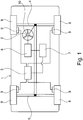
Die einzige
ZITATE ENTHALTEN IN DER BESCHREIBUNG QUOTES INCLUDE IN THE DESCRIPTION
Diese Liste der vom Anmelder aufgeführten Dokumente wurde automatisiert erzeugt und ist ausschließlich zur besseren Information des Lesers aufgenommen. Die Liste ist nicht Bestandteil der deutschen Patent- bzw. Gebrauchsmusteranmeldung. Das DPMA übernimmt keinerlei Haftung für etwaige Fehler oder Auslassungen.This list of the documents listed by the applicant has been generated automatically and is included solely for the better information of the reader. The list is not part of the German patent or utility model application. The DPMA assumes no liability for any errors or omissions.
Zitierte PatentliteraturCited patent literature
- DE 102012207548 A1 [0004]DE 102012207548 A1 [0004]
Claims (4)
Priority Applications (1)
| Application Number | Priority Date | Filing Date | Title |
|---|---|---|---|
| DE102017001663.1A DE102017001663A1 (en) | 2017-02-21 | 2017-02-21 | Method for initiating compensation measures in the event of a failure of a steering assistance system of a motor vehicle |
Applications Claiming Priority (1)
| Application Number | Priority Date | Filing Date | Title |
|---|---|---|---|
| DE102017001663.1A DE102017001663A1 (en) | 2017-02-21 | 2017-02-21 | Method for initiating compensation measures in the event of a failure of a steering assistance system of a motor vehicle |
Publications (1)
| Publication Number | Publication Date |
|---|---|
| DE102017001663A1 true DE102017001663A1 (en) | 2018-08-23 |
Family
ID=63045562
Family Applications (1)
| Application Number | Title | Priority Date | Filing Date |
|---|---|---|---|
| DE102017001663.1A Withdrawn DE102017001663A1 (en) | 2017-02-21 | 2017-02-21 | Method for initiating compensation measures in the event of a failure of a steering assistance system of a motor vehicle |
Country Status (1)
| Country | Link |
|---|---|
| DE (1) | DE102017001663A1 (en) |
Cited By (1)
| Publication number | Priority date | Publication date | Assignee | Title |
|---|---|---|---|---|
| DE102021128555A1 (en) | 2021-11-03 | 2023-05-04 | Dr. Ing. H.C. F. Porsche Aktiengesellschaft | Method and device for operating an at least two-axle land vehicle with optional drive on the front axle and rear axle |
-
2017
- 2017-02-21 DE DE102017001663.1A patent/DE102017001663A1/en not_active Withdrawn
Cited By (2)
| Publication number | Priority date | Publication date | Assignee | Title |
|---|---|---|---|---|
| DE102021128555A1 (en) | 2021-11-03 | 2023-05-04 | Dr. Ing. H.C. F. Porsche Aktiengesellschaft | Method and device for operating an at least two-axle land vehicle with optional drive on the front axle and rear axle |
| DE102021128555B4 (en) | 2021-11-03 | 2024-09-12 | Dr. Ing. H.C. F. Porsche Aktiengesellschaft | Method and device for operating a land vehicle with at least two axles with optional drive on the front axle and rear axle |
Similar Documents
| Publication | Publication Date | Title |
|---|---|---|
| DE19632251B4 (en) | Device and method for steering a motor vehicle | |
| EP1087880B1 (en) | Electrically controlled braking system and associated control method | |
| DE102011110892B4 (en) | Vehicle braking system, as well as method for this | |
| DE102014200608B4 (en) | Method and device for operating a motor vehicle | |
| DE102015008587A1 (en) | Motor vehicle for a piloted driving with a front axle steering system and a rear axle steering system | |
| DE602004000867T2 (en) | Device and method for operating an electric parking brake | |
| DE102019200820A1 (en) | Method for distributing a braking torque requested by a driver to the front and rear axles of a motor vehicle | |
| DE102009055059A1 (en) | Reducing the steering torque during braking maneuvers | |
| DE102018206563A1 (en) | Electromechanical or electromagnetic wheel brake cylinder and brake system for a vehicle | |
| DE102017219379A1 (en) | Method for automatic braking of a vehicle | |
| EP3300974A1 (en) | Method and device for controlling a braking assembly for a vehicle, brake system and vehicle | |
| EP4392299B1 (en) | Procedure for operating a vehicle train | |
| DE102021106978A1 (en) | Method for controlling a vehicle, control device and vehicle | |
| DE102017001663A1 (en) | Method for initiating compensation measures in the event of a failure of a steering assistance system of a motor vehicle | |
| DE102012201820A1 (en) | Brake device i.e. by-wire brake device, for motor car, has relapse plane formed by connection between brake operation unit and brake parts, and controller including high degree at redundancy with respect to control of brake and actuator | |
| DE102022121565B3 (en) | Method for actuating electronically controlled brakes of a commercial vehicle | |
| DE102011086664A1 (en) | Brake system for a vehicle, method for operating a brake system | |
| DE102016215499A1 (en) | Method for operating a motor vehicle, motor vehicle | |
| DE102016214134A1 (en) | Method for operating a motor vehicle, motor vehicle | |
| DE102017213620A1 (en) | Brake system for a motor vehicle | |
| DE102016224836A1 (en) | Method for monitoring a brake system with an electromechanical brake device | |
| DE102015015239A1 (en) | System and method for improving vehicle stability | |
| DE102014006339A1 (en) | Steering device for reducing the turning radius of a vehicle | |
| DE102019127862A1 (en) | Vehicle with a tire heating function | |
| DE102019214898A1 (en) | Brake system network for a vehicle and corresponding operating procedure |
Legal Events
| Date | Code | Title | Description |
|---|---|---|---|
| R119 | Application deemed withdrawn, or ip right lapsed, due to non-payment of renewal fee |