EP0000963B1 - Isocyanuratgruppen und endständig-blockierte Isocyanatgruppen-enthaltende Verbindungen und Verfahren zu ihrer Herstellung - Google Patents
Isocyanuratgruppen und endständig-blockierte Isocyanatgruppen-enthaltende Verbindungen und Verfahren zu ihrer Herstellung Download PDFInfo
- Publication number
- EP0000963B1 EP0000963B1 EP78200106A EP78200106A EP0000963B1 EP 0000963 B1 EP0000963 B1 EP 0000963B1 EP 78200106 A EP78200106 A EP 78200106A EP 78200106 A EP78200106 A EP 78200106A EP 0000963 B1 EP0000963 B1 EP 0000963B1
- Authority
- EP
- European Patent Office
- Prior art keywords
- isocyanurate
- dimethylketoxime
- groups
- weight
- group
- Prior art date
- Legal status (The legal status is an assumption and is not a legal conclusion. Google has not performed a legal analysis and makes no representation as to the accuracy of the status listed.)
- Expired
Links
- 238000000034 method Methods 0.000 title claims description 21
- IQPQWNKOIGAROB-UHFFFAOYSA-N isocyanate group Chemical group [N-]=C=O IQPQWNKOIGAROB-UHFFFAOYSA-N 0.000 title claims description 11
- 238000002360 preparation method Methods 0.000 title description 4
- ZFSLODLOARCGLH-UHFFFAOYSA-N isocyanuric acid Chemical group OC1=NC(O)=NC(O)=N1 ZFSLODLOARCGLH-UHFFFAOYSA-N 0.000 claims description 21
- PXAJQJMDEXJWFB-UHFFFAOYSA-N acetone oxime Chemical compound CC(C)=NO PXAJQJMDEXJWFB-UHFFFAOYSA-N 0.000 claims description 17
- 239000000203 mixture Substances 0.000 claims description 17
- 239000012948 isocyanate Substances 0.000 claims description 16
- 150000002513 isocyanates Chemical group 0.000 claims description 15
- NIMLQBUJDJZYEJ-UHFFFAOYSA-N isophorone diisocyanate Chemical compound CC1(C)CC(N=C=O)CC(C)(CN=C=O)C1 NIMLQBUJDJZYEJ-UHFFFAOYSA-N 0.000 claims description 14
- 239000005056 polyisocyanate Substances 0.000 claims description 14
- 229920001228 polyisocyanate Polymers 0.000 claims description 14
- 150000001875 compounds Chemical class 0.000 claims description 11
- 238000004519 manufacturing process Methods 0.000 claims description 9
- 230000000903 blocking effect Effects 0.000 claims description 8
- 239000002981 blocking agent Substances 0.000 claims description 7
- UFHFLCQGNIYNRP-UHFFFAOYSA-N Hydrogen Chemical compound [H][H] UFHFLCQGNIYNRP-UHFFFAOYSA-N 0.000 claims description 4
- 229910052739 hydrogen Inorganic materials 0.000 claims description 4
- 239000001257 hydrogen Substances 0.000 claims description 4
- 239000013067 intermediate product Substances 0.000 claims description 3
- 239000002253 acid Substances 0.000 claims 2
- 238000006243 chemical reaction Methods 0.000 description 11
- 239000000047 product Substances 0.000 description 11
- 239000003054 catalyst Substances 0.000 description 9
- 239000005058 Isophorone diisocyanate Substances 0.000 description 8
- 238000005829 trimerization reaction Methods 0.000 description 8
- 239000011541 reaction mixture Substances 0.000 description 7
- 239000007795 chemical reaction product Substances 0.000 description 4
- 125000004435 hydrogen atom Chemical group [H]* 0.000 description 4
- 238000002329 infrared spectrum Methods 0.000 description 4
- 238000002844 melting Methods 0.000 description 4
- 230000008018 melting Effects 0.000 description 4
- 230000002378 acidificating effect Effects 0.000 description 3
- RAXXELZNTBOGNW-UHFFFAOYSA-N imidazole Natural products C1=CNC=N1 RAXXELZNTBOGNW-UHFFFAOYSA-N 0.000 description 3
- IJGRMHOSHXDMSA-UHFFFAOYSA-N Atomic nitrogen Chemical compound N#N IJGRMHOSHXDMSA-UHFFFAOYSA-N 0.000 description 2
- JOYRKODLDBILNP-UHFFFAOYSA-N Ethyl urethane Chemical compound CCOC(N)=O JOYRKODLDBILNP-UHFFFAOYSA-N 0.000 description 2
- GOOHAUXETOMSMM-UHFFFAOYSA-N Propylene oxide Chemical compound CC1CO1 GOOHAUXETOMSMM-UHFFFAOYSA-N 0.000 description 2
- ATJFFYVFTNAWJD-UHFFFAOYSA-N Tin Chemical compound [Sn] ATJFFYVFTNAWJD-UHFFFAOYSA-N 0.000 description 2
- -1 alkaline earth metal acetates Chemical class 0.000 description 2
- 238000000576 coating method Methods 0.000 description 2
- 210000003298 dental enamel Anatomy 0.000 description 2
- JBKVHLHDHHXQEQ-UHFFFAOYSA-N epsilon-caprolactam Chemical compound O=C1CCCCCN1 JBKVHLHDHHXQEQ-UHFFFAOYSA-N 0.000 description 2
- 150000002148 esters Chemical class 0.000 description 2
- LELOWRISYMNNSU-UHFFFAOYSA-N hydrogen cyanide Chemical compound N#C LELOWRISYMNNSU-UHFFFAOYSA-N 0.000 description 2
- HJOVHMDZYOCNQW-UHFFFAOYSA-N isophorone Chemical compound CC1=CC(=O)CC(C)(C)C1 HJOVHMDZYOCNQW-UHFFFAOYSA-N 0.000 description 2
- 229910052751 metal Inorganic materials 0.000 description 2
- 239000002184 metal Substances 0.000 description 2
- 150000002736 metal compounds Chemical class 0.000 description 2
- 229920005862 polyol Polymers 0.000 description 2
- 150000003077 polyols Chemical class 0.000 description 2
- 238000003756 stirring Methods 0.000 description 2
- POILWHVDKZOXJZ-ARJAWSKDSA-M (z)-4-oxopent-2-en-2-olate Chemical compound C\C([O-])=C\C(C)=O POILWHVDKZOXJZ-ARJAWSKDSA-M 0.000 description 1
- PCHXZXKMYCGVFA-UHFFFAOYSA-N 1,3-diazetidine-2,4-dione Chemical group O=C1NC(=O)N1 PCHXZXKMYCGVFA-UHFFFAOYSA-N 0.000 description 1
- DAQTVSYVYPPZPM-UHFFFAOYSA-N 1-cyclooctyl-4-diazocyclooctane Chemical compound [N+](=[N-])=C1CCC(CCCC1)C1CCCCCCC1 DAQTVSYVYPPZPM-UHFFFAOYSA-N 0.000 description 1
- 239000005057 Hexamethylene diisocyanate Substances 0.000 description 1
- VEXZGXHMUGYJMC-UHFFFAOYSA-N Hydrochloric acid Chemical compound Cl VEXZGXHMUGYJMC-UHFFFAOYSA-N 0.000 description 1
- 238000005299 abrasion Methods 0.000 description 1
- 238000007259 addition reaction Methods 0.000 description 1
- 125000001931 aliphatic group Chemical group 0.000 description 1
- 229910052784 alkaline earth metal Inorganic materials 0.000 description 1
- 150000004703 alkoxides Chemical class 0.000 description 1
- 238000010539 anionic addition polymerization reaction Methods 0.000 description 1
- 125000003118 aryl group Chemical group 0.000 description 1
- 239000011230 binding agent Substances 0.000 description 1
- 230000015572 biosynthetic process Effects 0.000 description 1
- 150000004649 carbonic acid derivatives Chemical class 0.000 description 1
- 238000006555 catalytic reaction Methods 0.000 description 1
- 239000011248 coating agent Substances 0.000 description 1
- 238000001816 cooling Methods 0.000 description 1
- KQWGXHWJMSMDJJ-UHFFFAOYSA-N cyclohexyl isocyanate Chemical compound O=C=NC1CCCCC1 KQWGXHWJMSMDJJ-UHFFFAOYSA-N 0.000 description 1
- 239000002781 deodorant agent Substances 0.000 description 1
- 125000005442 diisocyanate group Chemical group 0.000 description 1
- 125000000118 dimethyl group Chemical group [H]C([H])([H])* 0.000 description 1
- 238000004821 distillation Methods 0.000 description 1
- 150000004675 formic acid derivatives Chemical class 0.000 description 1
- RRAMGCGOFNQTLD-UHFFFAOYSA-N hexamethylene diisocyanate Chemical compound O=C=NCCCCCCN=C=O RRAMGCGOFNQTLD-UHFFFAOYSA-N 0.000 description 1
- 229910000041 hydrogen chloride Inorganic materials 0.000 description 1
- IXCSERBJSXMMFS-UHFFFAOYSA-N hydrogen chloride Substances Cl.Cl IXCSERBJSXMMFS-UHFFFAOYSA-N 0.000 description 1
- 125000002887 hydroxy group Chemical group [H]O* 0.000 description 1
- 238000011065 in-situ storage Methods 0.000 description 1
- 238000009413 insulation Methods 0.000 description 1
- 230000000873 masking effect Effects 0.000 description 1
- 230000004048 modification Effects 0.000 description 1
- 238000012986 modification Methods 0.000 description 1
- 125000005609 naphthenate group Chemical group 0.000 description 1
- 229910052757 nitrogen Inorganic materials 0.000 description 1
- 125000005474 octanoate group Chemical group 0.000 description 1
- 239000003960 organic solvent Substances 0.000 description 1
- 150000002989 phenols Chemical class 0.000 description 1
- XKJCHHZQLQNZHY-UHFFFAOYSA-N phthalimide Chemical compound C1=CC=C2C(=O)NC(=O)C2=C1 XKJCHHZQLQNZHY-UHFFFAOYSA-N 0.000 description 1
- 239000004033 plastic Substances 0.000 description 1
- 229920003023 plastic Polymers 0.000 description 1
- 239000004848 polyfunctional curative Substances 0.000 description 1
- 239000004814 polyurethane Substances 0.000 description 1
- 239000000843 powder Substances 0.000 description 1
- 239000002243 precursor Substances 0.000 description 1
- 150000003839 salts Chemical class 0.000 description 1
- WXMKPNITSTVMEF-UHFFFAOYSA-M sodium benzoate Chemical compound [Na+].[O-]C(=O)C1=CC=CC=C1 WXMKPNITSTVMEF-UHFFFAOYSA-M 0.000 description 1
- 235000010234 sodium benzoate Nutrition 0.000 description 1
- 239000004299 sodium benzoate Substances 0.000 description 1
- 239000002904 solvent Substances 0.000 description 1
- 239000007858 starting material Substances 0.000 description 1
- 150000003509 tertiary alcohols Chemical class 0.000 description 1
- 229920001169 thermoplastic Polymers 0.000 description 1
- 239000004416 thermosoftening plastic Substances 0.000 description 1
- IMNIMPAHZVJRPE-UHFFFAOYSA-N triethylenediamine Chemical compound C1CN2CCN1CC2 IMNIMPAHZVJRPE-UHFFFAOYSA-N 0.000 description 1
- 239000013638 trimer Substances 0.000 description 1
Images

Classifications
-
- C—CHEMISTRY; METALLURGY
- C08—ORGANIC MACROMOLECULAR COMPOUNDS; THEIR PREPARATION OR CHEMICAL WORKING-UP; COMPOSITIONS BASED THEREON
- C08G—MACROMOLECULAR COMPOUNDS OBTAINED OTHERWISE THAN BY REACTIONS ONLY INVOLVING UNSATURATED CARBON-TO-CARBON BONDS
- C08G18/00—Polymeric products of isocyanates or isothiocyanates
- C08G18/06—Polymeric products of isocyanates or isothiocyanates with compounds having active hydrogen
- C08G18/70—Polymeric products of isocyanates or isothiocyanates with compounds having active hydrogen characterised by the isocyanates or isothiocyanates used
- C08G18/72—Polyisocyanates or polyisothiocyanates
- C08G18/77—Polyisocyanates or polyisothiocyanates having heteroatoms in addition to the isocyanate or isothiocyanate nitrogen and oxygen or sulfur
- C08G18/78—Nitrogen
- C08G18/79—Nitrogen characterised by the polyisocyanates used, these having groups formed by oligomerisation of isocyanates or isothiocyanates
- C08G18/791—Nitrogen characterised by the polyisocyanates used, these having groups formed by oligomerisation of isocyanates or isothiocyanates containing isocyanurate groups
- C08G18/792—Nitrogen characterised by the polyisocyanates used, these having groups formed by oligomerisation of isocyanates or isothiocyanates containing isocyanurate groups formed by oligomerisation of aliphatic and/or cycloaliphatic isocyanates or isothiocyanates
-
- C—CHEMISTRY; METALLURGY
- C07—ORGANIC CHEMISTRY
- C07D—HETEROCYCLIC COMPOUNDS
- C07D251/00—Heterocyclic compounds containing 1,3,5-triazine rings
- C07D251/02—Heterocyclic compounds containing 1,3,5-triazine rings not condensed with other rings
- C07D251/12—Heterocyclic compounds containing 1,3,5-triazine rings not condensed with other rings having three double bonds between ring members or between ring members and non-ring members
- C07D251/26—Heterocyclic compounds containing 1,3,5-triazine rings not condensed with other rings having three double bonds between ring members or between ring members and non-ring members with only hetero atoms directly attached to ring carbon atoms
- C07D251/30—Only oxygen atoms
- C07D251/34—Cyanuric or isocyanuric esters
-
- C—CHEMISTRY; METALLURGY
- C08—ORGANIC MACROMOLECULAR COMPOUNDS; THEIR PREPARATION OR CHEMICAL WORKING-UP; COMPOSITIONS BASED THEREON
- C08G—MACROMOLECULAR COMPOUNDS OBTAINED OTHERWISE THAN BY REACTIONS ONLY INVOLVING UNSATURATED CARBON-TO-CARBON BONDS
- C08G18/00—Polymeric products of isocyanates or isothiocyanates
- C08G18/06—Polymeric products of isocyanates or isothiocyanates with compounds having active hydrogen
- C08G18/70—Polymeric products of isocyanates or isothiocyanates with compounds having active hydrogen characterised by the isocyanates or isothiocyanates used
- C08G18/72—Polyisocyanates or polyisothiocyanates
- C08G18/80—Masked polyisocyanates
- C08G18/8061—Masked polyisocyanates masked with compounds having only one group containing active hydrogen
- C08G18/807—Masked polyisocyanates masked with compounds having only one group containing active hydrogen with nitrogen containing compounds
- C08G18/8077—Oximes
-
- C—CHEMISTRY; METALLURGY
- C08—ORGANIC MACROMOLECULAR COMPOUNDS; THEIR PREPARATION OR CHEMICAL WORKING-UP; COMPOSITIONS BASED THEREON
- C08G—MACROMOLECULAR COMPOUNDS OBTAINED OTHERWISE THAN BY REACTIONS ONLY INVOLVING UNSATURATED CARBON-TO-CARBON BONDS
- C08G2150/00—Compositions for coatings
- C08G2150/20—Compositions for powder coatings
Definitions
- the present invention relates to a process for the preparation of new compounds with an adjusted isocyanurate group content, and to the compounds obtainable by this process.
- masked isocyanates also called isocyanate releasers
- isocyanate releasers Tertiary alcohols, phenols, acetoacetic esters, malonic esters, actylacetone, phthalimide, imidazole, hydrogen chloride, hydrogen cyanide and e-caprolactam are known as blocking agents.
- blocked isocyanates have the property of reacting like isocyanates at elevated temperature. The more acidic the H atom of the masking group is, the easier it is to split off. Such blocked isocyanates are described in DT-A-21 66 423. Terminal-blocked isocyanates which additionally contain uretdione groups have also been described in DE-A 25 02 934, they are dimerizates, not trimerizates, only the latter catalyzing the subsequent deblocking.
- NL-A 7 403 748 relates to the production of isocyanate trimers, but IPDI is not mentioned as the diisocyanate.
- the invention relates to a process for the preparation of blocked isocyanate groups and isocyanurate group-containing compounds from polyisocyanates and monofunctional, acidic hydrogen-containing blocking agents, characterized in that first 3 - isocyanatomethyl - 3,5,5 - trimethyl-cyclohexyl isocyanate in a known manner an isocyanurate mixture containing more than 2 free isocyanate groups is transferred and this intermediate is then reacted with dimethyl ketoxime as a monofunctional, acidic hydrogen-containing blocking agent at 50-120 ° C., the dimethyl ketoxime being used in amounts such that an NCO group equivalent is used Equivalent dimethyl ketoxime is coming.
- One variant is that the intermediate product obtained is first freed of the monomeric polyisocyanate and then the practically monomer-free polyisocyanate is then blocked in the manner described.
- the invention further relates to a mixture containing blocked isocyanate groups and isocyanurate groups, consisting of at least 10% by weight of an isocyanurate containing 3-isocyanatomethyl-3,3,3-trimethyl and containing more than 2 isocyanate group-containing blocks prior to blocking cyclohexyl isocyanate and, if appropriate, an amount of the monomeric 3-isocyanatomethyl-3,5,5-trimethyl-cyclohexyl isocyanate blocked with dimethyl ketoxime and adding to 100% by weight, the total content of unblocked NCO groups being ⁇ 0.6% by weight lies.
- the monomeric polyisocyanate is therefore identical to that which was used to prepare the isocyanurate.
- the isocyanurate can also be a mixture of the trimeric and higher addition product of the monomeric polyisocyanate.
- the isocyanurate group content in the compounds produced according to the invention is 2-8% by weight.
- trimerization of the cycloaliphatic isocyanate is a catalytic reaction.
- Metal compounds from the group consisting of salts and bases and homeopolar metal compounds wide metal naphthenates, sodium benzoate in DMF, alkaline earth metal acetates, formates and carbonates, metal alkoxides, AICI 3 and Fe acetylacetonate can be used as catalysts.
- the proposed catalyst system composed of N, N'-endoethylene piperazine and propylene oxide is particularly suitable for trimerization.
- the trimerization can be carried out in bulk or in inert organic solvents. To carry out the trimerization process, it is essential to terminate the reaction at a certain isocyanate content of the mixture, preferably when 30-50% of the NCO groups have reacted with trimerization. The unreacted isocyanate then becomes thin Layer distillation separated from the isocyanurate formed.
- the isocyanurate isocyanates thus accessible can be used either as the exclusive isocyanate component or else in a mixture with isocyanurate-free polyisocyanate.
- the addition of isocyanurate-free polyisocyanate allows the properties of the process products, in particular their melting point, to be varied in a desired manner in a simple manner.
- the isocyanurate group-containing polyisocyanate thus obtained, the triisocyanate, or deodorant mixtures with isocyanurate group-free polyisocyanate is the precursor to the process products according to the invention referred to above as an intermediate.
- this intermediate stage is then converted into the process product according to the invention and terminally blocked isocyanate groups as described below without further modification.
- Dimethyl ketoxime has proven to be particularly suitable since it easily undergoes an addition reaction with the compounds containing isocyanate groups at temperatures above 50 ° C., preferably between 80-120 ° C.
- the addition products thus obtained in a mixture with non-volatile primary hydroxyl-containing polyols react at temperatures between 100 and 200 ° C. with the liberation of dimethyl ketoxime with the non-volatile polyols with formation of urethane.
- the isocyanate component is generally introduced and the blocking agent is added.
- the reaction can be carried out in bulk or in the presence of suitable (inert) solvents.
- the blocking reaction is generally carried out at 80-120 ° C.
- the dimethyl ketoxime is used in such amounts that there is one equivalent of blocking agent per NCO group equivalent.
- the customary isocyanate polyaddition reaction accelerating catalysts such as tin (11) octoate, can also be used.
- the catalysts are generally used in an amount between 0.001 and 1% by weight, based on the amount of compounds having hydrogen atoms which are reactive toward isocyanates.
- the process products according to the invention are generally compounds of the molecular weight range 300-3000, preferably 400-2000.
- the process products have melting points or ranges from 30-200 ° C, preferably 60-170 ° C.
- the preferred polyisocyanates containing isocyanurate groups according to the invention are moreover characterized by a content of isocyanurate groups (calculated as (CO-N-) 3) of 2% by weight to 14% by weight, preferably 3-10% by weight and a content of terminally in blocked form present isocyanate groups (calculated as NCO) of 2-18, preferably 10-17% by weight.
- the compounds of the invention described above are particularly suitable because of their low melting points and at the same time higher molecular weights than cocatalysts for the anionic polymerization of E- caprolactam.
- the process products are also suitable as hardeners for higher functional thermoplastic compounds containing Zerewittinoff active hydrogen atoms.
- the process products form above 120 ° C., preferably at 160-200 ° C., systems curable to high-quality plastics.
- the most important field of application for such systems is their use as binders for (PUR) powder coatings.
- the process products according to the invention are also well suited for the production of storage-stable one-component stoving enamels (especially for coil coating).
- IPDI Isophorone diisocyanate
- the catalyst system from 1,4 - -diazobicyclooctane [2,2,2] (also Dabco @ gennant) and propylene oxide heated at 120 ° C for 3 h. During this time, the NCO content fell from 37.8% (corresponding to 100% IPDI) to 28.4% (50% IPDI sales).
- the reaction mixture was cooled to 40 ° C. and stripped with nitrogen at this temperature for 1/2 h. The NCO content of the reaction mixture changed slightly to 28.2%.
- this isocyanato-isocyanurate mixture was 49 parts by weight at 100 ° C.
- Dimethylketoxime added in portions so that the reaction temperature did not rise above 120 ° C.
- the reaction mixture was kept at 120 ° C. for a further 2 hours.
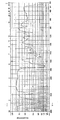
- Fig. 1 shows the IR spectrum of the reaction product.
- this isocyanato-isocyanurate mixture was 46.9 parts by weight at 100 ° C.
- Dimethylketoxime added in portions so that the reaction temperature did not rise above 120 ° C.
- the reaction mixture is kept at 120 ° C. for a further 2 hours.
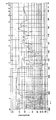
- Fig. 2 shows the IR spectrum of the reaction product.
- This isocyanato-isocyanurate mixture was 43.4 parts by weight at 120 ° C.
- Dimethylketoxim slowly metered in with good stirring. After the addition of dimethyl ketoxin, the reaction mixture was heated at 130 ° C. for a further hour.
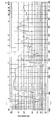
- Fig. 3 shows the IR spectrum of the reaction product.
- An isocyanato-isocyanurate mixture (with deactivated cat. 1), the NCO content of which was 20.9%, was prepared from IPDI by the process described in 1a-3a.
- Fig. 4 shows the IR spectrum of the reaction product.
Landscapes
- Chemical & Material Sciences (AREA)
- Organic Chemistry (AREA)
- Health & Medical Sciences (AREA)
- Chemical Kinetics & Catalysis (AREA)
- Medicinal Chemistry (AREA)
- Polymers & Plastics (AREA)
- Polyurethanes Or Polyureas (AREA)
- Compositions Of Macromolecular Compounds (AREA)
- Polyamides (AREA)
Description
- Die vorliegende Erfindung betrifft ein Verfahren zur Herstellung von neuen Verbindungen mit eingestelltem Isocyanuratgruppen-Gehalt, sowie die nach diesem Verfahren erhältlichen Verbindungen.
- Die Herstellung von verkappten isocyanaten, auch Isocyanatabspalter genannt, ist bekannt und wird im Houben-Weyl, Methoden der organischen Chemie XIV/2 S. 61-70, beschrieben. Als Blockierungsmittel sind tertiäre Alkohole, Phenole, Acetessigester, Malonsäureester, Actylaceton, Phthalimid, Imidazol, Chlorwasserstoff, Cyanwasserstoff und e-Caprolactam bekannt.
- Diese verkappten Isocyanate besitzen die Eigenschaft, bei erhöhter Temperatur wie Isocyanate zu reagieren. Die Abspaltung erfolgt umso leichter, je saurer das H-Atom der Maskierungsgruppe ist. Derartige blockierte Isocyanate werden in der DT-A-21 66 423 beschrieben. Auch sind endständige blockierte Isocyanate, die zusätzlich noch Uretdiongruppen enthalten in der DE-A 25 02 934 beschrieben worden, es handelt sich um Dimerisate, nicht um Trimerisate, wobei nur letztere die anschließende Deblockierung katalysieren.
- Aus FR-A 2 292 724 ist es bekannt, geblocktes Hexamethylendiisocyanat einzusetzen. Dieses ist aber hochviskos, also schlecht einbringbar.
- Desweiteren ist es aus FR-A 2 299 354 bekannt, monomeres 3 - Isocyanatomethyl - 3,5,5 - trimethylcyclohexylisocyanat (Isophorondiisocyanat-IPDI) mit Dimethylketoxim zu blockieren, wobei aber dieses Produkt wegen seines neidrigen Schmelzpunktes nur bedingt einsatzfähig ist.
- Schließlich bezieht sich NL-A 7 403 748 auf die Herstellung von Isocyanatrimeren, wobei aber IPDI als Diisocyanat nicht genannt ist.
- Überraschenderweise finden sich in der Literatur keine Hinweise über Isocyanuratgruppen und endständig-blockierte Isocyanatgruppen aufweisendes isophorondiisocyanat. Zwar sind blockierte aromatische Isocyanurate zur Herstellung hitzebeständiger abriebfester Urethan-Einbrennlacke, speziell für Elektrodrahtisolierungen, in JA-A 73.30453 aufgeführt. Die Herstellung so blockierter Isocyanuratgruppen enthaltender aliphatischer Polyisocyanate ist dagegen bis jetzt unbekannt.
- Gegenstand der Erfindung ist ein Verfahren zur Herstellung von blockierten Isocyanatgruppen und Isocyanuratgruppen-enthaltenden Verbindungen aus Polyisocyanaten und monofunktionellen, aciden Wasserstoff-enthaltenden Blockierungsmitteln, dadurch gekennzeichnet, daß man zunächst 3 - Isocyanatomethyl - 3,5,5 - trimethyl-cyclohexylisocyanat in bekannter Weise in ein mehr als 2 freie Isocyanatgruppen enthaltendes Isocyanurat bestehendes Gemisch überführt und dieses Zwischenprodukt dann mit Dimethylketoxim als monofunktionelles, aciden Wasserstoff enthaltendes Blockierungsmittel bei 50-120°C umsetzt, wobei man das Dimethylketoxim in solchen Mengen einsetzt, daß auf ein NCO - Gruppen - Äquivalent ein Äquivalent Dimethylketoxim kommt. Eine Variante besteht darin, daß man das erhaltene Zwischenprodukt zunächst vom monomeren Polyisocyanat befreit und dann das praktisch monomerfreie Polyisocyanat anschließend in beschriebener Weise blockiert.
- Gegenstand der Erfindung ist weiter ein, blockierte Isocyanatgruppen- und Isocyanuratgruppen-enthaltendes Gemisch, bestehend aus mindestens 10 Gew.-% eines mit Dimethylketoxim, vor der Blockierung mehr als 2 Isocyanatgruppen- enthaltendes Isocyanurats aus 3 - Isocyanatomethyl - 3,3,3 - trimethyl - cyclohexylisocyanat und gegebenenfalls einer auf 100 Gew.-% ergänzenden Menge des mit Dimethylketoxim blockierten, monomeren 3 - Isocyanatomethyl - 3,5,5 - trimethyl - cyclohexylisocyanats, wobei der Gesamtgehalt an unblockierten NCO-Gruppen bei<0,6 Gew.-% liegt.
- Das monomer Polyisocyanat ist also mit dem identisch, welches zur Herstellung des Isocyanurats verwendet wurde. Das Isocyanurat kann auch ein Gemisch des trimeren und höheren Additionsproduktes des monomeren Polyisocyanats sein. Der Isocyanuratgruppen - Gehalt in den erfindungsgemäß hergestellten Verbindungen beträgt 2-8 Gew.-%.
- Diese Ausgangsmaterialien für das erfindungsgemäße Verfahren werden dann in bekannter Weise der Trimerisierung unterworfen, wie beispielsweise in der GB-PS 1 391 066 und DT-A 23 25 826 beschrieben. Die Trimerisierung des cycloaliphatischen Isocyanates ist eine katalytische Reaktion. Als Katalysatoren können Metallverbindungen aus der Gruppe Salze und Basen und homöopolare Metallverbindungen wide Metallnaphthenate, Na-benzoat in DMF, Erdalkaliacetate, -formiate und -carbonate Metallalkoxide, AICI3 und Fe-Acetylacetonat eingesetzt werden. Besonders geeignet für die Trimerisierung ist das vorgeschlagene Katalysatorsystem aus N,N' - Endoäthylenpiperazin und Propylenoxid. Die Trimerisierung kann in Substanz oder in inerten organischen Lösungsmitteln vorgenommen werden. Zur Durchführung des Trimerisierungsverfahrens ist es wesentlich, die Reaktion bei einem bestimmten Isocyanatgehalt der Mischung abzubrechen, und zwar vorzugsweise dann, wenn 30-50% der NCO-Gruppen unter Trimerisierung reagiert haben. Das nicht umgesetzte Isocyanat wird dann durch Dünnschichtdestillation vom gebildeten Isocyanurat abgetrennt.
- Bei dem erfindungsgemäßen Verfahren können die so zugängigen Isocyanuratisocyanate entweder als ausschließliche Isocyanatkomponente oder aber im Gemisch mit Isocyanurat-freiern Polyisocyanat eingesetzt werden. Der Zusatz von Isocyanuratgruppen - freien Polyisocyanat gestattet auf einfache Weise die Eigenschaften der Verfahrensprodukte, insbesondere ihren Schmelzpunkt, in gewünschter Weise zu variieren.
- Es ist besonders vorteilhaft, beim erfindungsgemässen Verfahren als Isocyanuratkomponente das in situ hergestellte Triisocyanat-Gemisch einzusetzen, welches durch partielle Trimerisierung zugängig ist.
- Bei den so erhaltenen Isocyanuratgruppen aufweisenden Polyisocyanat dem Triisocyanat, bzw. deoben Gemische mit Isocyanuratgruppen-freiem Polyisocyanat, handelt es sich um die oben als Zwischenprodukt bezeichnete Vorstufe zu den erfindungsgemäßen Verfahrensprodukten.
- In einem weiteren Schritt des erfindungsgemäßen Verfahrens wird nun diese Zwischenstufe wie nachstehend beschrieben ohne weitere Modifizierung in das erfindungsgemässe Isocyanuratgruppen und endständig blockierte Isocyanatgruppen aufweisende Verfahrensprodukt überführt.
- Als besonders geeignet hat sich das Dimethylketoxim erwiesen, das mit den lsocyanatgruppen enthaltenden Verbindungen bei Temperaturen über 50°C, vorzugsweise zwischen 80-120°C, leicht eine Additionsreaktion eingeht. Die so erhaltenen Additionsprodukte im Gemisch mit nichtflüchtigen primären Hydroxylgruppen aufweisenden Polyolen reagieren bei Temperaturen zwischen 100 und 200°C unter Freisetzung von Dimethylketoxim mit den nichtflüchtigen Polyolen unter Urethanbildung.
- Zur Durchführung der Blockierungsreaktion wird im allgemeinen die Isocyanatkomponente vorgelegt und das Blockierungsmittel zugegeben. Die Reaktion kann in Substanz oder auch in Gegenwart geeigneter (inerter) Lösungsmittel durchgefühurt werden. Die Blockierungsreaktion wird im allgemeinen bei 80-120°C durchgeführt. Das Dimethylketoxim wird in solchen Mengen eingesetzt, daß auf ein NCO-Gruppen-äquivalent ein Äquivalent Blockierungsmittel kommt. Auch können die gebräuchlichen lsocyanat-Polyadditionsreaktion beschleunigenden Katalysatoren, wie Zinn-(11)-octoat mitverwendet werden. Die Katalysatoren werden in der Regel in einer Menge zwischen 0,001 und 1 Gew.-%, bezogen auf die Menge an Verbindungen mit gegenüber Isocyanaten reaktionsfähigen Wasserstoffatomen, eingesetzt.
- Bei den erfindungsgemäßen Verfahrensproduckten handelt es sich im allgemeinen um Verbindungen des Molekulargewichtsbereichs 300-3000, vorzugsweise 400-2000. Die Verfahrensprodukte besitzen Schmelzpunkte bzw. -bereiche von 30-200°C, vorzugsweise 60-170°C. Die bevorzugten erfindungsgemäßen Isocyanuratgruppen enthaltenden Polyisocyanate sind darüberhinaus durch einen Gehalt an Isocyanuratgruppen (berechnet als (CO-N-)3) von 2 Gew.% bis 14 Gew.-%, vorzugsweise 3-10 Gew.-% und einem Gehalt an endständig in blockierter Form vorliegenden lsocyanatgruppen (berechnet als NCO) von 2-18, vorzugsweise 10-17 Gew.-% charakterisiert.
- Die Verbindungen der vorstehend beschriebenen Erfindung eignen sich besonders wegen ihrer niedrigen Schmelzpunkte bei gleichzeitigen höheren Molekulargewichten als Kokatalysatoren für die anionische Polymerisation von E-Caprolactam.
- Die Verfahrensprodukte eignen sich weiter als Härter für Zerewittinoff-aktive Wasserstoffatome aufweisende höherfunktionelle thermoplastische Verbindungen. In Kombination mit derartigen Zerewitinoff-aktive Wasserstoffatome aufweisende Verbindungen bilden die Verfahrensprodukte oberhalb 120°C, vorzugsweise bei 160-200°C zu hochwertigen Kunststoffen aushärtbare Systeme. Das bedeutendste Anwendungsgebiet für derartige Systeme ist ihre Verwendung als Bindemittel für (PUR-)Pulverlacke. Auch sind die erfindungsgemäßen Verfahrensprodukte für die Herstellung von lagerstabilen Einkomponenten-Einbrennlacken (spez. für coil-coating) gut geeignet.
- Die Erfindung wird durch die nachstehenden Beispiele illustriert:
- 100 Gew.-T. lsophorondiisocyanat (IPDI) wurden mit 0,5 Gew.-T. des Katalysatorsystems aus 1,4 - -Diazobicyclooctan[2,2,2] (auch Dabco@ gennant) und Propylenoxid 3 h bei 120°C erhitzt. Während dieser Zeit fiel der NCO-Gehalt von 37,8% (entsprechend 100% IPDI) auf 28,4% (50% IPDI-Umsatz). Zur Desaktivierung des Katalysators wurde das Reaktionsgemisch auf 40°C abgekühlt und bei dieser Temperatur 1/2 h mit Stickstoff gestrippt. Dabei veränderte sich der NCO-Gehalt des Reaktionsgemisches noch geringfügig auf 28,2%.
- Zu 100 Gew.-T. dieses Isocyanato-isocyanurat-Gemisches wurden bei 100°C 49 Gew.-T. Dimethylketoxim portionsweise so zugegeben, daß die Reaktionstemperatur nicht über 120°C anstieg. Zur Vervollständigung der Reaktion wurde das Reaktionsgemisch noch 2 Stunden bei 120°C gehalten.

- Das IR-Spektrum des Reaktionsproduktes zeigt die Abb. 1.
- 100 Gew.-T. IPDI wurden mit 0,75 Gew.-T. eines Katalysatorsystems entsprechend Beispiel 1 a 2 h bei 120°C erhitzt. In dieser Zeit fiel der NCO-Gehalt von 37,8% auf 29,4%. Zur Desaktivierung des Katalysators wurde bei 120°C und 30 Torr 15 Minuten evakuiert. Während dieser Zeit veränderte sich der NCO-Gehalt des Reaktionsgemisches auf 27%.
- Zu 100 Gew.-T. dieses Isocyanatoisocyanurat-Gemisches wurden bei 100°C 46,9 Gew.-T. Dimethylketoxim portionsweise so zugegeben, daß die Reaktionstemperatur nicht über 120°C anstieg. Zur Vervollständigung der Reaktion wird das Reaktionsgemisch noch 2 Stunden bei 120°C gehalten.

- Das IR-Spektrum des Reaktionsproduktes zeigt die Abb. 2.
- 100 Gew.-T. IPDI wurden mit 0,5 Gew.-T. des in Beispiel 1 beschriebenen Katalysators 4,5 h bei 120°C erhitzt. Das Fortschreiten der Trimerisierung wurde mit Hilfe des Brechungsindex, Viskosität oder NCO-Gehalt verfolgt. Bei einem NCO-Gehalt von 25,8% wurde eine halbe Stunde bei 20 Torr evakuiert. Nach Abkühlen hatte das Reaktionsgemisch einen NCO-Gehalt von 25%.
- Zu 100 Gew.-T. dieses Isocyanatoisocyanurat-Gemisches wurden bei 120°C 43,4 Gew.-T. Dimethylketoxim langsam unter gutem Rühren zudosiert. Nach erfolgter Dimethylketoxinzugabe wurde das Reaktionsgemisch noch eine Stunde auf 130°C erhitzt.

- Das IR-Spektrum des Reaktionsproduktes zeigt die Abb. 3.
- Nach dem in 1 a-3a beschriebenen Verfahren wurde aus IPDI ein Isocyanatoisocyanurat -Gemisch (mit desaktiviertem Kat.1 hergestellt, dessen NCO-Gehalt 20,9% betrug.
- Zu 100 Gew.-T. dieses Gemisches (NCO: 20,9%) wurden bei 140°C unter intensiver Rührung 36,3 Gew.-T. Dimethylketoxim so zugegeben, daß durch die Reaktionswärme das Gemisch bei 140°C gehalten wurde. Nach erfolgter Dimethylketoximzugabe wurde zur Vervollständigung der Umsetzung noch 1 h bei 140°C erhitzt.

- Das IR-Spektrum des Reaktionsproduktes zeigt die Abb. 4.
Claims (3)
Applications Claiming Priority (2)
| Application Number | Priority Date | Filing Date | Title |
|---|---|---|---|
| DE2732662 | 1977-07-20 | ||
| DE19772732662 DE2732662A1 (de) | 1977-07-20 | 1977-07-20 | Isocyanuratgruppen - und endstaendig- blockierte isocyanatgruppen-enthaltende verbindungen |
Publications (2)
| Publication Number | Publication Date |
|---|---|
| EP0000963A1 EP0000963A1 (de) | 1979-03-07 |
| EP0000963B1 true EP0000963B1 (de) | 1982-06-23 |
Family
ID=6014322
Family Applications (1)
| Application Number | Title | Priority Date | Filing Date |
|---|---|---|---|
| EP78200106A Expired EP0000963B1 (de) | 1977-07-20 | 1978-07-17 | Isocyanuratgruppen und endständig-blockierte Isocyanatgruppen-enthaltende Verbindungen und Verfahren zu ihrer Herstellung |
Country Status (6)
| Country | Link |
|---|---|
| US (2) | US4246132A (de) |
| EP (1) | EP0000963B1 (de) |
| JP (1) | JPS5448777A (de) |
| DE (2) | DE2732662A1 (de) |
| DK (1) | DK323578A (de) |
| IT (1) | IT1097038B (de) |
Families Citing this family (29)
| Publication number | Priority date | Publication date | Assignee | Title |
|---|---|---|---|---|
| DE2842641A1 (de) * | 1978-09-29 | 1980-04-10 | Bayer Ag | Lackpolyisocyanat auf basis von modifiziertem 1-isocyanato-3,3,5-trimethyl-5-isocyanatomethyl-cyclohexan, ein verfahren zu seiner herstellung und seine verwendung in zweikomponenten-polyurethan-pulverlacken |
| DE3001060A1 (de) * | 1980-01-12 | 1981-07-16 | Chemische Werke Hüls AG, 4370 Marl | Blockierte polyisocyanato-isocyanurate und ihre herstellung und verwendung |
| DE3033860A1 (de) * | 1980-09-09 | 1982-04-15 | Bayer Ag, 5090 Leverkusen | Neue isocyanato-isocyanurate, ein verfahren zu ihrer herstellung, sowie ihre verwendung als isocyanatkomponente in polyurethanlacken |
| DE3041732A1 (de) * | 1980-11-05 | 1982-06-09 | Bayer Ag, 5090 Leverkusen | Loesungen von isocyanato-isocyanuraten in weichmachern fuer polyvinylchlorid, ein verfahren zu ihrer herstellung, sowie ihre verwendung als haftverbessernde zusatzmittel in beschichtungsmitteln auf basis von weichgemachtem polyvinylchlorid |
| DE3226131A1 (de) * | 1982-07-13 | 1984-01-19 | Basf Ag, 6700 Ludwigshafen | Verfahren zur herstellung von ueberzuegen |
| DE3303221A1 (de) * | 1983-02-01 | 1984-08-02 | Bayer Ag, 5090 Leverkusen | Verfahren zur herstellung von isocyanuratgruppen aufweisenden polyisocyanaten, die nach diesem verfahren erhaeltlichen verbindungen und ihre verwendung zur herstellung von polyurethanen |
| DE3318147A1 (de) * | 1983-05-18 | 1984-11-22 | Bayer Ag, 5090 Leverkusen | Verfahren zur herstellung von, isocyanuratgruppen und olefinische doppelbindungen aufweisenden verbindungen, die nach diesem verfahren erhaeltlichen verbindungen und ihre verwendung als bindemittel bzw. bindemittelkomponente in ueberzugsmitteln |
| DE3322719A1 (de) * | 1983-06-24 | 1985-01-03 | Chemische Werke Hüls AG, 4370 Marl | Pulverfoermige ueberzugsmittel |
| DE3322829A1 (de) * | 1983-06-24 | 1985-01-03 | Basf Ag, 6700 Ludwigshafen | Verfahren zur herstellung von ueberzuegen |
| DE3322721A1 (de) * | 1983-06-24 | 1985-01-03 | Chemische Werke Hüls AG, 4370 Marl | Einkomponenten-einbrennlacke |
| DE3322830A1 (de) * | 1983-06-24 | 1985-01-03 | Basf Ag, 6700 Ludwigshafen | Verfahren zur herstellung von ueberzuegen |
| DE3337395A1 (de) * | 1983-10-14 | 1985-05-02 | Herberts Gmbh, 5600 Wuppertal | Nichtwaessriger lack mit hohem steinschlagschutz, verfahren zu seiner herstellung und dessen verwendung |
| DE3337394A1 (de) * | 1983-10-14 | 1985-05-02 | Herberts Gmbh, 5600 Wuppertal | Steinschlagschutzschicht-lack, verfahren zu seiner herstellung und dessen verwendung |
| DE3339579A1 (de) * | 1983-11-02 | 1985-05-09 | Bayer Ag, 5090 Leverkusen | Neue isocyanato-isocyanurate, ein verfahren zu ihrer herstellung sowie ihre verwendung als isocyanat-komponente in polyurethanlacken |
| US4547410A (en) * | 1983-12-21 | 1985-10-15 | Inmont Corporation | Process for applying a multi-layer paint containing mica pigment |
| US4607103A (en) * | 1985-08-13 | 1986-08-19 | General Electric Company, Silicone Products Division | Methods for making blocked isocyanurates |
| DE3735198A1 (de) * | 1987-10-17 | 1989-05-03 | Bayer Ag | In wasser loesliche oder dispergierbare, blockierte polyisocyanate, ein verfahren zu ihrer herstellung und ihre verwendung |
| US4868298A (en) * | 1988-06-22 | 1989-09-19 | Cargill, Incorporated | Continuous process for the production of blocked isocyanate containing polyisocyanurates |
| US5095087A (en) * | 1989-07-03 | 1992-03-10 | Eastman Kodak Company | Oxime-blocked polyisocyanates and polyester and powder coating compositions containing such oxime-blocked polyisocyanates |
| US5028682A (en) * | 1989-07-03 | 1991-07-02 | Eastman Kodak Company | Oxime-blocked polysicyanates and polyester and powder coating compositions containing such oxide-blocked polyisocyanates |
| US5296160A (en) * | 1991-07-23 | 1994-03-22 | Miles Inc. | Aqueous dispersions of blocked polyisocyanates |
| US5238999A (en) * | 1991-08-29 | 1993-08-24 | Basf Corporation | Environmental etch resistant, one-component, coating composition, method of coating therewith, and coating obtained therefrom |
| DE4130336A1 (de) * | 1991-09-12 | 1993-03-18 | Bayer Ag | Verfahren zur herstellung von pulverlacken und ihre verwendung |
| US5232988A (en) * | 1992-02-25 | 1993-08-03 | Miles Inc. | Blocked polyisocyanates prepared from partially trimerized cyclic organic diisocyanates having (cyclo)aliphatically bound isocyanate groups and their use for the production of coatings |
| DE4419216C1 (de) * | 1994-06-01 | 1995-08-31 | Bollig & Kemper | Wäßrige Überzugsmittel und deren Verwendung |
| DE10159768A1 (de) * | 2001-12-05 | 2003-06-26 | Degussa | Verwendung von Polyurethan-Pulverlacken |
| EP2625215B1 (de) * | 2010-10-07 | 2019-02-13 | Basf Se | Verfahren zur herstellung von monomer-zusammensetzungen und deren verwendung zur herstellung eines polyamid-formteils |
| EP2760906B1 (de) * | 2011-09-28 | 2017-03-01 | Basf Se | Verfahren zur herstellung von polyamiden durch anionische polymerisation |
| JP7334875B1 (ja) | 2023-03-10 | 2023-08-29 | 東ソー株式会社 | ブロックイソシアネート組成物及びその製造方法、塗料用硬化剤、塗料組成物、並びに、塗膜 |
Family Cites Families (16)
| Publication number | Priority date | Publication date | Assignee | Title |
|---|---|---|---|---|
| US2952665A (en) * | 1955-12-08 | 1960-09-13 | Mobay Chemical Corp | High molecular weight cyclic trimers containing blocked isocyanate groups |
| GB1032059A (en) * | 1963-10-29 | 1966-06-08 | Takeda Chemical Industries Ltd | Blocked isocyanate compositions |
| US3625986A (en) * | 1967-12-28 | 1971-12-07 | Nat Distillers Chem Corp | Bis 1, 1 isocyanatoalkyl cycloalkanes |
| NL6808140A (de) * | 1968-06-10 | 1969-12-12 | ||
| US3577391A (en) * | 1968-10-08 | 1971-05-04 | Marathon Oil Co | Alcohol-blocker isocyanate compositions and derivatives |
| US3799854A (en) * | 1970-06-19 | 1974-03-26 | Ppg Industries Inc | Method of electrodepositing cationic compositions |
| DE2105777C3 (de) * | 1971-02-08 | 1976-02-05 | Veba Chemie Ag | Pulverförmige Überzugsmasse |
| DE2225958C3 (de) * | 1972-05-27 | 1980-08-21 | Bayer Ag, 5090 Leverkusen | Bindemittel für das elektrostatische Pulverspriihverfahren |
| DE2325826C3 (de) * | 1973-05-22 | 1981-01-29 | Chemische Werke Huels Ag, 4370 Marl | Isocyanato-isocyanurate und Herstellung lagerstabiler Lösungen hiervon |
| FI62677C (fi) * | 1974-06-21 | 1983-02-10 | Grow Group Inc | Belaeggningskomposition omfattande ett polymeriserat harts medisocyanatreaktiva grupper och ett tvaerbindningsmedel med bockerade isocyanatgrupper |
| DE2456469C2 (de) * | 1974-11-29 | 1983-01-13 | Bayer Ag, 5090 Leverkusen | Verfahren zur Herstellung von in Wasser löslichen bzw. dispergierbaren blockierten Polyisocyanaten und ihre Verwendung als Beschichtungsmittel |
| DE2502934A1 (de) * | 1975-01-24 | 1976-07-29 | Bayer Ag | Uretdiongruppen und endstaendige blockierte isocyanatgruppen aufweisende organische verbindungen |
| DE2606976A1 (de) * | 1975-02-24 | 1976-09-09 | Du Pont | Stoffgemische aus blockierten isocyanattrimeren |
| DE2542706C3 (de) * | 1975-09-25 | 1981-04-09 | Bayer Ag, 5090 Leverkusen | Verfahren zur Herstellung von Imidgruppen enthaltenden Polykondensaten |
| DE2644684C2 (de) * | 1976-10-02 | 1983-01-13 | Chemische Werke Huels Ag, 4370 Marl | Verfahren zur Herstellung von 2,4,6-Triketohexahydrotriazinen |
| US4055551A (en) * | 1976-12-08 | 1977-10-25 | Cargill, Incorporated | Continuous process for the production of blocked isocyanates |
-
1977
- 1977-07-20 DE DE19772732662 patent/DE2732662A1/de not_active Withdrawn
-
1978
- 1978-07-17 EP EP78200106A patent/EP0000963B1/de not_active Expired
- 1978-07-17 DE DE7878200106T patent/DE2861909D1/de not_active Expired
- 1978-07-19 DK DK323578A patent/DK323578A/da unknown
- 1978-07-20 IT IT25905/78A patent/IT1097038B/it active
- 1978-07-20 JP JP8780378A patent/JPS5448777A/ja active Pending
- 1978-07-20 US US05/926,314 patent/US4246132A/en not_active Expired - Lifetime
-
1980
- 1980-03-28 US US06/135,187 patent/US4306051A/en not_active Expired - Lifetime
Also Published As
| Publication number | Publication date |
|---|---|
| JPS5448777A (en) | 1979-04-17 |
| DE2861909D1 (en) | 1982-08-12 |
| DK323578A (da) | 1979-01-21 |
| DE2732662A1 (de) | 1979-02-01 |
| IT7825905A0 (it) | 1978-07-20 |
| US4246132A (en) | 1981-01-20 |
| EP0000963A1 (de) | 1979-03-07 |
| IT1097038B (it) | 1985-08-26 |
| US4306051A (en) | 1981-12-15 |
Similar Documents
| Publication | Publication Date | Title |
|---|---|---|
| EP0000963B1 (de) | Isocyanuratgruppen und endständig-blockierte Isocyanatgruppen-enthaltende Verbindungen und Verfahren zu ihrer Herstellung | |
| DE2712931C2 (de) | ||
| EP0682012B1 (de) | Verfahren zur Herstellung von Allophanatgruppen aufweisenden lichtechten Polyisocyanaten | |
| EP0330966B1 (de) | Verfahren zur Herstellung von Isocyanuratgruppen aufweisenden Polyisocyanaten | |
| DE69214890T3 (de) | Verfahren zur Herstellung von Allophanat- und Isocyanuratgruppen enthaltenden Polyisocyanaten | |
| EP0339396B1 (de) | Verfahren zur Herstellung von Isocyanuratgruppen aufweisenden Polyisocyanaten | |
| EP0456062B1 (de) | Verfahren zur Herstellung von Isocyanuratpolyisocyanaten, die nach diesem Verfahren erhaltenen Verbindungen und ihre Verwendung | |
| EP0478990B1 (de) | Polyisocyanatgemisch, ein Verfahren zu seiner Herstellung und seine Verwendung in Polyurethanlacken | |
| DE69527430T2 (de) | Uretdion- und allophanatgruppen aufweisende polyisocyanate | |
| US5621063A (en) | Blocked polyisocyanates and a process for their preparation | |
| EP0649866A1 (de) | Lackpolyisocyanate und ihre Verwendung | |
| EP0671426A1 (de) | Modifizierte (cyclo)aliphatische Polyisocyanatmischungen, Verfahren zu ihrer Herstellung und ihre Verwendung | |
| DE2842641A1 (de) | Lackpolyisocyanat auf basis von modifiziertem 1-isocyanato-3,3,5-trimethyl-5-isocyanatomethyl-cyclohexan, ein verfahren zu seiner herstellung und seine verwendung in zweikomponenten-polyurethan-pulverlacken | |
| DE3033860A1 (de) | Neue isocyanato-isocyanurate, ein verfahren zu ihrer herstellung, sowie ihre verwendung als isocyanatkomponente in polyurethanlacken | |
| EP0023626A1 (de) | Herstellung von freie NCO- und endständig mit Epsilon-Caprolactam blockierte NCO-Gruppen enthaltenden Isophorondiisocyanataddukten, sowie danach hergestellte Verbindungen | |
| EP0178398B1 (de) | Lagerstabile Polyurethanharz-Pulverlacke | |
| DE69727741T2 (de) | Niedrigviskose Polyisocyanate hergestellt aus monomeren Triisocyanaten | |
| EP1273603A1 (de) | Verfahren zur Herstellung von geruchsarmen und lagerstabilen monomerhaltigen Polyisocyanuraten auf Basis von Isophorondiisocyanat | |
| DE2342603A1 (de) | Verfahren zur herstellung von malonsaeuredialkylesterblockierten biuretpolyisocyanaten | |
| DE3001060A1 (de) | Blockierte polyisocyanato-isocyanurate und ihre herstellung und verwendung | |
| DE19637375A1 (de) | Uretdiongruppenhaltige Polyisocyanate, ein Verfahren zu ihrer Herstellung sowie deren Verwendung | |
| EP1454933A1 (de) | Verfahren zur Herstellung von geruchsarmen und lagerstabilen monomerhaltigen Polyisocyanuraten auf Basis von Isophorondiisocyanat | |
| DE10142816A1 (de) | Verfahren zur Herstellung eines Isocyanuratgruppen enthaltenden, blockierten Polyisocyanats und dessen Verwendung | |
| DE19504530A1 (de) | Blockierte Polyisocyanate, Verfahren zu ihrer Herstellung und daraus hergestellte Lacke und Beschichtungssysteme | |
| DE2946085A1 (de) | Blockierte isocyanatgruppen und isocyanuratgruppen enthaltende gemische sowie deren herstellung |
Legal Events
| Date | Code | Title | Description |
|---|---|---|---|
| PUAI | Public reference made under article 153(3) epc to a published international application that has entered the european phase |
Free format text: ORIGINAL CODE: 0009012 |
|
| AK | Designated contracting states |
Designated state(s): BE DE FR GB LU NL |
|
| 17P | Request for examination filed | ||
| GRAA | (expected) grant |
Free format text: ORIGINAL CODE: 0009210 |
|
| AK | Designated contracting states |
Designated state(s): BE DE FR GB LU NL |
|
| PGFP | Annual fee paid to national office [announced via postgrant information from national office to epo] |
Ref country code: LU Payment date: 19820707 Year of fee payment: 5 |
|
| PG25 | Lapsed in a contracting state [announced via postgrant information from national office to epo] |
Ref country code: LU Free format text: LAPSE BECAUSE OF NON-PAYMENT OF DUE FEES Effective date: 19820731 |
|
| REF | Corresponds to: |
Ref document number: 2861909 Country of ref document: DE Date of ref document: 19820812 |
|
| PGFP | Annual fee paid to national office [announced via postgrant information from national office to epo] |
Ref country code: BE Payment date: 19920715 Year of fee payment: 15 |
|
| PGFP | Annual fee paid to national office [announced via postgrant information from national office to epo] |
Ref country code: NL Payment date: 19920731 Year of fee payment: 15 |
|
| PG25 | Lapsed in a contracting state [announced via postgrant information from national office to epo] |
Ref country code: BE Effective date: 19930731 |
|
| BERE | Be: lapsed |
Owner name: CHEMISCHE WERKE HULS A.G. Effective date: 19930731 |
|
| PG25 | Lapsed in a contracting state [announced via postgrant information from national office to epo] |
Ref country code: NL Effective date: 19940201 |
|
| NLV4 | Nl: lapsed or anulled due to non-payment of the annual fee | ||
| PGFP | Annual fee paid to national office [announced via postgrant information from national office to epo] |
Ref country code: GB Payment date: 19950707 Year of fee payment: 18 |
|
| PGFP | Annual fee paid to national office [announced via postgrant information from national office to epo] |
Ref country code: FR Payment date: 19950731 Year of fee payment: 18 |
|
| PGFP | Annual fee paid to national office [announced via postgrant information from national office to epo] |
Ref country code: DE Payment date: 19950802 Year of fee payment: 18 |
|
| PG25 | Lapsed in a contracting state [announced via postgrant information from national office to epo] |
Ref country code: GB Effective date: 19960717 |
|
| GBPC | Gb: european patent ceased through non-payment of renewal fee |
Effective date: 19960717 |
|
| PG25 | Lapsed in a contracting state [announced via postgrant information from national office to epo] |
Ref country code: FR Effective date: 19970328 |
|
| PG25 | Lapsed in a contracting state [announced via postgrant information from national office to epo] |
Ref country code: DE Effective date: 19970402 |
|
| REG | Reference to a national code |
Ref country code: FR Ref legal event code: ST |
|
| PLBE | No opposition filed within time limit |
Free format text: ORIGINAL CODE: 0009261 |
|
| STAA | Information on the status of an ep patent application or granted ep patent |
Free format text: STATUS: NO OPPOSITION FILED WITHIN TIME LIMIT |