EP0001642A2 - Composition catalytique de craquage, procédé de craquage des hydrocarbures, et agent et procédé pour la passivation de métaux - Google Patents
Composition catalytique de craquage, procédé de craquage des hydrocarbures, et agent et procédé pour la passivation de métaux Download PDFInfo
- Publication number
- EP0001642A2 EP0001642A2 EP78101215A EP78101215A EP0001642A2 EP 0001642 A2 EP0001642 A2 EP 0001642A2 EP 78101215 A EP78101215 A EP 78101215A EP 78101215 A EP78101215 A EP 78101215A EP 0001642 A2 EP0001642 A2 EP 0001642A2
- Authority
- EP
- European Patent Office
- Prior art keywords
- antimony
- tin
- catalyst
- cracking
- treating agent
- Prior art date
- Legal status (The legal status is an assumption and is not a legal conclusion. Google has not performed a legal analysis and makes no representation as to the accuracy of the status listed.)
- Granted
Links
Images


Classifications
-
- B—PERFORMING OPERATIONS; TRANSPORTING
- B01—PHYSICAL OR CHEMICAL PROCESSES OR APPARATUS IN GENERAL
- B01J—CHEMICAL OR PHYSICAL PROCESSES, e.g. CATALYSIS OR COLLOID CHEMISTRY; THEIR RELEVANT APPARATUS
- B01J29/00—Catalysts comprising molecular sieves
- B01J29/90—Regeneration or reactivation
-
- B—PERFORMING OPERATIONS; TRANSPORTING
- B01—PHYSICAL OR CHEMICAL PROCESSES OR APPARATUS IN GENERAL
- B01J—CHEMICAL OR PHYSICAL PROCESSES, e.g. CATALYSIS OR COLLOID CHEMISTRY; THEIR RELEVANT APPARATUS
- B01J21/00—Catalysts comprising the elements, oxides, or hydroxides of magnesium, boron, aluminium, carbon, silicon, titanium, zirconium, or hafnium
- B01J21/20—Regeneration or reactivation
-
- B—PERFORMING OPERATIONS; TRANSPORTING
- B01—PHYSICAL OR CHEMICAL PROCESSES OR APPARATUS IN GENERAL
- B01J—CHEMICAL OR PHYSICAL PROCESSES, e.g. CATALYSIS OR COLLOID CHEMISTRY; THEIR RELEVANT APPARATUS
- B01J23/00—Catalysts comprising metals or metal oxides or hydroxides, not provided for in group B01J21/00
- B01J23/38—Catalysts comprising metals or metal oxides or hydroxides, not provided for in group B01J21/00 of noble metals
- B01J23/54—Catalysts comprising metals or metal oxides or hydroxides, not provided for in group B01J21/00 of noble metals combined with metals, oxides or hydroxides provided for in groups B01J23/02 - B01J23/36
- B01J23/56—Platinum group metals
- B01J23/64—Platinum group metals with arsenic, antimony, bismuth, vanadium, niobium, tantalum, polonium, chromium, molybdenum, tungsten, manganese, technetium or rhenium
- B01J23/644—Arsenic, antimony or bismuth
- B01J23/6445—Antimony
-
- C—CHEMISTRY; METALLURGY
- C10—PETROLEUM, GAS OR COKE INDUSTRIES; TECHNICAL GASES CONTAINING CARBON MONOXIDE; FUELS; LUBRICANTS; PEAT
- C10G—CRACKING HYDROCARBON OILS; PRODUCTION OF LIQUID HYDROCARBON MIXTURES, e.g. BY DESTRUCTIVE HYDROGENATION, OLIGOMERISATION, POLYMERISATION; RECOVERY OF HYDROCARBON OILS FROM OIL-SHALE, OIL-SAND, OR GASES; REFINING MIXTURES MAINLY CONSISTING OF HYDROCARBONS; REFORMING OF NAPHTHA; MINERAL WAXES
- C10G11/00—Catalytic cracking, in the absence of hydrogen, of hydrocarbon oils
- C10G11/02—Catalytic cracking, in the absence of hydrogen, of hydrocarbon oils characterised by the catalyst used
- C10G11/04—Oxides
Definitions
- Hydrocarbon feedstock containing higher molecular weight hydrocarbons is cracked by contacting it at an elevated temperature with a cracking catalyst whereby distillates such as gasoline and higher-boiling hydrocarbon fuels, e.g., kerosene, diesel fuel, burning oils and the like, are produced.
- a cracking catalyst gradually deteriorates during this process.
- One reason for this deterioration is the deposition of contaminating metals such as nickel, vanadium, iron, copper and cobalt on the catalyst, resulting in increased production of hydrogen and coke and decreased catalyst activity for cracking.
- the conversion of hydrocarbons into gasoline and higher-boiling hydrocarbon fuels is reduced by these metals. Therefore, there is a need for a cracking process or a modified cracking catalyst which will prevent or reduce the deleterious effects of these metal contaminants.
- Another object of this invention is to provide a process for the passivation of contaminating metals deposited on a cracking catalyst. Another object of this invention is to provide a process for restoration of fused cracking catalyst. Another object of this invention is to provide a modified cracking catalyst. Another object of this invention is to provide a cracking catalyst which provides high yields and selectivity for gasoline or higher- boiling hydrocarbon fuel, e.g. kerosene, diesel fuel or burning oil. Another object of this invention is to provide a novel passivating agent for cracking catalyst.
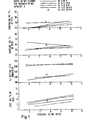
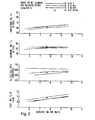
- FIGURES 1-9 are graphical representations of the relationships between catalyst/oil weight ratio and each of conversion, gasoline yield, hydrogen production and coke production for various catalysts, some having differing amounts of antimony and/or tin and others being without antimony and tin.
- the antimony component will be present in such amount as to provide at least 0.0001, more generally at least 0.005, preferably at least 0.01, and more preferably, at least 0.05, weight percent of antimony in or on the cracking catalyst, this percentage being based on the weight of cracking catalyst prior to treatment with antimony and tin or compounds thereof.
- the amount of antimony employed will generally be less than 8, more generally less than 2, preferably 1ess than 1, and more preferably less than 0.8 weight percent, based on the weight of the cracking catalyst prior to treatment with antimony and tin or compounds thereof.
- the tin component wall be present in such amount as to provide at least 0.0001, more generally at least 0.0005, preferably at least 0.001, and more preferably at least 0.005, weight percent, based on the weight of the cracking catalyst prior to treatment with antimony and tir or compounds thereof.
- the amount of tin employed will generally be less than 8, more generally less than 2, preferably less than 1, and more preferably less than 0.8 weight percent, based on the weight of the cracking catalyst prior to treatment with antimony and tin or compounds thereof.
- a weight ratio of antimony to tin in the range of 0.05:1 to 50:1 is generally preferred, with a value in the range of 2:1 to 20:1 being more preferred, and value in the range of 5:1 to 15:1 being even more preferred.
- both antimony and tin in accordance with the present invention to the cracking catalyst either prior to, during or after it use there are achieved at least one of an increase in catalyst activity, an increase in yield of gasoline or higher-boiling hydrocarbon fuels, e.g., kerosene, diesel fuel, burning oils or the like, a decrease in the production of coke and a decrease in the production of hydrogen.
- an increase in catalyst activity an increase in yield of gasoline or higher-boiling hydrocarbon fuels, e.g., kerosene, diesel fuel, burning oils or the like
- a novel cracking catalyst is provided that has been prepared by contacting a conventional crack- way catalyst with both antimony and tin in an amount and in a manner as herein described.
- a novel treating agent for cracking catalyst which consists essentially of a mixture of antimony and tin, either as the elemental metals or as compounds thereof as well as mixtures thereof, wherein the weight ratio of antimony to tin is such as to provide a passivation of contaminating metals deposited on a cracking catalyst greater than the sum of the passivation effects of each of the antimony and tin individually.
- this ratio will be within the range of about 0.001:1 to about 1000:1, more generally in the range of about 0.01:1 to about 100:1, preferably in the range of 0.05:1 to 50:1, more preferably in the range of 2:1 to 20:1, and even more preferably in the range of 5:1 to 15:1.
- cracking catalyst refers to either new or used cracking catalyst materials that are useful for cracking hydrocarbons in the absence of added hydrogen.
- the cracking catalyst referred to can be any. conventional cracking catlyst.
- unmodified cracking catalyst as used herein means any cracking catalyst which has not been modified by contact with either antimony or tin.
- Such cracking catalyst materials can be any of those cracking catalysts conventionally employed in the catalytic cracking of hydrocarbons boiling above 400°F. (204°C.) for the production of gasoline, motor fuel, blending components and light distillates.
- These conventional cracking catalysts generally contain silica or silica-alumina.
- Such materials are associated with zeolitie materials. These zeolitic materials can be naturally occurring, or they can be produced by conventional ion exchange methods such as to provide metallic ions which improve the activity of the catalyst. Zeolite-modified silica-alumina catalysts are particularly applicable in this invention.
- cracking catalysts into or onto which antimony and tin can be incorporated include hydrocarbon cracking catalysts obtained by admixing an inorganic oxide gel with an aluminosilicate, and aluminosilicate compositions which are strongly acidic as a result of treatment with a fluid medium containing at least one rare earth metal cation and a hydrogen ion, or ion capable of conversion to a hydrogen ion.
- the unused catalytic cracking material employed will generally be in particulate form having a particle size principally within the range of about 10 to about 200 microns.
- the cracking catalyst can contain a combustion promoter such as platinum or chromium.
- the unused catalytic cracking material as employed in the present invention contains essentially no nickel, vanadium, iron, copper or cobalt.
- the nickel, vanadium, iron and copper metals content of the unused catalytic cracking material which constitutes the major portion of the unused cracking catalyst of this invention is defined by the following limits:
- the weight percentages in this table relate to the total weight of the unused catalytic cracking material including the metals nickel, vanadium, iron and copper, but excluding the added antimony and tin modifying agents.
- the contents of these metals on the cracking catalyst can be determined by standard methods well known in the art, e.g., by atomic absorption spectroscopy or by X-ray fluorescence spectroscopy.
- the catalytic cracking materials can vary in pore volume and surface area. Generally, however, the unused cracking catalyst will have a pore volume in the range of about 0.1 to about 1 ml/g. The surface area of this unused catalytic cracking material generally will be in the range of about 50 to about 500 m2/g.
- the modified catalyst of this invention consists essentially of a cracking catlyst having a modifying or passivating amount of both and tin therein or thereon.
- the quantity of antimony and tin is generally such that about 0.0001 to about 8, more generally about 0.005 to about 2, preferably about 0.01 to about 1, and more preferably about 0.01 to about 0.8, weight percent antimony and about 0.0001 to about 8, more generally about 0.0005 to about 2, preferably about 0.001 to about 1, and more preferably about 0.001 to about 0.8, weight percent tin are deposited on the catalyst these percentages being based on the weight of cracking catalyst prior to treatment with antimony and tin or compounds thereof.
- the amount of antimony and tin which is most desirable on the catalyst will vary according to the effective level of contaminating metals on the catalyst, with higher values of antimony and tin being desirable for higher effective values of contaminating metals.
- the manner in which the conventional cracking catalyst is contacted with the antimony and tin modifying or treating agents is not critical.
- the agents in finely divided form can be mixed with the conventionat cracking catalyst in ordinary manner such as rolling, shaking, stirring or the like.
- the treating agents can be dissolved or dispersed in a suitable liquid, e.g., water, hydrocarbon or aqueous acid, depending in part on the particular modifying agents used, and the resulting solution or dispersion can be used to impregnate the conventional cracking catalyst, followed by volatilization of the liquid, or the modifying agents can be precipitated onto the catalyst from solutions of the treating agents in different chemical form followed by solvent removal.
- the modifying agents can be dissolved or dispersed in the hydrocarbon feedstock to the cracking process, in which instance the hydrocarbon feedstock and the treating agents contact the cracking catalyst at about the same time.
- the cracking catalyst can be exposed to the treating agents in vapor form to deposit the agents on the catalyst.
- combinations of the various methods can be employed to achieve modification of the catalyst with the treating agents.
- the modifying agents can be added to the catalyst simultaneously or sequentially.
- the addition of the modifying agents can be continuous or intermittent, as desired.
- the modifying agent can be added to the catalyst directly or via the feedstock during a first period of time and the second modifying agent can be subsequently added to the catalyst directly or via the feedstock during a second period of time.
- the ratio of treating agents to conventional cracking cata- . lyst can vary over a wide range, depending in part on the concentration of contaminating metals on the catalyst and in the hydrocarbon feedstock to be cracked, the treating agents generally will be used in an amount such as to provide at least about 0.0001, more generally at least about 0.005, preferably at least about 0.01, and more preferably at least about 0.05, parts by weight of antimony per 100 parts by weight conventional cracking catalyst, i.e., including any contaminating metals in the catalyst but excluding the treating agents.
- the treating agents will be used in an amount such as to provide generally at least about 0.0001, more generally at least about 0.0005, preferably at least about 0.001, and more preferably at least about 0.005, parts by weight tin per 100 parts by weight of such conventional cracking catalyst.
- the treating agents will be used in an amount such as to provide generally less than 8, more generally less than 2, preferably less than 1, and more preferably less than 0.8, parts by weight of each of antimony and tin per 100 parts by weight of such conventional cracking catalyst.
- antimony is present in or on the cracking catalyst or is employed in the preparation of the antimony/tin-containing catalysts is not critical. Any antimony compound which provides passivation of contaminating metals deposited on a cracking catalyst can be utilized. Thus, elemental antimony, inorganic antimony compounds, and organic antimony compounds as well as mixtures of any two or more thereof are suitable sources of antimony.
- the "antimony” generally refers to any one of these antimony sources.
- inorganic antimony compounds which can be used include antimony oxides such as antimony trioxide, antimony tetroxide, and antimony pentoxide; antimony sulfides such as antimony trisulfide and antimony pentasulfide; antimony selenides such as antimony triselenide; antimony tellurides such as antimony tritelluride; antimony sulfates such as antimony trisulfate; antimonic acids such as metaantimonic acid, orthoantimonic acid and pyroantimonic acid; antimony halides such as antimony trifluoride, antimony trichloride, antimony tribromide, antimony triiodide, antimony pentafluoride and antimony pentachloride; antimonyl halides such as antimonyl chloride and antimonyl trichloride; antimonides such as indium antimonide; and the like.
- antimony oxides such as antimony trioxide, antimony tetroxide, and anti
- organic antimony compounds those which do not contain halogen are preferred.
- organic antimony compounds for use in the preparation of the antimony/tin-containing catalysts preferably contain about 3 to about 54 carbon atoms for reasons of economics and availability, organic antimony compounds outside this range are also applicable.
- organic polymers containing antimony can be employed as the organic antimony compound.
- the organic antimony compound can contain elements such as oxygen, sulfur, nitrogen, phosphorus or the like.
- the last compound is also known as antimony tris(0,0-dipropyl phosphorodithioate), and is the presently preferred source of antimony, due in part to its solubility in hydrocarbons and its commercial availability. Mixtures of any two or more applicable substances comprising antimony can be employed.
- tin is present in or on the cracking catalyst or is employed in the preparation of the antimony/tin-containing catalysts is not critical. Any tin compound which promotes the passivation effects of antimony can be employed. Thus elemental tin, inorganic tin compounds and organic tin compounds as well as mixtures thereof are suitable sources of tin. The term . "tin” as used herein generally refers to any one of these tin sources.
- examples of some inorganic tin compounds which can be used include tin oxides such as starnous oxide and stannic oxide; tin sulfides such as stannous sulfide and starnic sulfide; tin selenides such as stannous selenide and stannic selenide; tin tellurides such as stannous telluride; tin sulfates such as stannous sulfate and stannic sulfate; stannic acids such as metastannic acid and thio- stannic acid; tin halides such as stannous iluoride, stannous chloride, stannou bromic, stannous iodide, stannic fluoride, stannic chloride, stannic bromide and stannic iodide; tin phosphates such as stannic phosphate; tin oxyhalides such as stannous oxychloride and stannic oxychloride; and
- organic tin compounds for use in the preparation of the antimony/tin-containing catalysts preferably contain about 2 o about 48 carbon atoms for reasons of economics and availability, organic tin compounds outside this range also are applicable.
- organic polymers containing tin can be employed as the organic tin compound.
- the organic tin compound can contain elements such as oxygen, sulfur, nitrogen, phosphorus or the like.
- Dibutyltin bis(isooctyl mercaptoacetate) and stannic 0,0-dipropyl dithiophosphate are the tin-containing substances presently preferred, due in part to their solubility in hydrocarbons and their compatibility with antimony tris(0,0-dipropyl dithiophosphate).
- the dibutyltin bis(isooctyl mercaptoacetate) is commercially available.
- the sources of antimony and tin utilized and incorporated into or onto the cracking catalyst should be essentially free of such contaminating metals.
- the antimony and tin sources thus should essentially contain no nickel, no vanadium, no iron, no copper and no cobalt or other detrimental contaminating metal.
- the antimony/tin-containing catalyst can be prepared by contacting the conventional catalytic cracking material with an admixture comprising an antimony treating agent and a tin treating agent, or the conventional cracking catalyst can be contacted with the antimony treating agent and the tin treating agent individually, in separate steps, with or without an intermediate step such as heating or diluent removal.
- the conventional cracking catalyst can be contacted with both treating agents at the same time or first with either treating agent and then with the other.
- the antimony/tin-containing catalyst Prior to or during use in the cracking process the antimony/tin-containing catalyst is heated to an elevated . temperature, e.g., within the range of about 800°F. (427°C.) to about 1500°F.
- the antimony/tin-containing catalyst can be prepared from used or, preferably, new conventional cracking catalyst by admixing this conventional catalyst with the antimony treating agent and the tin treating agent, separately or as a mixture, in the presence or absence of a diluent, with removal of the diluent, if employed, with or without heating to an elevated temperature, and the resulting catalyst ca added as make-up catalyst for the cracking process, this make-up catalyst preitably being added to the catalyst regenerator.
- the antimony treating agent and the tin treating agent in admixture or preferably separately, as such or preferably dissolved or dispersed in a suitable liquid, are added to the oil feedstock as the feedstock is charged to the catalytic cracker, the treating agents being added at such a rate as to maintain the concentration of antimony in or on the catalyst generally within the range of about 0.0001 to about 8, more generally in the range of about 0.005 to about 2, preferably in the range of about 0.01 to about 1, and more preferably in the range of about 0.01 to 8, weight percent, these percentages being based on the. weight of cracking catalyst prior to treatment with the antimony and tin or compounds thereof.
- the treating agents are added at such a rate as to maintain the concentration of tin in or on the catalyst generally within the range of about 0.0001 to about 8, more generally in the range of about 0.0005 to about 2, preferably in the range of about 0.001 to about 1, and more preferably in the range of about 0.001 to about 0.8, weight percent, on the same basis as with the antimony.
- the antimony and tin treating agents can be added directly to a stream of catalyst in the cracking process. It is presently desirable that the cracking catalyst be contacted with the tin source in situ in the cracking reactor system.
- tin source component When the tin source component is added to the cracking catalyst outside of the cracking reactor system, it is desirable for such tin treated catalyst to be employed in the cracking process within a short time period, e.g., within five days, to minimize any effects of aging of the tin on the cracking catalyst.
- a process for restoring used cracking catalyst by passivating contaminating metals selected from the group consisting of nickel, vanadium, iron; copper and cobalt which process comprises contacting the contaminated cracking catalyst with an antimony treating agent and a tin treating agent under elevated temperature.
- the time during which the catalyst is contacted with the two treating agents is not critical. Generally the time for a batch treatment of the catalyst outside of the reaction is in the range of from 0.1 to 300 minutes.
- the two treating agents are continuously . metered into the cracking reactor via introduction into the feedstock. If desired, one treating agent can be applied directly to the catalyst and the other treating agent can be introduced via the feedstock.
- antimony treating agent is intended to include elemental antimony or a compound thereof as described above.
- tin treating agent is intended to include elemental tin or a compound thereof as described above.
- an improved cracking process wherein hydrocarbon feedstock is contacted unler cracking conditions with a modified cracking catalyst which comprises a modifying amount of both an antimony treating agent and a tin treating agent as defined above.
- a modified cracking catalyst which comprises a modifying amount of both an antimony treating agent and a tin treating agent as defined above.
- the preferre modified cracking catalyst is one that is obtained by mixing a cracking catalyst with both a tin treating agent and an antimony treating agent and subjecting the mixture to high temperature conditions.
- the initial ligh-temperature treatment of the cracking catalyst-treating agent mixture is carried out under reducing conditions.
- the antimony/tin treating agents are added to the feedstock entering the cracking zone in which they are contacted with cracking catalyst.
- the contacting of the cracking catalyst and the treating agents and the initial treatment under elevated temperatures are done under the reducing conditions prevailing in the catalytic cracker.
- the cracking process in which the antimony/tin-containing cracking catalyst is employed is basically an improvement over a conventional cracking process which employs a conventional cracking catalyst alone or as modified by either antimony or tin.
- the antimony/tin-containing cracking catalyst can be employed in a catalytic cracking process employing a fixed catalyst bed, it is especially useful in a fluid catalytic cracking process.
- a preferred embodiment of the cracking process of this invention utilizes a cyclic flow of catalyst from a cracking zone to a regeneration zone.
- a hydrocarbon feedstock containing contaminating metals such as nickel, vanadium or iron is contacted in a cracking zone under cracking conditions and in the absence of added hydrogen with an antimony/tin-containing cracking catalyst as defined above; a cracked product is obtained and recovered; the cracking catalyst is passed from the cracking zone into a regeneration zone; and in che regeneration zone the cracking catalyst is regenerated by being contacted with a free oxygen-containing gas, preferably air.
- the coke that has been built up during the cracking process is thereby at least partially burned off the catalyst.
- the regenerated cracking catalyst is reintroduced into the cracking zone.
- the cracking process of this invention it is preferred in carrying out the cracking process of this invention to replace a fraction of the total cracking catalyst with unused cracking catalyst continuously or intermittently. Generally, about 0.5 to . about 6 weight percent of the total cracking catalyst is replaced daily by fresh cracking catalyst. The actual quantity of the catalyst replaced depends in part upon the nature of the feedstock used.
- the make-up quantity of cracking catalyst can be added at any location in the process. Preferably, however, the cracking catalyst that is make-up catalyst is introduced into the regenerator in a cyclic cracking process.
- the used cracking catalyst coming from the cracking zone, before introduction into the regenerator is stripped of essentially all entrained liquid or gaseous hydrocarbons.
- the regenerated catalyst can be stripped of any entrained oxygen before it reenters the cracking zone.
- the stripping is generally done with steam.
- the specific conditions in the cracking zone and in the regeneration zone are not critical and depend upon several parameters, such as the feedstock used, the catalyst used, and the results desired.
- the cracking and regeneration conditions are within the following ranges:
- the feedstocks employed in the catalytic cracking process of this invention contain metal contaminants such as nickel, vanadium, iron, copper and/o cobalt and the like.
- the feedstocks include those which are conventionally utilized in catalytic cracking processes to produce gasoline and light distilla e fractions from heavier hydrocarbon feedstocks.
- the feedstocks generally have a initial boiling point above about 400°F. (204°C.) and include fluids such as gas oils, fuel oils, cycle oils, slurry oils, topped crudes, shale oils, oils from tar sands, oils from coal, mixtures of t.o or more of these, and the like.
- topped crude is meant those oils which are obtained as the bottoms of a crude oil fractionator.
- all or a portion of the feedstock can constitute an oil from which a portion of the metal content previously has been removed, e.g., by hydrotreating or solvent extraction.
- the feedstock utilized in the process of this invention will contain one or more of the metals nickel, vanadium and iron within the ranges shown in the following table:
- the known commercial heavy oil cracking process is capable of cracking heavy oils having a metals content of up to 80 ppm of total effective metals, i.e., metals in any form detrimental to the cracking process. Economically marginal results are obtained with oils having 40 to 80 ppm of total effective metals.
- heavy oils with a total metals content of about 40 to 100 ppm and even those of about 100 to 200 ppm and above of total metals can be cracked in a cracking process in the absence of added hydrogen by utilizing the cracking catalyst defined above to yield gasoline and other fuels and fuel blending components.
- known heavy oils with total metals contents of from 80 to 300 ppm that here to fore could not be directly used for fuel production and in particular for gasoline or higher-boiling hydrocarbon fuels production, in accordance with this invention can be cracked to yield gasoline and higher-boiling hydrocarbon fuels such as kerosene, diesel fuel and burning oils.
- concentration of antimony plus tin in or on the antimony/tin-containing cracking catalyst used in the process of this invention for cracking these heavily metal-loaded oils is related to the average total effective metals content of the feedstock as shown in the following table:
- a commercial cracking catalyst comprising amorphous silica-alumina associated with zeolitic material, which had been used in a commercial cracking unit and subsequently subjected to regeneration in the laboratory, was employed in a series of testa which demonstrated the effectiveness of antimony and tin, together, in improving a metals-contaminated used cracking catalyst. Properties of the used cracking catalyst prior to regeneration in the laboratory are shown in Table I.
- the used commercial cracking catalyst having the properties shown in Table I was then subjected to regeneration in the laboratory by heating the catalyst while fluidized with air to 1200°F. (649°C.) and maintaining it at that temperature for about 30 minutes while fluidized with air.
- the catalyst was then cooled to room temperature (about 25°C.) while fluidized with nitrogen, and' the resulting regenerated catalyst, herein designated as catalyst 0, was employed as shown below.
- catalyst 0 was used in the preparation of a catalyst composition containing 0.5 part by weight antimony and 0.5 part by weight tin per 100 parts by weight catalyst 0. This was done by dry blending 35.0 parts by weight catalyst 0 with 0.367 part by weight dibutyltin oxide which previously had been ground until it passed through a 325 mesh screen. The resulting blend was then mixed with a solution prepared by mixing 27 parts by weight cyclohexane and 1.61 parts by weight of a mineral oil solution containing about 80 weight percent antimony tris(0,0-dipropyl phosphorodithioate). The mixture was then dried to a fine powder by heating to 500°F. (260°C.) on a hot plate.
- the above catalyst comprising antimony and tin was conditioned in the following manner.
- the catalyst was placed in a laboratory-sized, confined fluid bed, quartz reactor and heated from room temperature (about 25°C.) to 900°F. (482°C.) while fluidized with nitrogen, then heated from 900°F. (482°C.) to .1200°F. (649°C.) while fluidized with hydrogen. While maintained at about 1200°F. (649°C.), the catalyst was then fluidized with nitrogen for 5 minutes, followed by fluidization with air for 15 minutes. The catalyst was then aged through 10 cycles, each cycle being conducted in the following manner. The catalyst at about 900°F. (482°C.) was fluidized with nitrogen for 1 minute, then heated to about 950°F.
- catalyst AT (510°C.) during 2 minutes while fluidized with hydrogen, then maintained at about 950°F. (510°C.) for 1 minute while fluidized with nitrogen, then heated to about 1200°F. (649°C.) for 10 minutes while fluidized with air, and then cooled to about 900°F. (482°C.) during 0.5 minute while fluidized with air. After these 10 aging cycles the catalyst was cooled to room temperature (about 25°C.) while fluidized with nitrogen to provide a catalyst herein designated as catalyst AT.
- a second portion of catalyst 0 was used in the preparation of a cata- ,lyst composition containing 0.63 part by weight tin per 100 parts by weight catalyst 0. This was done by dry blending 35 parts by weight regenerated catalyst 0 with 0.47 part by weight dibutyltin oxide which previously had been ground until it passed through a 325 mesh screen. The blend was then conditioner aged, and finally cooled to room temperature, by the procedure shown for catalyst AT, to provide a catalyst herein designated as catalyst T.
- a third portion of catalyst 0 was used in the preparation of a catalys composition containing 0.5 part by weight Sb per 100 parts by weight catalyst 0. This was done by mixing catalyst 0 with a cyclohexane-mineral oil solution of antimony tris(0,0-dipropyl phosphorodithioate) containing 0.0147 g antimony per ml solution. The cyclohexane and mineral oil were removed by heating on a hot plate, and the resulting blend was conditioned, aged, and finally cooled to room temperature, by the procedure shown for catlyst AT, to provide a catalyst herein designated as catalyst A.
- Catalysts AT, T, A and 0 were evaluated in four series of cracking regeneration cycles using topped West Texas crude oil as the feedstock in the cracking step. Except as otherwise noted in Table III, in each cycle the cracking step was carried out at 950°F. (510°C.) and about atmospheric pressure for j.5 minute, and the regeneration step was conducted at about 1200°F. (649°C) and about atmospheric pressure for approximately 30 minutes using fludizing air, the reactor being purged with nitrogen before and after each cracking step.
- tests 3-8 provided considerably lower conversion of feed and substantially lower yield of gasoline than did tests 1 and 2 of the same series. These lower values for conversion and gasoline yield are believed to be due to deactivation of the catalyst during the nine months of shelf-aging following tests 1 and 2, possibly by interaction of tin with silicon in the catalyst.
- the rate of addition has to be 10 ppm of each of antimony and tin in case 8 tons of catalyst per day are withdrawn from the reactor and replaced by untreated catalyst. In case only 6 tons of catalyst per day are replaced, this addition would be sufficient to keep the antimony and tin levels of the catalyst system at 0.65 weight percent each.
- a commercial cracking catalyst comprising amorphous silica-alumina associaced with zeolitic material, which had been used in a commercial cracking unit anu subsequently subjected to regeneration in the laboratory, was employed in the preparation of cracking catalysts containing varying amounts of antimony tin, or antimony and tin, the source of antimony being antimony tris(0,0-dipropyl phospheodithioate) and the source of tin being dibutyltin oxide previously groundiuntil it passed through a 325 mesh screen.
- Properties of the used cracking catalyst prior to regeneration in the laboratory were as shown in Table I in example I.
- the used commercial cracking catalyst having these properties was the subjected to regeneration in the laboratory by heating the catalyst while fuidized with air to 1200°F. (649°C.) and maintaining it at that tempers ture fa 0.5-2 hours while fluidized with air.
- the catalyst was then cooled to room tsperature (about 25°C.) while fluidized with nitrogen, and the resulting regenerated catalyst, herein designated as cataiyst X, was employed as shown below.
- Portions of catalyst X were used in the preparation of catalyst compositions containing, per 100 parts by weight catalyst X, 0.05 part by weight anyimony and 0.05 part by weight tin, 0.10 part by weight antimony and 0.01 part weight tin (two preparations), 0.01 part by weight antimony and 0.10 part by weight tin, and 0.50 part by weight antimony and 0.50 part by weight tin.
- the calculated amount of dibutyltin oxide to provide the desired tin content was dry blended with catalyst X, after which the calculated amount of a mineral oil solution of antimony tris(0,0-dipropyl phosphorodithioate) containing 10.9 weight percent antimony, together with cyclohexane, was stirred with the resulting blend to provide the desired antimony content. The mixture was then taken to apparent dryness by heating on a hot plate.
- catalyst X was used in the preparation of catalyst compositions containing 0.01, 0.1, 0.5, and 1.0 parts by weight tin per 100 parts by weight catalyst X.
- the calculated amount of dibutyltin oxide to provide the desired tin content was dry blended with catalyst X, the blend was wetted with cyclohexane, and the resulting mixture was taken to apparent dryness by heating on a hot plate.
- catalyst X was used in the preparation of catalyst compositions containing 0.05, 0.1, 0.25, 0.5, and 1.0 parts by weight antimony per 100 parts by weight catalyst X.
- the calculated amount of a mineral oil solution of antimony tris(0,0-dipropyl phosphorodithioate) containing 10.9 weight percent antimony, in cyclohexane was stirred with catalyst X, and the resulting mixture was taken to apparent dryness on a hot plate.
- Each of the 14 catalyst compositions above was conditioned in the following manner.
- the catalyst was placed in a laboratory-sized, confined fluid bed, quartz reactor and heated from room temperature (about 25°C.) to 900°F. (482°C.) while fluidized with nitrogen, then heated from 900°F. (482°C.) to 1200°F. (649°C.) while fluidized with hydrogen. While maintained at about 1200°F. (649°C.), the catalyst was then fluidized with nitrogen for 5 minutes, followed by fluidization with air for 15-20 minutes. The catalyst was then aged through 10 cycles, each cycle being conducted in the following manner. The catalyst was cooled, generally to about 900°F.
- the 14 aged catalysts prepared as described above and catalyst X (2 samples) were evaluated in 15 series of cracking-regeneration cycles, in which the cracking step was conducted over a range of catalyst:oil ratios, using about 34-40 g of catalyst as a confined fluid bed in a quartz reactor and employing a gas oil as the feedstock in the cracking step.
- the cracking step was carried out at 950°F. (510°C.) and about atmospheric pressure for 0.5 minute
- the regeneration step was conducted at 1200°F. (649°C.) and about atmospheric pressure for approximately 30 minutes using fluidizing air, the reactor being purged with nitrogen before and after each cracking step.
- results of the cracking tests conducted at various catalyst:oil ratios are summarized in Table V. All cracking tests caried out with a given catalyst are included except those which gave results which obviously were in error because of equipment malfunction or human error. Specifically, tests having a material balance outside of 100 + 5% were omitted. Tests with a given catalyst were made in the order in which they are listed. In each instance in which the catalyst was one which had been treated with tin, with the exception of the M,N and 0 series, not more than 4 days elapsed between the time of preparation and conditioning of the catalyst and the time the first test was conducted, or between any two tests, including tests which were in error for the reasons noted above.
- Figures 1 through 7 show in graphical form comparisons of selected tests given in Table V, a series of at least five tests with a given catalyst composition at varying catalyst:oil ratios being curve-fitted to provide smooth curves as shown, and two or three tests with a given catalyst conposition at nearly constant catalyst:oil ratios being shown as single points, each of which represents the average of the values on which it is based.
- FIGURE 1 depicts most clearly the unexpectedly good con- vetsion of feed throughout a range of catalyst:oil weight ratios of less than 6 to about 10 when a catalyst comprising both tin and antimony was used.
- FIGURES 1 and 5 show best the surprisingly good yields of gasoline obtained at catalyst:oil weight ratios such as from about 6 to about 9.5 in FIGURE 1 and from about 6 to about 8.4 in FIGURE 5, when catalysts containing both tin and antimony were employed.
- FIGURE 6 shows clearly the unexpectedly low production of hydrogen at a catalyst:oil weight ratio of about 7.7 when a catalyst containing both tin and antimony was used.
- Table VI To further illustrate the advantages of having both tin and antimony in a cracking catalyst, shown in Table VI are conversion and yield results at a catalyst:oil weight ratio of 7.7:1, the values having been determined graphically from the appropriate curves in FIGURES 1 through 7, with the exception of cracking tests 13, 14 and 15, the values for which represent averages of the appropriate values shown for the M, N, and 0 series of tests, respectively, shown in Table V.
- each of the cracking tests shown in Table VI is not an individual test which was actually carried out but instead is based on a series o teats which were conducted.
- the feed conversions and usually the gasoline yields are surprisingly high in cracking tests 11 through 15 employing catalysts within the scope of this invention when compared with the feed conversions and . gasoline yields in cracking tests 1 through 10 conducted with catalysts outside t cope of this invention.
- the feed conversion and gasoline yrod in each of tests 12 and 13 are far higher than would be predicted on the basis of changes in these characteristics, based on results in control test 1 where neither antimony nor tin is present, in test 2 where tin is present in the absence of antimony, and in teat 7 where antimony is present in the absence of . tin, if such changes are additive.
- the feed conversion in tests 12 and 13 would be predicted to be 64 + (62-64) + (64.8-64) - 62.8 volume percent, and the gasoline yield in tests 12 and 13 would be predicted to be 53.3 + (52.7-53.3) + (55.0-53.3) - 54.4 volume percent of the feed.
- Each of these predicted values is decidedly inferior to the values for the corresponding characteristics as shown for tests 12 and 13.
- the feed conversion and gasoline yield in test 14 are surprisingly high when compared with these characteristics for catalysts in tests 1, 3, and 6, interpolation being used to estimate the values for a catalyst having the antimony content of the catalyst in test 14 but containing n6 tin.
- the feed conversion and gasoline yield in test 11 are higher than would be predicted upon consideration of the values in tests 1, 2, 3, and 6, with the aid of interpolation, and the feed conversion in test 15 is higher than would be predicted upon consideration of the values in tests 1, 4, and 9. Furthermore, the feed conversion and gasoline yield obtained with the catalyst in test 11 are higher than the average of the values for the corresponding characteristic as determined in tests 3 and 7, in which the catalyst contains antimony or tin, in the absence of the other, in a concentration equal to the sum of the concentrations of antimony and tin in the catalyst in test 11 Actually, the gasoline yield in test 11 is higher than that in either of tests 3 and 7.
- the feed conversion and gasoline yield obtained with the catalyst in test 15 are higher than the average of the values for the correspond- i ing characteristic as shown for tests 5 and 10 and, in fact, are higher than either of the values for the corresponding characteristic as shown for tests 5 and 10.
- the feed conversions and gasoline yields obtained with the catalysts in tests 12, 13, and 14 are higher than either value, as well as higher than the average of the values, for the corresponding characteristic for a catalyst containing antimony or tin, in the absence of the other, in a concentration equal to the sum of the concentrations of antimony and tin in the catalyst shown for any one of tests 12, 13, and 14, the values for the catalysts containing antimony or tin, in the absence of the other, being obtained by interpolation between values shown for tests 3 and 4 and between values shown for tests 7 and 8.
- test 12 in which a catalyst was used which has under gone no prolonged shelf-aging
- test 13 in which a like catalyst was utilized which has stood for about 34 days after it was prepared and conditioned before it was used in a cracking test
- the catalyst use in each of the two tests is very good, the overall effect of prolonged shelf-aging is deleterious.
- the feed conversion in test 13 is better than in test 12
- test 13 the coke and hydrogen produced are greater than in teat 12 and the gasoline yield is lower.
- a commercial cracking catalyst comprising amorphous silica-alumina associated with zeolitic material, which had been used in a commercial cracking unit and subsequently subjected to regeneration in the laboratory, was employed in the preparation of cracking catalysts containing varying amounts of antimony tin, or antimony and tin, the source of antimony being antimony tris(0,0-dipropyl phosphorodithioate) and the source of tin being dibutyltin bis(isooctyl mercaptoacetate).
- This compound has the formula: (n-C 4 II 9 ) 2 Sn(SCH 2 CO 2 C 8 H 17 -iso) 2 . Properties of the used cracking catalyst prior to regeneration in the laboratory are shown in Table VII.
- the used commercial cracking catalyst having the properties shown in Table VII was then subjected to regeneration in the laboratory by heating the catalyst while fluidized with air to 1200°F. (649°C.) and maintaining it at that temperature for about 1 hour while fluidized with air.
- the catalyst was then cooled to room temperature (about 25°C.) while fluidized with nitrogen, and the resulting regenerated catalyst, herein designated as catalyst Y, was employed shown below.
- Portions of catalyst Y were used in the preparation of catalyst compositions containing, per 100 parts by weight catalyst Y, 0.01 part by weight antimony and 0.001 part by weight tin, and 0.02 part by weight antimony and 0.002 part by weight tin.
- composition of lower antimony and tin concentration was prepared by adding, with stirring, to catalyst Y two cyclohexane solutions, one of which contained the calculated amount of dibutyltin bis(isooctyl mercaptoacetate) and the other of which contained the calculated amount of a mineral oil solution of antimony tris(0,0-dipropyl phosphorodithioate) containing 10.9 weight percent antimony, after which the resulting mixture was taken t4 apparent dryness on a hot plate.
- composition of higher antimony and tin concentration was prepared by stirring with catalyst Y a cyclohexane solution of the calculated amount of dibutyltin bis(isooctyl mercaptoacetate), drying the mixture on a hot plate, stirring the resulting dried mixture with a cyclohexane solution containing the calculated amount of a mineral oil solution of antimony tris(0,0-dipropyl phosphorodithioate) containing 10.9 weight percent antimony, and taking the resulting mixture to apparent dryness on a hot plate.
- catalyst Y was used in the preparation of catalyst compositions containing 0.002 and 0.011 parts by weight tin per 100 parts by weight catalyst Y.
- a solution of the calcu- lated amount of dibutyltin bis(isooctyl mercaptoacetate) in cyclohexane or toluene was stirred with catalyst Y, and the resulting mixture was taken to apparent dryness on a hot plate.
- catalyst Y Yet other portions of catalyst Y were used in the preparation of catalyst compositions containing 0.011 and 0.02 parts by weight antimony per 10C parts by weight catalyst Y. In each of these two preparations the calculated amount of a mineral oil solution of antimony tris(0,0-dipropyl phosphorodithioate) containing 10.9 weight percent antimony, in cyclohexane, was stirred with catalyst Y, and the resulting mixture was taken to apparent dryness on a hot plate.
- Each of the six catalyst compositions above was conditioned in the following manner.
- the catalyst was placed in a laboratory-sized, confined fluid bed, quartz reactor and heated from room temperature (about 25°C.) to 900°F. (482°C.) while fluidized with nitrogen, then heated from 900°F. (482°C.) to 1200°F. (649°C.) while fluidized with hydrogen. While maintained at about 1200°F. (649°C.), the catalyst was then fluidized with nitrogen for 5 minutes, followed by fluidization with air for 15 minutes. In one instance, the catalyst was again fluidized with nitrogen for 5 minutes while maintained at 1200°F. (649°C.). The catalyst was then aged through 10 cycles, each cycle being conducted in the following manner. The catalyst was cooled to about 900°F.
- the six aged catalysts prepared as described above and catalyst Y were evaluated in seven series of cracking-regeneration cycles, in which the cracking step was conducted over a range of catalyst:oil ratios, using about 35-37 g of catalyst as a confined fluid bed in a quartz reactor and employing as the feedstock in the cracking step a blend consisting of 68.12 parts by weight gas oil, 11.98 parts by weight heavy cycle oil, and 19.87 parts by weight slurry oil.
- the cracking step was carried out at 950°F. (510°C.) and about atmospheric pressure for 0.5 minute
- the regeneration step was conducted at 1200°F. (649°C.) and about atmospheric pressure for approximately 30 minutes using fludizing air, the reactor being purged with nitrogen before and after each cracking step.
- the feedstock blend used in the cracking step had an API gravity at 60°F. (16°C.), determined as shown in Table II, of 25.4.
- the values for API . gravity at 60°F. (16°C.), determined by the same method, for the gas oil component, the heavy cycle oil component, and the slurry oil component of the feedstock blend were 27.3, 17.5, and 2.2, respectively. Analysis of the gas oil component showed it contained 0.99 weight percent sulfur and 0.133 weight percent nitrogen.
- FIGURES 8 and 9 show in graphical form comparisons of selected tests given in Table VIII, a series of at least five tests with a given catalyst composition at varying catalyst:oil ratios being curve-fitted to provide smooth curves as shown, and a pair of tests with a given catalyst composition at nearly constant catalyst:oil ratio being shown as single points, each of which represents the average of the values on which it is based.
- FIGURE 8 shows that the catalyst containing 0.002 part by weight tin and 0.02 part by weight antimony per 100 parts by weight catalyst prior to treatment with the tin and antimony compounds produces a surprisingly low level of coke at a low catalyst:oil weight ratio, e.g., 5.5:1.
- FIGURE 9 shows that the catalyst containing 0.001 part by weight tin and 0.01 part by weight antimony per 100 part by weight catalyst prior to treatment with the tin and I antimony compounds produces a surprisingly high yield of gasoline at catalyst:oil weight ratios of about 5 to about 9, an unexpectedly high conversion of feed at intermediate catalyst:oil weight ratios, and a surprisingly low level of hydrogen at catalyst:oil weight ratios in the range of 6 to 9.
- dibutyltin bis(isooctyl mercaptoacetate) is added to the feedstock in an amount such as to provide 0.6 ppm tin, each for 17 days.
- antimony tris(0,0-dipropyl phosphorodithioate) is added to the feedstock in an amount such as to provide 9 ppm antimony and dibutyltin bis(isooctyl mercaptoacetate) in an amount such as to provide 0.9 ppm tin.
- addition of the antimony and tin compounds to the feedstock then has to be maintained at rates such as to provide a feedstock containing 3 ppm antimony and 0.3 ppm tin, if 8 tons of catalyst per day are withdrawn from the cracking reactor system and replaced by untreated catalyst. If only 6 tons of catalyst per day are replaced, this addition would be sufficient to keep the antimony and tin levels of the catalyst system at 0.195 weight percent and 0.0195 weight percent, respectively.
Landscapes
- Chemical & Material Sciences (AREA)
- Engineering & Computer Science (AREA)
- Chemical Kinetics & Catalysis (AREA)
- Organic Chemistry (AREA)
- Materials Engineering (AREA)
- Oil, Petroleum & Natural Gas (AREA)
- General Chemical & Material Sciences (AREA)
- Production Of Liquid Hydrocarbon Mixture For Refining Petroleum (AREA)
- Catalysts (AREA)
Applications Claiming Priority (4)
| Application Number | Priority Date | Filing Date | Title |
|---|---|---|---|
| US84518477A | 1977-10-25 | 1977-10-25 | |
| US845184 | 1977-10-25 | ||
| US05/941,896 US4255287A (en) | 1978-09-12 | 1978-09-12 | Cracking catalyst |
| US941896 | 1978-09-12 |
Publications (3)
| Publication Number | Publication Date |
|---|---|
| EP0001642A2 true EP0001642A2 (fr) | 1979-05-02 |
| EP0001642A3 EP0001642A3 (en) | 1979-05-16 |
| EP0001642B1 EP0001642B1 (fr) | 1984-07-25 |
Family
ID=27126560
Family Applications (1)
| Application Number | Title | Priority Date | Filing Date |
|---|---|---|---|
| EP78101215A Expired EP0001642B1 (fr) | 1977-10-25 | 1978-10-24 | Composition catalytique de craquage, procédé de craquage des hydrocarbures, et agent et procédé pour la passivation de métaux |
Country Status (19)
| Country | Link |
|---|---|
| EP (1) | EP0001642B1 (fr) |
| JP (1) | JPS5935259B2 (fr) |
| AT (1) | AT374488B (fr) |
| AU (1) | AU511282B2 (fr) |
| BR (1) | BR7806981A (fr) |
| CA (1) | CA1225074A (fr) |
| DE (1) | DE2862431D1 (fr) |
| DK (1) | DK160995C (fr) |
| ES (1) | ES474430A1 (fr) |
| FI (1) | FI64900C (fr) |
| IT (1) | IT1192587B (fr) |
| MX (1) | MX150887A (fr) |
| NO (1) | NO156948C (fr) |
| PH (1) | PH14374A (fr) |
| PL (1) | PL124764B1 (fr) |
| PT (1) | PT68688A (fr) |
| RO (1) | RO77416A2 (fr) |
| TR (1) | TR20304A (fr) |
| YU (1) | YU41124B (fr) |
Cited By (9)
| Publication number | Priority date | Publication date | Assignee | Title |
|---|---|---|---|---|
| EP0004091A1 (fr) * | 1978-03-13 | 1979-09-19 | Phillips Petroleum Company | Catalyseur de craquage modifié, procédé pour passiver des metaux déactivant sur un catalysateur de craquage usé et procédé pour le craquage de matières hydrocarbonées |
| US4218337A (en) * | 1978-03-13 | 1980-08-19 | Phillips Petroleum Company | Passivating metals on cracking catalysts with tellurium |
| EP0051689A1 (fr) * | 1980-11-10 | 1982-05-19 | Phillips Petroleum Company | Méthode de passivation de métaux contaminants sur des catalyseurs de craquage et procédé de craquage |
| US4504381A (en) * | 1983-12-09 | 1985-03-12 | Exxon Research And Engineering Co. | Passivation of cracking catalysts with cadmium and tin |
| EP0130543A3 (en) * | 1983-07-05 | 1985-06-05 | Nalco Chemical Company | An aqueous antimony sol composition |
| EP0147961A3 (en) * | 1983-12-09 | 1986-12-30 | Exxon Research And Engineering Company | Passivation of cracking catalyst |
| EP0246414A1 (fr) * | 1986-03-24 | 1987-11-25 | Chevron Research And Technology Company | Méthode pour supprimer l'empoisonnement par du sodium de catalyseurs de cracking pendant le cracking catalytique en lit fluidisé |
| NL9402146A (nl) * | 1993-12-17 | 1995-07-17 | Intevep Sa | Antimoon en tin bevattende verbinding, toepassing van een dergelijke verbinding als een passiveringsmiddel en een werkwijze voor het bereiden van een dergelijke verbinding. |
| US8435641B2 (en) | 2002-11-28 | 2013-05-07 | Kaneka Corporation | Process for producing heat-resistant flexible laminate and heat-resistant flexible laminate produced thereby |
Families Citing this family (3)
| Publication number | Priority date | Publication date | Assignee | Title |
|---|---|---|---|---|
| JPS60258288A (ja) * | 1984-06-01 | 1985-12-20 | ガルフ・リサ−チ・エンド・デベロツプメント・コンパニ− | 接触分解方法 |
| US4939109A (en) * | 1986-09-15 | 1990-07-03 | Phillips Petroleum Company | Passivation of metal contaminated cracking catalysts |
| RU2603964C2 (ru) * | 2011-11-21 | 2016-12-10 | Басф Корпорейшн | Усовершенствованный пассиватор/ловушка металла для процессов кфк |
Family Cites Families (15)
| Publication number | Priority date | Publication date | Assignee | Title |
|---|---|---|---|---|
| US2934548A (en) * | 1954-08-25 | 1960-04-26 | Heyden Newport Chemical Corp | Bimetallic organic compounds and compositions containing same |
| NL105332C (fr) * | 1958-04-05 | |||
| US3152170A (en) * | 1959-07-01 | 1964-10-06 | Distillers Co Yeast Ltd | Production of unsaturated aliphatic nitriles |
| NL253202A (fr) * | 1962-12-08 | |||
| US3287210A (en) * | 1962-12-26 | 1966-11-22 | M & T Chemicals Inc | Antimony compounds and compositions and method for protecting against microorganisms |
| CA818485A (en) * | 1964-03-21 | 1969-07-22 | J. Gasson Edward | Oxidation catalysts |
| US3445521A (en) * | 1966-11-17 | 1969-05-20 | Standard Oil Co | Promoted antimony-iron oxidation catalyst |
| US3530158A (en) * | 1966-11-25 | 1970-09-22 | M & T Chemicals Inc | Organo antimony mercaptides and the preparation thereof |
| US3625867A (en) * | 1967-06-02 | 1971-12-07 | Takachika Yoshino | Process for production of metal oxide-antimony oxide catalysts |
| GB1236949A (en) * | 1968-10-09 | 1971-06-23 | Ici Ltd | Catalytic process for making polyesters |
| BE741001A (fr) * | 1968-11-02 | 1970-04-01 | ||
| US3711422A (en) * | 1970-09-08 | 1973-01-16 | Phillips Petroleum Co | Cracking catalyst restoration with antimony compounds |
| US4025458A (en) * | 1975-02-18 | 1977-05-24 | Phillips Petroleum Company | Passivating metals on cracking catalysts |
| US4040945A (en) * | 1976-01-02 | 1977-08-09 | Gulf Research & Development Company | Hydrocarbon catalytic cracking process |
| US4101417A (en) * | 1976-10-04 | 1978-07-18 | Gulf Research & Development Company | Method of negating the effects of metals poisoning on zeolitic cracking catalysts |
-
1978
- 1978-10-09 DK DK447778A patent/DK160995C/da not_active IP Right Cessation
- 1978-10-16 AU AU40725/78A patent/AU511282B2/en not_active Expired
- 1978-10-16 PH PH21706A patent/PH14374A/en unknown
- 1978-10-20 FI FI783204A patent/FI64900C/fi not_active IP Right Cessation
- 1978-10-23 NO NO783576A patent/NO156948C/no unknown
- 1978-10-23 RO RO7895472A patent/RO77416A2/fr unknown
- 1978-10-23 ES ES474430A patent/ES474430A1/es not_active Expired
- 1978-10-23 PT PT68688A patent/PT68688A/fr unknown
- 1978-10-24 EP EP78101215A patent/EP0001642B1/fr not_active Expired
- 1978-10-24 YU YU2481/78A patent/YU41124B/xx unknown
- 1978-10-24 BR BR7806981A patent/BR7806981A/pt unknown
- 1978-10-24 JP JP53130948A patent/JPS5935259B2/ja not_active Expired
- 1978-10-24 DE DE7878101215T patent/DE2862431D1/de not_active Expired
- 1978-10-24 IT IT29062/78A patent/IT1192587B/it active
- 1978-10-24 CA CA000314011A patent/CA1225074A/fr not_active Expired
- 1978-10-24 MX MX175363A patent/MX150887A/es unknown
- 1978-10-25 PL PL1978210499A patent/PL124764B1/pl unknown
- 1978-10-25 TR TR20304A patent/TR20304A/xx unknown
- 1978-10-25 AT AT0763778A patent/AT374488B/de not_active IP Right Cessation
Cited By (9)
| Publication number | Priority date | Publication date | Assignee | Title |
|---|---|---|---|---|
| EP0004091A1 (fr) * | 1978-03-13 | 1979-09-19 | Phillips Petroleum Company | Catalyseur de craquage modifié, procédé pour passiver des metaux déactivant sur un catalysateur de craquage usé et procédé pour le craquage de matières hydrocarbonées |
| US4218337A (en) * | 1978-03-13 | 1980-08-19 | Phillips Petroleum Company | Passivating metals on cracking catalysts with tellurium |
| EP0051689A1 (fr) * | 1980-11-10 | 1982-05-19 | Phillips Petroleum Company | Méthode de passivation de métaux contaminants sur des catalyseurs de craquage et procédé de craquage |
| EP0130543A3 (en) * | 1983-07-05 | 1985-06-05 | Nalco Chemical Company | An aqueous antimony sol composition |
| US4504381A (en) * | 1983-12-09 | 1985-03-12 | Exxon Research And Engineering Co. | Passivation of cracking catalysts with cadmium and tin |
| EP0147961A3 (en) * | 1983-12-09 | 1986-12-30 | Exxon Research And Engineering Company | Passivation of cracking catalyst |
| EP0246414A1 (fr) * | 1986-03-24 | 1987-11-25 | Chevron Research And Technology Company | Méthode pour supprimer l'empoisonnement par du sodium de catalyseurs de cracking pendant le cracking catalytique en lit fluidisé |
| NL9402146A (nl) * | 1993-12-17 | 1995-07-17 | Intevep Sa | Antimoon en tin bevattende verbinding, toepassing van een dergelijke verbinding als een passiveringsmiddel en een werkwijze voor het bereiden van een dergelijke verbinding. |
| US8435641B2 (en) | 2002-11-28 | 2013-05-07 | Kaneka Corporation | Process for producing heat-resistant flexible laminate and heat-resistant flexible laminate produced thereby |
Also Published As
| Publication number | Publication date |
|---|---|
| FI64900C (fi) | 1984-02-10 |
| DE2862431D1 (en) | 1984-08-30 |
| ES474430A1 (es) | 1980-01-16 |
| EP0001642A3 (en) | 1979-05-16 |
| ATA763778A (de) | 1983-09-15 |
| YU248178A (en) | 1983-02-28 |
| MX150887A (es) | 1984-08-09 |
| AT374488B (de) | 1984-04-25 |
| DK160995B (da) | 1991-05-13 |
| PT68688A (fr) | 1978-11-01 |
| BR7806981A (pt) | 1979-05-08 |
| PH14374A (en) | 1981-06-17 |
| JPS5935259B2 (ja) | 1984-08-28 |
| EP0001642B1 (fr) | 1984-07-25 |
| RO77416A2 (fr) | 1982-06-25 |
| PL124764B1 (en) | 1983-02-28 |
| DK160995C (da) | 1991-11-04 |
| TR20304A (tr) | 1981-01-07 |
| YU41124B (en) | 1986-12-31 |
| FI64900B (fi) | 1983-10-31 |
| CA1225074A (fr) | 1987-08-04 |
| IT1192587B (it) | 1988-04-20 |
| FI783204A7 (fi) | 1979-04-26 |
| IT7829062A0 (it) | 1978-10-24 |
| AU4072578A (en) | 1980-04-24 |
| NO156948B (no) | 1987-09-14 |
| NO783576L (no) | 1979-04-26 |
| NO156948C (no) | 1987-12-23 |
| AU511282B2 (en) | 1980-08-07 |
| PL210499A1 (pl) | 1979-07-30 |
| DK447778A (da) | 1979-04-26 |
| JPS54106093A (en) | 1979-08-20 |
Similar Documents
| Publication | Publication Date | Title |
|---|---|---|
| US4111845A (en) | Cracking catalyst modified by antimony thiophosphate | |
| US4321129A (en) | Cracking process employing catalyst having combination of antimony and tin | |
| US4255287A (en) | Cracking catalyst | |
| US4176084A (en) | Process for regenerating metal-contaminated hydrocarbon conversion catalysts | |
| US4141858A (en) | Passivating metals on cracking catalysts | |
| US4324648A (en) | Cracking catalyst poisons passivated with tin compounds plus both sulfur and phosphorus | |
| EP0001642B1 (fr) | Composition catalytique de craquage, procédé de craquage des hydrocarbures, et agent et procédé pour la passivation de métaux | |
| US4321128A (en) | Phosphorus passivation process | |
| US4319983A (en) | Passivation process | |
| US4397767A (en) | Catalyst poisons passivated with tin compounds plus both sulfur and phosphorus | |
| US4256564A (en) | Cracking process and catalyst for same containing indium to passivate contaminating metals | |
| US4257919A (en) | Method of transferring a passivating agent to or from a cracking catalyst | |
| US4178267A (en) | Passivating metals on cracking catalysts | |
| US4318799A (en) | Combination of aluminum and phosphorus passivation process | |
| US4183803A (en) | Passivating metals on cracking catalysts | |
| US4166806A (en) | Cracking catalyst passivated with a crude antimony phosphorodithioate | |
| US4489169A (en) | Cracking catalyst | |
| US4193891A (en) | Passivation of metals on cracking catalyst with an antimony thiocarbamate | |
| US4169042A (en) | Cracking process and catalyst for same containing tellurium | |
| US4562167A (en) | Liquid treating agent for cracking catalyst | |
| EP0038047A2 (fr) | Catalyseur de craquage, procédé de passivation et composés de germanium | |
| US4209453A (en) | Antimony tris(dihydrocarbyl phosphite) and preparation thereof | |
| US4535066A (en) | Passivating metals on cracking catalysts | |
| US4263130A (en) | Process for cracking hydrocarbons with a catalyst passivated with an antimony tris (hydrocarbyl sulfide) | |
| US3824178A (en) | Hydrocracking petroleum and related materials |
Legal Events
| Date | Code | Title | Description |
|---|---|---|---|
| PUAI | Public reference made under article 153(3) epc to a published international application that has entered the european phase |
Free format text: ORIGINAL CODE: 0009012 |
|
| PUAL | Search report despatched |
Free format text: ORIGINAL CODE: 0009013 |
|
| AK | Designated contracting states |
Designated state(s): BE CH DE FR GB NL SE |
|
| AK | Designated contracting states |
Designated state(s): BE CH DE FR GB NL SE |
|
| 17P | Request for examination filed | ||
| GRAA | (expected) grant |
Free format text: ORIGINAL CODE: 0009210 |
|
| AK | Designated contracting states |
Designated state(s): BE DE FR GB NL SE |
|
| REF | Corresponds to: |
Ref document number: 2862431 Country of ref document: DE Date of ref document: 19840830 |
|
| ET | Fr: translation filed | ||
| PLBI | Opposition filed |
Free format text: ORIGINAL CODE: 0009260 |
|
| 26 | Opposition filed |
Opponent name: TIPPE, WOLFRAM, DR. Effective date: 19850425 |
|
| NLR1 | Nl: opposition has been filed with the epo |
Opponent name: DR. WOLFRAM TIPPE |
|
| PLBN | Opposition rejected |
Free format text: ORIGINAL CODE: 0009273 |
|
| STAA | Information on the status of an ep patent application or granted ep patent |
Free format text: STATUS: OPPOSITION REJECTED |
|
| 27O | Opposition rejected |
Effective date: 19880428 |
|
| NLR2 | Nl: decision of opposition | ||
| PGFP | Annual fee paid to national office [announced via postgrant information from national office to epo] |
Ref country code: SE Payment date: 19940920 Year of fee payment: 17 |
|
| EAL | Se: european patent in force in sweden |
Ref document number: 78101215.8 |
|
| PG25 | Lapsed in a contracting state [announced via postgrant information from national office to epo] |
Ref country code: SE Effective date: 19951025 |
|
| EUG | Se: european patent has lapsed |
Ref document number: 78101215.8 |
|
| PGFP | Annual fee paid to national office [announced via postgrant information from national office to epo] |
Ref country code: FR Payment date: 19970917 Year of fee payment: 20 |
|
| PGFP | Annual fee paid to national office [announced via postgrant information from national office to epo] |
Ref country code: GB Payment date: 19970922 Year of fee payment: 20 |
|
| PGFP | Annual fee paid to national office [announced via postgrant information from national office to epo] |
Ref country code: NL Payment date: 19970925 Year of fee payment: 20 |
|
| PGFP | Annual fee paid to national office [announced via postgrant information from national office to epo] |
Ref country code: DE Payment date: 19970927 Year of fee payment: 20 |
|
| PGFP | Annual fee paid to national office [announced via postgrant information from national office to epo] |
Ref country code: BE Payment date: 19971007 Year of fee payment: 20 |
|
| BE20 | Be: patent expired |
Free format text: 19981024 *PHILLIPS PETROLEUM CY |
|
| PG25 | Lapsed in a contracting state [announced via postgrant information from national office to epo] |
Ref country code: GB Free format text: LAPSE BECAUSE OF EXPIRATION OF PROTECTION Effective date: 19981023 |
|
| PG25 | Lapsed in a contracting state [announced via postgrant information from national office to epo] |
Ref country code: NL Free format text: LAPSE BECAUSE OF EXPIRATION OF PROTECTION Effective date: 19981024 |
|
| REG | Reference to a national code |
Ref country code: GB Ref legal event code: PE20 Effective date: 19981023 |
|
| NLV7 | Nl: ceased due to reaching the maximum lifetime of a patent |
Effective date: 19981024 |
|
| APAH | Appeal reference modified |
Free format text: ORIGINAL CODE: EPIDOSCREFNO |