EP0002046A2 - Verfahren zur Herstellung von (1S,2S,6R)-2-Methyl-3,7-dioxabicyclo(4.1.0)heptan-4-0l und dessen Methylether - Google Patents
Verfahren zur Herstellung von (1S,2S,6R)-2-Methyl-3,7-dioxabicyclo(4.1.0)heptan-4-0l und dessen Methylether Download PDFInfo
- Publication number
- EP0002046A2 EP0002046A2 EP78101359A EP78101359A EP0002046A2 EP 0002046 A2 EP0002046 A2 EP 0002046A2 EP 78101359 A EP78101359 A EP 78101359A EP 78101359 A EP78101359 A EP 78101359A EP 0002046 A2 EP0002046 A2 EP 0002046A2
- Authority
- EP
- European Patent Office
- Prior art keywords
- methyl
- dioxabicyclo
- heptan
- oxabicyclo
- hexan
- Prior art date
- Legal status (The legal status is an assumption and is not a legal conclusion. Google has not performed a legal analysis and makes no representation as to the accuracy of the status listed.)
- Granted
Links
Classifications
-
- C—CHEMISTRY; METALLURGY
- C07—ORGANIC CHEMISTRY
- C07D—HETEROCYCLIC COMPOUNDS
- C07D493/00—Heterocyclic compounds containing oxygen atoms as the only ring hetero atoms in the condensed system
- C07D493/02—Heterocyclic compounds containing oxygen atoms as the only ring hetero atoms in the condensed system in which the condensed system contains two hetero rings
- C07D493/04—Ortho-condensed systems
-
- C—CHEMISTRY; METALLURGY
- C07—ORGANIC CHEMISTRY
- C07D—HETEROCYCLIC COMPOUNDS
- C07D303/00—Compounds containing three-membered rings having one oxygen atom as the only ring hetero atom
- C07D303/02—Compounds containing oxirane rings
- C07D303/12—Compounds containing oxirane rings with hydrocarbon radicals, substituted by singly or doubly bound oxygen atoms
- C07D303/14—Compounds containing oxirane rings with hydrocarbon radicals, substituted by singly or doubly bound oxygen atoms by free hydroxyl radicals
-
- C—CHEMISTRY; METALLURGY
- C07—ORGANIC CHEMISTRY
- C07D—HETEROCYCLIC COMPOUNDS
- C07D303/00—Compounds containing three-membered rings having one oxygen atom as the only ring hetero atom
- C07D303/02—Compounds containing oxirane rings
- C07D303/12—Compounds containing oxirane rings with hydrocarbon radicals, substituted by singly or doubly bound oxygen atoms
- C07D303/32—Compounds containing oxirane rings with hydrocarbon radicals, substituted by singly or doubly bound oxygen atoms by aldehydo- or ketonic radicals
Definitions
- the present invention relates to a process for the preparation of (IS, 2S, 6R) -4-methoxy-2-methyl-3,7-dioxabicyclo [4.1.0] heptane and intermediates in this process.
- L-daunosamine (3-amino-2,3,6-trideoxy-L-lyxo-hexose) is the amino sugar component of the anthracycline antibiotics daunomycin and adriamycin (Carbohydrate Research 44 (1975), 227-240), which is a significant one play role in A ntitumor therapy. Syntheses for L-daunosamine have been described by Marsh et al. (Chem. Comm. 1967, 973-975), starting from the expensive sugar L-rhamnose (only low overall yield), by Horton et al. (Carbohydrate Research 44 (1975), 227-240), starting from D-mannose (overall yield 40%) and from Yamaguchi et al.
- the compound of formula (V) can be used in the form of the 4R and / or 4S anomer as a starting material. If desired, the anomer mixture of the formula VI can be separated in a manner known per se.
- the methylation is carried out in a manner known per se, using methanol in the presence of an acidic catalyst, for example an organic or inorganic acid, a cation exchange resin or a Lewis acid, preferably BF 3 .
- an acidic catalyst for example an organic or inorganic acid, a cation exchange resin or a Lewis acid, preferably BF 3 .
- reaction sequence according to the invention for the preparation of (IS, 2S, 6R) -2-methyl-3,7-dioxabicyclo [4.1.0] heptan-4-ol (V) from (IS, 2S) -2-methyl-3-cyclopentene -l-ol (I) is characterized by epoxidation of the compound I to (1S, 2S, 3S, 5R) -2-methyl-6-oxabicyclo [3.1.0] hexan-3-ol (II), oxidation of the compound II to (lS, 2S, 5R) -2-methyl-6-oxabicyclo [3.1.0] hexan-3-one (III), Baeyer-Villiger oxidation of compound III to (lS, 2S, 6R) -2- Methyl-3,7-dioxabicyclo [4.1.0] heptan-4-one (IV) and reduction of compound IV to (IS, 2S, 6R) -2-methyl-3,7-diox
- the reaction may be carried out in inert organic solvents such as diethyl ether, chloroform, carbon tetrachloride, dichloroethane, chloroethane, benzene, benzonitrile, A ceto- nitrile, A ethyl acetate, acetone, pyridine or, preferably, methylene chloride, or in two-phase systems, the top of the mentioned solvents and an aqueous alkaline medium, take place.
- inert organic solvents such as diethyl ether, chloroform, carbon tetrachloride, dichloroethane, chloroethane, benzene, benzonitrile, A ceto- nitrile, A ethyl acetate, acetone, pyridine or, preferably, methylene chloride, or in two-phase systems, the top of the mentioned solvents and an aqueous alkaline medium, take place.
- Suitable buffer substances are sodium, potassium, calcium or magnesium formate, acetate or butyrate, sodium dihydrogen phosphate, disodium hydrogen phosphate or sodium, potassium, calcium or magnesium carbonate, sodium carbonate being preferred.
- the (IS, 2S, 3S, 5R) -2-methyl-6-oxabicyclo- [3.1.0] hexan-3-ol obtained is then oxidized using an oxidizing agent such as sodium or potassium dichlorate in sulfuric acid, chromium trioxide in acetic acid, sulfuric acid or pyridine or one of the above perbenzoic acids in the presence of 2,2,6,6-tetramethylpiperidine. Chromium trioxide in aqueous sulfuric acid (Jones reagent) is preferred.
- Suitable solvents for these reactions are inert organic solvents such as acetone, tert-butanol, pyridine, acetonitrile, dimethylformamide, glacial acetic acid, petroleum ether, benzene, diethyl ether and carbon tetrachloride, with acetone being preferred.
- the (IS, 2S, 5R) -2-methyl-6-oxabicyclo [3.1.0] -hexan-3-one obtained is then further oxidized in a Baeyer-Villiger reaction using one of the aliphatic or aromatic peracids already mentioned above.
- H 2 0 2 in sulfuric acid or boron trifluoride is also suitable as a suitable oxidizing agent.
- Preferred oxidizing agent is m-chloroperbenzoic acid.
- the reaction is suitably carried out in an inert organic solvent such as ethyl acetate, methylene chloride or chloroform.
- the buffer substances mentioned above, preferably sodium bicarbonate, can be used.
- the (IS, 2S, 6R) -2-methyl-3,7-dioxabicyclo [4.1.0] heptan-4-one is reduced with a reducing agent such as diisobutylaluminum hydride, diborane, sodium or lithium triethoxyaluminum hydride, sodium bis- [ 2-methoxyethoxy] aluminum hydride or tri-t-butoxy aluminum hydride, with diisobutyl aluminum hydride being preferred.
- Suitable solvents are aromatic hydrocarbons such as toluene, benzene and xylene or ethers such as dioxane, bis (2-methoxy) ethyl ether and tetrahydrofuran, toluene being preferred.
- the anomer mixture obtained can be separated in a manner known per se.
- the compound III can be obtained directly from (IS, 2S) -2-methyl-3-cyclopenten-l-ol by reacting the compound I with one of the above-mentioned aliphatic or aromatic peracids, preferably with m-chloroperbenzoic acid, and subsequently in in situ addition of 2,2,6,6-tetramethylpiperidine can be prepared using the inert organic solvents indicated for the reaction I ⁇ II.
- (IS, 2S, 5R) -2-methyl-6-oxabicyclo [3.1.0] hexan-3-one was prepared by adding a solution of 6.20 g of 85% m-chloroperbenzoic acid in 100 ml of anhydrous Methylene chloride within 30 minutes with stirring to a mixture of 2.28 g (IS, 2S, 3S, 5R) -2-methyl-6-oxabicyclo [3.1.0] hexan-3-ol, 1 ml of a 0.2 M Solution of 2,2,6,6-tetramethylpiperidine hydrochloride in a 1% mixture of ethanol and methylene chloride and 20 ml of methylene chloride.
- reaction mixture was stirred at 0 ° C for one hour. Half of the mixture was washed twice with 25 ml of N aqueous sodium hydroxide solution and then with brine. The organic phase was dried over magnesium sulfate, filtered and evaporated to dryness under reduced pressure. The residue was distilled through a short path distillation apparatus (80 ° C., 20 mmHg) and yielded 0.452 g of liquid (IS, 2S, 5R) -2-methyl-6-oxabicyclo [3.1.0] hexan-3-one.
Landscapes
- Chemical & Material Sciences (AREA)
- Organic Chemistry (AREA)
- Heterocyclic Carbon Compounds Containing A Hetero Ring Having Oxygen Or Sulfur (AREA)
- Saccharide Compounds (AREA)
- Epoxy Compounds (AREA)
Abstract
Description
- Die vorliegende Erfindung betrifft ein Verfahren zur Herstellung von (lS,2S,6R)-4-Methoxy-2-methyl-3,7-dioxabicyclo[4.1.0]heptan und Zwischenprodukte in diesem Verfahren.
- L-Daunosamin (3-Amino-2,3,6-trideoxy-L-lyxo-hexose) ist die Aminozucker-Komponente der Anthracyclin-Antibiotika Daunomycin und Adriamycin (Carbohydrate Research 44 (1975), 227-240), die eine bedeutende Rolle in der Antitumor-Therapie spielen. Synthesen für L-Daunosamin wurden beschrieben von Marsh et al. (Chem. Comm. 1967, 973-975), ausgehend von dem teuren Zucker L-Rhamnose (nur geringe Gesamtausbeute), von Horton et al. (Carbohydrate Research 44 (1975),227-240), ausgehend von D-Mannose (Gesamtausbeute 40%) und von Yamaguchi et al. (Carbohydrate Research 59 (1977),343-350), ausgehend von dem Zuckerderivat 3-Azido-2S-benzyl-4,6-0-benzyliden-3-deoxy-2-thio-a-D-altropyra- nosid (nur geringe Gesamtausbeute).
- Gemäss vorliegender Erfindung wird das bekannte (lS,2S,6R)-4-Methoxy-2-methyl-3,7-dioxabicyclo[4.1.0]heptan der Formel


- Die Verbindung der Formel (V) kann in Form des 4R- und/oder 4S-Anomers als Ausgangsmaterial verwendet werden. Gewünschtenfalls kann das Anomerengemisch der Formel VI in .an sich bekannter Weise aufgetrennt werden.
- Die Methylierung erfolgt in an sich bekannter Weise, unter Verwendung von Methanol in Gegenwart eines sauren Katalysators, z.B. einer organischen oder anorganischen Säure, eines Kationenaustauscherharzes oder einer LewisSäure, vorzugsweise BF3.
- (1S,2S,6R)-4-Methoxy-2-methyl-3,7-dioxabicyclo-[4.1.0]heptan kann in Daunosamin und weiter in Daunomycin nach aus der Literatur bekannten Methoden übergeführt werden (Chem. Commun. 1967, 973-975 und J. Med. Chem. 17 (1974), 659-660) .
- Der Vorteil,der in der Verwendung des neuen Ausgangsmaterials, (lS,2S,6R)-2-Methyl-3,7-dioxabicyclo[4.1.0]- heptan-4-ol (V), bei der Totalsynthese von Daunomycin liegt, ist der, dass diese Verbindung in einer stereospezifischen Reaktionssequenz aus einem leicht zugänglichen Ausgangsmaterial, das nicht der Zuckerreihe angehört, nämlich aus (lS,2S)-2-Methyl-3-cyclopenten-l-ol (I), erhältlich aus 5-Methylcyclopentadien nach einer publizierten Methode (J. Am. Chem. Soc. 95 (1973),532-540), hergestellt werden kann.
- Die erfindungsgemässe Reaktionssequenz zur Herstellung von (lS,2S,6R)-2-Methyl-3,7-dioxabicyclo[4.1.0]heptan-4-ol (V) aus(lS,2S)-2-Methyl-3-cyclopenten-l-ol (I) ist gekennzeichnet durch Epoxidation der Verbindung I zu (1S,2S,3S,5R)-2-Methyl-6-oxabicyclo[3.1.0]hexan-3-ol (II), Oxidation der Verbindung II zu (lS,2S,5R)-2-Methyl-6-oxa- bicyclo[3.1.0]hexan-3-on (III), Baeyer-Villiger Oxidation der Verbindung III zu (lS,2S,6R)-2-Methyl-3,7-dioxabi- cyclo[4.1.0]heptan-4-on (IV) und Reduktion der Verbindung IV zu (lS,2S,6R)-2-Methyl-3,7-dioxabicyclo[4.1.0]heptan-3-ol (V).
- Die Reaktionssequenz ist im folgenden Schema dargestellt.
-

- Die angegebenen Umsetzungen können in an sich bekannter Weise erfolgen. So kann die Epoxidation der Verbindung I unter Verwendung einer aliphatischen oder aromatischen Persäure, z.B. Peressigsäure, Perameisensäure, Trifluorperessigsäure, Permaleinsäure, Perbenzoesäure, Monoperphthalsäure, o-Sulfoperbenzoesäure, p-Nitroperbenzoesäure und m-Chlorperbenzoesäure, wobei die letztere bevorzugt ist, mit Wasserstoffperoxid in saurem oder alkalischem Medium oder mit tert.-Butylhydroperoxid in alkalischem Medium erfolgen.
- Die Reaktion kann in inerten, organischen Lösungsmitteln wie Diäthyläther, Chloroform, Tetrachlorkohlenstoff, Dichloräthan, Chloräthan, Benzol, Benzonitril, Aceto- nitril, Aethylacetat, Aceton, Pyridin oder, vorzugsweise, Methylenchlorid, oder aber in zweiphasigen Systemen, die aus den oben genannten Lösungsmitteln und einem wässrigen alkalischen Medium bestehen, erfolgen.
- Als Puffersubstanzen eignen sich Natrium-, Kalium-, Calcium- oder Magnesiumformiat, -acetat oder -butyrate, Natriumdihydrogenphosphat, Dinatriumhydrogenphosphat oder Natrium-, Kalium-, Calcium- oder Magnesiumcarbonat, wobei Natriumcarbonat bevorzugt ist.
- Das erhaltene (lS,2S,3S,5R)-2-Methyl-6-oxabicyclo-[3.1.0]hexan-3-ol wird anschliessend oxidiert unter Verwendung eines Oxidationsmittels wie Natrium- oder Kaliumdichrcmat in Schwefelsäure, Chromtrioxid in Essigsäure, Schwefelsäure oder Pyridin oder einer der oben genannten Perbenzoesäuren in Gegenwart von 2,2,6,6-Tetramethylpiperidin. Bevorzugt ist Chromtrioxid in wässriger Schwefelsäure (Jones Reagens). Geeignete Lösungsmittel für diese Reaktionen sind inerte organische Lösungsmittel wie Aceton, tert.-Butanol, Pyridin, Acetonitril, Dimethylformamid, Eisessig, Petroläther, Benzol, Diäthyläther und Tetrachlorkohlenstoff, wobei Aceton bevorzugt ist.
- Das erhaltene (lS,2S,5R)-2-Methyl-6-oxabicyclo[3.1.0]-hexan-3-on wird dann in einer Baeyer-Villiger Reaktion weiteroxidiert unter Verwendung einer der oben bereits genannten aliphatischen oder aromatischen Persäuren. Als geeignetes Oxidationsmittel kommt auch H202 in Schwefelsäure oder Bortrifluorid in Frage. Bevorzugt als Oxidationsmittel ist m-Chlorperbenzoesäure. Die Umsetzung wird geeigneterweise in einem inerten organischen Lösungsmittel wie Aethylacetat, Methylenchlorid oder Chloroform durchgeführt. Als Puffersubstanzen können die bereits oben genannten, vorzugsweise Natriumbicarbonat, verwendet werden.
- Die Reduktion des erhaltenen (lS,2S,6R)-2-Methyl-3,7-dioxabicyclo[4.1.0]heptan-4-ons erfolgt mit einem Reduktionsmittel wie Diisobutylaluminiumhydrid, Diboran, Natrium-oder Lithiumtriäthoxyaluminiumhydrid, Natrium-bis-[2-methoxyäthoxy]-aluminiumhydrid oder Tri-t-butoxyaluminiumhydrid, wobei Diisobutylaluminiumhydrid bevorzugt ist. Geeignete Lösungsmittel sind aromatische Kohlenwasserstoffe wie Toluol, Benzol und Xylol oder Aether wie Dioxan, Bis-(2-methoxy)äthyläther und Tetrahydrofuran, wobei Toluol bevorzugt ist. Das erhaltene Anomerengemisch kann in an sich bekannter Weise aufgetrennt werden.
- In einer Reaktionsvariante kann die Verbindung III direkt aus (lS,2S)-2-Methyl-3-cyclopenten-l-ol durch Umsetzung der Verbindung I mit einer der oben erwähnten aliphatischen oder aromatischen Persäuren, vorzugsweise mit m-Chlorperbenzoesäure, und anschliessende in-situ-Zugabe von 2,2,6,6-Tetramethylpiperidin unter Verwendung der für die Reaktion I→II angegebenen inerten organischen Lösungsmittel hergestellt werden.
- Zu einem Gemisch aus 27,2 g (lS,2S)-2-Methyl-3-cyclopenten-l-ol und 50 g Natriumbicarbonat in 400 ml wasserfreiem Methylenchlorid wurde unter Rühren bei 0°C innerhalb von 2 Stunden eine Lösung von 58,3 g 85%iger m-Chlorperbenzoesäure in einem Liter wasserfreiem Methylenchlorid gegeben. Nach beendeter Zugabe wurde weitere 2 Stunden bei 0°C gerührt und dann 38 g Kaliumcarbonat sowie 60 ml einer gesättigten wässrigen Lösung von Kaliumcarbonat zugesetzt. Der Niederschlag wurde durch Filtration abgetrennt und sorgfältig mit Methylenchlorid gewaschen. Das Filtrat wurde unter vermindertem Druck eingeengt und lieferte nach Destillation 21,8 g (lS,2S,3S,5R)-2-Methyl-6-oxabicyclo[3.1.0]hexan-3-ol; Kp.22 72-75°C;

- Eine Lösung von 21,7 g (lS,2S,3S,5R)-2-Methyl-6- oxabicyclo[3.1.0]hexan-3-ol in 450 ml trockenem Aceton wurde bei 0°C innerhalb von 8 Minuten mit 90 ml 1N Jenes Reagens versetzt. Die Suspension wurde 8 Minuten gerührt und anschliessend in 1 Liter Eiswasser gegossen. Das Gemisch wurde 5 x mit 250 ml Methylenchlorid extrahiert, die vereinigten Extrakte wurden nacheinander mit gesättigter wässriger Bicarbonat- und Kochsalzlösung gewaschen, über Magnesiumsulfat getrocknet und eingedampft zu rohem, flüssigem (1S,2S,5R)-2-Methyl-6-oxabicyclo[3.1.0]hexan-3- on. Das Rohmaterial aus mehreren Ansätzen wurde über eine Vigreux Kolonne destilliert und lieferte 37 g reines (1S,2S,5R)-2-Methyl-6-oxabicyclo[3.1.0]hexan-3-on; Kp.8 60-66°C;

- Eine Lösung von 5,6 g (lS,2S,5R)-2-Methyl-6-oxabi- cyclo[3.1.0]hexan-3-on in 400 ml wasserfreiem Methylenchlorid wurde mit 15 g Natriumbicarbonat und 12,9 g 85%- iger m-Chlorperbenzoesäure versetzt. Die Suspension wurde 72 Stunden bei Raumtemperatur gerührt und anschliessend durch Diatomeenerde filtriert. Das Filtrat wurde unter vermindertem Druck zur Trockene eingeengt, der Rückstand mit 40 ml Methylenchlorid behandelt und filtriert. Das Filtrat wurde zweimal mit gesättigter wässriger Natriumbicarbonatlösung gewaschen, über Magnesiumsulfat getrocknet und unter vermindertem Druck zur Trockene eingeengt. Durch Erhitzen auf 70°C (0.1 mmHg) wurden 0,95 g flüchtige Bestandteile entfernt. Der ölige Rückstand kristallisierte langsam beim Stehen und lieferte (lS,2S,6R)-2-Methyl-3,7-dioxabicyclo[4.1.0]-heptan-4-on; F. 51-52°C. Ausbeute nach Umkristallisation aus 12 ml Aether: 5,05 g. Nach mehreren Umkristallisationen aus Aether wurde analytisch reines (lS,2S,6R)-2-Methyl-3,7-dioxabicyclo[4.1.0]heptan-4-on erhalten; F. 52,5-53,5°C;
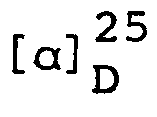
- Eine auf -750C gekühlte Lösung von 2,58 g (1S,2S,6R)-2-Methyl-3,7-dioxabicyclo[4.1.0]heptan-4-on in 300 ml wasserfreiem Toluol wurde unter Argon mit 14 ml einer 1,75 M Lösung von Diisobutylaluminiumhydrid in Toluol versetzt. Das Gemisch wurde weitere 2 Stunden bei -75°C gerührt und dann schnell in ein Gemisch aus 260 g Kieselgel in Toluol gegossen. Es wurde filtriert und mit 3 1 Methylenchlorid/ Methanol (9:1, v/v) gewaschen. Das Filtrat wurde unter vermindertem Druck eingeengt und der erhaltene ölige Rückstand in einem Kugelrohrdestillationsapparat destilliert Es wurden 2,03 g (1S,2S,6R)-2-Methyl-3,7-dioxabicyclo[4.1.0]-heptan-4-ol, Kp.0,1 90°C,

- Zu einer Lösung von 8,8 g (lS,2S,6R)-2-Methyl-3,7-dioxabicyclo[4.1.0]heptan-4-ol in 150 ml wasserfreiem Methanol wurden unter Argonatmosphäre und Rühren bei 35°C 0,45 ml einer 8,8%igen (w/v),frisch hergestellten Lösung von Bortrifluorid in wasserfreiem Methanol gegeben. Das Gemisch wurde 2 Stunden bei 35°C gerührt und dann mit 2,5 g Natriumbicarbonat versetzt und weitere 15 Minuten bei Raumtemperatur gerührt. Es wurde filtriert, der Rückstand 3 x mit 10 ml Methylenchlorid gewaschen und das Filtrat unter vermindertem Druck eingeengt. Der halbfeste Rückstand wurde mit Methylenchlorid behandelt, Feststoffe wurden durch Filtration abgetrennt und das Filtrat wurde unter vermindertem Druck eingeengt. Der Rückstand wurde durch einen Kugelrohrdestillationsapparat bei 900C (Ofentemperatur) und einem Druck von 0,1 mmHg destilliert und lieferte 8,3 g des rohen Anomerengemisches von (lS,2S,6R)-4-Methoxy-2-methyl-3,7-dioxabicyclo[4.1.0]heptan in Form einer hellgelben Flüssigkeit.
- Auf einem anderen Weg wurde (lS,2S,5R)-2-Methyl-6- oxabicyclo[3.1.0]hexan-3-on hergestellt durch Zusatz einer Lösung von 6,20 g 85%iger m-Chlorperbenzoesäure in 100 ml wasserfreiem Methylenchlorid innerhalb von 30 Minuten unter Rühren zu einem Gemisch aus 2,28 g (lS,2S, 3S,5R)-2-Methyl-6-oxabicyclo[3.1.0]hexan-3-ol, 1 ml einer 0,2 M Lösung von 2,2,6,6-Tetramethylpiperidinhydrochlorid in einem l%igem Gemisch aus Aethanol und Methylenchlorid und 20 ml Methylenchlorid. Das Reaktionsgemisch wurde eine Stunde bei 0°C gerührt. Eine Hälfte des Gemisches wurde 2 x mit 25 mll N wässriger Natriumhydroxidlösung und anschliessend mit Kochsalzlösung gewaschen. Die organische Phase wurde über Magnesiumsulfat getrocknet, filtriert und unter vermindertem Druck zur Trockene eingeengt. Der Rückstand wurde durch einen Kurzwegdestillationsapparat destilliert (80°C, 20 mmHg) und lieferte 0,452 g flüssiges (lS,2S,5R)-2-Methyl-6-oxabicyclo[3.1.0]hexan-3-on.
- Auf einem anderen Weg wurde (lS,2S,5R)-2-Methyl-6- oxabicyclo[3.1.0]hexan-3-on aus (lS,2S)-2-Methyl-3-cyclopenten-l-ol in folgender Weise erhalten:
- Zu einer Lösung von 1,96 g (lS,2S)-2-Methyl-3-cyclopenten-l-ol in 20 ml wasserfreiem Methylenchlorid wurde unter Rühren innerhalb von 20 Minuten bei 0°C und unter Argonatmosphäre eine Lösung von 4,44 g 85%iger m-Chlorperbenzoesäure gegeben. Das Gemisch wurde weitere 2 Stunden bei 0°C gerührt. Der entstandene Niederschlag wurde durch Filtration entfernt und der Rückstand mit Methylenchlorid gewaschen. Dem Filtrat wurden bei 0°C 4,5 g 85%ige m-Chlorperbenzoesäure und 1 ml einer 0,2 M Lösung von 2,2,6,6-Tetramethylpiperidinhydrochlorid in einem l%igen Gemisch aus Aethanol und Methylenchlorid zugesetzt. Das Gemisch wurde 30 Minuten bei 0°C und 2 Stunden bei 35°C gerührt. Der Niederschlag wurde abfiltriert und das Filtrat 2 x mit 20 ml gesättigter wässriger Natriumbicarbonatlösung und anschliessend mit Kochsalzlösung gewaschen. Die organische Phase wurde über Magnesiumsulfat getrocknet und unter vermindertem Druck zur Trockene eingeengt. Destillation des Rückstands in einem Kugelrohrapparat (80°C, 20 mmHg) lieferte 0,553 g (1S,2S,5R)-2-Methyl-6-oxabicyclo[3.1.0]hexan-3-on.
Claims (8)

oder 4S-(1S,2S,6R)-2-Methyl-3,7-dioxabicyclo[4.1.0] heptan-4-ol der Formel


Applications Claiming Priority (2)
| Application Number | Priority Date | Filing Date | Title |
|---|---|---|---|
| US05/850,982 US4174344A (en) | 1977-11-14 | 1977-11-14 | Process for the preparation of methyl 3,4-anhydro-2,6-dideoxy-L-ribo-hexopyranoside |
| US850982 | 1977-11-14 |
Publications (3)
| Publication Number | Publication Date |
|---|---|
| EP0002046A2 true EP0002046A2 (de) | 1979-05-30 |
| EP0002046A3 EP0002046A3 (en) | 1979-09-05 |
| EP0002046B1 EP0002046B1 (de) | 1982-02-10 |
Family
ID=25309627
Family Applications (1)
| Application Number | Title | Priority Date | Filing Date |
|---|---|---|---|
| EP78101359A Expired EP0002046B1 (de) | 1977-11-14 | 1978-11-13 | Verfahren zur Herstellung von (1S,2S,6R)-2-Methyl-3,7-dioxabicyclo(4.1.0)heptan-4-0l und dessen Methylether |
Country Status (7)
| Country | Link |
|---|---|
| US (1) | US4174344A (de) |
| EP (1) | EP0002046B1 (de) |
| JP (2) | JPS5476512A (de) |
| AT (1) | AT362370B (de) |
| CA (1) | CA1114391A (de) |
| DE (1) | DE2861626D1 (de) |
| IT (1) | IT1101410B (de) |
Families Citing this family (1)
| Publication number | Priority date | Publication date | Assignee | Title |
|---|---|---|---|---|
| GB8820603D0 (en) * | 1988-08-31 | 1988-09-28 | Shell Int Research | Cyclopentane derivatives |
Family Cites Families (2)
| Publication number | Priority date | Publication date | Assignee | Title |
|---|---|---|---|---|
| US2916462A (en) * | 1956-06-15 | 1959-12-08 | Columbia Southern Chem Corp | 3, 4 monoepoxide of cyclopentadiene and its homopolymer |
| US3997663A (en) * | 1962-05-18 | 1976-12-14 | Rhone-Poulenc S.A. | Antibiotic daunorubicin and its preparation |
-
1977
- 1977-11-14 US US05/850,982 patent/US4174344A/en not_active Expired - Lifetime
-
1978
- 1978-11-10 CA CA316,165A patent/CA1114391A/en not_active Expired
- 1978-11-13 DE DE7878101359T patent/DE2861626D1/de not_active Expired
- 1978-11-13 EP EP78101359A patent/EP0002046B1/de not_active Expired
- 1978-11-13 AT AT811578A patent/AT362370B/de not_active IP Right Cessation
- 1978-11-13 JP JP13897978A patent/JPS5476512A/ja active Granted
- 1978-11-14 IT IT29754/78A patent/IT1101410B/it active
-
1980
- 1980-10-06 JP JP13886880A patent/JPS56108782A/ja active Granted
Non-Patent Citations (2)
| Title |
|---|
| CHEMICAL ABSTRACTS, vol. 88, nr. 191269u, 1978, Columbus, Ohio, (USA) BOIVIN JEAN ET AL: "Synthesis of benzylidene acetals of methyl-2-deoxy-béta-1-fucoside and methyl-alpha-D-digitoxoside", Seite 810; & C.R. Hebd. Seances Acad. Sci., Ser.C. 1978, 286(1), 51-3 (FR) * |
| CHEMICAL COMMUNICATIONS, 1967, 973-975 * |
Also Published As
| Publication number | Publication date |
|---|---|
| JPS611072B2 (de) | 1986-01-13 |
| EP0002046A3 (en) | 1979-09-05 |
| IT7829754A0 (it) | 1978-11-14 |
| AT362370B (de) | 1981-05-11 |
| US4174344A (en) | 1979-11-13 |
| DE2861626D1 (en) | 1982-03-18 |
| JPS56108782A (en) | 1981-08-28 |
| ATA811578A (de) | 1980-10-15 |
| EP0002046B1 (de) | 1982-02-10 |
| CA1114391A (en) | 1981-12-15 |
| JPS5476512A (en) | 1979-06-19 |
| JPS5611717B2 (de) | 1981-03-16 |
| IT1101410B (it) | 1985-09-28 |
Similar Documents
| Publication | Publication Date | Title |
|---|---|---|
| DE2827627C2 (de) | ||
| EP0045837B1 (de) | Reaktive Derivate des 3-Oxa-bicyclo(4.3.0)-non-1-en-9-ons, Verfahren zu ihrer Herstellung und deren Verwendung | |
| SUEMUNE et al. | A new conversion method from (-)-limonene to nepetalactones | |
| DE2249720A1 (de) | Verfahren zur herstellung von tetrahydrodibenzopyranverbindungen | |
| DE3050772C2 (de) | ||
| EP0002046B1 (de) | Verfahren zur Herstellung von (1S,2S,6R)-2-Methyl-3,7-dioxabicyclo(4.1.0)heptan-4-0l und dessen Methylether | |
| EP0107806A1 (de) | Verfahren zur Herstellung von optisch aktiven Hydrochinonderivaten sowie von d-alpha-Tocopherol | |
| US4814469A (en) | Novel hydroperoxide and use of same as intermediate for the preparation of 3a,6,69a-tetramethylperhydronaphtho[2,1-b]furan | |
| US4292432A (en) | Novel aldol derivatives and production thereof | |
| Demole et al. | A Chemical Study of Burley Tobacco Flavour (Nicotiana tabacuml.) V. Identification and Synthesis of the Novel Terpenoid Alkaloids 1, 3, 6, 6‐Tetramethyl‐5, 6, 7, 8‐tetrahydro‐isoquinolin‐8‐one and 3, 6, 6‐Trimethyl‐5, 6‐dihydro‐7H‐2‐pyrindin‐7‐one | |
| DE2608932A1 (de) | Verfahren zur herstellung eines 3-oxy-4h-pyran-4-on-derivats | |
| DE2347172A1 (de) | Prostaglandin e tief 1-synthese | |
| DE2044698C3 (de) | Verfahren zur Herstellung von Cyclopentanderivaten mit der Struktur der Prostaglandine | |
| EP0013955B1 (de) | Neue Analoga von Prostacyclin, deren Zwischenprodukte, Verfahren zu ihrer Herstellung sowie sie enthaltende Arzneimittel | |
| EP0226871A1 (de) | Ausgangsprodukte zur Herstellung von 9-beta-Chlorprostaglandinen | |
| EP0120289B1 (de) | Verfahren zur Herstellung von chiralen B-Lactamen | |
| DE3718589A1 (de) | Neue mono- und polyhydroxyacyl-derivate polyoxygenierter labdane, ein verfahren zu deren herstellung und ihre verwendung als medikamente | |
| DE4128345C1 (en) | 3R,5S 3,5,6-tri:hydroxy-hexanoic acid isopropylidene ketal derivs. prepn. - from 7-benzyl:oxy 4,6-di:hydroxy:heptene by multistage process | |
| DE1793410A1 (de) | Totalsynthese von Zearalenon | |
| EP0136662B1 (de) | 2,6-Dioxa-Bicyclo-[2,2,2]-octan-7-yl-acetaldehyde | |
| CH628634A5 (de) | Verfahren zur herstellung von 2,2'-bis(3,4-epoxy-5-oxotetrahydropyran)aether und produkt. | |
| DE2246867A1 (de) | Tetrahydroxy-bicyclo- eckige klammer auf 3.3.0 eckige klammer zu -octane | |
| CH658649A5 (de) | (3rs, 4sr)-benzyl-4-(cyanomethyl)-3-(1'-hydroxyaethyl)-2-azetidinon. | |
| DE2166797C2 (de) | Optisch aktive tricyclische Lactonaldehyde und Verfahren zu deren Herstellung | |
| EP0023663B1 (de) | Verfahren zur Herstellung neuer sauerstoffhaltiger Heterocyclen |
Legal Events
| Date | Code | Title | Description |
|---|---|---|---|
| PUAI | Public reference made under article 153(3) epc to a published international application that has entered the european phase |
Free format text: ORIGINAL CODE: 0009012 |
|
| AK | Designated contracting states |
Designated state(s): BE CH DE FR GB NL |
|
| PUAL | Search report despatched |
Free format text: ORIGINAL CODE: 0009013 |
|
| AK | Designated contracting states |
Designated state(s): BE CH DE FR GB NL |
|
| 17P | Request for examination filed | ||
| GRAA | (expected) grant |
Free format text: ORIGINAL CODE: 0009210 |
|
| AK | Designated contracting states |
Designated state(s): BE CH DE FR GB NL |
|
| REF | Corresponds to: |
Ref document number: 2861626 Country of ref document: DE Date of ref document: 19820318 |
|
| PGFP | Annual fee paid to national office [announced via postgrant information from national office to epo] |
Ref country code: BE Payment date: 19890914 Year of fee payment: 12 |
|
| PGFP | Annual fee paid to national office [announced via postgrant information from national office to epo] |
Ref country code: FR Payment date: 19891030 Year of fee payment: 12 |
|
| PGFP | Annual fee paid to national office [announced via postgrant information from national office to epo] |
Ref country code: GB Payment date: 19891031 Year of fee payment: 12 |
|
| PGFP | Annual fee paid to national office [announced via postgrant information from national office to epo] |
Ref country code: DE Payment date: 19891123 Year of fee payment: 12 |
|
| PGFP | Annual fee paid to national office [announced via postgrant information from national office to epo] |
Ref country code: NL Payment date: 19891130 Year of fee payment: 12 Ref country code: CH Payment date: 19891130 Year of fee payment: 12 |
|
| NLS | Nl: assignments of ep-patents |
Owner name: F. HOFFMANN-LA ROCHE AG TE BAZEL, ZWITSERLAND. |
|
| REG | Reference to a national code |
Ref country code: FR Ref legal event code: TP |
|
| REG | Reference to a national code |
Ref country code: CH Ref legal event code: PUE Owner name: F. HOFFMANN-LA ROCHE AG |
|
| REG | Reference to a national code |
Ref country code: GB Ref legal event code: 732 |
|
| PG25 | Lapsed in a contracting state [announced via postgrant information from national office to epo] |
Ref country code: GB Effective date: 19901113 |
|
| PG25 | Lapsed in a contracting state [announced via postgrant information from national office to epo] |
Ref country code: CH Effective date: 19901130 Ref country code: BE Effective date: 19901130 |
|
| BERE | Be: lapsed |
Owner name: F. HOFFMANN-LA ROCHE A.G. Effective date: 19901130 |
|
| PG25 | Lapsed in a contracting state [announced via postgrant information from national office to epo] |
Ref country code: NL Effective date: 19910601 |
|
| GBPC | Gb: european patent ceased through non-payment of renewal fee | ||
| NLV4 | Nl: lapsed or anulled due to non-payment of the annual fee | ||
| PG25 | Lapsed in a contracting state [announced via postgrant information from national office to epo] |
Ref country code: FR Effective date: 19910731 |
|
| REG | Reference to a national code |
Ref country code: CH Ref legal event code: PL |
|
| PG25 | Lapsed in a contracting state [announced via postgrant information from national office to epo] |
Ref country code: DE Effective date: 19910801 |
|
| REG | Reference to a national code |
Ref country code: FR Ref legal event code: ST |
|
| PLBE | No opposition filed within time limit |
Free format text: ORIGINAL CODE: 0009261 |
|
| STAA | Information on the status of an ep patent application or granted ep patent |
Free format text: STATUS: NO OPPOSITION FILED WITHIN TIME LIMIT |