EP0004187B1 - Dérivés carbonyl hétérocycliques d'urées et leur utilisation comme agents de dissolution de calculs biliaires - Google Patents
Dérivés carbonyl hétérocycliques d'urées et leur utilisation comme agents de dissolution de calculs biliaires Download PDFInfo
- Publication number
- EP0004187B1 EP0004187B1 EP79300351A EP79300351A EP0004187B1 EP 0004187 B1 EP0004187 B1 EP 0004187B1 EP 79300351 A EP79300351 A EP 79300351A EP 79300351 A EP79300351 A EP 79300351A EP 0004187 B1 EP0004187 B1 EP 0004187B1
- Authority
- EP
- European Patent Office
- Prior art keywords
- methyl
- group
- compound
- carbon atoms
- hydrogen
- Prior art date
- Legal status (The legal status is an assumption and is not a legal conclusion. Google has not performed a legal analysis and makes no representation as to the accuracy of the status listed.)
- Expired
Links
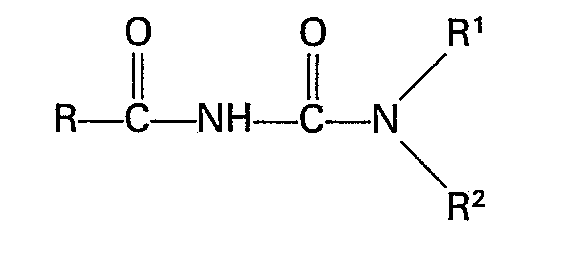
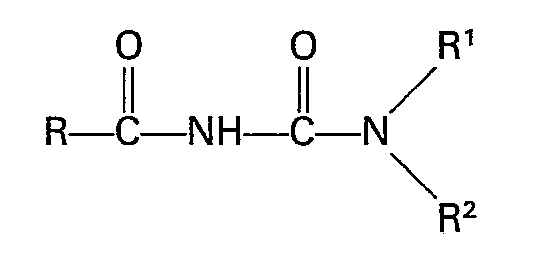
- 0 *C(NC(N(*)*)=O)=O Chemical compound *C(NC(N(*)*)=O)=O 0.000 description 1
Classifications
-
- C—CHEMISTRY; METALLURGY
- C07—ORGANIC CHEMISTRY
- C07D—HETEROCYCLIC COMPOUNDS
- C07D213/00—Heterocyclic compounds containing six-membered rings, not condensed with other rings, with one nitrogen atom as the only ring hetero atom and three or more double bonds between ring members or between ring members and non-ring members
- C07D213/02—Heterocyclic compounds containing six-membered rings, not condensed with other rings, with one nitrogen atom as the only ring hetero atom and three or more double bonds between ring members or between ring members and non-ring members having three double bonds between ring members or between ring members and non-ring members
- C07D213/04—Heterocyclic compounds containing six-membered rings, not condensed with other rings, with one nitrogen atom as the only ring hetero atom and three or more double bonds between ring members or between ring members and non-ring members having three double bonds between ring members or between ring members and non-ring members having no bond between the ring nitrogen atom and a non-ring member or having only hydrogen or carbon atoms directly attached to the ring nitrogen atom
- C07D213/60—Heterocyclic compounds containing six-membered rings, not condensed with other rings, with one nitrogen atom as the only ring hetero atom and three or more double bonds between ring members or between ring members and non-ring members having three double bonds between ring members or between ring members and non-ring members having no bond between the ring nitrogen atom and a non-ring member or having only hydrogen or carbon atoms directly attached to the ring nitrogen atom with hetero atoms or with carbon atoms having three bonds to hetero atoms with at the most one bond to halogen, e.g. ester or nitrile radicals, directly attached to ring carbon atoms
- C07D213/78—Carbon atoms having three bonds to hetero atoms, with at the most one bond to halogen, e.g. ester or nitrile radicals
- C07D213/81—Amides; Imides
-
- A—HUMAN NECESSITIES
- A61—MEDICAL OR VETERINARY SCIENCE; HYGIENE
- A61P—SPECIFIC THERAPEUTIC ACTIVITY OF CHEMICAL COMPOUNDS OR MEDICINAL PREPARATIONS
- A61P1/00—Drugs for disorders of the alimentary tract or the digestive system
- A61P1/16—Drugs for disorders of the alimentary tract or the digestive system for liver or gallbladder disorders, e.g. hepatoprotective agents, cholagogues, litholytics
-
- C—CHEMISTRY; METALLURGY
- C07—ORGANIC CHEMISTRY
- C07D—HETEROCYCLIC COMPOUNDS
- C07D215/00—Heterocyclic compounds containing quinoline or hydrogenated quinoline ring systems
- C07D215/02—Heterocyclic compounds containing quinoline or hydrogenated quinoline ring systems having no bond between the ring nitrogen atom and a non-ring member or having only hydrogen atoms or carbon atoms directly attached to the ring nitrogen atom
- C07D215/16—Heterocyclic compounds containing quinoline or hydrogenated quinoline ring systems having no bond between the ring nitrogen atom and a non-ring member or having only hydrogen atoms or carbon atoms directly attached to the ring nitrogen atom with hetero atoms or with carbon atoms having three bonds to hetero atoms with at the most one bond to halogen, e.g. ester or nitrile radicals, directly attached to ring carbon atoms
- C07D215/48—Carbon atoms having three bonds to hetero atoms with at the most one bond to halogen
- C07D215/54—Carbon atoms having three bonds to hetero atoms with at the most one bond to halogen attached in position 3
-
- C—CHEMISTRY; METALLURGY
- C07—ORGANIC CHEMISTRY
- C07D—HETEROCYCLIC COMPOUNDS
- C07D261/00—Heterocyclic compounds containing 1,2-oxazole or hydrogenated 1,2-oxazole rings
- C07D261/02—Heterocyclic compounds containing 1,2-oxazole or hydrogenated 1,2-oxazole rings not condensed with other rings
- C07D261/06—Heterocyclic compounds containing 1,2-oxazole or hydrogenated 1,2-oxazole rings not condensed with other rings having two or more double bonds between ring members or between ring members and non-ring members
- C07D261/10—Heterocyclic compounds containing 1,2-oxazole or hydrogenated 1,2-oxazole rings not condensed with other rings having two or more double bonds between ring members or between ring members and non-ring members with hetero atoms or with carbon atoms having three bonds to hetero atoms with at the most one bond to halogen, e.g. ester or nitrile radicals, directly attached to ring carbon atoms
- C07D261/18—Carbon atoms having three bonds to hetero atoms, with at the most one bond to halogen
-
- C—CHEMISTRY; METALLURGY
- C07—ORGANIC CHEMISTRY
- C07D—HETEROCYCLIC COMPOUNDS
- C07D263/00—Heterocyclic compounds containing 1,3-oxazole or hydrogenated 1,3-oxazole rings
- C07D263/02—Heterocyclic compounds containing 1,3-oxazole or hydrogenated 1,3-oxazole rings not condensed with other rings
- C07D263/30—Heterocyclic compounds containing 1,3-oxazole or hydrogenated 1,3-oxazole rings not condensed with other rings having two or three double bonds between ring members or between ring members and non-ring members
- C07D263/34—Heterocyclic compounds containing 1,3-oxazole or hydrogenated 1,3-oxazole rings not condensed with other rings having two or three double bonds between ring members or between ring members and non-ring members with hetero atoms or with carbon atoms having three bonds to hetero atoms with at the most one bond to halogen, e.g. ester or nitrile radicals, directly attached to ring carbon atoms
-
- C—CHEMISTRY; METALLURGY
- C07—ORGANIC CHEMISTRY
- C07D—HETEROCYCLIC COMPOUNDS
- C07D275/00—Heterocyclic compounds containing 1,2-thiazole or hydrogenated 1,2-thiazole rings
- C07D275/02—Heterocyclic compounds containing 1,2-thiazole or hydrogenated 1,2-thiazole rings not condensed with other rings
- C07D275/03—Heterocyclic compounds containing 1,2-thiazole or hydrogenated 1,2-thiazole rings not condensed with other rings with hetero atoms or with carbon atoms having three bonds to hetero atoms with at the most one bond to halogen, e.g. ester or nitrile radicals, directly attached to ring carbon atoms
-
- C—CHEMISTRY; METALLURGY
- C07—ORGANIC CHEMISTRY
- C07D—HETEROCYCLIC COMPOUNDS
- C07D275/00—Heterocyclic compounds containing 1,2-thiazole or hydrogenated 1,2-thiazole rings
- C07D275/04—Heterocyclic compounds containing 1,2-thiazole or hydrogenated 1,2-thiazole rings condensed with carbocyclic rings or ring systems
-
- C—CHEMISTRY; METALLURGY
- C07—ORGANIC CHEMISTRY
- C07D—HETEROCYCLIC COMPOUNDS
- C07D277/00—Heterocyclic compounds containing 1,3-thiazole or hydrogenated 1,3-thiazole rings
- C07D277/02—Heterocyclic compounds containing 1,3-thiazole or hydrogenated 1,3-thiazole rings not condensed with other rings
- C07D277/20—Heterocyclic compounds containing 1,3-thiazole or hydrogenated 1,3-thiazole rings not condensed with other rings having two or three double bonds between ring members or between ring members and non-ring members
- C07D277/32—Heterocyclic compounds containing 1,3-thiazole or hydrogenated 1,3-thiazole rings not condensed with other rings having two or three double bonds between ring members or between ring members and non-ring members with hetero atoms or with carbon atoms having three bonds to hetero atoms with at the most one bond to halogen, e.g. ester or nitrile radicals, directly attached to ring carbon atoms
- C07D277/56—Carbon atoms having three bonds to hetero atoms with at the most one bond to halogen
-
- C—CHEMISTRY; METALLURGY
- C07—ORGANIC CHEMISTRY
- C07D—HETEROCYCLIC COMPOUNDS
- C07D285/00—Heterocyclic compounds containing rings having nitrogen and sulfur atoms as the only ring hetero atoms, not provided for by groups C07D275/00 - C07D283/00
- C07D285/01—Five-membered rings
- C07D285/02—Thiadiazoles; Hydrogenated thiadiazoles
- C07D285/04—Thiadiazoles; Hydrogenated thiadiazoles not condensed with other rings
- C07D285/06—1,2,3-Thiadiazoles; Hydrogenated 1,2,3-thiadiazoles
-
- C—CHEMISTRY; METALLURGY
- C07—ORGANIC CHEMISTRY
- C07D—HETEROCYCLIC COMPOUNDS
- C07D285/00—Heterocyclic compounds containing rings having nitrogen and sulfur atoms as the only ring hetero atoms, not provided for by groups C07D275/00 - C07D283/00
- C07D285/01—Five-membered rings
- C07D285/02—Thiadiazoles; Hydrogenated thiadiazoles
- C07D285/04—Thiadiazoles; Hydrogenated thiadiazoles not condensed with other rings
- C07D285/10—1,2,5-Thiadiazoles; Hydrogenated 1,2,5-thiadiazoles
-
- C—CHEMISTRY; METALLURGY
- C07—ORGANIC CHEMISTRY
- C07D—HETEROCYCLIC COMPOUNDS
- C07D307/00—Heterocyclic compounds containing five-membered rings having one oxygen atom as the only ring hetero atom
- C07D307/02—Heterocyclic compounds containing five-membered rings having one oxygen atom as the only ring hetero atom not condensed with other rings
- C07D307/34—Heterocyclic compounds containing five-membered rings having one oxygen atom as the only ring hetero atom not condensed with other rings having two or three double bonds between ring members or between ring members and non-ring members
- C07D307/56—Heterocyclic compounds containing five-membered rings having one oxygen atom as the only ring hetero atom not condensed with other rings having two or three double bonds between ring members or between ring members and non-ring members with hetero atoms or with carbon atoms having three bonds to hetero atoms with at the most one bond to halogen, e.g. ester or nitrile radicals, directly attached to ring carbon atoms
- C07D307/68—Carbon atoms having three bonds to hetero atoms with at the most one bond to halogen
Definitions
- This invention relates to heterocyclylcarbonyl derivatives of urea for use as agents for the dissolution of gallstones, and in particular of cholesterol gallstones.
- the invention also provides novel heterocyclylcarbonyl ureas.
- These compounds are particularly valuable agents for the dissolution of cholesterol gallstones in mammals, including humans. Additionally, they reduce biliary lipid pools in mammals.
- novel heterocyclylcarbonyl ureas as defined above, with the further proviso that, when R is pyridyl or furyl, and R 1 is hydrogen, then R 2 is other than hydrogen, methyl, ethyl or benzyl.
- compositions wherein R is a basic group include the hydrochloride, hydrobromide, sulfate, phosphate, pamoate, citrate, malate, fumarate, tartrate, glycolate, maleate, p-toluenesulfonate, succinate, oxalate, mandelate, acetate and lactate salts.
- Such salts are prepared by known procedures.
- the favoured compounds of this invention are those in which R 1 is hydrogen and R 2 is a phenylalkyl group, or in which R 1 and R 2 are taken together with the nitrogen to which they are attached to form a ring structure, especially a 6-membered ring.
- Preferred compounds are those in which R is pyridyl, chloro-substituted pyridyl or 3-quinolyl and either R 1 is hydrogen and R2 is benzyl, or NR R is- a 1-(1,2,3,6-tetrahydropyridyl) or optionally-substituted piperidino group.
- the favoured temperature range is from about 20°C to about 50°C since the reaction proceeds satisfactorily within this temperature range as regards reaction rate and yield of product.
- a further procedure comprises reacting the appropriate 1-heterocyclyl-3,3-diphenylurea with an appropriate amine (HNR 1 R 2 ) in a reaction inert solvent at an elevated temperature in the presence of an acid (Method B).
- Temperatures of from about 50°C to about 200°C are suitable for the reaction.
- the favoured range is from about 85°C to about 150°C.
- Suitable solvents for this procedure are those enumerated above, the boiling points of which fall within the temperature range cited.
- the presence of an acid expedites the reaction.
- the acid can be added separately to the reaction mixture or can be added as an acid addition salt of the amine reactant.
- the acid and amine are generally used in equimolar ratios.
- the ratio of acid to amine is not critical but can vary from trace amounts of acid to up to several molar excesses.
- the favoured ratio of acid to amine is from about 2:1 to about 1:2.
- a still further procedure comprise acylation of a urea derivative of the formula H2N-CO-NRIR with an appropriate heterocyclyl acid chloride R-COCI in a reaction inert solvent, that is, a solvent which does not react to any appreciable extent with the reactants or products.
- a reaction inert solvent that is, a solvent which does not react to any appreciable extent with the reactants or products.
- Suitable solvents includes alkanols having from one to four carbon atoms, halogenated hydrocarbons such as methylene chloride, chloroform, carbon tetrachloride, and hydrocarbons such as benzene, toluene, xylene, n-hexane, and cyclohexane.
- An acid acceptor is also used.
- Representative acid acceptors for use in the above solvent systems are tertiary organic bases such as triethylamine, pyridine, collidine, picoline and alkali metal alkoxides. Water can also be used as solvent since reaction occurs primarily and preferentially with the urea reactant.
- Another suitable procedure comprises reacting a lower alkyl ester of a heterocyclic carboxylic acid R-COOR 3 wherein R is as previously defined and R 3 is lower alkyl having up to four carbon atoms with the sodium (or potassium) salts of an appropriate urea reactant of the formula NaHN-CO-NR 1 H 2 is a reaction inert solvent such as chloroform, N,N-dimethylformamide, toluene and tetrahydrofuran at a temperature of from about -10°C to about 70°C..
- a reaction inert solvent such as chloroform, N,N-dimethylformamide, toluene and tetrahydrofuran at a temperature of from about -10°C to about 70°C.
- the isocyanate need not be isolated from the reaction mixture. In actual practice, it has been found most convenient to add the amine reactant HNR I R 2 directly to the isocyanate containing reaction mixture.
- the amide reactants used to prepare the isocyanate reactants described above are in turn prepared from the corresponding nitriles by hydrolysis according to known procedures.
- a convenient procedure comprises reaction of the nitrile with an alkali metal hydroxide, e.g., potassium hydroxide, and hydrogen-peroxide in a solvent such as ethanol at temperatures from about room temperature to the reflux temperature until evolution of gas is complete.
- alkali metal hydroxide e.g., potassium hydroxide
- hydrogen-peroxide in a solvent such as ethanol
- they are prepared by amidation of the corresponding acid chlorides according to well known procedures.
- the acid chlorides are prepared by reaction of the appropriate carboxylic acid with thionyl chloride, the latter generally serving as reactant and solvent.
- the compounds described herein are useful in dissolving gallstones in mammals and, when used for such purpose, are administered orally or parenterally in unit dosage form either alone or in the form of pharmaceutical preparations; that is, in combination with other therapeutic agents and/or a pharmaceutically acceptable carrier, the latter selected on the basis of the chosen route of administration and standard pharmaceutical practice.
- a pharmaceutically acceptable carrier selected on the basis of the chosen route of administration and standard pharmaceutical practice.
- they can be combined with various pharmaceutically acceptable inert carriers in the form of tablets, capsules, lozenges, troches, hard candies, powders, aerosol sprays, aqueous suspensions or solutions, injectable solutions, elixirs, syrups and the like.
- Such carriers include solid diluents or fillers, sterile aqueous media and various non-toxic organic solvents.
- oral pharmaceutical compositions of this invention can be suitably sweetened and flavoured by means of various agents of the type commonly used for this purpose.
- the particular carrier selected and the proportion of active ingredient to carrier are influenced by the solubility and chemical nature of the therapeutic compounds, the chosen route of administration and the needs of standard pharmaceutical practice.
- excipients such as lactose, sodium citrate, calcium carbonate and dicalcium phosphate can be used.
- Various disintegrants such as starch, alginic acids and certain complex silicates, together with lubricating agents such as magnesium stearate, sodium lauryl sulphate and talc, can also be used in producing tablets for the oral administration of these compounds.
- lactose and high molecular weight polyethylene glycols are among the preferred materials for use as pharmaceutically-acceptable carriers.
- aqueous suspensions are to be used for oral administration
- the compounds of this invention can be combined with emulsifying or suspending agents.
- Diluents such as ethanol, propylene glycol, glycerine and chloroform and their combinations can be employed as well as other materials.
- solutions or suspensions of these compounds in sesame or peanut oil or in aqueous propylene glycol solutions can be employed, as well as sterile aqueous solutions of the soluble pharmaceutically-acceptable salts described herein.
- aqueous solutions including those of the salts dissolved in pure distilled water, are also useful for intravenous injection purposes provided that their pH is properly adjusted beforehand.
- Such solutions should also be suitably buffered, if necessary, and the liquid diluent first rendered isotonic with sufficient saline or glucose.
- compositions with less than 0.005% by weight of active ingredient might be used in certain instances, it is preferred to use compositions containing not less than 0.005% of the active ingredient; otherwise, the amount of carrier becomes excessively large.
- Activity increases with the concentration of the active ingredient.
- the composition may contain 10, 50, 75, 95 or an even higher percentage by weight of the active ingredient.
- the dosage unit administered can be any gallstone dissolving effective amount. Dosages of from about 10 mg/kg to about 100 mg/kg per day, and preferably from about 10 mg/kg to about 50 mg/kg per day are effective in achieving the desired effect.
- the compounds of this invention can be administered by intraductal infusion, a method of considerable value in the treatment of patients having stones retained in the common bile duct after cholecystectomy and common duct exploration. It is of particular value in situations where the gallstones are between the T-tube and the duodenum.
- a convenient dosage form for this method is a saline solution buffered to pH 7.5. Concentrations of from about 10 millimoles to about 200 millimoles of the chosen compound are practical for such use. The solutions are allowed to drip into the duct at a rate of 30 ml per hour for periods of from 3 to 14 days.
- the value of the herein-described compounds as agents for the dissolution of gallstones arises from their ability to decrease the lithogenic index; i.e. the relative concentrations of the three major bile lipids: cholesterol, bile acids and phospholipids. It expresses the chloresterol level as a percentage of the concentration that would be required to saturate bile of that particular bile acid and phospholipid concentration or, it is 100 times the ratio of cholesterol actually present to the maximal amount that would be soluble at the phospholipid-bile acid ratio of a given sample.
- the effects of the compound described herein, and their efficacy are dependent upon their increase in bile acid synthesis in vivo.
- the compounds increase the conversion of cholesterol to bile acids by increasing the activity of the rate-controlling enzyme, cholesterol 7 ⁇ -hydroxyIase.
- mice Male albino mice, weight ca. 25 gm., are adapted to a synthetic diet (sucrose, casein, corn oil, salts and vitamins) for 1-2 weeks. They are then fed the test compounds mixed into their diet (maximum 0.15%) for 4 days. One day before sacrifice (3 days on drug), the mice are injected i.p.
- the contents are acidifed with 4 ml concentrated HCI and extracted with 2 x 15 ml ethyl acetate.
- the extracts are combined, dried over anhydrous granular sodium sulfate, and evaporated under nitrogen.
- the residue is treated with excess diazomethane in ether-methanol, re- dired and dissolved in a small volume of chloroform.
- Samples are streaked on silica gel GF thin layer chromatography plates (Analtech, 5 cm. lanes) developed in acetone-benzene (2:3), and stained with 1 2 vapor.
- mice Healthy male CD-1 mice (20-25 g), 10 mice per group, received a single high dose of drug by intraperitoneal administration (1000 mg/kg in 0.6% Tween 20, ("Tween” is a registered Trade Mark in the United Kingdom) at a concentration of 70 mg/ml).
- Tween 20 polyoxyethylene sorbitan monolaurate, available from Atlas Chemical Industries Inc.
- the animals were observed continuously for at least two hours, again at 24 hours and daily thereafter for one week. Controls received vehicle alone, 1.43 ml/kg and were asymptomatic throughout.
- the compounds tested and the widely varying mortality rates observed are tabulated below.
- Particularly preferred individual compounds of the invention are the following:
- nicotinamide (24.4 g, 0.20 mole) and dry ethylene dichloride (2500 ml) is added oxalyl chloride (38.1 g, 0.30 mole). The mixture is then heated to reflux for 4.5 hours and then cooled to room temperature. It is filtered to give a clear pale orange solution of nicotinyl isocyanate which is used directly in the next step.
- the mixture is cooled to room temperature and extracted with 1 N sodium hydroxide (50 ml).
- the extract is acidified with glacial acetic acid and the oil which separates extracted with ethyl acetate. Evaporation of the extract under reduced pressure gives 1.9 g of oil.
- the white solid (isonicotinic acid) is removed by filtration and the filtrate evaporated to dryness to give the title product as a yellowish solid: m.p. 245-247°C. Quantitative analysis and infra-red data are consistent with the values expected for the product.
- the appropriate acid reactant of formula R-COOH is heated to reflux in an excess of thionyl chloride for 3 hours.
- the reaction mixture is then evaporated to dryness under reduced pressure and the residue added in small portions with stirring to an excess of concentrated ammonium hydroxide at room temperature.
- the mixture is stirred for one hour following completion of addition and the product recovered by filtration if it is insoluble or by evaporation if it is soluble.
Landscapes
- Chemical & Material Sciences (AREA)
- Organic Chemistry (AREA)
- Health & Medical Sciences (AREA)
- Animal Behavior & Ethology (AREA)
- Public Health (AREA)
- Chemical Kinetics & Catalysis (AREA)
- General Chemical & Material Sciences (AREA)
- Medicinal Chemistry (AREA)
- Nuclear Medicine, Radiotherapy & Molecular Imaging (AREA)
- Engineering & Computer Science (AREA)
- Pharmacology & Pharmacy (AREA)
- Life Sciences & Earth Sciences (AREA)
- Gastroenterology & Hepatology (AREA)
- General Health & Medical Sciences (AREA)
- Bioinformatics & Cheminformatics (AREA)
- Veterinary Medicine (AREA)
- Pharmaceuticals Containing Other Organic And Inorganic Compounds (AREA)
- Pyridine Compounds (AREA)
- Quinoline Compounds (AREA)
- Thiazole And Isothizaole Compounds (AREA)
- Nitrogen- Or Sulfur-Containing Heterocyclic Ring Compounds With Rings Of Six Or More Members (AREA)
- Heterocyclic Carbon Compounds Containing A Hetero Ring Having Nitrogen And Oxygen As The Only Ring Hetero Atoms (AREA)
- Plural Heterocyclic Compounds (AREA)
- Steroid Compounds (AREA)
Claims (10)
ou bien
Applications Claiming Priority (2)
| Application Number | Priority Date | Filing Date | Title |
|---|---|---|---|
| US884858 | 1978-03-09 | ||
| US05/884,858 US4163784A (en) | 1978-03-09 | 1978-03-09 | Heterocyclylcarbonyl derivatives of urea, agents for dissolution of gallstones |
Publications (2)
| Publication Number | Publication Date |
|---|---|
| EP0004187A1 EP0004187A1 (fr) | 1979-09-19 |
| EP0004187B1 true EP0004187B1 (fr) | 1982-03-17 |
Family
ID=25385576
Family Applications (1)
| Application Number | Title | Priority Date | Filing Date |
|---|---|---|---|
| EP79300351A Expired EP0004187B1 (fr) | 1978-03-09 | 1979-03-07 | Dérivés carbonyl hétérocycliques d'urées et leur utilisation comme agents de dissolution de calculs biliaires |
Country Status (8)
| Country | Link |
|---|---|
| US (2) | US4163784A (fr) |
| EP (1) | EP0004187B1 (fr) |
| JP (1) | JPS5925794B2 (fr) |
| DE (1) | DE2962266D1 (fr) |
| DK (1) | DK96179A (fr) |
| IE (1) | IE48320B1 (fr) |
| IL (1) | IL56821A (fr) |
| PH (1) | PH16534A (fr) |
Families Citing this family (13)
| Publication number | Priority date | Publication date | Assignee | Title |
|---|---|---|---|---|
| DE2913977A1 (de) * | 1979-04-05 | 1980-10-23 | Schering Ag | 1,2,3-thiadiazol-5-carbonsaeureamid- derivate, verfahren zur herstellung dieser verbindungen sowie diese enthaltende mittel mit herbizider, wuchsregulatorischer und entblaetternder sowie fungizider wirkung |
| US4336264A (en) * | 1980-06-19 | 1982-06-22 | Eli Lilly And Company | 1-Benzoyl-3-(isoxazolyl or benzisoxazolyl)-ureas and insecticidal use thereof |
| DE3109582A1 (de) * | 1981-03-13 | 1982-10-28 | Bayer Ag, 5090 Leverkusen | N-(2,2,2-trifluorethyl)-n-alkyl- azolyloxyessigsaeureamide, verfahren zu ihrer herstellung und ihre verwendung als herbizide sowie neue zwischenprodukte zu ihrer herstellung |
| US4380641A (en) * | 1981-10-26 | 1983-04-19 | Eli Lilly And Company | Insecticidal oxazolyl ureas |
| IT1196849B (it) * | 1986-02-16 | 1988-11-25 | Rotta Research Lab | Nuovi derivati degli acidi 5 pentilammino 5 oxo pentaoico e 4 pentilammino 4 oxo butanoico ad attivita antagonista della colecistochinina e procedimento per la loro preparazione |
| US4971978A (en) * | 1987-09-21 | 1990-11-20 | Nadzan Alex M | Derivatives of D-glutamic acid and D-aspartic acid |
| ES2062088T3 (es) * | 1988-03-25 | 1994-12-16 | Ciba Geigy Ag | Agente para la proteccion de plantas contra enfermedades. |
| KR20010081034A (ko) * | 1998-11-20 | 2001-08-25 | 프리돌린 클라우스너, 롤란드 비. 보레르 | 피페리딘 씨씨알-3 수용체 길항제 |
| TWI245761B (en) | 2001-03-01 | 2005-12-21 | Telik Inc | Antagonists of MCP-1 function and methods of use thereof |
| WO2007002220A2 (fr) * | 2005-06-21 | 2007-01-04 | Bristol-Myers Squibb Company | Guanidines d'acyle acetamide amine en tant qu'inhibiteurs de beta-secretase |
| WO2007002214A2 (fr) * | 2005-06-21 | 2007-01-04 | Bristol-Myers Squibb Company | Acylguanidines en tant qu'inhibiteur de beta-secretase |
| US7886674B2 (en) * | 2005-12-05 | 2011-02-15 | L&P Property Management Company | Interlocking, interchangeable support base system |
| WO2008023720A1 (fr) * | 2006-08-23 | 2008-02-28 | Astellas Pharma Inc. | COMPOSÉ D'URÉE OU SEL DUDIT COMPOSé |
Family Cites Families (8)
| Publication number | Priority date | Publication date | Assignee | Title |
|---|---|---|---|---|
| US3345372A (en) | 1967-03-24 | 1967-10-03 | American Cyanamid Co | Substituted n-carbamylpyrazine-carboxamides |
| US4014876A (en) * | 1969-11-12 | 1977-03-29 | Shionogi & Co., Ltd. | Isoxazole derivatives |
| BE758762A (fr) | 1969-11-12 | 1971-04-16 | Shionogi & Cy Ltd | Derives de l'isoxazole et leur preparation |
| US3806601A (en) * | 1970-11-18 | 1974-04-23 | Egyt Gyogyszervegyeszeti Gyar | Cholesterol- and lipoid-lowering therapeutical agent |
| CA935816A (en) | 1970-12-28 | 1973-10-23 | Sumimoto Shinzaburo | Process for preparing 3-isoxazolylcarbonylureides |
| US3859437A (en) | 1972-06-02 | 1975-01-07 | Intellectual Property Dev Corp | Reducing cholesterol levels |
| SE378815B (fr) * | 1974-03-06 | 1975-09-15 | Astra Bofors Nobelpharma Ab | |
| US3969503A (en) | 1975-10-02 | 1976-07-13 | Intellectual Property Development Corporation | Compositions and methods useful in rendering lithogenic mammalian bile non-lithogenic |
-
1978
- 1978-03-09 US US05/884,858 patent/US4163784A/en not_active Expired - Lifetime
-
1979
- 1979-03-07 DE DE7979300351T patent/DE2962266D1/de not_active Expired
- 1979-03-07 EP EP79300351A patent/EP0004187B1/fr not_active Expired
- 1979-03-08 JP JP54027220A patent/JPS5925794B2/ja not_active Expired
- 1979-03-08 IL IL56821A patent/IL56821A/xx unknown
- 1979-03-08 DK DK96179A patent/DK96179A/da not_active Application Discontinuation
- 1979-03-08 PH PH22270A patent/PH16534A/en unknown
- 1979-08-08 IE IE592/79A patent/IE48320B1/en unknown
- 1979-09-14 US US06/075,728 patent/US4252957A/en not_active Expired - Lifetime
Also Published As
| Publication number | Publication date |
|---|---|
| DK96179A (da) | 1979-09-10 |
| US4163784A (en) | 1979-08-07 |
| JPS5925794B2 (ja) | 1984-06-21 |
| JPS54151981A (en) | 1979-11-29 |
| DE2962266D1 (en) | 1982-04-15 |
| IE790592L (en) | 1979-09-09 |
| US4252957A (en) | 1981-02-24 |
| PH16534A (en) | 1983-11-10 |
| IE48320B1 (en) | 1984-12-12 |
| IL56821A (en) | 1982-09-30 |
| IL56821A0 (en) | 1979-05-31 |
| EP0004187A1 (fr) | 1979-09-19 |
Similar Documents
| Publication | Publication Date | Title |
|---|---|---|
| US4181658A (en) | Certain nicotinamido-n-benzoic acid derivatives | |
| US7888373B2 (en) | Heterocyclic sulfonamides as modulators of cardiac sarcomeres | |
| EP0635008B1 (fr) | Piperazides de derives substitues de phenylalanine utilises comme inhibiteurs de la thrombine | |
| JP3484193B2 (ja) | アミノスルホニルカルバメート | |
| US5260323A (en) | 2,4- and 2,5-substituted pyridine-N-oxides, processes for their preparation and their use | |
| US4252957A (en) | Heterocyclylcarbonyl derivatives of urea | |
| DE4234295A1 (de) | Carbonsäurederivate, diese Verbindungen enthaltende Arzneimittel und Verfahren zu ihrer Herstellung | |
| KR960011372B1 (ko) | 피리딘-2,4-및-2,5-디카복실산 아미드, 그의 제조방법 및 용도 | |
| KR20000005100A (ko) | 티아졸린산 유도체 | |
| JPH0832687B2 (ja) | 2,4−および2,5−置換ピリジン−n−オキシド | |
| GB1570140A (en) | Tumour-resolving and histolytic medicaments comprising dehydrooligropeptides | |
| EP0228959B1 (fr) | Composés aminostyryl, leur utilisation dans une composition leukotriène-antagoniste et procédé les utilisant pour s'opposer à l'SRS | |
| DE3035086C2 (fr) | ||
| US5585390A (en) | Alpha-amino acid compounds | |
| JPH05213883A (ja) | 2−ヒドロキシメチルピリジン類、対応するピリジンn−オキシドおよびそれらの誘導体 | |
| US4725598A (en) | Derivative of dihydroxybenzamide and a pharmaceutical composition having an anti-inflammatory activity | |
| EP0277791B1 (fr) | Cinnolines carboxamides et procédé pour leur préparation | |
| JPS62252780A (ja) | 新規なインデノチアゾ−ル誘導体及びその製造法 | |
| US3699227A (en) | Pharmaceutical compositions of phenyl pyridyl alkanoic acid and derivatives thereof | |
| US3631103A (en) | 5-(3'-alkoxy or halo-propylidene)-dibenzo (a d)cyclohepta(1 4 6)triene - 10-carboxylic acid amides | |
| US4132795A (en) | Benzenesulfonyl ureas and their use for the treatment of diabetes mellitus | |
| JP2002053557A (ja) | アポリポ蛋白a−i産生促進薬 | |
| CA1065867A (fr) | Methode pour le traitement des coccidioses et composes utilises a cette fin | |
| US4241068A (en) | 2-(Pyridyl-amino)-benzoic acids and salts thereof | |
| IL45995A (en) | 4-pyridylthiazole-2-carboxamides and acetamides their preparation and pharmaceutical compositions containing them |
Legal Events
| Date | Code | Title | Description |
|---|---|---|---|
| PUAI | Public reference made under article 153(3) epc to a published international application that has entered the european phase |
Free format text: ORIGINAL CODE: 0009012 |
|
| AK | Designated contracting states |
Designated state(s): BE CH DE FR GB IT LU NL SE |
|
| 17P | Request for examination filed | ||
| ITF | It: translation for a ep patent filed | ||
| GRAA | (expected) grant |
Free format text: ORIGINAL CODE: 0009210 |
|
| AK | Designated contracting states |
Designated state(s): BE CH DE FR GB IT LU NL SE |
|
| REF | Corresponds to: |
Ref document number: 2962266 Country of ref document: DE Date of ref document: 19820415 |
|
| PG25 | Lapsed in a contracting state [announced via postgrant information from national office to epo] |
Ref country code: LU Free format text: LAPSE BECAUSE OF NON-PAYMENT OF DUE FEES Effective date: 19830331 |
|
| PGFP | Annual fee paid to national office [announced via postgrant information from national office to epo] |
Ref country code: DE Payment date: 19831221 Year of fee payment: 6 |
|
| PGFP | Annual fee paid to national office [announced via postgrant information from national office to epo] |
Ref country code: BE Payment date: 19831231 Year of fee payment: 6 |
|
| PGFP | Annual fee paid to national office [announced via postgrant information from national office to epo] |
Ref country code: FR Payment date: 19841228 Year of fee payment: 7 |
|
| PGFP | Annual fee paid to national office [announced via postgrant information from national office to epo] |
Ref country code: SE Payment date: 19841231 Year of fee payment: 7 |
|
| PGFP | Annual fee paid to national office [announced via postgrant information from national office to epo] |
Ref country code: LU Payment date: 19860114 Year of fee payment: 8 |
|
| PGFP | Annual fee paid to national office [announced via postgrant information from national office to epo] |
Ref country code: NL Payment date: 19870331 Year of fee payment: 9 |
|
| PG25 | Lapsed in a contracting state [announced via postgrant information from national office to epo] |
Ref country code: SE Effective date: 19880308 |
|
| BERE | Be: lapsed |
Owner name: PFIZER INC. Effective date: 19880331 |
|
| PG25 | Lapsed in a contracting state [announced via postgrant information from national office to epo] |
Ref country code: NL Effective date: 19881001 |
|
| NLV4 | Nl: lapsed or anulled due to non-payment of the annual fee | ||
| PG25 | Lapsed in a contracting state [announced via postgrant information from national office to epo] |
Ref country code: GB Free format text: LAPSE BECAUSE OF NON-PAYMENT OF DUE FEES Effective date: 19881117 |
|
| GBPC | Gb: european patent ceased through non-payment of renewal fee | ||
| PG25 | Lapsed in a contracting state [announced via postgrant information from national office to epo] |
Ref country code: FR Free format text: LAPSE BECAUSE OF NON-PAYMENT OF DUE FEES Effective date: 19881130 |
|
| REG | Reference to a national code |
Ref country code: FR Ref legal event code: ST |
|
| PG25 | Lapsed in a contracting state [announced via postgrant information from national office to epo] |
Ref country code: DE Effective date: 19890201 |
|
| PG25 | Lapsed in a contracting state [announced via postgrant information from national office to epo] |
Ref country code: BE Effective date: 19890331 |
|
| PGFP | Annual fee paid to national office [announced via postgrant information from national office to epo] |
Ref country code: CH Payment date: 19900216 Year of fee payment: 12 |
|
| PG25 | Lapsed in a contracting state [announced via postgrant information from national office to epo] |
Ref country code: CH Effective date: 19910331 |
|
| REG | Reference to a national code |
Ref country code: CH Ref legal event code: PL |
|
| EUG | Se: european patent has lapsed |
Ref document number: 79300351.8 Effective date: 19881130 |
|
| PLBE | No opposition filed within time limit |
Free format text: ORIGINAL CODE: 0009261 |
|
| STAA | Information on the status of an ep patent application or granted ep patent |
Free format text: STATUS: NO OPPOSITION FILED WITHIN TIME LIMIT |