EP0007516A2 - 7-Alpha-Methyl-Östrogene, Verfahren zu deren Herstellung und deren Verwendung zur Weiterverarbeitung - Google Patents
7-Alpha-Methyl-Östrogene, Verfahren zu deren Herstellung und deren Verwendung zur Weiterverarbeitung Download PDFInfo
- Publication number
- EP0007516A2 EP0007516A2 EP79102371A EP79102371A EP0007516A2 EP 0007516 A2 EP0007516 A2 EP 0007516A2 EP 79102371 A EP79102371 A EP 79102371A EP 79102371 A EP79102371 A EP 79102371A EP 0007516 A2 EP0007516 A2 EP 0007516A2
- Authority
- EP
- European Patent Office
- Prior art keywords
- general formula
- methyl
- group
- compound
- compounds
- Prior art date
- Legal status (The legal status is an assumption and is not a legal conclusion. Google has not performed a legal analysis and makes no representation as to the accuracy of the status listed.)
- Granted
Links
Classifications
-
- C—CHEMISTRY; METALLURGY
- C07—ORGANIC CHEMISTRY
- C07J—STEROIDS
- C07J1/00—Normal steroids containing carbon, hydrogen, halogen or oxygen, not substituted in position 17 beta by a carbon atom, e.g. estrane, androstane
- C07J1/0051—Estrane derivatives
- C07J1/0066—Estrane derivatives substituted in position 17 beta not substituted in position 17 alfa
- C07J1/007—Estrane derivatives substituted in position 17 beta not substituted in position 17 alfa the substituent being an OH group free esterified or etherified
-
- C—CHEMISTRY; METALLURGY
- C07—ORGANIC CHEMISTRY
- C07C—ACYCLIC OR CARBOCYCLIC COMPOUNDS
- C07C309/00—Sulfonic acids; Halides, esters, or anhydrides thereof
- C07C309/63—Esters of sulfonic acids
- C07C309/72—Esters of sulfonic acids having sulfur atoms of esterified sulfo groups bound to carbon atoms of six-membered aromatic rings of a carbon skeleton
- C07C309/73—Esters of sulfonic acids having sulfur atoms of esterified sulfo groups bound to carbon atoms of six-membered aromatic rings of a carbon skeleton to carbon atoms of non-condensed six-membered aromatic rings
-
- C—CHEMISTRY; METALLURGY
- C07—ORGANIC CHEMISTRY
- C07C—ACYCLIC OR CARBOCYCLIC COMPOUNDS
- C07C41/00—Preparation of ethers; Preparation of compounds having groups, groups or groups
- C07C41/01—Preparation of ethers
- C07C41/18—Preparation of ethers by reactions not forming ether-oxygen bonds
- C07C41/26—Preparation of ethers by reactions not forming ether-oxygen bonds by introduction of hydroxy or O-metal groups
-
- C—CHEMISTRY; METALLURGY
- C07—ORGANIC CHEMISTRY
- C07C—ACYCLIC OR CARBOCYCLIC COMPOUNDS
- C07C43/00—Ethers; Compounds having groups, groups or groups
- C07C43/02—Ethers
- C07C43/20—Ethers having an ether-oxygen atom bound to a carbon atom of a six-membered aromatic ring
- C07C43/23—Ethers having an ether-oxygen atom bound to a carbon atom of a six-membered aromatic ring containing hydroxy or O-metal groups
-
- C—CHEMISTRY; METALLURGY
- C07—ORGANIC CHEMISTRY
- C07C—ACYCLIC OR CARBOCYCLIC COMPOUNDS
- C07C45/00—Preparation of compounds having >C = O groups bound only to carbon or hydrogen atoms; Preparation of chelates of such compounds
- C07C45/61—Preparation of compounds having >C = O groups bound only to carbon or hydrogen atoms; Preparation of chelates of such compounds by reactions not involving the formation of >C = O groups
- C07C45/62—Preparation of compounds having >C = O groups bound only to carbon or hydrogen atoms; Preparation of chelates of such compounds by reactions not involving the formation of >C = O groups by hydrogenation of carbon-to-carbon double or triple bonds
-
- C—CHEMISTRY; METALLURGY
- C07—ORGANIC CHEMISTRY
- C07C—ACYCLIC OR CARBOCYCLIC COMPOUNDS
- C07C45/00—Preparation of compounds having >C = O groups bound only to carbon or hydrogen atoms; Preparation of chelates of such compounds
- C07C45/61—Preparation of compounds having >C = O groups bound only to carbon or hydrogen atoms; Preparation of chelates of such compounds by reactions not involving the formation of >C = O groups
- C07C45/67—Preparation of compounds having >C = O groups bound only to carbon or hydrogen atoms; Preparation of chelates of such compounds by reactions not involving the formation of >C = O groups by isomerisation; by change of size of the carbon skeleton
- C07C45/68—Preparation of compounds having >C = O groups bound only to carbon or hydrogen atoms; Preparation of chelates of such compounds by reactions not involving the formation of >C = O groups by isomerisation; by change of size of the carbon skeleton by increase in the number of carbon atoms
-
- Y—GENERAL TAGGING OF NEW TECHNOLOGICAL DEVELOPMENTS; GENERAL TAGGING OF CROSS-SECTIONAL TECHNOLOGIES SPANNING OVER SEVERAL SECTIONS OF THE IPC; TECHNICAL SUBJECTS COVERED BY FORMER USPC CROSS-REFERENCE ART COLLECTIONS [XRACs] AND DIGESTS
- Y02—TECHNOLOGIES OR APPLICATIONS FOR MITIGATION OR ADAPTATION AGAINST CLIMATE CHANGE
- Y02P—CLIMATE CHANGE MITIGATION TECHNOLOGIES IN THE PRODUCTION OR PROCESSING OF GOODS
- Y02P20/00—Technologies relating to chemical industry
- Y02P20/50—Improvements relating to the production of bulk chemicals
- Y02P20/55—Design of synthesis routes, e.g. reducing the use of auxiliary or protecting groups
Definitions
- the invention relates to the objects characterized in the claims.
- the 7 ⁇ -methyl-1,3,5 (10), 9-oestratetraenes of the general formula I are new compounds which can be used as intermediates for the preparation of pharmacologically active steroids.
- Lower alkyl groups R 1 , R 2 and R 3 are to be understood as meaning alkyl groups with 1-4 C atoms, such as, for example, methyl, ethyl, propyl, isopropyl, butyl, the methyl and ethyl group being preferred. If R 3 has the meaning of an optionally substituted aryl radical, the phenyl radical is to be regarded as preferred. The phenyl radical can also be additionally substituted, preferably by a methyl group. Ester and ether residues are suitable as functionally protected hydroxymethylene groups X.
- Alkoxymethylene groups with 1 to 4 carbon atoms are preferred as protective groups suitable, for example, may be mentioned: the methoxy, ethoxy, propyloxy, butyloxy or the isopropyloxy radical, the tert. Butyloxy radical is preferred.
- alkali hydrides, alkali alcoholates, alkali amides and others for example sodium hydride, sodium amide, potassium hydride, sodium tert-butoxide, lithium amide, triphenylmethyl potassium, etc. are preferably used as deprotonating agents.
- the reaction is carried out in an inert solvent.
- Suitable solvents are, for example, polar ethers, such as 1,2-dimethoxyethane, 2 ', 2'-dimethoxydiethyl ether, tetrahydrofuran or dioxane, secondary or tertiary alcohols, such as isopropanol, butanol (2) or tertiary butanol or dipolar aprotic solvents, such as dimethylformamide, N, NDimethylacetamid, N-methylpyrrolidone or hexamethylphosphoric triamide.
- solvent mixtures of the abovementioned solvents and relatively nonpolar solvents such as benzene or toluene, for this reaction.
- a protective gas at room temperature up to the boiling point of the solvent atmosphere such as argon or nitrogen.
- reaction mixture is reacted with a tosylate of the general formula III.
- This reaction is preferably carried out at a reaction temperature of + 10 ° C to 80 ° C.
- reaction step a) proceeds with complete inversion, so that the desired diastereoisomer can be isolated in alkylation yields of 60-80%.
- Suitable noble metal catalysts in process stage b) are Pd and Pt catalysts, if appropriate on supports such as CaC0 3 , SrC0 3 , BaS0 4 , activated carbon and others, Pd carbon being preferred in particular.
- the hydrogenation can be carried out in protic solvents such as e.g. Methanol, ethanol, n-propanol, i-propanol, n-butanol and others be performed.
- protic solvents such as e.g. Methanol, ethanol, n-propanol, i-propanol, n-butanol and others be performed.
- the hydrogenation is expediently carried out with the addition of a tert.
- Amines such as trimethylamine, triethylamine, T ri-n-propylamine, dimethylamine, isopropyl diäthylenamin etc.
- the hydrogenation can be carried out either at room temperature or at elevated temperature; a reaction temperature of 0 ° C. to 50 ° C. is preferred.
- the hydrogenation can be carried out either under normal pressure or at elevated pressure.
- the hydrogenation is preferably carried out at 1-80 atm.
- an oxidizing agent such as, for example, Jones reagent is expediently added to the reaction mixture obtained in order to achieve reoxidation of the 5-hydroxy group which may have formed . and optionally after reoxidation
- an oxidizing agent such as, for example, Jones reagent is expediently added to the reaction mixture obtained in order to achieve reoxidation of the 5-hydroxy group which may have formed . and optionally after reoxidation
- the hydrogenation product / results a mixture of 30 ⁇ , 4a and 3a ⁇ , 4 ⁇ -stereoisomers of the general formula V.
- the equilibration can be carried out using means known per se, for example by treating with bases such as wise alkali metal alcoholates such as Na methylate in an inert solvent such as lower alcohol such as methanol.
- the equilibration can also be carried out by means of chromatography, e.g. using a column with basic properties such as an alumina column.
- chromatography e.g. using a column with basic properties such as an alumina column.
- the cyclization to the desired end products of the general formula I can be carried out simultaneously with the equilibration or subsequently.
- the cyclization generally takes place with better yields if the equilibration is carried out separately.
- Acidic catalysts such as mineral acids, sulfonic acid, Lewis acids or strongly dissociating carboxylic acids are preferably used as cyclization agents. Examples include: formic acid, monofluoroacetic acid, trichloroacetic acid, oxalic acid, malonic acid, hydrochloric acid, hydrobromic acid, sulfuric acid, phosphoric acid, perchloric acid, methanesulfonic acid, benzenesulfonic acid, p-toluenesulfonic acid or boron trifluoride. Mineral acids, such as hydrochloric acid, are particularly preferred. Sulfuric acid and phosphoric acid.
- Suitable organic solvents for the cyclization are e.g. Alcohols, ethers, ketones, hydrocarbons, chlorinated hydrocarbons and others, alcohols such as ethanol, propanol, butanol and others, but especially methanol, being preferred.
- the cyclization can be carried out both at low temperature - about from -10 ° C - and at elevated temperature - up to about 150 ° C.
- the cyclization is preferably carried out at a reaction temperature of from + 0 ° C. to + 70 ° C.
- the new compounds of general formula I are particularly suitable for the preparation of 7 ⁇ -methyl-estratrienes, which are known as intermediates for pharmacologically active steroids (German Patent 1,593,509).
- the ⁇ 9 (11) double bond can be reduced by methods known per se, for example by a Birch reduction. This is in liquid ammonia and an inert solvent such as THF,
- Dioxane, dimethoxyethane or ether carried out with lithium, Na or calcium, expediently aniline, monomethylaniline or a similar compound being added in order to avoid a reduction of the aromatic ring.
- Suitable reaction temperatures are between -70 ° C to -350 c.
- the reduction is stereochemically uniform and only one compound with a 9 ⁇ -H-7 configuration is isolated. Most of the catalytic hydrogenation yields the unnatural 9ßH configuration.
- the present invention therefore also relates to the use of the compounds of the general formula I for the preparation of compounds of the general formula IX wherein R 1 , R 21 Z and X have the above meaning.
- the compounds of the general formula IX are converted into pharmacologically active compounds, in particular with an estrogenic and ovulation-inhibiting action, by processes known per se.
- the functionally protected 17B-hy d roxymethylene group X is converted into a free hydroxymethylene group and then oxidized to the 17-keto compound. Then, as is known, the 1,3-diether can be converted into a 7 ⁇ -methyl- ⁇ 1,3,5 (10) -estratrien-17-one-1,3-di-, acetate ', its production and further processing described Patent 1593509 - in the Dt.
- the new starting compounds of the general formula II can be prepared by methods known per se. For example, 1- (3,5-dialkoxyphenyl) -2-propanone is reduced to 2-propanol with NaBH 4 and then the racemate separation is carried out in a conventional manner with an optically active base such as brucine.
- the compound of the general formula II 'can also be prepared by microbiological means.
- the alcohol can then be converted in the usual way into the sulfonic acid ester of the general formula II.
- CD spectrum 354 mm ( ⁇ + 2.40), 341 (+ 2.65) 331 (+ 2.09), 317 (+1.26), 245 (- 12.7)
- CD spectrum 317 mm ( ⁇ + 0.725), 300 (+ 1.36) 284 ( ⁇ + 0.938), 241 (+ 0.256)
- CD spectrum 282 mm ( ⁇ + 1.56), 277 (+ 1.54) 239 (+ 6.90, 223 (-0.445).
Landscapes
- Chemical & Material Sciences (AREA)
- Organic Chemistry (AREA)
- Chemical Kinetics & Catalysis (AREA)
- Health & Medical Sciences (AREA)
- General Health & Medical Sciences (AREA)
- Steroid Compounds (AREA)
- Materials For Photolithography (AREA)
- Cosmetics (AREA)
- Pharmaceuticals Containing Other Organic And Inorganic Compounds (AREA)
Abstract
Description
- Die Erfindung betrifft die in den Ansprüchen gekennzeichneten Gegenstände.
- Die 7α-Methyl-1,3,5(10),9-östratetraene der allgemeinen Formel I sind neue Verbindungen, die als Zwischenprodukte zur Herstellung von pharmakologisch wirksamen Steroiden verwendet werden können.
- Die Herstellung der neuen Verbindungen nach dem erfindungsgemäßen Verfahren und die Weiterreaktion zu den pharmakologisch wirksamen Verbindungen erfolgt in-so guten Ausbeuten und so wenigen Reaktionsschritten, daß in unerwarter Weise eine ökonomische Herstellung dieser wichtigen Verbindungen ermöglicht wird.
- Unter niederen Alkylgruppen Rl, R2 und R3 sollen Alkylgruppen mit 1-4 C-Atomen verstanden werden, wie beispielsweise Methyl, Äthyl, Propyl, Isopropyl, Butyl, wobei die Methyl- und Äthylgruppe bevorzugt ist. Liegt R3 in der Bedeutung eines gegebenenfalls substituierten Arylrestes vor, so ist der Phenylrest als bevorzugt anzusehen. Der Phenylrest kann auch zusätzlich substituiert sein, vorzugsweise durch eine Methylgruppe. Als funktionell geschützte Hydroxymethylengruppen X kommen Ester- und Ätherreste in Betracht. Vorzugsweise sind Alkoxymethylengruppen mit 1 bis 4 Kohlenstoffatomen als Schutzgruppen
geeignet, beispielsweise seien genannt: der Methoxy-, Äthoxy-, Propyloxy-, Butyloxy- oder der Isopropyloxyrest, wobei der tert. Butyloxyrest bevorzugt ist. - Für den Reaktionsschritt a) des erfindungsgemäßen Verfahrens verwendet man als Deprotonierungsmittel bevorzugt Alkalihydride, Alkalialkoholate, Alkaliamide u.a., beispielsweise Natriumhydrid, Natriumamid, Kaliumhydrid, Na-tert.-butylat, Lithium-amid, Triphenylmethylkalium usw. Die Reaktion wird in einem inerten Lösungsmittel durchgeführt. Geeignete Lösungsmittel sind beispielsweise polare Äther, wie 1,2-Dimethoxyäthan, 2',2'-Dimethoxy-diäthyläther, Tetrahydrofuran oder Dioxan, sekundäre oder tertiäre Alkohole, wie Isopropanol, Butanol-(2) oder tertiär-Butanol oder dipolare aprotische Lösungsmittel, wie Dimethylformamid,N,NDimethylacetamid, N-Methylpyrrolidon oder Hexamethylphosphorsäuretriamid. Andererseits ist es aber auch möglich, für diese Reaktion Lösungsmittelgemische aus den obengenannten Lösungsmitteln und relativ unpolaren Lösungsmitteln, wie Benzol oder Toluol, anzuwenden.
- Für diesen Reaktionsschritt ist es vorteilhaft, bei Raumtemperatur bis zur Siedetemperatur des Lösungsmittels zweckmäßigerweise unter einer Schutzgasatmosphäre wie beispielsweise Argon oder Stickstoff zu arbeiten.
- Mit oder vorzugseise nach Zugabe des Deprotonierungsmittels wird die Reaktionsmischung mit einem Tosylat der allgemeinen Formel III umgesetzt. Diese Umsetzung erfolgt vorzugsweise bei einer Reaktionstemperatur von +10°C bis 80°C.
- En ist für den Fachmann überraschend, daß der Reaktionsschritt a) unter vollständiger Inversion abläuft, so daß man in Alkylierungsausbeuten von 60-80 % das gewünschte Diastereoisomere isolieren kann.
- Als Edelmetallkatalysatoren in der Verfahrensstufe b) kommen Pd- und Pt-Katalysatoren gegebenenfalls auf Trägern wie beispielsweise CaC03, SrC03, BaS04, Aktivkohle u.a. in Betracht, wobei insbesondere Pd-Kohle bevorzugt ist.
- Die Hydrierung kann in protischen Lösungsmitteln wie z.B. Methanol, Äthanol, n-Propanol, i-Propanol, n-Butanol u.a. durchgeführt werden.
- Zweckmäßigerweise erfolgt die Hydrierung unter Zusatz eines tert. Amines wie z.B. Trimethylamin, Triäthylamin, Tri-n-propylamin, Dimethylamin, Isopropyl-diäthylenamin etc.
- Die Hydrierung kann sowohl bei Raumtemperatur als auch bei erhöhter Temperatur durchgeführt werden; bevorzugt ist eine Reaktionstemperatur von 0°C bis 50°C. Die Hydrierung kann sowohl unter Normaldruck als auch bei erhöhtem Druck vorgenommen werden. Vorzugsweise erfolgt die Hydrierung bei 1-80 Atm.
- Da bei der Hydrierung auch eine teilweise Reduktion der 5-Keto-Gruppe in eine 5-Hydroxy-Gruppe eintreten kann, gibt man zweckmäßigerweise zu dem erhaltenen Reaktionsgemisch ein Oxidationsmittel wie z.B. Jones-Reagenz, um eine Reoxidation der gegebenenfalls entstandene 5-Hydroxygruppe zu erreichen. und gegebenenfalls nach Reoxidation Als Hydrierungsprodukt/resultiert ein Gemisch von 30α, 4a- und 3aα,4β-Stereoisomerender allgemeinenFormel V. Durch Äquilibrierung des Isomerengemisches können die Verbindungen mit der erwünschten 3aα,4β-Konfiguaration erhalten werden. Für die Äquilibrierung ist es nicht notwendig, das Gemisch der Stereoisomeren zu trennen. Die Äquilibrierung kann mit an sich bekannten Mitteln vorgenommen werden, z.B. durch Behandeln mit Basen wie beispielsweise Alkalimetallalkoholaten wie zum Beispiel Na-Methylat in einem inerten Lösungsmittel wie zum Eeispiel niedere Alkohle z.B. Methanol.
- Die Äquilibrierung kann auch mittels Chromatographie vorgenommen werden, z.B. unter Verwendung einer Kolonne mit basischen Eigenschaften, wie einer Aluminiumoxid-Kolonne. Für den Reaktionsschritt b) ist es überraschend, daß die Hydrierung im Sinne einer trans-Hydrierung bezogen auf die C/D-Ringverknüpfung abläuft, da der Einfluß einer 7-Methylgruppe nicht vorhersehbar war.
- Die Cyclisierung zu den gewünschten Endprodukten der allgemeinen Formel I kann gleichzeitig mit der Äquiliurierung oder im Anschluß daran durchgeführt werden. Die Cyclisierung erfolgt in der Regel mit besseren Ausbeuten, wenn die Äquilibrierung gesondert vorgenommen wird.
- Als Cyclisierungsnittel sind vorzugsweise saure Katalysatoren wie beispielsweise Mineralsäuren, Sulfonsäure, Lewissäuren oder stark dissoziierende Carbonsäuren. Beispielsweise seien genannt: Ameisensäure, Monofluoressigsäure, Trichloressigsäure, Oxalsäure, Malonsäure, Salzsäure, Bromwasserstoffsäure, Schwefelsäure, Phosphorsäure, Perchlorsäure, Methansulfonsäure, Benzolsulfonsäure, p-Toluolsulfonsäure oder Bortrifluorid. Besonders bevorzugt sind Mineralsäure, wie beispielsweise Salzsäure, Schwefelsäure und Phosphorsäure.
- Geeignete organische Lösungsmittel für die Cyclisierung sind z.B. Alkohole, Äther, Ketone, Kohlenwasserstoffe, chlorierte Kohlenwasserstoffe u.a., wobei Alkohole wie zum Beispiel Äthanol, Propanol, Butanol u.a., insbesondere jedoch Methanol als bevorzugt anzusehen sind. Die Cyclisierung kann sowohl bei tiefer Temperatur - etwa ab-10°C -als auch bei erhöhter Temperatur - bis etwa 150°C - durchgeführt werden. Vorzugsweise erfolgt die Cyclisierung bei einer Reaktionstemperatur von +0°C bis +70°C.
- Inwieweit durch die Einführung einer 7a-Methylgruppe der Cyclisierungsablauf dahingehend beeinflußt wird, daß neben Δ9(11)-Verbindungen auch Δ8(9)-Verbindungen erhalten werden, ließ sich auch von einem Fachmann nicht vorhersehen. Es ist daher überraschend, daß als Cyclisierungsprodukt nahezu quantitativ die gewünschten 7α-Methyl-1,3,5(10),9-Östra- tetraene isoliert werden können. Die Freisetzung der funktionell geschützten Hydroxymethylengruppe X erfolgt nach dem Fachmann bekannten Verfahren z.B. durch saure Hydrolyse.
- Die neuen Verbindungen der allgemeinen Formel I eignen sich insbesondere zur Herstellung von 7α-Methyl-östratrienen, die als Zwischenprodukte für pharmakologisch wirksame Steroide bekannt sind (Dt. Patent 1 593 509).
- Me Reduktion der Δ9(11)-Doppelbindung kann nach an sich bekannten Methoden erfolgen, beispielsweise durch eine Birch-Reduktion. Diese wird in flüssigem Ammoniak und einem inerten Lösungsmittel wie zum Beispiel THF,
- Dioxan, Dimethoxyäthan oder Äther mit Lithium, Na oder Calcium durchgeführt, wobei zweckmäßigerweise um eine Reduktion des aromatischen Ringes zu vermeiden,Anilin, Monomethylanilin oder eine ähnliche Verbindung zugesetzt wird. Geeignete Reaktionstemperaturen liegen zwischen -70°C bis -350 c. Überraschenderweise läuft die Reduktion stereochemisch einheitlich ab und man isoliert nur eine Verbindung mit 9α-H-7Konfiguration. Die katalytische Hydrierung liefert ganz überwiegend die unnatürliche 9ßH-Konfiguration.
- Die vorliegende Erfindung betrifft daher auch die Verwendung der Verbindungen der allgemeinen Formel I zur Herstellung von Verbindungen der allgemeinen Formel IX

- Die Überführung der Verbindungen der allgemeinen Formel IX in pharmakologisch wirksame Verbindungen insbesondere mit östrogener und ovulationshemmender Wirkung erfolgt nach an sich bekannten Verfahren.
- Beispielsweise wird die funktionell geschützte 17B-Hydroxymethylengruppe X in eine freie Hydroxymethylengruppe überführt und anschließend zur 17-Keto-Verbindung oxidiert. Anschließend kann der 1,3-Diäther - wie bekannt - zu einem 7α-Methyl-Δ1,3,5(10)-östratrien-17-on-1,3-di-, acetat umgewandelt' werden, dessen Herstellung und Weiterverarbeitung in der Dt-Patentschrift 1 593 509 beschrieben ist.
- Die Herstellung der neuen Ausgangsverbindungen der allgemeinen Formel II kann nach an sich bekannten Methoden erfolgen. Beispielsweise wird 1-(3,5-Dialkoxy- phenyl)-2-propanon mit NaBH4 zum 2-Propanol reduziert und anschließend in üblicher Weise mit einer optisch aktiven Base wie Brucin die Racemattrennung vorgenommen.
- Die Verbindung der allgemeinen Formel II' kann auch auf mikrobiologischem Wege hergestellt werden.
- Der Alkohol kann anschließend in üblicher Weise in den Sulfonsäureester der allgemeinen Formel II überführt werden.
-
1.) 43,7 g 1-(3,5,-Dimethoxyphenyl)-2-propanon (A.J.Birch und F.W. Donovan, Australian J. Chem. 6, 373 (1953)) werden in 430 ml Äthanol gelöst und bei Eiskühlung mit 2,65 g Natriumborhydrid anteilweise versetzt. Nach 3 Stunden bei 0°C wird mit 1 n Schwefelsäure bis pH 5 angesäuert, das Äthanol im Vakuum weitgeliend abdestilliert, 200 ml Wasser zugefügt und mit .Methylenchlorid extrahiert. Nach Neutralwaschen und Trocknen mit Natriumsulfat wird das Lösungsmittel im Vakuum abdestilliert. Man erhält 42,32 g (R,S)-1-(3,5-Dimethoxyphenyl)-2-propanoi als farbloses Öl vom Siedepunkt 120-123° bei 0,03 Torr. - Zur Lösung von 51 g (R,S)-1-(3,5-Dimethoxyphenyl)-2-pro- panol .'in 40 ml Pyridin fügt man 38,6 g Phthalsäureanhydrid und erhitzt für 2 Stunden auf 100°C. Die abgekühlte Mischung wird auf 200 g Eis und 200 ml 5 n Salzsäure gegossen und mit Chloroform mehrfach extrahiert. Die vereinigten Chloroform-Extrakte werden dreimal mit je 300 ml gesättigter Sodalösung extrahiert. Die vereinigten Sodaextrakte werden bei intensiver Eiskühlung mit 5 n Salzsäure bis pH 1 angesäuert, mit Chloroform extrahiert und die Chloroform-extrakte mit halbgesättigter Kochsalzlösung neutral gewaschen und anschließend getrocknet. Nach Abdestillation des Lösungsmittels im Vakuum verbleiben 88,5 g Phthalsäurehalbester als gelbes Öl. Dieses Rohprodukt wird in 600 ml Aceton gelöst, mit 120 g Brucin versetzt und für 20 Minuten gekocht. Beim Abkühlen kristallisieren 95,3g linksdrehendes Brucin-Salz aus, das nach erneuter Kristallisation aus Aceton 87,6 g' Brucin-Salz vom Schmelzpunkt 165-167°C und

- Die Suspension von 87,1 g dieses Brucin-Salzes in 330 ml Äther und 330 ml Wasser wird mit 60 ml Salzsäure versetzt und für 30 Minuten heftig bei Raumtemperatur gerührt, dann wird die Wasserphase abgetrennt und dreimal mit je 100 ml Äther extrahiert. Die vereinigten Ätherphasen werden mit halbgesättigter Kochsalzlösung neutralgewaschen, mit Na2SO4 getrocknet und das Lösungsmittel im Vakuum abdestilliert. Der hellgelbe ölige Rückstand [40.2 g,

- Ausbeute 22,3 g (S)-(+)-1-(3,5-Dimethoxyphenyl)-2-propanol vom Siedepunkt 123-126°/0,08 Torr und einem
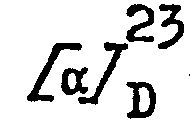
- 10,2 g (S)-(+)-1-(3,5-Dimethoxyphenyl)-2-propanol werden in 80 ml Pyridin gelöst, auf 0°C abgekühlt und anteil-weise mit 14,5 g p-Toluolsulfonsäurechlorid versetzt. Nach 16 Stunden bei +5° wird auf 300 g Eis und 200 ml 2n Salzsäure gegossen, mit Methylenchlorid extrahiert und anschließend neutralgewaschen und getrocknet. Das Rohprodukt kann so weiter verarbeitet werden oder aber auch chromatographiert werden an Kieselgel mit Benzin-Aceton 0-40%. Man erhält (nach Chromatographie) 15,2 g p-Toluolsulfonsäure-[(S)-(f)-1-(3,5-dimethoxy- phenylmethyl)-äthyl]-ester als farbloses Öl.

- 67,3 g 1(3-Methoxyphenyl)-2-propanon (Z.Horii et al., J.Chem.Soc. (London) 1963, 3940) werden nach A in Äthanol mit Natriumborhydrid reduziert. Es werden 59,67 g (R,S)-1-(3-Methoxyphenyl)-2-propanol vom Siedepunkt 310-112°/0,06 Torr erhalten.
- 59,3 g racemischer Alkohol ergeben 89,4 g linksdrehendes Brucin-Salz vom Schmelzpunkt 143-146°0 und


- Die Umsetzung erfolgt analog A, 3.). 6,7 g (S)-(+)-1-(3-Methoxyphenyl)-2-propanol ergeben 9,15 g p-Toluolsulfonsäureester als farbloses Öl nach chromatographischer Reinigung.
- 15 g (1S,7aS)-(+)-1-tert.Butoxy-7a-methyl-5,6,7,7a-tetra- hydroindan-5-on werden mit 1,62 g Natriumhydrid in 150 ml absolutem Dimethoxyäthan unter Argonschutzgas für 20 Stunden auf 60°C erwärmt. Dann werden 22,0 g Tosylat aus der vorhergehenden Stufe gelöst in 100 ml Dimethoxyäthan, bei 60°C innerhalb von 10 Minuten zugetropft. Nach 16 Stunden bei 80°0 wird abgekühlt, mit 150 ml gesättigter Natriumdi- hydrogenphosphatlösung versetzt, das Dimethoxyäthan im Vakuum abdestilliert und der Rückstand mit Methylenchlorid extrahiert. Das nach Trocknen und Abdestillieren des Lösungsmittels erhaltene Rohprodukt wird an 1 kg Kieselgel mit Hexan/Aceton (0-8 %) zur Reinigung chromatographiert. Man erhält 17,7 g als farbloses Öl.
- CD-Spektrum: 354 mm (Δε + 2,40), 341 (+ 2,65) 331 (+ 2,09), 317 (+1,26), 245 (- 12,7)
- UV-Spektrum: 296 mm (ε = 1350), 258 (11 800), 219 (36 500).
- 4,27 g (1S,7aS)-(+)-1-tert.Butoxy-4-[(1R)-2-(3,5-dimethoxyphenyl)-1-methyläthyl]-7a-methyl-2,3,5,6,7,7a-hexahydro- lH-inden-5-on werden in 90 ml Äthanol und 0,43 ml Triäthylamin gelöst und nach Zugabe von 2,56 g Pd-Kohle (10 %) bei Raumtemperatur und 60 Atmosphären Wasserstoffdruck hydriert. Hydrierzeit: 24 Stunden. Es wird vom Katalysator abfiltriert und das Lösungsmittel im Vakuum abdestilliert. Der Rückstand wird in 130 ml Aceton gebst, auf -5°0 abgekühlt und tropfenweise mit 2,7 ml 8n-Chromsäure (Jones-Lösung) versetzt. Nach 10 Minuten wird in 250 ml Wasser eingerührt und mit Methylenchlorid extrahiert. Nach Neutral waschen und Trocknen wird das Lösungsmittel im Vakuum abdestilliert. Das erhaltene Rohprodukt (4,09 g) wird zur Äquilibrierung der Seitenkette mit 800 mg Natriummethylat in 80 ml Methanol für 2 Stunden gekocht. Man erhält nach chromatographischer Reinigung an 400 g Kieselgel mit Benzin/Aceton (0-10 %) 3,75 g der Titelverbindung als dünnschichteinheitliches Öl.
- CD-Spektrum: 317 mm (Δε + 0,725), 300 (+ 1,36) 284 (Δε + 0,938), 241 (+ 0,256)
-

- 30,3 g (1S,3aS,4S,7aS)-1-tert.Butoxy-5[(1R)-2-(3,5-dimethoxyphenyl)-1-methyläthyl]-7a-methyl-perhydroinden-5-on in 400 ml Methanol wird auf 10°C abgekühlt und innerhalb von 20 Minuten mit 80 ml 10 n HCl versetzt. Nach 30 Minuten beginnt das Cyclisierungsprodukt auszufallen; nach einer Zeit von insgesamt 6 Stunden bei 10° wird das ausgefallene Produkt abfiltriert, mit wenig eiskaltem Methanol gewaschen und im Vakuum bei 50°C für 12 Stunden getrocknet. Man erhält 27,36 g 17β-tert-Butoxy-1,3-dimethoxy-7α-methyl- 1,3,5(10),9 (11)-östratetraen vom Schmelzpunkt 143-145°C (ans Methanol),

- UV-Spektrum: 304 mm (ε= 3380), 292 (4190) 265 (19 800), 221 (30 400).
- 9,8 g 17β-tert- Butoxy-1,3-dimethoxy-7α-methy1- 1,3,5(10),9(11)-· östratetraen, gelöst in 250 ml absolutem Tetrahydrofuran, werden bei -60°C innerhalb von 10 Minuten zu 500 ml flüssigem Ammoniak und 20 ml frisch destilliertem Anilin gegeben. Dann wird innerhalb von 20 Minuten 1 g Lithium anteilsweise zugefügt, für 5 Minuten bei -60°C nachgerührt und anschließend 9 g Ammoniumchlorid in 9 Portionen zugegeben. Nach Abdampfen des Ammoniaks wird der Rückstand mit 500 ml Essigester versetzt und der Essigesterextrakt mit Wasser, eiskalter In Schwefelsäure und Wasser ausgewaschen. Nach Trocknen mit Natriumsulfat und Abdestillieren des Lösungsmittels im Vakuum verbleiben 9.95 g Rohprodukt, das aus Methanol umkristallisiert wird. Man erhält 8,67 g 17β-tert-Buttoxy-1,3-dimethoxy-7α-methyl-1,3,5(10)-ostratricn vom Schmelzpunkt 135-136°C;
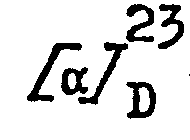
- CD-Spektrum: 282 mm (Δε + 1,56), 277 (+ 1,54) 239 (+ 6,90, 223 (-0,445).
- UV-Spektrum: 286 mm (ε = 1950), 282 (1880), - 278 (1890), 226 (10 600), 205 (52 700).
- 8,3 g (1S,7aS)-(+)-1-tert.-Butoxy-7a-methyl-5,6,7,7a-tetra- hydroindan-5-on werden mit 12,8 g p-Toluolsulfonsäure-[S-(+)-1-(3-nethoxyphenylmethyl)-äthyl]-ester analog Beispiel 1 a) umgesetzt. Nach chromatographischer Reinigung an Kieselgel mit Hexan/Acetcn (0-6 %) werden 10,1 g Alkylierungsprodukt als farbloses Öl erhalten. UV-Spektrum: 293 nm (c=1270), 255 (11950), 221 (33800). IR-Spektrum: 1693 cm-1 (a,B-ungesättigtes Keton).
- Nach Hydrierung, Oxidation und Äquilibrierung analog Beispiel 1 b) werden aus 9,95 g Produkt aus Stufe 3 a) 7,45 g der Titelverbindung vom Schmelzpunkt. 45-47°C erhalten,

- 84,2 g Produkt aus Stufe 3 b) werden analog Beispiel 1 c) in 842 ml Methanol mit 160 ml lOn Salzsäure bei +10°C/+15°C cyclisiert. Die Reaktionszeit beträgt 20 Stunden. Das ausgefallene Produkt wird abfiltriert und mit wenig eiskaltem Methanol gewaschen. Nach Kristallisation aus Methanol erhält man 68,79 g der Titelverbindung vom Schmelzpunkt 138-141°C.
- 11,2 g 17β-tert.-Butoxy-3-methoxy-7α-methyl-1,3,5(10),9,11)-östratetraen werden analog Beispiel 2 bei -40°C umgesetzt und man erhält 10,63 g rohes 17β-tert.-Butoxy-3-methoxy-7α-methy1-1,3,5(10)-östratrien, das in 250 ml Dioxan und 50 ml 4n Salzsäure für 3,5 Stunden unter Hückfluß gekocht wird. Das Dioxän wird weitgehend im Vakuum abdestilliert, der Rückstand mit 300 ml Wasser verdünnt und mit Methylenchlorid extrahiert. Nach Heutralwaschen mit Wasser und Trocknen mit Natriumsulfat wird das Lösungsmittel im Vakuum abdestilliert. Der kristalline Rückstand wird aus Methanol/Tetrahydrofuran umkristallisiert. Es resultieren 6,93 g 17β-Bydroxy-3-methoxy-7α-methyl-1,3,5(10)-ostratrien.
Schmelzpunkt: 128-130°C.
Claims (3)
- Verfahren zur Herstellung von 7α-Methyl-Östrogenen der allgemeinen Formel I
 R1 und R2 niedere Alkylgruppen,X eine freie oder funktionell geschützte Hydroxymethylengruppe undZ ein Wasserstoffatom oder eine OR1-Gruppe ist, dadurch gekennzeichnet, daß mana) eine Verbindung der allgemeinen Formel II

 b) die Verbindung der allgemeinen Formel IV mit einem Edelmetallkatalysator zu einer Verbindung der allgemeinen Formel V
 c) das Hydrierungsprodukt der allgemeinen Formel V, gegebenenfnlls nach Zusatz eines Oxidationsmittels der Äquilibrieeung und Cyclisierung unterwirft und gegebenenfalls Schutzgruppen abspaltet.
 - 2.) Verbindungen der allgemeinen Formel VII
 C=CH-Gruppe und Y...A eine C-C-Bindung bedeuten.
- 3 .) Verwendung der Verbindungen der allgemeinen Formel I zur Herstellung von Verbindungen der allgemeinen Formel IX

Priority Applications (1)
| Application Number | Priority Date | Filing Date | Title |
|---|---|---|---|
| AT79102371T ATE399T1 (de) | 1978-07-21 | 1979-07-11 | 7-alpha-methyl-oestrogene, verfahren zu deren herstellung und deren verwendung zur weiterverarbeitung. |
Applications Claiming Priority (2)
| Application Number | Priority Date | Filing Date | Title |
|---|---|---|---|
| DE2832604 | 1978-07-21 | ||
| DE19782832604 DE2832604A1 (de) | 1978-07-21 | 1978-07-21 | Verfahren zur herstellung von 7 alpha -methyl-oestrogenen |
Publications (3)
| Publication Number | Publication Date |
|---|---|
| EP0007516A2 true EP0007516A2 (de) | 1980-02-06 |
| EP0007516A3 EP0007516A3 (en) | 1980-04-30 |
| EP0007516B1 EP0007516B1 (de) | 1981-10-28 |
Family
ID=6045334
Family Applications (1)
| Application Number | Title | Priority Date | Filing Date |
|---|---|---|---|
| EP79102371A Expired EP0007516B1 (de) | 1978-07-21 | 1979-07-11 | 7-Alpha-Methyl-Östrogene, Verfahren zu deren Herstellung und deren Verwendung zur Weiterverarbeitung |
Country Status (3)
| Country | Link |
|---|---|
| EP (1) | EP0007516B1 (de) |
| AT (1) | ATE399T1 (de) |
| DE (2) | DE2832604A1 (de) |
Cited By (1)
| Publication number | Priority date | Publication date | Assignee | Title |
|---|---|---|---|---|
| EP0078145A1 (de) * | 1981-10-22 | 1983-05-04 | Pfizer Inc. | 5-Phenyl-2-Pentanol Racemat-Trennung |
Family Cites Families (4)
| Publication number | Priority date | Publication date | Assignee | Title |
|---|---|---|---|---|
| DE1793617A1 (de) * | 1959-09-25 | 1972-08-03 | Smith Herchel | Substituierte Octalinone und Tetrahydroindanone |
| FR1374699A (fr) * | 1963-11-08 | 1964-10-09 | Aspro Nicholas Ltd | Synthèse des 3-éthers de la delta 8, 14-bis dehydro-oestrone |
| US3524886A (en) * | 1967-12-04 | 1970-08-18 | Syntex Corp | Novel phosphonium halides |
| US4066674A (en) * | 1975-11-12 | 1978-01-03 | Schering Aktiengesellschaft | Process for the preparation of 1,3-oxygenated 8α-estratrienes and novel intermediates obtained therefrom |
-
1978
- 1978-07-21 DE DE19782832604 patent/DE2832604A1/de not_active Withdrawn
-
1979
- 1979-07-11 EP EP79102371A patent/EP0007516B1/de not_active Expired
- 1979-07-11 DE DE7979102371T patent/DE2961162D1/de not_active Expired
- 1979-07-11 AT AT79102371T patent/ATE399T1/de not_active IP Right Cessation
Cited By (1)
| Publication number | Priority date | Publication date | Assignee | Title |
|---|---|---|---|---|
| EP0078145A1 (de) * | 1981-10-22 | 1983-05-04 | Pfizer Inc. | 5-Phenyl-2-Pentanol Racemat-Trennung |
Also Published As
| Publication number | Publication date |
|---|---|
| DE2832604A1 (de) | 1980-01-31 |
| EP0007516B1 (de) | 1981-10-28 |
| ATE399T1 (de) | 1981-11-15 |
| EP0007516A3 (en) | 1980-04-30 |
| DE2961162D1 (en) | 1982-01-07 |
Similar Documents
| Publication | Publication Date | Title |
|---|---|---|
| EP0173199A1 (de) | cis, endo-2-Azabicycloalkan-3-carbonsäure-Derivate, Verfahren zu deren Herstellung, deren Verwendung sowie Zwischenprodukte bei deren Herstellung | |
| DE3784602T2 (de) | Inonos-derivate, ihre herstellung und verwendung. | |
| EP0496238A1 (de) | Substituierte Benzoxazepine und Benzthiazepine, Verfahren zu ihrer Herstellung und ihre Verwendung in Arzneimitteln | |
| DE2911786C2 (de) | Carbacephemderivate und ihre Verwendung | |
| CH628907A5 (en) | Process for the preparation of 24,25-dihydroxycholesterol derivatives | |
| DE2315355A1 (de) | Verfahren zur herstellung von oximen | |
| EP0007516B1 (de) | 7-Alpha-Methyl-Östrogene, Verfahren zu deren Herstellung und deren Verwendung zur Weiterverarbeitung | |
| EP0285548B1 (de) | Verfahren zur Herstellung von 17alpha-Ethinyl-17beta-hydroxy-18-methyl-4,15-estradien-3-on und die neuen Zwischenprodukte für dieses Verfahren | |
| EP0064605A1 (de) | Verfahren zur Herstellung von Resorcinderivaten sowie Verwendung bestimmter Resorcinderivate als Riechstoffe | |
| DE3871591T2 (de) | Verfahren zur herstellung von 1-propargyl-2,4-dioxoimidazolidin. | |
| DE1926023A1 (de) | Verfahren zur Herstellung neuer heterocyclischer Verbindungen | |
| EP0007515B1 (de) | 7a-Methyl-Östrogene und Verfahren zu deren Herstellung sowie deren Verwendung zur Weiterverarbeitung | |
| DE3122562C1 (de) | Verfahren zur Herstellung von D-(+)-Biotin | |
| DE69505761T2 (de) | Verfahren zur Herstellung von Gestoden | |
| DE2918900A1 (de) | Verfahren zur herstellung von 1,5- dimethyl-bicyclo- eckige klammer auf 3,2,1 eckige klammer zu octanol-8 und dessen ester | |
| DE3320140C2 (de) | ||
| DE2729817C2 (de) | Verfahren zur Herstellung von dl- 6a-10a-cis-1-Hydroxy-3-alkylsubstituierten-6,6-dimethyl-6,6a,7,8,10,10a-hexahydro-9H-dibenzo[b,d]-pyran-9-onen | |
| DE3014685A1 (de) | Polycyclische verbindungen und verfahren zu deren herstellung | |
| DE2652685A1 (de) | Verfahren zur oxidation von chinaalkaloiden | |
| EP0008370B1 (de) | N-Cyclohexyl-N-methoxyacetoacetamid, Verfahren zu seiner Herstellung und seine Verwendung zur Herstellung von O-Methyl-N-cyclohexyl-2,5-dimethylfuran-3-hydroxamsäure | |
| DE2952068A1 (de) | Substituierte lactone und verfahren zu deren herstellung | |
| EP0175264B1 (de) | Verfahren zur Herstellung von 2-Amino-3-cyano-5-dialkoxymethyl-pyrazinen und Zwischenprodukte für dieses Verfahren | |
| EP0486806B1 (de) | Verfahren zur Herstellung von racemischen Pilosinin-Derivaten | |
| Carstenn-Lichterfelde et al. | Correlation of the diterpenoids sideritol and jativatriol | |
| DE1924844A1 (de) | Verfahren zur Herstellung von Trimethyl-2-cyclohexen-1-onen |
Legal Events
| Date | Code | Title | Description |
|---|---|---|---|
| PUAI | Public reference made under article 153(3) epc to a published international application that has entered the european phase |
Free format text: ORIGINAL CODE: 0009012 |
|
| 17P | Request for examination filed | ||
| AK | Designated contracting states |
Designated state(s): AT BE CH DE FR GB IT LU NL SE |
|
| PUAL | Search report despatched |
Free format text: ORIGINAL CODE: 0009013 |
|
| AK | Designated contracting states |
Designated state(s): AT BE CH DE FR GB IT LU NL SE |
|
| ITF | It: translation for a ep patent filed | ||
| GRAA | (expected) grant |
Free format text: ORIGINAL CODE: 0009210 |
|
| AK | Designated contracting states |
Designated state(s): AT BE CH DE FR GB IT LU NL SE |
|
| REF | Corresponds to: |
Ref document number: 399 Country of ref document: AT Date of ref document: 19811115 Kind code of ref document: T |
|
| REF | Corresponds to: |
Ref document number: 2961162 Country of ref document: DE Date of ref document: 19820107 |
|
| PG25 | Lapsed in a contracting state [announced via postgrant information from national office to epo] |
Ref country code: LU Free format text: LAPSE BECAUSE OF NON-PAYMENT OF DUE FEES Effective date: 19820731 |
|
| PGFP | Annual fee paid to national office [announced via postgrant information from national office to epo] |
Ref country code: FR Payment date: 19890607 Year of fee payment: 11 Ref country code: AT Payment date: 19890607 Year of fee payment: 11 |
|
| PGFP | Annual fee paid to national office [announced via postgrant information from national office to epo] |
Ref country code: SE Payment date: 19890612 Year of fee payment: 11 |
|
| PGFP | Annual fee paid to national office [announced via postgrant information from national office to epo] |
Ref country code: CH Payment date: 19890613 Year of fee payment: 11 |
|
| PGFP | Annual fee paid to national office [announced via postgrant information from national office to epo] |
Ref country code: BE Payment date: 19890623 Year of fee payment: 11 |
|
| PGFP | Annual fee paid to national office [announced via postgrant information from national office to epo] |
Ref country code: GB Payment date: 19890630 Year of fee payment: 11 |
|
| PGFP | Annual fee paid to national office [announced via postgrant information from national office to epo] |
Ref country code: LU Payment date: 19890707 Year of fee payment: 11 |
|
| ITTA | It: last paid annual fee | ||
| PGFP | Annual fee paid to national office [announced via postgrant information from national office to epo] |
Ref country code: NL Payment date: 19890731 Year of fee payment: 11 |
|
| PG25 | Lapsed in a contracting state [announced via postgrant information from national office to epo] |
Ref country code: GB Effective date: 19900711 Ref country code: AT Effective date: 19900711 |
|
| PG25 | Lapsed in a contracting state [announced via postgrant information from national office to epo] |
Ref country code: SE Effective date: 19900712 |
|
| PG25 | Lapsed in a contracting state [announced via postgrant information from national office to epo] |
Ref country code: CH Effective date: 19900731 Ref country code: BE Effective date: 19900731 |
|
| BERE | Be: lapsed |
Owner name: SCHERING A.G. BERLIN UND BERGKAMEN Effective date: 19900731 |
|
| PG25 | Lapsed in a contracting state [announced via postgrant information from national office to epo] |
Ref country code: NL Effective date: 19910201 |
|
| GBPC | Gb: european patent ceased through non-payment of renewal fee | ||
| NLV4 | Nl: lapsed or anulled due to non-payment of the annual fee | ||
| REG | Reference to a national code |
Ref country code: CH Ref legal event code: PL |
|
| PG25 | Lapsed in a contracting state [announced via postgrant information from national office to epo] |
Ref country code: FR Effective date: 19910329 |
|
| REG | Reference to a national code |
Ref country code: FR Ref legal event code: ST |
|
| EUG | Se: european patent has lapsed |
Ref document number: 79102371.6 Effective date: 19910402 |
|
| PGFP | Annual fee paid to national office [announced via postgrant information from national office to epo] |
Ref country code: DE Payment date: 19950620 Year of fee payment: 17 |
|
| PG25 | Lapsed in a contracting state [announced via postgrant information from national office to epo] |
Ref country code: DE Effective date: 19970402 |
|
| PLBE | No opposition filed within time limit |
Free format text: ORIGINAL CODE: 0009261 |
|
| STAA | Information on the status of an ep patent application or granted ep patent |
Free format text: STATUS: NO OPPOSITION FILED WITHIN TIME LIMIT |