EP0007571A1 - Procédé pour obtenir du butadiène à partir d'un mélange contenant des hydrocarbures comportant 4 atomes de carbone - Google Patents
Procédé pour obtenir du butadiène à partir d'un mélange contenant des hydrocarbures comportant 4 atomes de carbone Download PDFInfo
- Publication number
- EP0007571A1 EP0007571A1 EP79102524A EP79102524A EP0007571A1 EP 0007571 A1 EP0007571 A1 EP 0007571A1 EP 79102524 A EP79102524 A EP 79102524A EP 79102524 A EP79102524 A EP 79102524A EP 0007571 A1 EP0007571 A1 EP 0007571A1
- Authority
- EP
- European Patent Office
- Prior art keywords
- butadiene
- hydrocarbons
- hydrocarbon
- stream
- oxygen
- Prior art date
- Legal status (The legal status is an assumption and is not a legal conclusion. Google has not performed a legal analysis and makes no representation as to the accuracy of the status listed.)
- Granted
Links
- KAKZBPTYRLMSJV-UHFFFAOYSA-N Butadiene Chemical compound C=CC=C KAKZBPTYRLMSJV-UHFFFAOYSA-N 0.000 title claims abstract description 104
- 229930195733 hydrocarbon Natural products 0.000 title claims abstract description 76
- 239000000203 mixture Substances 0.000 title claims abstract description 69
- 150000002430 hydrocarbons Chemical class 0.000 title claims abstract description 56
- 238000000034 method Methods 0.000 title claims abstract description 25
- 125000004432 carbon atom Chemical group C* 0.000 title 1
- 239000004215 Carbon black (E152) Substances 0.000 claims abstract description 63
- 238000004821 distillation Methods 0.000 claims abstract description 53
- QVGXLLKOCUKJST-UHFFFAOYSA-N atomic oxygen Chemical compound [O] QVGXLLKOCUKJST-UHFFFAOYSA-N 0.000 claims abstract description 41
- 239000001301 oxygen Substances 0.000 claims abstract description 41
- 229910052760 oxygen Inorganic materials 0.000 claims abstract description 41
- 238000000895 extractive distillation Methods 0.000 claims abstract description 31
- 239000002904 solvent Substances 0.000 claims abstract description 22
- 238000011144 upstream manufacturing Methods 0.000 claims abstract description 22
- 238000004519 manufacturing process Methods 0.000 claims abstract description 9
- -1 C 4 hydrocarbons Chemical class 0.000 claims description 20
- 239000007788 liquid Substances 0.000 claims description 13
- 229920006395 saturated elastomer Polymers 0.000 claims description 3
- PPBRXRYQALVLMV-UHFFFAOYSA-N Styrene Chemical compound C=CC1=CC=CC=C1 PPBRXRYQALVLMV-UHFFFAOYSA-N 0.000 description 8
- IJDNQMDRQITEOD-UHFFFAOYSA-N n-butane Chemical compound CCCC IJDNQMDRQITEOD-UHFFFAOYSA-N 0.000 description 7
- VQTUBCCKSQIDNK-UHFFFAOYSA-N Isobutene Chemical compound CC(C)=C VQTUBCCKSQIDNK-UHFFFAOYSA-N 0.000 description 6
- 235000013844 butane Nutrition 0.000 description 6
- VXNZUUAINFGPBY-UHFFFAOYSA-N 1-Butene Chemical compound CCC=C VXNZUUAINFGPBY-UHFFFAOYSA-N 0.000 description 4
- IJGRMHOSHXDMSA-UHFFFAOYSA-N Atomic nitrogen Chemical compound N#N IJGRMHOSHXDMSA-UHFFFAOYSA-N 0.000 description 4
- VGGSQFUCUMXWEO-UHFFFAOYSA-N Ethene Chemical compound C=C VGGSQFUCUMXWEO-UHFFFAOYSA-N 0.000 description 4
- 239000005977 Ethylene Substances 0.000 description 4
- SECXISVLQFMRJM-UHFFFAOYSA-N N-Methylpyrrolidone Chemical compound CN1CCCC1=O SECXISVLQFMRJM-UHFFFAOYSA-N 0.000 description 4
- KDKYADYSIPSCCQ-UHFFFAOYSA-N but-1-yne Chemical group CCC#C KDKYADYSIPSCCQ-UHFFFAOYSA-N 0.000 description 4
- HYBBIBNJHNGZAN-UHFFFAOYSA-N furfural Chemical compound O=CC1=CC=CO1 HYBBIBNJHNGZAN-UHFFFAOYSA-N 0.000 description 4
- 239000003112 inhibitor Substances 0.000 description 4
- 238000006116 polymerization reaction Methods 0.000 description 4
- 238000011084 recovery Methods 0.000 description 4
- 238000010992 reflux Methods 0.000 description 4
- 238000000926 separation method Methods 0.000 description 4
- LPXPTNMVRIOKMN-UHFFFAOYSA-M sodium nitrite Chemical compound [Na+].[O-]N=O LPXPTNMVRIOKMN-UHFFFAOYSA-M 0.000 description 4
- WEVYAHXRMPXWCK-UHFFFAOYSA-N Acetonitrile Chemical compound CC#N WEVYAHXRMPXWCK-UHFFFAOYSA-N 0.000 description 3
- ZMXDDKWLCZADIW-UHFFFAOYSA-N N,N-Dimethylformamide Chemical compound CN(C)C=O ZMXDDKWLCZADIW-UHFFFAOYSA-N 0.000 description 3
- QNRMTGGDHLBXQZ-UHFFFAOYSA-N buta-1,2-diene Chemical compound CC=C=C QNRMTGGDHLBXQZ-UHFFFAOYSA-N 0.000 description 3
- 229920001577 copolymer Polymers 0.000 description 3
- QQONPFPTGQHPMA-UHFFFAOYSA-N propylene Natural products CC=C QQONPFPTGQHPMA-UHFFFAOYSA-N 0.000 description 3
- 125000000383 tetramethylene group Chemical group [H]C([H])([*:1])C([H])([H])C([H])([H])C([H])([H])[*:2] 0.000 description 3
- SDRZFSPCVYEJTP-UHFFFAOYSA-N 1-ethenylcyclohexene Chemical compound C=CC1=CCCCC1 SDRZFSPCVYEJTP-UHFFFAOYSA-N 0.000 description 2
- CSCPPACGZOOCGX-UHFFFAOYSA-N Acetone Chemical compound CC(C)=O CSCPPACGZOOCGX-UHFFFAOYSA-N 0.000 description 2
- QIGBRXMKCJKVMJ-UHFFFAOYSA-N Hydroquinone Chemical compound OC1=CC=C(O)C=C1 QIGBRXMKCJKVMJ-UHFFFAOYSA-N 0.000 description 2
- 239000005062 Polybutadiene Substances 0.000 description 2
- ATUOYWHBWRKTHZ-UHFFFAOYSA-N Propane Chemical compound CCC ATUOYWHBWRKTHZ-UHFFFAOYSA-N 0.000 description 2
- HUMNYLRZRPPJDN-UHFFFAOYSA-N benzaldehyde Chemical compound O=CC1=CC=CC=C1 HUMNYLRZRPPJDN-UHFFFAOYSA-N 0.000 description 2
- WFYPICNXBKQZGB-UHFFFAOYSA-N butenyne Chemical group C=CC#C WFYPICNXBKQZGB-UHFFFAOYSA-N 0.000 description 2
- 125000002534 ethynyl group Chemical class [H]C#C* 0.000 description 2
- 239000003915 liquefied petroleum gas Substances 0.000 description 2
- 229910052757 nitrogen Inorganic materials 0.000 description 2
- 239000003208 petroleum Substances 0.000 description 2
- 229920002857 polybutadiene Polymers 0.000 description 2
- MWWATHDPGQKSAR-UHFFFAOYSA-N propyne Chemical compound CC#C MWWATHDPGQKSAR-UHFFFAOYSA-N 0.000 description 2
- 235000010288 sodium nitrite Nutrition 0.000 description 2
- RUFPHBVGCFYCNW-UHFFFAOYSA-N 1-naphthylamine Chemical compound C1=CC=C2C(N)=CC=CC2=C1 RUFPHBVGCFYCNW-UHFFFAOYSA-N 0.000 description 1
- XESZUVZBAMCAEJ-UHFFFAOYSA-N 4-tert-butylcatechol Chemical compound CC(C)(C)C1=CC=C(O)C(O)=C1 XESZUVZBAMCAEJ-UHFFFAOYSA-N 0.000 description 1
- RWSOTUBLDIXVET-UHFFFAOYSA-N Dihydrogen sulfide Chemical compound S RWSOTUBLDIXVET-UHFFFAOYSA-N 0.000 description 1
- FXHOOIRPVKKKFG-UHFFFAOYSA-N N,N-Dimethylacetamide Chemical compound CN(C)C(C)=O FXHOOIRPVKKKFG-UHFFFAOYSA-N 0.000 description 1
- SUAKHGWARZSWIH-UHFFFAOYSA-N N,N‐diethylformamide Chemical compound CCN(CC)C=O SUAKHGWARZSWIH-UHFFFAOYSA-N 0.000 description 1
- NINIDFKCEFEMDL-UHFFFAOYSA-N Sulfur Chemical compound [S] NINIDFKCEFEMDL-UHFFFAOYSA-N 0.000 description 1
- 125000001931 aliphatic group Chemical group 0.000 description 1
- 150000004982 aromatic amines Chemical class 0.000 description 1
- 230000015572 biosynthetic process Effects 0.000 description 1
- IAQRGUVFOMOMEM-UHFFFAOYSA-N but-2-ene Chemical class CC=CC IAQRGUVFOMOMEM-UHFFFAOYSA-N 0.000 description 1
- 150000003857 carboxamides Chemical class 0.000 description 1
- 230000003197 catalytic effect Effects 0.000 description 1
- 238000006356 dehydrogenation reaction Methods 0.000 description 1
- 238000010586 diagram Methods 0.000 description 1
- LDLDYFCCDKENPD-UHFFFAOYSA-N ethenylcyclohexane Chemical compound C=CC1CCCCC1 LDLDYFCCDKENPD-UHFFFAOYSA-N 0.000 description 1
- 238000001704 evaporation Methods 0.000 description 1
- 230000008020 evaporation Effects 0.000 description 1
- 238000000605 extraction Methods 0.000 description 1
- 239000007789 gas Substances 0.000 description 1
- 229910000037 hydrogen sulfide Inorganic materials 0.000 description 1
- 230000000977 initiatory effect Effects 0.000 description 1
- 230000007257 malfunction Effects 0.000 description 1
- LCEDQNDDFOCWGG-UHFFFAOYSA-N morpholine-4-carbaldehyde Chemical compound O=CN1CCOCC1 LCEDQNDDFOCWGG-UHFFFAOYSA-N 0.000 description 1
- QNGNSVIICDLXHT-UHFFFAOYSA-N para-ethylbenzaldehyde Natural products CCC1=CC=C(C=O)C=C1 QNGNSVIICDLXHT-UHFFFAOYSA-N 0.000 description 1
- 150000002989 phenols Chemical class 0.000 description 1
- 229920000642 polymer Polymers 0.000 description 1
- 239000001294 propane Substances 0.000 description 1
- 125000004805 propylene group Chemical group [H]C([H])([H])C([H])([*:1])C([H])([H])[*:2] 0.000 description 1
- 238000010926 purge Methods 0.000 description 1
- 238000005201 scrubbing Methods 0.000 description 1
- 229920003048 styrene butadiene rubber Polymers 0.000 description 1
- 229910052717 sulfur Inorganic materials 0.000 description 1
- 239000011593 sulfur Substances 0.000 description 1
- 239000002699 waste material Substances 0.000 description 1
- XLYOFNOQVPJJNP-UHFFFAOYSA-N water Substances O XLYOFNOQVPJJNP-UHFFFAOYSA-N 0.000 description 1
Images
Classifications
-
- C—CHEMISTRY; METALLURGY
- C07—ORGANIC CHEMISTRY
- C07C—ACYCLIC OR CARBOCYCLIC COMPOUNDS
- C07C7/00—Purification; Separation; Use of additives
- C07C7/005—Processes comprising at least two steps in series
Definitions
- the present invention relates to a process for the production of butadiene from a butadiene and small amounts of oxygen-containing C4-hydrocarbon mixture.
- the butadiene-containing C4 hydrocarbon mixtures can in some cases now contain small amounts of oxygen, which can lead to undesired polymer formation in the butadiene layer, which would considerably reduce the operating times of the plants.
- Such small amounts of oxygen-containing C 4 -hydrocarbon mixtures are obtained, for example, in plants for the production of butadiene-styrene copolymers after the polymerization as a styrene and oxygen-containing waste stream which can be combusted, for example, but is expediently returned to a butadiene extraction plant.
- the C 4 -hydrocarbon mixtures obtained from ethylene plants can have small amounts of oxygen, for example in the event of malfunctions in the ethylene plants or in the event of improper transport of the C 4 -hydrocarbon mixtures.
- the present invention is now intended to improve the operation and economy of the known methods.
- the C4-hydrocarbon mixtures to be used for the production of butadiene are obtained, for example, in the production of ethylene and / or propylene by thermal splitting of a petroleum fraction, for example liquefied petroleum gas (LPG), light petroleum (naphtha), gas oil and the like, as a hydrocarbon fraction.
- a petroleum fraction for example liquefied petroleum gas (LPG), light petroleum (naphtha), gas oil and the like
- LPG liquefied petroleum gas
- naphtha light petroleum
- gas oil and the like gas oil and the like
- Such C 4 fractions are also obtained in the catalytic dehydrogenation of n-butane and / or n-butene.
- Suitable C 4 hydrocarbon mixtures with a relatively high butadiene content are also obtained in the production of polybutadiene or butadiene-styrene copolymers.
- the C h -hydrocarbon mixture generally contains butanes, n-butene, isobutene, butadiene, vinyl acetylene, ethyl acetylene, 1,2-butadiene and optionally styrene, vinylcyclohexane, small amounts of C - hydrocarbons and C S -hydrocarbons.
- the C 4 -hydrocarbon mixtures can, for example, due to disturbances in the stage for generating the C 4 -hydrocarbon mixtures or due to leaks or insufficient nitrogen purging of the apparatus and pipe systems and containers for transport, and due to the oxygen initiation in the production of polybutadiene or Butadiene - styrene copolymers contain small amounts of oxygen.
- the C 4 -hydrocarbon mixtures to be used according to the invention have oxygen contents of 0.0001 to 1 percent by weight, mostly from 0.001 to 0.5 percent by weight.
- the process according to the invention can also be applied to C 4 -hydrocarbon mixtures with higher oxygen contents.
- selective solvents examples include carboxamides, such as dimethylformamide, diethylformamide, dimethylacetamide, formylmorpholine, acetonitrile, furfural, N-methyl pyrrolidone, butylrolactone, acetone and their mixtures with water into consideration.
- N-methylpyrrolidone is used with particular advantage as a selective solvent.
- Hydrocarbons which are more soluble in the selective solvent than butadiene are, for example, vinyl acetylene, ethyl acetylene and 1,2-butadiene.
- the butanes, the n-butenes and isobutene are less soluble hydrocarbons than butadiene in the selective solvent.
- the extractive distillation can be carried out using an extractive distillation zone.
- the process for obtaining butadiene is particularly advantageously carried out using two series-connected extractive distillation zones using the same selective solvent.
- an extract containing the less soluble hydrocarbons (raffinate) and a butadiene and the more soluble hydrocarbons and the selective solvent is obtained.
- This extract is freed from the selective solvent, a mixture of butadiene and the more soluble hydrocarbons being obtained.
- This mixture is subjected to a second extractive distillation with the selective solvent in a second extractive distillation zone, whereby butadiene is obtained as the distillate and an extract - which contains the more soluble hydrocarbons including the higher acetylenes and remaining butadiene and the selective solvent.
- the extract obtained is then freed from the selective solvent, a hydrocarbon stream containing the more soluble hydrocarbons, including the C 4 -acetylenes, being obtained.
- the butadiene obtained from the extractive distillation is generally used for the removal of if necessary nand small amounts of propyne and C 5 hydrocarbons subjected to a downstream distillation, for example in one or two distillation columns.
- distillative removal of any propyne and C5 hydrocarbons contained in the starting C4 hydrocarbon mixtures can also be carried out in one or more, e.g. 2, the distillation columns preceding the extractive distillation, e.g. in columns which are interposed between the upstream distillation zone for oxygen separation and the extractive distillation.
- the oxygen-containing C 4 -hydrocarbon mixtures obtained from the production of styrene-butadiene copolymers generally still contain styrene and, if appropriate, vinylcyclohexene.
- These C 4 -hydrocarbon mixtures are also generally subjected to a distillation upstream of the extractive distillation, for example in one or more, for example 2, distillation columns to remove the styrene and, if appropriate, the vinylcyclohexene.
- a mixture of oxygen and C 4 hydrocarbons is separated off from the small amounts of oxygen-containing C 4 -hydrocarbon mixture in a distillation zone upstream of the extractive distillation, and the bottom product of the upstream distillation zone is fed to the extractive distillation.
- the mixture of oxygen and the C 4 hydrocarbons has an oxygen content of 1 to 18 mole percent, preferably 5 to 16 mole percent, in particular 10 to 15 mole percent, the upper limit of the oxygen content being obtained for safety reasons.
- a second stream of liquid or gaseous hydrocarbons is fed to the upstream distillation zone. This procedure allows the butadiene loss associated with the separation of the mixture of oxygen and C 4 hydrocarbons to be kept very low.
- C 3 - and / or C 4 hydrocarbons are generally used as the liquid or gaseous hydrocarbons which are fed to the distillation zone as a second stream. It is expedient to use hydrocarbons with a lower butadiene content than the starting C 4 -hydrocarbon mixture, for example with less than 90% of the butadiene content of the starting C 4 -hydrocarbon mixture, preferably essentially butadiene-free hydrocarbons, for example with a butadiene content of less than 5% by weight , suitably less than 1 percent by weight. Saturated and / or simply olefinically unsaturated C 3 and / or C 4 hydrocarbons are advantageously used.
- hydrocarbons are expediently used in the form of mixtures, for example as C 3 or C 4 hydrocarbon mixtures.
- Suitable hydrocarbons are, for example, propane, propene, the butanes, n-butene, isobutene, the 2-butenes, 1,2-butadiene or mixtures containing these hydrocarbons.
- C 4 -hydrocarbon mixtures are advantageously used.
- the raffinate obtained in the extractive distillation and containing the butanes and butenes is used.
- the second hydrocarbon stream to be fed to the upstream distillation zone is fed to the upstream distillation zone at or advantageously above the feed point of the starting C 4 hydrocarbon mixture containing small amounts of oxygen, a feed in the upper third, advantageously in the upper quarter, in particular at the head of the upstream distillation zone, being preferred.
- the countercurrent scrubbing which is thereby carried out as the top product results in a mixture of oxygen and C 4 -hydrocarbons having a particularly low butadiene content, for example less than 10% by weight, preferably less than 5 Weight percent butadiene, separated, so that the butadiene loss associated with the oxygen separation can be kept particularly low by this procedure.
- the second hydrocarbon stream is admixed to the liquid reflux of the upstream distillation zone or admixed instead of a liquid reflux.
- the starting C 4 -hydrocarbon mixture is expediently fed to the upstream distillation zone in a central region which, starting from the center of the distillation zone, extends up to approximately 80%, preferably approximately 60%, in particular approximately 50%, into the upper and lower halves the upstream distillation zone.
- the starting C4 hydrocarbon mixture and the second hydrocarbon stream can be fed to the further distillation zone in gaseous or liquid form. They are expediently supplied in liquid form.
- the weight ratio of the hydrocarbons of the second hydrocarbon stream to those of the starting C 4 -hydrocarbon mixture is 1: 1 to 1: 100, preferably 1: 2 to 1:50, in particular 1: 5 to 1:20.
- Conventional distillation columns for example packed columns or tray columns, are generally used for the upstream distillation zone.
- the bottom product of the upstream distillation column is fed to the extractive distillation.
- a mixture of oxygen and C 4 hydrocarbons is first separated from the small amounts of oxygen-containing starting C 4 -hydrocarbon mixture in the distillation zone upstream of the extractive distillation and the bottom product of the upstream distillation zone is fed to the extractive distillation.
- the mixture of oxygen and C 4 hydrocarbons separated from the upstream distillation zone is then fed to a further distillation zone, a second stream of liquid or gaseous hydrocarbons being simultaneously fed to the further distillation zone and the bottom product of the further distillation zone being returned to the main stream.
- the bottom product is expediently mixed with the starting C 4 -hydrocarbon mixture.
- the second hydrogen sulfide stream to be fed to the further distillation zone is fed to the further distillation zone at or expediently above the feed point of the separated mixture of oxygen and C 4 -hydrocarbons, a feed in the upper third, advantageously in the upper quarter, in particular at the top of the further distillation zone , is preferred.
- the second hydrocarbon stream is preferably admixed to the liquid reflux of the further distillation zone or admixed instead of a liquid reflux.
- the separated mixture of oxygen and C 4 hydrocarbons is expediently fed to the further distillation zone in a middle region which, starting from the center of the distillation zone, extends up to approximately 80%, preferably approximately 60%, in particular approximately 50%, in the upper region and the lower half of the further distillation zone.
- the separated mixture of oxygen and C4 hydrocarbons and the second hydrocarbon stream can be in gaseous or liquid form in the further distillation zone are fed. They are expediently supplied in liquid form.
- the weight ratio of the hydrocarbons of the second hydrocarbon stream to that of the separated mixture of oxygen and C 4 hydrocarbon is 1: 1 to 1: 100, preferably 1: 2 to 1:50, in particular 1: 5 to 1:20.
- Conventional distillation columns for example packed columns or tray columns, are generally used for the further distillation zone.
- polymerization inhibitors are, for example, furfural, benzaldehyde, aliphatic or aromatic nitro compounds, hydroquinone, sulfur, sodium nitrite, phenolic compounds such as 4-tert-butyl catechol and aromatic amines such as naphthylamine.
- furfural, benzaldehyde, aliphatic or aromatic nitro compounds hydroquinone, sulfur, sodium nitrite, phenolic compounds such as 4-tert-butyl catechol and aromatic amines such as naphthylamine.
- phenolic compounds such as 4-tert-butyl catechol
- aromatic amines such as naphthylamine
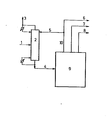
- the figure is a schematic diagram of an embodiment of the method according to the invention.
- a small amount of oxygen-containing C 4 -hydrocarbon mixture (C 4 fraction from an ethylene plant) is introduced through line 1 into the middle third of a distillation column 2.
- a partial stream of the raffinate is fed to a downstream butadiene recovery plant 9 through line 5.
- an oxygen-free C 4 -hydrocarbon mixture is drawn off through line 4 and fed to the butadiene plant 9, in which it is extracted by extractive distillation using a selective solvent (N-methylpyrrolidone) into a fraction containing the butanes and butenes (raffinate ) 10, the Bu- tadiene stream 7 and the stream 8 containing the C4 acetylenes is separated.
- the partial stream of raffinate remaining after branching off stream 5 is drawn off via line 6.
- a C 4 hydrocarbon mixture has the following composition:
Landscapes
- Chemical & Material Sciences (AREA)
- Organic Chemistry (AREA)
- Engineering & Computer Science (AREA)
- Analytical Chemistry (AREA)
- Oil, Petroleum & Natural Gas (AREA)
- Water Supply & Treatment (AREA)
- Organic Low-Molecular-Weight Compounds And Preparation Thereof (AREA)
Applications Claiming Priority (2)
| Application Number | Priority Date | Filing Date | Title |
|---|---|---|---|
| DE2833195 | 1978-07-28 | ||
| DE2833195A DE2833195C2 (de) | 1978-07-28 | 1978-07-28 | Verfahren zur Gewinnung von Butadien aus |
Publications (2)
| Publication Number | Publication Date |
|---|---|
| EP0007571A1 true EP0007571A1 (fr) | 1980-02-06 |
| EP0007571B1 EP0007571B1 (fr) | 1981-04-08 |
Family
ID=6045648
Family Applications (1)
| Application Number | Title | Priority Date | Filing Date |
|---|---|---|---|
| EP79102524A Expired EP0007571B1 (fr) | 1978-07-28 | 1979-07-18 | Procédé pour obtenir du butadiène à partir d'un mélange contenant des hydrocarbures comportant 4 atomes de carbone |
Country Status (4)
| Country | Link |
|---|---|
| US (1) | US4237330A (fr) |
| EP (1) | EP0007571B1 (fr) |
| JP (1) | JPS5520767A (fr) |
| DE (2) | DE2833195C2 (fr) |
Families Citing this family (5)
| Publication number | Priority date | Publication date | Assignee | Title |
|---|---|---|---|---|
| JPH01113118A (ja) * | 1987-10-27 | 1989-05-01 | Kawasaki Steel Corp | 鋼帯のエンドマーク防止方法 |
| DE69219624T2 (de) * | 1991-12-20 | 1997-09-11 | Exxon Chemical Patents Inc | Verfahren zur entfernung von grünöl aus kohlenwasserstoffenbeschickungen |
| US5763715A (en) * | 1996-10-08 | 1998-06-09 | Stone & Webster Engineering Corp. | Butadiene removal system for ethylene plants with front end hydrogenation systems |
| DE19838932C2 (de) * | 1998-08-27 | 2001-02-22 | Erdoelchemie Gmbh | Verfahren zur Gewinnung von Butadien-1,2 |
| CN102344330A (zh) * | 2010-08-03 | 2012-02-08 | 中国石油化工股份有限公司 | 萃取精馏分离碳四用混合溶剂 |
Citations (4)
| Publication number | Priority date | Publication date | Assignee | Title |
|---|---|---|---|---|
| DE1543119A1 (de) * | 1965-06-25 | 1969-09-11 | Koppers Gmbh Heinrich | Verfahren zur Abtrennung reiner Aromaten aus Gemischen,die sowohl Benzol als auch Toluol und Xylole sowie Nichtaromaten enthalten,mit Hilfe der Extraktivdestillation |
| DE2251051B2 (de) * | 1971-10-29 | 1976-08-05 | Imperial Chemical Industries Ltd., London | Verfahren zur gewinnung von butadien |
| DE2742148A1 (de) * | 1976-09-21 | 1978-03-23 | Shell Int Research | Verfahren zur abtrennung und gewinnung von butadien aus kohlenwasserstoffmischungen |
| DE2122770B2 (de) * | 1971-05-07 | 1978-04-06 | Metallgesellschaft Ag, 6000 Frankfurt | Verfahren zur Gewinnung reiner aromatischer Kohlenwasserstoffe aus ihren Gemischen mit nichtaromatischen Kohlenwasserstoffen |
Family Cites Families (2)
| Publication number | Priority date | Publication date | Assignee | Title |
|---|---|---|---|---|
| US3518056A (en) * | 1968-09-26 | 1970-06-30 | Chevron Res | Hydrogen sulfide recovery by degassing,distillation and ammonia recycle with subsequent sulfur production |
| DE2724365C3 (de) * | 1977-05-28 | 1979-09-06 | Basf Ag, 6700 Ludwigshafen | Verfahren zum Trennen eines C4 -Kohlenwasserstoffgemisches durch extraktive Destillation |
-
1978
- 1978-07-28 DE DE2833195A patent/DE2833195C2/de not_active Expired
-
1979
- 1979-05-31 US US06/044,029 patent/US4237330A/en not_active Expired - Lifetime
- 1979-07-18 EP EP79102524A patent/EP0007571B1/fr not_active Expired
- 1979-07-18 DE DE7979102524T patent/DE2960249D1/de not_active Expired
- 1979-07-26 JP JP9433679A patent/JPS5520767A/ja active Granted
Patent Citations (4)
| Publication number | Priority date | Publication date | Assignee | Title |
|---|---|---|---|---|
| DE1543119A1 (de) * | 1965-06-25 | 1969-09-11 | Koppers Gmbh Heinrich | Verfahren zur Abtrennung reiner Aromaten aus Gemischen,die sowohl Benzol als auch Toluol und Xylole sowie Nichtaromaten enthalten,mit Hilfe der Extraktivdestillation |
| DE2122770B2 (de) * | 1971-05-07 | 1978-04-06 | Metallgesellschaft Ag, 6000 Frankfurt | Verfahren zur Gewinnung reiner aromatischer Kohlenwasserstoffe aus ihren Gemischen mit nichtaromatischen Kohlenwasserstoffen |
| DE2251051B2 (de) * | 1971-10-29 | 1976-08-05 | Imperial Chemical Industries Ltd., London | Verfahren zur gewinnung von butadien |
| DE2742148A1 (de) * | 1976-09-21 | 1978-03-23 | Shell Int Research | Verfahren zur abtrennung und gewinnung von butadien aus kohlenwasserstoffmischungen |
Also Published As
| Publication number | Publication date |
|---|---|
| DE2833195C2 (de) | 1980-10-02 |
| DE2833195B1 (de) | 1980-02-07 |
| JPS6261005B2 (fr) | 1987-12-18 |
| DE2960249D1 (en) | 1981-04-30 |
| JPS5520767A (en) | 1980-02-14 |
| US4237330A (en) | 1980-12-02 |
| EP0007571B1 (fr) | 1981-04-08 |
Similar Documents
| Publication | Publication Date | Title |
|---|---|---|
| DE1568902C3 (de) | VRFAHREN ZUR Abtrennung von 13-Butadien, Isopren und 13-Pentadien aus einer C4 - oder C5 -Kohlenwasserstoffmischung | |
| DE2724365C3 (de) | Verfahren zum Trennen eines C4 -Kohlenwasserstoffgemisches durch extraktive Destillation | |
| EP0141316B1 (fr) | Procédé pour la récupération d'isoprène d'un mélange d'hydrocarbures en C 5 | |
| DE2516362A1 (de) | Verfahren zur gewinnung von 1,3- butadien aus einem c tief 4-kohlenwasserstoffgemisch | |
| DE10333756A1 (de) | Verfahren zur Auftrennung eines Roh-C4-Schnittes | |
| EP0009630B1 (fr) | Procédé d'obtention de butadiène à partir d'un mélange d'hydrocarbures en C4 | |
| EP0017118B1 (fr) | Procédé pour obtenir une dioléfine conjuguée à partir d'un mélange d'hydrocarbures C 4 ou C 5 | |
| DE2158609A1 (de) | Verfahren zur gewinnung von reinen konjugierten c tief 4- und c tief 5-diolefinen aus kohlenwasserstoff-gemischen | |
| DE3710434A1 (de) | Verfahren zur gewinnung von 1,3-butadien | |
| EP0007571B1 (fr) | Procédé pour obtenir du butadiène à partir d'un mélange contenant des hydrocarbures comportant 4 atomes de carbone | |
| EP0005788B1 (fr) | Procédé d'obtention de butadiène-1,3 à partir d'un mélange d'hydrocarbures en C4 | |
| EP0141356B1 (fr) | Procédé pour l'obtention d'une diène conjuguée et/ou d'une oléfine à partir d'un mélange d'hydrocarbures en C4-C5 | |
| DE2911393C2 (de) | Verfahren zur Gewinnung eines konjugierten Diolefins aus einem C↓4↓-oder C↓5↓-Kohlenwasserstoffgemisch | |
| US4421607A (en) | Process for extractive distillation of plural hydrocarbon mixtures | |
| EP0149145B1 (fr) | Procédé pour la séparation d'un mélange d'hydrocarbures en C4 par distillation extractive | |
| DE1468566C3 (de) | Verfahren zur Isolierung von aromatischen Kohlenwasserstoffen aus Gemischen, die Alkene und stärker ungesättigte Verbindungen enthalten | |
| EP3041916A1 (fr) | Procédé de production de produits à base d'hydrocarbures | |
| DE2911396C2 (de) | Verfahren zur Gewinnung eines konjugierten Diolefins aus einem C↓4↓- oder C↓5↓-Kohlenwasserstoffgemisch | |
| DE3018911A1 (de) | Verfahren zur herstellung von kohlenwasserstoff-gasgemischen | |
| DE2150055A1 (de) | Verfahren zur zerlegung von kohlenwasserstoffgemischen |
Legal Events
| Date | Code | Title | Description |
|---|---|---|---|
| PUAI | Public reference made under article 153(3) epc to a published international application that has entered the european phase |
Free format text: ORIGINAL CODE: 0009012 |
|
| AK | Designated contracting states |
Designated state(s): BE DE FR GB IT NL |
|
| 17P | Request for examination filed | ||
| ITF | It: translation for a ep patent filed | ||
| GRAA | (expected) grant |
Free format text: ORIGINAL CODE: 0009210 |
|
| AK | Designated contracting states |
Designated state(s): BE DE FR GB IT NL |
|
| REF | Corresponds to: |
Ref document number: 2960249 Country of ref document: DE Date of ref document: 19810430 |
|
| ITTA | It: last paid annual fee | ||
| PGFP | Annual fee paid to national office [announced via postgrant information from national office to epo] |
Ref country code: FR Payment date: 19980625 Year of fee payment: 20 |
|
| PGFP | Annual fee paid to national office [announced via postgrant information from national office to epo] |
Ref country code: GB Payment date: 19980715 Year of fee payment: 20 |
|
| PGFP | Annual fee paid to national office [announced via postgrant information from national office to epo] |
Ref country code: NL Payment date: 19980728 Year of fee payment: 20 Ref country code: DE Payment date: 19980728 Year of fee payment: 20 |
|
| PGFP | Annual fee paid to national office [announced via postgrant information from national office to epo] |
Ref country code: BE Payment date: 19980806 Year of fee payment: 20 |
|
| BE20 | Be: patent expired |
Free format text: 19990718 *BASF A.G. |
|
| PG25 | Lapsed in a contracting state [announced via postgrant information from national office to epo] |
Ref country code: GB Free format text: LAPSE BECAUSE OF NON-PAYMENT OF DUE FEES Effective date: 19990717 |
|
| PG25 | Lapsed in a contracting state [announced via postgrant information from national office to epo] |
Ref country code: NL Free format text: LAPSE BECAUSE OF EXPIRATION OF PROTECTION Effective date: 19990718 |
|
| REG | Reference to a national code |
Ref country code: GB Ref legal event code: PE20 Effective date: 19990717 |
|
| NLV7 | Nl: ceased due to reaching the maximum lifetime of a patent |
Effective date: 19990718 |
|
| PLBE | No opposition filed within time limit |
Free format text: ORIGINAL CODE: 0009261 |
|
| STAA | Information on the status of an ep patent application or granted ep patent |
Free format text: STATUS: NO OPPOSITION FILED WITHIN TIME LIMIT |