EP0008686A2 - Verfahren zur Herstellung von Phenyl-propyl-morpholin- und -piperidin-Derivaten - Google Patents
Verfahren zur Herstellung von Phenyl-propyl-morpholin- und -piperidin-Derivaten Download PDFInfo
- Publication number
- EP0008686A2 EP0008686A2 EP79102823A EP79102823A EP0008686A2 EP 0008686 A2 EP0008686 A2 EP 0008686A2 EP 79102823 A EP79102823 A EP 79102823A EP 79102823 A EP79102823 A EP 79102823A EP 0008686 A2 EP0008686 A2 EP 0008686A2
- Authority
- EP
- European Patent Office
- Prior art keywords
- methyl
- propyl
- phenyl
- dimethyl
- piperidine
- Prior art date
- Legal status (The legal status is an assumption and is not a legal conclusion. Google has not performed a legal analysis and makes no representation as to the accuracy of the status listed.)
- Granted
Links
Classifications
-
- C—CHEMISTRY; METALLURGY
- C07—ORGANIC CHEMISTRY
- C07D—HETEROCYCLIC COMPOUNDS
- C07D295/00—Heterocyclic compounds containing polymethylene-imine rings with at least five ring members, 3-azabicyclo [3.2.2] nonane, piperazine, morpholine or thiomorpholine rings, having only hydrogen atoms directly attached to the ring carbon atoms
- C07D295/02—Heterocyclic compounds containing polymethylene-imine rings with at least five ring members, 3-azabicyclo [3.2.2] nonane, piperazine, morpholine or thiomorpholine rings, having only hydrogen atoms directly attached to the ring carbon atoms containing only hydrogen and carbon atoms in addition to the ring hetero elements
- C07D295/027—Heterocyclic compounds containing polymethylene-imine rings with at least five ring members, 3-azabicyclo [3.2.2] nonane, piperazine, morpholine or thiomorpholine rings, having only hydrogen atoms directly attached to the ring carbon atoms containing only hydrogen and carbon atoms in addition to the ring hetero elements containing only one hetero ring
- C07D295/03—Heterocyclic compounds containing polymethylene-imine rings with at least five ring members, 3-azabicyclo [3.2.2] nonane, piperazine, morpholine or thiomorpholine rings, having only hydrogen atoms directly attached to the ring carbon atoms containing only hydrogen and carbon atoms in addition to the ring hetero elements containing only one hetero ring with the ring nitrogen atoms directly attached to acyclic carbon atoms
-
- C—CHEMISTRY; METALLURGY
- C07—ORGANIC CHEMISTRY
- C07D—HETEROCYCLIC COMPOUNDS
- C07D295/00—Heterocyclic compounds containing polymethylene-imine rings with at least five ring members, 3-azabicyclo [3.2.2] nonane, piperazine, morpholine or thiomorpholine rings, having only hydrogen atoms directly attached to the ring carbon atoms
- C07D295/02—Heterocyclic compounds containing polymethylene-imine rings with at least five ring members, 3-azabicyclo [3.2.2] nonane, piperazine, morpholine or thiomorpholine rings, having only hydrogen atoms directly attached to the ring carbon atoms containing only hydrogen and carbon atoms in addition to the ring hetero elements
- C07D295/023—Preparation; Separation; Stabilisation; Use of additives
Definitions
- X represents a methylene group or an oxygen atom; and salts of such compounds which have a basic character, characterized in that a compound of the general formula wherein R 3 , R 4 , R 5 and X have the meaning given in formula I, with a compound which is a carbonium ion of the general formula wherein R 1 and R 2 have the meaning given in formula I, provides.
- halo-lower alkyl includes a lower alkyl group in which one of the hydrogen atoms is replaced by a halogen, preferably fluorine, chlorine or bromine.
- cycloalkyl describes an alicyclic Hydrocarbon radical with 3 to 7 carbon atoms such as cyclopropyl, cyclobutyl, cyclopentyl, cyclohexyl or cycloheptyl.
- the compounds of formula I have fungicidal activity and are particularly suitable for combating fungi in agriculture and horticulture.
- the process according to the invention enables the compounds of the formula I to be prepared more efficiently, in fewer stages and with a better yield than e.g. with the procedures described in German Offenlegungsschriften Nos. 2656747, 2752096 and 2752135.
- the alkylation of the compound of general formula II takes place in the presence of a suitable amount of a Friedel-Crafts catalyst.
- a Friedel-Crafts catalyst such as aluminum chloride, iron chloride, zinc chloride, boron trifluoride, Tin chloride, hydrogen fluoride, sulfuric acid and phosphoric acid. Sulfuric acid is particularly preferred for the purposes of the present invention.
- Alkane such as hexane, cyclohexane, chlorinated hydrocarbons such as chloroform, ethylene dichloride and methylene chloride are particularly suitable as inert organic solvents, with methylene chloride being particularly preferred.
- the temperature of the alkylation reaction is not critical, but is usually between 0-50 C, preferably between 0 o C 18-2.
- the product obtained is salted with an inert organic solvent such as e.g. Extracted methylene chloride.
- an inert organic solvent such as e.g. Extracted methylene chloride.
- the free amine can be obtained with a suitable base such as sodium hydroxide solution, potassium hydroxide solution, soda ash, potash or calcium hydroxide.
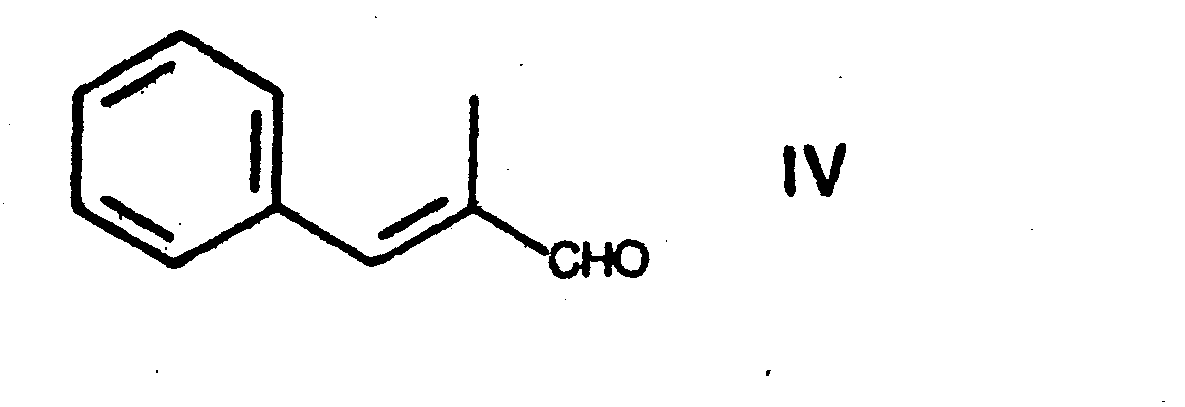
- the compounds of general formula II are partly new. They can be prepared by using a compound of the general formula IV with a compound of general formula V wherein R 3 , R 4 and R 5 are hydrogen or lower alkyl having 1-4 carbon atoms, X is a methylene group or an oxygen atom, mixed and catalytically hydrogenated.
Landscapes
- Chemical & Material Sciences (AREA)
- Organic Chemistry (AREA)
- Hydrogenated Pyridines (AREA)
- Heterocyclic Carbon Compounds Containing A Hetero Ring Having Nitrogen And Oxygen As The Only Ring Hetero Atoms (AREA)
- Agricultural Chemicals And Associated Chemicals (AREA)
- Pharmaceuticals Containing Other Organic And Inorganic Compounds (AREA)
- Plural Heterocyclic Compounds (AREA)
Abstract

- worin R' und R2 nieder-Alkyl mit 1-4 Kohlenstoffatomen, Halo-niederalkyl mit 1-4 Kohlenstotfatomen, oder R' und R2 zusammen mit dem Kohlenstoffatom an das sie gemeinsam gebunden sind, Cycloalkyl mit 3-7 Kohlenstoffatomen oder nieder-Alkyl substituiertes Cycloalkyl mit 4 bis 9 Kohlenstoffatomen bedeuten, R3, R4 und R5 Wasserstoff oder nieder-Alkyl mit 1-4 Kohlenstoffatomen bedeuten,
- X für eine Methylengruppe oder ein Sauerstoffatom steht; und Salzenvon solchen Verbindungen die basischen Charakter aufweisen, dadurch gekennzeichnet, dass man eine Verbindung der allgemeinen Formel

- worin R3, R4, R5 und X die in Formel I angegebene Bedeutung besitzen,
- mit einer Verbindung umsetzt, die ein Carboniumion der allgemeinen Formel

Description
- Die Erfindung betrifft ein verbessertes Verfahren zur Herstellung von Verbindungen der allgemeinen Formel

- X für eine Methylengruppe oder ein Sauerstoffatom steht; und Salzen von solchen Verbindungen die basischen Charakter aufweisen, dadurch gekennzeichnet, dass man eine Verbindung der allgemeinen Formel


- Alkylreste mit 1 bis 4 Kohlenstoffatomen sind geradkettige oder verzweigte Kohlenwasserstoffreste wie Methyl, Aethyl, Propyl, Isopropyl, Butyl, Isobutyl und tert. Butyl.
- Der Ausdruck Halo-niederalkyl umfasst eine niederAlkylgruppe in der eines der Wasserstoffatome durch ein Halogen, vorzugsweise Fluor, Chlor oder Brom ersetzt ist. Die Bezeichnung "Cycloalkyl" umschreibt einen alicyclischen Kohlenwasserstoffrest mit 3 bis 7 Kohlenstoffatomen wie Cyclopropyl, Cyclobutyl, Cyclopentyl, Cyclohexyl oder Cycloheptyl.
- Als Salze für die Verbindungen der Formel I, die basischen Charakter aufweisen, kommen Salze mit physiologisch verträglichen Säuren in Frage, Hierzu gehören vorzugsweise die Halogenwasserstoffsäuren, wie z.B. die Chlorwasserstoffsäure und die Bromwasserstoffsäure, ferner Phosphorsäure, Salpetersäure, ausserdem mono- und bifunktionelle Carbonsäuren und Hydroxycarbonsäuren, wie z.B. Essigsäure, Maleinsäure, Bernsteinsäure, Fumarsäure, Weinsäure, Zitronensäure, Salicylsäure, Sorbinsäure und Milchsäure, und schliesslich Sulfonsäuren, wie die 1,5-Naphthalin-disulfonsäure. Die Herstellung von derartigen Salzen erfolgt in an sich bekannter Weise.
- Die Verbindungen der Formel I besitzen fungicide Wirkung und eignen sich besonders zur Bekämpfung von Fungi in der Landwirtschaft und im Gartenbau.
- Bevorzugte Verbindungen der Formel I sind:
- 1-[3-(p-tert.Butylphenyl)-2-methyl-propyl]-piperidin;
- 1-[3-(p-tert.Butyl-phenyl)-2-methyl-propyll-3-methyl-piperidin;
- 1-[3-(p-tert.Butyl-phenyl)-2-methyl-propyl]-3,5-dimethyl-piperidin;
- 4-[3-(p-tert.Butyl-phenyl)-2-methyl-propyl]-2,6-dimethyl-morpholin;
- 1-/3-[p-(2-Chlor-1,1-dimethyl-äthyl)-phenyl]-2-methyl-propyl/-piperidin;
- 1-/3-[p-(2-Chlor-1,1-dimethyl-äthyl)-phenyl]-2-methyl-propyl/-3,5-dimethyl-piperidin;
- 4-/3-[p-(2-Chlor-1,1-dimethyl-äthyl)-phenyl]-2-methyl-propyl/-2,6-dimethyl-morpholin;
- 1-[3-(p-tert.Amyl-phenyl)-2-methyl-propyl]-piperidin;
- 1-[3-(p-tert.Amyl-phenyl)-2-methyl-propyl]-3-methyl-piperidin;
- 1-[3-(p-tert.Amyl-phenyl)-2-methyl-propyll-3,5-dimethyl-piperidin;
- 4-[3-(p-tert.Amyl-phenyl)-2-methyl-propyl]-2,6-dimethyl-morpholin;
- 1-/3-[p-(1-Cyclohexyl-l-methyl)-phenyll-2-methylpropyl/-piperidin;
- 1-/3-[p-(1-Cyclohexyl-1-methyl)-phenyl]-2-methylpropyl/-3,5-dimethyl-piperidin;
- 4-/3-[p-(1-Cyclohexyl-1-methyl)-phenyl]-2-methylpropyl/-2,6-dimethyl-morpholin.
- Das erfindungsgemässe Verfahren ermöglicht bei Verwendung von billigeren Ausgangsmaterialien die Herstellung der Verbindungen der Formel I rationeller, in weniger Stufen und mit besserer Ausbeute als z.B. mit den Verfahren, die in den Deutschen Offenlegungsschriften Nos. 2656747, 2752096 und 2752135 beschrieben sind.
- Die Alkylierung der Verbindung der allgemeinen Formel II erfolgt in Anwesenheit einer geeigneten Menge eines Friedel-Crafts Katalysators. Als Katalysator eignen sich die bekannten Friedel-Crafts Katalysatoren wie z.B. Aluminiumchlorid, Eisenchlorid, Zinkchlorid, Bortrifluorid, Zinnchlorid, Fluorwasserstoff, Schwefelsäure und Phosphorsäure. Für die Zwecke der vorliegenden Erfindung ist Schwefelsäure besonders bevorzugt.
- Die Verwendung eines inerten organischen Lösungsmittels ist nicht zwingend, wird jedoch bevorzugt. Als inertes organisches Lösungsmittel eignen sich besonders Alkane wie Hexan, Cyclohexan, chlorierte Kohlenwasserstoffe wie Chloroform, Aethylendichlorid und Methylenchlorid, wobei Methylenchlorid besonders bevorzugt wird. Die Temperatur der Alkylierungsreaktion ist nicht kritisch, liegt jedoch in der Regel zwischen 0-50 C, vorzugsweise zwischen 18-20 o C.
- Vorzugsweise und insbesondere im Falle der Verwendung von Schwefelsäure wird nach Beendigung der Reaktion das erhaltene Produkt in der Salzform mit einem inerten organischen Lösungsmittel wie z.B. Methylenchlorid extrahiert. Falls erwünscht kann das freie Amin mit einer geeigneten Base wie Natronlauge, Kalilauge, Soda, Potasche oder Calciumhydroxid erhalten werden.
- Bevorzugte Verbindungen der allgemeinen Formel II sind:
- l-(2-Methyl-3-phenyl-propyl)-piperidin;
- 1-(2-Methyl-3-phenyl-propyl)-3-methyl-piperidin;
- 1-(2-Methyl-3-phenyl-propyl)-3,5-dimethyl-piperidin;
- 4-(2-Methyl-3-phenyl-propyl)-2,6-dimethyl-morpholin.
- Bevorzugte Verbindungen welche die Carboniumionen der allgemeinen Formel III liefern sind Alkene wie Isobutylen, 3-Chlor-2-methyl-l-propen oder 1-Methylcyclohexen; oder Alkohole insbesondere tert. Alkohole wie tert. Butylalkohol oder 2-Methyl-2-butanol; oder sekundäre Alkohole wie 2-Methylcyclohexanol oder 4-Methylcyclohexanol.
- Die Verbindungen der allgemeinen Formel II sind teilweise neu. Sie können hergestellt werden indem man eine Verbindung der allgemeinen Formel IV


- Verbindungen der allgemeinen Formel V können, wenn mindestens zwei der Substituenten R3, R4 und R5 nieder-Alkyl bedeuten und nicht am selben Kohlenstoffatom gebunden sind, erwünschtenfalls als reine Isomere eingesetzt werden.
- Als Lösungsmittel wird vorzugsweise ein organisches Lösungsmittel z.B. ein Alkohol, wie Methanol verwendet. Die Temperatur ist nicht kritisch, liegt jedoch in der Regel zwischen.0°-50°C.
- Bei der katalytischen Hydrierung dienen die üblichen Hydrierungskatalysatoren wie z.B. Platin, Raney Nickel oder Palladium, wobei 5% Palladiumkohle besonders bevorzugt wird.
- Die nachstehenden Beispiele illustrieren die Erfindung.
- 800 g l-(2-Methyl-3-phenyl-propyl)-piperidin in 3000 ml Methylenchlorid werden vorgelegt und innert 1,5 Stunden, unter Sole-Kühlung und intensivem Rühren bei 5-10°C Innentemperatur, 2040 g 95-96%-ige Schwefelsäure zugetropft. Anschliessend wird bei 15-20°C Innentemperatur während 2 Stunden 266 g Isobutylen eingeleitet und unter Eiskühlung 1620 ml Wasser zugetropft. Die rot gefärbte Schwefelsäurelösung entfärbt sich und das Produkt löst sich als Hydrosulfat in der Methylenchloridphase. Die farblose Schwefelsäurelösung (untere Phase) wird abgetrennt und nochmals mit Methylenchlorid nachextrahiert. Die vereinigten Methylenchloridextrakte werden mit Wasser gewaschen und das Produkt durch portionenweise Zugabe von 1060 g krist. Natriumcarbonat unter Rühren in der Methylenchloridphase freigesetzt. Die Methylenchloridphase wird von der entstandenen wässrigen Phase abgetrennt, mit Wasser nachgewaschen und das Methylenchlorid abgedampft. Durch Destillation an einer 30 cm-Goodloe-Silberkolonne wird reines 1-[3-(p-tert.Butylphenyl)-2-methyl-propyl]-piperidin erhalten; Sdp. 118°C/0,07 Torr.
- In analoger Weise erhält man aus:
- - l-(2-Methyl-3-phenyl-propyl)-3-methyl-piperidin und Isobutylen das l-[3-(p-tert.Butyl-phenyl)-2-methylpropyl]-3-methyl-piperidin, Sdp. 116°C/0,02 Torr.,
- - 1-(2-Methyl-3-phenyl-propyl)-3,5-dimethyl-piperidin und Isobutylen das l-[3-(p-tert.Butyl-phenyl)-2-methyl-propyl]-3,5-dimethyl-piperidin, Sdp. 128-130°C/0,001 Torr.,
- - 4-(2-Methyl-3-phenyl-propyl)-2,6-dimethyl-morpholin und Isobutylen das 4-[3-(p-tert.Butyl-phenyl]-2-methyl-propyl]-2,6-dimethyl-morpholin, Sdp. 134-136°C/0,03 Torr.,
- - 1-(2-Methyl-3-phenyl-propyl)-piperidin und 3-Chlor-2-methyl-1-propen das 1-/3-[p-(2-Chlor-1,1-dimethyl- äthyl)-phenyl]-2-methyl-propyl/-piperidin, Sdp. 139-140°C/0,04 Torr.,
- - 1-(2-Methyl-3-phenyl-propyl)-3,5-dimethyl-piperidin und 3-Chlor-2-methyl-l-propen das 1-/3-[p-(2-Chlor-1,1-dimethyl-äthyl)-phenyl]-2-methyl-propyl/-3,5-dimethyl-piperidin, Sdp. 155-156°C/0,04 Torr.,
- - 4-(2-Methyl-3-phenyl-propyl)-2,6-dimethyl-morpholin und 3-Chlor-2-methyl-l-propen das 4-/3-[p-(2-Chlor- l,l-dimethyl-äthyl)-phenyl]-2-methyl-propyl/-2,6-dimethyl-morpholin, Sdp. 155°C/0,04 Torr.
- 100 g 1-(2-Methyl-3-phenyl-propyl)-piperidin in 375 ml Methylenchlorid werden vorgelegt und innert 1,5 Stunden, unter Sole-Kühlung und intensivem Rühren bei 10°C Innentemperatur, 255 g 95-96%-ige Schwefelsäure zugetropft. Anschliessend wird bei 20°C 42,5 g tert. Butylalkohol zugetropft und man lässt 2 Stunden bei Raumtemperatur nachreagieren. Die Aufarbeitung erfolgt in Analogie zu Beispiel 1. Das Rohprodukt wird durch fraktionierte Destillation an einer Goodloe-Silberkolonne gereinigt. Es wird reines 1-[3-(p-tert.Butyl-phenyl)-2-methyl-propyl]-piperidin erhalten; Sdp. 118°C/0,07 Torr.
- In analoger Weise erhält man
- - l-(2-Methyl-3-phenyl-propyl)-3-methyl-piperidin und tert. Butylalkohol das 1-[3-(p-tert.Butyl-phenyl)-2-methyl-propyl]-3-methyl-piperidin, Sdp. 116°C/ 0,02 Torr.,
- - 1-(2-Methyl-3-phenyl-propyl)-3,5-dimethyl-piperidin und tert. Butylalkohol das 1-[3-(p-tert.Butylphenyl)-2-methyl-propyl]-3,5-dimethyl-piperidin, Sdp. 128-130°C/0,001 Torr.,
- - 4-(2-Methyl-3-phenyl-propyl)-2,6-dimethyl-morpholin und tert. Butylalkohol das 4-[3-(p-tert.Butyl-phenyl)-2-methyl-propyl]-2,6-dimethyl-morpholin, Sdp. 134-136°C/0,Q3 Torr.,
- - l-(2-Methyl-3-phenyl-propyl)-piperidin und 2-Methyl-2-butanol das 1-[3-(p-tert.Amyl-phenyl)-2-methylpropyl]-piperidin, Sdp. 160°C/0,15 Torr.,
- - 1-(2-Methyl-3-phenyl-propyl)-3-methyl-piperidin und 2-Methyl-2-butanol das 1-[3-(p-tert.Amyl-phenyl)-2-methyl-propyl]-3-methyl-piperidin, Sdp. 164°C/ 0,15 Torr.,
- - 1-(2-Methyl-3-phenyl-propyl)-3,5-dimethyl-piperidin und 2-Methyl-2-butanol das l-[3-(p-tert.Amyl-phenyl)-2-methyl-propyl]-3,5-dimethyl-piperidin, Sdp. 135°C/0,05 Torr.,
- 4-(2-Methyl-3-phenyl-propyl)-2,6-dimethyl-morpholin und 2-Methyl-2-butanol das 4-[3-(p-tert.Amyl-phenyl)-2-methyl-propyl]-2,6-dimethyl-morpholin, Sdp. 136-138°C/0,04 Torr.,
- - 1-(2-Methyl-3-phenyl-propyl)-piperidin und 2-Methyl- cyclohexanol das 1-/3-[p-(1-Cyclohexyl-1-m*ethyl)-phenyl]-2-methyl-propyl/-piperidin, Sdp. 140°C/ 0,04 Torr.,
- - 1-(2-Methyl-3-phenyl-propyl)-3,5-dimethyl-piperidin und 2-Methyl-cyclohexanol das 1-/3-[p-(1-Cyclohexyl-1-methyl)-phenyl]-2-methyl-propyl/-3,5-dimethyl-piperidin, Sdp. 130-132°C/0,04 Torr., .
- - 4-(2-Methyl-3-phenyl-propyl)-2,6-dimethyl-morpholin und 2-Methyl-cyclohexanol das 4-/3-[p-(1-Cyclohexyl-1-methyl)-phenyll-2-methyl-propyl/-2,6-dimethyl-morpholin, Sdp. 160-162°C/0,07 Torr.
- 1000 g a-Methyl-zimtaldehyd, 10 1 Methanol und 640 g Piperidin werden unter Stickstoffbegasung vorgelegt und 50 g Palladiumkohle zugegeben. Anschliessend wird unter Wasserkühlung bei 30°C Innentemperatur bis zur Beendidung der Wasserstoffaufnahme hydriert, vom Katalysator abfiltriert und das Methanol am Vakuum abdestilliert. Das Rohprodukt wird destilliert. Es wird reines l-(2-Methyl-3-phenyl-propyl)-piperidin erhalten, Sdp. 92°C/0,04 Torr.
- In analoger Weise erhält man aus:
- - a-Methyl-zimtaldehyd und 3-Methyl-piperidin das 1-(2-Methyl-3-phenyl-propyl)-3-methyl-piperidin, Sdp. 103°C/0,04 Torr.,
- - a-Methyl-zimtaldehyd und 3,5-Dimethyl-piperidin das 1- (2-Methyl-3-phenyl-propyl)-3,5-dimethyl-piperidin, Sdp. 94°C/0,03 Torr.,
- - a-Methyl-zimtaldehyd und 2,6-Dimethyl-morpholin das 4-(2-Methyl-3-phenyl-propyl)-2,6-dimethyl-morpholin, Sdp. 92°C/0,03 Torr.
Claims (28)



Priority Applications (1)
| Application Number | Priority Date | Filing Date | Title |
|---|---|---|---|
| AT79102823T ATE3111T1 (de) | 1978-08-08 | 1979-08-06 | Verfahren zur herstellung von phenyl-propylmorpholin- und -piperidin-derivaten. |
Applications Claiming Priority (2)
| Application Number | Priority Date | Filing Date | Title |
|---|---|---|---|
| CH840778 | 1978-08-08 | ||
| CH8407/78 | 1978-08-08 |
Publications (3)
| Publication Number | Publication Date |
|---|---|
| EP0008686A2 true EP0008686A2 (de) | 1980-03-19 |
| EP0008686A3 EP0008686A3 (en) | 1980-07-23 |
| EP0008686B1 EP0008686B1 (de) | 1983-04-20 |
Family
ID=4339850
Family Applications (1)
| Application Number | Title | Priority Date | Filing Date |
|---|---|---|---|
| EP79102823A Expired EP0008686B1 (de) | 1978-08-08 | 1979-08-06 | Verfahren zur Herstellung von Phenyl-propyl-morpholin- und -piperidin-Derivaten |
Country Status (6)
| Country | Link |
|---|---|
| US (1) | US4384116A (de) |
| EP (1) | EP0008686B1 (de) |
| JP (1) | JPS5524177A (de) |
| AT (1) | ATE3111T1 (de) |
| DE (1) | DE2965247D1 (de) |
| ES (1) | ES483214A1 (de) |
Cited By (4)
| Publication number | Priority date | Publication date | Assignee | Title |
|---|---|---|---|---|
| EP0019764A1 (de) * | 1979-05-25 | 1980-12-10 | BASF Aktiengesellschaft | Trans-3-(4'-tert.-Butyl-cyclohexyl-1')-2-methyl-1-(3'-methylpiperidino, 3',5'-dimethylpiperidino und 2', 6'-dimethylmorpholino)-propan, Verfahren zu ihrer Reinherstellung, diese enthaltende antimykotische Mittel und ihre Verwendung |
| FR2463767A1 (fr) * | 1979-08-17 | 1981-02-27 | Hoffmann La Roche | Nouveaux derives de cis-4-(3-phenyl-2-methyl-propyl)-2,6-dimethyl-morpholine, leur procede de preparation et medicaments les contenant |
| EP0066196A1 (de) * | 1981-05-29 | 1982-12-08 | BASF Aktiengesellschaft | Cyclohexenderivate, Verfahren zu ihrer Herstellung und diese enthaltende Fungizide |
| EP0174565A3 (en) * | 1984-09-08 | 1987-05-13 | Basf Aktiengesellschaft | Piperidine derivatives and fungicidal compositions containing them, and process for combating fungi |
Families Citing this family (5)
| Publication number | Priority date | Publication date | Assignee | Title |
|---|---|---|---|---|
| DE3134220A1 (de) * | 1981-08-29 | 1983-03-10 | Basf Ag, 6700 Ludwigshafen | Phenylpropylammoniumsalz enthaltende fungizide und verfahren zur bekaempfung von pilzen |
| US4568772A (en) * | 1982-09-21 | 1986-02-04 | Givaudan Corporation | Process for the preparation of p-t-butyl-α-methyldihydrocinnamaldehyde |
| US5288928A (en) * | 1990-12-21 | 1994-02-22 | Ciba-Geigy Corporation | Asymmetrical hydrogenation |
| EP1749825A1 (de) * | 2005-07-28 | 2007-02-07 | Galderma S.A. | Prozess für die Produktion von Amorolfine |
| CN103265504A (zh) * | 2013-06-04 | 2013-08-28 | 南通维立科化工有限公司 | 苯锈啶的合成方法 |
Family Cites Families (3)
| Publication number | Priority date | Publication date | Assignee | Title |
|---|---|---|---|---|
| US3965105A (en) * | 1975-01-20 | 1976-06-22 | Sterling Drug Inc. | Phenyl-lower-alkylamines |
| AT354187B (de) * | 1976-11-22 | 1979-12-27 | Hoffmann La Roche | Fungizides mittel |
| DE2727482A1 (de) * | 1977-06-18 | 1979-01-11 | Basf Ag | Derivate cyclischer amine |
-
1979
- 1979-08-06 DE DE7979102823T patent/DE2965247D1/de not_active Expired
- 1979-08-06 EP EP79102823A patent/EP0008686B1/de not_active Expired
- 1979-08-06 AT AT79102823T patent/ATE3111T1/de not_active IP Right Cessation
- 1979-08-07 ES ES483214A patent/ES483214A1/es not_active Expired
- 1979-08-07 JP JP9992579A patent/JPS5524177A/ja active Granted
-
1981
- 1981-02-02 US US06/230,196 patent/US4384116A/en not_active Expired - Lifetime
Cited By (6)
| Publication number | Priority date | Publication date | Assignee | Title |
|---|---|---|---|---|
| EP0019764A1 (de) * | 1979-05-25 | 1980-12-10 | BASF Aktiengesellschaft | Trans-3-(4'-tert.-Butyl-cyclohexyl-1')-2-methyl-1-(3'-methylpiperidino, 3',5'-dimethylpiperidino und 2', 6'-dimethylmorpholino)-propan, Verfahren zu ihrer Reinherstellung, diese enthaltende antimykotische Mittel und ihre Verwendung |
| FR2463767A1 (fr) * | 1979-08-17 | 1981-02-27 | Hoffmann La Roche | Nouveaux derives de cis-4-(3-phenyl-2-methyl-propyl)-2,6-dimethyl-morpholine, leur procede de preparation et medicaments les contenant |
| EP0024334A1 (de) * | 1979-08-17 | 1981-03-04 | F. HOFFMANN-LA ROCHE & CO. Aktiengesellschaft | Neue Morpholinderivate, Verfahren zu deren Herstellung, diese Derivate enthaltende pharmazeutische Präparate |
| EP0066196A1 (de) * | 1981-05-29 | 1982-12-08 | BASF Aktiengesellschaft | Cyclohexenderivate, Verfahren zu ihrer Herstellung und diese enthaltende Fungizide |
| US4464370A (en) * | 1981-05-29 | 1984-08-07 | Basf Aktiengesellschaft | Cyclohexene containing morpholines and fungicidal use |
| EP0174565A3 (en) * | 1984-09-08 | 1987-05-13 | Basf Aktiengesellschaft | Piperidine derivatives and fungicidal compositions containing them, and process for combating fungi |
Also Published As
| Publication number | Publication date |
|---|---|
| EP0008686A3 (en) | 1980-07-23 |
| ATE3111T1 (de) | 1983-05-15 |
| US4384116A (en) | 1983-05-17 |
| DE2965247D1 (en) | 1983-05-26 |
| ES483214A1 (es) | 1980-09-01 |
| JPS6236516B2 (de) | 1987-08-07 |
| JPS5524177A (en) | 1980-02-21 |
| EP0008686B1 (de) | 1983-04-20 |
Similar Documents
| Publication | Publication Date | Title |
|---|---|---|
| DE2752135C2 (de) | Heterocyclische Verbindungen | |
| CH624102A5 (de) | ||
| DE1261124B (de) | Verfahren zur Herstellung von Pyrazolen | |
| DE2461604C2 (de) | ||
| EP0008686B1 (de) | Verfahren zur Herstellung von Phenyl-propyl-morpholin- und -piperidin-Derivaten | |
| DE69938577T2 (de) | Verfahren zur Herstellung substituierter 3-Hydroxypiperidine | |
| CH636073A5 (en) | Process for the preparation of substituted cyclopropanecarboxylates | |
| EP0024334B1 (de) | Neue Morpholinderivate, Verfahren zu deren Herstellung, diese Derivate enthaltende pharmazeutische Präparate | |
| EP0005541A2 (de) | Substituierte Piperidin-, Morpholin- oder Piperidonderivate, fungizide Mittel, die diese Verbindungen enthalten, Verfahren zu deren Herstellung und Verwendung sowie die Verwendung dieser Verbindungen als Fungizide | |
| DE68913876T2 (de) | Cyclopentanderivate. | |
| DE2324390C2 (de) | Verfahren zur Herstellung von Derivaten des 2,2-Dichlor- bzw. 2,2-Dibromcyclopropans | |
| EP0012722B1 (de) | Verfahren zur Herstellung von optisch aktiven, in 3-Stellung substituierten 2-(2',2'-Dihalogenvinyl)-cyclopropan-1-carbonsäuren und deren Derivaten; 4-(2',2',2'-Trihalogenäthyl)-cyclobutan-1-sulfonsäuresalze und deren Herstellung | |
| DE102005023953A1 (de) | Verfahren zur Cyclisierung von Citronellal zu Isopulegol | |
| DE1234212B (de) | Verfahren zur Herstellung von Cyclobutanabkoemmlingen | |
| DE68914376T2 (de) | Cyclopentanderivate. | |
| EP0037062B1 (de) | Substituierte 3-Aryl-2-cycloalken-1-one, Verfahren zu ihrer Herstellung und ihre Verwendung als Arzneimittel | |
| US2878257A (en) | Production of cxcloheptene- | |
| EP0421225A2 (de) | Verfahren zur Herstellung von alpha-Chlor-phosphoryliden | |
| DE1468772B1 (de) | 11-[3-(4-beta-Hydroxyaethyl-piperazino)-propyliden]-2-chlor-6,11-dihydro-dibenz[b,e]oxepin,dessen Salze und Verfahren zur Herstellun dieser Verbindungen | |
| DD261599A5 (de) | Verfahren zur herstellung von verbindungen mit triazol- oder imidazol und tetrahydrofurangruppe | |
| WO1992002475A1 (de) | Verfahren zur herstellung von weitgehend fluorierten alkylbromiden | |
| EP0158144A1 (de) | N-Bicycloheptyl- und N-Bicycloheptenyl-imidazole, Verfahren zu ihrer Herstellung, ihre Verwendung sowie pharmazeutische Präparate | |
| EP0262348A2 (de) | Verfahren zur Herstellung von N-substituierten Morpholin- und Piperidin-Derivaten | |
| CH340241A (de) | Verfahren zur Herstellung von Aminoalkylphenyläthern | |
| DE1286028B (de) | Verfahren zur Herstellung von 5-(3'-Methylaminopropyl)-5H-dibenzo[a, d]-cyclohepten |
Legal Events
| Date | Code | Title | Description |
|---|---|---|---|
| PUAI | Public reference made under article 153(3) epc to a published international application that has entered the european phase |
Free format text: ORIGINAL CODE: 0009012 |
|
| 17P | Request for examination filed | ||
| AK | Designated contracting states |
Designated state(s): AT BE CH DE FR GB IT NL |
|
| PUAL | Search report despatched |
Free format text: ORIGINAL CODE: 0009013 |
|
| AK | Designated contracting states |
Designated state(s): AT BE CH DE FR GB IT NL |
|
| ITF | It: translation for a ep patent filed | ||
| GRAA | (expected) grant |
Free format text: ORIGINAL CODE: 0009210 |
|
| AK | Designated contracting states |
Designated state(s): AT BE CH DE FR GB IT NL |
|
| REF | Corresponds to: |
Ref document number: 3111 Country of ref document: AT Date of ref document: 19830515 Kind code of ref document: T |
|
| REF | Corresponds to: |
Ref document number: 2965247 Country of ref document: DE Date of ref document: 19830526 |
|
| ET | Fr: translation filed | ||
| ITPR | It: changes in ownership of a european patent |
Owner name: CESSIONE;F. HOFFMANN - LA ROCHE AG |
|
| NLS | Nl: assignments of ep-patents |
Owner name: F. HOFFMANN-LA ROCHE AG TE BAZEL, ZWITSERLAND. |
|
| REG | Reference to a national code |
Ref country code: FR Ref legal event code: TP |
|
| REG | Reference to a national code |
Ref country code: CH Ref legal event code: PUE Owner name: F. HOFFMANN-LA ROCHE AG |
|
| REG | Reference to a national code |
Ref country code: GB Ref legal event code: 732 |
|
| ITTA | It: last paid annual fee | ||
| PGFP | Annual fee paid to national office [announced via postgrant information from national office to epo] |
Ref country code: GB Payment date: 19980728 Year of fee payment: 20 |
|
| PGFP | Annual fee paid to national office [announced via postgrant information from national office to epo] |
Ref country code: AT Payment date: 19980813 Year of fee payment: 20 |
|
| PGFP | Annual fee paid to national office [announced via postgrant information from national office to epo] |
Ref country code: FR Payment date: 19980814 Year of fee payment: 20 |
|
| PGFP | Annual fee paid to national office [announced via postgrant information from national office to epo] |
Ref country code: DE Payment date: 19980817 Year of fee payment: 20 |
|
| PGFP | Annual fee paid to national office [announced via postgrant information from national office to epo] |
Ref country code: CH Payment date: 19980824 Year of fee payment: 20 |
|
| PGFP | Annual fee paid to national office [announced via postgrant information from national office to epo] |
Ref country code: NL Payment date: 19980827 Year of fee payment: 20 |
|
| PGFP | Annual fee paid to national office [announced via postgrant information from national office to epo] |
Ref country code: BE Payment date: 19981016 Year of fee payment: 20 |
|
| BE20 | Be: patent expired |
Free format text: 19990806 F. *HOFFMANN-LA ROCHE A.G. |
|
| PG25 | Lapsed in a contracting state [announced via postgrant information from national office to epo] |
Ref country code: GB Free format text: LAPSE BECAUSE OF NON-PAYMENT OF DUE FEES Effective date: 19990805 Ref country code: CH Free format text: LAPSE BECAUSE OF EXPIRATION OF PROTECTION Effective date: 19990805 |
|
| PG25 | Lapsed in a contracting state [announced via postgrant information from national office to epo] |
Ref country code: NL Free format text: LAPSE BECAUSE OF EXPIRATION OF PROTECTION Effective date: 19990806 Ref country code: AT Free format text: LAPSE BECAUSE OF EXPIRATION OF PROTECTION Effective date: 19990806 |
|
| REG | Reference to a national code |
Ref country code: GB Ref legal event code: PE20 Effective date: 19990805 |
|
| REG | Reference to a national code |
Ref country code: CH Ref legal event code: PL |
|
| PLBE | No opposition filed within time limit |
Free format text: ORIGINAL CODE: 0009261 |
|
| STAA | Information on the status of an ep patent application or granted ep patent |
Free format text: STATUS: NO OPPOSITION FILED WITHIN TIME LIMIT |