EP0011562A1 - Mit einem Plasmid transformierte Saccharomyces cer. - Google Patents
Mit einem Plasmid transformierte Saccharomyces cer. Download PDFInfo
- Publication number
- EP0011562A1 EP0011562A1 EP79400853A EP79400853A EP0011562A1 EP 0011562 A1 EP0011562 A1 EP 0011562A1 EP 79400853 A EP79400853 A EP 79400853A EP 79400853 A EP79400853 A EP 79400853A EP 0011562 A1 EP0011562 A1 EP 0011562A1
- Authority
- EP
- European Patent Office
- Prior art keywords
- plasmid
- dna
- yeast
- ura
- gene
- Prior art date
- Legal status (The legal status is an assumption and is not a legal conclusion. Google has not performed a legal analysis and makes no representation as to the accuracy of the status listed.)
- Granted
Links
Images

Classifications
-
- C—CHEMISTRY; METALLURGY
- C12—BIOCHEMISTRY; BEER; SPIRITS; WINE; VINEGAR; MICROBIOLOGY; ENZYMOLOGY; MUTATION OR GENETIC ENGINEERING
- C12N—MICROORGANISMS OR ENZYMES; COMPOSITIONS THEREOF; PROPAGATING, PRESERVING, OR MAINTAINING MICROORGANISMS; MUTATION OR GENETIC ENGINEERING; CULTURE MEDIA
- C12N9/00—Enzymes; Proenzymes; Compositions thereof; Processes for preparing, activating, inhibiting, separating or purifying enzymes
- C12N9/88—Lyases (4.)
-
- C—CHEMISTRY; METALLURGY
- C12—BIOCHEMISTRY; BEER; SPIRITS; WINE; VINEGAR; MICROBIOLOGY; ENZYMOLOGY; MUTATION OR GENETIC ENGINEERING
- C12N—MICROORGANISMS OR ENZYMES; COMPOSITIONS THEREOF; PROPAGATING, PRESERVING, OR MAINTAINING MICROORGANISMS; MUTATION OR GENETIC ENGINEERING; CULTURE MEDIA
- C12N15/00—Mutation or genetic engineering; DNA or RNA concerning genetic engineering, vectors, e.g. plasmids, or their isolation, preparation or purification; Use of hosts therefor
- C12N15/09—Recombinant DNA-technology
- C12N15/63—Introduction of foreign genetic material using vectors; Vectors; Use of hosts therefor; Regulation of expression
- C12N15/79—Vectors or expression systems specially adapted for eukaryotic hosts
- C12N15/80—Vectors or expression systems specially adapted for eukaryotic hosts for fungi
- C12N15/81—Vectors or expression systems specially adapted for eukaryotic hosts for fungi for yeasts
Definitions
- the present invention relates to a new type of hybrid plasmid useful for modifying the properties of strains of microorganisms and in particular of yeasts as well as the microorganisms comprising these hybrid plasmids.
- yeasts which are eukaryotic microorganisms offer the possibility of overcoming these constraints and therefore have great potential interest for multiple practical applications.
- DNA deoxyribonucleic acid
- this method has the disadvantage of not allowing the amplification of DNA of exogenous origin. It is known, in fact, that certain bacterial plasmids exist in the multiple copy state in the bacteria which carry them and, moreover, it is known that there exists in certain strains of yeasts, in particular Saccharomyces cerevisiae, a plasmid designated by the acronym 2 ⁇ because of its length. This plasmid 2 ⁇ exists in number from 50 to 100 copies per cell and if we have not known, until now, of a precise genetic function, we know that it is transcribed at least in part and that it can thus constitute a potential vector of great interest.
- the object of the present invention is to provide plasmid vectors making it possible to introduce a particular gene at will into a microorganism and more particularly into a yeast.
- Another object of the invention is that the particular gene thus introduced is stable, can be expressed and is amplified.
- the present invention relates to a hybrid plasmid composed of at least one DNA from a bacterial plasmid, all or part of the DNA of the yeast plasmid 2 ⁇ m and a DNA segment containing the yeast URA 3 + gene.
- the URA 3 + gene is the gene coding for orotidine-5'-phosphate-decarboxylase, in its absence the yeast can only develop on a medium containing uracil. The presence or absence of this gene makes it possible to "screen" the yeasts using a medium with and without uracil.
- the DNA segment containing the yeast URA 3 + gene is inserted into the DNA of the yeast plasmid 2 ⁇ , in particular the DNA segment containing the URA 3 gene + yeast is inserted into the DNA of the yeast plasmid 2 ⁇ between the Hind III (2) and Hind III (3) restriction sites with loss of the corresponding segment of the DNA of the yeast plasmid 2 F.
- Hind III restriction sites correspond to the places of the DNA molecule which are cut by a particular enzyme, the endonuclease Hind III (which will be called hereinafter by abbreviation Hind III). These Hind III restriction sites are 3 in number on the 2 ⁇ plasmid and are called Hind III (1), Hind III (2) and Hind III (3) (which will be called hereinafter by abbreviation Hl, H2 and H3) .
- the DNA segment containing the yeast URA 3 + gene is inserted into the DNA of the bacterial plasmid.
- bacterial plasmid DNAs which can be used, mention should be made more particularly of the DNA of the plasmid pCR1 and of the plasmid pBR 322 (Bethesda Research Laboratory Inc., in Rockville, Maryland).
- the DNA of the bacterial plasmid comprises the insertion of a DNA exogenous from a prokaryotic organism or especially from a eukaryotic organism such as a yeast.
- hybrid plasmids in which the 2 ⁇ plasmid includes an insertion of an exogenous A DN originating from a prokaryotic or especially eukaryotic organism.
- the vector plasmids according to the present invention can be prepared by known techniques.
- the DNA fragment corresponding to the plasmid pCR1 only has a Hind III restriction site designated by H and located in the KAN r gene.
- the DNA of the PTY plasmid 2p 39 comprises for its part three Hind III restriction sites which are numbered Hl, H2 and H3 and an Eco Rl restriction site, denoted R1, between Hl and H3 in addition to the Eco R1 restriction sites at the junction, as before, the presence of these Eco R1 restriction sites means that the DNA is cut at this level by the Eco R1 endonuclease.
- Eco Rl restriction site is located between the Hind III (1) and Hind III (3) restriction sites.
- the hatched elements of the DNA of plasmid 1 locate the reverse repeat sequences.
- This hybrid plasmid PTY 39 is accumulated in a very large number of copies by treating the bacterium which carries it with chloramphenicol.
- a hybrid plasmid pMB 9 - URA 3 + using a bacterial plasmid is used.
- the partially digested PTY 39 plasmid is then mixed with the fragment carrying the URA 3 + gene isolated previously in the presence of ligase.
- pyrF bacteria that is to say affected in the orotidine-5'-phosphate-decarboxylase gene
- pyrF bacteria that is to say affected in the orotidine-5'-phosphate-decarboxylase gene
- the clones developing on minimum medium are then selected, which are the Escherichia coli pyr + which have therefore integrated the plasmids carrying the URA 3 + gene.
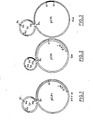
- the plasmids G 9 and G 18 are represented respectively in FIGS. 2 and 3.
- Plasmid G 9 contains part of DNA bacterial from pCR 1 identical to that found in PTY 39.
- yeast DNA part the thick segment of DNA carrying the URA 3 + gene and which is fixed between the restriction sites H1 and H3 with a loss of the corresponding 2 ⁇ plasmid segment.
- G 18 includes fully the plasmid DNA 2 ⁇ as for PTY 39, on the other hand the bacterial AD N fragment originating from pCRl comprises the insertion, at the Hind III restriction site, of the DNA fragment carrying the gene URA 3 + shown in black line.
- the hybrid plasmids G 9 and G 18 thus obtained can be stored as such or in a yeast or a bacteria where they will multiply and can be extracted therefrom on demand.
- plasmids can be integrated into a yeast by the following method.
- a yeast strain of Saccharomyces cerevisiae URA 3 - is used , in the present case and in order to better study the phenomenon, a yeast with a low reversion rate is used.
- the cells are then transformed into protoplasts by digestion of the walls using a helicopter in the presence of an osmotic stabilizer.
- the protoplasts are placed in the presence of the AD N of the hybrid plasmid G 9 or G 18 for approximately 10 minutes then mixed with 30% polyethylene glycol and left to act for approximately 15 minutes. It is centrifuged and the pellet is resuspended in a complete medium containing an osmotic stabilizer. Incubate for 1 hour at 30 ° C and then proceed to a second centrifugation. The pellet is then resuspended in a hypertonic medium containing agar (3%) maintained in supercooling at 44 ° C and 0.03% yeast extract.
- the whole is poured into petri dishes.
- control yeasts are treated in the same way but without adding hybrid plasmid DNA.
- transformants constitute microorganisms coming within the scope of the invention both as a source of hybrid plasmid G 9 or G 18 and as a means in particular for the preparation of orotidine-5'-phosphate -decarboxylase.
- orotidine-5'-phosphate-decarboxylase was measured in the wild strain URA 3 + and in a certain number of transformants, that is to say of strains according to the present invention and it was found that if in the wild strain the activity of the enzyme is two units, this activity varies between 10 and 35 in transformants, which represents a multiplying factor of 5 to 18.
- strains according to the present invention can therefore be envisaged as a means of producing orotidine-5'-phosphate-decarboxylase which is a product used in the enzyme industries.
- hybrid plasmids according to the present invention in particular of the hybrid plasmids G 9 and G 18, are that they can, in the context of the invention, be modified in order to serve as vectors for the introduction of exogenous DNA in microorganisms which, after transformation, are also part of the present invention.
- this has the advantage of having a complete plasmid DNA 2 ⁇ which makes it possible to envisage its replication and its maintenance in a yeast strain for example in a much more sure that in the case of the plasmid G 9 in which the A DN of the plasmid 2 ⁇ has been amputated by a segment between the restriction sites Hind III (1) and Hind III (3).
- this advantage must be weighed in view of the fact that G 18 has two Eco R1 restriction sites which, upon the action of the corresponding enzyme, can lead to more fractionation. DNA complex than in the case of G 9 and thus make the introduction of bacterial DNA carrying exogenous DNA more difficult.
- a plasmid pMB9 - URA 3 + is prepared by known methods (TD Petes et al., Gene, vol. IV, 1978, p. 37-49) for example by digesting AD N from a wild yeast of Saccharomyces cerevisiae by endonuclease Hind III, and by similarly digesting the plasmid pMB 9 (Bolivar et al. Gene 2, 75-93 (1977) with the same enzyme. The two digestion products are ligated by DNA ligase T 4.
- the plasmids cbtenu are then sorted using a strain of Escherichia coli URA 3 - which is transformed by said plasmids which are the only ones to grow on a minimum medium (without uracil).
- the 1.1 kilobase fragment carrying the URA 3 + gene from yeast is recovered from the gel by the so-called “Freeze and Squeeze” method (Thuring, 1975) and by ethanol precipitation.
- the circular DNA of the plasmid PTY 39 is partially digested with the endonuclease Hind III to obtain a maximum of molecule comprising only one single cut. After heating to 60 ° C. for 10 minutes to inactivate the enzyme and after dialysis, 1 ⁇ g of the digested DNA of PTY 39 is mixed with approximately 0.05 ⁇ g of the 1.1 kilobase fragment carrying the URA 3 + gene. the yeast. The two pieces are linked by T 4 DNA ligase in a volume of 50 ⁇ l for 3 minutes at 37 ° C. and then for 5 hours at 10 ° C.
- the ligation mixture (50 ⁇ l) is diluted with 900 ⁇ l of a buffer containing 10 mM Tris pH 7, 10 mM CaCl 2 , 10 mM MgSO 4 . 100 ⁇ l of this diluted mixture are added to 200 ⁇ l of cells of Escherichia coli URA 3 - prepared for transformation by the method of Cohen et al (1975). The transformation mixture is left on ice for 25 minutes then subjected for 3 minutes to pulsed heating at 37 ° C. and then left at room temperature for 10 minutes. 1 ml of complete medium is then added and the mixture is stirred at 37 ° C for 1 hour. The cells are then collected by centrifugation and then spread on a minimum medium, that is to say an M 63 medium, containing tryptophan. The URA 3 + clones obtained are then selected taking into account their resistance to kanamycin.
- the clones of Escherichia coli carrying G 9 which are resistant to kanamycin are selected and the clones of Escherichia coli carrying G 18 which are not resistant to kanamycin.
- the URA 3 receptor yeast strains are prepared - by cultivating them on 500 ml of complete medium up to a cell density of approximately 2.10 7 cells / ml. The cells are then washed in 300 ml of distilled water and in the same volume of 1.2 M sorbitol. They are resuspended in 50 ml of a mixture of 1.2 M sorbitol, 0.05 M phosphate-citrate pH 5.8 and helicase (supplied by the French Organic Industry) which is added up to a final concentration of 6,500 units per ml. The cells are incubated at 28 ° C for 1 hour to 1 hour 30 minutes with gentle shaking. During incubation the formation of the spheroplasts is followed by an optical method.
- the spheroplasts are washed by centrifugation at room temperature and resuspended three times in 150 ml of 1.2 M sorbitol and then once in a 1.2 M sorbitol solution, 10 mM Tris pH 7.6 and 10 mM CaCl 2 .
- the spheroplasts are concentrated in the same buffer to a cell density of about 10 9 cells / ml.
- the plasmid DNA previously obtained in 10 mM CaCl 2 and 10 mM Tris pH 6 (approximately 10 ⁇ l) is mixed with 0.2 ml of spheroplasts up to a concentration of 5 to 15 ⁇ g per ml.
- the mixture is left at room temperature for 10 minutes and then 2 ml of 10 mM Tris, 10 mM CaCl 2 in 4,000 to 30% polyethylene are added. After mixing, the whole is left for 15 minutes at room temperature.
- the spheroplasts are recovered by centrifugation at 2,500 g for 10 minutes and then resuspended in a medium containing 1.2 M sorbitol, 4 g / 1 of yeast extract, 6 g / 1 of glucose, 6 g / 1 of bacteropeutone Difco, 10 mM CaCl 2 and 10 mM Tris pH 6 then stirred lightly for 1 hour at 28 ° C.
- the whole is centrifuged and then resuspended in 0.2 ml of the preceding buffer.
- the samples are mixed with 8 ml of agar (1.2 M sorbitol, 20 g / l of glucose, 0.8 g / l of Difco bactotryptone, 0.3 g / 1 of yeast extract, 30 g / l of Difco purified agar) at 44 ° C and poured into the same medium with the exception of the agar concentration which is 20 g / l.
- the dilutions are spread by the same process in the same media supplemented with 50 ⁇ g / l of uracil so as to measure the efficiency of the regeneration of the spheroplasts.
- the orotidine-5'-phosphate-decarboxylase activity is assayed by taking cells from the logarithmic growth phase on minimum medium and a crude extract is prepared by the method of Lacroute (1962).
- the enzymatic test is carried out according to Beckwith et al. (1962) except that MgCl 2 is put in the reaction mixture. Proteins are dosed according to the method of Lowry et al. (1951) lysozyme being used as a standard.
- TRA strains are strains obtained in Examples 2 and 3.
- the specific activity for orotidine-5 1- phosphate-decarboxylase is expressed in nmoles of decarboxylated substrate per minute and per milligram of protein.
- the increase in specific activity indicates the ratio between the specific activity of the TRAs after correction to the specific activity of the wild strain.
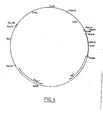
- FIG. 4 represents the plasmid pFL 1 (represented in dotted lines) which comprises the DNA of the plasmid pBR 322 with insertion of. the DNA of the URA 3 + gene (shown in double line) at the Hind III site of the pBR 322 DNA and insertion at the Eco R1 site of pBR 322 of a DNA fragment from the plasmid 2 ⁇ , the 2 ⁇ D fragment (fragment defined with respect to Eco R1 sites).
- pFL 2 Three other plasmids, pFL 2, p F L 3 and pFL 4, have been isolated.
- the DNA of the URA 3 + gene has the opposite orientation, that is to say that the P st 1 site is found at 0.8 kb from the Eco Rl site taken as origin.
- the plasmids pFL 3 and pFL 4 have the 2 ⁇ D fragment in the opposite orientation to that observed for pFL 1 and pFL 2 respectively.
- the total length of this plasmid is 7.652 kb.
- Plasmid pBR 322 carries a resistance gene. tance with ampicillin (Amp r ), a gene that codes for a penicillinase. In a yeast transformed with a plasmid of this type (such as pFL 1 or pFL 2) this bacterial gene is expressed and an excretion of penicillinase by the transformed yeasts is identified, which shows the advantage of the plasmids described in the present invention for the excretion of proteins (enzymes in particular).
- Another advantage of these plasmids is that they demonstrate that the entire 2 ⁇ m plasmid is not essential for its replication and its maintenance in yeast.
- the advantage of this construction is that it makes it possible to consider cloning large foreign DNA fragments since the receptor plasmid is smaller. Indeed, too large plasmids are more fragile, more difficult to handle and to extract bacteria or yeasts.
- the plasmid pMA 1 is obtained, represented in FIG. 5.
- This plasmid has the same structure as the previous ones but has the entire DNA of the 2 ⁇ plasmid (2 ⁇ A + 2 ⁇ D) instead of the 2 ⁇ D fragment.
Landscapes
- Life Sciences & Earth Sciences (AREA)
- Health & Medical Sciences (AREA)
- Genetics & Genomics (AREA)
- Engineering & Computer Science (AREA)
- Chemical & Material Sciences (AREA)
- Zoology (AREA)
- Organic Chemistry (AREA)
- Bioinformatics & Cheminformatics (AREA)
- Wood Science & Technology (AREA)
- General Engineering & Computer Science (AREA)
- Biomedical Technology (AREA)
- Biotechnology (AREA)
- Microbiology (AREA)
- Biochemistry (AREA)
- General Health & Medical Sciences (AREA)
- Molecular Biology (AREA)
- Mycology (AREA)
- Medicinal Chemistry (AREA)
- Physics & Mathematics (AREA)
- Biophysics (AREA)
- Plant Pathology (AREA)
- Micro-Organisms Or Cultivation Processes Thereof (AREA)
- Enzymes And Modification Thereof (AREA)
- Preparation Of Compounds By Using Micro-Organisms (AREA)
Priority Applications (1)
| Application Number | Priority Date | Filing Date | Title |
|---|---|---|---|
| FR8006624A FR2469454A2 (fr) | 1979-11-13 | 1980-03-25 | Nouveaux plasmides hybrides et micro-organismes les contenant |
Applications Claiming Priority (2)
| Application Number | Priority Date | Filing Date | Title |
|---|---|---|---|
| FR7832100A FR2441659A1 (fr) | 1978-11-14 | 1978-11-14 | Nouveaux plasmides hybrides et microorganismes les contenant |
| FR7832100 | 1978-11-14 |
Publications (3)
| Publication Number | Publication Date |
|---|---|
| EP0011562A1 true EP0011562A1 (de) | 1980-05-28 |
| EP0011562B1 EP0011562B1 (de) | 1981-03-18 |
| EP0011562B2 EP0011562B2 (de) | 1990-03-28 |
Family
ID=9214846
Family Applications (1)
| Application Number | Title | Priority Date | Filing Date |
|---|---|---|---|
| EP79400853A Expired - Lifetime EP0011562B2 (de) | 1978-11-14 | 1979-11-13 | Mit einem Plasmid transformierte Saccharomyces cer. |
Country Status (5)
| Country | Link |
|---|---|
| US (1) | US4387162A (de) |
| EP (1) | EP0011562B2 (de) |
| JP (1) | JPS5577889A (de) |
| DE (1) | DE2960200D1 (de) |
| FR (1) | FR2441659A1 (de) |
Cited By (14)
| Publication number | Priority date | Publication date | Assignee | Title |
|---|---|---|---|---|
| EP0060057A1 (de) * | 1981-02-25 | 1982-09-15 | Genentech, Inc. | Expression von Polypeptiden in Hefen |
| US4443539A (en) * | 1980-02-05 | 1984-04-17 | The Upjohn Company | Process for preparing bovine growth hormone |
| EP0073635A3 (en) * | 1981-08-25 | 1984-05-16 | Alan John Kingsman | Expression vectors |
| WO1984004539A1 (fr) * | 1983-05-19 | 1984-11-22 | Transgene Sa | Production de la catechol 2,3-oxygenase par des levures, plasmide pour sa mise en oeuvre et application |
| WO1985005125A1 (fr) * | 1984-05-09 | 1985-11-21 | Transgene S.A. | Vecteur d'expression du facteur ix, cellules transformees par ces vecteurs et procede de preparation du facteur ix |
| FR2568891A1 (fr) * | 1984-08-09 | 1986-02-14 | Transgene Sa | Procede de preparation d'une souche, notamment de levure, transformee par un vecteur d'expression, qui peut etre cultivee sur un milieu complet sans pression de selection et souche ainsi obtenue |
| EP0184576A1 (de) * | 1984-12-06 | 1986-06-11 | Fina Research S.A. | Promotoren für die Expression von fremden Genen in Hefe, Plasmide, die diese Promotoren enthalten, sowie deren Verwendung zur Herstellung von Polypeptiden |
| US4663281A (en) * | 1984-03-22 | 1987-05-05 | Mass Institute Of Technology | Enhanced production of proteinaceous materials in eucaryotic cells |
| US4803164A (en) * | 1981-08-31 | 1989-02-07 | Genentech, Inc. | Preparation of hepatitis b surface antigen in yeast |
| EP0340170A3 (de) * | 1988-04-26 | 1991-10-09 | Ciba-Geigy Ag | Verfahren zur Herstellung von Polypeptiden |
| US5196194A (en) * | 1979-05-24 | 1993-03-23 | The Regents Of The University Of California | Vaccines containing Hepatitis B S-protein |
| US5665578A (en) * | 1986-03-07 | 1997-09-09 | Gillies; Stephen D. | Vector and method for achieving high level of expression in eukaryotic cells |
| WO1999036432A3 (de) * | 1998-01-15 | 1999-08-19 | Basf Ag | Orotidin-5'-phosphatdecarboxylase-gen, genkonstrukt enthaltend dieses gen und seine verwendung |
| US6475489B1 (en) | 1981-08-04 | 2002-11-05 | The Regents Of The University Of California | Synthesis of human virus antigens by yeast |
Families Citing this family (33)
| Publication number | Priority date | Publication date | Assignee | Title |
|---|---|---|---|---|
| FR2489364A1 (fr) * | 1980-08-29 | 1982-03-05 | Centre Nat Rech Scient | Nouveaux plasmides hybrides et microorganismes les comportant |
| FR2489363A1 (fr) * | 1980-08-29 | 1982-03-05 | Pasteur Institut | Nouveaux plasmides hybrides utiles notamment pour l'introduction des genes responsables de la fixation de l'azote dans des microorganismes et cellules eucaryotes; microorganismes et cellules eucaryotes contenant lesdits plasmides |
| US5525484A (en) * | 1981-01-16 | 1996-06-11 | Genome Therapeutics Corp. | Recombinant DNA means and method for producing rennin, prorenin and pre-prorennin |
| US4666847A (en) * | 1981-01-16 | 1987-05-19 | Collaborative Research, Inc. | Recombinant DNA means and method |
| US4477571A (en) * | 1981-02-09 | 1984-10-16 | Cetus Corporation | Chimeric plasmids that replicate in bacteria and yeast and microorganisms transformed therewith |
| FR2500847B1 (fr) * | 1981-03-02 | 1985-09-13 | Pasteur Institut | Marqueurs genetiques selectifs pour cellules eucaryotes, procede de mise en oeuvre de tels marqueurs et application des cellules contenant un tel marqueur a la fabrication de proteines determinees apres leur transformation par un adn correspondant |
| US4775622A (en) * | 1982-03-08 | 1988-10-04 | Genentech, Inc. | Expression, processing and secretion of heterologous protein by yeast |
| EP0091539B2 (de) * | 1982-03-31 | 1996-11-27 | Ajinomoto Co., Inc. | Das Polypeptid Interleukin-2 kodierendes Gen, rekombinante, dieses Gen enthaltende DNA, diese rekombinante DNA aufweisende Zelllinien und Verfahren zur Herstellung von Interleukin-2 unter Verwendung der genannten Zellen |
| DE3381090D1 (de) * | 1982-05-19 | 1990-02-15 | Gist Brocades Nv | Klonierungssystem fuer kluyveromyce spezies. |
| US4511652A (en) * | 1982-06-03 | 1985-04-16 | The Regents Of The University Of California | High efficiency eukaryotic metallothionein promoter system |
| JPS592689A (ja) * | 1982-06-04 | 1984-01-09 | Handai Biseibutsubiyou Kenkyukai | 強力な遺伝子発現能を有する新規レプリコンの作成法 |
| JPS60145685A (ja) | 1984-01-09 | 1985-08-01 | Nec Corp | 分布帰還型半導体レ−ザ |
| US4472502A (en) * | 1982-08-16 | 1984-09-18 | The Regents Of The University Of California | Malolactic gene |
| JPS5936699A (ja) * | 1982-08-20 | 1984-02-28 | Chemo Sero Therapeut Res Inst | シヤトルベクタ− |
| EP0118551A1 (de) * | 1982-09-15 | 1984-09-19 | Collaborative Research Inc. | Herstellung von interferon in einer hefe unter verwendung eines invertasepromotors |
| US4510245A (en) * | 1982-11-18 | 1985-04-09 | Chiron Corporation | Adenovirus promoter system |
| US5096825A (en) * | 1983-01-12 | 1992-03-17 | Chiron Corporation | Gene for human epidermal growth factor and synthesis and expression thereof |
| US4670399A (en) * | 1983-01-31 | 1987-06-02 | Stauffer Chemical Co. | Hybrid plasmid with marker |
| IL71991A (en) * | 1983-06-06 | 1994-05-30 | Genentech Inc | Preparation of human FGI and FGE in their processed form through recombinant AND tranology in prokaryotes |
| US4613572A (en) * | 1983-08-15 | 1986-09-23 | Kansas State University Research Foundation | Yeast BAR1 gene plasmid |
| US5629189A (en) * | 1983-10-03 | 1997-05-13 | Chiron Corporation | DNA encoding human cytoplasmic Cu/Zn superoxide dismutase |
| US5252476A (en) * | 1983-10-03 | 1993-10-12 | Chiron Corporation | Superoxide dismutase cloning and expression in microorganisms |
| US5691139A (en) * | 1983-10-03 | 1997-11-25 | Chiron Corporation | Genetic modification of superoxide dismutase to increase expression in microorganisms |
| US5710033A (en) * | 1983-10-03 | 1998-01-20 | Chiron Corporation | Superoxide dismutase cloning and expression in microorganisms |
| DE3486452T2 (de) * | 1983-10-03 | 1997-11-06 | Chiron Corp., Emeryville, Calif. | Superoxiddismutase und deren Expression in Mikroorganismen |
| US4626505A (en) * | 1984-02-24 | 1986-12-02 | E. I. Du Pont De Nemours And Company | Selectable markers for yeast transformation |
| CA1341130C (en) * | 1984-07-27 | 2000-10-31 | Adrianus Marinus Ledeboer | Use of oxidoreductases in bleaching and/or detergent compositions and their preparation by microorganisms engineered by recombinant dna technology |
| US4837148A (en) * | 1984-10-30 | 1989-06-06 | Phillips Petroleum Company | Autonomous replication sequences for yeast strains of the genus pichia |
| US4943531A (en) * | 1985-05-06 | 1990-07-24 | The Trustees Of Columbia University In The City Of New York | Expression of enzymatically active reverse transcriptase |
| US5047340A (en) * | 1985-06-05 | 1991-09-10 | The University Of Kentucky Research Foundation | LAC+ saccharomyces cerevisiae |
| US5256554A (en) * | 1986-05-20 | 1993-10-26 | The Trustees Of Columbia University In The City Of New York | Expression of human immunodeficiency virus (HIV) reverse transcriptase |
| US5202259A (en) * | 1986-05-20 | 1993-04-13 | The Trustees Of Columbia University In The City Of New York | Expression of human immunodeficiency virus (HIV) reverse transcriptase |
| CA2246889A1 (en) | 1997-09-09 | 1999-03-09 | Rafael Rangel-Aldao | Malt beverage having stabilized flavor and methods of production thereof |
-
1978
- 1978-11-14 FR FR7832100A patent/FR2441659A1/fr active Granted
-
1979
- 1979-11-13 DE DE7979400853T patent/DE2960200D1/de not_active Expired
- 1979-11-13 EP EP79400853A patent/EP0011562B2/de not_active Expired - Lifetime
- 1979-11-14 US US06/094,093 patent/US4387162A/en not_active Expired - Lifetime
- 1979-11-14 JP JP14758979A patent/JPS5577889A/ja active Pending
Non-Patent Citations (4)
| Title |
|---|
| CHEMICAL ABSTRACTS, Vol. 86, No. 13, 28 Mars 1977, page 242, No. 86012r Columbus, Ohio, U.S.A. C.P. HOLLENBERG et al.: "Synthesis of high molecular weight polypeptides in Escherichia coli minicells directed by cloned Saccahromyces cerevisiae 2-mum DNA". & GEN 1976, 1(1), 33-47 (Eng.) * Abrege * * |
| CHEMICAL ABSTRACTS, Vol. 87, No. 11, 12 Septembre 1977, page 282, no. 81110g Columbus, Ohio, U.S.A. M. GUERINEAU et al.: "Structure and genetics of the 2mum circular DNA in yeast". & GENET. BIOG. CHLOROPLASTS MITOCHONDRIA INTERDISCIP. CONF. 1976, 557-64 (Eng.) * Abrege * * |
| CHEMICAL ABSTRACTS, Vol. 90, No. 15, 9 Avril 1979, page 319, no. 117850b Columbus, Ohio, U.S.A. M.L. BACH et al.: "Evidence for transcriptional regulation of orotidine-5' -phosphate decarboxylase in yeast by hybridization of mRNA to the yeast structural gene cloned in Escherichia coli". & PROC. NATL. ACAD. SCI. U.S.A. 1979, 76(1), 386-90 (Eng.) * Abrege * * |
| CHEMICAL ABSTRACTS, Vol. 91, No. 5 30 Juilliet 1979, page 304, No. 35566v Columbus, Ohio, U.S.A. C. GERBAUD et al.: "High frequency of yeast transformation by plasmids carrying part or entire 2-mum yeast plasmid". & GENE 1979 5(3), 233-53 (Eng.) * Abrege * * |
Cited By (18)
| Publication number | Priority date | Publication date | Assignee | Title |
|---|---|---|---|---|
| US5196194A (en) * | 1979-05-24 | 1993-03-23 | The Regents Of The University Of California | Vaccines containing Hepatitis B S-protein |
| US4443539A (en) * | 1980-02-05 | 1984-04-17 | The Upjohn Company | Process for preparing bovine growth hormone |
| EP0060057A1 (de) * | 1981-02-25 | 1982-09-15 | Genentech, Inc. | Expression von Polypeptiden in Hefen |
| US6475489B1 (en) | 1981-08-04 | 2002-11-05 | The Regents Of The University Of California | Synthesis of human virus antigens by yeast |
| EP0073635A3 (en) * | 1981-08-25 | 1984-05-16 | Alan John Kingsman | Expression vectors |
| US4615974A (en) * | 1981-08-25 | 1986-10-07 | Celltech Limited | Yeast expression vectors |
| US4803164A (en) * | 1981-08-31 | 1989-02-07 | Genentech, Inc. | Preparation of hepatitis b surface antigen in yeast |
| WO1984004539A1 (fr) * | 1983-05-19 | 1984-11-22 | Transgene Sa | Production de la catechol 2,3-oxygenase par des levures, plasmide pour sa mise en oeuvre et application |
| US4663281A (en) * | 1984-03-22 | 1987-05-05 | Mass Institute Of Technology | Enhanced production of proteinaceous materials in eucaryotic cells |
| WO1985005125A1 (fr) * | 1984-05-09 | 1985-11-21 | Transgene S.A. | Vecteur d'expression du facteur ix, cellules transformees par ces vecteurs et procede de preparation du facteur ix |
| EP0173619A1 (de) * | 1984-08-09 | 1986-03-05 | Transgene S.A. | Verfahren zur Herstellung eines Stammes, insbesondere von Hefe, transformiert mit einem Expressionsvektor, der gezüchtet werden kann in einem kompletten Medium ohne Selektionsdruck und auf diese Weise erhaltener Stamm |
| WO1986001224A1 (fr) * | 1984-08-09 | 1986-02-27 | Transgene S.A. | Procede de preparation d'une souche, notamment de levure, transformee par un vecteur d'expression, qui peut etre cultivee sur un milieu complet sans pression de selection et souche ainsi obtenue |
| FR2568891A1 (fr) * | 1984-08-09 | 1986-02-14 | Transgene Sa | Procede de preparation d'une souche, notamment de levure, transformee par un vecteur d'expression, qui peut etre cultivee sur un milieu complet sans pression de selection et souche ainsi obtenue |
| EP0184576A1 (de) * | 1984-12-06 | 1986-06-11 | Fina Research S.A. | Promotoren für die Expression von fremden Genen in Hefe, Plasmide, die diese Promotoren enthalten, sowie deren Verwendung zur Herstellung von Polypeptiden |
| US5665578A (en) * | 1986-03-07 | 1997-09-09 | Gillies; Stephen D. | Vector and method for achieving high level of expression in eukaryotic cells |
| EP0340170A3 (de) * | 1988-04-26 | 1991-10-09 | Ciba-Geigy Ag | Verfahren zur Herstellung von Polypeptiden |
| WO1999036432A3 (de) * | 1998-01-15 | 1999-08-19 | Basf Ag | Orotidin-5'-phosphatdecarboxylase-gen, genkonstrukt enthaltend dieses gen und seine verwendung |
| US6927026B1 (en) | 1998-01-15 | 2005-08-09 | Basf Aktiengesellschaft | Orotidine-5′-phosphate decarboxylase-gene, gene construct containing said gene and the utilization thereof |
Also Published As
| Publication number | Publication date |
|---|---|
| JPS5577889A (en) | 1980-06-12 |
| EP0011562B2 (de) | 1990-03-28 |
| FR2441659B1 (de) | 1981-07-03 |
| EP0011562B1 (de) | 1981-03-18 |
| US4387162A (en) | 1983-06-07 |
| FR2441659A1 (fr) | 1980-06-13 |
| DE2960200D1 (en) | 1981-04-16 |
Similar Documents
| Publication | Publication Date | Title |
|---|---|---|
| EP0011562B2 (de) | Mit einem Plasmid transformierte Saccharomyces cer. | |
| EP0095986B2 (de) | Klonierungs- und Expressionsvektor, durch diesen Vektor transformierte Hefe und ihre Verwendung | |
| FR2679920A1 (fr) | Levures recombinantes hautement stables pour la production de proteines recombinantes, leur preparation et leur utilisation. | |
| EP1989310B1 (de) | System zur herstellung aromatischer moleküle mittels biokonversion | |
| CA2285041C (fr) | Cassette de transformation de la levure | |
| EP0749489B1 (de) | Expressionskassette, die einen aus dem Schizosaccharomyces pombe-Pho4-Gene stammenden Promotor enthält | |
| EP0652964B1 (de) | Promotor des transaldolase-genes von k.lactis und dessen verwendung | |
| EP0531187A1 (de) | Hefe promotor und seine Verwendung | |
| FR2635115A1 (fr) | Procede de preparation de la serum albumine humaine a partir d'une levure | |
| FR3105977A1 (fr) | Méthode de fabrication de plantes bioluminescentes | |
| CA3177781A1 (fr) | Utilisation d'une proteine de fusion deficiente pour l'activite nuclease pour induire des recombinaisons meiotiques | |
| WO1984004539A1 (fr) | Production de la catechol 2,3-oxygenase par des levures, plasmide pour sa mise en oeuvre et application | |
| JP2018033399A (ja) | 酢酸イソアミル高生産性、酢酸生産性低生産性かつイソアミルアルコール高生産性の醸造酵母の作出方法 | |
| EP0651811B1 (de) | Promotor vom gen des k.lactis rp28 ribosomalen proteins und anwendung davon | |
| EP1185669B1 (de) | Promotor, welcher die expression von transgenen in der ganzen pflanzen ausser dem samen erlaubt | |
| BE901223A (fr) | Levures transformees produisant du lysozyme plasmides utilises pour cette transformation et leurs utilisations. | |
| WO2007099231A1 (fr) | Systeme d'expression d'un gene d'interet chez la levure | |
| FR2678947A1 (fr) | Origine de replication plasmidique augmentant le nombre de copies du plasmide comprenant ladite origine. | |
| Boisnard et al. | Overexpression of a human and a fungal ABC transporter similarly suppresses the differentiation defects of a fungal peroxisomal mutant but introduces pleiotropic cellular effects | |
| CA2218405A1 (fr) | Nouveaux promoteurs pour l'expression de proteines d'interet dans la levure | |
| US20260117260A1 (en) | Genome editing method and composition for genome editing | |
| EP1121451B1 (de) | Verfahren zur herstellung von transgenen pflanzen, die ein protein exprimieren, das eine wasserstoff-peroxid prodzierende aktivität besitzt, mittels transformation durch agrobakterium rhizogenes | |
| CN106046175B (zh) | 一种特异检测水杨酸(sa)的融合蛋白 | |
| CN121065181A (zh) | 一种小麦内源高活性TaUbi启动子及其应用 | |
| CN111500623A (zh) | 一种提高农杆菌介导的植物遗传转化效率的方法 |
Legal Events
| Date | Code | Title | Description |
|---|---|---|---|
| PUAI | Public reference made under article 153(3) epc to a published international application that has entered the european phase |
Free format text: ORIGINAL CODE: 0009012 |
|
| AK | Designated contracting states |
Designated state(s): BE CH DE GB IT NL |
|
| 17P | Request for examination filed | ||
| ITF | It: translation for a ep patent filed | ||
| GRAA | (expected) grant |
Free format text: ORIGINAL CODE: 0009210 |
|
| AK | Designated contracting states |
Designated state(s): BE CH DE GB IT NL |
|
| REF | Corresponds to: |
Ref document number: 2960200 Country of ref document: DE Date of ref document: 19810416 |
|
| KL | Correction list |
Free format text: 82/01 |
|
| PLBI | Opposition filed |
Free format text: ORIGINAL CODE: 0009260 |
|
| 26 | Opposition filed |
Opponent name: GIST-BROCADES N.V. Effective date: 19811216 |
|
| RAP2 | Party data changed (patent owner data changed or rights of a patent transferred) |
Owner name: ANVAR AGENCE NATIONALE DE VALORISATION DE LA RECHE |
|
| PUAH | Patent maintained in amended form |
Free format text: ORIGINAL CODE: 0009272 |
|
| STAA | Information on the status of an ep patent application or granted ep patent |
Free format text: STATUS: PATENT MAINTAINED AS AMENDED |
|
| 27A | Patent maintained in amended form |
Effective date: 19900328 |
|
| AK | Designated contracting states |
Kind code of ref document: B2 Designated state(s): BE CH DE GB IT NL |
|
| ITF | It: translation for a ep patent filed | ||
| NLR2 | Nl: decision of opposition | ||
| NLR3 | Nl: receipt of modified translations in the netherlands language after an opposition procedure | ||
| ITTA | It: last paid annual fee | ||
| APAC | Appeal dossier modified |
Free format text: ORIGINAL CODE: EPIDOS NOAPO |
|
| APAC | Appeal dossier modified |
Free format text: ORIGINAL CODE: EPIDOS NOAPO |
|
| PGFP | Annual fee paid to national office [announced via postgrant information from national office to epo] |
Ref country code: CH Payment date: 19981027 Year of fee payment: 20 |
|
| PGFP | Annual fee paid to national office [announced via postgrant information from national office to epo] |
Ref country code: NL Payment date: 19981028 Year of fee payment: 20 Ref country code: GB Payment date: 19981028 Year of fee payment: 20 |
|
| PGFP | Annual fee paid to national office [announced via postgrant information from national office to epo] |
Ref country code: DE Payment date: 19981104 Year of fee payment: 20 |
|
| PGFP | Annual fee paid to national office [announced via postgrant information from national office to epo] |
Ref country code: BE Payment date: 19981204 Year of fee payment: 20 |
|
| BE20 | Be: patent expired |
Free format text: 19991113 *ANVAR AGENCE NATIONALE DE VALORISATION DE LA RECHERCHE |
|
| PG25 | Lapsed in a contracting state [announced via postgrant information from national office to epo] |
Ref country code: GB Free format text: LAPSE BECAUSE OF EXPIRATION OF PROTECTION Effective date: 19991112 Ref country code: CH Free format text: LAPSE BECAUSE OF EXPIRATION OF PROTECTION Effective date: 19991112 |
|
| PG25 | Lapsed in a contracting state [announced via postgrant information from national office to epo] |
Ref country code: NL Free format text: LAPSE BECAUSE OF EXPIRATION OF PROTECTION Effective date: 19991113 |
|
| REG | Reference to a national code |
Ref country code: CH Ref legal event code: PL |
|
| REG | Reference to a national code |
Ref country code: GB Ref legal event code: PE20 Effective date: 19991112 |
|
| NLV7 | Nl: ceased due to reaching the maximum lifetime of a patent |
Effective date: 19991113 |
|
| APAH | Appeal reference modified |
Free format text: ORIGINAL CODE: EPIDOSCREFNO |