EP0016546A1 - Lipohétéropolysaccharides microbiens extracellulaires et dérivés, leur préparation, préparations les contenant et leurs utilisations - Google Patents
Lipohétéropolysaccharides microbiens extracellulaires et dérivés, leur préparation, préparations les contenant et leurs utilisations Download PDFInfo
- Publication number
- EP0016546A1 EP0016546A1 EP80300527A EP80300527A EP0016546A1 EP 0016546 A1 EP0016546 A1 EP 0016546A1 EP 80300527 A EP80300527 A EP 80300527A EP 80300527 A EP80300527 A EP 80300527A EP 0016546 A1 EP0016546 A1 EP 0016546A1
- Authority
- EP
- European Patent Office
- Prior art keywords
- emulsans
- apo
- emulsan
- weight
- percent
- Prior art date
- Legal status (The legal status is an assumption and is not a legal conclusion. Google has not performed a legal analysis and makes no representation as to the accuracy of the status listed.)
- Granted
Links
Images





Classifications
-
- C—CHEMISTRY; METALLURGY
- C09—DYES; PAINTS; POLISHES; NATURAL RESINS; ADHESIVES; COMPOSITIONS NOT OTHERWISE PROVIDED FOR; APPLICATIONS OF MATERIALS NOT OTHERWISE PROVIDED FOR
- C09K—MATERIALS FOR MISCELLANEOUS APPLICATIONS, NOT PROVIDED FOR ELSEWHERE
- C09K23/00—Use of substances as emulsifying, wetting, dispersing, or foam-producing agents
- C09K23/30—Proteins; Protein hydrolysates
-
- C—CHEMISTRY; METALLURGY
- C09—DYES; PAINTS; POLISHES; NATURAL RESINS; ADHESIVES; COMPOSITIONS NOT OTHERWISE PROVIDED FOR; APPLICATIONS OF MATERIALS NOT OTHERWISE PROVIDED FOR
- C09K—MATERIALS FOR MISCELLANEOUS APPLICATIONS, NOT PROVIDED FOR ELSEWHERE
- C09K8/00—Compositions for drilling of boreholes or wells; Compositions for treating boreholes or wells, e.g. for completion or for remedial operations
- C09K8/60—Compositions for stimulating production by acting on the underground formation
- C09K8/84—Compositions based on water or polar solvents
- C09K8/86—Compositions based on water or polar solvents containing organic compounds
- C09K8/88—Compositions based on water or polar solvents containing organic compounds macromolecular compounds
- C09K8/90—Compositions based on water or polar solvents containing organic compounds macromolecular compounds of natural origin, e.g. polysaccharides, cellulose
- C09K8/905—Biopolymers
-
- B—PERFORMING OPERATIONS; TRANSPORTING
- B01—PHYSICAL OR CHEMICAL PROCESSES OR APPARATUS IN GENERAL
- B01D—SEPARATION
- B01D21/00—Separation of suspended solid particles from liquids by sedimentation
- B01D21/01—Separation of suspended solid particles from liquids by sedimentation using flocculating agents
-
- C—CHEMISTRY; METALLURGY
- C02—TREATMENT OF WATER, WASTE WATER, SEWAGE, OR SLUDGE
- C02F—TREATMENT OF WATER, WASTE WATER, SEWAGE, OR SLUDGE
- C02F1/00—Treatment of water, waste water, or sewage
- C02F1/52—Treatment of water, waste water, or sewage by flocculation or precipitation of suspended impurities
- C02F1/5263—Treatment of water, waste water, or sewage by flocculation or precipitation of suspended impurities using natural chemical compounds
-
- C—CHEMISTRY; METALLURGY
- C02—TREATMENT OF WATER, WASTE WATER, SEWAGE, OR SLUDGE
- C02F—TREATMENT OF WATER, WASTE WATER, SEWAGE, OR SLUDGE
- C02F1/00—Treatment of water, waste water, or sewage
- C02F1/68—Treatment of water, waste water, or sewage by addition of specified substances, e.g. trace elements, for ameliorating potable water
- C02F1/682—Treatment of water, waste water, or sewage by addition of specified substances, e.g. trace elements, for ameliorating potable water by addition of chemical compounds for dispersing an oily layer on water
-
- C—CHEMISTRY; METALLURGY
- C09—DYES; PAINTS; POLISHES; NATURAL RESINS; ADHESIVES; COMPOSITIONS NOT OTHERWISE PROVIDED FOR; APPLICATIONS OF MATERIALS NOT OTHERWISE PROVIDED FOR
- C09K—MATERIALS FOR MISCELLANEOUS APPLICATIONS, NOT PROVIDED FOR ELSEWHERE
- C09K23/00—Use of substances as emulsifying, wetting, dispersing, or foam-producing agents
- C09K23/16—Amines or polyamines
-
- C—CHEMISTRY; METALLURGY
- C12—BIOCHEMISTRY; BEER; SPIRITS; WINE; VINEGAR; MICROBIOLOGY; ENZYMOLOGY; MUTATION OR GENETIC ENGINEERING
- C12N—MICROORGANISMS OR ENZYMES; COMPOSITIONS THEREOF; PROPAGATING, PRESERVING, OR MAINTAINING MICROORGANISMS; MUTATION OR GENETIC ENGINEERING; CULTURE MEDIA
- C12N1/00—Microorganisms; Compositions thereof; Processes of propagating, maintaining or preserving microorganisms or compositions thereof; Processes of preparing or isolating a composition containing a microorganism; Culture media therefor
- C12N1/20—Bacteria; Culture media therefor
- C12N1/205—Bacterial isolates
-
- C—CHEMISTRY; METALLURGY
- C12—BIOCHEMISTRY; BEER; SPIRITS; WINE; VINEGAR; MICROBIOLOGY; ENZYMOLOGY; MUTATION OR GENETIC ENGINEERING
- C12P—FERMENTATION OR ENZYME-USING PROCESSES TO SYNTHESISE A DESIRED CHEMICAL COMPOUND OR COMPOSITION OR TO SEPARATE OPTICAL ISOMERS FROM A RACEMIC MIXTURE
- C12P1/00—Preparation of compounds or compositions, not provided for in groups C12P3/00 - C12P39/00, by using microorganisms or enzymes
- C12P1/04—Preparation of compounds or compositions, not provided for in groups C12P3/00 - C12P39/00, by using microorganisms or enzymes by using bacteria
-
- C—CHEMISTRY; METALLURGY
- C12—BIOCHEMISTRY; BEER; SPIRITS; WINE; VINEGAR; MICROBIOLOGY; ENZYMOLOGY; MUTATION OR GENETIC ENGINEERING
- C12P—FERMENTATION OR ENZYME-USING PROCESSES TO SYNTHESISE A DESIRED CHEMICAL COMPOUND OR COMPOSITION OR TO SEPARATE OPTICAL ISOMERS FROM A RACEMIC MIXTURE
- C12P19/00—Preparation of compounds containing saccharide radicals
- C12P19/26—Preparation of nitrogen-containing carbohydrates
-
- C—CHEMISTRY; METALLURGY
- C12—BIOCHEMISTRY; BEER; SPIRITS; WINE; VINEGAR; MICROBIOLOGY; ENZYMOLOGY; MUTATION OR GENETIC ENGINEERING
- C12R—INDEXING SCHEME ASSOCIATED WITH SUBCLASSES C12C - C12Q, RELATING TO MICROORGANISMS
- C12R2001/00—Microorganisms ; Processes using microorganisms
- C12R2001/01—Bacteria or Actinomycetales ; using bacteria or Actinomycetales
Definitions
- This invention relates to extracellular microbial polysaccharides (herein generically called “emulsans”) produced by Acinetobacter Sp. ATCC 31012 and, more particularly, to a new class of extracellular microbial protein-associated lipopolysaccharides (herein collectively called “a-emulsans”) produced by this organism and its mutants or recombinants, and provides a process for the production of the a-emulsans.
- the invention further relates to the deproteinized lipopolysaccharides (herein collectively called “apoemulsans”) obtained from such emulsans, as well as to the divalent metal, ammonium and quaternary ammonium salts of such emulsans and apoemulsans.
- extracellular microbial polysaccharides which include both the emulsans and apoemulsans and their respective salts, are among the most efficient oil-in-water emulsifiers ever discovered and possess a high degree of specificity in both frcsh water and sea water for emulsifying those hydrocarbon substrates which contain both aliphatic and aromatic or other cyclic components, properties which make these unique bioemulsifiers ideal for use in cleaning oil-contaminated vessels, oil spill management., and enhanced oil recovery by chemical flooding.
- the invention further relates to cleaning oil-contaminated vessels, such as tankers, barges, storage tanks, tank cars and trucks, pipelines and other oil-contaminated containers used to transport or store crude oil or petroleum fractions, in such manner that the residual oil or hydrocarbonaceous residues may be recovered for fuel value or for refininq.
- the invention provides an improved process for cleaning the hydrocarbonaceous residues, including residual petroleum or crude oil, from such oil-contaminated vessels using the new class of extracellular microbial lipopolysaccharides (the "a-emulsans") produced by Acinetobacter Sp. ATCC 31012 or its mutants or recombinants to form an aqueous oil-in-water emulsion of such hydrocarbonaceous residues from which the oil may be recovered.
- a-emulsans extracellular microbial lipopolysaccharides
- the a-emulsans are probably the most efficient emulsifiers discovered and possess a high degree of specificity in the emulsification of the types of hydrocarbonaceous residues found in such oil-contaminated vessels.
- Candida petrophilium produced an emulsifying agent composed of peptides and fatty acid moieties
- T. Suzuki et al. Agric. Biol. Chem., 33, 1619 (1969)] found trehalose lipid in the oil phase of culture broths of various strains of Arthrobacter, Brevibacterium, Corynebacterium and Norcardia.
- Torulopsis gropenqiesseri was found to produce a sophorose lipid, while rhamnolipids are reported by K. Hisatsuka et al. [Agric. Biol. Chem., 35,'686 (1971) to have been produced by Pseudomonas aeruginosa strain S7B1 and by S. Itoh et al. [Agric. Biol. Chem., 36, 2233 (1971)] to have been produced by another P. aeruginosa strain, KY4025. The growth of Corynebacterium hydrocar- bolastus on kerosene was reported by J. E. Zajic and his associates [Dev. Ind.
- Microorganisms can utilize crude oil as a substrate for growth with or without concomitant oil emulsification. Where emulsification has occured because of the production of extracellular emulsifying agents, in general the preparations have not been purified sufficiently to identify the active components. In sum, none of these extracellular bioemulsifiers has been well characterized and very little is known about their chemical propeities, mode of action or biological function.
- the present invention is based upon part of a multitude of discoveries made in connection with further work done on the bioemulsifiers produced by Acinetobacter Sp. ATCC 31012, among the most important of which discoveries were:
- the invention provides several new classes of extracellular microhial lipopolysaccharides and their derivatives selected from the group consisting of
- a-emulsan extracellular microbial protein-associated product termed herein "a-emulsan" produced by Acinetobacter Sp. ATCC 31012 or a mutant thereof is usually a mixture of such protein-associated lipopolysaccharides.
- the ⁇ -emulsan produced by Acinetobacter Sp. ATCC 31012 or a mutant thereof is usually a mixture, and the above specified derivatives of a-emulsan and ⁇ -emulsan obtained therefrom are correspondingly mixtures.
- the a-emulsan, ⁇ -emulsan, apo-a-emulsan, apo- ⁇ -emulsan, ⁇ -emulsan, apo- ⁇ -emulsan and proemulsan have approximately the same polymer backbones, being poly[D-galactosamine/aminouronic acid] polymers. They are made up of major amounts of D-galactosamine and an aminouronic acid, i.e. the D-galactosamine and aminouronic acid units together total at least 50 % of the polymer backbone and may constitute 100 % of the backbone.
- the fatty acid component is usually a mixture of fatty acids. Substantially all of the fatty acids in such mixture have from 10 to 18 carbon atoms, that is, most or all have a number of carbon atoms in the range of from 10 to 18.
- the invention further provides emulsifying agents comprising an aqueous solution in e.g. sea wster or fresh water containing at least 10 mcg/ml, e.g. up to 20 mg/ml, of such a-emulsans, and from about 1 to about 100 mM of at least one divalent cation.
- emulsifying agents comprising an aqueous solution in e.g. sea wster or fresh water containing at least 10 mcg/ml, e.g. up to 20 mg/ml, of such a-emulsans, and from about 1 to about 100 mM of at least one divalent cation.
- the emulsifying agents of the invention may be used, among other things, (1) for cleaning hydrocarbonaceous residues, including residual petroleum, from tankers, barges, storage tanks, tank cars and trucks, pipelines and other containers; (2) for cleaning oil spills which are floating on the sea or which have been washed ashore or which are deposited on land; and (3) for the enhanced recovery of oil by chemical flooding techniques, particularly with respect to those petroleum reservoirs located in sand or sandstone or limestone formations.
- the invention also contemplates those polyanionic heteropolysaccharides biopolymers which are produced microbiologically (regardless of the organism used) or by semi-synthetic techniques (suon as by enzymatic activity) and in which (a) substantially all of the sugar moieties are N-acylated amino sugars, a portion of which is N-acylated D-galactosamine and another portion of which is an aminouronic acid (such as D-galactosamine- uronic acid, D-glucoseamineuronic acid), a part of the N-acyl groups of such heteropolysaccharide being N-(3-hydroxydodecanoid) groups; and (b) at least 0.2, and preferably from about 0.5 to about 0.75,micromoles per milligram of such heteropolysaccharide consists of fatty acid esters in which (1) the fatty acids contain from about 10 to about 18 carbon atoms, and (2) about 50 percent or more by weight of such fatty acids are composed
- the invention also provides a process for producing extracellular microbial lipopolysaccharides which comprises (A) inoculating an aqueous fermentation medium containing a growth-sustaining amount of a medium which promotes the production of a-emulsan by Acinetobacter Sp. ATCC 31012 or a mutant thereof, e.g. ethanol or one or more fatty acid salts, with a culture of Acinetobacter Sp. ATCC 31012 or its mutants; and (B) aerobically growing the microorganism in such fermentation medium, while adding additional amounts of said medium, e.g.
- a-emulsans extracellular microbial protein-associated lipopolysaccharides
- apo- ⁇ -emulsans lipopolysaccharide components
- apo-a-emulsans lipopolysaccharide components
- a-emulsans extracellular microbial protein-associated lipopolysaccharides
- apo- ⁇ -emulsans lipopolysaccharide components
- apo-a-emulsans containing at least 5 percent or above by weight of O-substituted fatty acid esters in which (1) the fatty acids contain from about 10 to about 18 carbon atoms; and (2) about 50 percent by weight or more of such fatty acids are composed of 2-hydroxydodecanoic acid and 3-hydroxydodecanoic acid.
- the invention further provides those cell-free emulsifying agents comprising an aqueous solution in sea water or fresh water containing from about 10 mcg/ml to about 20 mg/ml of such a-emulsans, and from about 1 to about 100 mM of at least one divalent cation.
- these emulsifying agents produced by the process of the invention may be used, among other things, (1) for cleaning hydrocarbonaceous residues, including residual petroleum, from tankers, barges, storage tanks, tank cars and trucks, pipelines and other containers; (2) for cleaning oil spills which are floating on the sea or which have been washed ashore or which are deposited on land; and (3) for the enhanced recovery of oil by chemical flooding techniques, particularly with respect to those petroleum reservoirs located in sand or sandstone or limestone formations.
- the invention also provides an improved process for cleaning hydrocarbonaceous residues, including residual petroleum, from oil-contaminated tankers, barges, storage tanks, tank cars and trucks, pipelines and other containers used to transport or store crude oil or various petroleum fractions, which comprises (a) washing the oil-contaminated surfaces of such vessels with anrtmulsifying agent comprising an aqueous solution e.g. in sea water or fresh water containing (1) at least 10 mcg/ml, e.g. up to 20 mg/ml., of the extracellular microbial protein-associated lipopolysaccharides (herein collectively called "a-emulsans”) produced by Acinetobacter Sp.
- anrtmulsifying agent comprising an aqueous solution e.g. in sea water or fresh water containing (1) at least 10 mcg/ml, e.g. up to 20 mg/ml., of the extracellular microbial protein-associated lipopolysaccharides (herein collectively called "a-emulsans”) produced
- apo- ⁇ -emulsans are N- and 0-lipoacylated heteropolysaccharides made up of major amounts of D-galactosamine and an aminouronic acid, such apo- ⁇ -emulsans containing at least 5 percent by weight of fatty acid esters in which (i) the fatty acids contain from about 10 to about 18 carbon atoms; and (ii) more than 50 percent by weight of such fatty acids are composed of 2-hydroxydodecanoic acid and 3-hydroxydodecanoic acid; and (2) from about 5 mM or higher of at least one divalent cation, thereby forming an oil-in-water emulsion of such hydrocarbonaceous residues; and (b) removing such oil-in-water emulsion from the washed vessel.
- This aspect of the invention also contemplates using this improved cleaning process in conjunction with various recovery systems, such as oil-water separators
- a-emulsans defines those extracellular microbial protein-associated lipopolysaccharides produced by Acinetobacter Sp. ATCC 31012 and its mutants in which the lipopolysaccnaride components, (i.e., without the associates protein) are completely N-acylated and partially 0-acylated heteropolysaccharides made up of major amounts of D-galacto samine and an aminouronic acid, the lipopolysaccharide components containing at least 5 percent by weight of fatty acid esters in which (1) the fatty acids contain from about 10 to about 18 carbon atoms; and (2) about 50 percent by weight or more of such fatty acids are composed of 2-hydroxydodecanoic acid and 3-hydroxydodeconoic acid. It follows, therefore, that the deproteinized a-emulsans are named "apo- ⁇ -emulsans".
- ⁇ -emulsans defines those extracellular microbial protein-associated lipopolysaccharides produced by Arthrobacter Sp. ATCC 31012 and its mutants in which the lipopolysaccharide components (i.e. without the associated protein) are completely N-acylated and partially 0-acylated heteropolysaccharides made up of major amounts of D-galactosamine and an aminouronic acid, the lipopolysaccharide components containing less than 5 percent by weicht of fatty acid esters in which (1) the fatty acids contain from about 10 to about 18 carbon atoms; and (2) less than 50 percent by weight of such fatty acids are composed of 2-hydroxydodecanoic acid and 3-hydroxydodecanoic acid.
- the deproteinized ⁇ -emulsans are named "apo- ⁇ -emulsans".
- ⁇ -emulsan defines the O-deacylated extracellular protein-associated microbial polysaccharides obtained from the emulsans, the protein-free components of such ⁇ -emulsans being completely N-acylated heteropolysaccharides made up of major amounts of D-galactosamine and an aminouronic acid and containing from 0 to 1 percent of fatty acid esters in which, when present, the fatty acids contain from about 10 to about 18 carbon atoms.
- protein-free components are named "apo- ⁇ -emulsans", regardless of how they are prepared.
- proemulsans defines the deproteinized O-deacylated extracellular microbial polysaccharide in which the poly[D-galactosamine/aminouronic acid] biopolymers are characterized by (1) none of the hydroxy groups being acylated; and (2) from none to all of the amino groups being acylated.
- the proemulsans have no emulsifying activity under the standard assay techniques described below.
- the ⁇ -emulsans have been given the common name "neoemulsans", the prefix being derived from the Greek word ⁇ meaning "new". Because the ⁇ -emulsans have only. about one-half the emulsifying activity of the a-emulsans, the ⁇ -emulsans have been given the common name "pseudoemulsans".
- the term "Acinetohacter Sp. ATCC 31012 or its mutants” refers not only to the organism (i.e., strain RAG-1) described below in Section 6.1 and to its spontaneous and chemically- and physically-induced mutants and recombinants which produce emulsans, but to all microorganisms (whatever the genus) derived by using recombinant DNA techniques to insert genetic information from strain RAG-1 and such mutants which are responsible for the production of the bioemulsifiers into the DNA-based genetic code of such "recombined" microorganisms such that they are capable of biosynthesizing a-emulsans or ⁇ -emulsans (or the apoemulsans), depending upon the primary assimilable carbon source and the conditions used to grow the organism.
- ⁇ -Emulsans may be produced by aerobically growing Acinetobacter Sp. ATCC 31012 or a mutant thereof on an aqueous fermentation medium which contains (a) a growth-sustaining amount of a utilizable carbon source selected from ethanol or one or more fatty acid salts on which the organism will not only grow but will also produce the jesired high-ester ⁇ -emuasan rather than the low-ester 6 -emulsan; (b) greater than growth-sustaining amounts of at least one assimilable nitrogen-containing compound and growth-sustaining amounts of at least one assimilated phosphorous-containing compound to furnish these essential nutrients to the organism; and (c) from about 1 to about 100 mM of a divalent cation, such as magnesium, calcium or manganese, which must be added to the fermentation medium if not present.
- Apo-a-emulsans are produced by deproteinization of the a-emulsans in such manner that the lipoheterpolysaccharide does
- the fermentation process may be conducted with automatic or manual control in batch or continuous fermenters, using either fresh water or sea water mediz. Selection of suitable fermentation equipment may be made from designs engineered to give the most efficient oxygen transfer to the biomass at lowest operating cost.
- suitable fermentation equipment may be made from designs engineered to give the most efficient oxygen transfer to the biomass at lowest operating cost.
- other types of fermenters such as thin channel fermenters, tubular loop fermenters, film fermenters, recirculating tower fermenters, deep shaft fermenters, and jet fermenters, the most important criteria being efficiency in the fermentation process, especially with respect to oxygen transfer and power consumption.
- Acinetobacter Sp. ATCC 31012 also known as strain RAG-1
- This organism which .has been described by A. Reisfeld et al., Appl. Microbiol., 24, 363 (1972) as well as by United States patent No. 3,941,692, has the following characteristics:
- Agar colonies circular, glistening and smooth, up to 5.0 mm in diameter; gelatin is liquified; starch is not hydrolyzed; indole and hydrogen peroxide are not produced; nitrites are produced from nitrate only when the cells are grown in citrate medium containing potassium nitrate; urease is not produced; catalase-positive; aerobic; hemolysis of rabbit blood agar; citrate can serve as the sole carbon and energy source; no acid from glucose, cellulose, maltose, lactose, rhamnose, sucrose or mannitol; optimum temperature 30° to 35° C.
- inoculum used to initiate the fermentation will be dependent upon the type of fermentation equipment used. For optimum results in batch-type stirred fermenters, growth should be initiated with late exponential cultures grown under similar fermentation conditions, preferably in an amount from about 1% to about 5% (v/v) of the fermentation medium.
- strain RAG-1 will grow on many different carbon compounds on sea water agar media supplemented with the carbon source, such growth has no relationship with whether or not the organism will produce any type of Acinetobacter bioemulsifier (which, when produced, usually occurs during the exponential growth phase), much less the high-ester a-emulsans.
- ATCC 31012 on ethanol sodium palmitate or dodecane results in the formation of a-emulsans with each such carbon source, with ethanol media yielding a-emulsans with the highest ester content in the lipoacyl portion of the lipoheteropolysaccharide, while growth of the organism' under substantially identical conditions using pentadecane, hexadecane or heptadecane results only in the formation of ⁇ -emulsans.
- the total yield of the extracellular lipopolysaccharide per liter of culture medium will be greater than when the organism produces ⁇ -emulsans from a different carbon source.
- a-emulsans may be produced by growing Acinetobacter Sp. ATCC 31012 or its mutants on an aqueous fermentation medium in which ethanol or one or more fatty acid saits are the primary assimilable carbon source.
- Such fatty acid salts include the assimilable saturated fatty acids, such as decanoic acid (capric acid), dodecanoic acid (lauric acid), tetradecanoic acid (myristic acid), hexadecanoic acid (palmitic acid) and octadecanoic acid (stearic acid); unsaturated C 10 to C 18 fatty acids, including monoethenoid and diethenoid fatty acids; hydroxysubstituted fatty acids, such as 2-hydroxydodecanoic acid, 3-hydroxydodecanoic acid and 12-hydroxyoleic acid (ricinoleic acid).
- assimilable saturated fatty acids such as decanoic acid (capric acid), dodecanoic acid (lauric acid), tetradecanoic acid (myristic acid), hexadecanoic acid (palmitic acid) and octadecanoic acid (stearic acid); unsaturated C 10 to C 18 fatty acids
- mixtures of fatty acids may be used, such as the mixed fatty acids derived from saponification of lard, soybean oil, peanut oil, cottonseed oil, sunflower oil, coconut oil, castor oil, palm oil, linseed oil, and various fish oils or marine mammal oils.
- ATCC 31012 on media containing ethanol or fatty acid salts are unusually efficient bioemulsifiers, exhibiting a high degree of specificity in emulsifying.those hydrocarbon substrates (such as crude oils, gas-oils and Bunker C fuel oils) that contain both aliphatic and aromatic or other cyclic components.
- the initial media should e.g.
- fatty acid salts contain from about 1% to about 5% by weight of one or more fatty acid salts, with make-up fatty acid salt or salts added during the fermentation at a rate sufficient to sustain maximum growth and ⁇ -emulsan production, since the production of ⁇ -emulsans by the organism has been found to occur during the growth phase.
- Suitable sources of available nitrogen include ammonium salts, such as ammonium sulfate or ammonium chloride; nitrates, such as ammonium nitrate or sodium nitrate; or organic sources of available nitrogen, such as urea or soybean meal.
- Suitable sources of available phosphorous include dibasic potassium phosphate, monobasic potassium phosphate and the like.
- liquid fertilizers such as 12-6-6 or 8-8-8, may serve as a source of nitrogen and phosphorous nutrients for the growth of Acinetobacter Sp. ATCC 31012.
- the emulsifying activity of both types of Acinetobacter bioemulsifiers is dependent above pH 6 upon divalent cations, such as magnesium ions, calcium ions or manganese ions.
- divalent cations such as magnesium ions, calcium ions or manganese ions.
- These divalent cations are present in sea water or "hard” water when fermentation media are prepared from such sources.
- "soft" fresh water or distilled water are used to prepare the fermentation media, then small amounts of one or more salts of a divalent cation should be added to the fermentation media, the concentration preferably being such that the resultant culture media will contain from about 1 to about 1.00 mM (and preferably from about 5 to about 40 mM) of at least one divalent cation.
- maximum production of ⁇ -emulsans occurs when 15 liters of air per minute are passed through the 40 liters of fermentation medium, which corresponds to an oxygen flow rate of 189.6 millimoles per liter per hour.
- This oxygen flow rate is not limiting but can, if necessary, be increased to as high as 700 millimoles per litor per hour, or even higher, with the more efficiently designed fermenters.
- the fermentation media must be agitated either by stirring or circulating the media through the fermenter, depending upon the type of fermentation equipment employed.
- maximum production of a-emulsans occurs when the medium is agitated at a rate of 2'50 rpm. This value is not limiting but will be varied in the more efficiently designed fermenters to achieve maximum oxygen transfer at the lowest power consumption.
- the fermentation process may be conducted over a wide range of temperatures, best results have been obtained in the production of emulsans when the fermentation is conducted at 30°C.
- the pH of the fermentation medium preferably should be maintained between 6 and 7, and preferably between 6.2 and 6.7 during the exponential growth phase, which necessitates the addition of sufficient base (preferably ammonia).
- the first assay involved the emulsification of gas-oil in sea water under standardized conditions and subsequent measurement of turbidity.
- sea water could be replaced in the assay procedure with dilute solutions of magnesium salts (cf/ Section 8.2)
- a second assay was developed involving emulsification of gas-oil in 10 mM of magnesium sulfate at pH 7.2.
- the bioemulsi.fiers exhibited a degree of specificity toward different classes of hydrocarbon substrates (cf/ Section 9)
- totally defined conditions were developed using a mixture of hexadecane and 2-methylnaphthalene in place of gas-oil and buffered magnesium sulfate (or magnesium chloride) in place of sea water.
- Each assay technique consisted of adding hydrocarbon (0.05 ml of gas-oil or 0.1 ml of 1:1 (v/v) hexadecane/2-methylnaphthalene) to 7.5 ml of filtered sea water or 7.5 ml of Tris-Mg buffer [20 mM tris-(hydroxymethyl)aminomethane hydrochloride, pH 7.2, supplemented with 10 mM magnesium sulfate] containing 1 to 25 units of bioemilsifier per ml (about 3 to 75 mcg/ml of bioemulsifier) in a 125 ml flask.
- bioemulsifier per ml is defined as that amount of activity which yields 100 Klett units using 0.1 ml of 1:1 (v/v) hexadccane/2-methylnaphthalene and 7.5 ml of Tris-Mg buffer.
- Specific Emulsification Activity is units per mg of bioemulsifier, dry weight basis.
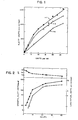
- FIG. 1 graphically illustrates standard curves obtained when all three assay techniques were applied to an a-emulsan produced by growing Acinetobacter Sp. ATCC 31012 at 30°C. in a reciprocally shaken flask on a medium containing 1.0% (v/v) ethanol, 0.125% urea, 0.125 % magnesium sulfate [ M gS0 4 .7H 2 0], 0.0002% ferrous sulfate [FeSO 4 .7H 2 O], 0.001% calcium chloride (anhyd), 0.025% dibasic potassium phosphate, and 0.2 M Tris HC1 buffer, p H 7.4.
- Curve 1-A represents the relationship between the amount of emulsification betweew 0.05 ml Gach-Saran gas-oil and 7.5 ml of filtered sea water; Curve 1-B represents the relationship between the amount of emulsification between 0.05 ml Gach-Saran gas-oil and 7.5 ml Tris-Mg buffer; and Curve 1-C represents the relationship between the amount of.emulsification between 0.1 ml 1:1 (v/v) hexadecane/2-methylnaphthalene and 7.5 ml Tris-Mg buffer, all as a function of ⁇ -emulsan concentration.
- Each point in F I G. 1 represents the average of 3 to 4 determinations.
- These standard curves were then used to determine the emulsifying activity of preparations of crude and purified emulsans (a-emulsan, ⁇ -emulsan and the semi-synthetic ⁇ -emulsan) and apoemulsans (apo-a-emulsan, apo- ⁇ -emulsan and apo- ⁇ -emulsan).
- Characterization of a particular Acinetobacter bioemulsifier as an a-emulsan or a ⁇ -emulsan is based on chemical analysis of the fatty acid esters contained in the lipoacyl portions of the protein-extracted lipopolysaccharides.
- Measurement of extracellular emulsifying activity was determined at different stages of growth of Acinetobacter Sp. ATCC 31012 in an ethanol medium, the fermentation conditions being identical to those used to prepare the a-emulsan used for the standard assay tests. Growth was estimated by turbidity using a Klett-Summerson colorimeter fitted with a green filter or a Gilford Spectrophotometer (Model 240). One hundred Klett units of exponentially growing Acinetobacter Sp. ATCC 31012 correspond to an absorbance at 620 nm (1-cm light path) of 0.616 and a biomass of 0.37 g per liter (dried at 90°C. for 16 hours).
- F I G. 2 shows the relationship between the growth of Acinetobacter Sp. ATCC 31012 on the ethanol medium, the production of the bioemulsifier ( ⁇ -emulsan) during such growth, and the change of pH during such growth, all as a function of time. Although these data are limited to the production of ⁇ -emulsan in a shaking flask fermentation with a particular ethanol medium, FIG. 2 illustrates the general rule that the production of a-emulsan occurs during the growth period. Similar data have been obtained on the growth of Acinetobacter Sp. ATCC 31012 on a sodium palmitate medium.
- Measurement of extracellular emulsifying activity was also determined at dffferent stages of growth of Acinetobacter Sp. ATCC 31012 in a hexadecane medium, the medium and fermentation conditions being identical to those used to prepare the 6-emulsan used for the standard assay tests except that 0.2% (v/v) hexadecane medium was used in place of ethanol as the carbon source.
- Viable cell number was determined by spreading 0.1 ml of an appropriate dilution on ACYE agar, which contained 0.5% sodium acetate, 0.1% yeast extract (Difco), 0.125% urea, 0.025% dibasic potassium phosphate and 1.5% agar (Difco). Plates were incubated at 32°C. for 3 days.
- FIG. 3 shows the relationship between the growth of Acinetobacter Sp. ATCC 31012 on the hexadecane medium and the production of the bioemulsifier ( ⁇ -emulsan) during such growth.
- the data contained in FIG. 3 is similarly limited to the production of ⁇ -emulsan in a shaking flask fermentation with a particular hexadecane medium, and shows that the production of ⁇ -emulsan also occurs during the growth period.
- Apoemulsans may be prepared by deproteinization of the particular emulsans, which technique was used to isolate and purify samples for the chemical characterization of both Acinetobacter bioemulsifiers described below.
- the associated protein may be separated from both bioen.ul- sifiers by the hot phenol extraction technique described by O . Westphal et al. in the monograph edited by R . L . Whistler, entitled “Carbohydrate Chemistry", Academic Press, Inc., New York, pp. 83-91.
- the protein may be removed enzymatically by proteolytic digestion.
- the extracellular protein-associated lipopolysaccharides produced by Acinetobacter Sp. ATCC 31012 and their respective deproteinized derivatives may be isolated and purified by various procedures, including selective precipitation, selective-solvent extraction or partitioning or selective adsorption onto a solid adsorbant followed by subsequent elution or extraction.
- isolation and purification of the Acinetobacter bioemulsifiers is not necessary, since the cell-free growth media may be used directly.
- the ⁇ -emulsans and 8-emulsans produced by Acinetobacter Sp. ATCC 31012 have been isolated and purified.
- certain water-immiscible hydrocarbons may be used to selectively extract the extracellular lipopolysaccharide from the fermentation media without creating a stable emulsion.
- the resultant product is a viscous syrup which can be dissolved in 50% aqueous methanol; the impurities removed by dialysis and the remaining material recovered by lyophilization.
- a puritied ⁇ -emulsan was prepared which was characterized by a specific activity of 205 units per mg.
- ammonium sulfate to the fermentation broth has been used to fractionally precipitate the extracellular lipopolysaccharides from the culture medium, from which the concentrate may be recovered and further treated to remove impurities.
- addition of ammonium sulfate to cell-free supernatent fluids has resulted in the precipitation of substantially all of the extracellular lipopolysaccharides when the concentration of ammonium sulfate is increased from 30% saturation to a final concentration of 40% saturation.
- the resulting precipitate which may be collected by centrifugation i has been extracted by ether to remove impurities, dialyzed against water and lyophilized, yielding the purified extracellular lipopolysaccharide.
- a purified ⁇ -emulsan was prepared which was characterized by a specific activity of 330 units per mg.
- the extracellular lipopolysaccharides produced by Acinetobacter Sp. ATCC 31012 were found to be anionic biopolymers, a procedure was developed to precipitate the anionic biopolymer with a cationic detergent, such as cetyltrimethyl ammonium bromide, from which precipitate the detergent cation could be separated while leaving the purified extracellular lipopolysaccharide.
- a cationic detergent such as cetyltrimethyl ammonium bromide
- cetyltrimethyl ammonium bromide to an aqueous solution of a-emulsan immediately forms a precipitate which is recoverable by centrifugation or filtration.
- the emulsan samples used for chemical and physical characterization were prepared by aerobically growing Acinetobacter Sp. ATCC 31012 on an ethanol medium ( ⁇ -emulsan) or a hexadecane medium ( ⁇ -emulsan) and were purified by precipitation between 30-40% ammonium sulfate saturation, followed by extraction with ether, dialysis against distilled water and lyophilization, as described more fully in the example set forth below in Section 13.8.
- Some samples of a-emulsan were further purified by employing the cetytrimethyl ammonium bromide precipitation technique, as described more fully in the example set forth below in Section 13.11.
- the apoemulsan samples used for chemical and physical characterization were prepared by hot phenol extraction of the associated protein moiety from the emulsan samples.
- the deproteinization procedure which'is described more fully in the example set forth below in Sections 13.4 and 13.5, involved adding a dilute solution (5 mg/ml) of emulsan preheated to 65" - 68°C. to an equal volume of 90% phenol at 65°C., stirring the mixture for 15 minutes while maintaining the temperature at 65°C., and then cooling the mixture to 10°C, in an ice bath. The resulting emulsion was then centrifuged to separate the denatured protein in the phenol phase from the apoemulsan in the aqueous phase.
- the phenol layer and phenol/ water interface were extracted three more times with water, following which the combined water extracts were dialyzed extensively against several changes of distilled water and then freeze-dried, yielding 85% by weight of apoemulsan based on the weight of the emulsan. All of the emulsifying activity was in the recovered emulsan. None of the emulsifying activity was in the denatured protein fraction.
- the deproteinization procedure was repeated on another sample of ⁇ -emulsan which had been prepared by aerobically growing Acinetobacter Sp. ATCC 31012 on an ethanol medium and which had been purified by precipitation between 30-40% ammonium sulfate fractionation, followed by extraction with ether, dialysis against distilled water and lyophilization. After three phenol extractions, the combined water extracts were extracted four times with an equal volume of ether to remove residual phenol. Following evaporation of any retained ether, the viscous aqueous phase was cooled to 5°C.
- apo-a-emulsan-WA Another highly purified sample of apo-a-emulsan was prepared using '(1) the identical hot phenol extraction of another sample of a-emulsan which had been prepared by aerobically growing Acinetobacter Sp. ATCC 31012 on an ethanol medium, followed by (2) cetyltrimethyl ammonium bromide precipitation of the resultant apo-a-emulsan, dissolving the precipitate in 0.1 M sodium sulfate, and addition of potassium iodide to the solution to precipitate cetyltrimethyl ammonium iodide.
- the supernatant fluid contained the apo-a-emulsan. Extensive dialysis of this supernatant fluid against distilled water followed by lyophilization yielded a highly purified apo-a-emulsan which was designated as "apo-a-emulsan-CTAB".
- the deproteinized sample (apo-a-emulsan-WA) contained significantly less N, S and ash than emulsan.
- the C:N:H ratio of apo- ⁇ -emulsan-WA was calculated to be 9.0:1.0:16.1. No significant quantities ( ⁇ 0.5%) of phosphorous or halides were found in either sample. Functional group tests were positive for carboxyl and ester groups and negative for methoxy and ethoxy groups.
- the polymer contained less than 0.02 micromoles reducing sugar per mg r which was the sensitivity of the test employed. The nonreducing polymer was resistant to high temperatures in neutral and alkaline conditions. No emulsifying activity was lost at 100°C.
- FIG. 4 is a graphical representation of the changes which occur on acid hydrolysis of apo-a-emulsan.
- the weight percent of reducing power is plotted against the duration of hydrolysis at 100°C. at 0.05 M HC1 (shown in the lower curve) at 5 M HC1 (shown in the upper curve).
- Hydrolyses were performed in sealed tubes under nitrogen on 1 mg/ml samples of apo- ⁇ -emulsan.
- FIG. 4 at 0.05 M hydrochloric acid at 100"C. there was a release of around 6% reducing sugar during the first huur, followed by a slower release of about 1% reducing sugar per hour for the next 20 hours.
- Table III summarizes the data that led to the conclusion that the sugars produced by hydrolysis of ammonium sulfate fractionated apo-a-emulsan were D-glucose (minor), D-galactosamine (major) and an aminouronic acid (major).
- Unknown compound A did not separate from glucose in solvents A or B and yielded a positive D-glucose reaction directly on the paper.
- Unknown compound C gave positive reactions for reducing sugar, amino sugar and carboxylate ion.
- esterfied fatty acid content of apo- ⁇ -emulsans derived from the deproteinization of a-emulsans prepared by aerobically growing Acinetobacter Sp. ATCC 31012 on an ethanol medium is in the range from about 7% to about 15%, corresponding to about 0.3 to about 0.7 micromoles per milligram of 0-substituted fatty acid esters in which the fatty acids have an average equivalent weight from about 200 to about 230.
- the combined ether extracts were dried over magnesium sulfate. Removal of the ether left 130 m g (13 % yield) of a mixture of fatty acids.
- the methyl esters of the fatty acid mixture were prepared with diazomethane by standard techniques.
- the two hydroxydodecanoic acids comprise from about 50% to about 70% of the aggregate fatty acids, with 3-hydroxydodecanoic acid usually predominating over 2-hydroxydodecanoic acid.
- Table V sets forth the fatty acid composition of the a-emulsan described above.
- the viscosity of apo-a-emulsan as a function of ionic strength is shown in FIG. 5. Between 0.03-0.15 M NaCl, reduced viscosity decreased slightly from 515 to 480 cc per gm. The large increase in reduced viscosity at low ionic strengths is characteristic of polyelectrolytes and has been attributed to dilution of counterions. Specific viscosity was also measured as a function of pH using 0.05 M citrate-phosphate buffer (pH 3-7) and 0.05 M Tris HC1 buffer (pH 6.8-8.5). Throughout the entire range (pH 3-8.5) the specific viscosity of a-emulsan remained at 480 + 50 cc per gm.
- the diffusion coefficient, D, also determined in the analytical centrifuge was 5.25 x 10 -8 cm 2 sec.
- the partial specific volume of the material, V, was 0 . 712 cm 3 g -1 .
- the molecular weight can be estimated using the determined values for intrinsic viscosity, n, sedimentation constant, S, and partial molar volume, V, according to the equation of Scheraga and Mandelkern [J. Am. Chem. Soc., 75, 179 (1953)].
- the calculated viscosity average molecular weight for apo- ⁇ -emulsan-WA was 9.88 x 10 5 .
- apo-a-emulsan is a highly acidic lipopolysaccharide with a molecular weight average close to one million.
- Molecular weight determination from sedimentation and diffusion data closely fit the value obtained from a consideration of sedimentation and viscosity measurements. In both cases the determined value for the partial molar volume of 0 . 712 cm 3 gm -1 was used.
- the relatively high intrinsic viscosity, low diffusion constant and low sedimentation coefficient of the emulsifier indicate that the shape of apo-a-emulsan is highly asymmetrical.
- Simha's factor [C. Tanford, "Physical Chemistry of Macromolecules", John Wiley and Sons, Inc., New York, 1963, pp.
- Apo-a-emulsan is composed of major amounts of two amino sugars (D-galactosamine and an aminouronic acid) and a mixture of fatty acid esters in which the fatty acids (a) contain from 10 to 18 carbon atoms, and (b) possess an average equivalent weight from about 200 to about 230, about 50% or more of such fatty acids being composed of 2-hydroxydodecanoic acid and 3-hydroxydodecanoic acid, with the latter hydroxy fatty acid predominating.
- Titration curves and infrared spectrum of the apo- ⁇ -emulsan sample indicate that the amino sugars of the biopolymer are N-acylated.
- Table VII summarizes the chemical composition of apo-a-emulsan-WA, which is a highly purified sample free of protein and nucleic acid and which appeared to be homogeneous by several criteria, namely (a) only a single band was found by Ouchterlony two-dimensional diffusion; (b) only a single component was observed by sedimentation velocity studies, using several concentrations of material; and (c) attempts to further purify the material by extraction or precipitation with organic,solvents did not improve its specific activity or alter its chemical composition.
- Acinetobacter Sp. ATCC 31012 on a utilizable carbon source (such as ethanol, sodium palmitate or dodecane) to produce those bioemulsifiers which are characterized as ⁇ -emulsans will yield products in which the 0-lipoacylated heteropolysaccharide may deviate from the specific chemical composition for apo- ⁇ -emulsan-WA shown in Table VII, which sample was derived from an emulsan produced by growing Acinetobacter Sp. ATCC 31012 on an ethanol medium.
- Table VIII shows the differences between the emulsans prepared by growing the organism on ethanol and on sodium palmitate, respectively. In each case, the fermentation media and conditions were identical except for the carbon source.
- the N-acyl and partially 0-acyl heteropolysaccharides in the a-emulsan or constituting the apo-a-emulsan produced by the process of the invention will be composed on a dry weight basis of from about 20% to about 35% by weight of D-galactosamine; from about 30% to about 35% by weight of hexosamine uronic acid; and from about 7% to about 19% by weight of fatty acid esters in which the fatty acids contain from about 10 to about 18 carbon atoms and are characterized by an average equivalent weight from about 200 to about 230, from about 50% to about 70% of such fatty acids being composed of 2-hydroxydodecanoic acid and 3-hydroxydodecanoic acid.
- the ratio of 2-hydroxydodecanoic acid to 3-hydroxydodecanoic acid in the 0- lipoacyl portion of the apo-a-emulsan (or apo-a-emulsan component if the product is an ⁇ -emulsan) may vary from about 1:4 to about 1:1, the 3-hydroxydodecanoic acid will predominate in those biopolymers which have a high Specific Emulsification Activity.
- rabbits were injected with 1 mg of ⁇ -emulsan in 1 ml complete Freund adjuvant. The rabbits were bled 11 to 14 days later, from which sera a crude immunoglobulin fraction was obtained by ammonium sulfate fractionation.
- Antibodies prepared against ⁇ -emulsan cross-react with in an identical fashion with a-emulsan, apo-a-emulsan, apo- ⁇ -emulsan, ⁇ -emulsan (produced by mild base hydrolysis of a- or ⁇ -emulsan) and proemulsan (produced by strong base hydrolysis of any of the fcre- going), indicating that both Acinetobacter bioemulsifiers (a-emulsan and B-emulsan) and their various deproteinated and deacylated derivates have approximately the same polymer backbone, even though these classes of biopolymers are distinguished by fatty acid ester content as well as by differences in the distributions of fatty acids, the a-emulsans containing a larger amount and greater proportion of 3-hydroxydodecanoic acid ester than the 8-emulsans.
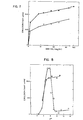
- the rate of emulsification of gas-oil by purified Acinetobacter bioemulsifier is summarized in FIG. 6, in which the numbers identifying each curve refer to the weight ratios of gas-oil/bioemulsifier.
- concentrations of bioemulsifier 0.25 mg in FIG. 6A and 0.7 mg in FIG. 6B, each in 7.5 ml of filtered sea water
- the rate of emulsion formation as well as the final turbidity were proportional to gas-oil concentration between 5 to 100 mg of gas-oil per ml.
- Emulsion formation as a function of gas-oil concentration is shown in FIG. 7, in which the lower curve represents the data obtained using 33 mcg/ml of bioemulsifier and the upper curve the data obtained using 100 mcg/ml of bioemulsifier, both in filtered sea water, with varying amounts of gas-oil.
- Each mixture was reciprocally shaken for 60 minutes at 150 strokes per minute, and emulsion formation then measured.
- Emulsions were formed over the entire gas-oil concentration range studied, 0.5 to 100 mg per ml. Below 1.5 mg gas-oil per ml, turbidities were directly proportional to gas-oil concentration. Between 8 to 30 mg gas-oil per ml, turbidity increased about 5 Klett units per mg gas-oil.
- FIG. 8 Acinctobacter bioemulsifier-induced emulsification of gas-oil as a function of pH is shown in FIG. 8.
- the data shown in FIG. 8 were based on reciprocally shaking (150 strokes per minute at 25°C. for 60 minutes) flasks which contained 33 mcg/ml of bioemulsifier and 6 mg/ml of Agha-Jari gas-oil in 7.5 ml of either (a) sea water [closed circles]; (b) 10 mM NaCl [open circles]; (c) 100 mM citrate-phosphate buffer [triangles]; cr (d) 50 mM Tris-NaOH buffer [squares]. The pH of sea water and 10 mM NaOH were adjusted by addition of HC1 or NaOH.
- Gas-oil emulsions formed in the presence of Acinetobacter bioemulsifier slowly separate into two phases when allowed to stand undisturbed; namely, a lower clear aqueous phase and a turbid upper phase containing concentrated oil droplets, bound bioemulsifier and water.
- emulsion breakage was a result of "creaming" due to density differences between the two phases and was not accompanied by droplet coalescence or aggregation.
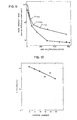
- the rate of phase separation was followed by turbidity measurements in a Klett tube to determine the stability of the emulsion as a function of the ratio gas-oil/bioemulsifier, the results being summarized in FIG. 10.
- Emulsions were formed after 120 minutes at 25°C. by reciprocally shaking varying concentrations of gas-oil with either 33 mcg/ml (FIG. LOA) or 100 mcg/ml (FIG. 10B) of Acinetobacter bioemuisifier, and then allowed to stand without shaking from zero time (i.e., immediately after formation of the emulsion) until 120 minutes.
- the numbers on each curve refer to the weight ratios ot gas-oil/bioemulsifier.
- emulsion stability depended more upon the ratio of gas-Oil/bioemulsifier than on the absolute concentration of bioemulsifier or gas-oil used to form the emulsion.
- gas-oil/bioemulsifier ratios of less than 25, over 24 hours standing was required for a 50% decrease in turbidity.
- ratios between 25-200 and 200-1000 half-maximum turbidities were reached in 1-24 hours and 10-60 minutes, respectively.
- the upper "cream" immediately dispersed in aqueous media. Emulsion breakage was enhanced by divalent cations.
- Rate of floatation of oil droplets as a function of gas-oil/bioemulsifier ratio is shown in FIG. 11, in which the upper curve represents data obtained using 100 mcg/ml of bioemulsifier and the lower.curve represents data obtained using 33 mcg/ml of bioemulsifier, both with different gas-oil concentrations.
- the calculated droplet sizes were in good agreement with measurement of droplet size by phase microscopy (using a calibrated eye-piece micrometer). With a ratio of gas-oil/bioemulsifier of 50, the droplets were barely visible by light microscopy.
- FIG. 12 illustrates the ability of Acinetobacter bioemulsifiers to lower the interfacial tensions between a series of n-alkanes and sea water.
- Values for interfacial tension were determined at 27°C. using the spinning drop interfacial tensiometer.
- the interfacial tensions between Prudhoe Buy crude oil and sea water were measured using 1 and 10 mg of bioemulsifier per ml, yielding 8.3 and 6.9 dynes per cm, respectively.
- emulsifiers Apart from classification as anionic, cationic or nonionic, most emulsifiers are described in terms of their HLB numbers, which is a measure of the hydrophile-lipophile balance of the emulsifier. Very often, emulsifiers with similar HLB numbers interact differently with hydrocarbon substrates. Because biologically produced polymers often exhibit specificities not found in chemically synthesized materials, the hydrocarbon substrate specificity for Acinetobacter bioemulsifier-induced emulsion formation was studied using a wide variety of pure hydrocarbons, binary mixtures of hydrocarbons, crude oils, fractions of crude oils and mixtures of crude oil fractions and pure hydrocarbons.
- FIG. 13 is a graphical representation showing the relationship of the amount of emulsification of various straight and branch chain alkanes as a function of carbon number.
- the data summarized in FIG. 13 was obtained using 100 mcg/ml of Acinetobacter bioemulsifier and 0.05 ml hydrocarbon, the open circles referring to straight chain alkanes while the closed circles refer to 2,2,5-trimethylhexane, 2-methyldecane, 2,6-dimethyldecane and 2,6-dimethylunidecane. Increasing or decreasing the hydrocarbon concentration by a factor of five did not improve emulsification.
- Pentane and hexane were also not emulsified effectively; however, quantitative data for these two paraffins were not obtained because of extensive evaporation during incubation.
- the solid hydrocarbons, nondecane, n-octacosane and hexatriacontane, were not dispersed by Acinetobacter bioemulsifier.
- Emulsification of n-alkyl cyclohexane derivatives ranging from propylcyclohexane to tridecylcyclohexane by Acinetobacter bioemulsifier are summarized in FIG. 14, which graphically illustrates emulsification oi various alkylcyclohexanes as a function of carbon number.
- the data shown in FIG. 14 was obtained using 0.2 ml hydrocarbon and either 25 mcg/ml (closed circles) or 100 mog/ml (open circles) of Acinetobacter bioemulsifier.
- Nonylcyclohexane did not contain any apparent inhibitors of emulsification, since mixtures of octyl and nonylcyclohexane were emulsified to about the same extent as octylcyclohexane alone. Bicyclohexane and decalin were not emulsified signiticantly.
- Emulsification of n-alkylbenzene derivatives by A cinetobacter bioemulsifier are summarized in FIG . 15, the data for which was obtained using 0.01 ml hydrocarbon and 50 mcg/ml of bioemulsifier. Maximum activity was obtained with hexyl and heptylbenzenes. The total number of carbon atoms in the side chains may be more crucial than the chain length since p-diisopropylbenzene behaved like hexylbenzene.
- Aromatic compounds containing more than one ring, naphthalene, biphenyl, phenanthrene, anthracene, 3-pheny toluene, 1-methylnaphthalene and 2-methylnaphthalene were also not emulsified significantly by the Acinetobacter bioemulsifier.
- Table IX summarizes a number of experiments in which the Acinetobacter bioemulsifier-induced emulsification of aliphatic, aromatic and cyclic hydrocarbons were measured in the presence of hexadecane or 1-methylnaphthalene. Although neither the aliphatic compounds nor 1-methylnaphthalene were emulsified by themselves, all mixtures containing the aromatic compound and one of the aliphatic hydrocarbons were excellent substrates for emulsification by the bioemulsifier. The ability of aromatic compounds to stimulate emulsification of aliphatics was not limited to 1-methylnaphthalene, but occurred with toluene, p-xylene, 3-phenyltoluene and 2-methylnaphthalene.
- aromatic compounds that served as substrates for emulsification by Acinetobacter bioemulsifier were alkylbenzene derivatives containing six or seven carbon atoms on the side chain(s). Aromatic compounds containing less than six carbon atoms on the side chain were converted into good substrates for emulsification by addition of hexadecane. Hexylbenzene and diiopropylbenzene were converted into even better substrates for emulsification by addition of hexadecane. On the other hand, heptyl, decyl and pentadecylbenzene were emulsified more poorly in the presence of hexadecane than by themselves.
- cyclohexane derivatives with short side chains were activated more efficiently with aliphatic than aromatic compounds, while derivatives with long side chains (e.g., duodecylcyclo- hexane) formed better emulsions in the presence of 1-methylnaphthalene than hexadecane.
- Dicyclohexane behaved like an aromatic compound in that it was emulsified by the bioemulsifier in the presence of hexadecane but not 1-methylnaphthalene.
- the fused dicylic compound decalin could not be emulsified by the bioemulsifier even by addition of hexadecane or 1-methylnaphthalene.
- Acinetobacter bioemulsifier-induced emulsion formation as a function of the relative concentrations of aliphatic (hexadecane) and aromatic (methylnaphthalene) compounds is shown in FIG. 16, the data for which was obtained using 50 mcg/ml of bioemulsifier and 0.05 ml of various mixtures of hexadecane and 1-methylnaphthalene (closed circles) or hexadecane and 2-methylnaphthalene (open circles). Using either 1-methylnaphthalene or 2-methylnaphthalene, maximum emulsion was obtained with 25 vol. % hexadecane.
- a-emulsans and s-emulsans the two classes of bioemulsifiers produced by Acinetobacter Sp. ATCC 31012, may be subdivided into (a) differences in yield; (b) differences in structure; and (c) differences in emulsifying activity.
- Table X summarizes several of such differences between a-emulsans, ⁇ -emulsans and their respective deproteinized derivatives. Although the particular a-emulsans referred to in Table X were prepared by growing Acinetobacter Sp.
- the yield of a-emulsan is invariably greater than the yield of ⁇ -emulsan even when identical cultures of Acinetobacter Sp. ATCC 31012 are used as innocula on ethanol and hexadecane media, respectively.
- the yields of the high-ester a-emulsan are higher than the ⁇ -emulsans obtained when the organism is grown on such carbon sources as pentadecane or hexadecane.
- Purified a-emulsans have a higher specific activity than purified ⁇ -emulsans, which is probably due to the higher fatty acid ester content of a-emulsans and may also be due to the generally higher amount of 3-hydroxydodecanoic acid in a-emulsans compared to ⁇ -emulsans.
- the apo- ⁇ -emulsan component of the a-emulsan contained from 8 to 14% by weight of total esters, while the apo- ⁇ -emulsan component of the ⁇ -emulsan contained appreciably less (2-3%) fatty acid esters.
- the apo-a-emulsan content of ⁇ -emulsans generally possess a lower ratio of 2-hydroxydodecanoic acid to 3-hydroxydodecanoic acid (usually about 1:4 to about 1:2) than in the apo- ⁇ -emulsan component of ⁇ -emulsans.
- Table XI summarizes the different ester compositions of an apo-a-emulsan derived from deproteinization of an a-emulsan formed when Acinetobacter Sp. ATCC 31012 was grown on an ethanol medium when compared to the apo- ⁇ -emulsan derived from a ⁇ -emulsan formed when the organism was grown on hexadecane.
- Each of the deproteinized Acinetobacter bioemulsifiers was hydrolyzed in KOH/methanal for 4 days at room temperature, the corresponding mixture of methyl esters were formed with diazomethane and the methyl esters of each mixture were then fractionated by chromatography.
- the data shown in Table XI confirm the general rule that in the apo- ⁇ -emulsan content of ⁇ -emulsans, the aggregate amount of 2-hydroxydodecanoic acid and 3-hydroxydodecanoic acid is usually about 50% of the total fatty acid esters and may be as high as 70% of the fatty acid esters in the lipopolysaccharide.
- the same general rule also applies to a-emulsans prepared by growing Acinetobacter Sp. ATCC 31012 on one or more fatty acid salts as the primary assimilable carbon source.
- emulsans nor apoemulsans are adsorbed to any significant extent on sand or on limestone over the pH range in which these bioemulsifiers will be used to form oil-in-water emulsions.
- the oil may be recovered by enhanced oil recovery using chemical flooding with dilute concentrations of emulsan, since bench scale experiments have shown that when oil-saturated sand or oil-saturated limestone are treated with dilute solutions (i.e., from 0.1 to 0.5 mg/ml) of a-emulsan containing magnesium ions (10 mM), over 90% of the oil can be removed from the oil-saturated sand and over 98% of the oil can be removed from the oil-saturated limestone.
- Comparable results may be obtained using sea water solutions of emulsans, since the presence of sodium chloride in the concentrations found in sea water or in connate water do not affect the ability of emulsans to emulsify crude oils, including crude oils which are quite viscous or tarry, which are found in sand (or sandstone) formations or in limestone formations or which remain in such formations after secondary recovery techniques (such as steam stripping) are employed.
- Emulsans and their deproteinized derivatives, the apoemulsans, both of which are strongly anionic, are adsorbed on aluminosilicate ion-exchangers, such as kaolin, bentonite and other clay minerals which nave ion-exchange capacity.
- aluminosilicate ion-exchangers such as kaolin, bentonite and other clay minerals which nave ion-exchange capacity.
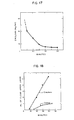
- FIG. 17 The kineties of adsorption of a-emulsan on bentonite are shown in FIG. 17, which summarizes the rate of adsorption of a-emulsan onto 0.5 g bentonite in a 20 ml solution of 20 mM Tris-Mg buffer [20 mM tris-' (hydroxymethyl)aminomethane hydrochloride and 10 mM magnesium sulfate] containing 100 mcg/ml of emulsan. The mixture was shaken at 20°C. at 110 strokes per minute in 100 ml flasks, with samples being removed every 10 minutes for assay of a-emulsan not bound to the bentonite.
- the amount of a-emulsan adsorbed by the aluminosilicate clay was a function of the amount of clay, about 70% of the a-emulsan being adsorbed at a bentonite/emulsan ratio of 100:1 and over 95% of the a-emulsan at ratios over 400:1.
- aluminosilicate clays such as kaolin and bentonite
- mixing 1 g of bentonite with 20 ml water containing only 100 mcg/ml of ⁇ -emulsan causes the bentonite to sediment from five to ten times faster than in the absense of emulsan.
- the flocculating properties of emulsans (which apply equally to the corresponding a p oemulsans as well as to their deacylated derivatives, ⁇ -emulsans and proemulsans; all of which are also anionic) prevent the packing of aluminosilicate clays into a dense precipitate in such manner that the volume occupied by the flocculated clays is several times greater (three times in the case of bentonite) than in the absense of the lipopolysaccharide.
- the flocculated aluminosilicate clays now have certain fluid and flow properties which suggest an enormous number of uses for emulsans and apoemulsans and their derivatives in flocculation, including (a) the use of emulsans and apoemulsans as a clay particle flocculent in drilling muds; (b) the prevention of clogging in sewage treatment systems; (c) enhancing the porosity of clay solids to structure poor soils for uses in agriculture; (d) the inclusion of emulsans in coatings and aerosol sprays containing such clays; and (e) the use of emulsans and apoemulsans as a general flocculating agent for recovery and settling processes.
- Adsorption of emulsans onto aluminosilicate clays creates an oleophilic clay which, in turn, is capable of breaking a stable oil/water emulsion formed with the bioemulsifier.
- emulsification of 1 ml Agha Jari crude oil in 10 ml sea water containing about 0.1 mg/ml of ⁇ -emulsan forms an oil-in-water emulsion which is stable after standing two days.
- the addition of 1 g of preswelled bentonite to this stable emulsion, followed by intense shaking for about 20 seconds, resulted in breakage of the emulsion in 15 minutes. After 20 hours, there were two separated layers, namely an upper clear liquid and a lower gel-like sediment which occupied about one-half of the prior volume of the emulsion.
- emulsans and apoemulsans with respect to aluminosilicate clay ion-exchanceis may also be utilized to remove oil and hydrocarbonaceous sludge from oily ballast water or other oily water, either by filtering such oily waters through an aluminosilicate clay (such as kaolin or bentonite) on which an emulsan or apoemlusan had been adsorbed or, alternatively, by adding the emulsan or apoemulsan to the oily water and then filtering the mixture through an aluminosilicate clay. In both cases, the filtrate will be clear and the oily residue will remain in the clay filter.
- aluminosilicate clay such as kaolin or bentonite
- the extracellular microbial polysaccharides produced or derived from Acinetobacter Sp. ATCC 31012 which include both the emulsans and apoemulsans and their respective salts, are among the most efficient oil-in-water emulsifiers ever discovered and possess a high degree of specificity in both fresh water and sea water for emulsifying those hydrocarbon substrates which contain both aliphatic and aromatic or other cyclic components (wherein two different components may be present in the same compound or in different compounds), properties which make these unique bioemulsifiers (particularly the a-emulsans) ideal for many environmental and energy-related uses, including cleaning oil-contaminated vessels, oil-spill management and enhanced oil recovery by chemical flooding.
- VLT very large tankers
- slop tanks
- the VLT begins its voyage. Upon arrival, the cargo is discharged into.large on-land oil storage tanks, during which operation about 99.5% of the crude oil is pumped out in about 24 hours. The residual oil remains stuck to the sides, platforms, ribs, and pipes of the compartment. As the oil is discharged, the ship rises out of the water. Before putting to sea, the VLT must take aboard large quantities of ballast water. During the return voyage to the oil-producing country, this ballast water mixes with the residual (approximately 1,000 tons in a 250,000-ton VLT) oil. Disposal of this heavily contaminated, oily ballast water is the major contributor to chronic sea pollution.
- cargo compartments of oil tankers must be cleaned periodically to prevent clogging and sludge accumulation that otherwise would reduce the ship's cargo capacity, as well as inhibit discharge of crude oil.
- the oil tanker is a multipurpose vessel, taking on grain or ore immediately after discharging its oil cargo, the cargo compartments must be cleaned after every voyage.
- ballast and wash waters are then either (a) discharged at sea, (b) transferred to separator tanks on shore where harbor facilities permit, or (c) transferred to the slop tanks in which the bulk water phase at the bottom is discharged, additional oily ballast water is added, and the process is repeated until tile ship takes on fresh oil that is then loaded on top of the residual oil (load-on-top technique). None of these techniques is totally satisfactory either from the ecological or operational point of view.
- Direct discharge at sea is still the major means of disposing of oily water. It will remain so until pollution laws are made stricter and more enforceable or other techniques prove more economical. Direct discharge at sea requires no special equipment and, most important of all, can be carried out during the ballast voyage so that no loss of time is incurred.
- the 1954 International Agreement for the Prevention of Pollution at Sea, as amended in 1962 and in 1969, is the only international agreement regarding pollution by ships that is currently in force. This Agreement allows for unlimited discharge of oil outside of specified prohibited zones. Within the prohibited zones, discharge is restricted to a rate no greater than 1 ton of oil in 10,000 tons of water, without regard to total quantity. These regulations do not apply, however, if the tanker's cargo compartments have been cleaned and the subsequent discharged ballast water does not produce visible traces of oil on the water surface.
- ballast water for treatment at the terminal ports is required by certain countries, but this alternative has created more problems than it has solved. Studies have shewn that cleaning the tanker during the ballast voyage with recovery of the oil for fuel or, alternatively, cleaning the ship at special cleaning stations with recovery of the oil for fuel value or for refining are economically justified if the cleaning process can be designed to be efficient, rapid and not labor intensive or dangerous.
- Cleaning hydrocarbonaceous residues (including residual crude oil) from oil-contaminated vessels in accordance with the process of the. invention requires (a) washing the oil-contaminated surfaces of such vessels with an aqueous solution , e.g. in sea water or fresh water, containing at least 10 mcg/ml, preferably from 10mcg/ml to 100mg/ml, e.g. from 10mcg/ml to 20 mg/ml of ⁇ -emulsans and about 5mM or higher of a divalent cation, such as magnesium, calcium or manganese, to form an oil-in-water emulsion of such hydrocarbonacous residues; and (b) removing such oil-in-water emulsion from the cleaned vessel.
- the amount of a-emulsan in the wash water can be predetermined, based on the composition of the particular hydrocarbon residue to be removed.
- the cleaning solution can be prepared directly from the fermentation broth or, alternatively, from a relatively concentrated solution of ⁇ -emulsans (10 mg/ml or higher) by appropriate dilution with sea water or tap water such that the final solution contains about 5 mM or more of the divalent cation without which the a-emulsans are ineffective as bioemulsifiers. These divalent cations are normally present in sea water and in "hard” waters.
- the cleaning solution may appear cloudy below pH 7; but this cloudiness can be eliminated by adding a small amount of ammonia to the a-emulsan solution.
- washing operation may be conducted with only gentle agitation, best results are obtained using equipment, such as jet nozzles, which vigorously agitate the wash solution and cause the oil-in-water emulsion to form more rapidly.
- equipment such as jet nozzles, which vigorously agitate the wash solution and cause the oil-in-water emulsion to form more rapidly.
- Any suitable jet nozzles may be used, the most efficient of which are the portable jet spray nozzles manufactured by Butterworth Systems, Inc., Florham Park, New Jersey, for cleaning storage tanks, tank cars and trucks. This type of equipment may also be used onboard tankers which do not have Butterworth or comparable jet spray systems built into the cargo compartments.
- the resultant oil-in-water emulsions can be broken by physical or chemical techniques, and the oil recovered for fuel value or for refining. Selection of suitable oil-water separators for this purpose may be made from the standard equipment widely used throughout the oil industry, the choice of such equipment being governed by cost effectiveness for a particular application.
- Oil spill management is another environmentally important use for the emulsifying agents of the i'nvention.
- an aqueous solution of a detergent or surfactant is brought into contact with the oil slick, which is floating on the sea or which has been washed ashore or deposited on land to emulsify the oil so that it may be dispersed and either removed or biodegraded.
- Most of the detergents or surfactants commonly used are somewhat toxic to marine life and are not biodegradable.
- Enhanced oil recovery by chemical flooding represents a particularly important energy-related use for emulsans. All processes in the enhanced recovery of oil by chemical flooding involve the injection of a chemically-augmented "slug" comprising water and one or more added chemicals into a petroleum reservoir followed by displacement of the "slug" through the reservoir to recover crude oil from the injected reservoir.
- anionic lipopoly- saccherides may be used as the sole emulsifier or in conjunction with other emulsifying agents (such as the nonionic surfactants used for tertiary oil recovery), as well as in conjunction with the mobility control polymers used in such processes.
- the following examples are illustrative or the preparation, purification and some of the uses of the ⁇ -emulsans and apo- ⁇ -emulsans derived from Acinetobacter sp. ATCC 31012 when compared to the ⁇ -emulsans and apo- ⁇ -emulsans which, in turn, are derived from growing the same organism on a different substrate.
- foam was controlled by automatic pulse additions of a silicone defoamer (Dow-Corning 525, sterlizable, diluted 1:8), in connection with which an aggregate of 50 ml was added during the first 30 hours.
- a silicone defoamer Dow-Corning 525, sterlizable, diluted 1:8
- ethanol was continuously added to the fermentation broth at the rate of 40 ml per hour.
- Ammonium sulfate was periodically added to the fermentation broth at the rate of 2 g per hour for the first 30 hours.
- Acinetobacter Sp. ATCC 31012 was grown in a 250 ml flask containing 40 ml filtered sea water, 0.73 g dibasic potassium phosphate [k 2 HPO 4 .3H 2 O), 0.24 g monobasic potassium phosphate, 0.8 g urea, and 0.8 ml absolute ethanol (2% by volume).
- the medium was inoculated with 2 ml of a late exponential culture of Acinetobacter Sp. ATCC 31012 grown under similar conditions. Incubation was for 96 hours at 30°C., with gyratory shaking at 250 rpm.
- foam is controlled by automatic pulse additions of a silicone defoamer (Dow Corninc 525, sterlizable, diluted 1:8), in connection with which an aggregate of about 50 ml more or less will be added during the first 30 hours.
- a silicone defoamer Dow Corninc 525, sterlizable, diluted 1:8
- additional amounts of the fatty acids are continuously added to the fermentation broth at a sultable rate to maintain growth.
- Ammonium sulfate is periodically added to the fermentation broth at an appropriate rate, generally about 2 g per hour, for the first 30 hours.
- the yield of a-emulsan will vary, depending upon the fatty acid substrate, with a cell mass of approximately two times (dry weight basis) per liter based on the emulsan yield.
- Analysis of the crude a-emulsan which can be performed on the crude extracellular fluid following extensive dialysis against water, will show that it contains a total ester content of about 9% or higher using the hydroxamic acid test and assuming that the average molecular weight of the fatty acid esters was 230.
- Acinetobacter Sp. ATCC 31012 was grown in an aqueous medium containing 18.34 mg/ml of dibasic potassium phosphate [K 2 HPO 9 .3H 2 O], 6 mg/ml of monobasic potassium phosphate, 0.2 mg/ml of magnesium sulfate [MqSO 4 .7H 2 O], 4 mg/ml of ammonium sulfate and 1.2 mg/ml of sodium palmitate. Growth was initiated by inoculating 0.1 ml of a washed cell suspension into 47 ml of the medium in a 250 ml flask. Incubation was for 72 hours at 30°C., with gyrotary shaking at 250 rpm.
- the crude ⁇ -emulsan contained 9% total ester content when measured by the hydroxamic acid test, assuming the average equivalent weight of the fatty acid esters to be 230.
- Acinetobacter Sp. ATCC 31012 was grown at 30°C. for 72 hours, with gyrotary shaking at 250 rpm. As before, growth was initiated by inoculating 0.1 ml of a washed cell suspension into 40 ml of the medium in a 250 ml flask.
- the crude ⁇ -emulsan contained almost 5% total ester content when measured by the hydroxamic acid test, assuming the average equivalent weight of the fatty acid esters to be 230.
- the corresponding apo- ⁇ -emulsan obtained by hot phenol extraction in accordance with the deproteinization technique described below in Section 13.5, contained an ester content between 2 to 3% when measured by the hydroxamic acid test.
- ⁇ -emulsan which had been prepared by growing Acinetobacter Sp. ATCC 31012 on an ethanol medium was deproteinized by the hot phenol method described by O. Westphal et al. in the monograph edited by R. L. Whistler, "Carbohydrate Chemistry", Academic Press, Inc., New York, 1965, pp. 83-91.
- Flasks were agitated by reciprocal shaking (150 strokes per minute) for one hour at 26°C. Contents of the flasks were then transferred to Klett tubes for measurement of turbidity in a Klett-Summerson colorimeter fitted with a green filter. The results of these tests are summarized in Table XII, the specific activity (reported in units per mg dry weight) having been determined from the standard curve (Curve 1-B) shown in FIG. 1.
- the hot phenol method of O. Westphal et al., supra, may also be used to extract the associated protein contained in ⁇ -emulsar, and thereby form the corresponding apo- ⁇ -emulsan.
- the ⁇ -emulsan which had been prepared by growing Acinetobacter Sp. ATCC 31012 on a hexadecane medium was deproteinized to form the corresponding apo- ⁇ -emulsan. All of the emulsifying activity was found to be in the 0-lipoacyl heteropolysaccharide and none of such activity was found to be associated with the denatured protein fraction.
- Mild base hydrolysis of emulsans will 0- deacylate the lipopolysaccharide without affecting the N-acyl groups, which technique may be used to prepare the ⁇ r-emulsans.
- Ten milliliters of an aqueous solution containing 2.5 mg/ml of a-emulsan were treated with an equal volume of 0.2 M NaOH at 98°C. for 2 hours. The solution was then cooled in an ice bath and carefully neutralized to pH 7.0. The neutralized solution was extensively dialyzed against water and lyophilized, yielding 20 mg (80%) of ⁇ -emulsan having a Specific Emulsification Activity of 76 units per mg.
- the total ester content of the ⁇ -emulsan was 1% by the hydroxamic acid test.
- the reduced viscosity of this ⁇ -emulsan was 317 cc/gram.
- a late exponential culture (1:1000 dilution) of Acinetobacter Sp. ATCC 31012 was grown at 30°C, in a New Brunswick 14-liter fermenter using an aqueous medium containing 14 g per liter of dibasic acid potassium phosphate (K 2 HPO 4 .3H 2 O], 6 g per liter of monobasic potassium phosphate, 0.2 g per liter of magnesium sulfate [MgSO 4 .7H 2 O], 4 g per liter of ammonium sulfate and 20 ml per liter of absolute ethanol.
- the fermentation was conducted using aeration at about 15 liters per minute and agitation at 100 rpm without baffles, adding ethanol as required.
- the medium was allowed to cool and 1760 g of ammonium sulfate were added slowly, with stirring, directly to 10-liters of cooled fermentation broth without prior removal of the cells (30% ammonium sulfate saturation). After standing overnight, the supernatant fluid was collected by decantation. The precipitate was suspended in 30% saturated ammonium sulfate and centrifuged at 10,000 x g for 15 minutes. The combined supernatant fluids were further clarified by passage through a thin layer of Kieselgel. To the cell-free supernatant fluid was added an additional portion (62 g per liter) of ammonium sulfate to reach a final concentration of 40% saturation.
- the resulting precipitate collected by centrifugation at 10,000 x g for 15 minutes, was dissolved in 200 ml of water, extracted with ether, dialyzed against distilled water and lypophilized.
- the yield of a-emulsan was 2.1 g from 10-liters of fermentation broth, with a Specific Emulsification Activity of 330 units per mg.
- the same purification technique has been used to purify a-emulsans grown on a fatty acid salt substrate.
- a sample of the CTAB-purified a-emulsan was subjected to acid hydrolysis at 98°C. in 5 M HCl for 6 hours to liberate any glucose that may have been present in the biopolymer.
- the hydrolyzed material was then analyzed by thin layer chromatography on a cellulose- F plate; silver nitrate staining showed only a trace of glucose, probably as an impurity.
- the aqueous phase was filtered successively through 3, 1.2, 0.8 and 0.45 micron Millipore filters, and the clear filtrate was then extracted four times with 0.15 volume heptane. Approximately 10% of the emulsifying activity which remained in the aqueous phase was discarded.
- the heptane fractions were combined and evaporated to a yellow syrup in vacuo. After extraction with ether, the syrup was dissolved in 100 ml of 50% aqueous methanol. The resulting viscous solution was dialyzed against several changes of distilled water and lyophilized. The yield of lyophilized ⁇ -emulsan was 1.5 g, with an extraordinarily high specific activity of 205 units per mg.
- a sample of this material was subjected to base hydrolysis for 72 hours at room temperature, using an aqueous solution of 90% methanol containing 2.5% KOH. After removal of the methanol in vacuo, addition of water and acidification to pH 1, the fatty acids were extracted with ether, methylated with diazomethane and were then subjected to gas chromatographic analysis. The chromatograph revealed the presence of 2-hydroxydodecanoic acid (A) and 3-hydroxydodecanoic acid (B), in a weight ratio of A/B equal to 0.83.
- the same purification technique may be used to purify a-emulsans prepared by growing Acinetobacter Sp. ATCC 31012 on a fatty salt acid, except that the medium should be first acidified so that excess fatty acid substrate may be extracted by a suitable solvent prior to solvent (i.e., heptane) partitioning.
- a suitable solvent i.e., heptane
- the phenol extraction method described above in Section 13.4 was repeated on 820 mg of ⁇ -emulsan. After three phenol extractions, the combined water extracts were extracted four times with an equal volume of ether to remove residual phenol. Following evaporation of ether, the viscous aqueous phase was cooled to 5°C. and brought to 32.5% ammonium sulfate saturation, no precipitation having formed at 30 % saturation. After standing for one hour at 5°C., the clear translucent precipitate was collected by centrifugation at 5,000 x g for 30 minutes at 5°C.
- emulsion formation was measured in 125 ml rubber-stoppered flasks containing 5 ml of filtered sea water, 8 mg/ml of hydrocarbon and 50 mcg/ml of the particular Acinetobacter bioemulsifier, the ⁇ -emulsan having been prepared by growing Acinetobacter Sp. ATCC 31012 on an ethanol medium while the ⁇ -emulsan was prepared by growing the organism on a hexadecane medium.
- the ⁇ -emulsans were purified by the ammonium sulfate fraotionation tech- nigue described above in Section 13.8 while the 6-emulsans were purified by the heptane partitioning tecnnique described above in Section 13.10.
- Flasks were agitated by gyratory shaking (280 rpm) or by reciprocal snaking (150 strokes per minute) for 2 hours at 25°C. Contents of the flask were then transferred to Klett tubes for measurement of turbidity in a Klett-Summerson colorimeter fitted with a green filter. Readings were taken after standing undisturbed for 10 minutes. Controls lacking either the particular Acinetobacter emulsifier or hydrocarbon yielded readings of less than 5 Klett units. The results of these tests are summarized in Table XIV.
- Flasks were agitated by reciprocal shaking (150 strokes per minute) for 2 hours at 25°C. Contents of the flask were then transferred to Klett tubes for measurement of turbidity in a Klett-Summerson colorimeter fitted with a green filter. Readings were taken after standing undisturbed for 10 minutes. The results of these tests are summarized in Table XV.
- Aqueous solutions in sea water or fresh water (the latter containing a suitable divalent cation, such as magnesium) of ⁇ -emulsans are excellent emulsifying agents for cleaning and recovering hydrocarbonaceous residues, inoluding resldual crude oll, from oil-contaminated tankers, barges, storage tanks, tank cars and trucks, pipelines and other containers used to transport or store crude oil or petroleum fractions.
- aqueous solution containing from about 10 mcg/ml to about 20 mg/ml of a-emulsan readily forms an oil-in-water emulsion of such hydrocarbonaceous residues provided that the solution contains from about 1 to about 100 mM, and preferably from about 5 to about 40 mM, of at least one suitable divalent cation, which are normally present in sea water and "hard" tap water.
- the ⁇ -emulsan need not be purified, since a cell-free fermentation broth containing a-emulsans resulting from growing Acinetobacter Sp. ATCC 31012 on a suitable medium can be used directly or after suitable dilution.
- processes can be designed to clean any oil-contaminated vessel and to recover the hydrocarbonaceous residue from the resultant oil-in-water emulsion, either by breaking the emulsion physically or chemically.
- the aggregate amount of a-emulsan may be as low as 1 part by weight (dry weight basis) per 1,000 to 10,000 parts by weight of hydrocarbon, the higher concentrations of a-emulsan yielding more stable emulsions.
- Acinetobacter Sp. ATCC 31012 was cultivated in a 15 liter glass fermenter containing 122g of dibasic potassiun phosphate [K 2 HPO 4 .3H 2 O], 40 g of monobasic potassium, 1.33g of magnesium sulfate [MgSO 4 .7H 2 O], 13.3g of area and deionized water to a final volume of 10 liters.
- the medium was sterilized for 30 minutes at 121°C., after which 200 ml of absolute ethanol .(2% by volume) was added.
- the final pH of the ethanol-salts medium was 7.0.
- the fermentation broth contained 260 units per ml of a-emulsan after 72 hours and 7.4 g per liter of biomass (dried at 90°C. for 16 hours). After removal of the cells by centrifugation or filtration, the resultant cell-free fermentation broth could be used to wash crude oil from the oil-contaminated surface of a steel container which simulated the inner wall of a tank which had been emptied of crude oil.
- the flasks were agitated by gyratory shaking (280 rpm) in a New Brunswick G24 incubator shaker for one hour at 30°C. Contents of the flasks were then transferred to Klett tubes for measurement of turbidity in a Klett-Summerson colorimeter fitted with a green filter. Readings were taken after standing undisturbed for 10 minutes. The results of these tests, which are summarized in Table XVI, are expressed as the percentage increase (+) or decrease (-) in the turbidity of the emulsion resulting from the addition of varying concentrations of the mobility control polymer.
- the use of the mobility control polysaccharide in conjunction with the emulsan is capable of stimulating emulsifying activity by about 40% at a concentration of 10 mcg/ml, which suggests the potential advantages for using both additives in a chemically-augmented "slug" to be injected into a petroleum reservoir for enhanced oil recovery.
- this mobility control polymer had no ability to emulsify the hydrocarbon.
- Bentonite was selected for these tests, since it contains up to 90% by weight of'montmorillonite, the structure of which corresponds to the theoretical formula (OH)4Si8 Al 4 O 20 .xH 2 O and is responsible for its high sorptive power and ion-exchange capacity.
- the emulsan used was an a-emulsan purified in accordance with the ammonium sulfate fractionation technique described above in Section 13.8.
- the a-emulsan Prior to drying, the a-emulsan contained about 7% by weight of protein, about 16% by weight of ash and about 38% by weight of moisture.
- Aqueous solutions of this a-emulsan were prepared by dissolving the dry emulsan in 0.02M solutions of Tris-Mg buffer [20 mM tris-(hydroxymethyl)aminomethane containing 10 mM magnesium sulfate].
- Nonactivated, technical grade bentonite was used as the sorbent.
- Table XVII show that the adsorption of a-emulsan to bentonite is a function of bentonite concentration. About 70% of the emulsan is adsorbed when the ratio of bentonite to emulsan is 100:1, while more than 95% of the emulsan is adsorbed at ratios of 400:1 or higher.
- Adsorption of emulsan on bentonite results in flocculation of suspended particles of the clay, with sedimentation occurring about 5 to 10 times faster than in the absence of emulsan.
- To a solution of 50 ml sea water and 50 ml Tris buffer containing 100 mcg/ml of a-emulsan was added 1.6 g of non-activated, technical-grade bentonite with mixing, and the resultant dispersion was then poured into a calibrated glass cylinder and allowed to settle at room temperature. As a control, a parallel experiment was conducted without using the a-emulsan.
- Proemulsans are even more effective than emulsans in the flocculation of suspended particles of bentonite.
- Table XVII summarizes an experiment in which the flocoulating of 0.4 g bentonite in 14 ml of either Tris buffer, pH 7.26, or phosphate buffer, pH 6.5, was measured in the presence of a-emulsan, proemulsan and no addition. The final concentration of a-emulsan was 0.05 mg per ml, whereas the final concentration of proemulsan was 0.045 mg/ml. After vigorous shaking for 2 minutes, the suspension was centrifuged at 2,5000 rpm for 60 minutes. The data presented in Table XVIII were obtained by measuring the clarified upper layer in the centrifuge tube. Similar results were obtained with ⁇ -emulsan as with proemulsan.
- the samples were allowed to settle for one hour, and the aqueous phase was separated from the sand by decantation.
- Each of the sand samples was washed twi.ce with 10 ml Tris-Mg buffer, and the decanted washed fluids combined.
- the sand samples and the aqueous phase (together with the wash fluids) were each separately extracted with diethyl ether and the ether extract dried under nitrogen in tared flasks.
- Table XIX summarizes the results of these tests, where the amount of oils removed by ⁇ -emulsan is measured as the amount of ether-extracted material in the water phase and the amount of oil remaining on the sand is measured as the amount of ether-soluble material extracted from the washed sand.
- emulsans may be used in.enhanced recovery processes for recovering oil which is contained in sand or sandstone formations, in which processes a chemically-augmented "slug" comprising water or brine and one or more added chemicals is injected into a petroleum reservoir located in a sand or sandstone formation and is displaced through the reservoir to recover crude oil.
- dilute solutions of emulsans (which are biodegradable) may be used in oil spill management to emulsify oil spills deposited on beach sand so that the oil may be dispersed and subsequently microbiologically degraded.
- emulsans and particularly the a-emulsans on a weight-for-weight basis are very efficient oil-in-water emulsifiers and because these extracellular lipopolysaccharides tolerate relatively high concentrations of sodium chloride without losing their emulsification activity, it is expected that emulsans will be widely used in all enhanced oil recovery techniques for freeing oil from limestone formations.
Landscapes
- Chemical & Material Sciences (AREA)
- Organic Chemistry (AREA)
- Life Sciences & Earth Sciences (AREA)
- Engineering & Computer Science (AREA)
- Health & Medical Sciences (AREA)
- Wood Science & Technology (AREA)
- Zoology (AREA)
- Chemical Kinetics & Catalysis (AREA)
- Materials Engineering (AREA)
- Biotechnology (AREA)
- General Chemical & Material Sciences (AREA)
- Genetics & Genomics (AREA)
- Bioinformatics & Cheminformatics (AREA)
- General Engineering & Computer Science (AREA)
- Molecular Biology (AREA)
- General Health & Medical Sciences (AREA)
- Microbiology (AREA)
- Biochemistry (AREA)
- Medicinal Chemistry (AREA)
- Hydrology & Water Resources (AREA)
- Environmental & Geological Engineering (AREA)
- Water Supply & Treatment (AREA)
- General Life Sciences & Earth Sciences (AREA)
- Mycology (AREA)
- Tropical Medicine & Parasitology (AREA)
- Virology (AREA)
- Biomedical Technology (AREA)
- Preparation Of Compounds By Using Micro-Organisms (AREA)
- Polysaccharides And Polysaccharide Derivatives (AREA)
- Medicines Containing Material From Animals Or Micro-Organisms (AREA)
- Saccharide Compounds (AREA)
Priority Applications (1)
| Application Number | Priority Date | Filing Date | Title |
|---|---|---|---|
| AT80300527T ATE23193T1 (de) | 1979-02-22 | 1980-02-22 | Mikrobielle extrazellulare lipoheteropolysaccharide und derivate, ihre herstellung und sie enthaltende zusammensetzungen und ihre verwendungen. |
Applications Claiming Priority (8)
| Application Number | Priority Date | Filing Date | Title |
|---|---|---|---|
| US1297379A | 1979-02-22 | 1979-02-22 | |
| US1297179A | 1979-02-22 | 1979-02-22 | |
| US12973 | 1979-02-22 | ||
| US06/012,972 US4234689A (en) | 1979-02-22 | 1979-02-22 | Production of α-emulsans |
| US12971 | 1979-02-22 | ||
| US06/012,974 US4230801A (en) | 1979-02-22 | 1979-02-22 | Production of α-emulsans |
| US12974 | 1979-02-22 | ||
| US12972 | 1987-02-10 |
Publications (2)
| Publication Number | Publication Date |
|---|---|
| EP0016546A1 true EP0016546A1 (fr) | 1980-10-01 |
| EP0016546B1 EP0016546B1 (fr) | 1986-10-29 |
Family
ID=27486243
Family Applications (1)
| Application Number | Title | Priority Date | Filing Date |
|---|---|---|---|
| EP80300527A Expired EP0016546B1 (fr) | 1979-02-22 | 1980-02-22 | Lipohétéropolysaccharides microbiens extracellulaires et dérivés, leur préparation, préparations les contenant et leurs utilisations |
Country Status (9)
| Country | Link |
|---|---|
| EP (1) | EP0016546B1 (fr) |
| JP (1) | JPH03254687A (fr) |
| AU (1) | AU525431B2 (fr) |
| CA (1) | CA1149302A (fr) |
| DE (1) | DE3071810D1 (fr) |
| ES (5) | ES8105782A1 (fr) |
| GR (1) | GR82630B (fr) |
| MX (3) | MX152527A (fr) |
| NO (1) | NO800477L (fr) |
Cited By (11)
| Publication number | Priority date | Publication date | Assignee | Title |
|---|---|---|---|---|
| EP0144257A3 (en) * | 1983-11-02 | 1986-02-19 | Petroleum Fermentations N.V. | Bioemulsifier-stabilized hydrocarbosols |
| GB2172898A (en) * | 1985-03-29 | 1986-10-01 | Rogen Neil Elliott | Surfactants and their use |
| FR2580495A1 (fr) * | 1985-04-18 | 1986-10-24 | Colgate Palmolive Co | Preparation dentaire a base d'emulsanne |
| EP0178443A3 (en) * | 1984-10-16 | 1987-03-04 | Firmenich Sa | Soaps and shampoos containing bioemulsifiers |
| FR2589881A1 (fr) * | 1985-11-07 | 1987-05-15 | Univ Ramot | Procede bacterien pour la production d'agents de dispersion |
| EP0242296A1 (fr) * | 1986-04-15 | 1987-10-21 | Petroleum Fermentations N.V. | Produits d'hygiène corporelle contenant des bioémulsifiants |
| EP0924221A3 (fr) * | 1997-12-19 | 2000-12-06 | ENITECNOLOGIE S.p.a. | Nouveau lipopolysaccharide-biosuractif |
| WO2002048327A3 (fr) * | 2000-12-13 | 2003-01-03 | Univ Ramot | Compositions contenant des agents emulsifiants biologiques et procede permettant de les preparer |
| WO2003006147A3 (fr) * | 2001-07-13 | 2003-11-20 | Eni Spa | Compositions de dispersion biphasiques pour produits petroliers |
| WO2007107950A1 (fr) * | 2006-03-20 | 2007-09-27 | Schlumberger Canada Limited | Procedes destines au traitement de puits de forage a l'aide de fluides recyclables |
| CN104381035A (zh) * | 2014-10-28 | 2015-03-04 | 西北农林科技大学 | 油菜素内酯在提高林木植株对胁迫环境的抗逆性中的应用 |
Families Citing this family (6)
| Publication number | Priority date | Publication date | Assignee | Title |
|---|---|---|---|---|
| US5000872A (en) * | 1987-10-27 | 1991-03-19 | Canadian Occidental Petroleum, Ltd. | Surfactant requirements for the low-shear formation of water continuous emulsions from heavy crude oil |
| US5083613A (en) * | 1989-02-14 | 1992-01-28 | Canadian Occidental Petroleum, Ltd. | Process for producing bitumen |
| US4978365A (en) * | 1986-11-24 | 1990-12-18 | Canadian Occidental Petroleum Ltd. | Preparation of improved stable crude oil transport emulsions |
| US5263848A (en) * | 1986-11-24 | 1993-11-23 | Canadian Occidental Petroleum, Ltd. | Preparation of oil-in-aqueous phase emulsion and removing contaminants by burning |
| US4983319A (en) * | 1986-11-24 | 1991-01-08 | Canadian Occidental Petroleum Ltd. | Preparation of low-viscosity improved stable crude oil transport emulsions |
| US4966235A (en) * | 1988-07-14 | 1990-10-30 | Canadian Occidental Petroleum Ltd. | In situ application of high temperature resistant surfactants to produce water continuous emulsions for improved crude recovery |
Citations (1)
| Publication number | Priority date | Publication date | Assignee | Title |
|---|---|---|---|---|
| US3941692A (en) * | 1973-04-03 | 1976-03-02 | David Gutnick | Cleaning of cargo compartments |
-
1980
- 1980-02-08 CA CA000345272A patent/CA1149302A/fr not_active Expired
- 1980-02-18 AU AU55643/80A patent/AU525431B2/en not_active Ceased
- 1980-02-20 GR GR61238A patent/GR82630B/el unknown
- 1980-02-21 NO NO800477A patent/NO800477L/no unknown
- 1980-02-21 MX MX181278A patent/MX152527A/es unknown
- 1980-02-21 MX MX202124A patent/MX161075A/es unknown
- 1980-02-21 ES ES488801A patent/ES8105782A1/es not_active Expired
- 1980-02-21 MX MX202123A patent/MX161163A/es unknown
- 1980-02-22 DE DE8080300527T patent/DE3071810D1/de not_active Expired
- 1980-02-22 EP EP80300527A patent/EP0016546B1/fr not_active Expired
- 1980-10-15 ES ES495943A patent/ES8202263A1/es not_active Expired
- 1980-10-15 ES ES495942A patent/ES8202360A1/es not_active Expired
-
1981
- 1981-03-02 ES ES499982A patent/ES8202361A1/es not_active Expired
- 1981-03-02 ES ES499981A patent/ES499981A0/es active Granted
-
1990
- 1990-11-28 JP JP2328800A patent/JPH03254687A/ja active Pending
Patent Citations (1)
| Publication number | Priority date | Publication date | Assignee | Title |
|---|---|---|---|---|
| US3941692A (en) * | 1973-04-03 | 1976-03-02 | David Gutnick | Cleaning of cargo compartments |
Non-Patent Citations (13)
| Title |
|---|
| CHEMICAL ABSTRACTS, Vol. 74, No. 11, 15th March 1971, page 106, No. 50766c Columbus, Ohio, U.S.A. V.S. CARABALLO: "Heteropolysaccharide biosynthesis by Acinetobactercalco-aceticus" & DISS. ABSTR. INT. B 1970, 30(10) 4483 * Abstract * * |
| CHEMICAL ABSTRACTS, Vol. 77, No. 22, 27th November 1972, page 206, No. 149620z Columbus, Ohio, U.S.A. A. REISFELD et al.: "Microbial degradation of crude oil. Factors affecting the dispersion in sea-water by mixed and pure cultures" & APPL. MICROBIOL. 1972, 24(3), 363-8 * Abstract * * |
| CHEMICAL ABSTRACTS, Vol. 81, No. 13, 30th September 1974, page 202, No. 74684v Columbus, Ohio, U.S.A. M. PATRICK et al.: "Influence of hydrocarbons and derivatives on the polar lipid fatty acids of an Acinetobacter isolate" & J. BACTERIOL. 1974, 119(1), 76-81 * Abstract * * |
| CHEMICAL ABSTRACTS, Vol. 81, No. 23, 9th December 1974, page 392, No. 150278h Columbus, Ohio, U.S.A. B.J. ABBOTT et al.: "Effect of growth rate and nutrient limitation on the composition and biomassyield of Acinetobacter calcoaceticus" & APPL. MICROBIOL. 1974, 28(1), 58-63 * Abstract * * |
| CHEMICAL ABSTRACTS, Vol. 82, No. 3, 20th January 1975, page 251, No. 13754s Columbus, Ohio, U.S.A. K.L. SAMPSON et al.: "Regulation of fatty acid biosynthesis in the hydrocarbon oxidizing microorganism, Acinetobacter species" & ARCH. MICROBIOL. 1974, 99(3), 203-20 * Abstract * * |
| CHEMICAL ABSTRACTS, Vol. 84, No. 21, 24 th May 1976, page 201, No. 146503x Columbus, Ohio, U.S.A. J.L. HARTLEY: "Lipopolysaccharides of Yersinia pestis and Acinetobac-ter calcoaceticus" & DISS. ABSTR. INT. B 1976, 36(8), 3779 * Abstract * * |
| CHEMICAL ABSTRACTS, Vol. 87, No. 23, 5th December 1977, page 278, No. 180365a Columbus, Ohio, U.S.A. D.L. GUTNICK et al.: "Oil tankers and pollution: a microbiological approach" & ANNU. REV. MICROBIOL. 1977, 31, 379-96 * Abstract * * |
| CHEMICAL ABSTRACTS, Vol. 88, No. 15, 10th April 1978, page 233, No. 101296y Columbus, Ohio, U.S.A. G.A. NABEREZHNYKH et al.: "Comparative characteristics of the lipopolysaccharide-protein complexes from the bacteria of the Pseudo-monaceae family" & KHIM. PRIR. SOEDIN. 1977, (6) 755-60 * Abstract * * |
| CHEMICAL ABSTRACTS, Vol. 88, No. 24, 12th June 1978, page 402, No. 176669f Columbus, Ohio, U.S.A. J.C. DU PREEZ et al.: "Microbial treatment of an industrial effluent containing volatile fatty acids" & S. AFR. J. SCI. 1977, 73(11), 349-51 * Abstract * * |
| CHEMICAL ABSTRACTS, Vol. 90, No. 25, 18th June 1979, page 200, No. 199236t Columbus, Ohio, U.S.A. A. ZUCKERBERG et al.: "Emulsifier of Arthobacter RAG-1: chemical and physical properties" & APPL. ENVIRON. MICROBIOL. 1979, 37(3), 414-20 * Abstract * * |
| CHEMICAL ABSTRACTS, Vol. 90, No. 25, 18th June 1979, page 263, No. 199938y Columbus, Ohio, U.S.A. E. ROSENBERG et al.: "Emulsifier of Arthobacter RAG-1: isolation and emulsifying properties" & APPL. ENVIRON. MICROBIOL. 1979, 37(3), 402-8 * Abstract * * |
| CHEMICAL ABSTRACTS, Vol. 90, No. 5 29th January 1979, page 373, No. 37521e Columbus, Ohio, U.S.A. S.P. KOVALENKO et al.: "New source of bacterial lipopolysaccarides" & DOKL. AKAD. NAUK BSSR 1978, 22(11), 1036-9 * Abstract * * |
| CHEMICAL ABSTRACTS, Vol. 91, No. 5, 30th July 1979, page 199, No. 34415h Columbus, Ohio, U.S.A. I. BELSKY et al.: "Emulsifier of Arthrobacter RAG-1: determination of emulsifier-bound fatty acids" & FEBS LETT. 1979, 101(1), 175-8 * Abstract * * |
Cited By (16)
| Publication number | Priority date | Publication date | Assignee | Title |
|---|---|---|---|---|
| EP0144257A3 (en) * | 1983-11-02 | 1986-02-19 | Petroleum Fermentations N.V. | Bioemulsifier-stabilized hydrocarbosols |
| EP0178443A3 (en) * | 1984-10-16 | 1987-03-04 | Firmenich Sa | Soaps and shampoos containing bioemulsifiers |
| GB2172898A (en) * | 1985-03-29 | 1986-10-01 | Rogen Neil Elliott | Surfactants and their use |
| FR2580495A1 (fr) * | 1985-04-18 | 1986-10-24 | Colgate Palmolive Co | Preparation dentaire a base d'emulsanne |
| FR2589881A1 (fr) * | 1985-11-07 | 1987-05-15 | Univ Ramot | Procede bacterien pour la production d'agents de dispersion |
| GB2183665A (en) * | 1985-11-07 | 1987-06-10 | Univ Ramot | Bacterial process for the production of dispersants |
| GB2183665B (en) * | 1985-11-07 | 1990-05-30 | Univ Ramot | Bacterial process for the production of dispersants |
| EP0242296A1 (fr) * | 1986-04-15 | 1987-10-21 | Petroleum Fermentations N.V. | Produits d'hygiène corporelle contenant des bioémulsifiants |
| EP0924221A3 (fr) * | 1997-12-19 | 2000-12-06 | ENITECNOLOGIE S.p.a. | Nouveau lipopolysaccharide-biosuractif |
| WO2002048327A3 (fr) * | 2000-12-13 | 2003-01-03 | Univ Ramot | Compositions contenant des agents emulsifiants biologiques et procede permettant de les preparer |
| WO2003006147A3 (fr) * | 2001-07-13 | 2003-11-20 | Eni Spa | Compositions de dispersion biphasiques pour produits petroliers |
| GB2392635A (en) * | 2001-07-13 | 2004-03-10 | Eni Spa | Biphasic dispersing compositions for oil products |
| GB2392635B (en) * | 2001-07-13 | 2005-04-06 | Eni Spa | Biphasic dispersing compositions for oil products |
| WO2007107950A1 (fr) * | 2006-03-20 | 2007-09-27 | Schlumberger Canada Limited | Procedes destines au traitement de puits de forage a l'aide de fluides recyclables |
| RU2426861C2 (ru) * | 2006-03-20 | 2011-08-20 | Шлюмбергер Текнолоджи Б.В. | Способы обработки стволов скважин рециклируемыми флюидами |
| CN104381035A (zh) * | 2014-10-28 | 2015-03-04 | 西北农林科技大学 | 油菜素内酯在提高林木植株对胁迫环境的抗逆性中的应用 |
Also Published As
| Publication number | Publication date |
|---|---|
| MX161075A (es) | 1990-07-23 |
| ES8202264A1 (es) | 1982-01-16 |
| ES499981A0 (es) | 1982-01-16 |
| AU5564380A (en) | 1980-08-28 |
| MX161163A (es) | 1990-08-09 |
| ES495943A0 (es) | 1982-01-16 |
| ES495942A0 (es) | 1982-01-16 |
| ES488801A0 (es) | 1981-06-16 |
| EP0016546B1 (fr) | 1986-10-29 |
| ES8202263A1 (es) | 1982-01-16 |
| DE3071810D1 (en) | 1986-12-04 |
| ES499982A0 (es) | 1982-01-16 |
| CA1149302A (fr) | 1983-07-05 |
| MX152527A (es) | 1985-08-16 |
| ES8202361A1 (es) | 1982-01-16 |
| ES8202360A1 (es) | 1982-01-16 |
| AU525431B2 (en) | 1982-11-04 |
| NO800477L (no) | 1980-08-25 |
| GR82630B (fr) | 1985-02-07 |
| JPH03254687A (ja) | 1991-11-13 |
| ES8105782A1 (es) | 1981-06-16 |
Similar Documents
| Publication | Publication Date | Title |
|---|---|---|
| US4276094A (en) | Cleaning oil-contaminated vessels with α-emulsans | |
| US4230801A (en) | Production of α-emulsans | |
| US4234689A (en) | Production of α-emulsans | |
| EP0016546B1 (fr) | Lipohétéropolysaccharides microbiens extracellulaires et dérivés, leur préparation, préparations les contenant et leurs utilisations | |
| US4395354A (en) | αEmulsans | |
| EP0748860B1 (fr) | Desémulsion par micro-organismes | |
| US4311829A (en) | Apo-β-emulsans | |
| Van Dyke et al. | Applications of microbial surfactants | |
| Long et al. | Application of rhamnolipid as a novel biodemulsifier for destabilizing waste crude oil | |
| US4120815A (en) | Polymeric demulsifiers | |
| US4380504A (en) | ψ-Emulsans | |
| US5725805A (en) | Composition of matter useful as an oil spill flocculating agent | |
| US4311830A (en) | Apo-α-emulsans | |
| US4311831A (en) | Apo-ψ-emulsans | |
| Olivera et al. | Biosurfactant-enhanced degradation of residual hydrocarbons from ship bilge wastes | |
| US4395353A (en) | Polyanionic heteropolysaccharide biopolymers | |
| US4311832A (en) | Proemulsans | |
| CA2255157C (fr) | Nouveau biosurfactant lipopolysaccharide | |
| Maneerat et al. | Characterization of cell-associated bioemulsifier from Myroides sp. SM1, a marine bacterium | |
| CN102851059A (zh) | 一种鼠李糖脂作为破乳剂的应用 | |
| JP2892155B2 (ja) | 硫黄含有可燃性組成の燃焼中における酸化硫黄化合物放出の抑制方法 | |
| NO871216L (no) | Polyanionisk heteropolysakkarid biopolymerer. | |
| NO871217L (no) | Emulsaner. | |
| JPH0361681B2 (fr) | ||
| JP2979140B2 (ja) | 含水油エマルジョンの油水分離方法 |
Legal Events
| Date | Code | Title | Description |
|---|---|---|---|
| PUAI | Public reference made under article 153(3) epc to a published international application that has entered the european phase |
Free format text: ORIGINAL CODE: 0009012 |
|
| AK | Designated contracting states |
Designated state(s): AT BE CH DE FR GB IT LU NL SE |
|
| 17P | Request for examination filed |
Effective date: 19810108 |
|
| RAP1 | Party data changed (applicant data changed or rights of an application transferred) |
Owner name: PETROLEUM FERMENTATIONS N.V. |
|
| GRAA | (expected) grant |
Free format text: ORIGINAL CODE: 0009210 |
|
| AK | Designated contracting states |
Kind code of ref document: B1 Designated state(s): AT BE CH DE FR GB IT LU NL SE |
|
| REF | Corresponds to: |
Ref document number: 23193 Country of ref document: AT Date of ref document: 19861115 Kind code of ref document: T |
|
| ITF | It: translation for a ep patent filed | ||
| REF | Corresponds to: |
Ref document number: 3071810 Country of ref document: DE Date of ref document: 19861204 |
|
| ET | Fr: translation filed | ||
| PLBE | No opposition filed within time limit |
Free format text: ORIGINAL CODE: 0009261 |
|
| STAA | Information on the status of an ep patent application or granted ep patent |
Free format text: STATUS: NO OPPOSITION FILED WITHIN TIME LIMIT |
|
| 26N | No opposition filed | ||
| ITPR | It: changes in ownership of a european patent |
Owner name: CESSIONE;EMULSAN BIOTECHNOLOGIES INC. |
|
| REG | Reference to a national code |
Ref country code: CH Ref legal event code: PUE Owner name: EMULSAN BIOTECHNOLOGIES INC. C/O S. LESLIE MISROCK |
|
| ITTA | It: last paid annual fee | ||
| EPTA | Lu: last paid annual fee | ||
| EAL | Se: european patent in force in sweden |
Ref document number: 80300527.1 |
|
| PGFP | Annual fee paid to national office [announced via postgrant information from national office to epo] |
Ref country code: NL Payment date: 19960331 Year of fee payment: 17 |
|
| PG25 | Lapsed in a contracting state [announced via postgrant information from national office to epo] |
Ref country code: NL Effective date: 19970901 |
|
| NLV4 | Nl: lapsed or anulled due to non-payment of the annual fee |
Effective date: 19970901 |
|
| PGFP | Annual fee paid to national office [announced via postgrant information from national office to epo] |
Ref country code: SE Payment date: 19980225 Year of fee payment: 19 |
|
| PGFP | Annual fee paid to national office [announced via postgrant information from national office to epo] |
Ref country code: LU Payment date: 19980319 Year of fee payment: 19 |
|
| PG25 | Lapsed in a contracting state [announced via postgrant information from national office to epo] |
Ref country code: LU Free format text: LAPSE BECAUSE OF NON-PAYMENT OF DUE FEES Effective date: 19990222 |
|
| PG25 | Lapsed in a contracting state [announced via postgrant information from national office to epo] |
Ref country code: SE Free format text: LAPSE BECAUSE OF NON-PAYMENT OF DUE FEES Effective date: 19990223 |
|
| PGFP | Annual fee paid to national office [announced via postgrant information from national office to epo] |
Ref country code: GB Payment date: 19990225 Year of fee payment: 20 Ref country code: FR Payment date: 19990225 Year of fee payment: 20 |
|
| PGFP | Annual fee paid to national office [announced via postgrant information from national office to epo] |
Ref country code: AT Payment date: 19990226 Year of fee payment: 20 |
|
| PGFP | Annual fee paid to national office [announced via postgrant information from national office to epo] |
Ref country code: DE Payment date: 19990317 Year of fee payment: 20 |
|
| PGFP | Annual fee paid to national office [announced via postgrant information from national office to epo] |
Ref country code: BE Payment date: 19990407 Year of fee payment: 20 |
|
| PGFP | Annual fee paid to national office [announced via postgrant information from national office to epo] |
Ref country code: CH Payment date: 19990517 Year of fee payment: 20 |
|
| EUG | Se: european patent has lapsed |
Ref document number: 80300527.1 |
|
| BE20 | Be: patent expired |
Free format text: 20000222 *PETROLEUM FERMENTATIONS N.V. |
|
| PG25 | Lapsed in a contracting state [announced via postgrant information from national office to epo] |
Ref country code: GB Free format text: LAPSE BECAUSE OF EXPIRATION OF PROTECTION Effective date: 20000221 Ref country code: CH Free format text: LAPSE BECAUSE OF EXPIRATION OF PROTECTION Effective date: 20000221 |
|
| PG25 | Lapsed in a contracting state [announced via postgrant information from national office to epo] |
Ref country code: AT Free format text: LAPSE BECAUSE OF EXPIRATION OF PROTECTION Effective date: 20000222 |
|
| REG | Reference to a national code |
Ref country code: CH Ref legal event code: PL Ref country code: GB Ref legal event code: PE20 Effective date: 20000221 |