EP0018901B1 - Peptidyl-Disaccharide mit immunologischer Aktivität, Verfahren zur Herstellung und Impfstoff - Google Patents
Peptidyl-Disaccharide mit immunologischer Aktivität, Verfahren zur Herstellung und Impfstoff Download PDFInfo
- Publication number
- EP0018901B1 EP0018901B1 EP80400566A EP80400566A EP0018901B1 EP 0018901 B1 EP0018901 B1 EP 0018901B1 EP 80400566 A EP80400566 A EP 80400566A EP 80400566 A EP80400566 A EP 80400566A EP 0018901 B1 EP0018901 B1 EP 0018901B1
- Authority
- EP
- European Patent Office
- Prior art keywords
- benzyl
- deoxy
- acetamido
- substituted
- compound
- Prior art date
- Legal status (The legal status is an assumption and is not a legal conclusion. Google has not performed a legal analysis and makes no representation as to the accuracy of the status listed.)
- Expired
Links
- 0 CC(C(C*)OC(C(*)*)NO*)OC(C1*)OC(C*)C(*)C1O Chemical compound CC(C(C*)OC(C(*)*)NO*)OC(C1*)OC(C*)C(*)C1O 0.000 description 3
Classifications
-
- C—CHEMISTRY; METALLURGY
- C07—ORGANIC CHEMISTRY
- C07K—PEPTIDES
- C07K9/00—Peptides having up to 20 amino acids, containing saccharide radicals and having a fully defined sequence; Derivatives thereof
- C07K9/001—Peptides having up to 20 amino acids, containing saccharide radicals and having a fully defined sequence; Derivatives thereof the peptide sequence having less than 12 amino acids and not being part of a ring structure
- C07K9/005—Peptides having up to 20 amino acids, containing saccharide radicals and having a fully defined sequence; Derivatives thereof the peptide sequence having less than 12 amino acids and not being part of a ring structure containing within the molecule the substructure with m, n > 0 and m+n > 0, A, B, D, E being heteroatoms; X being a bond or a chain, e.g. muramylpeptides
-
- A—HUMAN NECESSITIES
- A61—MEDICAL OR VETERINARY SCIENCE; HYGIENE
- A61P—SPECIFIC THERAPEUTIC ACTIVITY OF CHEMICAL COMPOUNDS OR MEDICINAL PREPARATIONS
- A61P31/00—Antiinfectives, i.e. antibiotics, antiseptics, chemotherapeutics
- A61P31/04—Antibacterial agents
Definitions
- the prior art chemistry concerning MDP has been concerned, heretofore, mostly with modification of the dipeptidyl moiety, and no analog reported has proved to be more active than MDP itself.
- the glycodipeptide moiety of the rigid polymeric bacterial cell wall peptidoglycan is composed of alternating units of ⁇ 1 ⁇ 4 linked N-acetyl-D-glucosamine (GIcNAc) and N-acetylmuramyl-L-alanyl-D-isoglutamine (muramyl dipeptide-MDP).
- the compounds in the present invention possess immunostimulatory properties and may be used as immunological adjuvants to stimulate the host immune response. They are especially useful for increasing the antigenicity of weakly immunogenic agents in vaccines against bacterial, viral, or parasitic infections or against various tissue antigens of normal or pathogenic origin. They can be used in place of whole killed mycobacterial cells in Freund's Complete Adjuvant.
- the compounds of the present invention when incorporated into a vaccine either as an aqueous or oil formulation lack the deleterious side effects observed in vaccine compositions containing Freund's Complete Adjuvant.
- the compounds of the present invention by themselves provide non-specific host protection against infectious organisms, for example, Klebsiella pneumoniae, Candida albicans or Staphylococcus aureus.
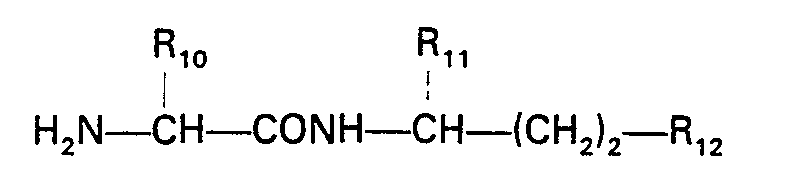
- the compounds of formula 1 may be prepared by condensing using conventional procedures, a protected compound of formula 2, 3, or 4 with a protected compound of formula 5, followed by removal of the protecting groups optionally present.
- R 2 , R a , R io , R 11 and R 12 represent the groups mentioned previously while P is a protecting group.
- the protecting group may be any suitable to protect the group to which it is attached during the condensation reaction and which may be readily removed thereafter.
- protecting groups for the carboxyl group there may be mentioned tertiary-butyl, benzyl or benzhydryl.
- the acyl radical for example, the alkanoyl radical, such as acetyl, the aroyl radical, such as benzoyl, and, in particular, radicals derived from carbonic acid, such as benzyloxycarbonyl or lower alkyloxycarbonyl.
- alkyl radicals such as tertiary-butyl, benzyl, nitrobenzyl, lower alkoxy radical, or the tetrahydropyranyl radical.
- optionally substituted alkylidene radicals that block the oxygen atoms at the C-4 and C-6 positions.
- the alkylidene radicals one finds, in particular, the lower alkylidene radicals, especially ethylidene, isopropylidene, or propylidene, and also, the optionally substituted benzylidene radical, preferentially substituted at the para position.
- the condensation is effected by reacting the compound 2, 3 or 4 in the form where the carboxylic acid is activated with the amino compound 5.
- the activated carboxyl group may be, for example, an acid anhydride, preferably, a mixed acid anhydride like an acetate of the acid, an amide of the acid like an imidazolid, an isoxazolid or an activated ester.
- the activated esters include the cyano-methyl ester, the carboxylmethyl ester, the p-nitrophenyl thioester, the p-nitrophenyl ester, the 2,4,5-trichlorophenyl ester, the pentachlorophenyl ester, the N-hydroxysuccinimide ester, the N-hydroxyphthalimide ester, the 8-hydroxyquinoline ester, the 2-hydroxy-1,2-dihydro-1-carboethoxyquinoline esters, the N-hydroxypiperidine ester or enol ester derived from N-ethyl-5-phenyl-isoxazolium-3'-sulfonate.
- the activated esters may equally be obtained from a carbodiimide by addition of N-hydroxysuccinimide or from a substituted 1-hydroxy-benzyltriazole for example, a halogen, methyl, or methoxy-substituted 3-hydroxy-4-oxo-3,4-dihydrobenzo-[d]-1,2,3-triazine.
- the amino group may be activated, for example, by reaction with a phosphitamide.
- the compounds of formulae 2, 3, and 4 can be obtained by reacting the corresponding sugar unsubstituted at position-3' (compound of formula 6), position-3 (compound of formula 7), or positions -3,3' (compound of formula 8), respectively, with a halogen-R 8 -acetic acid where R s has the meaning mentioned above.
- the ether is obtained in the presence of a strong base.
- the halogen is preferentially bromo or chloro.
- Compounds of formula 5 are known or can be made in a known fashion by coupling the appropriately protected amino acids, and removing protecting groups.
- Compounds of formula 6 can be obtained by condensing a protected compound of formula 9, wherein X is halogen, preferably bromo or chloro, with a protected compound of formula 10 to give compounds of formula 11, where R 2 has the meaning mentioned above.
- the condensation is effected by reacting compounds 9 and 10 under conditions effective to liberate hydrogen halide.
- P 1 , P 2 and P 3 are readily removable buit different protecting groups where P 2 and P 3 are readily removable under conditions which do not remove the P 1 group.
- P 3 is an imido protecting group.
- the P 2 and P 3 protecting groups are then selectively removed; the liberated amino group at position C-2' is then acylated to insert the group and the C-4' and C-6' hydroxyls blocked with protecting group P 4 to give compounds of formula 6.
- Compounds of formula 7 can be obtained by condensing a protected compound of formula 9, wherein X is halogen, preferably bromo or chloro, with a protected compound of formula 12, to give compounds of formula 13, where R 2 has the meaning mentioned above.
- P 1 , P 2 , P 3 and P 5 are readily removable but different protecting groups where P 2 and P 3 are readily removable under conditions which do not remove P 1 and P 5 , and P 5 selectively removable under conditions which do not remove P 1 .
- P 3 is an imido protecting group.
- the P 2 and P 3 protecting groups are then selectively removed; the liberated amino group at position C-2' is then acylated to insert the group the C-3', C-4', and C-6' hydroxyls blocked with protecting group P 1 ; and the P 5 protecting group selectively removed to give compounds of formula 7.
- Compounds of formula 8 can be obtained by condensing a protected compound of formula 9 with a protected compound of formula 12, where the various protecting groups have the meaning mentioned above, to give the compounds of formula 13.
- the P 5 protecting group is then selectively removed; the P 2 and P 3 protecting groups are next removed; the liberated amino group at position C-2' is then acylated to insert the group and the C-4' and C-6' hydroxyls blocked with protecting group P 4 to give compounds of formula 8.
- the protecting groups can be removed in a classical fashion, for example, by hydrogenolysis with hydrogen in the presence of a noble metal catalyst, such as palladium or platinum, or by acid hydrolysis.
- a noble metal catalyst such as palladium or platinum
- R 4 and R 5 are greater than acetyl
- the desired group is obtained by employing the appropriate acid anhydride or acid halide, preferably the acid chloride, e.g. propionyl chloride, when R 4 and R 5 are propionyl.
- the acid chloride e.g. propionyl chloride
- R 4 and R 5 are propionyl.
- R 4 is H and R 5 is acyl
- R 5 it is not necessary to protect R 4 .
- R 5 is hydrogen and R 4 is acyl
- R 5 must be protected preferably with trityl ether, before acylating R 4 followed by deblocking R 5 .
- Compounds wherein R 10 is other than methyl may be obtained when, for example, one of the following amino acids is substituted for alanine:
- Substituted alkyl refers to an alkyl group of from 1 to 7 carbon atoms substituted by hydroxy, mercapto, alkoxy of 1-3 carbons, alkylmercapto of 1-3 carbons, hydroxy or mercapto esterified by an acid of 1-4 carbon atoms, halogen (F, CI or Br), carboxyl, or carboxyl functionally modified by esterification with a lower alcohol of 1-3 carbons or by amidation.
- the alkyl substituents are hydroxy or mercapto, either free or substituted by an alkyl group of 1-3 carbons.
- substituted phenyl for R 1 and R 2 or “substituted benzyl” for R 1 refer to the phenyl group substituted by one or more alkyl groups of 1-3 carbon carbons or hydroxy or mercapto groups either free, or etherified by an alkyl group of 1-3 carbons or esterified by an acid of 1-4 carbons, lower (1-4C) alkyldioxy, cycloalkyldioxy of 5-7 carbon atoms, amino or trifluoromethyl.
- the acyl group for R 4 and R 5 represents an alkanoyl or optionally substituted alkanoyl radical and especially an alkanoyl comprising 2 to 21 carbon atoms, like acetyl or propionyl, and also an aroyl like benzoyl, naphthoyl-1 and naphthoyl-2, and, in particular, benzoyl or naphthoyl substituted with halogen, lower alkyl (1-3C), lower alkoxy (1-3C), trifluoromethyl, hydroxy, or lower alkanoyloxy.
- Acyl also represents a sulfonyl radical of an organic sulfonic acid like alkanesulfonic acid, in particular, a' lower alkanesulfonic acid, like methanesulfonic acid or ethanesulfonic acid or an arylsulfonic acid, in particular, a phenylsulfonic acid optionally substituted by a lower alkyl, like benzenesulfonic acid or p-toluenesulfonic acid.
- a sulfonyl radical of an organic sulfonic acid like alkanesulfonic acid in particular, a' lower alkanesulfonic acid, like methanesulfonic acid or ethanesulfonic acid or an arylsulfonic acid, in particular, a phenylsulfonic acid optionally substituted by a lower alkyl, like benzenesulfonic acid or p-toluenesul
- Acyl also represents a carbamoyl radical, like a non-substituted carbamoyl, a lower (1-3C) alkylcarbamoyl or arylcarbamoyl, like the methylcarbamoyl or the phenylcarbamoyl.
- R 11 and R 12 among the optionally esterified carboxyl groups can be mentioned the carboxyl group esterified by a lower alcohol of 1-7 carbons, like methanol or ethanol.
- the carboxyl group can also be amidated, unsubstituted at the nitrogen atom or mono- or di-substituted with an alkyl, in particular, a lower alkyl, an aryl, particularly phenyl, or an aralkyl, particularly benzyl.
- R 1 is H, alkyl of 1-3 carbons, benzyl, phenyl or phenyl p-substituted by alkyl (1-3C), amino, halogen, hydroxy or trifluoromethyl
- R 2 is alkyl of 1-3 carbons, or phenyl, or phenyl p-substituted by alkyl (1-3C), amino, halogen, hydroxy or trifluoromethyl
- R 3 is H or lower alkyl of 1-3 carbons, R 4 and R 5 are H, alkanoyl of 2-21 carbons, benzoyl or naphthoyl
- R 10 is H, alkyl of 1-4 carbons, hydroxymethyl, mercaptomethyl, benzyl or p-hydroxybenzyl
- Rg and R 10 together are -CH 2 CH 2 CH 2-
- R t1 and R 12 are carboxyl, carboxyl esterified by an alcohol of 1-4. carbons, carboxamide, or monoalkyl
- the obtained compounds can be transformed to their salts in a classical fashion, for example, by reacting the acidic compounds obtained with alkaline or alkaline earth hydroxides or the basic compounds with acids.
- the present invention is also directed to pharmaceutical preparations that contain a compound of formula 1.
- pharmaceutical preparations relevant to this invention are salts that are administered by external route, for example, orally, rectally or parenterally to mammalian species.
- Preparations may be administered that contain the pharmacologically active compound by itself or mixed with a pharmaceutically acceptable carrier.
- the dose of the pharmacologically active compound depends on the animal specie, the age, and the state of the individual and the mode of application.
- the new pharmaceutical preparations contain from about 10% to about 95% and, preferably from about 20% to about 90% of a compound of the present invention.
- the pharmaceutical preparation relevant to this invention can be presented, for example, in the form of unit doses like tablets, capsules, suppositories, and ampoules.
- mice are immunized by i.p. injections of 10 mg of BSA without precipitate. At 0, 9, 15 and 29 days later blood samples are taken and analyzed for anti-BSA-antibody titers by the passive hemagglutination technique. At the dose utilized, soluble BSA is subimmunogenic for the receiving animals, that is, it does not cause any antibody production, or at most a completely insignificant production. Additional treatment of the mice with certain immunostimulants before of after administration of antigen leads to an increase in antibody titer in the serum. The effect of the treatment is expressed by the obtained score, that is, the sum of the logs to the base 2 of the differences of the titer at 3 days of bleeding.
- the compounds of the present invention are capable of augmenting in a significant manner the production of anti-BSA antibodies by i.p. or subcutaneous application (s.c.) of 100-300 mg/kg/animal during 5 consecutive days (day 0 to day 4) after immunization with BSA.
- the immunostimulatory effect of the compounds mentioned herein depend on the antigen, contrary to other bacterial immunostimulants (like LPS of E. coli1.
- the injection of the compounds of the present invention results in augmentation of anti-BSA antibody titer only in mice immunized with BSA, and not with non-immunized mice.
- Subcutaneous administration is as efficacious as i.p., that is, the immunostimulatory effect observed is systemic and does not depend on the fact that the stimulant was administered by the same route as the antigen or mixed with it, as is the case with classical adjuvants.
- the compounds of the present invention permit specific augmentation of humoral immunity., improve immune response, and provide long-lasting immunostimulatory effects on systemic activation of immune apparatus.
- Mouse lymphoid cells are cultured in microtiter plates, in RPMI-1640 medium with 2% fetal calf serum. Cultures are set in triplicates and consist of 3-5 x 10 5 spleen or 1.5 x 10 6 thymus cells per well in a final volume of 0.2 ml. Class specific mitogens are added at optimal or suboptimal concentrations, while control cultures are incubated without mitogens. The tested compounds are added shortly after the mitogens and the cultures are incubated for 48 hours at 37° with 5% CO 2 , Incorporation of tritiated thymidine is determined after a pulse (1.0 ⁇ Ci/weII) during the last 6 hours in culture. The data are recorded as mean cpm and the effects of the compounds are presented as stimulation index (mean cpm in cultures with the compound/mean cpm in control).
- the compounds of the present invention enhance the levels of thymidine incorporation in lymphocyte cultures, with or without mitogens.
- the stimulation indices are maximal in control cultures or in those with suboptimal doses of mitogens.
- Similar effects of the compound are provoked in cultures of different lymphocyte populations, namely, B cells (nude spleen), T cells (thymus) or their mixtures (normal spleen).
- B cells node spleen
- T cells thymus
- T cells normal spleen
- the compounds of the present invention produce their stimulatory effect with guinea pigs, for example, beginning with a single dose of 0.05 mg/kg s.c., and with mice after 5 applications of 10 mg/kg s.c., no toxic effect is observed after 5 applications of 300 mg/kg i.p., with the mouse. These compounds possess, therefore, a remarkable therapeutic index.
- the compounds of the present invention thus have the capacity, on the one hand, of being mixed with an antigen for which an increase in immunogenicity is required and on the other hand, by systemic application, of increasing the immunological reactivity of the treated organism. Moreover, these compounds can enhance cellular as well as humoral immunity and activate lymphocytes responsible for the formation of antibodies.
- the compounds of the present invention can consequently be employed in (1) adjuvants by mixing them with vaccines with the goal of improving the effectiveness of the vaccination and (2) protective agents against infections caused by bacteria, viruses or pathogenic parasites, owing to immunity by humoral antibodies and/or to cellular mediation.
- the described compounds are indicated, mixed with the most varied antigens, as adjuvants for experimental as well as industrial production of antisera for therapeutic and diagnostic-purposes, as well as to induce immunologically active lymphocyte populations at the time of cell transfers.
- the new compounds without simultaneously supplying antigen in order to enhance immune reactions that are already taking place in a subliminal fashion in a mammalian host.
- These compounds are therefore especially indicated for stimulation of individual immune defense, e.g., at the time of chronic or acute infections or in cases of selective (antigen-specific) immunological deficiencies as well as in situations of immune deficiency, but also acquired general deficiency (i.e., not antigen-specific) as appears with age, during initial shock from a grave illness, and before and soon after radiation therapy or immunosuppressive hormones.
- the said compounds can subsequently be administered in combination with antiinfectious antibiotics, chemical therapeutics or other methods of treatment, to combat immunological deficiencies.
- the described compounds are thus indicated equally for general prophylaxis of infectious disease in man and animal.
- the precipitated solid is filtered, washed with water, dried by suction, washed with diethyl ether, and finally dried in vacuo at 50° over phosphorous pentoxide; yield 270 mg (93%), m.p. 295-300° (dec), [ ⁇ ] 25 D + 59.3° (c, 0.54, N,N-dimethylformamide).
- the 300 MHz nmr spectrum in dimethylsulfoxide-d s is in accord with the desired structure.
- the catalyst is removed by filtration through Celite and washed with acetic acid.
- the combined filtrates are evaporated, coevaporated several times with water, and finally several times with toluene.
- the residue is dissolved in the minimal volume of a methanol-ethanol mixture and the product precipitated by addition of diethyl ether.
- the dried (sodium sulfate) organic solution is evaporated, and the resulting syrup is treated for 3 hours at 0° with acetic anhydride (40 ml) and pyridine (60 ml).
- the mixture is then evaporated and coevaporated several times with toluene.
- the mixture is separated on dual Prep-PakTM 500 silica gel columns using a Waters Associates Prep Liquid Chromatography System 500 with 9:1 diethyl ether- dichloromethane as eluant.
- the reaction mixture is stirred for 20 hours at room temperature at which time additional barium oxide (335 mg), barium hydroxide octahydrate (112 mg) and benzyl bromide (0.52 ml) are added. Stirring is continued for 24 hours at room temperature.
- the reaction mixture is then diluted with chloroform (100 ml), washed successively with 60% aqueous acetic acid, saturated sodium bicarbonate, and water, dried (sodium sulfate), and evaporated. The residue is applied to a column of silica gel (90 g) that is eluted with 4:1 chloroform-ethyl acetate.
- This example shows the use of the adjuvants of the present invention in formulating influenza vaccines.
- An aqueous suspension of the final product of the example indicated in Column I in phosphate buffered saline is added in the level indicated in column II to a sample of bivalent whole influenza vaccine having the total amount of antigen indicated in column III.
- the total volume of the completed vaccine is shown in column IV.
- mice A group of 10 mice are injected with 0.1 ml of a saline solution containing 100 ⁇ g of the compound of Example 1. Seven days later the mice are challenged with a lethal dose of meningococcal B protein and meningococcal polysaccharides types A and B in 5% hog gastric mucin. In replicate tests the survival rate 72 hours post challenge is from 40-50%. Similar results are obtained with the compounds of Examples 2 and 3.
Landscapes
- Chemical & Material Sciences (AREA)
- Health & Medical Sciences (AREA)
- Organic Chemistry (AREA)
- Life Sciences & Earth Sciences (AREA)
- General Health & Medical Sciences (AREA)
- Medicinal Chemistry (AREA)
- Crystallography & Structural Chemistry (AREA)
- Biochemistry (AREA)
- Biophysics (AREA)
- Genetics & Genomics (AREA)
- Molecular Biology (AREA)
- Proteomics, Peptides & Aminoacids (AREA)
- Communicable Diseases (AREA)
- Public Health (AREA)
- Chemical Kinetics & Catalysis (AREA)
- General Chemical & Material Sciences (AREA)
- Nuclear Medicine, Radiotherapy & Molecular Imaging (AREA)
- Pharmacology & Pharmacy (AREA)
- Animal Behavior & Ethology (AREA)
- Oncology (AREA)
- Veterinary Medicine (AREA)
- Peptides Or Proteins (AREA)
- Pharmaceuticals Containing Other Organic And Inorganic Compounds (AREA)
- Medicines Containing Antibodies Or Antigens For Use As Internal Diagnostic Agents (AREA)
- Medicines That Contain Protein Lipid Enzymes And Other Medicines (AREA)
- Saccharide Compounds (AREA)
Claims (10)



Priority Applications (1)
| Application Number | Priority Date | Filing Date | Title |
|---|---|---|---|
| AT80400566T ATE2006T1 (de) | 1979-04-27 | 1980-04-25 | Peptidyl-disaccharide mit immunologischer aktivitaet, verfahren zur herstellung und impfstoff. |
Applications Claiming Priority (2)
| Application Number | Priority Date | Filing Date | Title |
|---|---|---|---|
| US06/033,597 US4391800A (en) | 1979-04-27 | 1979-04-27 | Immunologically active peptidyl disaccharides and methods of preparation |
| US33597 | 1979-04-27 |
Publications (2)
| Publication Number | Publication Date |
|---|---|
| EP0018901A1 EP0018901A1 (de) | 1980-11-12 |
| EP0018901B1 true EP0018901B1 (de) | 1982-12-15 |
Family
ID=21871319
Family Applications (1)
| Application Number | Title | Priority Date | Filing Date |
|---|---|---|---|
| EP80400566A Expired EP0018901B1 (de) | 1979-04-27 | 1980-04-25 | Peptidyl-Disaccharide mit immunologischer Aktivität, Verfahren zur Herstellung und Impfstoff |
Country Status (6)
| Country | Link |
|---|---|
| US (1) | US4391800A (de) |
| EP (1) | EP0018901B1 (de) |
| JP (1) | JPS55145696A (de) |
| AT (1) | ATE2006T1 (de) |
| DE (1) | DE3061322D1 (de) |
| DK (1) | DK177580A (de) |
Families Citing this family (7)
| Publication number | Priority date | Publication date | Assignee | Title |
|---|---|---|---|---|
| JPS58198496A (ja) * | 1982-05-14 | 1983-11-18 | Dainippon Pharmaceut Co Ltd | グルコサミニルムラミルペプチド誘導体 |
| US4668661A (en) * | 1984-10-23 | 1987-05-26 | President & Fellows Of Harvard College | Sleep inducing agents |
| GB8519416D0 (en) * | 1985-08-01 | 1985-09-04 | Unilever Plc | Oligosaccharides |
| US4950645A (en) * | 1988-07-08 | 1990-08-21 | Immunotherapeutics, Inc. | Composition for macrophage activation |
| US5416070A (en) * | 1988-07-08 | 1995-05-16 | Immunotherapeutics, Inc. | Composition for macrophage activation |
| US5750665A (en) * | 1995-10-04 | 1998-05-12 | Vosika; Gerald J. | Preparation of glucosaminyl muramic acid derivatives |
| AU2001252921A1 (en) * | 2000-04-18 | 2001-10-30 | Eli Lilly And Company | A glycopeptide and preparation thereof |
Family Cites Families (8)
| Publication number | Priority date | Publication date | Assignee | Title |
|---|---|---|---|---|
| FR2326930A1 (fr) * | 1975-10-09 | 1977-05-06 | Anvar | Agents hydrosolubles depresseurs non specifiques des reponses immunitaires |
| FR2343482A1 (fr) | 1976-03-10 | 1977-10-07 | Anvar | La 2- (2-acetamido-2-deoxy-3-o-d-glucopyranosyl) -d-propionyl-l-seryl-d-isoglutamine et medicaments la contenant |
| FR2343483A1 (fr) | 1976-03-10 | 1977-10-07 | Anvar | L'ester methylique de la 2- (2-acetamido-2-deoxy-3-o-d-glucopyranosyl) -d-propionyl-l-alanyl-d-isoglutamine et le diester methylique de l'acide 2- (2-acetamido-2-deoxy-3-o-d-glucopyranosyl) -d-propionyl-l-alanyl-d-glutamique et medicaments les contenant |
| US4082736A (en) * | 1976-04-26 | 1978-04-04 | Syntex (U.S.A.) Inc. | Novel immunological adjuvant compounds and methods of preparation thereof |
| US4082735A (en) * | 1976-04-26 | 1978-04-04 | Syntex (U.S.A.) Inc. | Novel immunological adjuvant compounds and methods of preparation thereof |
| GB1563561A (en) * | 1976-06-23 | 1980-03-26 | Daiichi Seiyaku Co | Muramyldipeptide derivatives and process for the preparation thereof |
| FR2355505A1 (fr) | 1976-06-24 | 1978-01-20 | Anvar | Nouvel agent adjuvant immunitaire |
| SU727647A1 (ru) * | 1977-11-02 | 1980-04-15 | Институт биоорганической химии им.М.М.Шемякина | Гликопептиды,обладающие противоопухолевой активностью и способ их получени |
-
1979
- 1979-04-27 US US06/033,597 patent/US4391800A/en not_active Expired - Lifetime
-
1980
- 1980-04-25 EP EP80400566A patent/EP0018901B1/de not_active Expired
- 1980-04-25 DE DE8080400566T patent/DE3061322D1/de not_active Expired
- 1980-04-25 DK DK177580A patent/DK177580A/da unknown
- 1980-04-25 AT AT80400566T patent/ATE2006T1/de not_active IP Right Cessation
- 1980-04-28 JP JP5554480A patent/JPS55145696A/ja active Pending
Also Published As
| Publication number | Publication date |
|---|---|
| JPS55145696A (en) | 1980-11-13 |
| DE3061322D1 (en) | 1983-01-20 |
| ATE2006T1 (de) | 1982-12-15 |
| US4391800A (en) | 1983-07-05 |
| EP0018901A1 (de) | 1980-11-12 |
| DK177580A (da) | 1980-10-28 |
Similar Documents
| Publication | Publication Date | Title |
|---|---|---|
| EP0038750B1 (de) | Dipeptid-Derivate von 4-0, 6-0-acyl-2-amin-2-deoxy-D-glucose mit immunologischer Wirkung und Verfahren zu ihrer Herstellung | |
| GB1570625A (en) | Glucosamine derivatives and a process for their manufacture | |
| EP0983286B1 (de) | Aminoalkyl-glucosamin-phosphat-verbindungen und ihrer verwendung als adjuvanten und immunoeffektoren | |
| CA1183525A (en) | Phosphorylmuramyl peptides and processes for the manufacture thereof | |
| EP0025495A1 (de) | Lipophile Muramylpeptide, Verfahren zu deren Herstellung und deren Verwendung | |
| EP0041896B1 (de) | Dipeptid-Derivate von 2-Amin-1,2-desoxy-D-glucose und Verfahren zur Herstellung | |
| EP0015468A1 (de) | 6-Deoxyglucosamin-Peptid-Derivate, ihre Herstellung und Verwendung | |
| US4310514A (en) | Immunologically active dipeptidyl 5-0,6-0-acyl-2-amino-2-deoxy-D-glucofuranose derivatives and methods of preparation | |
| EP0014159B1 (de) | Immunologisch aktive Dipeptidyl-Saccharide und Verfahren zur Herstellung | |
| US4391800A (en) | Immunologically active peptidyl disaccharides and methods of preparation | |
| US4868155A (en) | Dipeptidyl 4-0-,6-0-acyl-2-amino-2-deoxy-D-glucose compositions and methods of use in AIDS-immunocompromised human hosts | |
| US4377570A (en) | Immunologically active dipeptidyl saccharides and methods of preparation | |
| AU636150B2 (en) | Muramyl dipeptide derivatives | |
| EP0118364B1 (de) | Immunostimulative Dipeptidyl-D-Glucose-Derivate und Verfahren zu ihrer Herstellung | |
| PL123483B1 (en) | Process for preparing novel compunds of n-acetylmuramylpeptides type | |
| Durette et al. | Synthesis and immunoadjuvant activities of 2-acetamido-5-O-acetyl-6-O-acyl-2-deoxy-3-O-[(R)-2-propionyl-L-alanyl-D-isoglutamine]-D-glucofuranoses as potential prodrug forms of 6-O-acyl derivatives of N-acetylmuramyl dipeptide | |
| Dullenkopf et al. | Synthesis of a Structurally Defined Antigen–Immunostimulant Combination for Use in Cancer Vaccines | |
| CA1183528A (en) | Processes for the manufacture of novel glucose derivatives | |
| KR840001687B1 (ko) | 포스포릴 무라밀 펩타이드의 제조방법 | |
| EP3000820A1 (de) | Synthetische Impfstoffe gegen Streptococcus pneumoniae-Serotyp 8 | |
| CH613981A5 (en) | Process for the preparation of glucosamine derivatives |
Legal Events
| Date | Code | Title | Description |
|---|---|---|---|
| PUAI | Public reference made under article 153(3) epc to a published international application that has entered the european phase |
Free format text: ORIGINAL CODE: 0009012 |
|
| AK | Designated contracting states |
Designated state(s): AT BE CH DE FR GB IT LU NL SE |
|
| ITCL | It: translation for ep claims filed |
Representative=s name: SOCIETA' ITALIANA BREVETTI S.P.A. |
|
| 17P | Request for examination filed |
Effective date: 19810120 |
|
| GRAA | (expected) grant |
Free format text: ORIGINAL CODE: 0009210 |
|
| AK | Designated contracting states |
Designated state(s): AT BE CH DE FR GB IT LI LU NL SE |
|
| PG25 | Lapsed in a contracting state [announced via postgrant information from national office to epo] |
Ref country code: SE Effective date: 19821215 Ref country code: NL Effective date: 19821215 Ref country code: IT Free format text: LAPSE BECAUSE OF FAILURE TO SUBMIT A TRANSLATION OF THE DESCRIPTION OR TO PAY THE FEE WITHIN THE PRESCRIBED TIME-LIMIT;WARNING: LAPSES OF ITALIAN PATENTS WITH EFFECTIVE DATE BEFORE 2007 MAY HAVE OCCURRED AT ANY TIME BEFORE 2007. THE CORRECT EFFECTIVE DATE MAY BE DIFFERENT FROM THE ONE RECORDED. Effective date: 19821215 Ref country code: FR Free format text: THE PATENT HAS BEEN ANNULLED BY A DECISION OF A NATIONAL AUTHORITY Effective date: 19821215 Ref country code: BE Effective date: 19821215 Ref country code: AT Free format text: LAPSE BECAUSE OF NON-PAYMENT OF DUE FEES Effective date: 19821215 |
|
| REF | Corresponds to: |
Ref document number: 2006 Country of ref document: AT Date of ref document: 19821215 Kind code of ref document: T |
|
| REF | Corresponds to: |
Ref document number: 3061322 Country of ref document: DE Date of ref document: 19830120 |
|
| PG25 | Lapsed in a contracting state [announced via postgrant information from national office to epo] |
Ref country code: LU Free format text: LAPSE BECAUSE OF NON-PAYMENT OF DUE FEES Effective date: 19830430 Ref country code: LI Effective date: 19830430 Ref country code: CH Effective date: 19830430 |
|
| NLV1 | Nl: lapsed or annulled due to failure to fulfill the requirements of art. 29p and 29m of the patents act | ||
| EN | Fr: translation not filed | ||
| REG | Reference to a national code |
Ref country code: CH Ref legal event code: PL |
|
| PG25 | Lapsed in a contracting state [announced via postgrant information from national office to epo] |
Ref country code: DE Effective date: 19840103 |
|
| GBPC | Gb: european patent ceased through non-payment of renewal fee | ||
| PG25 | Lapsed in a contracting state [announced via postgrant information from national office to epo] |
Ref country code: GB Effective date: 19881118 |
|
| EUG | Se: european patent has lapsed |
Ref document number: 80400566.8 Effective date: 19820823 |
|
| PLBE | No opposition filed within time limit |
Free format text: ORIGINAL CODE: 0009261 |