EP0019112B1 - Process for the preparation of cyclic acetals of trans-4-chloro-3-methyl-2-buten-1-al and preparation of trans-3-methyl-2-buten-1,4-dial-monoacetals - Google Patents
Process for the preparation of cyclic acetals of trans-4-chloro-3-methyl-2-buten-1-al and preparation of trans-3-methyl-2-buten-1,4-dial-monoacetals Download PDFInfo
- Publication number
- EP0019112B1 EP0019112B1 EP80102184A EP80102184A EP0019112B1 EP 0019112 B1 EP0019112 B1 EP 0019112B1 EP 80102184 A EP80102184 A EP 80102184A EP 80102184 A EP80102184 A EP 80102184A EP 0019112 B1 EP0019112 B1 EP 0019112B1
- Authority
- EP
- European Patent Office
- Prior art keywords
- methyl
- buten
- acetal
- trans
- chloro
- Prior art date
- Legal status (The legal status is an assumption and is not a legal conclusion. Google has not performed a legal analysis and makes no representation as to the accuracy of the status listed.)
- Expired
Links
- 238000000034 method Methods 0.000 title claims description 23
- -1 cyclic acetals Chemical class 0.000 title claims description 11
- 238000002360 preparation method Methods 0.000 title claims description 7
- IAZDPXIOMUYVGZ-UHFFFAOYSA-N Dimethylsulphoxide Chemical compound CS(C)=O IAZDPXIOMUYVGZ-UHFFFAOYSA-N 0.000 claims description 25
- DHKHKXVYLBGOIT-UHFFFAOYSA-N acetaldehyde Diethyl Acetal Natural products CCOC(C)OCC DHKHKXVYLBGOIT-UHFFFAOYSA-N 0.000 claims description 21
- YBBRCQOCSYXUOC-UHFFFAOYSA-N sulfuryl dichloride Chemical compound ClS(Cl)(=O)=O YBBRCQOCSYXUOC-UHFFFAOYSA-N 0.000 claims description 21
- 238000006243 chemical reaction Methods 0.000 claims description 16
- SEPQTYODOKLVSB-UHFFFAOYSA-N 3-methylbut-2-enal Chemical compound CC(C)=CC=O SEPQTYODOKLVSB-UHFFFAOYSA-N 0.000 claims description 13
- 239000011541 reaction mixture Substances 0.000 claims description 10
- 238000009835 boiling Methods 0.000 claims description 7
- XSTXAVWGXDQKEL-UHFFFAOYSA-N Trichloroethylene Chemical group ClC=C(Cl)Cl XSTXAVWGXDQKEL-UHFFFAOYSA-N 0.000 claims description 5
- 125000002496 methyl group Chemical group [H]C([H])([H])* 0.000 claims description 4
- 125000002777 acetyl group Chemical class [H]C([H])([H])C(*)=O 0.000 claims 4
- 229910052784 alkaline earth metal Inorganic materials 0.000 claims 2
- 229910052783 alkali metal Inorganic materials 0.000 claims 1
- 229910000288 alkali metal carbonate Inorganic materials 0.000 claims 1
- 150000008041 alkali metal carbonates Chemical class 0.000 claims 1
- 150000005826 halohydrocarbons Chemical class 0.000 claims 1
- UBOXGVDOUJQMTN-UHFFFAOYSA-N trichloroethylene Natural products ClCC(Cl)Cl UBOXGVDOUJQMTN-UHFFFAOYSA-N 0.000 claims 1
- 150000001241 acetals Chemical class 0.000 description 36
- ZMXDDKWLCZADIW-UHFFFAOYSA-N N,N-Dimethylformamide Chemical compound CN(C)C=O ZMXDDKWLCZADIW-UHFFFAOYSA-N 0.000 description 24
- 239000000243 solution Substances 0.000 description 21
- 230000003647 oxidation Effects 0.000 description 17
- 238000007254 oxidation reaction Methods 0.000 description 17
- 239000002904 solvent Substances 0.000 description 13
- VKYKSIONXSXAKP-UHFFFAOYSA-N hexamethylenetetramine Chemical compound C1N(C2)CN3CN1CN2C3 VKYKSIONXSXAKP-UHFFFAOYSA-N 0.000 description 11
- 239000000460 chlorine Substances 0.000 description 9
- 150000001805 chlorine compounds Chemical class 0.000 description 9
- 238000005660 chlorination reaction Methods 0.000 description 7
- XLYOFNOQVPJJNP-UHFFFAOYSA-N water Substances O XLYOFNOQVPJJNP-UHFFFAOYSA-N 0.000 description 7
- OSDWBNJEKMUWAV-UHFFFAOYSA-N Allyl chloride Chemical compound ClCC=C OSDWBNJEKMUWAV-UHFFFAOYSA-N 0.000 description 6
- HEMHJVSKTPXQMS-UHFFFAOYSA-M Sodium hydroxide Chemical compound [OH-].[Na+] HEMHJVSKTPXQMS-UHFFFAOYSA-M 0.000 description 6
- YXFVVABEGXRONW-UHFFFAOYSA-N Toluene Chemical compound CC1=CC=CC=C1 YXFVVABEGXRONW-UHFFFAOYSA-N 0.000 description 6
- 235000010299 hexamethylene tetramine Nutrition 0.000 description 6
- 239000000203 mixture Substances 0.000 description 6
- VEXZGXHMUGYJMC-UHFFFAOYSA-M Chloride anion Chemical compound [Cl-] VEXZGXHMUGYJMC-UHFFFAOYSA-M 0.000 description 5
- 230000015572 biosynthetic process Effects 0.000 description 5
- 150000001875 compounds Chemical class 0.000 description 5
- 239000004312 hexamethylene tetramine Substances 0.000 description 5
- RTZKZFJDLAIYFH-UHFFFAOYSA-N Diethyl ether Chemical compound CCOCC RTZKZFJDLAIYFH-UHFFFAOYSA-N 0.000 description 4
- 238000007239 Wittig reaction Methods 0.000 description 4
- 150000001299 aldehydes Chemical class 0.000 description 4
- 238000004821 distillation Methods 0.000 description 4
- 239000011734 sodium Substances 0.000 description 4
- 239000007858 starting material Substances 0.000 description 4
- FGLBSLMDCBOPQK-UHFFFAOYSA-N 2-nitropropane Chemical compound CC(C)[N+]([O-])=O FGLBSLMDCBOPQK-UHFFFAOYSA-N 0.000 description 3
- QTBSBXVTEAMEQO-UHFFFAOYSA-N Acetic acid Chemical compound CC(O)=O QTBSBXVTEAMEQO-UHFFFAOYSA-N 0.000 description 3
- BVKZGUZCCUSVTD-UHFFFAOYSA-M Bicarbonate Chemical class OC([O-])=O BVKZGUZCCUSVTD-UHFFFAOYSA-M 0.000 description 3
- WSFSSNUMVMOOMR-UHFFFAOYSA-N Formaldehyde Chemical compound O=C WSFSSNUMVMOOMR-UHFFFAOYSA-N 0.000 description 3
- FPIPGXGPPPQFEQ-OVSJKPMPSA-N all-trans-retinol Chemical compound OC\C=C(/C)\C=C\C=C(/C)\C=C\C1=C(C)CCCC1(C)C FPIPGXGPPPQFEQ-OVSJKPMPSA-N 0.000 description 3
- 150000001412 amines Chemical class 0.000 description 3
- 150000004649 carbonic acid derivatives Chemical class 0.000 description 3
- 238000000605 extraction Methods 0.000 description 3
- 150000008282 halocarbons Chemical class 0.000 description 3
- 239000012442 inert solvent Substances 0.000 description 3
- 238000000746 purification Methods 0.000 description 3
- 238000010992 reflux Methods 0.000 description 3
- 230000002207 retinal effect Effects 0.000 description 3
- 238000003786 synthesis reaction Methods 0.000 description 3
- UYPYRKYUKCHHIB-UHFFFAOYSA-N trimethylamine N-oxide Chemical compound C[N+](C)(C)[O-] UYPYRKYUKCHHIB-UHFFFAOYSA-N 0.000 description 3
- PUPZLCDOIYMWBV-UHFFFAOYSA-N (+/-)-1,3-Butanediol Chemical compound CC(O)CCO PUPZLCDOIYMWBV-UHFFFAOYSA-N 0.000 description 2
- SPEUIVXLLWOEMJ-UHFFFAOYSA-N 1,1-dimethoxyethane Chemical compound COC(C)OC SPEUIVXLLWOEMJ-UHFFFAOYSA-N 0.000 description 2
- FPIPGXGPPPQFEQ-UHFFFAOYSA-N 13-cis retinol Natural products OCC=C(C)C=CC=C(C)C=CC1=C(C)CCCC1(C)C FPIPGXGPPPQFEQ-UHFFFAOYSA-N 0.000 description 2
- CSCPPACGZOOCGX-UHFFFAOYSA-N Acetone Chemical compound CC(C)=O CSCPPACGZOOCGX-UHFFFAOYSA-N 0.000 description 2
- QGZKDVFQNNGYKY-UHFFFAOYSA-N Ammonia Chemical compound N QGZKDVFQNNGYKY-UHFFFAOYSA-N 0.000 description 2
- ZAMOUSCENKQFHK-UHFFFAOYSA-N Chlorine atom Chemical compound [Cl] ZAMOUSCENKQFHK-UHFFFAOYSA-N 0.000 description 2
- BAVYZALUXZFZLV-UHFFFAOYSA-N Methylamine Chemical compound NC BAVYZALUXZFZLV-UHFFFAOYSA-N 0.000 description 2
- 238000006007 Sommelet synthesis reaction Methods 0.000 description 2
- 239000003513 alkali Substances 0.000 description 2
- 239000002585 base Substances 0.000 description 2
- OENHQHLEOONYIE-UKMVMLAPSA-N beta-Carotene Chemical compound CC=1CCCC(C)(C)C=1/C=C/C(/C)=C/C=C/C(/C)=C/C=C/C=C(C)C=CC=C(C)C=CC1=C(C)CCCC1(C)C OENHQHLEOONYIE-UKMVMLAPSA-N 0.000 description 2
- 239000012320 chlorinating reagent Substances 0.000 description 2
- 229910052801 chlorine Inorganic materials 0.000 description 2
- MVPPADPHJFYWMZ-UHFFFAOYSA-N chlorobenzene Chemical compound ClC1=CC=CC=C1 MVPPADPHJFYWMZ-UHFFFAOYSA-N 0.000 description 2
- 125000004218 chloromethyl group Chemical group [H]C([H])(Cl)* 0.000 description 2
- 239000007789 gas Substances 0.000 description 2
- LEQAOMBKQFMDFZ-UHFFFAOYSA-N glyoxal Chemical compound O=CC=O LEQAOMBKQFMDFZ-UHFFFAOYSA-N 0.000 description 2
- 238000010438 heat treatment Methods 0.000 description 2
- 238000004519 manufacturing process Methods 0.000 description 2
- 239000007800 oxidant agent Substances 0.000 description 2
- 150000004714 phosphonium salts Chemical class 0.000 description 2
- ASUAYTHWZCLXAN-UHFFFAOYSA-N prenol Chemical compound CC(C)=CCO ASUAYTHWZCLXAN-UHFFFAOYSA-N 0.000 description 2
- 239000000047 product Substances 0.000 description 2
- YPFDHNVEDLHUCE-UHFFFAOYSA-N propane-1,3-diol Chemical compound OCCCO YPFDHNVEDLHUCE-UHFFFAOYSA-N 0.000 description 2
- 230000035484 reaction time Effects 0.000 description 2
- 159000000000 sodium salts Chemical class 0.000 description 2
- 238000003756 stirring Methods 0.000 description 2
- DNIAPMSPPWPWGF-GSVOUGTGSA-N (R)-(-)-Propylene glycol Chemical compound C[C@@H](O)CO DNIAPMSPPWPWGF-GSVOUGTGSA-N 0.000 description 1
- 150000000185 1,3-diols Chemical class 0.000 description 1
- QTCNKIZNNWURDV-UHFFFAOYSA-N 2,2-dimethylpropane-1,3-diol Chemical compound OCC(C)(C)CO.OCC(C)(C)CO QTCNKIZNNWURDV-UHFFFAOYSA-N 0.000 description 1
- KYBNZGCYBVOCEO-UHFFFAOYSA-N 2,3-dichlorobutanal Chemical compound CC(Cl)C(Cl)C=O KYBNZGCYBVOCEO-UHFFFAOYSA-N 0.000 description 1
- YZQBOBXTQNWQEW-UHFFFAOYSA-N 2-chloro-3-methylbut-3-enal Chemical compound CC(=C)C(Cl)C=O YZQBOBXTQNWQEW-UHFFFAOYSA-N 0.000 description 1
- NSPPRYXGGYQMPY-UHFFFAOYSA-N 3-Methylbuten-2-ol-1 Natural products CC(C)C(O)=C NSPPRYXGGYQMPY-UHFFFAOYSA-N 0.000 description 1
- UCUDJURUNUQAHQ-UHFFFAOYSA-N 3-chloro-2-methylbut-1-ene Chemical compound CC(Cl)C(C)=C UCUDJURUNUQAHQ-UHFFFAOYSA-N 0.000 description 1
- 239000004358 Butane-1, 3-diol Substances 0.000 description 1
- XDTMQSROBMDMFD-UHFFFAOYSA-N Cyclohexane Chemical compound C1CCCCC1 XDTMQSROBMDMFD-UHFFFAOYSA-N 0.000 description 1
- DGAQECJNVWCQMB-PUAWFVPOSA-M Ilexoside XXIX Chemical compound C[C@@H]1CC[C@@]2(CC[C@@]3(C(=CC[C@H]4[C@]3(CC[C@@H]5[C@@]4(CC[C@@H](C5(C)C)OS(=O)(=O)[O-])C)C)[C@@H]2[C@]1(C)O)C)C(=O)O[C@H]6[C@@H]([C@H]([C@@H]([C@H](O6)CO)O)O)O.[Na+] DGAQECJNVWCQMB-PUAWFVPOSA-M 0.000 description 1
- VQTUBCCKSQIDNK-UHFFFAOYSA-N Isobutene Chemical group CC(C)=C VQTUBCCKSQIDNK-UHFFFAOYSA-N 0.000 description 1
- FXHOOIRPVKKKFG-UHFFFAOYSA-N N,N-Dimethylacetamide Chemical compound CN(C)C(C)=O FXHOOIRPVKKKFG-UHFFFAOYSA-N 0.000 description 1
- LFTLOKWAGJYHHR-UHFFFAOYSA-N N-methylmorpholine N-oxide Chemical compound CN1(=O)CCOCC1 LFTLOKWAGJYHHR-UHFFFAOYSA-N 0.000 description 1
- BUGBHKTXTAQXES-UHFFFAOYSA-N Selenium Chemical compound [Se] BUGBHKTXTAQXES-UHFFFAOYSA-N 0.000 description 1
- FPIPGXGPPPQFEQ-BOOMUCAASA-N Vitamin A Natural products OC/C=C(/C)\C=C\C=C(\C)/C=C/C1=C(C)CCCC1(C)C FPIPGXGPPPQFEQ-BOOMUCAASA-N 0.000 description 1
- 238000006359 acetalization reaction Methods 0.000 description 1
- 150000001242 acetic acid derivatives Chemical class 0.000 description 1
- 230000021736 acetylation Effects 0.000 description 1
- 238000006640 acetylation reaction Methods 0.000 description 1
- 239000002253 acid Substances 0.000 description 1
- 238000007259 addition reaction Methods 0.000 description 1
- 125000003172 aldehyde group Chemical group 0.000 description 1
- 229910021529 ammonia Inorganic materials 0.000 description 1
- GETQZCLCWQTVFV-UHFFFAOYSA-N anhydrous trimethylamine Natural products CN(C)C GETQZCLCWQTVFV-UHFFFAOYSA-N 0.000 description 1
- 239000011648 beta-carotene Substances 0.000 description 1
- TUPZEYHYWIEDIH-WAIFQNFQSA-N beta-carotene Natural products CC(=C/C=C/C=C(C)/C=C/C=C(C)/C=C/C1=C(C)CCCC1(C)C)C=CC=C(/C)C=CC2=CCCCC2(C)C TUPZEYHYWIEDIH-WAIFQNFQSA-N 0.000 description 1
- 235000013734 beta-carotene Nutrition 0.000 description 1
- 229960002747 betacarotene Drugs 0.000 description 1
- 235000019437 butane-1,3-diol Nutrition 0.000 description 1
- 239000006227 byproduct Substances 0.000 description 1
- 235000021466 carotenoid Nutrition 0.000 description 1
- 150000001747 carotenoids Chemical class 0.000 description 1
- 239000007795 chemical reaction product Substances 0.000 description 1
- 239000003153 chemical reaction reagent Substances 0.000 description 1
- 150000001804 chlorine Chemical class 0.000 description 1
- 125000001309 chloro group Chemical group Cl* 0.000 description 1
- KRVSOGSZCMJSLX-UHFFFAOYSA-L chromic acid Substances O[Cr](O)(=O)=O KRVSOGSZCMJSLX-UHFFFAOYSA-L 0.000 description 1
- 150000001845 chromium compounds Chemical class 0.000 description 1
- 230000000052 comparative effect Effects 0.000 description 1
- 238000001816 cooling Methods 0.000 description 1
- MLUCVPSAIODCQM-UHFFFAOYSA-N crotonaldehyde Natural products CC=CC=O MLUCVPSAIODCQM-UHFFFAOYSA-N 0.000 description 1
- 239000012043 crude product Substances 0.000 description 1
- 125000004122 cyclic group Chemical group 0.000 description 1
- 125000003963 dichloro group Chemical group Cl* 0.000 description 1
- KPVWDKBJLIDKEP-UHFFFAOYSA-L dihydroxy(dioxo)chromium;sulfuric acid Chemical compound OS(O)(=O)=O.O[Cr](O)(=O)=O KPVWDKBJLIDKEP-UHFFFAOYSA-L 0.000 description 1
- 230000008030 elimination Effects 0.000 description 1
- 238000003379 elimination reaction Methods 0.000 description 1
- 238000005194 fractionation Methods 0.000 description 1
- AWJWCTOOIBYHON-UHFFFAOYSA-N furo[3,4-b]pyrazine-5,7-dione Chemical compound C1=CN=C2C(=O)OC(=O)C2=N1 AWJWCTOOIBYHON-UHFFFAOYSA-N 0.000 description 1
- 229940015043 glyoxal Drugs 0.000 description 1
- 231100000086 high toxicity Toxicity 0.000 description 1
- 229930195733 hydrocarbon Natural products 0.000 description 1
- 150000002430 hydrocarbons Chemical class 0.000 description 1
- 238000007037 hydroformylation reaction Methods 0.000 description 1
- 239000001257 hydrogen Substances 0.000 description 1
- 229910052739 hydrogen Inorganic materials 0.000 description 1
- 125000004435 hydrogen atom Chemical group [H]* 0.000 description 1
- 230000007062 hydrolysis Effects 0.000 description 1
- 238000006460 hydrolysis reaction Methods 0.000 description 1
- 239000005457 ice water Substances 0.000 description 1
- CPJRRXSHAYUTGL-UHFFFAOYSA-N isopentenyl alcohol Chemical compound CC(=C)CCO CPJRRXSHAYUTGL-UHFFFAOYSA-N 0.000 description 1
- WSFSSNUMVMOOMR-NJFSPNSNSA-N methanone Chemical compound O=[14CH2] WSFSSNUMVMOOMR-NJFSPNSNSA-N 0.000 description 1
- 150000002828 nitro derivatives Chemical class 0.000 description 1
- 239000012038 nucleophile Substances 0.000 description 1
- 239000012074 organic phase Substances 0.000 description 1
- 238000005949 ozonolysis reaction Methods 0.000 description 1
- GTCCGKPBSJZVRZ-UHFFFAOYSA-N pentane-2,4-diol Chemical compound CC(O)CC(C)O GTCCGKPBSJZVRZ-UHFFFAOYSA-N 0.000 description 1
- 239000003208 petroleum Substances 0.000 description 1
- 230000000144 pharmacologic effect Effects 0.000 description 1
- 239000012071 phase Substances 0.000 description 1
- 150000003242 quaternary ammonium salts Chemical class 0.000 description 1
- 150000003254 radicals Chemical class 0.000 description 1
- 239000002994 raw material Substances 0.000 description 1
- 230000002829 reductive effect Effects 0.000 description 1
- 229960003471 retinol Drugs 0.000 description 1
- 235000020944 retinol Nutrition 0.000 description 1
- 239000011607 retinol Substances 0.000 description 1
- 150000003839 salts Chemical class 0.000 description 1
- 229910052711 selenium Inorganic materials 0.000 description 1
- 239000011669 selenium Substances 0.000 description 1
- JPJALAQPGMAKDF-UHFFFAOYSA-N selenium dioxide Chemical compound O=[Se]=O JPJALAQPGMAKDF-UHFFFAOYSA-N 0.000 description 1
- JUDUFOKGIZUSFP-UHFFFAOYSA-M silver;4-methylbenzenesulfonate Chemical compound [Ag+].CC1=CC=C(S([O-])(=O)=O)C=C1 JUDUFOKGIZUSFP-UHFFFAOYSA-M 0.000 description 1
- 229910052708 sodium Inorganic materials 0.000 description 1
- 150000003505 terpenes Chemical class 0.000 description 1
- 235000007586 terpenes Nutrition 0.000 description 1
- 125000005490 tosylate group Chemical group 0.000 description 1
- 231100000419 toxicity Toxicity 0.000 description 1
- 230000001988 toxicity Effects 0.000 description 1
- ACWQBUSCFPJUPN-HWKANZROSA-N trans-2-methyl-2-butenal Chemical compound C\C=C(/C)C=O ACWQBUSCFPJUPN-HWKANZROSA-N 0.000 description 1
- 238000006886 vinylation reaction Methods 0.000 description 1
- 235000019155 vitamin A Nutrition 0.000 description 1
- 239000011719 vitamin A Substances 0.000 description 1
- 229940045997 vitamin a Drugs 0.000 description 1
- 239000002351 wastewater Substances 0.000 description 1
- 238000010626 work up procedure Methods 0.000 description 1
Classifications
-
- C—CHEMISTRY; METALLURGY
- C07—ORGANIC CHEMISTRY
- C07D—HETEROCYCLIC COMPOUNDS
- C07D319/00—Heterocyclic compounds containing six-membered rings having two oxygen atoms as the only ring hetero atoms
- C07D319/04—1,3-Dioxanes; Hydrogenated 1,3-dioxanes
- C07D319/06—1,3-Dioxanes; Hydrogenated 1,3-dioxanes not condensed with other rings
Definitions
- the invention relates to a process for the preparation of 6-ring acetals of trans-4-chloro-3-methyl-2-buten-1-al by reacting the corresponding acetals of 3-methyl-2-buten-1-als (Prenal ) with sulfuryl chloride and their subsequent oxidation to produce the trans-3-methyl-2-butene-1,4-dial-1-monoacetals (3-methyl-fuiliaaldehyde-1-monoacetals), which are in demand for terpene synthesis.
- trans-3-methyl-2-butene-1,4-dial-1-monoacetals are of great importance, since with their help it is possible to carry out successful Wittig reactions to innumerable compounds with biological and pharmacological importance.
- the desired retinal can be obtained in a simple manner by reacting trans-3-methyl-2-butene-1,4-dial-1-acetal with the ylide of ⁇ -ionylidenethyltriphenylphosphonium salts and subsequent hydrolysis.
- Retinal has the same effectiveness as vitamin A.
- Retinal can also be used to produce ß-carotene in a very economical manner by a simple Wittig reaction with the retinyl triphenylphosphonium salt, which is readily available from retinol.
- reaction step A the sulfuryl chloride is introduced into a boiling solution of the corresponding acetal of the formula II in trichlorethylene.
- sulfuryl chloride can provide 2 types of addition reactions: it can add 2 chlorine atoms to the olefinic double bond or can react with its entire molecule to form chloroalkanesulfonic acid chlorides (cf. loc. Cit. P. 875 above). This statement, too, would not have expected the implementation according to the invention. Furthermore, it is stated in the work mentioned that in the chlorination with sulfuryl chloride, as in the chlorination with elemental chlorine, secondary hydrogen reacts more easily than primary and tertiary more easily than secondary (cf. loc. Cit. P. 877 paragraph 2). Accordingly, one would have expected that essentially 2-chloro-3-methyl-3-buten-1-al-acetals would be formed.
- acetals required as starting materials for the process according to the invention are obtained from Acetalization of Prenal with the 1,3-diols by definition.
- Prenal is a commercially available product. It can, for example, by reacting isobutylene and formaldehyde, isomerizing the 2-methyl-1-buten-4-ol obtained and then dehydrogenating the 3-methyl-2-buten-1-ol obtained in this way (cf. DE-A-2 041 976) can be obtained.
- Suitable starting materials are the acetals of 3-methyl-2-buten-1-al with butane-1,3-diol, pentane-2,4-diol, propane-1,3-diol and in particular neopentyl glycol (2.2 -Dimethyl-propane-1,3-diol).
- Sulfuryl chloride is a commercially available compound.
- Halogenated hydrocarbons which boil between about 50 and 120 ° C. are suitable as solvents for the reaction according to the invention.
- Examples include dichlorethylene, trichlorethylene, tetrachlorethylene, chloroform and chlorobenzene.
- the conversion succeeds with particularly good selectivity when using trichlorethylene.
- the undesirable by-products (2-chloro-3-methyl-2-buten-1-al-acetale and 2,3-dichloro-3-methyl-butan-1-al-acetale) are only in yields of receive about 6%, while the proportion of their formation is higher when using the other halogenated hydrocarbons mentioned.
- the solvent is generally used in amounts of about 0.5 to 2 liters, preferably about 1 liter per mole of the starting acetal.
- the chlorination according to the invention is generally carried out by dissolving the acetal in the solvent and adding the sulfuryl chloride slowly to the solution obtained, heated to the temperature according to the invention, preferably into a refluxing solution.
- SO 2 Cl 2 cannot be entered as quickly as desired. The best results are obtained if about 1 mol of SO 2 Cl 2 is introduced into the solution of 1 mol of the starting acetal within 1 to 2 hours.
- the S0 2 C1 2 is entered approximately to the extent that the S0 2 C1 2 is consumed in the reaction mixture, ie as the chlorination progresses.
- the sulfuryl chloride is used in approximately molar amounts, such as the starting acetal, i.e. H. in amounts of about 1 mole to 1.2 moles per mole of acetal.
- the reaction is generally carried out under normal pressure.
- reaction mixture is worked up in a conventional manner by distilling off the solvent and, if appropriate, subsequent fractionation.
- the raw material can be used without further purification, since only the 4- of the chlorides formed Chlorine derivative can be oxidized to the corresponding aldehyde.
- trans-3-methyl-2-butene-1,4-dial-1-monoacetals are to be used further for carrying out Wittig reactions
- the solutions obtained in the oxidation for example those in the oxidation with dimethyl sulfoxide (DMSO) resulting solutions can be reacted with phosphonium salts without further purification.
- DMSO dimethyl sulfoxide
- the chlorides of the formula can be oxidized under mild reaction conditions.
- An advantageous method for the oxidation of the chlorides of the formula under mild reaction conditions is, for example, the oxidation of I with dimethyl sulfoxide in the presence of bases such as alkali carbonates, alkali bicarbonates, alkaline earth carbonates or alkaline earth bicarbonates. It was surprising that this reaction can be carried out in good yields, since the Fieser and Fieser "Reagents for Organic Synthesis", John Wiley and Sons, Inc., New York 1967, page 303 states that primary chlorides are oxidized with dimethyl sulfoxide only very poor yields would result and that the chlorides would therefore first have to be converted into the tosylates using silver tosylate (cf. also Tetrahedron Letters No. 11 [1974] pp. 917 f).
- the chloride is generally heated or else the chloride mixture obtained in the chlorination with sulfuryl chloride according to process step A in the presence of one or more of the above-mentioned carbonates or bicarbonates with at least 1 mol of DMSO in an inert solvent or without inert solvent with at least 5 times the molar amount of DMSO at temperatures of about 50 to 150 ° C., preferably 60 to 120 ° C.
- the reaction time is generally about 0.5 to 2, preferably 1 to 1.5 hours.
- dimethylformamide or dimethylacetamide can be used as the inert solvent.
- the solvent is advantageously used in about 5 to 100 times the amount by weight of the starting compound.
- DMSO DMSO itself is used as the solvent, it is used in total in amounts of 5 to 20, preferably 5 to 10, moles per mole of chloride of the formula
- the bases are generally used in amounts of 1 to 10 moles, preferably 2 to 4 moles, per mole of chloride.
- the oxidation of the chlorides of formula I can, however, also be carried out with other known mild oxidizing agents.
- suitable mild oxidizing agents include the sodium salts of aliphatic nitro compounds such as 2-nitro-propane and ocyclohexane, amine oxides such as trimethylamine oxide and the N-methyl-morpholine oxide and hexamethylenetetramine in the so-called Sommelet reaction.
- the oxidation with the sodium salts of the aliphatic nitro compounds can be carried out, for example, by reacting 1 mol of the allyl chloride of the formula 1, of the nitro compound and of a sodium alcoholate or of sodium hydroxide in a lower aliphatic alcohol or in solvents such as dimethylformamide at elevated temperature. Since the chloromethyl group is somewhat sterically hindered, it is advisable to add small amounts of an auxiliary nucleophile, such as KJ, to the reaction mixture. The mixture is worked up in a conventional manner by pouring the reaction mixture onto ice water, extraction and distillation.
- Oxidation with amine oxides can also be carried out, for example, by heating the allyl chloride I with the amine oxide in dimethylformamide for several hours and working up normally.
- the oxidation with hexamethylenetetramine is based on the fact that the allyl chlorides attach to hexamethylenetetramine (1: 1 mol) with the formation of quaternary ammonium salts, which, when heated with water, can easily be hydrolyzed to form the aldehyde and methylamine, in addition to formaldehyde and ammonia. It is not absolutely necessary to establish the quaternary connections separately.
- the allyl chloride can be converted into the aldehyde of the formula I as a solvent by heating with hexamethylenetetramine in dimethylformamide, to which some water has been added.
- the 6-ring acetals of trans-4-chloro-3-methyl-2-buten-1-al and from this the trans-3-methyl-2-buten-1,4- dial-1-monoacetals can be prepared in a simple manner with good yields.
- the reaction mixture was poured onto water, extracted with ether and the reaction product was fractionally distilled. Yield 67%.
- the trans-3-methyl-2-butene-1,4-dial-1- (2 ', 2'-dimethylpropylene) acetal obtained can also be used in the DMSO without further purification Solution can be implemented with phosphonium salts.
- Example 10 of the distilled allyl chloride obtained in Example 1 were dissolved together with 6 ml of 2-nitro-propane and 1 g of KJ in 80 ml of dimethylformamide (DMF). The solution was brought to 40 ° C heated and mixed dropwise with 4.8 g of a 50% sodium hydroxide solution within 60 minutes. The reaction mixture was then cooled to 20 ° C., left to stir for another hour and poured onto ice / water.
- DMF dimethylformamide
Landscapes
- Chemical & Material Sciences (AREA)
- Organic Chemistry (AREA)
- Organic Low-Molecular-Weight Compounds And Preparation Thereof (AREA)
- Heterocyclic Compounds That Contain Two Or More Ring Oxygen Atoms (AREA)
Description
Die Erfindung betrifft ein Verfahren zur Herstellung von 6-Ring-Acetalen von trans-4-Chlor-3-methyl-2-buten-1-al durch Umsetzen der entsprechenden Acetale des 3-Methyl-2-buten-1-als (Prenal) mit Sulfurylchlorid sowie deren anschließende Oxidation zur Herstellung der für Terpensynthesen begehrten trans-3-Methyl-2-buten-1,4-dial-1-monoacetale (3-Methyl-fumardialdehyd-1-monoaceta- len).The invention relates to a process for the preparation of 6-ring acetals of trans-4-chloro-3-methyl-2-buten-1-al by reacting the corresponding acetals of 3-methyl-2-buten-1-als (Prenal ) with sulfuryl chloride and their subsequent oxidation to produce the trans-3-methyl-2-butene-1,4-dial-1-monoacetals (3-methyl-fumardialdehyde-1-monoacetals), which are in demand for terpene synthesis.
Die trans-3-Methyl-2-buten-1,4-dial-1-monoacetale haben große Bedeutung, da es mit ihrer Hilfe möglich ist, successive Wittig-Reaktionen zu zahllosen Verbindungen mit biologischer und pharmakologischer Bedeutung durchzuführen. Beispielsweise kann man durch Umsetzen von trans-3-Methyl-2-buten-1,4-dial-1-acetalen mit dem Ylid von β-Ionylidenäthyltriphenylphosphoniumsalzen und anschließende Hydrolyse auf einfache Weise das begehrte Retinal erhalten. Retinal besitzt die gleiche Wirksamkeit wie Vitamin A. Aus Retinal kann man außerdem durch einfache Wittig-Reaktion mit dem aus Retinol leicht erhältlichen Retinyltriphenylphosphoniumsalz auf sehr wirtschaftliche Weise ß-Carotin herstellen.The trans-3-methyl-2-butene-1,4-dial-1-monoacetals are of great importance, since with their help it is possible to carry out successful Wittig reactions to innumerable compounds with biological and pharmacological importance. For example, the desired retinal can be obtained in a simple manner by reacting trans-3-methyl-2-butene-1,4-dial-1-acetal with the ylide of β-ionylidenethyltriphenylphosphonium salts and subsequent hydrolysis. Retinal has the same effectiveness as vitamin A. Retinal can also be used to produce ß-carotene in a very economical manner by a simple Wittig reaction with the retinyl triphenylphosphonium salt, which is readily available from retinol.
Für die Herstellung der trans-3-Methyl-2-buten-1,4-diat-1-acetale sind verschiedene Verfahren bekannt.Various processes are known for the preparation of the trans-3-methyl-2-butene-1,4-diate-1-acetals.
So ist z. B. in der DE-A-2 225 612 ihre Herstellung durch Oxidation von cyclischen 3-Methyl-2-buten-4-ol-1-al-acetalen mit schwefelsaurer Chromsäurelösung in Aceton beschrieben. Dieses Verfahren verläuft mit relativ guten Ausbeuten. Jedoch ist seine technische Realisierung durch die Verwendung von Chromsäure als Oxidationsmittel und die durch die Giftigkeit von Chromverbindungen bedingten großen Abwasserprobleme sehr erschwert.So z. B. in DE-A-2 225 612 describes their preparation by oxidation of cyclic 3-methyl-2-buten-4-ol-1-al-acetals with sulfuric acid chromic acid solution in acetone. This process proceeds with relatively good yields. However, its technical implementation is very difficult due to the use of chromic acid as an oxidizing agent and the large wastewater problems caused by the toxicity of chromium compounds.
Aus der DE-A-2 357 752 ist es bekannt, die begehrten trans-3-Methyl-2-buten-1,4-dial-1-acetale durch Oxidation der entsprechenden 3-Methyl-2-buten-1-al-acetale mit Selenoxid in bestimmten Lösungsmitteln herzustellen. Bei diesem Verfahren sind die erzielten Ausbeuten unbefriedigend. Außerdem ist die technische Durchführung des Verfahrens durch die große Toxizität des Selens sehr problematisch.From DE-A-2 357 752 it is known to obtain the desired trans-3-methyl-2-butene-1,4-dial-1-acetals by oxidation of the corresponding 3-methyl-2-buten-1-al- To produce acetals with selenium oxide in certain solvents. The yields obtained in this process are unsatisfactory. In addition, the technical implementation of the process is very problematic due to the high toxicity of selenium.
Weiterhin ist aus der DE-A-2 513 999 bekannt, die trans-3-Methyl-2-buten-1,4-dial-1-acetale ausgehend von Crotonaldehydacetalen durch Ozonolyse mit anschließender reduktiver Aufarbeitung, Grignard-Vinylierung und Acetylierung der erhaltenen Glyoxalmonoacetale sowie Hydroformylierung der erhaltenen neuen 2-Acetoxy-3-en-1-al-acetale und Eliminierung von Essigsäure herzustellen. Jedoch bringen die zur Durchführung dieses Verfahrens notwendigen vielen und teilweise aufwendigen Verfahrensschritte relativ hohe Herstellkosten mit sich.Furthermore, it is known from DE-A-2 513 999 that the trans-3-methyl-2-butene-1,4-dial-1-acetals starting from crotonaldehyde acetals by ozonolysis with subsequent reductive workup, Grignard vinylation and acetylation of the obtained To produce glyoxal monoacetals and hydroformylation of the new 2-acetoxy-3-en-1-al-acetals obtained and elimination of acetic acid. However, the many and sometimes complex process steps required to carry out this method involve relatively high manufacturing costs.
Es war daher die Aufgabe der Erfindung ein Verfahren zu entwickeln, das es ermöglicht, die begehrten trans-3-Methyl-2-buten-1,4-dial-1-acetale auf technisch besonders einfache Weise, d. h. mit möglichst geringem Arbeitsaufwand herzustellen.It was therefore the object of the invention to develop a process which makes it possible to obtain the coveted trans-3-methyl-2-butene-1,4-dial-1-acetals in a technically particularly simple manner, i.e. H. to manufacture with as little work as possible.
Es wurde nun gefunden, daß sich die gut zugänglichen 6-Ringacetale von 3-Methyl-2-buten-1-al (Prenal) unter ganz bestimmten Bedingungen mittels Sulfurylchlorid mit großer Selektivität in die trans-4-Chlor-3-methyl-2-buten-1 -al-acetale überführen lassen, welche unter milden Oxidationsbedingungen mit guten Ausbeuten zu den gewünschten trans-3-Methyl-2-buten-1,4-dial-1-monoacetalen oxidiert werden können.It has now been found that the easily accessible 6-ring acetals of 3-methyl-2-buten-1-al (Prenal) can be converted into trans-4-chloro-3-methyl-2 with great selectivity using sulfuryl chloride under very specific conditions -butene-1 -al-acetals can be converted, which can be oxidized under mild oxidation conditions with good yields to the desired trans-3-methyl-2-butene-1,4-dial-1-monoacetals.
Gegenstand der Erfindung ist dementsprechend ein Verfahren zur Herstellung von Acetalen der allgemeinen Formel


- A) in die Lösung des entsprechenden Acetals von 3-Methyl-2-buten-1-al der Formel II

- B) für den Fall, daß X für

- A) in the solution of the corresponding acetal of 3-methyl-2-buten-1-al of the formula II
- B) in the event that X for
Mit besonderem Vorteil verläuft das erfindungsgemäße Verfahren, wenn man im Reaktionsschritt A das Sulfurylchlorid in eine siedende Lösung des entsprechenden Acetals der Formel II in Trichloräthylen einträgt.The process according to the invention proceeds particularly advantageously if, in reaction step A, the sulfuryl chloride is introduced into a boiling solution of the corresponding acetal of the formula II in trichlorethylene.
Die besten Selektivitäten an 4-Chfor-3-methyl-2-buten-1-al-acetalen erzielt man bei dem erfindungsgemäßen Verfahren dann, wenn man im Reaktionsschritt A pro Mol des Acetals etwa 1,1 Mol Sulfurylchlorid innerhalb von 1 bis 2 Stunden in die Lösung des Acetals einträgt.The best selectivities for 4-chloro-3-methyl-2-buten-1-al-acetals are achieved in the process according to the invention if, in reaction step A, about 1.1 mol of sulfuryl chloride per mole of acetal is obtained within 1 to 2 hours enters the solution of the acetal.
Daß sich die 6-Ring-Acetale von 3-Methyl-2-buten-1-al unter den erfindungsgemäßen Bedingungen mit großer Selektivität in die gewünschten 4-Chlor-3-methyl-but-2-en-1-al-1-acetale überführen lassen, ist aus den im folgenden erörterten Gründen sehr überraschend.That the 6-ring acetals of 3-methyl-2-buten-1-al under the conditions according to the invention selectively convert into the desired 4-chloro-3-methyl-but-2-en-1-al-1- Having acetals transferred is very surprising for the reasons discussed below.
In einer Übersichtsarbeit in Houben Weyl »Methoden der organischen Chemie«, Band 5/3 über die Verwendung von Sulfurylchlorid als Chlorierungsmittel heißt es beispielsweise, daß die Addition von Chlor an ungesättigte Verbindungen mit Sulfurylchlorid leicht unter Bildung gesättigter Dichlorderivate und SOz eintritt (vgl. loc. cit. S. 874). Demgemäß hätte man erwarten müssen, daß die 3-Methyl-2-buten-1-al-acetale bei Umsetzen mit SO2Cl2 im wesentlichen 2,3-Dichlor-butan-1-al-acetale bilden, was ja auch bei Verwendung von Kohlenwasserstoffen wie Petroläther und Cyclohexan als Lösungsmittel quantitativ der Fall ist. Weiterhin heißt es in der genannten Arbeit, daß Sulfurylchlorid 2 Arten von Additionsreaktionen liefern kann: es vermag 2 Chloratome an die olefinische Doppelbindung anzulagern oder kann mit seiner ganzen Molekel unter Bildung von Chloralkansulfonsäurechloriden reagieren (vgl. loc. cit. S. 875 oben). Auch diese Aussage hätte nicht die erfindungsgemäße Umsetzung erwarten lassen. Weiterhin heißt es in der genannten Arbeit, daß bei der Chlorierung mit Sulfurylchlorid wie bei der Chlorierung mit elementarem Chlor sekundärer Wasserstoff leichter reagiert als primärer und tertiärer leichter als sekundärer (vgl. loc. cit. S. 877 Absatz 2). Dementsprechend hätte man erwarten müssen, daß im wesentlichen 2-Chlor-3-methyl-3-buten-1 -al-acetale gebildet würden.A review in Houben Weyl "Methods of Organic Chemistry", Volume 5/3 on the use of sulfuryl chloride as a chlorinating agent states, for example, that the addition of chlorine to unsaturated compounds with sulfuryl chloride easily occurs with the formation of saturated dichloro derivatives and SO z (cf. loc. cit. p. 874). Accordingly, one should have expected that the 3-methyl-2-buten-1-al-acetals form essentially 2,3-dichlorobutan-1-al-acetals when reacted with SO 2 Cl 2 , which is also the case when used of hydrocarbons such as petroleum ether and cyclohexane as the solvent in quantitative terms. Furthermore, the above-mentioned work states that sulfuryl chloride can provide 2 types of addition reactions: it can add 2 chlorine atoms to the olefinic double bond or can react with its entire molecule to form chloroalkanesulfonic acid chlorides (cf. loc. Cit. P. 875 above). This statement, too, would not have expected the implementation according to the invention. Furthermore, it is stated in the work mentioned that in the chlorination with sulfuryl chloride, as in the chlorination with elemental chlorine, secondary hydrogen reacts more easily than primary and tertiary more easily than secondary (cf. loc. Cit. P. 877 paragraph 2). Accordingly, one would have expected that essentially 2-chloro-3-methyl-3-buten-1-al-acetals would be formed.
Bemerkenswert ist noch, daß diese Chlorierung mit SO2Cl2 nur mit 6-Ring-acetaten gelingt. Bei Verwendung von 5-Ring-acetalen des Prenals oder von einfachen Acetalen, wie dem Dimethylacetal, werden die Acetale von S02C12 zerstört. Bei Versuchen C12 als Chlorierungsmittel zu verwenden sowohl die 5-Ring-Acetale als auch die 6-Ring-acetale zerstört.It is also noteworthy that this chlorination with SO 2 Cl 2 only succeeds with 6-ring acetates. When using 5-ring acetals of the prenal or simple acetals, such as the dimethyl acetal, the acetals of SO 2 C1 2 are destroyed. In attempts to use C1 2 as a chlorinating agent, both the 5-ring acetals and the 6-ring acetals were destroyed.
Weiterhin sollte erwähnt werden, daß bei der Umsetzung von Tiglinaldehyd-6-Ring-acetalen, d. h. also von Verbindungen, die sich von den Verbindungen der Formel II nur durch die Stellung der Methylgruppe unterscheiden. auch unter den erfindungsgemäßen Bedingungen ausschließlich das vicinale Dichlorid gebildet wird.It should also be mentioned that in the reaction of tiglinaldehyde 6-ring acetals, i.e. H. that is, from compounds which differ from the compounds of the formula II only in the position of the methyl group. only the vicinal dichloride is formed even under the conditions according to the invention.
Die als Ausgangsstoffe für das erfindungsgemäße Verfahren benötigten Acetale erhält man durch Acetalisierung von Prenal mit den definitionsgemäßen 1,3-Diolen. Prenal seinerseits ist ein im Handel erhältliches Produkt. Es kann beispielsweise durch Umsetzen von Isobutylen und Formaldehyd, Isomerisierung des dabei erhaltenen 2-Methyl-1-buten-4-ols und anschließende Dehydrierung des dabei erhaltenen 3-Methyl-2-buten-1-ols (vgl. DE-A-2 041 976) erhalten werden.The acetals required as starting materials for the process according to the invention are obtained from Acetalization of Prenal with the 1,3-diols by definition. For its part, Prenal is a commercially available product. It can, for example, by reacting isobutylene and formaldehyde, isomerizing the 2-methyl-1-buten-4-ol obtained and then dehydrogenating the 3-methyl-2-buten-1-ol obtained in this way (cf. DE-A-2 041 976) can be obtained.
Als geeignete Ausgangsstoffe seien beispielsweise die Acetale von 3-Methyl-2-buten-1-al mit Butan-1,3-diol, Pentan-2,4-diol, Propan-1,3-diol und insbesondere Neopentylglykol (2,2-Dimethyl-propan-1,3-diol) genannt.Examples of suitable starting materials are the acetals of 3-methyl-2-buten-1-al with butane-1,3-diol, pentane-2,4-diol, propane-1,3-diol and in particular neopentyl glycol (2.2 -Dimethyl-propane-1,3-diol).
Sulfurylchlorid ist eine im Handel erhältliche Verbindung.Sulfuryl chloride is a commercially available compound.
Als Lösungsmittel kommen für die erfindungsgemäße Umsetzung Halogenkohlenwasserstoffe in Betracht, die zwischen etwa 50 und 120° C sieden. Genannt seien beispielsweise Dichloräthylen, Trichloräthylen, Tetrachloräthylen, Chloroform und Chlorbenzol. Mit ganz besonders guter Selektivität gelingt die Umsetzung bei Verwendung von Trichloräthylen. Bei Verwendung dieses Lösungsmittels werden die unerwünschten Nebenprodukte (2-Chlor-3-methyl-2-buten-1-al-acetale und 2,3-Dichlor-3-methyl-butan-1-al-acetale) nur in Ausbeuten von jeweils etwa 6% erhalten, während der Anteil ihrer Bildung bei Verwendung der übrigen genannten Halogenkohlenwasserstoffe höher ist.Halogenated hydrocarbons which boil between about 50 and 120 ° C. are suitable as solvents for the reaction according to the invention. Examples include dichlorethylene, trichlorethylene, tetrachlorethylene, chloroform and chlorobenzene. The conversion succeeds with particularly good selectivity when using trichlorethylene. When using this solvent, the undesirable by-products (2-chloro-3-methyl-2-buten-1-al-acetale and 2,3-dichloro-3-methyl-butan-1-al-acetale) are only in yields of receive about 6%, while the proportion of their formation is higher when using the other halogenated hydrocarbons mentioned.
Eine Chlorierung der Acetale II mit SO2Cl2 ohne Mitverwendung eines Lösungsmittels gelingt nicht.Chlorination of acetals II with SO 2 Cl 2 without the use of a solvent is not possible.
Das Lösungsmittel verwendet man im allgemeinen in Mengen von etwa 0,5 bis 2 Liter, vorzugsweise etwa 1 Liter pro Mol des Ausgangsacetals.The solvent is generally used in amounts of about 0.5 to 2 liters, preferably about 1 liter per mole of the starting acetal.
Zur Durchführung der erfindungsgemäßen Chlorierung geht man im allgemeinen so vor, daß man das Acetal in dem Lösungsmittel löst und zu der erhaltenen, auf die erfindungsgemäße Temperatur erwärmte Lösung, vorzugsweise in eine unter Rückfluß siedende Lösung, das Sulfurylchlorid langsam einträgt. Das Eintragen von SO2Cl2 kann nicht beliebig schnell erfolgen. Die besten Ergebnisse erzielt man, wenn man etwa 1 Mol SO2Cl2 innerhalb von 1 bis 2 Stunden in die Lösung von 1 Mol des Ausgangsacetals einträgt. Hierbei erfolgt das Eintragen des S02C12 etwa in dem Maße, wie das S02C12 im Reaktionsgemisch verbraucht wird, d. h. wie die Chlorierung fortschreitet.The chlorination according to the invention is generally carried out by dissolving the acetal in the solvent and adding the sulfuryl chloride slowly to the solution obtained, heated to the temperature according to the invention, preferably into a refluxing solution. SO 2 Cl 2 cannot be entered as quickly as desired. The best results are obtained if about 1 mol of SO 2 Cl 2 is introduced into the solution of 1 mol of the starting acetal within 1 to 2 hours. The S0 2 C1 2 is entered approximately to the extent that the S0 2 C1 2 is consumed in the reaction mixture, ie as the chlorination progresses.
Das Sulfurylchlorid verwendet man erfindungsgemäß in etwa molaren Mengen wie das Ausgangsacetal, d. h. in Mengen von etwa 1 Mol bis 1,2 Mol pro Mol Acetal.According to the invention, the sulfuryl chloride is used in approximately molar amounts, such as the starting acetal, i.e. H. in amounts of about 1 mole to 1.2 moles per mole of acetal.
Die Umsetzung wird im allgemeinen unter Normaldruck durchgeführt.The reaction is generally carried out under normal pressure.
Die Aufarbeitung des Reaktionsgemisches erfolgt auf übliche Weise durch Abdestillieren des Lösungsmittels und gegebenenfalls anschließendes Fraktionieren.The reaction mixture is worked up in a conventional manner by distilling off the solvent and, if appropriate, subsequent fractionation.
Soll das Verfahrensprodukt zur Herstellung der für Carotinoidsynthesen begehrten trans-3-Methyl-2-buten-1,4-dial-1-monoacetale verwendet werden, so kann man das Rohmaterial ohne weitere Reinigung einsetzen, da von den gebildeten Chloriden nur das 4-Chlor-Derivat zu dem entsprechenden Aldehyd oxidiert werden kann.If the process product is to be used to produce the trans-3-methyl-2-butene-1,4-dial-1-monoacetals, which are in demand for carotenoid synthesis, the raw material can be used without further purification, since only the 4- of the chlorides formed Chlorine derivative can be oxidized to the corresponding aldehyde.
Sollen die trans-3-Methyl-2-buten-1,4-dial-1-monoacetale gleich für die Durchführung von Wittig-Reaktionen weiterverwendet werden, so können gleich die bei der Oxidation anfallenden Lösungen, beispielsweise die bei der Oxidation mit Dimethylsulfoxid (DMSO) anfallenden Lösungen ohne weitere Reinigung mit Phosphoniumsalzen umgesetzt werden.If the trans-3-methyl-2-butene-1,4-dial-1-monoacetals are to be used further for carrying out Wittig reactions, the solutions obtained in the oxidation, for example those in the oxidation with dimethyl sulfoxide ( DMSO) resulting solutions can be reacted with phosphonium salts without further purification.
Zur Herstellung der begehrten trans-3-Methyl-2-buten-1,4-dial-l-monoacetale können die Chloride der Formel unter milden Reaktionsbedingungen oxidiert werden.To produce the coveted trans-3-methyl-2-butene-1,4-dial-l-monoacetals, the chlorides of the formula can be oxidized under mild reaction conditions.
Eine vorteilhafte Methode zur Oxidation der Chloride der Formel unter milden Reaktionsbedingungen ist beispielsweise die Oxidation von I mit Dimethylsulfoxid in Gegenwart von Basen wie Alkalicarbonaten, Alkalibicarbonaten, Erdalkalicarbonaten oder Erdalkalibicarbonaten. Daß diese Umsetzung mit guten Ausbeuten vorgenommen werden kann, war überraschend, da es im Fieser und Fieser »Reagents for Organic Synthesis«, John Wiley and Sons, Inc., New York 1967, Seite 303 heißt, daß primäre Chloride bei der Oxidation mit Dimethylsulfoxid nur sehr schlechte Ausbeuten ergäben und daß man deshalb die Chloride zunächst mit Silbertosylat in die Tosylate überführen müßte (vgl. auch Tetrahedron Letters No. 11 [1974] S. 917 f).An advantageous method for the oxidation of the chlorides of the formula under mild reaction conditions is, for example, the oxidation of I with dimethyl sulfoxide in the presence of bases such as alkali carbonates, alkali bicarbonates, alkaline earth carbonates or alkaline earth bicarbonates. It was surprising that this reaction can be carried out in good yields, since the Fieser and Fieser "Reagents for Organic Synthesis", John Wiley and Sons, Inc., New York 1967, page 303 states that primary chlorides are oxidized with dimethyl sulfoxide only very poor yields would result and that the chlorides would therefore first have to be converted into the tosylates using silver tosylate (cf. also Tetrahedron Letters No. 11 [1974] pp. 917 f).
Zur Oxidation der Chloride der Formel mit Dimethylsulfoxid erhitzt man im allgemeinen das Chlorid oder aber das bei der Chlorierung mit Sulfurylchlorid gemäß Verfahrensschritt A erhaltene Chloridgemisch in Gegenwart einer oder mehrerer der oben genannten Carbonate oder Hydrogencarbonate mit mindestens 1 Mol DMSO in einem inerten Lösungsmittel oder aber ohne inertes Lösungsmittel mit mindestens der 5fach molaren Menge an DMSO auf Temperaturen von etwa 50 bis 150°C, vorzugsweise 60 bis 120°C. Die Reaktionszeit beträgt im allgemeinen etwa 0,5 bis 2, vorzugsweise 1 bis 1,5 Stunden. Als inerte Lösungsmittel können beispielsweise Dimethylformamid oder Dimethylacetamid verwendet werden.To oxidize the chlorides of the formula with dimethyl sulfoxide, the chloride is generally heated or else the chloride mixture obtained in the chlorination with sulfuryl chloride according to process step A in the presence of one or more of the above-mentioned carbonates or bicarbonates with at least 1 mol of DMSO in an inert solvent or without inert solvent with at least 5 times the molar amount of DMSO at temperatures of about 50 to 150 ° C., preferably 60 to 120 ° C. The reaction time is generally about 0.5 to 2, preferably 1 to 1.5 hours. For example, dimethylformamide or dimethylacetamide can be used as the inert solvent.
Mit Vorteil arbeitet man in überschüssigem Dimethylsulfoxid. Das Lösungsmittel verwendet man vorteilhaft in der etwa 5- bis 100fachen Gewichtsmenge der Ausgangsverbindung.It is advantageous to work in excess dimethyl sulfoxide. The solvent is advantageously used in about 5 to 100 times the amount by weight of the starting compound.
Verwendet man DMSO selbst als Lösungsmittel, so verwendet man dieses insgesamt in Mengen von 5 bis 20, vorzugsweise 5 bis 10 Mol pro Mol Chlorid der FormelIf DMSO itself is used as the solvent, it is used in total in amounts of 5 to 20, preferably 5 to 10, moles per mole of chloride of the formula
Die Basen verwendet man im allgemeirien in Mengen von 1 bis 10 Mol, vorzugsweise 2 bis 4 Mol pro Mol Chlorid.The bases are generally used in amounts of 1 to 10 moles, preferably 2 to 4 moles, per mole of chloride.
Die Oxidation der Chloride uer Formel I kann jedoch auch mit anderen bekannten milden Oxidationsmitteln vorgenommen werden. Genannt seien beispielsweise die Natriumsalze aliphatischer Nitroverbindungen wie 2-Nitro-propan und ocyclohexan, Aminoxide, wie das Trimethylaminoxid und das N-Methyl-morpholinoxid sowie Hexamethylentetramin in der sogenannten Sommeletschen Reaktion.The oxidation of the chlorides of formula I can, however, also be carried out with other known mild oxidizing agents. Examples include the sodium salts of aliphatic nitro compounds such as 2-nitro-propane and ocyclohexane, amine oxides such as trimethylamine oxide and the N-methyl-morpholine oxide and hexamethylenetetramine in the so-called Sommelet reaction.
Die Oxidation mit den Natriumsalzen der aliphatischen Nitroverbindungen kann man beispielsweise so durchführen, daß man je 1 Mol des Allylchlorids der Formel 1, der Nitroverbindung und eines Natriumalkoholats oder von Natriumhydroxid in einem niederen aliphatischen Alkohol oder auch in Lösungsmitteln wie Dimethylformamid bei erhöhter Temperatur umsetzt. Da die Chlormethylgruppe sterisch etwas gehindert ist, empfiehlt es sich, dem Reaktionsgemisch geringe Mengen eines Hilfsnucleophils, wie KJ, zuzusetzen. Die Aufarbeitung erfolgt in üblicher Weise durch Gießen des Reaktionsgemisches auf Eiswasser, Extraktion und Destillation.The oxidation with the sodium salts of the aliphatic nitro compounds can be carried out, for example, by reacting 1 mol of the allyl chloride of the formula 1, of the nitro compound and of a sodium alcoholate or of sodium hydroxide in a lower aliphatic alcohol or in solvents such as dimethylformamide at elevated temperature. Since the chloromethyl group is somewhat sterically hindered, it is advisable to add small amounts of an auxiliary nucleophile, such as KJ, to the reaction mixture. The mixture is worked up in a conventional manner by pouring the reaction mixture onto ice water, extraction and distillation.
Auch die Oxidation mit Aminoxiden kann beispielsweise durch mehrstündiges Erhitzen des Allylchlorids I mit dem Aminoxid in Dimethylformamid und übliche Aufarbeitung erfolgen.Oxidation with amine oxides can also be carried out, for example, by heating the allyl chloride I with the amine oxide in dimethylformamide for several hours and working up normally.
Die Oxidation mit Hexamethylentetramin beruht auf der Tatsache, daß sich die Allylchloride unter Bildung quartärer Ammoniumsalze an Hexamethylentetramin (1 : 1 Mol) anlagern, welche sich beim Erhitzen mit Wasser leicht unter Bildung von dem Aldehyd und Methylamin, neben Formaldehyd und Ammoniak hydrolysieren lassen. Hierbei ist es nicht unbedingt erforderlich, die quartären Verbindungen gesondert herzustellen. Beispielsweise kann man das Allylchlorid durch Erhitzen mit Hexamethylentetramin in Dimethylformamid, dem etwas Wasser zugesetzt wurde, als Lösungsmittel in den Aldehyd der Formel I überführen.The oxidation with hexamethylenetetramine is based on the fact that the allyl chlorides attach to hexamethylenetetramine (1: 1 mol) with the formation of quaternary ammonium salts, which, when heated with water, can easily be hydrolyzed to form the aldehyde and methylamine, in addition to formaldehyde and ammonia. It is not absolutely necessary to establish the quaternary connections separately. For example, the allyl chloride can be converted into the aldehyde of the formula I as a solvent by heating with hexamethylenetetramine in dimethylformamide, to which some water has been added.
Die Oxidation der Chloride der Formel zu den Aldehyden der Formel wird durch Beispiel 2A bis 2D beschrieben.The oxidation of the chlorides of the formula to the aldehydes of the formula is described by Examples 2A to 2D.
Bezüglich näherer Details über die Überführung von Chlormethylgruppen in Aldehydgruppen verweisen wir auf Methodicum Chimicum, Band 5, Georg Thieme Verlag, Stuttgart 1975, Seiten 290-293 oder Houben-Weyl, Methoden der Organischen Chemie, 4. Auflage, Band 7/1, Seiten 193-204.For more details on the conversion of chloromethyl groups to aldehyde groups, we refer to Methodicum Chimicum, volume 5, Georg Thieme Verlag, Stuttgart 1975, pages 290-293 or Houben-Weyl, Methods of Organic Chemistry, 4th edition, volume 7/1, pages 193-204.
Mit Hilfe des erfindungsgemäßen Verfahrens können die 6-Ring-Acetale des trans-4-Chlor-3-methyl-2-buten-1-al und hieraus die für Carotinoidsynthesen begehrten trans-3-Methyl-2-buten-1,4-dial-1-monoacetale auf einfache Weise mit guten Ausbeuten hergestellt werden.With the aid of the process according to the invention, the 6-ring acetals of trans-4-chloro-3-methyl-2-buten-1-al and from this the trans-3-methyl-2-buten-1,4- dial-1-monoacetals can be prepared in a simple manner with good yields.
17 kg (100 Mol) 3-Methyl-2-buten-1-al-(2',2'-dimethyl-propylen)-acetal wurden in 120 Litern Trichloräthylen gelöst und die Lösung zum Sieden erhitzt. Zu der unter Rückfluß siedenden Lösung (87°C) wurden innerhalb von 90 Minuten 9 Liter (111 Mol) Sulfurylchlorid zugefügt und das Reaktionsgemisch noch 1 Stunde bei Siedetemperatur gehalten. Nach dem Abkühlen auf 20°C wurden zu dem Reaktionsgemisch 50 Liter Wasser und 10 kg Na2CO3 zugefügt, das ganze gerührt und anschließend eine Phasentrennung vorgenommen und die organische Phase eingeengt. Eine gaschromatographische Untersuchung ergab, daß das Ausgangsmaterial vollständig umgesetzt war. Die Ausbeute an 4-Chlor-3-methyl-2-buten-1-al-(2',2'-dimethyl-propylen)-acetal betrug 85% im Gemisch mit 6% des entsprechenden 2-Chlor-3-methyl-3-buten-1-al-acetals und 6% des entsprechenden 2,3-Dichlor-butan-1-al-acetals. Destillative Aufarbeitung ergab 15,6 kg entsprechend einer Ausbeute von 76% des 4-Chlor-Acetals.17 kg (100 mol) of 3-methyl-2-buten-1-al- (2 ', 2'-dimethyl-propylene) acetal were dissolved in 120 liters of trichlorethylene and the solution was heated to boiling. 9 liters (111 mol) of sulfuryl chloride were added to the refluxing solution (87 ° C.) within 90 minutes and the reaction mixture was kept at the boiling temperature for 1 hour. After cooling to 20 ° C., 50 liters of water and 10 kg of Na 2 CO 3 were added to the reaction mixture, the whole was stirred and the phases were then separated and the organic phase was concentrated. A gas chromatographic examination showed that the starting material was completely converted. The yield of 4-chloro-3-methyl-2-buten-1-al- (2 ', 2'-dimethyl-propylene) -acetal was 85% in a mixture with 6% of the corresponding 2-chloro-3-methyl- 3-buten-1-al-acetal and 6% of the corresponding 2,3-dichlorobutan-1-al-acetal. Working up by distillation gave 15.6 kg, corresponding to a yield of 76% of the 4-chloro-acetal.
20 g des gemäß Beispiel 1 erhaltenen Gemisches wurden in 80 g Dimethylsulfoxid (DMSO) gelöst, die Lösung mit 20 g fein pulverisiertem Na2CO3 versetzt und unter Rühren auf 120°C erhitzt. Nach 2 ½ Stunden Reaktionszeit waren 98% des 4-Chlor-3-methyl-2-buten-1-al-(2',2'-dimethyl-propylen)-acetals umgesetzt. Die im Gemisch enthaltenen Acetale von 2-Chlor-3-methyl-3-buten-1-al und 2,3-Dichlor-butan-1-al blieben unverändert. Eine gaschromatographische Untersuchung der Reaktionslösung ergab eine Ausbeute an trans-3-Methyl-2-buten-1,4-dial-1-(2',2'-dimethyl-propylen)-acetal von 73%, bezogen auf umgesetztes Chlorid.20 g of the mixture obtained according to Example 1 were dissolved in 80 g of dimethyl sulfoxide (DMSO), the solution was mixed with 20 g of finely powdered Na 2 CO 3 and heated to 120 ° C. with stirring. After a reaction time of 2½ hours, 98% of the 4-chloro-3-methyl-2-buten-1-al- (2 ', 2'-dimethyl-propylene) -acetal was converted. The acetals of 2-chloro-3-methyl-3-buten-1-al and 2,3-dichloro-butan-1-al contained in the mixture remained unchanged. A gas chromatographic examination of the reaction solution showed a yield of trans-3-methyl-2-buten-1,4-dial-1- (2 ', 2'-dimethyl-propylene) acetal of 73%, based on the chloride reacted.
Zur Aufarbeitung wurde das Reaktionsgemisch auf Wasser gegossen, mit Äther extrahiert und das Reaktionsprodukt fraktioniert destilliert. Ausbeute 67%. Bei Verwendung für Wittig-Reaktionen kann das erhaltene trans-3-Methyl-2-buten-1,4-dial-1-(2',2'-dimethyl-propylen)-acetal aber auch ohne weitere Reinigung gleich in der DMSO-Lösung mit Phosphoniumsalzen umgesetzt werden.For working up, the reaction mixture was poured onto water, extracted with ether and the reaction product was fractionally distilled. Yield 67%. When used for Wittig reactions, the trans-3-methyl-2-butene-1,4-dial-1- (2 ', 2'-dimethylpropylene) acetal obtained can also be used in the DMSO without further purification Solution can be implemented with phosphonium salts.
10 des gemäß Beispiel 1 erhaltenen destillierten Allylchlorids wurden zusammen mit 6 ml 2-Nitro-propan und 1 g KJ in 80 ml Dimethylformamid (DMF) gelöst. Die Lösung wurde auf 40°C erwärmt und innerhalb von 60 Minuten tropfenweise mit 4,8 g einer 50%igen Natronlauge versetzt. Anschließend wurde das Reaktionsgemisch auf 20°C abgekühlt, noch eine Stunde unter Rühren stehenlassen und auf Eis/Wasser geschüttet. Durch Extraktion mit Toluol und anschließende Destillation erhielt man 6,2 g (entsprechend 69% der Theorie) trans-3-Methyl-2-buten-1,4-dial-1-(2',2'-di-methyl-propylen)-acetal vom Siedepunkt Kp=71° C bei 0,1 mbar.10 of the distilled allyl chloride obtained in Example 1 were dissolved together with 6 ml of 2-nitro-propane and 1 g of KJ in 80 ml of dimethylformamide (DMF). The solution was brought to 40 ° C heated and mixed dropwise with 4.8 g of a 50% sodium hydroxide solution within 60 minutes. The reaction mixture was then cooled to 20 ° C., left to stir for another hour and poured onto ice / water. Extraction with toluene and subsequent distillation gave 6.2 g (corresponding to 69% of theory) of trans-3-methyl-2-butene-1,4-dial-1- (2 ', 2'-dimethyl-propylene ) -acetal from the boiling point Kp = 71 ° C at 0.1 mbar.
10 g des gemäß Beispiel 1 erhaltenen destillierten Allylchlorids wurden zusammen mit 7 g wasserfreiem Trimethylaminoxid in 60 ml Dimethylformamid gelöst. Die Lösung wurde 3 Stunden bei 60° C gerührt, dann abgekühlt und auf Wasser gegossen. Anschließende Extraktion mit Toluol und Destillation des Rohprodukts ergab 6,4 g (entsprechend 71% der Theorie) des trans-3-Methyl-2-buten-1,4-dial-1-(2',2'-dimethyl-propylen)-acetals.10 g of the distilled allyl chloride obtained according to Example 1 were dissolved together with 7 g of anhydrous trimethylamine oxide in 60 ml of dimethylformamide. The solution was stirred at 60 ° C for 3 hours, then cooled and poured onto water. Subsequent extraction with toluene and distillation of the crude product gave 6.4 g (corresponding to 71% of theory) of the trans-3-methyl-2-buten-1,4-dial-1- (2 ', 2'-dimethyl-propylene) -acetals.
10 g des gemäß Beispiel 1 erhaltenen destillierten Allylchlorids, 10 g Urotropin und 1 g KJ wurden in einer Mischung aus 100 ml DMF und 5 ml Wasser gelöst. Die Lösung wurde 1 Stunde lang auf 80°C erhitzt, dann abgekühlt und analog B. aufgearbeitet. Man erhielt 4,9 g (entsprechend 54% der Theorie) an trans-3-Methyl-2-buten-dialdehyd-1-(2',2'-dimethyl-propylen)-acetal.10 g of the distilled allyl chloride obtained in Example 1, 10 g urotropin and 1 g KJ were dissolved in a mixture of 100 ml DMF and 5 ml water. The solution was heated to 80 ° C. for 1 hour, then cooled and worked up analogously to B. 4.9 g (corresponding to 54% of theory) of trans-3-methyl-2-butenedialdehyde-1- (2 ', 2'-dimethyl-propylene) acetal were obtained.
17 g (0,1 Mol) 3-Methyl-2-buten-1-al-(2',2'-dimethyl-propylen)-acetal wurden in 100 ml Trichloräthylen gelöst und bei der in der folgenden Tabelle angegebenen Temperatur innerhalb von 1 Stunde mit 14,8 g (0,11 Mol) SO2Cl2 versetzt. Die jeweils erzielten Ausbeuten an 4-Chlor-3-methyl-2-buten-1-al-(2',2'-dimethyl-propylen)-acetal (A) bzw. 2-Chlor-3-methyl-3-buten-1-al-(2',2'-dimethyl-propylen)-acetal (B) und 2,3-Dichlor-butan-1-al-(2',2'-dimethyl-propylen)-acetal (C) sind in der Tabelle zusammengestellt.

17 g (0,1 Mol) 3-Methyl-2-buten-1-al-(2',2'-dimethyl-propylen)-acetal wurden in jeweils 100 ml des in der Tabelle angegebenen Lösungsmittels gelöst und die Lösung zum Sieden erhitzt. Zu der unter Rückfluß siedenden Lösung wurden innerhalb von 1 Stunde 14,8 g (0,11 Mol) SO2Cl2 zugegeben. Die jeweils erzielten Ausbeuten an A, B und C (Erklärung s. Beispiel 3) sind in der folgenden Tabelle zusammengestellt.

Claims (4)

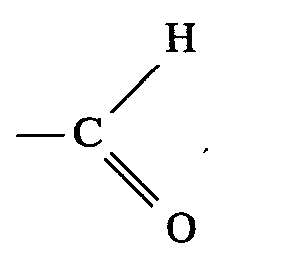


the resulting 4-chloro-3-methyl-but-2-en-1-al-acetal is oxidized under mild reaction conditions.
Applications Claiming Priority (2)
| Application Number | Priority Date | Filing Date | Title |
|---|---|---|---|
| DE19792917413 DE2917413A1 (en) | 1979-04-28 | 1979-04-28 | A PROCESS FOR THE PREPARATION OF CYCLIC ACETALS FROM TRANS-4-CHLORO-3-METHYL-2-BUTEN-1-AL AND TRANS-3-METHYL-2-BUTEN-1,4-DIAL-1-MONOACETALS |
| DE2917413 | 1979-04-28 |
Publications (2)
| Publication Number | Publication Date |
|---|---|
| EP0019112A1 EP0019112A1 (en) | 1980-11-26 |
| EP0019112B1 true EP0019112B1 (en) | 1982-11-17 |
Family
ID=6069584
Family Applications (1)
| Application Number | Title | Priority Date | Filing Date |
|---|---|---|---|
| EP80102184A Expired EP0019112B1 (en) | 1979-04-28 | 1980-04-23 | Process for the preparation of cyclic acetals of trans-4-chloro-3-methyl-2-buten-1-al and preparation of trans-3-methyl-2-buten-1,4-dial-monoacetals |
Country Status (5)
| Country | Link |
|---|---|
| US (1) | US4335047A (en) |
| EP (1) | EP0019112B1 (en) |
| JP (1) | JPS55145681A (en) |
| CA (1) | CA1151658A (en) |
| DE (2) | DE2917413A1 (en) |
Families Citing this family (3)
| Publication number | Priority date | Publication date | Assignee | Title |
|---|---|---|---|---|
| FR2518534A1 (en) * | 1981-12-18 | 1983-06-24 | Rhone Poulenc Sante | PROCESS FOR THE PREPARATION OF ETHYLENE HALOGENOACETALS |
| US5266708A (en) * | 1989-12-01 | 1993-11-30 | Rhone-Poulenc Nutrition Animale | New intermediates, process for their preparation, and their use for the synthesis of vitamins A and E |
| JPH06260236A (en) * | 1993-03-05 | 1994-09-16 | Takemi Shimojo | Connector |
Family Cites Families (7)
| Publication number | Priority date | Publication date | Assignee | Title |
|---|---|---|---|---|
| DE2108649C3 (en) * | 1971-02-24 | 1978-12-07 | Basf Ag, 6700 Ludwigshafen | 2-methyl-2-hepten-6-on-l-al and its acetals |
| US4192806A (en) * | 1972-05-26 | 1980-03-11 | Badische Anilin- & Soda-Fabrik Aktiengesellschaft | Methyl fumaraldehyde monoacetals and process |
| DE2225612C2 (en) * | 1972-05-26 | 1982-07-01 | Basf Ag, 6700 Ludwigshafen | Cyclic methyl-fumaric dialdehyde monoacetals and process for their preparation |
| DE2357752A1 (en) * | 1973-11-20 | 1975-05-28 | Basf Ag | Trans-3-methyl-2-butene-1,4-dial 1-acetals prepn. - by selenium dioxide oxidation of 3-methyl-2-buten-1-al acetals |
| DE2358690C3 (en) * | 1973-11-24 | 1981-10-01 | Basf Ag, 6700 Ludwigshafen | Substituted succindialdehyde monoacetals and a process for their preparation |
| DE2513999A1 (en) * | 1975-03-29 | 1976-10-07 | Basf Ag | Methylbutene dial 1-acetals prepn. - from crotonaldehyde, acetals useful as inters for carotenoids |
| DE2842715A1 (en) * | 1978-09-30 | 1980-04-10 | Basf Ag | 3-CHLORO-3-METHYL-BUTANE OR 3-METHYL-2-BUTEN-1,4-DIAL-BIS-ACETALS, A METHOD FOR MAKING THESE COMPOUNDS AND USES |
-
1979
- 1979-04-28 DE DE19792917413 patent/DE2917413A1/en not_active Withdrawn
-
1980
- 1980-04-08 CA CA000349380A patent/CA1151658A/en not_active Expired
- 1980-04-08 US US06/138,411 patent/US4335047A/en not_active Expired - Lifetime
- 1980-04-23 EP EP80102184A patent/EP0019112B1/en not_active Expired
- 1980-04-23 DE DE8080102184T patent/DE3061091D1/en not_active Expired
- 1980-04-25 JP JP5443480A patent/JPS55145681A/en active Granted
Also Published As
| Publication number | Publication date |
|---|---|
| DE3061091D1 (en) | 1982-12-23 |
| EP0019112A1 (en) | 1980-11-26 |
| JPH0142951B2 (en) | 1989-09-18 |
| CA1151658A (en) | 1983-08-09 |
| JPS55145681A (en) | 1980-11-13 |
| US4335047A (en) | 1982-06-15 |
| DE2917413A1 (en) | 1980-11-06 |
Similar Documents
| Publication | Publication Date | Title |
|---|---|---|
| DE69705738T2 (en) | METHOD FOR THE PRODUCTION OF BENZYL ETHERS | |
| EP0025843B1 (en) | Preparation of monoalkyl ethers of hydroxyphenols and their transformation into hydroxycumaranes | |
| EP0024624B1 (en) | 4-fluoro-3-phenoxy-benzaldehyde acetals, process for their preparation and intermediate products therefor | |
| DE2715080C2 (en) | Process for the preparation of cyclopent-2-enone derivatives | |
| EP0081856B1 (en) | Process for the preparation of chloroacetaldehyde-dimethyl acetal | |
| DE3602254A1 (en) | METHOD FOR THE PRODUCTION OF OXIRANYLCARBONIC ACID ESTERS | |
| EP0162247B1 (en) | Process for the preparation of pyrazoles | |
| EP0151241B1 (en) | Process for the preparation of 1,4-butane-dialdehyde | |
| DE2216974A1 (en) | PROCESS FOR MANUFACTURING HIGHER MOLECULAR UNSATATULATED KETONES | |
| EP0019112A1 (en) | Process for the preparation of cyclic acetals of trans-4-chloro-3-methyl-2-buten-1-al and preparation of trans-3-methyl-2-buten-1,4-dial-monoacetals | |
| EP0009752B1 (en) | 3-chloro-3-methyl-butane- or 3-methyl-2-butene-1,4-dial-bis acetals, process for their preparation and their use | |
| DE3816253C2 (en) | ||
| EP0011208B1 (en) | Process for the preparation of 3-phenoxybenzaldehydes | |
| DE3726891A1 (en) | NEW DICHLORTRIFLUORMETHYLNITROTOLUOLE AND THEIR CONVERSION INTO AMINOTRIFLUORMETHYLTOLUOLE | |
| EP0820981B1 (en) | Process for the preparation of 2-trifluoromethoxy-aniline | |
| EP0035635B1 (en) | Process for the preparation of trimethyl benzoquinone | |
| DE2205023B2 (en) | Process for the hydroxylation of unsaturated compounds | |
| EP0034837A1 (en) | P-tert.-butylbenzal bromide and its derivatives substituted in the nucleus by halogen | |
| DE2357752A1 (en) | Trans-3-methyl-2-butene-1,4-dial 1-acetals prepn. - by selenium dioxide oxidation of 3-methyl-2-buten-1-al acetals | |
| EP0103749B1 (en) | Dialkoxymethyl-butyrolactone, process and intermediates for their preparation and their use | |
| EP0591799B1 (en) | Oxidation of hydroxybenzaldehydes to dihydroxybenzene compounds | |
| DE2040555C3 (en) | Process for the production of chlorohydrins | |
| DE2918521C3 (en) | Process for the production of pinacolone | |
| DE1643899C3 (en) | Process for the production of acetals or ketals of α-chlorinated aldehydes or ketones | |
| DE1793037C (en) | Process for the preparation of 2,3,6 Tnmethylphenol |
Legal Events
| Date | Code | Title | Description |
|---|---|---|---|
| PUAI | Public reference made under article 153(3) epc to a published international application that has entered the european phase |
Free format text: ORIGINAL CODE: 0009012 |
|
| AK | Designated contracting states |
Designated state(s): BE CH DE FR GB NL |
|
| 17P | Request for examination filed |
Effective date: 19810204 |
|
| GRAA | (expected) grant |
Free format text: ORIGINAL CODE: 0009210 |
|
| AK | Designated contracting states |
Designated state(s): BE CH DE FR GB NL |
|
| REF | Corresponds to: |
Ref document number: 3061091 Country of ref document: DE Date of ref document: 19821223 |
|
| ET | Fr: translation filed | ||
| PGFP | Annual fee paid to national office [announced via postgrant information from national office to epo] |
Ref country code: NL Payment date: 19970320 Year of fee payment: 18 Ref country code: FR Payment date: 19970320 Year of fee payment: 18 |
|
| PGFP | Annual fee paid to national office [announced via postgrant information from national office to epo] |
Ref country code: CH Payment date: 19970324 Year of fee payment: 18 |
|
| PGFP | Annual fee paid to national office [announced via postgrant information from national office to epo] |
Ref country code: BE Payment date: 19970410 Year of fee payment: 18 |
|
| PGFP | Annual fee paid to national office [announced via postgrant information from national office to epo] |
Ref country code: GB Payment date: 19970415 Year of fee payment: 18 |
|
| PGFP | Annual fee paid to national office [announced via postgrant information from national office to epo] |
Ref country code: DE Payment date: 19970422 Year of fee payment: 18 |
|
| PG25 | Lapsed in a contracting state [announced via postgrant information from national office to epo] |
Ref country code: GB Free format text: LAPSE BECAUSE OF NON-PAYMENT OF DUE FEES Effective date: 19980423 |
|
| PG25 | Lapsed in a contracting state [announced via postgrant information from national office to epo] |
Ref country code: DE Free format text: LAPSE BECAUSE OF THE APPLICANT RENOUNCES Effective date: 19980427 |
|
| PG25 | Lapsed in a contracting state [announced via postgrant information from national office to epo] |
Ref country code: LI Free format text: LAPSE BECAUSE OF NON-PAYMENT OF DUE FEES Effective date: 19980430 Ref country code: FR Free format text: THE PATENT HAS BEEN ANNULLED BY A DECISION OF A NATIONAL AUTHORITY Effective date: 19980430 Ref country code: CH Free format text: LAPSE BECAUSE OF NON-PAYMENT OF DUE FEES Effective date: 19980430 Ref country code: BE Free format text: LAPSE BECAUSE OF NON-PAYMENT OF DUE FEES Effective date: 19980430 |
|
| BERE | Be: lapsed |
Owner name: BASF A.G. Effective date: 19980430 |
|
| PG25 | Lapsed in a contracting state [announced via postgrant information from national office to epo] |
Ref country code: NL Free format text: LAPSE BECAUSE OF NON-PAYMENT OF DUE FEES Effective date: 19981101 |
|
| REG | Reference to a national code |
Ref country code: CH Ref legal event code: PL |
|
| GBPC | Gb: european patent ceased through non-payment of renewal fee |
Effective date: 19980423 |
|
| NLV4 | Nl: lapsed or anulled due to non-payment of the annual fee |
Effective date: 19981101 |
|
| REG | Reference to a national code |
Ref country code: FR Ref legal event code: ST |
|
| PLBE | No opposition filed within time limit |
Free format text: ORIGINAL CODE: 0009261 |
|
| STAA | Information on the status of an ep patent application or granted ep patent |
Free format text: STATUS: NO OPPOSITION FILED WITHIN TIME LIMIT |