EP0022434A2 - Catalyseurs pour la production et la transformation de produits naturels de plantes supérieures, procédé de préparation des catalyseurs et leur application - Google Patents
Catalyseurs pour la production et la transformation de produits naturels de plantes supérieures, procédé de préparation des catalyseurs et leur application Download PDFInfo
- Publication number
- EP0022434A2 EP0022434A2 EP80850105A EP80850105A EP0022434A2 EP 0022434 A2 EP0022434 A2 EP 0022434A2 EP 80850105 A EP80850105 A EP 80850105A EP 80850105 A EP80850105 A EP 80850105A EP 0022434 A2 EP0022434 A2 EP 0022434A2
- Authority
- EP
- European Patent Office
- Prior art keywords
- cells
- protoplasts
- catalysts
- cell
- immobilized
- Prior art date
- Legal status (The legal status is an assumption and is not a legal conclusion. Google has not performed a legal analysis and makes no representation as to the accuracy of the status listed.)
- Granted
Links
Images



Classifications
-
- C—CHEMISTRY; METALLURGY
- C07—ORGANIC CHEMISTRY
- C07D—HETEROCYCLIC COMPOUNDS
- C07D491/00—Heterocyclic compounds containing in the condensed ring system both one or more rings having oxygen atoms as the only ring hetero atoms and one or more rings having nitrogen atoms as the only ring hetero atoms, not provided for by groups C07D451/00 - C07D459/00, C07D463/00, C07D477/00 or C07D489/00
- C07D491/22—Heterocyclic compounds containing in the condensed ring system both one or more rings having oxygen atoms as the only ring hetero atoms and one or more rings having nitrogen atoms as the only ring hetero atoms, not provided for by groups C07D451/00 - C07D459/00, C07D463/00, C07D477/00 or C07D489/00 in which the condensed system contains four or more hetero rings
-
- C—CHEMISTRY; METALLURGY
- C12—BIOCHEMISTRY; BEER; SPIRITS; WINE; VINEGAR; MICROBIOLOGY; ENZYMOLOGY; MUTATION OR GENETIC ENGINEERING
- C12N—MICROORGANISMS OR ENZYMES; COMPOSITIONS THEREOF; PROPAGATING, PRESERVING, OR MAINTAINING MICROORGANISMS; MUTATION OR GENETIC ENGINEERING; CULTURE MEDIA
- C12N11/00—Carrier-bound or immobilised enzymes; Carrier-bound or immobilised microbial cells; Preparation thereof
- C12N11/02—Enzymes or microbial cells immobilised on or in an organic carrier
-
- C—CHEMISTRY; METALLURGY
- C12—BIOCHEMISTRY; BEER; SPIRITS; WINE; VINEGAR; MICROBIOLOGY; ENZYMOLOGY; MUTATION OR GENETIC ENGINEERING
- C12P—FERMENTATION OR ENZYME-USING PROCESSES TO SYNTHESISE A DESIRED CHEMICAL COMPOUND OR COMPOSITION OR TO SEPARATE OPTICAL ISOMERS FROM A RACEMIC MIXTURE
- C12P1/00—Preparation of compounds or compositions, not provided for in groups C12P3/00 - C12P39/00, by using microorganisms or enzymes
-
- C—CHEMISTRY; METALLURGY
- C12—BIOCHEMISTRY; BEER; SPIRITS; WINE; VINEGAR; MICROBIOLOGY; ENZYMOLOGY; MUTATION OR GENETIC ENGINEERING
- C12P—FERMENTATION OR ENZYME-USING PROCESSES TO SYNTHESISE A DESIRED CHEMICAL COMPOUND OR COMPOSITION OR TO SEPARATE OPTICAL ISOMERS FROM A RACEMIC MIXTURE
- C12P33/00—Preparation of steroids
- C12P33/06—Hydroxylating
-
- Y—GENERAL TAGGING OF NEW TECHNOLOGICAL DEVELOPMENTS; GENERAL TAGGING OF CROSS-SECTIONAL TECHNOLOGIES SPANNING OVER SEVERAL SECTIONS OF THE IPC; TECHNICAL SUBJECTS COVERED BY FORMER USPC CROSS-REFERENCE ART COLLECTIONS [XRACs] AND DIGESTS
- Y02—TECHNOLOGIES OR APPLICATIONS FOR MITIGATION OR ADAPTATION AGAINST CLIMATE CHANGE
- Y02P—CLIMATE CHANGE MITIGATION TECHNOLOGIES IN THE PRODUCTION OR PROCESSING OF GOODS
- Y02P20/00—Technologies relating to chemical industry
- Y02P20/50—Improvements relating to the production of bulk chemicals
Definitions
- the present invention relates to catalysts for the production and transformation of natural products having their origin in higher plants, a process for the production of the catalysts and the use thereof in the production or transformation of natural products having their origin in higher plants.
- the substances utilized in the production of pharmaceuticals and as food additives mostly are secondary metabolites, for which reason they are often present in very low concentrations in the plant tissue. As a consequence,large amounts of plant material are required for the isolation of a given substance in substantial amounts. Nevertheless, a great many pharmaceuticals are at present produced from higher plants, such as steroids (from diosgenin), codeine,atropine, reserpine, hyoscyamine, digoxin, scopola- mine, digitoxin, pilocarpine, quinidine, colcinine, emetine, morphine, quinine, sennosides, tubocurarine, vincristine (see Farmsworth and Morrins (1976), Am. J. Pharmacy 148, p. 46-52 and WHO 1978).
- catalysts for the production or transformation of important natural products having their origin in higher plants are provided by immobilization of whole plant cells.
- the advantages associated with the use of these immobilized plant cells for the production or transformation of natural products reside int. al. in lower costs because of the possibility of a reuse of the catalyst and because there is no need for separation of the product from the catalyst.
- immobilized catalysts are ideally suited for flow-through processes. Besides, the chemical potential for normally slow growing plant cells (in batch processes) can be exploited more efficiently by the immobilization.
- the current catalysts thus are immobilized whole cells, protoplasts, protoplasts with regenerated cell walls, hybride cells or cell complexes isolated from higher plants, or whole cells, protoplasts, protoplasts with regenerated cell walls, hybride cells or cell complexes isolated from cell cultures, preferably callus and suspension cultures, of higher plants.
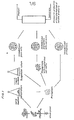
- the cell material is immobilized for example by.being entrapped and/or adsorbed and/or covalently bound in the pores or network of a porous polymer or by being crosslinked with a suitable crosslinking agent (Fig. 1). In this manner, a readily handled biocatalyst is obtained, which can be used for the production of primary or secondary metabolites de novo or from suitable precursors or for the transformation of metabolites.
- the biotransformation according to the invention is better than chemical transformation with regard to yield and secondary products (no secondary products are formed since the biotransformation is specific).
- hybride cells can alsc be immobilized by the invention.
- Such cells are obtaine. by fusion of protoplasts from various plant species, for example from a species having low producing and rapld growing cells and from a species having high producing and slow growing cells.
- cell complexes i.e. a number of cells located together, i.e. a piece of tissue.
- the desired product is stored within the cells when production takes place in free cells.
- the product in certain cases, however, spontaneously leaks out into the surrounding medium, which can be exploited in a continuous process. This does not occur with the corresponding non-immobilized cells.
- the plant cells may be treated before or after immobilization with surfactants (for example DMSO, toluene, chloroform, cetyltrimethylammoniumbromide, Triton, Tween, SDS, etc.) which alter the permeability of the cell membrane so that the product leaks out continuously.
- surfactants for example DMSO, toluene, chloroform, cetyltrimethylammoniumbromide, Triton, Tween, SDS, etc.
- the immobilized cells in many cases produce considerably much larger amounts of the desired product per cell than do cells under the same conditions in free suspension. This increased production can be further increased, or an increased production can be induced by placing the immobilized cells in a nutrient so modified that the growth of cells is inhibited. Non-inhibited growth of the immobilized cells can result in bursting of the polymeric particle in which the cells are immobilized. By hormone-limiting conditions at the production an inhibited growth thus results in a drastically increased yield. Further, phosphate is an important nutrient for growing plant cells. By phosphate, and also sulphate, limitation the growth of cells is inhibited, which results in an increased synthesis of secondary metabolites.
- Suitable polymers in the pores or network of which the biocatalyst atoms are entrapped and/or adsorbed and/or covalently bound are for example polysaccharides, preferably alginate or carragheenan, synthetic polymers or crosslinked polyamines. Immobilization proceeds for example in such a manner that a solution or suspension of a polysaccharide or a polymerizable monomer is caused to polymerize in the presence of the cell material.
- a polyvalent polysaccharide, preferably alginate or carragheenan is caused to polymerize by contacting a solution or suspension of the polysaccharide with a salt solution containing mono-or divalent cations.
- a vinyl monomer such as an acryl monomer
- a polyamine preferably an inert protein, such as albumin, collagen or gelatine, said polyamine being crosslinked with a di- or polyaldehyde, preferably glutaraldehyde.
- Polysaccharides also, such as chitin, can be crosslinked with a di- or polyaldehyde and then used as network structure.
- Another suitable network structure is a gel which may be obtained for instance by causing a polymer, such as albumin, starch, cellulose, agar or collagen to aggregate.
- a polymer such as albumin, starch, cellulose, agar or collagen
- biocatalyst itself can be caused to aggregate by means of a crosslinking agent, such as glutaraldehyde, imidoester or triazine.
- a crosslinking agent such as glutaraldehyde, imidoester or triazine.
- imido- esters are dimethyladipimidate, diethyl-d,3'-dithiolbis- propionimidate, dimethylpimelimidate, dimethylsuberimidate
- triazines are 1,3-dichloro-5-methoxytriazine, 1,3,5-trichlorotriazine.
- the catalysts according to the invention can thus be used for production or transformation of primary or secondary metabolites, said metabolites being contacted with a substrate solution in a continuous or discontinuous reactor.
- the substrate solution preferably is a medium containing carbon and nitrogen sources for de novo synthesis, precursors for partial synthesis, or the substance to be transformed.
- the catalyst can be used for continuous production, preferably in a column reactor.
- the cells may, as earlier described, be treated with a surfactant so that the permeability of the cell membrane is altered.
- the catalyst can be utilized for synthesis in a continuous reactor.
- a substrate solution is recycled through the reactor, and the released metabolites are continuously extracted from the recycling substrate solution.
- a substrate solution can be pumped through the reactor without recycling. The released products in this case can later be isolated from the eluate of the reactor.
- discontinuous operation use is made in most cases of a simple batch reactor.
- a further use of the invention is its application to cloning work, i.e. developing cell lines having special properties, such as high ability to produce a specific product.
- cloning work i.e. developing cell lines having special properties, such as high ability to produce a specific product.
- a single cell or a cell aggregate is allowed to grow in each polymer particle, and the forming cell collections are kept separated in this manner.
- Many cells can be cultivated in this way in the same fermentor where they can condition their own culture medium at the same time. After the first cultivation the polymer particles are transferred to separate vessels.
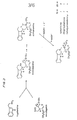
- immobilized cells from higher plants are the hydroxylation of digitoxin to digoxin using immobilized cells of Digitalis lanata (Fig. 2), and the interbreeding of Digitalis lanata with Digitalis purpurea, Digitalis canariensis or Digitalis isabelliana, in batch processes or in continuous processes.
- A-series cardiac glycosides can also be S-hydroxylated in a similar manner.
- the following table gives examples of A-glycosides which are ⁇ -hydroxylated to the corresponding C-glycosides.
- Another use of the invention is its application to the de novo synthesis of anthraquinones using immobilized cells of Morinda citrifolia under hormone-limiting conditions (Fig. 4).
- the indolealkaloid ajmalicine has also been produced de novo using immobilized cells of Catharanthus roseus under hormone-limiting conditions as well as from the precursors tryptamine and continuationoganin (Fig. 3).
- Fig. 5 Starting from immobilized cells of Catharanthus roseus, de novo synthesis of the indolealkaloid serpentine has been performed under phosphate-limiting conditions (Fig. 5) as well as under a state of osmotic stress (Fig. 6).
- Other examples of the use of Catharanthus roseus are the synthesis of vincristine and vinblastine, de novo and from precursors (catharanthine and vindoline).
- a further result obtained with the use of immobilized plant cells according to the present invention is that the productive phase of the cells during incubation is prolonged, whereby they can be utilized for a much longer time for production of the desired product.
- Cells of Digitalis lanata (3 n.1) cultivated in suspension culture were suspended in sterile 3% Na-alginate (10 ml) and immobilized by dripping the solution into a sterile nutrient solution containing CaCl2 (0.05 M).
- the immobilized cells were placed under sterile conditions in an E-flask containing nutrient solution according to Nitsch and Nitsch (25 ml) with an addition of digitoxin (500 ⁇ g).
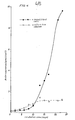
- the immobilized cells hydroxylated the added digitoxin specifically in 12-position to digoxin. The hydroxylation proceeded for at least 33 days (Fig. 2).
- Digitalis cells were obtained by cultivation in suspension cultures which had been established from plants of Digitalis lanata with a much higher than average 12-hydroxylation power. Besides interbreedings of Digitalis lanata with Digitalis purpurea, Digitalis canariensis or Digitalis isabelliana were prepared. The developed hybrides were transferred to suspension cultures which showed an increased hydroxylation and growth capacity compared to Digitalis lanata.
- Cells having an increased hydroxylation power were immobilized in a manner analogous to that described in Example 1. Under sterile conditions the beads containing immobilized digitalis cells were filled into a column (3 x 20 cm). Digitoxin (5 10 -5 M) in an aqueous solution, pH 5.7, was pumped under sterile conditions through the column at a rate of 22 ml/h. The hydroxylation of digitoxin to digoxin (maximum yield 77%) could be observed by radio- immunotests. Even after 70 days of continuous operation the column showed between 70 and 80% of the maximum hydroxylation capacity.
- Protoplasts were prepared from intact plant tissue, for example leaves of Catharanthus roseus or from callus or suspension cultures of the same species.
- the protoplasts obtained were mixed with isotonic Na-alginate solution and the suspension was then dripped into an isotonic CaCl 2 solution.
- the immobilized protoplasts can then directly be used for production or transformation of natural products, alternatively a regeneration of the cell wall can be allowed to take place in a suitable nutrient solution.
Landscapes
- Organic Chemistry (AREA)
- Chemical & Material Sciences (AREA)
- Life Sciences & Earth Sciences (AREA)
- Wood Science & Technology (AREA)
- Engineering & Computer Science (AREA)
- Zoology (AREA)
- Genetics & Genomics (AREA)
- Bioinformatics & Cheminformatics (AREA)
- Health & Medical Sciences (AREA)
- Biotechnology (AREA)
- Microbiology (AREA)
- Biochemistry (AREA)
- General Engineering & Computer Science (AREA)
- General Health & Medical Sciences (AREA)
- General Chemical & Material Sciences (AREA)
- Chemical Kinetics & Catalysis (AREA)
- Mycology (AREA)
- Biomedical Technology (AREA)
- Immobilizing And Processing Of Enzymes And Microorganisms (AREA)
- Preparation Of Compounds By Using Micro-Organisms (AREA)
- Catalysts (AREA)
- Micro-Organisms Or Cultivation Processes Thereof (AREA)
Priority Applications (1)
| Application Number | Priority Date | Filing Date | Title |
|---|---|---|---|
| AT80850105T ATE15226T1 (de) | 1979-06-27 | 1980-06-26 | Katalysatoren zur herstellung und umwandlung natuerlicher produkte aus hoeheren pflanzen, verfahren zur herstellung der katalysatoren und deren verwendung. |
Applications Claiming Priority (2)
| Application Number | Priority Date | Filing Date | Title |
|---|---|---|---|
| SE7905615 | 1979-06-27 | ||
| SE7905615 | 1979-06-27 |
Publications (3)
| Publication Number | Publication Date |
|---|---|
| EP0022434A2 true EP0022434A2 (fr) | 1981-01-14 |
| EP0022434A3 EP0022434A3 (en) | 1982-03-03 |
| EP0022434B1 EP0022434B1 (fr) | 1985-08-28 |
Family
ID=20338386
Family Applications (1)
| Application Number | Title | Priority Date | Filing Date |
|---|---|---|---|
| EP80850105A Expired EP0022434B1 (fr) | 1979-06-27 | 1980-06-26 | Catalyseurs pour la production et la transformation de produits naturels de plantes supérieures, procédé de préparation des catalyseurs et leur application |
Country Status (6)
| Country | Link |
|---|---|
| EP (1) | EP0022434B1 (fr) |
| JP (1) | JPH0724581B2 (fr) |
| AT (1) | ATE15226T1 (fr) |
| DE (1) | DE3071031D1 (fr) |
| DK (1) | DK63681A (fr) |
| WO (1) | WO1981000113A1 (fr) |
Cited By (9)
| Publication number | Priority date | Publication date | Assignee | Title |
|---|---|---|---|---|
| WO1982001010A1 (fr) * | 1980-09-12 | 1982-04-01 | Bartlett D | Agregat de cellules derivees des plantes, granule vegetal, production et utilisation |
| EP0071999A3 (en) * | 1981-08-11 | 1983-05-04 | Mitsui Petrochemical Industries, Ltd. | Method for producing secondary metabolites of plants |
| EP0062457A3 (en) * | 1981-04-02 | 1983-06-01 | United Kingdom Atomic Energy Authority | Improvements in or relating to the production of chemical compounds |
| FR2550217A1 (fr) * | 1983-08-01 | 1985-02-08 | Kernforschungsanlage Juelich | Procede pour detecter des substances nocives pour l'environnement et indicateur a utiliser pour la mise en oeuvre dudit procede |
| US4525455A (en) * | 1983-04-29 | 1985-06-25 | Regents Of The University Of Minnesota | Method for preparing a cell free homogenate of Chrysanthemum cinerariaefolium (Trev.) Bocc. containing enzymes and methods of use |
| EP0089165A3 (en) * | 1982-03-16 | 1987-06-03 | Purification Engineering, Inc. | Immobilized microbial cells and process for preparing and using same |
| EP0134536A3 (en) * | 1983-08-04 | 1987-10-28 | Ciba-Geigy Ag | Process for obtaining and multiplying virus genones and their derivatives |
| US5215903A (en) * | 1983-08-04 | 1993-06-01 | Ciba-Geigy Corporation | Process for the maintenance and proliferation of defective non-infectious virus genomes in proliferating plant materials |
| EP0626455A1 (fr) * | 1993-05-28 | 1994-11-30 | Enea Ente Per Le Nuove Tecnologie, L'energia E L'ambiente | Méthode d'analyse, de séparation et de microencapsulation d'éléments cellulaires |
Families Citing this family (2)
| Publication number | Priority date | Publication date | Assignee | Title |
|---|---|---|---|---|
| US3005990A (en) * | 1957-12-16 | 1961-10-31 | Int Latex Corp | Garment supporting device |
| FR2543819B1 (fr) * | 1983-04-06 | 1986-06-06 | Micro Mega Sa | Appareil a rotation alternative pour brossage et massage prophylactique des dents |
Family Cites Families (12)
| Publication number | Priority date | Publication date | Assignee | Title |
|---|---|---|---|---|
| NL290403A (fr) * | 1962-03-20 | |||
| CH564031A5 (fr) * | 1968-03-29 | 1975-07-15 | Anvar | |
| GB1387821A (en) * | 1971-05-18 | 1975-03-19 | American Cyanamid Co | Producing chemical plant metabolites by suspension culture |
| DE2225039C3 (de) * | 1972-01-24 | 1979-10-25 | Veb Arzneimittelwerk Dresden, Ddr 8122 Radebeul | Verfahren zur Umwandlung von Digitoxigeninglycosiden zu Digoxin bzw. Gitoxin in Digitalis durch gezielte Fermentation |
| JPS5628515B2 (fr) * | 1972-02-22 | 1981-07-02 | ||
| JPS5112993A (en) * | 1974-07-22 | 1976-01-31 | Kanebo Ltd | Beruberin oyobi parumachinno seizoho |
| JPS5119169A (en) * | 1974-08-05 | 1976-02-16 | Kibun Kk | Tennenkanmiryono seizoho |
| JPS5294476A (en) * | 1976-02-02 | 1977-08-09 | Mitsubishi Gas Chem Co Inc | Method of immobilizing microorganisms |
| US4024020A (en) * | 1975-12-15 | 1977-05-17 | Monsanto Company | Method of cell culture on polyacrylonitrile surface |
| US4078971A (en) * | 1976-03-31 | 1978-03-14 | Temple University | Bound, active cellular organelles and method of producing same |
| JPS531837A (en) * | 1976-06-25 | 1978-01-10 | Mitsubishi Electric Corp | Operating unit for synchronous machine |
| JPS5917488B2 (ja) * | 1979-09-14 | 1984-04-21 | 松下電工株式会社 | スイツチ端子部構造 |
-
1980
- 1980-06-26 EP EP80850105A patent/EP0022434B1/fr not_active Expired
- 1980-06-26 DE DE8080850105T patent/DE3071031D1/de not_active Expired
- 1980-06-26 AT AT80850105T patent/ATE15226T1/de not_active IP Right Cessation
- 1980-06-27 WO PCT/SE1980/000182 patent/WO1981000113A1/fr not_active Ceased
- 1980-06-27 JP JP55501479A patent/JPH0724581B2/ja not_active Expired - Lifetime
-
1981
- 1981-02-13 DK DK63681A patent/DK63681A/da unknown
Cited By (13)
| Publication number | Priority date | Publication date | Assignee | Title |
|---|---|---|---|---|
| WO1982001010A1 (fr) * | 1980-09-12 | 1982-04-01 | Bartlett D | Agregat de cellules derivees des plantes, granule vegetal, production et utilisation |
| EP0062457A3 (en) * | 1981-04-02 | 1983-06-01 | United Kingdom Atomic Energy Authority | Improvements in or relating to the production of chemical compounds |
| GB2162197A (en) * | 1981-04-02 | 1986-01-29 | Atomic Energy Authority Uk | Improvements in or relating to the production of chemical compounds |
| US4578351A (en) * | 1981-04-02 | 1986-03-25 | United Kingdom Atomic Energy Authority | Production of chemical compounds with immoblized plant cells |
| US4717664A (en) * | 1981-08-11 | 1988-01-05 | Mitsui Petrochemical Industries, Ltd. | Method for producing secondary metabolites of plants |
| EP0071999A3 (en) * | 1981-08-11 | 1983-05-04 | Mitsui Petrochemical Industries, Ltd. | Method for producing secondary metabolites of plants |
| EP0089165A3 (en) * | 1982-03-16 | 1987-06-03 | Purification Engineering, Inc. | Immobilized microbial cells and process for preparing and using same |
| US4525455A (en) * | 1983-04-29 | 1985-06-25 | Regents Of The University Of Minnesota | Method for preparing a cell free homogenate of Chrysanthemum cinerariaefolium (Trev.) Bocc. containing enzymes and methods of use |
| EP0124049A3 (fr) * | 1983-04-29 | 1987-09-16 | McLAUGHLIN GORMLEY KING COMPANY | Procédé de préparation d'un homogénéisat, exempt de cellules, de Chrysanthemum Cinerariaefolium (Trev.) Bocc. |
| FR2550217A1 (fr) * | 1983-08-01 | 1985-02-08 | Kernforschungsanlage Juelich | Procede pour detecter des substances nocives pour l'environnement et indicateur a utiliser pour la mise en oeuvre dudit procede |
| EP0134536A3 (en) * | 1983-08-04 | 1987-10-28 | Ciba-Geigy Ag | Process for obtaining and multiplying virus genones and their derivatives |
| US5215903A (en) * | 1983-08-04 | 1993-06-01 | Ciba-Geigy Corporation | Process for the maintenance and proliferation of defective non-infectious virus genomes in proliferating plant materials |
| EP0626455A1 (fr) * | 1993-05-28 | 1994-11-30 | Enea Ente Per Le Nuove Tecnologie, L'energia E L'ambiente | Méthode d'analyse, de séparation et de microencapsulation d'éléments cellulaires |
Also Published As
| Publication number | Publication date |
|---|---|
| JPS56500736A (fr) | 1981-06-04 |
| DE3071031D1 (en) | 1985-10-03 |
| EP0022434B1 (fr) | 1985-08-28 |
| DK63681A (da) | 1981-02-13 |
| ATE15226T1 (de) | 1985-09-15 |
| WO1981000113A1 (fr) | 1981-01-22 |
| EP0022434A3 (en) | 1982-03-03 |
| JPH0724581B2 (ja) | 1995-03-22 |
Similar Documents
| Publication | Publication Date | Title |
|---|---|---|
| Brodelius | Immobilized plant cells | |
| US4355105A (en) | Glutaraldehyde/polyethylenimine immobilization of whole microbial cells | |
| EP0022434A2 (fr) | Catalyseurs pour la production et la transformation de produits naturels de plantes supérieures, procédé de préparation des catalyseurs et leur application | |
| Kargi et al. | Plant cell bioreactors: present status and future trends | |
| Rosevear et al. | Immobilized plant cells | |
| Knorr et al. | Chitosan immobilization and permeabilization of Amaranthus tricolor cells | |
| Kopp et al. | Alkaloid production by immobilized mycelia of Claviceps purpurea | |
| NL8103838A (nl) | De bereiding van microbiologische polysacchariden. | |
| Corchete et al. | Biotransformation of (−)-codeinone to (−)-codeine by Papaver somniferum cells immobilized in reticulate polyurethane foam | |
| US5268286A (en) | Method for immobilizing biocatalyst in granular form with a photo-crosslinkable resin | |
| US4237033A (en) | Pretreatment of microcarriers for cell culture | |
| US4169761A (en) | Process for the cultivation of viruses | |
| US5998162A (en) | Production of secondary metabolites with plant cells immobilized in a porous inorganic support | |
| JPH0559079B2 (fr) | ||
| Lindsey et al. | Immobilised plant cell culture systems | |
| KR840000892B1 (ko) | 마이코페놀산 글루코사이드의 제조방법 | |
| Knorr et al. | Effects of immobilization and permeabilization procedures on growth of Chenopodium rubrum cells and amaranthin concentration | |
| US6420146B1 (en) | Process for the preparation of stable yeast crystals for enhanced production of ethanol | |
| JPH01225487A (ja) | セルロースのアスペルギルス ニガーによるクエン酸若しくはグルコン酸生産を目的としたバイオリアクター担体への利用方法 | |
| RU2160718C1 (ru) | Способ очистки почвы и воды от нефти и нефтепродуктов | |
| Powell | Immobilized biocatalyst technology | |
| Wang et al. | Occlusion immobilization of hybridoma cells in chitosan | |
| CN120989069B (zh) | 一种用于水体处理的微藻凝胶球的制备方法 | |
| CA1289902C (fr) | Immobilisation de cellules vegetales sur une surface | |
| GB2113714A (en) | Callus culture in nutrient flow |
Legal Events
| Date | Code | Title | Description |
|---|---|---|---|
| PUAI | Public reference made under article 153(3) epc to a published international application that has entered the european phase |
Free format text: ORIGINAL CODE: 0009012 |
|
| AK | Designated contracting states |
Designated state(s): AT BE CH DE FR GB IT LI LU NL SE |
|
| PUAL | Search report despatched |
Free format text: ORIGINAL CODE: 0009013 |
|
| AK | Designated contracting states |
Designated state(s): AT BE CH DE FR GB IT LI LU NL SE |
|
| 17P | Request for examination filed |
Effective date: 19820901 |
|
| ITF | It: translation for a ep patent filed | ||
| GRAA | (expected) grant |
Free format text: ORIGINAL CODE: 0009210 |
|
| AK | Designated contracting states |
Designated state(s): AT BE CH DE FR GB IT LI LU NL SE |
|
| PG25 | Lapsed in a contracting state [announced via postgrant information from national office to epo] |
Ref country code: NL Effective date: 19850828 Ref country code: BE Effective date: 19850828 |
|
| REF | Corresponds to: |
Ref document number: 15226 Country of ref document: AT Date of ref document: 19850915 Kind code of ref document: T |
|
| REF | Corresponds to: |
Ref document number: 3071031 Country of ref document: DE Date of ref document: 19851003 |
|
| ET | Fr: translation filed | ||
| NLV1 | Nl: lapsed or annulled due to failure to fulfill the requirements of art. 29p and 29m of the patents act | ||
| PLBI | Opposition filed |
Free format text: ORIGINAL CODE: 0009260 |
|
| PG25 | Lapsed in a contracting state [announced via postgrant information from national office to epo] |
Ref country code: LU Free format text: LAPSE BECAUSE OF NON-PAYMENT OF DUE FEES Effective date: 19860630 |
|
| 26 | Opposition filed |
Opponent name: BASF AKTIENGESELLSCHAFT Effective date: 19860527 |
|
| PLBN | Opposition rejected |
Free format text: ORIGINAL CODE: 0009273 |
|
| STAA | Information on the status of an ep patent application or granted ep patent |
Free format text: STATUS: OPPOSITION REJECTED |
|
| 27O | Opposition rejected |
Effective date: 19890904 |
|
| ITTA | It: last paid annual fee | ||
| EAL | Se: european patent in force in sweden |
Ref document number: 80850105.0 |
|
| PGFP | Annual fee paid to national office [announced via postgrant information from national office to epo] |
Ref country code: SE Payment date: 19960528 Year of fee payment: 17 |
|
| PGFP | Annual fee paid to national office [announced via postgrant information from national office to epo] |
Ref country code: FR Payment date: 19960611 Year of fee payment: 17 |
|
| PGFP | Annual fee paid to national office [announced via postgrant information from national office to epo] |
Ref country code: AT Payment date: 19960612 Year of fee payment: 17 |
|
| PGFP | Annual fee paid to national office [announced via postgrant information from national office to epo] |
Ref country code: GB Payment date: 19960617 Year of fee payment: 17 |
|
| PGFP | Annual fee paid to national office [announced via postgrant information from national office to epo] |
Ref country code: DE Payment date: 19960627 Year of fee payment: 17 |
|
| PGFP | Annual fee paid to national office [announced via postgrant information from national office to epo] |
Ref country code: CH Payment date: 19960705 Year of fee payment: 17 |
|
| PG25 | Lapsed in a contracting state [announced via postgrant information from national office to epo] |
Ref country code: GB Free format text: LAPSE BECAUSE OF NON-PAYMENT OF DUE FEES Effective date: 19970626 Ref country code: AT Effective date: 19970626 |
|
| PG25 | Lapsed in a contracting state [announced via postgrant information from national office to epo] |
Ref country code: SE Effective date: 19970627 |
|
| PG25 | Lapsed in a contracting state [announced via postgrant information from national office to epo] |
Ref country code: LI Free format text: LAPSE BECAUSE OF NON-PAYMENT OF DUE FEES Effective date: 19970630 Ref country code: CH Free format text: LAPSE BECAUSE OF NON-PAYMENT OF DUE FEES Effective date: 19970630 |
|
| REG | Reference to a national code |
Ref country code: CH Ref legal event code: PL |
|
| GBPC | Gb: european patent ceased through non-payment of renewal fee |
Effective date: 19970626 |
|
| PG25 | Lapsed in a contracting state [announced via postgrant information from national office to epo] |
Ref country code: FR Free format text: LAPSE BECAUSE OF NON-PAYMENT OF DUE FEES Effective date: 19980227 |
|
| EUG | Se: european patent has lapsed |
Ref document number: 80850105.0 |
|
| PG25 | Lapsed in a contracting state [announced via postgrant information from national office to epo] |
Ref country code: DE Free format text: LAPSE BECAUSE OF NON-PAYMENT OF DUE FEES Effective date: 19980303 |
|
| REG | Reference to a national code |
Ref country code: FR Ref legal event code: ST |
|
| REG | Reference to a national code |
Ref country code: FR Ref legal event code: ST |