EP0023779A1 - Hybridgebundenes Antitumor-Protein und Verfahren zu seiner Herstellung - Google Patents
Hybridgebundenes Antitumor-Protein und Verfahren zu seiner Herstellung Download PDFInfo
- Publication number
- EP0023779A1 EP0023779A1 EP80302356A EP80302356A EP0023779A1 EP 0023779 A1 EP0023779 A1 EP 0023779A1 EP 80302356 A EP80302356 A EP 80302356A EP 80302356 A EP80302356 A EP 80302356A EP 0023779 A1 EP0023779 A1 EP 0023779A1
- Authority
- EP
- European Patent Office
- Prior art keywords
- fragment
- fab
- radical
- protein hybrid
- expressed
- Prior art date
- Legal status (The legal status is an assumption and is not a legal conclusion. Google has not performed a legal analysis and makes no representation as to the accuracy of the status listed.)
- Granted
Links
Images


Classifications
-
- C—CHEMISTRY; METALLURGY
- C07—ORGANIC CHEMISTRY
- C07K—PEPTIDES
- C07K16/00—Immunoglobulins [IG], e.g. monoclonal or polyclonal antibodies
- C07K16/18—Immunoglobulins [IG], e.g. monoclonal or polyclonal antibodies against material from animals or humans
-
- A—HUMAN NECESSITIES
- A61—MEDICAL OR VETERINARY SCIENCE; HYGIENE
- A61K—PREPARATIONS FOR MEDICAL, DENTAL OR TOILETRY PURPOSES
- A61K47/00—Medicinal preparations characterised by the non-active ingredients used, e.g. carriers or inert additives; Targeting or modifying agents chemically bound to the active ingredient
- A61K47/50—Medicinal preparations characterised by the non-active ingredients used, e.g. carriers or inert additives; Targeting or modifying agents chemically bound to the active ingredient the non-active ingredient being chemically bound to the active ingredient, e.g. polymer-drug conjugates
- A61K47/51—Medicinal preparations characterised by the non-active ingredients used, e.g. carriers or inert additives; Targeting or modifying agents chemically bound to the active ingredient the non-active ingredient being chemically bound to the active ingredient, e.g. polymer-drug conjugates the non-active ingredient being a modifying agent
- A61K47/68—Medicinal preparations characterised by the non-active ingredients used, e.g. carriers or inert additives; Targeting or modifying agents chemically bound to the active ingredient the non-active ingredient being chemically bound to the active ingredient, e.g. polymer-drug conjugates the non-active ingredient being a modifying agent the modifying agent being an antibody, an immunoglobulin or a fragment thereof, e.g. an Fc-fragment
- A61K47/6801—Drug-antibody or immunoglobulin conjugates defined by the pharmacologically or therapeutically active agent
- A61K47/6803—Drugs conjugated to an antibody or immunoglobulin, e.g. cisplatin-antibody conjugates
- A61K47/6811—Drugs conjugated to an antibody or immunoglobulin, e.g. cisplatin-antibody conjugates the drug being a protein or peptide, e.g. transferrin or bleomycin
- A61K47/6817—Toxins
- A61K47/6829—Bacterial toxins, e.g. diphteria toxins or Pseudomonas exotoxin A
-
- A—HUMAN NECESSITIES
- A61—MEDICAL OR VETERINARY SCIENCE; HYGIENE
- A61K—PREPARATIONS FOR MEDICAL, DENTAL OR TOILETRY PURPOSES
- A61K47/00—Medicinal preparations characterised by the non-active ingredients used, e.g. carriers or inert additives; Targeting or modifying agents chemically bound to the active ingredient
- A61K47/50—Medicinal preparations characterised by the non-active ingredients used, e.g. carriers or inert additives; Targeting or modifying agents chemically bound to the active ingredient the non-active ingredient being chemically bound to the active ingredient, e.g. polymer-drug conjugates
- A61K47/51—Medicinal preparations characterised by the non-active ingredients used, e.g. carriers or inert additives; Targeting or modifying agents chemically bound to the active ingredient the non-active ingredient being chemically bound to the active ingredient, e.g. polymer-drug conjugates the non-active ingredient being a modifying agent
- A61K47/68—Medicinal preparations characterised by the non-active ingredients used, e.g. carriers or inert additives; Targeting or modifying agents chemically bound to the active ingredient the non-active ingredient being chemically bound to the active ingredient, e.g. polymer-drug conjugates the non-active ingredient being a modifying agent the modifying agent being an antibody, an immunoglobulin or a fragment thereof, e.g. an Fc-fragment
- A61K47/6889—Conjugates wherein the antibody being the modifying agent and wherein the linker, binder or spacer confers particular properties to the conjugates, e.g. peptidic enzyme-labile linkers or acid-labile linkers, providing for an acid-labile immuno conjugate wherein the drug may be released from its antibody conjugated part in an acidic, e.g. tumoural or environment
-
- C—CHEMISTRY; METALLURGY
- C07—ORGANIC CHEMISTRY
- C07K—PEPTIDES
- C07K16/00—Immunoglobulins [IG], e.g. monoclonal or polyclonal antibodies
- C07K16/18—Immunoglobulins [IG], e.g. monoclonal or polyclonal antibodies against material from animals or humans
- C07K16/28—Immunoglobulins [IG], e.g. monoclonal or polyclonal antibodies against material from animals or humans against receptors, cell surface antigens or cell surface determinants
- C07K16/30—Immunoglobulins [IG], e.g. monoclonal or polyclonal antibodies against material from animals or humans against receptors, cell surface antigens or cell surface determinants from tumour cells
- C07K16/303—Liver or Pancreas
-
- C—CHEMISTRY; METALLURGY
- C07—ORGANIC CHEMISTRY
- C07K—PEPTIDES
- C07K2317/00—Immunoglobulins specific features
- C07K2317/50—Immunoglobulins specific features characterized by immunoglobulin fragments
- C07K2317/55—Fab or Fab'
-
- C—CHEMISTRY; METALLURGY
- C07—ORGANIC CHEMISTRY
- C07K—PEPTIDES
- C07K2319/00—Fusion polypeptide
- C07K2319/55—Fusion polypeptide containing a fusion with a toxin, e.g. diphteria toxin
-
- Y—GENERAL TAGGING OF NEW TECHNOLOGICAL DEVELOPMENTS; GENERAL TAGGING OF CROSS-SECTIONAL TECHNOLOGIES SPANNING OVER SEVERAL SECTIONS OF THE IPC; TECHNICAL SUBJECTS COVERED BY FORMER USPC CROSS-REFERENCE ART COLLECTIONS [XRACs] AND DIGESTS
- Y10—TECHNICAL SUBJECTS COVERED BY FORMER USPC
- Y10S—TECHNICAL SUBJECTS COVERED BY FORMER USPC CROSS-REFERENCE ART COLLECTIONS [XRACs] AND DIGESTS
- Y10S530/00—Chemistry: natural resins or derivatives; peptides or proteins; lignins or reaction products thereof
- Y10S530/806—Antigenic peptides or proteins
-
- Y—GENERAL TAGGING OF NEW TECHNOLOGICAL DEVELOPMENTS; GENERAL TAGGING OF CROSS-SECTIONAL TECHNOLOGIES SPANNING OVER SEVERAL SECTIONS OF THE IPC; TECHNICAL SUBJECTS COVERED BY FORMER USPC CROSS-REFERENCE ART COLLECTIONS [XRACs] AND DIGESTS
- Y10—TECHNICAL SUBJECTS COVERED BY FORMER USPC
- Y10S—TECHNICAL SUBJECTS COVERED BY FORMER USPC CROSS-REFERENCE ART COLLECTIONS [XRACs] AND DIGESTS
- Y10S530/00—Chemistry: natural resins or derivatives; peptides or proteins; lignins or reaction products thereof
- Y10S530/82—Proteins from microorganisms
- Y10S530/825—Bacteria
-
- Y—GENERAL TAGGING OF NEW TECHNOLOGICAL DEVELOPMENTS; GENERAL TAGGING OF CROSS-SECTIONAL TECHNOLOGIES SPANNING OVER SEVERAL SECTIONS OF THE IPC; TECHNICAL SUBJECTS COVERED BY FORMER USPC CROSS-REFERENCE ART COLLECTIONS [XRACs] AND DIGESTS
- Y10—TECHNICAL SUBJECTS COVERED BY FORMER USPC
- Y10S—TECHNICAL SUBJECTS COVERED BY FORMER USPC CROSS-REFERENCE ART COLLECTIONS [XRACs] AND DIGESTS
- Y10S530/00—Chemistry: natural resins or derivatives; peptides or proteins; lignins or reaction products thereof
- Y10S530/866—Chemistry: natural resins or derivatives; peptides or proteins; lignins or reaction products thereof involving immunoglobulin or antibody fragment, e.g. fab', fab, fv, fc, heavy chain or light chain
Definitions
- the present invention relates to a novel antitumor protein hybrid and a process for the preparation thereof. More particularly, the present invention relates to a novel protein hybrid, which has a moiety which is substantially the fragment Fab of an anti-a-fetoprotein antibody and a moiety which is substantially the fragment A of a diphtheria toxin, is specifically useful as a remedy for malignant tumor and a process for the preparation of the same.
- a-fetoprotein is, though formed during his fetus period, scarcely detected after his birth.
- a-Fetoprotein is obtained from ascites fluid of a liver cancer patient and is purified by the biochemical and immunochemical methods. Its properties are similar to those of serum albumin.
- the present inventors have come to have an idea that a novel protein hybrid, which has a specific and strong cytotoxic activity against liver cancer cells, can be obtained by coupling an anti-a-fetoprotein antibody with fragment A of diphtheria toxin which has a strong citotoxicity.
- F.L. Moolten et al. report that they prepared a conjugate by conjugating rabbit anti-SV40-transformed hamster sarcoma or lymphoma antibody to diphtheria toxin with glutaraldelyde as coupling agent and were able to protect hamsters challenged with SV40-transformed tumors by administering the conjugate to hamsters (Journal of the National Cancer Institute, Vol.55, pp.473-477, 1975).
- xenogeneic antibody immunoglobulin
- xenogeneic antibody has a strong antigenicity in human body and induces the formation of anti-xenogeneic immunoglobulin antibody which deactivates the antitumor activity and further causes an anaphylaxis shock.
- the second of the demerits is that the nonspecific toxicity of diphtheria toxin is not nullified.
- the object of these methods is to concentrate diphtheria toxin on the surface of tumor cells by the aid of antitumor antibody; however, since the conjugate contains the whole molecule of diphtheria toxin in its composition, it is apt to bind to normal cell surface receptors for diphtheria toxin and display citotoxicity against the normal cells.
- the defect which is found in the method of cross-linking the antibody with the diphtheria toxin is found in the method of cross-linking the antibody with the diphtheria toxin.
- Many of the cross-linking agents such as glutaraldehyde, toluene diisocyanate, chlorambucil, etc.
- the present 'inventors have achieved this invention as a result of the earnest research work to develop an antitumor substance which displays strong, selective .cytotoxicity against cancer cells producing a-fetoprotein.
- the present invention relates to an antitumor protein hybrid, composed of a moiety which is substantially the fragment Fab of an anti a-fetoprotein antibody and a moiety which is substantially the fragment A of a diphtheria toxin, which is expressed by the following formula (I): (where Fab indicates a moiety which is substantially the fragment Fab of an anti a-fetoprotein antibody; FA indicates a moiety which is substantially the fragment A of a diphtheria toxin; X indicates a divalent organic radical; S 1 and S 2 are both sulfur atoms, S 1 indicating a sulfur atom arising from the -S-S- bond in an anti a-fetoprotein antibody and S 2 a sulfur atom arising from the -S-S- bond in a diphtheria toxin; n stands for 0 or 1 and m stands for an integer of 1 to 5), and a process for preparing said antitumor protein hybrid, which process comprises binding the sulfur atom in said fragment Fab with
- Fig. 1 is a pictorial drawing of a type specimen to show a basic structure of the immunoglobulin.
- Fig. 2 presents pictorial drawings of a type specimen of diphtheria toxin, wherein (a) shows a structure of intact toxin, (b) shows a structure of nicked toxin, and (c) shows structures of fragment A and fragment B.
- Fig. 3 shows the elution pattern of a reaction product of fragment Fab'.of horse anti-a-fetoprotein antibody and fragment A of diphtheria toxin by column chromatography on Sephadex G 150 (superfine) and the shadowed portion contains the hybrid of the present invention.
- Fig. 1 is a pictorial drawing of a type specimen to show a basic structure of the immunoglobulin.
- Fig. 2 presents pictorial drawings of a type specimen of diphtheria toxin, wherein (a) shows a structure of intact toxin, (b) shows a structure of nicked
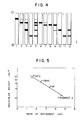
- Fig. 5 shows the relationship between the rate of movement in electrophoresis and the molecular weight of protein.
- an anti-a-fetoprotein antibody in the present invention is an immunoglobulin which contains an anti-a-fetoprotein antibody prepared from the serum obtained from such animals as monkeys, horses, cows, goats, sheep, rabbits, etc. which are hyperimmunized with a-fetoprotein according to a publicly known method such as Cohn ethanol fractionation method, ammonium sulfate fractionation method, ion-exchange chromatography, etc., or is an antibody further purified by affinity chromatography conducted over the carriers with which a-fetoprotein is combined.
- a publicly known method such as Cohn ethanol fractionation method, ammonium sulfate fractionation method, ion-exchange chromatography, etc.
- a protein having an antibody activity of high selectivity to a-fetoprotein obtained from a culture fluid of hybridomas or from a serum or ascites of animals inoculated with hybridomas which are prepared by allowing antibody- producing lymphocytes obtained from an animal immunized with a-fetoprotein to fuse, for instance, with myeloma cells [See, for instance, G. Kohler and C. Milstein, Nature (London), 256, 495-497 (1975)].
- the basic structure of an immunoglobulin which is a mixture of antibodies against various antigens including a-fetoprotein, comprises, as shown by a pictorial drawing of a type specimen in Fig. 1, two L chains which are indicated by L in the figure and two H chains indicated likewise by H, all chains being bound with at least three disulfide bonds (-S-S- bonds).
- Fab part has an antibody activity (in the present invention, it means an activity to couple to a-fetoprotein), or more particularly a nature to selectively'couple to the antigen;
- Fc part has a nature to couple to a complement or Fc receptor on the cell membrane.
- the moiety substantially comprising the fragment Fab which is one of the moiety of the antitumor protein hybrid of the present invention corresponds to the moiety comprising the fragment having an antibody activity (a nature to recognize and couple to an antigen) arising from said Fab part of the immunogloblin.
- an antibody activity a nature to recognize and couple to an antigen
- immunogloblin when immunogloblin is subjected to the papain digestion in the presence of cystine, it is cleaved on the broken lines A-A' into two Fab fragments and one Fc fragment as shown in Fig. 1, and the Fab fragments thus obtained can be used as flagment Fab in the present invention.
- the immunogloblin is treated with pepsin, it is cleaved on the broken line B-B' as shown in Fig.
- fragment Fab is used for the preparation of antitumor protein hybrid according to the present invention just as it is so far as it has at least one thiol radical (-SH) and/or S-sulfo radical (-S-SO 3 - ) in the fragment but in other cases it is used after it has been changed into a fragment having at least one thiol radical and/or S-sulfo radical by cleaving at least one of the disulfide bonds in the chains (in the H chains or the L chains) and the disulfide bonds between the chains (between the H chain and the L chain) according to a publicly known method.
- -SH thiol radical
- -S-SO 3 - S-sulfo radical
- diphtheria toxin in the present invention is a protein toxin produced by Corynebacterium diphtheriae or its mutants.
- a diphtheria toxin produced by Corynebacterium diphtheriae consists of a single polypeptide chain having a molecular weight of about 62,000 - 63,000 and this is called an intact toxin.
- the intact toxin has two disulfide bonds (-S-S bonds) in its molecule as shown in a pictorial drawing of a type specimen of Fig. 2, (a).
- Cleavage of the nicked toxin into fragment A and fragment B can also be conducted by means of sulfonation with sulfite ions, and in this case the thiol radical of fragment A thus obtained is in the form of the S-sulfo radical (-S-SO 3 - ).
- the intact toxin has a very strong toxicity against animals; however, fragment A and fragment B themselves are both nontoxic.
- the intact toxin has no adenosine diphosphate (ADP)-ribose transferase activity on the elongation factor 2 (EF-2) defined below, while fragment A has the transferase activity.
- fragment B has no transferase activity, it has the capability of coupling to a cell receptor which fragment A does not possess.
- the moiety substantially comprising fragment A which makes one of the moieties of the antitumor protein hybrid means a moiety composed of a fragment of the diphtheria toxin which satisfies the aforementioned characteristics of fragment A, namely the following two characteristics:
- nontoxic protein produced by mutant which has one disulfide bond in the molecule
- mutant which has one disulfide bond in the molecule
- CRM 30 and CRM 45 produced, for instance, from Corynebacterium diphtheriae mutant such as C 7 (S30) and C 7 ( ⁇ 45) and fragment obtained by treating them under moderate conditions with trypsin in the presence of such a reducing agent as thiol reagent are included in fragment A of the present invention.
- fragment Fab has at least one thiol radical (-SH) and/or S-sulfo radical (-S-S03), it is used for the preparation of antitumor protein hybrid according to the present invention just as it is or after the S-sulfo radical has been reduced to a thiol radical. In other cases, it is used after it has been changed into a fragment having at least one thiol radical or S-sulfo radical by cleaving at least one disulfide bond in the fragment according to a publicly known method.
- fragment A in the present invention a fragment having one thiol radical or S-sulfo radical in the molecule is especially preferable.
- the ADP-ribose transferase activity on EF-2 is defined as follows.
- EF-2 is known as a protein elongation factor which is related with protein synthesis of cells and fragment A of the diphtheria toxin deactivates EF-2 by catalytically promoting the reaction mentioned below between EF-2 and nicotinamide-adenine- dinucleotide (NAD): The performance to promote this reaction is defined as ADP-ribose transferase activity on EF-2.
- NAD nicotinamide-adenine- dinucleotide
- ADP-ribose transferase activity on EF-2 acts to interfere with protein synthesis and works as entity of the lethaltoxicity for animals; however, it is necessary for fragment A of the diphtheria toxin which has this ADP-ribose transferase activity on EF-2 to have fragment B which is capable of coupling to a cell receptor in order that fragment A enters into the cell and exerts its citocidal effect: fragment A alone can not bring animals to death.
- formula (I) where definitions of Fab, FA, m, S 1 and s 2 are as same as those given in case of formula (I)).
- cross-linking agents involve, for instance, a bismaleimide compound which is expressed by the undermentioned formula (III), bishalocarbonyl compound which is expressed by the formula (IV), dihaloketone compound expressed by the formula (V), and halocarbonylmaleimide compound expressed by the formula (VI): (where Y indicates a divalent organic radical).
- the antitumor protein hybrid of the present invention can be prepared according to the methods given in the following.
- the reaction can be conducted by mixing fragment Fab and fragment A in a buffer solution whose pH is in the range of 6 to 10 to make a total protein concentration of 0.5 to 100 mg/ml (more preferably 1 to 20 mg/ml) and leaving the mixture at 0 to 60°C or dialyzing the reaction mixture against the buffer solution having the same pH value as the reaction mixture.
- the reaction time generally extends over a period of four hours to three days, depending upon the scale and conditions of the reaction.
- the separation of the hybrid thus composed of fragment Fab and fragment A from the reaction mixture and the purification can be carried out by a usual procedure, for instance, of dialysis or column chromatography of molecular sieve effect.
- the method mentioned above allows the reaction to proceed smoothly under very moderate conditions to offer a highly purified hybrid.
- the method also has a merit of permitting the selective formation of hybrid composed of fragment Fab and fragment A (as compared to the formation of hybrid effected between fragments Fab themselves or between fragments A themselves linked by the disulfide bond).
- the reaction can be conducted by bringing the three of fragment Fab, cross-linking agent and fragment A into contact with each other simultaneously.
- it is preferable to carry out the preparation of the hybrid by making fragment A react with the reaction product obtained by first allowing fragment Fab to react with the cross-linking agent or by making fragment Fab react with the reaction product obtained by first allowing fragment A to react with the cross-linking agent.
- the reaction is started at 0 to 60°C with stirring with the addition of the cross-linking agent dissolved in a small amount of solvent such as N,N-dimethylformamide, dimethyl sulfoxide, 1,2-dimethoxyethane, methanol, ethanol, acetone, etc. to a solution of fragment Fab . or fragment A buffered at a pH of 6 to 10 (the protein concentration being preferably controlled to 0.5 to 100 mg/ml, or more preferably to 1 to 20 mg/ml).
- solvent such as N,N-dimethylformamide, dimethyl sulfoxide, 1,2-dimethoxyethane, methanol, ethanol, acetone, etc.
- fragment Fab of an anti-a-fotoprotein antibody which has at least one thiol radical in the fragment and fragment A of a diphtheria toxin which has at least one thiol radical in the fragment are subjected to the oxidative reaction in the state of coexistence with each other to have them both bound by the disulfide bond.
- the oxidative reaction any of air oxidation method, method to oxidize with the use of o-iodobenzoic acid and method in which oxidation is effected in the system of o-phenanthroline and cupric sulfate may be adopted.
- the antitumor protein hybrid of the present invention consists of a moiety substantially comprising fragment A which demonstrates toxicity against tumor cells of liver cancer, etc. producing a-fetoprotein, when internalized into the cells, and a moiety substantially comprising fragment Fab which specifically recognizes the tumor cell and works as a carrier to guide the fragment A to the tumor cell and make fragment A taken into the cell as well and this hybrid has excellent characteristics mentioned below.
- Serum was separated from the blood drawn from a horse hyperimmunized with a-fetoprotein.
- the serum was subjected to affinity chromatography on a column of carriers with which a-fetoprotein is combined to obtain a pure anti-a-fetoprotein antibody.
- 5 mg of pepsin was added to 4.2 ml of an antibody solution (23 mg/ml, 0.02 M acetate buffer, pH 4.0) and the pepsin digestion was carried out at 37°C for 20 hours. To this solution, 1 M trishydroxyaminomethane was added dropwise until the solution was neutralized.
- a trypsin solution having the concentration of 0.1 mg/ml was added to 18.5 ml of an aqueous solution (pH 8.3) of 0.05 M Tris ⁇ HCl-2 mM ethylenediaminetetraacetic acid containing 210 mg of diphtheria toxin, and the digestion was carried out at 25°C for 50 minutes. After that 0.3 ml of a soybean trypsin inhibitor solution having the concentration of 0.5 mg/ml was added thereto to stop the reaction.
- the obtained product was put to Sephadex G 150 (superfine) column chromatography (column size 1.6 cm x 93 cm) equilibrated with saline to obtain 2.0 ml-fractions of efflux.
- the absorbance at 280 m ⁇ was measured for each fraction to know the concentration of protein and the obtained result is shown in Fig. 3.
- Disc 1 immonogloblin; disc 2, fragment F(ab') 2 ; disc 3, fragment Fab' in which unreduced fragment F(ab') 2 is also detected; disc 4, fragment A; disc 5, reaction mixture of fragment Fab' and fragment A; disc, 6 the 35th fraction of Fig. 3; disc 7, the 38th fraction; disc 8, the 39 fraction; disc 9, the 40th fraction; disc 10, the 44th fraction; disc 11, the 53rd fraction; disc 12, the 39th fraction moderately reduced.
- Peaks I, II, III, and IV the four peaks are named Peaks I, II, III, and IV from the left to the right and it is understood that Peak I is fragment F(ab') 2 as it is clear from disc 6, Peak III is fragment Fab' as it is clear from disc 10, and Peak IV is fragment A as it is clear from disc 4.
- Peak II is a reaction product, which should be either the-dimer of fragment A or the hybrid Fab'-S-S-A. When this product was moderately reduced with the use of 2 mM 2-mercaptoethanol, equimolar amounts of fragment Fab' and fragment A as known from disc 12 were generated. Accordingly, it was concluded that Peak II was the hybrid Fab'-S-S-A. As further shown in Fig.
- aqueous solution of the protein hybrid of the present invention was obtained by mixing the fractions corresponding to peak II in Fig. 3.
- the citotoxicity of the protein hybrid of the present invention against rat hepatoma cells AH 66 with the use of this aqueous solution (AH 66 is a cell which is capable of producing ⁇ -fetoprotein).
- 2 x 10 4 of AH 66 were suspended in 0.8 ml of the Eagle MEM medium containing 10% fetal calf serum.
- Table 1 has made it clear that the initial 2 x 10 4 cells increased to as many as 1.5 x 10 5 when saline was added to the culture fluid, while the number of cells increased only to 0.47 x 10 5 to show that the inhibition of proliferation was about 80% when the protein hybrid of the present invention was added at the concentration rate of 100 ⁇ g/ml. On the other hand, when IgG and F(ab') 2 were added respectively at the same concentration, both cases showed only about 20% efficiency of inhibiting the proliferation.
- a fragment Fab' solution (7 mg/ml) was prepared by dissolving fragment Fab' of anti-a-fetoprotein immunoglobulin IgG having one thiol radical obtained in Example 1, (a), in a mixed solution consisting of 2 parts by volume of 0.1 M sodium phosphate buffer (pH 6.0) and 1 part by volume of acetone.
- a suspension of a cross-linking agent, N,N'-(1,4-phenylene)dimaleinide (PDM) in acetone (5 mg/ml) was separately prepared.
- the solution of fragment Fab' having a PDM residue thus obtained was admixed with fragment A of diphtheria toxin having one thiol radical prepared according to Example 2, (b), in such a way as to have the fragment Fab'-fragment A molar ratio of 1:2 and the coupling reaction was allowed to proceed at 4°C for 24 hours and further at 37°C' for 1 hour.
- the obtained reaction solution was put to Sephadex G150 column chromatography under the same conditions as Example 1.
- the 38th and 39th fractions contained protein having a molecular weight of about 70,000 at the purity of 90%.
- This protein causes a precipitin line, in the antigen antibody reaction, with an antibody against horse immunoglobulin obtained by immunizing goats and it also causes a precipitin line with an antibody against diphtheria toxoid obtained by immunizing sheeps. Therefore, it was understood that this protein is a hybrid of fragment Fab' of a horse anti-a-fetoprotein antibody and fragment A of a dipheria toxin. Further it was confirmed that, in this protein, fragment Fab' and fragment A were not linked by a disulfide bond but cross-linked by PDM from the fact that the protein was not reductively cleaved into fragment Fab' and fragment A with 2-mercaptoethanol as determined on SDS ⁇ PAGE.
- antitumor protein hybrid was obtained, in which fragment Fab' and fragment A were linked by a cross-linking agent, N,N'-(1,2-phenylene)dimaleimide via the respective sulfur atoms, wherein N,N'-(1,2-phenylene)dimaleimide was used in the place of PDM which was used in
- antitumor protein hybrid was obtained, in which fragment Fab' and fragment A were linked by a cross-linking agent, 4,4'-bis(maleoylamino) azobenzene via the respective sulfur atoms, wherein 4,4'-bis(maleoylamino)-azobenzene was used in the place of PDM which was used in Example 3.
- the reaction was carried out at room temperature for one hour by adding 0.1 ml of the N,N'- ethylenebis(iod p acetamide) solution dropwise to 1.0 ml of the fragment Fab' solution, to which reaction mixture 0.05 ml of 0.07 M aqueous solution of 2-mercaptoethylamine was added. The mixture was left standing at room temperature for 1 hour. The obtained mixed solution was purified by column chromatography on Sephadex G25 equilibrated with 0.1 M-sodium phosphate buffer (pH 6.0) to give as solution of fragment Fab' having N,N'-ethylene- bis(iodoacetamide) residue.
- antitumor protein hybrid was obtained, in which fragment Fab' and fragment A were linked by a cross-linking agent, N,N'-hexamethylenebis(iodoacetamide) through the medium of the respective sulfur atoms, wherein N,N'-hexamethylenebis(iodoacetamide) was used in the place of N,N'-ethylenebis(iodoacetamide) which was used in Example 6.
- antitumor protein hybrid was obtained, in which fragment Fab' and fragment A were linked by.a cross-linking agent, N,N'-undecamethylenebis(iodoacetamide) through the medium of the respective sulfur atoms, wherein N,N'-undecamethylenebis(iodoacetamide) was used in the place of N,N'-ethylenebis(iodoacetamide) which was used in Example 6.
- antitumor protein hybrid was obtained, in which fragment Fab' and fragment A were linked by a cross-linking agent, bis(N-maleimidemethy)ether through the medium of the respective sulfur atoms, wherein bis(N-malei- midemethyl)ether was used in the place of PDM which was'used in Example 3.
Landscapes
- Health & Medical Sciences (AREA)
- Chemical & Material Sciences (AREA)
- Life Sciences & Earth Sciences (AREA)
- Bioinformatics & Cheminformatics (AREA)
- Engineering & Computer Science (AREA)
- Immunology (AREA)
- Organic Chemistry (AREA)
- General Health & Medical Sciences (AREA)
- Medicinal Chemistry (AREA)
- Molecular Biology (AREA)
- Animal Behavior & Ethology (AREA)
- Epidemiology (AREA)
- Toxicology (AREA)
- Veterinary Medicine (AREA)
- Genetics & Genomics (AREA)
- Biophysics (AREA)
- Pharmacology & Pharmacy (AREA)
- Proteomics, Peptides & Aminoacids (AREA)
- Biochemistry (AREA)
- Public Health (AREA)
- Cell Biology (AREA)
- Gastroenterology & Hepatology (AREA)
- Medicines Containing Antibodies Or Antigens For Use As Internal Diagnostic Agents (AREA)
- Peptides Or Proteins (AREA)
- Preparation Of Compounds By Using Micro-Organisms (AREA)
Applications Claiming Priority (2)
| Application Number | Priority Date | Filing Date | Title |
|---|---|---|---|
| JP9093479A JPS5616417A (en) | 1979-07-19 | 1979-07-19 | Antitumor protein complex and its preparation |
| JP90934/79 | 1979-07-19 |
Publications (2)
| Publication Number | Publication Date |
|---|---|
| EP0023779A1 true EP0023779A1 (de) | 1981-02-11 |
| EP0023779B1 EP0023779B1 (de) | 1983-09-21 |
Family
ID=14012269
Family Applications (1)
| Application Number | Title | Priority Date | Filing Date |
|---|---|---|---|
| EP80302356A Expired EP0023779B1 (de) | 1979-07-19 | 1980-07-11 | Hybridgebundenes Antitumor-Protein und Verfahren zu seiner Herstellung |
Country Status (4)
| Country | Link |
|---|---|
| US (1) | US4357273A (de) |
| EP (1) | EP0023779B1 (de) |
| JP (1) | JPS5616417A (de) |
| DE (1) | DE3064923D1 (de) |
Cited By (5)
| Publication number | Priority date | Publication date | Assignee | Title |
|---|---|---|---|---|
| EP0031999A3 (en) * | 1979-12-14 | 1981-07-29 | Teijin Limited | Antitumor protein hybrid and process for the preparation thereof |
| GB2142032A (en) * | 1983-06-21 | 1985-01-09 | Univ Texas | Immunotoxin conjugates |
| WO1985003508A1 (en) * | 1984-02-08 | 1985-08-15 | Cetus Corporation | Toxin conjugates |
| US4711951A (en) * | 1981-04-06 | 1987-12-08 | Pharmacia Aktiebolag | Therapeutically active compound and pharmaceutical composition containing the same |
| EP1900379A2 (de) | 2002-11-13 | 2008-03-19 | Bracco Imaging, S.P.A. | Verfahren zur selektiven und quantitativen Funktionalisierung von Immunoglobulin-FAB-Fragmenten, damit erhaltene Konjugatverbindungen und Zusammensetzung davon |
Families Citing this family (6)
| Publication number | Priority date | Publication date | Assignee | Title |
|---|---|---|---|---|
| US4487715A (en) * | 1982-07-09 | 1984-12-11 | The Regents Of The University Of California | Method of conjugating oligopeptides |
| GB2148299B (en) * | 1983-09-01 | 1988-01-06 | Hybritech Inc | Antibody compositions of therapeutic agents having an extended serum half-life |
| US4894443A (en) * | 1984-02-08 | 1990-01-16 | Cetus Corporation | Toxin conjugates |
| US5241078A (en) * | 1988-06-14 | 1993-08-31 | Cetus Oncology | Coupling agents and sterically hindered disulfide linked conjugates prepared therefrom |
| CA2120023A1 (en) * | 1992-07-28 | 1994-02-03 | Noriaki Uenishi | Immunoconjugate |
| US5690935A (en) * | 1995-01-13 | 1997-11-25 | Regents Of The University Of Minnesota | Biotherapy of cancer by targeting TP-3/P80 |
Citations (2)
| Publication number | Priority date | Publication date | Assignee | Title |
|---|---|---|---|---|
| DE2448530A1 (de) * | 1974-10-11 | 1976-04-15 | Behringwerke Ag | Derivate des diphtherietoxins, verfahren zu deren herstellung und diese enthaltende mittel |
| DE2456224A1 (de) * | 1974-11-28 | 1976-08-12 | Karl Dr Med Theurer | Verwendung von nativen antikoerpern oder von antikoerper-fragmenten mit kovalent gebundenen oder konjugierten zytostatisch und/bzw. oder zytotoxisch wirkenden substanzen fuer die krebstherapie |
Family Cites Families (3)
| Publication number | Priority date | Publication date | Assignee | Title |
|---|---|---|---|---|
| US4201770A (en) * | 1973-05-07 | 1980-05-06 | The Ohio State University | Antigenic modification of polypeptides |
| US4160018A (en) * | 1973-06-25 | 1979-07-03 | Bjorklund Knut B | Stabilized cancer associated polypeptide antigen and preparation thereof |
| JPS55136235A (en) * | 1979-04-09 | 1980-10-23 | Teijin Ltd | Antitumor protein complex and its preparation |
-
1979
- 1979-07-19 JP JP9093479A patent/JPS5616417A/ja active Pending
-
1980
- 1980-07-11 DE DE8080302356T patent/DE3064923D1/de not_active Expired
- 1980-07-11 EP EP80302356A patent/EP0023779B1/de not_active Expired
- 1980-07-21 US US06/170,393 patent/US4357273A/en not_active Expired - Lifetime
Patent Citations (2)
| Publication number | Priority date | Publication date | Assignee | Title |
|---|---|---|---|---|
| DE2448530A1 (de) * | 1974-10-11 | 1976-04-15 | Behringwerke Ag | Derivate des diphtherietoxins, verfahren zu deren herstellung und diese enthaltende mittel |
| DE2456224A1 (de) * | 1974-11-28 | 1976-08-12 | Karl Dr Med Theurer | Verwendung von nativen antikoerpern oder von antikoerper-fragmenten mit kovalent gebundenen oder konjugierten zytostatisch und/bzw. oder zytotoxisch wirkenden substanzen fuer die krebstherapie |
Non-Patent Citations (5)
| Title |
|---|
| CHEMICAL ABSTRACTS Vol. 92, No. 23, 9 June 1980 Columbus, Ohio, USA S. FUKUOKA et al. "Maleimide derivatives" page 671, column 1, Abstract No. 198269k & JP-A-54 145656. * |
| CHEMICAL ABSTRACTS Vol. 92, No. 23, 9 June 1980, Columbus, Ohio, USA S. FUKUOKA et al. "Maleimide derivatives" page 670, column 2 and page 671, column 1, Abstract No. 198268j & JP-A-54 145655. * |
| CHEMICAL ABSTRACTS, Vol. 83, No. 25, 22 December 1975 Columbus, Ohio, USA F.L. MOOLTEN et al. "Antitumor effects of antibody-diphteria toxin conjugates. III. Cyclophosphamide-induced immune unresponsiveness to conjugates" page 275, column 2 and page 276, column 1, Abstract No. 204729t & J. Natl. Cancer Inst., Vol. 55, No. 3, 1975, pages 709 to 712 (Eng) * |
| CHEMICAL ABSTRACTS, Vol. 89, No. 21, 20 November 1978 Columbus, Ohio, USA T. UCHIDA et al. "Reconstitution of hybrid toxin from fragment A of diphteria toxin and a subunit of Wistaria floribunda lectin" page 210, column 2 and page 211, column 1, Abstract No. 175294p & J. Biol Chem., Vol. 253, No. 18, 1978, pages 6307 to 6310 (Eng) * |
| NATURE, Vol. 271, 23 February 1978 Basingstoke P.E. THORPE et al. "Toxicity of Diphteria Toxin for Lymphoblastoid Cells is Increased by Conjugation to Antilymphocytic Globulin" pages 752 to 755. * |
Cited By (6)
| Publication number | Priority date | Publication date | Assignee | Title |
|---|---|---|---|---|
| EP0031999A3 (en) * | 1979-12-14 | 1981-07-29 | Teijin Limited | Antitumor protein hybrid and process for the preparation thereof |
| US4711951A (en) * | 1981-04-06 | 1987-12-08 | Pharmacia Aktiebolag | Therapeutically active compound and pharmaceutical composition containing the same |
| GB2142032A (en) * | 1983-06-21 | 1985-01-09 | Univ Texas | Immunotoxin conjugates |
| US4664911A (en) * | 1983-06-21 | 1987-05-12 | Board Of Regents, University Of Texas System | Immunotoxin conjugates employing toxin B chain moieties |
| WO1985003508A1 (en) * | 1984-02-08 | 1985-08-15 | Cetus Corporation | Toxin conjugates |
| EP1900379A2 (de) | 2002-11-13 | 2008-03-19 | Bracco Imaging, S.P.A. | Verfahren zur selektiven und quantitativen Funktionalisierung von Immunoglobulin-FAB-Fragmenten, damit erhaltene Konjugatverbindungen und Zusammensetzung davon |
Also Published As
| Publication number | Publication date |
|---|---|
| DE3064923D1 (en) | 1983-10-27 |
| US4357273A (en) | 1982-11-02 |
| EP0023779B1 (de) | 1983-09-21 |
| JPS5616417A (en) | 1981-02-17 |
Similar Documents
| Publication | Publication Date | Title |
|---|---|---|
| EP0031999B1 (de) | Antitumor-Proteinhybrid und Verfahren zu dessen Herstellung | |
| US4450154A (en) | Antitumor hybrid and process for the preparation thereof | |
| US4507234A (en) | Conjugate having cytotoxicity and process for the preparation thereof | |
| EP0112720B1 (de) | Konjugat mit Zytotoxizität und Verfahren zu seiner Herstellung | |
| EP0055115B1 (de) | Proteinhybrid mit Zellengiftigkeit und Verfahren zu dessen Herstellung | |
| EP0153114B1 (de) | Monoklonale Antikörper gegen menschlichen Brustkrebs, ihre Produktion und Verwendung, Hybridomen zu ihrer Herstellung und Herstellung dieser Hybridomen | |
| US4368149A (en) | Protein hybrid having cytotoxicity and process for the preparation thereof | |
| EP0560912B1 (de) | Ortsgenaue konjugatbildung zwischen immunglobulinen und nachweisbaren markierungsstoffen | |
| EP0017507B1 (de) | Hybridprotein gegen Geschwülste und Verfahren zu seiner Herstellung | |
| EP0023779B1 (de) | Hybridgebundenes Antitumor-Protein und Verfahren zu seiner Herstellung | |
| US5272253A (en) | Cluster conjugates of drugs with antibodies | |
| EP0214995B1 (de) | Immunotoxin und herstellung | |
| EP0114730B1 (de) | Durch Zytozid modifiziertes Immunoglobulin und Verfahren zu seiner Herstellung | |
| EP0162977B1 (de) | Immunologisches Testverfahren eines prokoagulierenden Enzyms zum Nachweis von Krebs | |
| CA2079901A1 (en) | Monoclonal anti-igm antibodies, their production and use, and hybridomas for producing the same | |
| Jia-you et al. | Monoclonal anti-human T cell antibody and PAP-s conjugate—Preparation and selective cytotoxic properties on leukemic cell | |
| JPS5942323A (ja) | 選択的殺細胞性蛋白複合体及びその製造方法 | |
| JPS62190200A (ja) | 抗腫瘍蛋白複合体およびその製造方法 |
Legal Events
| Date | Code | Title | Description |
|---|---|---|---|
| PUAI | Public reference made under article 153(3) epc to a published international application that has entered the european phase |
Free format text: ORIGINAL CODE: 0009012 |
|
| AK | Designated contracting states |
Designated state(s): CH DE FR GB IT NL SE |
|
| 17P | Request for examination filed |
Effective date: 19810414 |
|
| GRAA | (expected) grant |
Free format text: ORIGINAL CODE: 0009210 |
|
| AK | Designated contracting states |
Designated state(s): CH DE FR GB IT LI NL SE |
|
| PG25 | Lapsed in a contracting state [announced via postgrant information from national office to epo] |
Ref country code: SE Effective date: 19830921 Ref country code: NL Effective date: 19830921 Ref country code: LI Effective date: 19830921 Ref country code: IT Free format text: LAPSE BECAUSE OF FAILURE TO SUBMIT A TRANSLATION OF THE DESCRIPTION OR TO PAY THE FEE WITHIN THE PRESCRIBED TIME-LIMIT;WARNING: LAPSES OF ITALIAN PATENTS WITH EFFECTIVE DATE BEFORE 2007 MAY HAVE OCCURRED AT ANY TIME BEFORE 2007. THE CORRECT EFFECTIVE DATE MAY BE DIFFERENT FROM THE ONE RECORDED. Effective date: 19830921 Ref country code: CH Effective date: 19830921 |
|
| REF | Corresponds to: |
Ref document number: 3064923 Country of ref document: DE Date of ref document: 19831027 |
|
| ET | Fr: translation filed | ||
| REG | Reference to a national code |
Ref country code: CH Ref legal event code: PL |
|
| NLV1 | Nl: lapsed or annulled due to failure to fulfill the requirements of art. 29p and 29m of the patents act | ||
| PGFP | Annual fee paid to national office [announced via postgrant information from national office to epo] |
Ref country code: DE Payment date: 19840627 Year of fee payment: 5 |
|
| PGFP | Annual fee paid to national office [announced via postgrant information from national office to epo] |
Ref country code: FR Payment date: 19840705 Year of fee payment: 5 |
|
| PLBE | No opposition filed within time limit |
Free format text: ORIGINAL CODE: 0009261 |
|
| STAA | Information on the status of an ep patent application or granted ep patent |
Free format text: STATUS: NO OPPOSITION FILED WITHIN TIME LIMIT |
|
| 26N | No opposition filed | ||
| GBPC | Gb: european patent ceased through non-payment of renewal fee | ||
| PG25 | Lapsed in a contracting state [announced via postgrant information from national office to epo] |
Ref country code: FR Free format text: LAPSE BECAUSE OF NON-PAYMENT OF DUE FEES Effective date: 19860328 |
|
| PG25 | Lapsed in a contracting state [announced via postgrant information from national office to epo] |
Ref country code: DE Effective date: 19860402 |
|
| REG | Reference to a national code |
Ref country code: FR Ref legal event code: ST |
|
| PG25 | Lapsed in a contracting state [announced via postgrant information from national office to epo] |
Ref country code: GB Effective date: 19881118 |