EP0025846B1 - Verbessertes Verfahren zur Herstellung von Vinylcyclopropan-Derivaten - Google Patents
Verbessertes Verfahren zur Herstellung von Vinylcyclopropan-Derivaten Download PDFInfo
- Publication number
- EP0025846B1 EP0025846B1 EP80104651A EP80104651A EP0025846B1 EP 0025846 B1 EP0025846 B1 EP 0025846B1 EP 80104651 A EP80104651 A EP 80104651A EP 80104651 A EP80104651 A EP 80104651A EP 0025846 B1 EP0025846 B1 EP 0025846B1
- Authority
- EP
- European Patent Office
- Prior art keywords
- compound
- radical
- reaction
- carbon atoms
- activated methylene
- Prior art date
- Legal status (The legal status is an assumption and is not a legal conclusion. Google has not performed a legal analysis and makes no representation as to the accuracy of the status listed.)
- Expired
Links
- 238000000034 method Methods 0.000 title claims description 109
- 230000008569 process Effects 0.000 title claims description 91
- YIWFBNMYFYINAD-UHFFFAOYSA-N ethenylcyclopropane Chemical class C=CC1CC1 YIWFBNMYFYINAD-UHFFFAOYSA-N 0.000 title claims description 30
- 238000002360 preparation method Methods 0.000 title claims description 21
- -1 activated methylene compound Chemical class 0.000 claims description 112
- 238000006243 chemical reaction Methods 0.000 claims description 94
- XLYOFNOQVPJJNP-UHFFFAOYSA-N water Substances O XLYOFNOQVPJJNP-UHFFFAOYSA-N 0.000 claims description 50
- 239000002168 alkylating agent Substances 0.000 claims description 41
- 229940100198 alkylating agent Drugs 0.000 claims description 41
- RTZKZFJDLAIYFH-UHFFFAOYSA-N Diethyl ether Chemical compound CCOCC RTZKZFJDLAIYFH-UHFFFAOYSA-N 0.000 claims description 26
- 239000003054 catalyst Substances 0.000 claims description 24
- FQDIANVAWVHZIR-OWOJBTEDSA-N trans-1,4-Dichlorobutene Chemical compound ClC\C=C\CCl FQDIANVAWVHZIR-OWOJBTEDSA-N 0.000 claims description 24
- 125000004432 carbon atom Chemical group C* 0.000 claims description 23
- 239000003085 diluting agent Substances 0.000 claims description 23
- LTMRRSWNXVJMBA-UHFFFAOYSA-L 2,2-diethylpropanedioate Chemical compound CCC(CC)(C([O-])=O)C([O-])=O LTMRRSWNXVJMBA-UHFFFAOYSA-L 0.000 claims description 20
- 150000001875 compounds Chemical class 0.000 claims description 19
- VEXZGXHMUGYJMC-UHFFFAOYSA-M Chloride anion Chemical compound [Cl-] VEXZGXHMUGYJMC-UHFFFAOYSA-M 0.000 claims description 17
- 150000001339 alkali metal compounds Chemical group 0.000 claims description 17
- 229910052757 nitrogen Inorganic materials 0.000 claims description 17
- IJGRMHOSHXDMSA-UHFFFAOYSA-N Atomic nitrogen Chemical compound N#N IJGRMHOSHXDMSA-UHFFFAOYSA-N 0.000 claims description 16
- 150000001450 anions Chemical class 0.000 claims description 15
- 125000003118 aryl group Chemical group 0.000 claims description 15
- 125000000217 alkyl group Chemical group 0.000 claims description 14
- 150000003254 radicals Chemical class 0.000 claims description 14
- 125000001570 methylene group Chemical group [H]C([H])([*:1])[*:2] 0.000 claims description 13
- NINIDFKCEFEMDL-UHFFFAOYSA-N Sulfur Chemical compound [S] NINIDFKCEFEMDL-UHFFFAOYSA-N 0.000 claims description 11
- 239000000376 reactant Substances 0.000 claims description 11
- 125000002877 alkyl aryl group Chemical group 0.000 claims description 10
- 125000006575 electron-withdrawing group Chemical group 0.000 claims description 9
- 150000002148 esters Chemical class 0.000 claims description 9
- 229910052717 sulfur Inorganic materials 0.000 claims description 9
- 239000011593 sulfur Substances 0.000 claims description 9
- LFQSCWFLJHTTHZ-UHFFFAOYSA-N Ethanol Chemical compound CCO LFQSCWFLJHTTHZ-UHFFFAOYSA-N 0.000 claims description 8
- 125000003342 alkenyl group Chemical group 0.000 claims description 8
- 125000001997 phenyl group Chemical group [H]C1=C([H])C([H])=C(*)C([H])=C1[H] 0.000 claims description 8
- CPELXLSAUQHCOX-UHFFFAOYSA-M Bromide Chemical compound [Br-] CPELXLSAUQHCOX-UHFFFAOYSA-M 0.000 claims description 7
- 150000001336 alkenes Chemical class 0.000 claims description 7
- 239000012530 fluid Substances 0.000 claims description 7
- 229930195733 hydrocarbon Natural products 0.000 claims description 7
- 150000002825 nitriles Chemical class 0.000 claims description 7
- 239000004215 Carbon black (E152) Substances 0.000 claims description 6
- 125000003710 aryl alkyl group Chemical group 0.000 claims description 6
- 125000004122 cyclic group Chemical group 0.000 claims description 6
- 125000005843 halogen group Chemical group 0.000 claims description 6
- 229910052739 hydrogen Inorganic materials 0.000 claims description 6
- 239000001257 hydrogen Substances 0.000 claims description 6
- XMBWDFGMSWQBCA-UHFFFAOYSA-N hydrogen iodide Chemical compound I XMBWDFGMSWQBCA-UHFFFAOYSA-N 0.000 claims description 6
- XLYOFNOQVPJJNP-UHFFFAOYSA-M hydroxide Chemical compound [OH-] XLYOFNOQVPJJNP-UHFFFAOYSA-M 0.000 claims description 6
- 125000000449 nitro group Chemical group [O-][N+](*)=O 0.000 claims description 6
- SUSQOBVLVYHIEX-UHFFFAOYSA-N phenylacetonitrile Chemical compound N#CCC1=CC=CC=C1 SUSQOBVLVYHIEX-UHFFFAOYSA-N 0.000 claims description 6
- 229910052698 phosphorus Inorganic materials 0.000 claims description 6
- 239000011574 phosphorus Substances 0.000 claims description 6
- 125000001424 substituent group Chemical group 0.000 claims description 6
- LJVHJHLTRBXGMH-HNQUOIGGSA-N (e)-1,4-dibromobut-1-ene Chemical compound BrCC\C=C\Br LJVHJHLTRBXGMH-HNQUOIGGSA-N 0.000 claims description 4
- LYCAIKOWRPUZTN-UHFFFAOYSA-N Ethylene glycol Chemical compound OCCO LYCAIKOWRPUZTN-UHFFFAOYSA-N 0.000 claims description 4
- 229910019142 PO4 Inorganic materials 0.000 claims description 4
- OAICVXFJPJFONN-UHFFFAOYSA-N Phosphorus Chemical compound [P] OAICVXFJPJFONN-UHFFFAOYSA-N 0.000 claims description 4
- QAOWNCQODCNURD-UHFFFAOYSA-L Sulfate Chemical compound [O-]S([O-])(=O)=O QAOWNCQODCNURD-UHFFFAOYSA-L 0.000 claims description 4
- YRKCREAYFQTBPV-UHFFFAOYSA-N acetylacetone Chemical compound CC(=O)CC(C)=O YRKCREAYFQTBPV-UHFFFAOYSA-N 0.000 claims description 4
- 238000013019 agitation Methods 0.000 claims description 4
- 125000003545 alkoxy group Chemical group 0.000 claims description 4
- 150000005840 aryl radicals Chemical class 0.000 claims description 4
- NFKGQHYUYGYHIS-UHFFFAOYSA-N dibutyl propanedioate Chemical compound CCCCOC(=O)CC(=O)OCCCC NFKGQHYUYGYHIS-UHFFFAOYSA-N 0.000 claims description 4
- ZIUSEGSNTOUIPT-UHFFFAOYSA-N ethyl 2-cyanoacetate Chemical compound CCOC(=O)CC#N ZIUSEGSNTOUIPT-UHFFFAOYSA-N 0.000 claims description 4
- 125000003709 fluoroalkyl group Chemical group 0.000 claims description 4
- 229910052736 halogen Inorganic materials 0.000 claims description 4
- 150000002367 halogens Chemical group 0.000 claims description 4
- 125000002887 hydroxy group Chemical group [H]O* 0.000 claims description 4
- 238000011065 in-situ storage Methods 0.000 claims description 4
- KHUXNRRPPZOJPT-UHFFFAOYSA-N phenoxy radical Chemical group O=C1C=C[CH]C=C1 KHUXNRRPPZOJPT-UHFFFAOYSA-N 0.000 claims description 4
- 239000010452 phosphate Substances 0.000 claims description 4
- 150000003856 quaternary ammonium compounds Chemical class 0.000 claims description 4
- 150000004023 quaternary phosphonium compounds Chemical class 0.000 claims description 4
- 125000003396 thiol group Chemical class [H]S* 0.000 claims description 4
- CFCMGOGOJHXYDV-UHFFFAOYSA-N 1,4-dichloro-4-methylpent-1-ene Chemical compound CC(C)(Cl)CC=CCl CFCMGOGOJHXYDV-UHFFFAOYSA-N 0.000 claims description 3
- UFHFLCQGNIYNRP-UHFFFAOYSA-N Hydrogen Chemical compound [H][H] UFHFLCQGNIYNRP-UHFFFAOYSA-N 0.000 claims description 3
- DGAQECJNVWCQMB-PUAWFVPOSA-M Ilexoside XXIX Chemical compound C[C@@H]1CC[C@@]2(CC[C@@]3(C(=CC[C@H]4[C@]3(CC[C@@H]5[C@@]4(CC[C@@H](C5(C)C)OS(=O)(=O)[O-])C)C)[C@@H]2[C@]1(C)O)C)C(=O)O[C@H]6[C@@H]([C@H]([C@@H]([C@H](O6)CO)O)O)O.[Na+] DGAQECJNVWCQMB-PUAWFVPOSA-M 0.000 claims description 3
- 150000007942 carboxylates Chemical class 0.000 claims description 3
- 150000001768 cations Chemical group 0.000 claims description 3
- 239000000460 chlorine Substances 0.000 claims description 3
- QRVSDVDFJFKYKA-UHFFFAOYSA-N dipropan-2-yl propanedioate Chemical compound CC(C)OC(=O)CC(=O)OC(C)C QRVSDVDFJFKYKA-UHFFFAOYSA-N 0.000 claims description 3
- XYIBRDXRRQCHLP-UHFFFAOYSA-N ethyl acetoacetate Chemical compound CCOC(=O)CC(C)=O XYIBRDXRRQCHLP-UHFFFAOYSA-N 0.000 claims description 3
- 150000002430 hydrocarbons Chemical class 0.000 claims description 3
- 125000004435 hydrogen atom Chemical group [H]* 0.000 claims description 3
- 125000002496 methyl group Chemical group [H]C([H])([H])* 0.000 claims description 3
- JLIDRDJNLAWIKT-UHFFFAOYSA-N 1,2-dimethyl-3h-benzo[e]indole Chemical compound C1=CC=CC2=C(C(=C(C)N3)C)C3=CC=C21 JLIDRDJNLAWIKT-UHFFFAOYSA-N 0.000 claims description 2
- VTVZIJCAMOULAL-UHFFFAOYSA-N 1,4-dibromo-2,3-dimethylbut-1-ene Chemical compound BrC=C(C(CBr)C)C VTVZIJCAMOULAL-UHFFFAOYSA-N 0.000 claims description 2
- FQIRRNGKLSCCMD-UHFFFAOYSA-N 1,4-dibromo-2-methylbut-1-ene Chemical compound BrC=C(CCBr)C FQIRRNGKLSCCMD-UHFFFAOYSA-N 0.000 claims description 2
- FREJWVMYTCZLSX-UHFFFAOYSA-N 1,4-dibromo-4-methylpent-1-ene Chemical compound BrC=CCC(C)(C)Br FREJWVMYTCZLSX-UHFFFAOYSA-N 0.000 claims description 2
- XEDHVXQVZBWINC-UHFFFAOYSA-N 1,4-dibromopent-1-ene Chemical compound BrC=CCC(C)Br XEDHVXQVZBWINC-UHFFFAOYSA-N 0.000 claims description 2
- CYPIQIWHLIECPD-UHFFFAOYSA-N 1,4-dichloro-2,3-dimethylbut-1-ene Chemical compound ClC=C(C(CCl)C)C CYPIQIWHLIECPD-UHFFFAOYSA-N 0.000 claims description 2
- HBVLVXJZVUEZNW-UHFFFAOYSA-N 1,4-dichloro-2-methylbut-1-ene Chemical compound ClC=C(C)CCCl HBVLVXJZVUEZNW-UHFFFAOYSA-N 0.000 claims description 2
- ABJXLKXBSYEECE-UHFFFAOYSA-N 1,4-dichloropent-1-ene Chemical compound CC(Cl)CC=CCl ABJXLKXBSYEECE-UHFFFAOYSA-N 0.000 claims description 2
- NHSWTSANZASAIP-UHFFFAOYSA-N 2,5-dichloro-2-methylhex-3-ene Chemical compound CC(Cl)C=CC(C)(C)Cl NHSWTSANZASAIP-UHFFFAOYSA-N 0.000 claims description 2
- NQBCTJSQEJDNAN-UHFFFAOYSA-N 2,5-dichlorohex-1-ene Chemical compound CC(Cl)CCC(Cl)=C NQBCTJSQEJDNAN-UHFFFAOYSA-N 0.000 claims description 2
- KJAORRLXEXMTSY-UHFFFAOYSA-N 2-(dimethylamino)ethyl 2-phenylacetate Chemical compound CN(C)CCOC(=O)CC1=CC=CC=C1 KJAORRLXEXMTSY-UHFFFAOYSA-N 0.000 claims description 2
- JXPDNDHCMMOJPC-UHFFFAOYSA-N 2-hydroxybutanedinitrile Chemical compound N#CC(O)CC#N JXPDNDHCMMOJPC-UHFFFAOYSA-N 0.000 claims description 2
- ZDFMBEWYYLHRJS-UHFFFAOYSA-N 3-o-[2-(dimethylamino)ethyl] 1-o-ethyl propanedioate Chemical compound CCOC(=O)CC(=O)OCCN(C)C ZDFMBEWYYLHRJS-UHFFFAOYSA-N 0.000 claims description 2
- OTLNPYWUJOZPPA-UHFFFAOYSA-M 4-nitrobenzoate Chemical group [O-]C(=O)C1=CC=C([N+]([O-])=O)C=C1 OTLNPYWUJOZPPA-UHFFFAOYSA-M 0.000 claims description 2
- BVKZGUZCCUSVTD-UHFFFAOYSA-M Bicarbonate Chemical compound OC([O-])=O BVKZGUZCCUSVTD-UHFFFAOYSA-M 0.000 claims description 2
- LSNNMFCWUKXFEE-UHFFFAOYSA-M Bisulfite Chemical compound OS([O-])=O LSNNMFCWUKXFEE-UHFFFAOYSA-M 0.000 claims description 2
- BTBUEUYNUDRHOZ-UHFFFAOYSA-N Borate Chemical compound [O-]B([O-])[O-] BTBUEUYNUDRHOZ-UHFFFAOYSA-N 0.000 claims description 2
- WOLCEETZOXGERP-UHFFFAOYSA-N BrC=CCCCl Chemical compound BrC=CCCCl WOLCEETZOXGERP-UHFFFAOYSA-N 0.000 claims description 2
- WKBOTKDWSSQWDR-UHFFFAOYSA-N Bromine atom Chemical compound [Br] WKBOTKDWSSQWDR-UHFFFAOYSA-N 0.000 claims description 2
- WHXSMMKQMYFTQS-UHFFFAOYSA-N Lithium Chemical compound [Li] WHXSMMKQMYFTQS-UHFFFAOYSA-N 0.000 claims description 2
- WRQNANDWMGAFTP-UHFFFAOYSA-N Methylacetoacetic acid Chemical compound COC(=O)CC(C)=O WRQNANDWMGAFTP-UHFFFAOYSA-N 0.000 claims description 2
- RPCAFTBVCRWGIE-UHFFFAOYSA-N O=NS(=O)(=O)N=O Chemical class O=NS(=O)(=O)N=O RPCAFTBVCRWGIE-UHFFFAOYSA-N 0.000 claims description 2
- ABLZXFCXXLZCGV-UHFFFAOYSA-N Phosphorous acid Chemical class OP(O)=O ABLZXFCXXLZCGV-UHFFFAOYSA-N 0.000 claims description 2
- ZLMJMSJWJFRBEC-UHFFFAOYSA-N Potassium Chemical compound [K] ZLMJMSJWJFRBEC-UHFFFAOYSA-N 0.000 claims description 2
- 125000001931 aliphatic group Chemical group 0.000 claims description 2
- 150000008051 alkyl sulfates Chemical class 0.000 claims description 2
- QVGXLLKOCUKJST-UHFFFAOYSA-N atomic oxygen Chemical compound [O] QVGXLLKOCUKJST-UHFFFAOYSA-N 0.000 claims description 2
- DULCUDSUACXJJC-UHFFFAOYSA-N benzeneacetic acid ethyl ester Natural products CCOC(=O)CC1=CC=CC=C1 DULCUDSUACXJJC-UHFFFAOYSA-N 0.000 claims description 2
- 229940077388 benzenesulfonate Drugs 0.000 claims description 2
- SRSXLGNVWSONIS-UHFFFAOYSA-M benzenesulfonate Chemical group [O-]S(=O)(=O)C1=CC=CC=C1 SRSXLGNVWSONIS-UHFFFAOYSA-M 0.000 claims description 2
- BHGYWAPAPJDVOY-UHFFFAOYSA-N bis[2-(dimethylamino)ethyl] propanedioate Chemical compound CN(C)CCOC(=O)CC(=O)OCCN(C)C BHGYWAPAPJDVOY-UHFFFAOYSA-N 0.000 claims description 2
- GDTBXPJZTBHREO-UHFFFAOYSA-N bromine Substances BrBr GDTBXPJZTBHREO-UHFFFAOYSA-N 0.000 claims description 2
- 229910052794 bromium Inorganic materials 0.000 claims description 2
- 125000003865 brosyl group Chemical group [H]C1=C([H])C(=C([H])C([H])=C1Br)S(*)(=O)=O 0.000 claims description 2
- 229910052801 chlorine Inorganic materials 0.000 claims description 2
- 125000000753 cycloalkyl group Chemical group 0.000 claims description 2
- BEPAFCGSDWSTEL-UHFFFAOYSA-N dimethyl malonate Chemical compound COC(=O)CC(=O)OC BEPAFCGSDWSTEL-UHFFFAOYSA-N 0.000 claims description 2
- 229940093858 ethyl acetoacetate Drugs 0.000 claims description 2
- 150000004820 halides Chemical class 0.000 claims description 2
- 125000004404 heteroalkyl group Chemical group 0.000 claims description 2
- 125000005842 heteroatom Chemical group 0.000 claims description 2
- 125000000623 heterocyclic group Chemical group 0.000 claims description 2
- QAOWNCQODCNURD-UHFFFAOYSA-M hydrogensulfate Chemical compound OS([O-])(=O)=O QAOWNCQODCNURD-UHFFFAOYSA-M 0.000 claims description 2
- WGCNASOHLSPBMP-UHFFFAOYSA-N hydroxyacetaldehyde Natural products OCC=O WGCNASOHLSPBMP-UHFFFAOYSA-N 0.000 claims description 2
- 239000007788 liquid Substances 0.000 claims description 2
- 229910052744 lithium Inorganic materials 0.000 claims description 2
- WRIRWRKPLXCTFD-UHFFFAOYSA-N malonamide Chemical compound NC(=O)CC(N)=O WRIRWRKPLXCTFD-UHFFFAOYSA-N 0.000 claims description 2
- 125000004170 methylsulfonyl group Chemical group [H]C([H])([H])S(*)(=O)=O 0.000 claims description 2
- JRZJOMJEPLMPRA-UHFFFAOYSA-N olefin Natural products CCCCCCCC=C JRZJOMJEPLMPRA-UHFFFAOYSA-N 0.000 claims description 2
- MPQXHAGKBWFSNV-UHFFFAOYSA-N oxidophosphanium Chemical class [PH3]=O MPQXHAGKBWFSNV-UHFFFAOYSA-N 0.000 claims description 2
- 229910052760 oxygen Inorganic materials 0.000 claims description 2
- 239000001301 oxygen Substances 0.000 claims description 2
- 125000004430 oxygen atom Chemical group O* 0.000 claims description 2
- VLTRZXGMWDSKGL-UHFFFAOYSA-M perchlorate Inorganic materials [O-]Cl(=O)(=O)=O VLTRZXGMWDSKGL-UHFFFAOYSA-M 0.000 claims description 2
- VLTRZXGMWDSKGL-UHFFFAOYSA-N perchloric acid Chemical compound OCl(=O)(=O)=O VLTRZXGMWDSKGL-UHFFFAOYSA-N 0.000 claims description 2
- QCCDLTOVEPVEJK-UHFFFAOYSA-N phenylacetone Chemical compound CC(=O)CC1=CC=CC=C1 QCCDLTOVEPVEJK-UHFFFAOYSA-N 0.000 claims description 2
- NBIIXXVUZAFLBC-UHFFFAOYSA-K phosphate Chemical compound [O-]P([O-])([O-])=O NBIIXXVUZAFLBC-UHFFFAOYSA-K 0.000 claims description 2
- 229910052700 potassium Inorganic materials 0.000 claims description 2
- 239000011591 potassium Substances 0.000 claims description 2
- 229910052708 sodium Inorganic materials 0.000 claims description 2
- 239000011734 sodium Substances 0.000 claims description 2
- 150000003462 sulfoxides Chemical class 0.000 claims description 2
- 125000002088 tosyl group Chemical group [H]C1=C([H])C(=C([H])C([H])=C1C([H])([H])[H])S(*)(=O)=O 0.000 claims description 2
- ITMCEJHCFYSIIV-UHFFFAOYSA-N triflic acid Chemical group OS(=O)(=O)C(F)(F)F ITMCEJHCFYSIIV-UHFFFAOYSA-N 0.000 claims description 2
- QJGQUHMNIGDVPM-UHFFFAOYSA-N nitrogen group Chemical group [N] QJGQUHMNIGDVPM-UHFFFAOYSA-N 0.000 claims 2
- GJRYUKCKHUTLQR-UHFFFAOYSA-N 2,5-dibromo-2,5-dimethylhexane Chemical compound CC(C)(Br)CCC(C)(C)Br GJRYUKCKHUTLQR-UHFFFAOYSA-N 0.000 claims 1
- DPKRSAZIYZWLGK-UHFFFAOYSA-N 2,5-dibromo-2-methylhexane Chemical compound BrC(C)(CCC(C)Br)C DPKRSAZIYZWLGK-UHFFFAOYSA-N 0.000 claims 1
- ISWIRYKKUAVOMD-UHFFFAOYSA-N 2,5-dibromohex-1-ene Chemical compound CC(Br)CCC(Br)=C ISWIRYKKUAVOMD-UHFFFAOYSA-N 0.000 claims 1
- HSTAGCWQAIXJQM-UHFFFAOYSA-N 2,5-dichloro-2,5-dimethylhexane Chemical compound CC(C)(Cl)CCC(C)(C)Cl HSTAGCWQAIXJQM-UHFFFAOYSA-N 0.000 claims 1
- ZAMOUSCENKQFHK-UHFFFAOYSA-N Chlorine atom Chemical compound [Cl] ZAMOUSCENKQFHK-UHFFFAOYSA-N 0.000 claims 1
- KWYUFKZDYYNOTN-UHFFFAOYSA-M Potassium hydroxide Chemical compound [OH-].[K+] KWYUFKZDYYNOTN-UHFFFAOYSA-M 0.000 description 52
- YMWUJEATGCHHMB-UHFFFAOYSA-N Dichloromethane Chemical compound ClCCl YMWUJEATGCHHMB-UHFFFAOYSA-N 0.000 description 33
- 150000004010 onium ions Chemical class 0.000 description 30
- 239000000047 product Substances 0.000 description 23
- 150000003839 salts Chemical class 0.000 description 23
- UOQTXZICFVMERR-UHFFFAOYSA-N diethyl 2-ethenylcyclopropane-1,1-dicarboxylate Chemical compound CCOC(=O)C1(C(=O)OCC)CC1C=C UOQTXZICFVMERR-UHFFFAOYSA-N 0.000 description 20
- UHOVQNZJYSORNB-UHFFFAOYSA-N Benzene Chemical compound C1=CC=CC=C1 UHOVQNZJYSORNB-UHFFFAOYSA-N 0.000 description 18
- XKBGEWXEAPTVCK-UHFFFAOYSA-M methyltrioctylammonium chloride Chemical compound [Cl-].CCCCCCCC[N+](C)(CCCCCCCC)CCCCCCCC XKBGEWXEAPTVCK-UHFFFAOYSA-M 0.000 description 15
- 239000011541 reaction mixture Substances 0.000 description 15
- 238000007792 addition Methods 0.000 description 13
- WEVYAHXRMPXWCK-UHFFFAOYSA-N Acetonitrile Chemical compound CC#N WEVYAHXRMPXWCK-UHFFFAOYSA-N 0.000 description 12
- 239000000243 solution Substances 0.000 description 12
- 239000002904 solvent Substances 0.000 description 12
- 238000002474 experimental method Methods 0.000 description 10
- 238000004821 distillation Methods 0.000 description 9
- HEMHJVSKTPXQMS-UHFFFAOYSA-M Sodium hydroxide Chemical compound [OH-].[Na+] HEMHJVSKTPXQMS-UHFFFAOYSA-M 0.000 description 8
- 238000009833 condensation Methods 0.000 description 8
- 230000005494 condensation Effects 0.000 description 8
- KWYHDKDOAIKMQN-UHFFFAOYSA-N N,N,N',N'-tetramethylethylenediamine Chemical compound CN(C)CCN(C)C KWYHDKDOAIKMQN-UHFFFAOYSA-N 0.000 description 7
- 238000001816 cooling Methods 0.000 description 7
- 239000000203 mixture Substances 0.000 description 7
- 239000007787 solid Substances 0.000 description 7
- CSCPPACGZOOCGX-UHFFFAOYSA-N Acetone Chemical compound CC(C)=O CSCPPACGZOOCGX-UHFFFAOYSA-N 0.000 description 6
- WMFOQBRAJBCJND-UHFFFAOYSA-M Lithium hydroxide Chemical compound [Li+].[OH-] WMFOQBRAJBCJND-UHFFFAOYSA-M 0.000 description 6
- YXFVVABEGXRONW-UHFFFAOYSA-N Toluene Chemical compound CC1=CC=CC=C1 YXFVVABEGXRONW-UHFFFAOYSA-N 0.000 description 6
- 150000008044 alkali metal hydroxides Chemical class 0.000 description 6
- 239000002585 base Substances 0.000 description 6
- 238000003756 stirring Methods 0.000 description 6
- IYXGSMUGOJNHAZ-UHFFFAOYSA-N Ethyl malonate Chemical compound CCOC(=O)CC(=O)OCC IYXGSMUGOJNHAZ-UHFFFAOYSA-N 0.000 description 5
- 230000015572 biosynthetic process Effects 0.000 description 5
- 239000006227 byproduct Substances 0.000 description 5
- 239000003153 chemical reaction reagent Substances 0.000 description 5
- VLKZOEOYAKHREP-UHFFFAOYSA-N n-Hexane Chemical compound CCCCCC VLKZOEOYAKHREP-UHFFFAOYSA-N 0.000 description 5
- 125000000391 vinyl group Chemical group [H]C([*])=C([H])[H] 0.000 description 5
- 238000010626 work up procedure Methods 0.000 description 5
- AFEWNSCLQLQUEJ-UHFFFAOYSA-N 2-ethenylcyclopropane-1,1-dicarboxylic acid Chemical compound OC(=O)C1(C(O)=O)CC1C=C AFEWNSCLQLQUEJ-UHFFFAOYSA-N 0.000 description 4
- 150000001942 cyclopropanes Chemical class 0.000 description 4
- 230000001965 increasing effect Effects 0.000 description 4
- 238000006317 isomerization reaction Methods 0.000 description 4
- 125000001624 naphthyl group Chemical group 0.000 description 4
- 239000003208 petroleum Substances 0.000 description 4
- 125000004076 pyridyl group Chemical group 0.000 description 4
- 125000003944 tolyl group Chemical group 0.000 description 4
- 125000005023 xylyl group Chemical group 0.000 description 4
- ZWEHNKRNPOVVGH-UHFFFAOYSA-N 2-Butanone Chemical compound CCC(C)=O ZWEHNKRNPOVVGH-UHFFFAOYSA-N 0.000 description 3
- 125000000094 2-phenylethyl group Chemical group [H]C1=C([H])C([H])=C(C([H])=C1[H])C([H])([H])C([H])([H])* 0.000 description 3
- 125000003903 2-propenyl group Chemical group [H]C([*])([H])C([H])=C([H])[H] 0.000 description 3
- RWSOTUBLDIXVET-UHFFFAOYSA-N Dihydrogen sulfide Chemical class S RWSOTUBLDIXVET-UHFFFAOYSA-N 0.000 description 3
- XEKOWRVHYACXOJ-UHFFFAOYSA-N Ethyl acetate Chemical compound CCOC(C)=O XEKOWRVHYACXOJ-UHFFFAOYSA-N 0.000 description 3
- OFOBLEOULBTSOW-UHFFFAOYSA-L Malonate Chemical compound [O-]C(=O)CC([O-])=O OFOBLEOULBTSOW-UHFFFAOYSA-L 0.000 description 3
- ZMANZCXQSJIPKH-UHFFFAOYSA-N Triethylamine Chemical compound CCN(CC)CC ZMANZCXQSJIPKH-UHFFFAOYSA-N 0.000 description 3
- 238000005804 alkylation reaction Methods 0.000 description 3
- 125000004429 atom Chemical group 0.000 description 3
- 125000001797 benzyl group Chemical group [H]C1=C([H])C([H])=C(C([H])=C1[H])C([H])([H])* 0.000 description 3
- 230000003197 catalytic effect Effects 0.000 description 3
- 239000003518 caustics Substances 0.000 description 3
- 125000004177 diethyl group Chemical group [H]C([H])([H])C([H])([H])* 0.000 description 3
- VVFJOLBUTYLQTD-UHFFFAOYSA-N dipropan-2-yl 2-ethenylcyclopropane-1,1-dicarboxylate Chemical compound CC(C)OC(=O)C1(C(=O)OC(C)C)CC1C=C VVFJOLBUTYLQTD-UHFFFAOYSA-N 0.000 description 3
- 125000001495 ethyl group Chemical group [H]C([H])([H])C([H])([H])* 0.000 description 3
- 238000002329 infrared spectrum Methods 0.000 description 3
- 239000010410 layer Substances 0.000 description 3
- 239000000463 material Substances 0.000 description 3
- 239000003921 oil Substances 0.000 description 3
- 235000019198 oils Nutrition 0.000 description 3
- 230000003287 optical effect Effects 0.000 description 3
- 239000012044 organic layer Substances 0.000 description 3
- 239000012071 phase Substances 0.000 description 3
- 159000000001 potassium salts Chemical class 0.000 description 3
- 238000000425 proton nuclear magnetic resonance spectrum Methods 0.000 description 3
- 239000012429 reaction media Substances 0.000 description 3
- HXJUTPCZVOIRIF-UHFFFAOYSA-N sulfolane Chemical compound O=S1(=O)CCCC1 HXJUTPCZVOIRIF-UHFFFAOYSA-N 0.000 description 3
- FQDIANVAWVHZIR-UPHRSURJSA-N (z)-1,4-dichlorobut-2-ene Chemical compound ClC\C=C/CCl FQDIANVAWVHZIR-UPHRSURJSA-N 0.000 description 2
- ANSLDRRWTXDPKO-UHFFFAOYSA-N 2,5-dichloro-2,5-dimethylhex-3-ene Chemical compound CC(C)(Cl)C=CC(C)(C)Cl ANSLDRRWTXDPKO-UHFFFAOYSA-N 0.000 description 2
- 125000000022 2-aminoethyl group Chemical group [H]C([*])([H])C([H])([H])N([H])[H] 0.000 description 2
- XVEASTGLHPVZNA-UHFFFAOYSA-N 3,4-dichlorobut-1-ene Chemical compound ClCC(Cl)C=C XVEASTGLHPVZNA-UHFFFAOYSA-N 0.000 description 2
- HEDRZPFGACZZDS-UHFFFAOYSA-N Chloroform Chemical compound ClC(Cl)Cl HEDRZPFGACZZDS-UHFFFAOYSA-N 0.000 description 2
- RGSFGYAAUTVSQA-UHFFFAOYSA-N Cyclopentane Chemical compound C1CCCC1 RGSFGYAAUTVSQA-UHFFFAOYSA-N 0.000 description 2
- CSNNHWWHGAXBCP-UHFFFAOYSA-L Magnesium sulfate Chemical compound [Mg+2].[O-][S+2]([O-])([O-])[O-] CSNNHWWHGAXBCP-UHFFFAOYSA-L 0.000 description 2
- IMNFDUFMRHMDMM-UHFFFAOYSA-N N-Heptane Chemical compound CCCCCCC IMNFDUFMRHMDMM-UHFFFAOYSA-N 0.000 description 2
- CTQNGGLPUBDAKN-UHFFFAOYSA-N O-Xylene Chemical compound CC1=CC=CC=C1C CTQNGGLPUBDAKN-UHFFFAOYSA-N 0.000 description 2
- OFBQJSOFQDEBGM-UHFFFAOYSA-N Pentane Chemical compound CCCCC OFBQJSOFQDEBGM-UHFFFAOYSA-N 0.000 description 2
- XYFCBTPGUUZFHI-UHFFFAOYSA-N Phosphine Chemical compound P XYFCBTPGUUZFHI-UHFFFAOYSA-N 0.000 description 2
- JUJWROOIHBZHMG-UHFFFAOYSA-N Pyridine Chemical compound C1=CC=NC=C1 JUJWROOIHBZHMG-UHFFFAOYSA-N 0.000 description 2
- CDBYLPFSWZWCQE-UHFFFAOYSA-L Sodium Carbonate Chemical compound [Na+].[Na+].[O-]C([O-])=O CDBYLPFSWZWCQE-UHFFFAOYSA-L 0.000 description 2
- WYURNTSHIVDZCO-UHFFFAOYSA-N Tetrahydrofuran Chemical compound C1CCOC1 WYURNTSHIVDZCO-UHFFFAOYSA-N 0.000 description 2
- 229940027983 antiseptic and disinfectant quaternary ammonium compound Drugs 0.000 description 2
- 239000008346 aqueous phase Substances 0.000 description 2
- 230000008901 benefit Effects 0.000 description 2
- HTZCNXWZYVXIMZ-UHFFFAOYSA-M benzyl(triethyl)azanium;chloride Chemical compound [Cl-].CC[N+](CC)(CC)CC1=CC=CC=C1 HTZCNXWZYVXIMZ-UHFFFAOYSA-M 0.000 description 2
- KXHPPCXNWTUNSB-UHFFFAOYSA-M benzyl(trimethyl)azanium;chloride Chemical compound [Cl-].C[N+](C)(C)CC1=CC=CC=C1 KXHPPCXNWTUNSB-UHFFFAOYSA-M 0.000 description 2
- 238000009835 boiling Methods 0.000 description 2
- 125000003178 carboxy group Chemical group [H]OC(*)=O 0.000 description 2
- 230000008859 change Effects 0.000 description 2
- 239000003795 chemical substances by application Substances 0.000 description 2
- 238000004587 chromatography analysis Methods 0.000 description 2
- YZHSFWZIFZKGAF-UHFFFAOYSA-N dibutyl 2-ethenylcyclopropane-1,1-dicarboxylate Chemical compound CCCCOC(=O)C1(C(=O)OCCCC)CC1C=C YZHSFWZIFZKGAF-UHFFFAOYSA-N 0.000 description 2
- GGSUCNLOZRCGPQ-UHFFFAOYSA-N diethylaniline Chemical compound CCN(CC)C1=CC=CC=C1 GGSUCNLOZRCGPQ-UHFFFAOYSA-N 0.000 description 2
- JITDDIGHPCNNBC-UHFFFAOYSA-N dimethyl-[[2-(4,7,7-trimethyl-3-bicyclo[2.2.1]heptanyl)phenyl]methyl]azanium;chloride Chemical compound [Cl-].C[NH+](C)CC1=CC=CC=C1C1C(C2(C)C)(C)CCC2C1 JITDDIGHPCNNBC-UHFFFAOYSA-N 0.000 description 2
- 150000002170 ethers Chemical class 0.000 description 2
- PQVSTLUFSYVLTO-UHFFFAOYSA-N ethyl n-ethoxycarbonylcarbamate Chemical compound CCOC(=O)NC(=O)OCC PQVSTLUFSYVLTO-UHFFFAOYSA-N 0.000 description 2
- 239000007789 gas Substances 0.000 description 2
- BHEPBYXIRTUNPN-UHFFFAOYSA-N hydridophosphorus(.) (triplet) Chemical compound [PH] BHEPBYXIRTUNPN-UHFFFAOYSA-N 0.000 description 2
- 230000007062 hydrolysis Effects 0.000 description 2
- 238000006460 hydrolysis reaction Methods 0.000 description 2
- 239000003701 inert diluent Substances 0.000 description 2
- 230000000749 insecticidal effect Effects 0.000 description 2
- 229940040692 lithium hydroxide monohydrate Drugs 0.000 description 2
- GLXDVVHUTZTUQK-UHFFFAOYSA-M lithium hydroxide monohydrate Substances [Li+].O.[OH-] GLXDVVHUTZTUQK-UHFFFAOYSA-M 0.000 description 2
- JZMJDSHXVKJFKW-UHFFFAOYSA-M methyl sulfate(1-) Chemical compound COS([O-])(=O)=O JZMJDSHXVKJFKW-UHFFFAOYSA-M 0.000 description 2
- LQNUZADURLCDLV-UHFFFAOYSA-N nitrobenzene Chemical compound [O-][N+](=O)C1=CC=CC=C1 LQNUZADURLCDLV-UHFFFAOYSA-N 0.000 description 2
- 230000000361 pesticidal effect Effects 0.000 description 2
- BWHMMNNQKKPAPP-UHFFFAOYSA-L potassium carbonate Chemical compound [K+].[K+].[O-]C([O-])=O BWHMMNNQKKPAPP-UHFFFAOYSA-L 0.000 description 2
- 125000001453 quaternary ammonium group Chemical group 0.000 description 2
- NHGXDBSUJJNIRV-UHFFFAOYSA-M tetrabutylammonium chloride Chemical compound [Cl-].CCCC[N+](CCCC)(CCCC)CCCC NHGXDBSUJJNIRV-UHFFFAOYSA-M 0.000 description 2
- VZGDMQKNWNREIO-UHFFFAOYSA-N tetrachloromethane Chemical compound ClC(Cl)(Cl)Cl VZGDMQKNWNREIO-UHFFFAOYSA-N 0.000 description 2
- 238000012546 transfer Methods 0.000 description 2
- RYVBINGWVJJDPU-UHFFFAOYSA-M tributyl(hexadecyl)phosphanium;bromide Chemical compound [Br-].CCCCCCCCCCCCCCCC[P+](CCCC)(CCCC)CCCC RYVBINGWVJJDPU-UHFFFAOYSA-M 0.000 description 2
- 239000008096 xylene Substances 0.000 description 2
- RHLWQEFHFQTKNT-UHFFFAOYSA-N (2z)-1-cyclooctyl-2-diazocyclooctane Chemical compound [N-]=[N+]=C1CCCCCCC1C1CCCCCCC1 RHLWQEFHFQTKNT-UHFFFAOYSA-N 0.000 description 1
- 125000006702 (C1-C18) alkyl group Chemical group 0.000 description 1
- 125000004209 (C1-C8) alkyl group Chemical group 0.000 description 1
- RMXLHIUHKIVPAB-OWOJBTEDSA-N (e)-1,4-dibromobut-2-ene Chemical compound BrC\C=C\CBr RMXLHIUHKIVPAB-OWOJBTEDSA-N 0.000 description 1
- DYLIWHYUXAJDOJ-OWOJBTEDSA-N (e)-4-(6-aminopurin-9-yl)but-2-en-1-ol Chemical compound NC1=NC=NC2=C1N=CN2C\C=C\CO DYLIWHYUXAJDOJ-OWOJBTEDSA-N 0.000 description 1
- UAZUEJTXWAXSMA-UHFFFAOYSA-N 1,1-dichlorobut-1-ene Chemical compound CCC=C(Cl)Cl UAZUEJTXWAXSMA-UHFFFAOYSA-N 0.000 description 1
- WSLDOOZREJYCGB-UHFFFAOYSA-N 1,2-Dichloroethane Chemical compound ClCCCl WSLDOOZREJYCGB-UHFFFAOYSA-N 0.000 description 1
- PAAZPARNPHGIKF-UHFFFAOYSA-N 1,2-dibromoethane Chemical group BrCCBr PAAZPARNPHGIKF-UHFFFAOYSA-N 0.000 description 1
- RYHBNJHYFVUHQT-UHFFFAOYSA-N 1,4-Dioxane Chemical compound C1COCCO1 RYHBNJHYFVUHQT-UHFFFAOYSA-N 0.000 description 1
- DURPTKYDGMDSBL-UHFFFAOYSA-N 1-butoxybutane Chemical compound CCCCOCCCC DURPTKYDGMDSBL-UHFFFAOYSA-N 0.000 description 1
- AXWLKJWVMMAXBD-UHFFFAOYSA-N 1-butylpiperidine Chemical compound CCCCN1CCCCC1 AXWLKJWVMMAXBD-UHFFFAOYSA-N 0.000 description 1
- QAIGYXWRIHZZAA-UHFFFAOYSA-M 1-methylpyridin-1-ium;chloride Chemical compound [Cl-].C[N+]1=CC=CC=C1 QAIGYXWRIHZZAA-UHFFFAOYSA-M 0.000 description 1
- JRKLWGJUSOHFCO-UHFFFAOYSA-N 10,10,10-triphenyldecylphosphanium;iodide Chemical compound [I-].C=1C=CC=CC=1C(C=1C=CC=CC=1)(CCCCCCCCC[PH3+])C1=CC=CC=C1 JRKLWGJUSOHFCO-UHFFFAOYSA-N 0.000 description 1
- YBYIRNPNPLQARY-UHFFFAOYSA-N 1H-indene Natural products C1=CC=C2CC=CC2=C1 YBYIRNPNPLQARY-UHFFFAOYSA-N 0.000 description 1
- NGYCIYWLHWDPLX-UHFFFAOYSA-N 2,5-dibromo-2,5-dimethylhex-3-ene Chemical compound CC(C)(Br)C=CC(C)(C)Br NGYCIYWLHWDPLX-UHFFFAOYSA-N 0.000 description 1
- UHEXUPJLONHOHL-UHFFFAOYSA-N 2,5-dibromo-2-methylhex-3-ene Chemical compound CC(Br)C=CC(C)(C)Br UHEXUPJLONHOHL-UHFFFAOYSA-N 0.000 description 1
- ZFCMISKWVFUWHP-UHFFFAOYSA-N 2-dodecylisoquinolin-2-ium Chemical compound C1=CC=CC2=C[N+](CCCCCCCCCCCC)=CC=C21 ZFCMISKWVFUWHP-UHFFFAOYSA-N 0.000 description 1
- ZNQVEEAIQZEUHB-UHFFFAOYSA-N 2-ethoxyethanol Chemical compound CCOCCO ZNQVEEAIQZEUHB-UHFFFAOYSA-N 0.000 description 1
- 125000000954 2-hydroxyethyl group Chemical group [H]C([*])([H])C([H])([H])O[H] 0.000 description 1
- 125000004200 2-methoxyethyl group Chemical group [H]C([H])([H])OC([H])([H])C([H])([H])* 0.000 description 1
- ZBQFRDTZYRRHRU-UHFFFAOYSA-N 3,4-dibromobut-1-ene Chemical compound BrCC(Br)C=C ZBQFRDTZYRRHRU-UHFFFAOYSA-N 0.000 description 1
- OLCGJLPUOVDFLJ-UHFFFAOYSA-N 3,5-dibromohex-1-ene Chemical compound CC(Br)CC(Br)C=C OLCGJLPUOVDFLJ-UHFFFAOYSA-N 0.000 description 1
- LDTAOIUHUHHCMU-UHFFFAOYSA-N 3-methylpent-1-ene Chemical compound CCC(C)C=C LDTAOIUHUHHCMU-UHFFFAOYSA-N 0.000 description 1
- ZCYVEMRRCGMTRW-UHFFFAOYSA-N 7553-56-2 Chemical group [I] ZCYVEMRRCGMTRW-UHFFFAOYSA-N 0.000 description 1
- QTBSBXVTEAMEQO-UHFFFAOYSA-M Acetate Chemical compound CC([O-])=O QTBSBXVTEAMEQO-UHFFFAOYSA-M 0.000 description 1
- DKPFZGUDAPQIHT-UHFFFAOYSA-N Butyl acetate Natural products CCCCOC(C)=O DKPFZGUDAPQIHT-UHFFFAOYSA-N 0.000 description 1
- CXRFDZFCGOPDTD-UHFFFAOYSA-M Cetrimide Chemical compound [Br-].CCCCCCCCCCCCCC[N+](C)(C)C CXRFDZFCGOPDTD-UHFFFAOYSA-M 0.000 description 1
- LZZYPRNAOMGNLH-UHFFFAOYSA-M Cetrimonium bromide Chemical compound [Br-].CCCCCCCCCCCCCCCC[N+](C)(C)C LZZYPRNAOMGNLH-UHFFFAOYSA-M 0.000 description 1
- XLOPRKKSAJMMEW-SFYZADRCSA-N Chrysanthemic acid Natural products CC(C)=C[C@@H]1[C@@H](C(O)=O)C1(C)C XLOPRKKSAJMMEW-SFYZADRCSA-N 0.000 description 1
- 238000003512 Claisen condensation reaction Methods 0.000 description 1
- XDTMQSROBMDMFD-UHFFFAOYSA-N Cyclohexane Chemical compound C1CCCCC1 XDTMQSROBMDMFD-UHFFFAOYSA-N 0.000 description 1
- LVZWSLJZHVFIQJ-UHFFFAOYSA-N Cyclopropane Chemical compound C1CC1 LVZWSLJZHVFIQJ-UHFFFAOYSA-N 0.000 description 1
- 241000196324 Embryophyta Species 0.000 description 1
- KIWBPDUYBMNFTB-UHFFFAOYSA-N Ethyl hydrogen sulfate Chemical compound CCOS(O)(=O)=O KIWBPDUYBMNFTB-UHFFFAOYSA-N 0.000 description 1
- OKIZCWYLBDKLSU-UHFFFAOYSA-M N,N,N-Trimethylmethanaminium chloride Chemical compound [Cl-].C[N+](C)(C)C OKIZCWYLBDKLSU-UHFFFAOYSA-M 0.000 description 1
- 235000019502 Orange oil Nutrition 0.000 description 1
- GLUUGHFHXGJENI-UHFFFAOYSA-N Piperazine Chemical class C1CNCCN1 GLUUGHFHXGJENI-UHFFFAOYSA-N 0.000 description 1
- PMZURENOXWZQFD-UHFFFAOYSA-L Sodium Sulfate Chemical compound [Na+].[Na+].[O-]S([O-])(=O)=O PMZURENOXWZQFD-UHFFFAOYSA-L 0.000 description 1
- VMHLLURERBWHNL-UHFFFAOYSA-M Sodium acetate Chemical compound [Na+].CC([O-])=O VMHLLURERBWHNL-UHFFFAOYSA-M 0.000 description 1
- GSEJCLTVZPLZKY-UHFFFAOYSA-N Triethanolamine Chemical compound OCCN(CCO)CCO GSEJCLTVZPLZKY-UHFFFAOYSA-N 0.000 description 1
- 238000006959 Williamson synthesis reaction Methods 0.000 description 1
- DDJCZPBAPCJNFI-UHFFFAOYSA-M [Cl-].C(CCCCCCCCCCCCCCCCC)[N+](C(C(=O)O)[Na])(C)CCCCCCCCCCCCCCCCCC Chemical compound [Cl-].C(CCCCCCCCCCCCCCCCC)[N+](C(C(=O)O)[Na])(C)CCCCCCCCCCCCCCCCCC DDJCZPBAPCJNFI-UHFFFAOYSA-M 0.000 description 1
- YUWBVKYVJWNVLE-UHFFFAOYSA-N [N].[P] Chemical class [N].[P] YUWBVKYVJWNVLE-UHFFFAOYSA-N 0.000 description 1
- 230000002378 acidificating effect Effects 0.000 description 1
- 239000003905 agrochemical Substances 0.000 description 1
- 230000001476 alcoholic effect Effects 0.000 description 1
- 125000002723 alicyclic group Chemical group 0.000 description 1
- 150000007824 aliphatic compounds Chemical class 0.000 description 1
- 229910052783 alkali metal Inorganic materials 0.000 description 1
- 150000001340 alkali metals Chemical class 0.000 description 1
- 150000004703 alkoxides Chemical class 0.000 description 1
- 230000029936 alkylation Effects 0.000 description 1
- 125000000746 allylic group Chemical group 0.000 description 1
- 150000001412 amines Chemical class 0.000 description 1
- 239000012736 aqueous medium Substances 0.000 description 1
- 239000007864 aqueous solution Substances 0.000 description 1
- 229940125717 barbiturate Drugs 0.000 description 1
- 230000009286 beneficial effect Effects 0.000 description 1
- 125000004618 benzofuryl group Chemical group O1C(=CC2=C1C=CC=C2)* 0.000 description 1
- 125000004196 benzothienyl group Chemical group S1C(=CC2=C1C=CC=C2)* 0.000 description 1
- KCXMKQUNVWSEMD-UHFFFAOYSA-N benzyl chloride Chemical compound ClCC1=CC=CC=C1 KCXMKQUNVWSEMD-UHFFFAOYSA-N 0.000 description 1
- 229940073608 benzyl chloride Drugs 0.000 description 1
- CZLYXSJWTWNHGQ-UHFFFAOYSA-N benzyl(tridecyl)azanium;chloride Chemical compound [Cl-].CCCCCCCCCCCCC[NH2+]CC1=CC=CC=C1 CZLYXSJWTWNHGQ-UHFFFAOYSA-N 0.000 description 1
- RBXDPJQBHINTSU-UHFFFAOYSA-M benzyl-dimethyl-(1-phenylethyl)azanium;chloride Chemical compound [Cl-].C=1C=CC=CC=1C[N+](C)(C)C(C)C1=CC=CC=C1 RBXDPJQBHINTSU-UHFFFAOYSA-M 0.000 description 1
- 125000004799 bromophenyl group Chemical group 0.000 description 1
- 229940115457 cetyldimethylethylammonium bromide Drugs 0.000 description 1
- DVBJBNKEBPCGSY-UHFFFAOYSA-M cetylpyridinium bromide Chemical compound [Br-].CCCCCCCCCCCCCCCC[N+]1=CC=CC=C1 DVBJBNKEBPCGSY-UHFFFAOYSA-M 0.000 description 1
- 239000007795 chemical reaction product Substances 0.000 description 1
- 125000001309 chloro group Chemical group Cl* 0.000 description 1
- 125000000068 chlorophenyl group Chemical group 0.000 description 1
- XLOPRKKSAJMMEW-UHFFFAOYSA-N chrysanthemic acid Chemical class CC(C)=CC1C(C(O)=O)C1(C)C XLOPRKKSAJMMEW-UHFFFAOYSA-N 0.000 description 1
- 238000006482 condensation reaction Methods 0.000 description 1
- 238000007796 conventional method Methods 0.000 description 1
- 239000012043 crude product Substances 0.000 description 1
- 125000004802 cyanophenyl group Chemical group 0.000 description 1
- 150000001941 cyclopentenes Chemical class 0.000 description 1
- VFSFCYAQBIPUSL-UHFFFAOYSA-N cyclopropylbenzene Chemical class C1CC1C1=CC=CC=C1 VFSFCYAQBIPUSL-UHFFFAOYSA-N 0.000 description 1
- 239000005549 deoxyribonucleoside Substances 0.000 description 1
- 230000001627 detrimental effect Effects 0.000 description 1
- RJTBSDBMSCZHNS-UHFFFAOYSA-M di(decan-2-yl)-methylsulfanium;chloride Chemical compound [Cl-].CCCCCCCCC(C)[S+](C)C(C)CCCCCCCC RJTBSDBMSCZHNS-UHFFFAOYSA-M 0.000 description 1
- UYTJJQNLVMWDDB-UHFFFAOYSA-M dibutyl(methyl)sulfanium;iodide Chemical compound [I-].CCCC[S+](C)CCCC UYTJJQNLVMWDDB-UHFFFAOYSA-M 0.000 description 1
- 125000004188 dichlorophenyl group Chemical group 0.000 description 1
- WLCFKPHMRNPAFZ-UHFFFAOYSA-M didodecyl(dimethyl)azanium;chloride Chemical compound [Cl-].CCCCCCCCCCCC[N+](C)(C)CCCCCCCCCCCC WLCFKPHMRNPAFZ-UHFFFAOYSA-M 0.000 description 1
- XXBDWLFCJWSEKW-UHFFFAOYSA-N dimethylbenzylamine Chemical compound CN(C)CC1=CC=CC=C1 XXBDWLFCJWSEKW-UHFFFAOYSA-N 0.000 description 1
- REZZEXDLIUJMMS-UHFFFAOYSA-M dimethyldioctadecylammonium chloride Chemical compound [Cl-].CCCCCCCCCCCCCCCCCC[N+](C)(C)CCCCCCCCCCCCCCCCCC REZZEXDLIUJMMS-UHFFFAOYSA-M 0.000 description 1
- PWLCLNYZHRGZJS-UHFFFAOYSA-M dodecan-2-yl-ethyl-hexadecan-2-ylsulfanium;ethyl sulfate Chemical compound CCOS([O-])(=O)=O.CCCCCCCCCCCCCCC(C)[S+](CC)C(C)CCCCCCCCCC PWLCLNYZHRGZJS-UHFFFAOYSA-M 0.000 description 1
- KZMZFPRSGOCCJR-UHFFFAOYSA-M dodecyl-dimethyl-(1-phenylethyl)azanium;chloride Chemical compound [Cl-].CCCCCCCCCCCC[N+](C)(C)C(C)C1=CC=CC=C1 KZMZFPRSGOCCJR-UHFFFAOYSA-M 0.000 description 1
- 235000013399 edible fruits Nutrition 0.000 description 1
- 230000002708 enhancing effect Effects 0.000 description 1
- 125000004185 ester group Chemical group 0.000 description 1
- 239000012259 ether extract Substances 0.000 description 1
- 125000004494 ethyl ester group Chemical group 0.000 description 1
- VUFOSBDICLTFMS-UHFFFAOYSA-M ethyl-hexadecyl-dimethylazanium;bromide Chemical compound [Br-].CCCCCCCCCCCCCCCC[N+](C)(C)CC VUFOSBDICLTFMS-UHFFFAOYSA-M 0.000 description 1
- 238000000605 extraction Methods 0.000 description 1
- 238000001914 filtration Methods 0.000 description 1
- 125000001207 fluorophenyl group Chemical group 0.000 description 1
- 238000004508 fractional distillation Methods 0.000 description 1
- 125000000524 functional group Chemical group 0.000 description 1
- 239000000417 fungicide Substances 0.000 description 1
- 125000002541 furyl group Chemical group 0.000 description 1
- 239000011521 glass Substances 0.000 description 1
- 230000012010 growth Effects 0.000 description 1
- 238000010438 heat treatment Methods 0.000 description 1
- DMEGYFMYUHOHGS-UHFFFAOYSA-N heptamethylene Natural products C1CCCCCC1 DMEGYFMYUHOHGS-UHFFFAOYSA-N 0.000 description 1
- VHHHONWQHHHLTI-UHFFFAOYSA-N hexachloroethane Chemical compound ClC(Cl)(Cl)C(Cl)(Cl)Cl VHHHONWQHHHLTI-UHFFFAOYSA-N 0.000 description 1
- UQIGRVQLEUPDAM-UHFFFAOYSA-M hexadecyl(trihexyl)azanium;bromide Chemical compound [Br-].CCCCCCCCCCCCCCCC[N+](CCCCCC)(CCCCCC)CCCCCC UQIGRVQLEUPDAM-UHFFFAOYSA-M 0.000 description 1
- FUZZWVXGSFPDMH-UHFFFAOYSA-M hexanoate Chemical compound CCCCCC([O-])=O FUZZWVXGSFPDMH-UHFFFAOYSA-M 0.000 description 1
- 150000004679 hydroxides Chemical class 0.000 description 1
- 125000004464 hydroxyphenyl group Chemical group 0.000 description 1
- 125000003392 indanyl group Chemical group C1(CCC2=CC=CC=C12)* 0.000 description 1
- 125000003454 indenyl group Chemical group C1(C=CC2=CC=CC=C12)* 0.000 description 1
- 230000002401 inhibitory effect Effects 0.000 description 1
- 239000002917 insecticide Substances 0.000 description 1
- 238000003402 intramolecular cyclocondensation reaction Methods 0.000 description 1
- 229910052740 iodine Chemical group 0.000 description 1
- 239000011630 iodine Chemical group 0.000 description 1
- JMMWKPVZQRWMSS-UHFFFAOYSA-N isopropanol acetate Natural products CC(C)OC(C)=O JMMWKPVZQRWMSS-UHFFFAOYSA-N 0.000 description 1
- 229940011051 isopropyl acetate Drugs 0.000 description 1
- 125000002183 isoquinolinyl group Chemical group C1(=NC=CC2=CC=CC=C12)* 0.000 description 1
- 125000001786 isothiazolyl group Chemical group 0.000 description 1
- GWYFCOCPABKNJV-UHFFFAOYSA-M isovalerate Chemical compound CC(C)CC([O-])=O GWYFCOCPABKNJV-UHFFFAOYSA-M 0.000 description 1
- 239000012263 liquid product Substances 0.000 description 1
- 229910003002 lithium salt Inorganic materials 0.000 description 1
- 159000000002 lithium salts Chemical class 0.000 description 1
- 229910052943 magnesium sulfate Inorganic materials 0.000 description 1
- 235000019341 magnesium sulphate Nutrition 0.000 description 1
- 238000004519 manufacturing process Methods 0.000 description 1
- 238000002844 melting Methods 0.000 description 1
- 230000008018 melting Effects 0.000 description 1
- 229910052751 metal Inorganic materials 0.000 description 1
- 239000002184 metal Substances 0.000 description 1
- HZVOZRGWRWCICA-UHFFFAOYSA-N methanediyl Chemical group [CH2] HZVOZRGWRWCICA-UHFFFAOYSA-N 0.000 description 1
- 125000006384 methylpyridyl group Chemical group 0.000 description 1
- 230000004048 modification Effects 0.000 description 1
- 238000012986 modification Methods 0.000 description 1
- 239000000178 monomer Substances 0.000 description 1
- COFKFSSWMQHKMD-UHFFFAOYSA-N n,n-didecyldecan-1-amine Chemical compound CCCCCCCCCCN(CCCCCCCCCC)CCCCCCCCCC COFKFSSWMQHKMD-UHFFFAOYSA-N 0.000 description 1
- DIAIBWNEUYXDNL-UHFFFAOYSA-N n,n-dihexylhexan-1-amine Chemical compound CCCCCCN(CCCCCC)CCCCCC DIAIBWNEUYXDNL-UHFFFAOYSA-N 0.000 description 1
- ZAMGIWPHWYDZSQ-UHFFFAOYSA-N n,n-dioctyloctan-1-amine;hydrobromide Chemical compound [Br-].CCCCCCCC[NH+](CCCCCCCC)CCCCCCCC ZAMGIWPHWYDZSQ-UHFFFAOYSA-N 0.000 description 1
- 125000004433 nitrogen atom Chemical group N* 0.000 description 1
- 125000006501 nitrophenyl group Chemical group 0.000 description 1
- 238000005457 optimization Methods 0.000 description 1
- 239000010502 orange oil Substances 0.000 description 1
- 150000001451 organic peroxides Chemical class 0.000 description 1
- 239000003960 organic solvent Substances 0.000 description 1
- 229940045681 other alkylating agent in atc Drugs 0.000 description 1
- 125000002971 oxazolyl group Chemical group 0.000 description 1
- 230000020477 pH reduction Effects 0.000 description 1
- 239000008188 pellet Substances 0.000 description 1
- 230000000737 periodic effect Effects 0.000 description 1
- 229940112041 peripherally acting muscle relaxants other quaternary ammonium compound in atc Drugs 0.000 description 1
- XYFCBTPGUUZFHI-UHFFFAOYSA-O phosphonium Chemical compound [PH4+] XYFCBTPGUUZFHI-UHFFFAOYSA-O 0.000 description 1
- 229910000073 phosphorus hydride Inorganic materials 0.000 description 1
- 239000000049 pigment Substances 0.000 description 1
- 229920000642 polymer Polymers 0.000 description 1
- 229910000027 potassium carbonate Inorganic materials 0.000 description 1
- 238000001556 precipitation Methods 0.000 description 1
- 125000003226 pyrazolyl group Chemical group 0.000 description 1
- 239000002728 pyrethroid Substances 0.000 description 1
- UMJSCPRVCHMLSP-UHFFFAOYSA-N pyridine Natural products COC1=CC=CN=C1 UMJSCPRVCHMLSP-UHFFFAOYSA-N 0.000 description 1
- JUJWROOIHBZHMG-UHFFFAOYSA-O pyridinium Chemical compound C1=CC=[NH+]C=C1 JUJWROOIHBZHMG-UHFFFAOYSA-O 0.000 description 1
- 238000005956 quaternization reaction Methods 0.000 description 1
- 125000002943 quinolinyl group Chemical group N1=C(C=CC2=CC=CC=C12)* 0.000 description 1
- 230000035484 reaction time Effects 0.000 description 1
- 230000009257 reactivity Effects 0.000 description 1
- 238000011084 recovery Methods 0.000 description 1
- 238000010992 reflux Methods 0.000 description 1
- 230000002786 root growth Effects 0.000 description 1
- 229920006395 saturated elastomer Polymers 0.000 description 1
- JUDUFOKGIZUSFP-UHFFFAOYSA-M silver;4-methylbenzenesulfonate Chemical compound [Ag+].CC1=CC=C(S([O-])(=O)=O)C=C1 JUDUFOKGIZUSFP-UHFFFAOYSA-M 0.000 description 1
- 239000001632 sodium acetate Substances 0.000 description 1
- 235000017281 sodium acetate Nutrition 0.000 description 1
- 229910000029 sodium carbonate Inorganic materials 0.000 description 1
- 239000001488 sodium phosphate Substances 0.000 description 1
- 229910000162 sodium phosphate Inorganic materials 0.000 description 1
- 239000011343 solid material Substances 0.000 description 1
- 241000894007 species Species 0.000 description 1
- 239000007858 starting material Substances 0.000 description 1
- SFVFIFLLYFPGHH-UHFFFAOYSA-M stearalkonium chloride Chemical compound [Cl-].CCCCCCCCCCCCCCCCCC[N+](C)(C)CC1=CC=CC=C1 SFVFIFLLYFPGHH-UHFFFAOYSA-M 0.000 description 1
- 150000003512 tertiary amines Chemical class 0.000 description 1
- BIMIJXSZMVGEJR-UHFFFAOYSA-M tetra(nonyl)azanium;hydroxide Chemical compound [OH-].CCCCCCCCC[N+](CCCCCCCCC)(CCCCCCCCC)CCCCCCCCC BIMIJXSZMVGEJR-UHFFFAOYSA-M 0.000 description 1
- KCSOHLKZTZMKQA-UHFFFAOYSA-M tetraheptylazanium;iodide Chemical compound [I-].CCCCCCC[N+](CCCCCCC)(CCCCCCC)CCCCCCC KCSOHLKZTZMKQA-UHFFFAOYSA-M 0.000 description 1
- YLQBMQCUIZJEEH-UHFFFAOYSA-N tetrahydrofuran Natural products C=1C=COC=1 YLQBMQCUIZJEEH-UHFFFAOYSA-N 0.000 description 1
- 238000005979 thermal decomposition reaction Methods 0.000 description 1
- 125000000335 thiazolyl group Chemical group 0.000 description 1
- 125000001544 thienyl group Chemical group 0.000 description 1
- JOXIMZWYDAKGHI-UHFFFAOYSA-N toluene-4-sulfonic acid Chemical compound CC1=CC=C(S(O)(=O)=O)C=C1 JOXIMZWYDAKGHI-UHFFFAOYSA-N 0.000 description 1
- TUQOTMZNTHZOKS-UHFFFAOYSA-N tributylphosphine Chemical compound CCCCP(CCCC)CCCC TUQOTMZNTHZOKS-UHFFFAOYSA-N 0.000 description 1
- LKDQWVKWYGOVJW-UHFFFAOYSA-M triethylsulfanium;iodide Chemical compound [I-].CC[S+](CC)CC LKDQWVKWYGOVJW-UHFFFAOYSA-M 0.000 description 1
- YFTHZRPMJXBUME-UHFFFAOYSA-N tripropylamine Chemical compound CCCN(CCC)CCC YFTHZRPMJXBUME-UHFFFAOYSA-N 0.000 description 1
- UMMDBKGUDMBUSR-UHFFFAOYSA-M tris-decyl(methyl)azanium;chloride Chemical compound [Cl-].CCCCCCCCCC[N+](C)(CCCCCCCCCC)CCCCCCCCCC UMMDBKGUDMBUSR-UHFFFAOYSA-M 0.000 description 1
- RYFMWSXOAZQYPI-UHFFFAOYSA-K trisodium phosphate Chemical compound [Na+].[Na+].[Na+].[O-]P([O-])([O-])=O RYFMWSXOAZQYPI-UHFFFAOYSA-K 0.000 description 1
- 238000005406 washing Methods 0.000 description 1
Classifications
-
- B—PERFORMING OPERATIONS; TRANSPORTING
- B01—PHYSICAL OR CHEMICAL PROCESSES OR APPARATUS IN GENERAL
- B01J—CHEMICAL OR PHYSICAL PROCESSES, e.g. CATALYSIS OR COLLOID CHEMISTRY; THEIR RELEVANT APPARATUS
- B01J31/00—Catalysts comprising hydrides, coordination complexes or organic compounds
- B01J31/02—Catalysts comprising hydrides, coordination complexes or organic compounds containing organic compounds or metal hydrides
- B01J31/0234—Nitrogen-, phosphorus-, arsenic- or antimony-containing compounds
- B01J31/0235—Nitrogen containing compounds
- B01J31/0239—Quaternary ammonium compounds
-
- B—PERFORMING OPERATIONS; TRANSPORTING
- B01—PHYSICAL OR CHEMICAL PROCESSES OR APPARATUS IN GENERAL
- B01J—CHEMICAL OR PHYSICAL PROCESSES, e.g. CATALYSIS OR COLLOID CHEMISTRY; THEIR RELEVANT APPARATUS
- B01J31/00—Catalysts comprising hydrides, coordination complexes or organic compounds
- B01J31/02—Catalysts comprising hydrides, coordination complexes or organic compounds containing organic compounds or metal hydrides
- B01J31/0234—Nitrogen-, phosphorus-, arsenic- or antimony-containing compounds
- B01J31/0255—Phosphorus containing compounds
- B01J31/0267—Phosphines or phosphonium compounds, i.e. phosphorus bonded to at least one carbon atom, including e.g. sp2-hybridised phosphorus compounds such as phosphabenzene, the other atoms bonded to phosphorus being either carbon or hydrogen
- B01J31/0268—Phosphonium compounds, i.e. phosphine with an additional hydrogen or carbon atom bonded to phosphorous so as to result in a formal positive charge on phosphorous
-
- B—PERFORMING OPERATIONS; TRANSPORTING
- B01—PHYSICAL OR CHEMICAL PROCESSES OR APPARATUS IN GENERAL
- B01J—CHEMICAL OR PHYSICAL PROCESSES, e.g. CATALYSIS OR COLLOID CHEMISTRY; THEIR RELEVANT APPARATUS
- B01J31/00—Catalysts comprising hydrides, coordination complexes or organic compounds
- B01J31/26—Catalysts comprising hydrides, coordination complexes or organic compounds containing in addition, inorganic metal compounds not provided for in groups B01J31/02 - B01J31/24
-
- C—CHEMISTRY; METALLURGY
- C07—ORGANIC CHEMISTRY
- C07C—ACYCLIC OR CARBOCYCLIC COMPOUNDS
- C07C255/00—Carboxylic acid nitriles
Definitions
- the dihalo compound was not combined directly with the alcoholic caustic to avoid ether by-product formation since this is a well known and widely used procedure (Williamson synthesis) for the preparation of ethers.
- Williamson synthesis a well known and widely used procedure for the preparation of ethers.
- Patent abstracts of Japan Vol. 3, No. 23, 1979, page 164, C38 refers to a phase transfer process, in which the alkylating agent contains only a single halogen atom and thus, cyclic products are not even formed.
- Patent abstracts of Japan, Vol. 3, No. 27 1979, page 6, C39 in general relates to a phase transfer process. It discloses a process for the preparation of phenylcyclopropane compounds by reacting an alkylating agent and a methylene compound having two electron withdrawing groups covalently bonded to the methylene group and an alkylene metal compound at a temperature between 40-80°C in the presence of an onium catalyst.
- the alkylation agent is 1,2-dibromethane. In contains only two carbon atoms and does not contain unsaturation. Whereas cyclopropane compounds are formed by this known process, the cyclopropane derivatives do not have a vinyl group in the 2-position.
- the process is adaptable to commercial operation and involves reacting, in a fluid state, an alkylating agent and an activated methylene compound using an onium catalyst and in the presence of an alkali metal compound and water. While only small amounts of water are necessary, the reaction can also be successfully conducted in the presence of substantial quantities of water.
- An inert aprotic organic diluent may optionally be employed in the process.
- the process relates to the preparation of vinylcyclopropane compounds by reacting an alkylating agent having from 4 to 26 carbon atoms, an activated methylene compound having 1 or 2 electron withdrawing groups covalently bonded to the methylene group and an alkali metal compound, at a temperature between 1 °C and 200°C in the presence of an onium catalyst, which is characterised in reacting in a fluid state with agitation as the alkylating agent a compound having the general formula wherein X is halogen, mesyl, tosyl, brosyl, benzene sulfonate, p-nitrobenzoate or trifluoromethylsulfonate and R', R", R" R 2' R 3 and R 4 are hydrogen or an alkyl group containing from 1 to 4 carbon atoms; said reaction being conducted in the presence of at least 0.005 parts by weight water, per part activated methylene compound, the electron withdrawing groups of the activated methylene compound being selected from the groups
- Alkylating agents useful for the process preferably have 4-8 carbon atoms.
- the alkylating agents preferably are substituted with halogen, which can be nucleophilically displaced.
- Illustrative halogenated olefins of this type include but are not limited to: 1,4 - dichlorobutene - 2; 1 - 4 - dibromobutene - 2; 1 - bromo - 4 - chlorobutene - 2; 1,4 - dichloro - 2 - methylbutene - 2; 1,4 - dibromo - 2 - methylbutene - 2; 1,4 - dichloro - 2,3 - dimethylbutene - 2; 1,4 - dibromo - 2,3 - dimethylbutene - 2; 1,4 - dichloropentene - 2; 1,4 - dibromopentene - 2; 1,4 - dichloro - 4 - methylpentene - 2; 1,4 - dibromo - 4 - methylpentene - 2; 2,5 - dichlorohexene - 3; 3,5 - dibrom
- Halogenated olefins such as 1,4 - dichlorobutene - 2 and 1,4 - dibromobutene - 2, i.e. where X is chlorine, bromine or iodine and R', R", R" R 2' R 3 and R 4 are all hydrogen, are most advantageously employed in the present process in view of their commercial availability, reactivity and ability to yield highly useful vinylcyclopropane derivatives with minimal undesirable by-product formation.
- 1,4 - Dichlorobutene - 2, and 1,4 - dibromobutene - 2 are especially useful alkylating agents for the invention.
- halogenated olefins wherein both halogen atoms are allylic to the double bond
- halogenated olefins which can be isomerized to the desired structure.
- 3,4 - dichlorbutene - 1 and 3,4 - dibromobutene - 1 can be isomerized to 1,4 - dichlorobutene - 2 and 1,4 - dibromobutene - 2, respectively.
- the isomerization can be carried out prior to charging the reactants to the reaction vessel or, if the process is carried out on a continuous basis, the isomerization can conveniently be carried out in a separate reactor connected to the primary reactor and the isomerized material fed directly into the reaction zone as required. It is also possible to isomerize the halogenated olefin in situ in the presence of the activated methylene compound and onium salt.
- the ability to utilize a variety of dihalogenated olefins imparts versatility to the process in that it permits the preparation of a large number of different cyclopropane compounds. While the cyclopropane compounds obtained by this process all have a vinyl group in the 2-position, significant variation is possible with the functional group(s) present at the 1-position and with alkyl groups substituted on the 3-position of the ring and on the vinyl group. For example, when 1,4 - dihalobutene - 2 is used the vinyl group and 3-position of the ring would have no alkyl substituents.
- 1,4 - dichloro - 4 - methyl - pentene - 2 is used as the alkylating agent, a mixture of two vinylcyclopropane products is obtained - one of the cyclopropane products having two methyl groups substituted in the 3-position on the ring and the other having two methyl groups substituted at the terminal position of the vinyl group.
- a cyclopropane compound having the same basic structural moiety found in this chrysanthemic acid will result.
- Compounds containing this structural unit have widely recognized insecticidal and pesticidal properties and to have a process whereby this structure can be readily synthesized in good yield from commonly available and economical starting materials is highly advantageous and most desirable.
- a catalytic amount of an onium compound is essential for the reaction, however, larger amounts of the onium salt, up to a stoichiometric amount based on the activated methylene compound, can be employed in certain instances which will be discussed in more detail to follow.
- Quaternary ammonium compounds, phosphonium compounds and sulfonium compounds are especially useful catalytic onium salts for this invention.
- optically active onium catalysts are employed to impart a particular enantiomeric arrangement to the resulting vinylcyclopropane product. While the amount of onium catalyst is at least 0.005 mol percent and can range from 0.05 to 25 mol percent, based on the activated methylene compound, it will most usually be present from 0.1 to 10 mol percent.
- the process also requires the presence of water and an alkali metal compound.
- Two moles alkali metal compound per mol activated methylene compound is required for the reaction, however, a molar excess up to about 20% can be employed.
- Especially useful alkali metal compounds are the hydroxides of lithium, sodium and potassium. While only a trace amount of water need be present to achieve reaction, substantial quantities of water, up to five parts water per part of activated methylene compound, can be employed and may be advantageous. As little as 0.005 parts water per part activated methylene compound will suffice for the reaction and in some instances the water associated with the alkali metal compound, particularly an alkali metal hydroxide, will be sufficient for the process.
- inert aprotic organic diluents can advantageously be used.
- the process is conducted as a batch, continuous or semi-continuous operation, typically at atmospheric pressure, while maintaining the temperature preferably, between 5°C and 130°C. _ _
- Activated methylene compounds reacted with the above-described alkylating agents in accordance with the present improved process are those compounds which have one or two electron withdrawing groups covalently bonded to a methylene group and which render the methylene hydrogens sufficiently acidic and labile so that they are easily removed under the process conditions so that the corresponding conjugate base is formed. While for the purpose of this invention it is most desirable to use activated methylene compounds having two electron withdrawing groups, it is possible, when the electron withdrawing character of a particular group is sufficiently strong, to have only one electron withdrawing moiety present. In such a situation the other moiety bonded to the methylene radical can be any group which does not function to activate the methylene hydrogens or otherwise interfere with the reaction. Availability and the ability to subsequently react the activated methylene compound to obtain useful derivatives or convert it to other useful functions are important criteria in the selection of the particular activated methylene reagent to be used.
- More specifically electron withdrawing groups of the active methylene compounds include: radicals of the type (b) where the group R 5 is selected from the group consisting of C l- , alkyl, allyl, phenyl, benzyl, naphthyl, 2-phenylethyl, tolyl, xylyl, furfuryl, pyridyl, 2-aminoethyl, N-methyl-2-aminoethyl, N - (2 - methoxyethyl) - 2 - aminoethyl, N - (2 - ethoxyethyl) - 2 - aminoethyl, N - (2 - hydroxyethyl) - 2 - aminoethyl, N,N - dimethyl - 2 - aminoethyl, N,N - (diethyl) - 2 - aminoethyl, N,N - di(2 - hydroxyethyl) - 2
- the alkylating agent and activated methylene compound are reacted, either using an excess of the alkylating agent as a diluent or in an inert, aprotic organic diluent, in the presence of an alkali metal compound, an onium salt and water.
- the alkali metal compound is an alkali metal hydroxide and without regard to the R groups of the alkylating agent
- the general reaction is described by the equation: where M represents the alkali metal, X represents the leaving group of the alkylating agent and the groups Y and Z are the electron withdrawing groups of the activated methylene compound.
- Onium salts useful for this invention will have the general formula where M represents an atom selected from Group VA or VIA of the Periodic Table (Handbook of Chemistry and Physics, 58th Ed., CRC Press, Inc.), r represents an organic moiety singularly or multiply bonded to the atom M and y is a positive integer from 1 to 4, A represents an anion capable of being dissociated from the cation moiety [r m ll, in the reaction environment, z is an integer from 1 to 3, and x is a positive integer, preferably 1 up to about 20.
- the anion A can be any uni- or multi-negatively charged moiety which when associated with the moiety has some solubility in the reaction medium.
- Useful anions include, but are not limited to, halides and preferably chloride, bromide or iodide; sulfate; hydrogen sulfate; alkyl sulfate such as methylsulfate or ethylsulfate; bicarbonate; hydroxide; carboxylate such as acetate; perchlorate; borate; fluoroborate; phosphate; alkyl phosphate; and the like.
- Especially useful onium compounds for this invention are those where the anion is chloride, bromide, iodide, hydroxide or a sulfate-derived moiety.
- onium salts can be utilized and have been found to be effective catalysts for the process.
- These include such compounds as the quaternary ammonium derivatives of acylated alkylenediamines or alkanolamines and compounds where the phosphorous, sulfur or nitrogen atoms, but particularly the latter, is one of the atoms in a 5- or 6-membered alicyclic or aromatic ring structure.
- onium compounds of this latter type are the pyridinium and piperazinium salts.
- the onium compound can also contain multiple positive centers.
- dibasic quaternary salts such as are obtained by the quaternization of di-t-amines, such as diazobicyclooctane (DAVCO), N,N,N',N'-tetramethylethylenediamine and N,N,N,N'-tetramethyl- hexanethylendiamine.
- DAVCO diazobicyclooctane
- Polymeric onium salts which contain repeating units of any of the above types can also be used for this process.
- the onium salt can be bonded to a variety of inert support materials and used for the present process.
- onium salt is added directly to the reaction mixture it is also possible to conduct the process by generating the onium compound in situ.
- a tertiary amine or phosphine can be used in the reaction under conditions such that onium salts of the type described are formed.
- Amines which can be used for this purpose include triethylamine, tri-n-propylamine, tri-n-hexylamine, tri-n-decylamine, N-(n-butyl)-piperidine, pyridine, N,N-diethylaniline, triethanolamine and the like.
- Especially useful quaternary ammonium, phosphonium and sulfonium compounds have the respective formulae (R 8 ) 4 N ⁇ A 1 ⁇ , (R 8 ) 4 P ⁇ A 1 ⁇ , and (R 8 ) 3 S ⁇ A 1 ⁇
- A is chloride, bromide, iodide, hydroxide or a sulfate derived anion
- R s is a hydrocarbon radical having from about 1 to about 22 or more carbon atoms.
- the hydrocarbon radicals may be the same or different and preferably they will contain from 1 to 18 carbon atoms.
- Particularly useful hydrocarbon radicals R 8 include: C 1-18 alkyl groups, which can be saturated, unsaturated, branched or straight-chain; phenyl, alkaryl or aralkyl groups having from 7 to 12 carbon atoms; and cycloalkyl groups containing 4 to 12 carbon atoms.
- onium compound for example using compounds having different solubility characteristics, it is possible to modify the rate of reaction, to obtain more uniform and controllable rates, and in some instances, to change the configuration of the resulting vinylcyclopropane derivative.
- certain onium salts not only function as catalytic agents in the process but they also influence the intramolecular ring closure so as to impart a particular enantiomeric arrangement to the vinylcyclopropane product.
- onium compounds having assymetric centers it is possible to impart preferential optical activity to the resulting vinylcyclopropane derivatives.
- optically active onium compound used in addition to the particular optically active onium compound used, varying the reaction temperature and polarity of the reaction media will also affect the amount of chirality (enantioselectivity) induced into the compound.
- Illustrative of the numerous optically active onium salts which can be used to catalyze the process of this invention are:
- the amount of onium catalyst used for the reaction can vary within wide limits, however, at least 0.005 mol% onium compound, based on the activated methylene compound, is necessary.
- the onium compound can range up to a stoichiometric (equimolar) amount. It is particularly advantageous for the preparation of enantiomeric enriched products to employ larger amounts of the chiral onium compounds.
- the onium salt will range between about 0.075 and 25 mol.%, and, more preferably, from 0.1 to 10 mol.%, based on the activated methylene reactant.
- alkali metal compounds required for the present improved process can be used as such, that is the solid material added directly to the reaction, or it can be dissolved in an amount of water and the resulting aqueous solution employed. While alkali metal hydroxides are most advantageously employed for the process of this invention, other alkali metal compounds such as sodium acetate, sodium carbonate, potassium carbonate, sodium phosphate and the like can be used. Lithium hydroxide, sodium hydroxide and potassium hydroxide are especially useful alkali metal compounds for the process.
- the weight ratio of water to activated methylene compound may range as high as 5:1, however, it has generally been found that best results are obtained when the weight ratio ranges from about 0.05:1 to 3:1.
- alkali metal hydroxides particularly sodium and potassium hydroxide are employed there is typically sufficient water associated with these compounds so that the reaction proceeds without the need for additional water.
- Technical grades of these hygroscopic reagents can contain up to as much as 25%, and more usually 1 to 15%, by weight associated water. Also, as the reaction proceeds additional water is formed which further promotes the formation of the vinyl cyclopropane derivates.
- One mole alkylating agent reacts with one mole of the activated methylene compound to form the vinylcyclopropane derivative, however, a molar excess of either reactant can be employed depending primarily on the specific reactants and onium catalyst used, the reaction conditions and whether an inert organic diluent is employed. In usual practice, an excess of the unsaturated alkylating agent is used since this has been found to increase the rate of reaction and minimize the formation of undesirable by-products. It is particularly desirable to employ an excess, often a sizeable excess, of the alkylating agent when the activated methylene compound contains groups, such as ester groups, which are susceptible to hydrolysis.
- the molar ratio of unsaturated alkylating agent to activated methylene compound will range from about 1.01:1 up to about 2:1, even though molar ratios as high as 5:1 can be utilized when the alkylating agent is used as a diluent for the reaction.
- the reaction is conducted in an inert aprotic organic diluent at a molar ratio (alkylating agent: activated methylene compound) from about 1.05:1 to about 1.5:1.
- the reaction mixture must be in a fluid state.
- an excess of the alkylating agent can be used to achieve the necessary fluid characteristics, however, it is generally considered most advantageous to carry out the reaction in an inert, aprotic organic diluent. This is especially so in those situations where it is desirable to remove water of reaction during the operation, such as when the activated methylene compound contains groups which are susceptible to hydrolysis. Removal of some of the water of reaction also simplifies recovery of the resulting vinylcyclopropane product since it facilitates precipitation of inorganic salts formed during the reaction.
- a diluent which forms an azeotrope with water such as benzene, toluene, or xylene
- excess quantities of water can be azeotropically removed during the course of the reaction.
- inert means that the diluent will not significantly react with any of the reagents present under the reaction conditions.
- Aprotic signifies the solvent will not accept or give up protons under the reaction conditions.
- Preferred inert, aprotic, organic diluents are aromatic, aliphatic or cycloaliphatic hydrocarbons, ethers, esters and chlorinated aliphatic compounds.
- the solvents used are liquids down to about 10°C.
- Especially useful diluents within each of the above groups include but are not limited to: benzene, toluene and xylene; pentane, hexane, heptane, cyclohexane, petroleum ether and ligroin; ethyl ether; n-butyl ether, cellosolve, tetrahydrofuran and dioxane; ethyl acetate, butyl acetate and isopropyl acetate; methylene chloride, chloroform, carbon tetrachloride, perchloroethane and ethylene dichloride.
- aprotic materials such as acetone, methyl ethyl ketone, nitrobenzene, acetonitrile, sulfolane and the like can be used.
- the amount of diluent is not critical as long as the reaction mixture is sufficiently fluid to permit the reaction to occur. Too viscous a reaction mixture will suppress the reaction as will the use of too large a volume of the diluent. While about 0.25 up to about 10 volumes diluent can be present per volume of combined reactants (alkylating agent, activated methylene compound and alkali metal compound), more usually, 0.5 to 5.0 volumes diluent per volume is used for the process.
- the alkylation reaction is exothermic and the temperature will generally be maintained with agitation between about 1°C to about 200°C and, more preferably, between about 5°C to about 130°C.
- the method of agitation is not critical and conventional methods can be used for this purpose. While the reaction is conveniently conducted at ambient pressure, it is possible to carry out the reaction at sub-atmospheric pressure or at super-atmospheric pressure. Reaction times can range up to about 15 hours but normally the reaction will be complete in about 3 to 10 hours. Batch, continuous or semi-continuous operation is possible with the present process with proper equipment modifications and the diluent and onium salt can be recycled for repeated use.
- the alkylating agent, activated methylene compound and onium compound are combined (in an inert diluent if one is used) and the alkali metal hydroxide added thereto or the inert diluent, onium salt and alkali metal hydroxide combined and a solution of the alkylating agent and activated methylene compound charged to the reactor with stirring.
- Vinylcyclopropane derivatives are also useful in insecticidal and pesticidal applications. They are useful agricultural chemicals for controlling plant functions by inhibiting or enhancing growth, flower sex change, production of more fruit, root growth, etc. Compounds obtained by the process of this invention are also useful for the preparation of prostoglandins, cyclic fungicides, pyrethroid type insecticides and the like.
- Example 3 was repeated except the organic solvent was omitted and the mol ratio of trans 1,4-dichlorobutene-2 to di-n-butyl malonate was 2:1.
- Di-n-butyl 2 - vinylcyclopropane - 1,1 - dicarboxylate was obtained in 69% yield.
- Diethyl 2-vinylcyclopropane-1,1-dicarboxylate was prepared as follows: Fifty percent aqueous potassium hydroxide solution (168 g) was added dropwise to a vigorously stirred solution of 125 g (1.0 mol) trans 1,4-dichlorobutene-2, 80 g (0.50 mol) diethyl malonate and 3.2 g tricaprylylmethylammonium chloride while the temperature was maintained at 25-30°. When the addition was complete, the reaction mixture was stirred at ambient temperature for an additional five hours. Water was then added to the reaction mixture to completely dissolve the suspended salts in the aqueous phase. The phase layers were separated and the aqueous portion extracted three times with ethyl ether.
- a reaction similar to that described in Example 6 was carried out using solid KOH on a larger scale as follows: To a stirred solution of 550 g (4.4 mol) trans 1,4-dichlorobutene-2, 640 g (4.0 mol) diethyl malonate 80.7 g tricaprylylmethylammonium chloride in 2.4 liters methylene chloride were added over a one-hour period in small portions 498.7 g (8.0 mol) solid potassium hydroxide flakes (90%). The reaction was then heated to reflux for one hour. Potassium salts were removed by successive additions of water to the reaction mixture and siphoning off the aqueous layer until a total of 1.8 liters of water was added.
- cis 1,4-Dichlorobutene was condensed with diethyl malonate as follows: To a flask provided with a stirrer and containing 75 cc methylene chloride, 31.2 g (0.50 mol) potassium hydroxide (90% flaked) and 5.2 g (5 mol%) tricaprylylmethylammonium chloride was added dropwise to a solution containing 40 g (0.25 mol) cis 1,4 - dichlorobutene - 2 and 34.4 g (0.275 mol) diethyl malonate with rapid stirring over a ten-minuted period. The reaction was maintained at 25° with external cooling and after three hours 250 cc water was added to dissolve the solid potassium salts.
- Example 19 was repeated except that the cis dichlorobutene-2 was replaced with trans 1,4-dibromobutene-2.
- the reaction after workup, afforded 49% diethyl 2 - vinyl - cyclopropane - 1,1 - dicarboxylate and 23% of a higher boiling fraction [bp 70-110 0 (0.13 millibar)] determined to be the monoalkylated product, diethyl 4 - bromobut - 2 - enemalonate.
- trans 1,4-Ditosylbutene-2 (mp 90 ⁇ 92°C), prepared from silver tosylate and trans 1,4-dichlorobutene-2 in acetonitrile, was employed as the alkylating agent following the procedure and conditions of Example 19. Diethyl 2 - vinylcyclopropane - 1,1 - dicarboxylate was obtained in 89% yield.
- 3,4-Dichlorobutene-1 was isomerized by heating at about 130°C for 7-8 hours in the presence of various isomerization catalysts. Conversions to the 1,4 - dichlorobutene - 2 isomer, as determined by gas chromatographic analysis, were as follows:
- the various dichlorobutene mixtures obtained from the isomerization can be advantageously employed in the process of this invention for the preparation of vinylcyclopropane derivatives.
- diethyl malonate and potassium hydroxide in accordance with Example 19, good yields of the diethyl ester, based on the available 1,4-dichlorobutene-2 are obtained.
- Example 19 Following the procedure of Example 19, two experiments were conducted using trans 1,4 - dichlorobutene-2. Five mol percent onium catalyst (di-n-butylmethylsulfonium iodide and di-n-didecyl- methylsulfonium iodide) were used for these reactions. The respective yields (determined by gas chromatographic analysis) of diethyl 2 - vinylcyclopropane - 1,1 - dicarboxylate were 51.2% and 44.3%. When the onium catalyst was omitted from the reaction, only about 1% diethyl 2-vinylcyclopropane-1,1-dicarboxylate was produced.
- Example 7 was repeated using 5 mol% triethylbenzylammonium chloride. All other reactants and conditions were the same. The yield of diethyl 2 - vinylcyclopropane-1,1-dicarboxylate was 73.6%.
- Example 27 was repeated using 5 mol% (+)-a-methylbenzyldodecyldimethylammonium chloride to catalyze the reaction. 59.6% yield diethyl 2 - vinylcyclopropane - 1,1 - - dicarboxylate was obtained after four hours.
- diethyl malonate 160 g; 1.0 mol was slowly charged to a reactor with external cooling means containing 137.5 g (1.10 mol) trans 1,4 - dichlorobutene - 2, 125 g (2.0 mol) flaked KOH (90%), 300 cc methylene chloride and 21 g (5 mol%) of tricaprylylmethylammonium chloride.
- the reaction mixture was stirred during the addition and temperature maintained at 25°C with external cooling.
- the resulting crude product obtained following the usual workup procedure was fractionally distilled and 165.3 g diethyl 2 - vinylcyclopropane - 1,1 - dicarboxylate (77.9% yield) recovered.
- the reaction was repeated using 1/2 and 1/4 the volume of methylene chloride and yields were 77.4% and 72.3%, respectively. While the reaction does proceed when no solvent is employed, the yield of the diethyl ester product is less than optimum.
- a second reaction was carried out in an identical manner except that the tricaprylylmethylammonium chloride was replaced by the distillation residue obtained above. The entire distillation residue was added to the reactor. Workup and distillation of the product obtained from this second reactive gave 595.9 g (70.3% yield) diethyl ester. The process was repeated using the distillation residue from the second reaction and a yield of 68.7% diethyl 2 - vinylcyclopropane - 1,1 - dicarboxylate was still realized. No difficulties were encountered in either reaction when the recycled onium catalyst was used.
- trans 1,4-Dichlorobutene-2 was condensed with different activated methylene compounds in accordance with the process of this invention in order to further demonstrate the versatility of the process and the ability to readily produce a wide variety of vinylcyclopropane derivatives. Details of these experiments are provided in Table II. The methods of preparation used correspond to those already described in the previous examples and are identified in the table by reference thereto. While the scale of the reaction may differ from that of the referenced example, the ratio of reactants, base and solvent is the same. Potassium hydroxide was the base for all of these reactions and 5 mole percent onium compound, based on the activated methylene compound, was employed. The boiling point or melting point of the resulting 2-vinylcyclopropane product obtained from each run is given in the table and the groups present at the 1-position on the ring identified.
- the liquid products (Bp 57-60°C @ 0.00024 bar; and 140-135°C @ 0.0002 bar respectively) also had a nitril group on the 1-position, however, the second group was a carboxylate (-COOR).
Landscapes
- Chemical & Material Sciences (AREA)
- Organic Chemistry (AREA)
- Engineering & Computer Science (AREA)
- Materials Engineering (AREA)
- Chemical Kinetics & Catalysis (AREA)
- Inorganic Chemistry (AREA)
- Organic Low-Molecular-Weight Compounds And Preparation Thereof (AREA)
- Catalysts (AREA)
Claims (21)

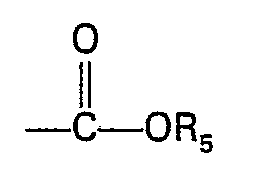


Applications Claiming Priority (2)
| Application Number | Priority Date | Filing Date | Title |
|---|---|---|---|
| US06/068,135 US4252739A (en) | 1979-08-20 | 1979-08-20 | Process for the preparation of vinylcyclopropane derivatives |
| US68135 | 1979-08-20 |
Publications (2)
| Publication Number | Publication Date |
|---|---|
| EP0025846A1 EP0025846A1 (de) | 1981-04-01 |
| EP0025846B1 true EP0025846B1 (de) | 1984-03-07 |
Family
ID=22080633
Family Applications (1)
| Application Number | Title | Priority Date | Filing Date |
|---|---|---|---|
| EP80104651A Expired EP0025846B1 (de) | 1979-08-20 | 1980-08-06 | Verbessertes Verfahren zur Herstellung von Vinylcyclopropan-Derivaten |
Country Status (6)
| Country | Link |
|---|---|
| US (1) | US4252739A (de) |
| EP (1) | EP0025846B1 (de) |
| JP (1) | JPS5645425A (de) |
| BR (1) | BR8005243A (de) |
| CA (1) | CA1154789A (de) |
| DE (1) | DE3066836D1 (de) |
Families Citing this family (16)
| Publication number | Priority date | Publication date | Assignee | Title |
|---|---|---|---|---|
| US4418202A (en) * | 1981-12-21 | 1983-11-29 | Emery Industries, Inc. | 2-Vinyl- and 2-ethylcyclopropane monocarboxylates |
| US4469891A (en) * | 1982-02-04 | 1984-09-04 | National Distillers And Chemical Corporation | Substituted-cyclopropyl sulfones |
| US4446077A (en) * | 1982-02-04 | 1984-05-01 | National Distillers And Chemical Corporation | Substituted-cyclopropyl sulfones |
| US4399076A (en) * | 1982-02-22 | 1983-08-16 | National Distillers And Chemical Corporation | 1,1-Disubstituted 2-vinyl- and 2-ethylcyclopropanes |
| IE57582B1 (en) * | 1983-06-13 | 1993-01-13 | Nat Distillers Chem Corp | Dihydrofuran derivatives useful as aroma chemicals and process for their preparation |
| US4487946A (en) * | 1983-06-13 | 1984-12-11 | National Distillers And Chemical Corporation | Process for the isomerization of cyclopropyl ketones to 2,3-dihydrofurans |
| US4642399A (en) * | 1984-11-29 | 1987-02-10 | Mallinckrodt, Inc. | Method for producing fluoronitrobenzene compounds |
| US4973771A (en) * | 1986-01-06 | 1990-11-27 | Mallinckrodt, Inc. | Phase transfer catalysts |
| US4927980A (en) * | 1986-01-06 | 1990-05-22 | Mallinckrodt Inc. | Catalytic method for producing fluoroaromatic compounds using branched alkyl pyridinium salts |
| CA1295623C (en) * | 1986-11-28 | 1992-02-11 | Clarence E. Clark, Jr. | Process for the preparation of dialkyl 2- vinylcyclopropane-1,1-dicarboxylates |
| US4713478A (en) * | 1986-11-28 | 1987-12-15 | National Distillers And Chemical Corporation | Process for the preparation of dialkyl 2-vinylcyclopropane-1,1-dicarboxylates |
| US4713479A (en) * | 1986-11-28 | 1987-12-15 | National Distillers And Chemical Corporation | Synthesis of high-purity dialkyl 2-vinylcyclopropane-1,1-dicarboxylate |
| US4736056A (en) * | 1986-12-15 | 1988-04-05 | Smith Oliver W | Process for the production of malonic acid derivative compounds |
| US4973772A (en) * | 1987-02-07 | 1990-11-27 | Mallinckrodt, Inc. | Catalytic method for producing fluoroarmatic compounds using substituted pyridinium salts |
| US9061991B2 (en) | 2010-02-16 | 2015-06-23 | Api Corporation | Method for producing 1-amino-1-alkoxycarbonyl-2-vinylcyclopropane |
| RU2615765C1 (ru) * | 2016-04-11 | 2017-04-11 | Федеральное государственное бюджетное образовательное учреждение высшего профессионального образования "Уфимский государственный нефтяной технический университет" | Способ получения диалкилциклопент-3-ен-1,1-дикарбоксилата |
Family Cites Families (3)
| Publication number | Priority date | Publication date | Assignee | Title |
|---|---|---|---|---|
| BE827651A (fr) * | 1975-04-07 | 1975-10-07 | Nouveau procede de preparation d'esters d'acide chrysanthemique | |
| US3974199A (en) * | 1975-06-16 | 1976-08-10 | The Dow Chemical Company | Process for production of cyclopropylcyanide |
| DE2710174A1 (de) * | 1977-03-09 | 1978-09-14 | Bayer Ag | Verfahren zur herstellung von dihalogenvinyl-cyclopropancarbonsaeuren und deren ester |
-
1979
- 1979-08-20 US US06/068,135 patent/US4252739A/en not_active Expired - Lifetime
-
1980
- 1980-08-06 EP EP80104651A patent/EP0025846B1/de not_active Expired
- 1980-08-06 DE DE8080104651T patent/DE3066836D1/de not_active Expired
- 1980-08-11 CA CA000357951A patent/CA1154789A/en not_active Expired
- 1980-08-18 JP JP11275780A patent/JPS5645425A/ja active Granted
- 1980-08-19 BR BR8005243A patent/BR8005243A/pt unknown
Also Published As
| Publication number | Publication date |
|---|---|
| JPH0159253B2 (de) | 1989-12-15 |
| CA1154789A (en) | 1983-10-04 |
| US4252739A (en) | 1981-02-24 |
| JPS5645425A (en) | 1981-04-25 |
| EP0025846A1 (de) | 1981-04-01 |
| DE3066836D1 (en) | 1984-04-12 |
| BR8005243A (pt) | 1981-03-04 |
Similar Documents
| Publication | Publication Date | Title |
|---|---|---|
| US4252739A (en) | Process for the preparation of vinylcyclopropane derivatives | |
| US4133833A (en) | Production of N,N-di(ethyl)-meta-toluamide from meta-toluic acid by liquid phase catalytic reaction with diethylamine | |
| US4550216A (en) | Catalyst for the metathesis of olefins | |
| US5003084A (en) | Process for preparing alkylene carbonates | |
| US3397223A (en) | Preparation of cyclopropane derivatives | |
| US4400551A (en) | Process for the production of acetaldehyde and ethanol | |
| US4328168A (en) | Process for the preparation of vinylcyclopropane derivatives | |
| Malacria et al. | Stereospecific cobalt-mediated enediyne cyclization involving a tetrasubstituted double bond: one-step construction of the hydrophenanthrene nucleus incorporating two adjacent quaternary centers | |
| US3974199A (en) | Process for production of cyclopropylcyanide | |
| US4309357A (en) | Process for preparing dienoic acids | |
| US2491834A (en) | Production of 1,4-dihalobutanes | |
| US4196151A (en) | Process for producing β,γ-unsaturated aldehyde | |
| EP0050762B1 (de) | Verfahren zur Herstellung von Vinylcyclopropanderivaten | |
| JPS6324999B2 (de) | ||
| EP0039173B1 (de) | Verfahren zur Herstellung cyano-substituierter Benzyl-Ester-Insektizide | |
| US5866731A (en) | Process for producing halogenated organic compound | |
| US5510509A (en) | Preparation of esters of cyclopropane-1,1-dicarboxylic acid | |
| JP3069925B2 (ja) | シクロアルカノンの製造方法 | |
| EP0220792B1 (de) | Verfahren zur Herstellung von 2-Arylpropionaldehyden | |
| JPS6212770B2 (de) | ||
| CA1094103A (en) | 2-cyanohexanoic acid derivatives | |
| JPS6157525A (ja) | メチルペンタジエンの製造方法 | |
| US5430202A (en) | Process for the preparation of substantially fluorinated alkyl bromides | |
| JPS6133180A (ja) | エポキシ化合物の製造方法 | |
| US3219682A (en) | Method of producing cyclic ethyleneboronates |
Legal Events
| Date | Code | Title | Description |
|---|---|---|---|
| PUAI | Public reference made under article 153(3) epc to a published international application that has entered the european phase |
Free format text: ORIGINAL CODE: 0009012 |
|
| AK | Designated contracting states |
Designated state(s): BE CH DE FR GB LI NL |
|
| 17P | Request for examination filed |
Effective date: 19810923 |
|
| GRAA | (expected) grant |
Free format text: ORIGINAL CODE: 0009210 |
|
| RAP1 | Party data changed (applicant data changed or rights of an application transferred) |
Owner name: NATIONAL DISTILLERS AND CHEMICAL CORPORATION |
|
| AK | Designated contracting states |
Designated state(s): BE CH DE FR GB LI NL |
|
| REF | Corresponds to: |
Ref document number: 3066836 Country of ref document: DE Date of ref document: 19840412 |
|
| ET | Fr: translation filed | ||
| PLBE | No opposition filed within time limit |
Free format text: ORIGINAL CODE: 0009261 |
|
| STAA | Information on the status of an ep patent application or granted ep patent |
Free format text: STATUS: NO OPPOSITION FILED WITHIN TIME LIMIT |
|
| 26N | No opposition filed | ||
| PGFP | Annual fee paid to national office [announced via postgrant information from national office to epo] |
Ref country code: GB Payment date: 19930708 Year of fee payment: 14 |
|
| PGFP | Annual fee paid to national office [announced via postgrant information from national office to epo] |
Ref country code: FR Payment date: 19930808 Year of fee payment: 14 |
|
| PGFP | Annual fee paid to national office [announced via postgrant information from national office to epo] |
Ref country code: DE Payment date: 19930825 Year of fee payment: 14 |
|
| PGFP | Annual fee paid to national office [announced via postgrant information from national office to epo] |
Ref country code: NL Payment date: 19930831 Year of fee payment: 14 |
|
| PGFP | Annual fee paid to national office [announced via postgrant information from national office to epo] |
Ref country code: CH Payment date: 19931005 Year of fee payment: 14 |
|
| PGFP | Annual fee paid to national office [announced via postgrant information from national office to epo] |
Ref country code: BE Payment date: 19931028 Year of fee payment: 14 |
|
| PG25 | Lapsed in a contracting state [announced via postgrant information from national office to epo] |
Ref country code: GB Effective date: 19940806 |
|
| PG25 | Lapsed in a contracting state [announced via postgrant information from national office to epo] |
Ref country code: LI Effective date: 19940831 Ref country code: CH Effective date: 19940831 Ref country code: BE Effective date: 19940831 |
|
| BERE | Be: lapsed |
Owner name: NATIONAL DISTILLERS AND CHEMICAL CORP. Effective date: 19940831 |
|
| PG25 | Lapsed in a contracting state [announced via postgrant information from national office to epo] |
Ref country code: NL Effective date: 19950301 |
|
| GBPC | Gb: european patent ceased through non-payment of renewal fee |
Effective date: 19940806 |
|
| NLV4 | Nl: lapsed or anulled due to non-payment of the annual fee | ||
| PG25 | Lapsed in a contracting state [announced via postgrant information from national office to epo] |
Ref country code: FR Effective date: 19950428 |
|
| REG | Reference to a national code |
Ref country code: CH Ref legal event code: PL |
|
| PG25 | Lapsed in a contracting state [announced via postgrant information from national office to epo] |
Ref country code: DE Effective date: 19950503 |
|
| REG | Reference to a national code |
Ref country code: FR Ref legal event code: ST |