EP0027338A1 - Procédé de moulage d'un tissu - Google Patents
Procédé de moulage d'un tissu Download PDFInfo
- Publication number
- EP0027338A1 EP0027338A1 EP80303479A EP80303479A EP0027338A1 EP 0027338 A1 EP0027338 A1 EP 0027338A1 EP 80303479 A EP80303479 A EP 80303479A EP 80303479 A EP80303479 A EP 80303479A EP 0027338 A1 EP0027338 A1 EP 0027338A1
- Authority
- EP
- European Patent Office
- Prior art keywords
- cloth
- mold
- fabric
- layer
- foam
- Prior art date
- Legal status (The legal status is an assumption and is not a legal conclusion. Google has not performed a legal analysis and makes no representation as to the accuracy of the status listed.)
- Granted
Links
Images
Classifications
-
- B—PERFORMING OPERATIONS; TRANSPORTING
- B29—WORKING OF PLASTICS; WORKING OF SUBSTANCES IN A PLASTIC STATE IN GENERAL
- B29C—SHAPING OR JOINING OF PLASTICS; SHAPING OF MATERIAL IN A PLASTIC STATE, NOT OTHERWISE PROVIDED FOR; AFTER-TREATMENT OF THE SHAPED PRODUCTS, e.g. REPAIRING
- B29C44/00—Shaping by internal pressure generated in the material, e.g. swelling or foaming ; Producing porous or cellular expanded plastics articles
- B29C44/02—Shaping by internal pressure generated in the material, e.g. swelling or foaming ; Producing porous or cellular expanded plastics articles for articles of definite length, i.e. discrete articles
- B29C44/12—Incorporating or moulding on preformed parts, e.g. inserts or reinforcements
- B29C44/14—Incorporating or moulding on preformed parts, e.g. inserts or reinforcements the preformed part being a lining
- B29C44/146—Shaping the lining before foaming
-
- B—PERFORMING OPERATIONS; TRANSPORTING
- B32—LAYERED PRODUCTS
- B32B—LAYERED PRODUCTS, i.e. PRODUCTS BUILT-UP OF STRATA OF FLAT OR NON-FLAT, e.g. CELLULAR OR HONEYCOMB, FORM
- B32B27/00—Layered products comprising a layer of synthetic resin
- B32B27/12—Layered products comprising a layer of synthetic resin next to a fibrous or filamentary layer
-
- B—PERFORMING OPERATIONS; TRANSPORTING
- B29—WORKING OF PLASTICS; WORKING OF SUBSTANCES IN A PLASTIC STATE IN GENERAL
- B29C—SHAPING OR JOINING OF PLASTICS; SHAPING OF MATERIAL IN A PLASTIC STATE, NOT OTHERWISE PROVIDED FOR; AFTER-TREATMENT OF THE SHAPED PRODUCTS, e.g. REPAIRING
- B29C51/00—Shaping by thermoforming, i.e. shaping sheets or sheet like preforms after heating, e.g. shaping sheets in matched moulds or by deep-drawing; Apparatus therefor
- B29C51/14—Shaping by thermoforming, i.e. shaping sheets or sheet like preforms after heating, e.g. shaping sheets in matched moulds or by deep-drawing; Apparatus therefor using multilayered preforms or sheets
- B29C51/145—Shaping by thermoforming, i.e. shaping sheets or sheet like preforms after heating, e.g. shaping sheets in matched moulds or by deep-drawing; Apparatus therefor using multilayered preforms or sheets having at least one layer of textile or fibrous material combined with at least one plastics layer
-
- B—PERFORMING OPERATIONS; TRANSPORTING
- B32—LAYERED PRODUCTS
- B32B—LAYERED PRODUCTS, i.e. PRODUCTS BUILT-UP OF STRATA OF FLAT OR NON-FLAT, e.g. CELLULAR OR HONEYCOMB, FORM
- B32B27/00—Layered products comprising a layer of synthetic resin
- B32B27/06—Layered products comprising a layer of synthetic resin as the main or only constituent of a layer, which is next to another layer of the same or of a different material
- B32B27/08—Layered products comprising a layer of synthetic resin as the main or only constituent of a layer, which is next to another layer of the same or of a different material of synthetic resin
-
- B—PERFORMING OPERATIONS; TRANSPORTING
- B32—LAYERED PRODUCTS
- B32B—LAYERED PRODUCTS, i.e. PRODUCTS BUILT-UP OF STRATA OF FLAT OR NON-FLAT, e.g. CELLULAR OR HONEYCOMB, FORM
- B32B5/00—Layered products characterised by the non- homogeneity or physical structure, i.e. comprising a fibrous, filamentary, particulate or foam layer; Layered products characterised by having a layer differing constitutionally or physically in different parts
- B32B5/22—Layered products characterised by the non- homogeneity or physical structure, i.e. comprising a fibrous, filamentary, particulate or foam layer; Layered products characterised by having a layer differing constitutionally or physically in different parts characterised by the presence of two or more layers which are next to each other and are fibrous, filamentary, formed of particles or foamed
- B32B5/24—Layered products characterised by the non- homogeneity or physical structure, i.e. comprising a fibrous, filamentary, particulate or foam layer; Layered products characterised by having a layer differing constitutionally or physically in different parts characterised by the presence of two or more layers which are next to each other and are fibrous, filamentary, formed of particles or foamed one layer being a fibrous or filamentary layer
-
- B—PERFORMING OPERATIONS; TRANSPORTING
- B32—LAYERED PRODUCTS
- B32B—LAYERED PRODUCTS, i.e. PRODUCTS BUILT-UP OF STRATA OF FLAT OR NON-FLAT, e.g. CELLULAR OR HONEYCOMB, FORM
- B32B5/00—Layered products characterised by the non- homogeneity or physical structure, i.e. comprising a fibrous, filamentary, particulate or foam layer; Layered products characterised by having a layer differing constitutionally or physically in different parts
- B32B5/22—Layered products characterised by the non- homogeneity or physical structure, i.e. comprising a fibrous, filamentary, particulate or foam layer; Layered products characterised by having a layer differing constitutionally or physically in different parts characterised by the presence of two or more layers which are next to each other and are fibrous, filamentary, formed of particles or foamed
- B32B5/24—Layered products characterised by the non- homogeneity or physical structure, i.e. comprising a fibrous, filamentary, particulate or foam layer; Layered products characterised by having a layer differing constitutionally or physically in different parts characterised by the presence of two or more layers which are next to each other and are fibrous, filamentary, formed of particles or foamed one layer being a fibrous or filamentary layer
- B32B5/245—Layered products characterised by the non- homogeneity or physical structure, i.e. comprising a fibrous, filamentary, particulate or foam layer; Layered products characterised by having a layer differing constitutionally or physically in different parts characterised by the presence of two or more layers which are next to each other and are fibrous, filamentary, formed of particles or foamed one layer being a fibrous or filamentary layer another layer next to it being a foam layer
-
- B—PERFORMING OPERATIONS; TRANSPORTING
- B29—WORKING OF PLASTICS; WORKING OF SUBSTANCES IN A PLASTIC STATE IN GENERAL
- B29K—INDEXING SCHEME ASSOCIATED WITH SUBCLASSES B29B, B29C OR B29D, RELATING TO MOULDING MATERIALS OR TO MATERIALS FOR MOULDS, REINFORCEMENTS, FILLERS OR PREFORMED PARTS, e.g. INSERTS
- B29K2313/00—Use of textile products or fabrics as reinforcement
Definitions
- This invention relates to a method of molding cloth, and more particularly, to a method of molding a multi-layer, vacuum-formable cloth which may be employed as the outer covering of seat cushions, acoustical dividers and the like.
- the traditional method of making upholstered seat cushions involves: 1) cutting the cover material according to an appropriate pattern; 2) sewing the cut material; and 3) stuffing the cushion.
- High labor costs result, since, in many situations, the cutting and sewing operations are extensive and much must be performed by hand.
- a molding process was devised for manufacturing seat cushions comprising a foam portion having an integral vinyl cover.
- the vinyl covering is first heated and then drawn into a cold mold by means of a vacuum between the vinyl and the mold. As the vinyl cools, it assumes the contours of the mold. Foam is then poured into the mold to form the integral foam portion of the seat cushion. This process significantly reduces manufacturing costs and results in a superior seat.
- cloth has many advantages over vinyl. Specifically, cloth is water vapor permeable. Perspiration that normally collects behind a person sitting in a vinyl seat can pass through cloth and be evaporated so that cloth feels cooler during warm weather and warmer during cold weather. Furthermore, the feel of the cloth, the "hand”, is much more luxurious and elegant.
- U.S. Patent 3,954,537 to Alfter et al discloses a process for producing multi-layer sheets having a polyurethane foam layer bonded to a cross-linked polyethylene foam layer. Alfter et al discloses that it is particularly advantageous to join the foam layers with further layers such as fabric to form upholstery components. Alfter relies on the strength of the bond between the polyurethane foam and polyethylene foam to accomplish the molding. However polyurethane foam in an uncured state can easily change shape.
- German Offenlegungsschrift 2,227,143 to Bayer AG discloses a seat cushion with a textile cover and a foam core.
- a fabric is bonded to a polyether-urethane foam layer which in turn is bonded to a film sealing layer.
- This multi-layer fabric is first heated to 70°C (158°F) and then drawn into a mold. A soft foam is then poured into the mold to form a seat cushion.
- the nearly universal method of making fabric induces characteristics in the fabric which tend to work against a cloth molding process. After a fabric is knitted or woven, the fabric may then be bleached and either piece dyed or printed (provided the yarn forming the fabric had not been dyed). After dyeing (or after knitting or weaving, if yarn dyeing was employed) the fabric is subjected to any one of a number of processes which are collectively called finishing.
- tentering which sets the dimensions of a piece of fabric after knitting or weaving and dyeing.
- a tentering machine stretches the preferably wet fabric to shape as the fabric is passed over a source of heat. The heat serves to set the fabric stitch so that the fabric maintains the desired dimensions after removal from the tentering machine.
- a process for molding cloth including a fabric layer having a heat-fixable fiber which, in a preferred embodiment has never been thermally set, and an elastic composition layer bonded to the fabric layer comprises drawing the cloth into a mold, heating the cloth to at least the heat-fixable fiber set temperature, and cooling the cloth so as to set the heat-fixable fiber of the cloth to the shape of the mold.
- the elastic composition layer may include a thermoplastic film layer, in which case the cloth is heated to atleast the greater of the set temperature of the heat-fixable fiber and the softening temperature of the film layer whereby, on cooling, both the heat-fixable fiber and the film layer are set to. the shape of the mold.
- a process for molding cloth which includes a fabric layer the stitches of which have never been thermally set and an elastic composition layer bonded to the fabric layer, comprises drawing the cloth into the mold and fixing, for example, by heating to the fiber set temperature, the shape of the cloth to maintain the contours of the mold.
- the mold may already be heated to at least the fabric set temperature when the cloth is drawn into the mold.
- the heated cloth is then transferred and wade to conform to a mold having a temperature below the fabric set temperature, or, alternatively, the initial mold is cooled.
- the fabric stitch is set to the precise contours of the mold.
- a cloth having a fabric layer which has never been heat set and bonded to an elastic Preferably thermoplastic, composition layer- is drawn into the mold by the vacuum between the cloth and the mold.
- the mold has been or is then heated to a temperature sufficient to set the stitch of the fabric.
- the cloth is then transferred to and drawn into an identically shaped mold having a lower temperature (also at part of the setting process), or, alternatively, the initial mold is cooled, after which foam is poured into the cooler mold.
- the other portion of the mold is positioned and the poured-in-place foam is permitted to expand.
- a finished seat cushion is then extracted from the mold.
- the fabric stitch is heat set to the shape of the mold. Therefore, the fabric layer works together with the underlying elastic composition layer so that the cloth or cushion maintains the shape of the mold after removal.
- the molding process tends to finish the cloth.
- the fabric stitch Since the fabric stitch has not been previously heat set, the fabric is able to stretch sufficiently to conform to intricate mold patterns.
- the cloth of the present invention will also conform to fine mold details.
- the surface of the mold may be patterned with a known cloth texture or even a texture that is impossible to weave or knit.
- An inlay can even be inserted in the mold to either give cloth different textures, or to add additional contours to a basic mold design.
- the present invention makes possible the exact duplication of shapes.
- the inaccuracies of sewn construction are eliminated.
- the durability of the resulting cushion is improved because the cloth composite and the polyurethane poured-in-place foam act as a unit. This improves the life of the cover, because it flexes with the foam rather than independent of it.
- the present invention may be employed to mold cloth for any conceivable application.
- Such applications include automotive vehicle seats, aviation seats, and dental chair cushions, drafting stool cushions, other seating applications; padding for headboards, baby carriages, bar fronts, church kneelers, boots, school buses, and hand rails; and paneling and wall coverings for elevators, offices, tables, and kitchen cabinets.
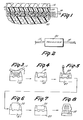
- cloth 10 includes fabric layer 12 bonded to elastic composition layer 14.
- Fabric layer 12 is the exterior, decorative layer which enhances the appearance of the product resulting from the present invention. Also, the use of fabric enhances the thermal comfort of the product due to the air-flow through the fabric.
- Fabric layer 12 may be either knitted or woven. Knitted fabrics may be either warp knit or circular knit, single knit or double knit. Nearly any natural, artificial or synthetic material may be employed such as wool, cotton, polyamide, polyester, vinyl chloride, vinyl chloride acrylonitrile (modacrylic) or polyacryl fibers.
- Molding intricate patterns is more easily accomplished with fabrics having greater stretch. Therefore, the process is more easily performed with knitted materials than woven material since knitting produces a more elastic fabric than weaving.
- Polyamide such as type 6 and type 6.6, polyester, vinyl cloride, vinyl chloride acrylonitrile copolymers, elastomer urethane and polyacryl fibers are preferable materials for weaving due to their inherent elasticity.
- the use as a ground yarn of the fabric of any of the texturized polyamide or polyester high elasticity yarns, or very high thermoplastic yarns like vinyl chloride and vinyl chloride acrylonitrile aids the molding process.
- Some fabrics are more easily heat set than others.
- polyamide, polyester, vinyl chloride, vinyl chloride acrylonitrile are more easily heat set than cotton and wool.
- the fabric stitch never has been thermally set.
- Many of the fabric finishing steps such as tentering, calendering and shrinkage control heat the fabric, thus setting the stitch.
- the concept of setting the stitch is well known in the art and is easily measured by comparing the degree of elasticity of a fabric immediately after weaving or knitting, and again after finishing. If the fabric has become heat set during the finishing process, the elasticity is greatly reduced.
- employing heat to dry a fabric sets the fabric stitch. Tensioning the fabric while it is heated increases the degree to which the stitch is set.
- the temperature to which a fabric may be heated before the stitch becomes set varies with the type of fabric.
- the stitch of a polyamide fabric may become set at a temperaure of 93°C (200°F).
- normal finishing may be employed since sufficient stretch remains in the fabric after finishing.
- elastic composition layer 14 includes foam layer 16 and film layer 18.
- Foam layer 16 must have good adhesion to both fabric 12 and film 18.
- Foam layer 16 is preferably any typical open microcell soft foam.
- the preferred embodiment employs polyester-type polyurethane foam, although other foams are suitable, such as polyester-polyether-type polyurethane.
- An advantage of polyester-type polyurethane is that it has a better "memory". Polyester-type foam tends to retain the shape in which it was molded better than polyether-type polyurethane foam.
- Foam layer 16 allows movement of fabric 12 relative to film 18 and prevents the rupture of film 18 that might result from elongation of cloth 10 if fabric 12 were directly attached to film 18. Obviously, if an alternative method is employed to prevent rupturing, foam layer 16 would not be necessary.
- Foam layer 16 also improves the "hand" or feel of cloth 10. Since foam 16 is preferably open celled, air may circulate through the foam thus improving the thermal comfort of the seat. Neoprene foam may also be used; however, it is less desirable since it is a closed cell foam.
- foam 16 is 1.5-6 millimeters (mm) thick and has a density of 30-60 Kg/m 3 . Also, foam 16 should stretch 300-400% before breaking. As the density of the foam increases, the degree to which the foam will stretch before breaking increases.
- the appropriate thickness of the foam should be determined by the particular application.
- the foam must not be so thick as to cause intricate patterns in a design to spring back after removal from the mold.
- a thicker foam layer enhances the hand and air permeability of the cloth.
- Film layer 18 may be any elastic, preferably heat-fixable, film which can adhere to both foam layer 16 and poured-in-place foam 20. Film 18 is preferably 0.03-0.7mm thick and is able to withstand a 400% surface deformation. For the invention to work properly, the stretch limits of elastic composition layer 14 must be approximately equal to or exceeding the stretch limits of fabric 12.
- the film should have a reasonably long life, must resist dry cleaning solvent, and not be affected by water, humidity or oxidizing agents.
- the film 18 One purpose of the film 18 is to guarantee that the cloth is air tight so that it may be drawn into the mold by a vacuum. Another purpose is to prevent poured-in-place foam 20 from penetrating through fabric 12, thus ruining the aesthetic value of the product. Furthermore, the film must resist the chemical products in the poured-in-place foam.
- film 18 is polyvinyl chloride film. This film is closed cellular, and is well suited because it is a thermoplastic material. However, it hardens when plasticizers in the film migrate. Newly developed polymeric plasticizers may be employed to overcome the migration problem. If polyvinyl chloride is utilized as film 18, the thickness is preferably 0.1-0.3mm.
- the polyvinyl chloride film of the preferred embodiment has the following composition (% by weight of total):
- FIGURE 1 illustrates polyvinyl chloride layer 22 coated on both sides with polyurethane film layers 24 and 26.
- Film layer 24 is preferably about 20 microns thick, while film layer 26 is preferably about 6 microns thick.
- Polyurethane film layers 24 and 26 permit bonding of polyvinyl chloride 22 to poured-in-place foam 20.
- Polyurethane coatings 24 and 26 also help stop the migration of plasticizers in polyvinyl chloride film 22.
- Polyester-type polyurethane film may also be employed as film layer 18.
- This film is highly deformable with a poor memory under heat, because it is thermoplastic. These characteristics are obviously advantageous in the molding process of the present invention. It appears that a thickness of 0.2-0.6mm is preferred. Another advantage of this film is that it is water vapor permeable, enhancing the thermal comfort of the finished product.
- Rubber may also be employed as film 18.
- the rubber must be unvulcanized and may be either natural or synthetic. The same type of rubber product that is used in bed sheeting is ideal.
- EVA Ethylene vinyl acetate copolymer
- This film is an elastomer and exhibits good stretch and poor memory at higher temperatures.
- EVA is sensitive to high temperatures. At about 150°C it begins to melt and form pin holes. EVA is weak in resisting abrasion. Pin holes form readily from handling.
- the film may be made by a rubber calendering system with which large quantities can be easily produced.
- neoprene film A number of other films may also be used such as neoprene film.
- Polyvinyl chloride film 22 and polyurethane elastomer films 24 and 26 may be applied to foam interlayer 16 by a transfer process, well known in the art. Specifically, each film is applied as a liquid, the thickness being controlled by a blade. The film is then heated to jellification temperature by infra-red lamps. A second controlled thickness is applied and heated after polyurethane foam 16 is applied, the films pass through calender rolls at room temperaure, after which the film is baked under infra-red lamps. If unvulcanized rubber is employed as film 18, it is passed between calender rollers heated to a temperature less than the vulcanizing temperature.
- film layer 18 may be glued directly to fabric 12 using, for example, acrylic glue. When film 18 is applied to foam layer 16, the foam must be relaxed and not under tension.
- Cloth 10 as described above and illustrated in FIGURE 1, is ideally suited for molding.
- Cloth 10 is first cut to size and, as illustrated in FIGURE 2, preheated to a temperature greater than the temperature at which fabric layer 12 is heat set and film layer 18 loses its memory (its softening temperature). Either radiant heat or heated air may be employed.
- a temperature of between 138°C (280°F) and 160°C (320°F) has been found ideal.
- hot cloth 10 is inserted in female mold portion 28 as illustrated in FIGURE 3.
- a hollow chamber lies directly beneath the outer contours of mold 28 to which the cloth must conform. Pin holes pass thorugh the outer contours so that the chamber communicates with the outside environment.
- a vacuum is applied to the chamber, thus drawing cloth 10 placed over mold 28 onto the outer contours, as illustrated in FIGURE 4. To insure that cloth 10 does perfectly conform to the contours of mold 28, more pin holes must be located near sharply varying contours of mold 28 than in the more flat portions of mold 28.
- Cloth 10 must be heat set in mold 28 to maximize its ability to retain its shape after the molding process. To this end, mold 28 is heated to the heat set temperature when cloth 10 is drawn therein. A temperature of 149°C-182°C (300-360°F) has been found advantageous in the preferred embodiment. Cloth 10 may then be transferred to a cooler mold 29 (see FIGURE 5) to enable the temperature of cloth 10 to drop at least 17-27°C (30-50°F) to finish the setting process. Alternatively, mold 28 may be cooled to the same temperature. After the temperature of cloth 10 has been raised to 160°C and then cooled at least 17°C, the stitch in fabric 12 is set in the shape of the mold, and therefore, cloth 10 is less likely to lose its shape after it is removed from the mold. Also, since cloth 10 is pressed against the mold walls while it is heated, the molding process finishes fabric 12.
- Foam 20 may then be poured into the cool mold in its liquid state.
- Cold cure polyether-type polyurethane foam may be employed, although any foam that adheres to film layer 18 may be used.
- a rigid or structural foam may be employed, in which case the product may be used as a seat back, an arm rest, interior molding, or the like. Since a cold cure foam is used in the preferred embodiment, it is desirable that the female mold have a temperature below 38°C (about 100°F).
- Male mold portion 32 is then placed over the female portion as illustrated in FIGURE 6. After approximately 15 minutes foam 20 has fully expanded within the mold. The finished product may then be extractred from the female mold portion as illustrated in FIGURE 7. Thereafter, the cells of poured-in-place foam 20 may be broken by pressure applied by rollers, paddles, or the like. This increases the resiliency of the product, prevents shrinkage due to the contraction of gas within the cells upon cooling, and facilitates the circulation of air within a seat to improve the thermal comfort thereof. The result is a finished seat cushion, or the like, as illustrated in FIGURE 8.
- the ease of molding cloth 10 depends largely on the material used as fabric 12 and the intricacy of mold 28.
- relatively inelastic fabrics and complex molds may be employed.
- the use of the process of the present invention enables cloth to be molded that has never been successfully molded before.
- the present invention permits the use of molds of greater complexity than has ever been successfully used.
- the surface of mold 28 which contacts cloth 10 may be patterned according to a known cloth texture or even a texture that is impossible to weave or knit. Cloth 10 will take on this fine pattern and appear similar to the cloth the mold was patterned after. For example, smooth knit material can be given the appearance of a Harris Tweed, or even burlap.
- mold 28 may be modified to accept inlays containing the various patterns. In this case, the same mold could be used to apply any number-of patterns.
- inlays greatly increases the flexibility of the molding process.
- almost anything can be placed in the mold as an inlay.
- Wire mesh can be placed in the mold to product a rectangular or diamond pattern. If a case for an instrument or tool is being molded, the actual instrument or tool can be placed in-the mold, so that a recess is formed having the shape of the object to be inserted therein.
- cloth 10 may be cut to size, placed in a frame and heated by air to a temperature of 121°-160°C (250°-320°F) while being pulled down into a female mold by means of a vacuum between the mold and cloth 10. The heat at this time sets the various layers of the cloth to the contours of the mold. The mold, together with cloth 10, may then be allowed to cool to about 38°C (l00°F).
- Foam 20 may then be poured into the mold in its liquid state.
- Cold cure, polyether-type polyurethane foam is preferably employed, although any foam that adheres to film layer 18 may be used. Since a cold cure foam is used in the preferred embodiment, either female mold 28 must be cooled to a temperature below 38°C (about 100°F), or cloth 10 must be transferred to a cool female mold.
- the male mold portion is then placed over the female portion. After approximately fifteen minutes foam 20 will have fully expanded and the finished product may then be extracted.
- cloth 10 may be held to conform to the mold shape by the foam core or any other method well known in the prior art. The important point is that if the fabric stitch has not been previously heat set, the fabric will be able to stretch sufficiently to conform to intricate mold patterns.
- a moldable cloth was prepared by flame-bonding a double knit polyamide fabric to an elastic composition substrate.
- the fabric was made of texturized stretch yarn that had been piece dyed after knitting.
- the elastic composition substrate included an open cell polyester-type polyurethane foam layer which had been cast or laid on a polyvinyl chloride film layer.
- the foam had between 90 and 100 pores per cubic inch, a density of 33 Kg/m 3 and a tensile strength of 300% elongation before breaking.
- the thickness of the foam was 3mm.
- the film had a thickness of 0.3mm and the following composition (% by weight):
- the polyvinyl chloride layer On either side of the polyvinyl chloride layer was a layer of hydrolytically stable urethane to improve the adhesion between the poured-in-place polyurethane foam and the polyvinyl chloride.
- the thickness of the urethane film between the fabric and the polyvinyl chloride was 20 microns, and the thickness of the film between the polyvinyl chloride and the poured-in-place polyurethane foam was 6 microns.
- a seat cushion was made, employing this cloth, by first cutting the cloth to the required size, placing it in a frame, and heating it with radiant heat to a temperature of 160°C (320°F). While the cloth was still hot, it was drawn into the female portion of a mold by means of a vacuum between the mold and the cloth. The cloth readily conformed to the contours of the mold. The mold had been heated to a temperature of 171°C (340°F). The heat of the cloth in the mold was sufficient to set the stitch of the fabric, and set the film.
- the cloth was then transferred to a female mold heated to 37°C (99°F). Placing the hot cloth in the hot mold, followed by transfer to the cooler mold was sufficient to set the stitch of the fabric and the elastic composition layer to the shape of the mold.
- a polyether-type polyurethane foam with a density of 52 Kg/m 3 was then poured-in-place. The male portion of the mold was placed over the female portion and the foam was permitted to expand for fifteen minutes. The product was then removed from the mold. Thereafter, the poured polyurethane cells were broken by pressure, and the product, a molded, poured-in-place cushion, was complete.
- a moldable cloth was prepared in the same manner as in Example 1 except that the fabric was yarn dyed.
- the polyurethane foam of the elastic composition substrate had a density of 35 Kg/m 3 and a thickness of 1.5mm. Also, the thickness of the polyvinyl chloride film was 0.15mm.
- a seat cushion was made employing this cloth by cutting the cloth to size, placing the cloth in a frame and heating it by radiant heat to a temperature of 149°C (300°F). The heated cloth was then drawn into the female portion of a mold preheated to a temperature of 166°C (330°F) under vacuum. The cloth readily conformed to the contours of the mold.
- the cloth was then transferred to a female mold heated to 38°C (100°F). Placing the hot cloth in the hot mold, followed by transfer to the cooler mold was sufficient to set the stitch of the fabric and the elastic composition layer to the shape of the mold.
- a polyether-type polyurethane foam, with a density of 52 Kg/m 3 was then poured-in-place. The male portion of the mold was fitted over the female portion and the foam was allowed to expand within the mold for fifteen minutes. After removal of the product, the cells of the poured-in-place polyurethane foam were broken by pressure, and the product, a molded, poured-in-place seat cushion was complete.
- a moldable cloth was prepared in the same manner as Example 1 except for the following differences.
- a yarn dyed double knit fabric having a polyamide base and a wool face was employed.
- the density of the polyurethane foam layer of the elastic composition substrate was 30 Kg/m3.
- the thickness of the polyvinylchloride film was 0.2mm.
- Example 1 The procedure of Example 1 was employed to form a seat cushion from the cloth, except for the following differences.
- the cloth was preheated by radiant heat to a temperature of 157°C (315°F).
- the female portion of the mold had been preheated to a temperature of 160°C (320°F).
- the cloth was then transferred to a female mold heated to 38°C (100°F).
- a moldable cloth was prepared as in Example 2 except for the following differences.
- a double knit polyamide and polyester combination fabric was employed.
- the density of the polyurethane foam layer of the elastic composition layer was 30 Kg/m 3 .
- the thickness of the polyvinyl chloride film was 0.25mm.
- the cloth was employed in the process of Example 2 for making a seat cushion except for the following differences.
- the female mold was preheated to a temperature of 171°C (340°F). After the cloth was placed in the hot mold, the cloth was then transferred to a female mold heated to 37°C (98°F).
- a moldable cloth was prepared in a manner similar to Example 3, except for the following differences.
- a piece dyed, single knit polyamide fabric was employed.
- the thickness of the polyurethane foam layer of the elastic composition substrate was 0.15mm.
- This cloth was utilized to mold a seat cushion in a manner similar to that of Example 3 except for the following differences.
- the cloth was preheated to a temperature of 149°C (300°F).
- the mold was preheated to a temperature of 168°C (335°F) .
- the cloth may be drawn into the male portion of the mold.
Landscapes
- Engineering & Computer Science (AREA)
- Textile Engineering (AREA)
- Mechanical Engineering (AREA)
- Casting Or Compression Moulding Of Plastics Or The Like (AREA)
- Laminated Bodies (AREA)
- Moulding By Coating Moulds (AREA)
- Blow-Moulding Or Thermoforming Of Plastics Or The Like (AREA)
Priority Applications (1)
| Application Number | Priority Date | Filing Date | Title |
|---|---|---|---|
| AT80303479T ATE7581T1 (de) | 1979-10-10 | 1980-10-02 | Verfahren zum formen eines gewebes. |
Applications Claiming Priority (2)
| Application Number | Priority Date | Filing Date | Title |
|---|---|---|---|
| US06/083,537 US4287143A (en) | 1979-03-19 | 1979-10-10 | Cloth molding process |
| US83537 | 1979-10-10 |
Publications (2)
| Publication Number | Publication Date |
|---|---|
| EP0027338A1 true EP0027338A1 (fr) | 1981-04-22 |
| EP0027338B1 EP0027338B1 (fr) | 1984-05-23 |
Family
ID=22178966
Family Applications (1)
| Application Number | Title | Priority Date | Filing Date |
|---|---|---|---|
| EP80303479A Expired EP0027338B1 (fr) | 1979-10-10 | 1980-10-02 | Procédé de moulage d'un tissu |
Country Status (4)
| Country | Link |
|---|---|
| US (1) | US4287143A (fr) |
| EP (1) | EP0027338B1 (fr) |
| AT (1) | ATE7581T1 (fr) |
| DE (1) | DE3067955D1 (fr) |
Cited By (3)
| Publication number | Priority date | Publication date | Assignee | Title |
|---|---|---|---|---|
| FR2761293A1 (fr) * | 1997-03-28 | 1998-10-02 | Lafuma Sa | Procede pour la fabrication d'un objet tridimensionnel souple en forme, constitue d'un support textile enduit d'une couche de matiere plastique |
| WO2000037230A1 (fr) * | 1998-12-21 | 2000-06-29 | Magna International Of America, Inc. | Procede de formage par le vide d'articles en plastique renforce |
| US6454974B1 (en) | 1998-12-21 | 2002-09-24 | Magna International Of America, Inc. | Method for vacuum pressure forming reinforced plastic articles |
Families Citing this family (27)
| Publication number | Priority date | Publication date | Assignee | Title |
|---|---|---|---|---|
| US4559094A (en) * | 1984-01-19 | 1985-12-17 | Sears Manufacturing Company | Process for forming cushion articles |
| EP0333236B1 (fr) * | 1984-01-19 | 1993-09-08 | Sears Manufacturing Company | Procédé pour former des articles rembourés |
| DE3440963C2 (de) * | 1984-11-09 | 1987-04-02 | Metzeler Schaum Gmbh, 8940 Memmingen | Verfahren zur Herstellung von Fahrzeugsitzen |
| US4812283A (en) * | 1986-05-02 | 1989-03-14 | Allied-Signal Inc. | Method of manufacture of formed article |
| US4663225A (en) * | 1986-05-02 | 1987-05-05 | Allied Corporation | Fiber reinforced composites and method for their manufacture |
| US5096760A (en) * | 1989-07-20 | 1992-03-17 | Creme Art Corporation | Covered soft foam article |
| FR2663880B1 (fr) * | 1990-06-29 | 1994-04-29 | Roth Sa Freres | Procede de fabrication de matelassures en mousse de polyurethane coulee in situ dans une coiffe en textile et coussin ainsi obtenu. |
| GB9124076D0 (en) * | 1991-11-13 | 1992-01-02 | Little Designs Limited | A method of producing a three-dimensional profile in a body |
| US5370444A (en) * | 1992-09-11 | 1994-12-06 | Sears Manufacturing Company | Adjustable cushion |
| US5468433A (en) * | 1993-11-18 | 1995-11-21 | Woodbridge Foam Corporation | Process for manufacturing a padded element using a cover preforming mandrel |
| TW344708B (en) * | 1995-03-06 | 1998-11-11 | Johnson Control Luh Sy Co Ltd | Process for adhesive bonding a cover to a foam padding shaped in a form of a seat cushion the invention relates to a process for the bonding by adhesion of a cover to a shaped padding, in particular of PU foam, especially for the production of seat cushions. |
| WO1998008705A1 (fr) * | 1996-08-29 | 1998-03-05 | Lear Corporation | Ensemble siege de vehicule |
| FR2801831B1 (fr) * | 1999-12-01 | 2002-02-08 | Faure Bertrand Equipements Sa | Procede de realisation d'un coussin de siege ou similaire pour un vehicule automobile |
| DE10008775C1 (de) * | 2000-02-24 | 2001-08-16 | F & G Kunststofftechnik Gmbh | Verfahren zur Herstellung eines Kunststoff-Verbundelements, insbesondere eines Innenverkleidungselements für ein Kraftfahrzeug, sowie ein solches Kunststoff- Verbundelement |
| US6503426B1 (en) * | 2000-07-06 | 2003-01-07 | David James Horwitz | Process for making foam laminates |
| JP3962589B2 (ja) * | 2002-01-10 | 2007-08-22 | 難波プレス工業株式会社 | 座席用クッションのクッション体及びその製造装置 |
| US20040062904A1 (en) * | 2002-10-01 | 2004-04-01 | Rice Jeffrey L. | Vacuum formed vehicle carpet module |
| US20040109992A1 (en) * | 2002-12-09 | 2004-06-10 | Gribble Michael Y. | Process for applying a polyurethane dispersion based foam to an article |
| US7157028B2 (en) * | 2004-06-03 | 2007-01-02 | Jer-Chin Ou | Method of making ventilative insole |
| US20080036110A1 (en) * | 2006-08-14 | 2008-02-14 | David Brooker | Foam in place seat cushion using dual fabric trim cover and featureless tool |
| FR2934195B1 (fr) * | 2008-07-24 | 2011-04-01 | Faurecia Sieges Automobile | Formage de garnitures pour sieges de vehicule automobile |
| FR3009224B1 (fr) | 2013-08-02 | 2016-01-01 | Faurecia Sieges Automobile | Procede de formage de garniture pour siege automobile |
| FR3009222B1 (fr) | 2013-08-02 | 2016-01-01 | Faurecia Sieges Automobile | Formage d'une garniture pour siege automobile |
| FR3035038B1 (fr) | 2015-04-16 | 2017-05-12 | Faurecia Sieges Automobile | Alignement de pieces de coiffe pour sieges de vehicules automobiles |
| CN108164745A (zh) * | 2017-12-28 | 2018-06-15 | 吉林大学 | 一种具有舒适性聚氨酯泡沫的制作方法 |
| DE102018212743A1 (de) * | 2018-07-31 | 2020-02-06 | Bayerische Motoren Werke Aktiengesellschaft | Vorrichtung und Verfahren zum Thermofixieren eines Gestricks |
| CN113580615B (zh) * | 2021-08-03 | 2022-02-08 | 绍兴寿春针纺织有限公司 | 一种防静电墙布生产工艺 |
Citations (10)
| Publication number | Priority date | Publication date | Assignee | Title |
|---|---|---|---|---|
| FR1327213A (fr) * | 1962-04-05 | 1963-05-17 | Procédé de fabrication de soutiens-gorge moulés | |
| FR1374589A (fr) * | 1962-10-04 | 1964-10-09 | Monsanto Chemicals | Procédé de moulage de matières thermoplastiques, notamment de tissus acryliques |
| GB1005951A (en) * | 1960-08-10 | 1965-09-29 | Ici Ltd | Improvements relating to the production of shaped or moulded articles from textile material |
| FR1441327A (fr) * | 1964-07-29 | 1966-06-03 | Gen Tire & Rubber Co | Moulage de matières plastiques renforcées |
| US3331906A (en) * | 1963-10-04 | 1967-07-18 | Du Pont | Process for preparing molded, threedimension textile articles |
| GB1086465A (en) * | 1964-07-29 | 1967-10-11 | Gen Tire & Rubber Co | Method of laminating reinforced sheet |
| DE1808519A1 (de) * | 1968-11-13 | 1970-07-23 | Triumph International Ag | Verfahren und Vorrichtung zum bleibenden Verformen von aus synthetischen Faeden bestehenden textilen Werkstoffen |
| BE804793A (fr) * | 1973-04-18 | 1974-01-02 | Tokyo Toyo Rubber Ind Co Ltd | Diaphragmes flexibles pour des compteurs a gaz et procede pour leur fabrication |
| DE2363767A1 (de) * | 1973-12-21 | 1975-06-26 | Dynamit Nobel Ag | Verformen von geweben, gewirken o.dgl. aus thermoplastischen monofilen |
| GB2006667A (en) * | 1977-09-07 | 1979-05-10 | Kohkoku Chemical Ind Co | A process of manufacturing a surface layer for a cushion body |
Family Cites Families (10)
| Publication number | Priority date | Publication date | Assignee | Title |
|---|---|---|---|---|
| CA809184A (en) | 1969-03-25 | Monsanto Company | Fabric, cushioned, molded plastic objects | |
| US3652359A (en) * | 1967-09-11 | 1972-03-28 | Stauffer Chemical Co | Process of forming upholstery |
| GB1227760A (fr) | 1967-11-18 | 1971-04-07 | ||
| US3748217A (en) * | 1971-02-24 | 1973-07-24 | Burlington Industries Inc | Lined textile fabric and method of manufacture |
| DE2227143C3 (de) | 1972-06-03 | 1978-07-20 | Bayer Ag, 5090 Leverkusen | Sitzpolster mit einem textlien Überzug und einem Schaumstoffkern und Verfahren zu dessen Herstellung |
| DE2365203B2 (de) * | 1973-12-31 | 1977-02-03 | Dynamit Nobel Ag, 5210 Troisdorf | Herstellen von mehrschichtigen bahnen, platten, formteilen |
| FR2270072B1 (fr) * | 1974-03-19 | 1976-10-08 | Sanson Joseph | |
| US3941633A (en) * | 1974-03-27 | 1976-03-02 | Seton Company | Plastic laminate, article and method of making same |
| US3933548A (en) * | 1974-08-19 | 1976-01-20 | Beatrice Foods Co. | Production of urethane foams and laminates thereof |
| US4060280A (en) * | 1976-07-08 | 1977-11-29 | American Seating Company | Flame-resistant cushion |
-
1979
- 1979-10-10 US US06/083,537 patent/US4287143A/en not_active Expired - Lifetime
-
1980
- 1980-10-02 DE DE8080303479T patent/DE3067955D1/de not_active Expired
- 1980-10-02 AT AT80303479T patent/ATE7581T1/de not_active IP Right Cessation
- 1980-10-02 EP EP80303479A patent/EP0027338B1/fr not_active Expired
Patent Citations (12)
| Publication number | Priority date | Publication date | Assignee | Title |
|---|---|---|---|---|
| GB1005951A (en) * | 1960-08-10 | 1965-09-29 | Ici Ltd | Improvements relating to the production of shaped or moulded articles from textile material |
| FR1327213A (fr) * | 1962-04-05 | 1963-05-17 | Procédé de fabrication de soutiens-gorge moulés | |
| FR1374589A (fr) * | 1962-10-04 | 1964-10-09 | Monsanto Chemicals | Procédé de moulage de matières thermoplastiques, notamment de tissus acryliques |
| GB1009826A (en) * | 1962-10-04 | 1965-11-10 | Monsanto Co | Molding process |
| US3331906A (en) * | 1963-10-04 | 1967-07-18 | Du Pont | Process for preparing molded, threedimension textile articles |
| FR1441327A (fr) * | 1964-07-29 | 1966-06-03 | Gen Tire & Rubber Co | Moulage de matières plastiques renforcées |
| GB1086465A (en) * | 1964-07-29 | 1967-10-11 | Gen Tire & Rubber Co | Method of laminating reinforced sheet |
| DE1808519A1 (de) * | 1968-11-13 | 1970-07-23 | Triumph International Ag | Verfahren und Vorrichtung zum bleibenden Verformen von aus synthetischen Faeden bestehenden textilen Werkstoffen |
| BE804793A (fr) * | 1973-04-18 | 1974-01-02 | Tokyo Toyo Rubber Ind Co Ltd | Diaphragmes flexibles pour des compteurs a gaz et procede pour leur fabrication |
| GB1435142A (en) * | 1973-04-18 | 1976-05-12 | Tokyo Toyo Rubber Ind Co Ltd | Flexible diaphragms for gas meters |
| DE2363767A1 (de) * | 1973-12-21 | 1975-06-26 | Dynamit Nobel Ag | Verformen von geweben, gewirken o.dgl. aus thermoplastischen monofilen |
| GB2006667A (en) * | 1977-09-07 | 1979-05-10 | Kohkoku Chemical Ind Co | A process of manufacturing a surface layer for a cushion body |
Cited By (5)
| Publication number | Priority date | Publication date | Assignee | Title |
|---|---|---|---|---|
| FR2761293A1 (fr) * | 1997-03-28 | 1998-10-02 | Lafuma Sa | Procede pour la fabrication d'un objet tridimensionnel souple en forme, constitue d'un support textile enduit d'une couche de matiere plastique |
| WO1998043799A1 (fr) * | 1997-03-28 | 1998-10-08 | Lafuma S.A. | Procede pour la fabrication d'un objet tridimensionnel textile en forme |
| WO2000037230A1 (fr) * | 1998-12-21 | 2000-06-29 | Magna International Of America, Inc. | Procede de formage par le vide d'articles en plastique renforce |
| US6454974B1 (en) | 1998-12-21 | 2002-09-24 | Magna International Of America, Inc. | Method for vacuum pressure forming reinforced plastic articles |
| US6872432B2 (en) | 1998-12-21 | 2005-03-29 | Magna International Of America, Inc. | Hard top produced by method for vacuum pressure forming reinforced plastic articles |
Also Published As
| Publication number | Publication date |
|---|---|
| EP0027338B1 (fr) | 1984-05-23 |
| ATE7581T1 (de) | 1984-06-15 |
| DE3067955D1 (en) | 1984-06-28 |
| US4287143A (en) | 1981-09-01 |
Similar Documents
| Publication | Publication Date | Title |
|---|---|---|
| EP0027338B1 (fr) | Procédé de moulage d'un tissu | |
| US4247347A (en) | Process for molding cloth including a fabric layer by heating to at least the greater of the set or softening temperature the stitches thereof having never been set, and molding a cloth covered foam filled product | |
| US4247348A (en) | Process for molding cloth including a fabric layer, the stitches thereof having never been thermally set and molding a cloth-covered foam filled product | |
| US4264386A (en) | Process for molding a cloth in a hot mold and molding a cloth covered foam filled product | |
| US3446685A (en) | Trim panel and method of making same | |
| US5305565A (en) | Floor mat with prevention of waving | |
| US4025372A (en) | Method of making a padded item | |
| US3774250A (en) | Mattress including laminated foam fabrics and their production | |
| US4559094A (en) | Process for forming cushion articles | |
| US4594283A (en) | Shoemaking material and production thereof | |
| US2533976A (en) | Leather-like material | |
| US5855991A (en) | Composite textile structure | |
| US4104430A (en) | Vacuum formable materials | |
| US2915427A (en) | Method of making a contoured floor mat | |
| WO1987007557A1 (fr) | Appareil et procede de façonnage et recouvrement d'une mousse formant coussin | |
| CA2136170C (fr) | Procede pour la fabrication d'un article rembourre | |
| US4002520A (en) | Manufacture of vehicle seats | |
| US5490890A (en) | Method for making embossed laminated foam articles | |
| EP0387230A1 (fr) | Procédé de fabrication d'un coussin de siège et coussin de siège ainsi réalisé | |
| US3317645A (en) | Method for forming molded articles | |
| US3156926A (en) | Method for making a molded hat | |
| KR102479185B1 (ko) | 한지를 활용한 친환경 그래핀 시트용 원단 및 그 제조방법 | |
| JPH0247203B2 (fr) | ||
| JPH11335978A (ja) | 合成樹脂製レザー及びその合成樹脂製レザー用の基布 | |
| EP0333236B1 (fr) | Procédé pour former des articles rembourés |
Legal Events
| Date | Code | Title | Description |
|---|---|---|---|
| PUAI | Public reference made under article 153(3) epc to a published international application that has entered the european phase |
Free format text: ORIGINAL CODE: 0009012 |
|
| AK | Designated contracting states |
Designated state(s): AT BE CH DE FR GB IT LU NL SE |
|
| 17P | Request for examination filed |
Effective date: 19810925 |
|
| ITF | It: translation for a ep patent filed | ||
| GRAA | (expected) grant |
Free format text: ORIGINAL CODE: 0009210 |
|
| AK | Designated contracting states |
Designated state(s): AT BE CH DE FR GB IT LI LU NL SE |
|
| REF | Corresponds to: |
Ref document number: 7581 Country of ref document: AT Date of ref document: 19840615 Kind code of ref document: T |
|
| REF | Corresponds to: |
Ref document number: 3067955 Country of ref document: DE Date of ref document: 19840628 |
|
| ET | Fr: translation filed | ||
| PGFP | Annual fee paid to national office [announced via postgrant information from national office to epo] |
Ref country code: CH Payment date: 19841022 Year of fee payment: 5 |
|
| PG25 | Lapsed in a contracting state [announced via postgrant information from national office to epo] |
Ref country code: LU Free format text: LAPSE BECAUSE OF NON-PAYMENT OF DUE FEES Effective date: 19841031 |
|
| PGFP | Annual fee paid to national office [announced via postgrant information from national office to epo] |
Ref country code: SE Payment date: 19841231 Year of fee payment: 5 Ref country code: BE Payment date: 19841231 Year of fee payment: 5 |
|
| PLBE | No opposition filed within time limit |
Free format text: ORIGINAL CODE: 0009261 |
|
| STAA | Information on the status of an ep patent application or granted ep patent |
Free format text: STATUS: NO OPPOSITION FILED WITHIN TIME LIMIT |
|
| 26N | No opposition filed | ||
| PGFP | Annual fee paid to national office [announced via postgrant information from national office to epo] |
Ref country code: AT Payment date: 19861008 Year of fee payment: 7 |
|
| PG25 | Lapsed in a contracting state [announced via postgrant information from national office to epo] |
Ref country code: AT Effective date: 19871002 |
|
| PG25 | Lapsed in a contracting state [announced via postgrant information from national office to epo] |
Ref country code: LI Effective date: 19871031 Ref country code: CH Effective date: 19871031 Ref country code: BE Effective date: 19871031 |
|
| PGFP | Annual fee paid to national office [announced via postgrant information from national office to epo] |
Ref country code: NL Payment date: 19871031 Year of fee payment: 8 |
|
| BERE | Be: lapsed |
Owner name: SEARS MANUFACTURING CY Effective date: 19871031 |
|
| REG | Reference to a national code |
Ref country code: CH Ref legal event code: PL |
|
| PG25 | Lapsed in a contracting state [announced via postgrant information from national office to epo] |
Ref country code: SE Effective date: 19881003 |
|
| PG25 | Lapsed in a contracting state [announced via postgrant information from national office to epo] |
Ref country code: NL Effective date: 19890501 |
|
| NLV4 | Nl: lapsed or anulled due to non-payment of the annual fee | ||
| PGFP | Annual fee paid to national office [announced via postgrant information from national office to epo] |
Ref country code: FR Payment date: 19891025 Year of fee payment: 10 |
|
| ITTA | It: last paid annual fee | ||
| PGFP | Annual fee paid to national office [announced via postgrant information from national office to epo] |
Ref country code: GB Payment date: 19891031 Year of fee payment: 10 |
|
| PGFP | Annual fee paid to national office [announced via postgrant information from national office to epo] |
Ref country code: DE Payment date: 19891130 Year of fee payment: 10 |
|
| PG25 | Lapsed in a contracting state [announced via postgrant information from national office to epo] |
Ref country code: GB Effective date: 19901002 |
|
| GBPC | Gb: european patent ceased through non-payment of renewal fee | ||
| PG25 | Lapsed in a contracting state [announced via postgrant information from national office to epo] |
Ref country code: FR Effective date: 19910628 |
|
| PG25 | Lapsed in a contracting state [announced via postgrant information from national office to epo] |
Ref country code: DE Effective date: 19910702 |
|
| REG | Reference to a national code |
Ref country code: FR Ref legal event code: ST |
|
| EUG | Se: european patent has lapsed |
Ref document number: 80303479.2 Effective date: 19890614 |