EP0027657A2 - Procédé de préparation d'anticorps du virus de l'hépatite et lignées cellulaires pour cette préparation - Google Patents
Procédé de préparation d'anticorps du virus de l'hépatite et lignées cellulaires pour cette préparation Download PDFInfo
- Publication number
- EP0027657A2 EP0027657A2 EP80106378A EP80106378A EP0027657A2 EP 0027657 A2 EP0027657 A2 EP 0027657A2 EP 80106378 A EP80106378 A EP 80106378A EP 80106378 A EP80106378 A EP 80106378A EP 0027657 A2 EP0027657 A2 EP 0027657A2
- Authority
- EP
- European Patent Office
- Prior art keywords
- hepatitis
- antigen
- cells
- animal
- antibody
- Prior art date
- Legal status (The legal status is an assumption and is not a legal conclusion. Google has not performed a legal analysis and makes no representation as to the accuracy of the status listed.)
- Granted
Links
Images


Classifications
-
- C—CHEMISTRY; METALLURGY
- C07—ORGANIC CHEMISTRY
- C07K—PEPTIDES
- C07K16/00—Immunoglobulins [IG], e.g. monoclonal or polyclonal antibodies
- C07K16/08—Immunoglobulins [IG], e.g. monoclonal or polyclonal antibodies against material from viruses
-
- Y—GENERAL TAGGING OF NEW TECHNOLOGICAL DEVELOPMENTS; GENERAL TAGGING OF CROSS-SECTIONAL TECHNOLOGIES SPANNING OVER SEVERAL SECTIONS OF THE IPC; TECHNICAL SUBJECTS COVERED BY FORMER USPC CROSS-REFERENCE ART COLLECTIONS [XRACs] AND DIGESTS
- Y10—TECHNICAL SUBJECTS COVERED BY FORMER USPC
- Y10S—TECHNICAL SUBJECTS COVERED BY FORMER USPC CROSS-REFERENCE ART COLLECTIONS [XRACs] AND DIGESTS
- Y10S435/00—Chemistry: molecular biology and microbiology
- Y10S435/8215—Microorganisms
- Y10S435/948—Microorganisms using viruses or cell lines
-
- Y—GENERAL TAGGING OF NEW TECHNOLOGICAL DEVELOPMENTS; GENERAL TAGGING OF CROSS-SECTIONAL TECHNOLOGIES SPANNING OVER SEVERAL SECTIONS OF THE IPC; TECHNICAL SUBJECTS COVERED BY FORMER USPC CROSS-REFERENCE ART COLLECTIONS [XRACs] AND DIGESTS
- Y10—TECHNICAL SUBJECTS COVERED BY FORMER USPC
- Y10S—TECHNICAL SUBJECTS COVERED BY FORMER USPC CROSS-REFERENCE ART COLLECTIONS [XRACs] AND DIGESTS
- Y10S530/00—Chemistry: natural resins or derivatives; peptides or proteins; lignins or reaction products thereof
- Y10S530/861—Chemistry: natural resins or derivatives; peptides or proteins; lignins or reaction products thereof involving IgG3, IgG4, IgA, or IgY
-
- Y—GENERAL TAGGING OF NEW TECHNOLOGICAL DEVELOPMENTS; GENERAL TAGGING OF CROSS-SECTIONAL TECHNOLOGIES SPANNING OVER SEVERAL SECTIONS OF THE IPC; TECHNICAL SUBJECTS COVERED BY FORMER USPC CROSS-REFERENCE ART COLLECTIONS [XRACs] AND DIGESTS
- Y10—TECHNICAL SUBJECTS COVERED BY FORMER USPC
- Y10S—TECHNICAL SUBJECTS COVERED BY FORMER USPC CROSS-REFERENCE ART COLLECTIONS [XRACs] AND DIGESTS
- Y10S530/00—Chemistry: natural resins or derivatives; peptides or proteins; lignins or reaction products thereof
- Y10S530/863—Chemistry: natural resins or derivatives; peptides or proteins; lignins or reaction products thereof involving IgM
- Y10S530/864—Monoclonal
Definitions
- This invention relates to a process for producing antibodies to hepatitis virus and to the cell lines capable of producing such antibodies continuously.
- Hepatitis viruses (type A, B and non-A, non-B agents) cause significant morbidity and mortality in man. Not only do these agents produce acute infection of variable clinical severity but they also lead to or contribute to chronic liver disease terminating in cirrhosis of the liver, parenchymal liver failure and death. This acute and chronic hepatitis infection is a major medical problem in the United States and worldwide. It is also noteworthy that chronic hepatitis infection has been associated with primary hepatocellular carcinoma in endemic areas of the world. Efforts to understand the biology of these viruses including early diagnosis by improved serologic technique and the development of prophylactic measures to prevent spread has important medical implications.
- monoclonal antibodies have been produced to viruses other than hepatitis virus, i.e. influenza and rabies, major histocompatability antigens, red blood cells, haptens, proteins, enzymes and cell associated antigens, no accounts of production are by somatic cell hybrids of monoclonal antibodies to the human hepatitis virus or viral antigens exist. It has been proposed to utilize fused cell hybrids of BALB/c spleen cells and BALB/c myeloma cells to form antibody, e.g. Kohler et al in Eur. J. Immunol., Vol. 6, 511-519 (1976) and Nature, Vol.256, pp.495-497 (1975).
- BALB/c P3 x 63 Ag8 myeloma cells derived from MOPC/21 line by Kohler et al, Nature, Vol. 256, pp. 495 -4 97 (1975).
- hybridoma cell lines are established which synthesize and secrete highly specific monoclonal antibodies to hepatitis virus antigens.
- animal lymphocytes are immunized according to a specific immunization route and schedule to develop lymphocytes which produce monoclonal antibodies to hepatitis antigens. These lymphocytes are recovered and are fused with myeloma cells derived from the same animal species to form somatic cell hybrids.
- the cell hybrids then are propagated in tissue culture or in a syngeneic or immunocompromised animal for an indefinite period in order to continuously produce antibody to the immunizing hepatitis antigens.
- animal lymphocytes are stimulated (immunized) in vitro or in vivo by a preparation of viral antigen(s), for example hepatitis B surface antigen (HBsAg), hepatitis B e antigen (HBeAg), or antigens of hepatitis A virus (HAV), or non-A, non-B hepatitis virus(es).
- viral antigen(s) for example hepatitis B surface antigen (HBsAg), hepatitis B e antigen (HBeAg), or antigens of hepatitis A virus (HAV), or non-A, non-B hepatitis virus(es).
- HBsAg hepatitis B surface antigen
- HBV hepatitis A virus
- the route and schedule of administration of the antigen has been found to be critical to the present invention. It has been found necessary to administer the antigen first intraperitoneally followed by administering the antigen intraveneously.
- both the first and second antigen doses are administered either intraperitoneally or intraveneously or if the first dose is administered intraveneously and the second dosage intraperitoneally, formation of hybrid cells in successive steps is not accomplished successfully or if hybridization is accomplished, the resultant hybrids will not produce antibody continuously.
- the dosage of antigen administeredat each of these two steps must be maintained within certain critical limits, i.e. between approximately 1 and approximately 20 pg/animal, preferably between approximately 5 and approximately 10 pg/animal. If the dosage is too low, little or no immunization response is induced in the animal. If the dosage is too high, the animal will become tolerized to the antigen and will not produce antibody.
- Fusion with myeloma cells is effected with myeloma cells that are sensitive to hypoxanthine-aminopterin-thymidine (HAT) medium by virtue of their lacking enzymes such as thymidine kina (TK) or hypoxanthine- guanine phosphoribosyl transferase (HGPRT).
- HAT hypoxanthine-aminopterin-thymidine
- TK thymidine kina
- HGPRT hypoxanthine- guanine phosphoribosyl transferase
- the myeloma cell line is identified as P3-NS1/1-Ag4-1. Such cells are resistant to 20 pg/ml of 8-azaguanine and die in medium containing hypoxanthine-aminopterin-thymidine (HAT).
- HAT hypoxanthine-aminopterin-thymidine
- the myeloma cells are grown in a suitable cell growth medium which can be supplemented with glucose, glutamine, penicillin, streptomycin and fetal calf serum.
- Three other mouse lines have also been utilized for these fusions, 45.6T61.7, Sp 210, and 61513. Fusion is effected by adding a suspension of the lymphocyte cells to the myeloma cells in the growth medium and centrifuging to form a pellet.
- the cells are then incubated in a growth medium containing the fusing agent.
- a growth medium containing the fusing agent Suitable techniques for effecting fusion are described for example inkohler et al,Eur.J.Immunol.. Vol.6, pp.511-519 (1976) or Gefter et al, Somatic Cell Genet., Vol. 3, 231-236 (1977).
- Hybridomas which synthesize and secrete antibodies directed toward viral antigens then are cultured to establish continuously proliferating cell lines with relatively stable genetic constitutions.
- the cell lines are cloned to give the progeny of individual cells from each line.
- the cell lines or clones are propagated indefinitely in tissue culture or in vivo in syngeneic or immunocompromised hosts where they continue to synthesize and secrete antibody to the hepatitis viral antigens.
- Antibody then is recovered from the tissue culture cells or from the ascites fluids or serum of histocompatible host animals by conventional procipitation, ion exchange or affinity chromatography, or the like.
- the hybridomas obtained by the present invention are capable of producing either IgG antibody or IgM antibody; the latter being polyvalent.
- a deposit of the cell line culture identified as H25B10 is on deposit with the American Culture Collection and is assigned the ATCC accession number CRL-8017. This cell line is capable of producing IgG antibody.
- a deposit of the cell line culture identified as H21F8-1 is on deposit with the American Type Culture Collection and is assigned ATCC accession number CRL-8018. This latter cell line is capable of producing IgM antibody to hepatitis virus.
- Hepatitis B surface antigen was isolated by density gradient sedimentation from several units of human plasma known to contain high titers of HBsAg by radioimmunoassay using methods by Bond et al, J. Infect. Desease, Vol. 125, pp.263-268 (1972) and Dreesman et al, J. Virol., Vol 10, pp.469-476, (1972). Gradient fractions with the highest amount of HBsAg activity were pooled, dialyzed against phosphate buffered saline and the protein content determined by the technique derived by Lowry et al, J. Biol. Chem., Vol. 193, pp. 265-275, (1951).
- Spleens were removed from immunized animals 72 hrs. following the last antigen boost and placed in Dulbecco's minimal essential medium (DMEM) supplemented with 4.5 gm/L of glucose 1000 U/ml of penicillin and 100 pg/ml streptomycin.
- DMEM Dulbecco's minimal essential medium
- the spleens were exhaustively teased apart with 25 gauge needles.
- the cells were washed 3 x with DMEM and resuspended at a constant concentration in the same medium. In general approximately 100 million cells were obtained from each spleen.
- the myeloma cell line P3-NS1/1-Ag4-1 used for cell fusions was derived from a BALB/c mouse MOPC 21 myeloma as by Köhler et al, Euro. J. Immunol., Vol. 6, pp. 292-295, (1976) as described. Such cells are resistant to 20 pg/ml of 8-azaguanine and die in medium containing hypoxanthine-aminopterin-thymidine (HAT). Cells were grown in DMEM supplemented with 4.5 gm/l glucose, 20 mm glutamine, 1000 U/ml penicillin, 100 ⁇ g/ml streptomycin and 20 % fetal calf serum (complete medium). The myeloma cells were in the log phase of growth at the time of cell fusion.
- HAT hypoxanthine-aminopterin-thymidine
- Splenecyte suspensions were added to myeloma cells in DMEM without serum at a ratio of 10:1 and centrifuged for 10 minutes at 200 X g to form a pellet in round bottom tubes. The medium was gently decanted off the cell mixture.
- Previously prepared polyethylene glycol 1000 (diluted to 30 % w/w with DMEM, pH 7.6) at a volume of 2 ml was added for 6 minutes at 37°C.
- Hybridomas Cloning of Hybridomas. All microtiter wells were initially screened positive for growth 10 to 20 days following the fusion. Once positive anti-HBs secretors were identified, cells were serially passed up to larger dishes and several hybridoma cell lines were selected for cloning. Hybridomas underwent a double dilutional cloning technique where 120 microtiter wells were seeded at a calculated dilution of 0.5 cells/well on 3T3 feeder layers. The remaining positive secretors were grown up, frozen and stored under liquid nitrogen in complete medium containing 25 % fetal calf serum and 7.5 % dimethylsulfoxide.
- splenocytes, P3-NS1/1-Ag4-1 myeloma cells and clonal hybridomas were exposed to colchicine (10 ⁇ g/ml) for 2 hrs,. at 37°C, treated with hypotonic (0.075 M) KC1 solution, and fixed in a 3:1 mixture of cold absolute methanol and glacial acetic acid; several drops of the cell suspensions were placed on a glass slide, air dried and stained with Giemsa's 1:50 buffered to pH 6.8 with citric-phosphate buffer.
- the positive controls for all assays included sera from HBsAg immunized mice at various dilutions abtained at the time of spleen removal.
- 15 well characterized hemophiliac serum which contained exceedingly high titers of anti-HBs. All such sera gave precipitation reaction with HBsAg in Ouchterlony gel diffusion, high binding in the standard radioimmunoassay and passive hemagglutination titers ranging from 1:64,000 to 1:1, 200,000.
- the hemophiliac serum was added undiluted in each assay.
- Negative controls consisted of medium from the P3-NS1/1-Ag4-1 myeloma cell line, media from immunized spleen cells after 3 days in culture, media from two other hybridoma cell lines secreting monoclonal antibodies to tetanus toxoid and cardiac myosin normal mouse and human serum.
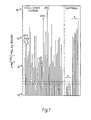
- Figure 1 illustrates the results from one such successful fusion under optimal immunization conditions and depicts the range of anti-HBs activity in 47 positive cell lines.
- the area between the parallel dotted lines in this and the other figures represents the mean + SEM of the negative controls.
- assays for anti-HBS binding using the [ 125 I] -HBsAg probe were performed 10. to 20 days after the initial fusion when growth was observed in the 96 well microtiter plates. It is noteworthy that 120 ⁇ l of cell culture supernatant (total volume 200 p l/well) obtained from some hybridomas yielded -extraordinarily high values for [ 125 I]-HBSAg binding activity.
- anti-HBs produced by cell line 2E4 bound 95,000 of the 100,000 cpm added in the radioimmunoassay.
- Table 2 shows some representative examples of hybridomas secreting anti-HBs as measured by the three different assays employed; each assay was confirmatory for anti-HBs production.
- Anti-HBs derived from some hybridoma cultures were exceptionally good agglutinating antibodies and capable of discriminating between HBsAg subtypes. For example, IF8 and its clone IF8 - 3B6 only agglutinated red blood cells coated with subtype adw and not ayw indicating no specificity either for the d determinant or some yet to be defined antigen on the adw subtype.
- Anti-HBs produced by individual clones exhibited apparently unique heavy chain subclass as shown in Tables 4 and 6. Of the four clones examined thus far, all produced IgM with anti-HBs activity. However, the original cell lines (Table 4) produced anti-HBs of the IgG 1 isotype; line 2F2 both IgG 1 and IgG 2b and line 2C4, IgG 1 and IgA. These data along with the electrophoretic data shown below gave conformation of the clonal nature of the lines.
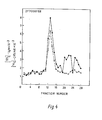
- Figure 5 depicts SDS-polyac rylamide gel electrophoresis of [ 14 C] -lysine labeled supernatant from clones 2F113G91C8 and 1F83B71F2 with anti-HBs activity.
- the anti-HBs IgM was subjected to SDS- polyacrylamide gel only IgM heavy chain and light chain as shown in Figure 5 were detected and no other immunoglobulin isotypes.
- This demonstrates that the anti-HBs activity can reside in a unique immunoglobulin isotype and results from the fusion of P3-NS1:1-Ag4-1 parent myeloma and immunized splenocytes.
- This cell line is identified as ATCC CRL-8018.
- the clonal nature of the hybridomas by the criteria mentioned above therefore were established and the fact that 4 of the cloned cell lines produced anti-HBs as measured by all three binding assays.
- Figure 3 is a representative example of the dilutional cloning of line 5D3.
- 53 or 44% yielded positive hybridoma cell growth; however, only 21 of the 53 gave anti-HBs binding values greater than 1000 cpm and were considered positive anti-HBs secretors.
- 120 ⁇ l of culture supernatant obtained from 12 such cell lines produced anti-HBs which bound more than 50,000 of the 100,000 cpm of added [ 125 I] - HB sAg; these values were in excess of those obtained with hemophiliac sera.
- the cloned hybridomas were subjected to chromosomal analysis and results compared to the original myeloma cell line and immunized splenocytes.
- the P3-NS1/1-Ag4-1 myeloma cells contained a mean number of 63 chromosomes, splenocytes, a mean number of 40, and the clones hybridomas 80 to 97 (Table 5).
Landscapes
- Chemical & Material Sciences (AREA)
- Organic Chemistry (AREA)
- Health & Medical Sciences (AREA)
- Life Sciences & Earth Sciences (AREA)
- Molecular Biology (AREA)
- Biochemistry (AREA)
- Biophysics (AREA)
- Virology (AREA)
- General Health & Medical Sciences (AREA)
- Medicinal Chemistry (AREA)
- Genetics & Genomics (AREA)
- Proteomics, Peptides & Aminoacids (AREA)
- Immunology (AREA)
- Preparation Of Compounds By Using Micro-Organisms (AREA)
- Medicines Containing Antibodies Or Antigens For Use As Internal Diagnostic Agents (AREA)
- Micro-Organisms Or Cultivation Processes Thereof (AREA)
- Peptides Or Proteins (AREA)
Priority Applications (1)
| Application Number | Priority Date | Filing Date | Title |
|---|---|---|---|
| AT80106378T ATE4778T1 (de) | 1979-10-22 | 1980-10-20 | Verfahren zur herstellung von hepatitisvirusantik\rpern und zellstaemme hierfuer. |
Applications Claiming Priority (2)
| Application Number | Priority Date | Filing Date | Title |
|---|---|---|---|
| US86947 | 1979-10-22 | ||
| US06/086,947 US4271145A (en) | 1979-10-22 | 1979-10-22 | Process for producing antibodies to hepatitis virus and cell lines therefor |
Publications (3)
| Publication Number | Publication Date |
|---|---|
| EP0027657A2 true EP0027657A2 (fr) | 1981-04-29 |
| EP0027657A3 EP0027657A3 (en) | 1981-10-28 |
| EP0027657B1 EP0027657B1 (fr) | 1983-09-28 |
Family
ID=22201916
Family Applications (1)
| Application Number | Title | Priority Date | Filing Date |
|---|---|---|---|
| EP80106378A Expired EP0027657B1 (fr) | 1979-10-22 | 1980-10-20 | Procédé de préparation d'anticorps du virus de l'hépatite et lignées cellulaires pour cette préparation |
Country Status (5)
| Country | Link |
|---|---|
| US (1) | US4271145A (fr) |
| EP (1) | EP0027657B1 (fr) |
| JP (2) | JPS5673029A (fr) |
| AT (1) | ATE4778T1 (fr) |
| DE (1) | DE3065072D1 (fr) |
Cited By (11)
| Publication number | Priority date | Publication date | Assignee | Title |
|---|---|---|---|---|
| FR2487983A1 (fr) * | 1980-08-04 | 1982-02-05 | Hybritech Inc | Procede d'analyse immunometrique |
| FR2509178A1 (fr) * | 1981-07-10 | 1983-01-14 | Jean Loup Romet Lemonne | Antigene tumoral associe au cancer primitif de foie et anticorps correspondants hbv-t ag et anti-hbv-t. applications a la production d'un antigene reactif et d'immunserums specifiques en vue du diagnostic precoce et de la mise au point d'une therapeutique du cancer primitif du foie |
| EP0092249A3 (en) * | 1982-04-21 | 1985-08-21 | Eisai Co., Ltd. | Non-a, non-b hepatitis-associated monoclonal antibody and diagnostic reagent |
| WO1986003498A1 (fr) * | 1984-12-11 | 1986-06-19 | Technology Licence Company Limited | Anticorps monoclonaux et leur utilisation |
| EP0232921A3 (en) * | 1980-04-09 | 1987-10-07 | National Research Development Corporation | Monoclonal antibodies against hepatitis b virus |
| EP0138704A3 (en) * | 1983-10-14 | 1988-01-07 | Merck & Co. Inc. | Hepatitis a-subunit antigen |
| EP0119259A4 (fr) * | 1982-09-16 | 1988-08-04 | Gen Hospital Corp | Virus de l'hepatite non a, non b, procedes d'identification, de purification, de caracterisation, de diagnostic et d'immunisation. |
| EP0179483A3 (en) * | 1984-10-26 | 1989-03-01 | Juridical Foundation The Chemo-Sero-Therapeutic Research Institute | Method for preparing monoclonal antibodies to hbsag |
| EP0304329A3 (fr) * | 1987-08-19 | 1990-10-03 | SHIONOGI SEIYAKU KABUSHIKI KAISHA trading under the name of SHIONOGI & CO. LTD. | Anticorps monoclonaux et hybridomes et cellules sensibilisées pour le dosage des antigènes HBs |
| EP0268987A3 (fr) * | 1986-11-21 | 1991-01-09 | E.I. Du Pont De Nemours And Company | Essais d'anticorps contre l'antigène de coeur d'hépatite B |
| US5350671A (en) * | 1987-11-18 | 1994-09-27 | Chiron Corporation | HCV immunoassays employing C domain antigens |
Families Citing this family (51)
| Publication number | Priority date | Publication date | Assignee | Title |
|---|---|---|---|---|
| US5204095A (en) * | 1980-04-09 | 1993-04-20 | National Research Development Corporation | Monoclonal antibodies against hepatitis B virus |
| US4973669A (en) * | 1980-09-19 | 1990-11-27 | Massachusetts General Hospital | Monoclonal IgM antibody with specificity against hepatitis B surface antigen |
| US4879219A (en) * | 1980-09-19 | 1989-11-07 | General Hospital Corporation | Immunoassay utilizing monoclonal high affinity IgM antibodies |
| US4582797A (en) * | 1980-09-25 | 1986-04-15 | The Salk Institute For Biological Studies | Monoclonal antibodies specific for human hematopoietic cell surface glycoproteins |
| US4831124A (en) * | 1980-12-10 | 1989-05-16 | Research Corporation Technologies | Recombinant cDNA construction method and hybrid nucleotides useful in cloning |
| EP0071635B1 (fr) * | 1981-01-30 | 1986-04-30 | Centocor, Inc. | Essai immunologique pour antigenes multi-determinants |
| US4837167A (en) * | 1981-01-30 | 1989-06-06 | Centocor, Inc. | Immunoassay for multi-determinant antigens using high-affinity |
| US4719177A (en) * | 1981-04-20 | 1988-01-12 | Massachusetts Institute Of Technology | Production of complementary DNA representing RNA viral sequences by recombinant DNA methods and uses therefor |
| US4474893A (en) * | 1981-07-01 | 1984-10-02 | The University of Texas System Cancer Center | Recombinant monoclonal antibodies |
| GB2115005B (en) * | 1981-12-03 | 1984-11-14 | Cancer Research Campaign | Anti rat liver monoclonal antibody |
| US4455296A (en) * | 1982-02-02 | 1984-06-19 | Board Of Regents, The University Of Texas System | Hybrid cell lines producing monoclonal antibodies directed against Haemophilus influenzae |
| WO1983002895A1 (fr) * | 1982-02-23 | 1983-09-01 | Harvard College | Attenuation de vaccin avec un anticorps monoclonal |
| US4792601A (en) * | 1982-03-01 | 1988-12-20 | The General Hospital Corporation | Monoclonal antibody to mullerian inhibiting substance |
| US4487833A (en) * | 1982-03-01 | 1984-12-11 | The General Hospital Corporation | Method of preparing hybridomas and of purifying immunogenic materials |
| US4618585A (en) * | 1982-03-18 | 1986-10-21 | Board Of Regents, The University Of Texas System | Hybridoma cell lines producing monoclonal antibodies directed against cervical cancer cells |
| US4628027A (en) * | 1982-05-19 | 1986-12-09 | Molecular Engineering Associates, Ltd. | Vitro diagnostic methods using monoclonal antibodies against connective tissue proteins |
| US4514498A (en) * | 1982-05-26 | 1985-04-30 | The Board Of Regents, The University Of Texas System | Hybrid cell lines producing monoclonal antibodies directed against Treponema |
| DE3379055D1 (en) * | 1982-06-09 | 1989-03-02 | Asahi Chemical Ind | Method for producing human antibody |
| US4535057A (en) * | 1982-07-26 | 1985-08-13 | Amf Incorporated | Immunoassay employing monoclonal herpes simplex antibody and biotin-avidin detection system |
| US4870026A (en) * | 1982-09-16 | 1989-09-26 | The General Hospital Corporation | Non-A, non-B. hepatitis, virus, methods of identification purification, characterization, diagnosis and immunization |
| AU567693B2 (en) | 1982-09-30 | 1987-12-03 | University Of Rochester | Human monoclonal antibodies against bacterial toxins |
| US4714613A (en) * | 1982-09-30 | 1987-12-22 | The Albert Einstein College Of Medicine Of Yeshiva University | Method of suppressing cell growth by immunotherapy |
| US4689299A (en) * | 1982-09-30 | 1987-08-25 | University Of Rochester | Human monoclonal antibodies against bacterial toxins |
| US4613459A (en) * | 1982-10-20 | 1986-09-23 | Dana-Farber Cancer Institute | Lymphocyte growth factor |
| US4767710A (en) * | 1982-12-17 | 1988-08-30 | The United States Of America As Represented By The United States Department Of Energy | Cell lines for the production of monoclonal antibodies to human glycophorin A |
| US4752582A (en) * | 1982-12-17 | 1988-06-21 | The United States Of America As Represented By The United States Department Of Energy | Monoclonal antibodies to human glycophorin A and cell lines for the production thereof |
| JPH03271235A (ja) * | 1983-04-08 | 1991-12-03 | Kureha Chem Ind Co Ltd | 抗カンジダ菌抗体分泌ハイブリドーマ |
| US5057598A (en) * | 1983-05-06 | 1991-10-15 | Centocor, Inc. | Monoclonal antibodies reactive with endotoxin core |
| US4713325A (en) * | 1983-06-14 | 1987-12-15 | The Regents Of The University Of California | Hybridomas producing monoclonal antibodies specific for FeLV p27 |
| US4652522A (en) * | 1983-07-05 | 1987-03-24 | The University Of Pennsylvania | Continuous lymphocyte cell lines, their production and use |
| US4468346A (en) * | 1983-10-27 | 1984-08-28 | The United States Of America As Represented By The Secretary Of Agriculture | Monoclonal antibodies to porcine immunoglobulins |
| US4469630A (en) * | 1983-11-25 | 1984-09-04 | J. T. Baker Chemical Co. | Purification of monoclonal antibodies |
| US4604235A (en) * | 1984-05-23 | 1986-08-05 | J. T. Baker Chemical Company | Purification of monoclonal antibodies |
| US5001056A (en) * | 1984-06-08 | 1991-03-19 | The Johns Hopkins University | Preparation of monoclonal antibodies |
| US4624918A (en) * | 1984-07-09 | 1986-11-25 | Genentech, Inc. | Purification process for hepatitis surface antigen and product thereof |
| DE229046T1 (de) * | 1985-03-30 | 1987-12-17 | Marc Genf/Geneve Ballivet | Verfahren zum erhalten von dns, rns, peptiden, polypeptiden oder proteinen durch dns-rekombinant-verfahren. |
| US5157113A (en) * | 1987-08-10 | 1992-10-20 | Miles Inc. | Removal of nucleic acids from monoclonal antibody preparations |
| US4959310A (en) * | 1987-09-28 | 1990-09-25 | The United States Of America As Represented By The Secretary Of Agriculture | Monoclonal antibodies to soybean kunitz trypsin inhibitor and immunoassay methods |
| US6171782B1 (en) * | 1987-11-18 | 2001-01-09 | Chiron Corporation | Antibody compositions to HCV and uses thereof |
| US6861212B1 (en) * | 1987-11-18 | 2005-03-01 | Chiron Corporation | NANBV diagnostics and vaccines |
| US5053327A (en) * | 1988-09-20 | 1991-10-01 | The United States Of America As Represented By The Secretary Of Agriculture | High affinity monoclonal antibodies to bowman-birk inhibitor and immunoassay methods |
| US5077192A (en) * | 1988-10-25 | 1991-12-31 | The General Hospital Corporation | Method of detecting antigenic, nucleic acid-containing macromolecular entities |
| US5210077A (en) * | 1989-04-06 | 1993-05-11 | The United States Of America As Represented By The Secretary Of Agriculture | Antibodies to cytokinins having a glycosylated isoprenoid side chain and immunoassay methods |
| US5252711A (en) * | 1989-06-01 | 1993-10-12 | The Gillette Company | Monoclonal antibodies useful in deodorizing skin and antibody fragments thereof |
| US5118618A (en) * | 1989-10-05 | 1992-06-02 | Foodscience Corporation | Dimethylglycine enhancement of antibody production |
| US5550019A (en) * | 1993-05-26 | 1996-08-27 | La Jolla Cancer Research Foundation | Methods of identifying compounds which alter apoptosis |
| US5726011A (en) * | 1994-03-31 | 1998-03-10 | Virginia Commonwealth University | Method for diagnosing chronic hepatitis B virus infection |
| US5849906A (en) * | 1994-09-02 | 1998-12-15 | Cavalieri; Ercole | Antigenic conjugates of polycyclic aromatic hydrocarbons to nucleosides |
| US5965521A (en) * | 1997-02-25 | 1999-10-12 | Eli Lilly Company | Pulsatile delivery of leptin receptor ligands |
| ATE405583T1 (de) | 2005-06-02 | 2008-09-15 | Bioptik Tech Inc | Human kinase interacting protein 2 (kip2)-related gene variant (kip2v1) im zusammenhang mit prostatakrebs |
| US20080076124A1 (en) * | 2006-09-20 | 2008-03-27 | Visgeneer, Inc. | Human Protein Phosphatase With EF-Hands-1(PPEF-1)-Related Gene Variant Associated With T-Cell Lymphoblastic Lymphoma |
Family Cites Families (3)
| Publication number | Priority date | Publication date | Assignee | Title |
|---|---|---|---|---|
| JPS5344620A (en) * | 1976-09-30 | 1978-04-21 | Green Cross Corp:The | Recovering of immobilized vaccine and specific antigen |
| US4196265A (en) * | 1977-06-15 | 1980-04-01 | The Wistar Institute | Method of producing antibodies |
| FI64952C (fi) * | 1977-06-15 | 1984-02-10 | Wistar Inst | Foerfarande foer framstaellning av genetiskt stabila cellinjer |
-
1979
- 1979-10-22 US US06/086,947 patent/US4271145A/en not_active Expired - Lifetime
-
1980
- 1980-10-20 EP EP80106378A patent/EP0027657B1/fr not_active Expired
- 1980-10-20 AT AT80106378T patent/ATE4778T1/de active
- 1980-10-20 JP JP14585780A patent/JPS5673029A/ja active Pending
- 1980-10-20 DE DE8080106378T patent/DE3065072D1/de not_active Expired
-
1990
- 1990-03-12 JP JP2060861A patent/JPH034781A/ja active Pending
Cited By (12)
| Publication number | Priority date | Publication date | Assignee | Title |
|---|---|---|---|---|
| EP0232921A3 (en) * | 1980-04-09 | 1987-10-07 | National Research Development Corporation | Monoclonal antibodies against hepatitis b virus |
| FR2487983A1 (fr) * | 1980-08-04 | 1982-02-05 | Hybritech Inc | Procede d'analyse immunometrique |
| FR2509178A1 (fr) * | 1981-07-10 | 1983-01-14 | Jean Loup Romet Lemonne | Antigene tumoral associe au cancer primitif de foie et anticorps correspondants hbv-t ag et anti-hbv-t. applications a la production d'un antigene reactif et d'immunserums specifiques en vue du diagnostic precoce et de la mise au point d'une therapeutique du cancer primitif du foie |
| EP0092249A3 (en) * | 1982-04-21 | 1985-08-21 | Eisai Co., Ltd. | Non-a, non-b hepatitis-associated monoclonal antibody and diagnostic reagent |
| EP0119259A4 (fr) * | 1982-09-16 | 1988-08-04 | Gen Hospital Corp | Virus de l'hepatite non a, non b, procedes d'identification, de purification, de caracterisation, de diagnostic et d'immunisation. |
| EP0138704A3 (en) * | 1983-10-14 | 1988-01-07 | Merck & Co. Inc. | Hepatitis a-subunit antigen |
| EP0179483A3 (en) * | 1984-10-26 | 1989-03-01 | Juridical Foundation The Chemo-Sero-Therapeutic Research Institute | Method for preparing monoclonal antibodies to hbsag |
| WO1986003498A1 (fr) * | 1984-12-11 | 1986-06-19 | Technology Licence Company Limited | Anticorps monoclonaux et leur utilisation |
| EP0268987A3 (fr) * | 1986-11-21 | 1991-01-09 | E.I. Du Pont De Nemours And Company | Essais d'anticorps contre l'antigène de coeur d'hépatite B |
| EP0304329A3 (fr) * | 1987-08-19 | 1990-10-03 | SHIONOGI SEIYAKU KABUSHIKI KAISHA trading under the name of SHIONOGI & CO. LTD. | Anticorps monoclonaux et hybridomes et cellules sensibilisées pour le dosage des antigènes HBs |
| US5079173A (en) * | 1987-08-19 | 1992-01-07 | Shionogi & Co., Ltd. | Methods, hybridomas, monoclonal antibodies and sensitized cells for measuring hbs antigen |
| US5350671A (en) * | 1987-11-18 | 1994-09-27 | Chiron Corporation | HCV immunoassays employing C domain antigens |
Also Published As
| Publication number | Publication date |
|---|---|
| JPH034781A (ja) | 1991-01-10 |
| DE3065072D1 (en) | 1983-11-03 |
| ATE4778T1 (de) | 1983-10-15 |
| JPS5673029A (en) | 1981-06-17 |
| US4271145A (en) | 1981-06-02 |
| EP0027657A3 (en) | 1981-10-28 |
| EP0027657B1 (fr) | 1983-09-28 |
Similar Documents
| Publication | Publication Date | Title |
|---|---|---|
| EP0027657B1 (fr) | Procédé de préparation d'anticorps du virus de l'hépatite et lignées cellulaires pour cette préparation | |
| US4491632A (en) | Process for producing antibodies to hepatitis virus and cell lines therefor | |
| Wands et al. | High affinity monoclonal antibodies to hepatitis B surface antigen (HBsAg) produced by somatic cell hybrids | |
| US4594325A (en) | High fusion frequency fusible lymphoblastoid cell line | |
| US4451570A (en) | Immunoglobulin-secreting human hybridomas from a cultured human lymphoblastoid cell line | |
| Reik et al. | A simple, non-chromatographic purification procedure for monoclonal antibodies Isolation of monoclonal antibodies against cytochrome P450 isozymes | |
| CA1193562A (fr) | Hybridomes humains, precurseurs et produits | |
| US5204095A (en) | Monoclonal antibodies against hepatitis B virus | |
| JPH0690753A (ja) | ハイブリドーマセルラインの製造法 | |
| EP0038642B1 (fr) | Anticorps monoclonal contre l'hépatite B et sa production, hybridome produisant l'anticorps monoclonal et compositions le contenant, culture de l'hybridome et production de l'anticorps monoclonal pour usage en tant qu'agent anti-viral contre l'hépatite B et dans l'isolement de l'antigene de surface de l'hépatite B à partir d'un échantillon | |
| EP0179483B1 (fr) | Méthode de préparation d'anticorps monoclonaux contre HBsAg | |
| EP0093775A1 (fr) | Anticorps monoclonaux contre le brugia malayi | |
| US4668629A (en) | Human hybridomas, precursors and products | |
| Cote Jr et al. | Surface antigenic determinants of mammalian" hepadnaviruses" defined by group-and class-specific monoclonal antibodies | |
| EP0093774A1 (fr) | Anticorps monoclonaux contre le leishmania | |
| EP0093776A1 (fr) | Anticorps monoclonaux contre le schistosome | |
| KR900007950B1 (ko) | 모노클로날 항체의 제조방법 | |
| JP3043023B2 (ja) | ハイブリドーマ | |
| EP0698042A1 (fr) | Compositions d'anticorps contre l'antigene de surface de l'hepatite b | |
| Waters et al. | Purification of woodchuck hepatitis surface antigen using a monoclonal antibody raised against the antigen | |
| JPH02186980A (ja) | ニワトリチミジンキナーゼ欠損bリンパ芽細胞株 | |
| JPH0458960B2 (fr) | ||
| JPH03271235A (ja) | 抗カンジダ菌抗体分泌ハイブリドーマ | |
| Croce | Human Hybridomas | |
| JPS6124523A (ja) | モノクロ−ナル抗体の製造方法 |
Legal Events
| Date | Code | Title | Description |
|---|---|---|---|
| PUAI | Public reference made under article 153(3) epc to a published international application that has entered the european phase |
Free format text: ORIGINAL CODE: 0009012 |
|
| AK | Designated contracting states |
Designated state(s): AT BE CH DE FR GB IT LU NL SE |
|
| PUAL | Search report despatched |
Free format text: ORIGINAL CODE: 0009013 |
|
| AK | Designated contracting states |
Designated state(s): AT BE CH DE FR GB IT LU NL SE |
|
| 17P | Request for examination filed |
Effective date: 19811203 |
|
| ITF | It: translation for a ep patent filed | ||
| GRAA | (expected) grant |
Free format text: ORIGINAL CODE: 0009210 |
|
| AK | Designated contracting states |
Designated state(s): AT BE CH DE FR GB IT LI LU NL SE |
|
| REF | Corresponds to: |
Ref document number: 4778 Country of ref document: AT Date of ref document: 19831015 Kind code of ref document: T |
|
| REF | Corresponds to: |
Ref document number: 3065072 Country of ref document: DE Date of ref document: 19831103 |
|
| ET | Fr: translation filed | ||
| PLBE | No opposition filed within time limit |
Free format text: ORIGINAL CODE: 0009261 |
|
| STAA | Information on the status of an ep patent application or granted ep patent |
Free format text: STATUS: NO OPPOSITION FILED WITHIN TIME LIMIT |
|
| 26N | No opposition filed | ||
| ITTA | It: last paid annual fee | ||
| PGFP | Annual fee paid to national office [announced via postgrant information from national office to epo] |
Ref country code: GB Payment date: 19921009 Year of fee payment: 13 |
|
| PGFP | Annual fee paid to national office [announced via postgrant information from national office to epo] |
Ref country code: SE Payment date: 19921023 Year of fee payment: 13 Ref country code: LU Payment date: 19921023 Year of fee payment: 13 |
|
| PGFP | Annual fee paid to national office [announced via postgrant information from national office to epo] |
Ref country code: AT Payment date: 19921028 Year of fee payment: 13 |
|
| PGFP | Annual fee paid to national office [announced via postgrant information from national office to epo] |
Ref country code: NL Payment date: 19921031 Year of fee payment: 13 |
|
| PGFP | Annual fee paid to national office [announced via postgrant information from national office to epo] |
Ref country code: BE Payment date: 19921103 Year of fee payment: 13 |
|
| PGFP | Annual fee paid to national office [announced via postgrant information from national office to epo] |
Ref country code: CH Payment date: 19921118 Year of fee payment: 13 |
|
| EPTA | Lu: last paid annual fee | ||
| PG25 | Lapsed in a contracting state [announced via postgrant information from national office to epo] |
Ref country code: LU Free format text: LAPSE BECAUSE OF NON-PAYMENT OF DUE FEES Effective date: 19931020 Ref country code: GB Effective date: 19931020 Ref country code: AT Effective date: 19931020 |
|
| PG25 | Lapsed in a contracting state [announced via postgrant information from national office to epo] |
Ref country code: SE Effective date: 19931021 |
|
| PG25 | Lapsed in a contracting state [announced via postgrant information from national office to epo] |
Ref country code: LI Effective date: 19931031 Ref country code: CH Effective date: 19931031 Ref country code: BE Effective date: 19931031 |
|
| BERE | Be: lapsed |
Owner name: THE MASSACHUSETTS GENERAL HOSPITAL Effective date: 19931031 |
|
| PG25 | Lapsed in a contracting state [announced via postgrant information from national office to epo] |
Ref country code: NL Effective date: 19940501 |
|
| GBPC | Gb: european patent ceased through non-payment of renewal fee |
Effective date: 19931020 |
|
| NLV4 | Nl: lapsed or anulled due to non-payment of the annual fee | ||
| REG | Reference to a national code |
Ref country code: CH Ref legal event code: PL |
|
| EUG | Se: european patent has lapsed |
Ref document number: 80106378.5 Effective date: 19940510 |
|
| PGFP | Annual fee paid to national office [announced via postgrant information from national office to epo] |
Ref country code: FR Payment date: 19991013 Year of fee payment: 20 |
|
| PGFP | Annual fee paid to national office [announced via postgrant information from national office to epo] |
Ref country code: DE Payment date: 19991027 Year of fee payment: 20 |