EP0028126B1 - Produit préparé à partir d'un dérivé de chitine réticulé ionique, sa préparation et son utilisation - Google Patents
Produit préparé à partir d'un dérivé de chitine réticulé ionique, sa préparation et son utilisation Download PDFInfo
- Publication number
- EP0028126B1 EP0028126B1 EP80303739A EP80303739A EP0028126B1 EP 0028126 B1 EP0028126 B1 EP 0028126B1 EP 80303739 A EP80303739 A EP 80303739A EP 80303739 A EP80303739 A EP 80303739A EP 0028126 B1 EP0028126 B1 EP 0028126B1
- Authority
- EP
- European Patent Office
- Prior art keywords
- cross
- chitin
- linked
- formula
- group
- Prior art date
- Legal status (The legal status is an assumption and is not a legal conclusion. Google has not performed a legal analysis and makes no representation as to the accuracy of the status listed.)
- Expired
Links
Images

Classifications
-
- A—HUMAN NECESSITIES
- A61—MEDICAL OR VETERINARY SCIENCE; HYGIENE
- A61K—PREPARATIONS FOR MEDICAL, DENTAL OR TOILETRY PURPOSES
- A61K31/00—Medicinal preparations containing organic active ingredients
- A61K31/70—Carbohydrates; Sugars; Derivatives thereof
- A61K31/715—Polysaccharides, i.e. having more than five saccharide radicals attached to each other by glycosidic linkages; Derivatives thereof, e.g. ethers, esters
-
- A—HUMAN NECESSITIES
- A61—MEDICAL OR VETERINARY SCIENCE; HYGIENE
- A61M—DEVICES FOR INTRODUCING MEDIA INTO, OR ONTO, THE BODY; DEVICES FOR TRANSDUCING BODY MEDIA OR FOR TAKING MEDIA FROM THE BODY; DEVICES FOR PRODUCING OR ENDING SLEEP OR STUPOR
- A61M1/00—Suction or pumping devices for medical purposes; Devices for carrying-off, for treatment of, or for carrying-over, body-liquids; Drainage systems
- A61M1/36—Other treatment of blood in a by-pass of the natural circulatory system, e.g. temperature adaptation, irradiation ; Extra-corporeal blood circuits
- A61M1/3679—Other treatment of blood in a by-pass of the natural circulatory system, e.g. temperature adaptation, irradiation ; Extra-corporeal blood circuits by absorption
-
- B—PERFORMING OPERATIONS; TRANSPORTING
- B01—PHYSICAL OR CHEMICAL PROCESSES OR APPARATUS IN GENERAL
- B01D—SEPARATION
- B01D15/00—Separating processes involving the treatment of liquids with solid sorbents; Apparatus therefor
- B01D15/08—Selective adsorption, e.g. chromatography
-
- B—PERFORMING OPERATIONS; TRANSPORTING
- B01—PHYSICAL OR CHEMICAL PROCESSES OR APPARATUS IN GENERAL
- B01D—SEPARATION
- B01D71/00—Semi-permeable membranes for separation processes or apparatus characterised by the material; Manufacturing processes specially adapted therefor
- B01D71/06—Organic material
- B01D71/08—Polysaccharides
-
- B—PERFORMING OPERATIONS; TRANSPORTING
- B01—PHYSICAL OR CHEMICAL PROCESSES OR APPARATUS IN GENERAL
- B01J—CHEMICAL OR PHYSICAL PROCESSES, e.g. CATALYSIS OR COLLOID CHEMISTRY; THEIR RELEVANT APPARATUS
- B01J20/00—Solid sorbent compositions or filter aid compositions; Sorbents for chromatography; Processes for preparing, regenerating or reactivating thereof
- B01J20/22—Solid sorbent compositions or filter aid compositions; Sorbents for chromatography; Processes for preparing, regenerating or reactivating thereof comprising organic material
- B01J20/24—Naturally occurring macromolecular compounds, e.g. humic acids or their derivatives
-
- B—PERFORMING OPERATIONS; TRANSPORTING
- B01—PHYSICAL OR CHEMICAL PROCESSES OR APPARATUS IN GENERAL
- B01J—CHEMICAL OR PHYSICAL PROCESSES, e.g. CATALYSIS OR COLLOID CHEMISTRY; THEIR RELEVANT APPARATUS
- B01J39/00—Cation exchange; Use of material as cation exchangers; Treatment of material for improving the cation exchange properties
- B01J39/08—Use of material as cation exchangers; Treatment of material for improving the cation exchange properties
- B01J39/16—Organic material
-
- C—CHEMISTRY; METALLURGY
- C08—ORGANIC MACROMOLECULAR COMPOUNDS; THEIR PREPARATION OR CHEMICAL WORKING-UP; COMPOSITIONS BASED THEREON
- C08B—POLYSACCHARIDES; DERIVATIVES THEREOF
- C08B37/00—Preparation of polysaccharides not provided for in groups C08B1/00 - C08B35/00; Derivatives thereof
- C08B37/0006—Homoglycans, i.e. polysaccharides having a main chain consisting of one single sugar, e.g. colominic acid
- C08B37/0024—Homoglycans, i.e. polysaccharides having a main chain consisting of one single sugar, e.g. colominic acid beta-D-Glucans; (beta-1,3)-D-Glucans, e.g. paramylon, coriolan, sclerotan, pachyman, callose, scleroglucan, schizophyllan, laminaran, lentinan or curdlan; (beta-1,6)-D-Glucans, e.g. pustulan; (beta-1,4)-D-Glucans; (beta-1,3)(beta-1,4)-D-Glucans, e.g. lichenan; Derivatives thereof
- C08B37/0027—2-Acetamido-2-deoxy-beta-glucans; Derivatives thereof
- C08B37/003—Chitin, i.e. 2-acetamido-2-deoxy-(beta-1,4)-D-glucan or N-acetyl-beta-1,4-D-glucosamine; Chitosan, i.e. deacetylated product of chitin or (beta-1,4)-D-glucosamine; Derivatives thereof
-
- C—CHEMISTRY; METALLURGY
- C12—BIOCHEMISTRY; BEER; SPIRITS; WINE; VINEGAR; MICROBIOLOGY; ENZYMOLOGY; MUTATION OR GENETIC ENGINEERING
- C12N—MICROORGANISMS OR ENZYMES; COMPOSITIONS THEREOF; PROPAGATING, PRESERVING, OR MAINTAINING MICROORGANISMS; MUTATION OR GENETIC ENGINEERING; CULTURE MEDIA
- C12N11/00—Carrier-bound or immobilised enzymes; Carrier-bound or immobilised microbial cells; Preparation thereof
- C12N11/02—Enzymes or microbial cells immobilised on or in an organic carrier
- C12N11/10—Enzymes or microbial cells immobilised on or in an organic carrier the carrier being a carbohydrate
-
- B—PERFORMING OPERATIONS; TRANSPORTING
- B01—PHYSICAL OR CHEMICAL PROCESSES OR APPARATUS IN GENERAL
- B01D—SEPARATION
- B01D15/00—Separating processes involving the treatment of liquids with solid sorbents; Apparatus therefor
- B01D15/08—Selective adsorption, e.g. chromatography
- B01D15/26—Selective adsorption, e.g. chromatography characterised by the separation mechanism
- B01D15/36—Selective adsorption, e.g. chromatography characterised by the separation mechanism involving ionic interaction, e.g. ion-exchange, ion-pair, ion-suppression or ion-exclusion
- B01D15/361—Ion-exchange
-
- B—PERFORMING OPERATIONS; TRANSPORTING
- B01—PHYSICAL OR CHEMICAL PROCESSES OR APPARATUS IN GENERAL
- B01D—SEPARATION
- B01D15/00—Separating processes involving the treatment of liquids with solid sorbents; Apparatus therefor
- B01D15/08—Selective adsorption, e.g. chromatography
- B01D15/26—Selective adsorption, e.g. chromatography characterised by the separation mechanism
- B01D15/38—Selective adsorption, e.g. chromatography characterised by the separation mechanism involving specific interaction not covered by one or more of groups B01D15/265 and B01D15/30 - B01D15/36, e.g. affinity, ligand exchange or chiral chromatography
- B01D15/3804—Affinity chromatography
Definitions
- the present invention concerns a material produced from a cross-linked, ionic, chitin derivative, to a process for the preparation of this material and to its use.
- Fiber-forming polysaccharides occurring in nature can be roughly divided into collagen in higher animals, chitin in arthropods and lower animals and cellulose in higher plants.
- the frames of living things are made from the products formed by sedimentation of apatite, calcium carbonate, lignin, etc onto these polysaccharides respectively.
- Chitin is a high polymeric substance comprising 1,4-beta bonded N-acetyl-D-glucosamine.
- the amount of chitin in nature compares favorably to that of cellulose.
- chitin has an extremely high crystallinity and the inter-molecular bonding between chitin molecules by the amino- acetyl groups is very strong and stable, an economical solvent which favorably dissolves, disperses or swells chitin as an alkali does for cellulose has not yet been found.
- EP-A-0 013 512 A method for producing a water-soluble derivative of chitin is proposed in EP-A-0 013 512.
- a material derived from this water-soluble derivative of chitin is disclosed in EP-A-0 013 181 (published 9th July, 1980).
- EP-A-0 013 181 describes the possibility of obtaining various shaped materials having amphoteric ion-exchangability.
- chitin derivatives obtained by acylation of a de-N-acetylated and etherified chitin may subsequently be cross-linked. The acylation may be conducted so that a material having at least an outer surface of acylated de-N-acetylated and etherified chitin is produced.
- EP-A-0 018 131 discloses a solution to this problem by cross-linking chitin, carboxyalkylating the cross-linked chitin, and then de-N-acetylating the carboxyalkylated cross-linked chitin.
- the amphoteric ion-exchanger thus obtained is excellent in adsorbing various substances of high moleuclar weight.
- the amphoteric ion-exchanger when used as an adsorbent in blood dialysis, the ion-exchanger also adsorbs high molecular weight substances, such as proteins, which should not be removed together with the toxic substances which should be removed. As a result the ability of the ion-exchanger to remove the toxic substances is reduced. Similar results appear where the ion-exchanger is used as a filler in a chromatograph column. The ability of the column to separate substances gradually decreases.
- the present invention provides a material produced by acylating or treating with an acid a surface of a material composed of a cross-linked ionic chitin derivative comprising a structural unit represented by the formula: wherein
- Such a material can be produced by partially treating a cross-linked ionic chitin derivative with an organic acid anhydride or a mixture thereof with an organic acid to effect an acylation or with an aqueous mineral acid solution to effect an acid-treatment.
- the present invention therefore also provides a process for the preparation of a material of the invention, which process comprises:
- the acylation or treatment with acid can cause the formation of one or more of a chitin, N- ⁇ acylated carboxyalkylchitosan of formula (VII): - ⁇ -C 6 H 8 O 3 (OCH 2 COOH)NHCOR- ⁇ - wherein R represents -(CH 2 ) m CH 3 and m is 0 or an integer from 1 to 20, N-acylated chitosan and N-, O-diacylated chitosan on at least the surface of the material.
- VII a chitin, N- ⁇ acylated carboxyalkylchitosan of formula (VII): - ⁇ -C 6 H 8 O 3 (OCH 2 COOH)NHCOR- ⁇ - wherein R represents -(CH 2 ) m CH 3 and m is 0 or an integer from 1 to 20, N-acylated chitosan and N-, O-diacylated chitosan on at least the surface of the material.
- the material of the present invention has a surface layer comprising an acylated product and/or a deacetylated product as mentioned hereinafter. Its interior comprises the cross-linked substance.
- the material of the present invention can exhibit excellent mechanical strength. Consequently it can be employed as material for capsules, for dialysis and for an ion-exchanger. It may be used in a wide range of applications such as a material for biofunctions, for collecting heavy metals, as a base material on which an enzyme, antigen or antibody is to be immobilised and for ultrafiltration.
- the material of the present invention since agglomeration, such as that experienced in respect of previous amphoteric ion-exchanger bodies because of the functional groups on their surfaces, does not occur during de-salting, the material can be very easily handled.
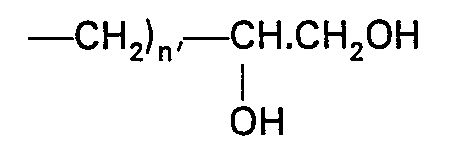
- cross-linked ionic chitin derivative that is acylated or treated with an acid has structural units represented by the formula (I): wherein
- the cross-linked ionic chitin derivative may also contain structural units of formula (I-a): wherein
- the ionic chitin derivative for instance, includes carboxymethylchitin, carboxymethylchitosan; ethylchitosan, glycol chitosan, glyceride chitosan, N-monoethylglycol chitosan, N-monoethylcarboxy- methyl chitosan, N-propylcarboxymethylchitosan, N-propyllauryl-carboxyethylchitosan, etc. and is cross-linked at the 3 and 6' positions or 3, N and 6' positions.
- Cross-linking at the 3 and 6' positions is illustrated below as Type I.
- Cross-linking at the 3, N and 6' positions is illustrated below as Type II.
- a cross-linked product of Type I is obtainable, for instance, by the following method of production: Chitin is used as a raw material. Chitin has the formula wherein
- the alkali-immersed chitin is subjected to compression or freezing to remove excess aqueous alkaline solution. Freezing particularly aids cross-linking because the chitin micelles are opened by the freezing and alkali is retained in the minute interspaces between chitin molecules.
- the conditions of the freeze-treatment are, depending on the desired degree of opening chitin micelle, at a temperature of -3° to -30°C, preferably -10 to -20°C, for from 3 to 24 hours.
- cross-linking reaction can be carried out by adding a cross-linking agent, represented by the general formulae (II) to (V): wherein
- X denotes a halogen atom and 1 is an integer of 1, 2 or 3, in an amount of from 0.1 to 3 times, preferably 0.5 to 2 times, by weight of the chitin starting material to the chitin which has been freeze- treated or from which excess alkali has been removed by compression.
- This step is effected at a temperature lower than room temperature, preferably at a subzero temperature. This low temperature is maintained for 5 to 48 hours.
- cross-linking is carried out via hydroxyl group(s) or hydroxymethyl group(s) in the same manner as for the carboxyalkylation, etc. shown later. Accordingly, the degree of cross-linking is decided with regard to the degree of carboxyalkylation.
- the degree of cross-linking is preferably 0.01 to 0.3 per N-acetyl-D-glucosamine unit, the degree of cross-linking being obtained from elementary analytical data of the cross-linked product.
- Cross-linking agents represented by the formulae (II) to (V) include epichlorohydrin, 1-bromo-3,4-epoxybutane, 1-bromo-4,5-epoxypentane, 1-chloro-2,3-epithiopropane, 1-bromo-2,3-epithiopropane, 1-bromo-3,4-epithiobutane, 1-bromo-4,5-epithiopentane, 2,3-dibromopropanol, 2,4-dibromobutanol, 2,5-dibromopentanol, 2,3-dibromopropanethiol, 2,4-dibromobutanethiol, and 2,5-dibromopentane- thiol.
- Cross-linking agents for the cross-linked state Type II include cyanuric chloride and cyanuric bromide.
- the R 2 substituent can be introduced into the cross-linked chitin. This may be achieved by reacting the cross-linked chitin with the appropriate etherifying agent.
- the resulting product can have a degree of R 2 substitution of 0.1 to 0.9, preferably 0.3 to 0.9, per N-acetyl glucosamine unit.
- the product is heated in an aqueous alkaline solution of sodium hydroxide or potassium hydroxide.
- cross-linked carboxyalkyl-chitin can be prepared as follows:
- the etherifying agent used in the carboxyalkylation is a compound represented by the formula: wherein
- the material according to the present invention is derived from a de-acetylated product of the cross-linked R 2- substituted chitin.
- a cross-linked carboxyalkylchitin is treated with an aqueous alkaline solution containing a high concentration of alkali, preferably of a normality of 4 to 15, at 65 to 150°C, preferably 65 to 110°C, for 0.1 to 48 hours to effect de-acetylation.
- the cross-linked carboxyalkylchitin used as a starting material of this de-acetylation may be the solvent-including product of the carboxyalkylation which has been effected in an organic solvent obtained by filtering and washing with ethanol and acetone, a dried product or a product containing water.
- the normality of alkali for the de-acetylation should be corrected to the above mentioned range.
- the de-acetylation temperature is lower than the designated one, it takes much longer to complete the reaction.
- the temperature is higher, there is a reduction in the molecular weight of the product.
- the degree of de-acetylation is obtained by elementary analysis of the product and is generally 0.1 to 1, preferably 0.3 to 1.
- the deionization of the surface of the cross-lined ionic chitin derivative represented by the formula (I) may be carried out in a simple manner.
- deionization can be effected by acylation in a very short period of time to obtain a material of the invention.
- the mechanism of this reaction has not yet been elucidated. However, reaction occurs instantaneously from the surface of the gel of the substance of formula (I) after contact with the organic acid anhydride.
- the reaction product of the deionization includes a chitin, a N-acylated carboxyalkylchitosan of formula (VII), a de-carboxyalkylated and N-acylated chitosan of formula (VIII) and a N-, 0- acylated chitosan of formula (IX): wherein
- the organic acid and acid anhydrides which can be employed as the acylating agent are preferably acetic acid, propionic acid, butyric acid and valeric acid, and their acid anhydrides.
- the carbon chain of the organic acid or its anhydride may be longer, for example up to 21 carbon atoms.
- These acids and acid anhydrides respectively may be used singly or as a mixture of more than one. They may be employed without dilution or after dilution with an organic solvent which does not react with the organic acid or anhydride.
- the temperature of acylation is preferably 5 to 80°C, more preferably 5 to 60°C. In the case where the organic acid anhydride is used in gaseous form, the temperature may be still higher.
- the state in which the gel of the ionic crosslinked derivative of chitin and the organic acid anhydride contact one another can be suitably selected according to the intended usage and the desired form of the material of the present invention.
- spherical particles of the gel which contain water, are dispersed under agitation in the organic acid anhydride.
- acylation occurs instantly from the surface of the particles to form a membrane of the acylated product.
- the organic acid anhydride diffuses into the inner part of the particles and forms a deionized layer of the desired thicknesses.
- the thickness and packing density of the acylated membrane is controllable by changing the concentration and amount of the acylating agent, the reaction period and the reaction temperature. Usually the thickness is from 10- 7 to 10- 3 m (0.1 to 1,000 microns) and the packing density corresponds to a limit of 500 to 400,000 on the molecular weight of molecules which can pass through the membrane.
- the material of the present invention can be obtained by treatment with, as shown above, the acylating agent.
- the material of the present invention may be obtained by treatment with an aqueous dilute acidic solution, such as hydrochloric acid or sulfuric acid.
- the acid treatment eliminates the anionic carboxyalkyl group of carboxyalkyl derivatives by hydrolysis.
- the acid treatment may be carried out with the acylating agent.
- the product of the present invention may take any shape depending on the shape of the substance of formula (I). That substance may be spherical, fibrous, a film or hollow as disclosed in EP-A-0 013 181.
- the material of the present invention is made up of the cross-linked product of an ionic derivative of chitin and of the acylated product of the cross-linked product, which is permeable to substances, chemically stable and possesses bio-compatibility, the material can be applied in a wide range of uses.
- the material of the invention can be used in the purification and separation' of a glycoprotein. Only a glycoprotein of a molecular weight smaller than a defined value can be dispersed into the inner part of hollow particles of the material of the present invention when such a material is put into a solution of a mixture of glycoproteins of various molecular weights.
- material of the present invention in the form of hollow fibers or of films in the same manner as conventional material for dialysis.
- the material of the present invention Since proteins are not so much adsorbed on the surface of the material of the present invention, it is possible to use the material as an ion-exchanger while taking advantage of the small reduction of the adsorption velocity in use, the controllability of the permeability to substances and the ionic groups of the material of the present invention.
- the material of the present invention is stable and safe in living bodies, it is possible to use it in various applications to do with living bodies, for instance in blood perfusion, as an adsorbent for internal administration to adsorb and remove gastrointestinal toxins or as a covering material of adsorbents.
- the particles of the gel had agglomerated because of the de-salting treatment.
- the contents of the flask were agitated for 5 min at a room temperature for acylation to occur. After the reaction was over, the gel was separated by filtration, washed with ethanol, and separately neutralized in another flask containing 2 x 10- 3 m 3 (2 liters) of distilled water.
- Specimens were treated in 5 x 10- 4 m 3 (500 ml) of an aqueous 2N hydrochloric acid solution at 50°C for 5 hours. While the starting material completely dissolved, the treated fibers left an insoluble substance. After separating the insoluble substance by filtration, it was washed with water and its cross-section was examined under a microscope. It was discovered that the insoluble substance was a hollow fiber. From this result, it was considered that only the surface of the starting material was insolubilized.
- the insoluble substance did not show an infrared absorption at 1500 to 1530 cm- 1 attributable to an amino group, but instead showed infrared absorptions near 1650 and 1550 cm- 1 , respectively, the presence of amide group was presumed. From elementary analysis, the insoluble substance was identified as N-propionylchitosan.
- the particles After separating the particles by filtration, the particles were put into 10- 4 m 3 (100 ml) of an aqueous methanol solution containing 10% by weight of sodium hydroxide (the volume ratio of water/methanol being 1:2). After separating the particles by filtration, the particles were washed with distilled water. The thus treated particles and starting material were respectively added to distilled water in which 10- 2 kg (10 g) of the starting material of Example 3, that is spherical particles of glycol-chitin, had been dispersed. The particles of the starting material of Example 4 agglomerated whereas the spherical particles of the treated product of Example 4 were not agglomerated. It was confirmed that the latter had no ionic properties on its particles' surface.
- a column with the same dimensions was filled with particles of the starting material of Example 1 and distilled water was passed through the filled column until no more sodium chloride was detected in the effluent to obtain a reference column.
- the shaped material according to the present invention shows an exclusive limit depending upon the molecular weight of protein. Accordingly, the shaped material according to the present invention can be used to fractionate proteins depending on their molecular weight.
- This example shows the results of measurement of mechanical strength of the shaped material according to the present invention, prepared in Example 1.
Landscapes
- Chemical & Material Sciences (AREA)
- Health & Medical Sciences (AREA)
- Life Sciences & Earth Sciences (AREA)
- Organic Chemistry (AREA)
- Chemical Kinetics & Catalysis (AREA)
- Engineering & Computer Science (AREA)
- General Health & Medical Sciences (AREA)
- Molecular Biology (AREA)
- Animal Behavior & Ethology (AREA)
- Biochemistry (AREA)
- Bioinformatics & Cheminformatics (AREA)
- Medicinal Chemistry (AREA)
- Public Health (AREA)
- Veterinary Medicine (AREA)
- Zoology (AREA)
- Vascular Medicine (AREA)
- Heart & Thoracic Surgery (AREA)
- Analytical Chemistry (AREA)
- Wood Science & Technology (AREA)
- Biomedical Technology (AREA)
- Genetics & Genomics (AREA)
- Pharmacology & Pharmacy (AREA)
- Biotechnology (AREA)
- Hematology (AREA)
- Microbiology (AREA)
- Anesthesiology (AREA)
- Cardiology (AREA)
- Epidemiology (AREA)
- General Engineering & Computer Science (AREA)
- Materials Engineering (AREA)
- Polymers & Plastics (AREA)
- Polysaccharides And Polysaccharide Derivatives (AREA)
- Separation Using Semi-Permeable Membranes (AREA)
- Compositions Of Macromolecular Compounds (AREA)
- Solid-Sorbent Or Filter-Aiding Compositions (AREA)
Claims (8)

Applications Claiming Priority (2)
| Application Number | Priority Date | Filing Date | Title |
|---|---|---|---|
| JP137337/79 | 1979-10-24 | ||
| JP13733779A JPS5661401A (en) | 1979-10-24 | 1979-10-24 | Novel molding compound |
Publications (2)
| Publication Number | Publication Date |
|---|---|
| EP0028126A1 EP0028126A1 (fr) | 1981-05-06 |
| EP0028126B1 true EP0028126B1 (fr) | 1984-03-07 |
Family
ID=15196284
Family Applications (1)
| Application Number | Title | Priority Date | Filing Date |
|---|---|---|---|
| EP80303739A Expired EP0028126B1 (fr) | 1979-10-24 | 1980-10-22 | Produit préparé à partir d'un dérivé de chitine réticulé ionique, sa préparation et son utilisation |
Country Status (7)
| Country | Link |
|---|---|
| US (1) | US4376199A (fr) |
| EP (1) | EP0028126B1 (fr) |
| JP (1) | JPS5661401A (fr) |
| CA (1) | CA1170255A (fr) |
| DE (1) | DE3066862D1 (fr) |
| ES (1) | ES8107253A1 (fr) |
| NO (1) | NO153371C (fr) |
Families Citing this family (20)
| Publication number | Priority date | Publication date | Assignee | Title |
|---|---|---|---|---|
| IT1144925B (it) * | 1981-10-08 | 1986-10-29 | Anic Spa | Fibre cave di chitosano e procedimento per il loro ottenimento |
| US5290752A (en) * | 1984-03-16 | 1994-03-01 | Unitika Ltd. | Method for preparation of a shaped chitin body containing a physiologically active substance |
| DE3527482A1 (de) * | 1984-07-31 | 1986-02-06 | Fuji Spinning Co., Ltd., Tokio/Tokyo | Verfahren zum herstellen von koernigem poroesen chitosan |
| US4845204A (en) * | 1985-02-07 | 1989-07-04 | Wella Aktiengesellschaft | Cosmetic compositions on the basis of alkyl-hydroxypropyl-substituted chitosan derivatives, new chitosan derivatives and processes for the production thereof |
| IT1190380B (it) * | 1985-06-21 | 1988-02-16 | Consiglio Nazionale Ricerche | Glucani funzionalizzati e reticolati,procedimento e intermedi di preparazione,loro usi |
| DE3541305A1 (de) * | 1985-11-22 | 1987-05-27 | Wella Ag | Kosmetische mittel auf der basis von n-hydroxypropylchitosanen, neue n-hydroxypropyl-chitosane sowie verfahren zu ihrer herstellung |
| DE3614697A1 (de) * | 1986-04-30 | 1987-11-05 | Wella Ag | Kosmetische mittel auf der basis von n-hydroxybutyl-chitosanen, neue n-hydroxybutyl-chitosane sowie verfahren zu ihrer herstellung |
| US4857403A (en) * | 1986-12-16 | 1989-08-15 | E. I. Du Pont De Nemours And Company | High strength fibers from chitin derivatives |
| EP0339200A1 (fr) * | 1988-02-25 | 1989-11-02 | Akzo Nobel N.V. | Cellulose modifiée, son utilisation comme membranes biocompatibles II pour la dialyse, et procédé pour sa préparation |
| EP0330134A1 (fr) * | 1988-02-25 | 1989-08-30 | Akzo Nobel N.V. | Cellulose modifiée, son utilisation comme membranes biocompatibles IV pour la dialyse et procédé pour sa préparation |
| EP0330106A1 (fr) * | 1988-02-25 | 1989-08-30 | Akzo Nobel N.V. | Cellulose modifiée, son utilisation comme membranes biocompatibles II et procédé pour sa préparation |
| US5412084A (en) * | 1991-10-09 | 1995-05-02 | Nova Chem Limited | N-O-carboxymethylchitosonium carboxylate salts |
| WO1993012877A1 (fr) * | 1991-12-20 | 1993-07-08 | Allied-Signal Inc. | Materiaux de faible masse volumique presentant des surfaces importantes, et articles obtenus a partir de ces materiaux, utilises pour la recuperation de metaux |
| US5637681A (en) * | 1992-08-19 | 1997-06-10 | Stockel; Richard F. | Aminosaccharide biguanides |
| CA2180826A1 (fr) | 1994-01-13 | 1995-07-20 | Richard J. Ii Stoner | Systeme organique de lutte contre les maladies |
| JP2615444B2 (ja) * | 1995-03-15 | 1997-05-28 | 工業技術院長 | キトオリゴ糖の部分n−アシル化体又はその塩 |
| US5874551A (en) * | 1996-05-29 | 1999-02-23 | Center For Innovative Technology | Method of making ester-crosslinked chitosan support materials and products thereof |
| DE19756086A1 (de) * | 1997-12-17 | 1999-06-24 | Ks Gleitlager Gmbh | Verfahren zum Herstellen eines Schwermetalladsorbens auf Chitosan-Basis |
| US20160287710A1 (en) * | 2013-11-12 | 2016-10-06 | Margit Maria JANAT-AMSBURY | Glycol chitin based thermosensitive hydrogel for vaginal delivery of progesterone |
| CN111686696B (zh) * | 2020-04-22 | 2023-04-07 | 杭州嘉澍环境监测有限公司 | 氨基苯磺酸修饰戊二醛交联甲壳素凝胶材料及其制备和作为贵金属金吸附材料的应用 |
Family Cites Families (6)
| Publication number | Priority date | Publication date | Assignee | Title |
|---|---|---|---|---|
| US2040879A (en) * | 1934-06-21 | 1936-05-19 | Du Pont | Substantially undegraded deacetylated chitin and process for producing the same |
| DE894993C (de) * | 1944-09-27 | 1953-10-29 | Henkel & Cie Gmbh | Verfahren zur Herstellung unloeslicher Erzeugnisse aus Chitosan |
| US4111810A (en) * | 1973-03-08 | 1978-09-05 | Shin-Etsu Chemical Company | Desalination reverse osmotic membranes and their preparation |
| US3879377A (en) * | 1973-11-23 | 1975-04-22 | Univ Delaware | Purification of chitin |
| US4029727A (en) * | 1975-04-16 | 1977-06-14 | The University Of Delaware | Chitin films and fibers |
| US4308377A (en) * | 1978-12-29 | 1981-12-29 | Kureha Kagaku Kogyo Kabushiki Kaisha | Shaped material comprising denatured chitin and process for preparing same |
-
1979
- 1979-10-24 JP JP13733779A patent/JPS5661401A/ja active Granted
-
1980
- 1980-10-17 US US06/198,193 patent/US4376199A/en not_active Expired - Lifetime
- 1980-10-20 CA CA000362823A patent/CA1170255A/fr not_active Expired
- 1980-10-22 DE DE8080303739T patent/DE3066862D1/de not_active Expired
- 1980-10-22 EP EP80303739A patent/EP0028126B1/fr not_active Expired
- 1980-10-23 NO NO803154A patent/NO153371C/no unknown
- 1980-10-24 ES ES496679A patent/ES8107253A1/es not_active Expired
Also Published As
| Publication number | Publication date |
|---|---|
| JPS5661401A (en) | 1981-05-26 |
| EP0028126A1 (fr) | 1981-05-06 |
| DE3066862D1 (en) | 1984-04-12 |
| CA1170255A (fr) | 1984-07-03 |
| US4376199A (en) | 1983-03-08 |
| JPH0151482B2 (fr) | 1989-11-02 |
| NO153371C (no) | 1986-04-30 |
| ES496679A0 (es) | 1981-10-01 |
| NO153371B (no) | 1985-11-25 |
| ES8107253A1 (es) | 1981-10-01 |
| NO803154L (no) | 1981-04-27 |
Similar Documents
| Publication | Publication Date | Title |
|---|---|---|
| US4376199A (en) | Shaped material of chitin derivatives | |
| US4308377A (en) | Shaped material comprising denatured chitin and process for preparing same | |
| Janesch et al. | Mushroom-derived chitosan-glucan nanopaper filters for the treatment of water | |
| EP0021750B1 (fr) | La production d'un matériau de forme spherique formé à partir d'un dérivé de la chitine | |
| US4401807A (en) | Shaped material comprising acylated product of mixture of chitin derivatives | |
| EP1924345B1 (fr) | Procede permettant de reticuler des membranes d'ester de cellulose | |
| JPH0353321B2 (fr) | ||
| US4336070A (en) | Process for preparing porous shaped material of acylated chitin derivative | |
| EP0018131B1 (fr) | Dérivé réticulé, carboxyalkylé et désacétylé de la chitine, procédé pour sa préparation et utilisation comme matériel d'adsorption | |
| US4948814A (en) | Ion exchanger based on cross-linked glucomannan | |
| JP3242675B2 (ja) | 血液透析用の透析膜 | |
| JPS5829801A (ja) | N−アシル化キトサンの製造方法 | |
| AU518831B2 (en) | Shaped material comprising denaturated chitin | |
| EP0055235A1 (fr) | Produit sous forme de gel comme milieu de séparation | |
| DE3014632C2 (fr) | ||
| Liu et al. | New approaches for the preparation of hydrophobic heparin derivatives | |
| JP2913150B2 (ja) | 有害性陰イオン除去剤及び有害性陰イオンの除去方法 | |
| JPS6144081B2 (fr) | ||
| Aly* et al. | The development of filter media using plant and marine waste for virus removal from drinking water | |
| MEDCALF | PREPARATION OF AMINO, MERCAPTO AND SULFONIC ACID DERIVATIVES OF AMYLOSE. |
Legal Events
| Date | Code | Title | Description |
|---|---|---|---|
| PUAI | Public reference made under article 153(3) epc to a published international application that has entered the european phase |
Free format text: ORIGINAL CODE: 0009012 |
|
| AK | Designated contracting states |
Designated state(s): DE FR GB NL SE |
|
| 17P | Request for examination filed |
Effective date: 19810708 |
|
| GRAA | (expected) grant |
Free format text: ORIGINAL CODE: 0009210 |
|
| AK | Designated contracting states |
Designated state(s): DE FR GB NL SE |
|
| REF | Corresponds to: |
Ref document number: 3066862 Country of ref document: DE Date of ref document: 19840412 |
|
| ET | Fr: translation filed | ||
| PLBE | No opposition filed within time limit |
Free format text: ORIGINAL CODE: 0009261 |
|
| STAA | Information on the status of an ep patent application or granted ep patent |
Free format text: STATUS: NO OPPOSITION FILED WITHIN TIME LIMIT |
|
| 26N | No opposition filed | ||
| PGFP | Annual fee paid to national office [announced via postgrant information from national office to epo] |
Ref country code: NL Payment date: 19901031 Year of fee payment: 11 |
|
| PGFP | Annual fee paid to national office [announced via postgrant information from national office to epo] |
Ref country code: SE Payment date: 19910927 Year of fee payment: 12 |
|
| PG25 | Lapsed in a contracting state [announced via postgrant information from national office to epo] |
Ref country code: NL Effective date: 19920501 |
|
| NLV4 | Nl: lapsed or anulled due to non-payment of the annual fee | ||
| PGFP | Annual fee paid to national office [announced via postgrant information from national office to epo] |
Ref country code: FR Payment date: 19921005 Year of fee payment: 13 |
|
| PG25 | Lapsed in a contracting state [announced via postgrant information from national office to epo] |
Ref country code: SE Effective date: 19921023 |
|
| PG25 | Lapsed in a contracting state [announced via postgrant information from national office to epo] |
Ref country code: FR Effective date: 19940630 |
|
| REG | Reference to a national code |
Ref country code: FR Ref legal event code: ST |
|
| EUG | Se: european patent has lapsed |
Ref document number: 80303739.9 Effective date: 19930510 |
|
| PGFP | Annual fee paid to national office [announced via postgrant information from national office to epo] |
Ref country code: DE Payment date: 19951026 Year of fee payment: 16 |
|
| PGFP | Annual fee paid to national office [announced via postgrant information from national office to epo] |
Ref country code: GB Payment date: 19961014 Year of fee payment: 17 |
|
| PG25 | Lapsed in a contracting state [announced via postgrant information from national office to epo] |
Ref country code: DE Effective date: 19970701 |
|
| PG25 | Lapsed in a contracting state [announced via postgrant information from national office to epo] |
Ref country code: GB Free format text: LAPSE BECAUSE OF NON-PAYMENT OF DUE FEES Effective date: 19971022 |
|
| GBPC | Gb: european patent ceased through non-payment of renewal fee |
Effective date: 19971022 |